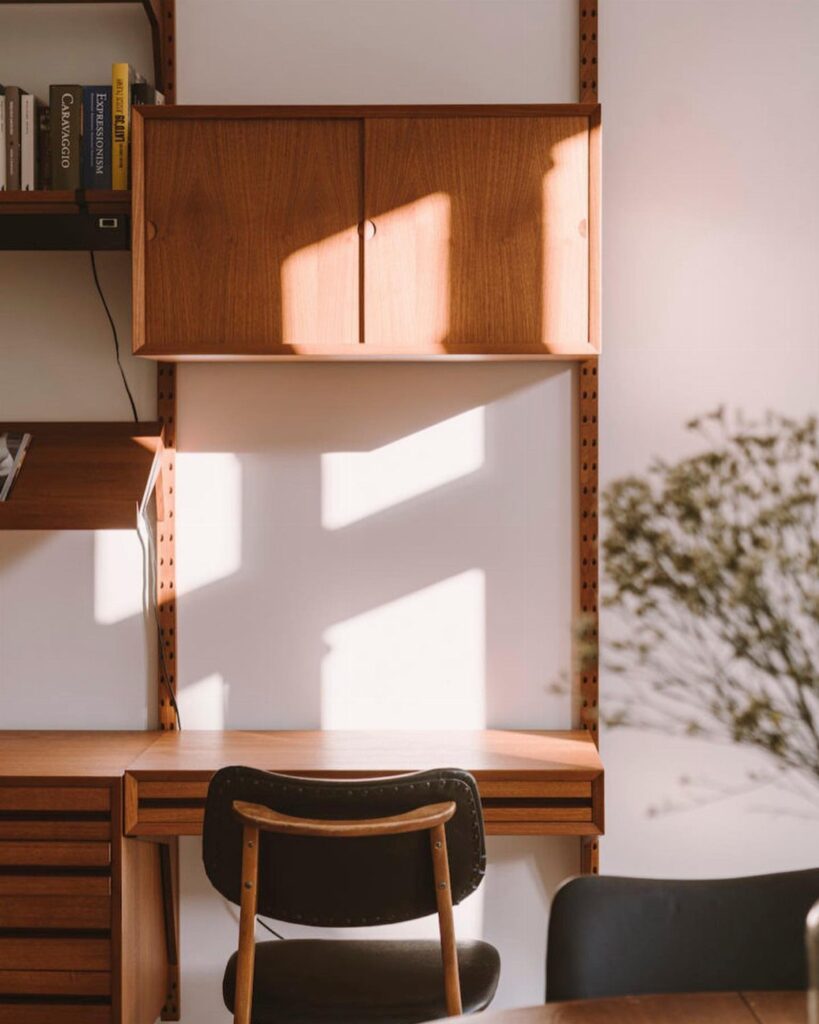
These ideas run from a free move like turning the desk to face a window to a full paint or paneling job, with a vintage sideboard, a leather chair, and wooden slat walls sitting in between.
Your wall and your lease decide which route is yours: renters can get the look from a bold teal or olive paint color, a vintage sideboard, and a gallery wall, while owners can commit to slat walls or full wood paneling.
Whatever the budget, sit in the chair and check the desk height first, since a tapered-leg walnut desk that leaves your feet off the floor won’t last a workday.
1. Warm Wood Furniture
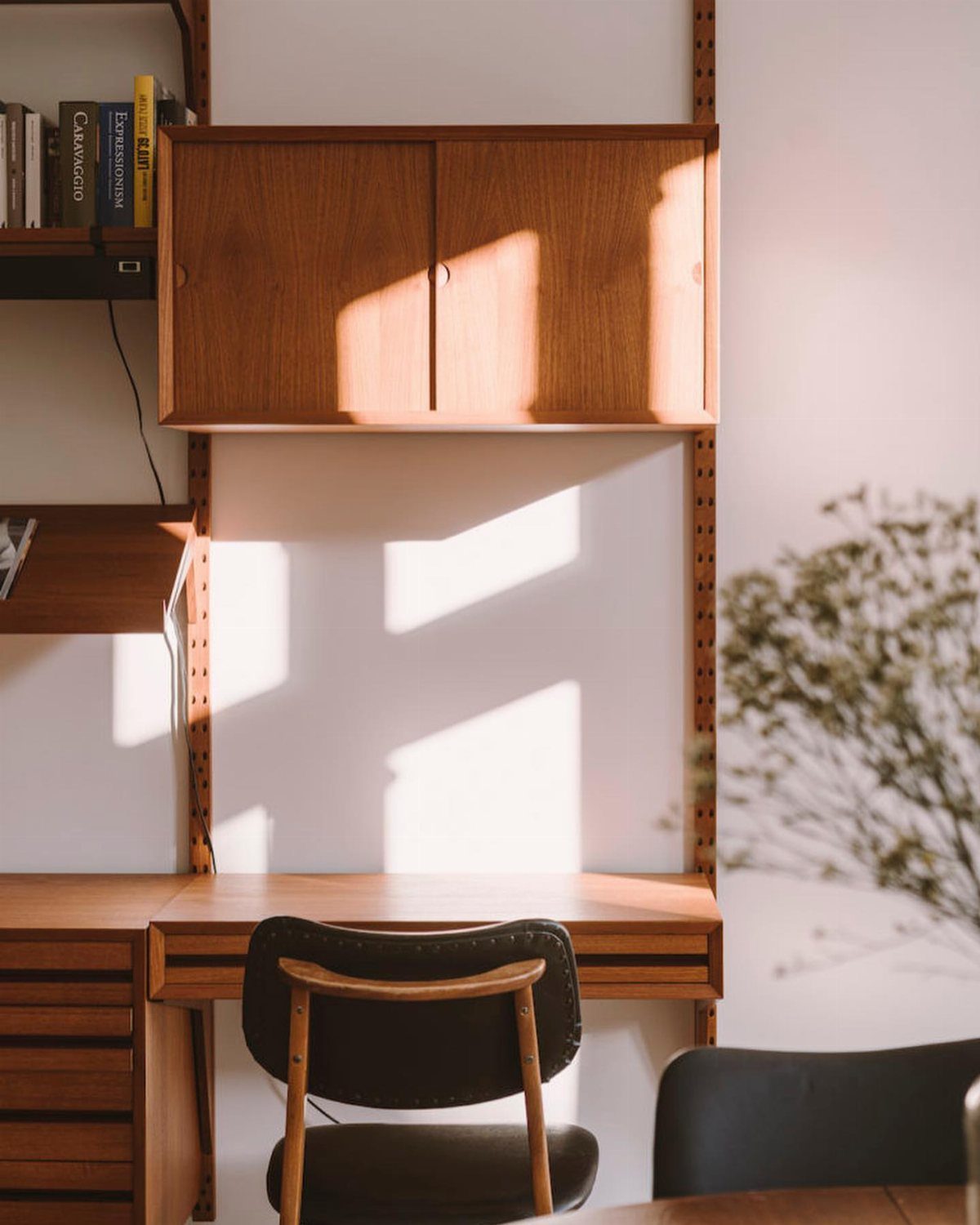
Matching the desk and the wall cabinet in the same wood tone makes a small office read as one built-in piece instead of a pile of furniture.
I like it paired with a black chair, because the dark seat gives the warm grain a clear edge to sit against.
Keep the wood finishes close in color. Two reds or two yellows that almost match look like a mistake, while one tone across both pieces looks planned.
Thrifted or secondhand sets are the cheapest way to get there on a real budget.
2. Choose Iconic Mid Century Modern Desk Designs
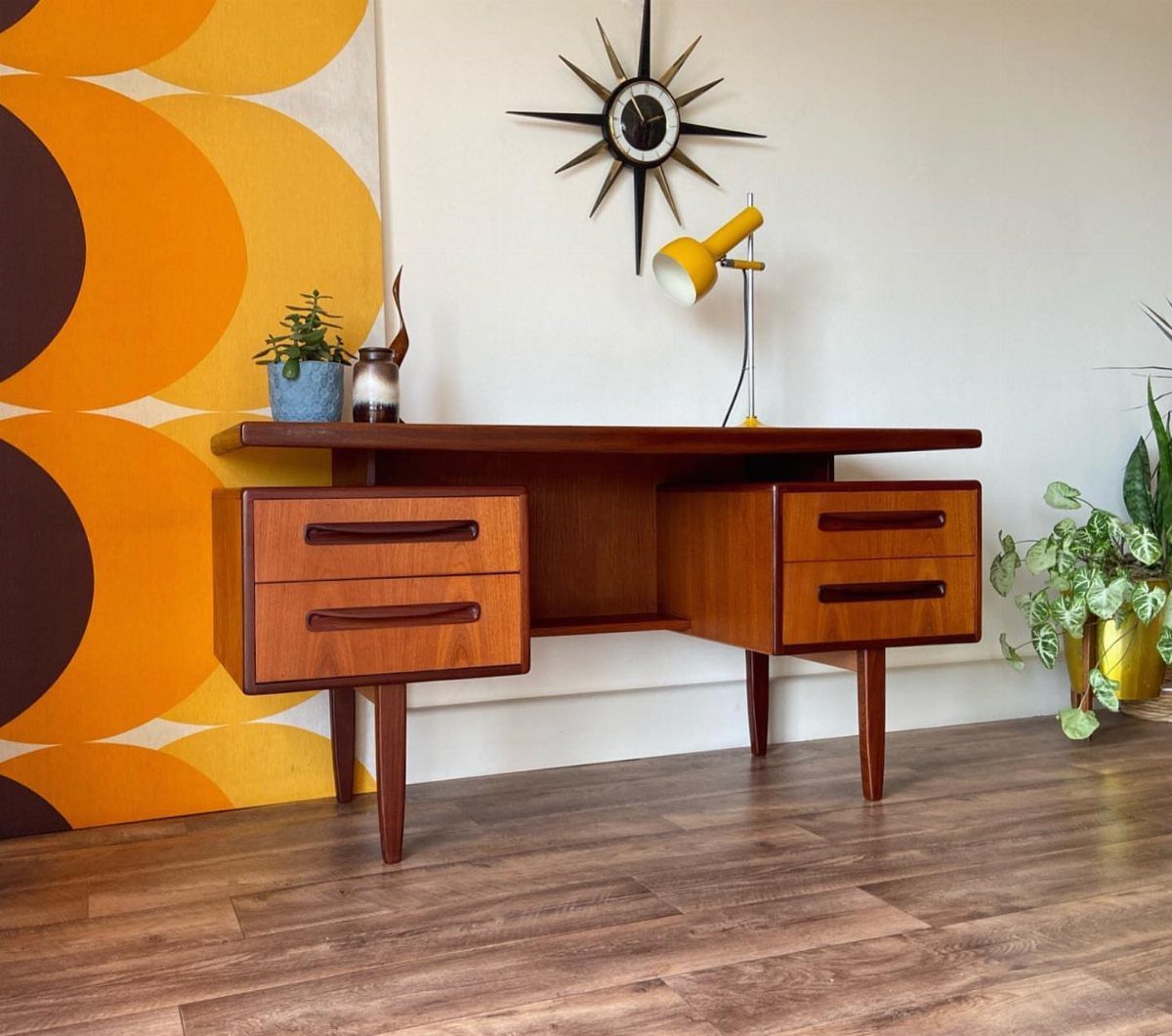
A desk with tapered legs and a row of drawers does the decorating for you, so the rest of the room can stay quiet.
Those slim, angled legs are the detail that says mid-century at a glance, and they keep the floor visible underneath, which makes a small room feel larger.
Choose the desk first, then build around it. One color accent, like a yellow task lamp on a walnut desk, is enough to carry the style.
If a true vintage piece runs past your budget, look for a newer desk with the same leg shape.
3. Desk Near Windows
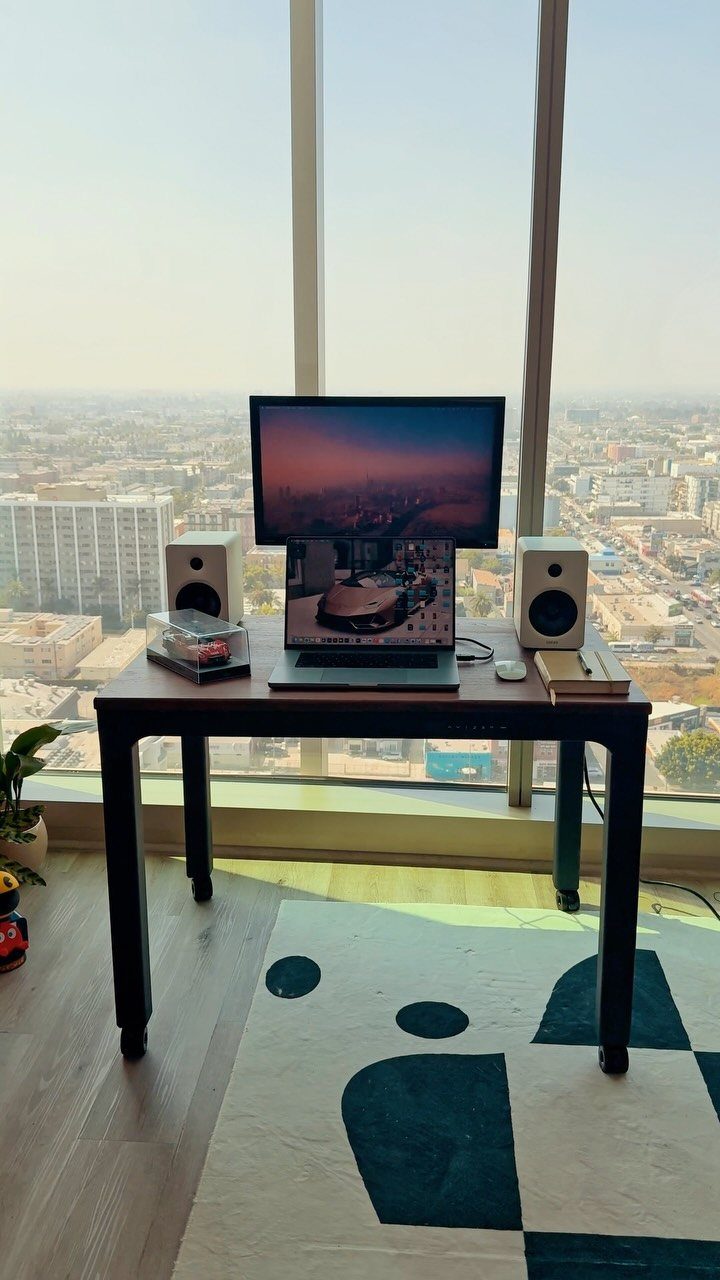
Facing a big window with the desk gives you daylight and a view without spending a dollar, and a dark wood top looks especially good against bright glass.
The maker of this setup called the built-in power outlet "so clutch," and I agree: a laptop, monitor and speakers need power right at the desk.
If your outlets sit on the wrong wall, a power strip fixed under the desk edge keeps cords off the floor.
Watch for glare on the monitor and angle the screen slightly away from the glass.
4. Gallery Wall
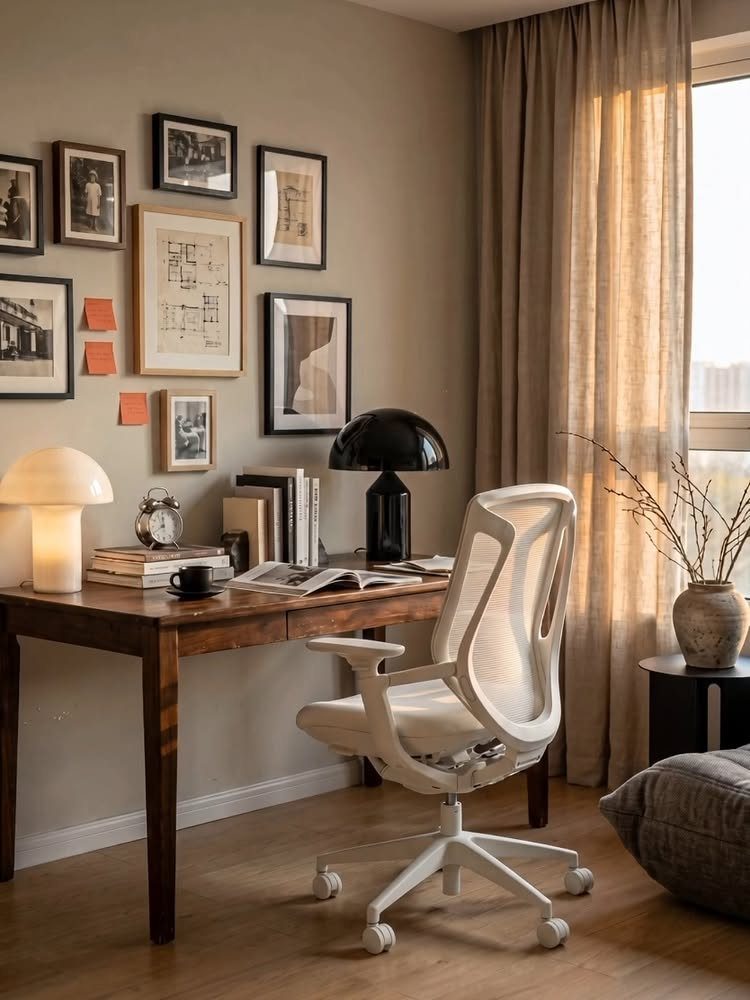
Framed art and pinned notes stacked above a desk give you something to look at when you stop typing. Mixing both is what makes it feel personal and not like a gallery.
Cut paper templates for each frame and tape them to the wall first.
Shuffle them until the spacing looks even, then hang. It costs nothing and saves you from patching extra nail holes, which matters if you rent.
Keep the frames in one or two finishes so a busy wall still looks organized.
5. Snake Plants in Stylish Pots
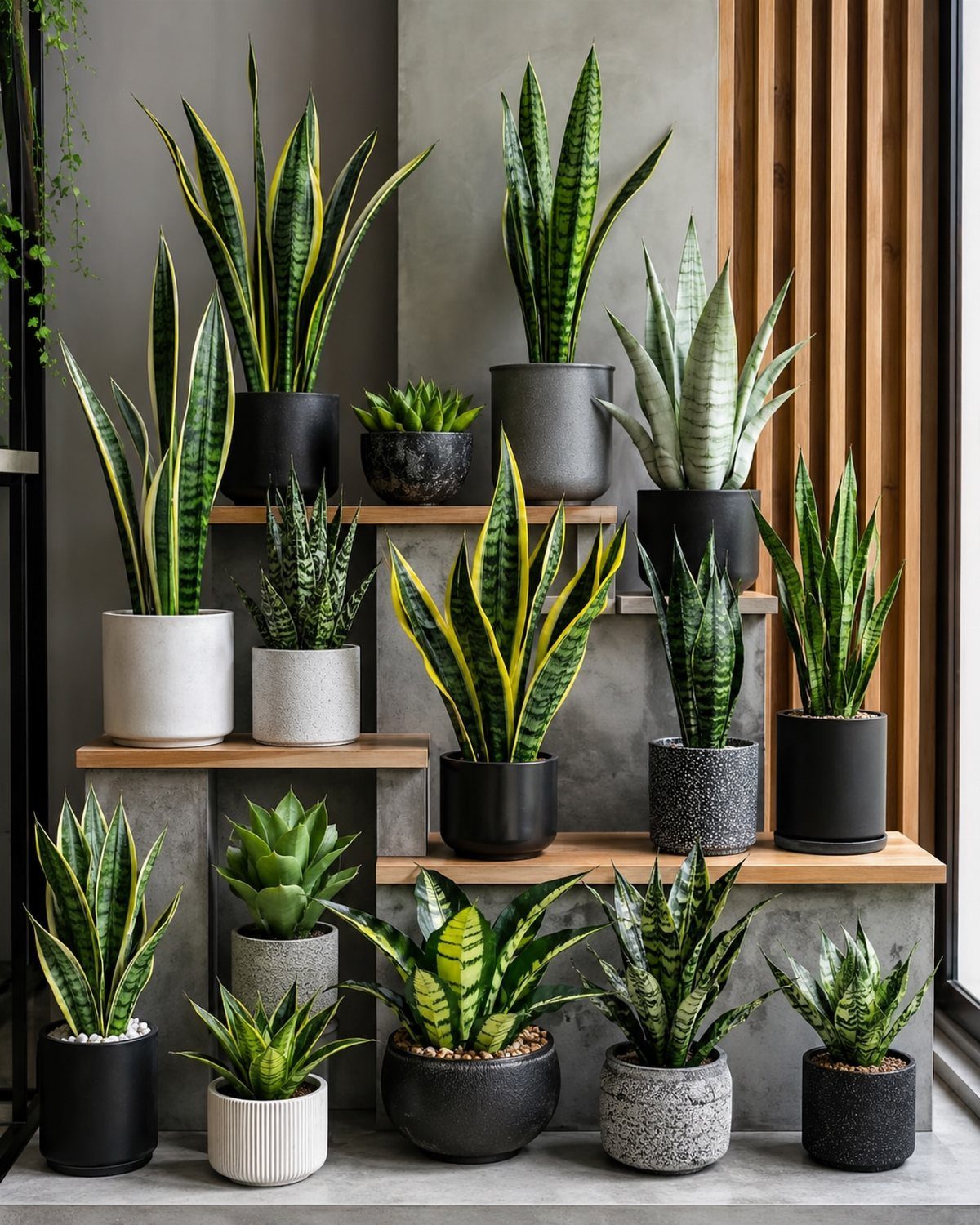
Snake plants suit an office because they are upright and sculptural, and a mix of pot shapes on tiered shelves turns them into a display. Varying the heights of the pots matters more than matching them.
I would keep the pots ceramic and in a limited palette, so the plants stay the focus against wood and grey.
Put a saucer or tray under each pot before it goes on a wood shelf, since overflow from watering can mark the finish.
6. Arrange a Functional Layout
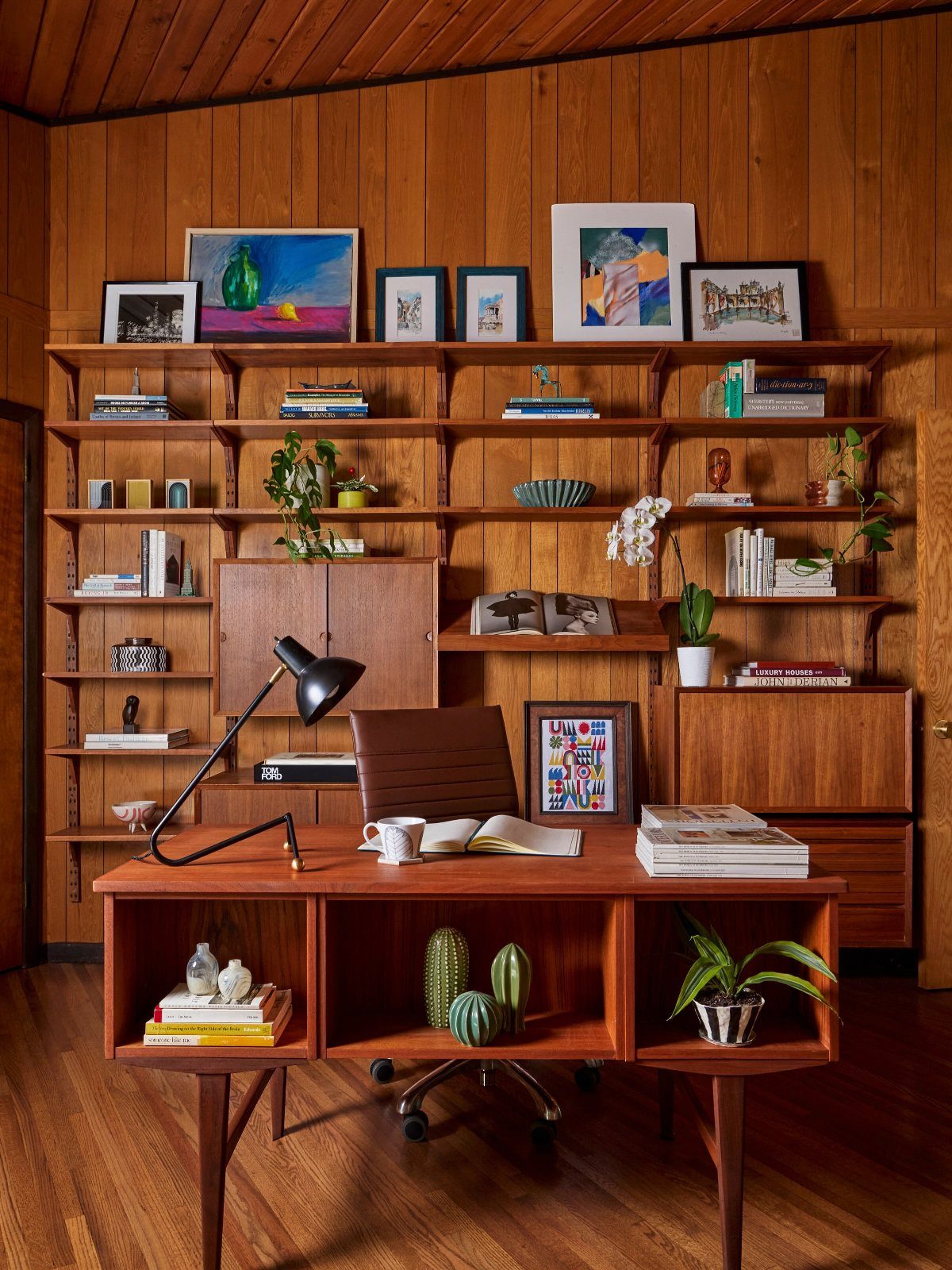
Wall shelving does the heavy lifting in a small office, because it frees the floor for the desk and a chair that can actually roll.
Place the desk so you can reach the shelves without standing up. Anything you grab daily goes at arm height, and decor goes higher.
Leave a clear path behind the chair. Without it, even a good layout feels cramped.
7. Wooden Slat Accent Walls
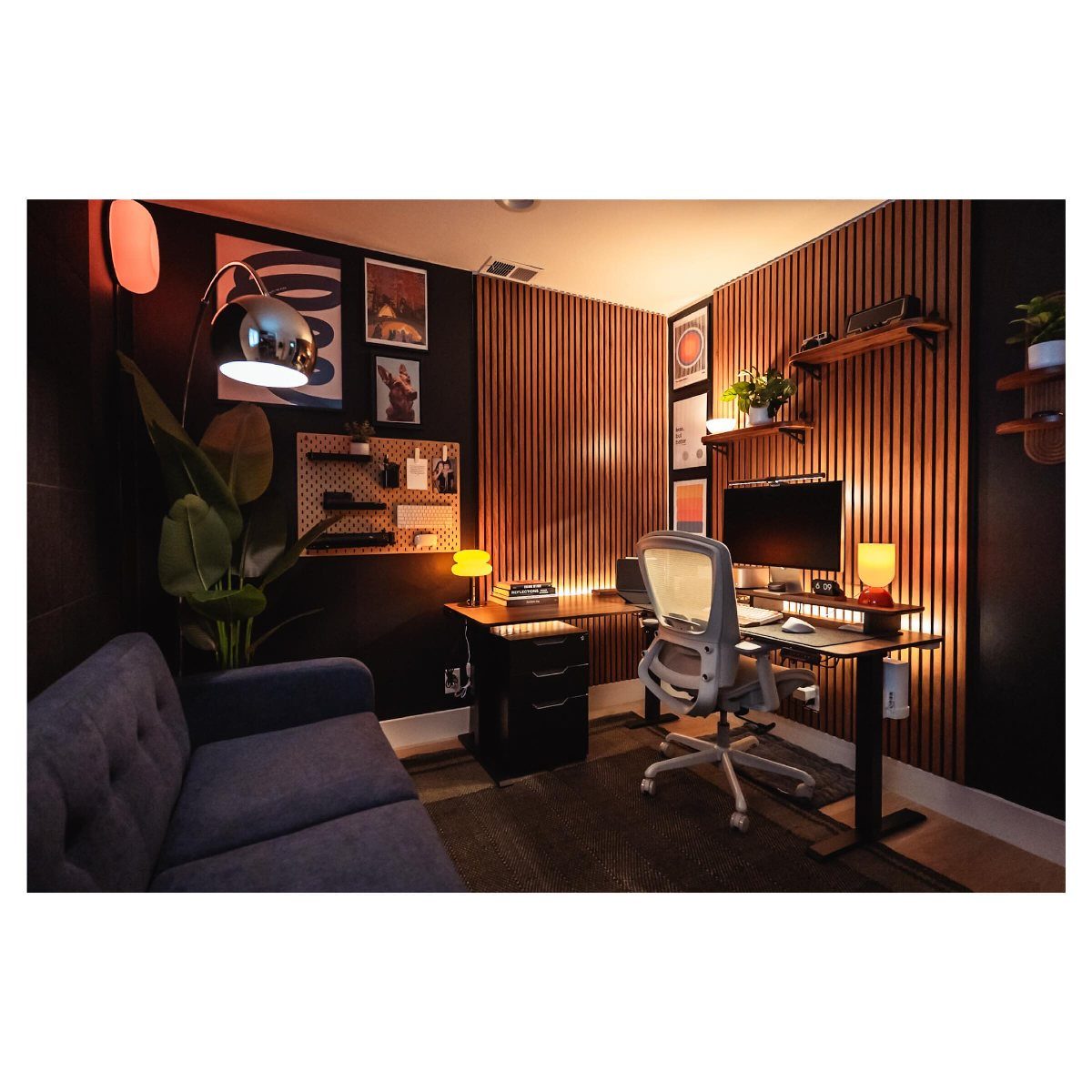
Vertical slats behind the desk give a flat wall texture and a warm backdrop, and they make a good frame for a video call.
In a dark room like this one, I would keep the lamp light warm so the wood reads golden and not gray.
Run the slats floor to ceiling, since full height looks deliberate. Peel-and-stick or lightweight slat panels are the friendlier route if you rent and can’t drill much.
8. Vintage Sideboard for Storage
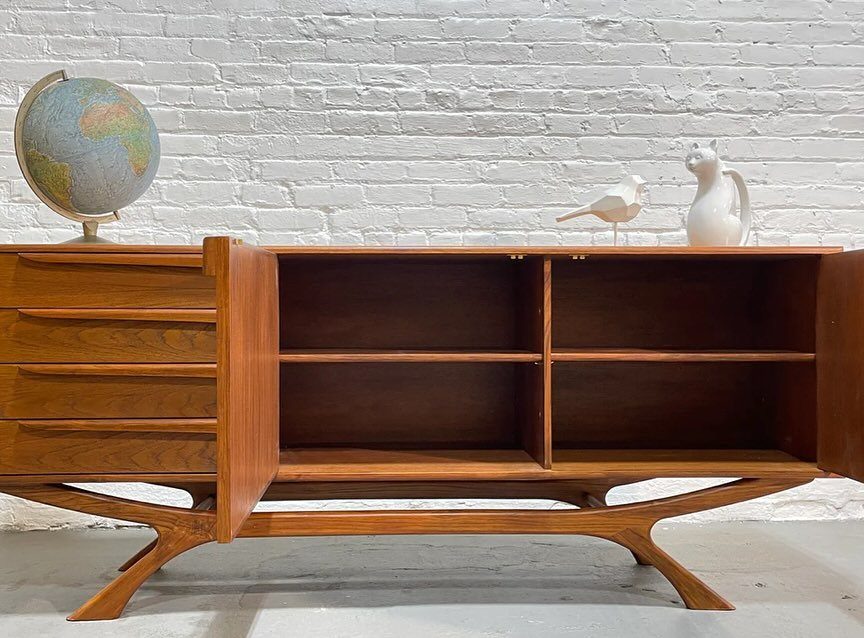
A low credenza on tapered legs gives an office closed storage for paper, chargers and supplies, plus a top surface for a few objects. Doors that hide the clutter matter more than the drawers do.
Keep the top styled lightly: a globe and a pair of figurines is plenty. Secondhand shops and online resale listings are where I would start, because solid vintage pieces cost far less than new reproductions.
9. Retro Leather Desk Chair
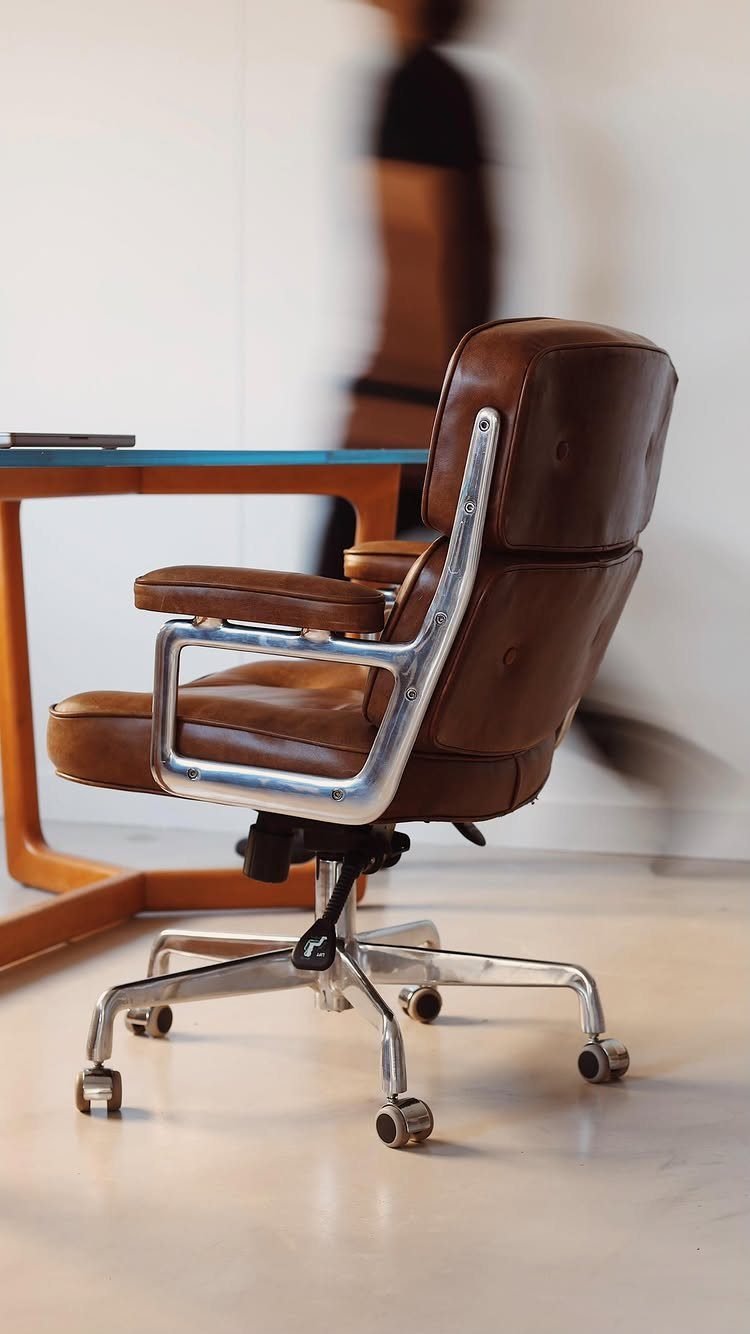
Brown leather with chrome arms and a chrome base is the chair that looks the part and still holds up through a full workday.
Against a bright white room, it reads as a warm anchor instead of a bulky office chair.
Sit in it before buying if you can. Padded seats with real arm support beat a pretty frame, and a chair you dread sitting in defeats the whole setup.
10. Bold Teal Accent Wall
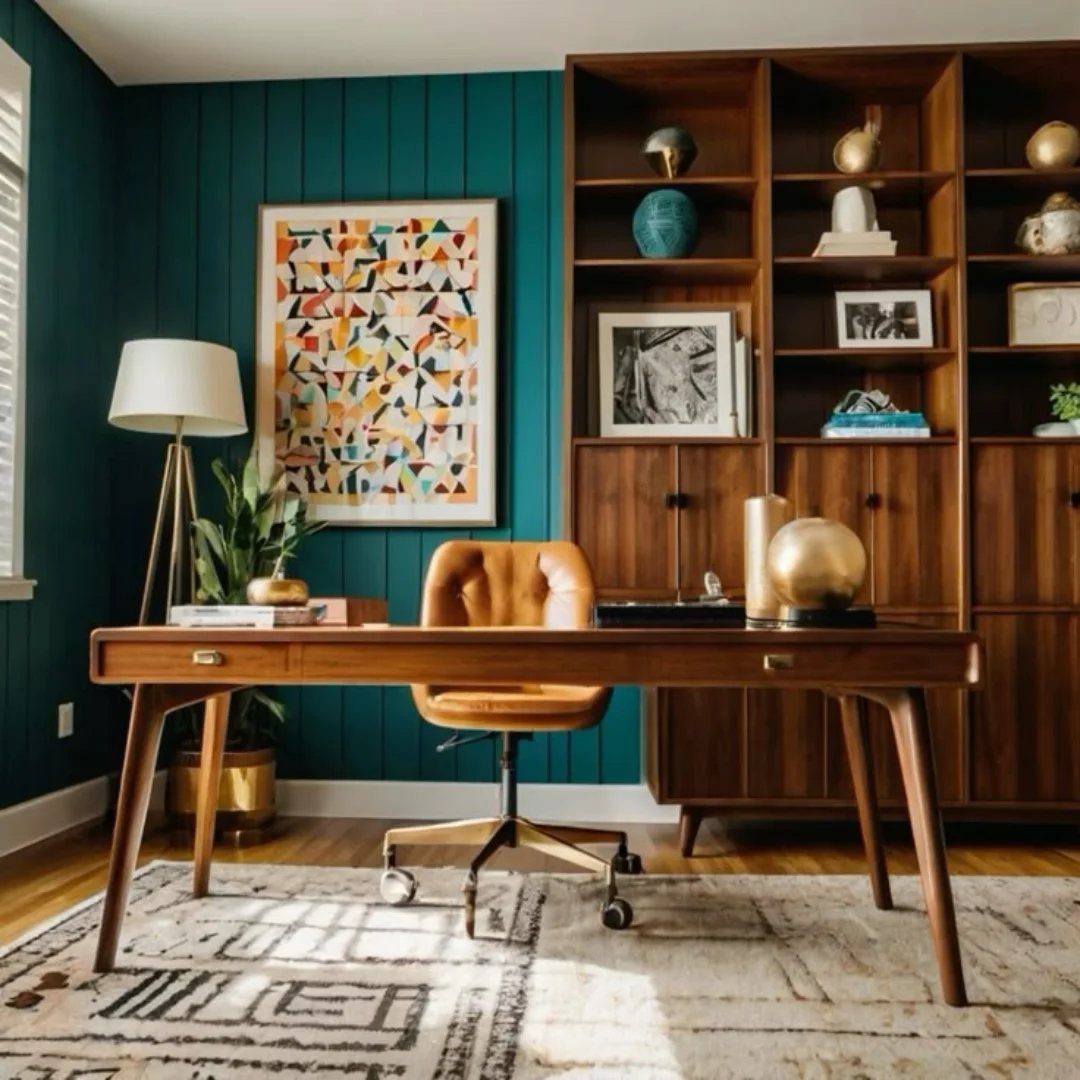
Teal paneling behind a wooden desk and shelving makes the wood look richer, because blue-green and warm brown sit opposite each other.
Paint the paneled wall only and leave the others light. Test a sample patch first, since a deep color shifts a lot between daylight and lamplight.
11. Earth Tone Olive Green Walls
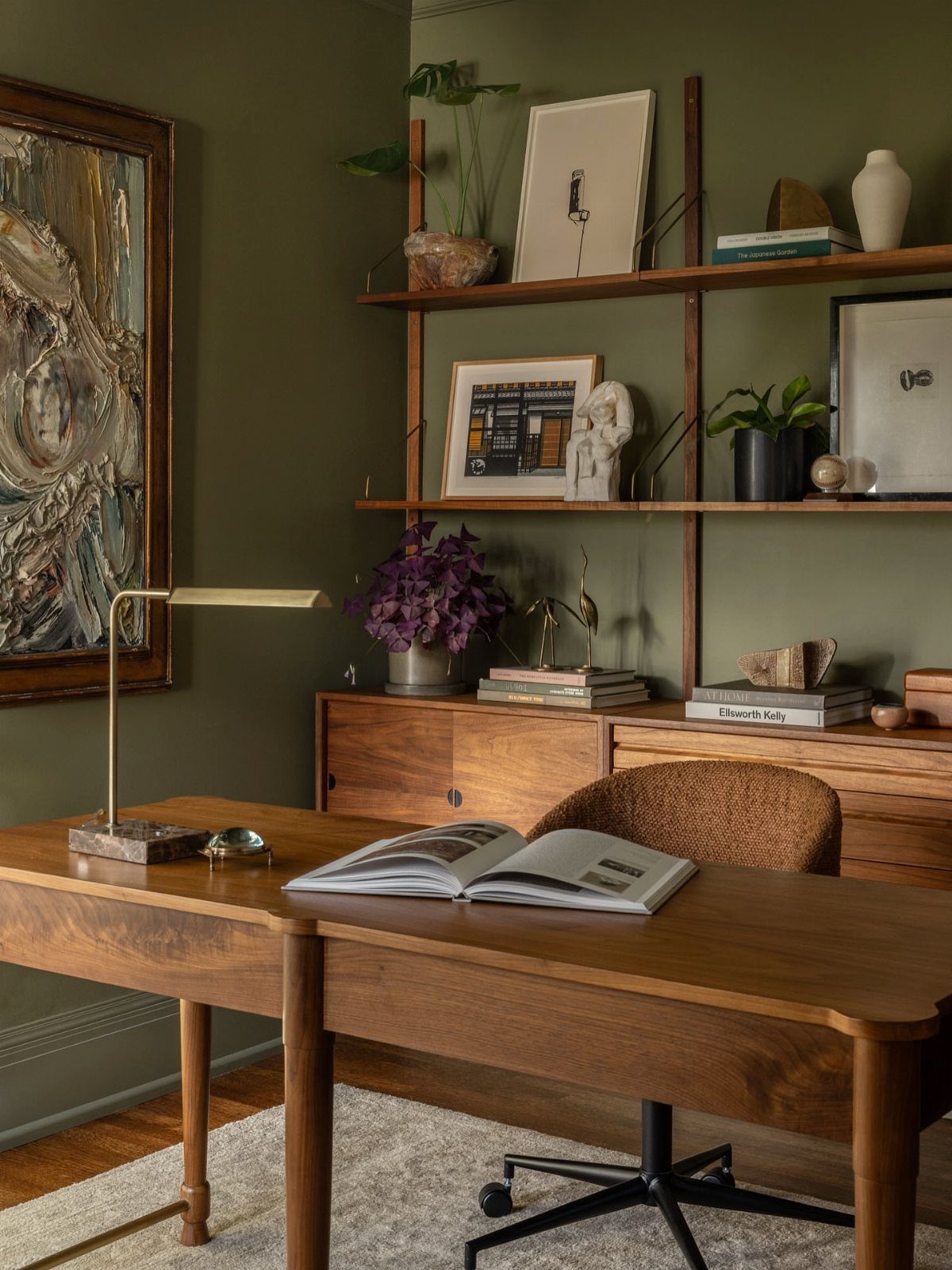
Muted olive green is the easiest bold color to live with, because it behaves like a neutral next to walnut or teak. Open shelving, a lamp and a few plants pick up the green and keep the room calm.
I would choose a matte finish with a gray undertone over a bright, yellow-leaning green. Paint every wall if the room is small; the color wraps the space instead of chopping it up.
12. Full Wood Wall Paneling
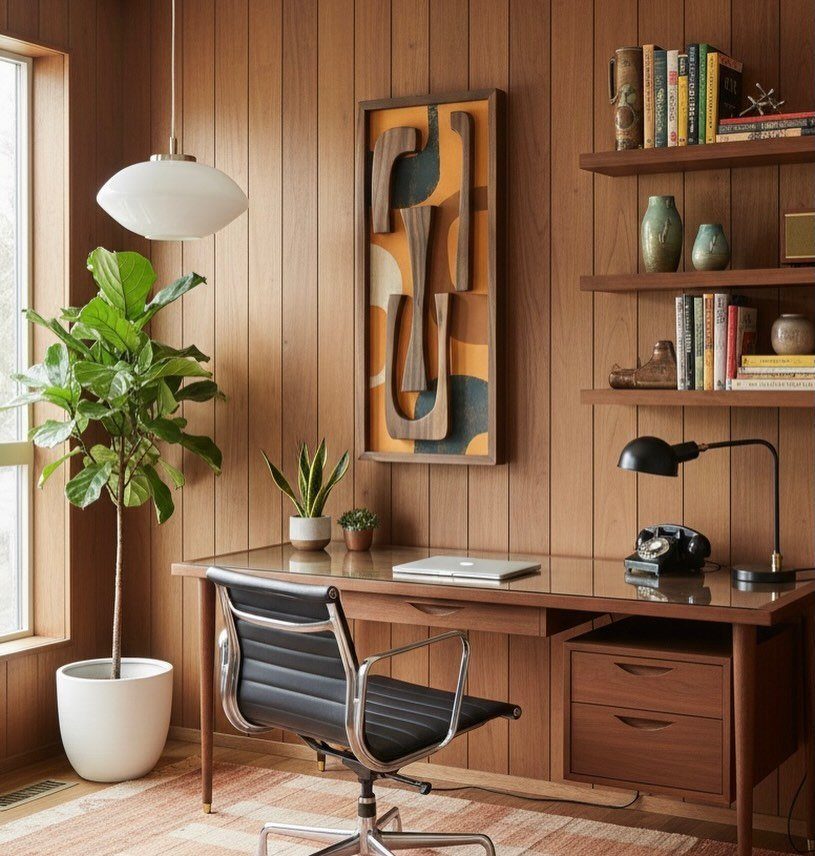
Wood on every wall turns an office into a warm, enclosed room, and floating shelves keep it from feeling heavy because the paneling shows behind the books.
Against all that brown, a black leather chair and one large plant give the eye somewhere to rest.
Panel kits or thin wood sheets cost far less than solid boards. Go for one consistent grain and tone, and let the art be the only loud thing.
Focus on Functionality
Mid-century designers built pieces from bent plywood, fiberglass and steel, and they shaped furniture around the human body. That second part is what matters for an office you sit in for hours.
Test any desk or chair for posture first, style second. Your feet should rest flat, your arms should land naturally at the desk, and the seat should let you shift without strain.
Clean lines and organic shapes make a good ergonomic piece look simple, so you rarely pay extra for looks. A chair that supports your back and a desk at a comfortable height beat any decorative detail on the page.
Brass hardware and walnut or teak finishes are nice extras. Choose them after the fit is right.
Embrace Biophilic Design
Bringing the outdoors in starts with materials. Wood is the simplest, but rattan chairs and a jute rug add texture that balances sleek, hard-edged furniture.
A jute rug is the easy renter move: it goes down in a minute, warms up the floor and softens the sound in a room with a hard surface.
Light is the bigger lever. If you can, set up where the most daylight lands and keep curtains thin or open during work hours.
Enlarging windows is the extensive route, and it only makes sense if you own the place and have budget for it. For most of us, clearing the glass of clutter gets you most of the benefit.
Layer Lighting for Comfort
Use 2 layers at minimum: overhead light for the whole room and a lamp at the desk for the work itself.
Together they cut eye strain and glare on the screen, and you can dim or brighten each one as the day changes.
For the desk lamp, pick one with an adjustable arm or head so the light lands exactly on your work and not on the monitor.
Look beyond the basic banker’s lamp. Sculptural designs inspired by Noguchi or Castiglioni work as task lights while you type and as objects on the desk when switched off.
Brass bases, wooden accents or a colorful metal shade all fit the mid-century look. Pick the material that matches your desk, and the lamp will pull the room into alignment.
Frequently Asked Questions
What are some good ideas for a Mid-Century Modern office?
A tapered-leg desk with a bank of drawers does most of the styling work on its own, so the chair, shelves and walls can stay plain.
Facing a big window for daylight costs nothing and looks great with a dark wood top.
Is Mid-Century Modern still in style in 2026?
Yes.
The style keeps getting used in homes, hotels and offices because its clean lines and warm materials hold up over time. Designers still borrow from the 1940s–1960s era, and the look fits a home office well.
What are key elements of MCM decor?
The core elements are clean lines, organic shapes, and warm natural materials like walnut, teak and leather. Brass accents and hardware, earth-tone palettes with muted colors, and geometric patterns round it out.
Designers of the original furniture molded plywood, fiberglass and steel to fit the body, which is why a good MCM chair looks sculptural and still feels comfortable after hours at a desk.





