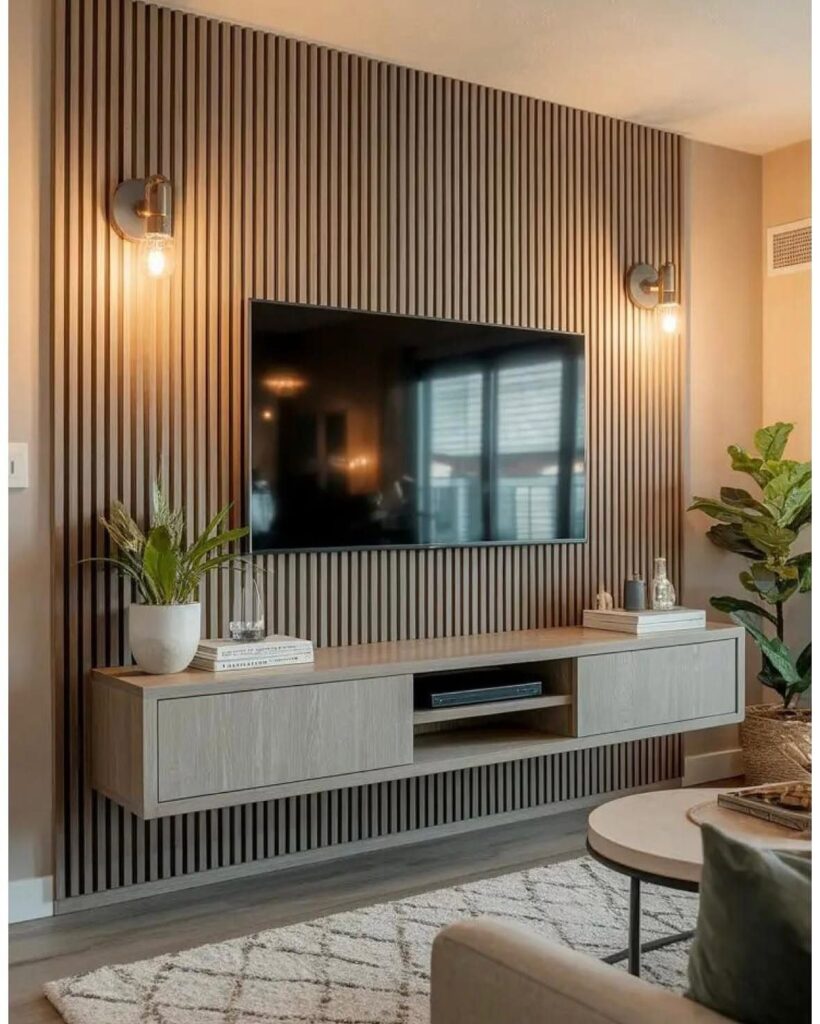
The wall behind your TV decides this choice before your taste does: a shared wall with a bedroom, a nursery, or a neighbor’s unit needs mineral wool batts or dense acoustic foam tucked behind the wood, while a wall backing onto a closet or hallway can usually skip that step.
The ideas run from plain vertical slats to live-edge panels and marble pairings, and they differ most in how much backlighting, shelving, and stone you add around the screen.
1. Wood Slat Feature Wall
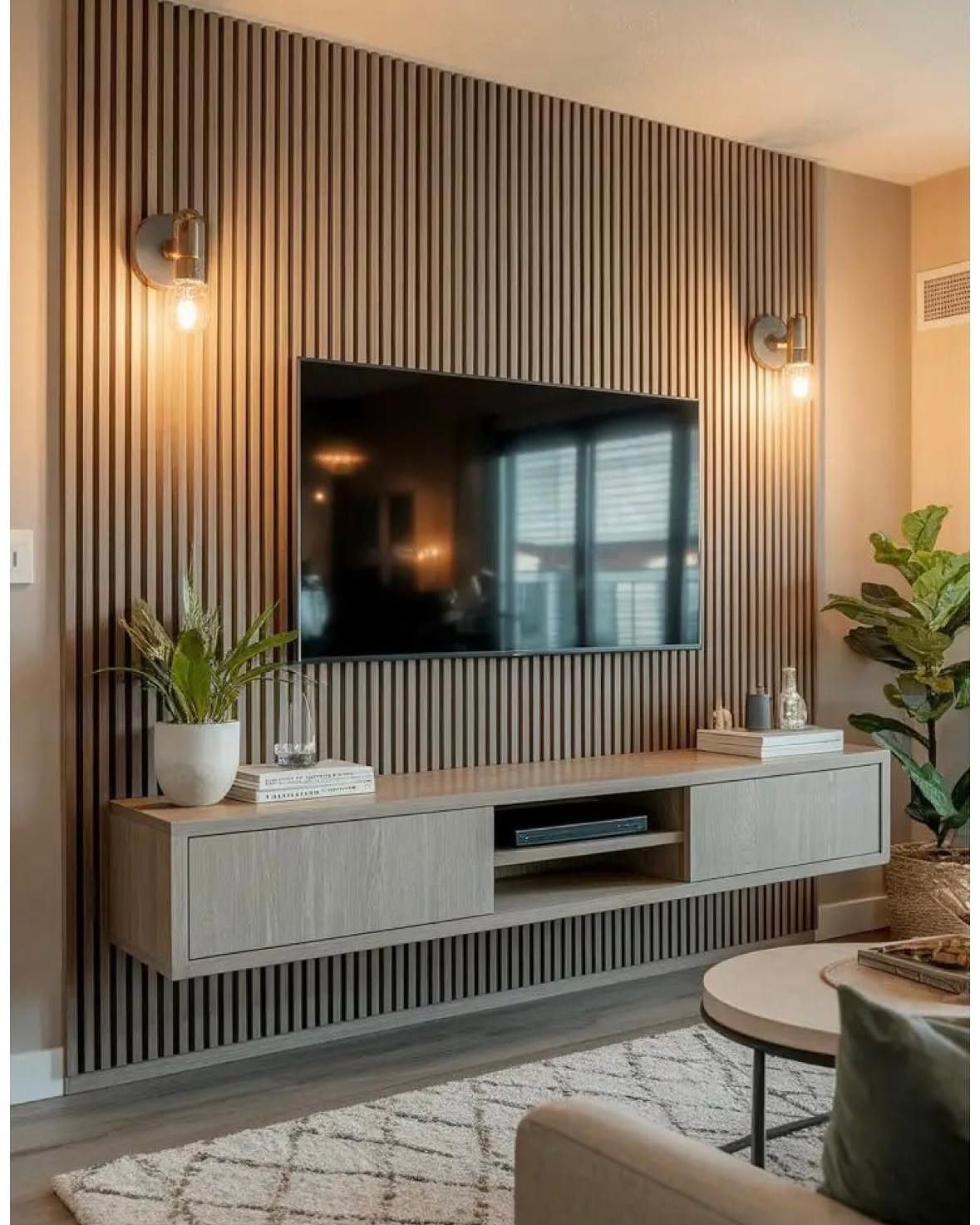
Vertical slats do the most work for the least fuss. The vertical lines pull the eye up, so a wall-mounted TV reads as part of the wall rather than a black rectangle stuck on it.
I’d keep the console floating and in a quiet color, like the grey one here, so the wood stays the star.
Run the slats past the screen and a little beyond each side, then let the sconces and a plant soften the edges.
Renters should read the lease first, since drilling into the wall can cost you part of your deposit.
2. LED Backlighting Behind Panels
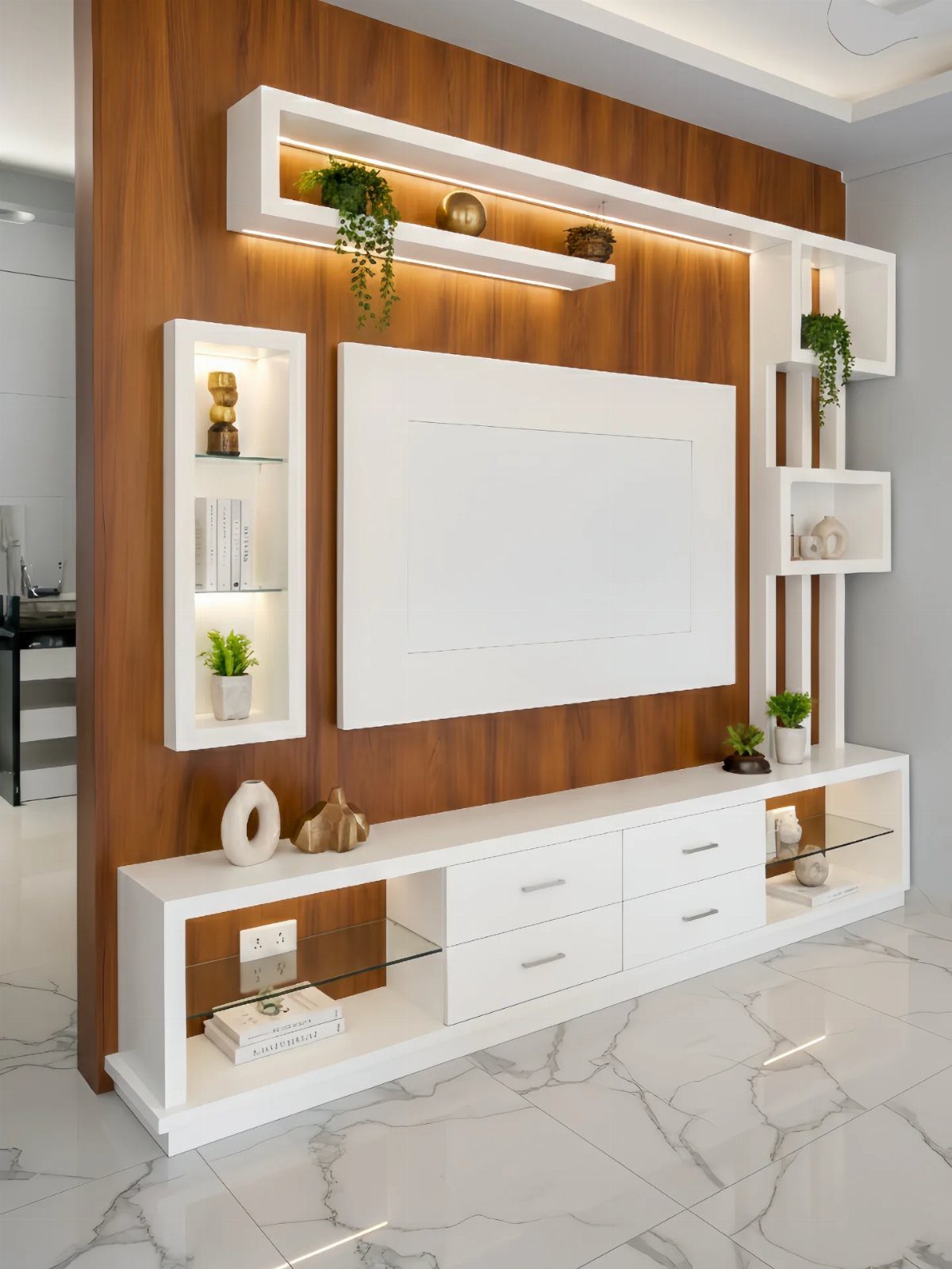
Warm LED light tucked behind a wood panel gives the wall a glow that outlasts the movie. It also softens the contrast between a bright screen and a dark room, which is easy on the eyes at night.
White shelving built into the panel keeps the wood from feeling heavy, and it gives the backlighting a clean surface to bounce off. Pick warm white strips over cool ones, since cool light turns wood grain gray and flat.
Hide the strip edge so you see the glow, never the diodes.
3. Shelves with Similar Wood Finishes
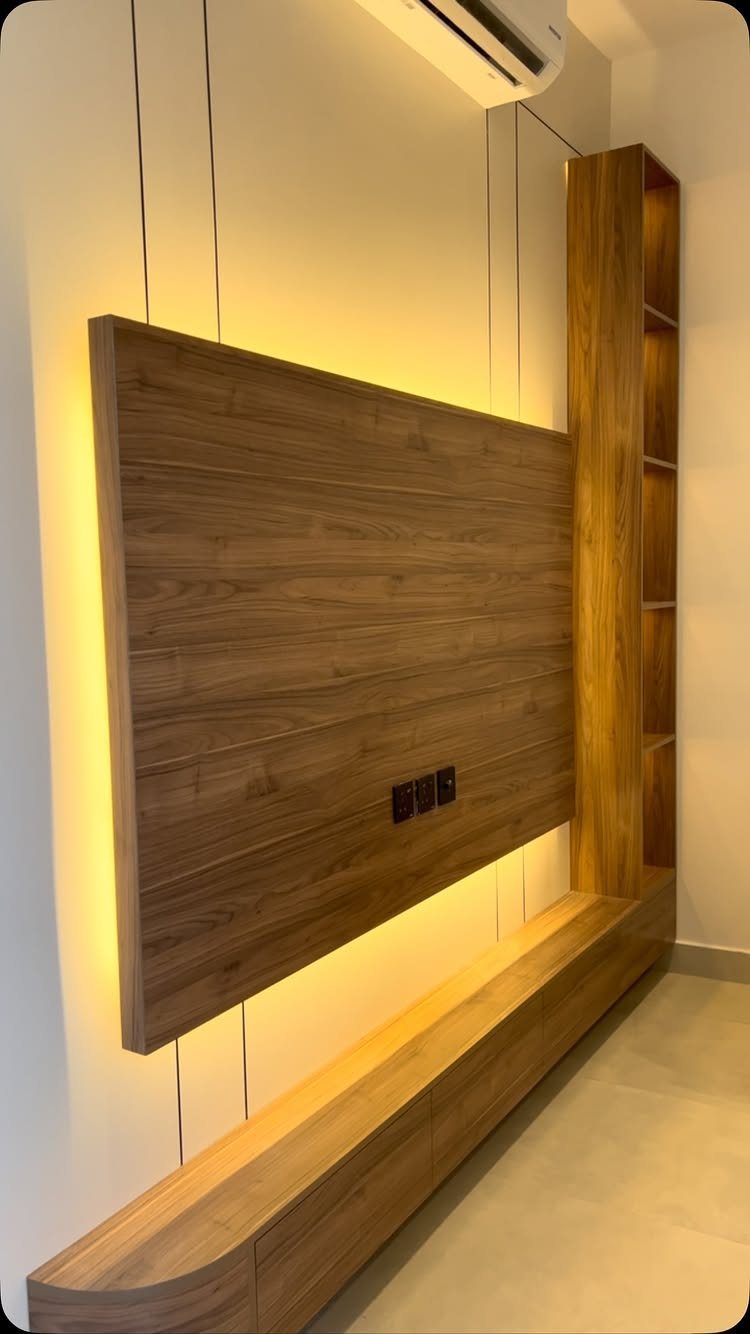
Matching the shelves and console to the panel makes one wall out of three separate pieces. A tall open bookshelf beside the TV panel and a long low console below it share a finish, so nothing competes.
I’d match the tone first and the grain second; a close match reads as deliberate, while a near miss looks like a mistake. Buy pieces from one maker or bring a panel sample to the store to compare in daylight.
4. Wood Slats Paired with Marble
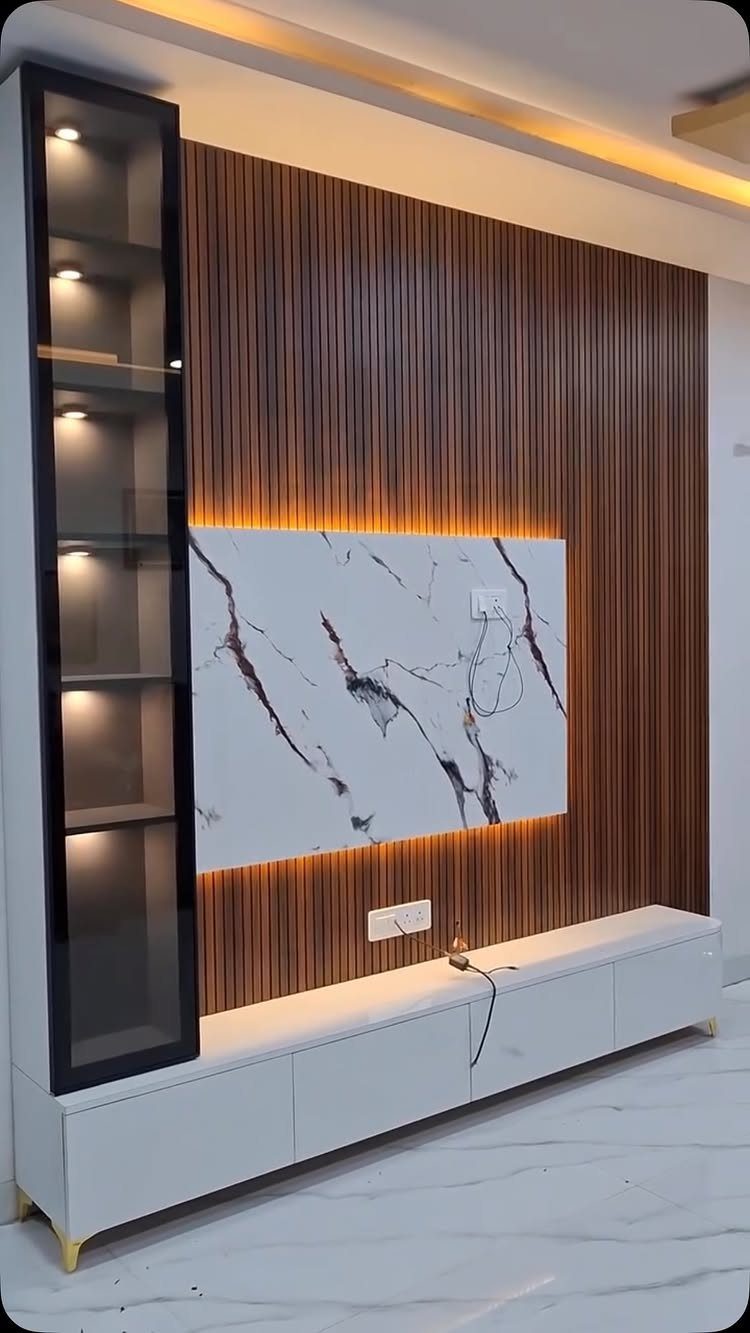
Brown wood slats next to a white marble panel is a contrast that works because each material calms the other. The wood adds warmth, and the marble keeps the wall from feeling like a cabin.
I like the marble placed in the center behind the screen, with backlight to bring out the veining. Real stone gets pricey and heavy, so a marble-look panel is the budget route for a weekend project.
Keep the console white and floating so the wall stays clean.
5. Live-edge Wooden Panels
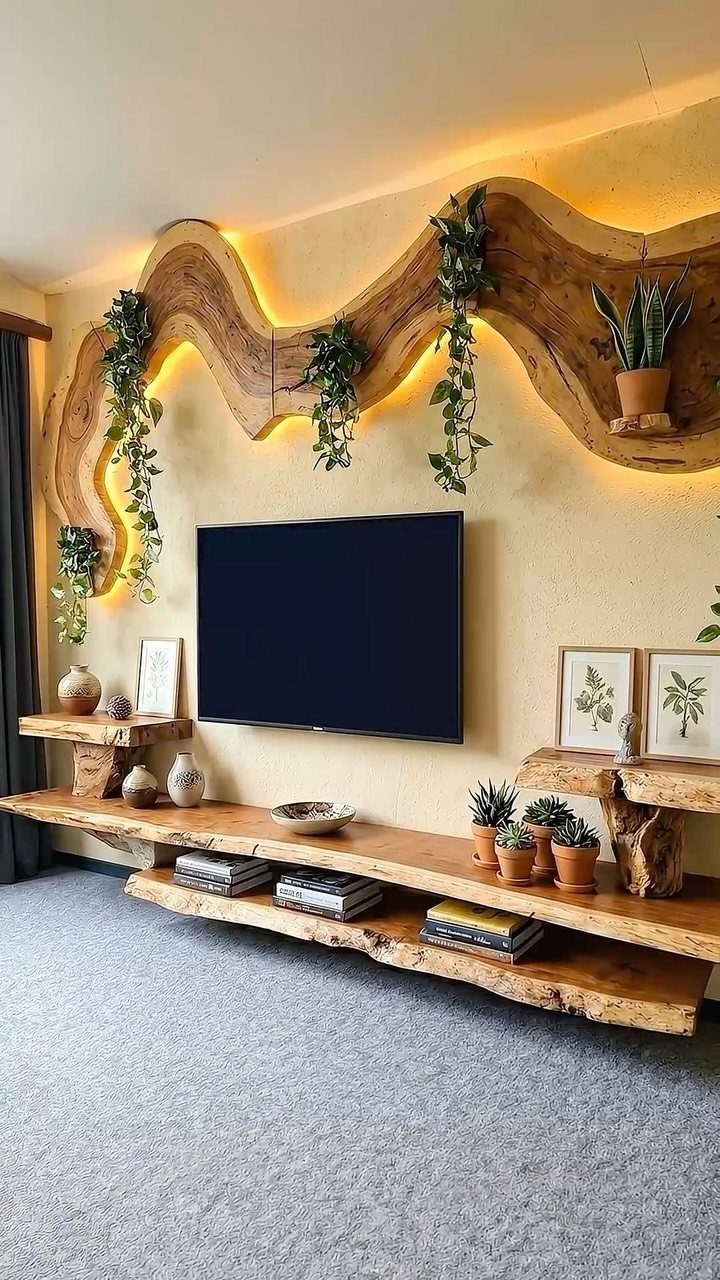
A live-edge panel brings a wavy, natural outline to a wall that is usually all straight lines. Framing the TV with one gives the screen a softer border than a standard rectangle.
Floating shelves in the same wood, holding plants, books and pottery, finish the look. I’d keep the shelf styling sparse, because the edge itself is already busy.
Backlight the panel so the curve glows against the wall, and the shape reads even with the TV off.
Sound Absorption Needs
Check which room sits on the other side of that wall first, since the answer decides how much sound treatment the panels need to do.
A TV wall shared with a bedroom, a nursery, or a neighbor’s unit in an apartment is where sound control matters most. A wall that backs onto a closet, a hallway, or an exterior wall can usually skip it.
If the wall does need help, add it behind the wood, not on top of it. Mineral wool batts or dense acoustic foam in the cavity or between furring strips cost little and fit a weekend schedule.
Wood slats alone mostly break up echo inside your room. They do very little to stop bass from traveling through to the next one.
Test it first: play a loud movie scene and have someone listen next door.
Tools for Installation
The tool list is short, and most of it is probably in your house already: a tape measure, a pencil, a spirit level, a saw, and either construction adhesive or screws.
The level is the one tool you can’t fudge, because a panel that drifts even slightly shows against the straight edges of a TV.
Mark your layout on the wall with light pencil lines before cutting anything. Measure twice, then cut all the pieces of one length together so they match.
Choose adhesive when you want a clean face with no visible fasteners, and screws when you want to remove the panels later or need a firm hold into studs. Screws are the safer pick for anything heavy.
A stud finder is a cheap add-on if you plan to mount the TV itself.
Frequently Asked Questions
Can you hang a TV on wood panel walls?
Yes, a wood panel wall can hold a TV mount. Hit a stud and the mount holds the most weight, which makes a $10 stud finder worth buying before you drill anything into a heavy set.
Before any drilling, renters should check the lease, because a few anchor holes can come out of the deposit.
What are those wood wall panels called?
They’re usually called wood slat panels, and you’ll also see them sold as reeded or acoustic slat panels.
Vertical slats are the version I’d pick for a TV wall, because the upright lines draw the eye up and make a wall-mounted screen read as part of the wall.
Do wood slat panels help with sound?
Only a little. Inside the room, slats soften echo and flutter; a thin layer of wood does little against bass that wants to travel through the wall.
If the wall is shared with a bedroom, a nursery, or a neighbor’s unit, add mineral wool batts or dense acoustic foam behind the wood, in the cavity or between furring strips.





