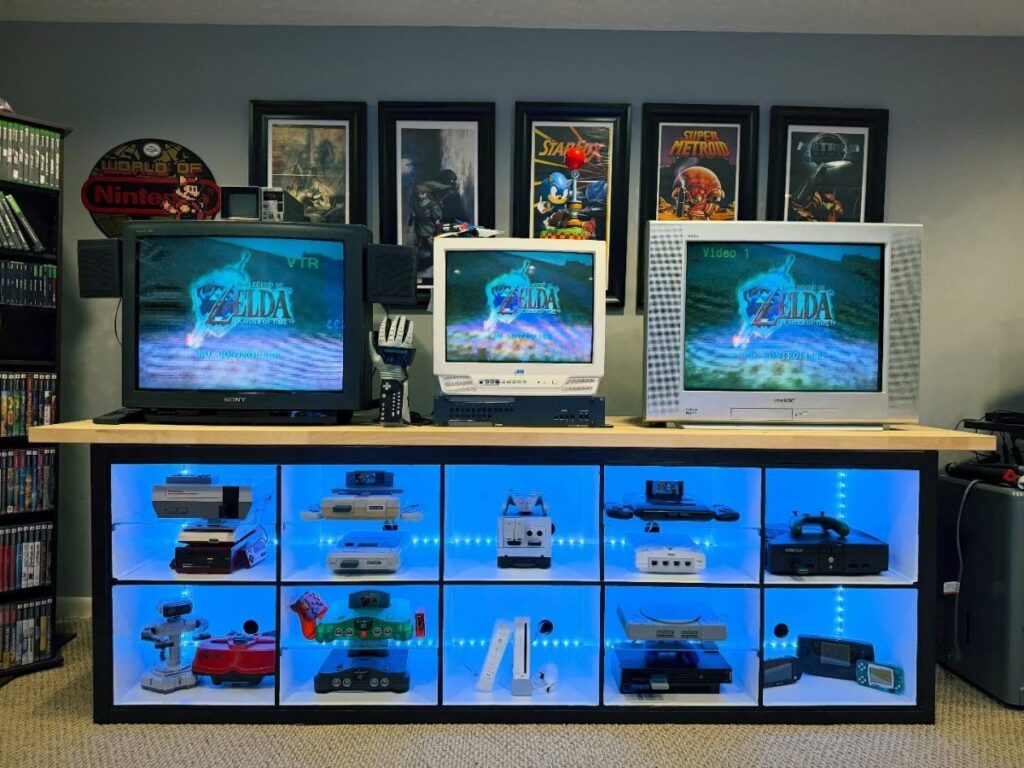
Scale varies a lot across these ideas: some need only a shelf, a tube TV and a patch of floor, while others call for full arcade cabinets, a wall of stacked CRTs or a pinball machine with its own footprint.
Your room’s size decides which one is yours: a renter in a tight corner should stay with shelving, a bean bag or a rug that moves along at the next lease, while a spare room with a clear path from the door can take cabinets.
Either way, sticking to one era and one lighting color makes the room look planned, like LED strips washing a single shelf in blue.
1. Gaming Shelves with LED Lighting
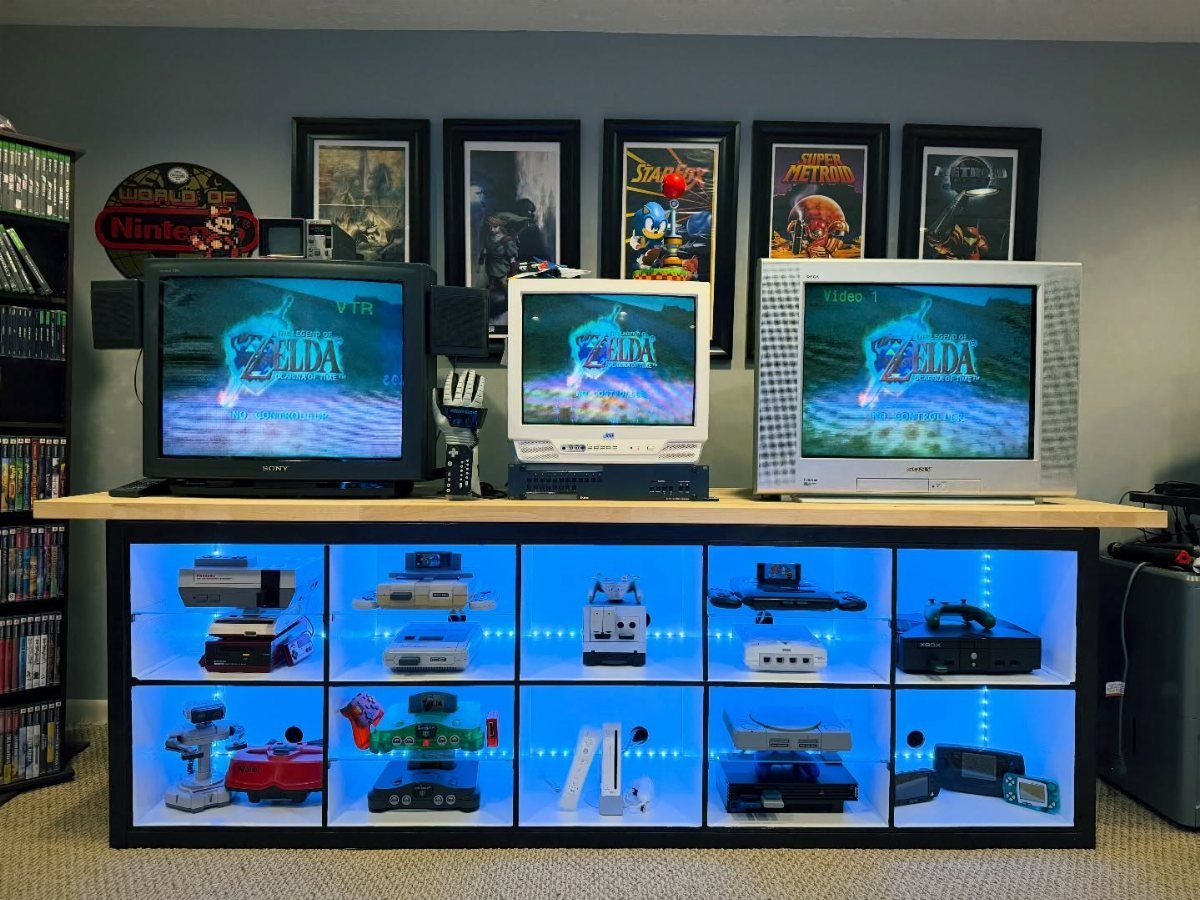
Blue LED strips behind a black shelving unit give consoles a glow that makes a wall of plastic look deliberate. Black shelves hide the cords and the lighting does the decorating, so there’s little else to buy.
I’d stick to one LED color, as here, and keep it on the shelf itself rather than scattering accents around the room. Mixed colors turn a shelf into a mall kiosk.
Run the strip along the back edge of each shelf so the light washes the consoles instead of shining into your eyes while you play.
2. Cozy Retro Gaming Corner
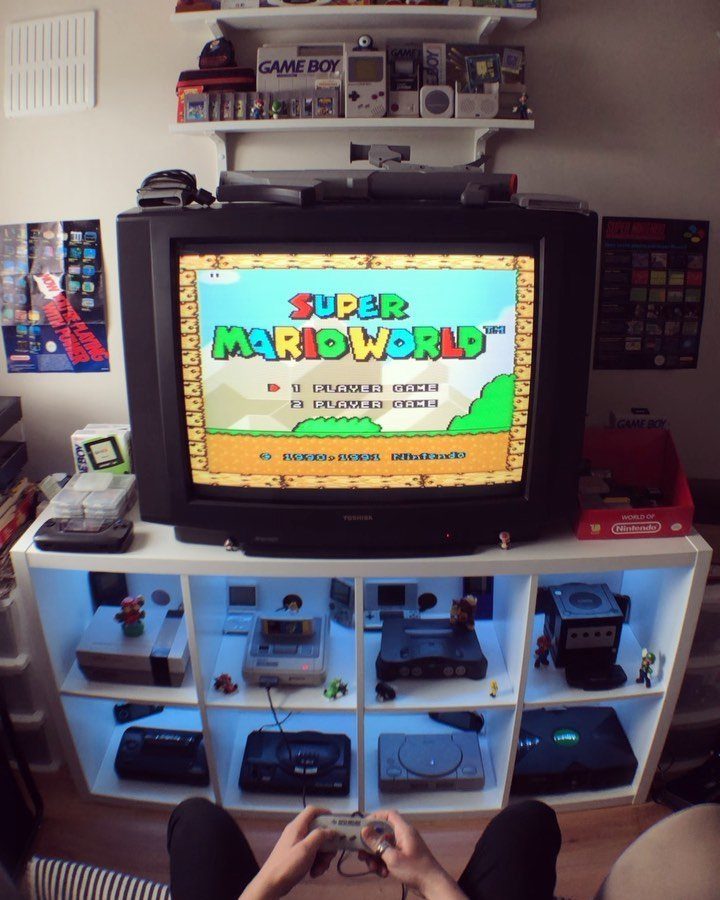
A single white shelf, a CRT and a spot on the floor is all a gaming corner needs. That’s why it suits renters and small rooms: nothing gets built, and the whole setup can move with you.
White shelving keeps a tight corner from feeling heavy, and it lets the colorful consoles and Game Boy accessories carry the look.
I’d keep the TV low so the controller sits at a natural height, and put the consoles you actually play within arm’s reach.
3. Bean Bag Seating
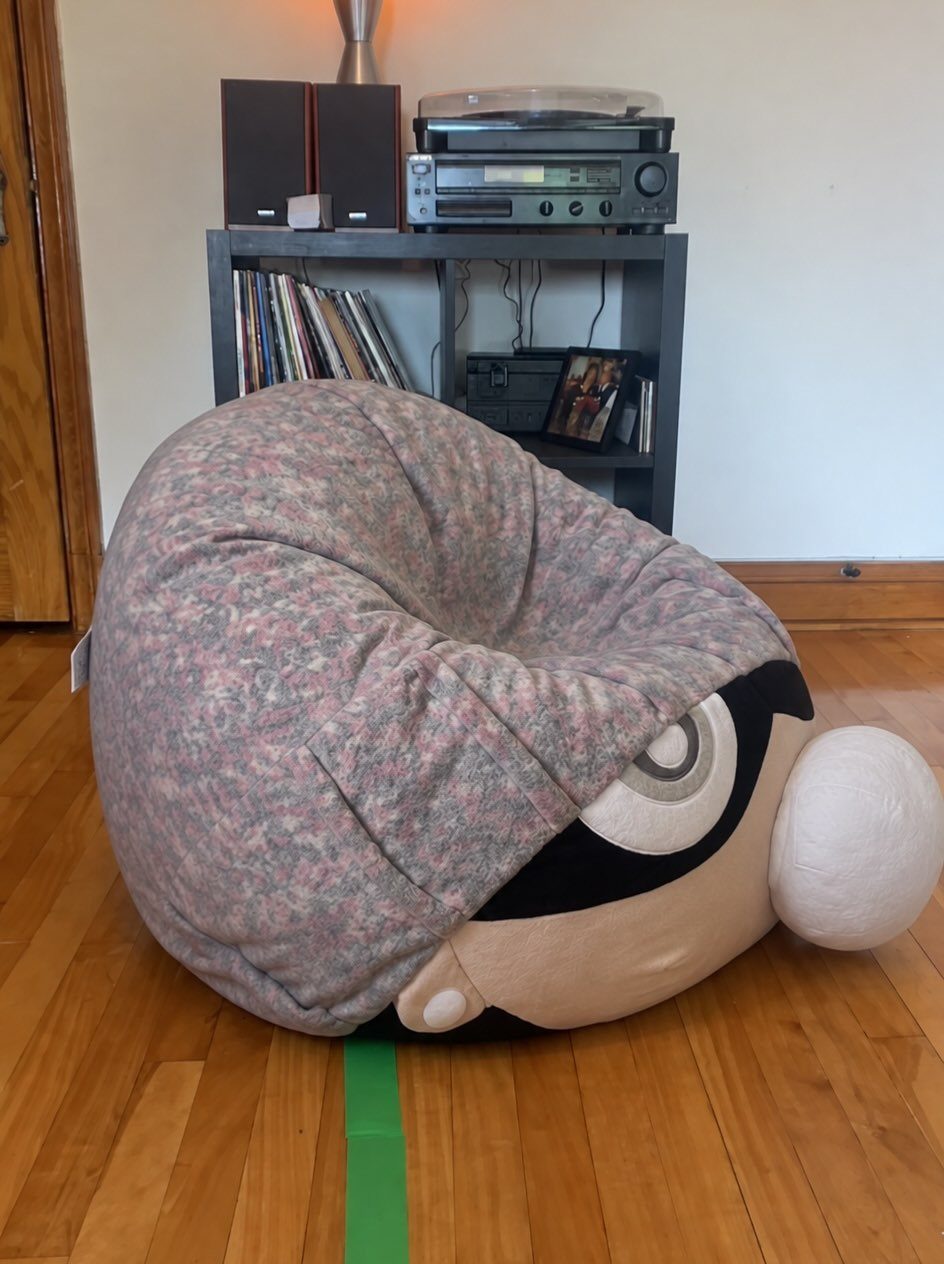
A character-shaped bean bag, like this Kirby, does two jobs: it’s seating and it’s the room’s one-line joke. It also sits directly on the floor, so it needs no frame, no legs and almost no budget.
Pick one that matches a game you actually love, because it ends up drawing every eye in the room. Placing it near a media shelf, as here, keeps it close to the screen and records without crowding the walkway.
Soft and low beats a stiff gaming chair for long Saturday sessions.
4. Authentic Arcade Cabinets
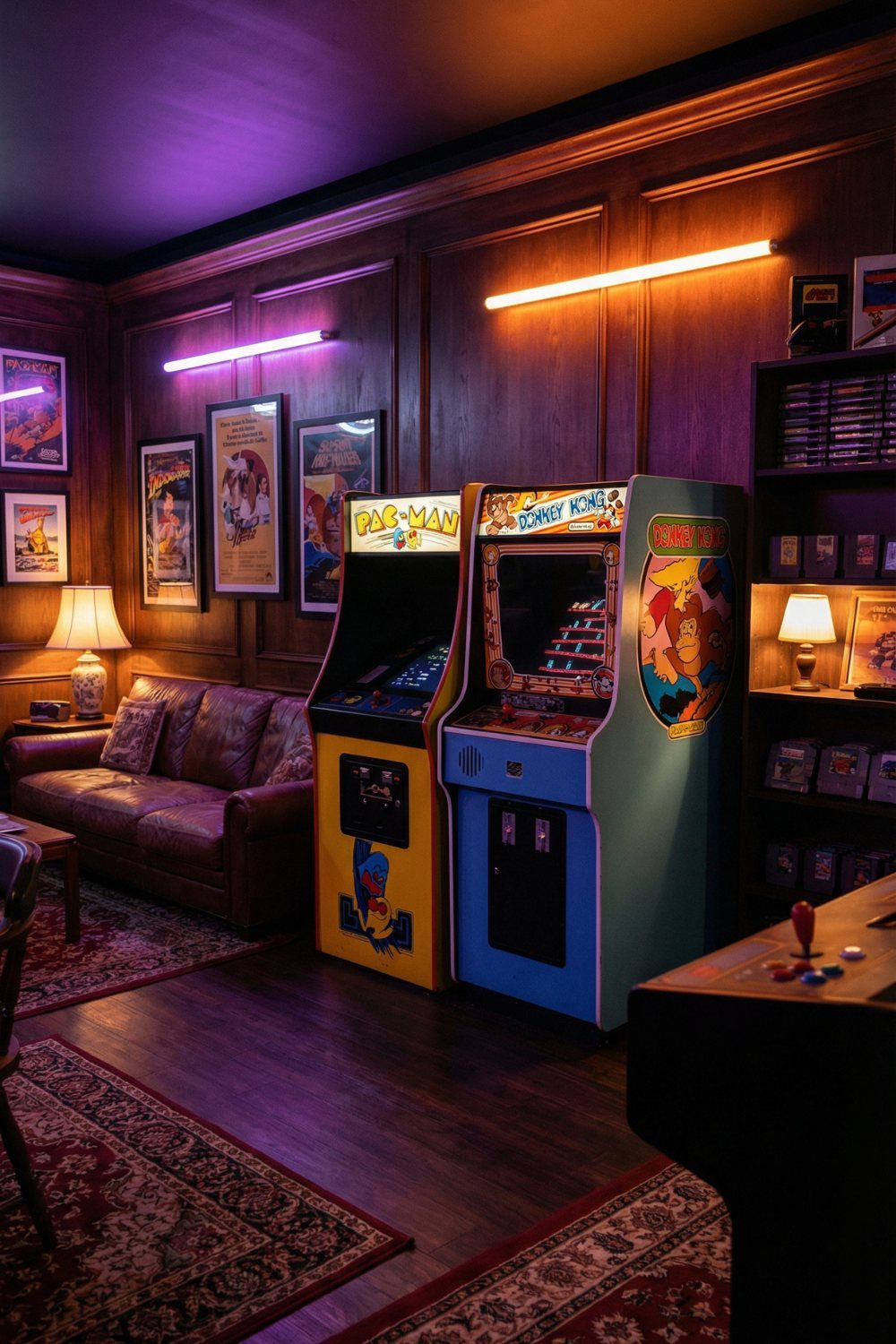
Real cabinets bring the artwork, the height and the heft that no poster can fake, and they anchor everything around them.
They are big, so measure your wall and doorway before buying. I’d pair them with a sofa, as here, so non-players have somewhere to sit and watch.
Start with one cabinet if space or budget is tight; a single machine still sets the whole tone.
5. Neon-Drenched Gaming Cave
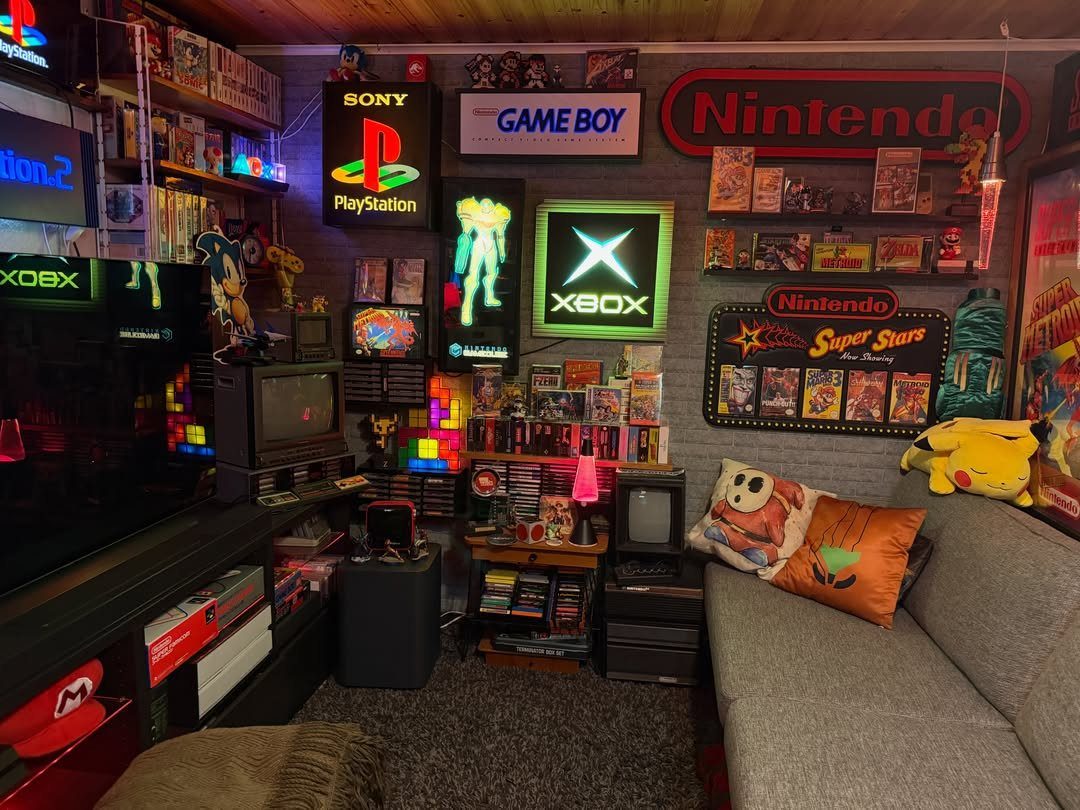
Neon signs for each console brand turn a spare room into a cave, and you can build the look one sign at a time. Start with the logo of the system you play most.
Keep the room’s other lighting low so the neon reads as the main event. A grey sofa, like this one, is a good neutral backdrop because it lets the signs supply all the color.
Neon draws attention fast, so I’d keep the signs few and let each one have some wall around it. Past that, the shelves and CRT get lost.
6. Retro Console Museum Display
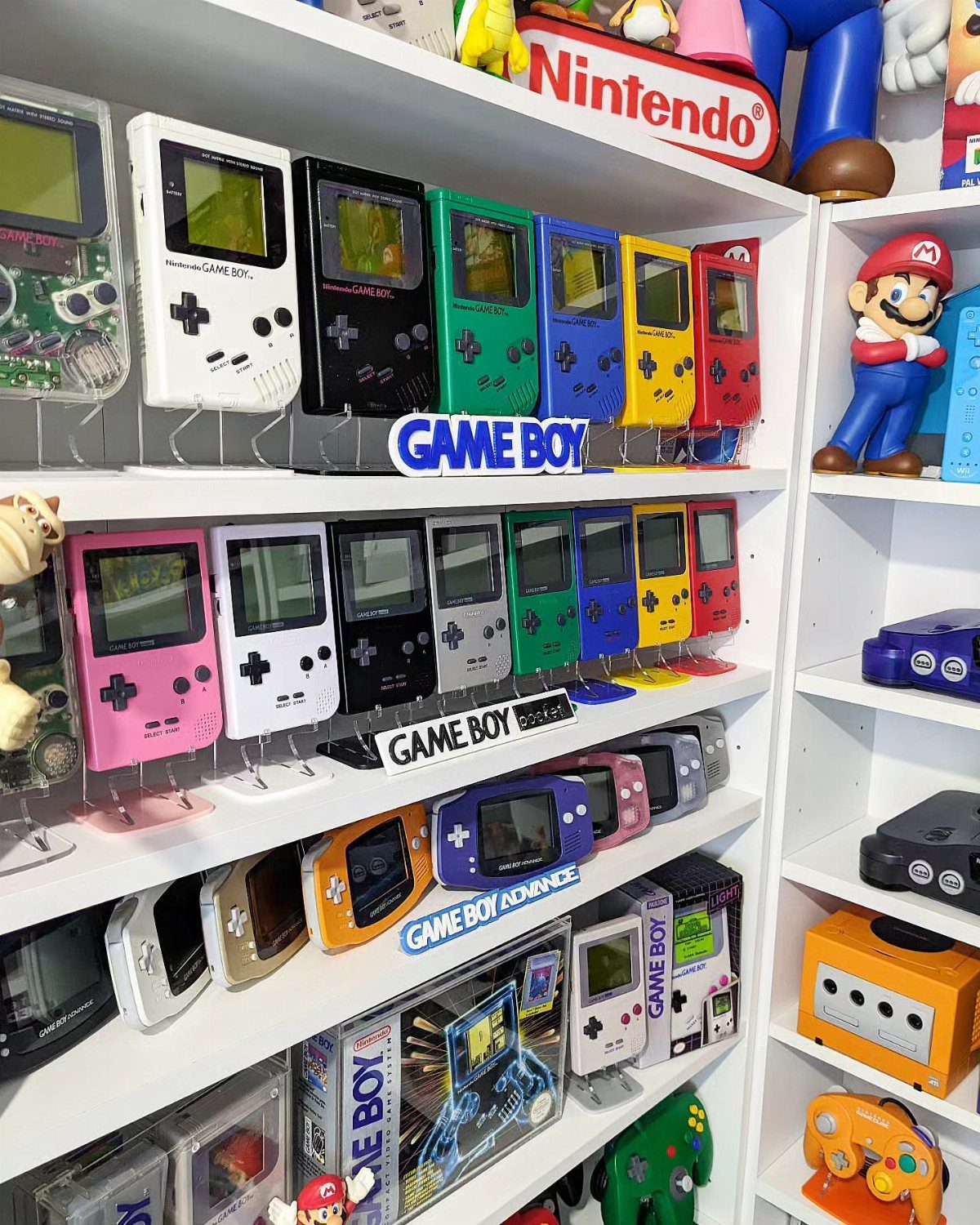
Rows of Game Boys on white shelves read as a collection instead of clutter, and that’s the museum trick: one console family, lined up evenly, with plenty of space between each.
White shelving makes the colorful shells pop, and a few signs or a Mario figure, as here, add context without competing. I’d keep the display to a single brand so it stays cohesive.
Buying one color at a time costs the least over the long run, since each new handheld fills a slot.
7. Pixelated Wall Art Paradise
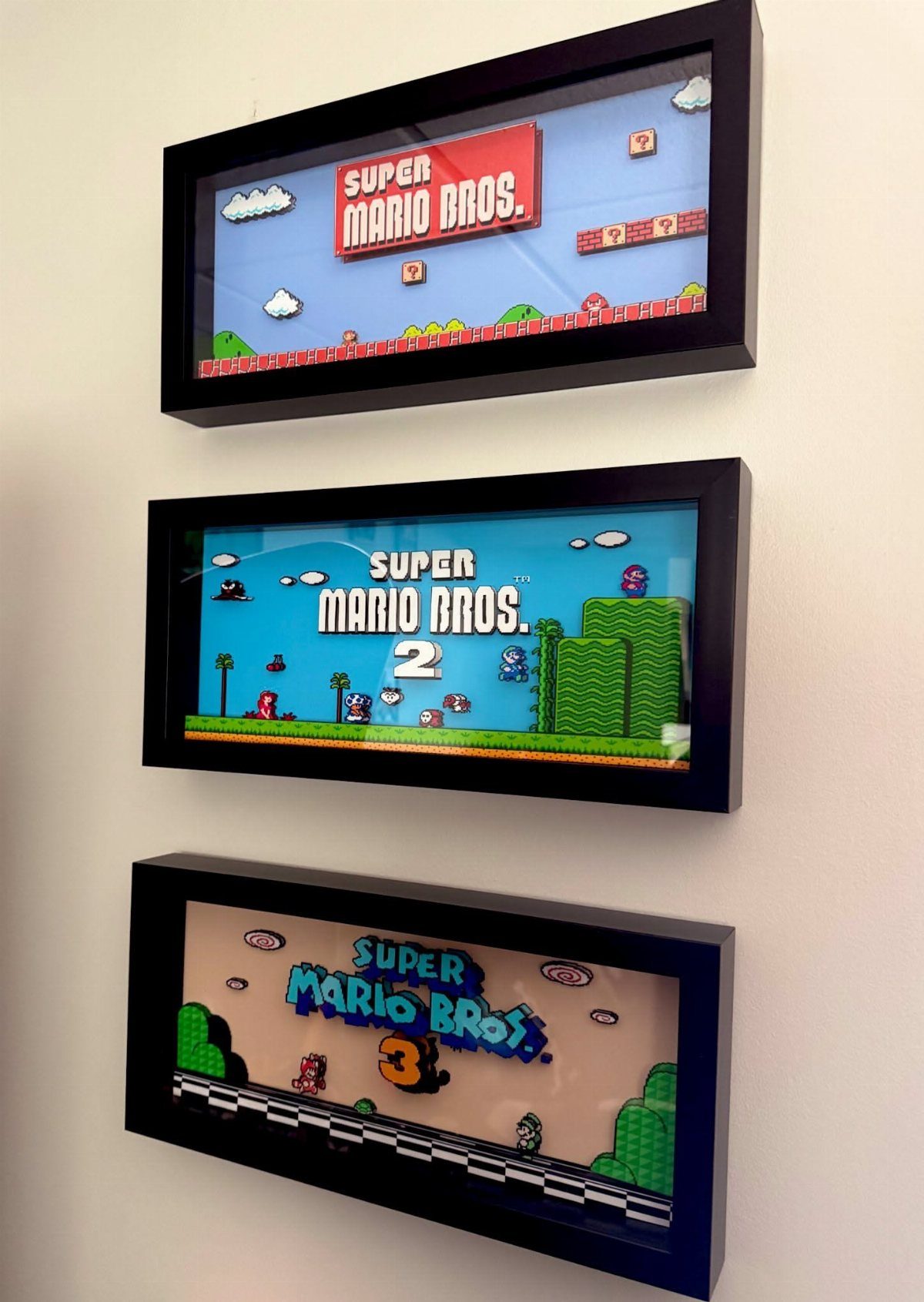
Three framed Mario scenes in a row give a white wall a focal point for the price of three frames. Matching frame sizes and even spacing do most of the work, so the set looks planned rather than collected.
Keep the wall around them plain, as here, so the colors do the talking. If you want more later, add a fourth piece from the same series rather than a new style.
Hang them at eye level, since the depth in 3D pixel scenes reads best straight on.
8. Vintage Arcade Carpet Gaming Den
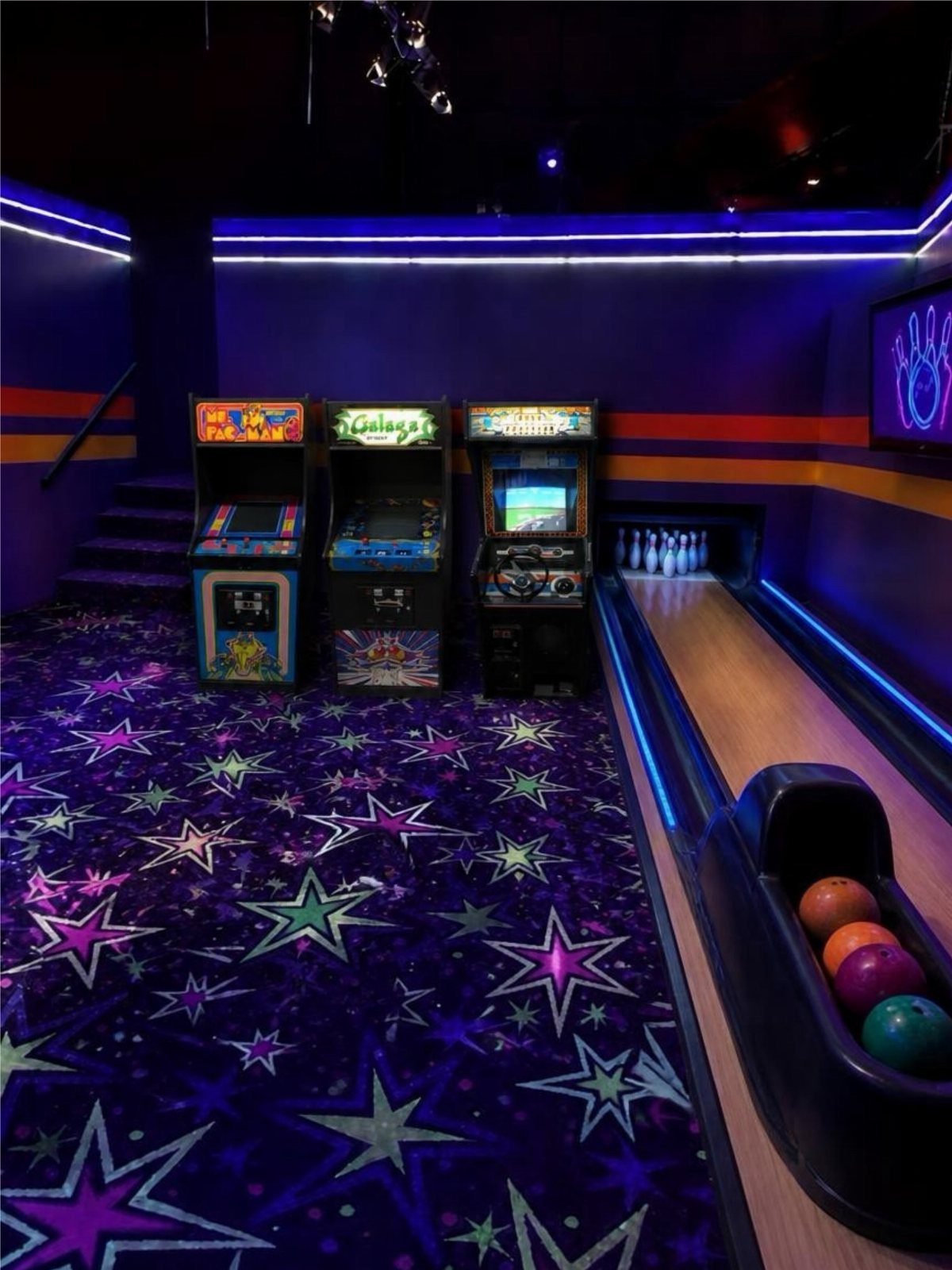
A purple carpet covered in colorful stars does what arcade floors did: it ties a row of machines into one room. Under dim blue light it also hides scuffs from cabinet feet and shuffling shoes.
Pick a pattern loud enough to notice, then keep the walls dark so the carpet gets all the attention.
I’d go with a rug or carpet tiles first, since they cost less than a full carpet and move with you if you rent.
Measure the cabinets before ordering so the pattern isn’t hidden under them.
9. CRT TV Gaming Station
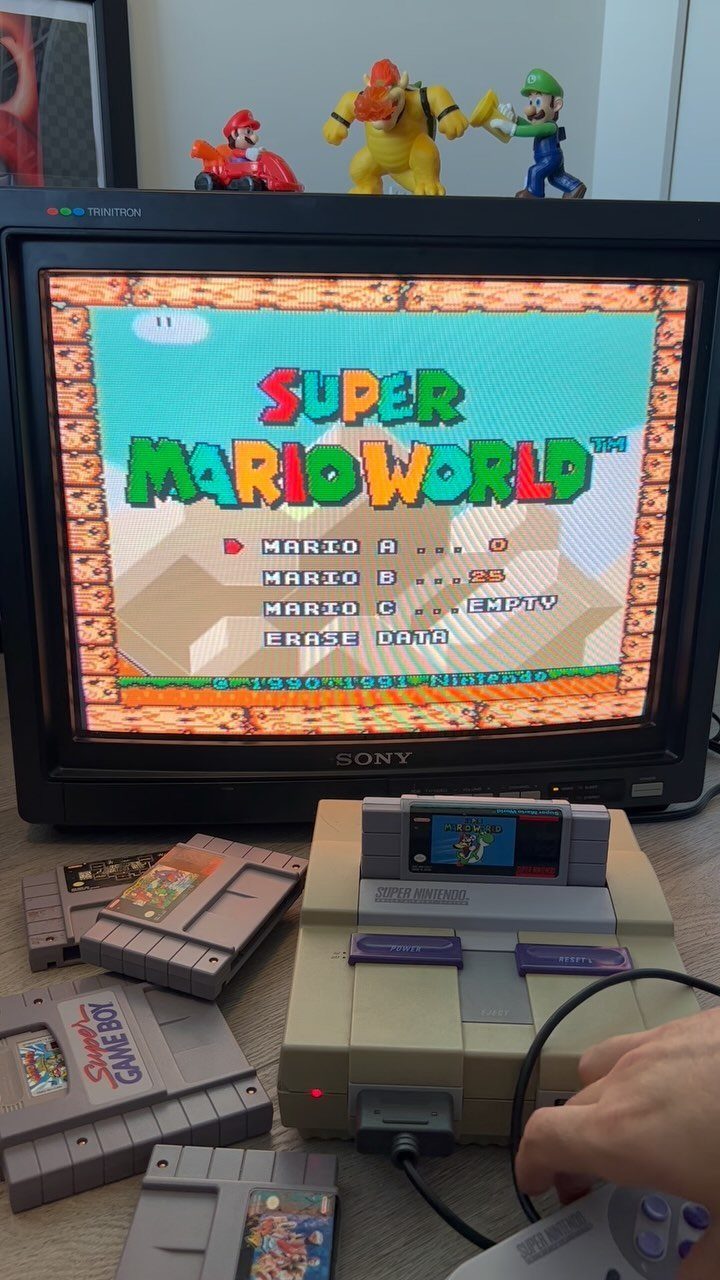
Little beats a Trinitron-style CRT with a Super Nintendo on a stand beside it.
Games like Super Mario World look right on a CRT, and a shelf of cartridges and figurines beside it turns the setup into a small shrine to the era.
Keep the console and a few cartridges within reach of the controller cord, and put the rest on display instead of in a bin.
10. Stacked CRT TV Wall
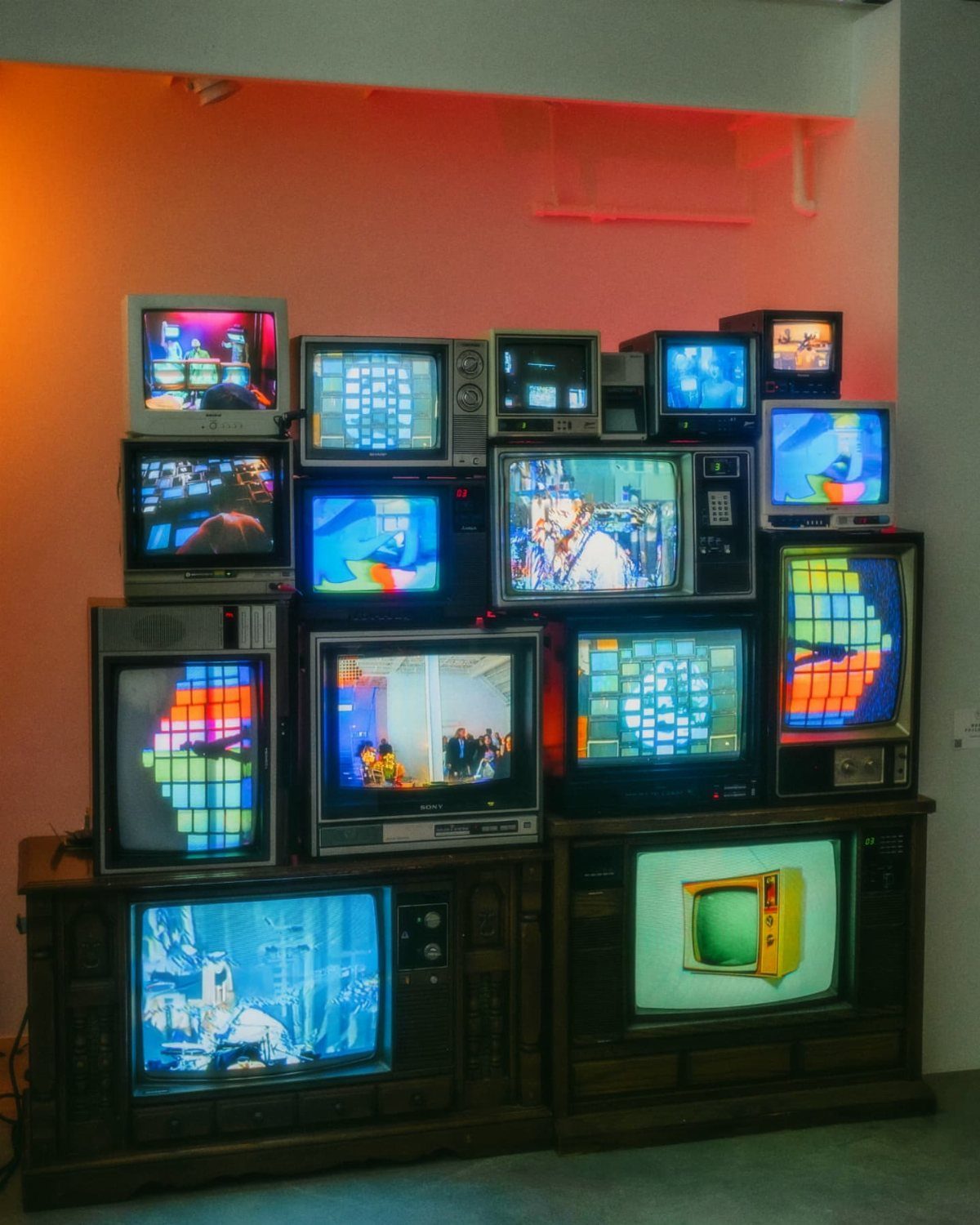
A stack of CRTs in mixed sizes, each playing something colorful, turns one wall into a piece of video art. Red lighting against a light wall, as here, gives it a glow without needing any other decor.
Put the heaviest sets at the bottom and keep the stack against a wall. Old tubes are heavy, so I’d check the floor and any shelving before you build upward.
This suits a spare room better than a living space; it’s loud and a little chaotic.
11. Vintage Pinball Machine Corner
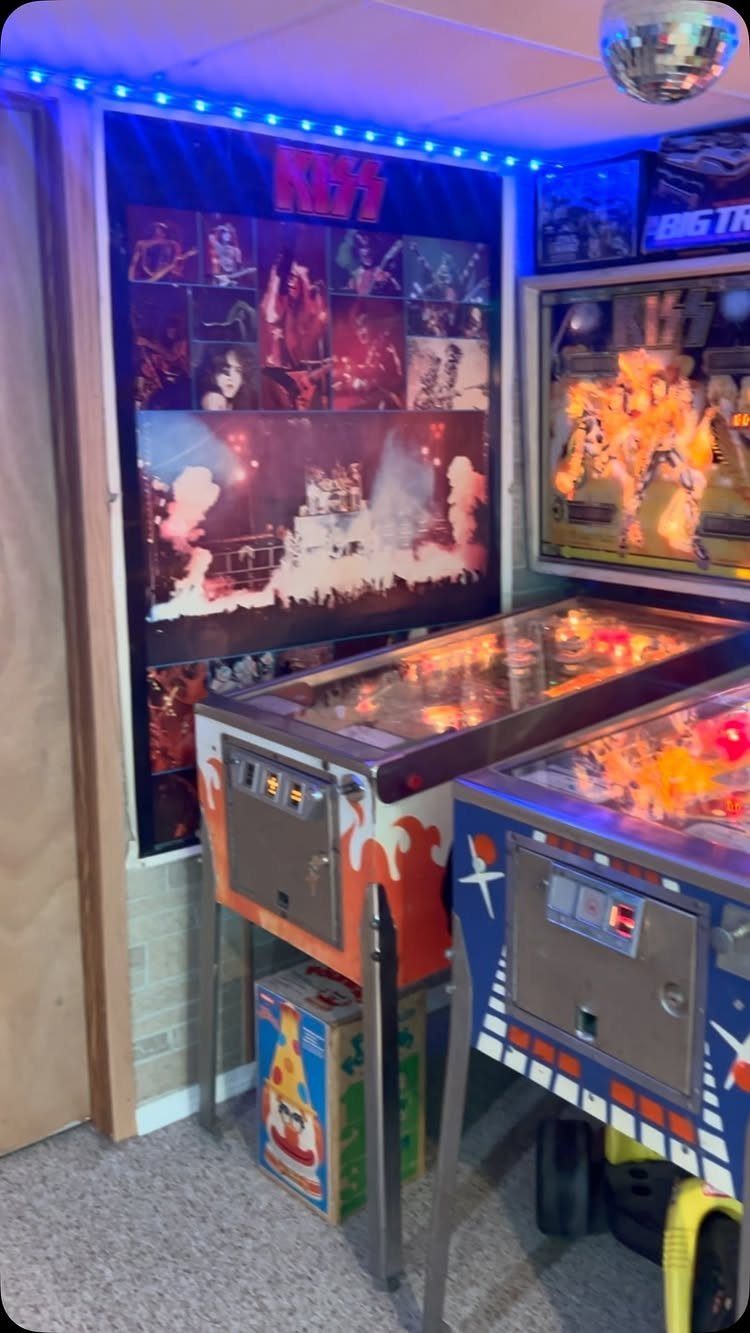
Pinball machines bring their own lights, sound and artwork, so a themed pair needs very little else.
Pick the theme first, then build around it. If you like the band or the movie, the corner will keep earning its space.
I’d start with one machine, since they take up real floor space, and add the second when the room can handle it.
12. Retro Game Gallery Wall
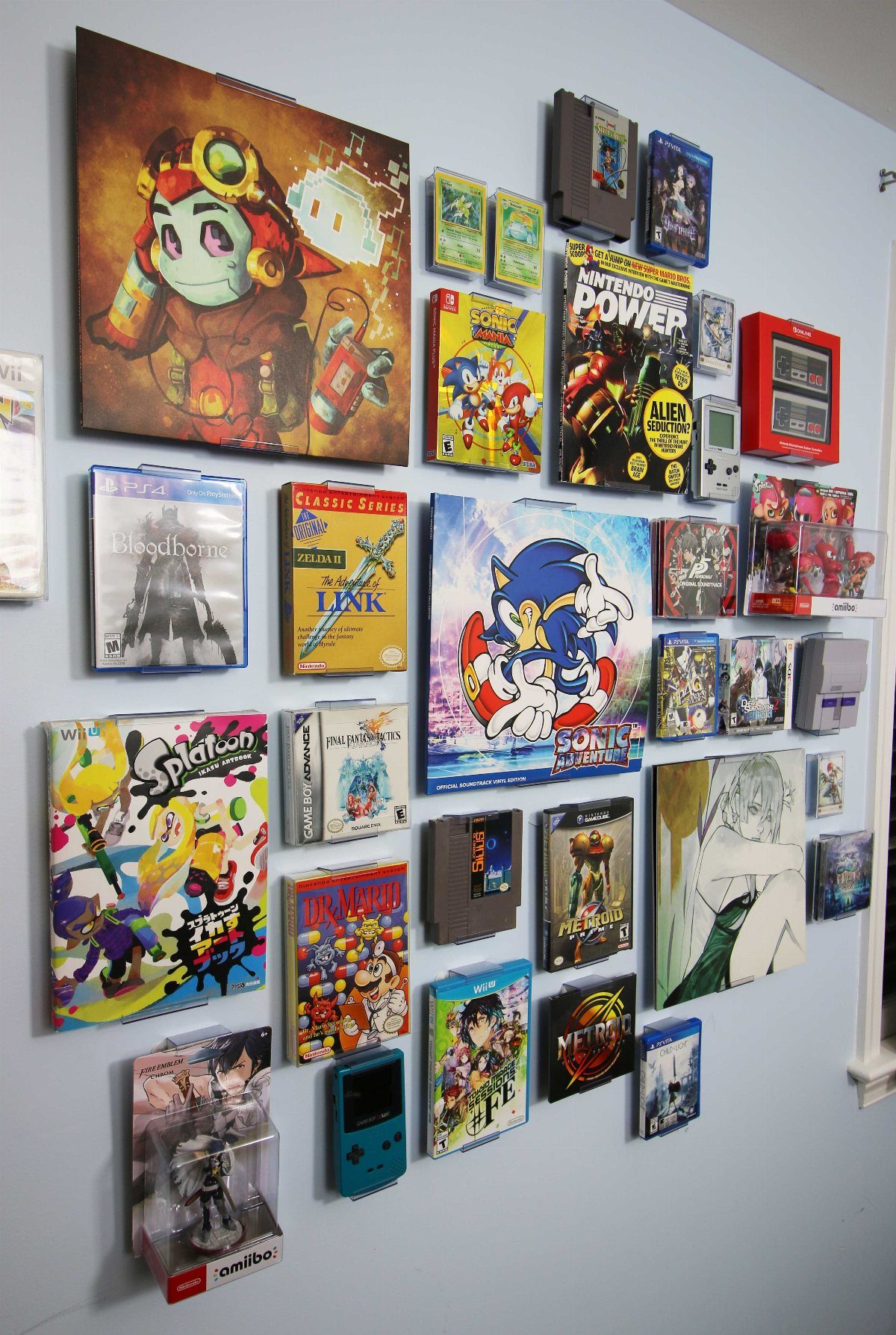
Cartridges, game cases and a Game Boy mounted together read as wall art when you give them a light, quiet background like this pale blue wall. Mixing in a few prints breaks up the rows of plastic.
Lay everything on the floor first and move pieces around until the spacing feels even, then hang. Use your favorites, whatever the era, since a wall you like beats a matched set.
Leave a little gap between pieces so each title can be read.
Creating a Nostalgic Atmosphere
Nostalgia comes from restraint more than from volume.
Choose one era, the 1980s arcade or the console years that followed, and let every piece belong to it. A room that mixes both reads as a pile of stuff with no memory behind it.
Warm, dark wall colors help. Orange or black walls give wood shelving, a CRT and framed posters a shared backdrop, so even thrift-store finds look like they were bought together.
Add one geometric rug, and a brown leather armchair gives adults a seat that doesn’t say dorm room. Both are easy to swap out later if you rent.
Balance the old with the practical. Keep the vintage gear visible and hide modern cables and power strips behind the shelves.
Space Utilization Tips
Start with the walkway. Leave a clear path from the door to the seating, and don’t let any cabinet, shelf or bag swing into it.
Put the tallest pieces against the walls and keep the middle of the room open. Seating should face the screen from a comfortable distance, with room for a second person to sit beside you without bumping elbows.
Wall-mounted shelves free the floor. In a small room, go vertical with shelving and frames before you add another piece of furniture.
Before buying anything large, mark its footprint on the floor with painter’s tape.
Walk around it for a day. If you keep clipping the corner, it’s too big for the spot.
Leave space for comfort, too: a side table within reach for drinks keeps them off the console.
Lighting Considerations
Layer your lighting in 2 levels. Use LED strips for the background glow behind monitors and around doorframes, then add a neon sign or 2 as the accent.
Smart, programmable LED lights are worth the extra money if you like changing the mood. You can switch colors to match a game or an evening, and a single color works fine when you want calm.
Glossy surfaces, like a desk top or cabinet doors, bounce the glow around the room. Metallic furniture accents do the same, so a small amount of shine can spread a little light a long way.
Keep strategic placement in mind: light the edges and let the middle stay dim. That gives you drama without overwhelming your eyes during a long session.
Frequently Asked Questions
What is a retro gaming lounge?
A retro gaming lounge is a room styled around vintage gaming gear to give a nostalgic feel.
Think CRT TVs, older consoles, arcade cabinets, neon signs and framed game art. Sticking to one era keeps it cohesive, and warm, dark walls in orange or black give the pieces a shared backdrop.
Is retro gaming legal?
Yes, retro gaming is legal as long as you own the games and consoles you play. Collecting and displaying your own cartridges, handhelds and systems is the safe, simple way to enjoy it.





