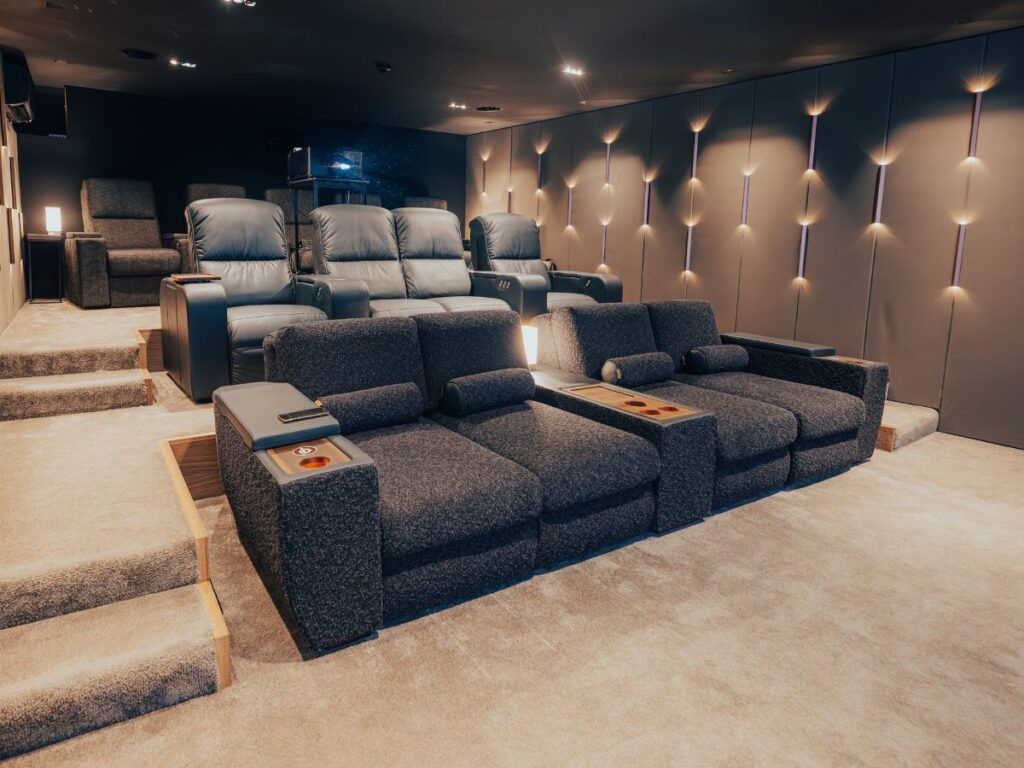
Ideas in this list run from stick-on LED strips and a projector with a screen to a starry fiber optic ceiling and a tray ceiling with a chandelier, and the budget spans $500 to $10,000.
Renting or owning decides which of these you pick: renters should stick with things that come off the wall, like LED strips, blackout curtains and a projector screen that rolls away, while owners can commit to a wood slat wall, burgundy paint and tiered seating.
Room size sets the screen next, since a 65-inch TV wants you sitting 8 to 13.5 feet back.
1. Reclining Chairs
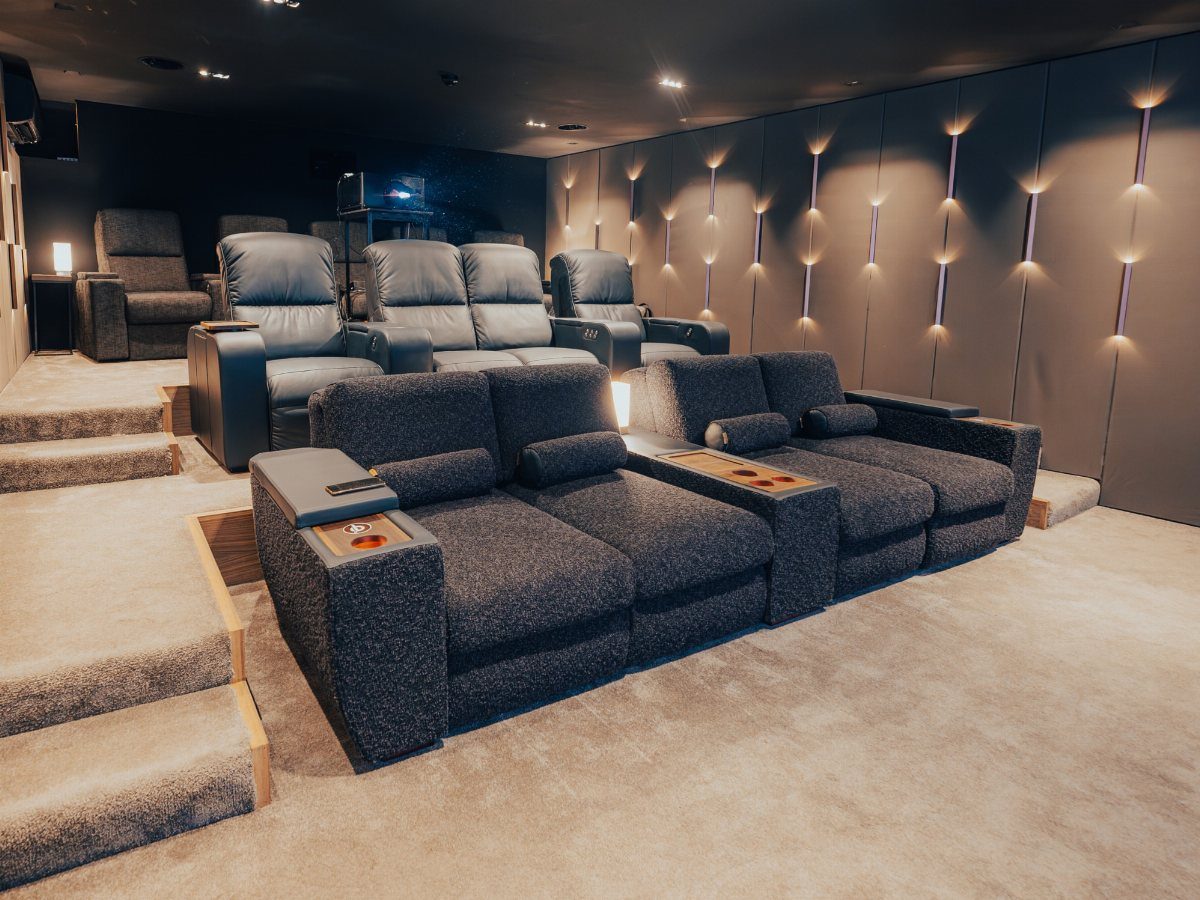
Recliners decide whether a home theater gets used for one movie or for every weekend. Leather wipes clean after spilled soda, while fabric runs warmer and softer; I lean toward leather in a basement room where snacks are guaranteed.
Measure the room before you shop. Reclined chairs need clearance behind them and between the rows, and that footprint is bigger than the seat looks in a showroom.
On a tight budget, buy fewer seats and better ones. Four good recliners beat six wobbly ones.
2. LED Strips
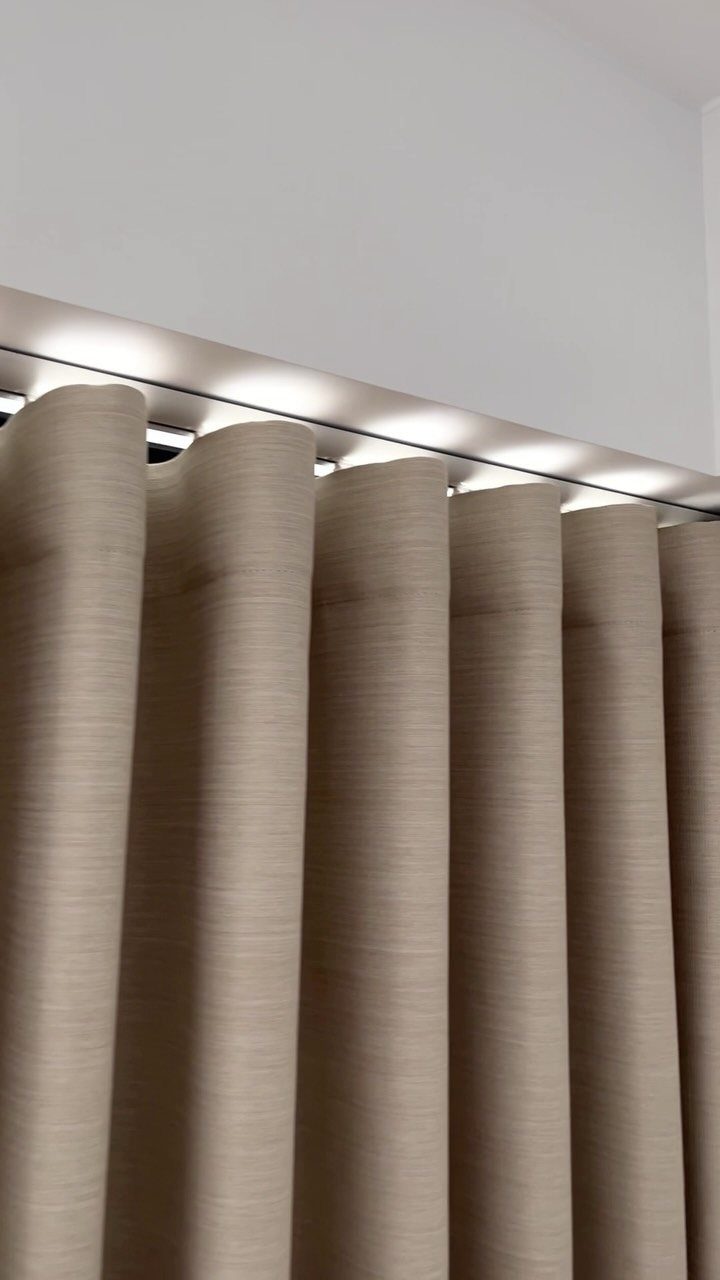
Tucked into a ceiling cove above the curtains, a white LED strip washes light down the fabric and gives the room a soft glow without a single lamp on a table.
Light from behind a cove hides the fixture and keeps glare off the screen.
Stick-on strips are the weekend-friendly route for renters. Choose a dimmable set with a remote, since you want the glow low during the movie and brighter when the credits roll.
3. Tiered Seating
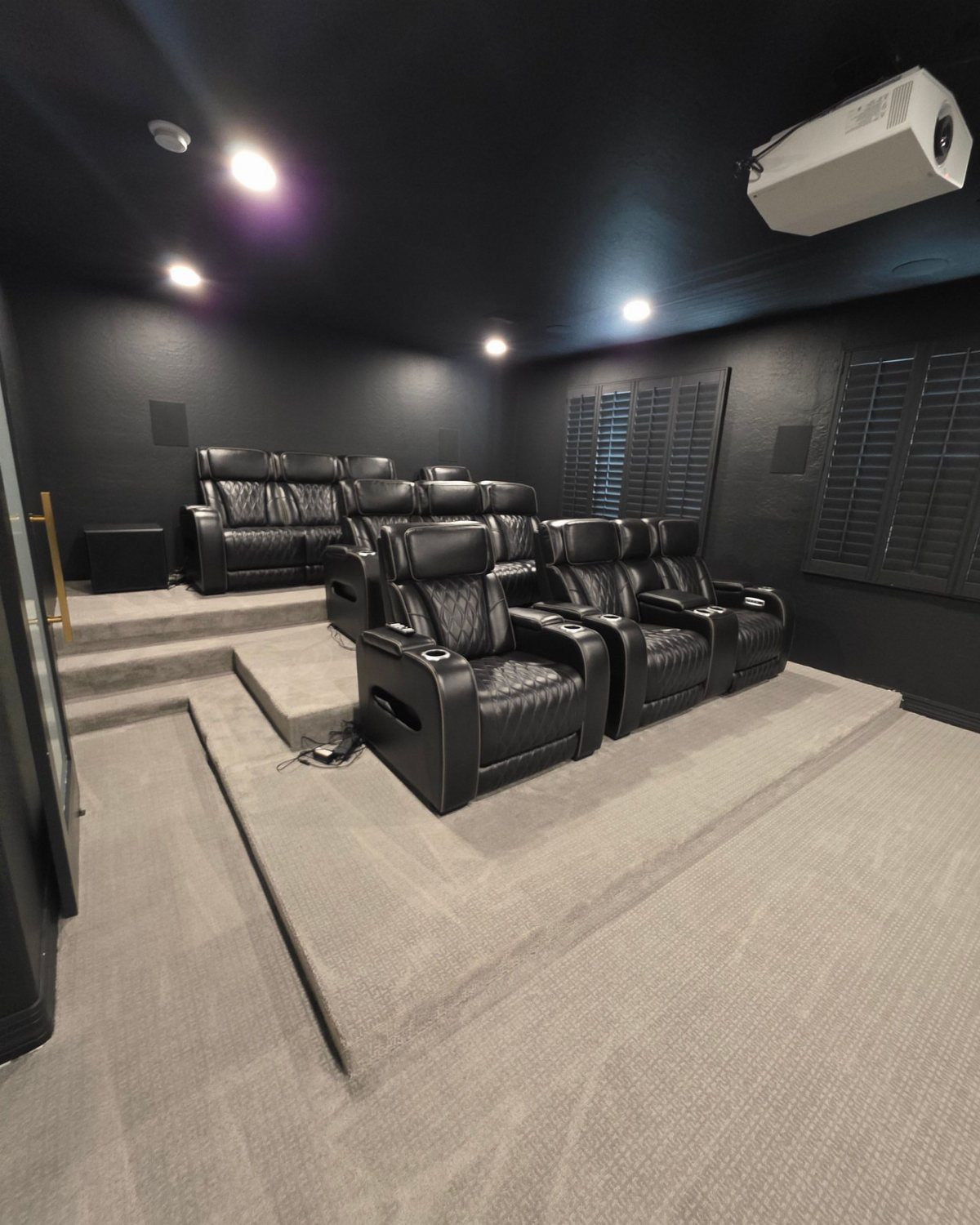
Tiered seating is the fix for the second row that stares at the back of someone’s head. Raising the rear platform puts every viewer’s eyes above the row in front, so the screen stays clear from any seat.
Carpet the platforms, because it deadens footsteps and keeps the recliners from sliding. Build the steps wide enough for a full chair to sit with room to recline.
This is a bigger project than most here, so sketch the layout before buying lumber.
4. Dark Burgundy Walls and Ceilings
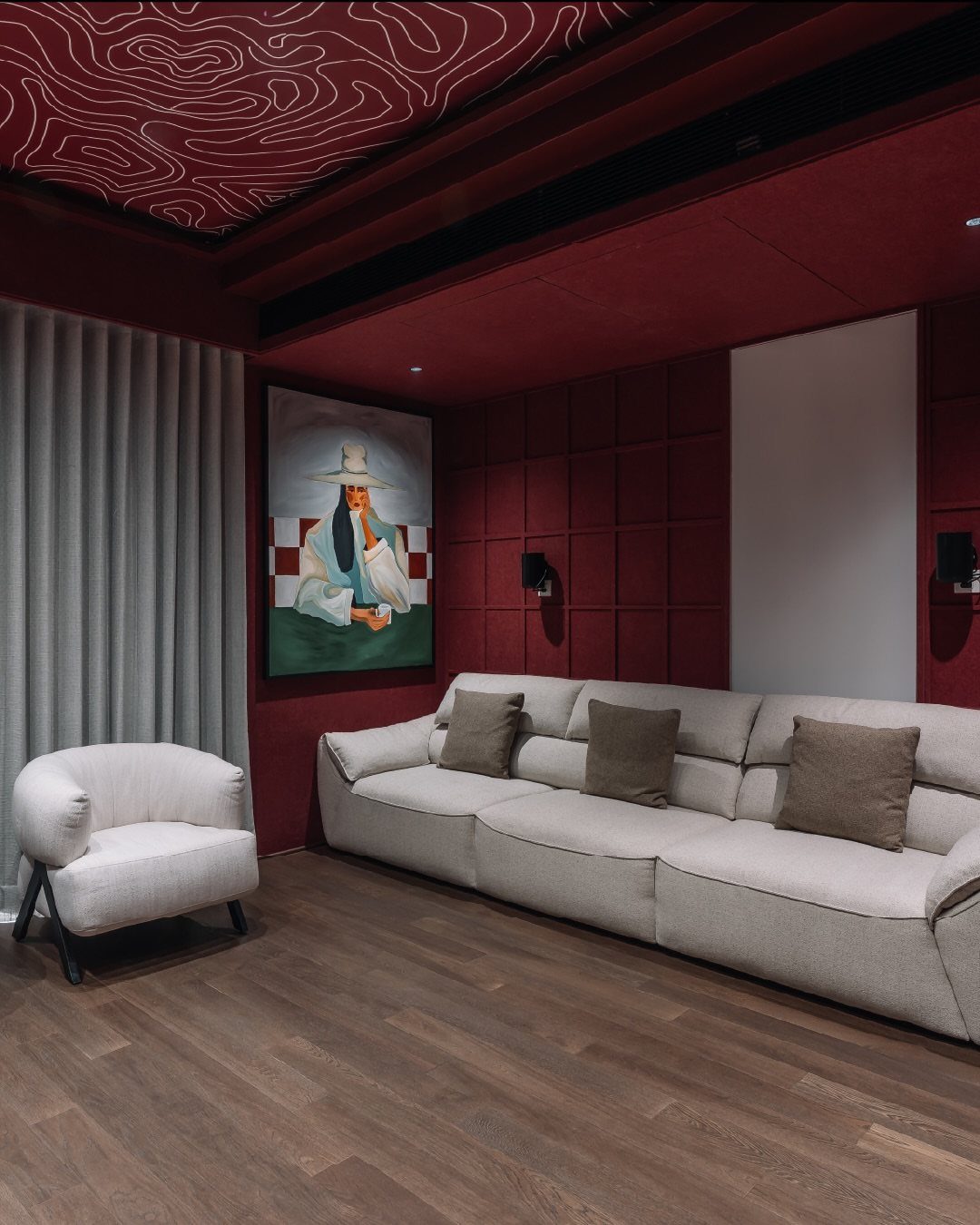
Paint is the cheapest way to make a screen look brighter: dark burgundy on the walls and ceiling soaks up stray light instead of bouncing it back at the picture.
Eyes settle on the screen because nothing else in the room competes with it.
I like burgundy over black because it reads warm and cozy rather than like a cave. Paint the ceiling too, since a white ceiling undoes half the effect.
Pair it with a light sofa so the room still has contrast. Budget a weekend and 2 coats.
5. Mounted TV
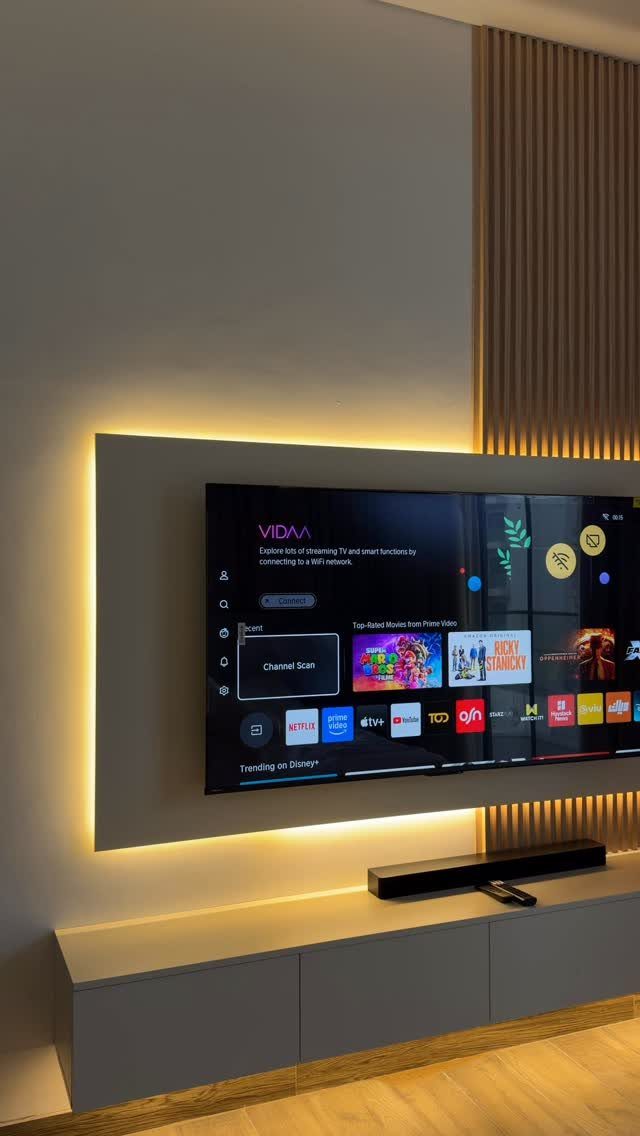
Mounting the TV on the wall frees the floor and keeps the screen at a fixed, deliberate height.
A warm backlight behind it softens the contrast between the bright panel and the wall, which is easier on the eyes in a dim room.
Put a soundbar on a low console beneath it for a clean, one-wall setup that works in a living room without a dedicated space.
Find the studs before drilling, and hang the TV so the center sits near seated eye level.
6. Projector and Screen
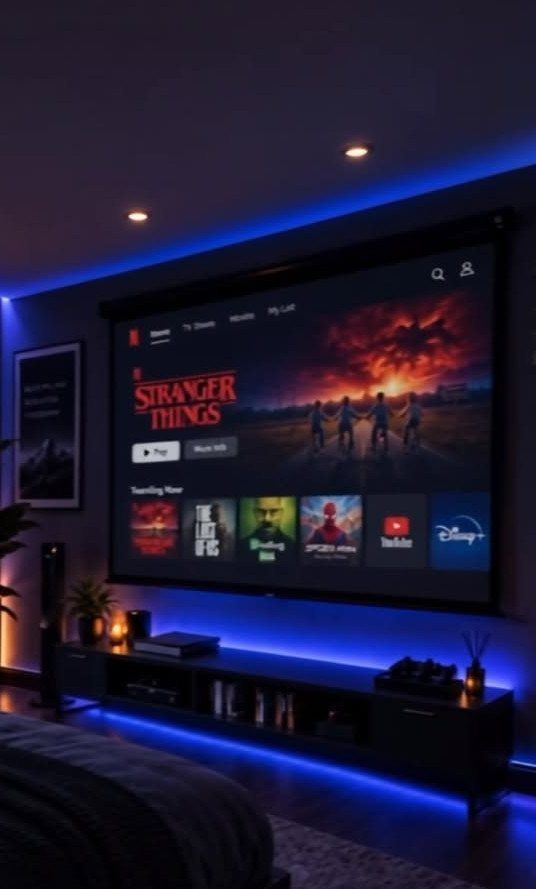
A projector beats any TV on screen size per dollar, and the cheapest way to get a cinema picture is a quality projector with a pull-down screen.
A painted wall with projector screen paint is the other budget route, and it costs even less if the wall is smooth.
I would pick the pull-down screen for renters, since it rolls away and leaves the wall untouched. Paint suits a permanent room.
Keep the room dark, as with the deep wall and blue accent lighting above, because projectors wash out fast with any ambient light.
7. Surround Sound System
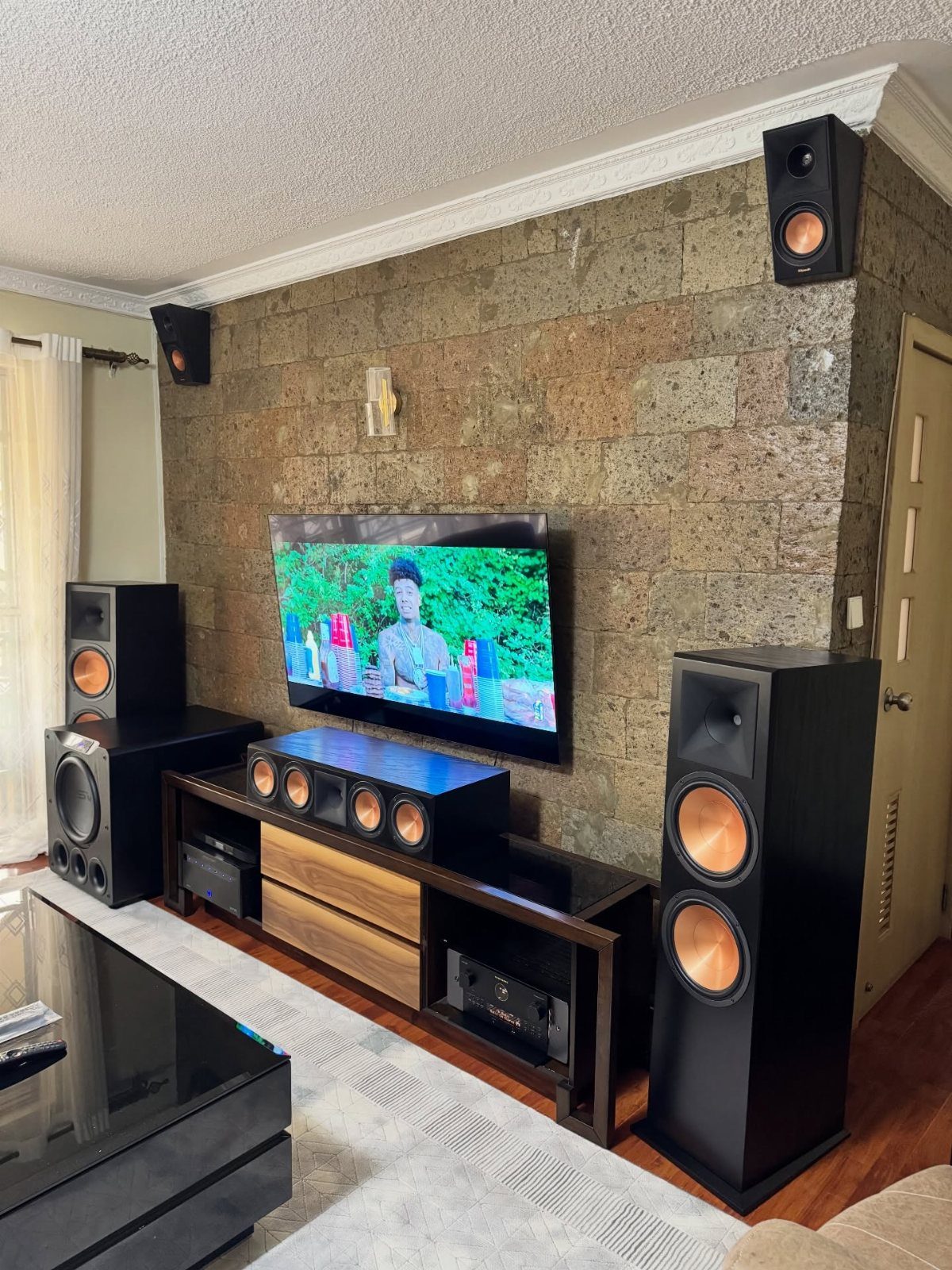
A surround system gives a room the sound that a TV’s built-in speakers can’t: dialogue from the center, effects from the sides, and a subwoofer carrying the low rumble.
I would spend on speakers before screen size, since good audio makes a modest picture feel bigger.
Wall-mounted side speakers clear the floor and point straight at ear level, which is where a seated listener needs them. Run the wires before you hang anything, and label each one at both ends.
8. Blackout Curtains
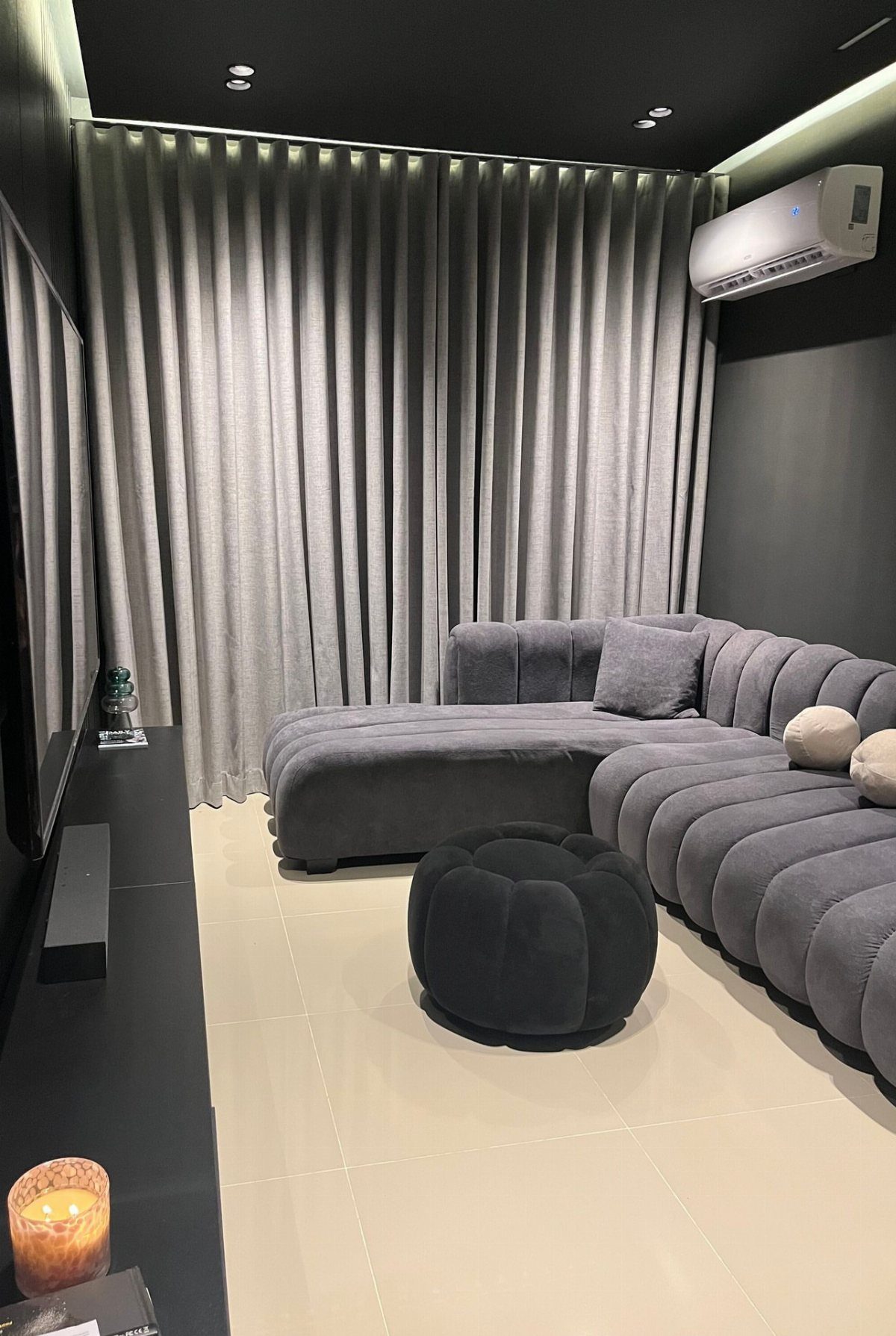
Floor-to-ceiling curtains in a deep grey do 2 jobs in a theater: they block daylight and soften the room’s echo. Pleated fabric hangs heavier and absorbs more than a flat panel.
Mount the rod high and wide so the curtains clear the window and no light leaks at the edges. Grey keeps a dark room calm, and it pairs well with a sectional in a similar tone.
For renters, a tension or ceiling-mounted rod saves the walls.
Thornton achieves a moody theater with “dark and layered fabrics—lots of velvets, wools, and mohairs,” but mentions that “lighting is everything—there’s nothing worse than an overlay room. Dimmable lights are a must.”
9. Dedicated AV Equipment Rack
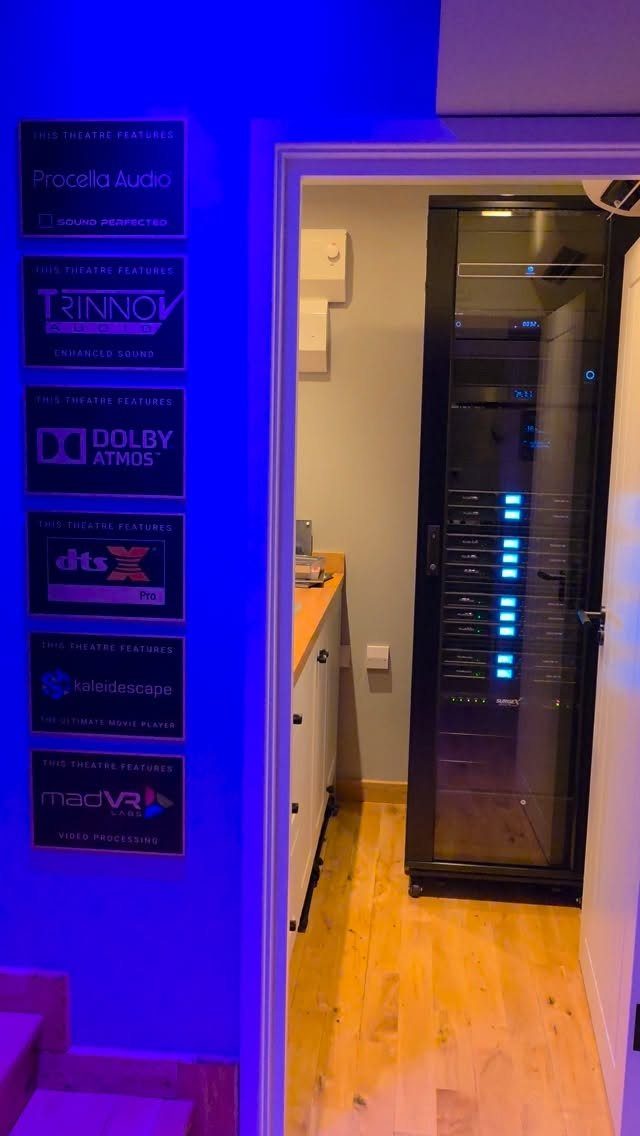
A tall rack turns a tangle of receivers, players and cables into one organized column. I prefer one inside a closet or small side room, so the glow and fan noise stay out of the seating area.
Leave open space around the gear, since amplifiers run warm and need air. Label every cable before the rack fills up.
Blue ambient light inside the room makes it easy to see what you’re plugging in without turning on the overheads.
10. Starry Fiber Optic Ceiling
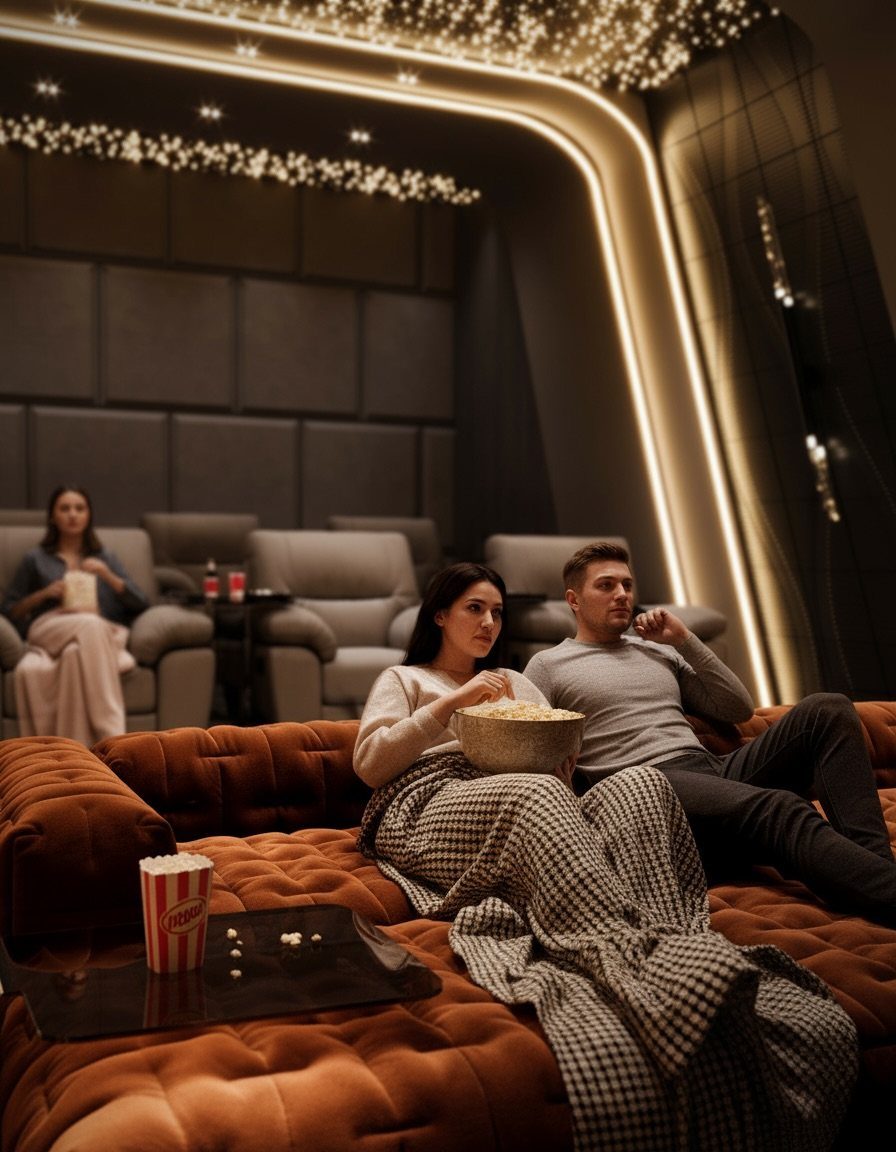
Tiny points of light across a dark ceiling make a basement room feel like an open night sky. Fiber optic kits scatter the pinpoints from a single light source, so there’s no wiring across the whole ceiling.
Pair it with a black or very dark ceiling, because the stars vanish against anything pale. I would keep the twinkle subtle, so it doesn’t pull eyes off the screen.
Brown tufted seating keeps the room warm under all that dark.
11. Wood Slat Accent Wall
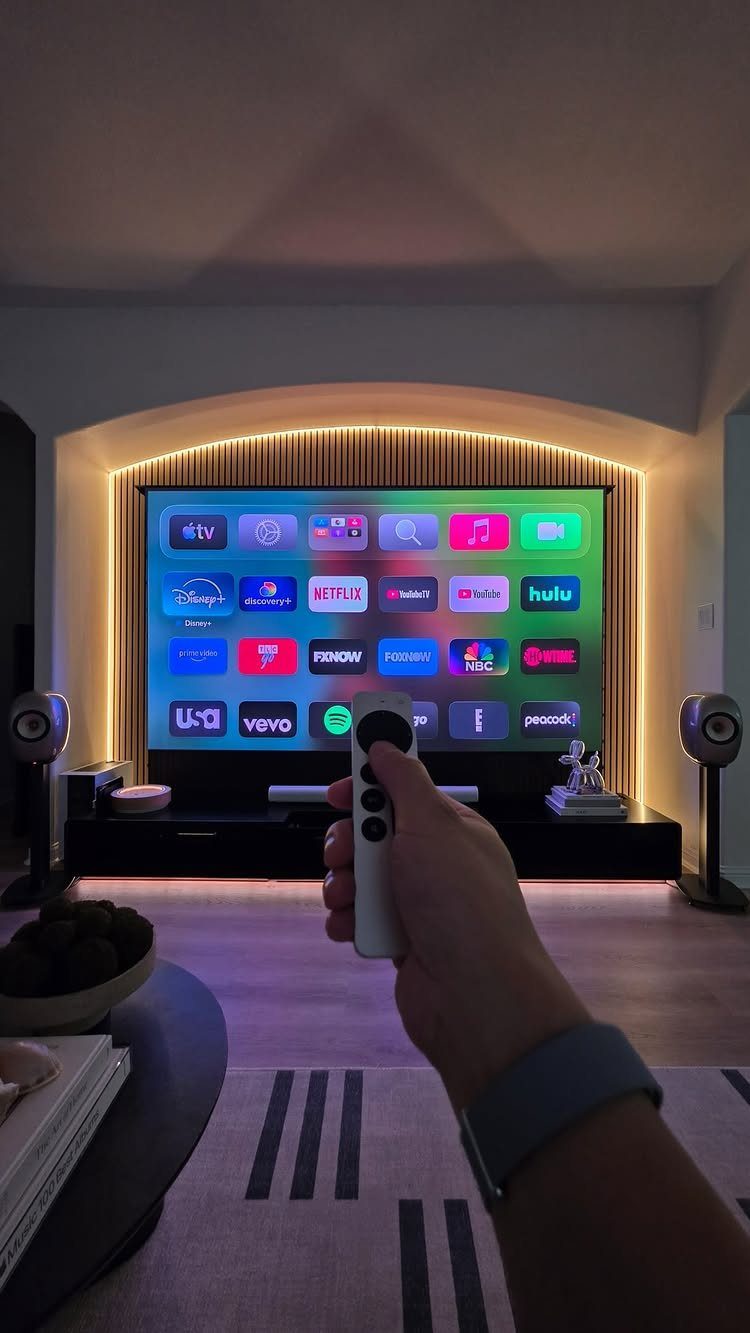
Vertical wood slats around the TV give a plain wall depth and warmth. Spacing them evenly matters more than the wood choice, because uneven gaps show up fast under backlighting.
Run a warm LED strip behind the slats or around the screen, and the light glows through the gaps. Recessing the TV into the wall gives the cleanest look, but a flat wall-mounted set still works.
Cut slats to one length so a weekend saw session covers the whole wall.
12. Tray Ceiling with Chandelier
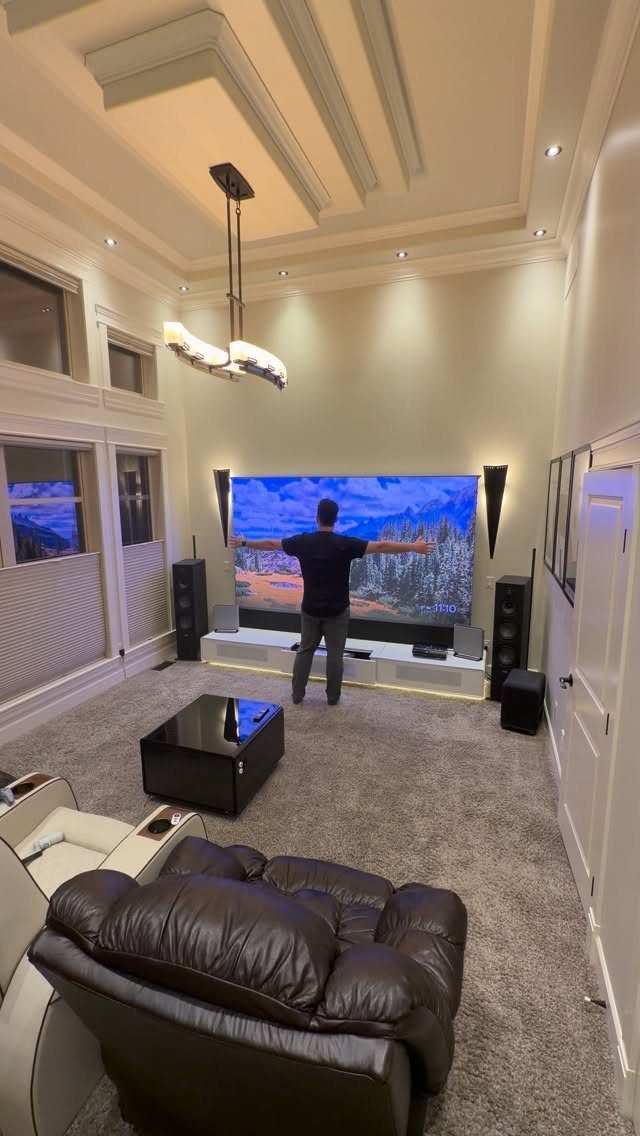
A tray ceiling steps up in the middle, and that raised center is the perfect hiding place for cove lighting. A chandelier hung at its center makes a theater feel like a formal room rather than a basement.
I would put the cove lights on a dimmer, along with the chandelier, so both fade out when the movie starts. Choose a modest fixture that clears the sightline to the screen.
This takes real framing work, so it suits a room you plan to keep.
Budget Considerations
A home theater can be built for $500 or for $10,000, so the first job is deciding where your number sits and splitting it across seating, screen, sound, lighting and finishes before you buy anything.
If you’re finishing a room from scratch, framing and drywall will eat more money than the gear.
Building from the ground up runs $50–$250 per square foot, while a room that’s already finished, like a spare basement room, saves a lot of that.
To raise cash, sell old furniture, appliances, toys and clothes. It won’t cover the whole project, but it shrinks what you need to borrow or put on a card.
Small rooms also cost less to fill, so a modest space can be the smarter pick.
Room Dimensions
Aim for a room at least 10×12 feet. Smaller rooms still work with careful planning, and the screen size is the first thing to adjust.
Match the TV to your seating distance.
With a 65-inch screen, plan on sitting somewhere between 8 and 13.5 feet back, depending on how immersed you like to feel. Sit closer than that and drop to a 55, 50, or 43-inch model.
With more room to spare, a 75, 83, or 100-inch screen becomes realistic. Measure from the seat to the wall before you buy, and mark the distance with painter’s tape on the floor.
Soundproofing Techniques
Soundproofing does 2 separate jobs: keeping sound from leaking in or out, and taming echo inside the room. Most budget fixes handle the second job, so be clear about which problem you have.
Echo is the easiest problem to fix on a budget: heavy drapes, a thick rug over the floor, and a few DIY foam panels on the walls will soak up a lot of that bounce. Upholstered sofas help too.
For blocking sound between rooms, basic work typically runs $1,000–$3,000, and better materials cost more. If the basement sits under a bedroom, that’s the money worth spending; if not, soft surfaces and panels usually get you most of the way.
Frequently Asked Questions
What size room do you need for a home theater?
Aim for a room around 10×12 feet or larger; that gives you space for a screen, a couch, and some breathing room behind it.
A tighter room can still work if you plan it well, and the first thing to scale down is the screen.
What are the elements of design in a home theater?
Seating, screen, sound, lighting and wall finishes do most of the work. Recliners, ideally on tiered platforms so the back row sees over the front, make the room usable.
A projector or mounted TV, a surround system, dimmable LEDs, and dark walls and ceiling with heavy curtains keep the picture bright and the echo down.
How much does it cost to set up a home theater?
A home theater can run from $500 to $10,000 depending on the gear and finishes.
Building a room from scratch costs $50–$250 per square foot, so framing and drywall can outweigh the equipment. Starting with a room that’s already finished, such as a spare basement bedroom, cuts a big chunk out of the bill.





