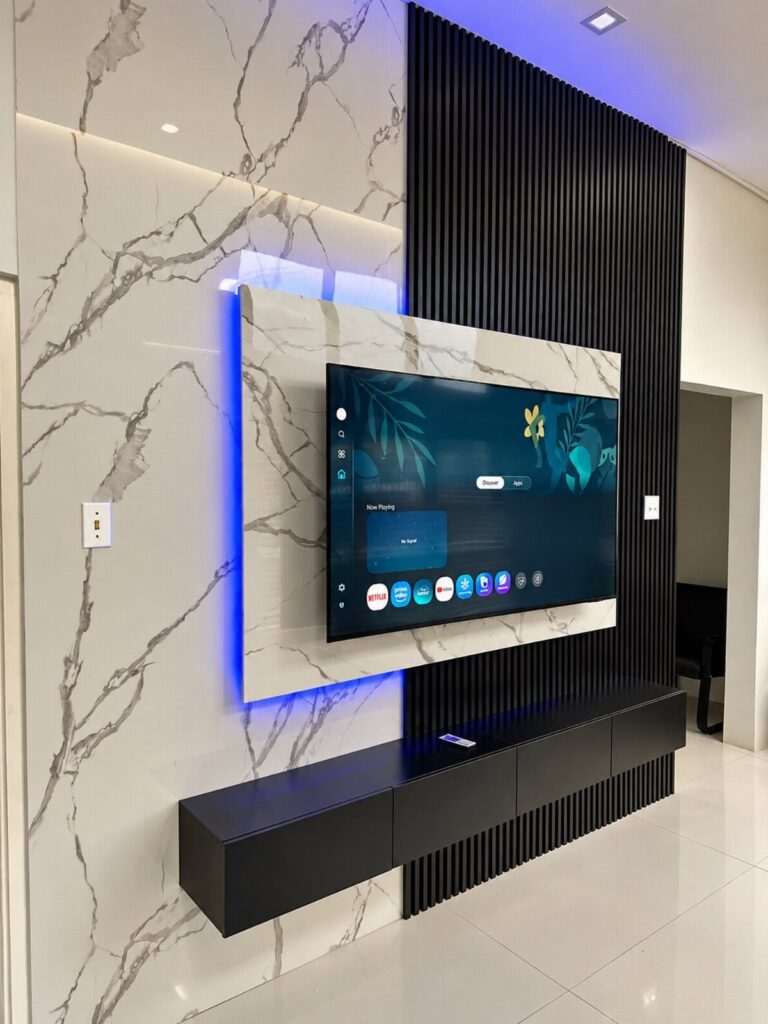
The wall you’re working with decides this more than taste does: a renter with bare drywall can stick to a single floating cabinet or a lighter panel that comes off later, while an owner with open studs and a free weekend can build the full entertainment wall or a stone-finish background, the largest projects here.
Between them sit backlit stone panels, curved units that take more time than a flat wall, and PVC panels that mimic marble at a fraction of the cost.
Whatever you pick, check where the outlet sits first, since the electric fireplace versions and the LED strips both depend on it.
1. Wall-Mounted Floating TV Unit
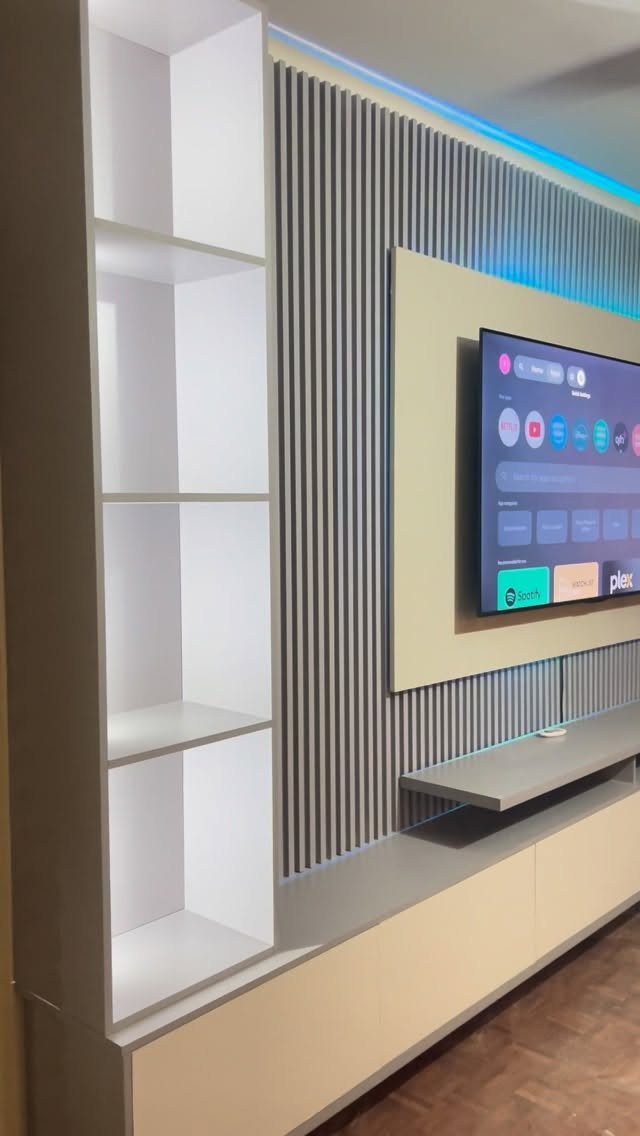
A floating unit leaves the floor visible beneath the TV wall, and that strip of open floor is what makes a small living room read as wider. Robot vacuums slide right under, too.
I like it best against a textured backdrop like the slatted grey panel here, because the shadow under the cabinet gives the wall depth.
Mount the unit into studs or use proper wall anchors rated for the load, since a console full of media gear pulls harder than you expect.
2. LED Backlit TV Panel
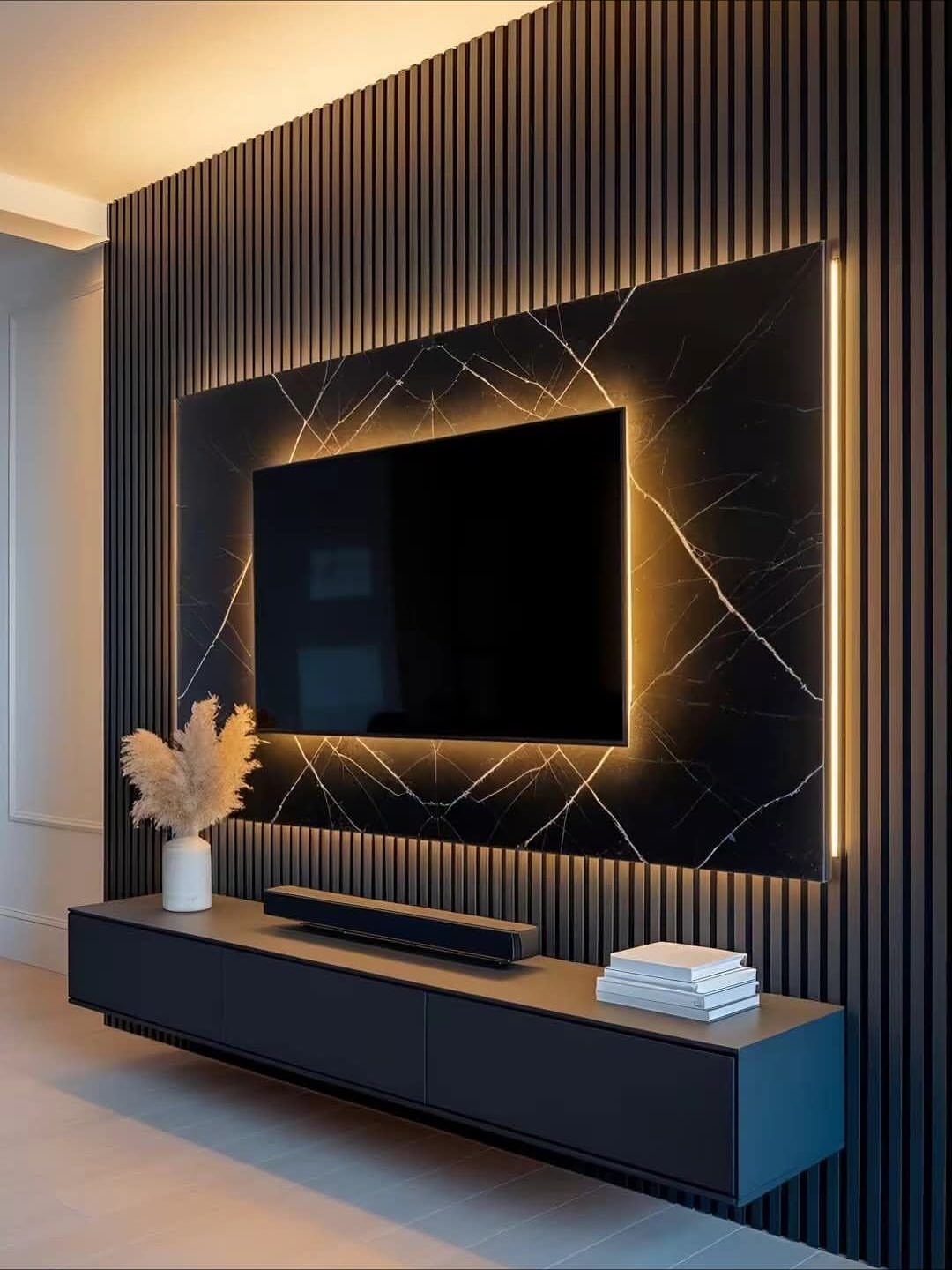
Black marble with a warm LED glow behind it turns a TV wall into the focal point of the room, even with the screen off.
Gold light against dark stone and dark slats is a rich combination, and I would keep the glow warm rather than switching to cool white.
Hide the strip behind the panel edge so you see the light and never the diodes. A dimmer is worth the few extra dollars, because full brightness gets harsh during a movie.
3. Rustic Wooden TV Unit
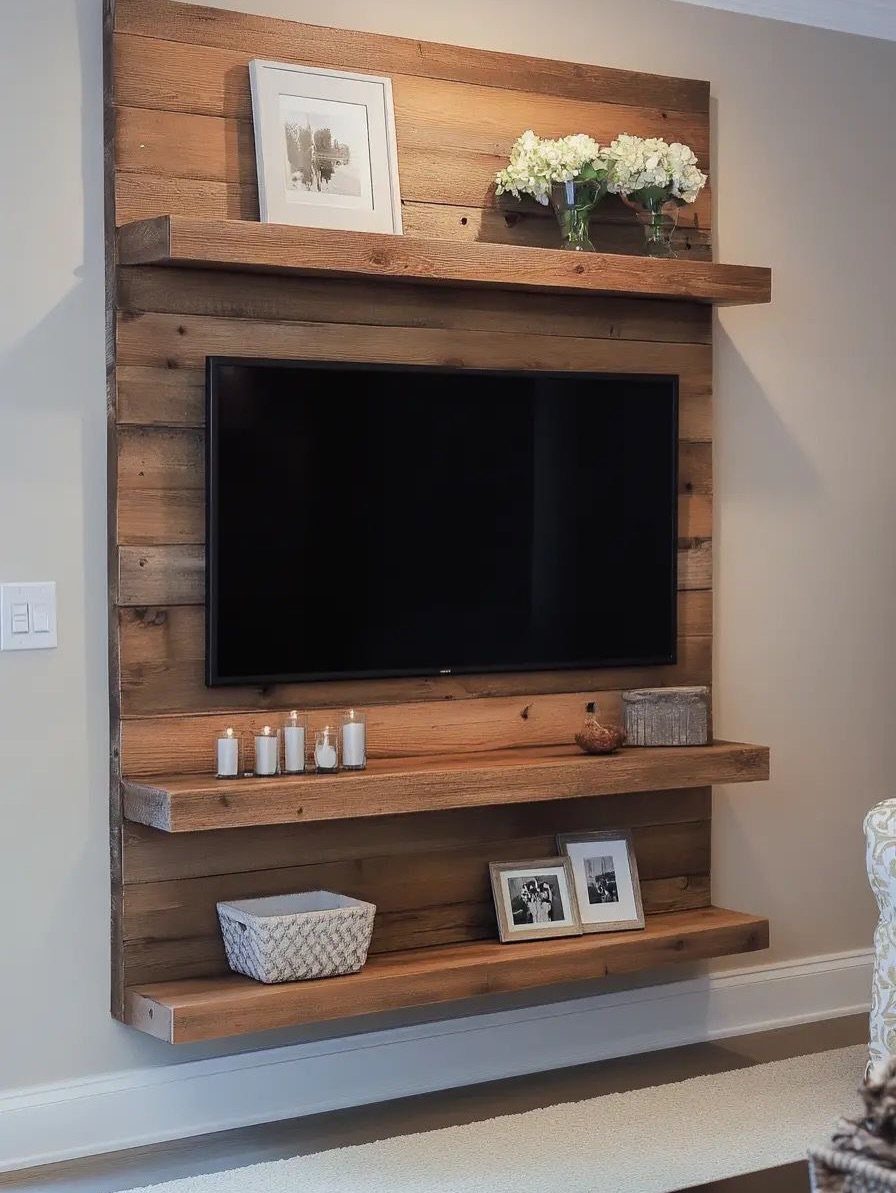
Plank paneling costs less than most treatments and turns a flat white wall into something with texture and warmth. Rough-textured wood next to a screen softens all that black glass.
Floating shelves on the same wall give you a place for photos, candles and flowers without needing a separate cabinet.
Keep the shelves close to the same wood tone as the planks so the wall reads as one piece. For a renter-friendly version, stick to lighter planks you can remove later.
4. Simple Wall-Mounted TV Cabinet
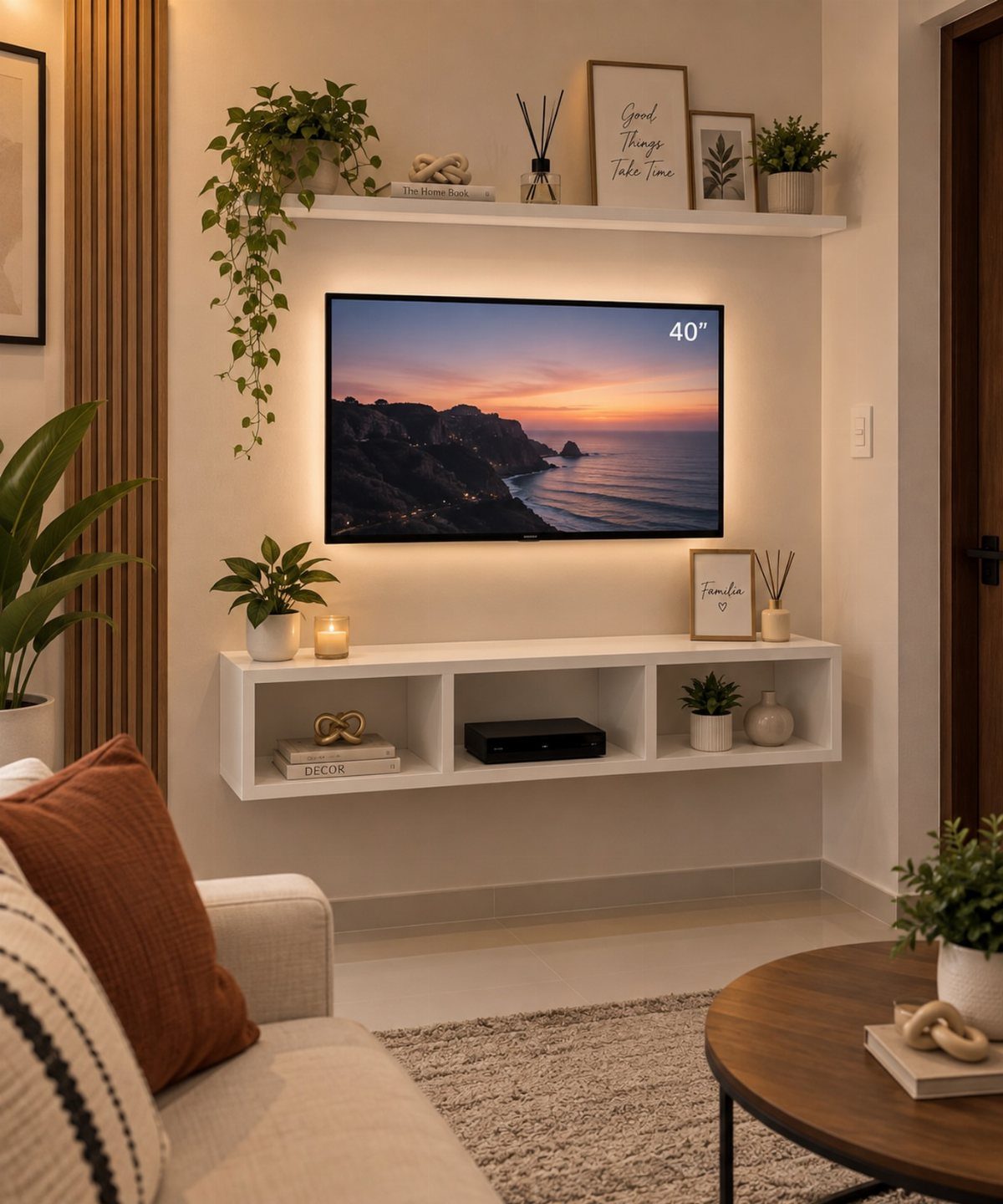
A white floating cabinet below the TV and a single white shelf above is about as simple as a TV wall gets, and that restraint is why it works.
Line the shelf and cabinet up with the TV’s width so the three pieces feel like one composed block. It suits a first apartment or a small living room where a heavy built-in would crowd things.
5. Concealed Storage TV Unit
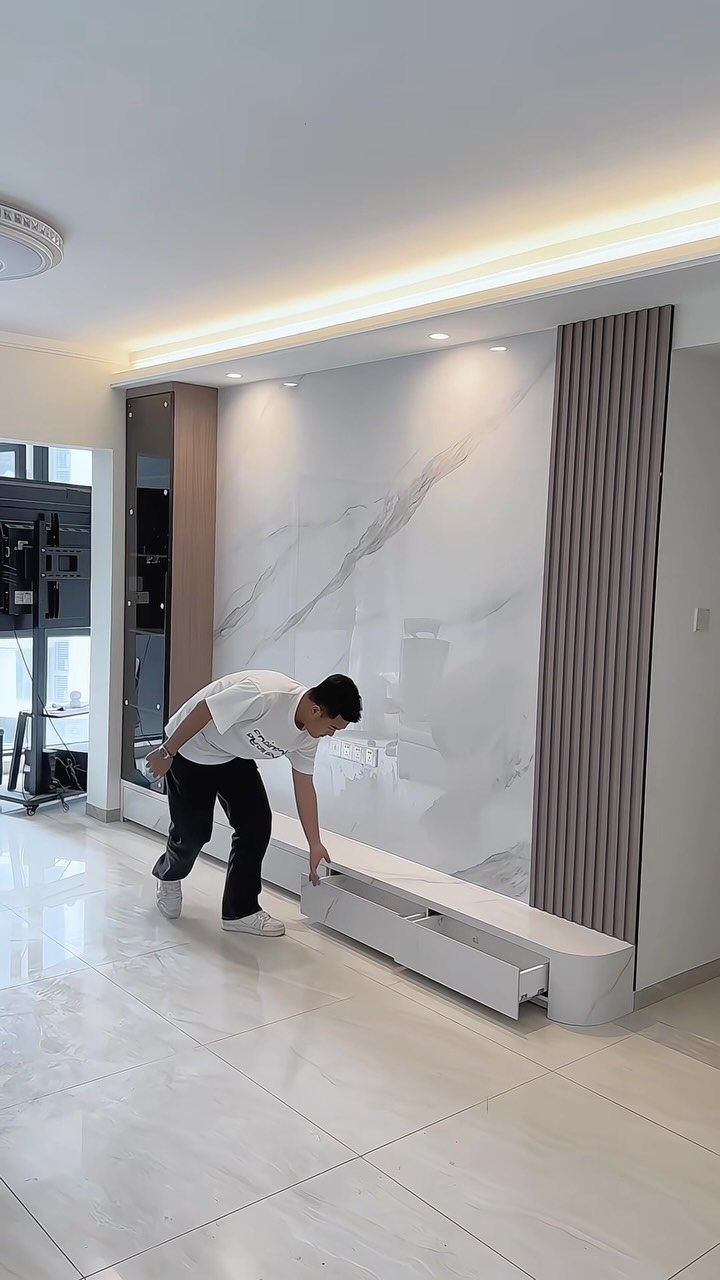
Drawers built into the TV panel swallow the clutter: remotes, cables, game controllers, streaming boxes. Nothing sits out, so the wall stays calm.
I would choose push-to-open or handleless fronts so the surface stays uninterrupted. Measure your gear before building, and plan at least one drawer deep enough for a soundbar or console.
6. TV Unit with Open Shelves
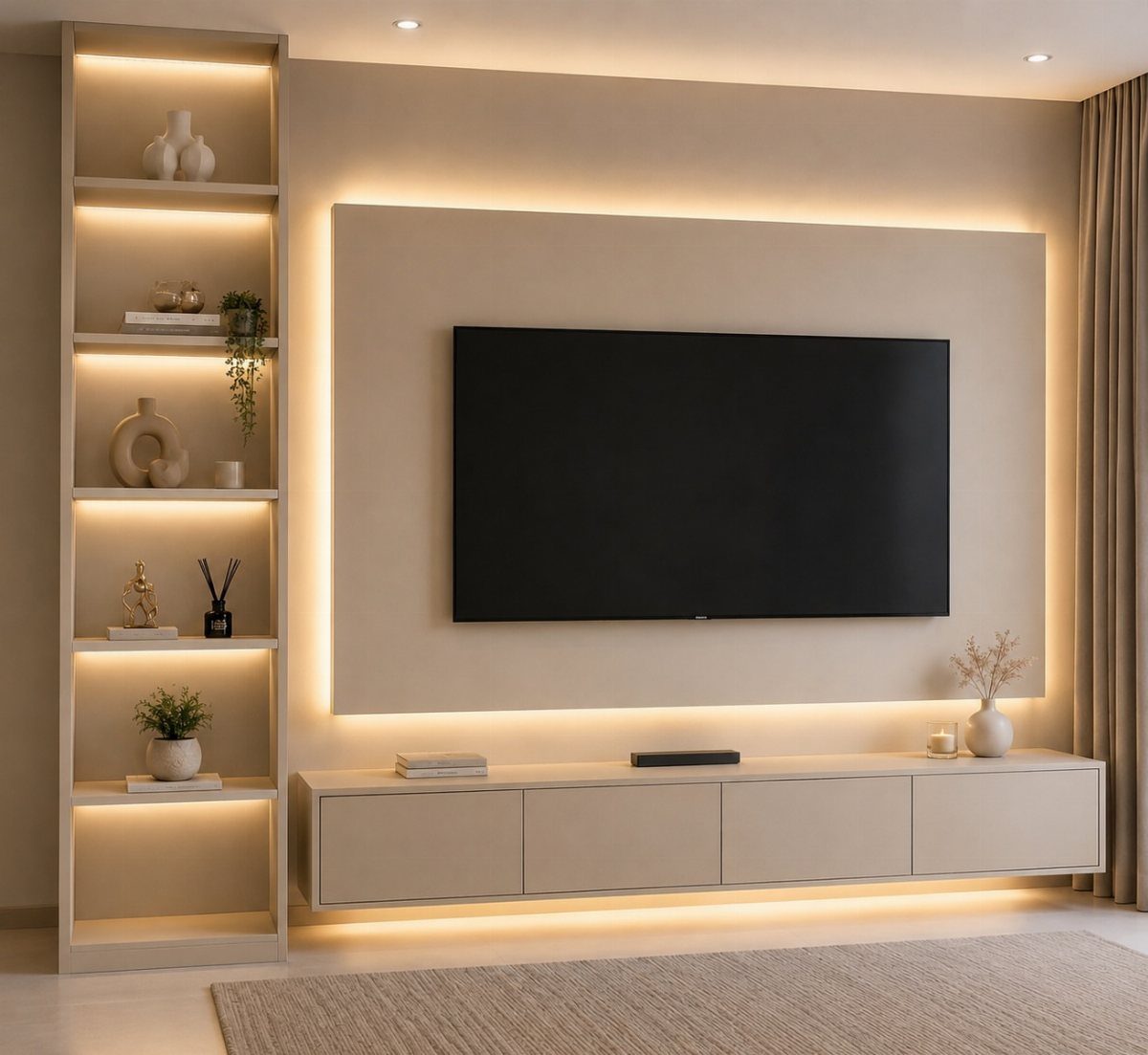
Pairing a closed floating console with a tall open shelf gives you both hidden and visible storage, and I think that mix beats all-open or all-closed. Cables and clutter go behind the doors; the nicer objects get the shelves.
A backlit panel behind the TV pulls the whole setup together. Keep the shelf styling sparse, grouping a few objects with empty space between them, because crowded open shelves start looking messy fast.
7. Scandinavian Style Minimal TV Stand
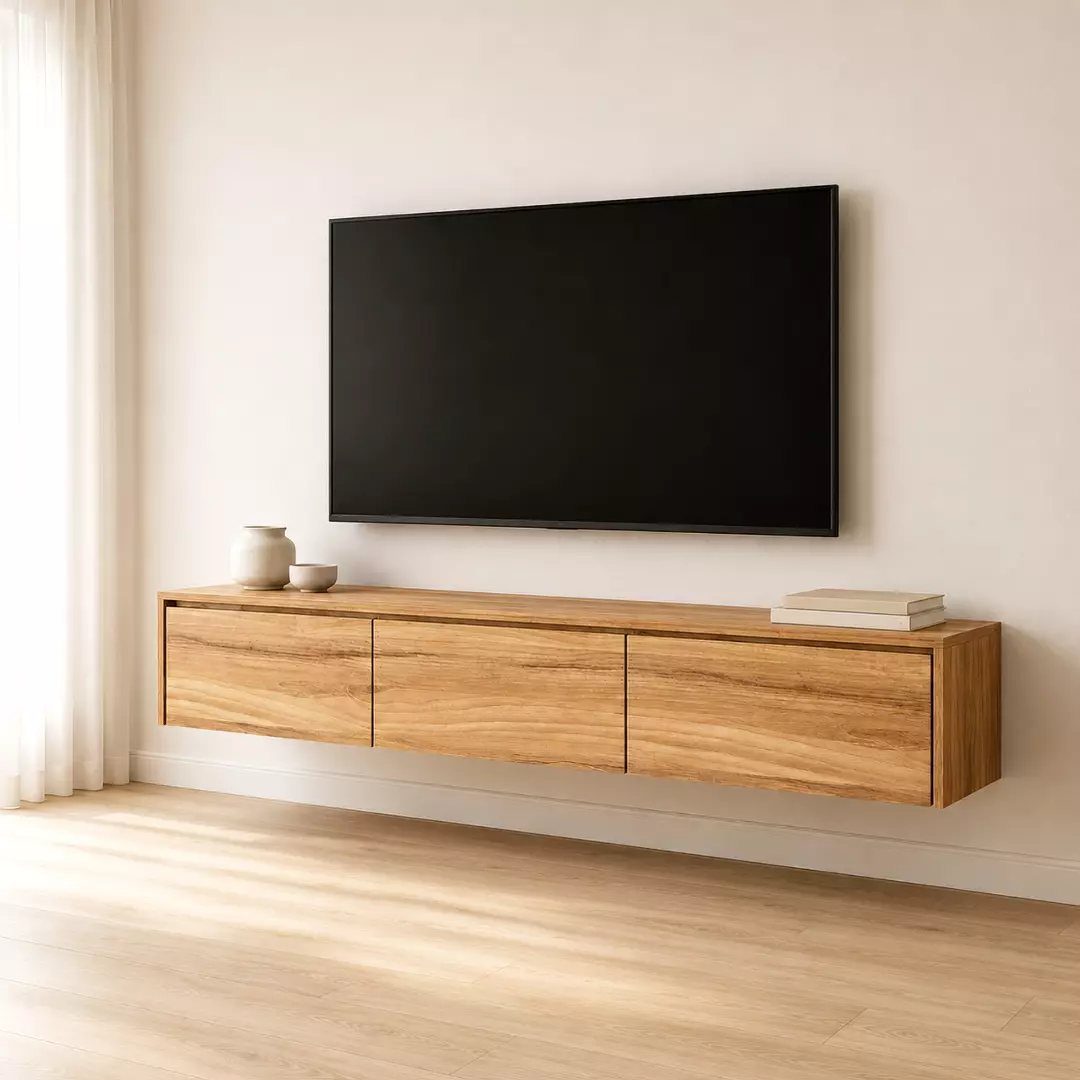
Light wood with a visible grain warms the setup, and a white wall behind it balances the tone. 3 drawers below the screen hide the small stuff, so the top only needs a vase and a short stack of books.
I would keep the top almost bare. Minimal works because of the empty space, and one or two objects are enough.
Pick a wood tone close to your floor so the stand looks like part of the room.
8. Curved & Sculptural TV Units
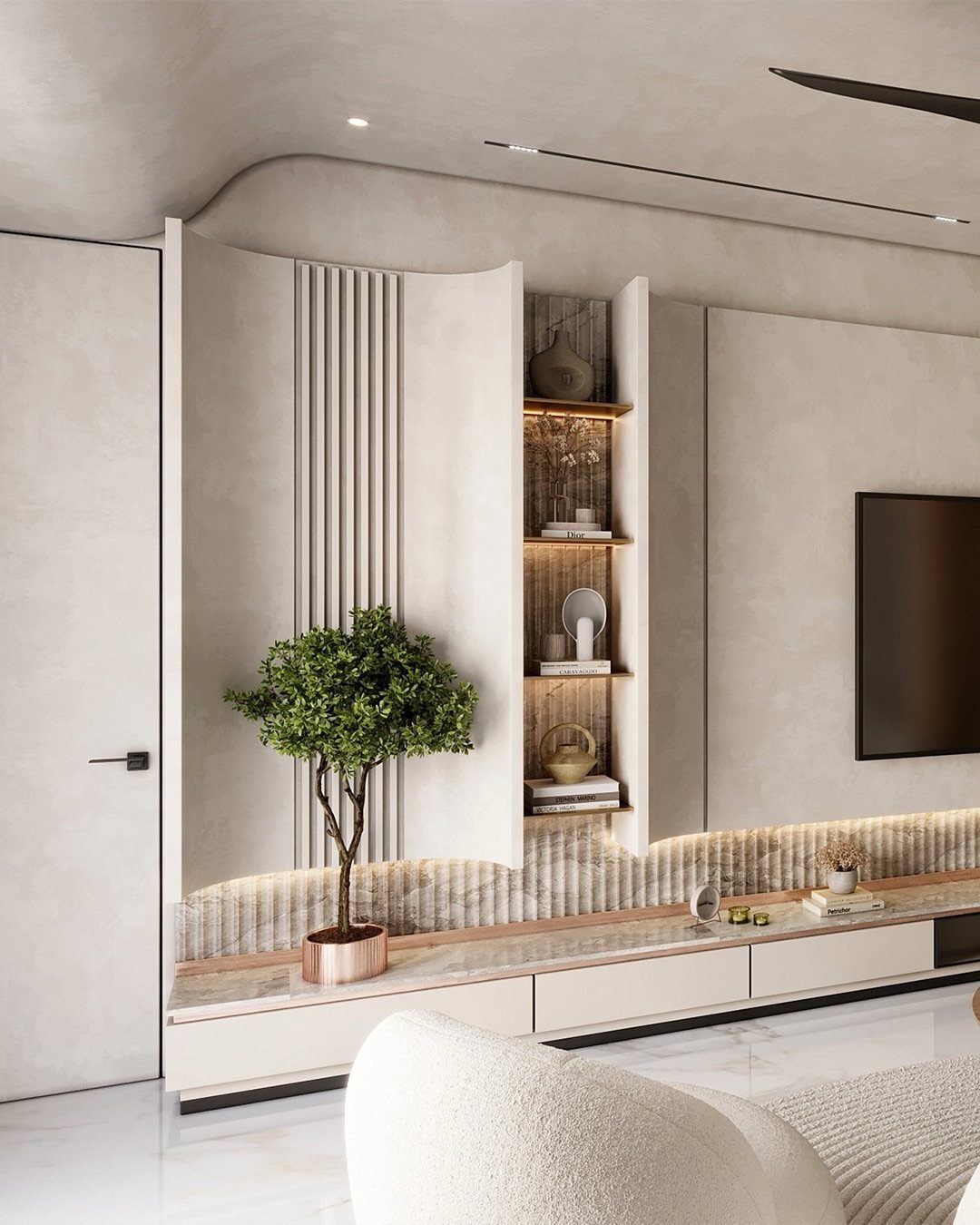
A curved panel softens a room full of straight lines and square screens. Beige is a calm choice, and it lets the shelving built into the curve do the decorating.
Because the shape is the feature, I would keep everything near it plain: a low white cabinet, one plant, and nothing else competing for attention.
Curves are harder to build than flat panels, so expect more cost and more time than a straight wall. Plan the shelf depth before you start, since a curve eats into the space behind it.
9. Stone Finish TV Background Wall
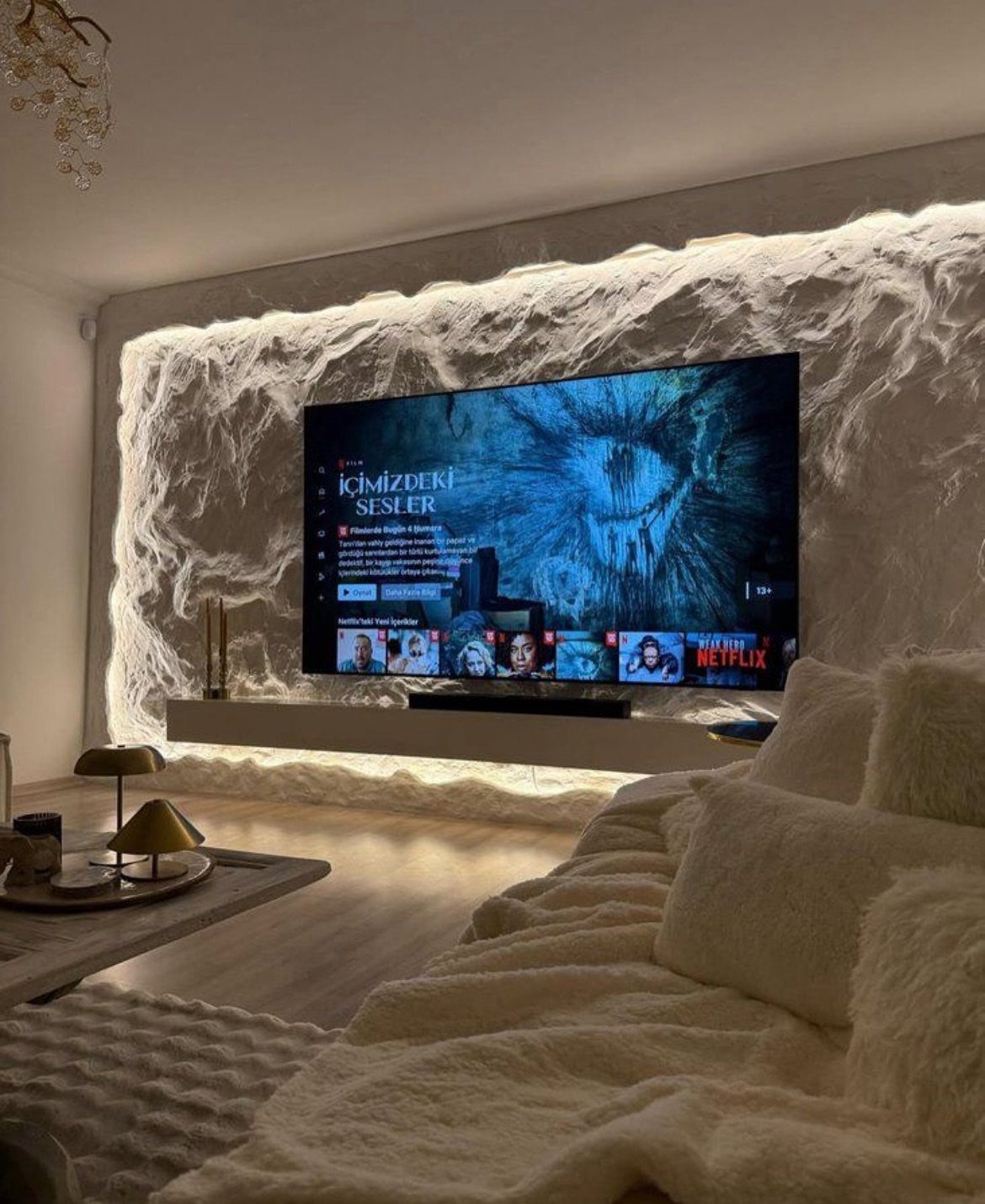
Textured stone behind the TV gives a flat wall real depth, and a backlit finish makes the surface read even more strongly. A single floating white shelf breaks up all that texture without adding clutter.
I like the stone paired with a soft, light sofa, because the contrast stops things from turning heavy. Keep the lighting warm and dimmable so the texture shows without glare on the screen.
If real stone is out of budget, a stone-finish panel gets you a similar look.
10. Metallic Accent Pop Wall
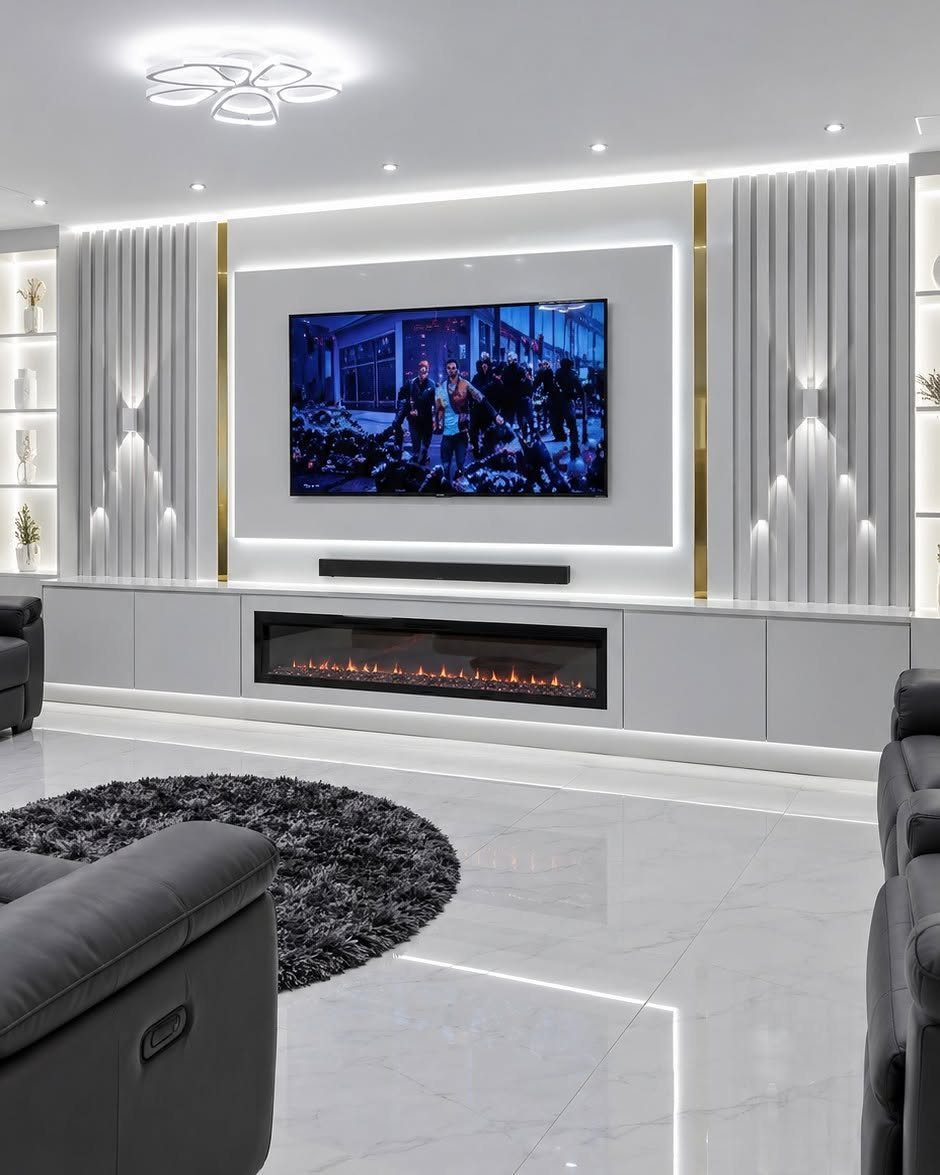
Gold metallic trim against a white panel is a small dose of shine, and an electric fireplace built into the wall gives the TV area a second focal point.
Grey seating and a grey rug hold the gold back from tipping into flashy.
I would use metallic accents sparingly, as thin lines or edging, not as large surfaces. A little gold goes a long way.
An electric fireplace needs only a power outlet, so check for one before you plan the panel layout.
11. Main Hall Modern TV Unit Design
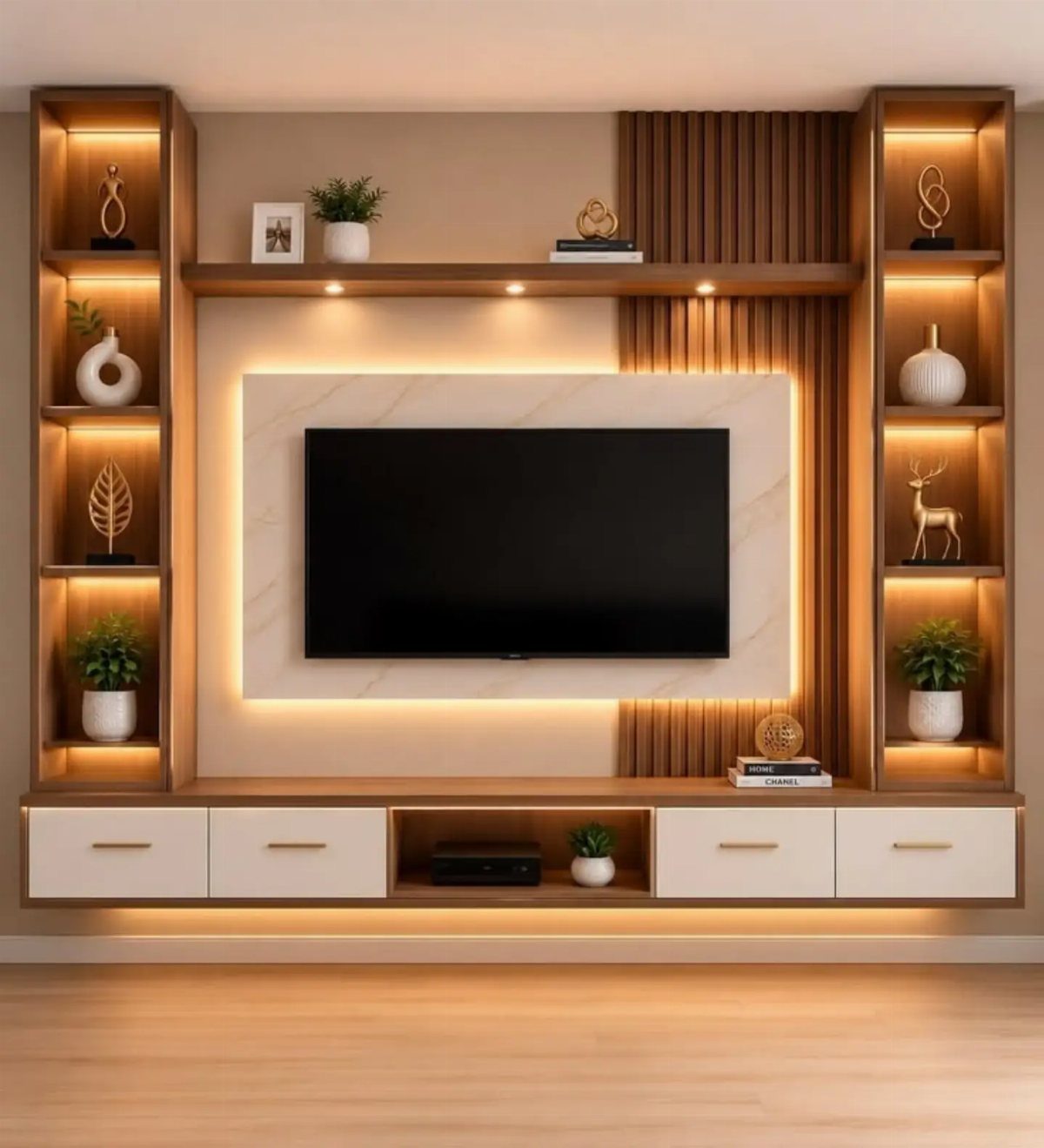
A hall is the room guests see first, so a TV unit here has to look good and hold things.
I would put the nicer objects on the shelves and keep the drawers for everything else. The backlit center panel does the dramatic work, so keep the shelf styling quiet around it.
Wood and marble-effect finishes are easy to mix when the wood stays light.
12. Drawing Room TV Panel
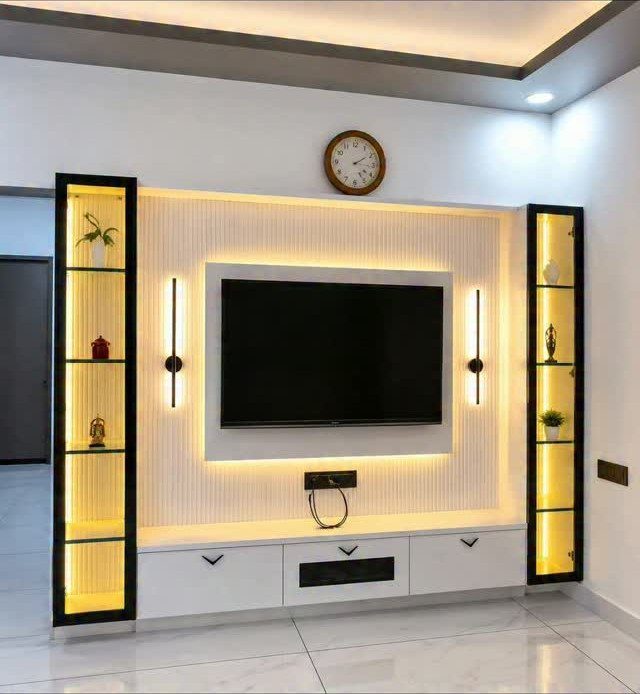
Fluted white walls with warm yellow LED lighting give a drawing room TV panel a finished, layered look. Two side display cabinets frame the screen, and a storage unit below keeps the media gear out of sight.
Symmetry is what makes this work, so center the TV and match the cabinets on both sides. I would keep the LED strips on a dimmer, because yellow light feels cozy at night but strong in daytime.
The clock above the TV is a nice touch, though it adds one more thing to level.
13. Sleek Matte Finish TV Cabinet
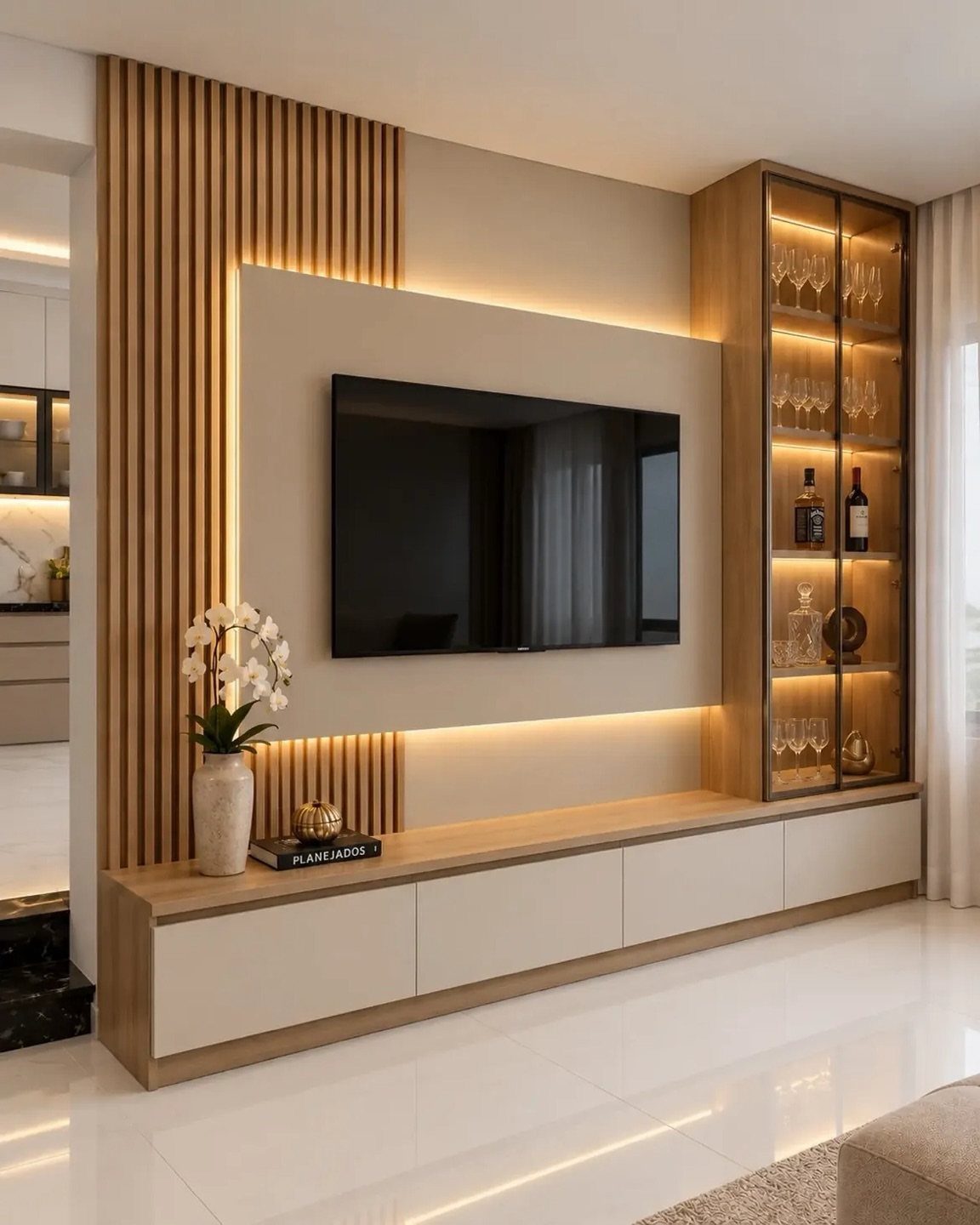
Matte finishes hide fingerprints and cut glare, so a cabinet in beige or white with wood accents looks calm even in a bright room. Smooth fronts with no visible handles keep the surface quiet.
I would pair it with wood slats and a soft backlight, because the matte surface takes warm light without bouncing it back at the screen.
14. TV Unit with Integrated Fireplace
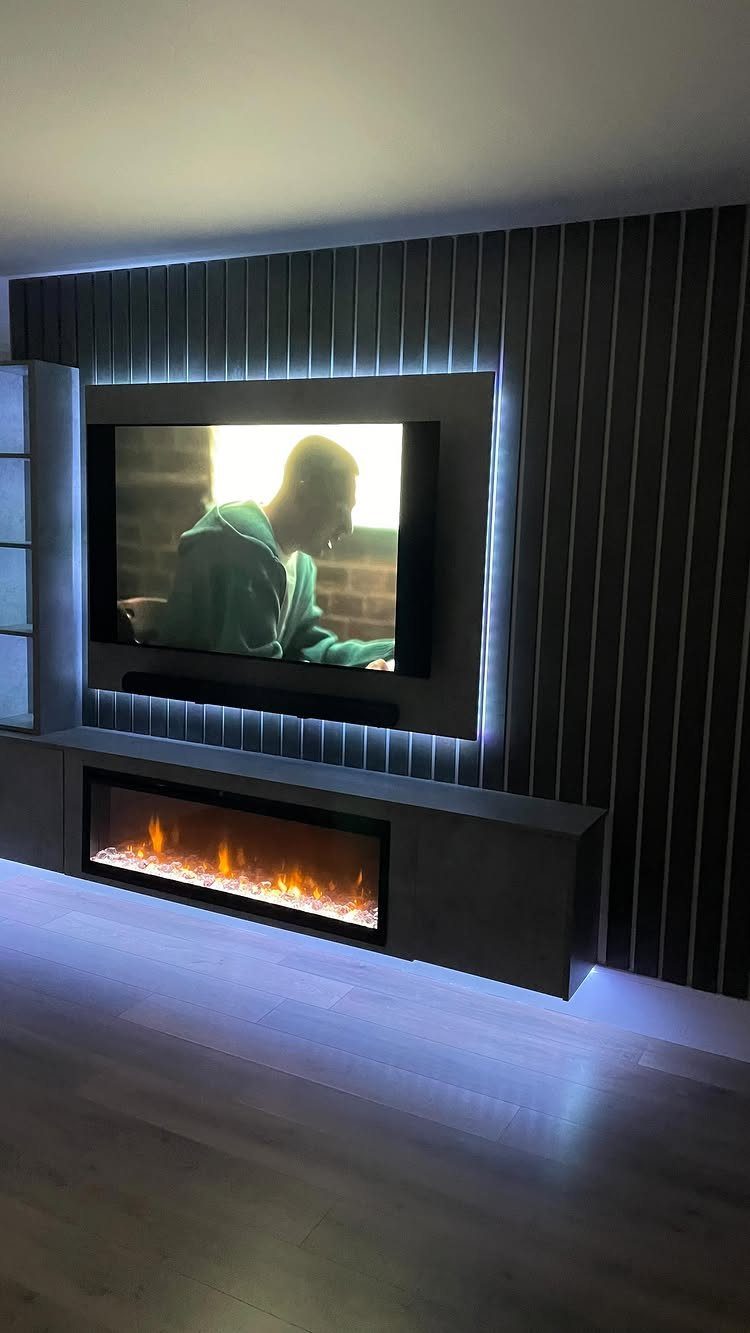
A built-in electric fireplace under the TV gives a living room a warm focal point, and a floating console around it keeps the wall tidy. Slatted wood above adds texture without much fuss.
Plan the panel around the fireplace first. It needs a power outlet nearby, and the TV above it should sit where your neck stays comfortable, so check the height before you drill anything.
I would keep the backlight to one color. Blue works here, but a warmer tone would suit the flames better.
15. Full Wall of Entertainment
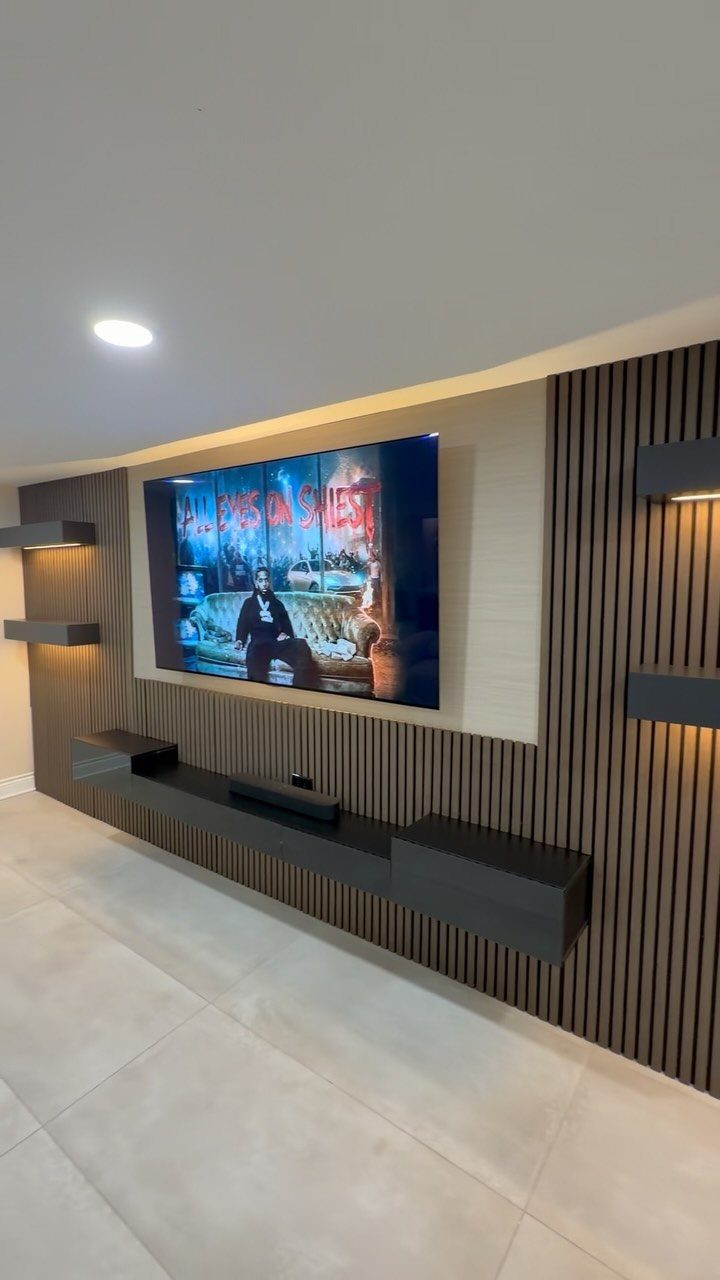
Vertical wood slats running the full height of the wall, with a long floating shelf and built-in side shelving, make a big TV feel like part of the architecture.
That is the closest a living room gets to a home cinema.
I would keep the console dark so it grounds all that wood. Use the side shelves for a few objects only, and let the slats stay the main feature.
This is the largest project on the list, so expect more materials, more cuts and more time than a single cabinet.
16. Metal Finish TV Console
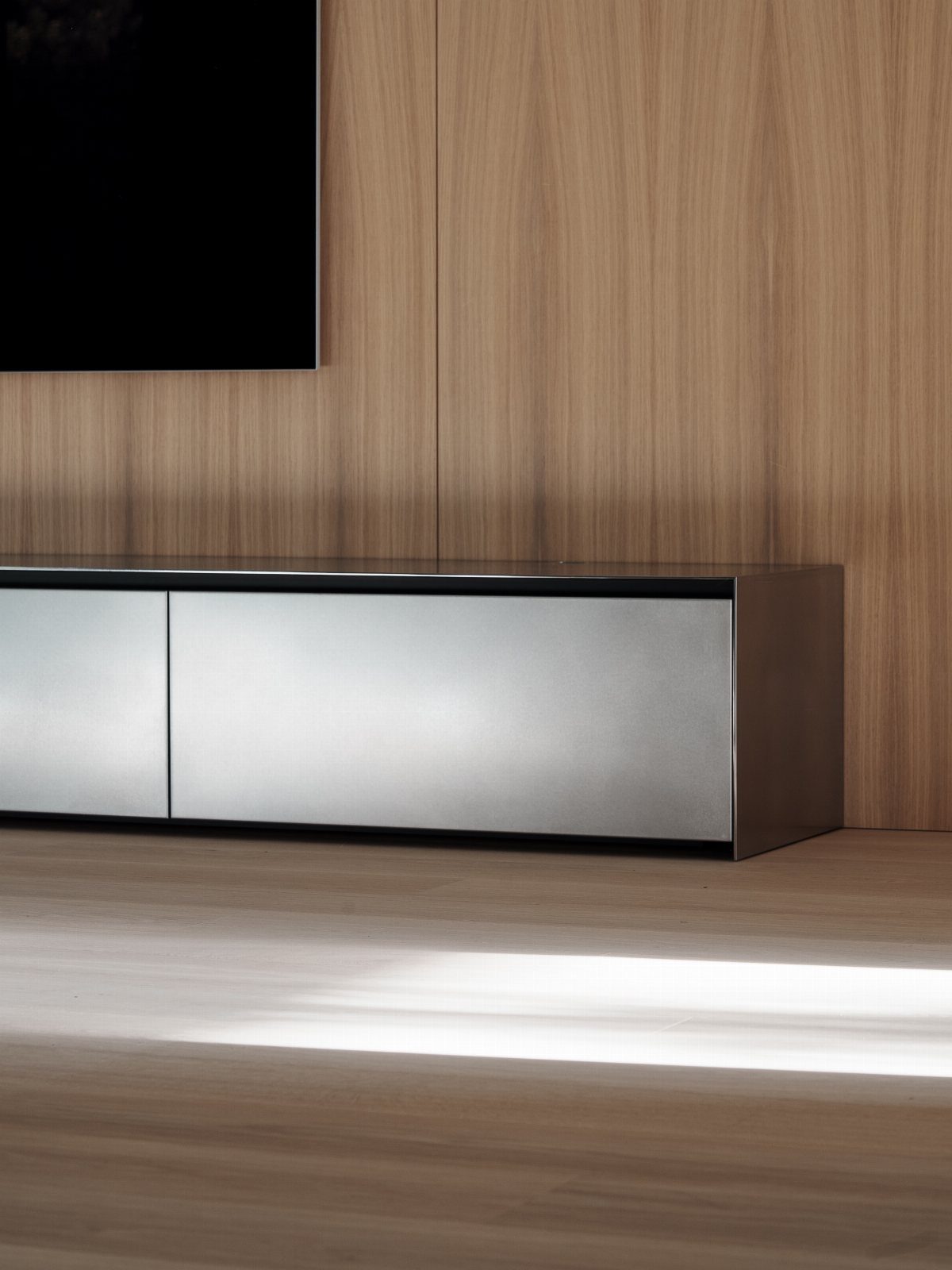
A silver metal console against light wood paneling is a cool, clean contrast: the metal reads as sharp and the wood keeps it from feeling cold. Low and slim, it suits a modern room with little clutter.
I would choose it when you want something different from the usual wood or white cabinet. Metal also shows fingerprints and dust on a flat surface, so keep a microfiber cloth nearby.
17. TV Unit with Decorative PVC Background
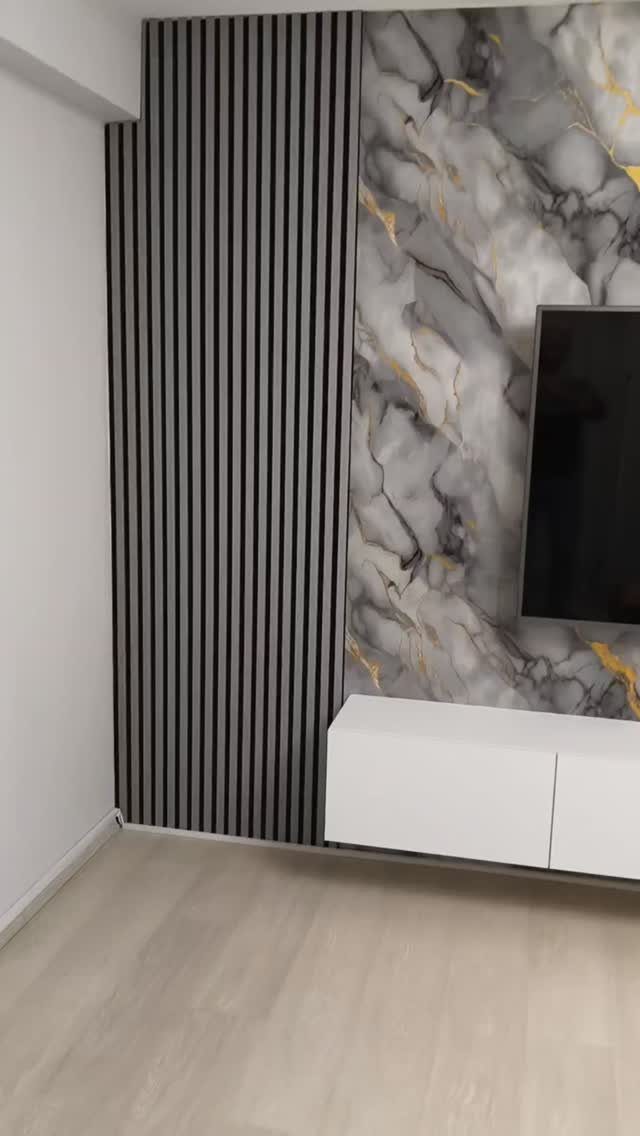
A marble-patterned PVC panel gives a TV wall the look of stone for much less money and effort than real marble. Set against grey vertical slats, it adds pattern without needing any extra decoration.
I would keep the cabinet plain and white, as it is here, so the wall does the talking. Check that the panel seams line up before you fix it, because a mismatched pattern is the first thing you will see.
18. Partition TV Panel Design
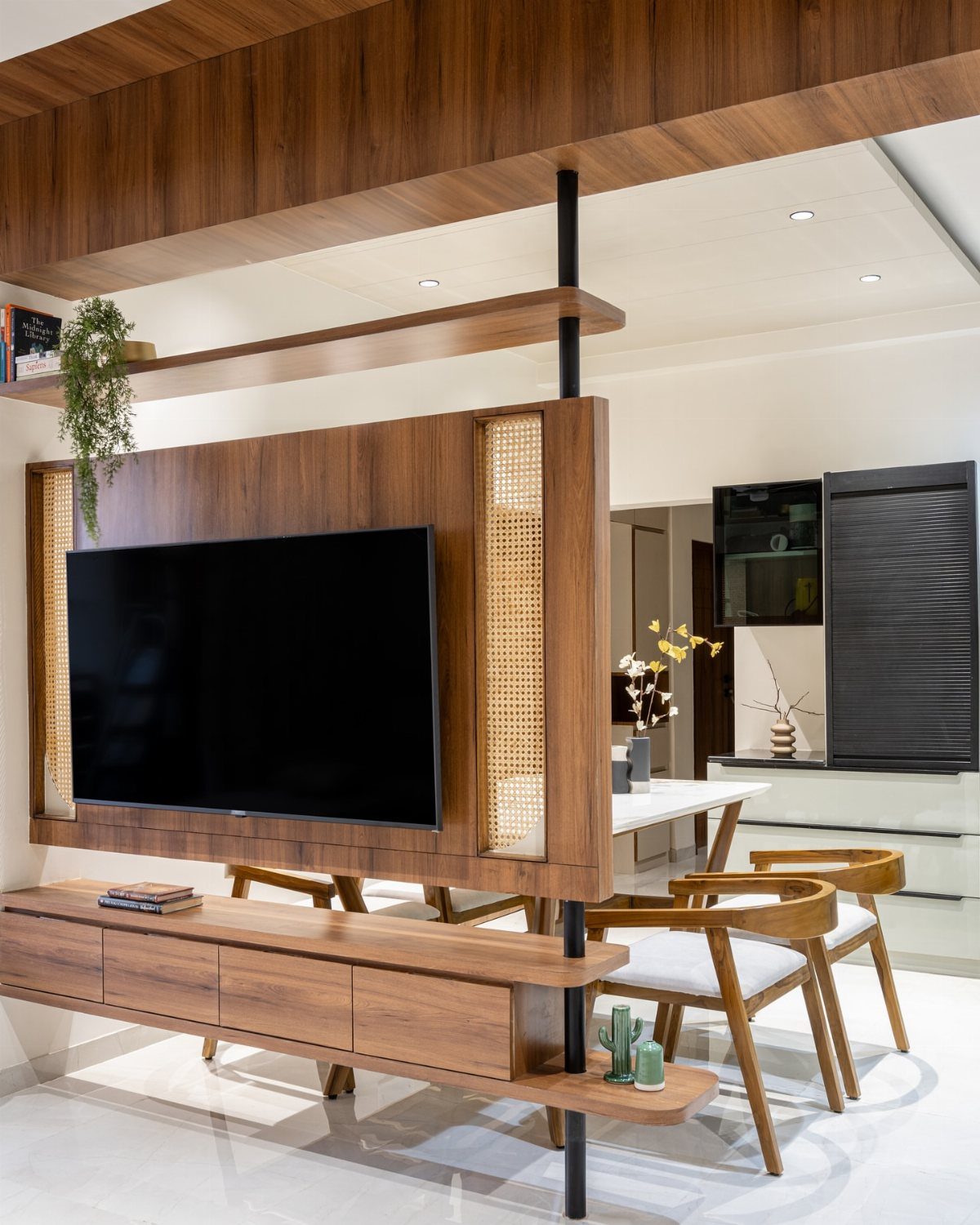
A wooden partition behind the TV splits a living area from a dining space without closing off the room. A built-in console and woven cane panels let light and air pass through while still marking the boundary.
I like cane here because it adds texture and softens all that wood. Remember that the TV is only watched from one side, so plan the cables and the back of the unit for the dining side too.
How to Style a TV Unit
Start with the cables, because a styled unit with wires hanging down never looks finished. Route them out of sight first, then add the decor.
I add candles, a few books, and one or two small objects that actually matter to the person living there.
For a minimal look, one item is enough, and a potted plant adds life without much effort. Photo frames work too, as long as you keep them in small groups.
The wall around the TV is also worth styling, and it makes the screen stand out more.
Stone cladding suits a rustic room, fluted panels suit a contemporary one, and a solid block of color contrasts nicely with the rest of the space.
Choose the unit to match the room’s theme, and style it after that.
Best Materials for TV Units
A TV unit has to carry the weight of the television and its accessories every day, so material matters as much as looks.
The common options break down this way:
- Plywood: strong and durable, with termite-resistant versions available. I would pick it for a unit meant to last.
- High-density moisture-resistant board holds screws firmly and stands up to humidity, so I use it in basements and bathrooms.
- MDF: has a smooth surface that takes paint nicely, so it suits decorative pieces.
- Particle board: cheap and lightweight, which fits a tight budget.
Engineered wood, Sheesham and mango wood are also good choices for longevity and looks.
Match the material to your style. Wood suits a traditional room, while metal gives a modern, lightweight, slimmer profile.
Frequently Asked Questions
What are some good design ideas for a TV wall?
A floating unit with a textured backdrop is the easiest place to start: the open floor beneath makes tight spaces look wider, and the shadow under the cabinet gives the wall depth.
Add a backlit panel with a warm, dimmable LED strip to draw the eye, or a mix of closed cabinets and open shelves for storage.
What is the best material for a TV panel?
Plywood is my pick for a unit meant to last, because it is strong and durable, and termite-resistant versions exist. MDF takes paint smoothly and suits decorative pieces, and particle board is cheap and light for tight budgets.





