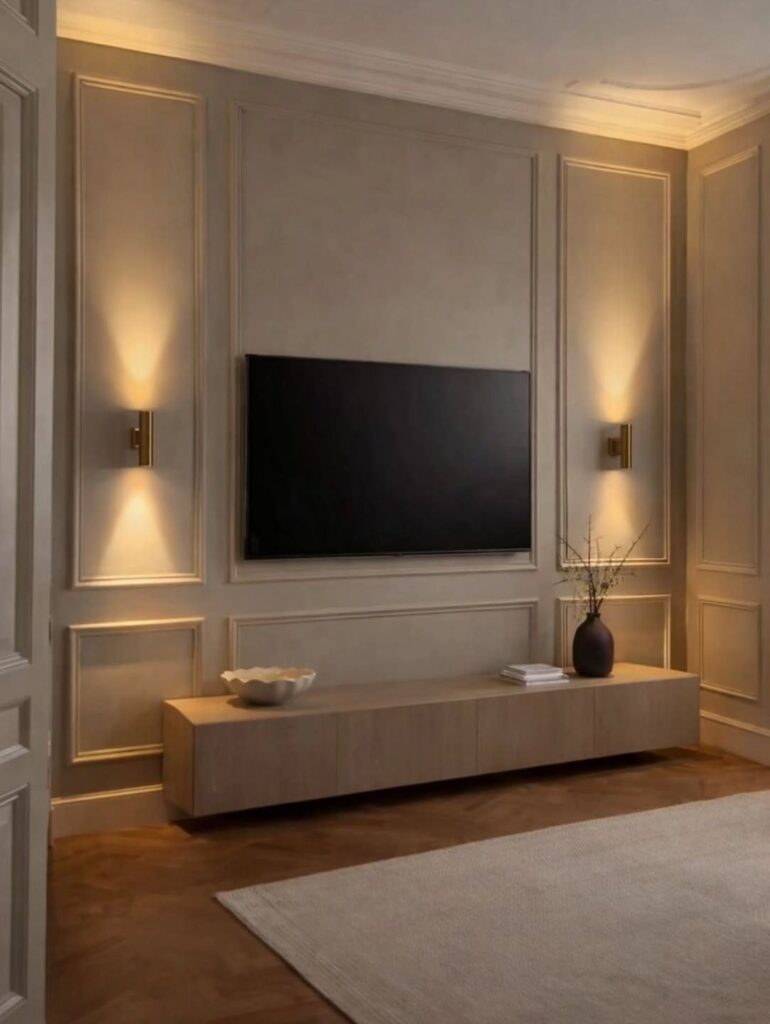
Wall sconces beside a TV range from a matched pair on either side of the screen to one accent fixture, and the choice mostly depends on how much is already on that wall and how much room you have to work with.
Renters can use plug-in versions with a cord cover, while owners can wire in for the tidiest look.
1. Sconces on Either Side of TV
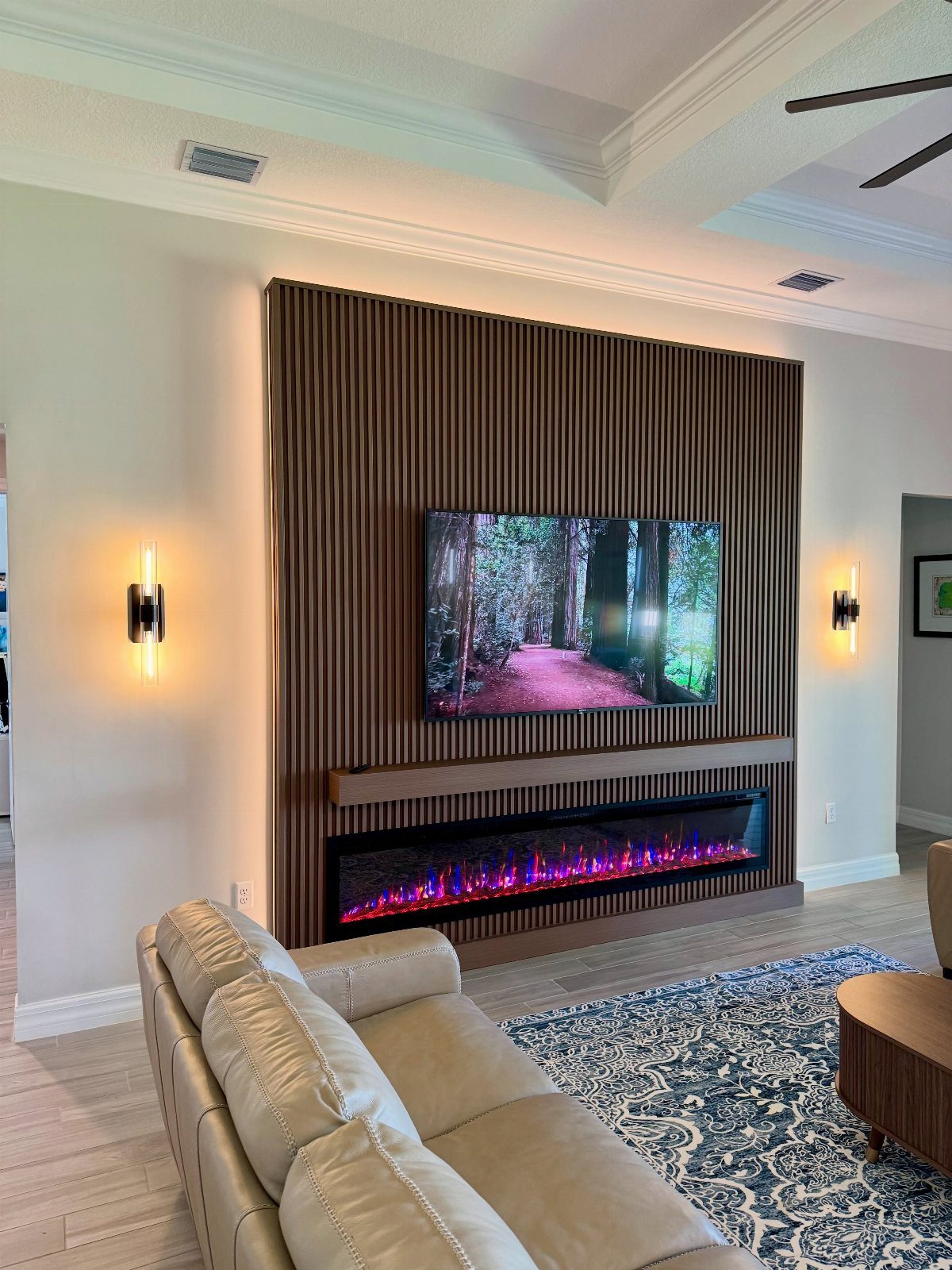
Matching sconces on both sides of the TV give the screen a frame, and a slatted wood wall like this one is a good backdrop because the light grazes the vertical lines.
Tall, narrow fixtures work best here since they echo the slats instead of fighting them.
Mount both at the same height, and center the pair on the TV so the symmetry reads cleanly.
Measure from the floor, not by eye. Wire-in versions look tidiest, but plug-in ones with a cord cover are the renter-friendly choice.
2. Sconces That Match Your Decor
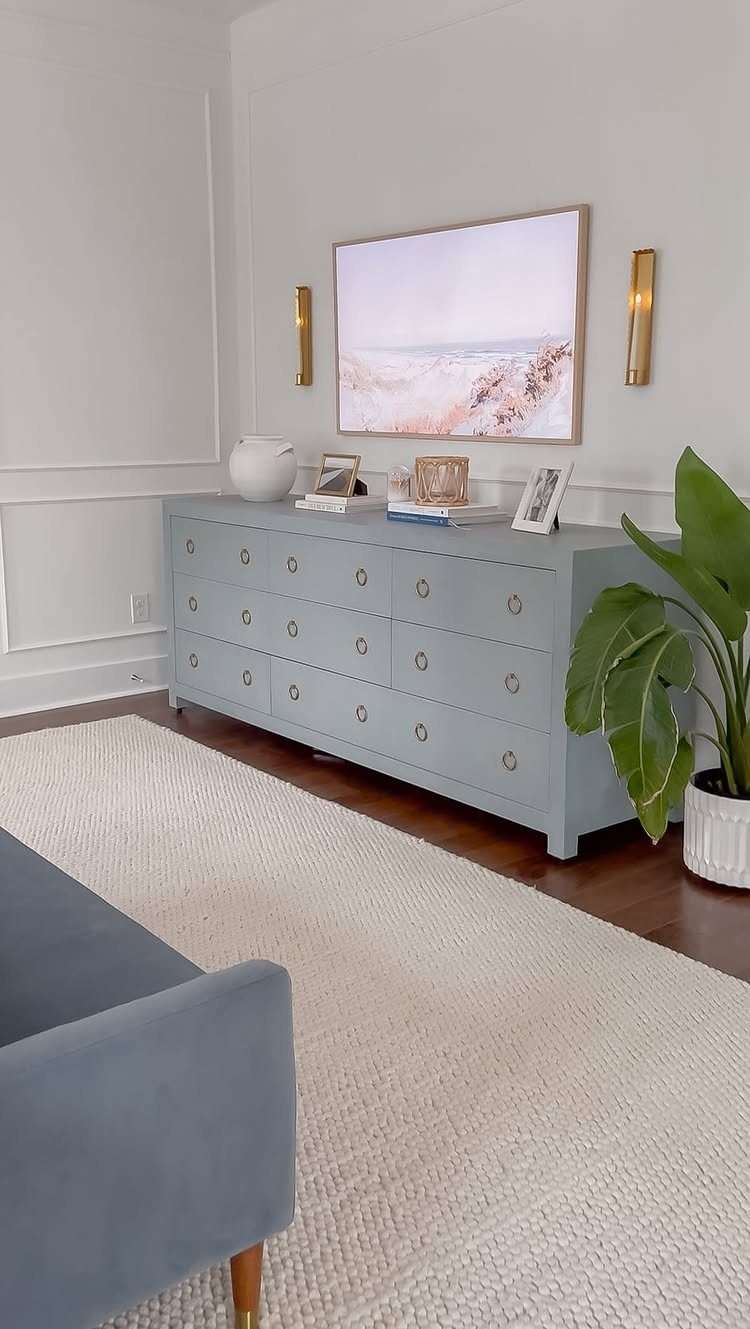
A finish that matches your hardware or frame pulls the whole wall into one look. Pick the metal that already appears elsewhere, such as frames, lamp bases or drawer pulls, and the sconces look planned rather than added.
I would hold to one warm metal in a room and let the paint and plant colors do the rest.
Sconces flanking a TV that is displaying art read as part of the wall, so choose a shape that suits the style of the furniture below, not just the finish.
3. White Shaded Sconces
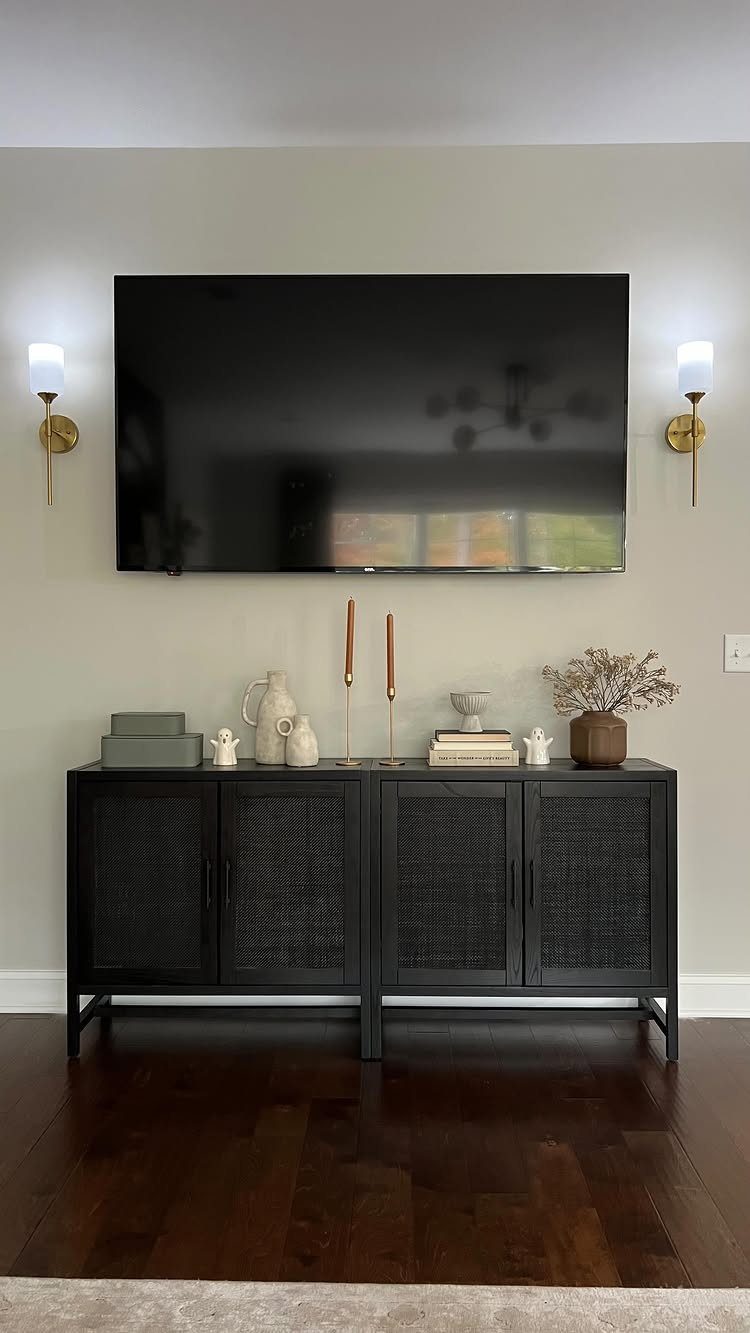
White fabric shades soften the glow, so the light spreads gently instead of throwing a hard spot beside a bright screen.
That makes them the comfortable choice for a TV wall, since you are not staring at a bare bulb in your peripheral vision.
Classic gold arms with white shades suit a traditional room, and they pair well with a sideboard styled with vases and candles.
Use warm, low-wattage bulbs, and put them on a dimmer if you can, so evening movie light stays calm.
4. Single Accent Sconce
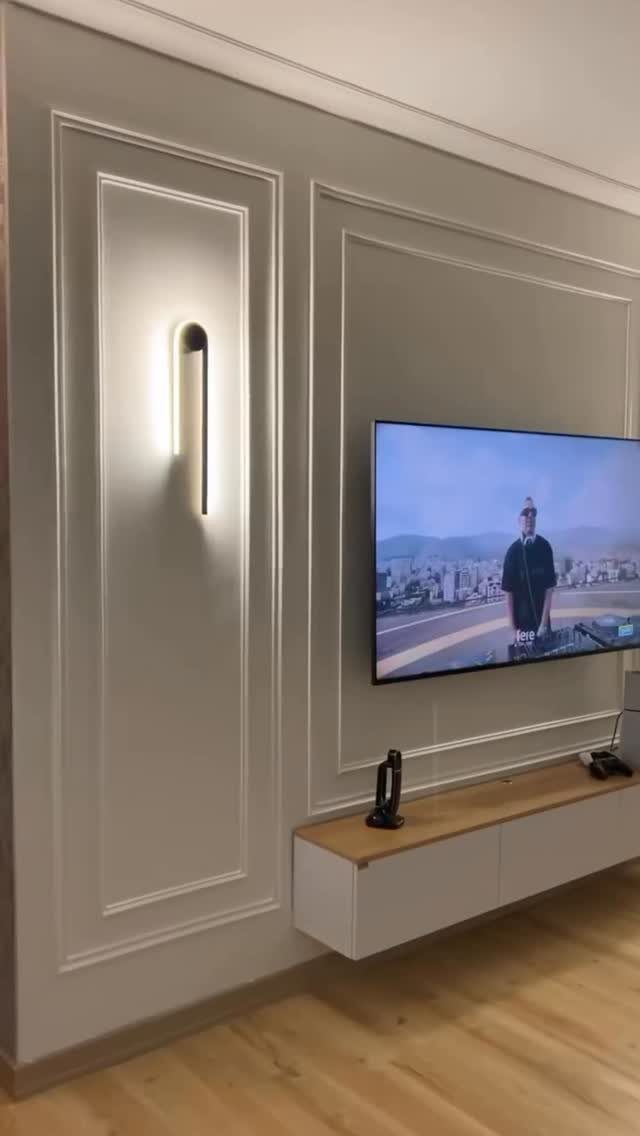
One sconce is enough when the wall is already busy, and this setup proves it.
A single vertical fixture beside the TV adds a point of light and a bit of metal without crowding a floating console or a paneled wall.
Asymmetry only works if something balances it, so I would keep the other side clear and let the console carry the visual weight.
Place the sconce at roughly the screen’s mid-height so it reads as part of the TV group, not a stray light.
5. Glowing Globe Sconces
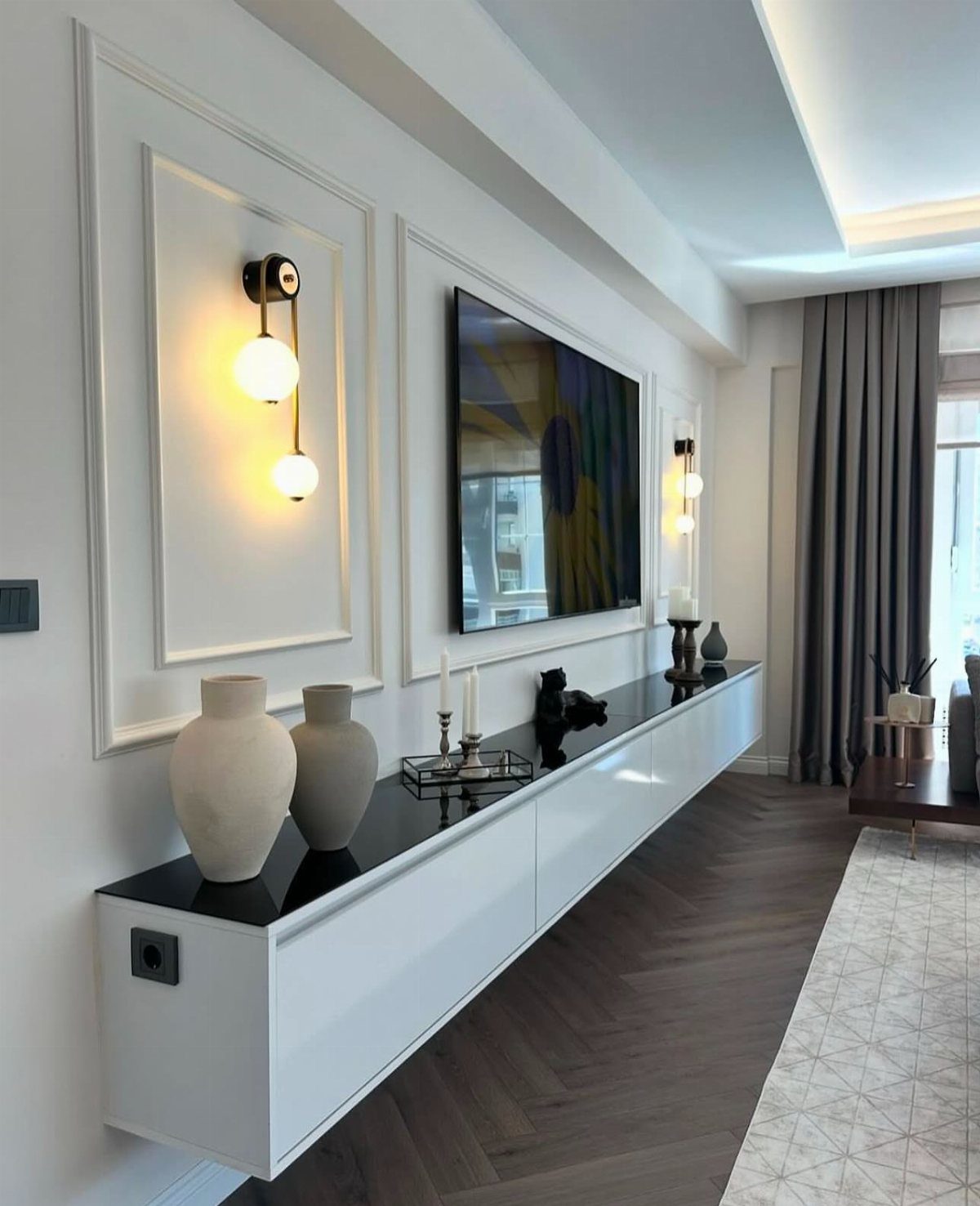
Round glass globes put out an even, ambient glow, and they look especially good against a dark floor like herringbone wood. Their soft shape also offsets the hard rectangle of a flat-screen.
2 globes, mounted evenly on each side, keep the TV wall balanced above a long console. Choose frosted or opal glass if the bulbs bother your eyes; low wattage stops the globes from competing with the screen after dark.
Placement Considerations
Give each sconce its own patch of wall. Tall furniture like a bookcase or cabinet swallows a fixture set too close to it, or leaves it blocking the view, so leave real space between them.
Crowding is the other problem. Hanging them too high or too low has the same effect.
Before you drill, ask what the fixture is for: a point of color, a soft glow, a frame for the screen.
If you can answer, the spot is probably right. Also keep sconces out of walkways, where an arm or cord will get bumped.
Evelina Juzėnaitė, principal interior designer at Planner 5D, says, "Placing sconces too close to tall furniture such as bookshelves or cabinets causes this type of lighting trend to become visually lost or obstruct the view."
Types of Sconces
Pick the type by the job the light has to do. Swing-arm sconces have adjustable arms, so they give directed task light, which suits a spot beside a reading chair.
A fixed sconce with a fabric or glass shade gives off a soft, warm glow and that’s the whole job; it won’t throw light where you need it.
For a TV wall, I lean toward fixed, shaded fixtures, since you want a calm glow and not a beam that needs aiming. A swing-arm earns its place only if someone reads in that corner too.
Placement affects the look as much as the type. Poorly positioned lights can throw off symmetry, cast odd shadows and make a room look smaller, so decide on the style first, then mark the wall.
Functionality of Sconces
Think of a sconce as a second layer that picks up where the overhead fixture or lamp leaves off.
It can wash a textured wall, frame a fireplace or pick out an architectural detail, and the low, indirect light makes a room easier to relax in.
Put them on a dimmer. That one change lets the same fixtures read as practical in the afternoon and atmospheric at night.
In a theater or media room, sconces also give enough soft light to cross the room without tripping over cables or furniture.
A surface-mounted, angle-adjustable fixture in black blends with most furniture, and several of them can set up separate lighting zones.
Frequently Asked Questions
How to decorate on either side of a TV?
Matching sconces on both sides are the simplest way to frame the screen.
A slim, tall fixture looks right against slats or paneling. If the wall is already busy, 1 sconce on one side is enough, with a console or a plant balancing the other.
Do wall sconces need to match?
No, they don’t need to match each other or every other fixture. 2 different fixtures can still look like a set if they share a finish.
Brass on both is my usual pick, and it keeps the room from feeling too matched. If 2 sconces flank a TV, though, a matching pair keeps the symmetry clean.





