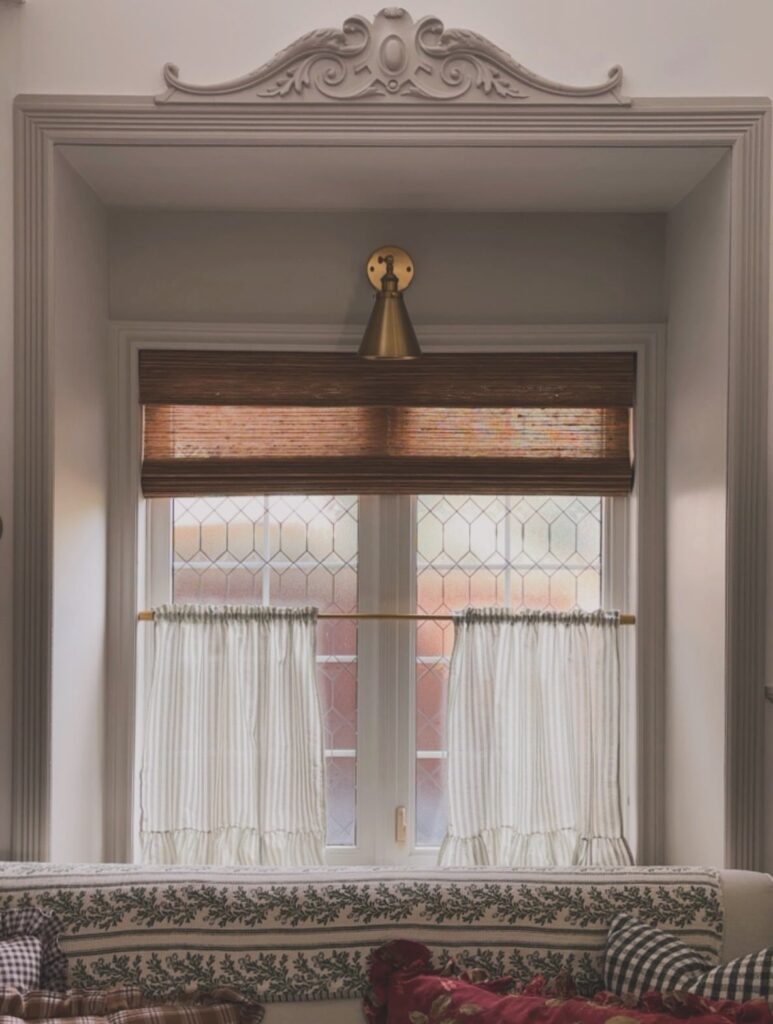
Basement window treatments run from a single faux wood blind to layered sheers and drapes on a gold rod, and the price range is $30 to $100 per window.
What picks the winner is the room behind the glass: a damp laundry area wants wipe-clean PVC or vinyl lining, a home theater wants blackout, and a bedroom needs a window that clears out completely for egress.
Since a basement tends to have several windows, multiply the cost by your window count before you fall for any one look.
1. Faux Wood Blinds
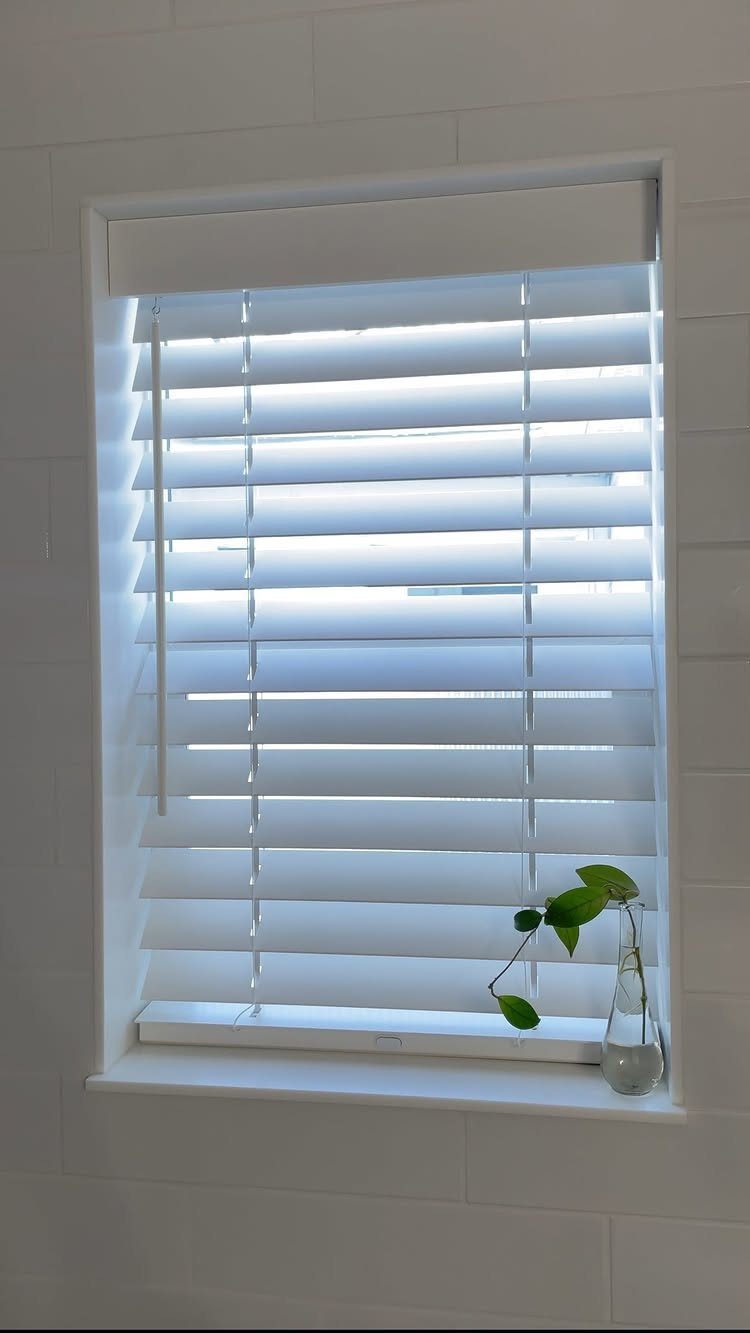
White faux wood blinds suit a basement window because they pair the look of real slats with moisture resistance, which matters in a room where damp is a real worry.
Keep them white and the window disappears into light walls instead of becoming a dark rectangle.
A sill deep enough for a small plant is a nice bonus.
For a weekend project on a budget, I’d choose these before anything fabric.
2. Roman Shades
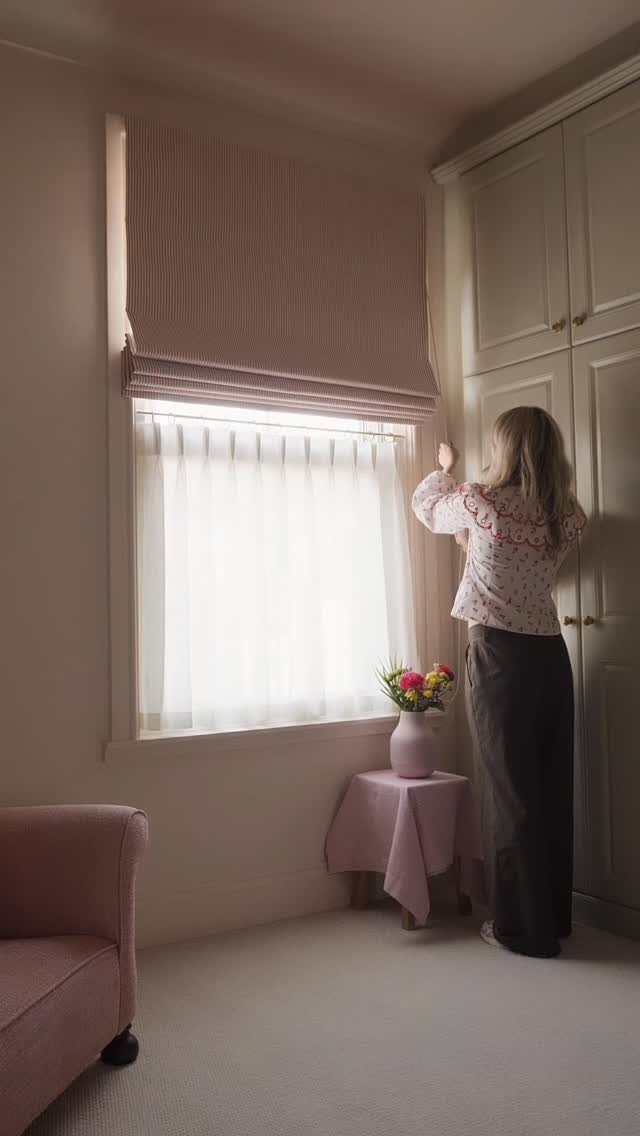
A Roman shade gives a basement window a tailored, finished look that plain blinds rarely manage. The fabric folds up in neat horizontal pleats and lies flat when lowered.
Pink is a bold pick, and I like it because a basement can use some color. Pairing sheer cafe curtains with the shade softens the edges and keeps the room from feeling stiff.
If you want a quieter look, choose a solid shade in a tone close to your walls.
3. Cafe Curtains
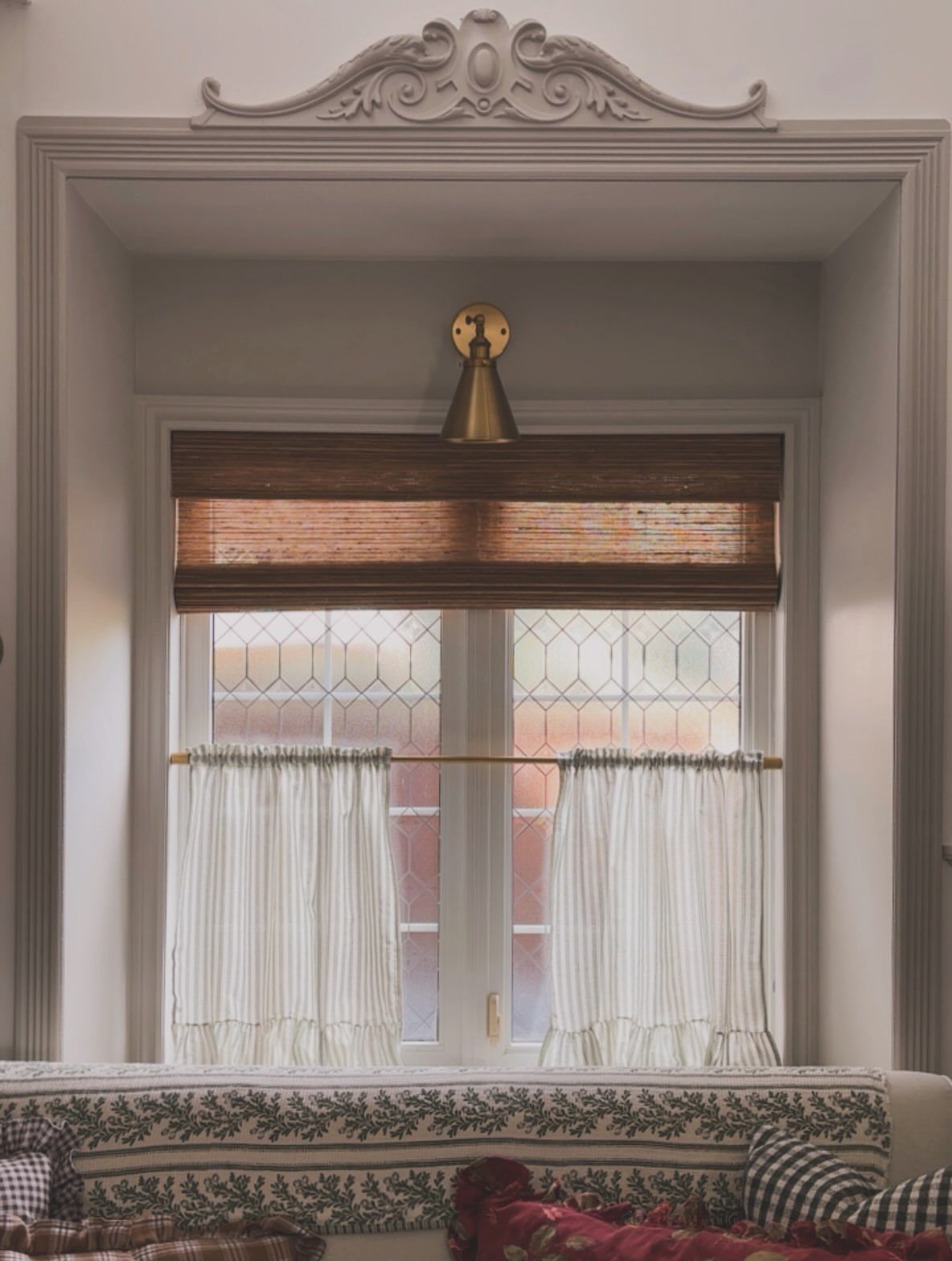
Eye-level windows are where cafe curtains earn their place. They cover only the lower half of the glass, so you get privacy where people can see in and daylight through the top.
White cafe curtains look clean and a little old-fashioned in the best way, especially on a window with a divided or leaded pane. Hang them on a thin rod set at the midpoint of the window.
Stacking a bamboo shade behind them adds texture if you want it.
4. Sheer with Heavier Curtains
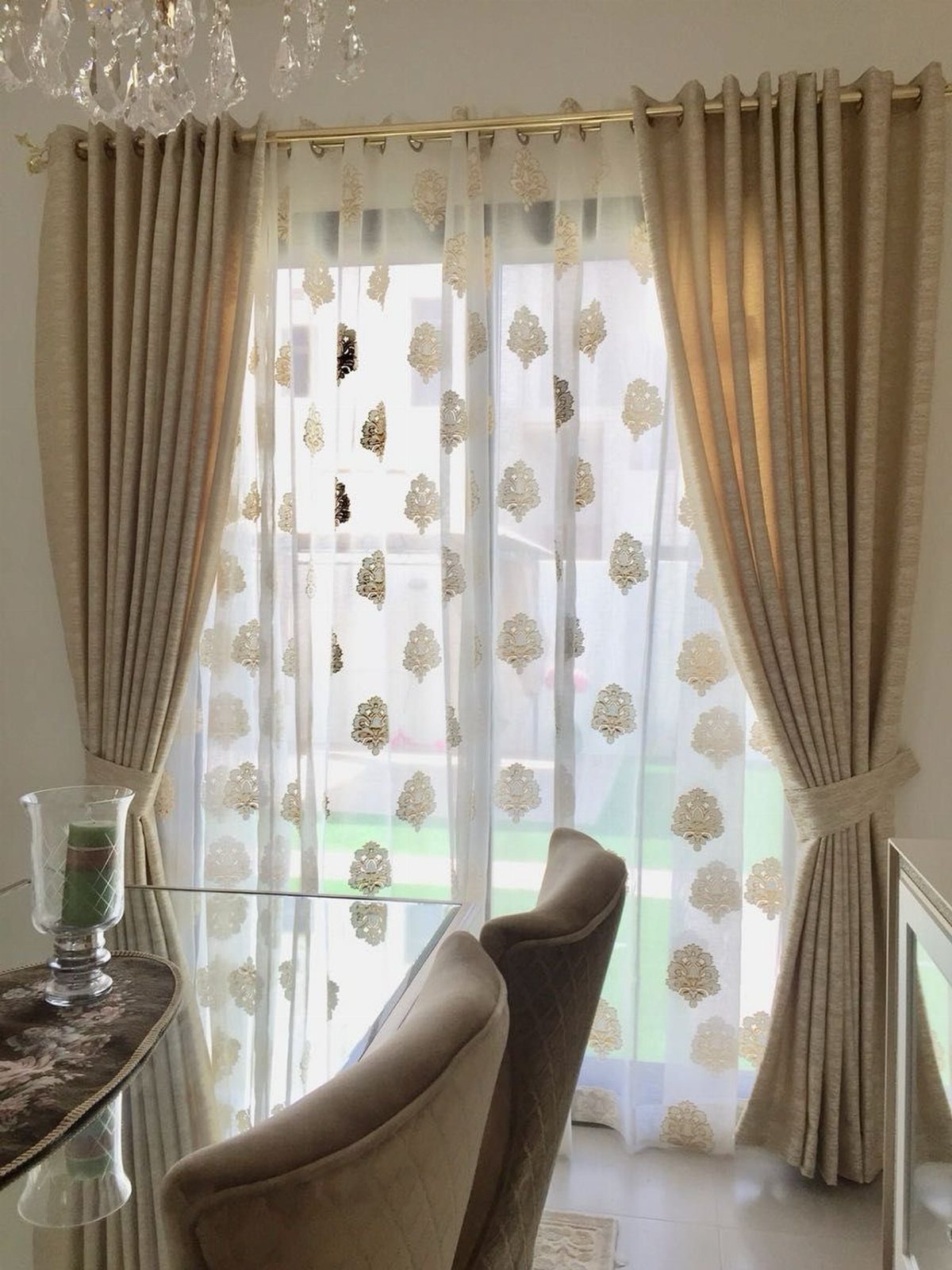
Two layers do two jobs: sheers filter daylight while heavier drapes close the window off at night.
Hang both on a gold rod, with the sheer on the inner track or rod so it stays visible when the drapes are tied back.
I like beige for the heavy layer because it stays neutral against a patterned sheer. A pattern in gold ties the fabric to the hardware.
This costs more than a single blind, since you buy 2 panels and extra hardware.
5. Top-Down Bottom-Up Shades
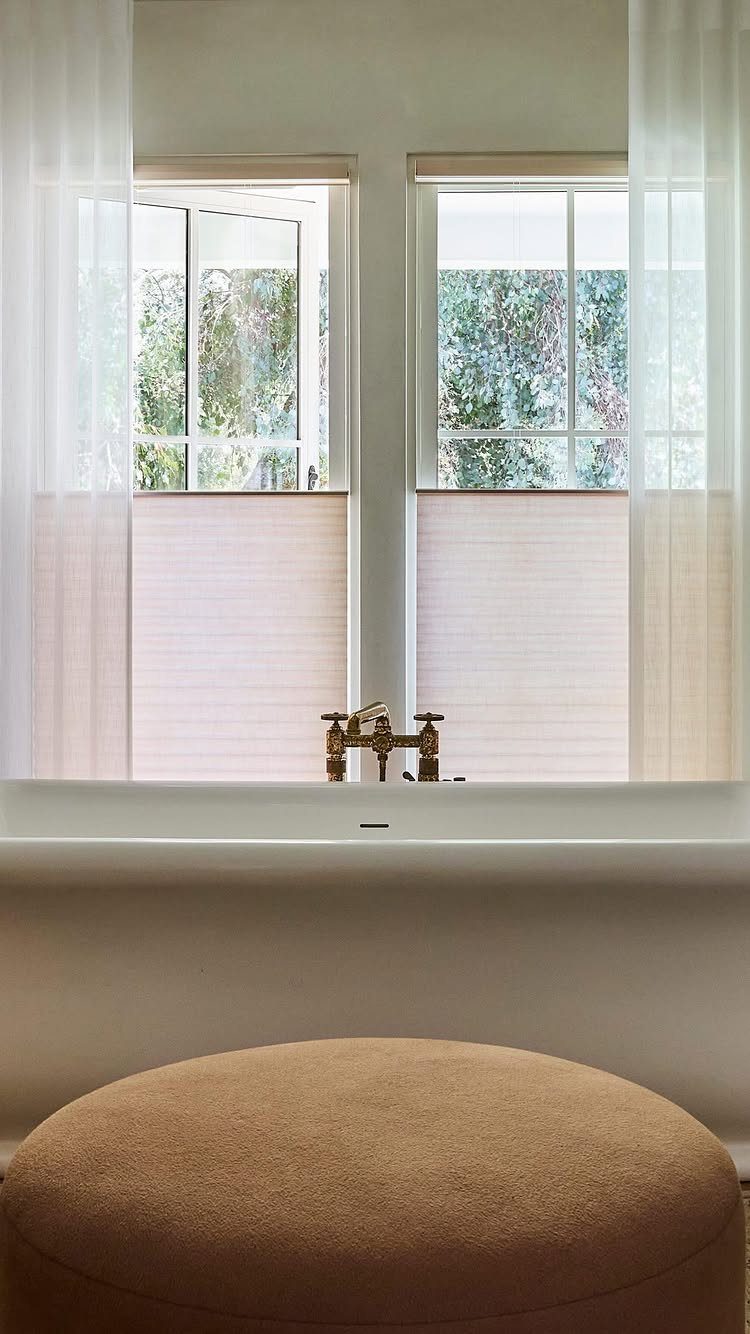
Top-down bottom-up shades let you lower the top while the bottom stays put, which is the cleanest fix for a window that needs privacy and light at once.
Open the top rail and daylight pours in above eye level while the lower half stays covered.
Beige cellular shades stay neutral and read clean against most basement finishes. Add sheer white curtains at the sides to soften the frame.
I’d pick this for bathrooms and any basement window facing a walkway.
6. Ceiling-Mounted Track Curtains
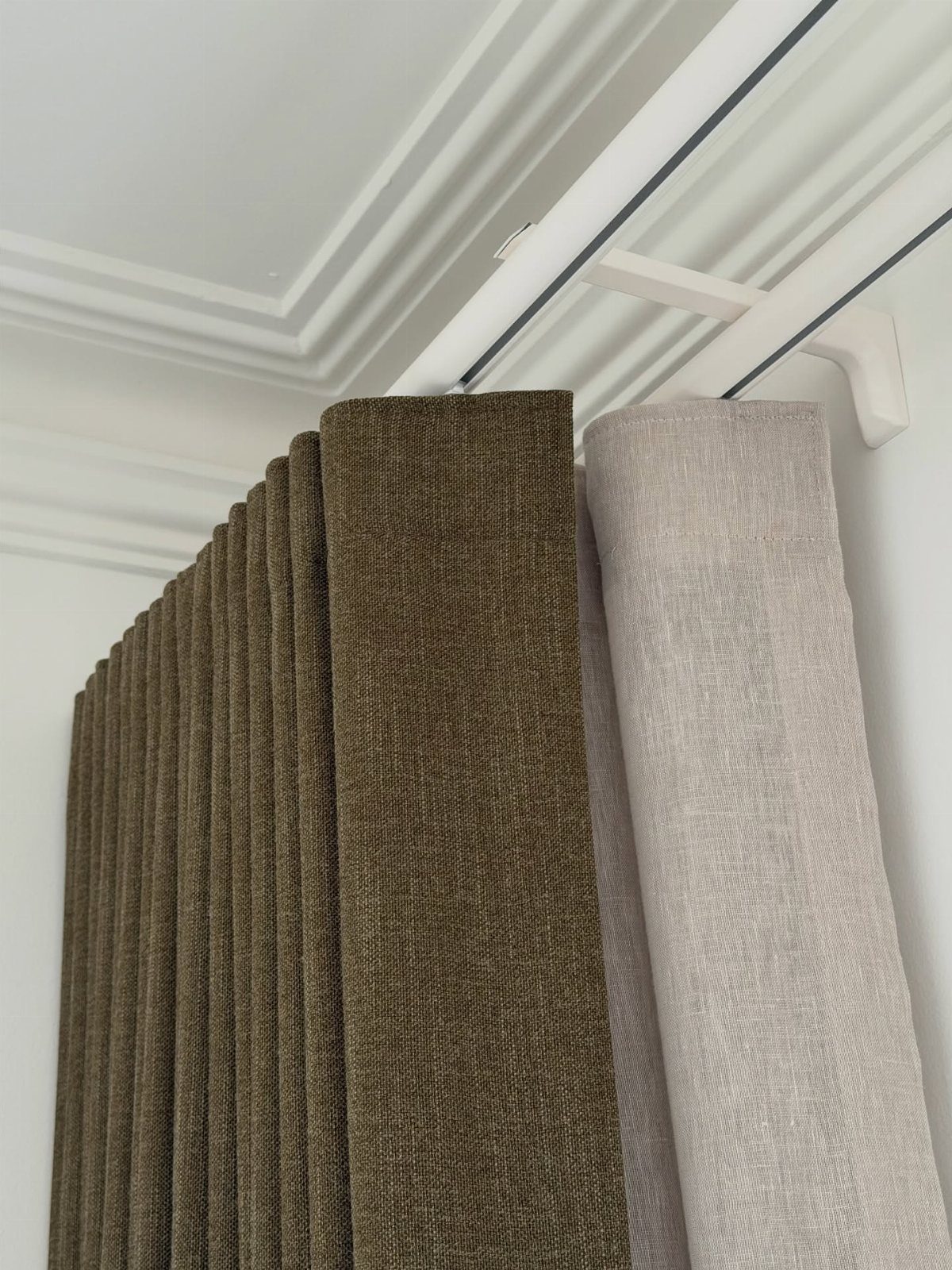
Heavy, textured curtains look best when the hardware vanishes, and a white track fixed to a white ceiling does exactly that. The fabric seems to fall straight from the ceiling.
Because the track sits high, the curtains make the ceiling feel taller, which a basement can use. Choose a thick weave in olive green or beige to block more light and add warmth.
Mount the track into joists or solid blocking, since the weight of heavy fabric adds up.
7. Curtains with Bamboo Shades
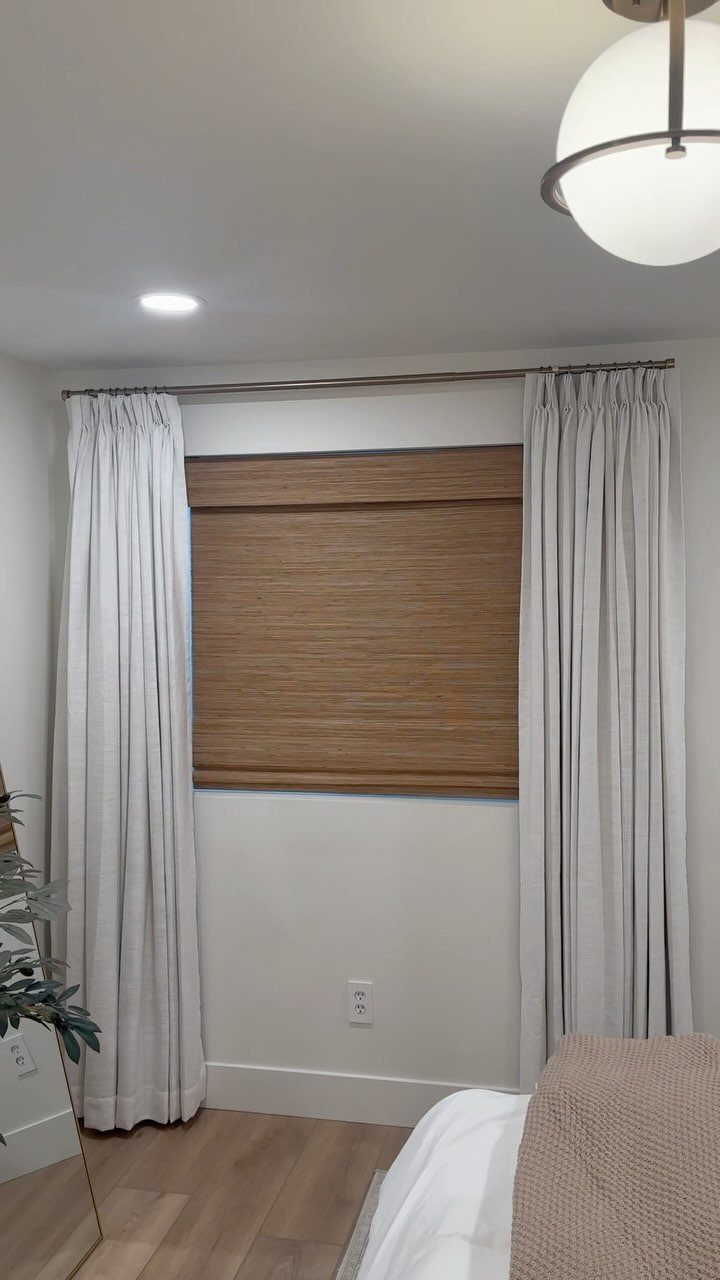
Light grey curtains over brown woven bamboo shades make a calm pairing: the grey stays cool and soft while the bamboo adds warm texture right at the glass.
Run the shade as your daytime cover and keep the curtains open at the sides. Close both at night, and the room feels finished instead of just covered.
I’d choose this over a bare shade when a basement window looks thin or plain. The grey panels frame it without competing with the wood tone.
8. Floor-Length Drapes on Gold Rod
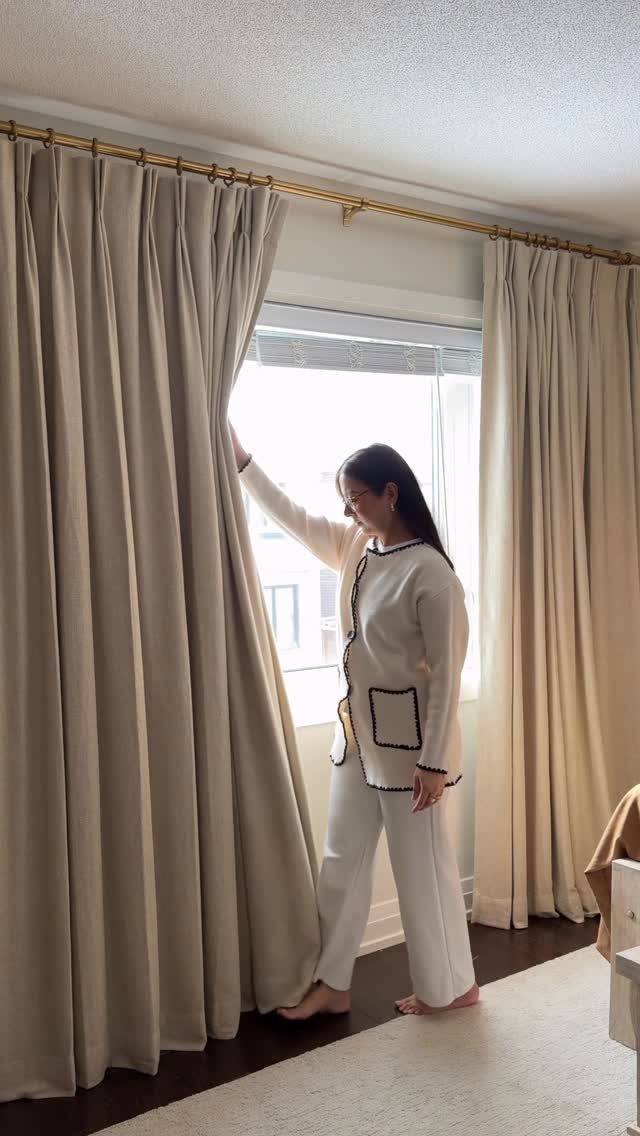
Beige curtains that fall to the floor from a gold rod make a window look bigger than it is, which is useful in a basement where the glass sits small and high.
Hang the rod well above the frame so the fabric draws the eye up. A metallic finish adds a little shine against the neutral cloth, and dark wood floors anchor the pale color.
Full-length panels cost more than a short curtain, since you buy more fabric. I still prefer them here, because the length does the work a small window can’t.
Benefits of Basement Window Curtains
A basement usually gets little daylight, so curtains give you control over what does come in. Sheer or light-filtering fabric keeps the room soft and bright, while blackout fabric turns a corner into a better home theater or sleeping area.
Privacy is the second job. Ground-level and below-grade windows sit right where passersby look in, and a layered setup lets you close the view at night and open it for light during the day.
The third benefit is temperature. Basements swing chilly in winter and warm in summer, and thermal or insulated fabric slows heat loss and gain, which can trim energy bills a little.
Moisture Management
Material decides how long a basement curtain lasts, and a fabric that holds moisture can start to mildew in a matter of weeks.
Polyester is the safest choice: it doesn’t absorb moisture, dries fast, resists mold better than natural fibers, and can be washed often. A thermal-backed polyester lining also cuts drafts.
For very damp spots, such as a laundry area, choose PVC or vinyl lining. It wipes clean and absorbs nothing.
Skip cotton, linen, velvet, and untreated silk.
They pull moisture from the air even without a leak, and once wet they dry slowly. If you love cotton or linen, look for a mildew-resistant treatment, though fully synthetic still holds up better.
Any curtain will last longer in a room where a dehumidifier runs regularly. Aim for a relative humidity under 50% down there.
Cost Considerations
Plan on $30 to $100 per basement window for a treatment that suits the room. Basements tend to have several windows, so multiply the per-curtain price by your window count first and check the total against your budget.
Spend by room. A family or rec room does well with light-filtering white, cream, or light grey, which reflects light instead of absorbing it.
Dark blackout curtains are worth the money only in a home theater, where you want every bit of light blocked.
In a bedroom, blackout is a must, but keep the window clear for egress. For a window that needs to clear out completely, a roller shade that rolls fully up out of the way fits best.
For laundry rooms, buy washable, water-resistant synthetic. Home gyms need light-filtering fabric that handles humidity and cleans easily.
Frequently Asked Questions
What kind of curtains work best for basement windows?
Polyester wins for basements: it takes on almost no moisture, dries quickly after a damp spell, shrugs off mildew better than natural fibers, and goes in the washer as often as you like.
Choose the weight by room: light-filtering fabric for a family room or gym, blackout for a home theater or bedroom.
How to cover a basement window well?
A top-down bottom-up shade handles the problem neatly: drop the top rail to let daylight in while the lower half keeps the view covered.
Frosted window film is another option for privacy. Keep in mind that window wells collect leaves and water, so use moisture-resistant materials near the glass.





