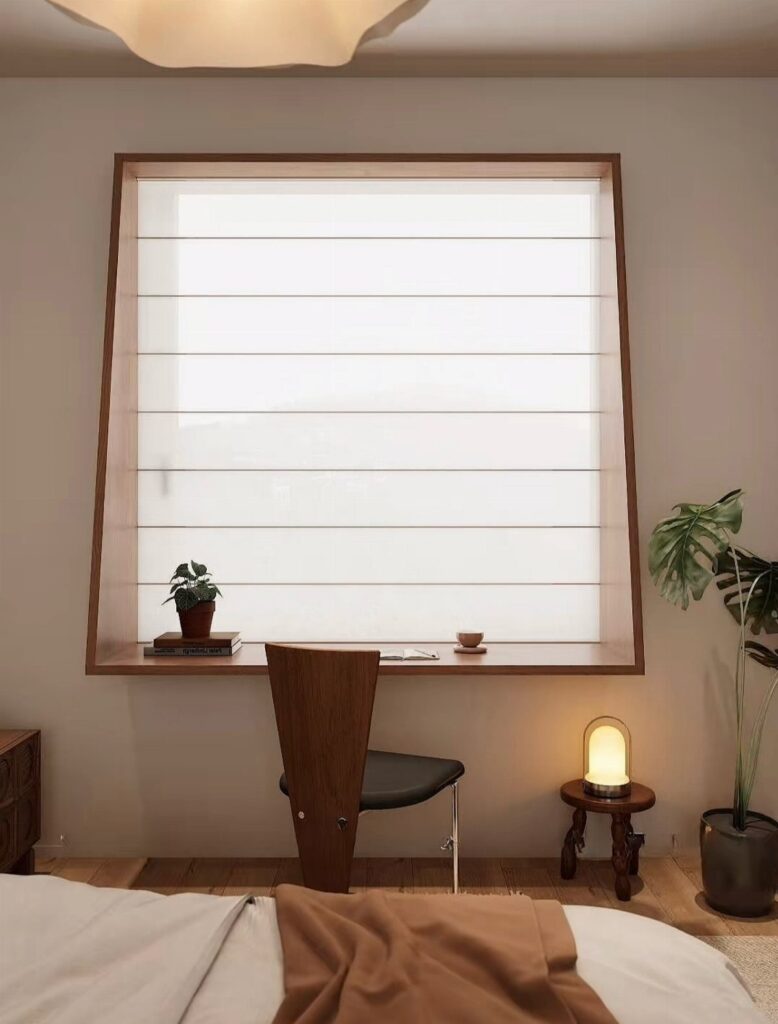
The wall you have free, not the desk you like, decides which of these works: a bare wall suits a Murphy or convertible desk that folds away, a dead corner takes a corner desk, a window sill wants a mini desk, and a closet or the space under a stair calls for something narrow.
The ideas run from a rolling cart to a transparent compact desk and a petite writing desk, and nearly all of them come down to 36 inches of clear floor behind the chair.
Measure that first, then match the desk to the space left over.
1. Desk with Shelving Unit
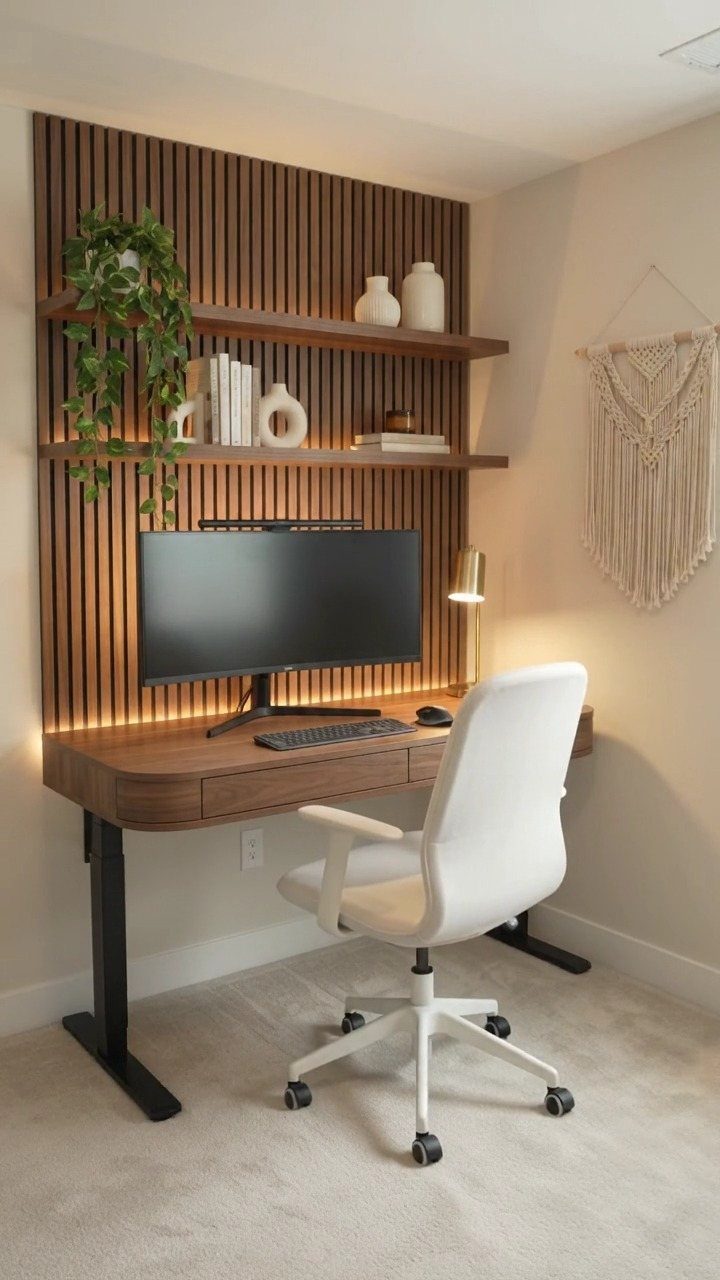
A desk with shelves above it gives you storage without taking another inch of floor, which is the whole appeal when space is tight. Mounted wall shelves like these keep books and supplies within reach of the chair.
I’d keep the shelves a hand’s width above the monitor so the desk doesn’t feel boxed in. Wood on wood, as here, looks calm, but a lighter shelf color over a darker desk keeps the wall from looking too dark.
Anchor brackets into studs, not just drywall, when books go on them.
2. Corner Desk
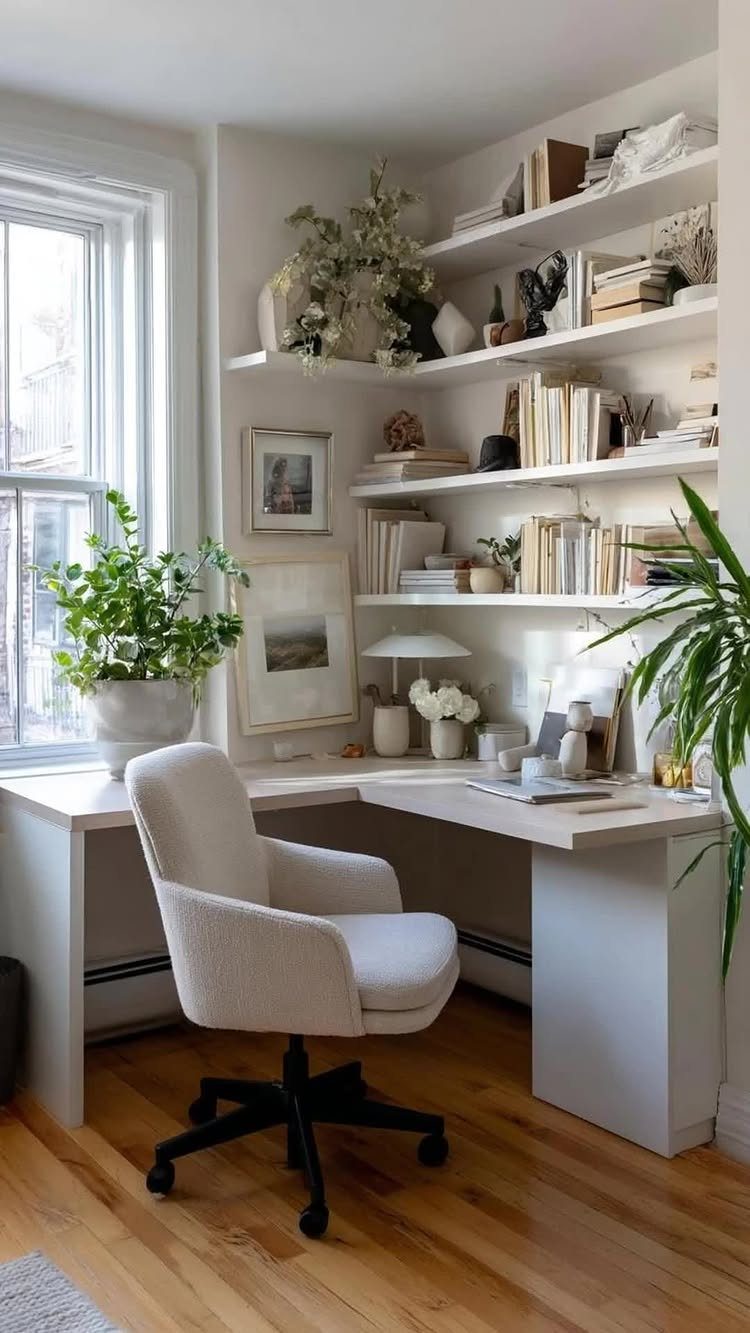
Corners usually collect a lamp and a dead plant, so putting an L-shaped desk there is the smartest use of that square footage.
2 surfaces meet at a right angle, so you get a computer side and a clear writing side.
White works well in a bright room because the desk fades into the walls.
One honest limit: an L-desk can crowd a tiny room, so measure both walls and leave room to pull the chair out.
3. Window Sill Mini Desk
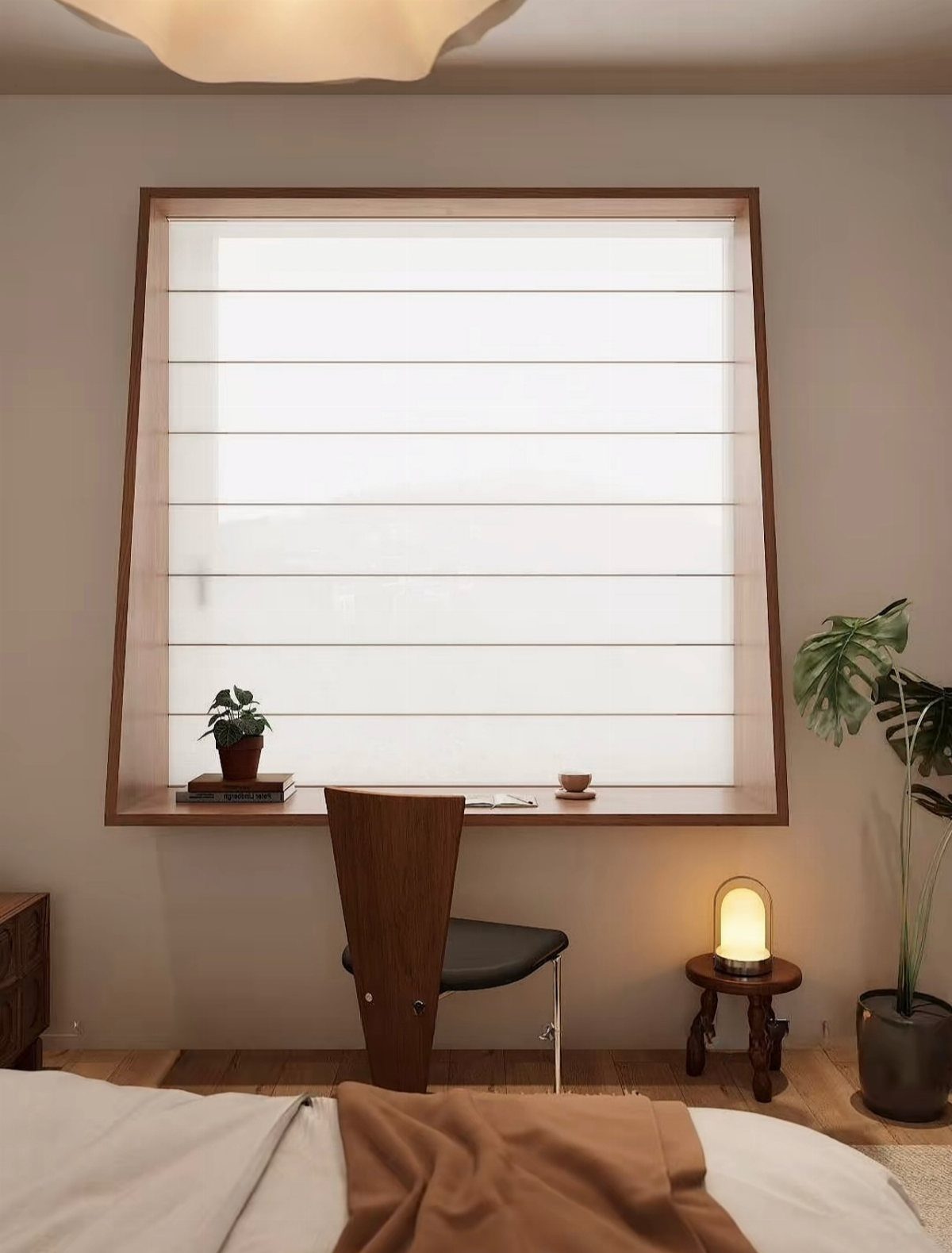
A deep window sill can double as a desk, and that is the cheapest route to a workspace in a room with no spare wall. Wood suits it because it reads as part of the architecture rather than furniture.
Check that the sill is deep enough for a laptop plus your forearms, and that it holds weight. If it doesn’t, add a board across it.
A window sill mini desk suits light laptop work, not a dual-monitor job.
4. Two-Person Workstation Desks
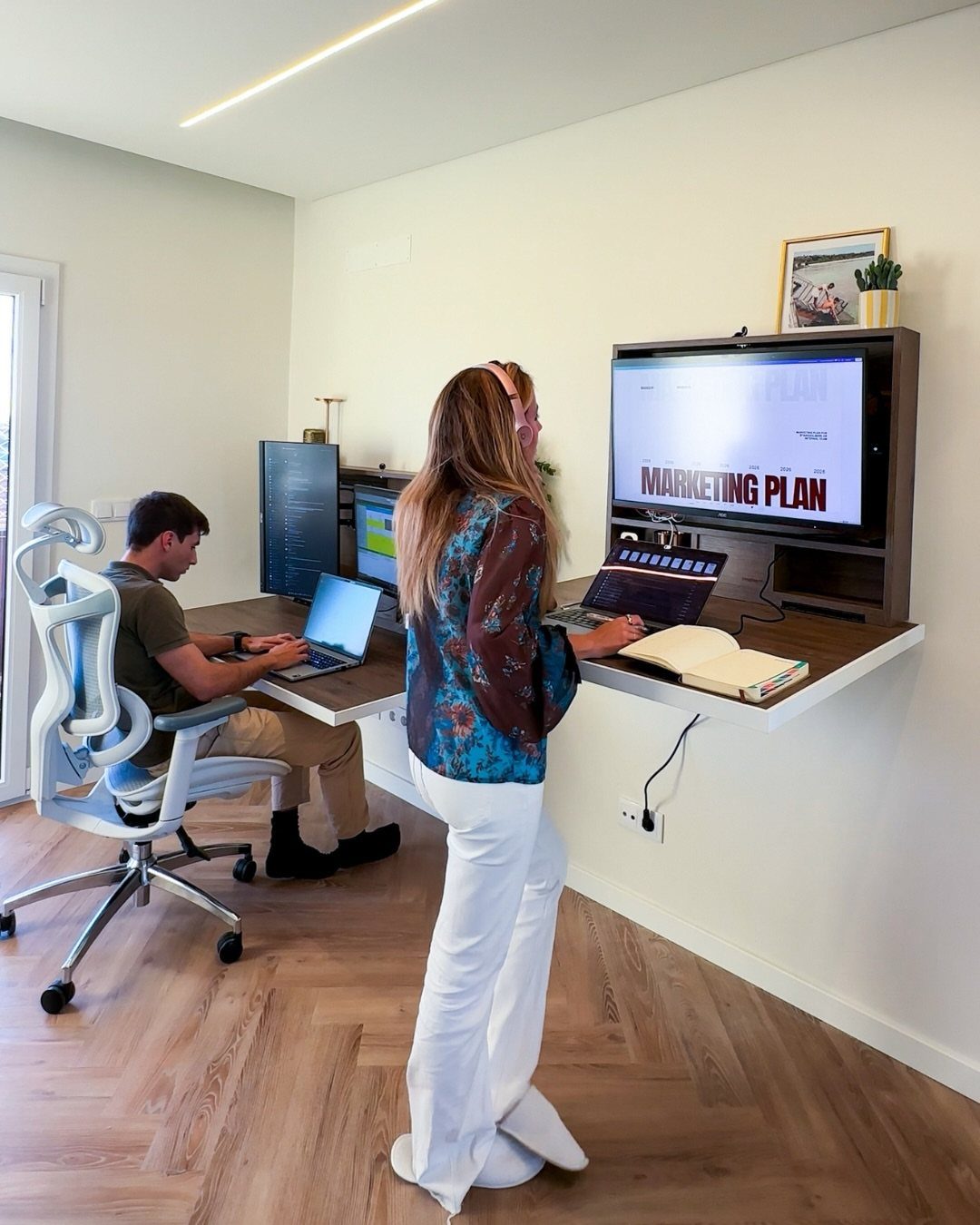
Two people working from home need one long surface, not two small desks, and a wall-mounted board gives you that. A single run of wood keeps the room looking calm instead of crowded.
I’d pick a desk long enough that each person has room for a monitor and elbows without bumping. Mounting it to the wall leaves floor space open for chairs and for rolling them out of the way.
Plan outlets and cable routing for two before you hang anything.
5. Narrow Desk
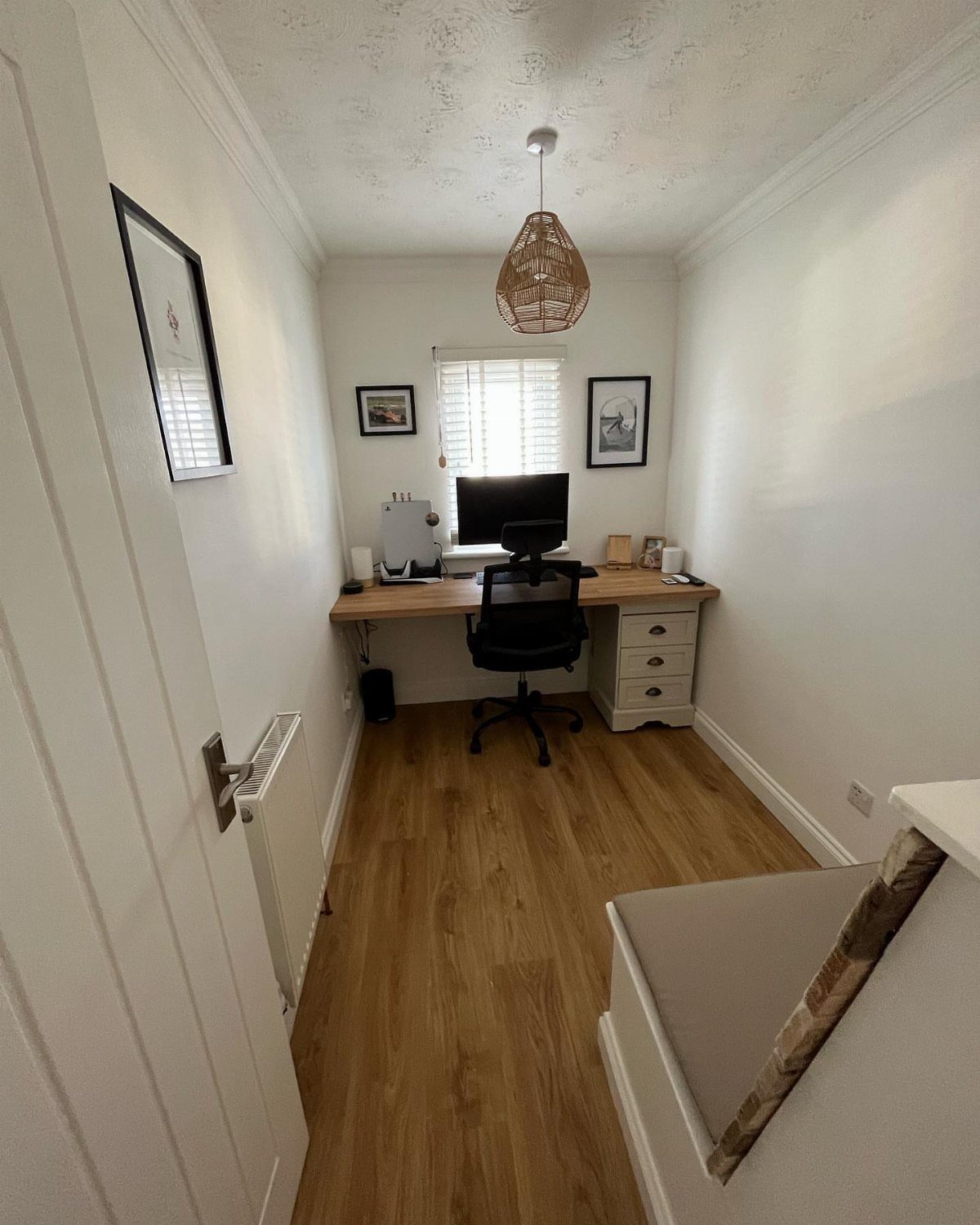
A narrow desk fits where a standard one won’t, such as along a wall under a window.
Keep the top shallow enough to leave walking room behind the chair. White drawers beside it add storage without adding depth.
A pendant light overhead frees the desktop from a lamp. Measure the clearance for the chair before buying, since a narrow top still needs space to pull out.
6. Convertible Desk
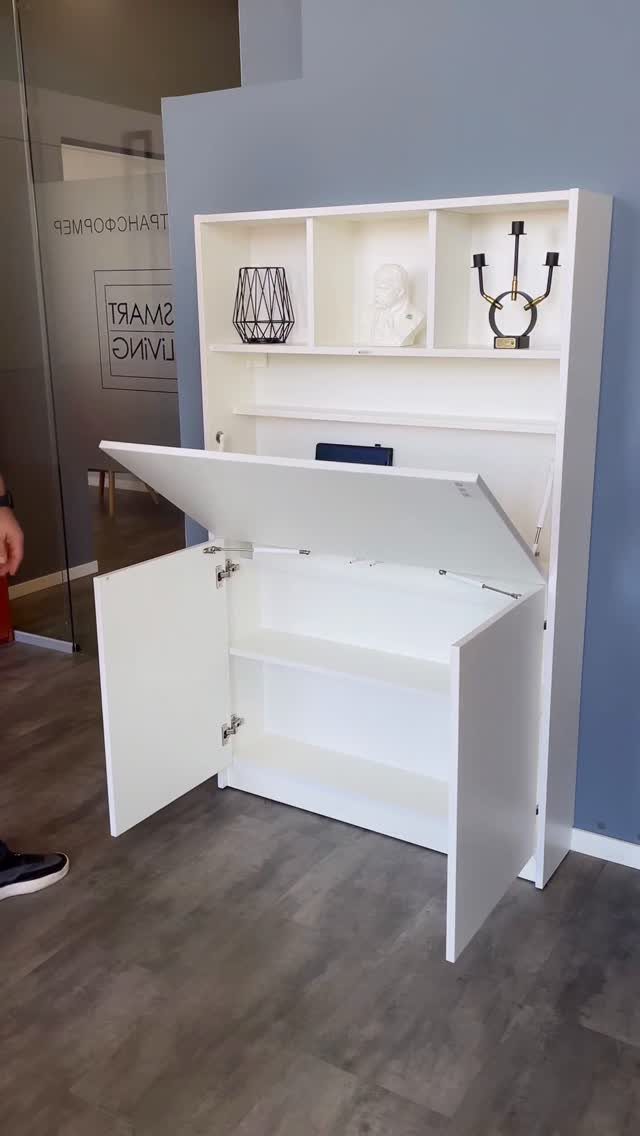
A convertible desk folds down from a cabinet and closes up when the workday ends, which makes it my pick for a shared living space.
Close it and the room looks like a storage unit again. That matters if your office is also your living room.
You get less depth than a fixed desk, so it suits a laptop better than a big monitor setup.
7. Under-Stair Desk
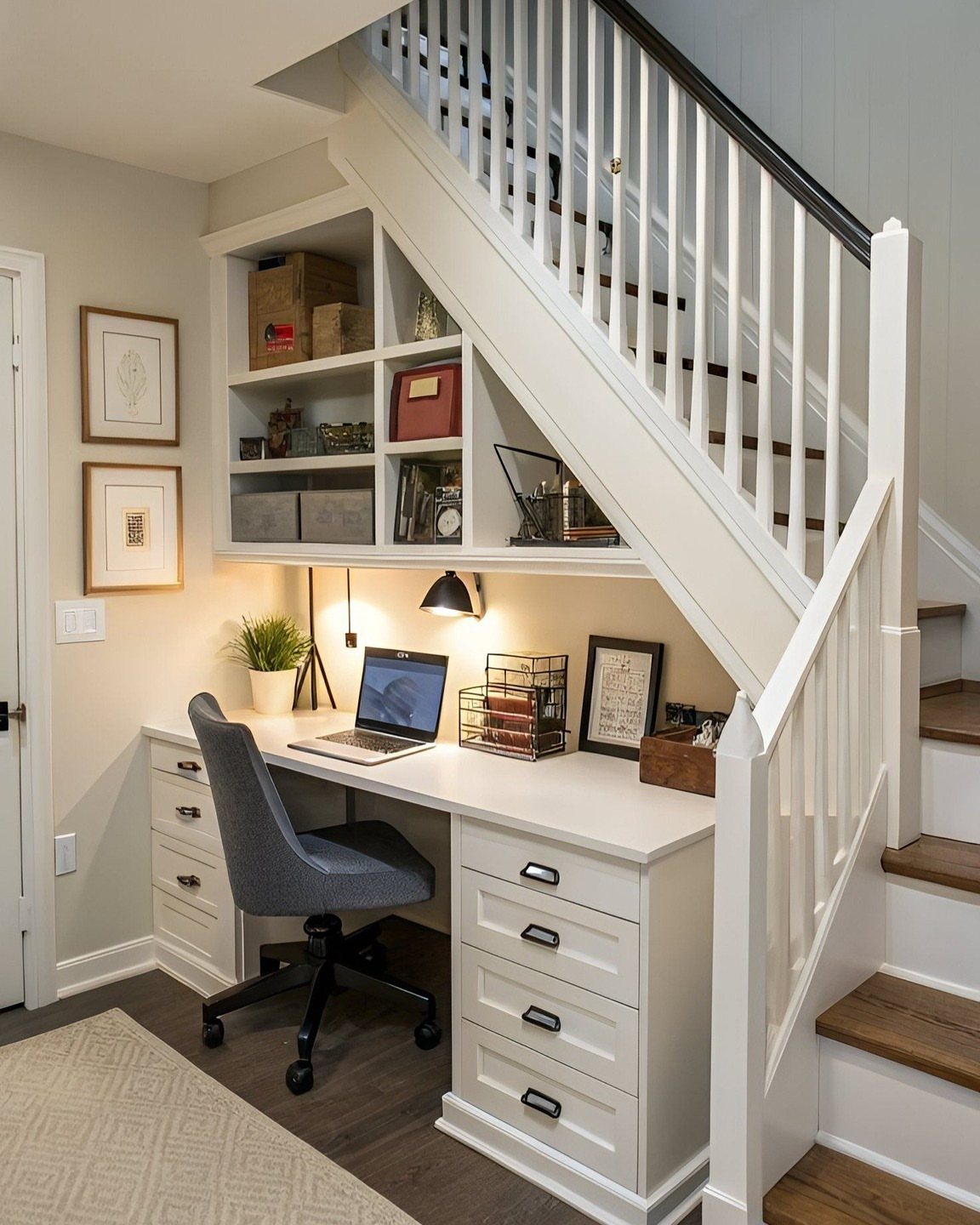
Stairs leave a wedge of dead space underneath, and a built-in desk fills it better than a closet of vacuum cleaners ever will. White paint on the desk and shelves keeps the low, sloped ceiling from closing in.
I’d put the desk at the tall end and shelving where the ceiling drops, so you have full standing height at the work surface. Add a lamp, since stairwell nooks rarely get good light.
Measure the lowest point before choosing a chair.
8. Murphy Desk
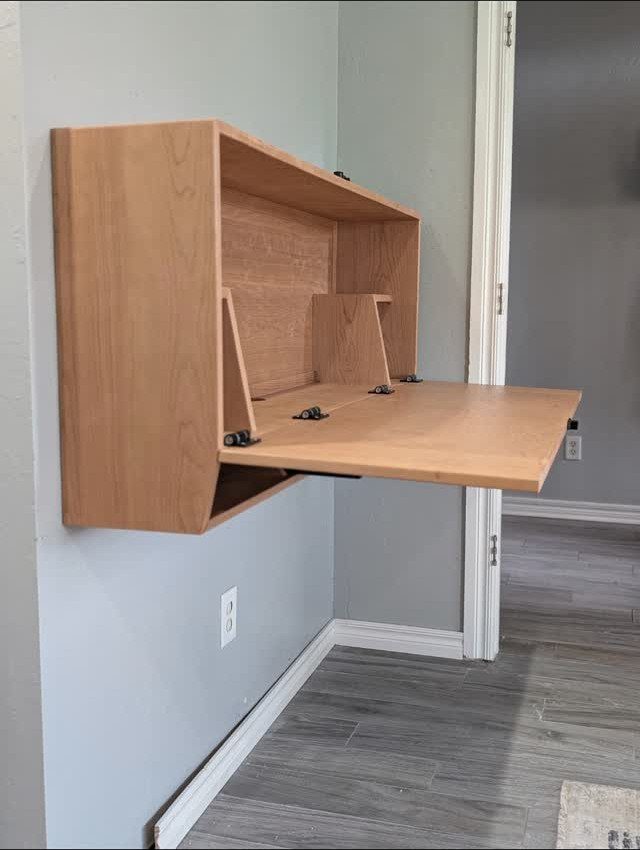
Open the lid of a Murphy desk and a bare wall becomes a workstation; close it and the room goes back to being a bedroom or living room.
Light wood against a pale wall, as here, stays quiet when the desk is shut.
The storage compartment behind the fold-down top is the best part, because cables and notebooks disappear with the surface. I’d keep the interior tidy enough that closing it is quick.
Mount into studs, since the open top carries a laptop’s weight.
9. Closet Desks
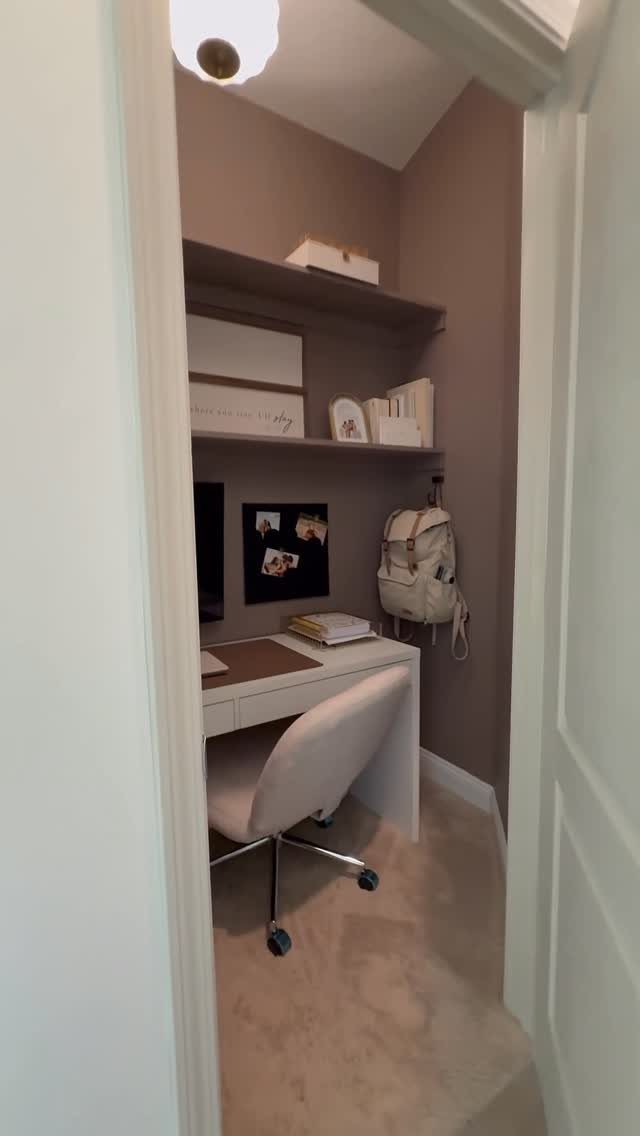
A closet with the doors off and a desk slid inside is a full office for the price of one narrow table.
I’d paint the inside a deep color to make the nook feel intentional, then keep the desk white so it doesn’t disappear into the shadows.
A small mood board on the wall gives you something to look at besides a blank back panel.
Add a plug-in light; closets are dark.
10. Mobile Rolling Desk Cart
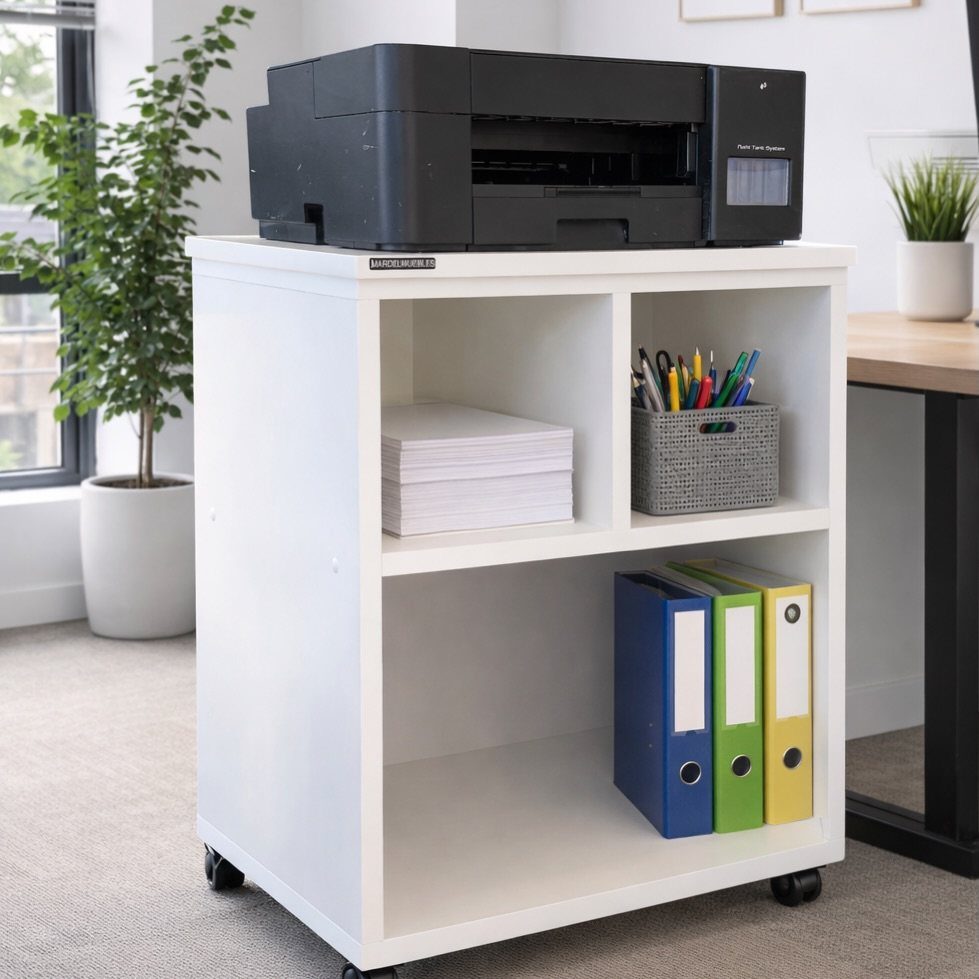
A rolling cart gives you a printer, binders and paper in one piece you can push wherever you’re working. Keeping the printer on top and files in the drawers means you never carry anything.
I’d pick white or another neutral so it blends with the desk beside it. Label the drawers, as the photo does, and stray paper stops piling up.
Choose locking casters if the floor slopes even a little, or the cart will wander.
11. Transparent Compact Desk
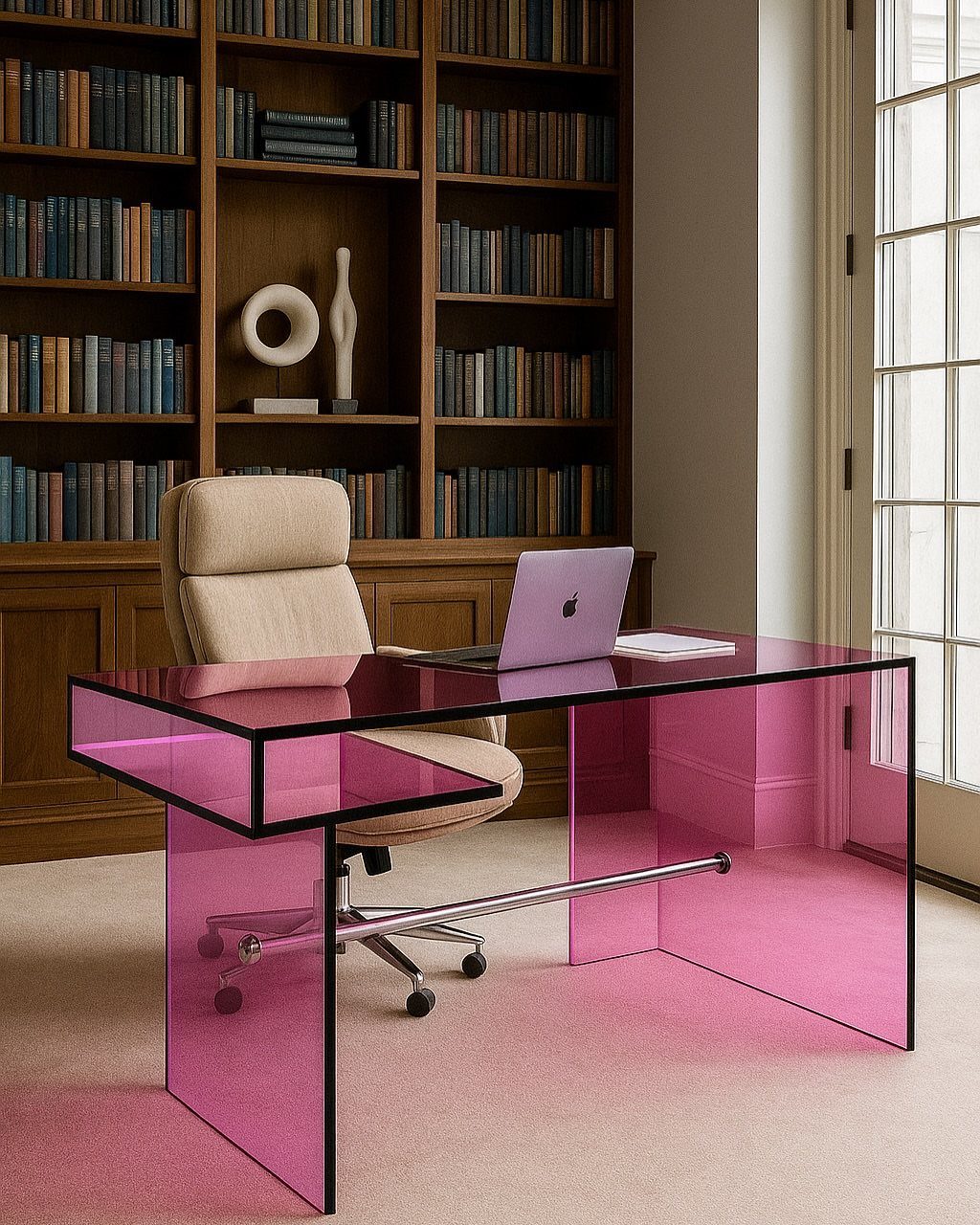
An acrylic desk almost vanishes, so the room keeps its sight lines and floor view. Tinted pink, it adds color without the visual weight of a solid top.
I like it best against a busy backdrop, like built-in shelves, where the see-through top lets the wood show through. Acrylic shows fingerprints and dust, so keep a microfiber cloth in a drawer.
Pair it with a solid-colored chair so the desk has something to anchor against.
12. Petite Writing Desk
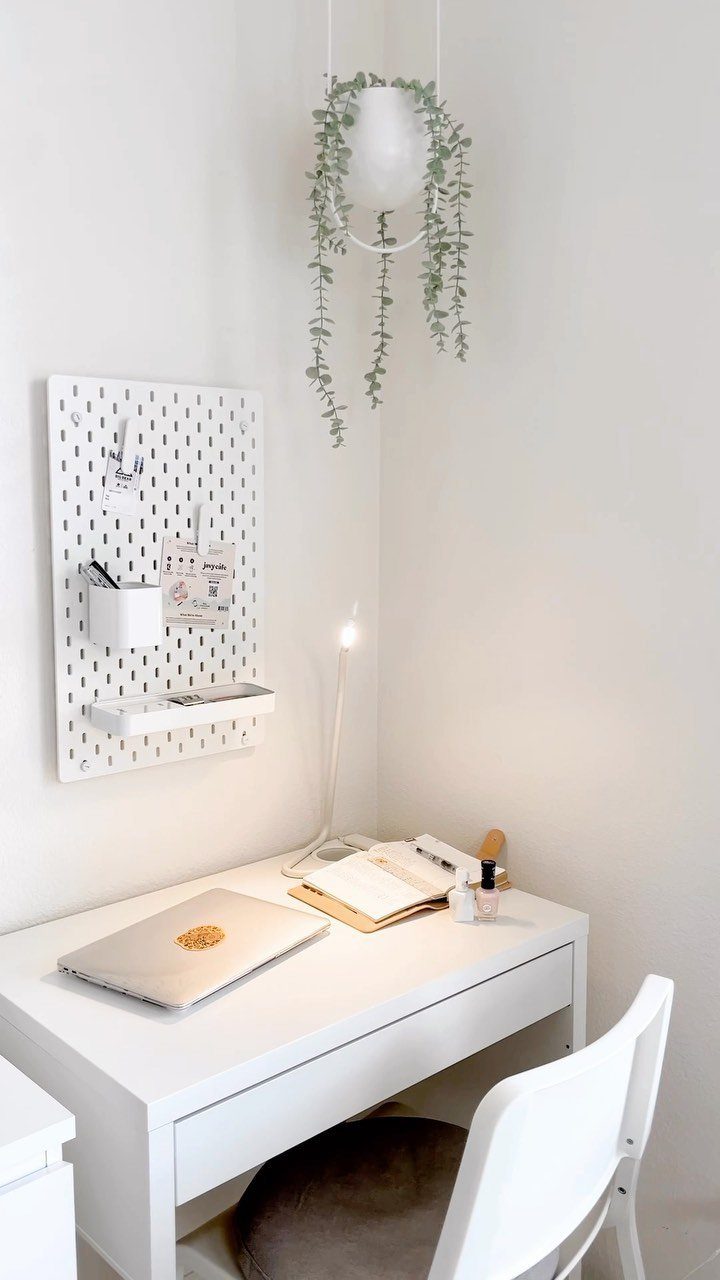
A petite writing desk asks for one wall and not much else, which is why it suits a tiny room. White keeps it light, and a pegboard above holds the clutter that would otherwise cover the top.
I’d use the pegboard for pens, notepads and small shelves, leaving room for just a laptop and a lamp on the desk itself. A hanging plant adds green without taking any surface.
Skip a second monitor here; the desk is made for one screen and a notebook.
Although Pottery Barn has styled this as part of a massive modular collection, this simplistic desk clocks in at just 36 inches, making it a reasonable contender for small spaces (or in-bedroom work from home setups).
Desk Size Recommendations
Start with the wall, not the desk. Measure wall-to-wall width and how far out the desk can sit before the chair has nowhere to go, then hold back 36 inches for the chair itself.
A desk counts as small when it stays under 28 inches in height, 24 inches in depth and 40 inches in width. Within that, I’d match the size to the work.
A laptop-only setup fits on a 36 x 22 inch top. A monitor needs about 46 x 24 inches, which only fits if the wall is wide enough.
Leg style changes how big the desk feels. Hairpin legs look the most open, and U-shaped legs give a clean modern line.
Go vertical with shelves and a monitor arm to keep the surface clear. If you don’t use something daily, give it a home somewhere else.
Desk Placement Tips
A desk against the wall takes the least floor space and fits nearly any room shape. You sit facing the wall, and the chair has open floor behind it when you push back.
Leave 36 inches clear behind the chair or you’ll fight the space every time you sit down.
Under a window on a short wall, daylight hits from above instead of bouncing off the monitor. You also get something to look at besides paint.
I’d skip floating the desk in the room unless it’s at least 10 x 10 feet. It splits workspace from living space nicely, but it eats floor.
Keep the wall behind a corner desk quiet. Too many frames, cords and stacked supplies undo the space you just saved.
Cable Management Solutions
In tight quarters there’s nowhere to hide cables, so a few fixes matter more than any accessory.
Go wireless where you can: mouse, keyboard and a phone charger. Each cable you remove is one less thing to look at.
Frequently Asked Questions
What are some good ideas for an office desk in a small space?
For a tight room, I’d pick between a corner L-shaped desk, a wall-mounted drop-leaf board, and a Murphy desk that folds flat against the wall.
A corner desk uses square footage that usually collects clutter, and a fold-down desk closes up so a bedroom or living room goes back to normal after work. A wall-mounted desk also leaves the floor open for the chair.
What can I use instead of a desk?
A deep window sill works as a desk for laptop work, and a closet with the doors removed can hold a narrow table as a full nook.
A windowsill works only if it’s deep enough for a laptop with room for your forearms and can carry the weight; if it falls short, set a board across it to extend the surface.





