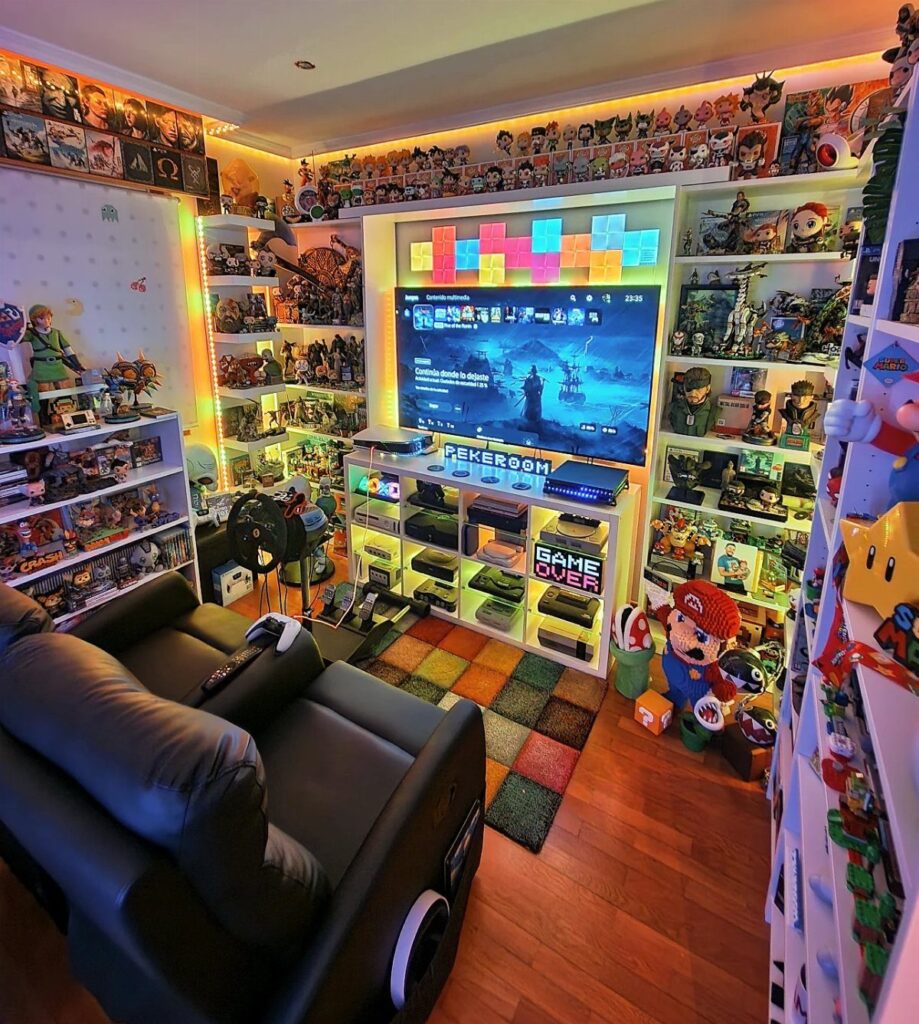
Floor space decides which of these ideas is yours, because a multipurpose game table, an indoor shuffleboard table, or a multi-screen console setup each claim more of the room than anything else you’ll buy.
The list runs from Ambient LED Lighting and a gallery wall of vintage game art to an outdoor gaming shed and a garage game room, so the cheap ideas fit a corner and the big ones need a whole room.
Measure the open floor first, then pick the idea that leaves walking space around it, like the 98 inch and 65 inch TVs on motorized mounts that move out of the way of cues.
1. Ambient LED Lighting
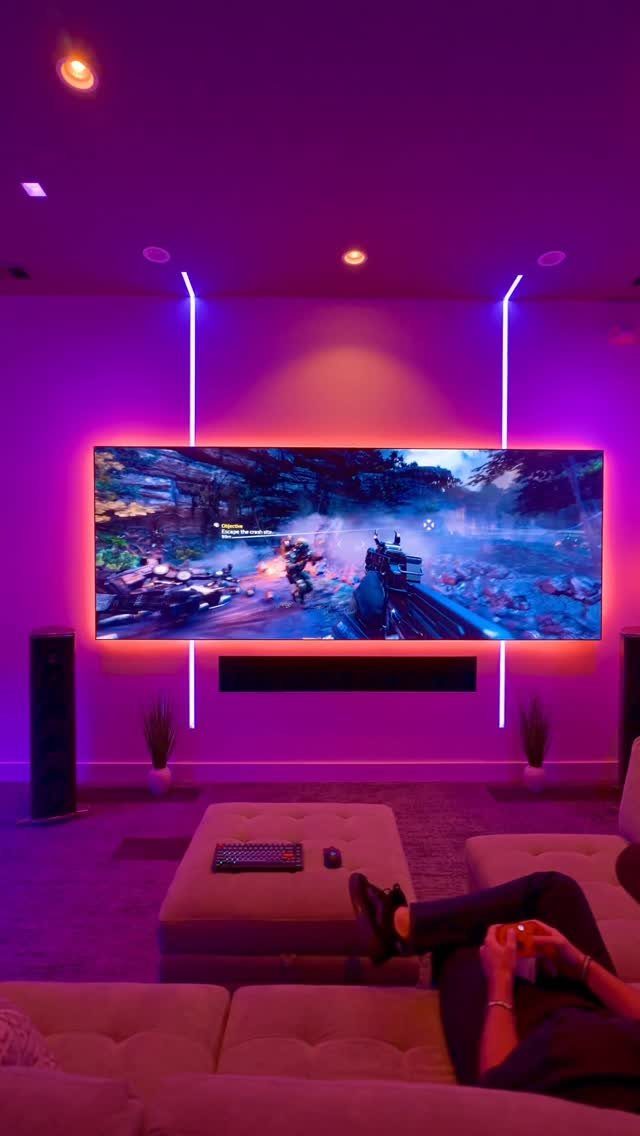
Purple strips running along the wall and back of the screen do 2 jobs: they cut the glare between a bright display and a dark room, and they add color without a single piece of furniture.
Behind the screen is the spot I’d start with.
Stick to one color so the room reads as a mood instead of a nightclub. Strips are also easy to take down, which suits renters.
2. Gallery Wall of Vintage Game Art
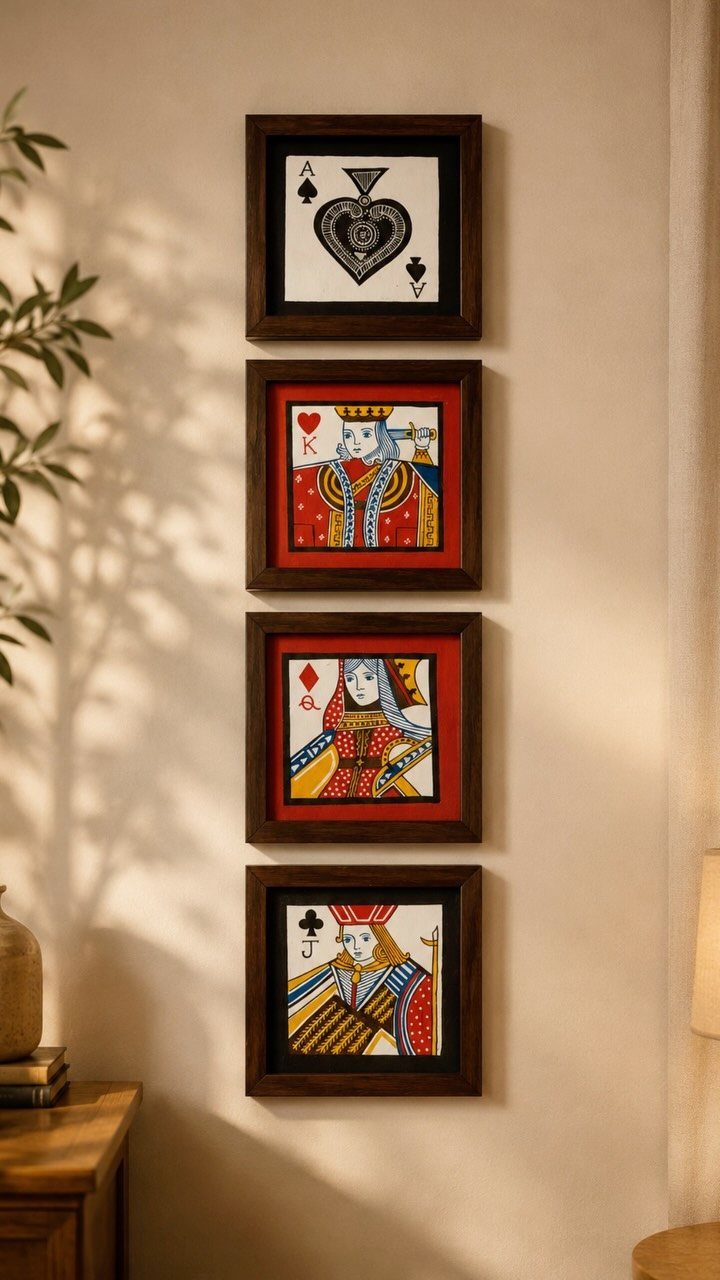
Four framed playing cards hung in a vertical row make a gallery wall that takes up no floor at all.
A card suit per frame, Ace, King, Queen and Jack, gives the set a built-in logic, so it looks planned even on a plain beige wall.
Keep the frames matching and the spacing even. In a small room, I’d rather see a set of identical frames than a pile of mismatched ones.
One handmade-frame maker says each frame is made by hand, which is worth checking if you buy rather than build.
3. Retro Arcade Game Rooms
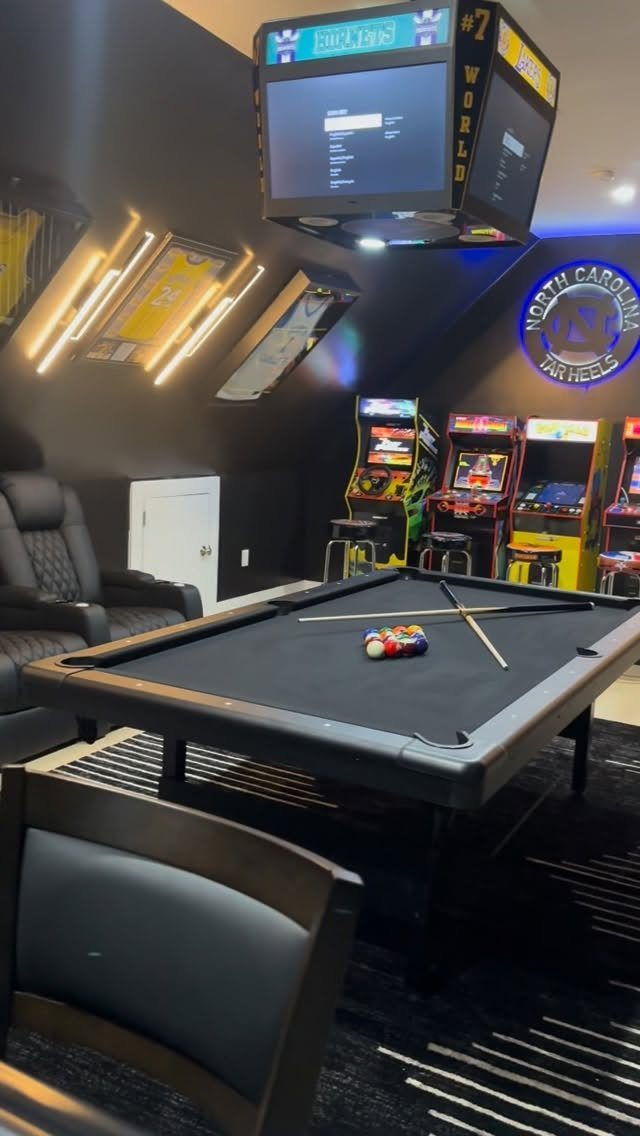
A pool table, arcade cabinets and a leather recliner can share one dark room if the screens do the heavy lifting.
The maker of this one put a 98 inch and a 65 inch TV on motorized mounts, which means the displays can move out of the way of cues and traffic.
Dark walls and neon make the cabinets glow, so I’d keep overhead light dim. A team logo on the wall adds personality for almost nothing.
Be honest about size: a pool table eats the floor, so measure first.
4. Corner Bar Cabinet
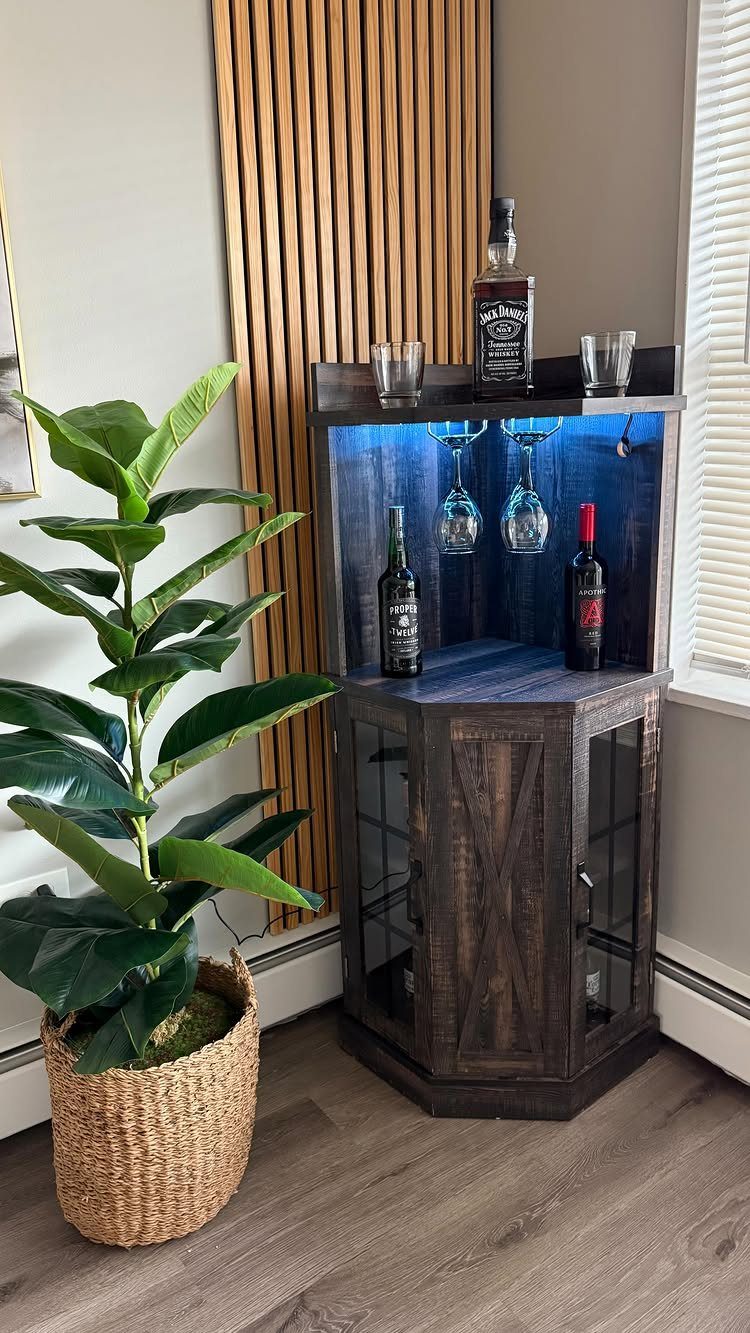
Corners are dead space in most rooms, and a dark wood corner cabinet with blue interior lighting turns one into a bar. Glassware sits up top, bottles below, and the light does the staging.
The maker describes a 4-tier design in a dark rustic oak finish, and that tiered layout is what I’d look for: it holds more than a flat shelf in the same footprint.
Pair it with a plant and a slat wall to soften the dark wood.
5. Mounted TV + Gaming Console Combo
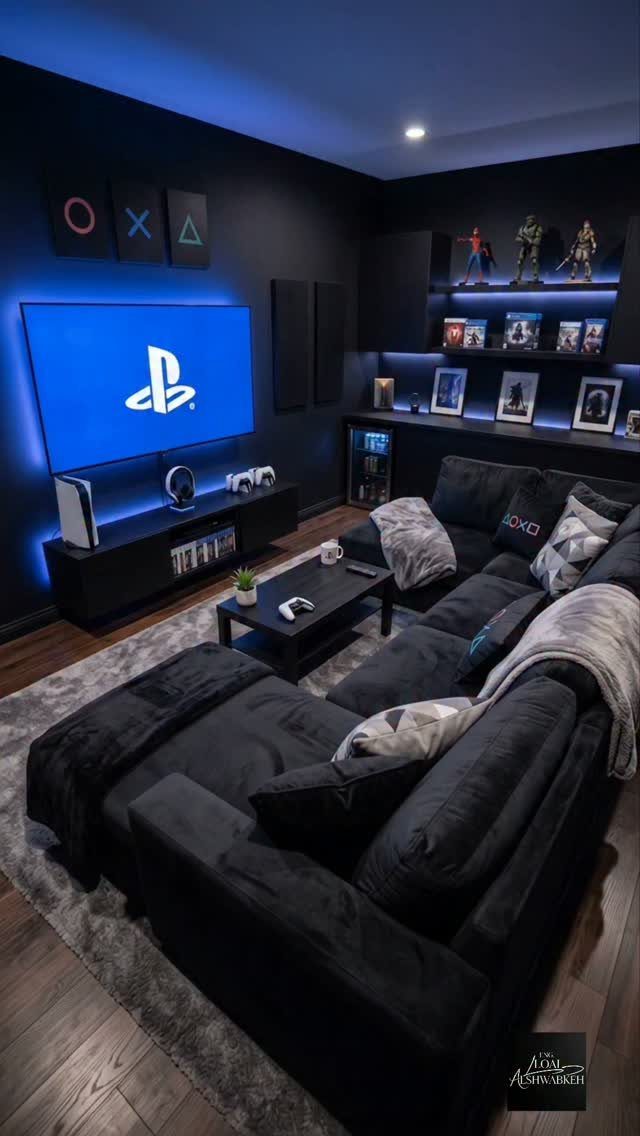
Mounting the TV frees the floor beneath it, and a console on a low black stand keeps everything within reach of the couch. In a dark room, the blue glow behind the screen pairs well with black furniture.
I like leaving open shelf space nearby for action figures or controllers, so the wall stays useful.
Hide cables behind the stand where you can. A mounted screen with a tangle underneath looks unfinished.
6. Luxury Game Room Bar Area
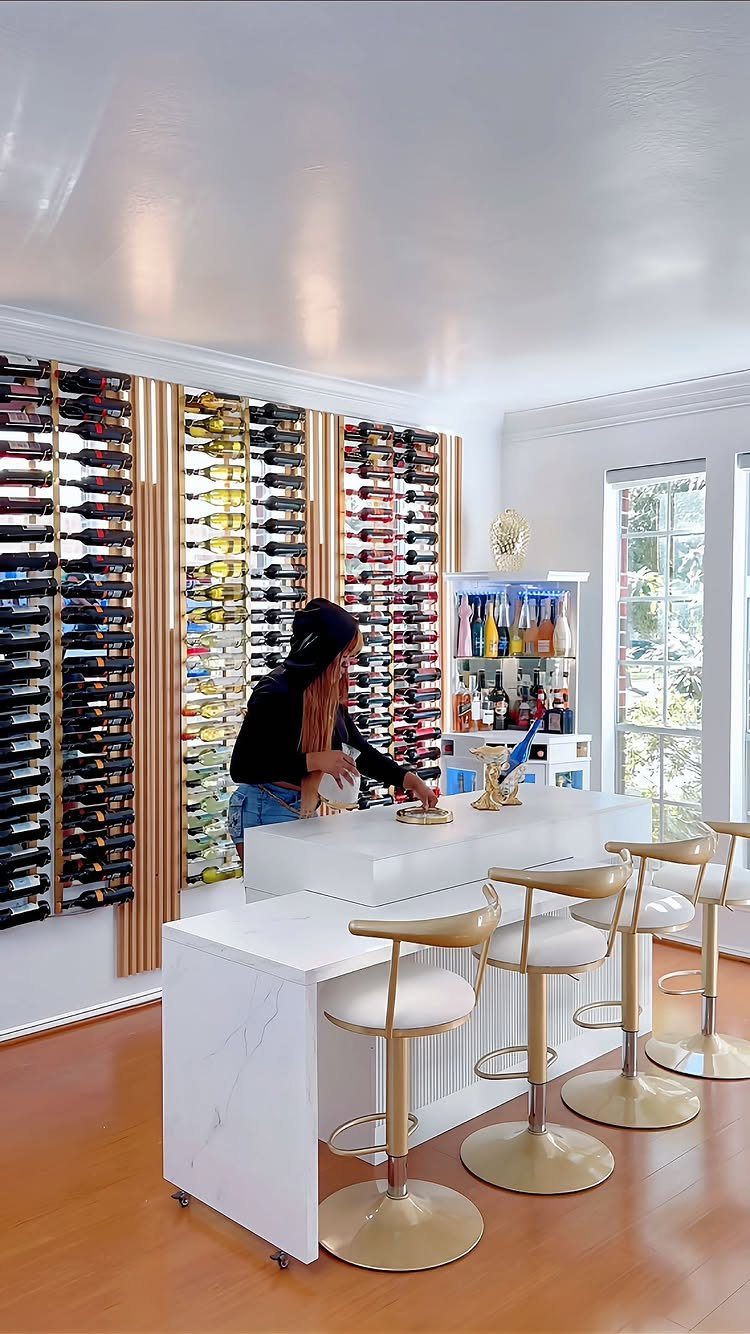
A white marble bar with gold stools makes the room feel finished, and wine racks running floor to ceiling store a lot in very little width. Together they give you a place to pour, snack and sit while others play.
Bright and light is a bold choice for a game room, and I like it, but marble shows spills, so keep coasters handy.
A real marble top costs a lot; a laminate look-alike gets close on a small budget.
7. Game Room Decor
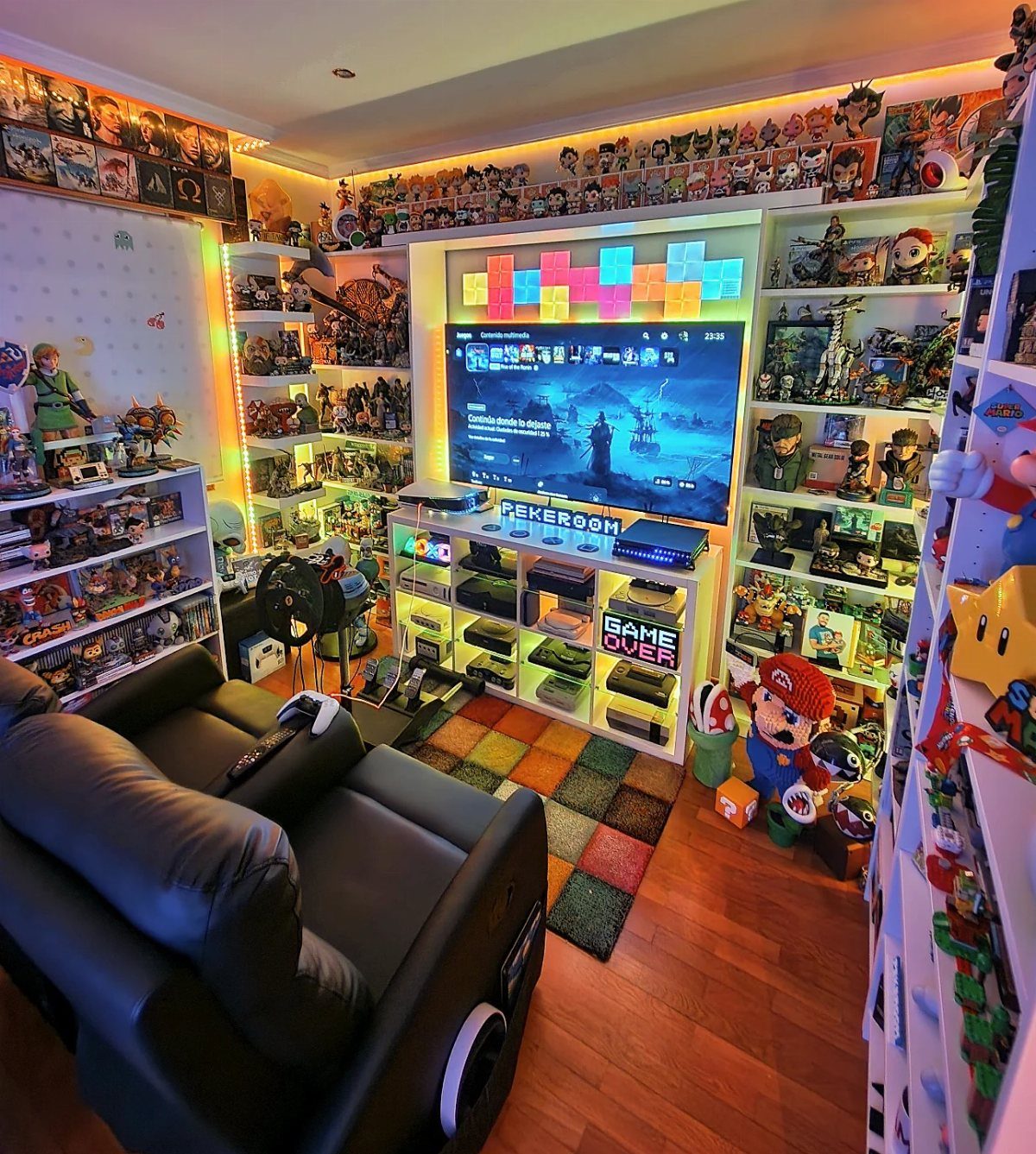
Shelves of anime figures and collectibles do the decorating here, so the room needs no separate art budget. Games, figures and boxed sets already have color and character, and a "GAME OVER" sign finishes the wall.
I’d group pieces by series and leave gaps between groups, because a packed shelf reads as clutter. Keep the biggest pieces at eye level.
Rotate a few items every month or two and the room stays fresh for free.
8. Multipurpose Game Table
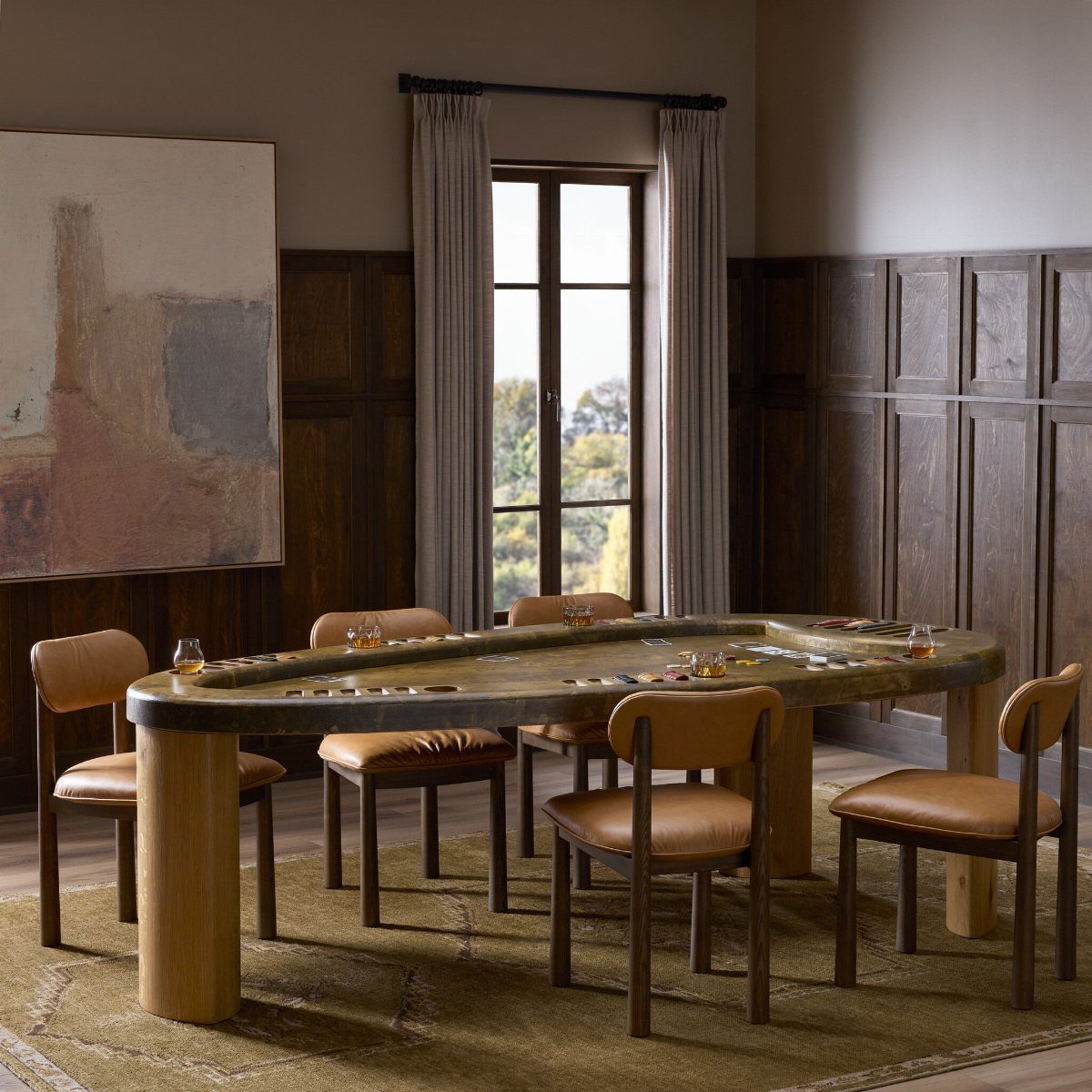
One oval table with game boards built into the surface replaces a stack of separate games and the closet that holds them. Players sit, drink and play without clearing anything.
For a small room, a single table like this is the efficient answer, since it covers several nights of play in one footprint. Leather chairs are comfortable enough for long sessions.
Check the table’s width against your walkway before buying, and leave room to pull chairs back.
9. Built-In Bench with Storage
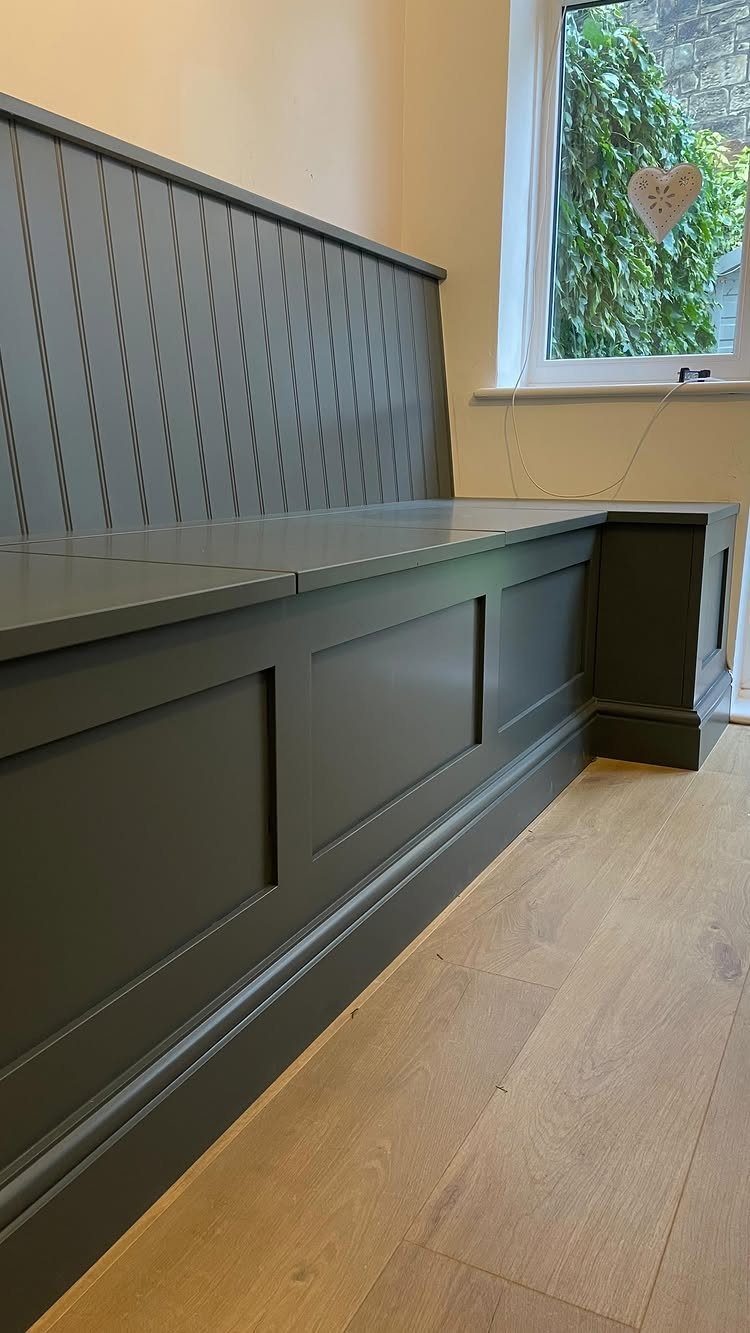
A built-in bench under a window gives you seating and a lidded storage base in the same spot. Controllers, cards and spare cables disappear inside, and the high paneled backrest makes it comfortable to sit on.
Dark grey hides scuffs better than white, which matters in a room people use daily.
On a budget, I’d build a plain box frame and add wainscoting-style trim to the back, which gets the look for far less than custom millwork.
10. Acoustic Panels for Sound Control
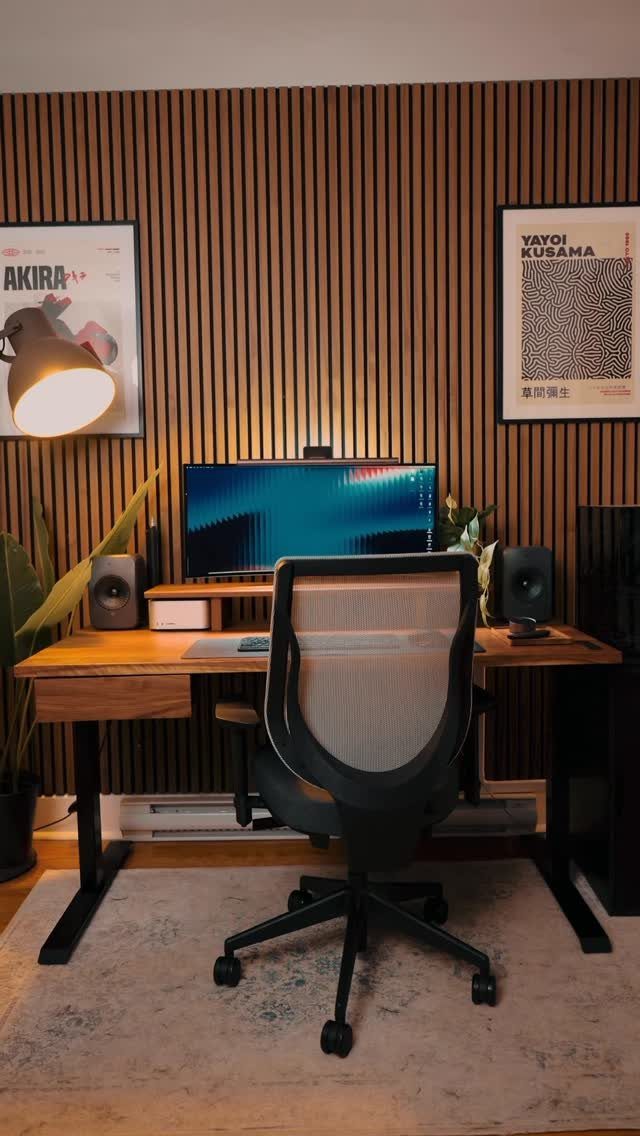
Vertical wood slats behind a desk soften echo and give a gaming setup a finished backdrop. Speakers sound cleaner when sound has something to break up against instead of a bare flat wall.
Place the slats where the speakers face and where you sit, since those are the surfaces that matter most. Posters can hang right over them, so art and sound control share one wall.
Slats cost less than many people expect and install with basic tools over a weekend.
11. Statement Rug
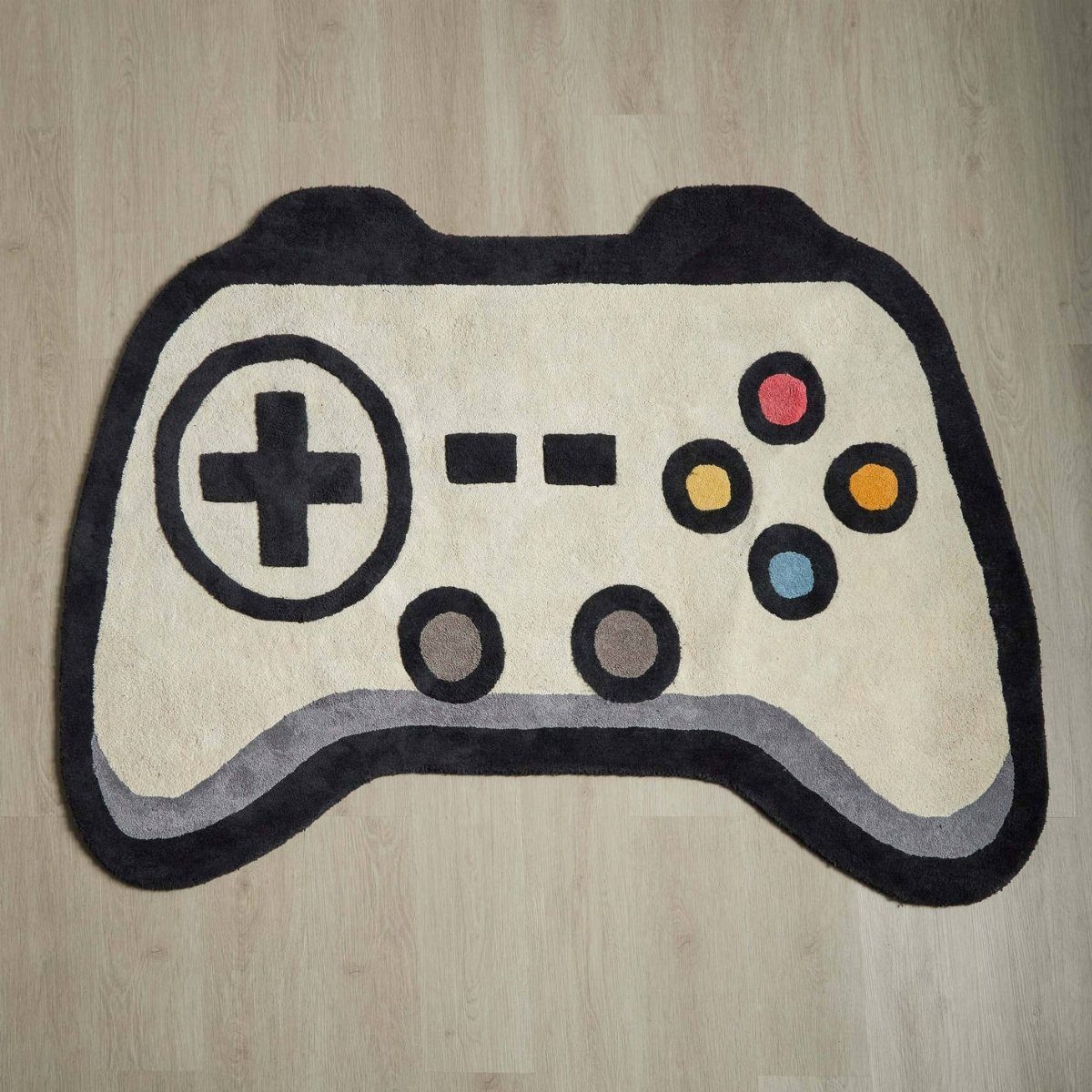
A rug shaped like a game controller says what the room is for before anyone sits down. A white rug with a bold graphic pattern holds its own on light floors, where darker rugs can disappear.
I’d place it in the open floor between couch and screen, where it is seen but not constantly stepped on. It adds color with no wall space needed, and it rolls up if you move.
Keep the rest of the floor plain so the rug stays the one loud piece.
12. Round Table
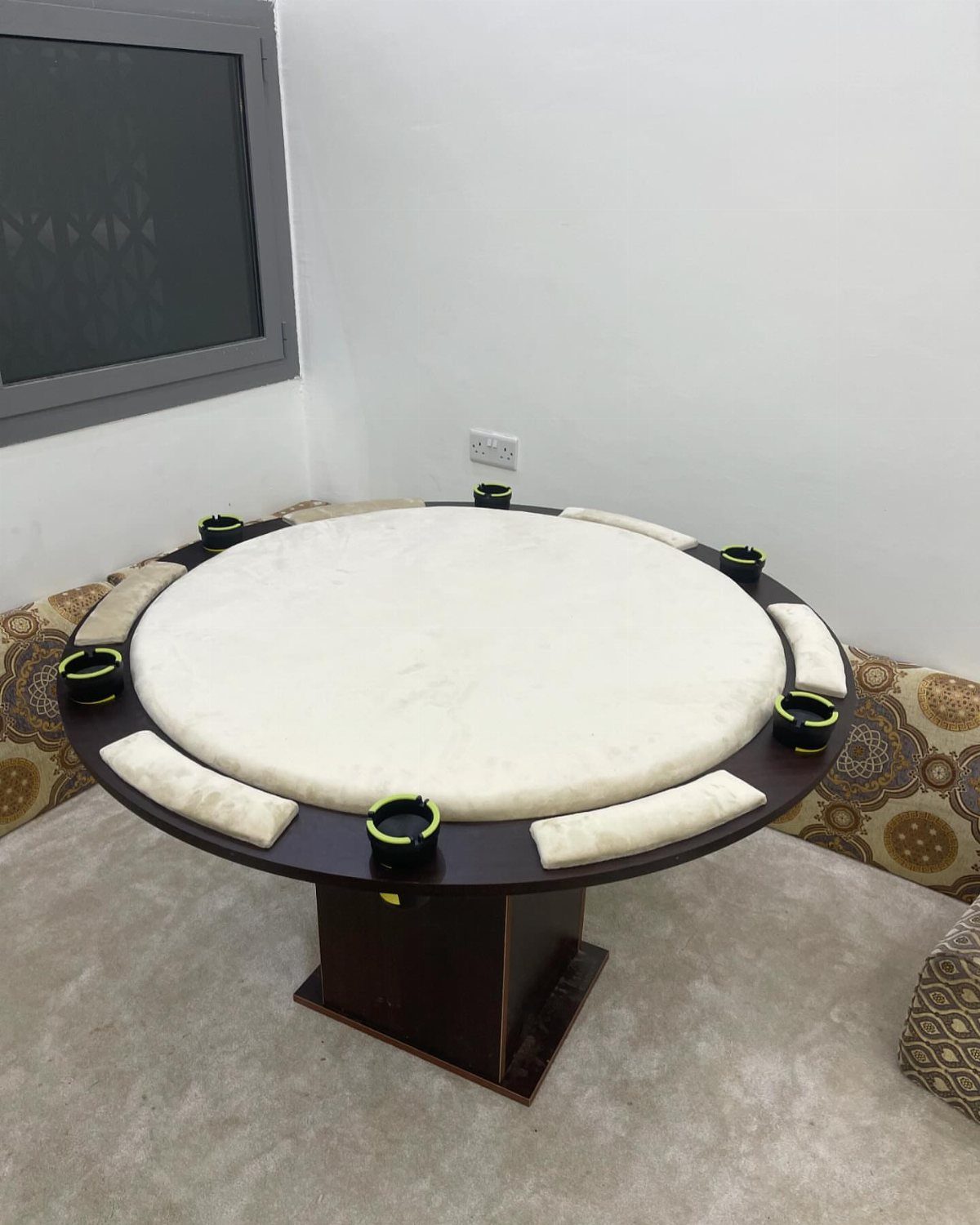
A round table with a padded center, cup holders and armrests suits card and board nights better than a rectangle, because everyone sits at the same distance from the action. No one gets stuck at the far end.
Built-in cup holders keep drinks off the playing surface, which protects cards and boards from spills. A padded center also lets cards slide and dice land quietly.
Round tables fit tight rooms well, since there are no corners to bump. I’d measure for chair pullback first.
13. Indoor/Outdoor Game Room
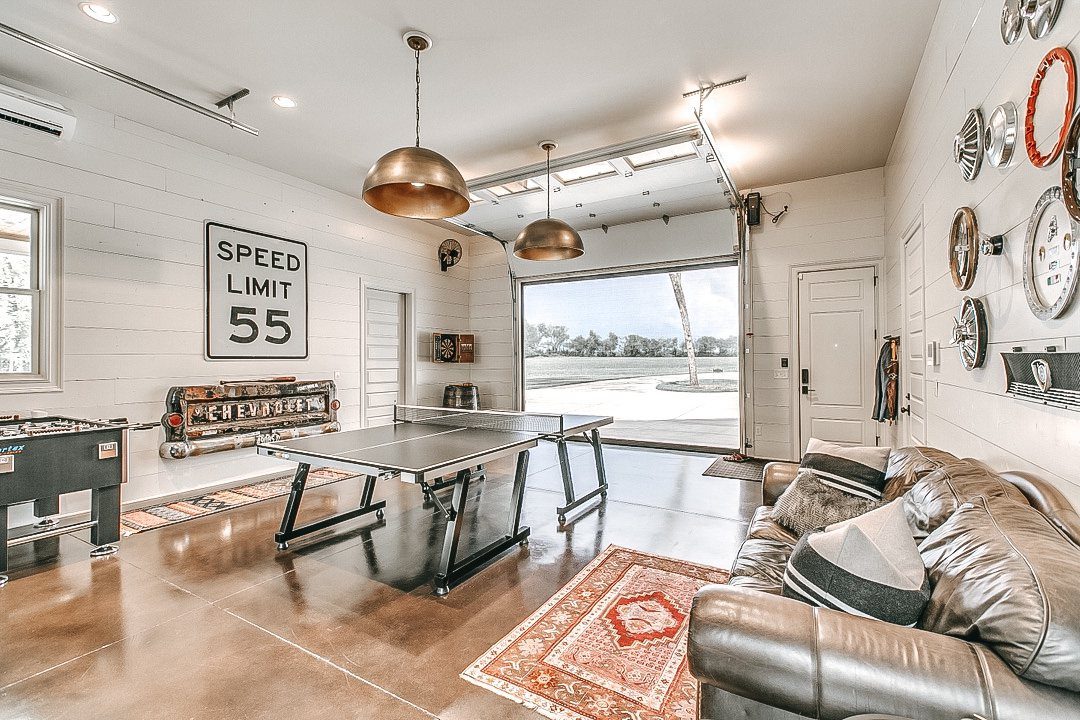
On a mild day, players spill outside without anyone moving a table.
I’d keep the sofa against the back wall so the door opening stays clear. A novelty sign, like a speed limit marker, sets a tone for the space without costing much.
Leave space at both ends of the ping pong table for players to move.
14. Garage Game Room
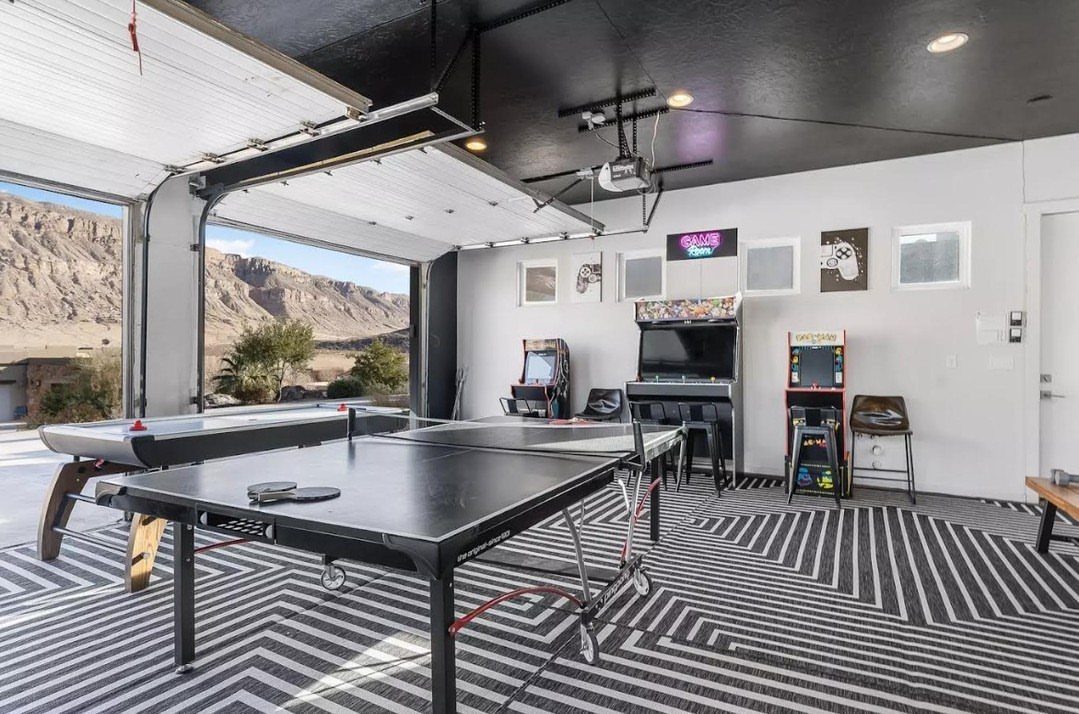
An underused garage already has the floor, the ceiling height and the big door that a game room wants. Ping pong, air hockey, arcade machines and a projector can share one open bay without feeling crowded.
A projector suits a garage better than a mounted TV, since a blank wall does the screen’s job and nothing hangs in the way of play. Cars have to go somewhere else, so decide that before buying anything.
Start with one big table and add machines as the budget allows.
15. Wall-Mounted Dartboard Cabinet
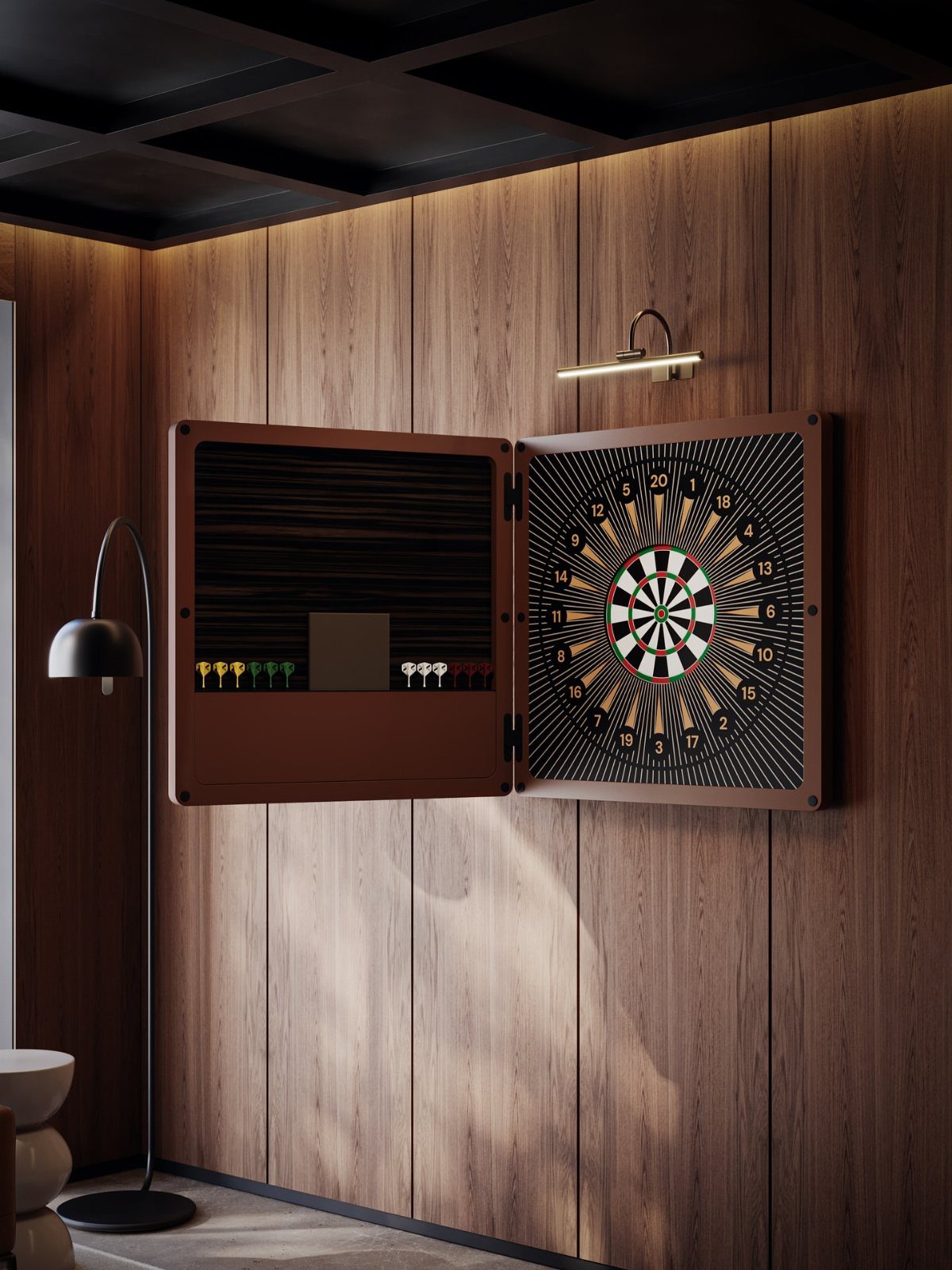
A dartboard behind cabinet doors means the wall looks like a wood panel when nobody is playing. Open it and the board and darts are right there, with no floor space given up.
I like the wood-paneled backing here, because it takes stray dart marks better than bare drywall. A lamp nearby lights the board without glare.
Check the throwing distance before you mount it, and leave a clear lane in front.
16. Slim Cue Rack
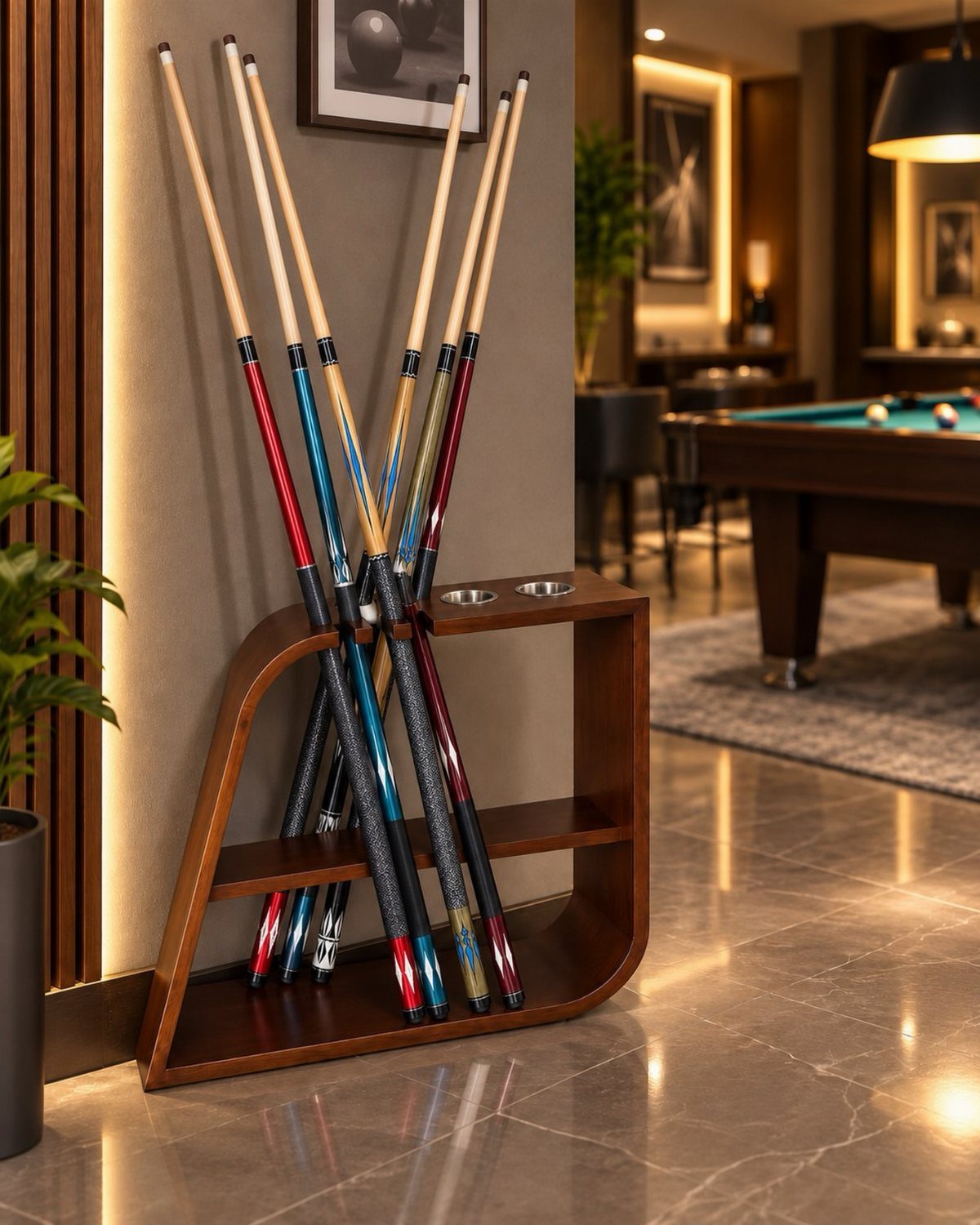
A wall rack that holds several cues upright keeps them straight and out from underfoot. Wood suits a pool room, and a slim profile means it uses only a strip of wall beside the table.
Mount it where nobody backs into it while lining up a shot. Close to the table is handiest, but leave elbow room.
Cues left leaning in a corner tend to get knocked over, so even a basic rack is worth the few dollars.
17. Rolling Bar Cart
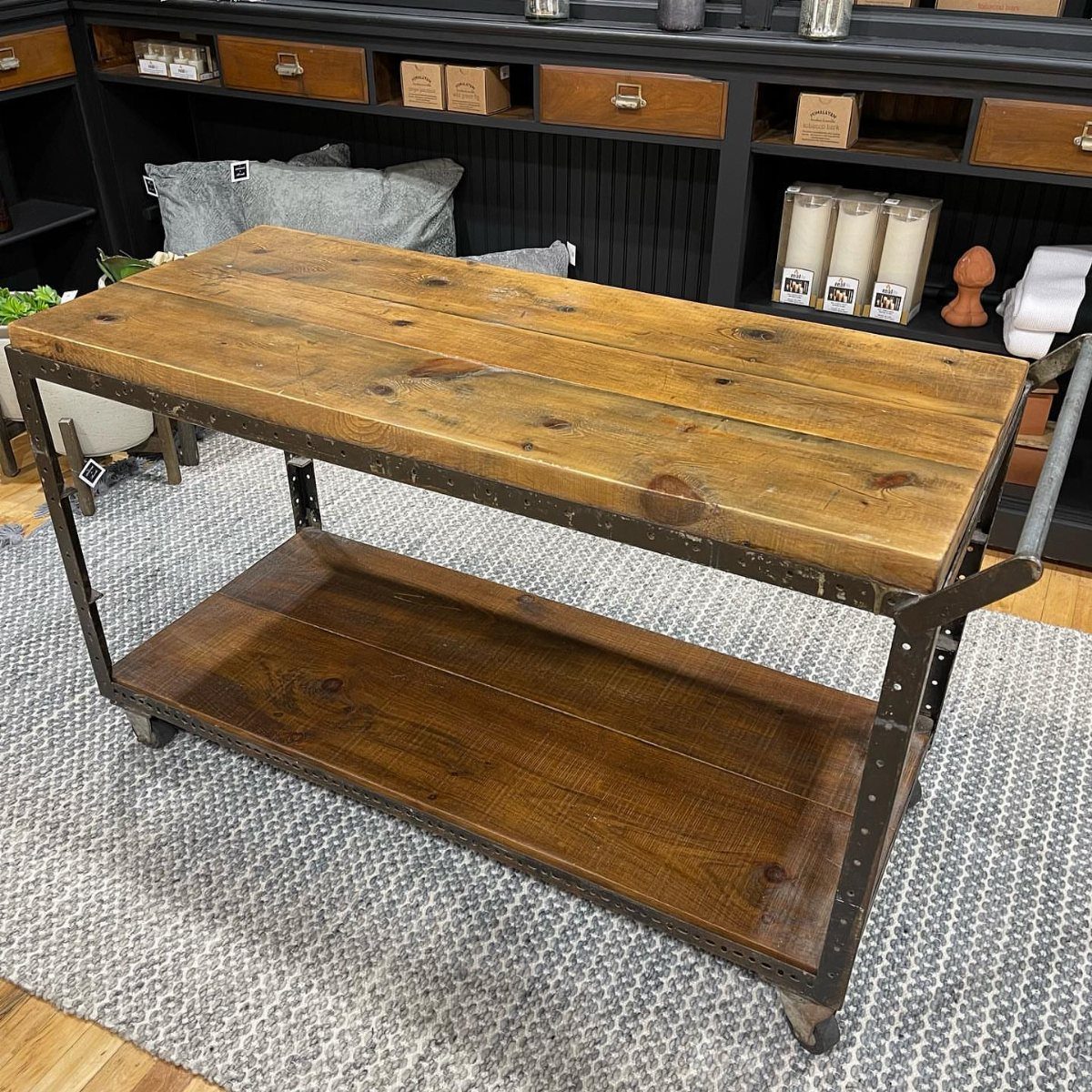
A two-tier wooden cart on a metal frame with wheels gives you a bar you can park wherever the party is. Bottles go on the bottom tier, glasses and mixers on top.
Rolling it beside the seating keeps drinks within reach, and pushing it to a wall clears the floor for play. A rug under it, as here, helps hide wheel marks, though thin wheels can snag on a thick one.
I’d choose rustic wood over glass for a game room, since it forgives bumps.
18. Outdoor Gaming Shed
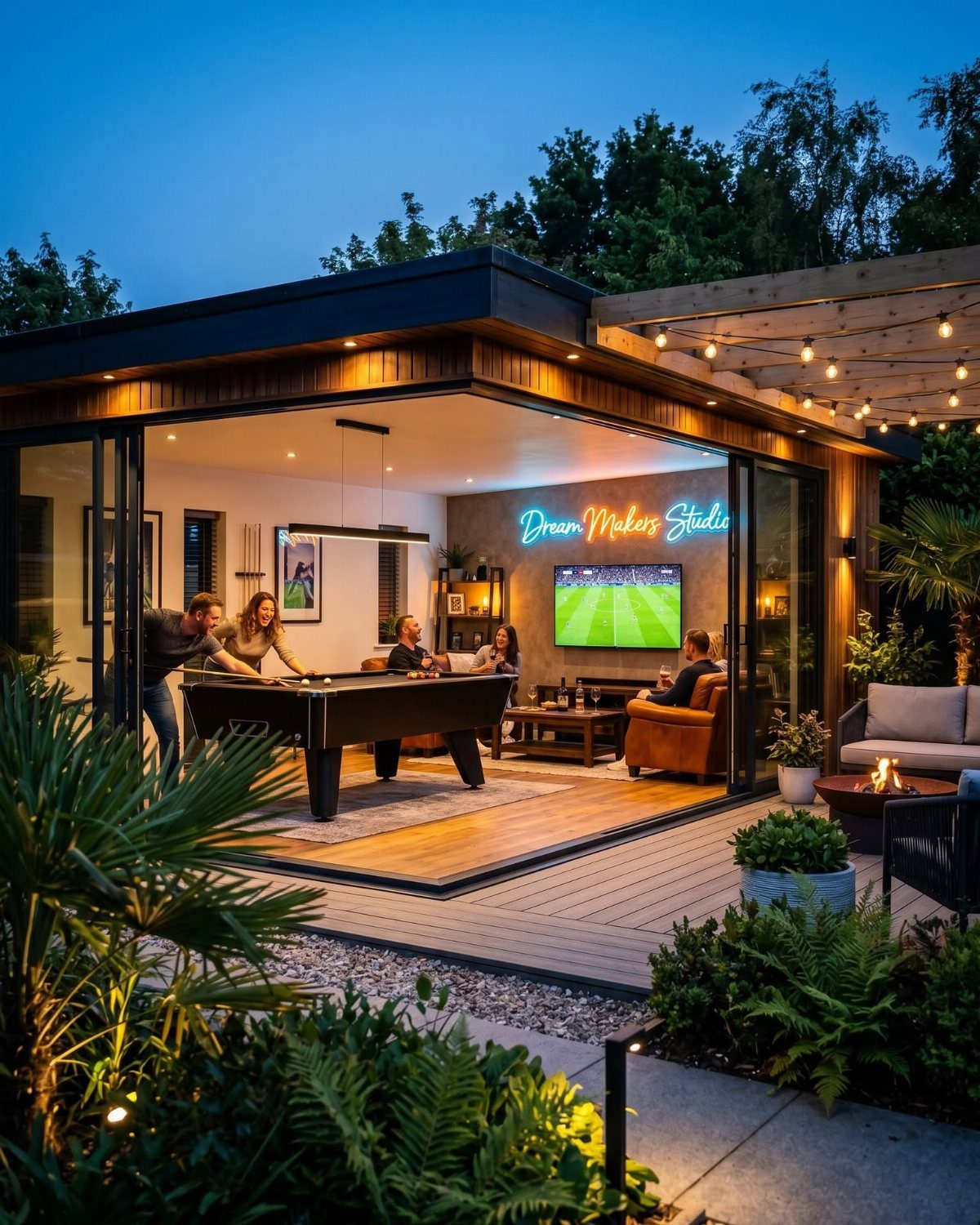
A backyard shed fitted out with a pool table, TV and seating gives the game night its own building, so the house stays quiet.
Room size sets the limit: a pool table plus seating for a group needs a roomy shed, so measure before you commit. I’d put the lounge area at one end and the table at the other.
Evening is when the neon and screen look best.
19. Game Room with Windows
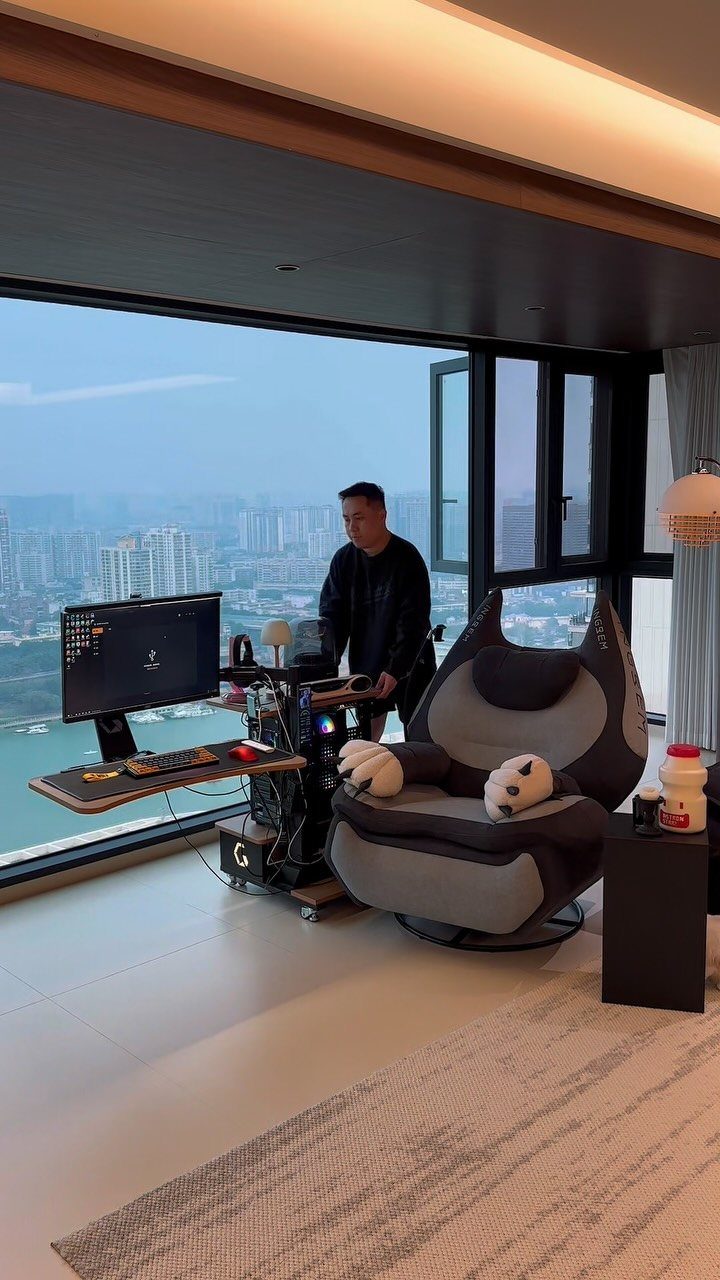
Large windows over a city give a gaming desk something no poster can: depth. Set the monitor to the side of the glass instead of in front of it, so daylight doesn’t wash out the screen.
A cat-shaped gaming chair adds personality without much else on the floor. Keep furniture and wall color quiet here; a good window view does the decorating on its own.
Curtains or blinds that close fully are worth adding for late sessions, when the glare shifts.
20. Dedicated Poker Lounge
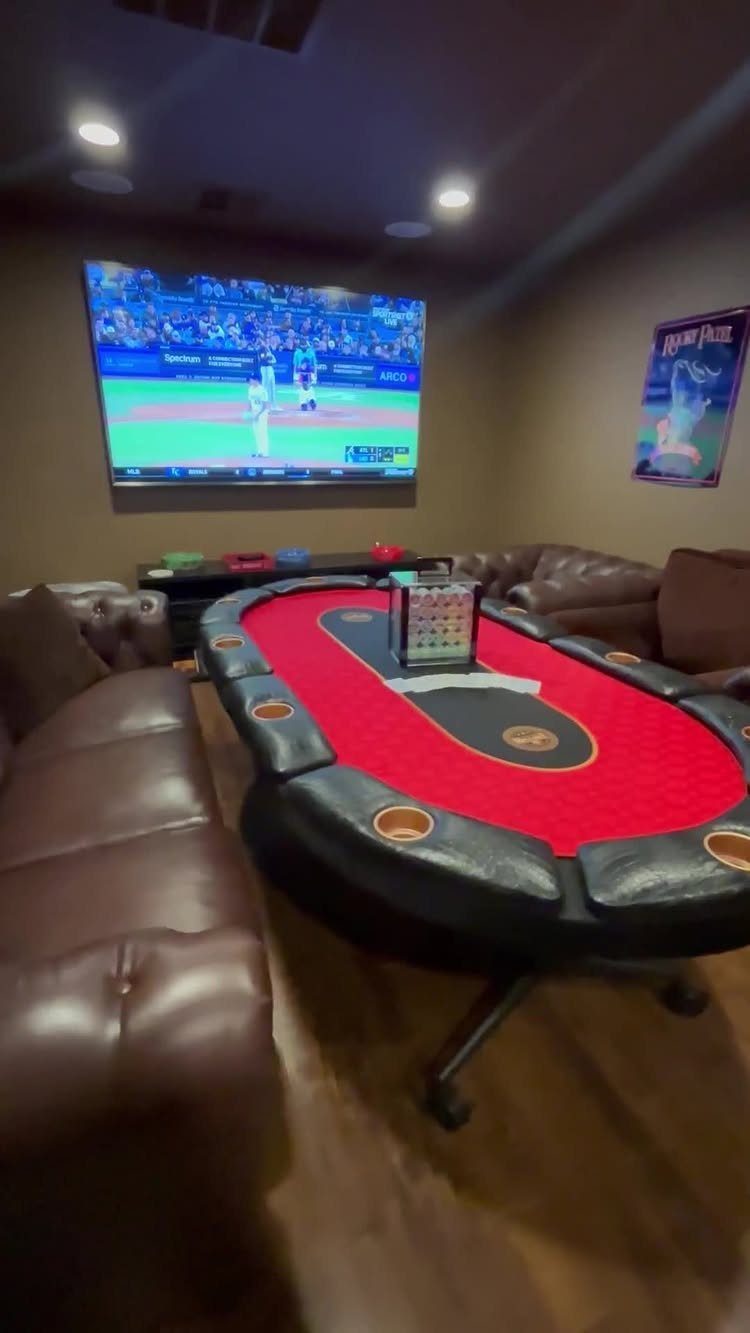
Red felt, an oval tabletop and padded leather armrests make a poker table that people stay at for hours.
A padded table with cup holders and a rail for chips beats a bare surface for cards, because every seat gets a clear spot to deal and stack.
Brown leather sofas along the wall give spectators and folded players a place to sit, and a TV on the wall keeps the game on while the hands play out.
I’d put the sofas close enough to talk across the table, but far enough that chairs can slide back.
Measure the oval’s full length first, since it takes more floor than it looks.
21. Multi-Screen Console Setup
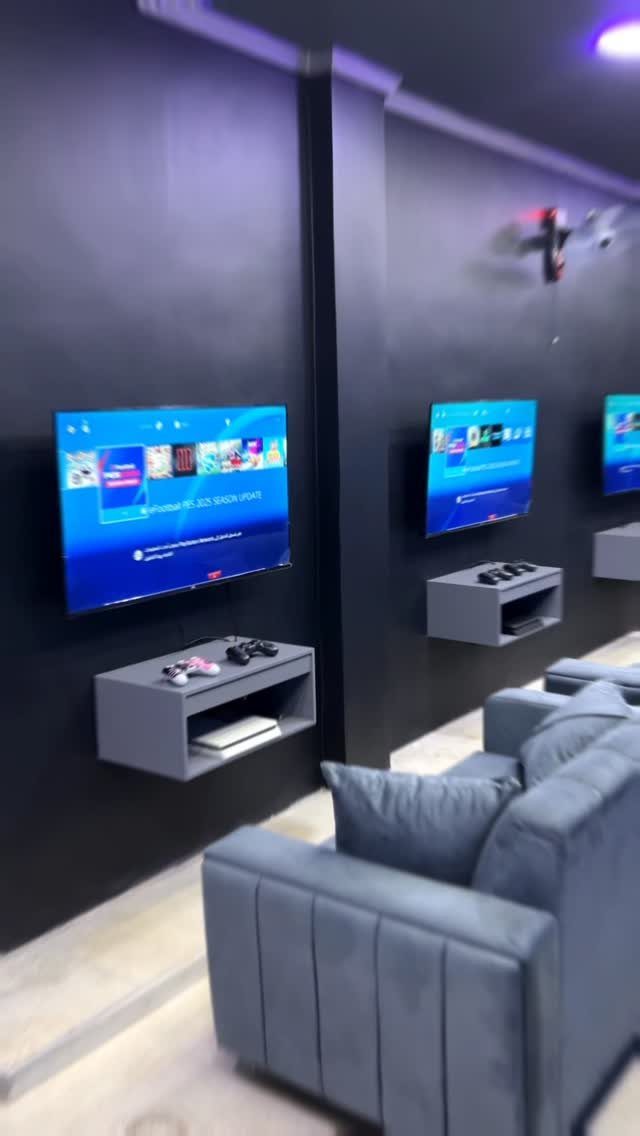
Three screens on one black wall let each player claim a TV, and a floating shelf under each one holds that player’s controllers. Nobody digs through a drawer between rounds.
Grey shelves against black paint look sharp and cost little. I’d mount all three at the same height and with equal gaps, because uneven screens look like a mistake.
Seat everyone on one sofa facing the row, and run the cables behind the wall panel or in a cord cover so the shelves stay clean.
22. Digital Smart Gaming Table
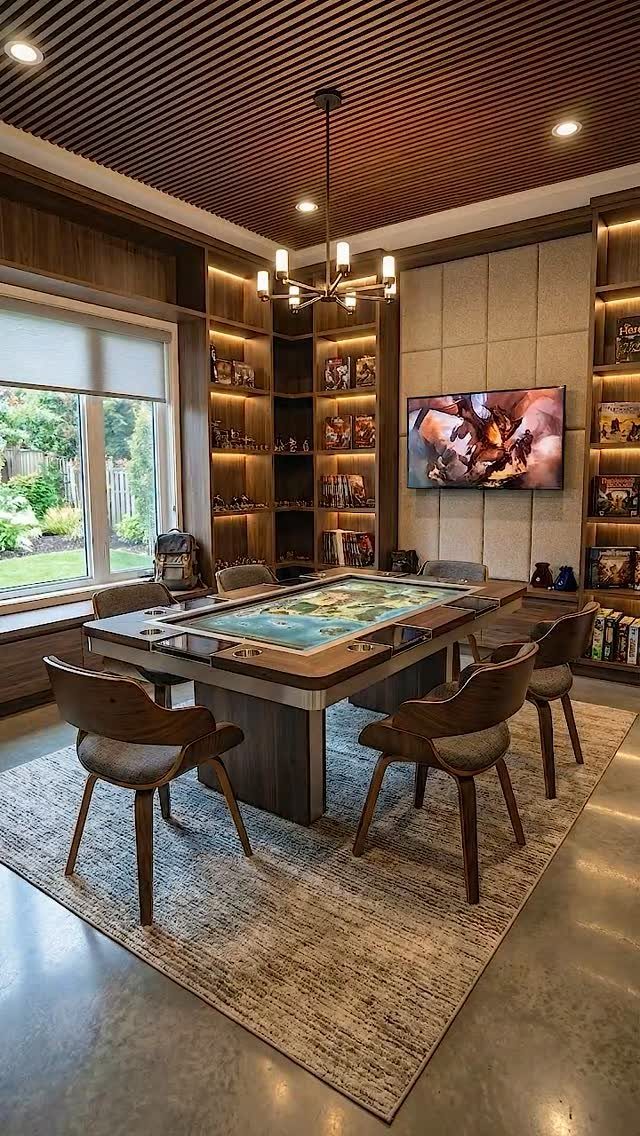
A touchscreen table turns one piece of furniture into a stack of board and card games, with no boxes, pieces or setup. 4 wooden chairs around it keep the look warm instead of techy.
For a small room, this is the tidy way to cover many game nights, though it costs far more than a regular table, so price it against a good wood table plus a few games before deciding.
Wood paneling on the walls and a slatted ceiling pair well with a smart table, because the warm tones keep the screen from feeling cold. Keep a power outlet near the table so no cord crosses the floor.
23. Built-In Cork Dartboard Wall
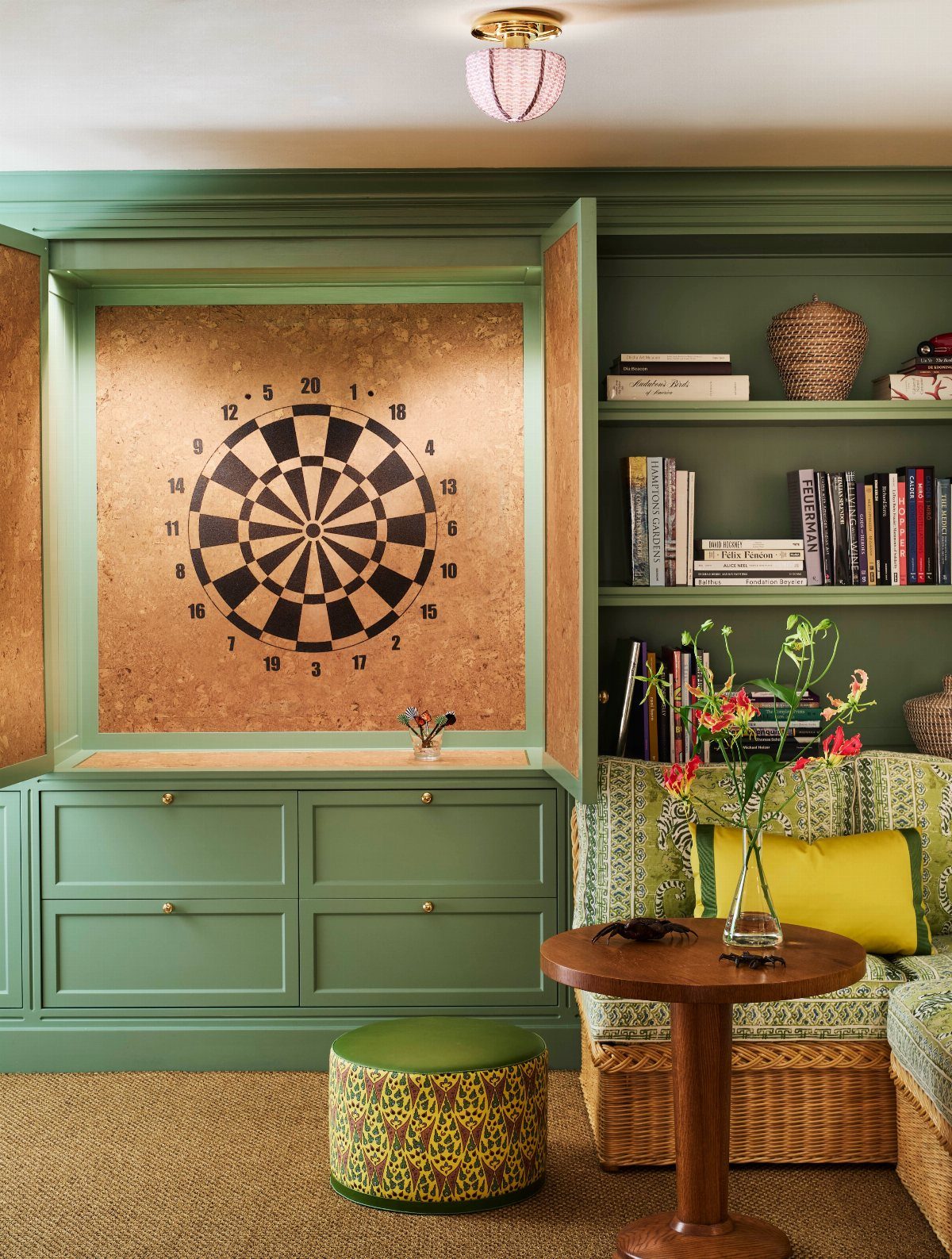
A full-height cork backing behind the dartboard takes stray darts that drywall would scar, and green paint on the surrounding shelves ties it into the room. Bookshelves on either side make the wall useful when nobody is throwing.
I like this better than a lone board on a wall, since the whole unit reads as furniture. Build it from stock shelving and a sheet of cork if custom carpentry is out of budget.
Keep the sofa and ottoman well back from the throwing line, and the flowers on the small table out of the way.
24. Rainbow Cloud Ceiling
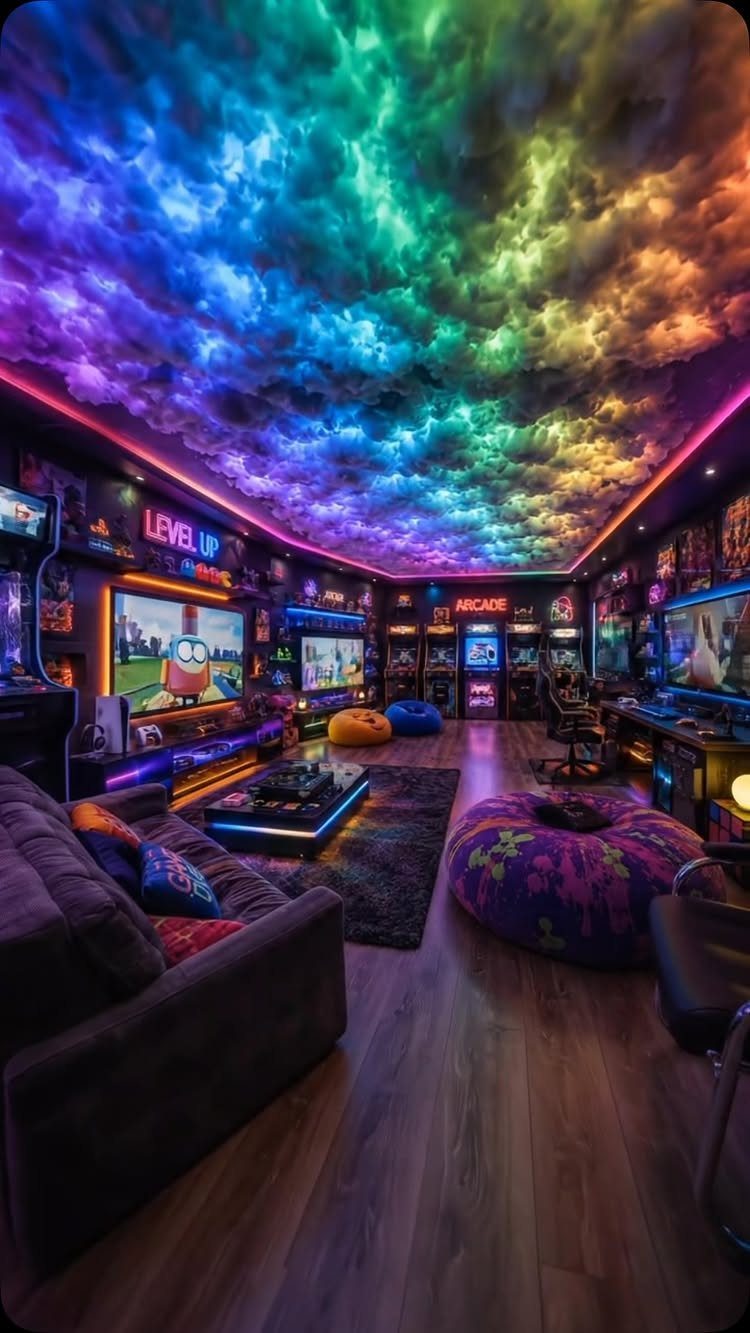
A rainbow cloud ceiling is a loud move, and I like it for a game room that already commits to color.
Because the ceiling does the work, I’d keep the walls simple and make the "LEVEL UP" and "ARCADE" signs the only text. Dimmer or color control matters: a glowing ceiling at full brightness gets tiring.
Beanbags on the floor keep the seating low, which makes the ceiling feel farther away.
25. Futuristic Cockpit Gaming Pod

Three curved monitors wrapped around one seat make a pod that fills your field of view, and the overhead blue light adds to the cockpit feel. Racing and space games get the most from it.
I’d put the pod against a wall so cables run straight down behind it. Keep the room lights low, since a dim room makes the blue glow and the screens look their best.
Check the pod’s footprint before you commit. Triple screens and a full seat take more floor than a normal desk.
26. Board Game Storage Shelves
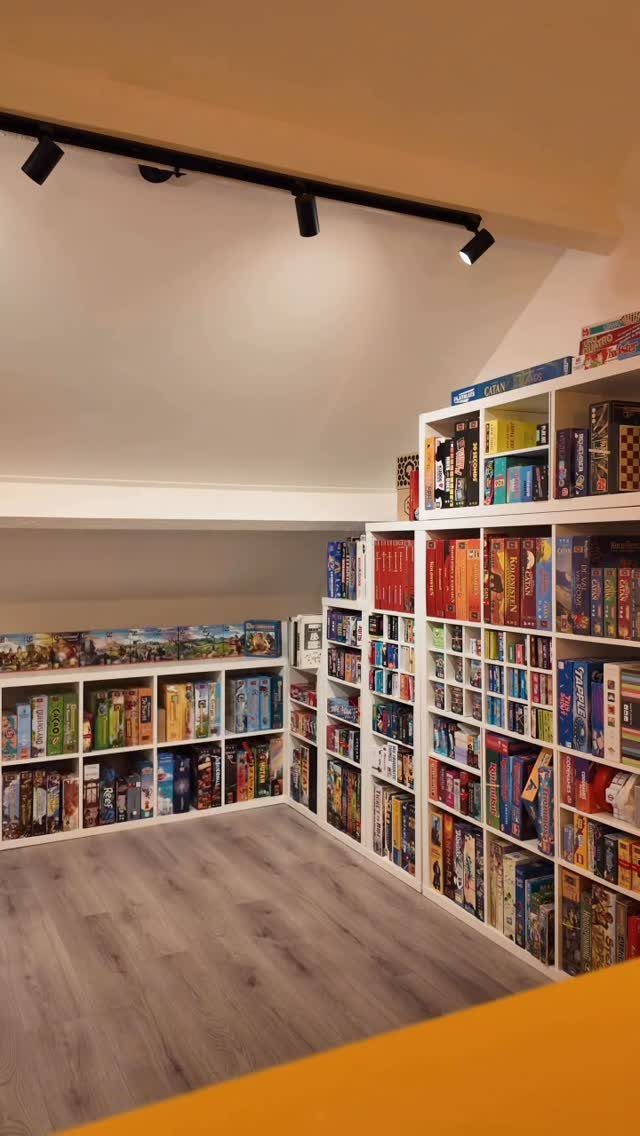
White floor-to-ceiling shelving holds a whole game collection in plain view, with boxes stacked flat or standing on edge. Game night starts with one look at the wall.
Heavy boxes like Catan go on the lower shelves, and lighter ones go up high. I’d leave a few gaps so the wall doesn’t feel packed.
Black track lighting on the ceiling lets you aim light at the shelves instead of lamping the whole room. On a budget, stock white bookcases do the same job as built-ins.
27. Indoor Shuffleboard Table
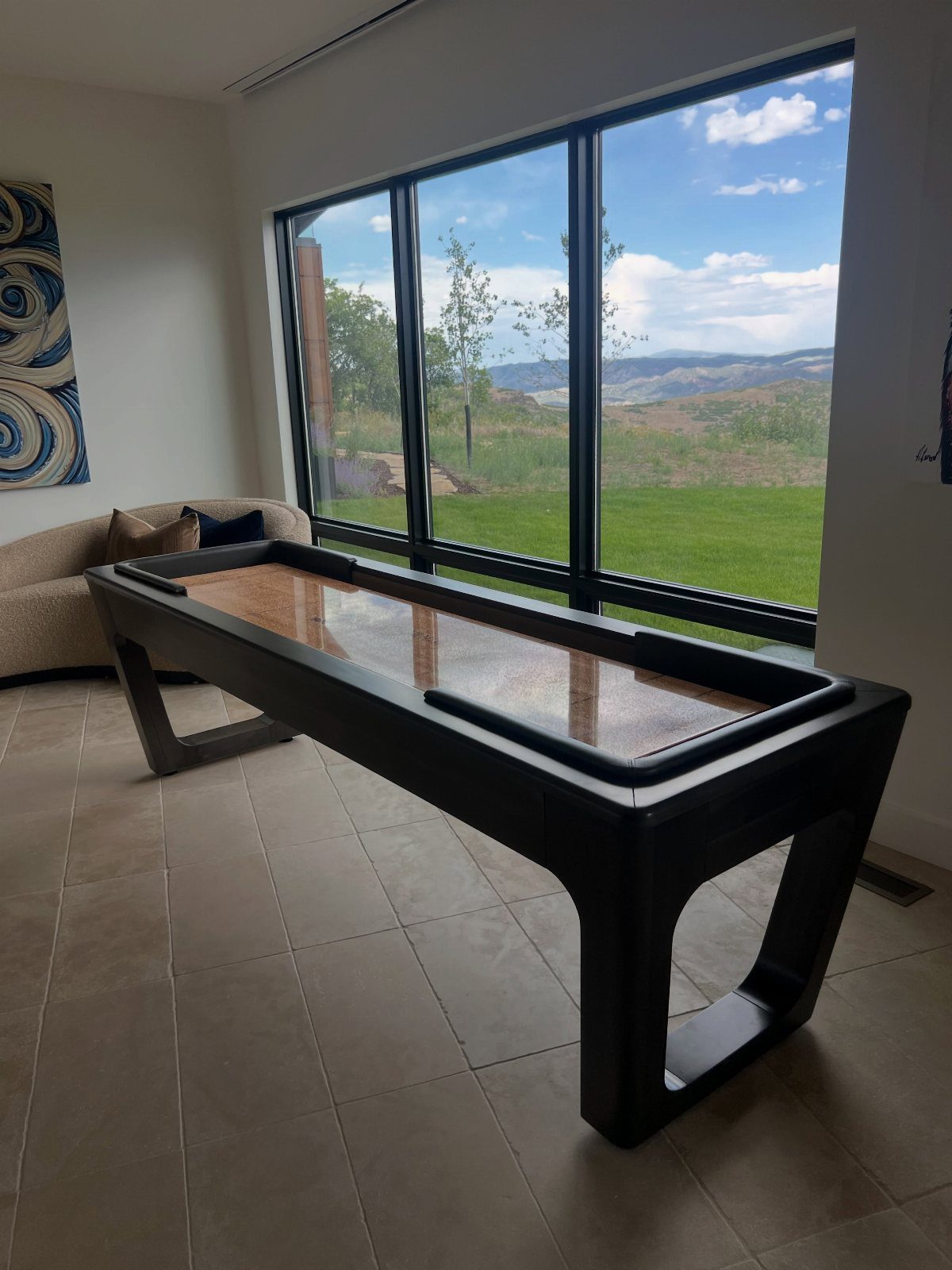
A black shuffleboard table gives a room one long, low piece that looks like furniture even when nobody is playing.
Set it beside a big window with a view and the table reads like a piece of living room furniture instead of a game stuck in a corner.
Tile suits it fine, but measure the length first. A shuffleboard table is long, and players need space to walk and slide at both ends.
I’d keep the sofa to the side, not at the end of the table, so no one gets bumped mid-shot.
28. Home Theater Recliner Lounge
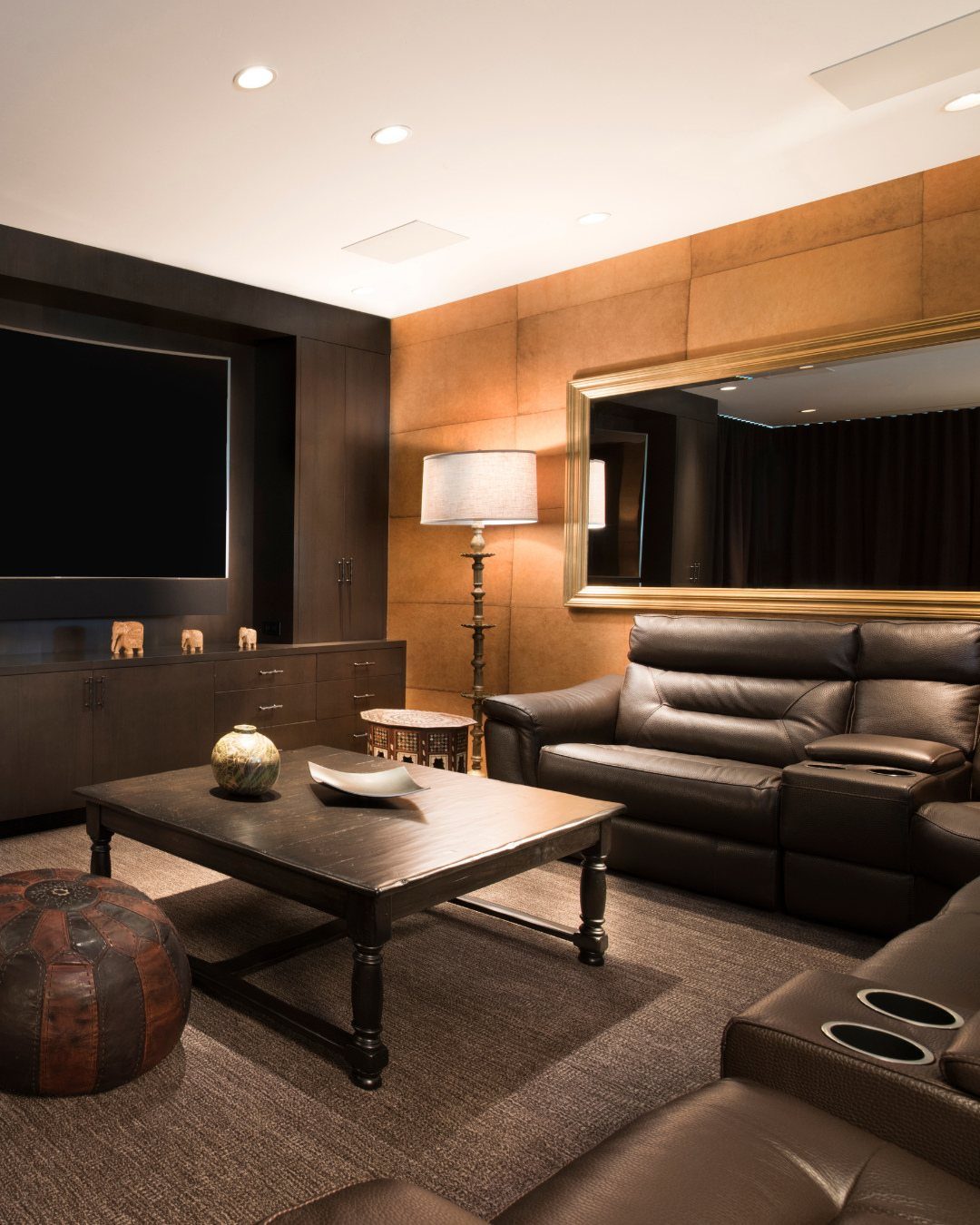
Leather reclining sofas with built-in cup holders turn a basement into a place where movies run long and no one shifts around. Facing a big wall-mounted TV, everyone gets the same view.
Leave enough floor for the recliners to fully extend, because a footrest hitting the coffee table ruins the setup.
A floor lamp gives soft light for snacks. I’d add a large mirror only if it won’t reflect the screen back at you.
29. Lit Console Display Shelving
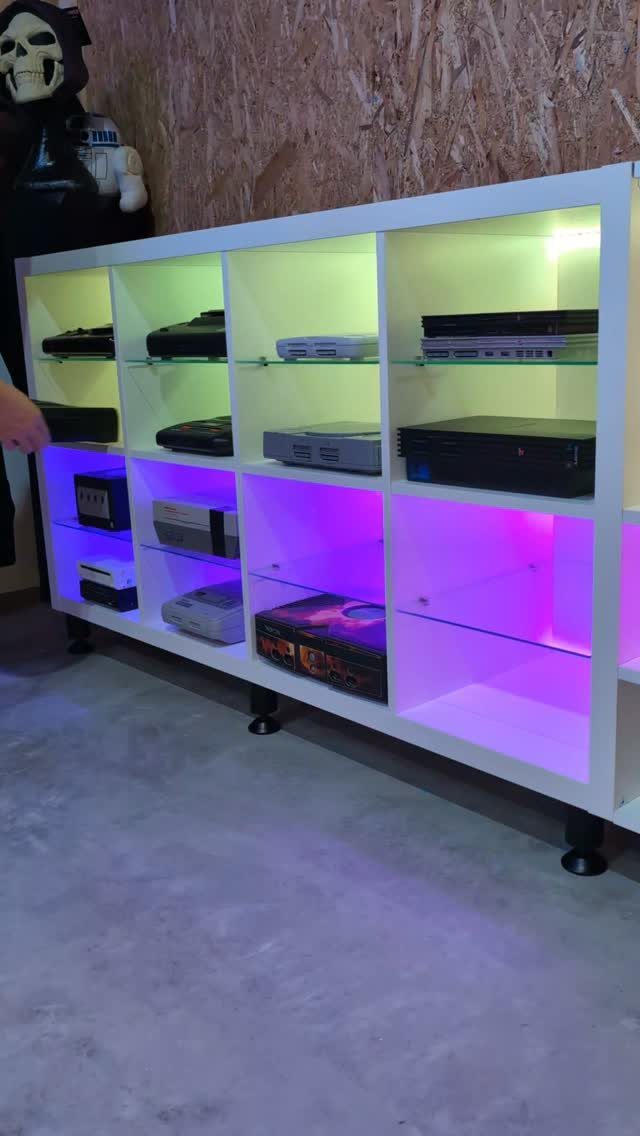
A white shelving unit with yellow and purple LED accents turns a stack of retro consoles into a display. White backing lets the colored light show clearly.
I’d give each console its own space with room around it, so the lighting hits every one. Keep the power strip hidden behind the unit, and run the LED cord along the back edge.
Cooler colors like purple keep the shelves calm, while mixing several colors makes the display louder and more playful. Dim lights save your eyes during long sessions.
Planning a Game Room Layout
Start with the purpose of the room, because it decides everything after it.
A room for movie nights and a room for ping pong tournaments need different floor plans, and picking one main use first keeps you from buying a little of everything.
Measure the space next, including doorways, stairs, and anything that juts into the floor, like a support post or a water heater.
Every game needs breathing room: space for players to move and a place for anyone watching to sit without getting in the way.
Set the budget last, and keep it realistic. Pricing the big pieces first leaves you a clear number for lighting, seating, and decor instead of a pile of leftovers.
Tape the footprint of each piece on the floor first. It shows you a cramped layout while fixing it is still free.
Choosing the Right Games
Pick the centerpiece game first and put it in the best spot in the room.
A typical basement layout puts a pool table in the center, arcade machines along one wall, a foosball table in a corner, and seating or bar stools nearby.
That mix balances the room, with one big draw and several quick options for when the main game has a line.
Smaller social games matter as much as the big one.
Creating a Cozy Atmosphere
Comfort decides how long people stay, so start with soft seating. Couches, bean bags, and floor pillows all work, and throw pillows add more cushion for little money.
Rugs and soft fabrics also take the echo and hardness off a basement or garage floor. Warm lighting does the rest; pick bulbs or strips that read warm rather than harsh white.
Then add personal touches: wall art, a plant, and a few favorite objects. These make the room feel like yours rather than a showroom.
On a weekend budget, I’d do it in that order: seating first, then a rug, then lighting, then the small stuff. Each step changes the feel of the room more than the one after it.
Frequently Asked Questions
What are some good ideas for a games room?
A corner bar cabinet, a wall-mounted dartboard cabinet and a multipurpose game table suit most rooms, because each packs a lot of use into a small footprint.
Closing a dartboard inside a cabinet turns it into a wall panel between rounds, so the room keeps its floor and its looks.
One game table with the boards set into the top can stand in for the pile of boxes and the closet shelf they would otherwise fill.
Pick one main use for the room first, so you don’t end up buying a little of everything.
What are the must-haves in a gaming room?
Comfortable seating, good lighting and organized storage cover the basics. Leather chairs or a sofa hold up through long sessions, and dimmable or single-color lighting keeps the room easy on the eyes.
For storage, a lidded bench swallows controllers, cards and spare cables, while shelving shows off games and consoles. Measure the floor before buying any big piece, because tables and pods take more space than they look like they will.





