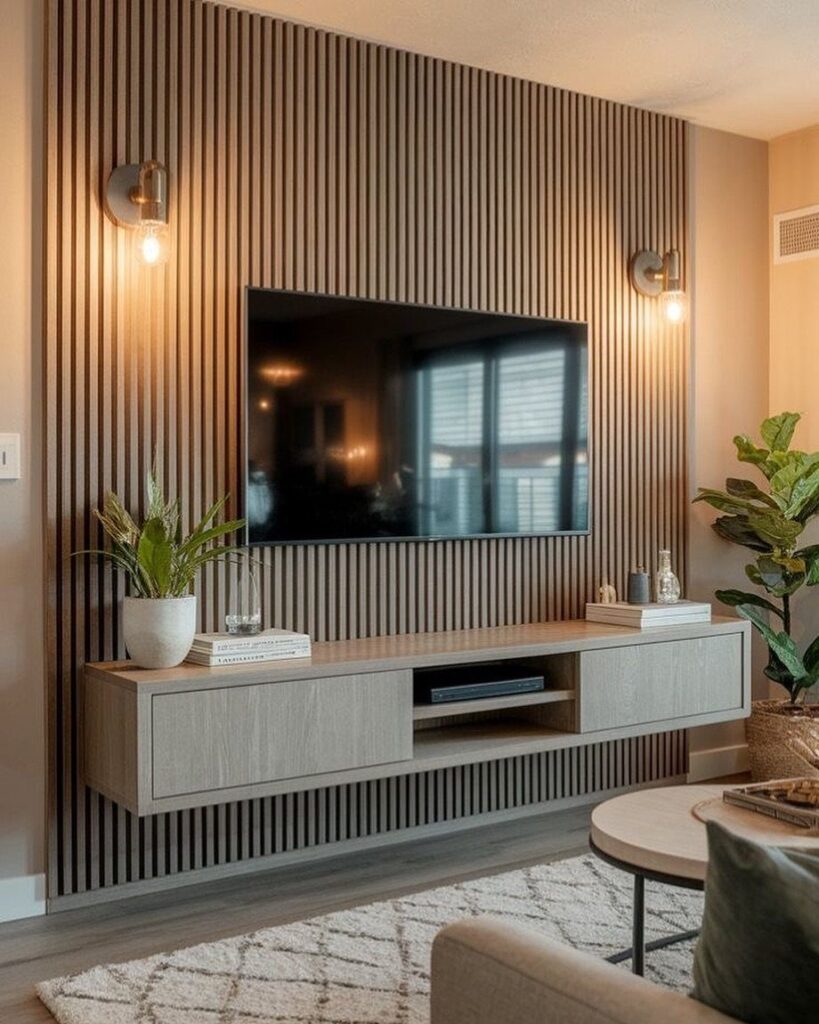
Your wall decides a lot here: in a rental where you can’t drill, paint is the safer route, while a wall you own and can fasten into studs opens up slats, planks and tongue and groove.
The ideas run from a can of matte black paint and an afternoon to a wood slat and marble panel combination that takes a full weekend and real measuring.
1. Vertical Wood Slat TV Wall
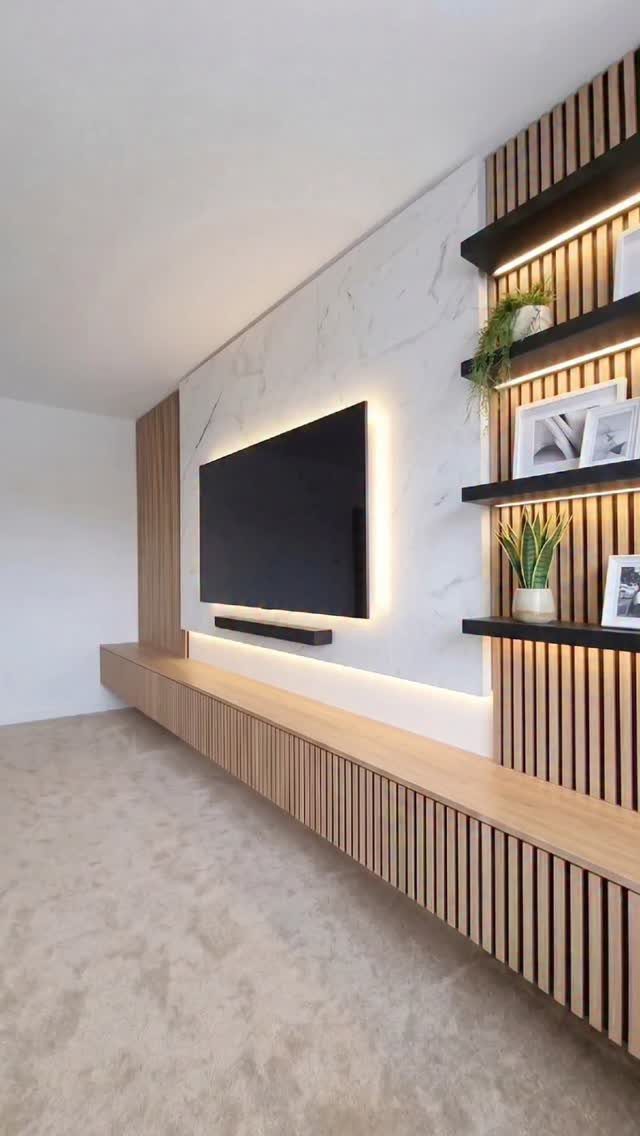
Slim vertical wood slats beside a TV give the wall grain and shadow lines that flat paint can’t. Light wood against white marble keeps the look calm, so the texture does the work and the wall doesn’t turn busy.
Keep the slats to the sides, as here, rather than covering the whole wall. That leaves the screen with a clean backdrop and costs far less in material, which matters on a tight budget.
A floating console below finishes it. I’d match its wood tone to the slats so the two read as one set.
If you’re trying to keep your living room dark and minimalistic while still incorporating some texture, a black wood slat wall behind your TV is probably the best option.
2. Classic Tongue and Groove TV Accent Wall
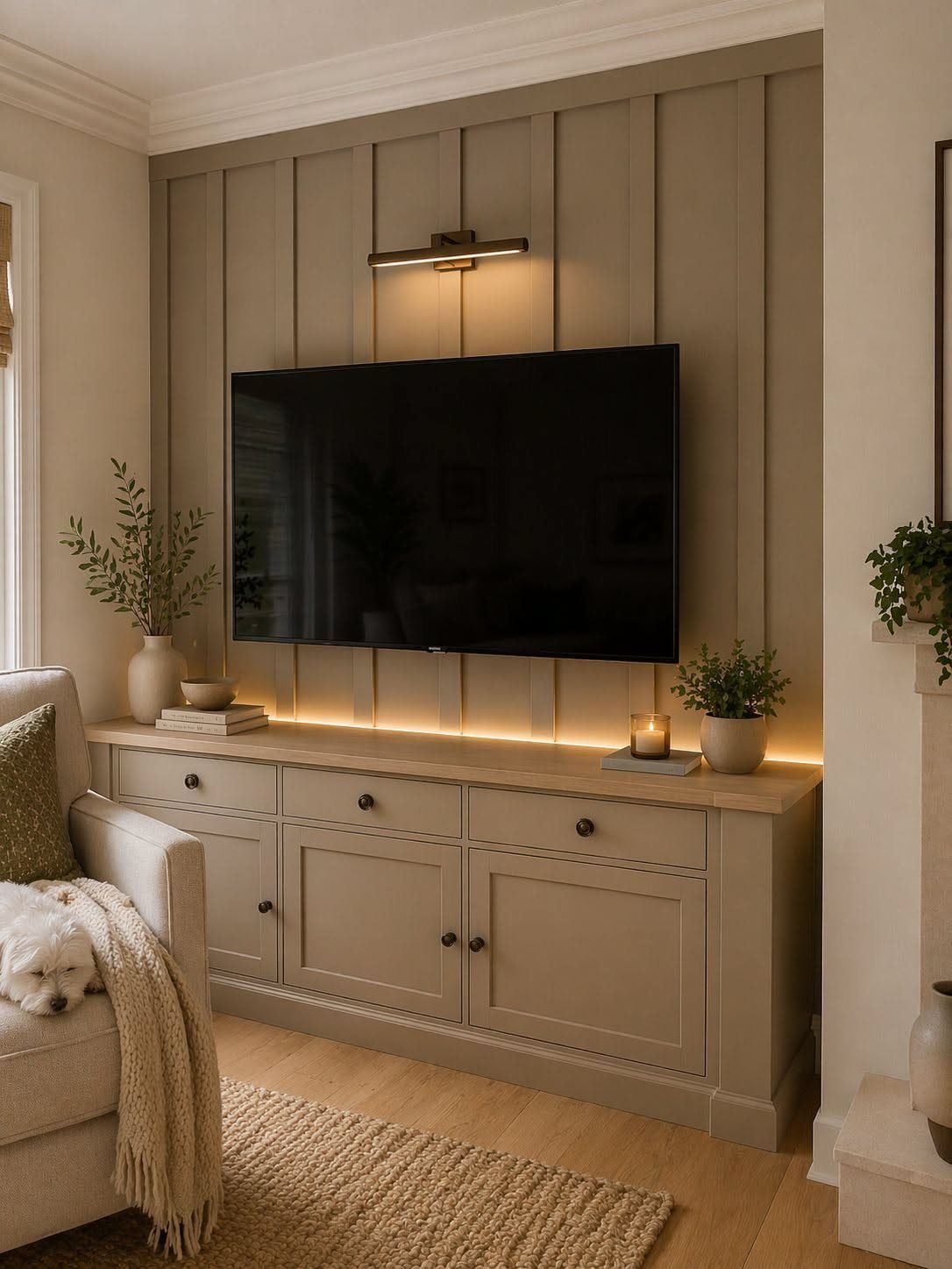
Tongue and groove paneling hides a TV better than almost any other treatment, because the narrow, repeating boards give the eye so many lines that a dark screen stops being the focus. Beige keeps it soft and traditional.
For a weekend job, the boards lock together, so you can work row by row. Paint the wall and the boards the same shade, and the mounted TV recedes even more.
I’d add that lighting after the paneling, as an upgrade.
3. Painted Black TV Accent Wall
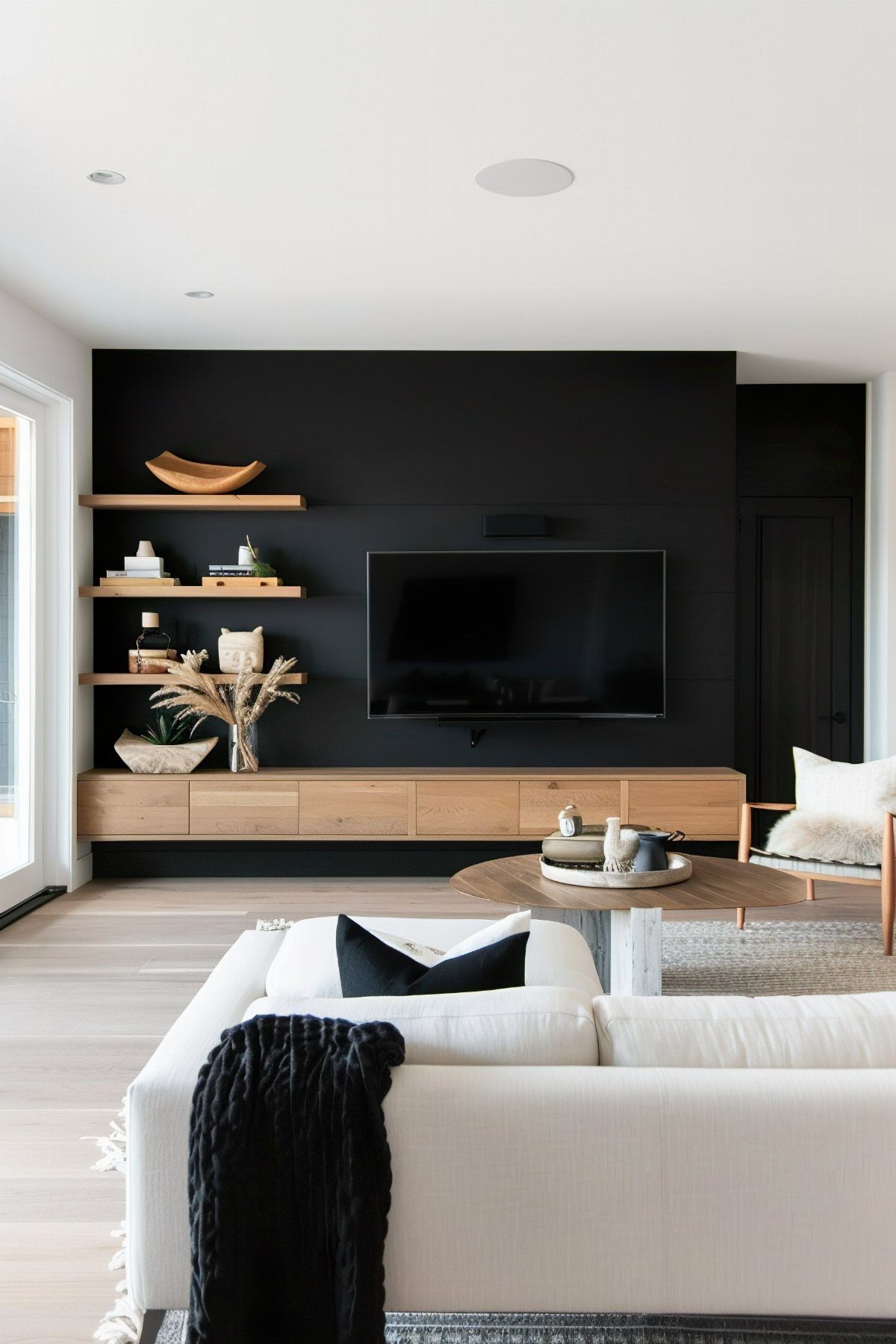
Paint a single wall matte black and the TV stops fighting the room, since a dark screen and a dark wall nearly match. Paint is the cheapest way to get this look: a can and an afternoon.
Matte matters. A glossy finish catches light and shows every roller mark, while matte hides flaws and glare alike.
Wood shelves and a light wood console keep black from feeling heavy. I’d choose warm wood over cool for contrast, and keep the other walls light so only this one goes dark.
4. Horizontal Wood Plank TV Wall
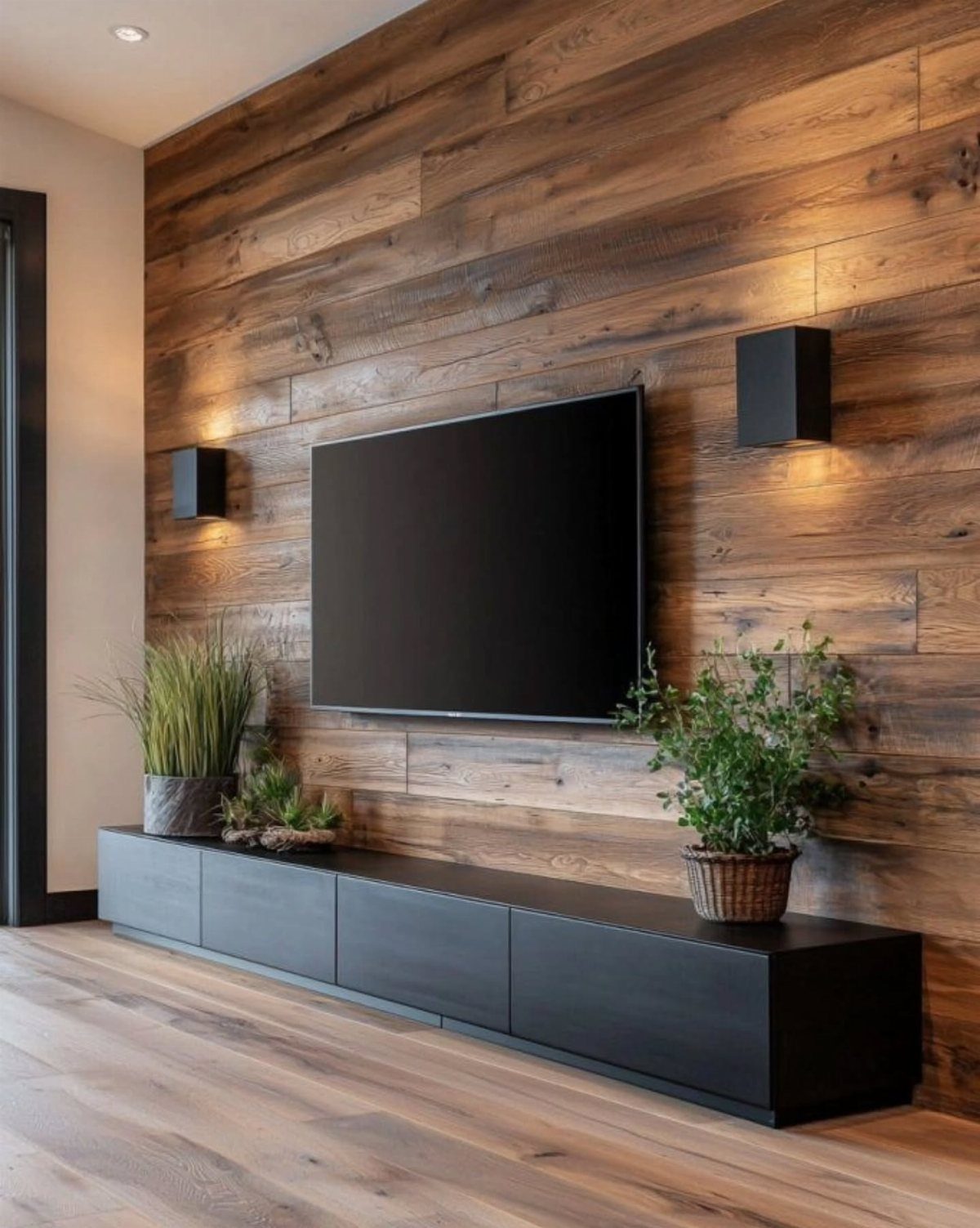
Horizontal planks stretch a wall sideways, which helps a narrow room feel wider. Brown wood gives it a warm, lodge-like tone, and a low black console keeps the weight near the floor.
Run the planks on the screen wall only, not floor to ceiling on every wall. Mount the screen at a comfortable viewing height before you plan where the sconces go, so the wiring and the boards line up.
I like a pair of wall sconces on either side; they add soft light without crowding the screen.
5. Wood Slat and Marble Panel
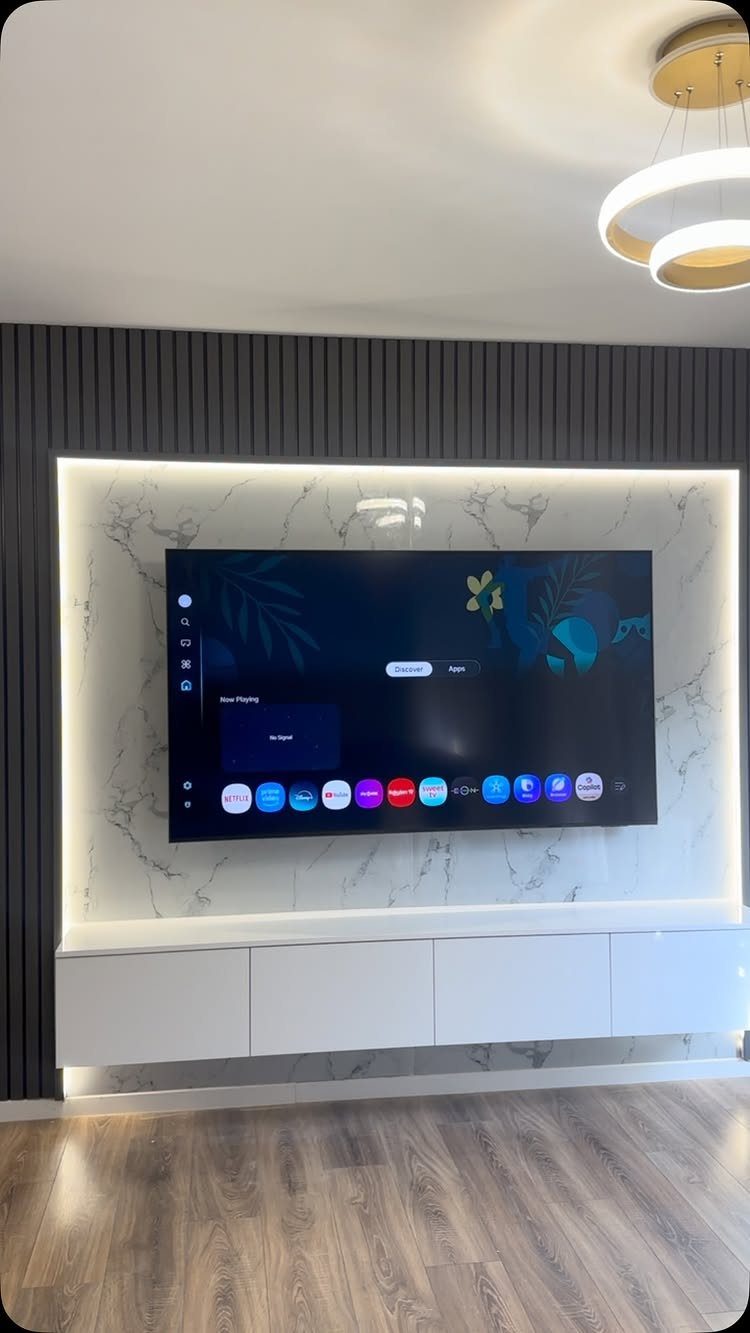
Marble behind the screen with dark grey slats on both sides is the most dramatic option here. Backlighting behind the panel makes the stone glow and softens the contrast between a bright screen and a dark room.
A real marble slab is a big expense. For a renter’s budget, I’d look at a marble-look panel or laminate and spend the savings on the slats and LED strip lighting.
Keep the console white and floating so the floor stays visible and the wall feels lighter.
DIY Installation Tips
Most wood panel walls are within reach of one person with basic tools, so match the design to your skill level and pick the pattern after you’ve been honest about that.
A slat or plank wall mostly needs a tape measure, a level, a stud finder, and a saw. Pre-made panels cut down on tools and experience even further.
Find the studs first and mark them. Then check that the wall is plumb, because a crooked first board carries through every row after it.
If you rent, ask about the lease before drilling into the wall. Panels that mount with adhesive or on a removable frame are easier to undo, though they hold less weight.
Cut all your boards in one session, and dry-fit a few rows on the floor before fastening. Mistakes are cheap there and expensive on the wall.
Acoustic Benefits
Some wood slat panels do more than look good: they quiet a room. Panels sold as acoustic usually pair the slats with a felt or similar backing, which soaks up echo and makes dialogue clearer.
That helps in a basement, where hard floors, bare walls, and low ceilings bounce sound around. A TV wall is a smart place for it, since the speakers are right there.
Read the product listing first, since the acoustic rating is usually buried there. Plain slats without backing are mostly decoration, and a few boards won’t change how the room sounds.
For the best result, cover a good share of the wall and add a rug or curtains to absorb what the panels miss.
Budget Considerations
Costs swing widely with the material, so set your ceiling before you shop. Paint sits at the low end, solid wood boards in the middle, and stone or specialty panels at the top.
Price the whole wall, not one board. Add trim, fasteners, adhesive, finish, and any lighting.
To stretch a tight budget, spend on the part people see most and save on the rest. Use real wood where your eye lands, and cheaper lookalike materials for large flat areas.
Buy extra to cover bad cuts and warped boards. Returning leftover boards beats a second trip mid-project.
Frequently Asked Questions
How do I hang a TV on wood paneling?
Mount the TV into the studs behind the paneling with a bracket and anchors rated for the screen, not into the boards alone.
Settle the screen height on paper first, since that decides where the wiring runs and where each board and sconce lands. Paneling can also hide the cords, which keeps the wall clean.
Can you anchor into wood paneling?
Yes, as long as you use the right anchors for the load. Locate the studs behind the paneling and fasten there for the strongest hold.
Renters get an easier exit from adhesive panels or a removable frame, though neither holds much weight, so read your lease before putting a bit to the wall.
How do I decorate the wall beside a TV?
Slim vertical wood slats on both sides of the screen are one of the best choices. They add grain and shadow lines, and a clean strip behind the screen keeps the wall from looking busy.
Covering only the sides also costs far less in material. Wall sconces and a floating console in a matching wood tone finish the look without crowding the TV.
What is a TV back panel?
A TV back panel is a decorative wall treatment that sits behind the screen and often extends past its edges, done in slats, tongue and groove boards, planks, or a marble-look panel.
It gives the screen a backdrop so the wall looks finished. Some versions add a felt backing that absorbs echo, which helps dialogue sound clearer in a room with hard surfaces.





