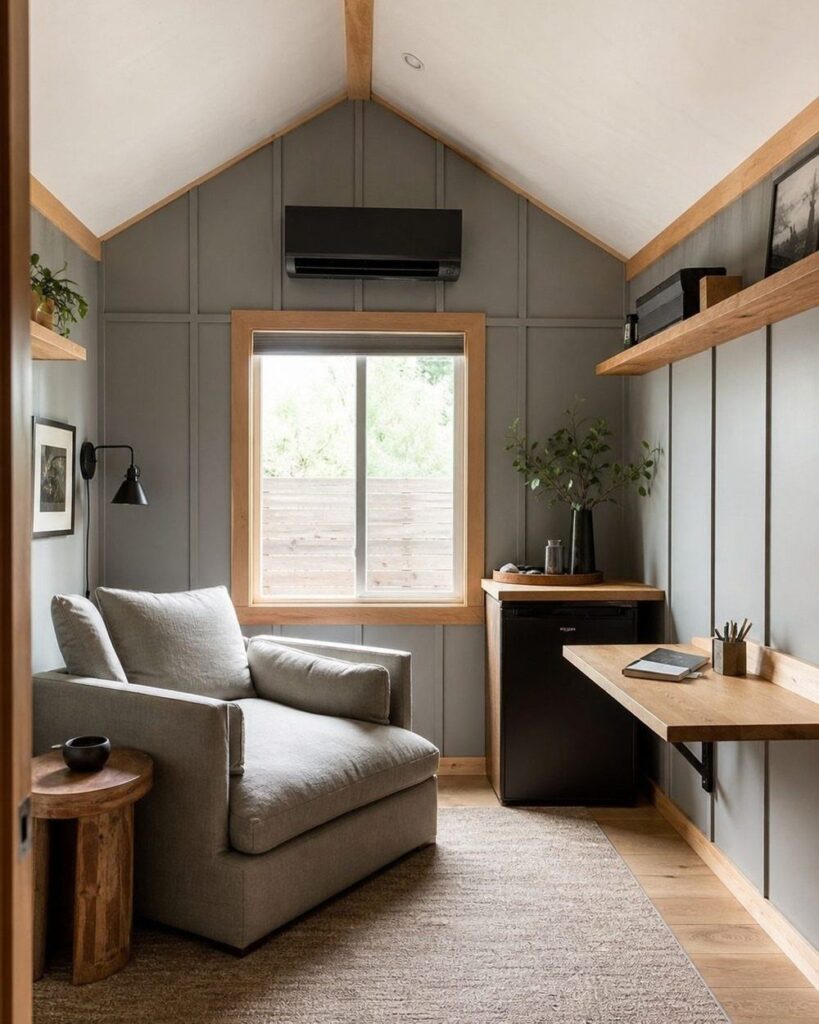
Man cave ideas here run from a floor lamp you move around to a bookcase on heavy-duty hinges that swings open to a hidden bar, and the thing that picks yours is whether you own the walls or rent them.
Renters should lean toward what stands, plugs in or sticks on: a soft-tip dartboard, a mini fridge, LED strips, a rug. Owners can wall-mount gear and build permanent bar setups; renters lean on furniture that moves out clean.
1. Wall-mounted TV
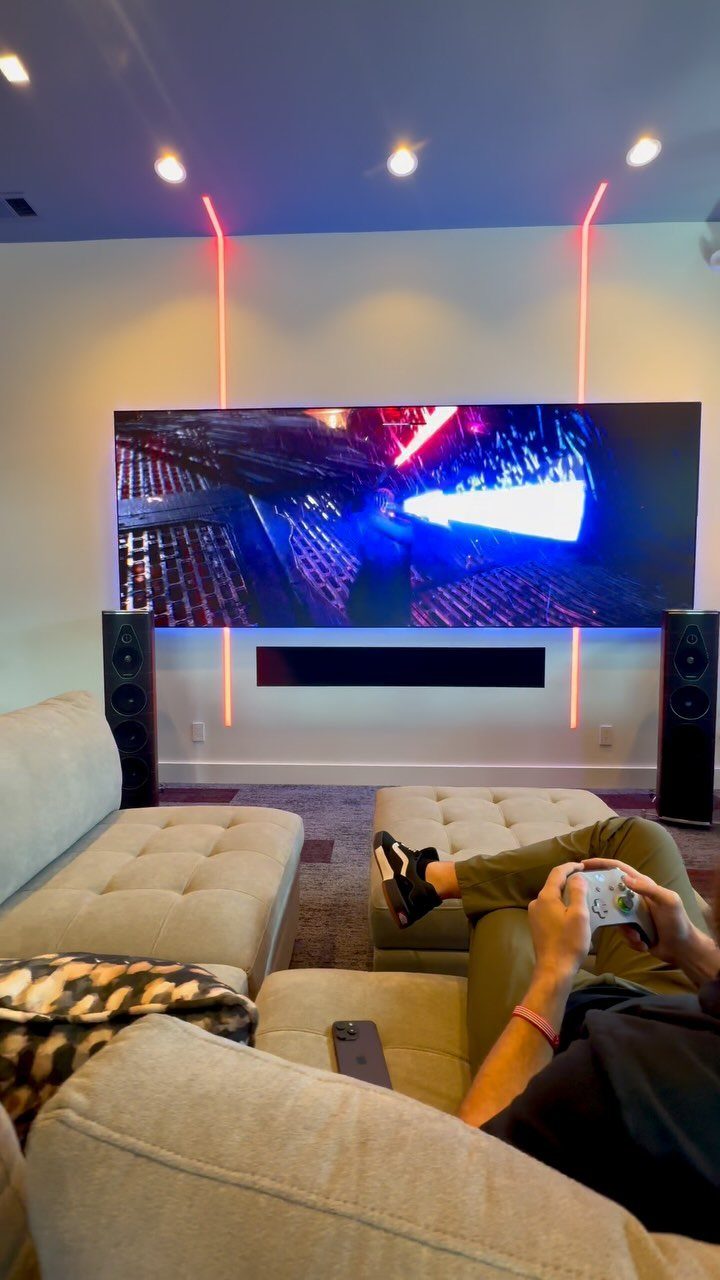
A TV on the wall frees the floor, and in a basement that floor space is worth more than the screen itself.
Without a stand or media console, there’s room for a sofa pulled back a few feet or a game area off to the side.
Mount it into studs, not drywall alone, and run the cables inside the wall or behind a slim cover so the setup looks finished. Red accent lighting behind the screen cuts the glare in a dark room.
2. Recliners with Cup Holders and USB Ports
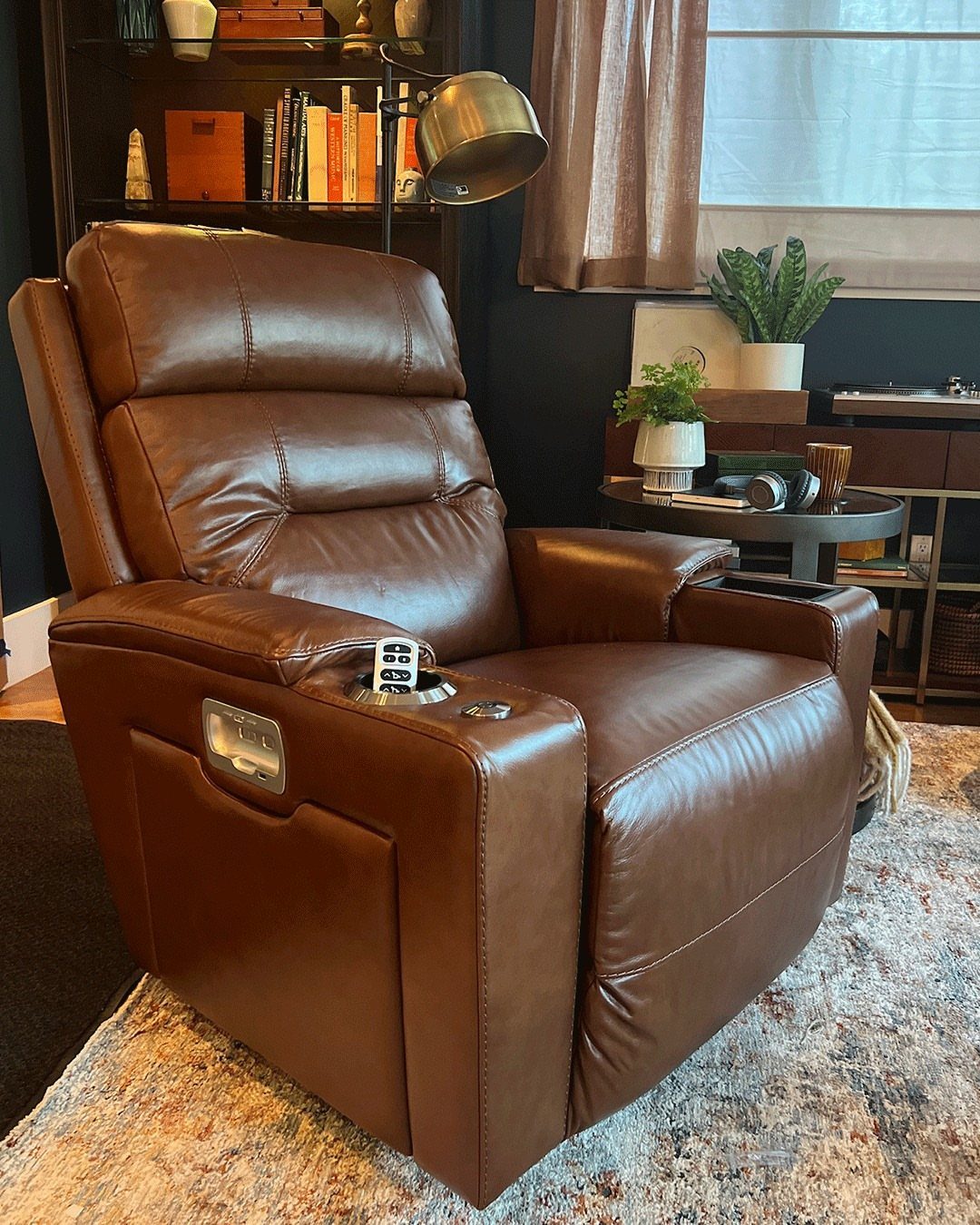
Cup holders and USB ports sound like gimmicks until you’ve sat through a long game with a drink balanced on the armrest and a dead phone. A power recliner with both built in keeps everything within reach of one seat.
I like brown leather for a man cave because it hides wear and warms up a room.
Check the cord length before buying, since the outlet decides where the chair can sit. Leave a gap behind it for the recline.
3. Arcade Games
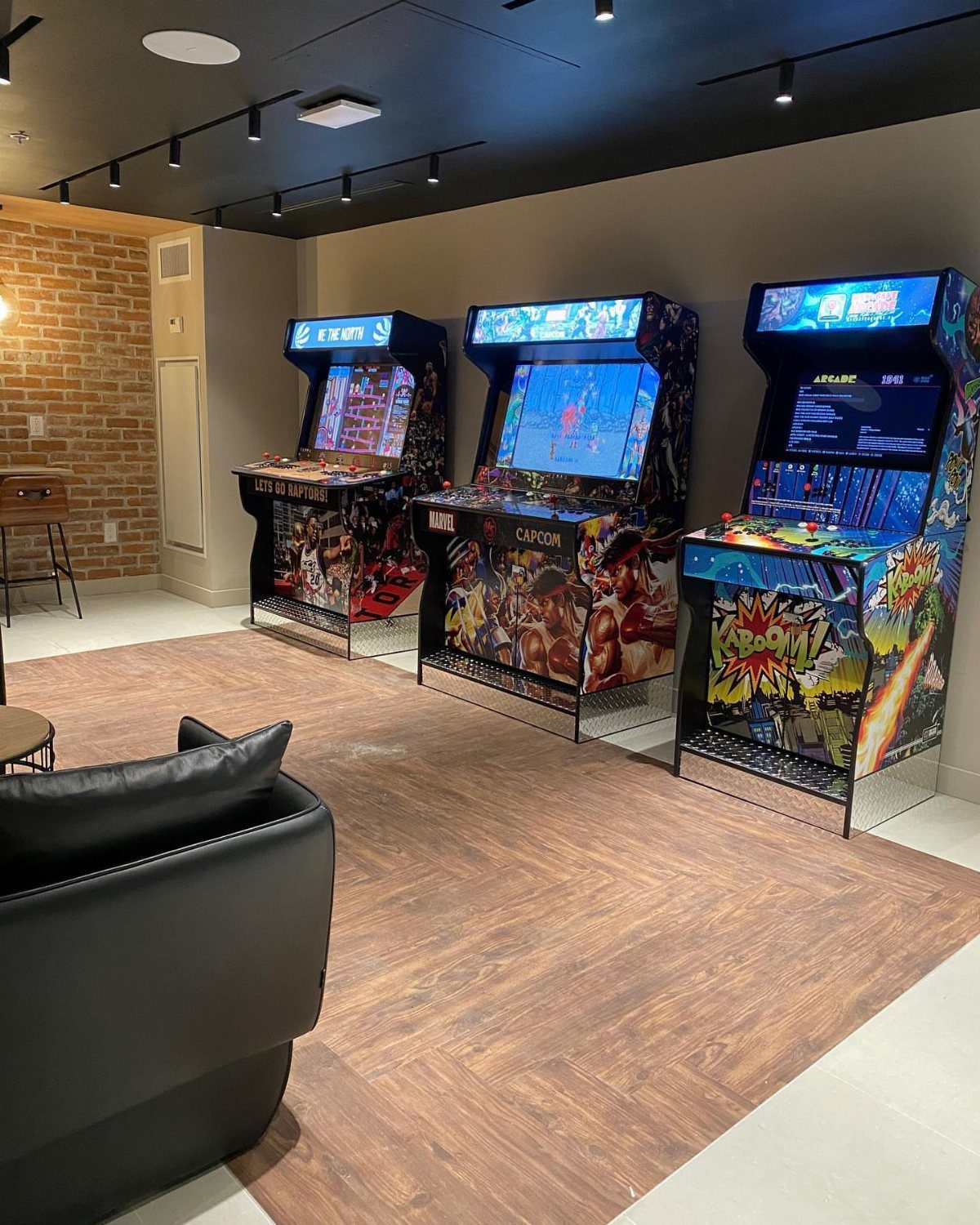
Full-size cabinets are the heavy, expensive route to arcade nostalgia, so decide early how much room you can spare. Each one takes a footprint about like a refrigerator, plus space to stand in front of it.
Line them along one wall, as above, and keep the sofa across from them so the screens double as the room’s focal point.
A bar-top or tabletop machine costs far less and fits a rental. I’d choose one cabinet of a game you love over three you barely play.
4. Area Rugs
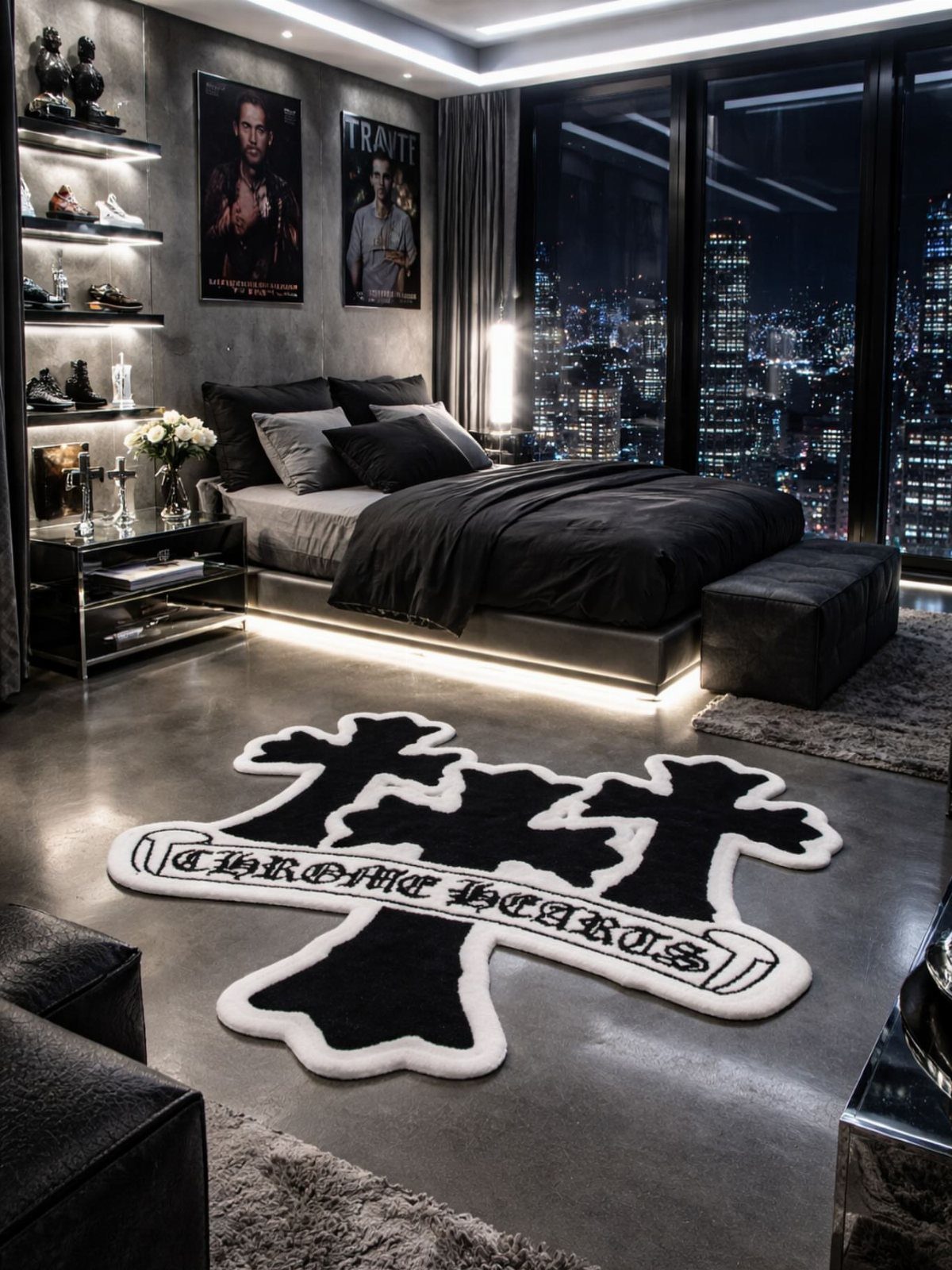
Bare concrete looks sharp and feels cold under bare feet, which is why a rug earns its place in a man cave. A bold shape in black and white gives a plain floor a focal point without any construction.
Pick a rug large enough that the front legs of your seating sit on it.
A low pile is easier to vacuum and won’t snag a rolling chair. It’s the cheapest warmth you can add in a weekend.
5. Personal Music Room
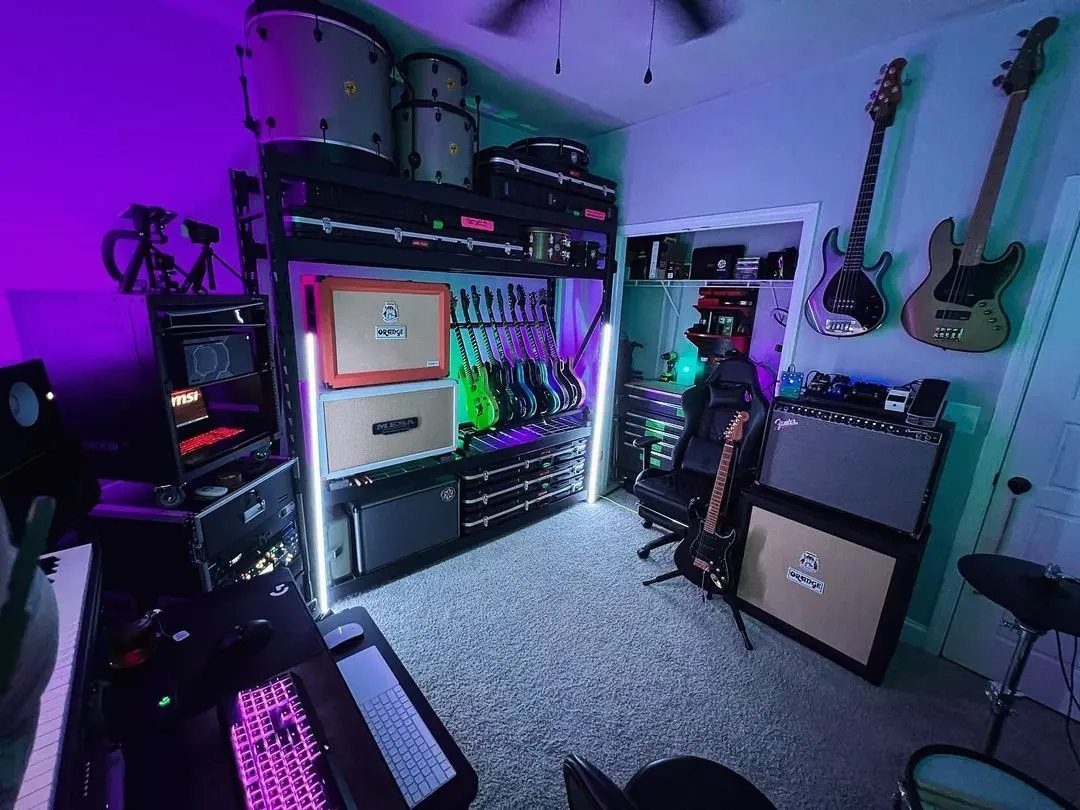
Amps, drums, guitars and a keyboard all want to stay set up, because a rig you have to assemble is a rig you stop playing. Give each instrument a permanent spot and keep the cables off the walkway.
Put the drums and the loudest amps on the opposite side of the room from the computer desk so recording stays practical. Treat the walls for sound next, since volume is the first complaint.
6. LED Strips and Wall Sconces
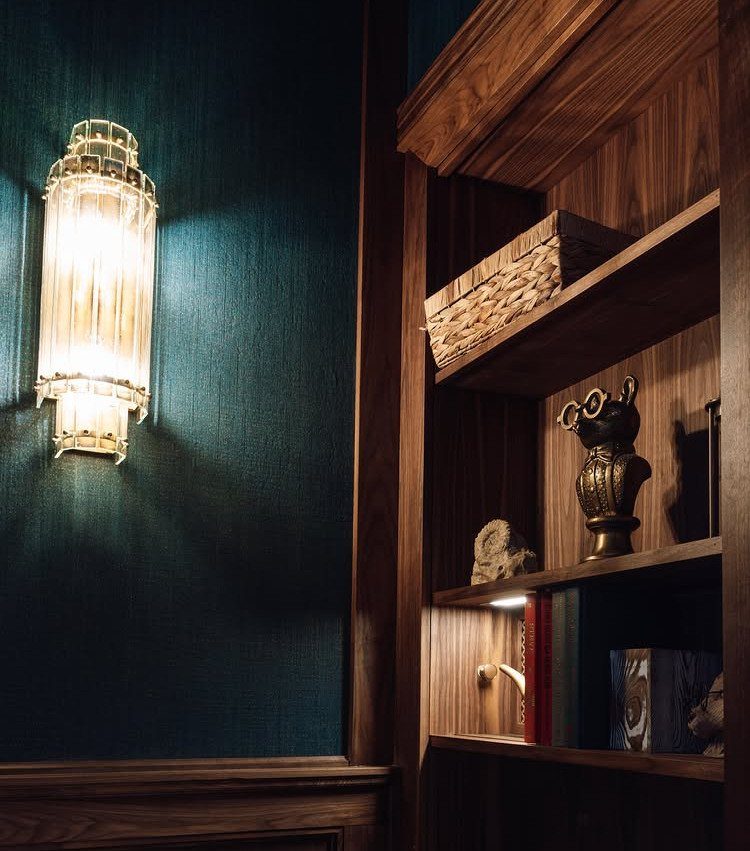
Dark blue walls swallow light, so a glowing sconce and a lit bookshelf do real work here. LED strips tucked along the shelf edges wash the books and objects in a soft glow, and they stick on in minutes.
Choose a warm white strip for a bookshelf like this one; color-changing strips suit gaming corners better.
Hide the wire behind the frame and plug the sconce into a switched outlet. Start with a single strip before buying more.
7. Sound System
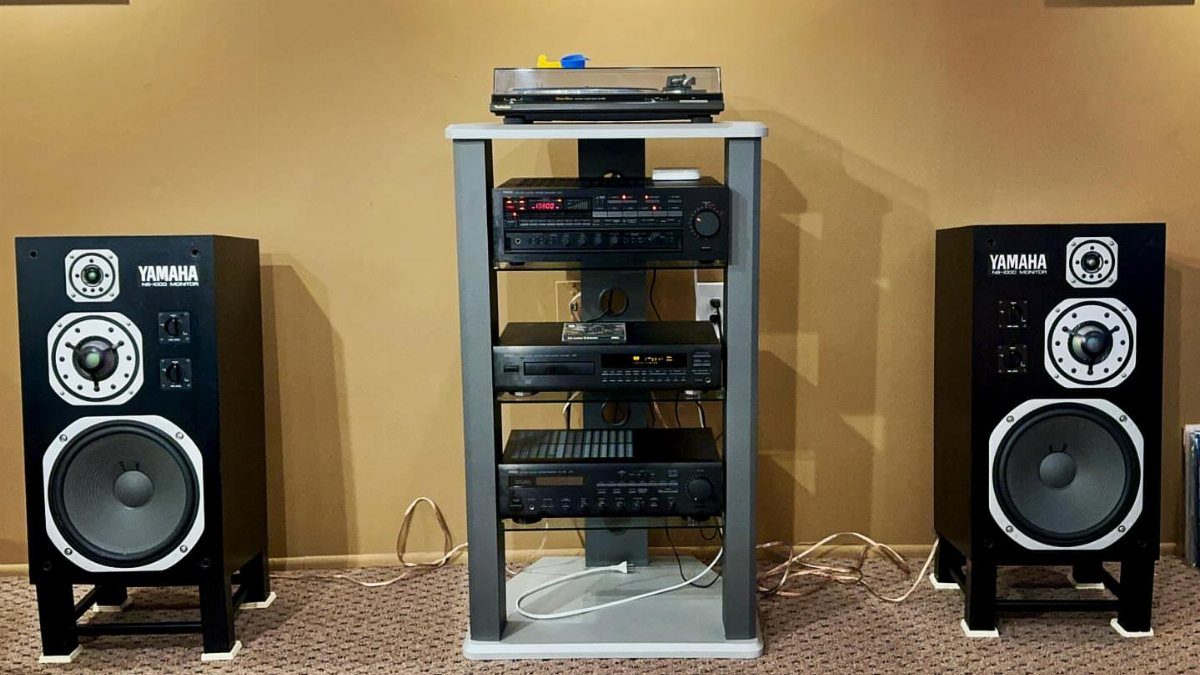
Floor-standing speakers beside a turntable rack give a room music that fills it, which a soundbar rarely does. Set the speakers a few feet apart with the tweeters near ear height when you sit.
Keep the turntable on the sturdiest shelf, away from the speakers, so footsteps and bass don’t skip the record.
Carpet helps here, since it softens echo.
8. Ambient and Task Lighting
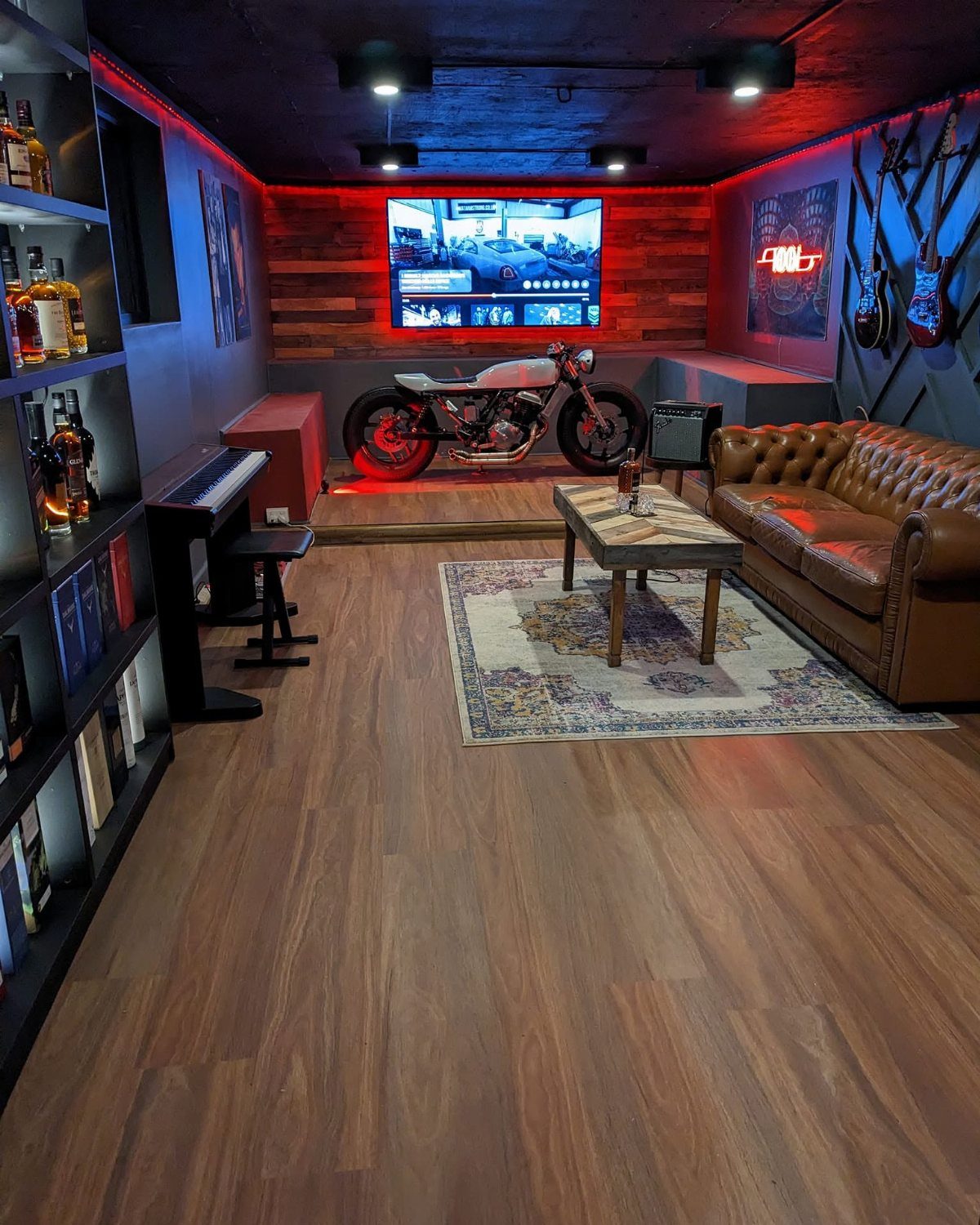
Red LED light along a wood-paneled wall makes a room feel like a lounge, and it costs little.
Use it as the soft background layer, then add a lamp near the sofa so reading or playing a guitar doesn’t happen in the dark.
2 layers are enough: ambient for mood, task for the spots where you actually do something. Put the task light on its own switch or plug so you can leave the red glow on alone for a movie.
9. Personal Movie Projector
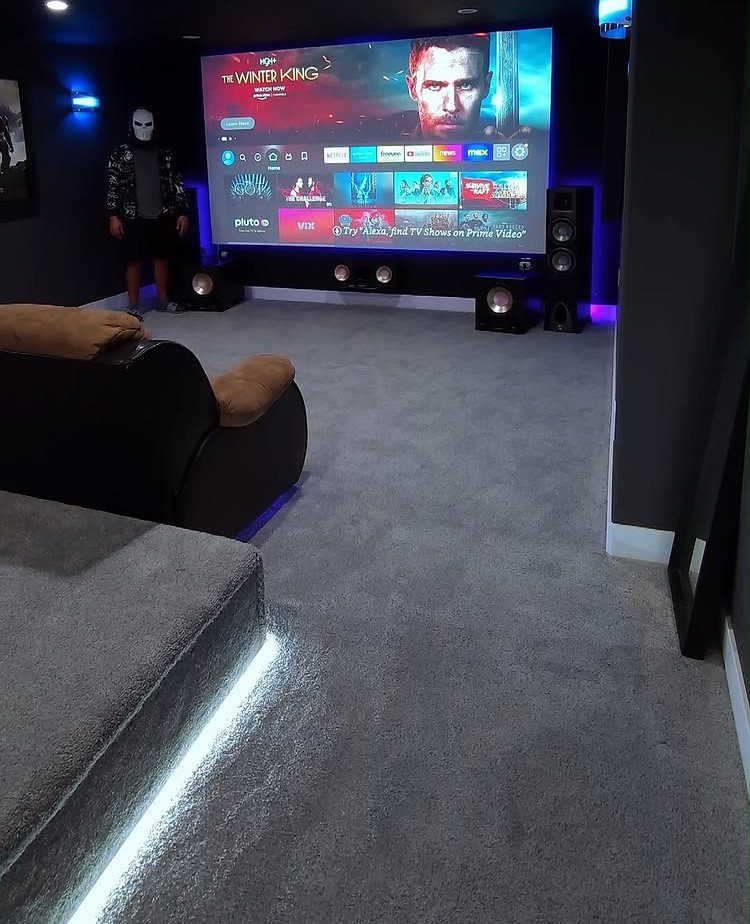
A projector and a screen on one wall give you a picture far larger than most TVs, for a lot less than a big panel.
Blue accent lighting along the floor or ceiling keeps the room from going pitch black and makes the screen pop.
Pick a room you can darken, since a projector washes out under any daylight.
Gray carpet, as here, also absorbs stray light and sound.
10. Mini Fridge
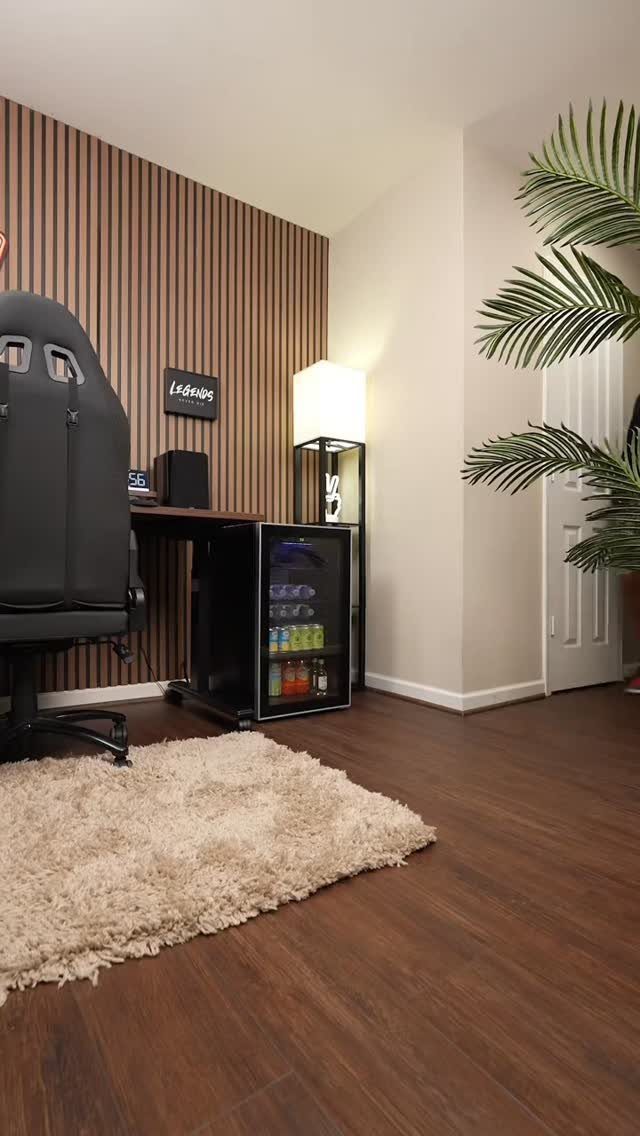
A mini fridge tucked under a desk keeps drinks a few steps from your chair, so you stop walking upstairs mid-game.
Measure the opening for height, width and door swing before buying.
Leave an inch or two of air around the back and sides so it doesn’t overheat. Stock the door shelves with cans and keep the bottom for bottles.
For a rental, this is the cheapest bar you can add.
11. Bar Area
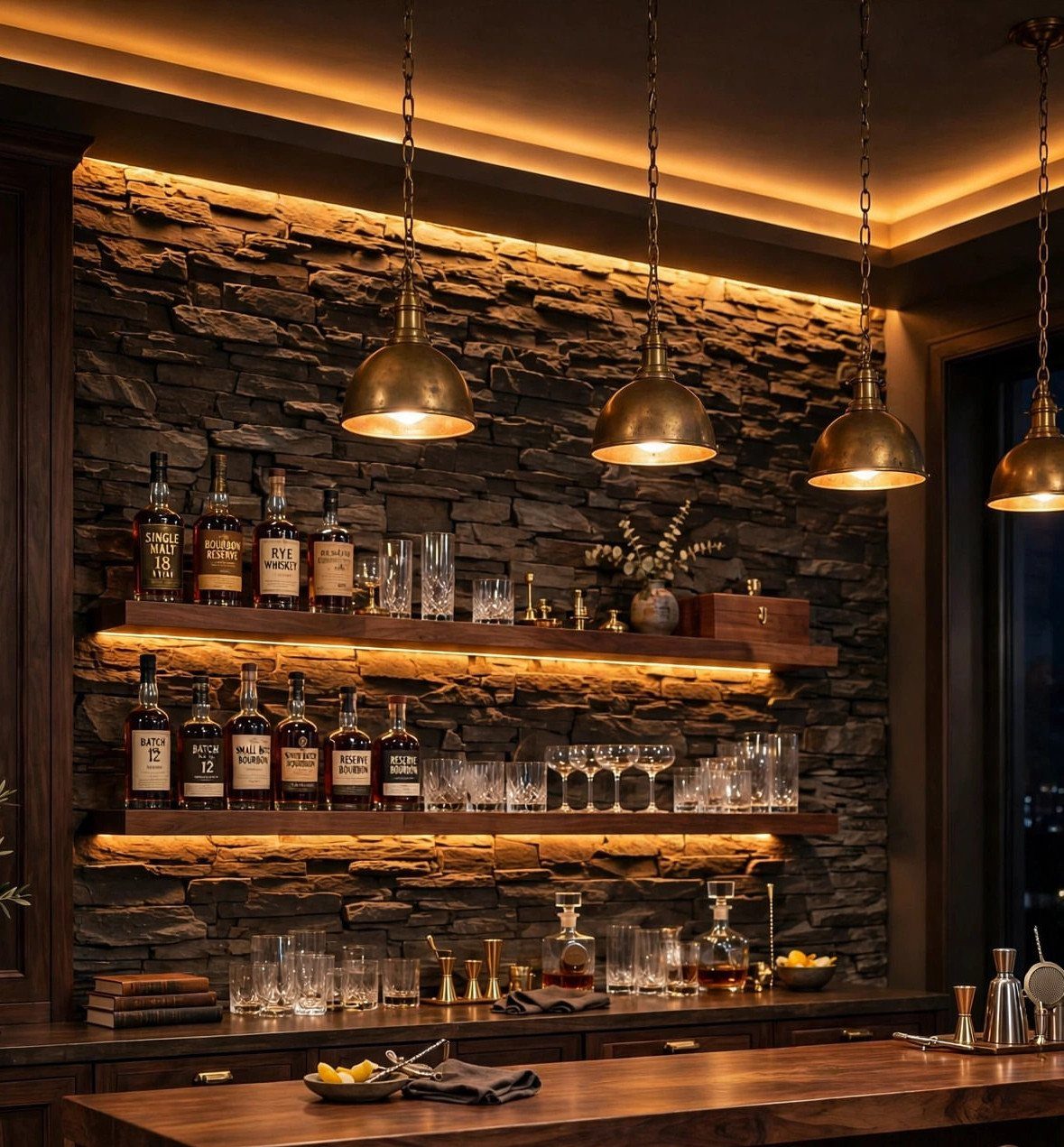
Hang the pendants low enough to define the bar but high enough to see across.
Keep the counter clear except for the tools you use. I’d rather see a few bottles you actually drink than a crowded shelf for show.
Stone veneer panels suit a weekend DIY better than real stone.
12. Bookcase Hidden Door
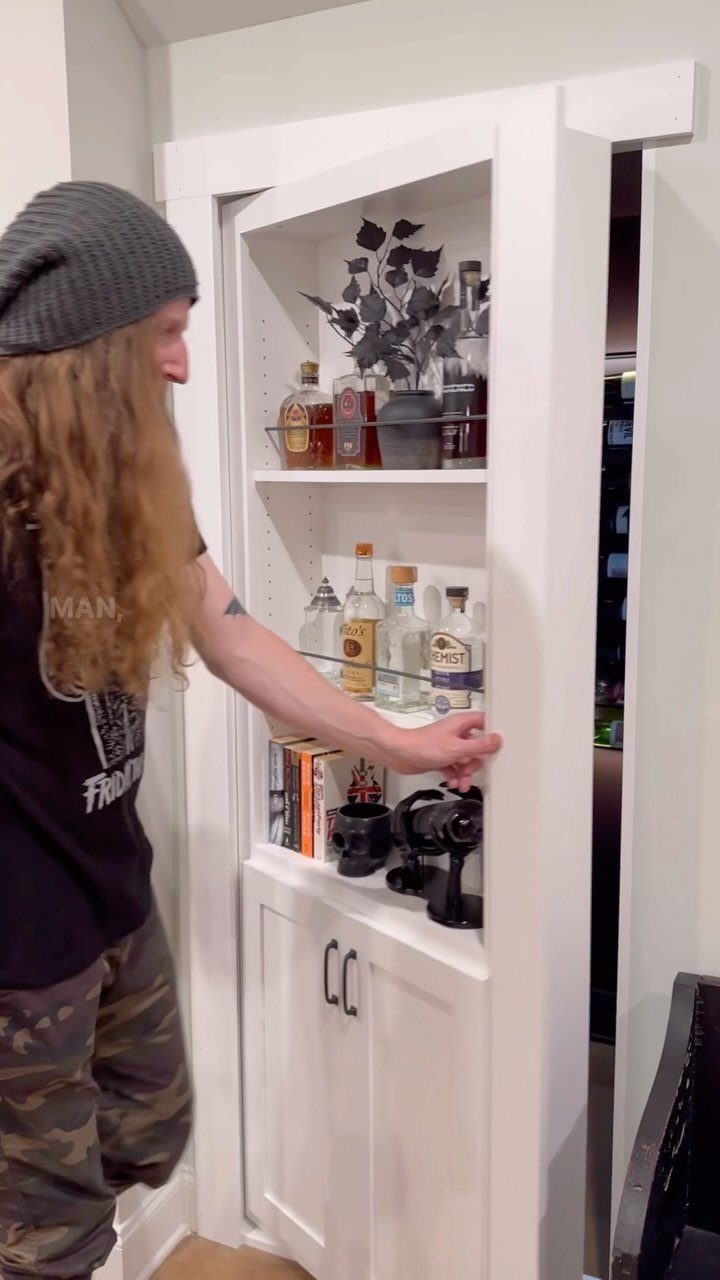
A bookcase on hinges swings open to a hidden room, and filling it with bottles and decor means the secret doubles as a bar. White paint keeps it looking like ordinary built-in shelving when closed.
The shelves must be strong enough to carry their load on the hinges, so use heavy-duty hinges and anchor into studs.
Keep the heaviest bottles on the lowest shelves. A kit costs more than a basic bookcase, but it’s the one trick in this list that surprises guests.
13. Soundproofing Panels
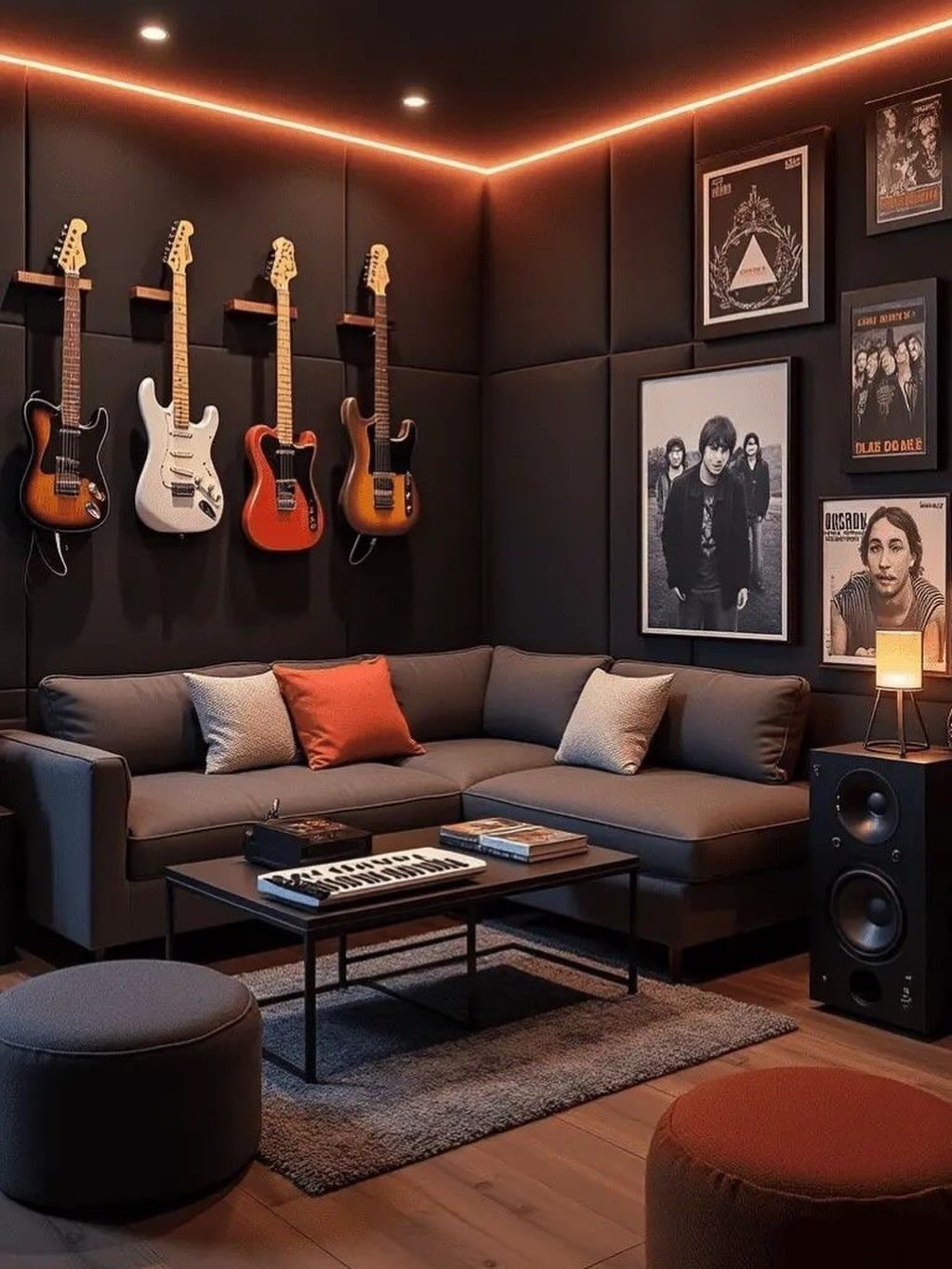
Black panels on the walls do 2 jobs in a music room: they quiet the echo and they match a dark color scheme.
Foam or fabric-wrapped panels both work, and the fabric-wrapped kind looks neater next to guitars and framed posters.
Cover the walls nearest the loudest instrument first, then add more as you hear the difference.
Panels soften reflections inside the room, but they won’t stop a bass line from reaching the neighbors. Stick-on or screw-up mounting both suit a rental if you use the lightest fasteners.
14. Console Gaming Setup
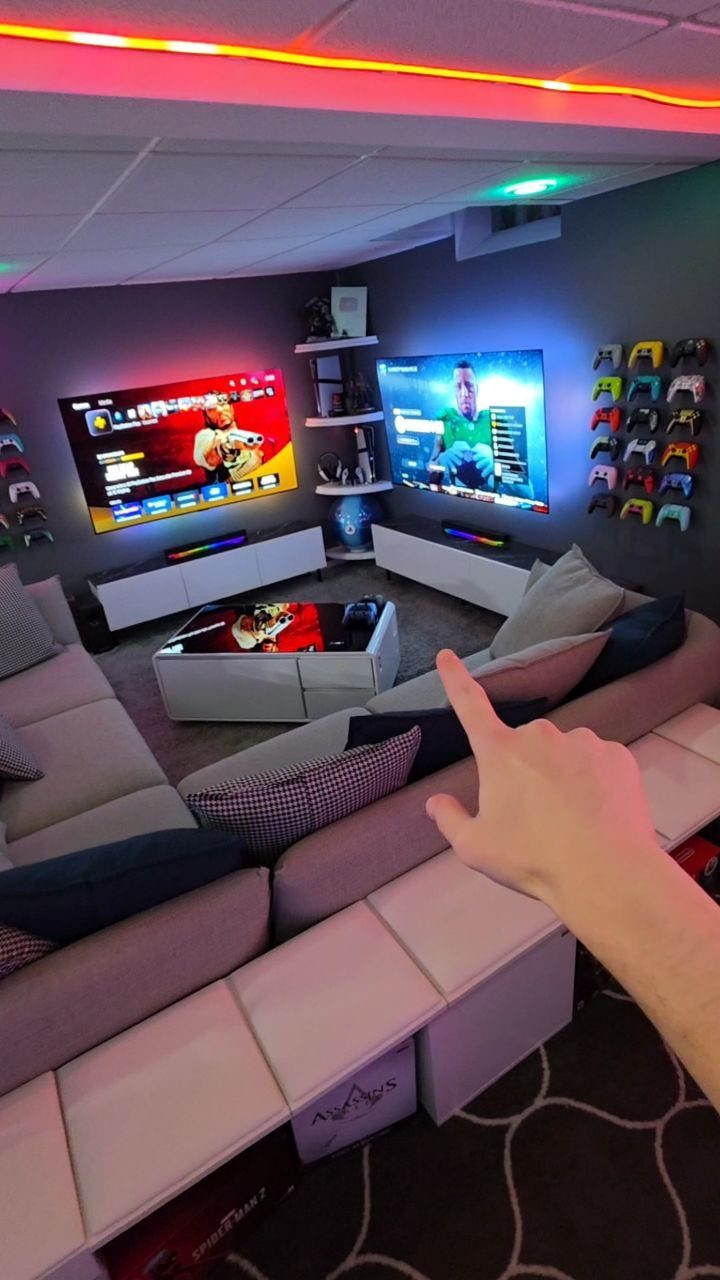
2 big screens turn a sectional into a split-screen arena, so players can sit shoulder to shoulder and keep their own view. Aim the sofa at the middle of the pair, not at one screen.
A controller wall is the part I’d copy first.
Mount a row of hooks or small shelves, and every pad has a home instead of ending up between the cushions. It also doubles as decor.
A low coffee table keeps sightlines clear between the sofa and the screen.
15. Dartboard
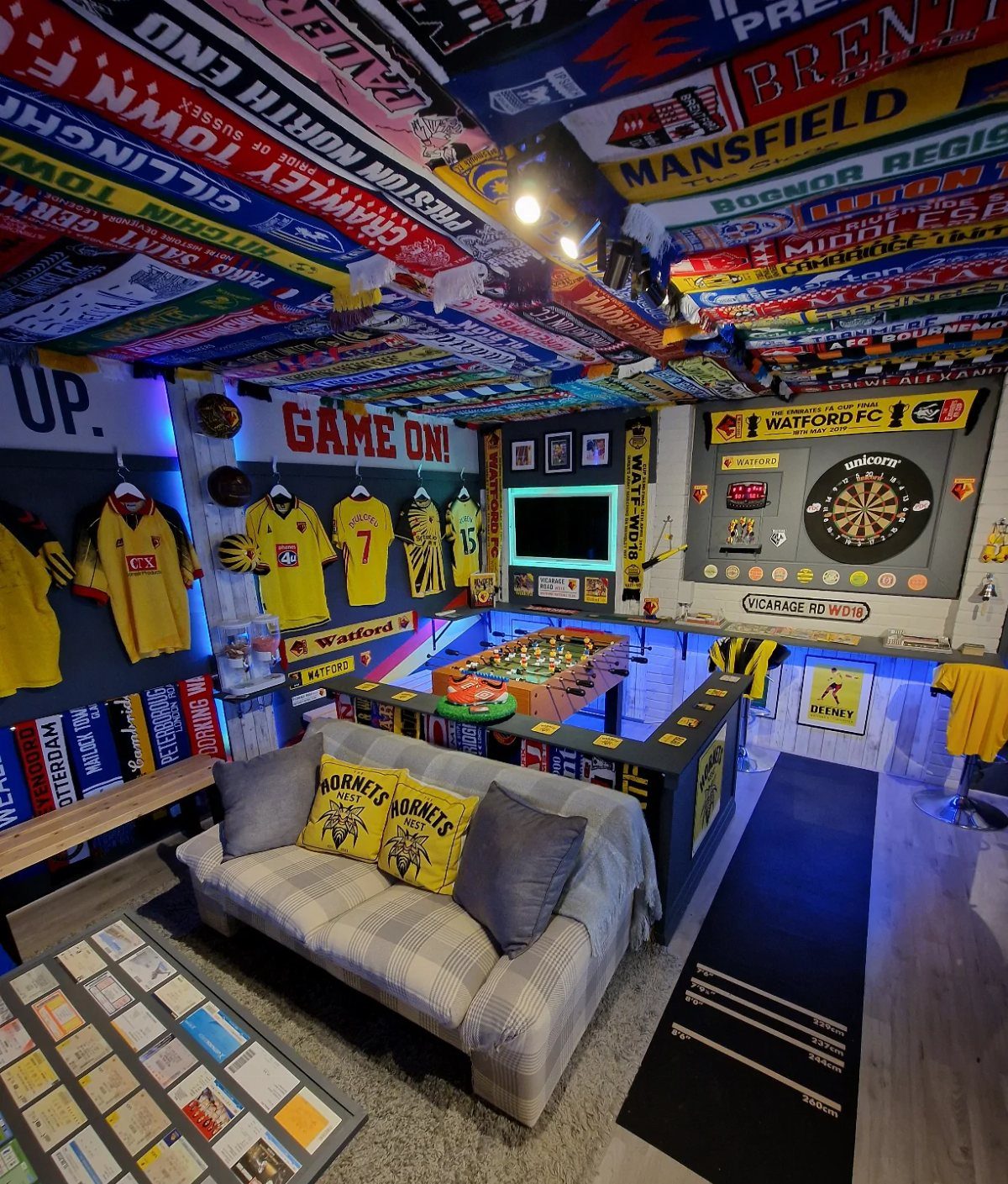
A dartboard needs very little: a wall, a throwing line and a clear lane. In a crowded room like this one, with a foosball table nearby, keep the lane free so nobody walks into a throw.
Hang the board on a section of wall you don’t mind marking, or mount it inside a backboard to catch strays. Steel-tip darts chew up drywall, so a soft-tip board is the safer pick in a rental.
A dartboard costs less than almost any other game you could install.
16. Outdoor Man Cave
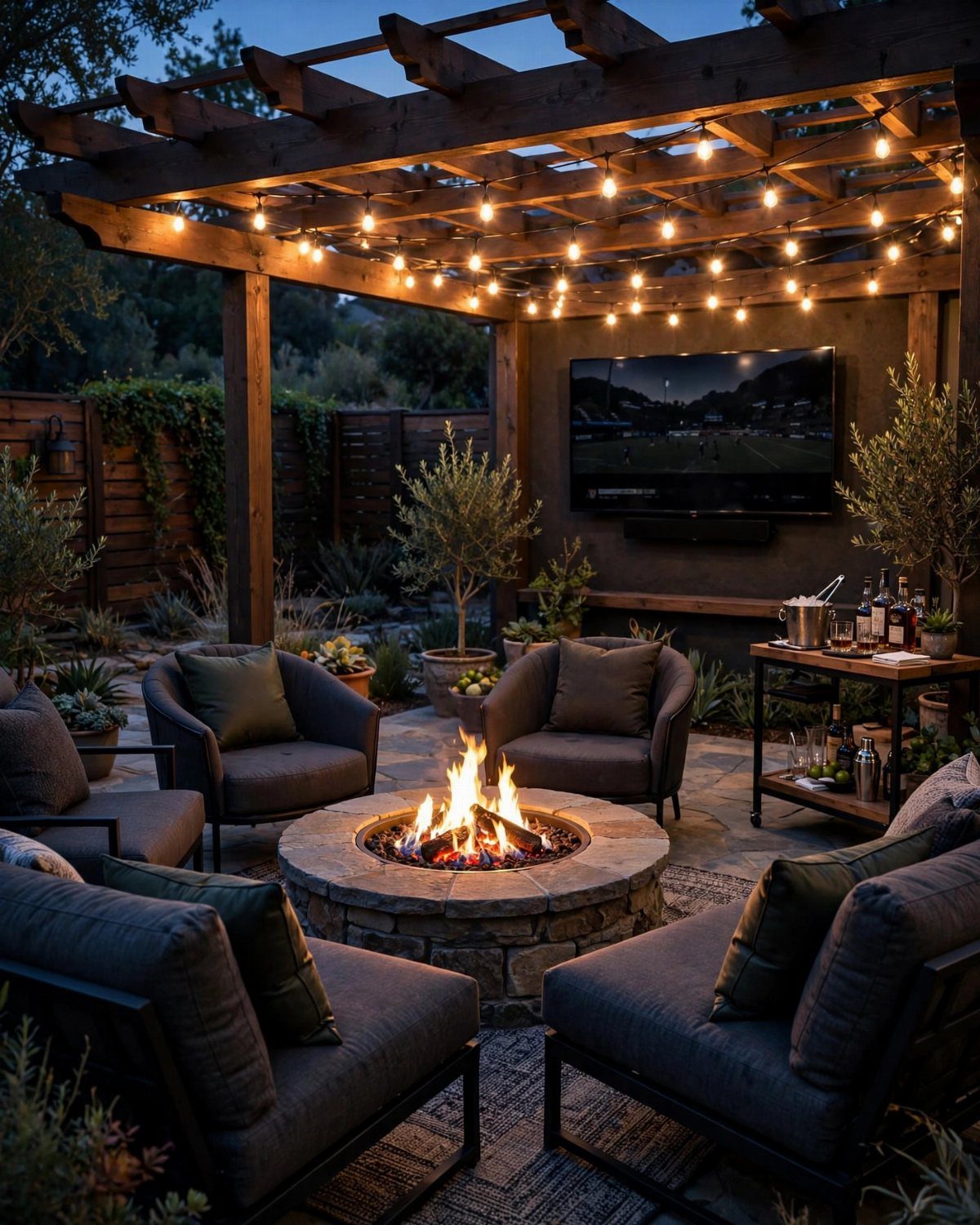
A pergola, string lights and a fire pit make a patio feel like a room, and that’s the version I’d build first. Start with the roof overhead, since it gives the space a ceiling and a place to hang lights.
Pick weatherproof furniture, such as sturdy outdoor armchairs, and keep a cover for the TV if it isn’t rated for outdoor use. Put the seating a safe distance from the fire pit.
Run outdoor-rated cords only, and plan the outlet before the layout.
17. Kegerator
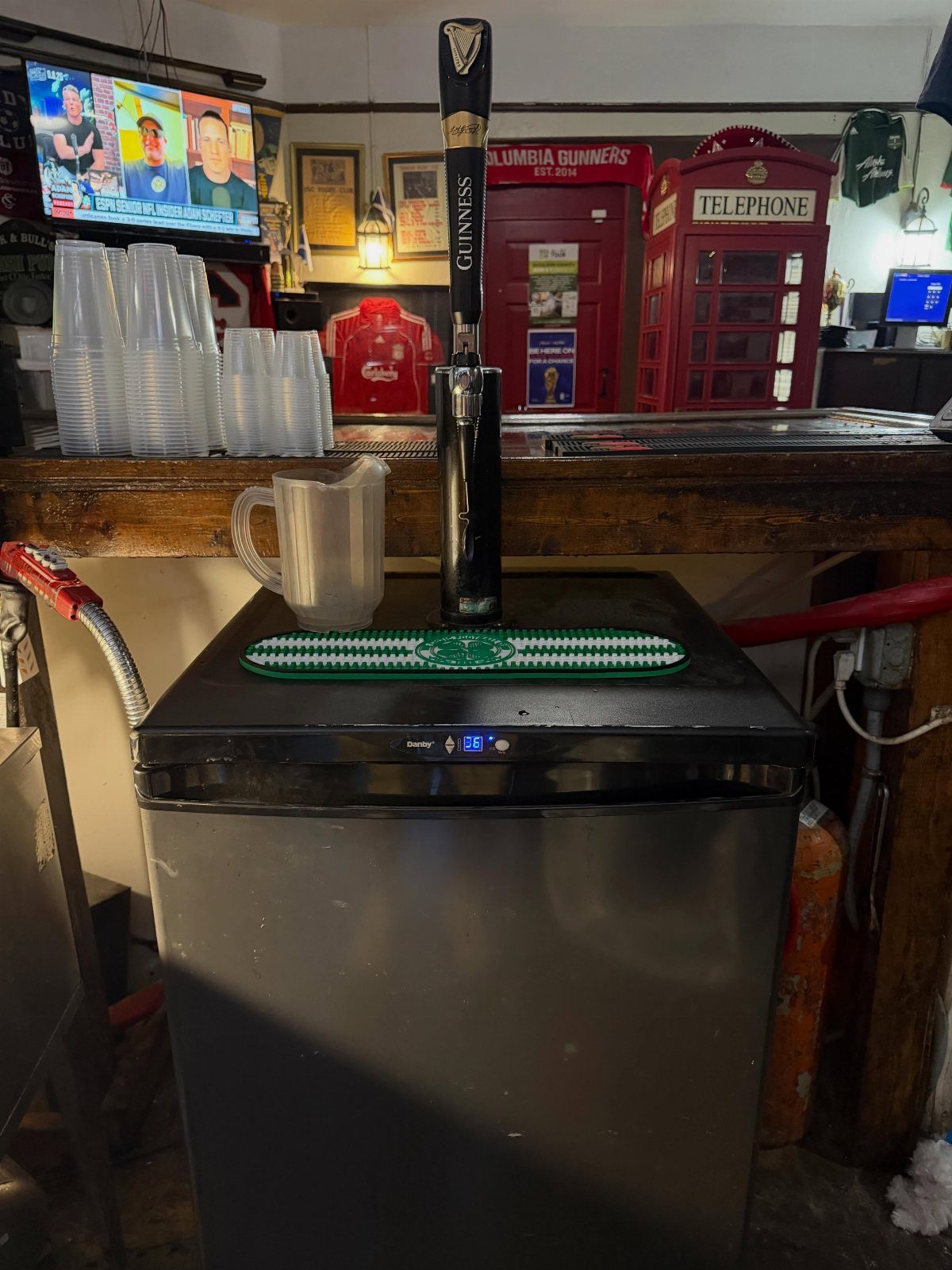
A kegerator puts draft beer a few steps from your seat without the run to the kitchen. Draft beer pours fresh and cuts down on cans and bottles.
Decide where the keg will sit before you buy, because the unit needs room for the CO2 tank and the door to open.
It costs more than a mini fridge, so I’d choose it only if you drink draft regularly.
18. DIY Thunder Cloud Ceiling
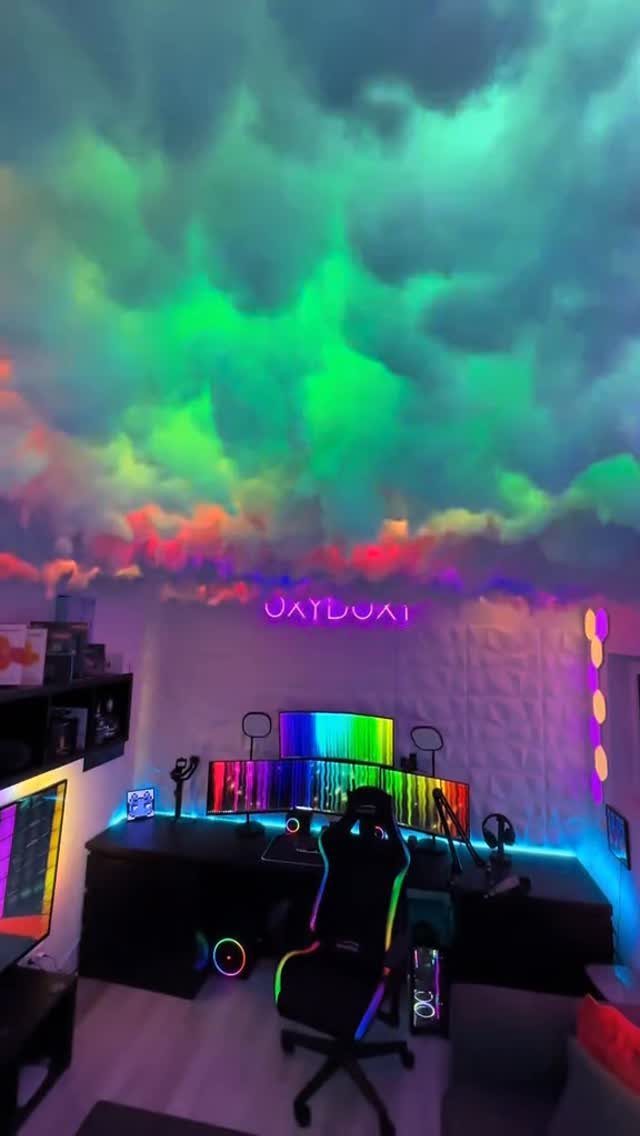
A cloud ceiling with colored LEDs gives a gaming room its own weather, and it works best above a desk where the lights spill onto your screens.
The usual DIY route is polyester fiber fill pulled apart and attached to the ceiling, with LED strips placed inside it.
Keep the clouds light so they stay up, and fix the LEDs before you add the fill. Pick a color setting that doesn’t glare on your monitors.
Cheap to do, but the fill is a pain to dust.
19. Hobby Display Cases
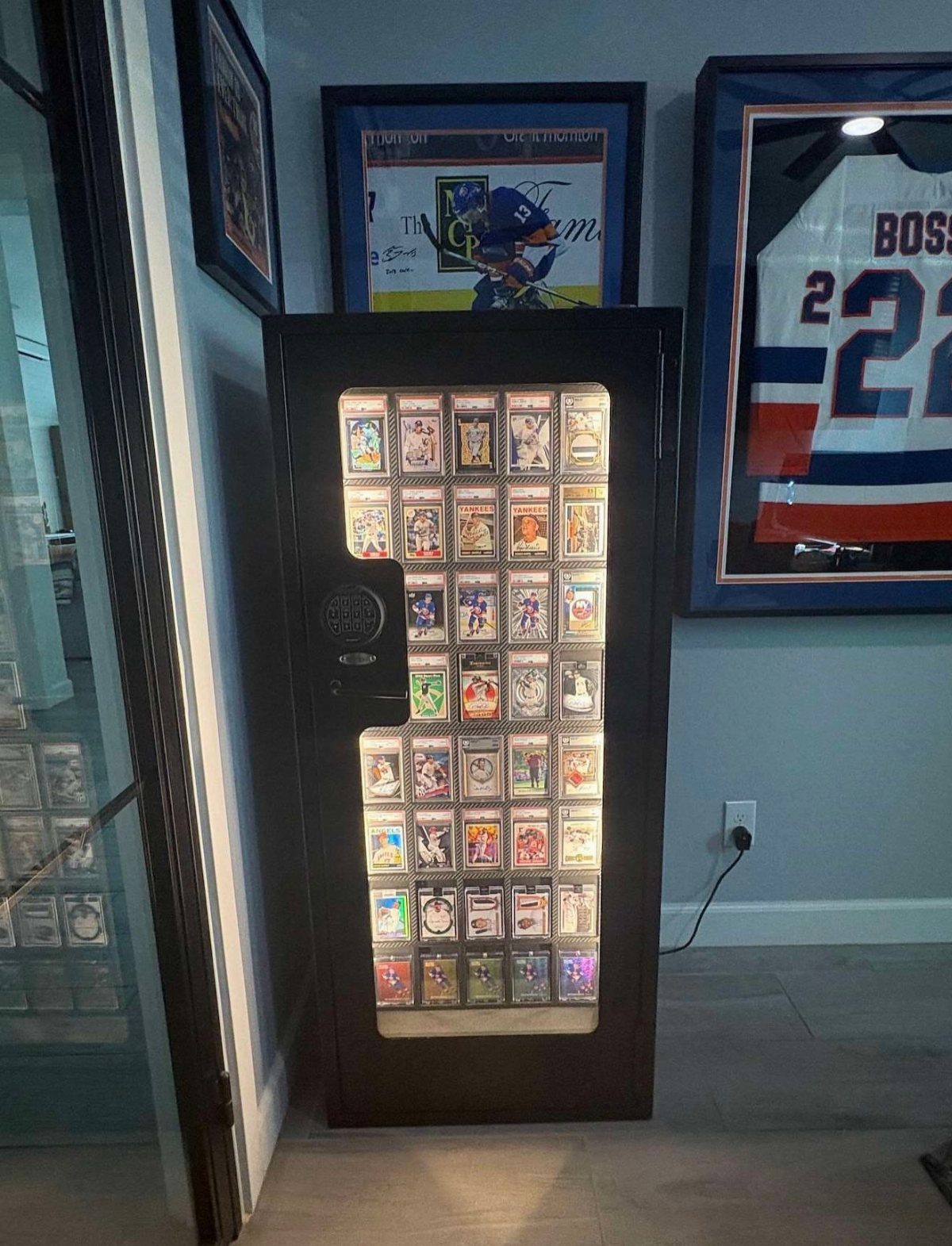
A lit, safe-style case turns a stack of graded cards into the focal point of a wall, and the black finish keeps it in step with framed memorabilia hanging nearby.
Glass-fronted cases protect a collection from dust and fingers while still letting you see every slab.
Pick the size from what you own now, then leave a few empty slots for the next buy. Mount or set the case on a wall where you spend time, so it gets looked at rather than hidden.
Built-in lighting does the showing for you, so I’d choose a case that has it over adding lamps later.
Choosing a Theme
Pick the theme before you buy a single thing. Sports bar, media room, lounge: each one points to different furniture, and a decision made early stops you from collecting pieces that don’t belong together.
Once the theme is set, personal touches do the finishing.
Sports memorabilia, vintage signs, gaming gear, photos and artwork all work, as long as they match your own interests and the style of the room. A space that looks like you is the one you’ll actually use.
Keep it to one theme. A room that tries to be a sports bar, a lounge and a gaming den at once usually ends up reading as clutter.
A traditional "man cave" is usually imagined to have a lot of leather seating, maybe some sports team memorabilia, or a wet bar with multiple bottles of fine whiskey sitting in it.
Lighting and Ambiance
Good lighting makes a small room feel larger and more inviting, and it’s the cheapest way to change a space you can’t expand.
Together they give the room a cozy feel without one harsh overhead fixture doing all the work.
Wall sconces and LED strips add light without taking up floor space, which matters in a tight basement. I’d start with a floor lamp, since it needs no installation and moves with you if you rearrange.
Planning Your Space
I start with the dimensions, measured wall to wall. Those numbers let you plan a layout that actually fits instead of improvising around furniture you already bought.
Seating comes first in the plan. I like mixing a sectional with a recliner or two and maybe one oversized bean bag, so you can sit alone on a weeknight or pack the room when friends show up.
Look for seating with built-in cup holders and USB charging if you want to skip the side table and keep drinks and phones within reach.
Mark the footprint of each piece on the floor with painter’s tape, then walk around it. If the paths feel tight, that’s the piece to downsize.
Frequently Asked Questions
What colors are best for decorating a man cave?
Dark, muted shades like charcoal gray, navy blue and deep green make a cozy, relaxing room. For more energy, try bold red or orange, and balance them with neutral tones so the space doesn’t feel overwhelming.
What are some cool things to put in a man cave?
Arcade games, a bar area and a good sound system top my list. Bar-top arcade machines fit on a counter and run around half the cost of a full cabinet, which needs as much floor space as a side-by-side fridge.
Framed jerseys, old beer signs, or controller collections work when they actually reflect what you care about, not just what man caves are supposed to look like.





