Ceiling height decides which of these ideas is yours: a low basement leans toward White Painted Exposed Joists or Natural Wood Joists, while a taller one can carry a Painted Black Ceiling, a Coffered Ceiling or a Dark Grey Exposed Ceiling.
Black, dark grey and raw concrete all hide the wiring and ductwork, but black makes a low room feel lower, so I’d save the Painted Black Ceiling and Dark Grey Exposed Ceiling for basements with some height.
The ideas run from a coat of spray paint over bare joists to planks hung over several weekends, and one coffered grid was built for less than $100.
1. Painted Black Ceiling
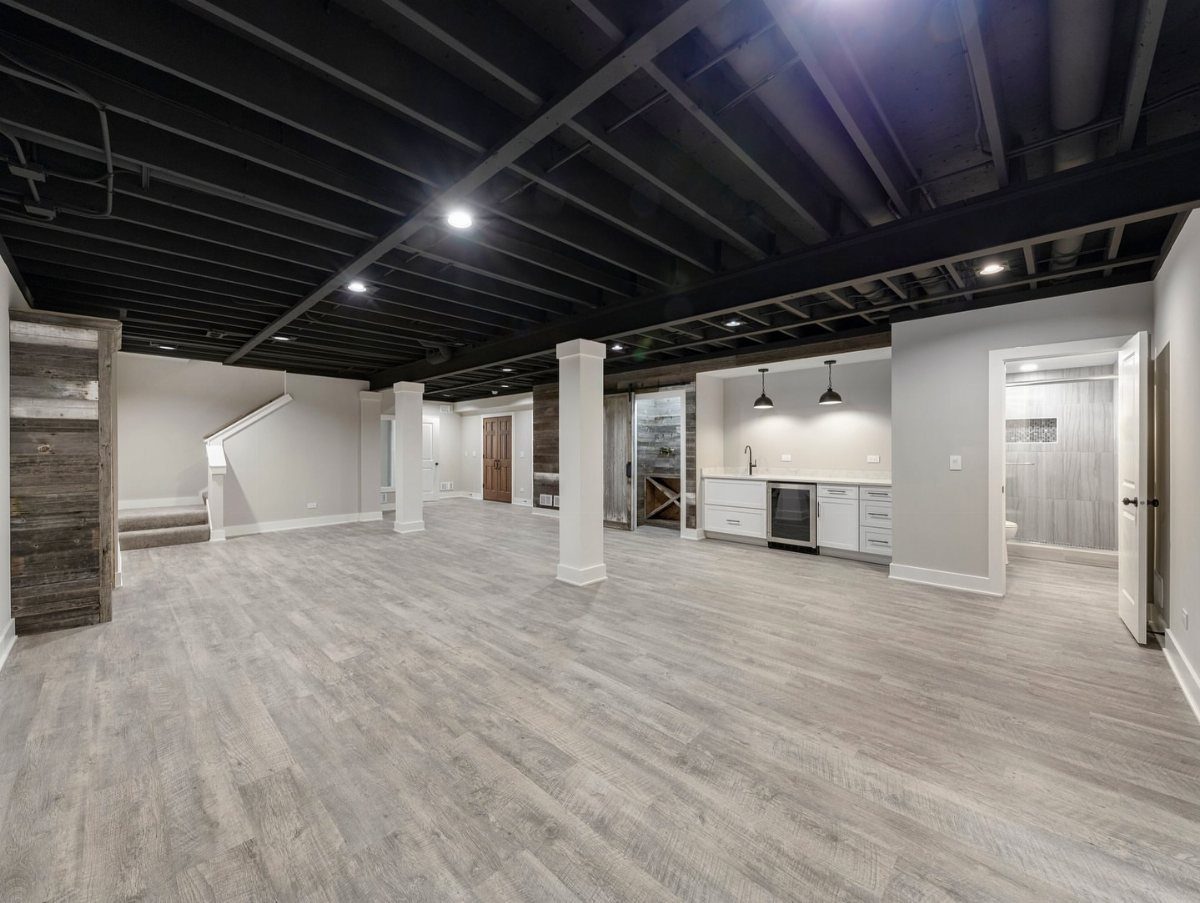
Black paint costs less than any other method for making joists, pipes and wiring disappear. Dark surfaces recede, so the eye stops reading the mess and sees a ceiling.
Spraying gives the most even coat over all those odd shapes.
A roller leaves misses on the backs of pipes. Mask the walls, columns and lights first.
Black also pairs well with recessed lighting, since small fixtures don’t fight the dark. Expect the room to feel lower, so I’d save it for basements with decent height.
2. Wooden Plank Ceiling
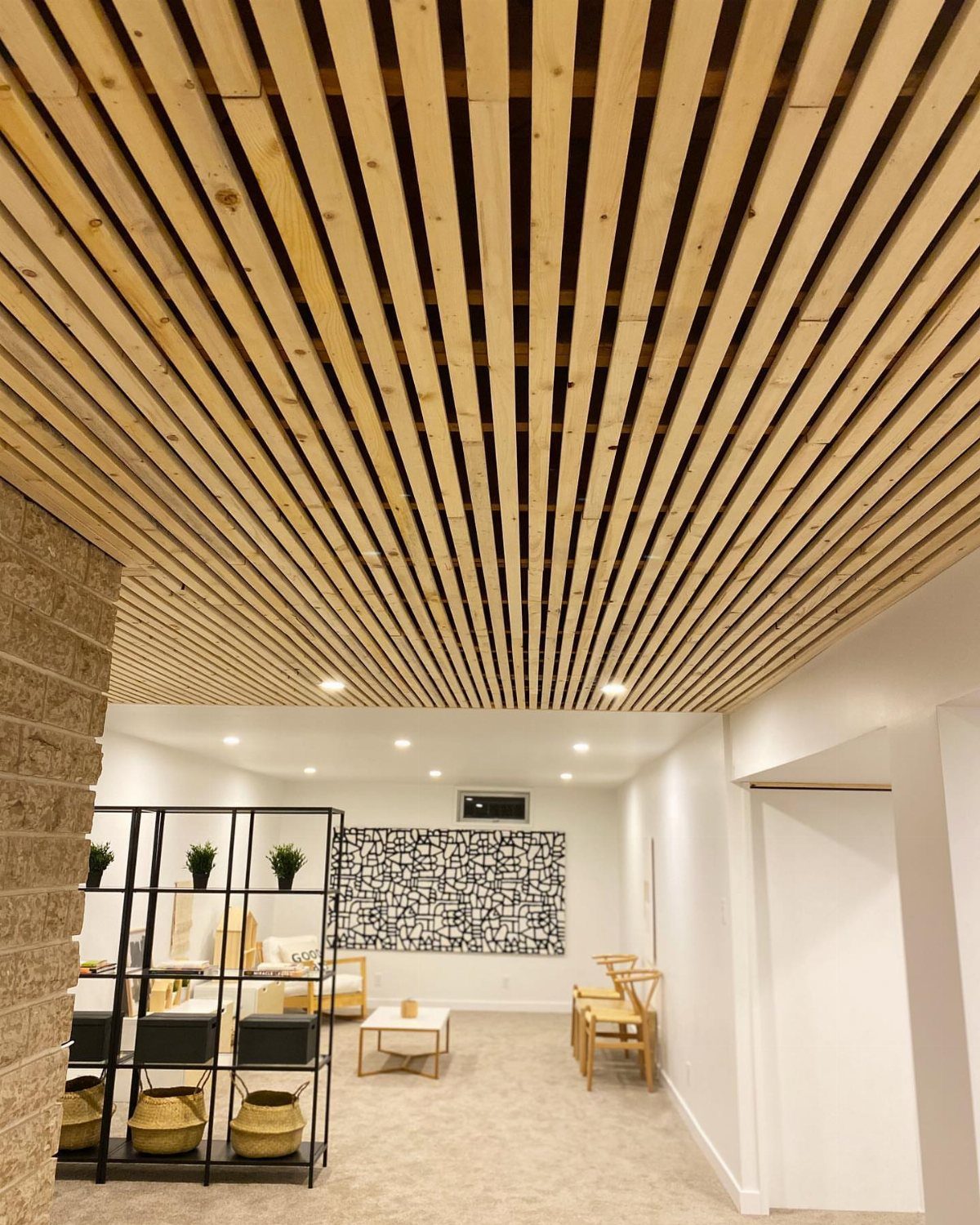
Wood planks turn a pipe-filled ceiling into a warm, farmhouse-style surface, and a light finish keeps the room from feeling boxed in. In a basement with minimal furniture, a pale ceiling like this does the decorating for you.
Planks cost more than paint and take longer to hang, so this is a project for a few weekends. Measure the clearance first, because the planks sit below the joists and every inch of height counts down here.
Leave a way to reach shutoff valves and junction boxes.
3. Coffered Ceiling
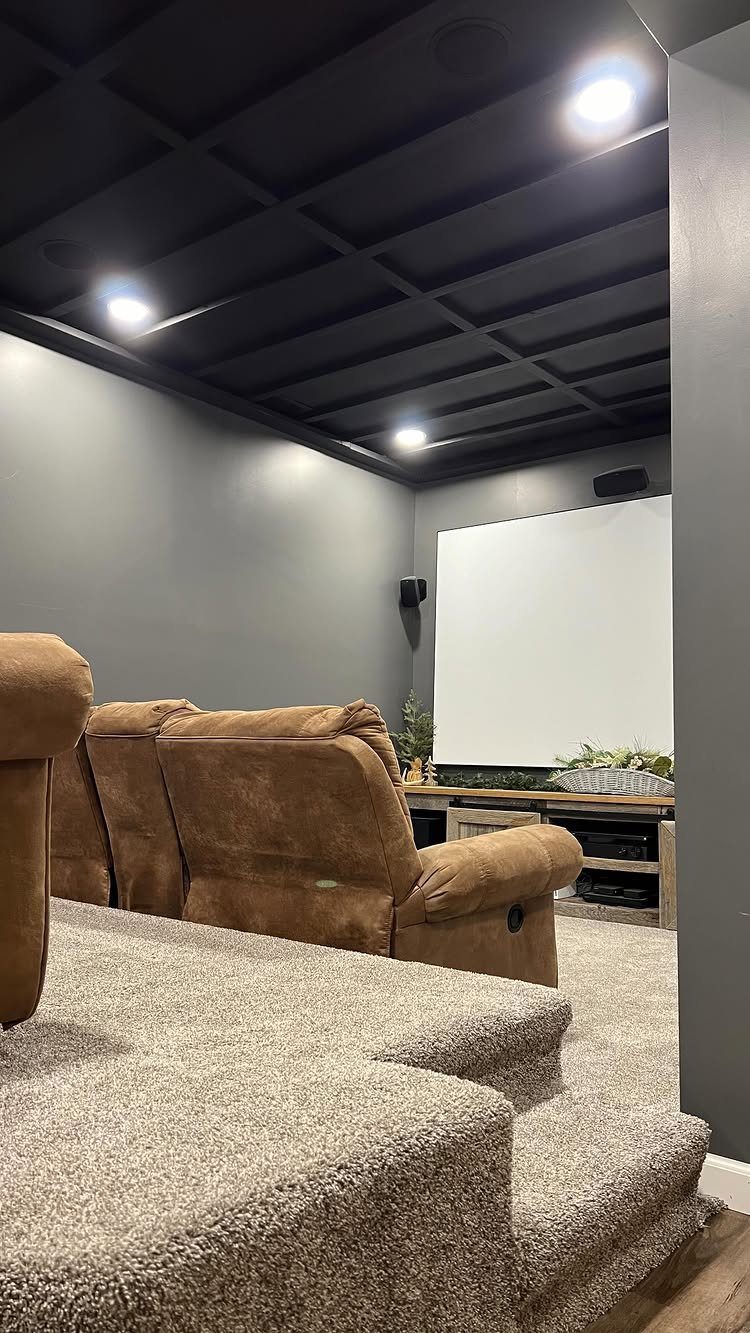
A coffered ceiling gets its depth from recessed squares, and one maker said theirs cost less than $100 for the entire ceiling. That figure makes it a real option for a budget basement rather than a luxury finish.
Painting the whole grid black, as in a theater, hides the seams and makes the recesses read as shadow. I prefer that over contrasting colors, which can look busy.
Plan the grid around your lights before building anything.
4. White Painted Exposed Joists
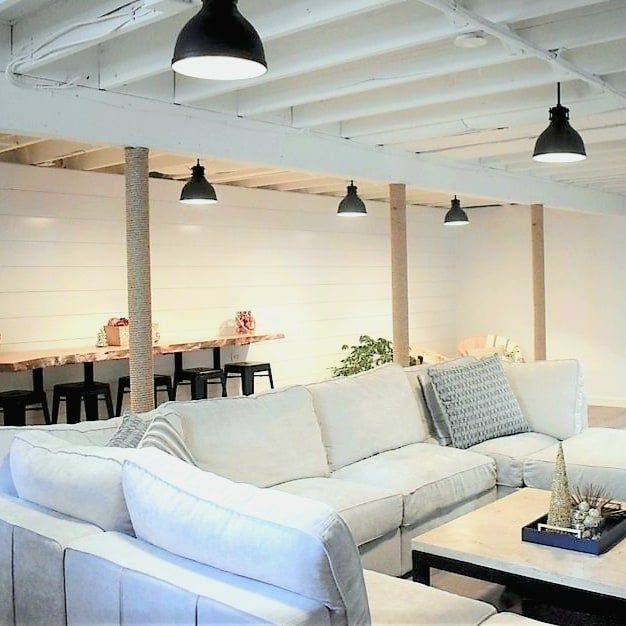
White paint across joists, ducts and columns gives you a bright, clean ceiling without hiding the structure. It lifts a basement more than any dark option, which matters when light is scarce.
Prime first, since bare wood and metal soak up paint. Spraying beats rolling, and I’d plan on 2 coats to cover dust-dulled surfaces.
Black pendants add contrast against all that white. White shows every cobweb and stain, so clean the joists well before painting.
5. Natural Wood Joists
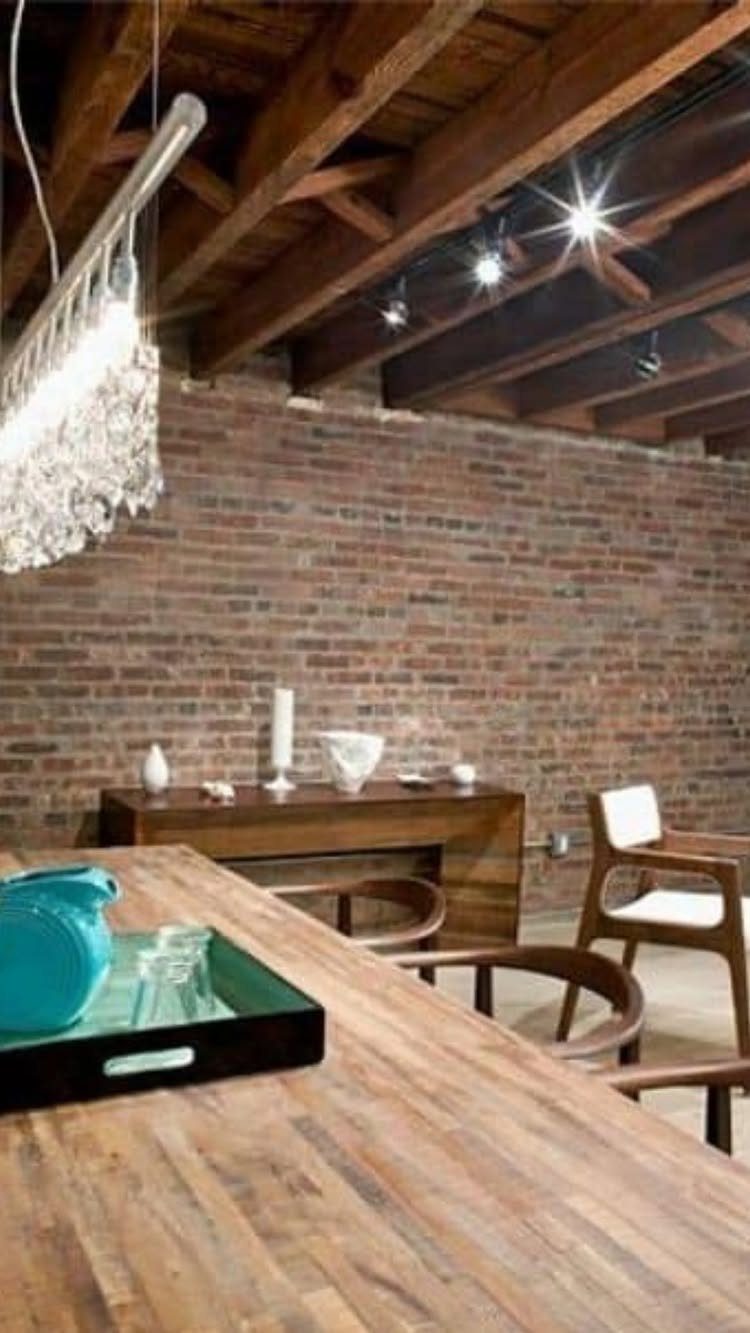
Natural wood joists are the lowest-effort ceiling here: clean them, leave them, and the wood supplies the warmth. They look best with brick, as above, or any rough, honest material nearby.
Vacuum and wipe the joists, then sand any stained spots. A clear sealer deepens the grain and makes future dusting easier.
Track lighting suits this ceiling because it clips on without hiding the beams. Choose it over recessed cans, which need a drop ceiling or cutting into the wood.
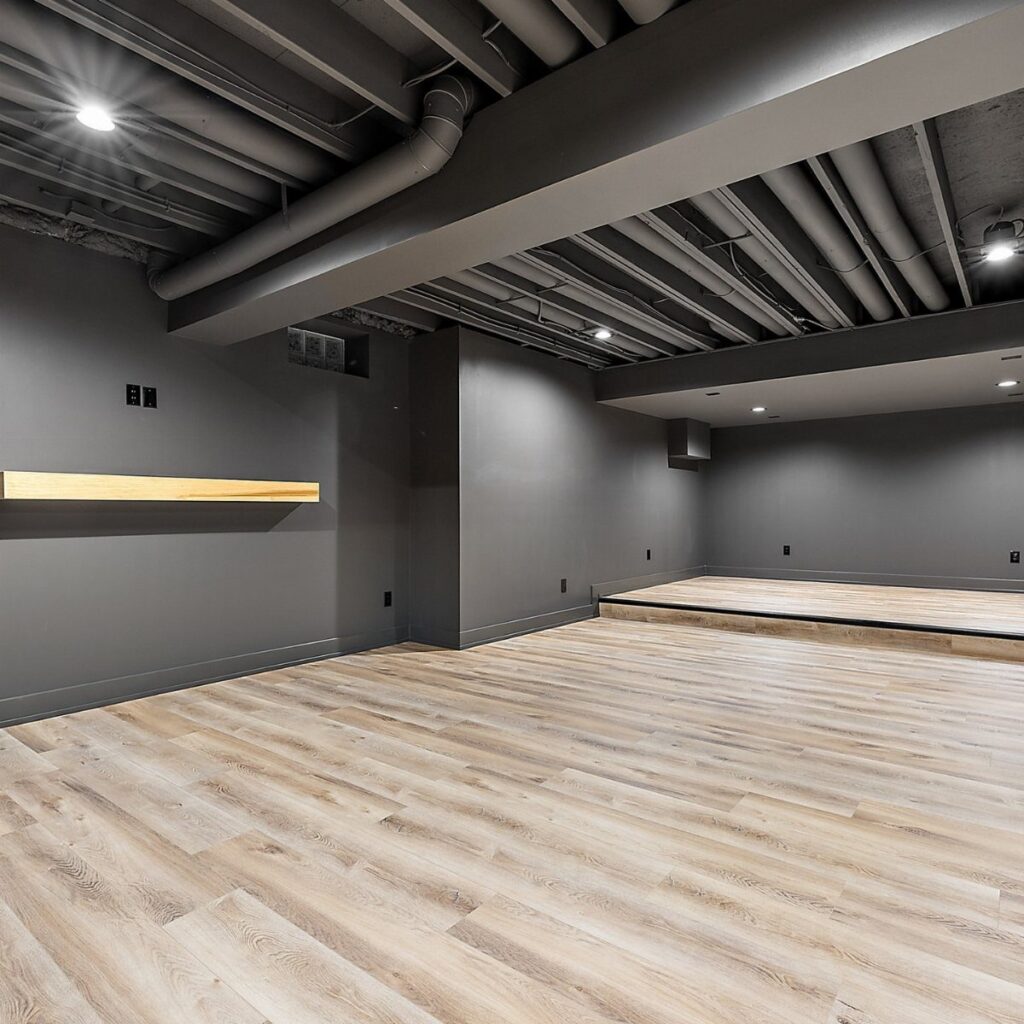
6. Dark Grey Exposed Ceiling
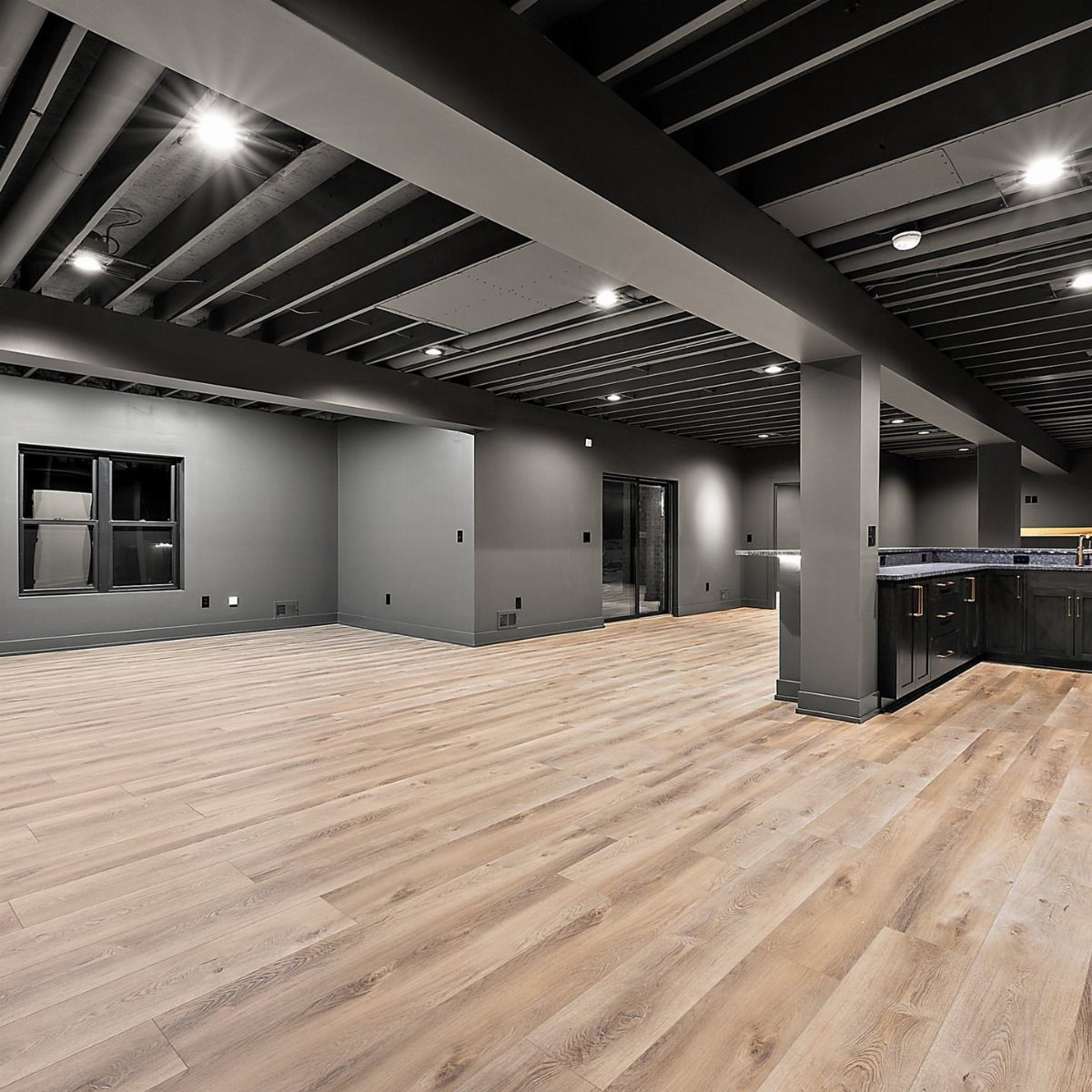
Dark charcoal grey is softer than black and hides joists, ductwork and pipes just as well. I’d choose it over black when the walls are grey too, because the room reads as one tone.
Paint everything the same color, ducts included, so nothing stands out. A sprayer saves hours, and a flat finish hides flaws best.
Recessed lighting works well with charcoal, and the light wood floor keeps the room from feeling heavy.
7. Raw Concrete Ceiling
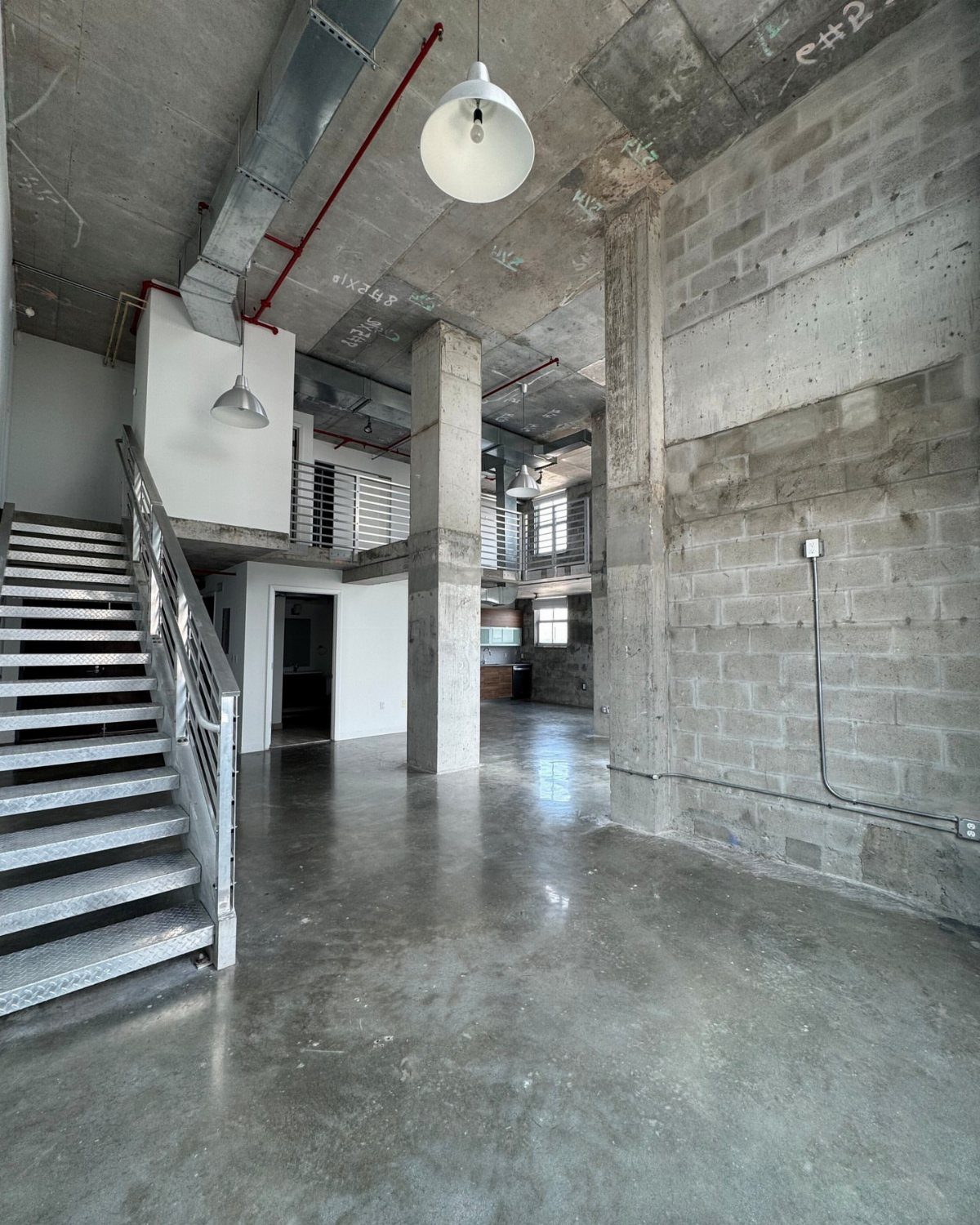
Bare concrete overhead is the industrial route, and it needs the least from you: the slab, the conduit and the ducts stay as they are, and a polished concrete floor below gives the room one consistent material.
If your basement already has a clean slab, skip the cover-up. Sweep off dust and cobwebs, vacuum the surface, and wipe down the metal runs so they read as deliberate rather than neglected.
Concrete is a heavy, cool look with no warmth of its own. Wood furniture or a rug underneath keeps the room from reading as a parking garage.
Pros and Cons of Exposed Ceilings
An open ceiling makes a basement feel taller and keeps every pipe, valve and wire within reach, so repairs don’t mean cutting into drywall. Those are real gains, and they cost nothing extra.
The downside is heat. With no insulation between the joists, painting changes how the ceiling looks but not how it performs.
Coziness is the other cost. Left patchy, an open ceiling reads industrial, and one uniform color across joists, ducts and pipes pulls the room together and softens it.
If the space will be used in winter, plan for a rug, a space heater you trust, or a warmer color overhead.
Painting Techniques for Ceilings
Prep decides how the paint looks. Clear cobwebs off the joists, then tuck and tape down loose cables and cords so nothing dangles into the spray.
Cover the floor, walls and anything staying put with plastic tarp and tape. Overspray travels farther than you expect.
Prime first with a high-hide primer that covers dark joists and ducts in one pass, then roll on a scrubbable ceiling paint over it.
Flat finishes hide flaws. Glossier sheens catch light and point out every dent, seam and rough patch, so I stay with flat or matte on a ceiling this uneven.
Lighting Considerations
Plan lighting in layers instead of trusting one fixture. A single flush mount leaves corners dim, and an open ceiling gives you plenty of places to attach something else.
Track lighting is the easy first layer because you can aim the heads at a seating area, a bar or a workout corner.
Wire each zone to its own switch or dimmer, so you can turn the mood down at the couch without lighting up the far corner by the workbench.
Recessed fixtures work best when you have enough clearance above the joists to recess the housing, though surface-mount cans are the faster choice if you’re keeping everything exposed.
One option is a hybrid: leave the beams open over seating and add a dropped tile grid elsewhere. The grid gives you recessed lights, sound control and panels that lift out for access.





