Square footage decides how much separation you can build, so an open loft can handle a Fluted Glass Room Divider while a small room does better with Wall-Mounted Desks and Concealed Gym Equipment Storage.
In a tight room, a fold-down desk and a wall-mounted rack keep the floor open, while a big space can let distance and a rug do the dividing.
1. Distinct Work and Workout Zones
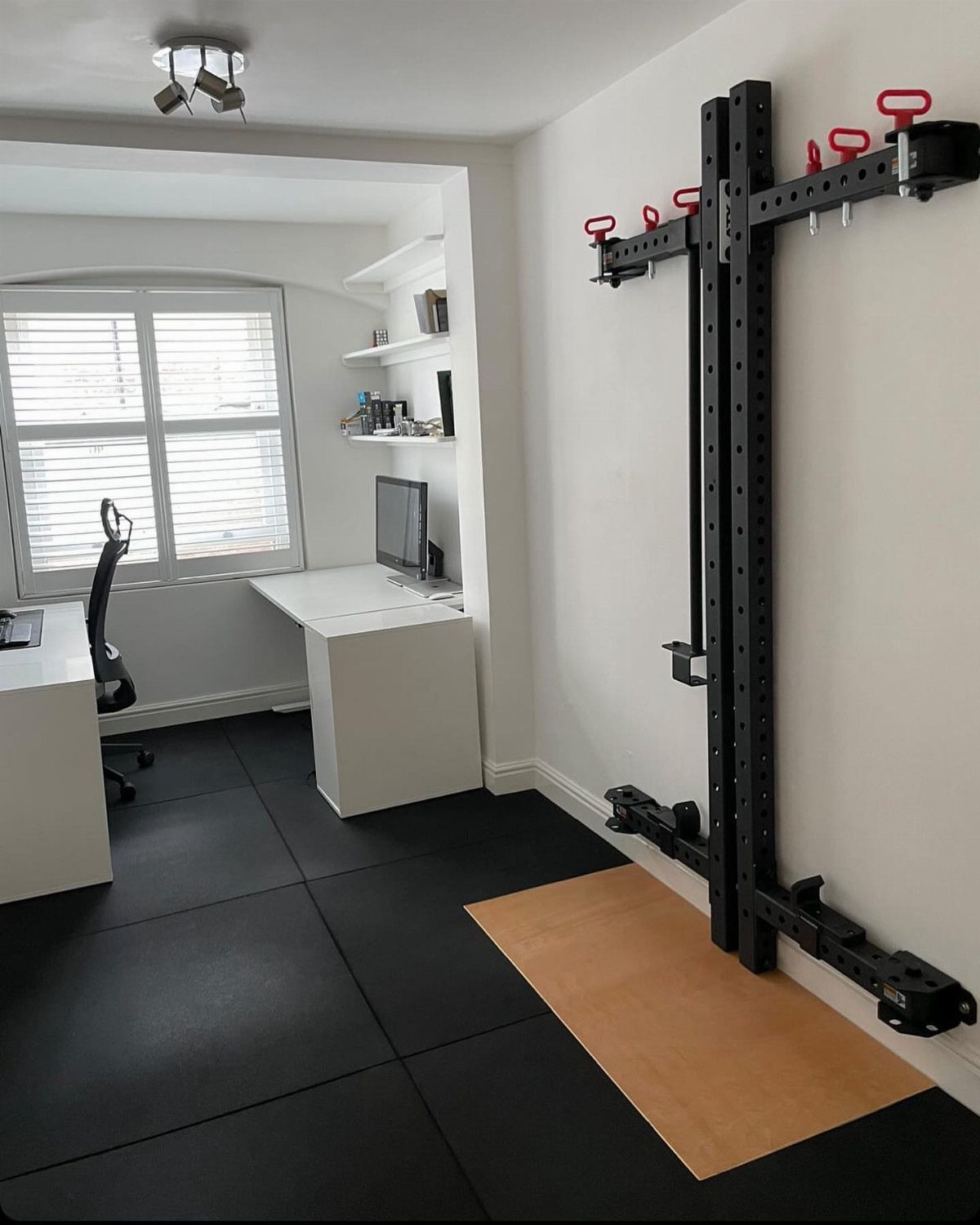
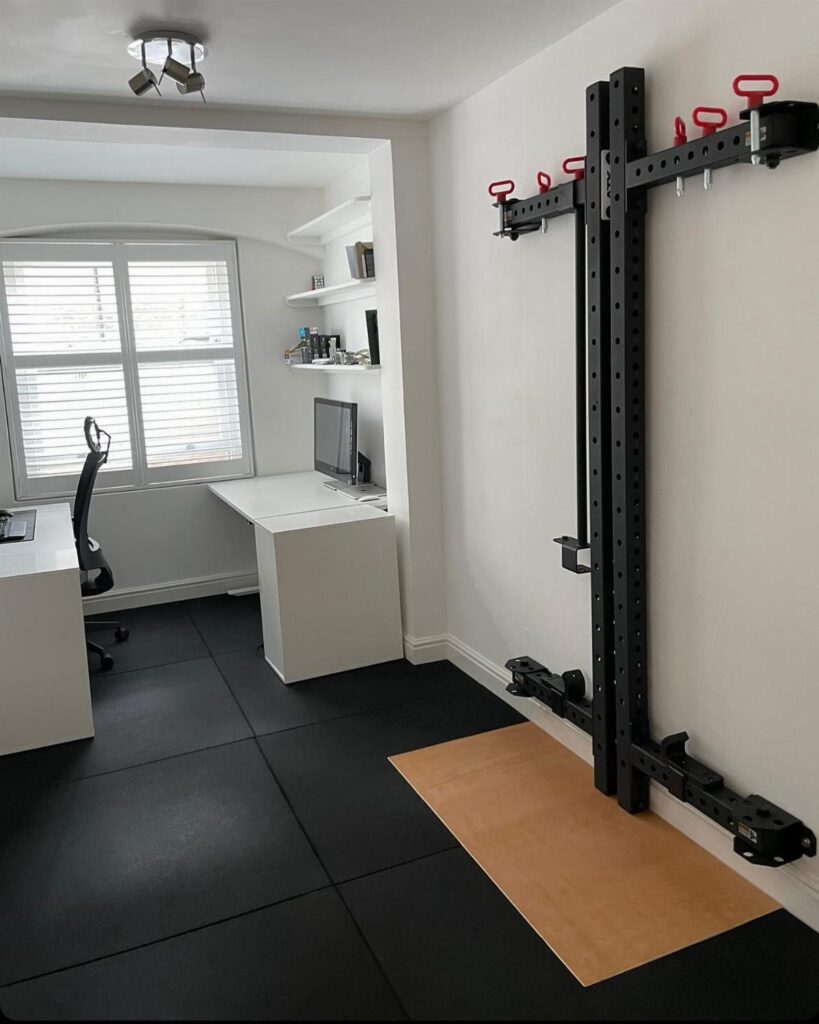
A desk on one side of the room and a wall-mounted weight rack on the other split one space into two jobs without framing a single wall; a rug under the desk or a change in floor material marks the line even more clearly.
Placing the desk and the rack at opposite ends keeps the two from competing for the same floor.
Black rubber flooring under the lifting area and a wooden platform for the lifts mark where the workout zone starts, so the boundary is built into the floor.
I like this approach because a rack mounted to the wall leaves the middle of the room open, which matters when you share square footage with a desk and chair.
2. Mirror Installations
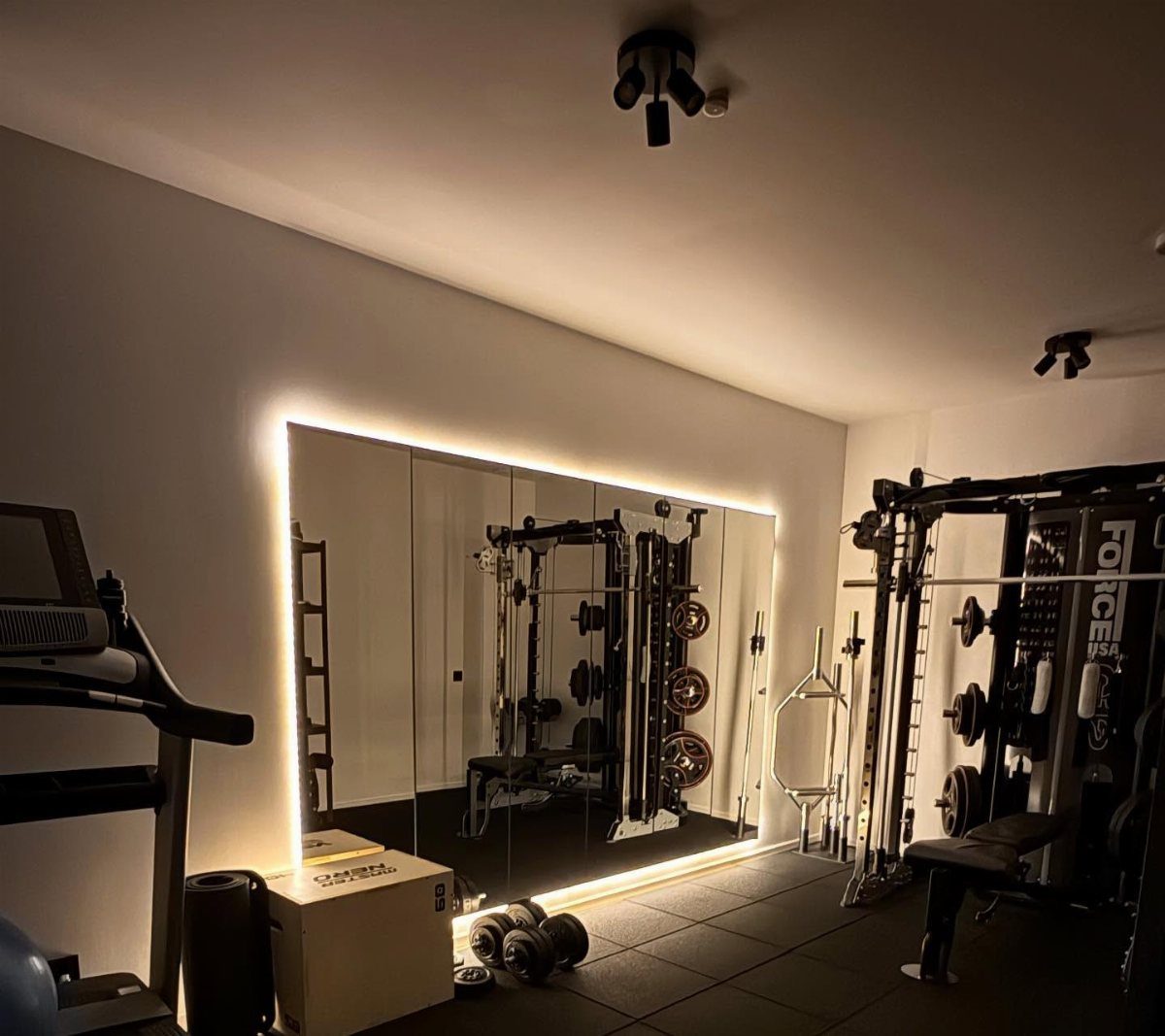
Backlit mirrors do 2 jobs: they brighten a workout corner and they let you check your form on a squat or a deadlift.
A large mirror behind a rack or treadmill makes a tight room read wider, and it lets you check your form; mount it to studs or use a wall-anchored frame rated for the weight.
I’d pick one big mirror over several small panels, because fewer seams means fewer distracting lines in your reflection.
Mount it on the wall facing the equipment, not the desk, so your work area stays out of the glare. Mirrors cost real money at this size, so measure twice before ordering.
3. Wall-Mounted Desks
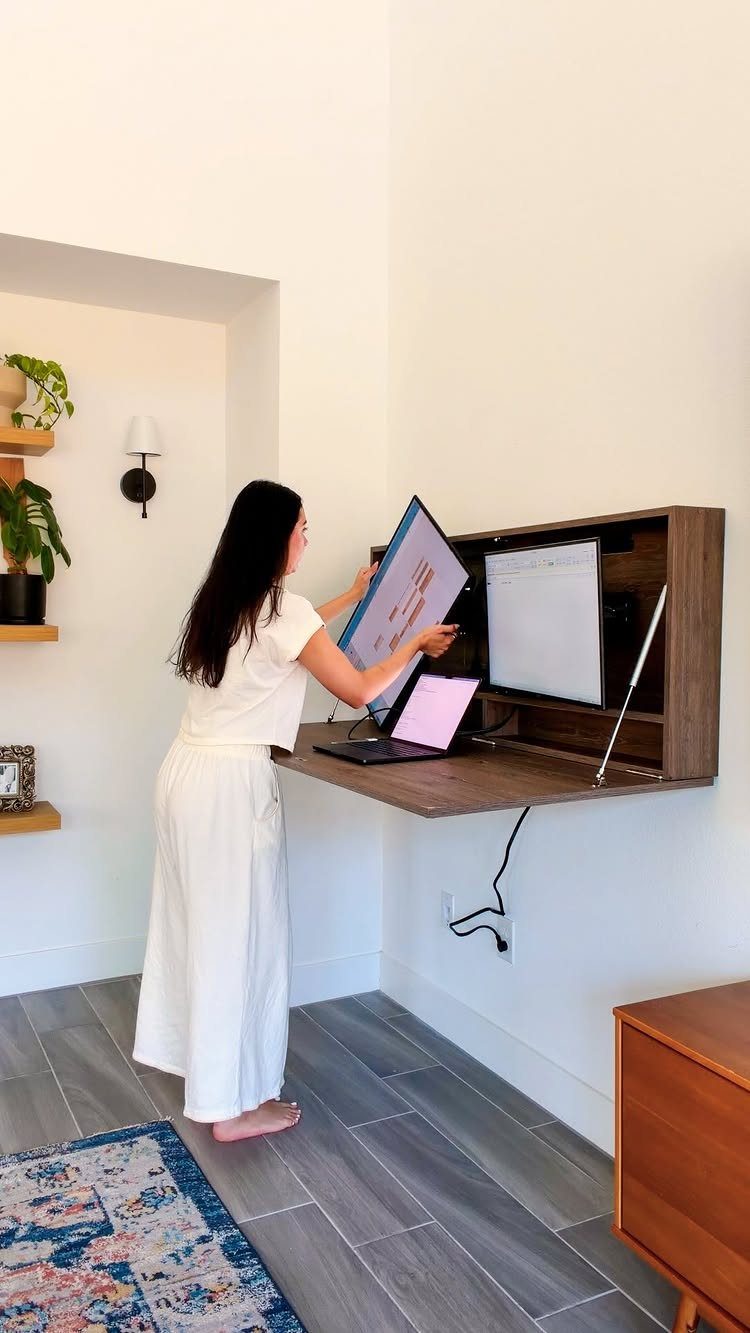
Fold-down desks earn their place in a room that also has to hold a gym. A brown wooden wall-mounted desk sits flat against the wall when you’re done, so the floor space returns to workouts.
For a laptop and monitor setup, I’d choose solid wood over thin board, since the desk carries real weight and has to stay stable while you type.
Anchor it into wall studs, not just drywall. Set the height for standing and you get a work posture that suits a fitness-minded routine.
4. Indoor Plants
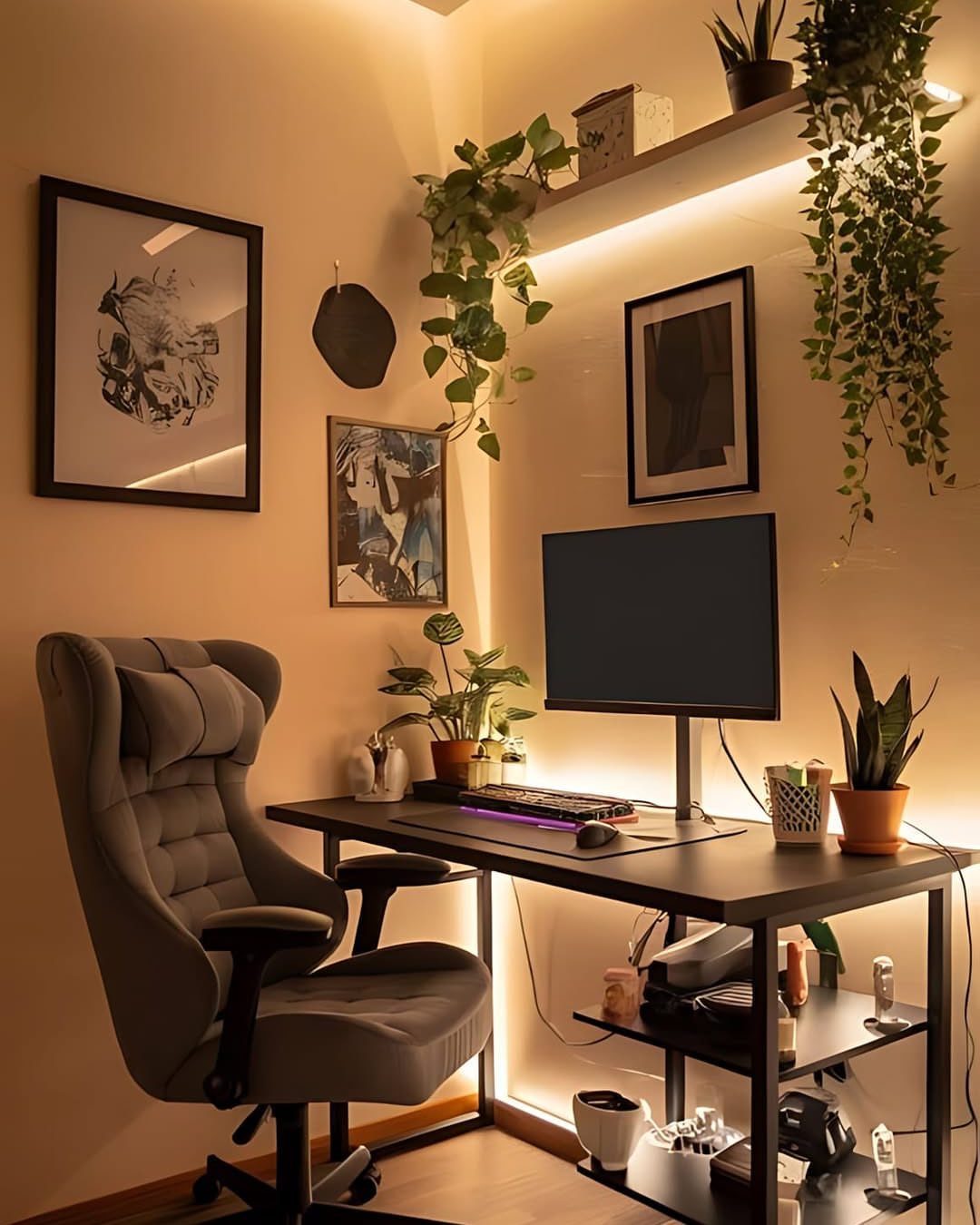
Plants on the desktop and an overhead shelf give a workspace some life without taking up floor you may need for a mat. Keeping them at desk level and above means nothing gets knocked over during a workout.
I like a mix of trailing and upright pots so the shelf looks layered instead of lined up.
Plants, framed art and a supportive ergonomic chair settle an office corner, and a pothos or snake plant will survive low light and the occasional missed watering.
Choose plants you won’t forget about, since a dying one on a desk is worse than none.
5. Rubber Mats
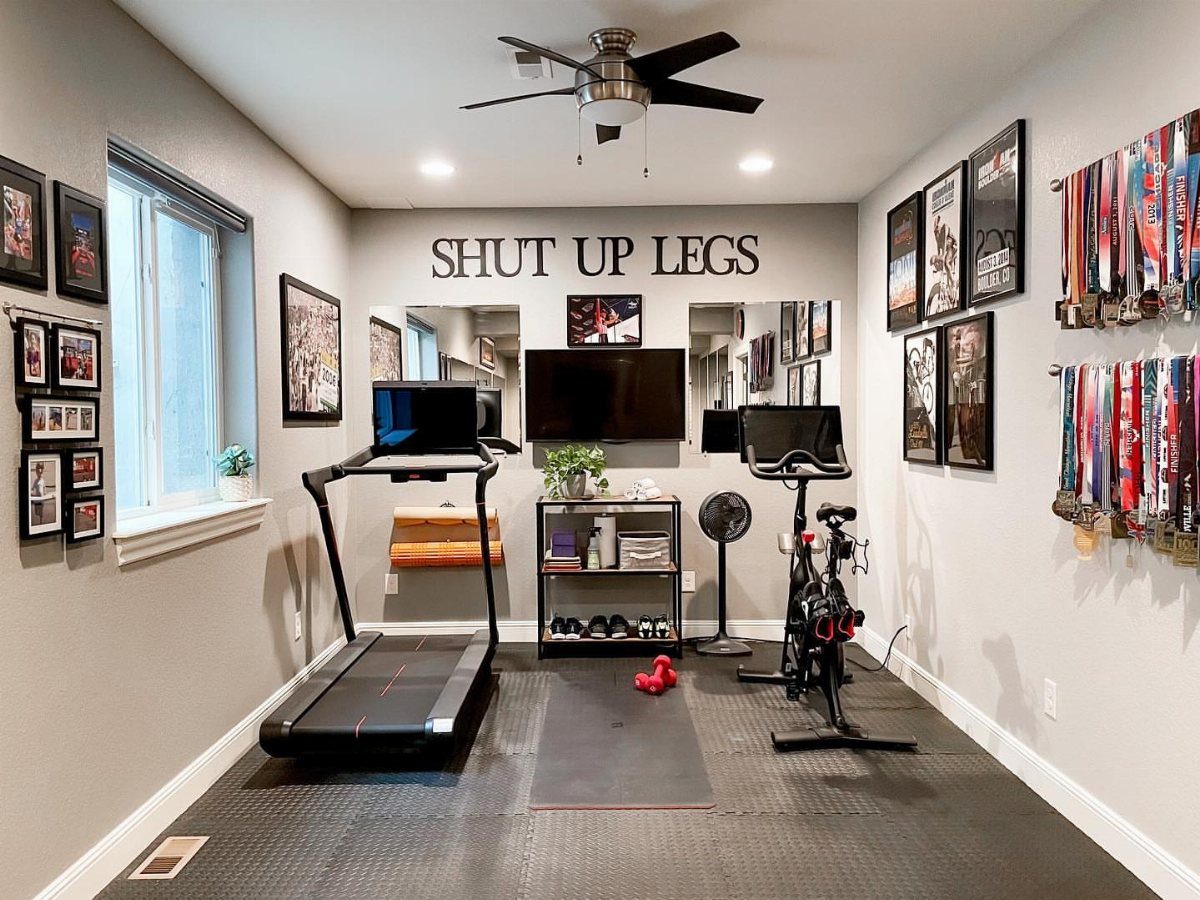
Rubber mats protect the surface beneath and give your feet grip, and their dark color hides scuffs and dust.
Cover the whole exercise area instead of leaving gaps, so equipment never sits half on mat and half on bare floor.
Rubber costs a modest amount compared with the flooring it shields, which makes it an easy first purchase on a small budget.
6. Concealed Gym Equipment Storage
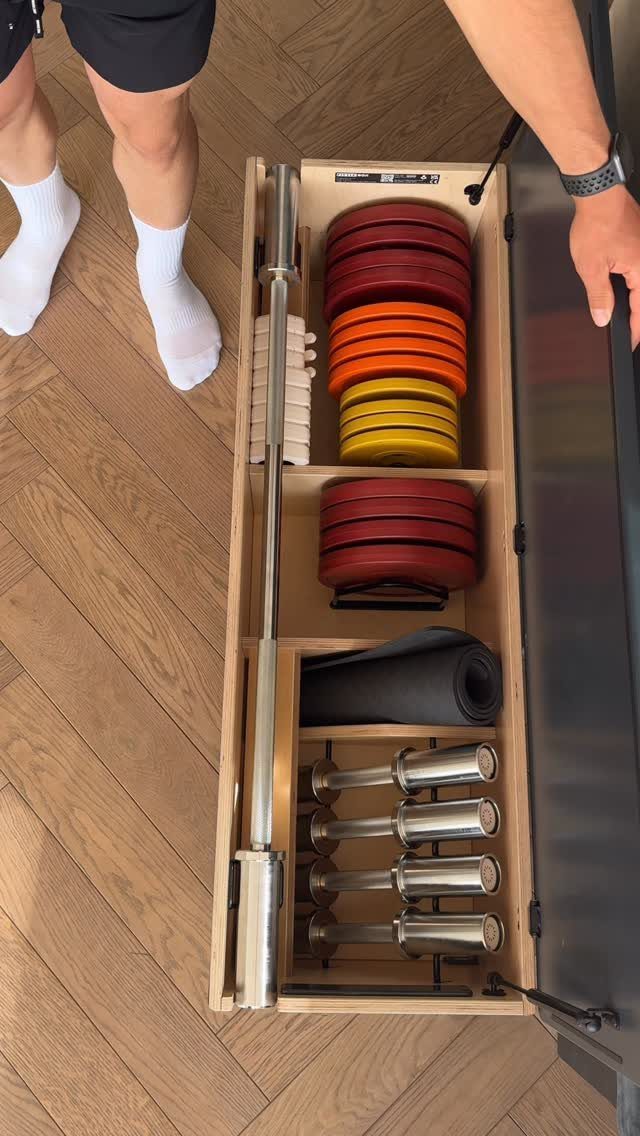
Built-in wooden drawers and cabinets can swallow a barbell, dumbbells, weight plates and a mat, then close to look like ordinary furniture. That matters in a room where you take video calls a few feet from your gear.
I’d go for pull-out drawers for plates and dumbbells, since you can see everything at once, and keep a cabinet section tall enough for the barbell.
Light wood matches a light wood floor and lets the storage blend in. Building it takes more effort than a rack, so it suits people who want the gear fully out of sight.
7. Fluted Glass Room Divider
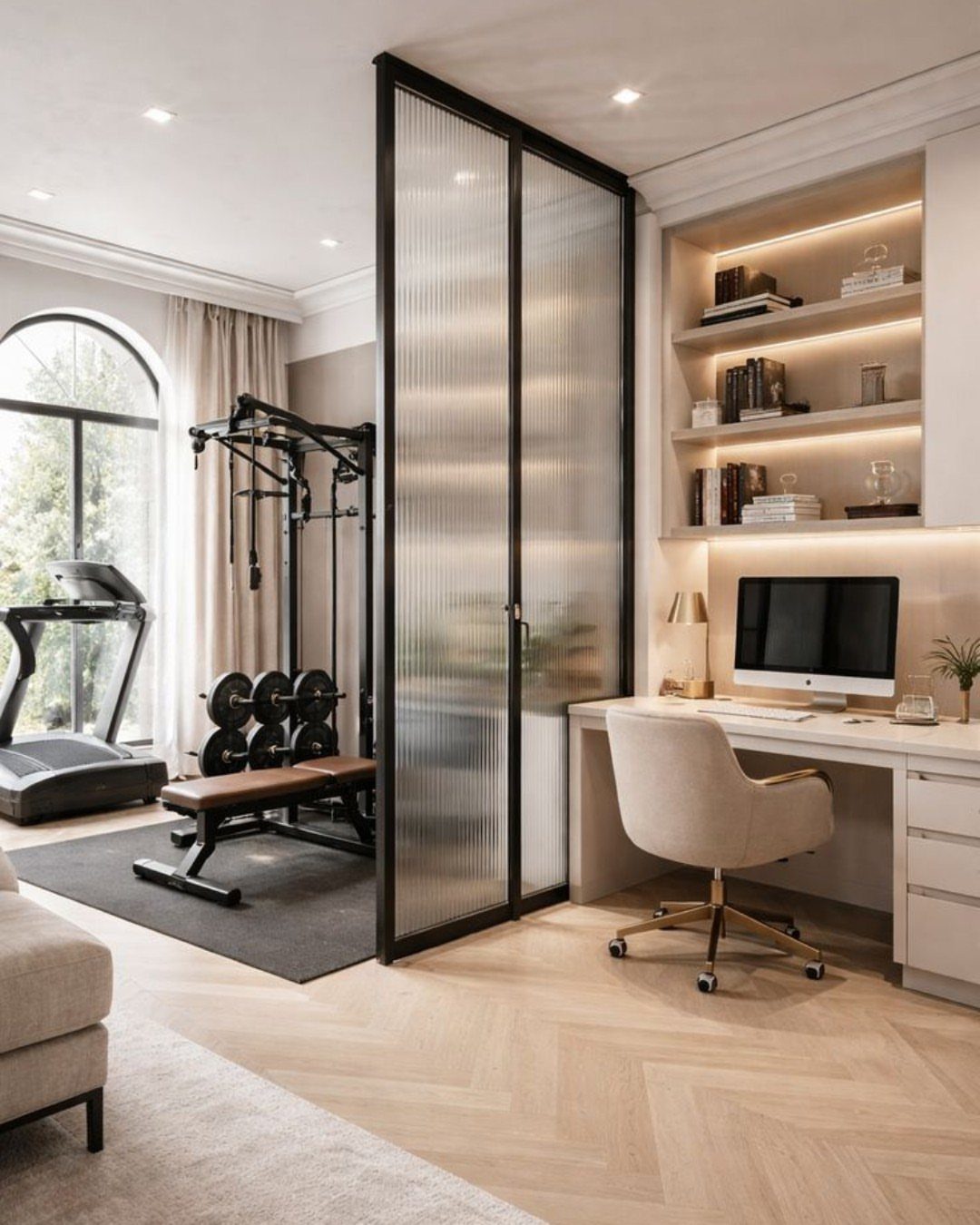
A fluted glass partition separates the treadmill and weights from the desk without closing the room off.
The ribbed surface blurs movement and softens light, so a video call on the office side isn’t interrupted by someone mid-set, and both halves still share daylight.
A black frame gives the divider a clear line and ties in with dark gym gear. Place the desk with its back to the glass so your screen never faces the workout side.
Glass costs more than a curtain or a bookshelf, so I’d treat this as the upgrade for a room you plan to keep a while.
8. Neon Ambient Lighting
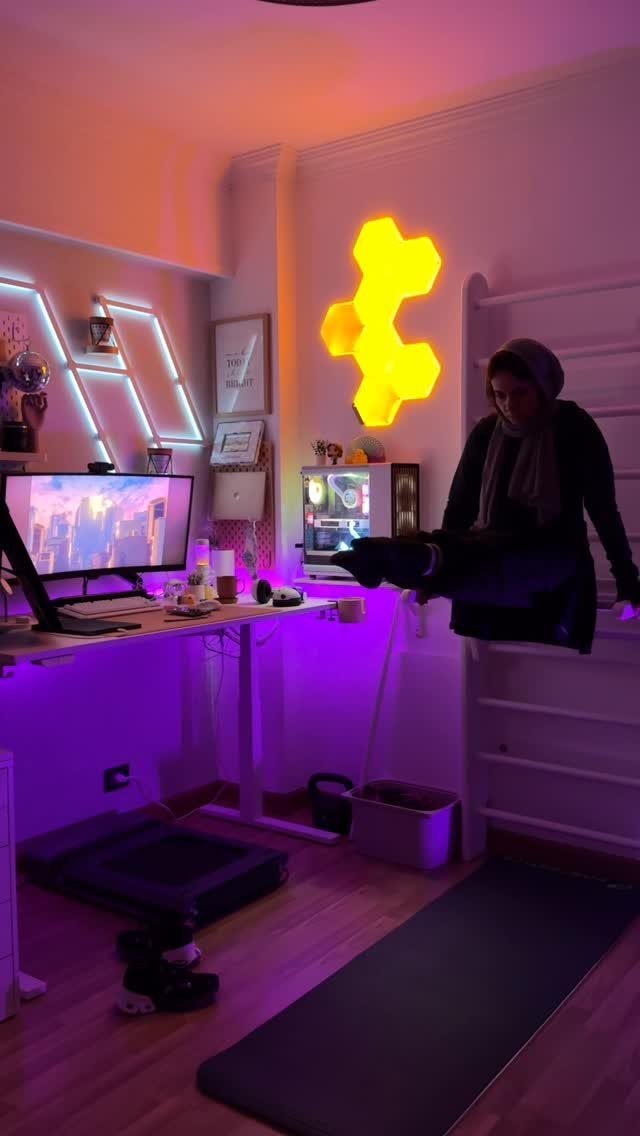
Neon in purple and orange gives a combined office and gym a mood that overhead bulbs can’t, and it works as a quiet signal that the room has switched from desk hours to training hours.
I’d keep the neon to one wall, ideally the workout side, and leave the desk with a plain task lamp so screens stay free of colored glare.
Warm orange paired with purple reads as a deliberate scheme instead of a random glow.
Put the neon on its own switch so you can turn it off during work calls.
9. Open Loft Multipurpose Space
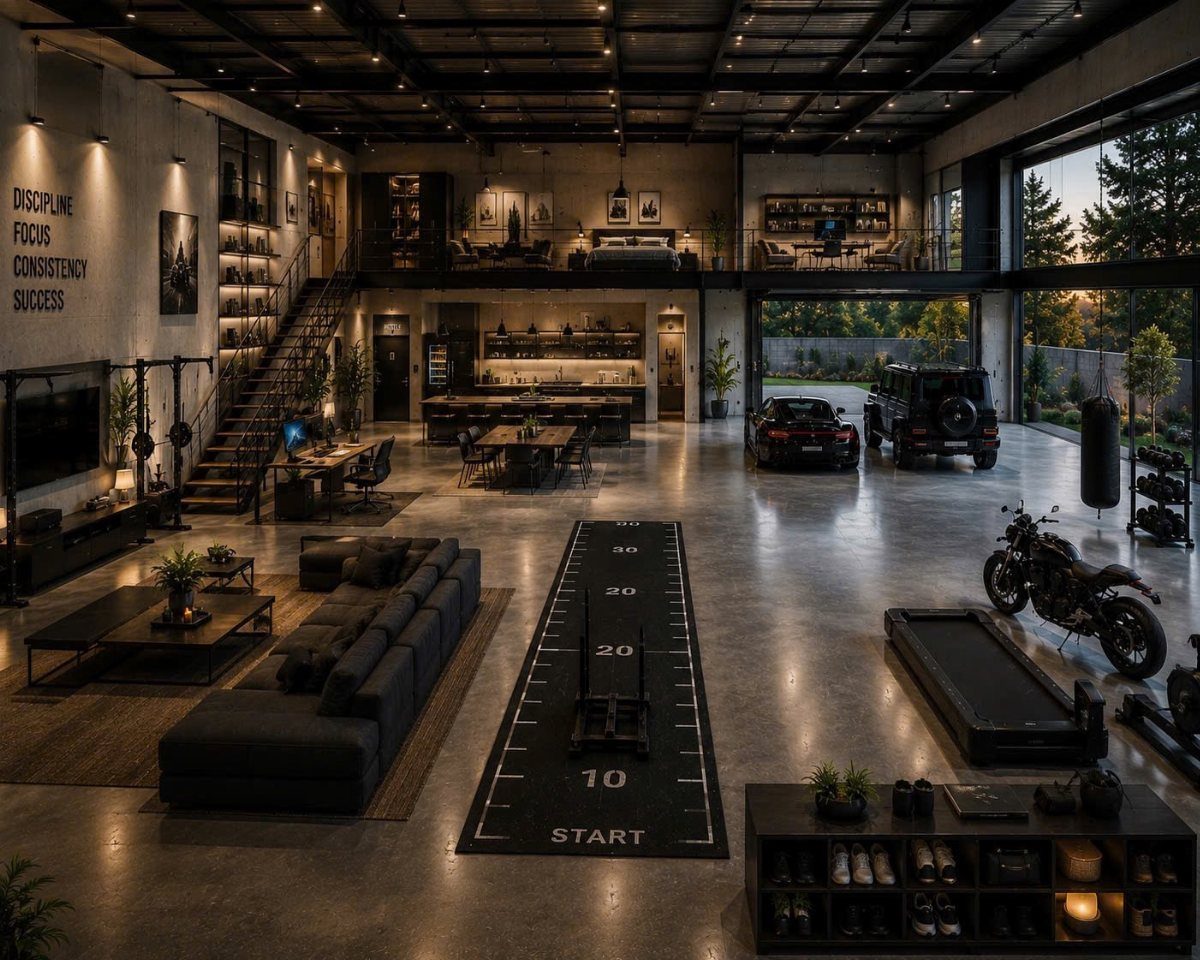
An open loft lets the desk, the training area and the living space share one big floor, with no walls to plan around.
Concrete flooring suits the training half, because a sled and a punching bag can take abuse that would wreck wood.
In a space this large, zoning matters more than equipment.
I’d anchor the desk near the living area and push the heavy gear to the far side, so the distance does the separating. A rug under the desk and sofa softens the concrete where you sit.
A motivational line on the wall is a cheap way to give the work corner its own focus.
Benefits of Home Office Gym
Working and training in one room removes the biggest barrier to exercise: the trip. No drive, no waiting for a machine, no gym bag in the car, so a short session fits into a gap between calls.
You also need less gear than most people assume. A couple of pieces you already use in your usual workouts is enough to start, and a workout app can stand in for a trainer.
A smart mirror is one way to get guided sessions without a trainer, though it is a bigger purchase than a basic app. Open the app and buy gear only after you’ve used the room for a month.
Time Management Tips
Give work and training separate blocks on the calendar, and treat the workout block like a meeting you can’t move. Put it at the same time each day so it becomes routine rather than a decision.
Keep the blocks from touching. A buffer lets you cool down, change shirts, and sit back at the desk without sweat on the keyboard.
If your workday shifts around, set the workout for the same slot on a few fixed days instead of every day. A plan you can keep beats an ambitious one you drop by week two.
Organizational Strategies
Baskets and shelving keep like items together, and a label on each basket means nobody has to guess what’s inside. Sort through the contents regularly so the baskets don’t turn into junk bins.
Make one item do two jobs. An upside-down stool can hold bulky odds and ends and still be a seat when you need one.
Build short routines around the clutter. A daily tidy, a regular wipe-down of equipment, and an occasional purge of things you no longer use take only a few minutes each.
Frequently Asked Questions
What are the benefits of integrating a gym in the office?
Skipping the commute to a commercial gym is the real draw: no parking, no waiting on a bench, no packed bag, which means 20 minutes of work between calls actually happens.
Pages on the topic also credit it with better mental health, higher productivity and a healthier routine.
With a pair of adjustable dumbbells, a mat, and a free app that walks you through each session, a trainer’s guidance is mostly covered.
How can I optimize my home office gym space?
Split the room into 2 zones, then store the gear out of the way.
A desk at one end and a wall-mounted rack at the other keeps the middle floor open, and black rubber flooring or a rug marks where each zone starts.
Wall-mounted or fold-down desks, drawers and cabinets for plates and dumbbells, and labeled baskets give the floor back to workouts. Compact equipment helps most in a tight room.





