Renting or owning decides most of this list: a rented room limits you to ideas that go up and come down cleanly, like LED strips, a pull-down screen and DIY acoustic panel kits that mount without drilling, while owners can build into the wall with a recessed unit, a slat accent wall and storage cabinets.
The span runs from a weekend of paint, with two coats on a dark ceiling, up to tiered reclining seats, the priciest idea here and one that needs the room depth measured first.
Pick the idea your lease and your floor plan allow, then let the budget sort out the rest.
1. Themed Home Theaters
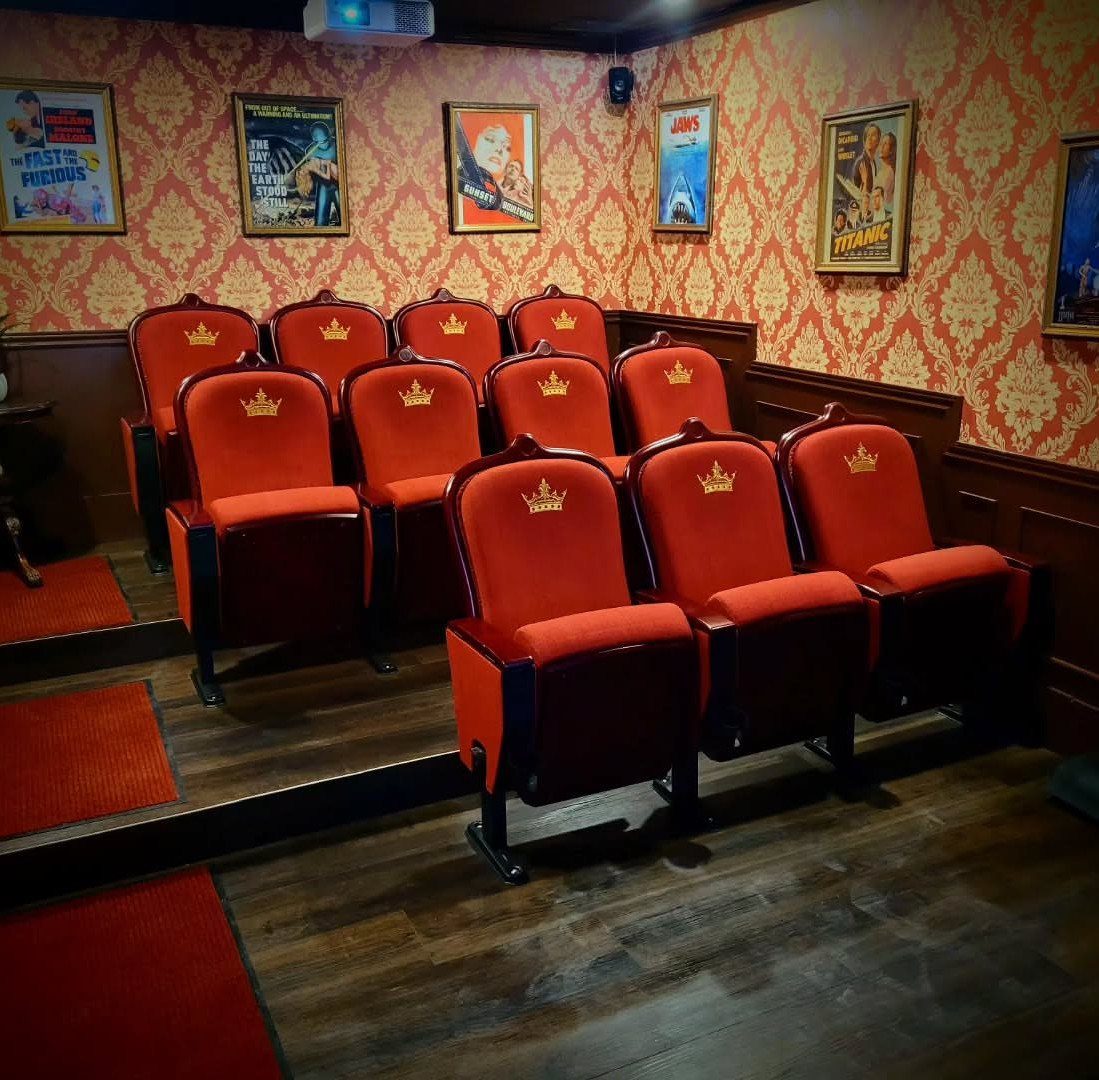
A theme gives every choice in a compact theater a reason, so nothing ends up looking like leftover furniture.
Red velvet seating, damask wallpaper and framed posters all pull the same direction, which is why the room reads as a tiny old-fashioned cinema instead of a den with a TV.
Pick one anchor, like the seat color, and let the walls and art follow it.
I’d keep posters to titles you actually love, since a theme only works when it’s personal. Skip a second theme in the same room; two compete and the space shrinks.
2. Media Storage Cabinets
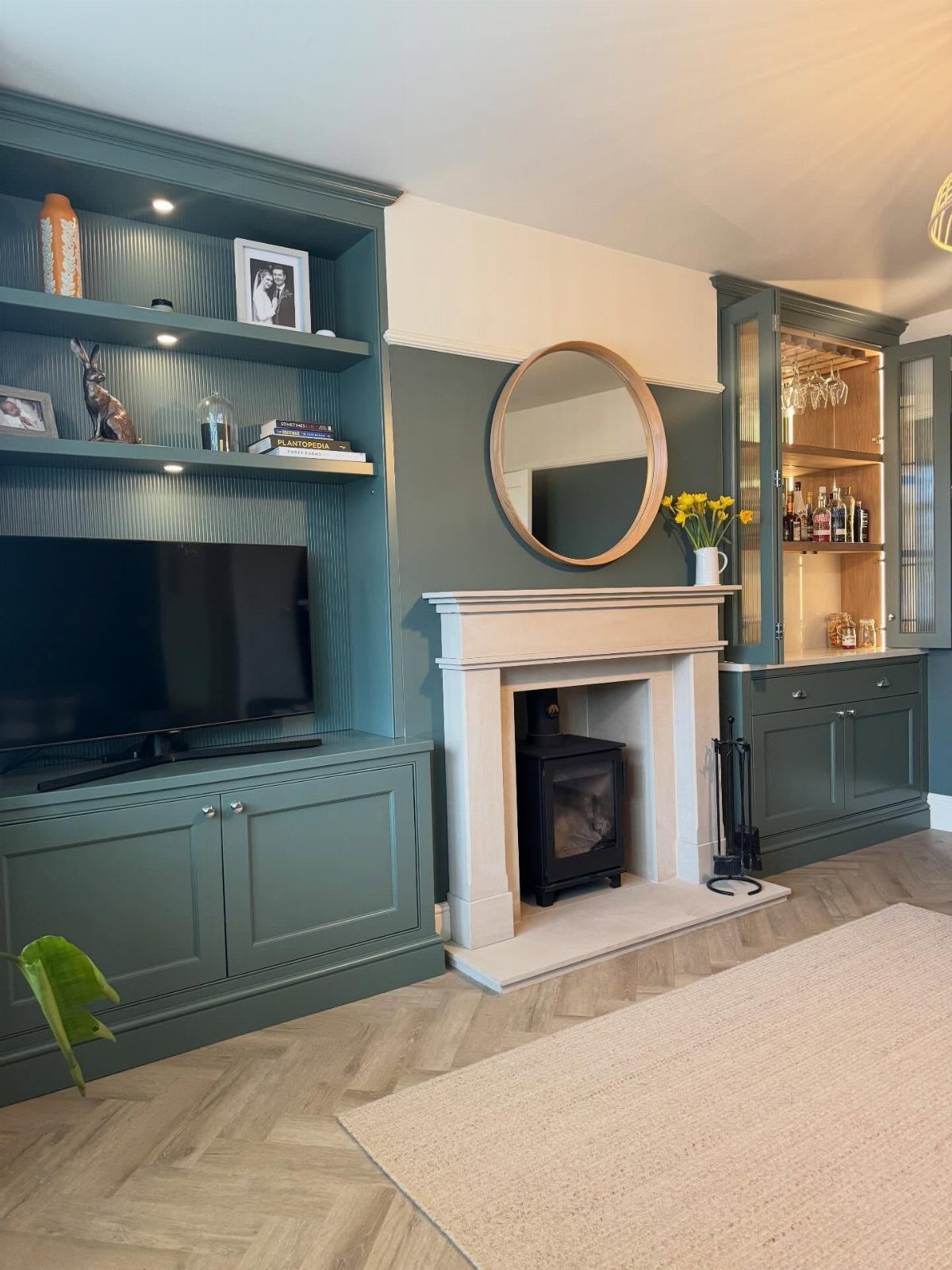
Built-in cabinets that wrap the TV turn a wall of clutter into one finished piece.
Painting them a deep green, as here, lets them sit beside a fireplace without fighting it, and light floors keep the dark color from feeling heavy.
Custom doesn’t have to mean a carpenter’s price.
Stock cabinet boxes with trim and paint can get you close on a budget, and closed doors hide consoles, cords and discs. I’d choose doors over open shelves for the lower half, because that’s where the mess collects.
3. Dark Walls and Ceilings
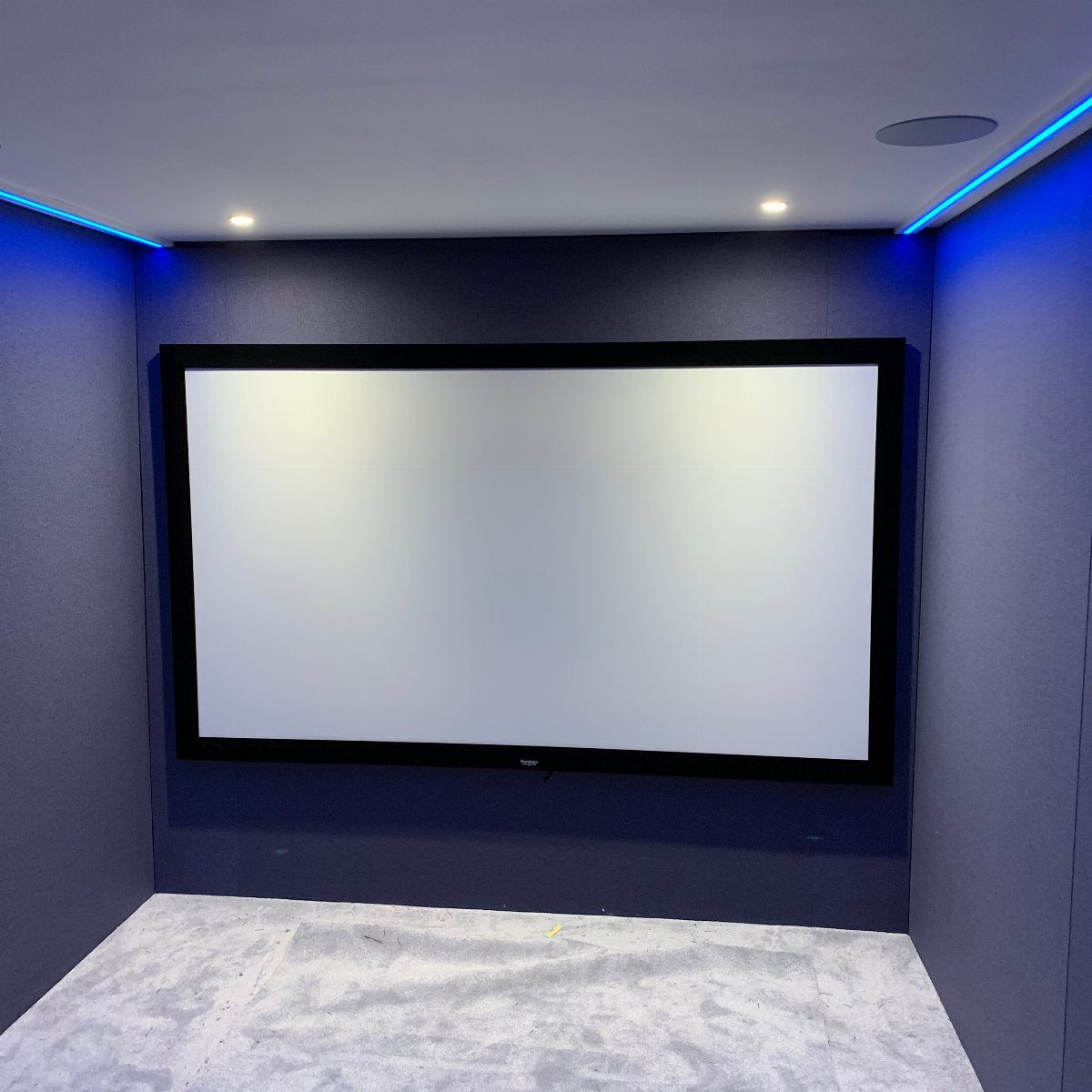
Paint the ceiling the same dark shade as the walls, and the room’s edges fade so the screen becomes the brightest thing in it.
That is the whole effect, and it’s why a projector setup in a tight space gains the most from dark color.
Use a flat or matte finish, since sheen throws light back at the screen.
Purple, navy and charcoal all work; pick one you can live with in daylight too. Paint is the cheapest upgrade in this list, but plan on 2 coats and a weekend.
4. LED Strip Lighting
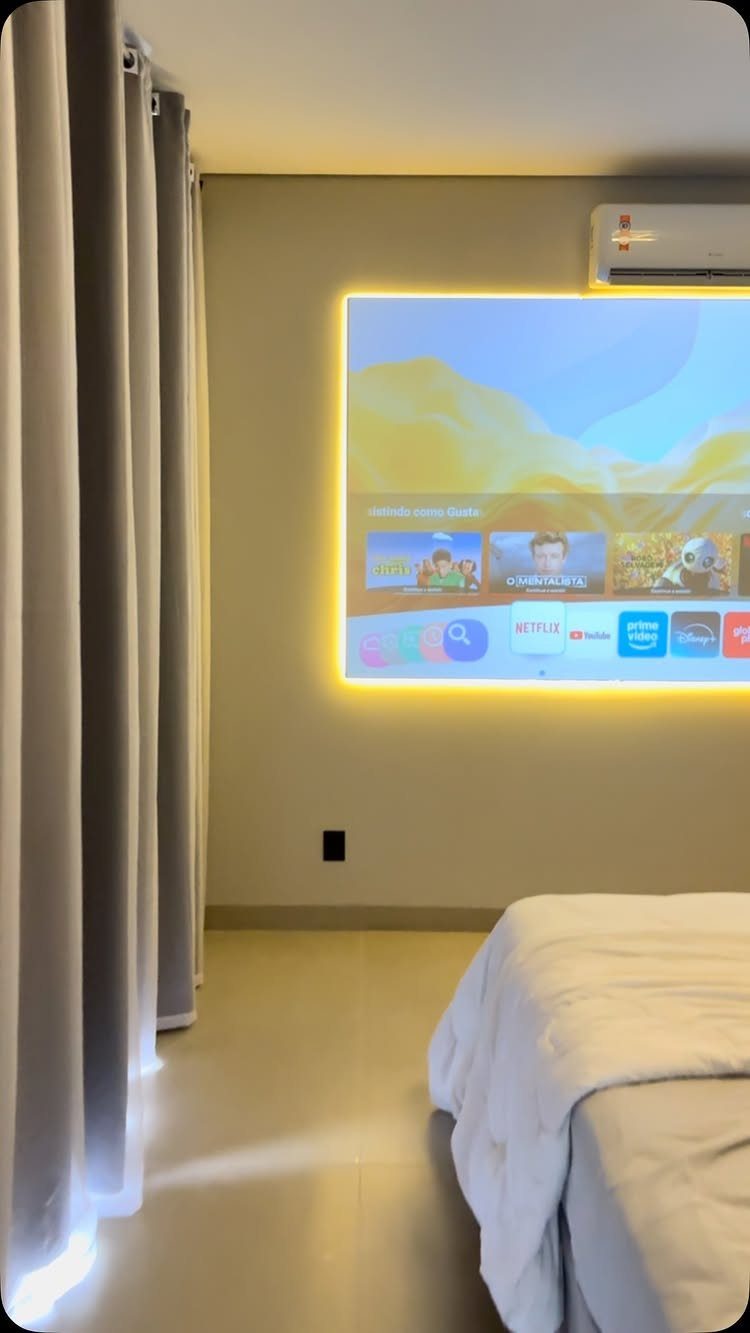
Backlighting a screen with LED strips softens the contrast between a bright picture and a dark wall, which is easier on the eyes in a dim room.
Run the strip around the screen’s back edges so the glow bounces off the wall instead of showing as dots.
Warm yellow suits a bedroom better than harsh white, and a dimmer or remote lets you turn it down during a film. Strips are cheap and stick on, so renters can try it without drilling.
5. Wall-Mounted Pull-Down Screen
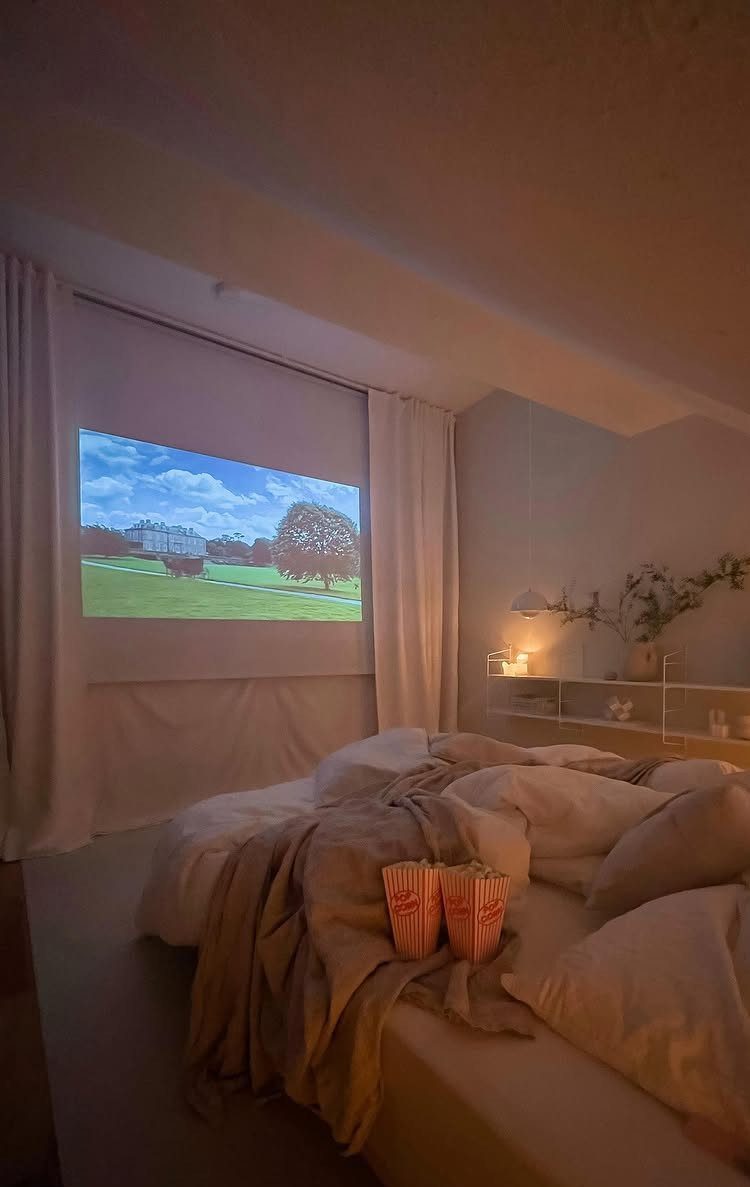
In a bedroom that has to stay a bedroom, a pull-down screen is the sensible choice. It hangs above a window or bare wall, drops for movie night, and rolls away by morning, leaving no black rectangle to stare at.
Mount it into studs or with proper anchors so the housing doesn’t sag.
Put the bed where you can see the screen comfortably, and a small shelf nearby holds the remote and snacks. The drawback is a picture that can ripple slightly if the screen isn’t tensioned.
6. Wood Slat Accent Wall
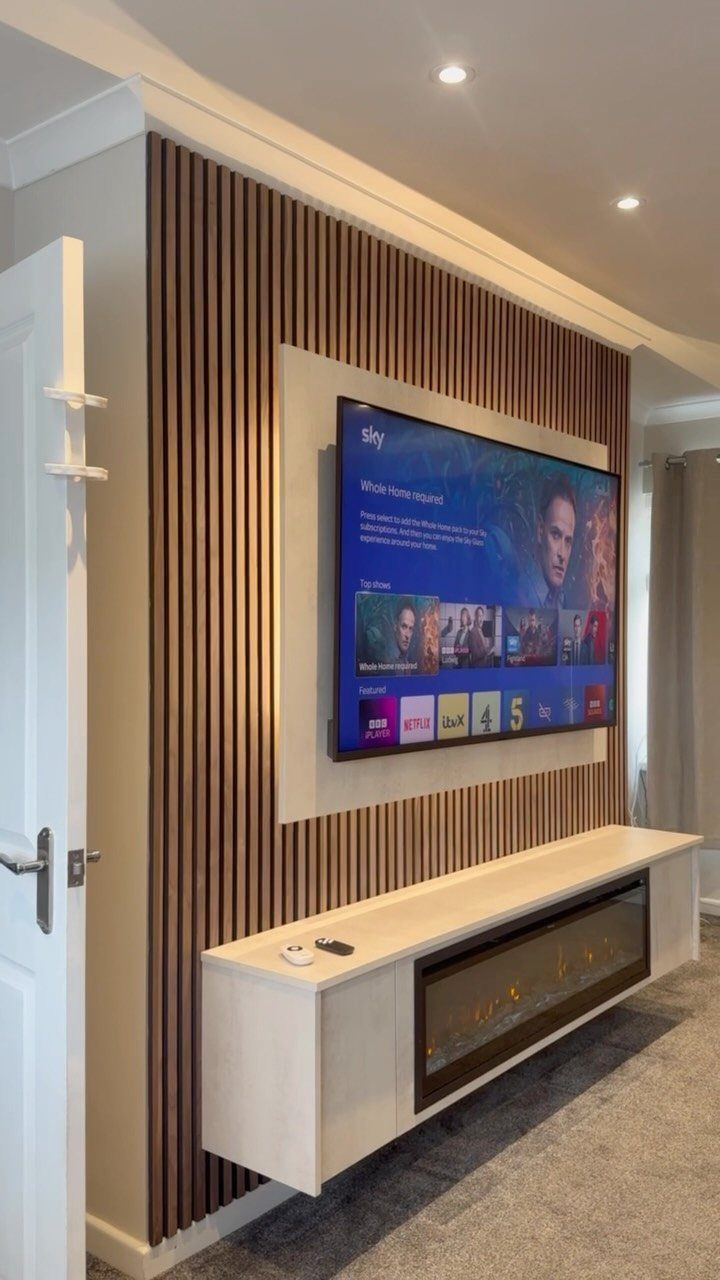
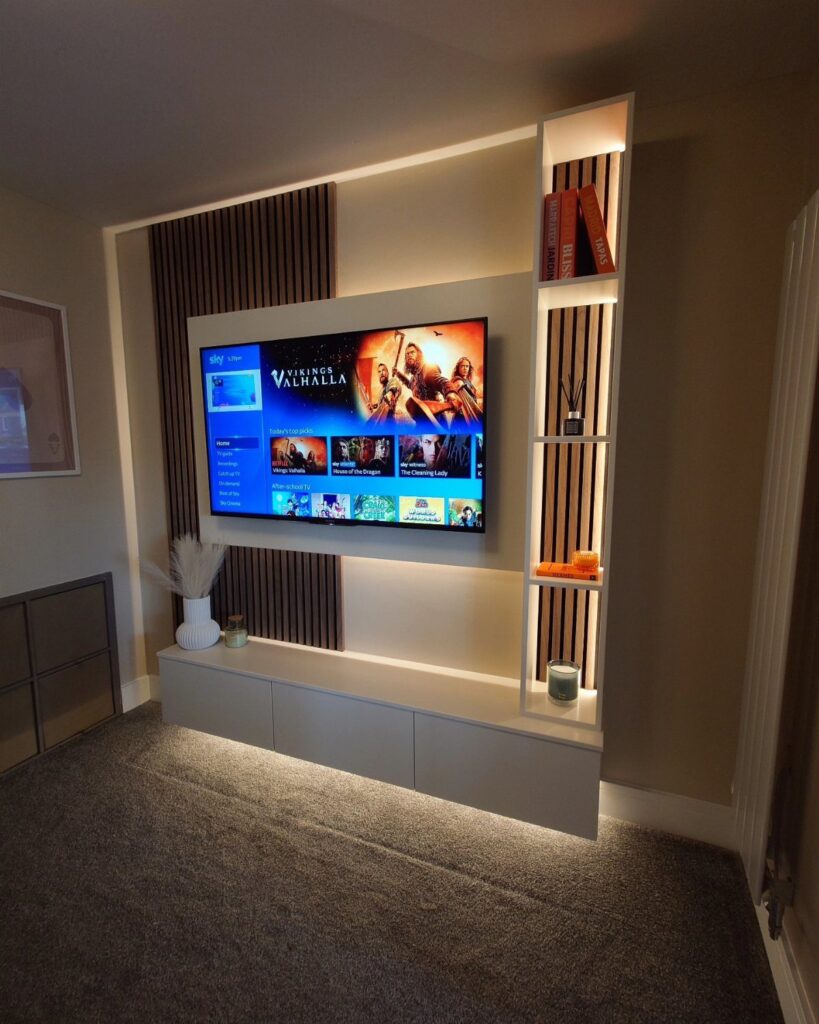
Vertical slats add height and texture behind a wall-mounted TV, and they give a floating console something to anchor against. A white console with a built-in electric fireplace keeps the lower half light, so the wood stays the star.
I’d choose slats for a wall that looks flat and dull, because they do the work of art.
Floating the console leaves floor visible beneath it, which makes a compact media room feel larger. Plan where cables will run before you fix the slats, so nothing has to come off later.
7. Light Wood Paneling and Built-Ins
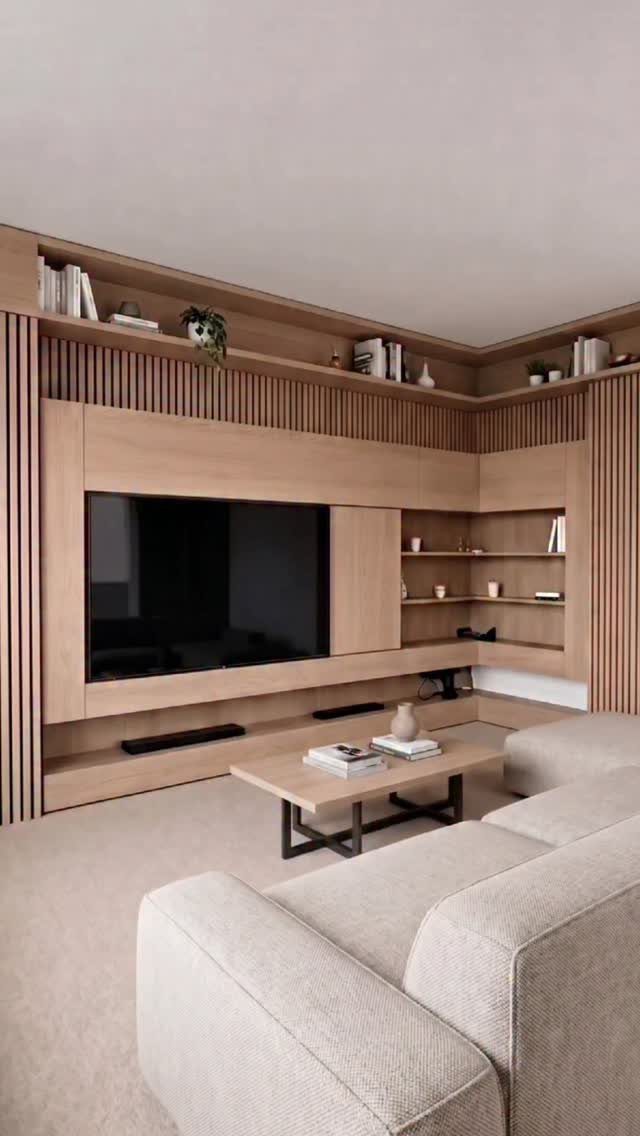
Light wood paneling keeps a small media room warm without the heaviness of dark walls. Run it behind the TV and let open bookshelves share the same wood tone, so the wall reads as one piece.
I’d pair it with a neutral sofa and a wooden coffee table, which keeps the palette quiet and the screen the focus.
Open shelves look best with a mix of books and a few objects, not a full wall of clutter.
Pick one wood shade and stick with it across paneling, shelves and table.
8. Acoustic Padded Wall Panels
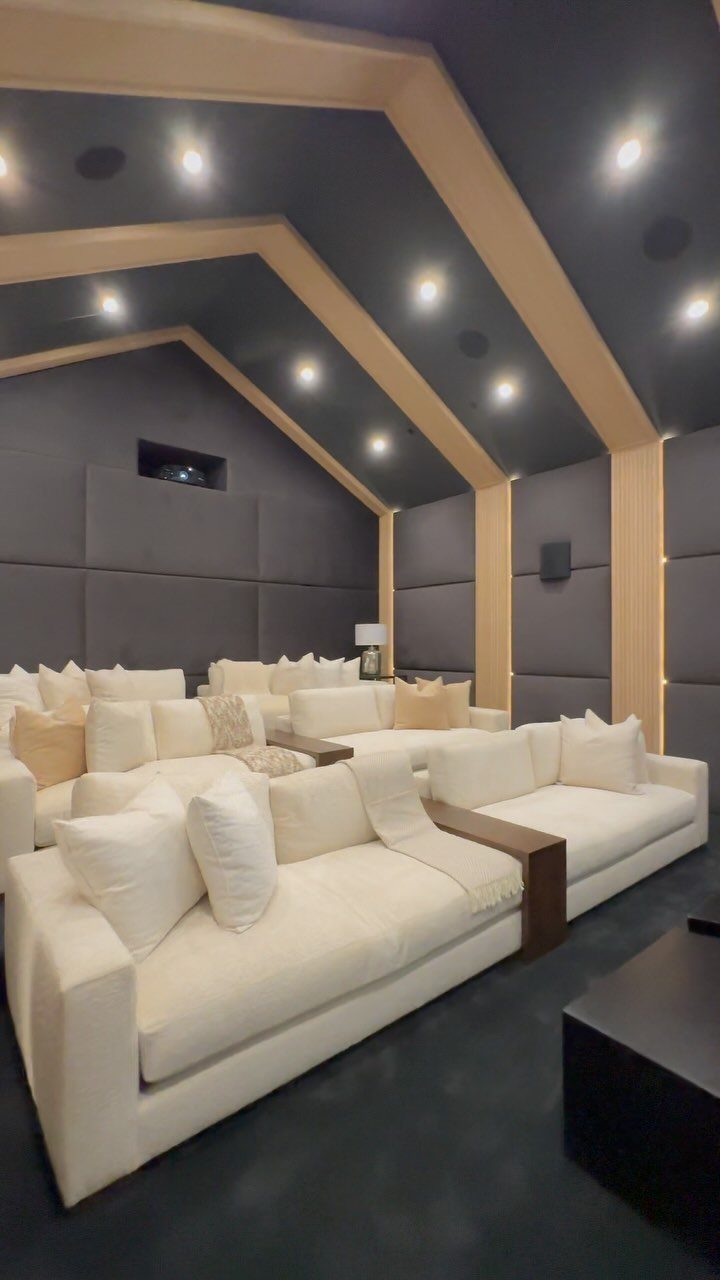
Grey padded wall panels give a compact room a soft, finished look, and a dark ceiling with recessed lights keeps attention on the screen. A white sectional against that grey stands out cleanly without making the room feel busy.
I like fabric-covered panels in a mid grey because they hide scuffs better than white would. Wood trim around the edges warms them up.
Fabric is also easier on sound than bare drywall. Expect the panels to cost more than paint, so cover one wall first.
9. Fireplace and TV Accent Wall
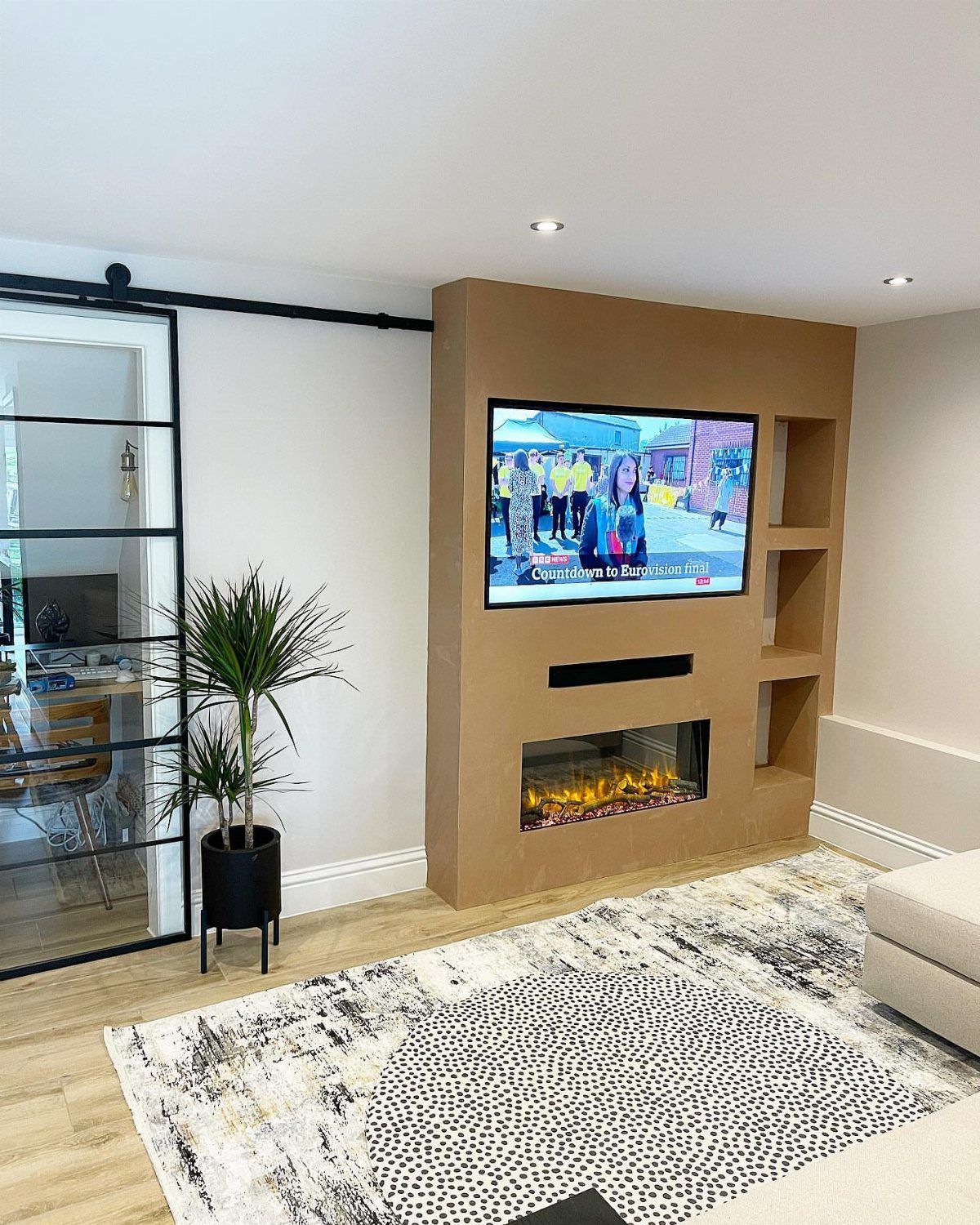
Sinking the TV and an electric fireplace into one accent wall gives a compact media room a single focal point, and no mantel or stand eats floor space.
A tan paint color on that wall sets it apart from the others without going dark.
Choose an electric unit, since it needs no chimney and the heat is optional. Frame the opening with simple trim so the recess looks planned.
Run power and cable behind the wall before you close it up.
10. Recessed Wall Unit with Shelving
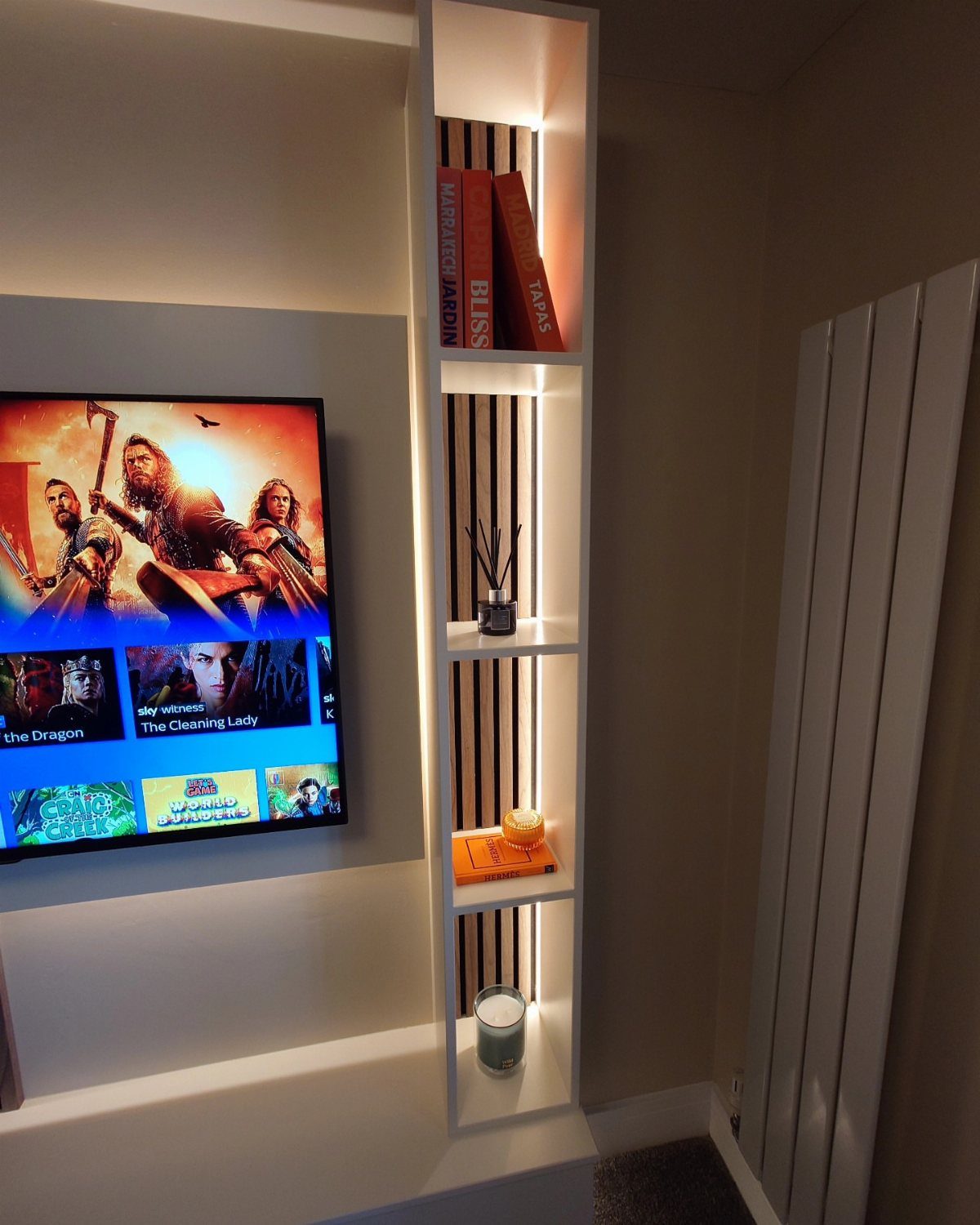
A recessed alcove holds the TV flush with the wall, so it takes up no depth in a narrow room. Painting the alcove and the shelving the same white makes the whole thing look like part of the architecture.
I’d put vertical shelving beside the screen for books and a candle or two; it balances the TV and keeps the wall from feeling like a single big black rectangle.
Plan the outlet and cable path inside the alcove before you build it.
11. Tiered Reclining Cinema Seating
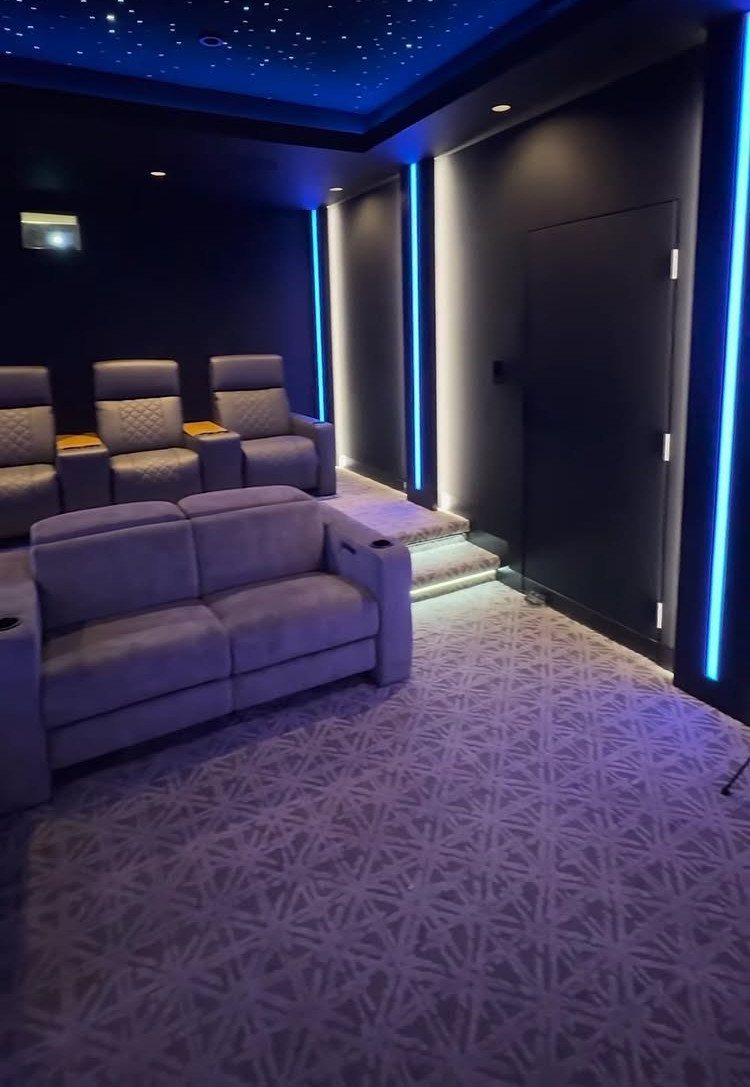
2 tiers of reclining seats let everyone see the screen, even in a small cinema room. Grey seats stay neutral, so blue LED strips on the walls and a starry ceiling can carry the color and mood.
A patterned carpet suits a room like this, since it hides spills and softens the look of the floor. I’d keep the seat color plain and put the fun in the lighting.
Reclining rows need depth, so measure the room before you commit. This is the priciest idea on the list.
The screening room of a Texas ranch devised by John Cattrell accommodates 36 guests in leather-upholstered, motorized seats.
Lighting Tips for Media Rooms
Soft, ambient light is what makes a media room feel cozy, and a dimmer switch is the simplest way to get it.
Swap the existing wall switch for a dimmer rated for LED bulbs, since a mismatched one can buzz or flicker. A Lutron Diva LED dimmer is one example, and it swaps in with a basic screwdriver.
LED strips behind the TV or along the baseboards add a modern, cinematic glow. Put them on a dimmer or remote too, so they stay subtle.
Light the path to the snack area, too. Dimmable lighting tucked into shelving or a media unit keeps the glow from competing with the screen, and nobody trips in the dark.
Maximizing Space Efficiency
Mounting the TV on the wall frees the whole floor under it, and a wall-mounted speaker system does the same for sound. Both save space that a stand and floor speakers would eat.
Choose furniture that stores things.
For seating, ottomans move out of the way when you need floor space. A sectional with a storage compartment holds extra blankets, pillows or board games.
If the media room shares space with something else, storage furniture is what keeps it tidy enough to use daily.
Sound Quality Improvement
Good sound doesn’t need a big budget. Either an inexpensive sound bar or a 2.1-channel speaker system is a real step up from TV speakers, and both fit in a media nook without crowding the furniture.
Next, tame the echo.
Acoustic panels absorb excess sound so it stops bouncing around, which makes dialogue clearer in movies and games. Many brands sell DIY kits, and the fabrics come in enough colors to match your room.
Acoustic blankets, the thick fabric panels that improve a media room’s sound, can be hung on a wall or draped over furniture, so renters can use them without committing to anything.
I’d start with the sound bar, then add panels or blankets if the room still sounds hollow.
Frequently Asked Questions
What are some budget-friendly ideas for a small home theater room?
Paint is the cheapest upgrade: a flat, matte dark color on the walls and ceiling makes the screen the brightest thing in the room, though it takes 2 coats and a weekend.
Even a basic sound bar, or a 2.1 setup with a small subwoofer, beats built-in TV speakers by a wide margin and usually costs $80–200.
DIY acoustic panel kits and stick-on LED strips round it out, and renters can use both without drilling.
How to make a movie theater in your room?
A pull-down screen screwed into studs or set in solid anchors is my pick for a bedroom, since it comes down for movie night and rolls back up by morning.
Paint the walls and ceiling a dark matte shade, and add dimmable LED strips behind the screen to soften the contrast.
If the room still sounds echoey after that, heavy blankets or a few acoustic panels on the bare walls will calm it down.
How do you save space in a small media room?
Mount the TV on the wall to free the floor beneath it, and use wall-mounted speakers so floor speakers don’t take up room.
Furniture with hidden storage earns its footprint: a lift-top ottoman, or a sectional with a compartment under one seat, keeps remotes and blankets out of sight.
Recessing the TV into an alcove between studs lets it sit flush with the wall, so the screen costs you no floor depth.





