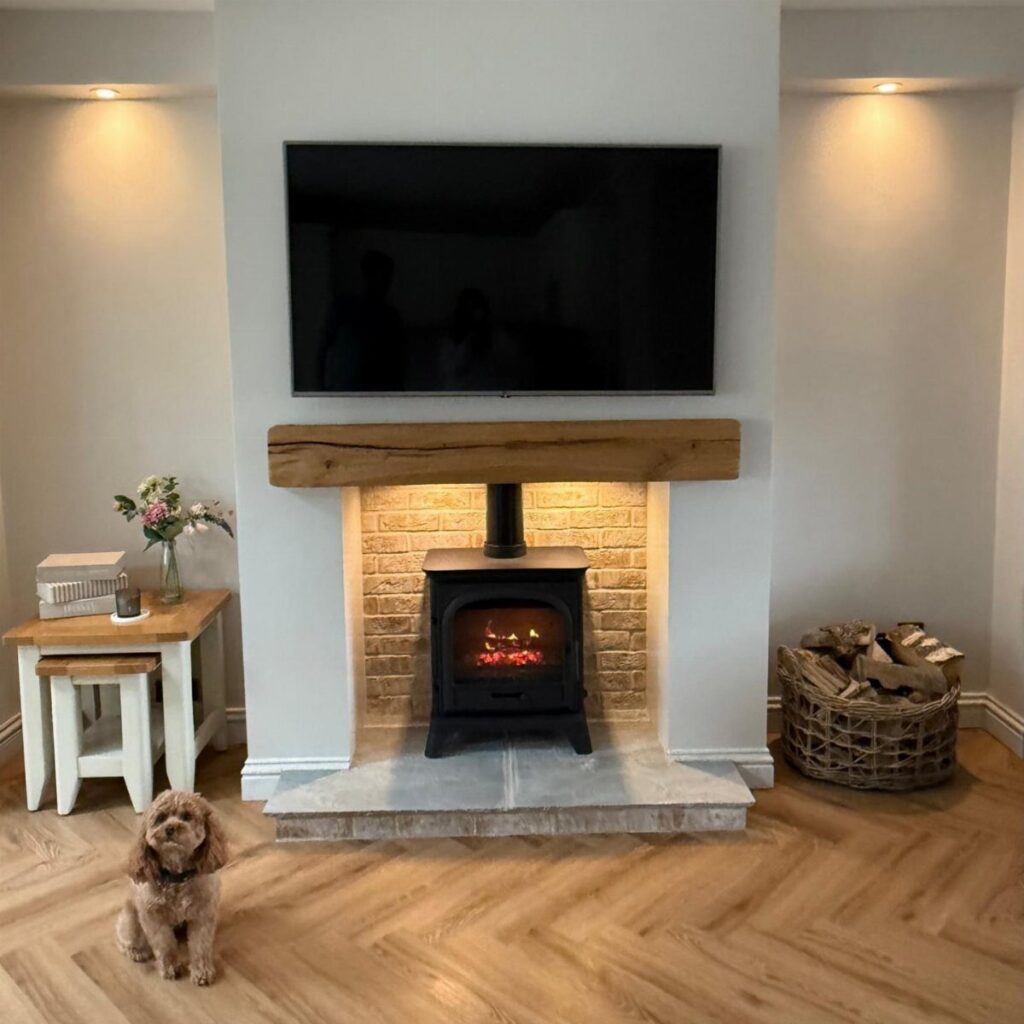
Heat on the wall and what the room does most should decide the layout, not which look you like best.
Before drilling anywhere, tape the planned screen edge, burn the fire for 30 minutes, and check that the wall reads under 90–95°F (32–35°C).
1. TV Above the Fireplace
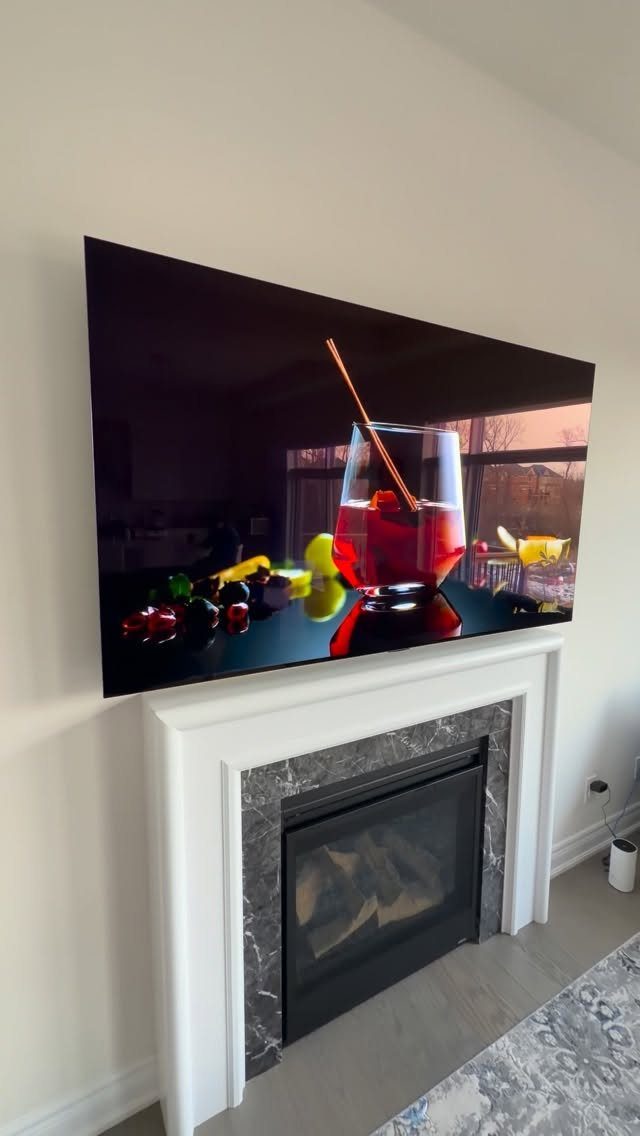
A TV over the mantel is the layout I’d pick when the room has one good wall and no other spot for a screen. Fireplace and TV share a single focal point, which keeps the rest of the furniture simple.
Mount height is the catch. Measure from the seat of your sofa to the center of the screen before you drill, because a mantel pushes the screen higher than most people expect.
A neutral white wall keeps the screen from fighting with the stone below it, so paint the area above the mantel a flat, quiet white or soft greige.
2. Separate Media Wall
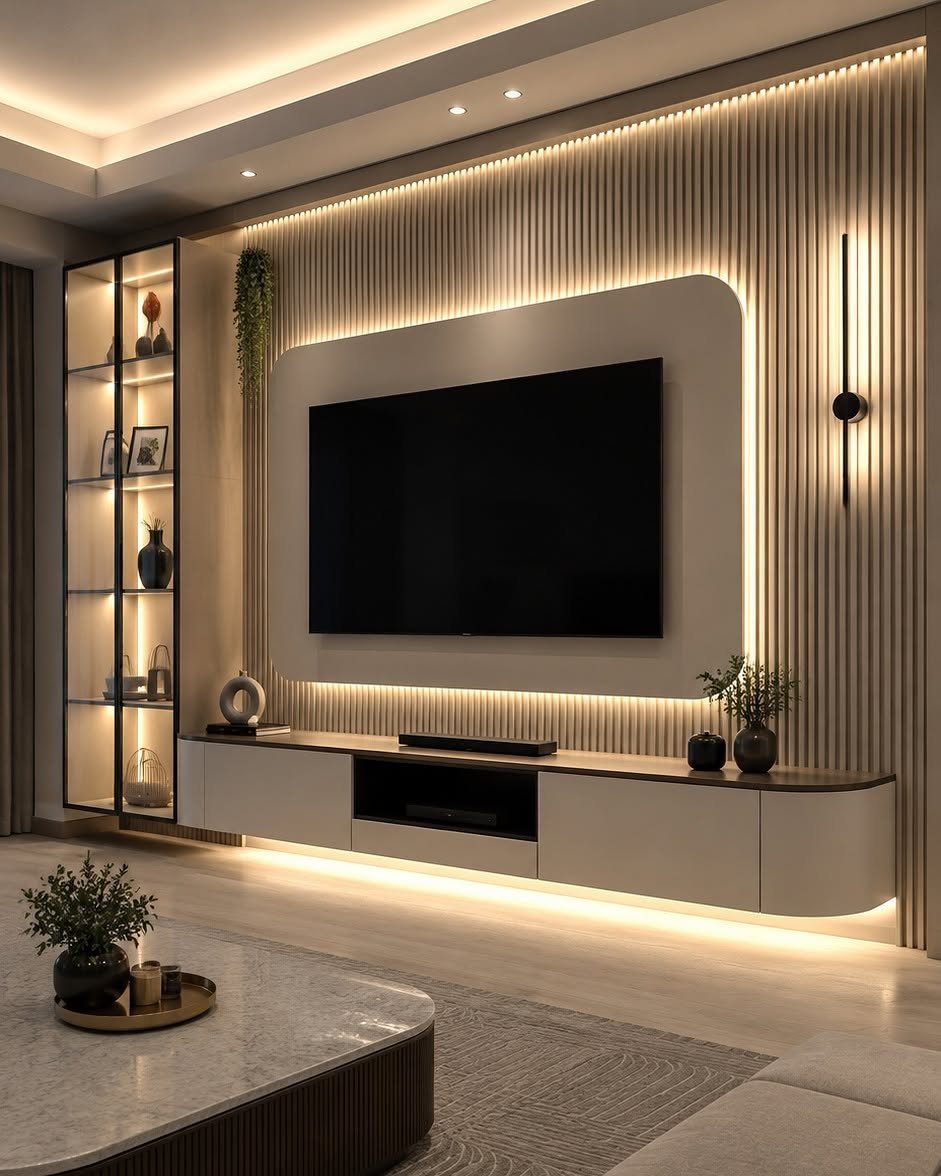
Moving the TV to its own wall frees the fireplace to be just a fireplace. I like this setup because each feature gets its own spot and neither has to compromise on height or size.
A slatted panel with a floating console beneath gives the screen a frame, so it reads as a designed wall instead of a black rectangle.
Backlighting adds depth at night, and a shelving unit to one side balances the width. It takes more wall space and more weekends than a simple mount, so start with the panel.
3. Built-Ins Next to Fireplace
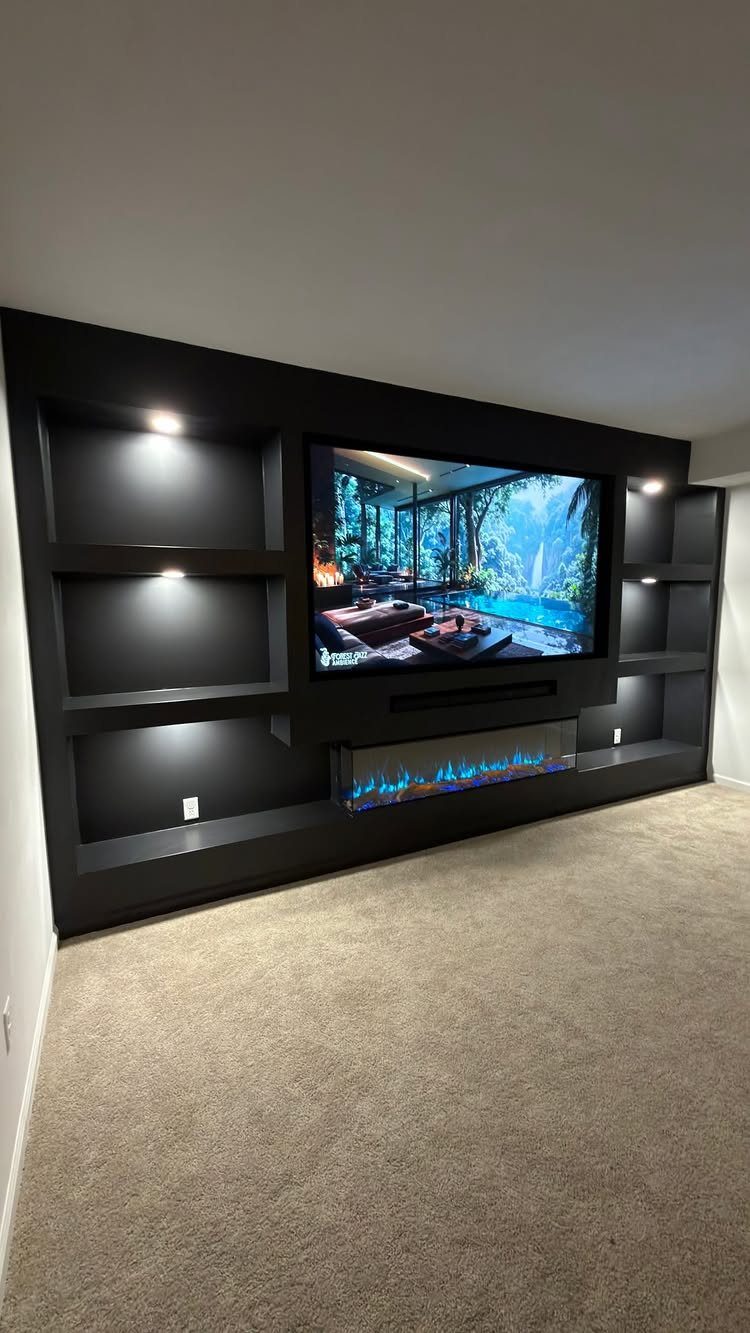
Built-ins on either side of a fireplace give the TV a home inside the architecture. Painting the whole unit one dark color, as in this black wall, makes the screen blend in when it’s off.
Plan the cabinet depth around the TV and any media gear first, then size the shelves. Built-ins are the pricier route, so a linear electric fireplace in the center can keep the build simpler.
4. TV Beside the Fireplace
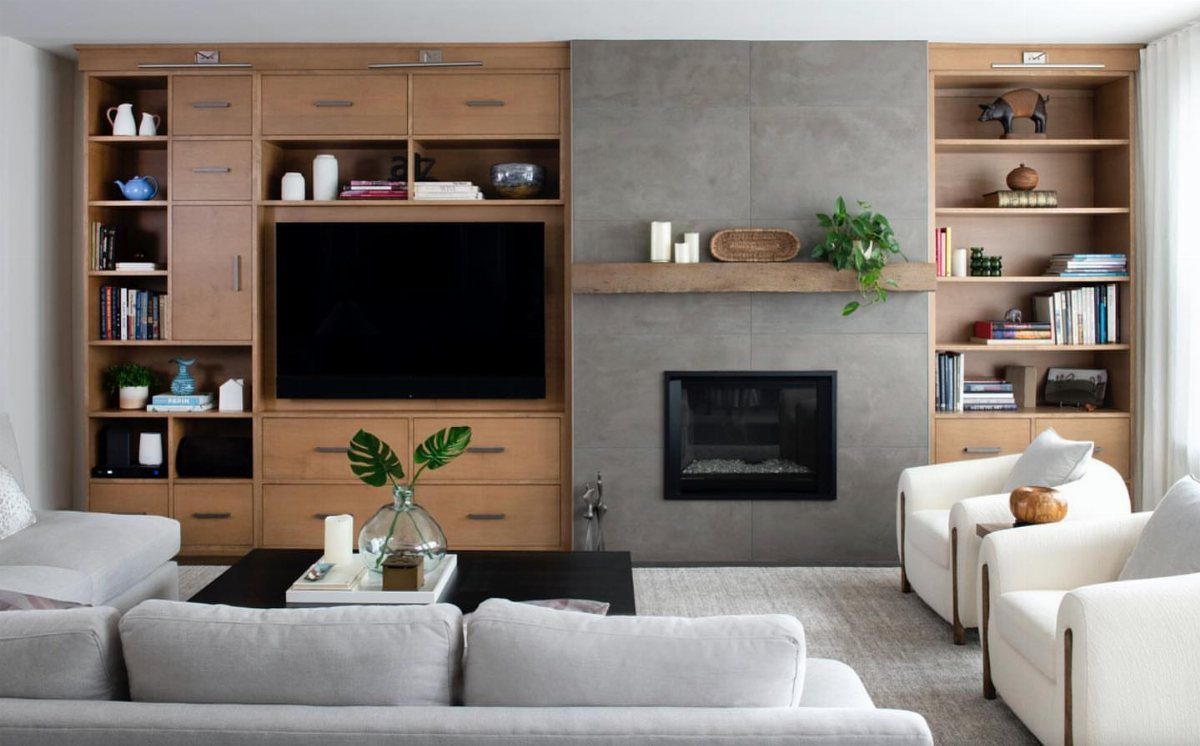
Setting the TV beside the fireplace puts the screen at eye level, which is the biggest comfort win of any layout on this list. Neck strain from a high mount disappears.
Wooden shelving built around the screen, next to a concrete fireplace, makes the TV read as part of the wall instead of a black rectangle added later.
Angle the seating so the sofa and armchairs can see both the screen and the fire, since a straight-on sofa often leaves one of them behind a shoulder. My pick for anyone who watches more TV than they light fires.
Safety and Heat Management
Heat is the one thing that can quietly shorten a TV’s life, so test the wall before you mount anything. Gather an infrared thermometer, painter’s tape, and a timer.
Mark where the bottom edge of the TV would sit with a strip of tape, then burn the fireplace for 30 minutes at your usual setting.
Point the thermometer at the wall along the tape, and take a few more readings a few inches higher and lower. Anything under 90–95°F (32–35°C) at the planned screen height passes my test.
A hotter wall still leaves choices: a deeper mantel or a heat deflector can help, or the TV can go to the side of the fireplace, into a corner, or onto a different wall. A mobile stand also works.
Gas inserts are easier, because you can search the manufacturer’s site for your exact make and model number. Most spec sheets include diagrams that give the mantel height and depth the maker recommends.
Furniture Layout
Decide what the room does most, then point the seating at that.
If movie nights win, the sofa faces the TV and the fire sits in your peripheral view. Forcing both into one sightline usually makes it awkward.
Swivel accent chairs solve a lot.
Seats angled this way let people face the screen for a movie, then swing back toward the fire to talk. Lightweight chairs you can drag around do the same job.
A big, square room works better with the sofa floated away from the wall. Floating it makes the space feel cozier and leaves a walkway behind the seating, which also helps traffic flow.
A sectional with a chaise or return leg can mark where the living area ends and the dining or kitchen space begins.
Set an area rug under the seating to tie the group together. If people will see the fireplace wall from behind the sofa, style it so it looks good from that side too.
Aesthetic Considerations
Scale matters more than style. A TV that is too big or too small for the fireplace looks off, and neither should overpower the other.
A few plants, books, and small objects placed around the TV take the edge off its techy look.
When switched off, a Samsung Frame TV can show any of hundreds of artworks, so it looks like a framed piece instead of a black rectangle.
It won’t fix a mount that’s too high or a cluttered mantel, so those still need solving.
Frequently Asked Questions
Should I put the TV in front of the fireplace?
Only if the fireplace is decommissioned or no longer works, since a console in front of a working firebox blocks it. Otherwise a separate media wall or a spot beside the fireplace is the better call.
A fire burning across from the screen throws flicker and reflections off the glass and the surround, and that washes out the picture, so I’d pick a TV with an anti-glare coating.
Are TVs over fireplaces still in style?
Yes, and the reason is mostly practical: newer open-plan homes have little wall space, so one wall often has to hold both the fire and the screen. Modern heat management on gas fireplaces makes that layout workable.
Can I mount a TV over my fireplace?
Yes, and that goes for wood-burning, gas, and electric units alike. If the wall tests too hot, move the TV beside the fireplace, into a corner, or onto another wall.
What is the ideal height for a TV above a fireplace?
Pages on this topic suggest roughly 40–43 inches from the floor, but a mantel usually pushes the screen higher than that.
Before you drill, sit on the sofa and measure from the seat up to where the center of the screen will land.





