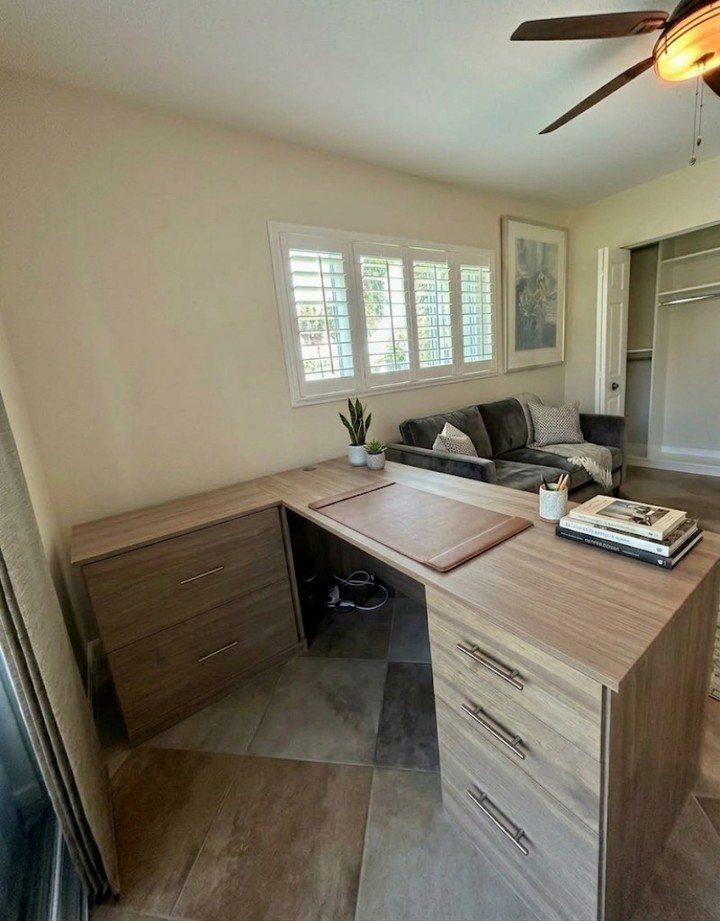
The ideas here run from a floating corner shelf desk that keeps the floor clear to a built-in cabinetry corner desk, and the shape of your corner decides which one fits.
A tight nook, closet or hallway end calls for a triangle or wall-mounted top, while a room with 2 open walls can take an L-shape with drawers.
Budget narrows the choice further, since a live edge slab or a curved wooden top costs more than a standard L-shaped desk, so I’d price those two against the L-shape before committing.
1. Floating Corner Shelf Desk
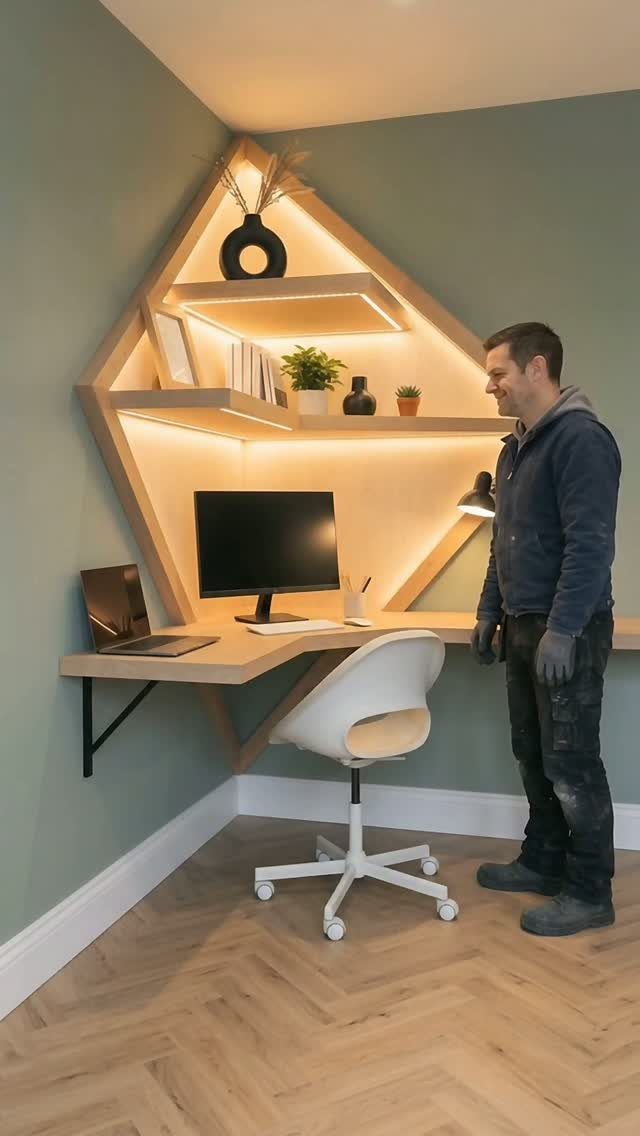
Wall-mounted desks like this one leave the floor open, which matters in a corner where a chair, a rug or a bin of cables would otherwise crowd you.
The geometric shape fits the corner and keeps the surface from feeling like a plank stuck to the wall.
Mounting is the part to take seriously.
Find studs and anchor into them, since a monitor and a leaning elbow load the desk more than you’d expect. I’d add the shelves and lighting only after the desk itself is solid.
2. L-Shaped Corner Desk
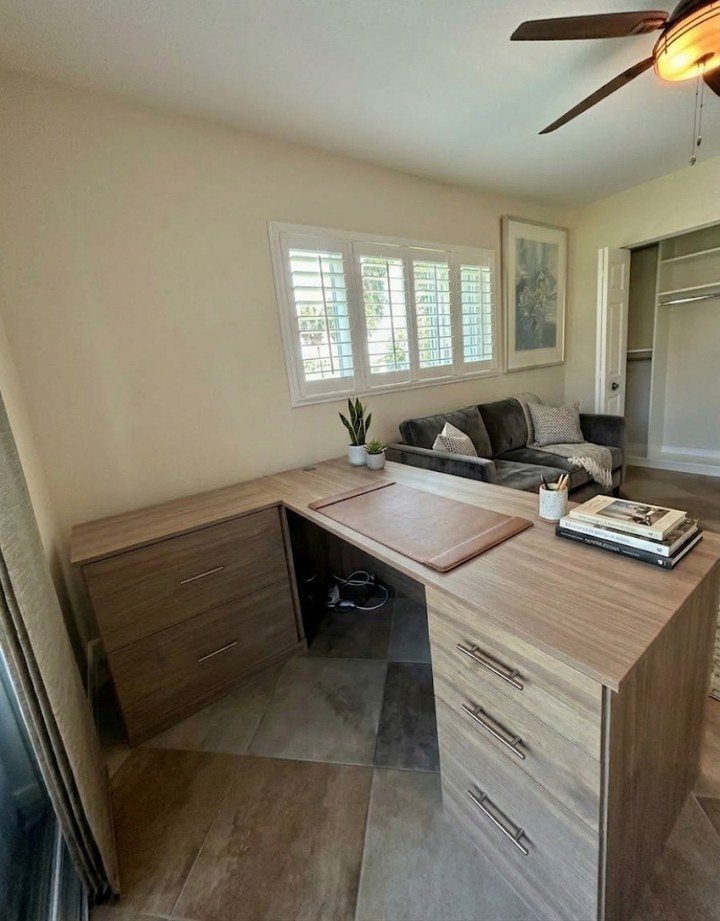
2 work surfaces meeting at a right angle give you a place for the laptop and a separate place for paperwork, which is why an L-shape beats a straight desk in a tight room.
Light wood, as here, keeps a corner from looking heavy.
Drawers are the feature I’d hold out for on a budget.
They hide the chargers and notebooks that otherwise end up on the surface. Before buying, measure both walls and leave room for the chair to pull out.
To make the most of every square inch in your corner office, buy an L- or corner-shaped desk to serve as your work surface.
— Hunker
3. Compact Triangle Desk
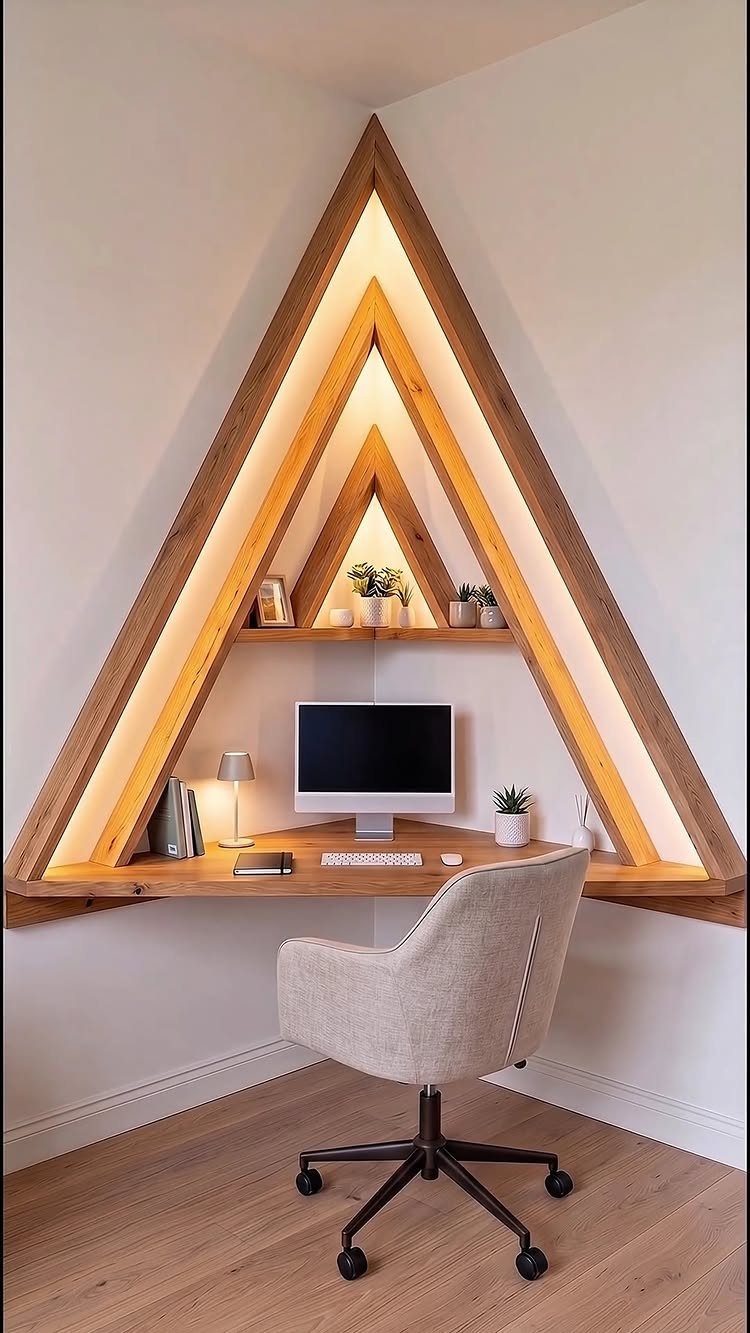
A triangle desk fills the exact wedge of a corner and nothing else, so it suits closets, hallway ends and bedroom nooks where an L-shape would block the walkway.
Built-in shelving above the desk uses wall height instead of floor space, so a triangle top can stay small while books, bins and a printer sit at eye level.
Surface depth is the limit.
One monitor and a keyboard fit; a second screen and a stack of files won’t. If you work on a laptop, this is the smallest setup I’d happily live with.
4. Corner Desk with Bookshelf
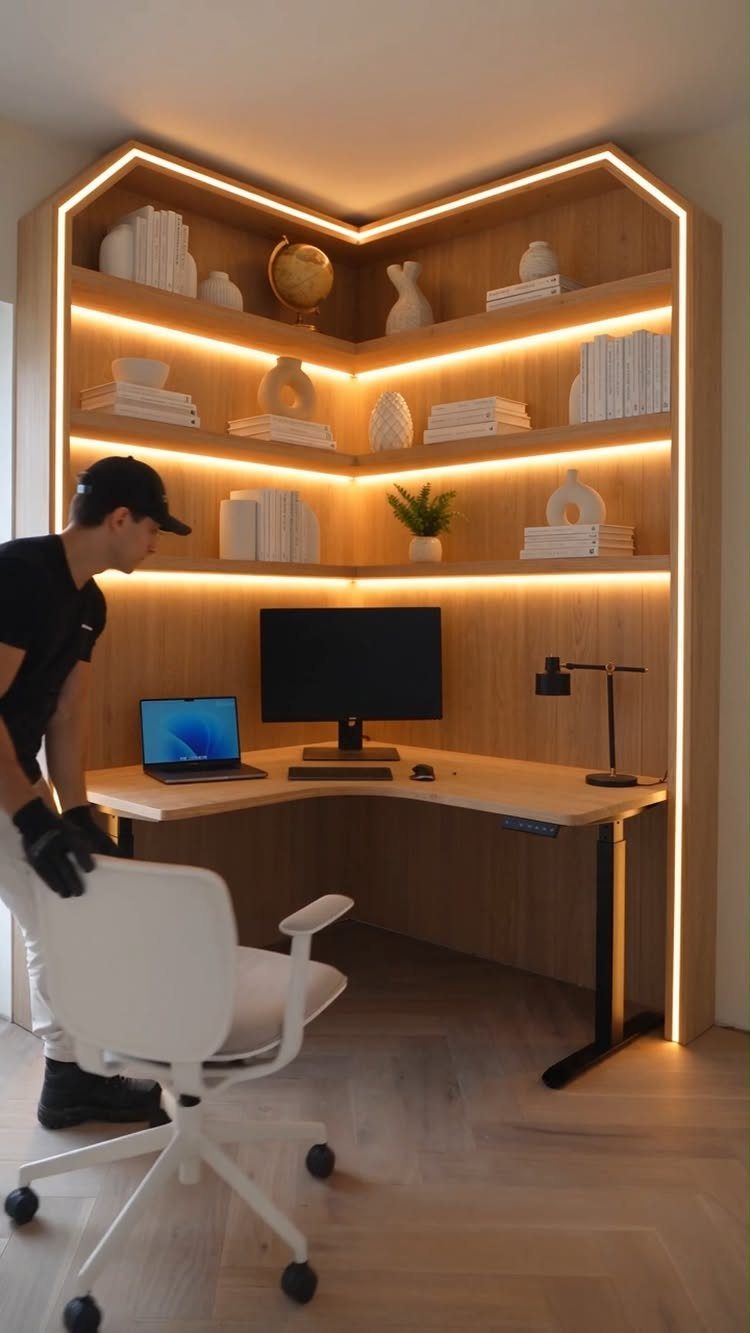
Books, binders and a printer need somewhere to go, and shelving built right into the desk keeps them within arm’s reach instead of spread across the surface.
An L-shaped layout with backlit shelves, like this, puts the storage at the back of the corner where it stays out of the way.
I’d choose this over a freestanding bookcase beside the desk, which eats floor space. Keep the heaviest items on the lower shelves and the lighting strips on the upper ones.
5. Minimalist Corner Home Office
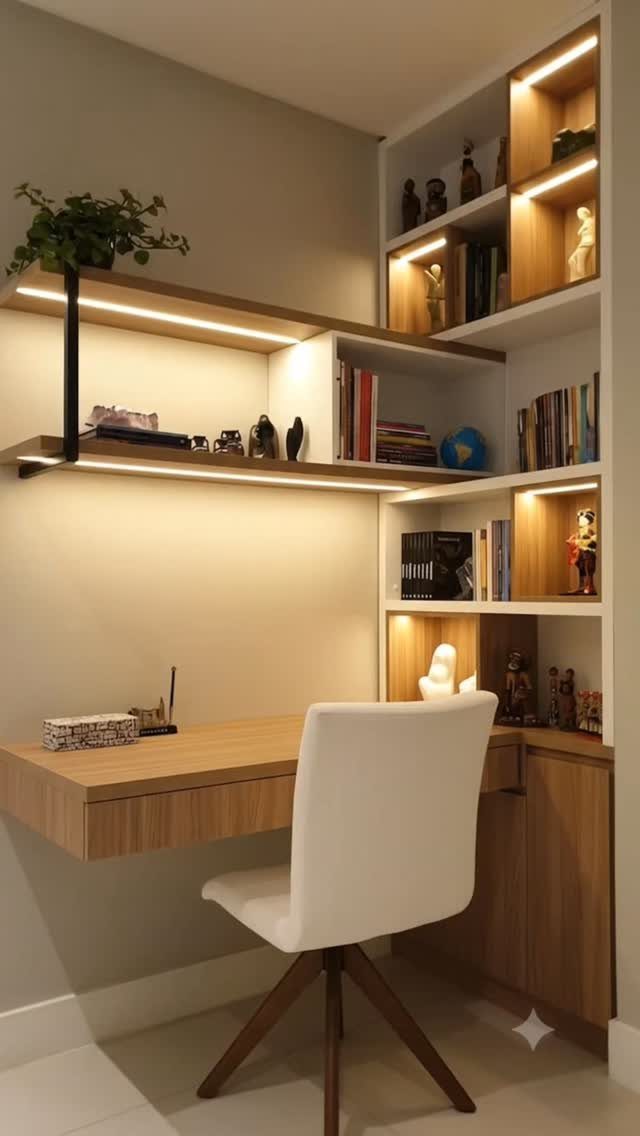
In the smallest corner, fewer pieces do more. A floating light wood desk, one white chair and a few shelves leave the room looking open, and the pale tones keep it from closing in.
Edit hard.
I’d let the shelves hold books and two or three decorative objects, and keep everything else in a drawer or box. Clutter shows fast in a corner this small, so a tidy surface is the whole look.
6. Live Edge Corner Desk
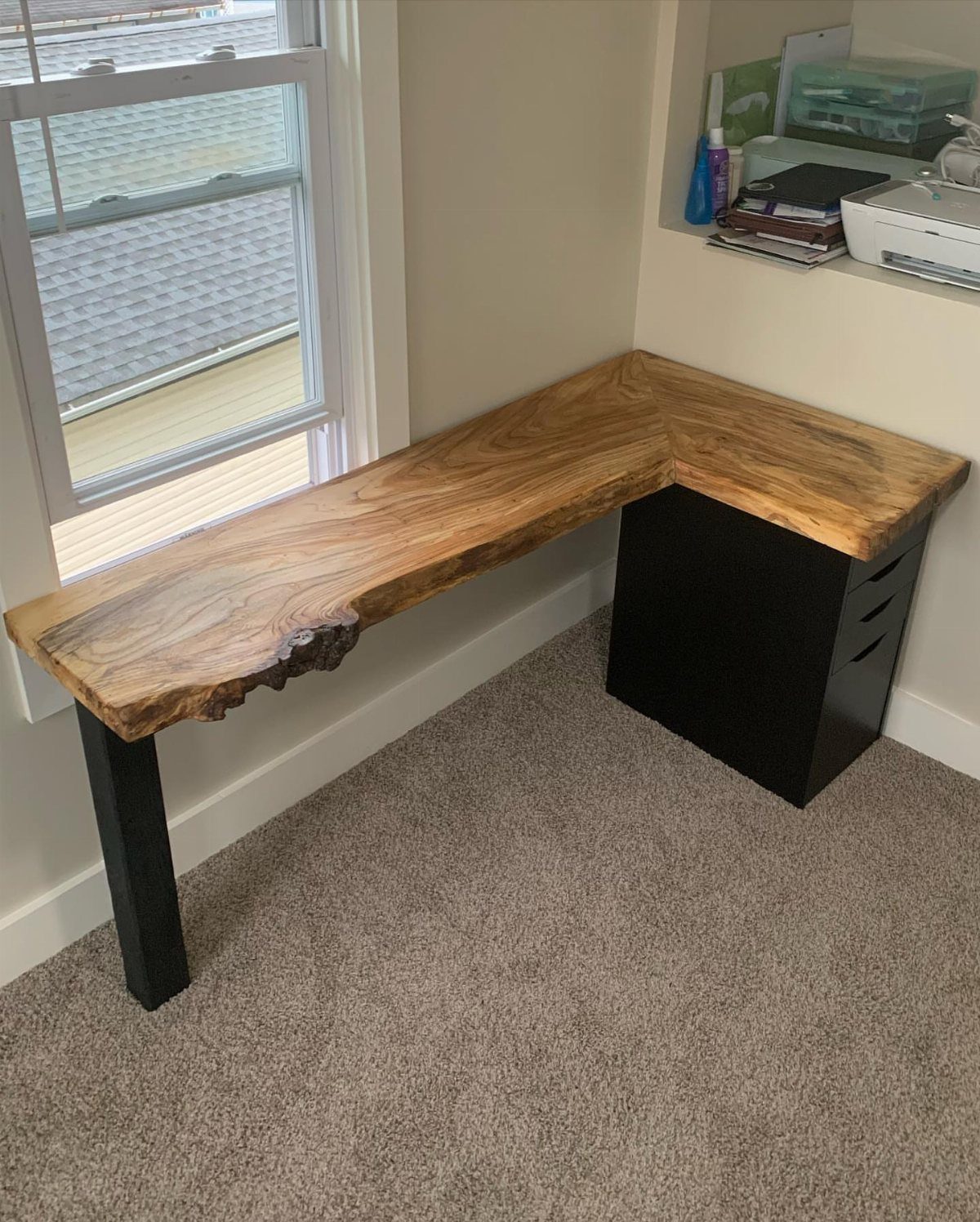
A live edge slab brings a natural, uneven outline to a corner, so the desk looks like furniture instead of an office product.
Black drawers and a black support leg ground a live edge slab and keep it from reading rustic, which suits a small office better than raw wood on every side.
Placing it beside a window works well, since the grain looks best in daylight. Expect a higher price than laminate, so I’d shop secondhand or look for offcuts before paying for a full custom slab.
7. Corner Desk with Accent Lighting
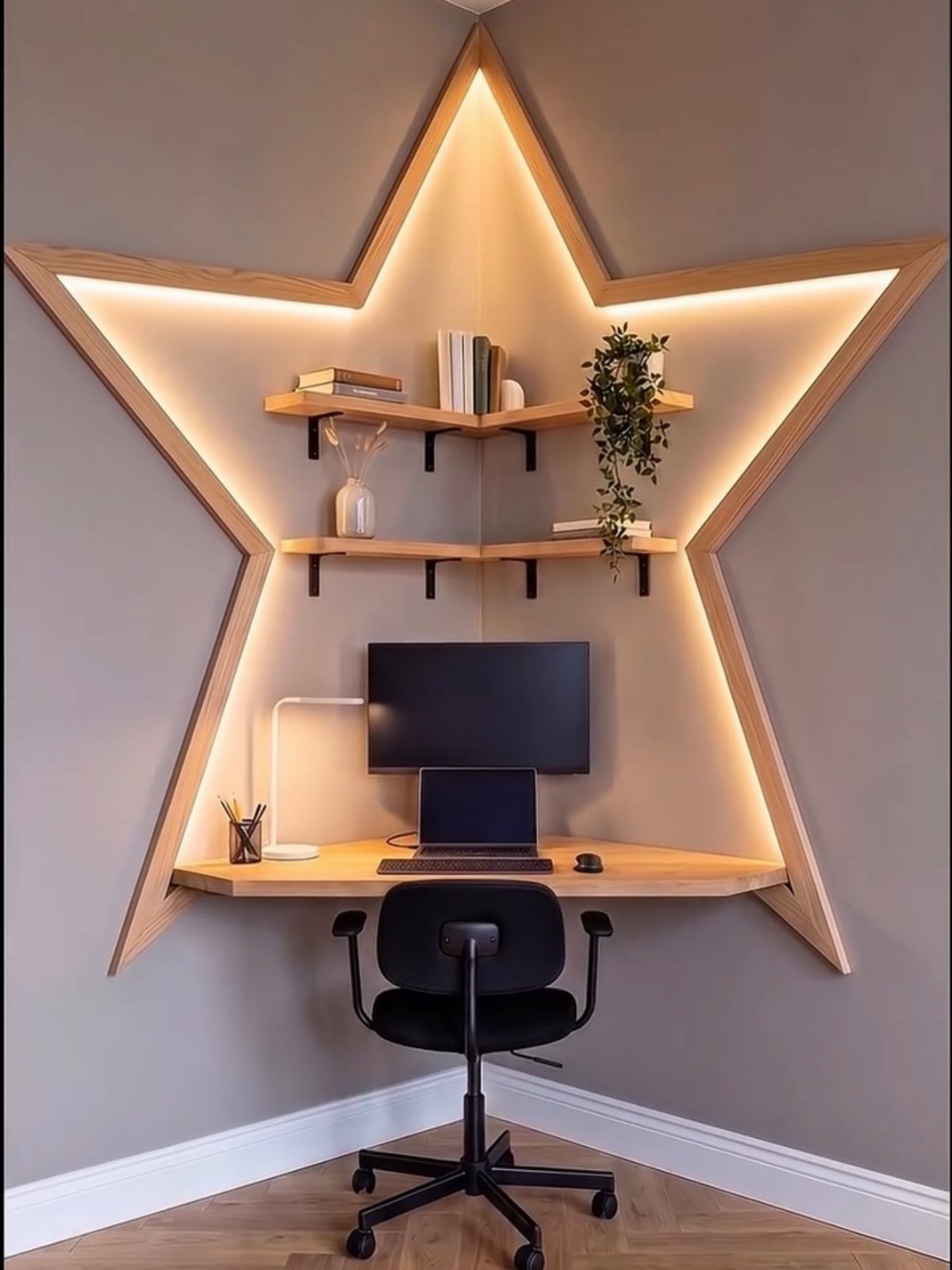
A star-shaped wooden frame with lights built in turns the wall above a desk into a focal point, and it does the job of a task lamp too.
The shelves tucked into the frame hold books and small objects without needing a separate bookcase.
Against a grey wall, the warm glow stands out more than it would on white. I’d choose a warm bulb color for a work corner, since a cold one feels clinical by evening.
If a custom frame is out of budget, a plain light strip on a shelf edge gives a similar glow.
8. Corner Desk by the Window
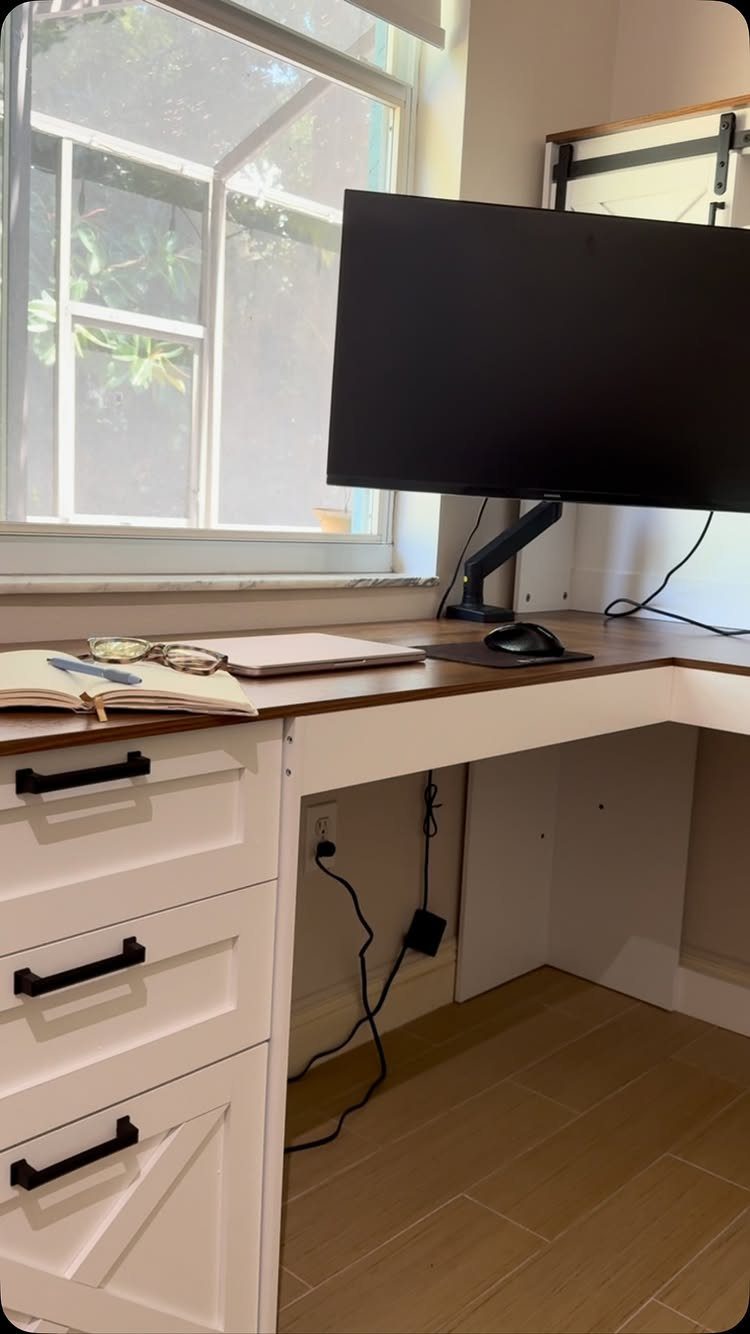
A white desk with a wood top suits a window corner because the white base stays quiet while the wood warms the surface. Drawers underneath keep the notebook and chargers out of sight, so the view stays the main feature.
Set the monitor so the window sits to the side of the screen, not behind or in front of it, which avoids glare. Facing the glass directly invites reflections.
A light desk also reflects daylight back into a small room, which I count as a bonus on a budget.
9. Curved Wooden Corner Desk
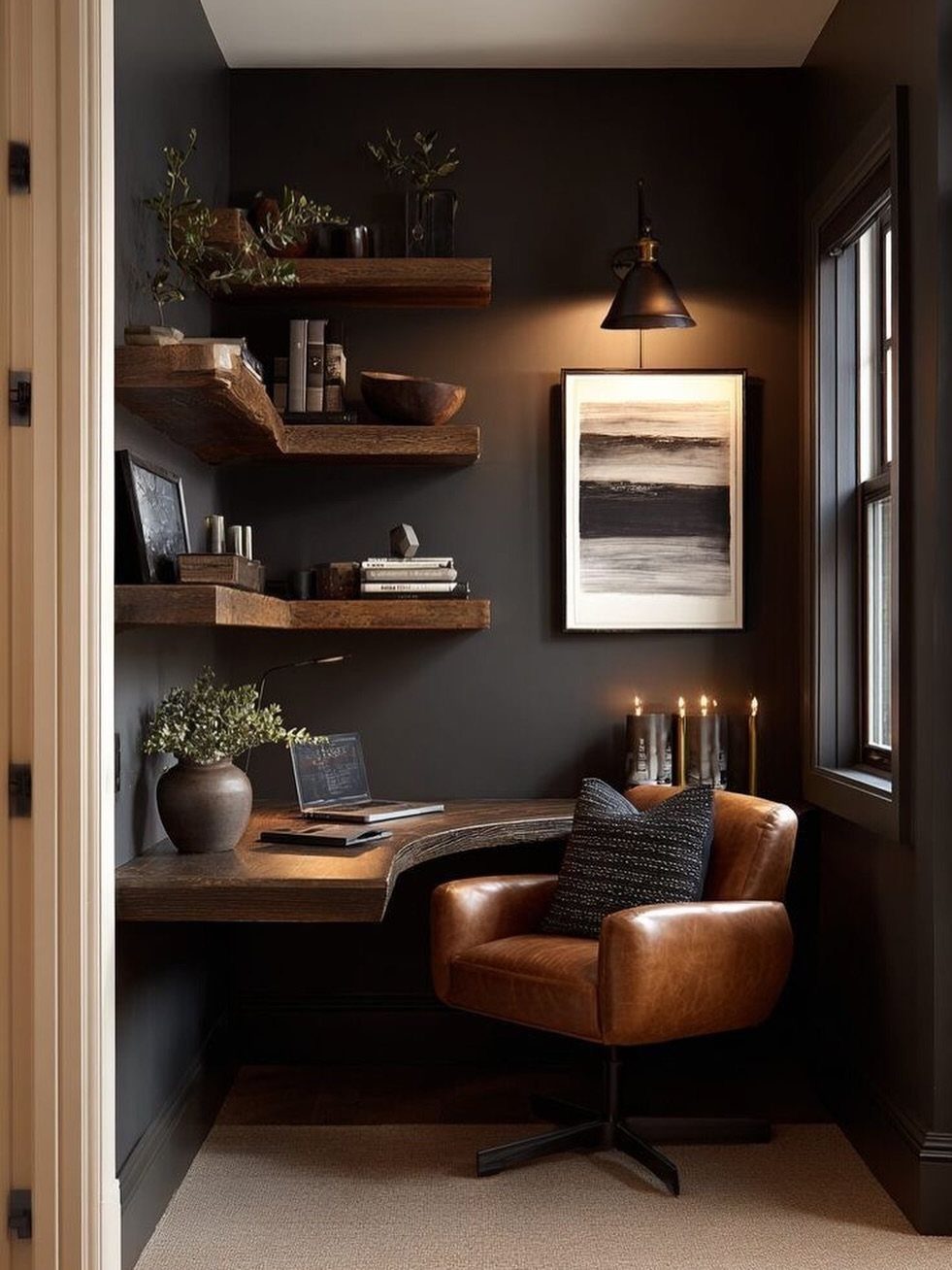
A curved corner softens a dark room. Where a square desk would add another hard edge to charcoal walls, the rounded wood top gives your hip and elbow somewhere gentle to land in a tight nook.
Matching floating shelves in the same wood tie the corner together, and a brown leather chair adds contrast against the dark paint. I’d keep the art and lamp small so the wood stays the center of attention.
Curved tops cost more than straight ones, so I’d price a custom cut against a standard L-shape first.
10. Built-In Cabinetry Corner Desk
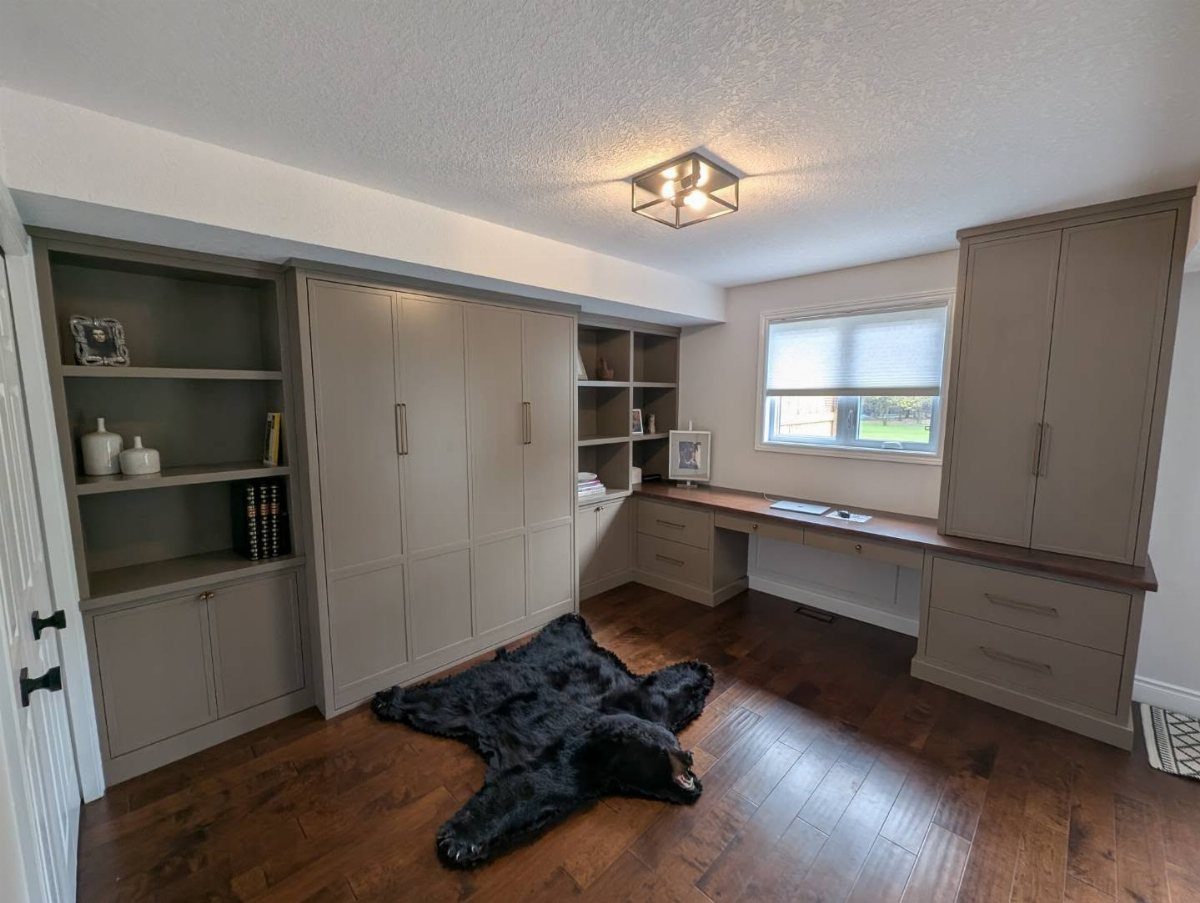
Built-in cabinetry wrapping a corner turns the whole wall into one piece of furniture: grey cabinets below and a long wood surface on top, with no gaps where dust and cables collect.
The long run gives room for a laptop, paperwork and a second work zone.
This is the priciest route on the list, and it’s custom work. I’d compare it with stock cabinets topped by a single wood slab, which gets close to the look for far less.
Whichever you pick, leave space under the window for the chair to slide out.
Ergonomics and Comfort Tips
Start with the chair: raise or lower it until your forearms run flat and your elbows are level with the keyboard, then adjust everything else around that.
Then raise the monitor until the top of the screen is near eye level. An adjustable chair makes both steps possible, and a fixed-height seat can’t.
If your feet dangle once the chair is set, add a footrest. One with a 0–20° tilt lets your ankles move instead of locking in one position.
Corner nooks tend to trap your legs, so check what sits under the desk.
Keep the space under the desk clear of legs, cable baskets and storage boxes so your knees never bump anything, because corner setups tend to trap the lower body there.
Keep cables and power strips off the main leg path, and slide storage boxes out to the sides.
An anti-fatigue mat helps if you stand for part of the day.
Storage Solutions
Every corner office needs a home for supplies, and a desk with built-in drawers or shelves is the easiest way to get one. A filing cabinet within reach does the same job if the desk has none.
Keep them to what you reach for daily.
Don’t overlook the wall beside the desk.
A row of hooks holds bags, sweaters and blankets, which would otherwise pile up on the chair or the floor. It’s a cheap fix, and it takes a few minutes with a drill and a level.
Aesthetic Considerations
Make the corner yours with a few personal touches. A plant, a piece of art or a quote you actually like gives the space a reason to be pleasant at 3 p.m. on a slow day.
A soft rug adds warmth underfoot, though check that your chair rolls over it without catching.
In the smallest corner, restraint works better than piling things on. An articulating wall sconce supplies task light without using any desk surface.
Frequently Asked Questions
Does a corner desk take up less space?
Yes, usually. A corner desk fills an angle that would otherwise sit empty, which frees floor space for other furniture.
Yes, if you pick the right shape: a triangular top sits snug in the wedge of a corner, while a wall-mounted desk keeps the floor clear for a chair, a small rug or a rolling bin.
What are some ideas for a home office desk?
An L-shaped desk with drawers is the one I’d pick for most tight rooms. Two surfaces at a right angle give you one spot for the laptop and another for paperwork, and drawers hide chargers and notebooks.
Built-in shelving or a desk with a bookshelf works well if you also need a place for books and a printer.
What are some good items to decorate my office desk?
A plant, a piece of art or a quote you actually like are the easiest picks.
They make the corner pleasant to sit in without crowding the work surface. Stick to 2 or 3 pieces, because a corner shows clutter fast, and I’d put them on a shelf above the desk so the work surface stays open.





