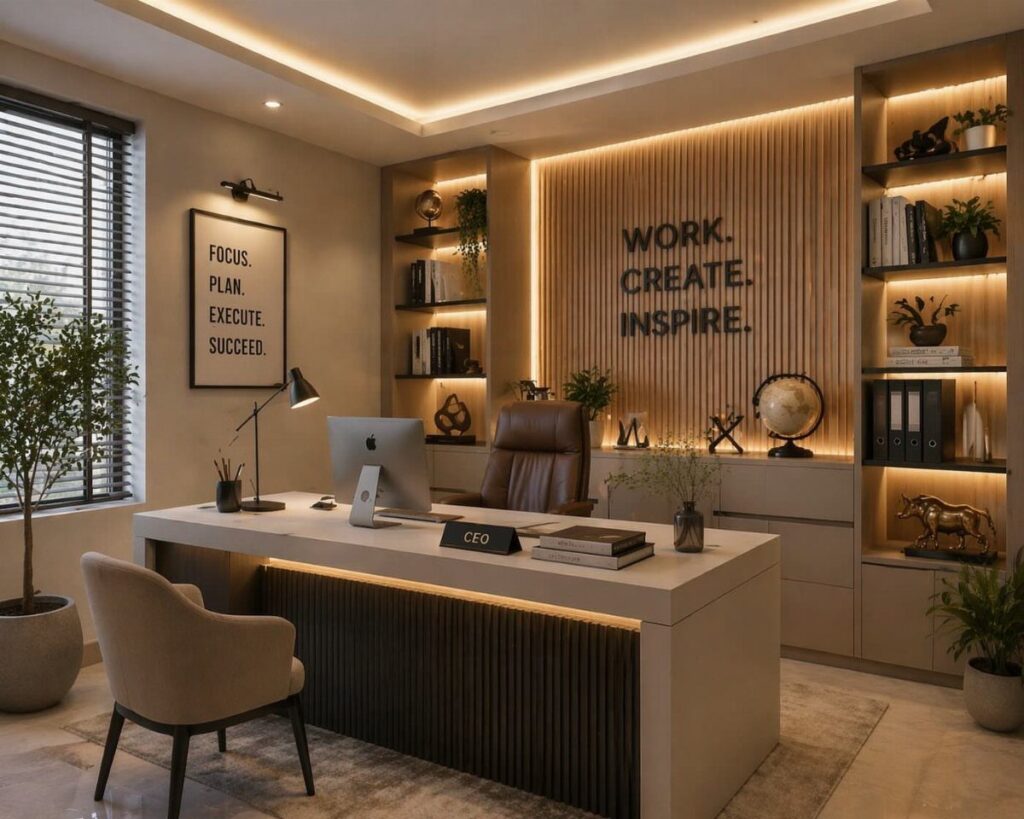
The ideas here run from a free fix like clipping cables out of sight to a bold accent wall, and most sit closer to the cheap end: a vintage desk, a few drawers and wall organizers, a plant by the window.
What decides which one is yours is the room you actually have: a separate room with a door gets a different setup than a cozy corner of the living room, and a rental rules out anything you can’t undo later.
Start with the space, then spend first on the chair, since a supportive one matters more than any look.
1. Separate Room Workspace
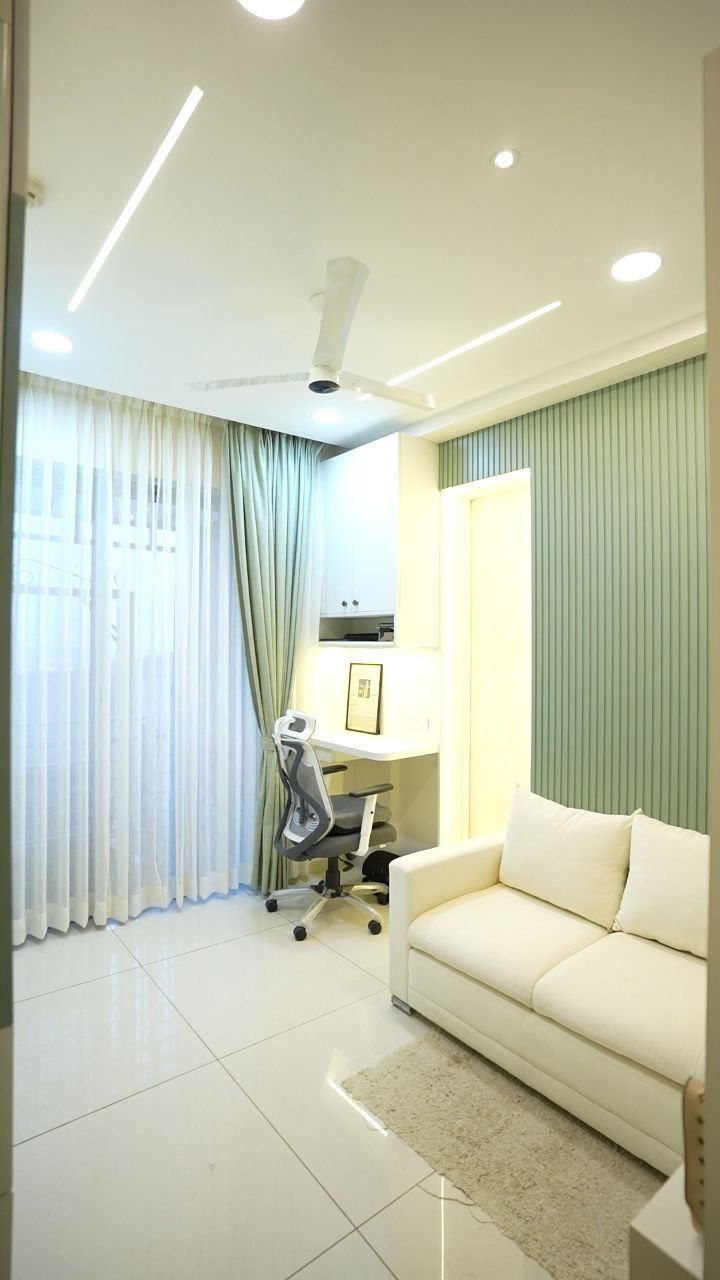
A door you can close does more for focus than any desk upgrade. In a spare room, even a small one, work stays in one place and ends when you walk out.
I’d pick a room with a window and put the desk where daylight falls beside the screen, not on it.
A sofa like this one earns its spot too, giving you somewhere to take calls or read without sitting at the desk all day.
Pick the room first, since the desk, lighting, and storage all depend on it.
Healthy separation is also paramount in Wanty’s book. “If you don’t have a dedicated home office, you can still find subtle ways to close off your workspace from the rest of your home so you don’t see your work when you’re off-duty,” she says.
— Glamour
2. Minimalist Look
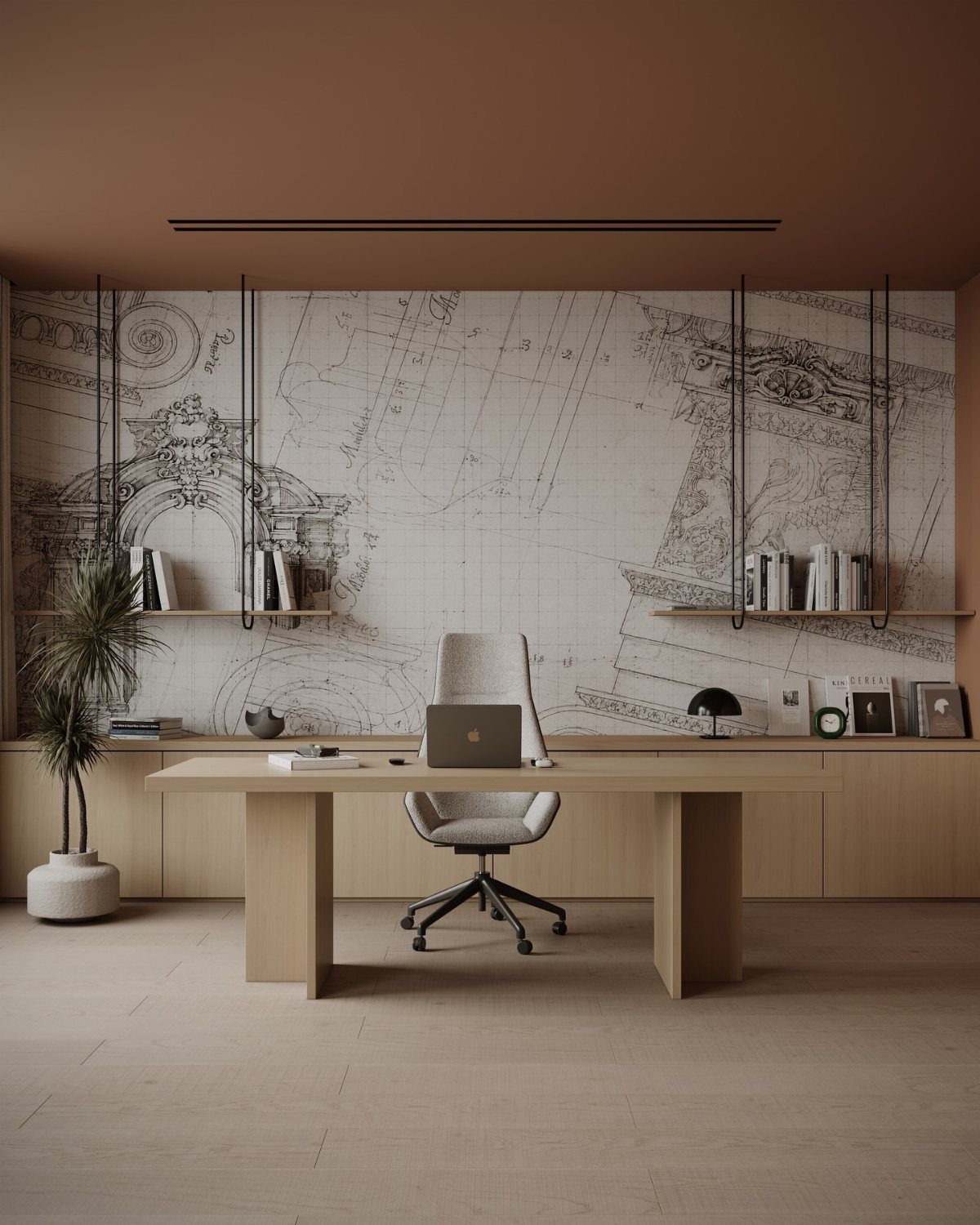
Minimalism works best when you decide what earns a place on the desk and send everything else elsewhere.
A light wood top, one chair, one plant and a couple of small shelves leave very little to look at besides the work.
Keep the shelves for things you reach for daily. If a wall feels too bare, a single large graphic, like a sketch mural, adds interest without adding clutter.
3. Drawers, Shelves, and Wall Organizers
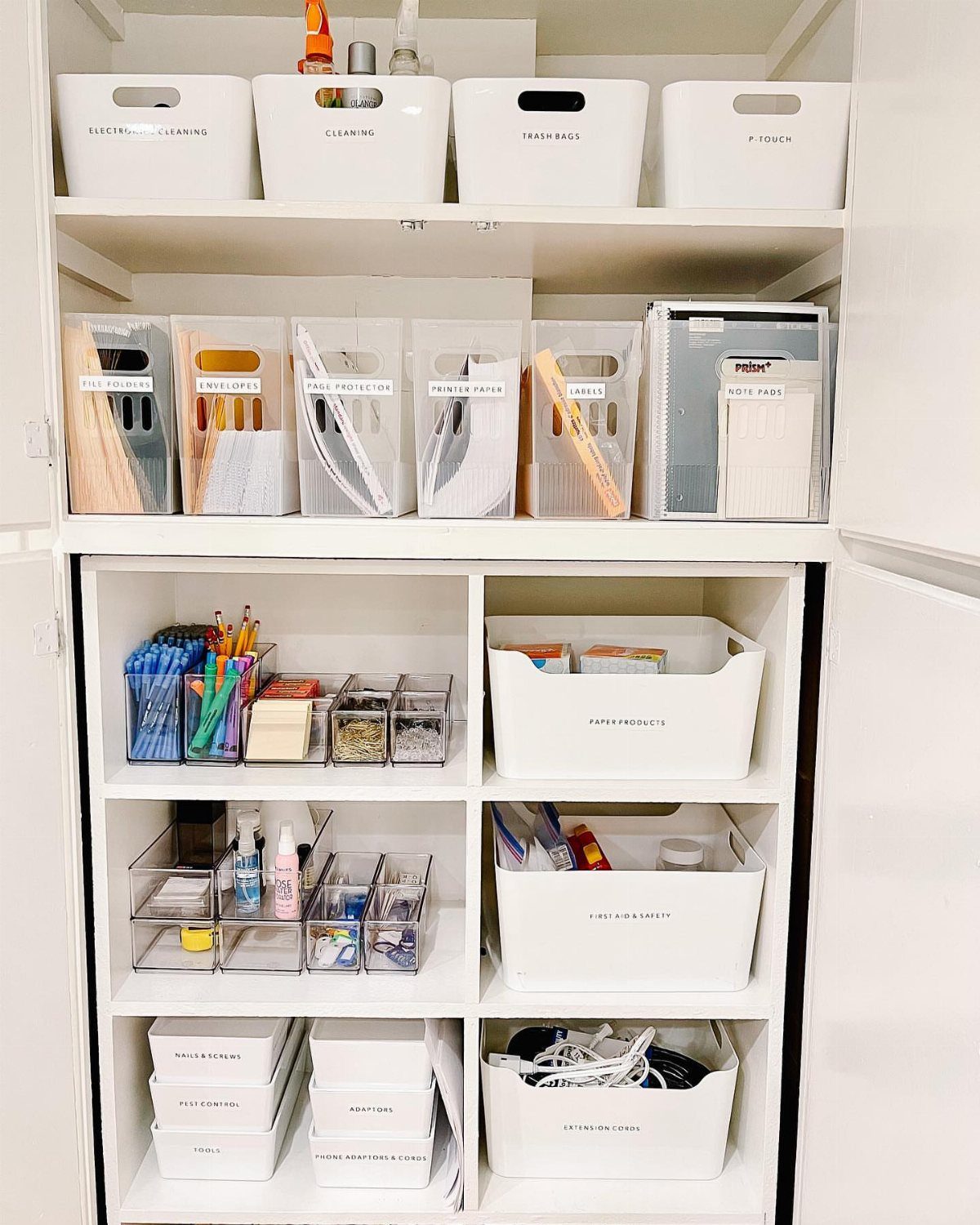
Labeled bins do the quiet work in a home office. When every bin has a name, supplies go back where they came from, and the shelf stays tidy without effort.
I like a mix: clear folders and open containers for daily items, closed bins for anything unsightly, like cleaning products or a first aid kit.
Label the front of each bin, then put the most-used ones at arm height. Seasonal or rarely touched items can go up top.
4. Cable Trays, Clips, and Grommets
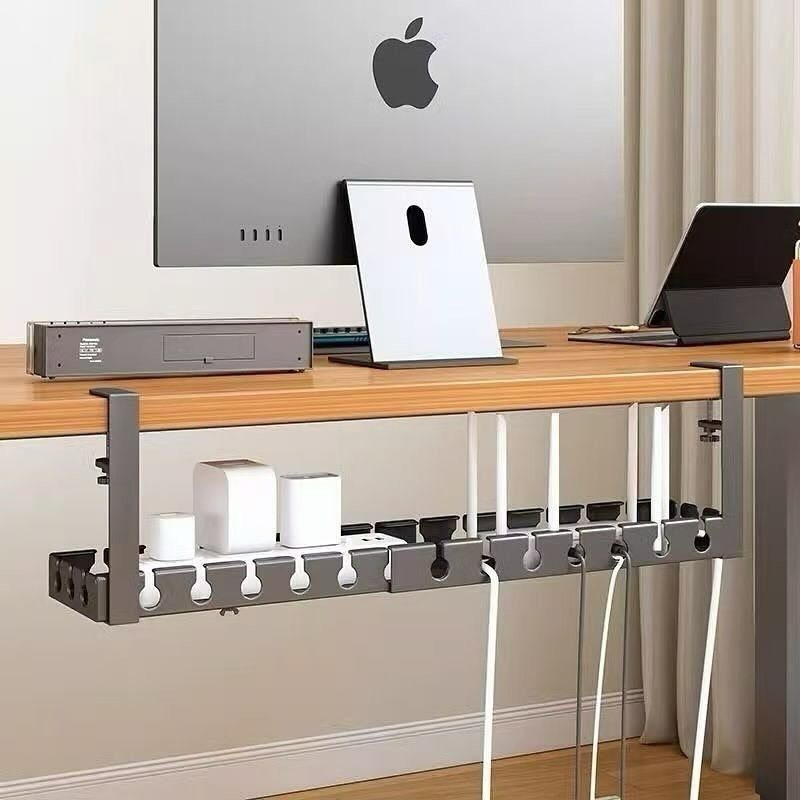
Mounting a tray under the desk takes power strips and adapters off the floor, which is where most cable mess starts. Cords that would dangle behind a desk sit out of sight, and vacuuming gets easier.
Set the tray toward the back of the desktop’s underside, near the outlet.
Plug in the adapters first, then lay the cords in and tuck the excess so nothing hangs low. Add clips for the runs up to the iMac, laptop and drive.
5. Plants and Natural Light
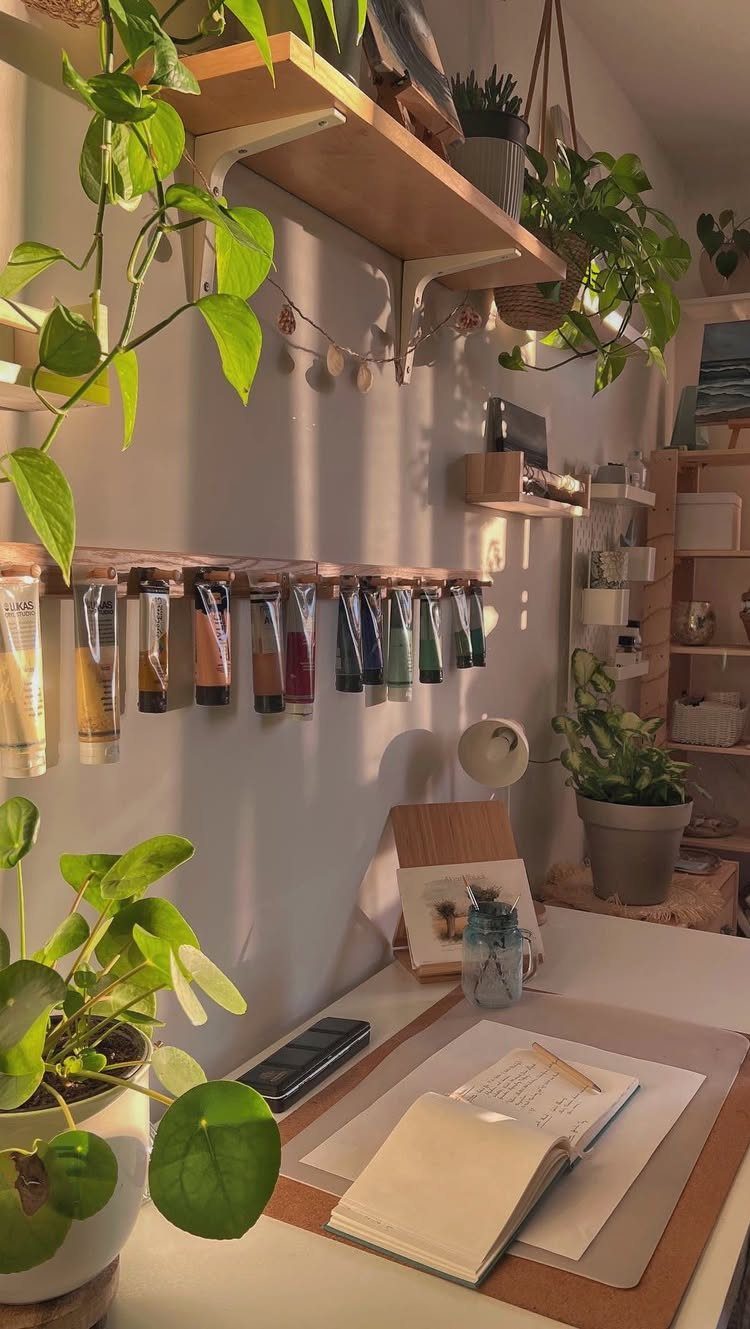
Sunlight on the desk does more for a room than most decor, and plants make the most of it. Set them on the side of the window, where leaves catch light without glare hitting your screen.
A wall rack, like the one holding paint tubes here, frees up desk surface for a notebook and one or two pots.
For a small desk, I’d pick a few plants of different heights over one large one. They add color and a bit of freshness to the air.
6. Accent Walls
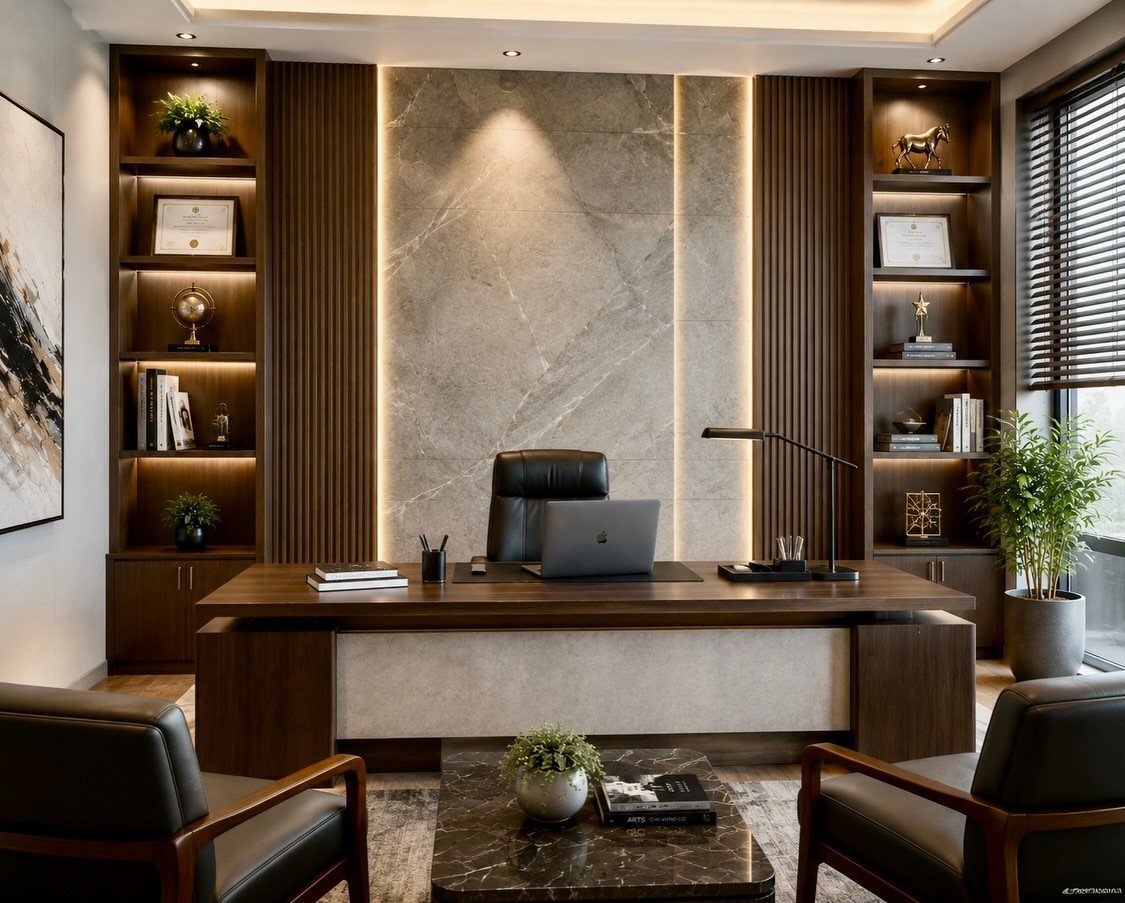
One wall in a stronger material gives a home office a focal point, and marble is the boldest version.
Behind a large desk, a grey marble wall reads as serious and calm, especially with dark wood shelving and vertical slats on either side.
On a budget, I’d copy the effect rather than the stone: paint, or peel-and-stick panels, on the wall behind your chair. That’s the wall your video calls show, so choose it with that in mind.
7. Use Vintage Decor
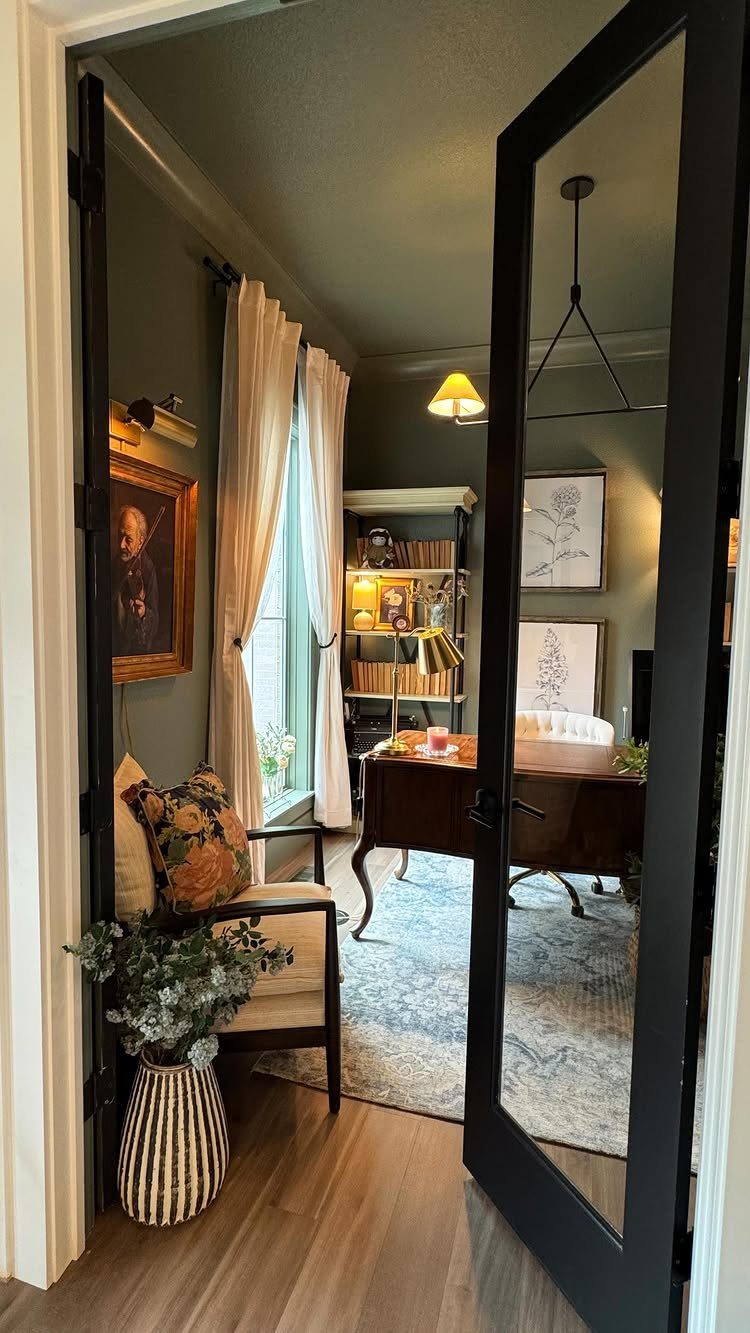
One old piece does more than a room full of reproductions. A dark wood desk with some age on it gives an olive or deep green office a grounded, settled feel that new furniture takes years to earn.
Vintage works best in a home office when 1 or 2 pieces carry it, like a secondhand wood desk or a single framed portrait, and the rest stays plain so the room doesn’t feel like a thrift store.
Pair a patterned armchair with plain walls, and keep the frame metals warm so the pieces look related. Secondhand shops are the cheap place to look.
8. Cozy Corner Workspace
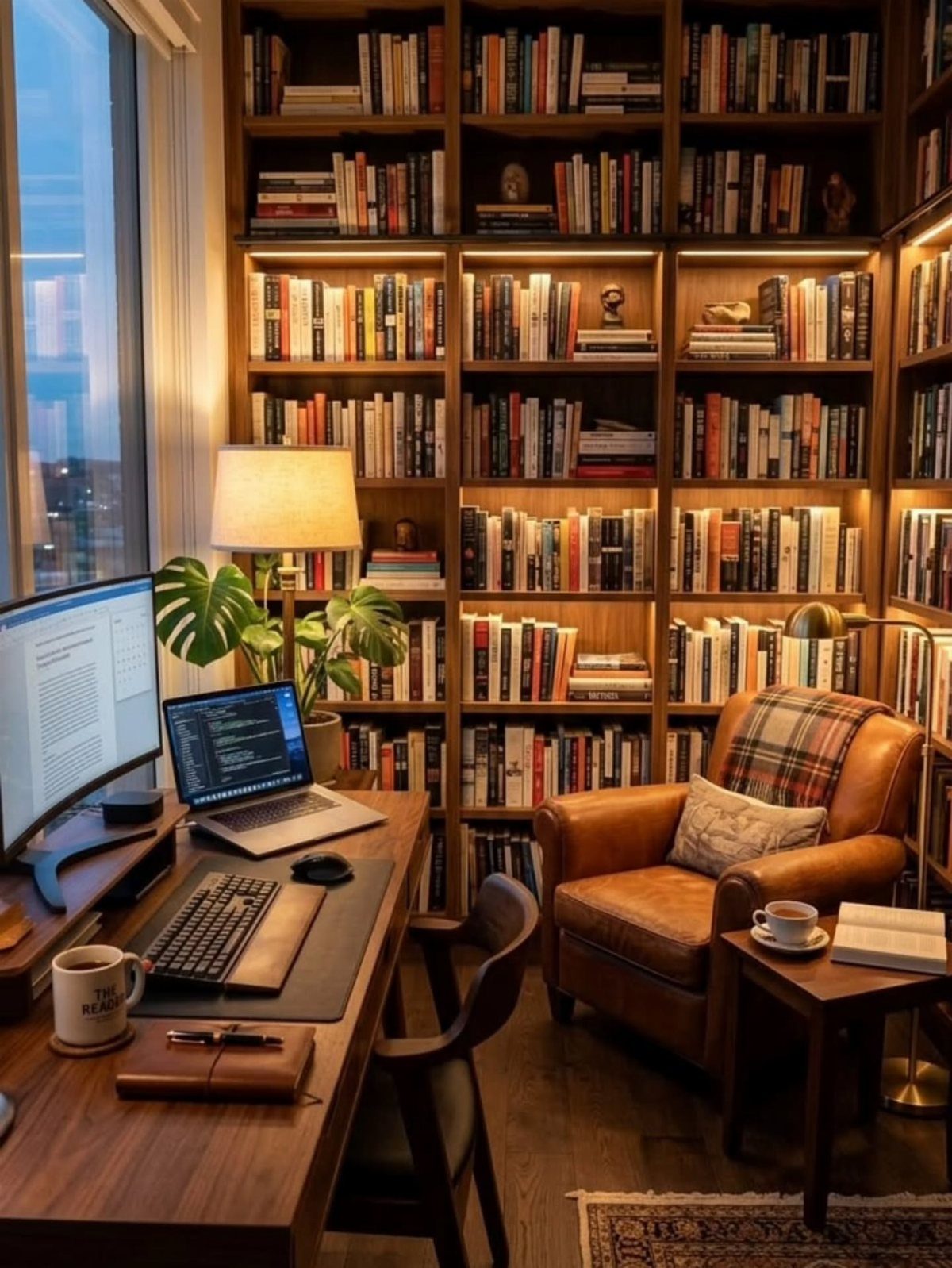
A corner can hold a full workday if you stack the storage upward instead of outward. Floor-to-ceiling bookshelves behind a compact wooden desk keep papers and books off the work surface.
Leave room on the desk for a laptop and a monitor, and nothing else. A leather armchair beside it gives you a spot for reading breaks, and a small side table holds a mug without crowding the keyboard.
I’d light the shelves too. A lit bookcase makes a tight nook feel deliberate instead of squeezed in.
9. Create a Zen Den
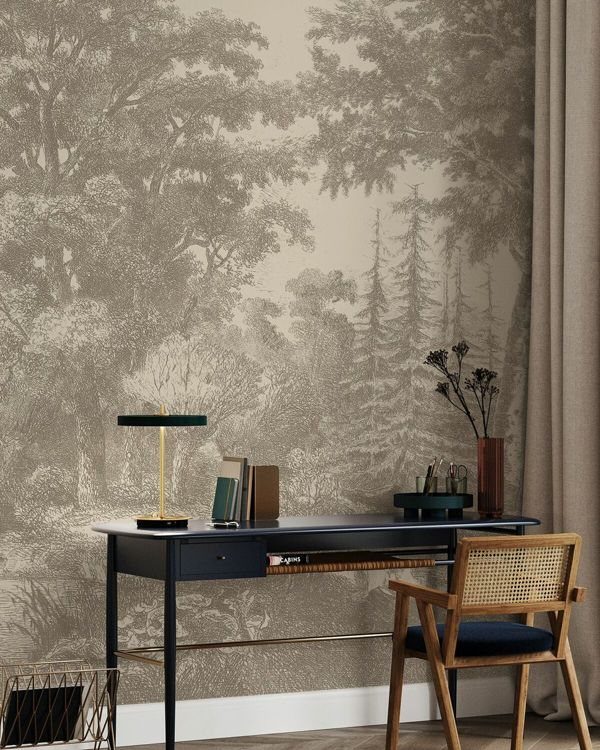
Calm in an office comes from low contrast and natural texture. A dark blue desk against a sepia forest mural keeps the palette narrow, so your eyes have nothing loud to catch on.
I’d add a cane-back chair for its light, airy weave and one warm lamp instead of overhead glare. Keep the books on the desk to a short stack.
Peel-and-stick wallpaper is the budget route to the mural, and it suits renters since it comes off the wall later.
10. Desk Tech and Accessory Setup
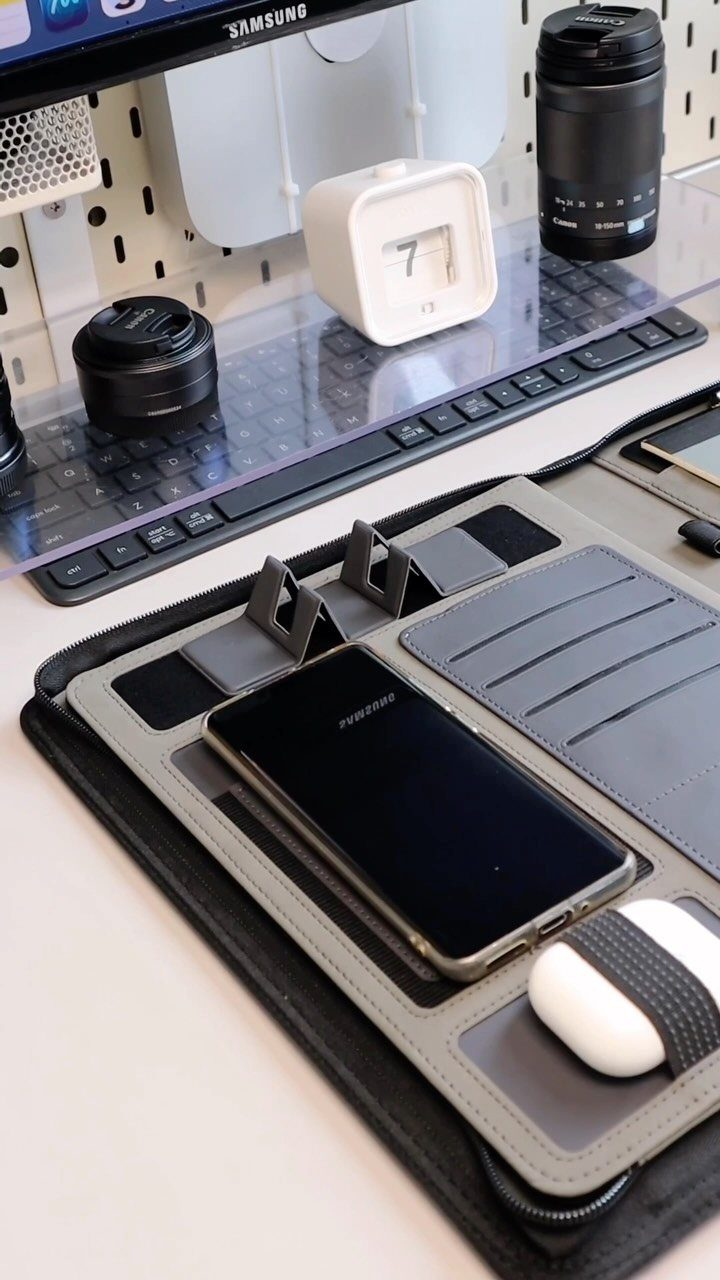
A white desk makes every accessory count, so give each one a job. A grey tech organizer holds the phone and wireless earbuds upright, which keeps cords and loose gadgets off the surface.
Set the monitor at the back, the keyboard centered in front of it, and a digital clock off to one side, where a glance doesn’t pull you from the screen.
A desk mat under the keyboard adds some softness and defines the work zone.
I’d keep camera lenses on a shelf unless you use them daily.
Importance of Comfort
Sitting for hours strains the back, neck, and shoulders, so the chair is where I’d put money first. Look for adjustable height and lumbar support that follows the natural curve of your spine.
A desk that switches between sitting and standing is the other piece worth saving for. Changing position during the day keeps you from locking into one posture until something aches.
Comfort also covers the room itself. A space that feels pleasant to be in makes the working hours go faster and easier.
Work-Life Balance
Work-life balance gets easier when the office has a spot built for stopping. A corner for decompressing does that: a folded yoga mat, a floor cushion, or one good chair where you sit with coffee.
Even a tiny corner counts. Soft lighting, a plant, or calming artwork makes it feel different from the desk, so a break actually feels like one.
Take short breaks there on a regular schedule. They reduce stress and clear your head, and they mark the line between working and not working.
If you want scent in the room, a small diffuser with a few drops of essential oil keeps the air from feeling stale.
Budget Considerations
A home office doesn’t need to be perfect on day one.
Start with the basics: a desk, a supportive chair, and decent lighting. That’s enough for a functional, good-looking space.
Add pieces as you go. Living in the room for a few weeks shows you what is missing, which beats guessing and buying everything up front.
Sketch a floor plan first. Testing layouts on paper shows what fits, leaves room to move, and saves you from returning furniture that was too big.
Keep cables under control from the start, since that costs almost nothing.
Frequently Asked Questions
How to decorate a home office?
Buy the chair first, then the desk, and fix the lighting before you hang anything; art and family photos can wait until the setup works for an 8-hour day.
A calm palette of soft neutrals keeps the room quiet, so place the desk with daylight coming from the side of the screen, and set a pothos or snake plant or two on the window ledge.
Add pieces gradually, because a few weeks of working in the room shows you what is actually missing.
What are some good ideas for low-budget interior design for a small office?
Stack storage upward with floor-to-ceiling shelves behind a compact desk, and use peel-and-stick panels or paint on the wall behind your chair instead of expensive materials.
Multifunctional furniture also saves space and money. Sketch a floor plan before buying, so you don’t return furniture that turned out too big.
What is office interior design?
It is the planning of a workspace so it is both functional and good-looking, fitted to the needs of the person using it.
In a home office that means choosing the desk, chair, lighting, storage, and decor around how you actually work. Comfort and a layout that fits the room come first.





