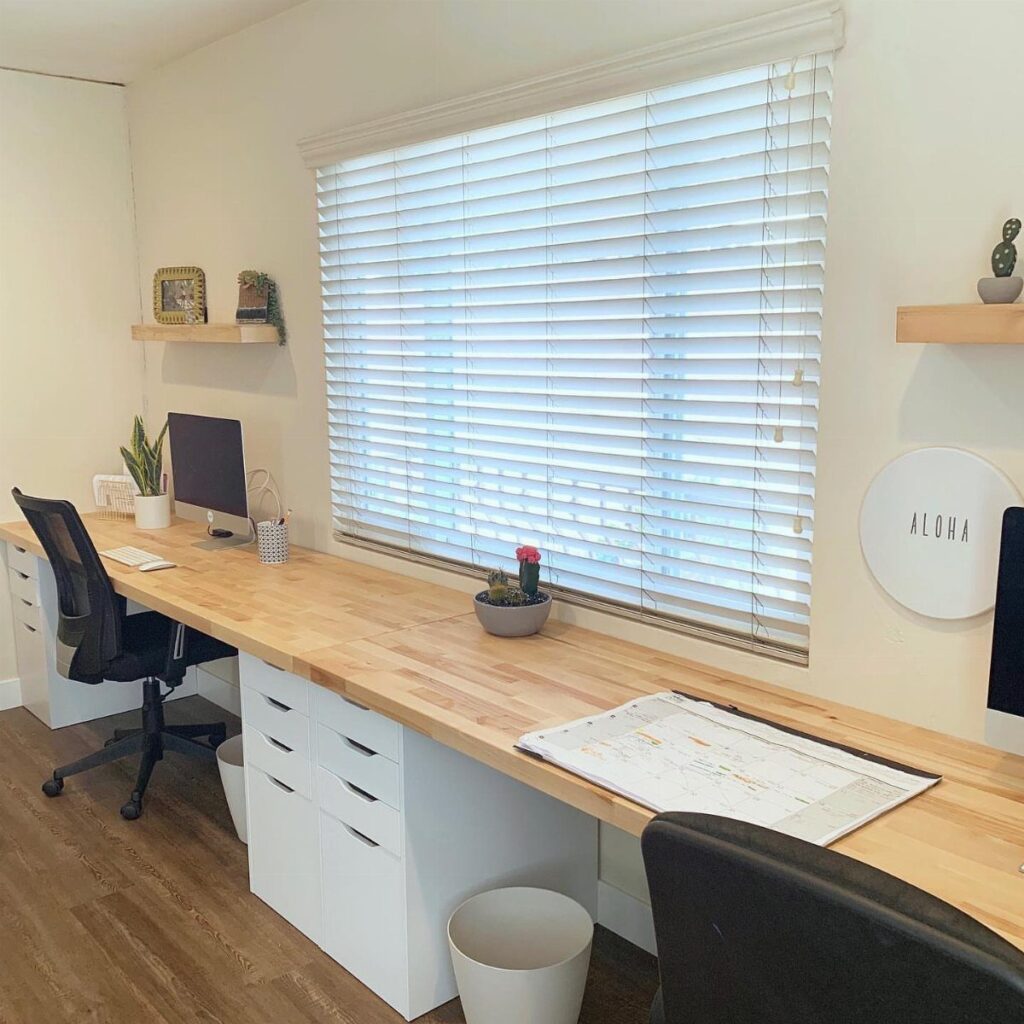
Which butcher block desk fits comes down to what you need underneath it: drawer bases give you storage and a long slab with no joinery, while hairpin or T-shaped metal legs give you an open, light look and no storage at all.
You’ll see a DIY slab on hairpin legs, L-shaped corner setups, walnut tops that read expensive, and drawer bases in white or black.
Whatever you pick, the finished surface should land at 28–30 inches, so add leg height and slab thickness while you’re planning measurements.
1. DIY Butcher Block Desk
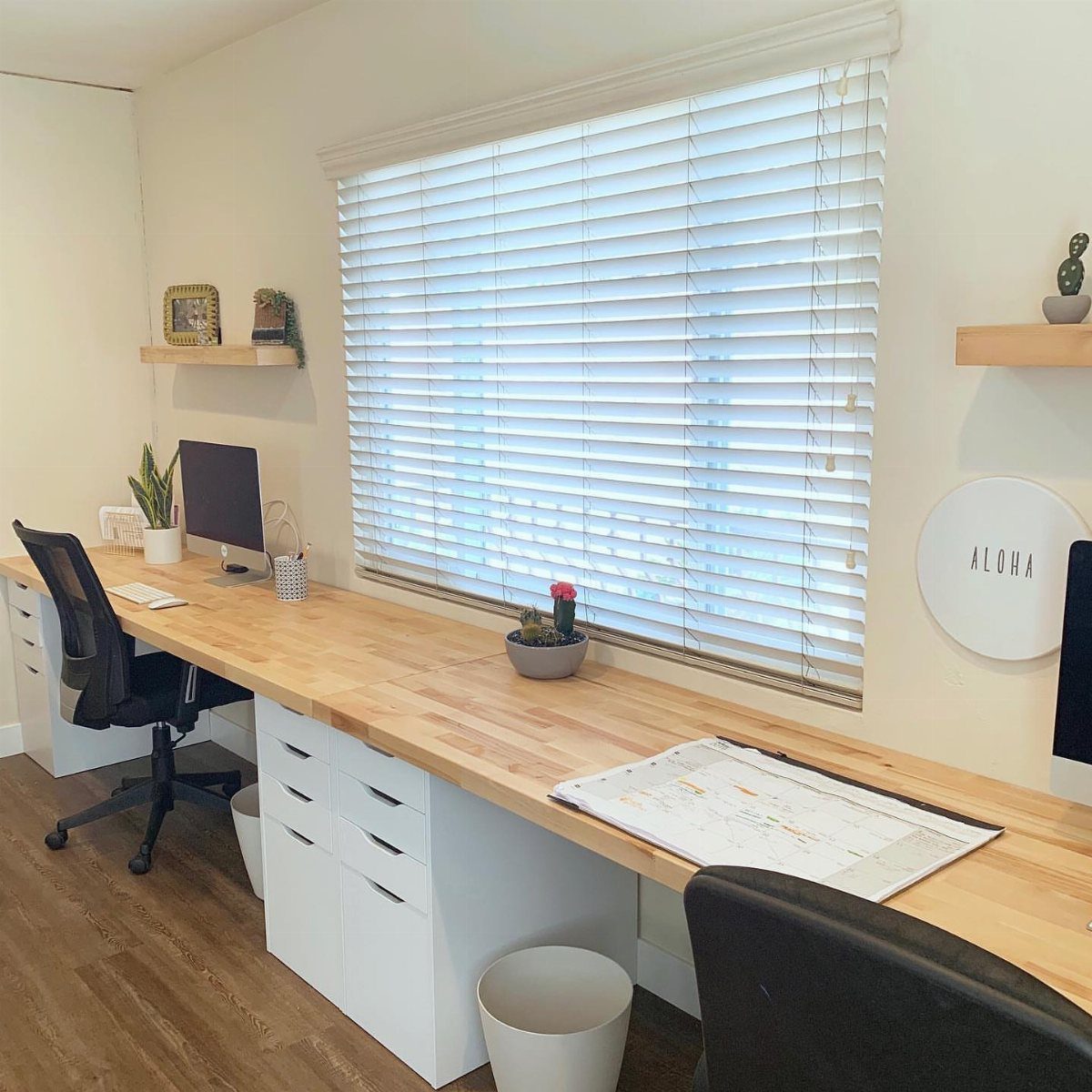
A butcher block top on white drawer bases is the easiest way to get a long, custom-looking desk without cutting a single joint. The slab is the desk; the drawers are the legs and the storage in one.
Buy the drawer units first and size the top to them, leaving a little overhang at each end so chairs slide in without catching.
Oil or seal the wood before it goes on, since a desk takes more spills than a kitchen island.
Light wood against white keeps a small room bright, and I’d pick that pairing over anything darker.
2. Butcher Block Desk Hairpin Legs
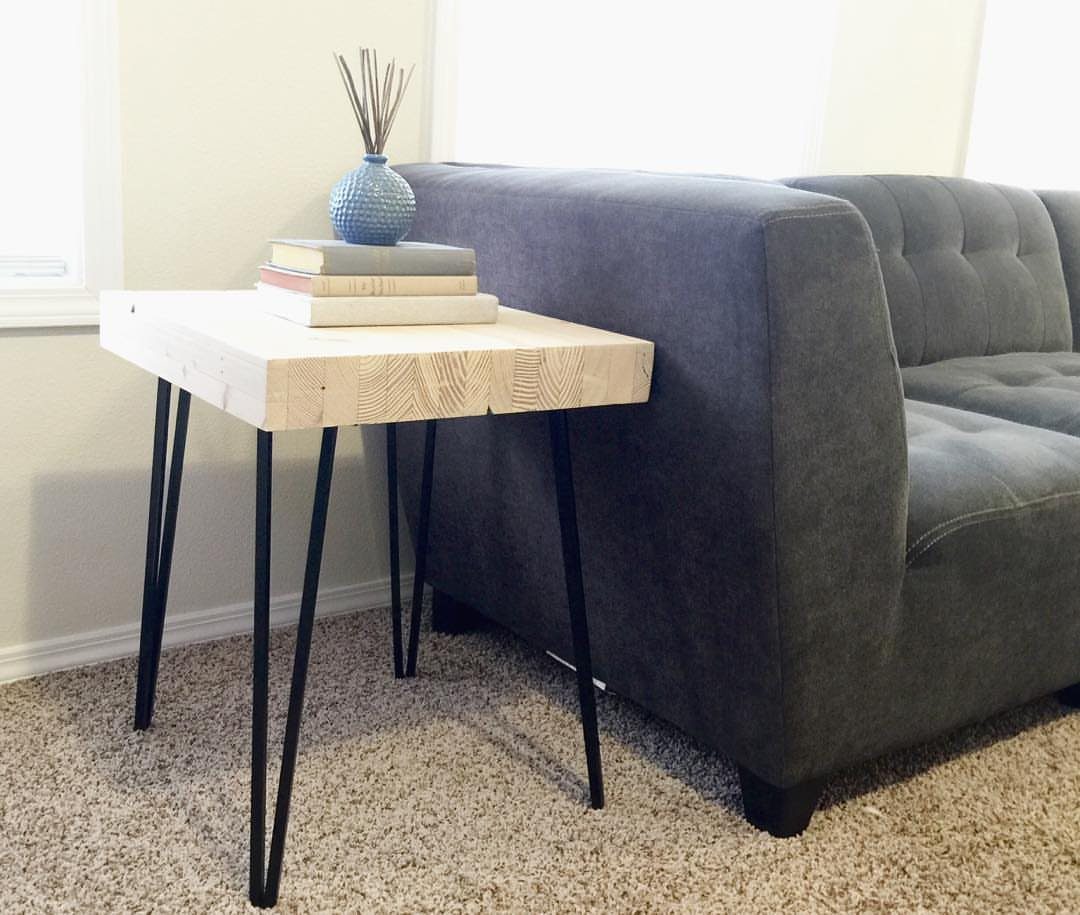
Slim black hairpin legs make a butcher block slab look lighter than the thick wood it is, which suits a desk tucked beside a sofa.
Because the legs are thin, the open space underneath keeps a small room from feeling crowded.
Choose a thick top and attach the legs with a mounting plate on each corner. Set them in from the edges slightly so knees clear them.
The trade-off: no drawers, so storage has to live on a shelf or in a basket nearby.
3. Butcher Block L-Desks
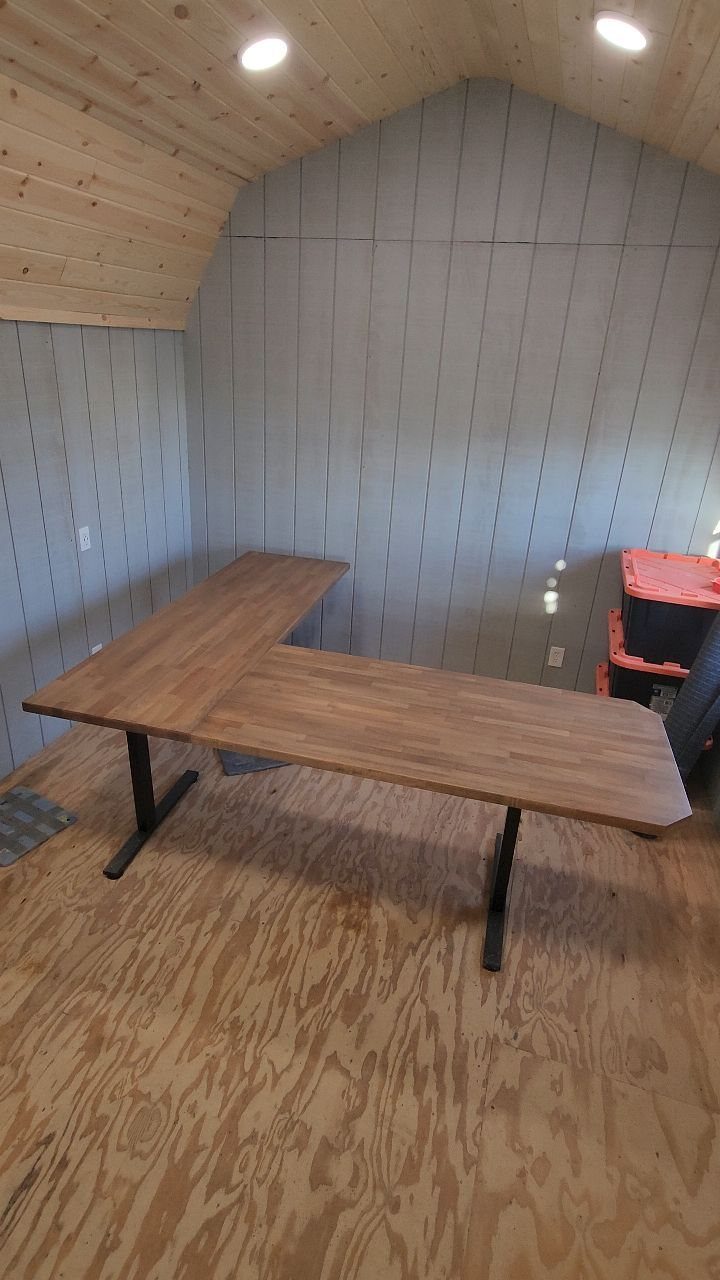
Two butcher block pieces meeting at a right angle give you an L-shaped desk, and the corner is the part worth planning.
Measure the wall run first, then decide which arm gets the monitor and which stays clear for writing or laying out projects.
Add a leg at the corner join so the seam isn’t carrying weight alone.
4. Walnut Butcher Block Desk
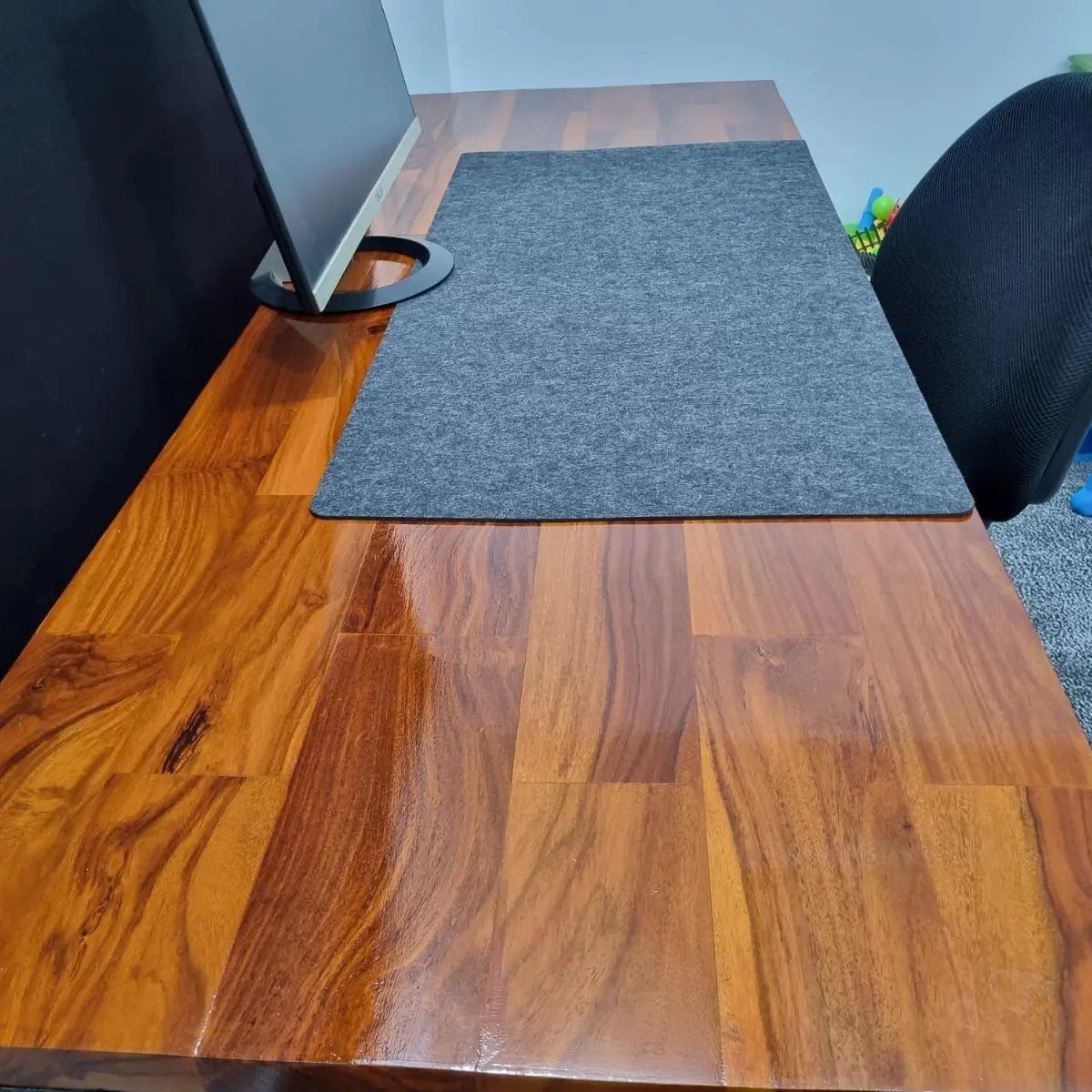
Walnut is the pick when you want a butcher block desk that looks expensive.
Its deep brown grain hides crumbs and pen marks better than pale wood, and it pairs well with a grey felt desk mat that protects the finish under a keyboard.
Expect to pay more than for lighter species. A budget-minded option is to buy one walnut top and keep the base plain, so the wood does all the work.
Keep a coaster nearby; a finish like this rewards care.
5. Butcher Block Desk Grommet
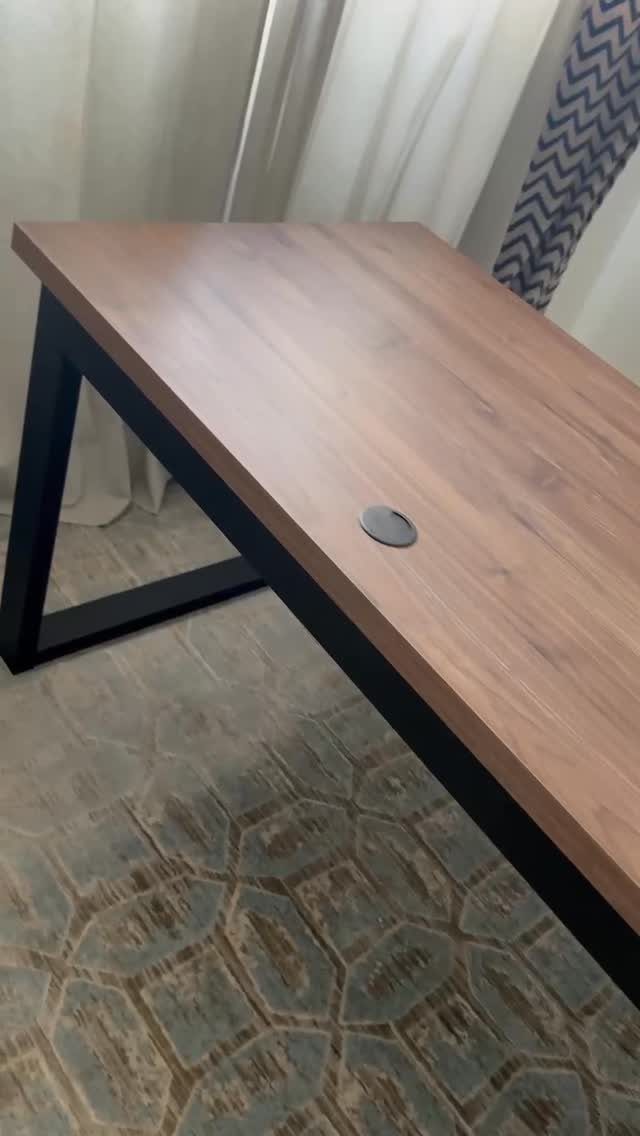
A round grommet hole lets monitor and charger cables drop straight through the desktop instead of draping over the back edge. Cord clutter is the fastest way to ruin a clean wood top.
Drill with a hole saw sized to the grommet, and cut it from the top side to avoid splintering.
Mark the spot with the monitor in place so the cables reach it. Sand the edge smooth, then seal the bare wood inside the hole.
Test the drill on scrap first; you can’t undo a hole.
6. White Drawer Base Desk
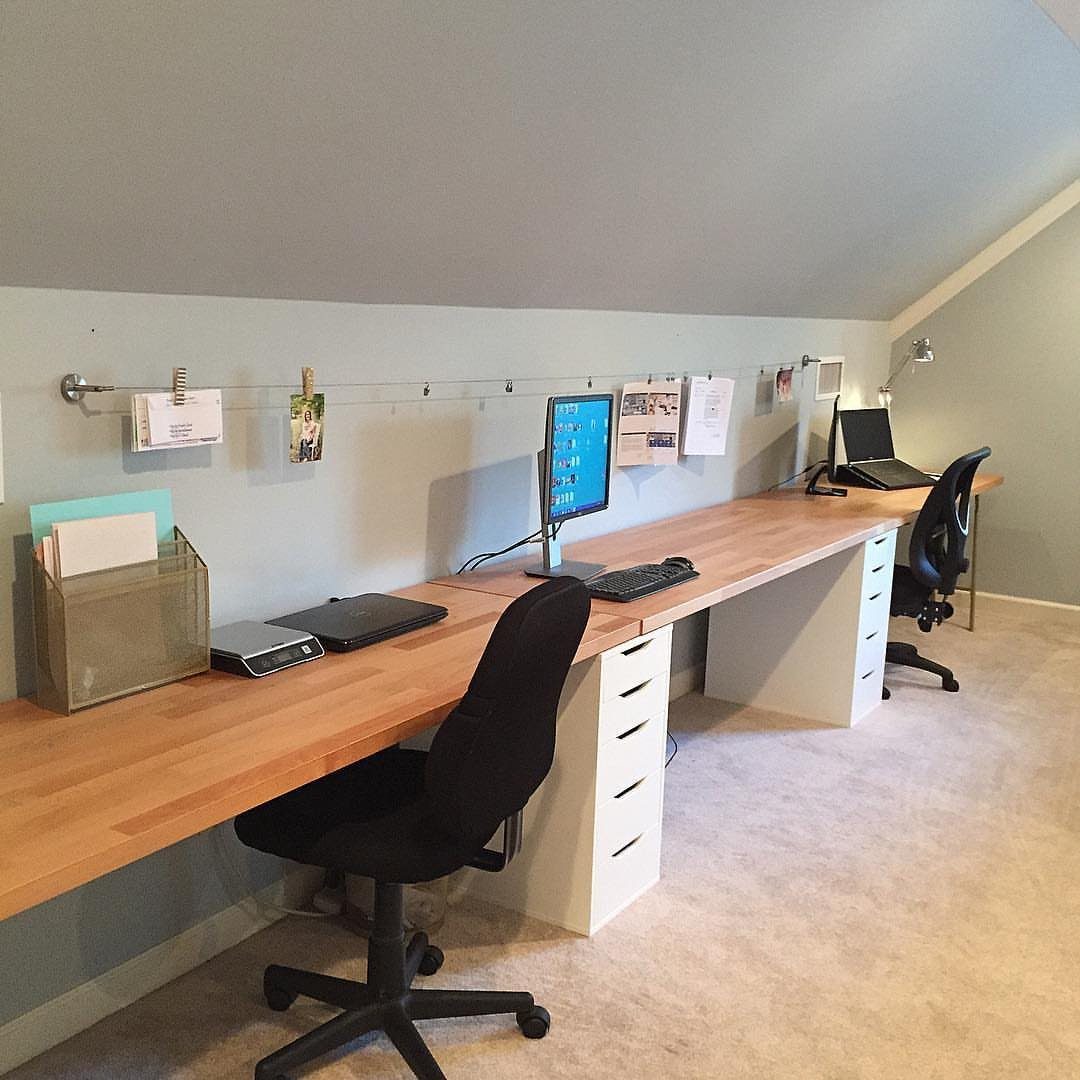
Two white drawer bases with one long butcher block across them make a desk wide enough to share, with storage built in under each end.
Each person gets their own drawers, which keeps shared supplies from migrating to the other side.
Space the units so the knee gap in the middle fits 2 chairs, and check that the top overhangs each end. A wall-mounted organizer above, as many setups use, saves desk surface for laptops and monitors.
I like this layout for couples sharing a spare room.
7. Black Drawer Base Desk
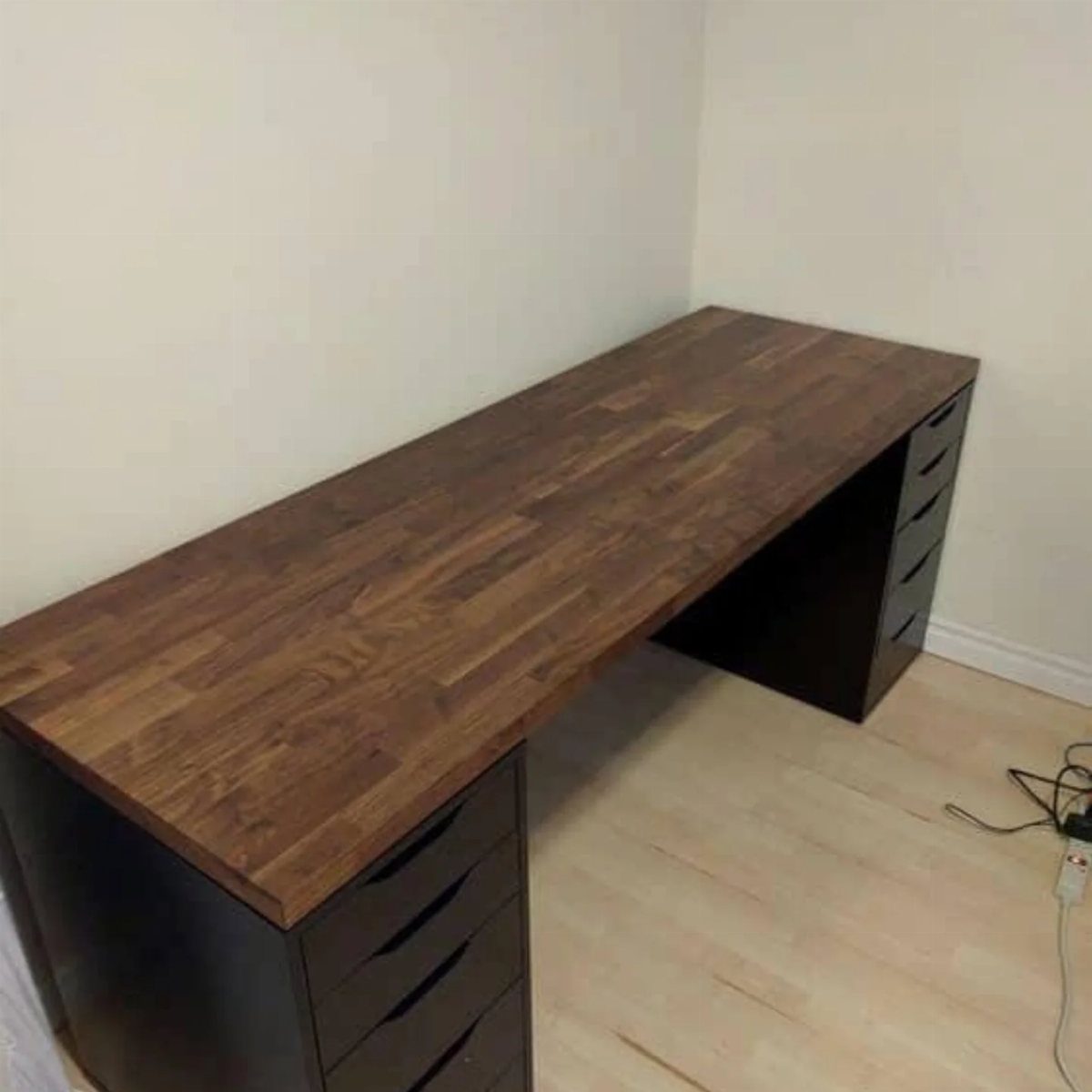
Black drawer bases under a butcher block top give the wood a dark, grounded frame, and the contrast is what makes a plain slab look deliberate.
Set the top on the 2 units with equal overhang at each end, and leave the gap between them wide enough for a chair and your knees.
I’d choose this over white if the room is already bright, since the black keeps it from washing out.
8. T-Shaped Metal Legs Desk
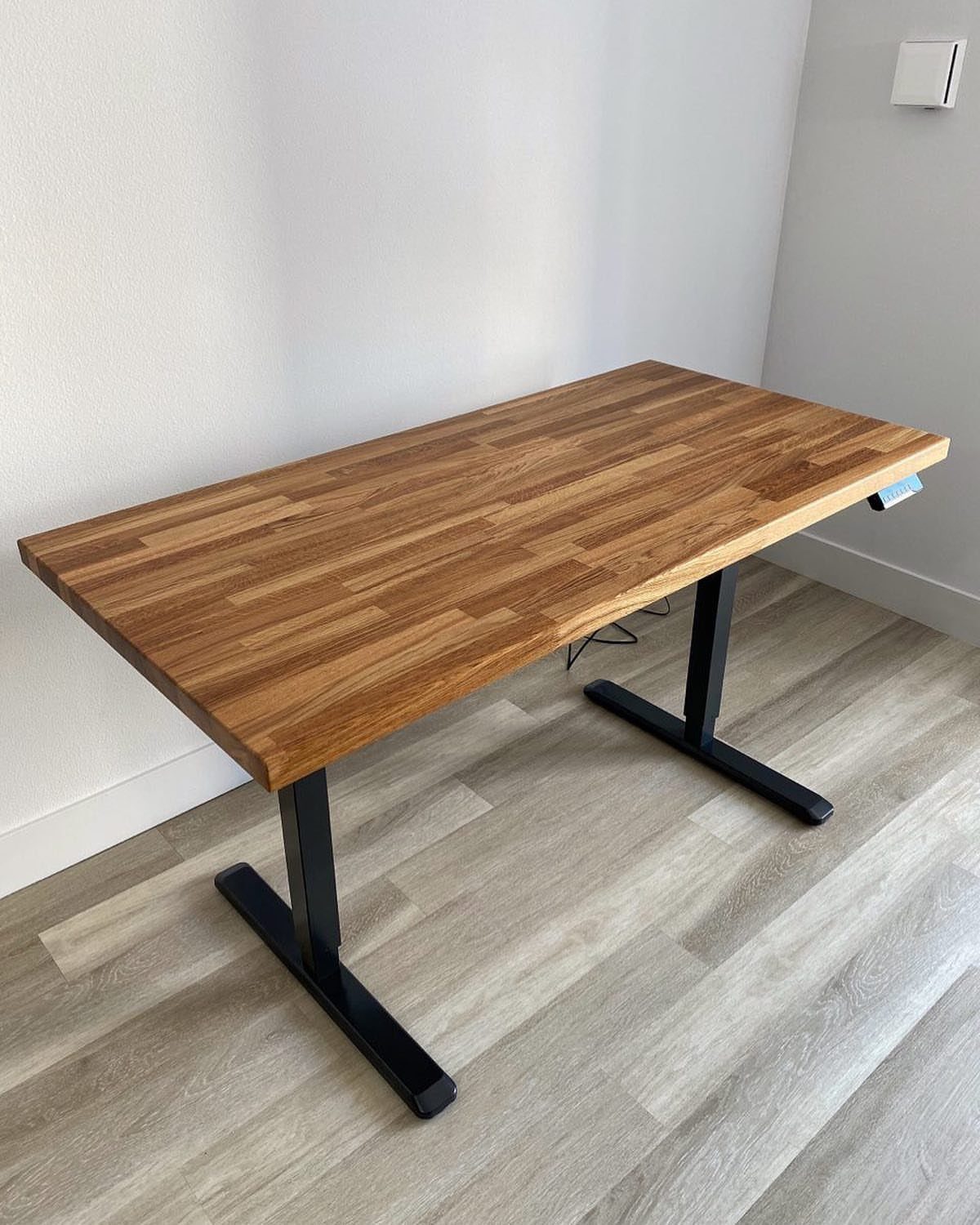
Black T-shaped metal legs under a rectangular butcher block top make the most minimal desk on this list: a slab, 4 points of support, nothing else.
The thin metal lets a white wall and grey floor show through underneath, which helps a small room feel open.
Mount each leg to the underside with screws sized to stop short of the top surface. Keep the legs a little inside the corners of the top, or your knees will find them every time you pull the chair in.
Storage is what you give up, since the desk has no drawers or shelves, so plan a rolling cart or wall shelf nearby. With no drawers, a slim shelf or a basket beside the desk has to do that job.
Durability of Butcher Block
Butcher block holds up to daily desk wear because it’s solid wood, and most of the damage it picks up can be sanded out and refinished. A laminate or veneer top can’t be repaired that way.
Cleaning takes a damp cloth and mild soap. Wipe spills quickly, and don’t let water pool on the surface, since standing moisture is what darkens and lifts the grain.
Edge grain and end grain are the 2 constructions you’ll see sold.
Edge grain is the common choice for a desk, and I’d pick it for the price and the flat, even surface it gives you for a keyboard and mouse.
Sanding and Finishing
Butcher block usually ships with a rough sanding and sharp corners, so set aside time to sand the top and ease the edges before you apply any finish.
Start with 150 grit on the faces, then on every edge and corner so nothing feels sharp against your forearms.
Wipe off all the dust before changing grits. Then go over the top and edge faces with 220 grit for a smooth finish.
Sanding by hand stretches that to 35–40 minutes, so it’s worth borrowing a sander if you can.
For protection, apply mineral oil first, then a wax over it. Reapply the oil when the wood starts to look dry and pale.
Desk Height
Most desks sit 28–30 inches off the floor, and that figure should be the finished top surface, so add the leg height and the block thickness together. Add the thickness of the slab to the leg.
A 28-inch leg under a butcher block top, for example, puts the surface at 29½ inches. That lands inside the standard range.
Sit at the desk before you commit. Your elbows should rest at roughly a right angle with your wrists straight, and if they don’t, choose a shorter or taller leg.
Choose a drill bit a little narrower than the screw shaft for the pilot holes, and stop drilling about halfway through the thickness of the block so the screw tip never pokes out the top.
Frequently Asked Questions
Can I use a butcher block as a desktop?
Yes. Sand it, then seal it before use, since a desk takes plenty of spills.
What are the disadvantages of butcher block?
It needs regular upkeep and it can scratch. The upside is that scratches and wear can be sanded out and the top refinished.
Which wood is best for a butcher block desk?
Hard maple and red oak are the popular durable choices, and walnut is the one I’d pick for a desk that looks expensive.
Walnut costs more than lighter species, so a budget-minded move is one walnut top on a plain base.
How do you finish a butcher block desk top?
Sand with 150 grit, then 220 grit, wiping off the dust between grits, and ease the edges and corners.





