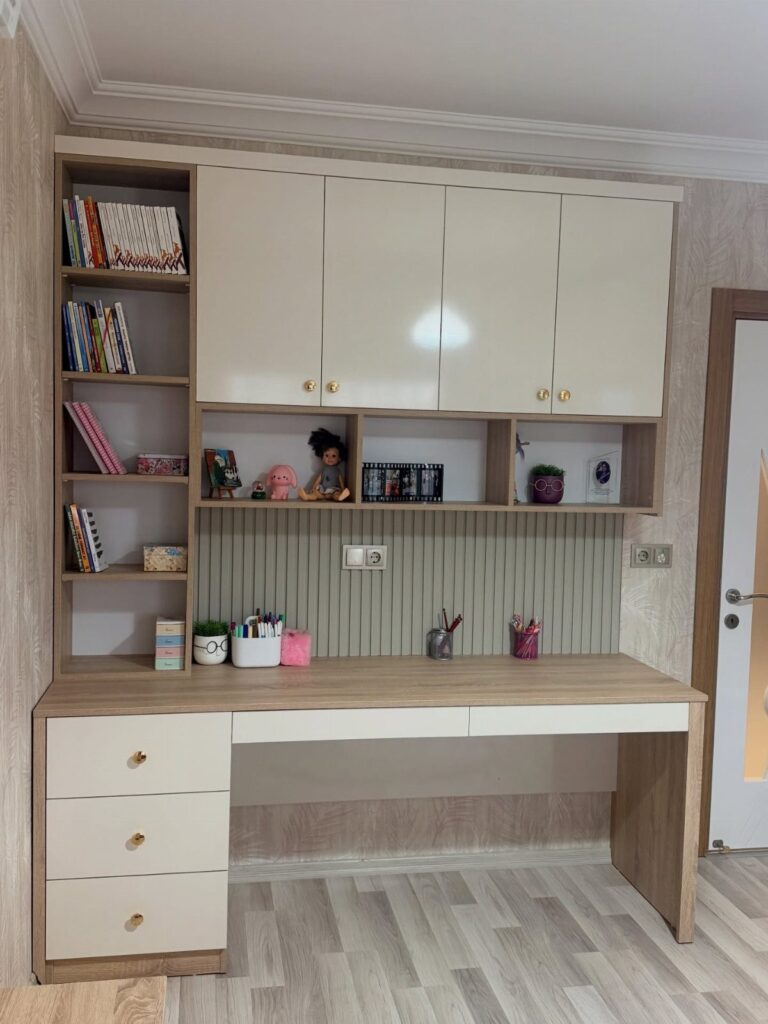
Whether you can drill into the wall decides which of these shelves will work: renters and anyone who moves furniture often should look at freestanding bookcases and modular units, while owners can add wall-mounted, floating, or built-in shelves.
1. Wall-Mounted Shelves
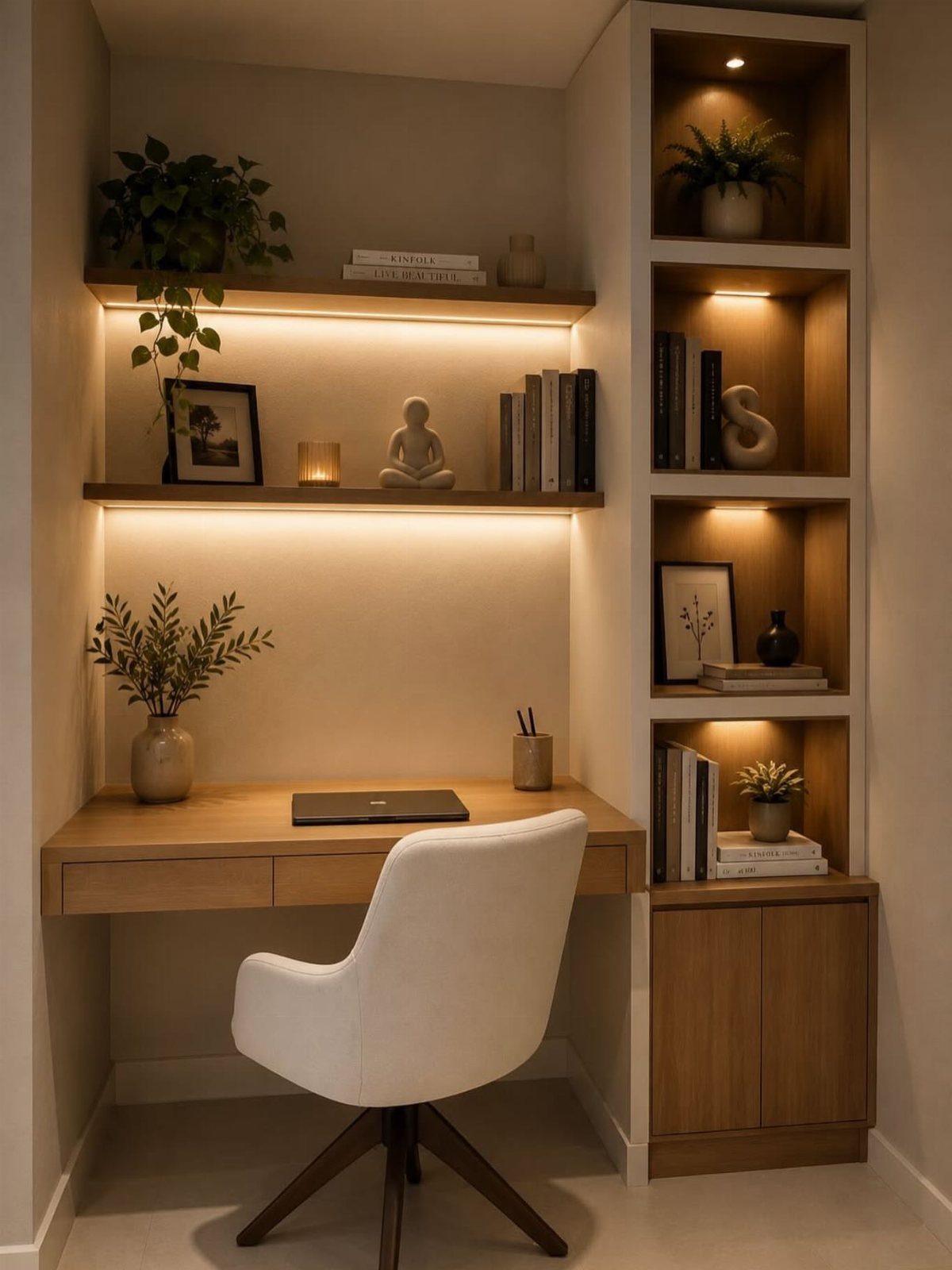
Wall-mounted shelves keep the floor completely open, which matters most in a nook where the desk and chair already use up the room.
Stacking two or three runs above the desk puts books and plants at eye level without adding a single piece of furniture.
I like the built-in lighting here: it makes the shelves double as a task lamp. Keep the heaviest items on the lowest shelf, and leave a gap or two so the plants and decor can breathe.
2. Shelf Next to Your Desk
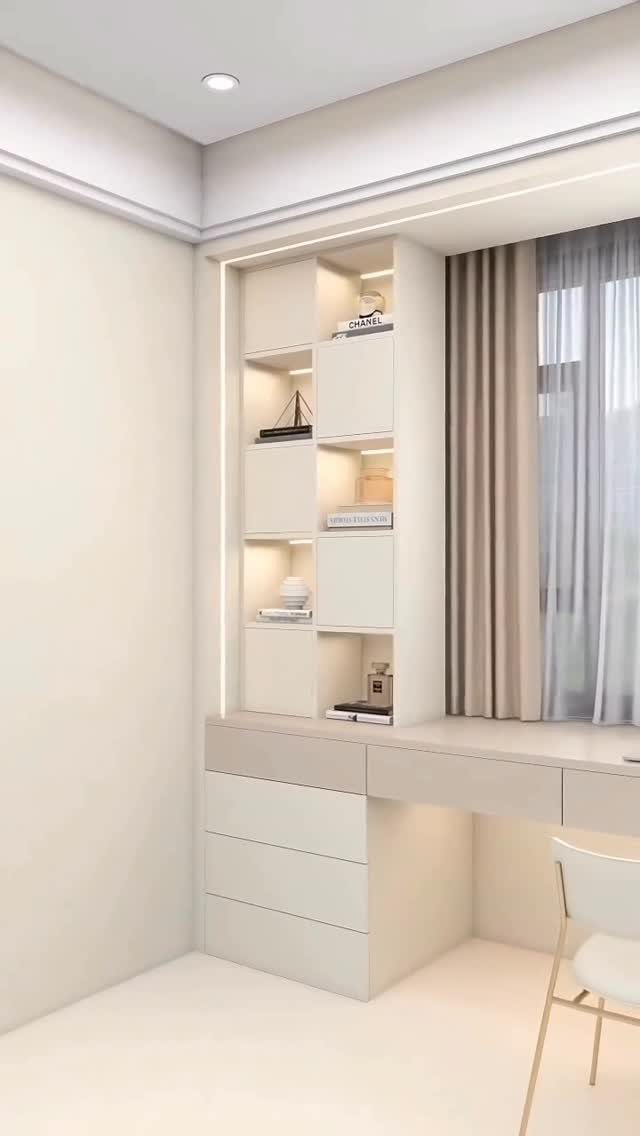
A shelf right beside the desk puts the things you reach for within one arm’s length, so a reference book or a notebook never means leaving your chair.
Building the shelving into the desk itself, in the same white finish, makes the whole setup read as one piece instead of two.
Backlighting is the detail I’d copy. It adds a soft glow to the shelf and lets you show a few decorative objects without piling on clutter.
3. Freestanding Bookshelf
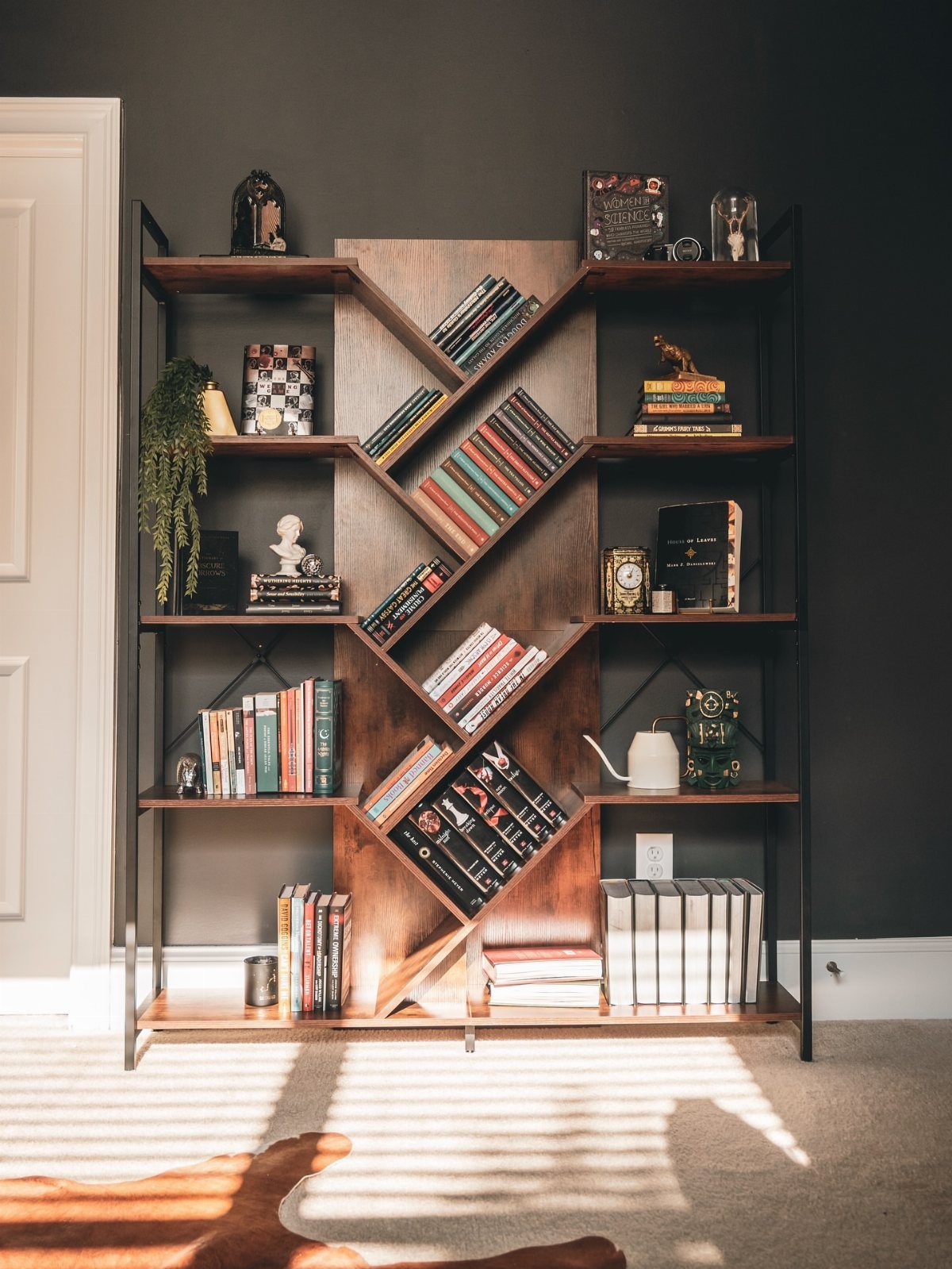
A freestanding bookshelf is the simplest option to move or rearrange, which makes it a common pick for renters and anyone who changes a room layout often. Set it against a wall, load it, and the job is done.
A black metal frame with wooden shelves reads clearly on a dark wall because the contrast stops it from blending in. Diagonal shelves in the middle break up the grid and give plants a spot with room to spare.
4. Modular Shelving
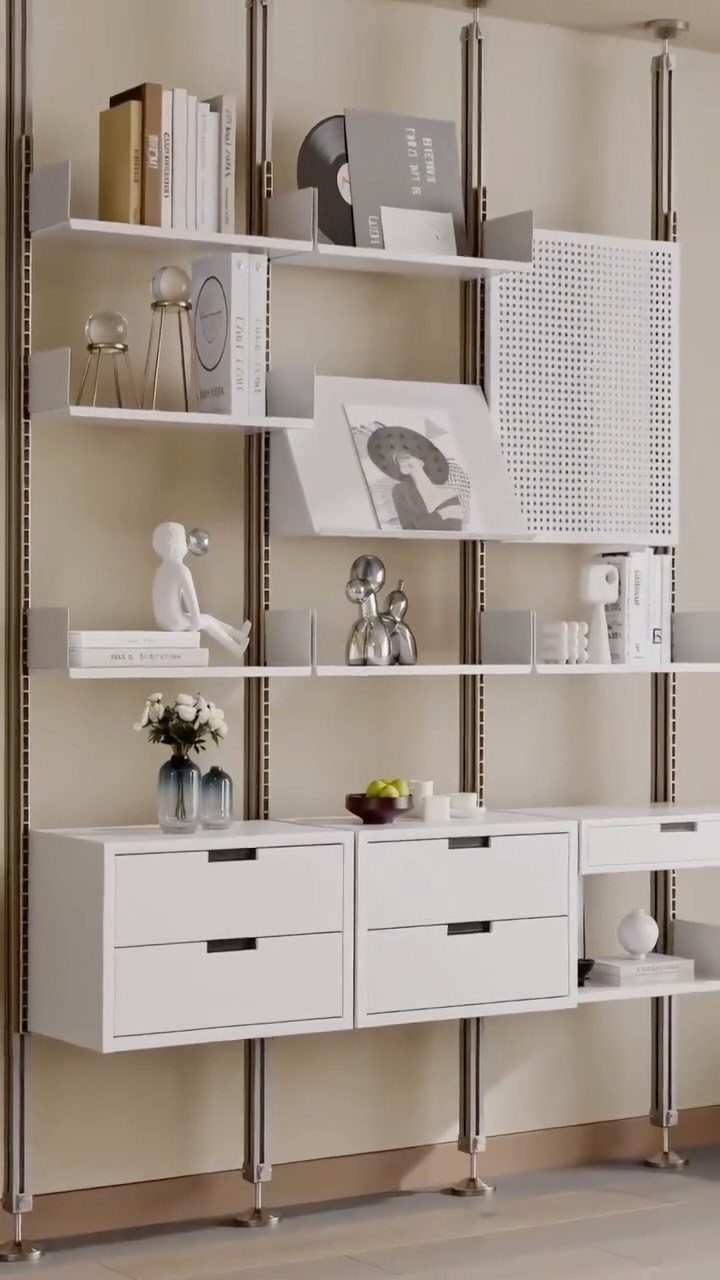
Modular shelving starts small and grows: buy a few units now, add drawers or open shelves later as your paperwork and book count climb. That suits a first home office where needs are still unclear.
I’d mix open shelves with drawers, as in this white system, so books stay on display and cables, chargers and loose papers disappear.
5. Built-in Shelves
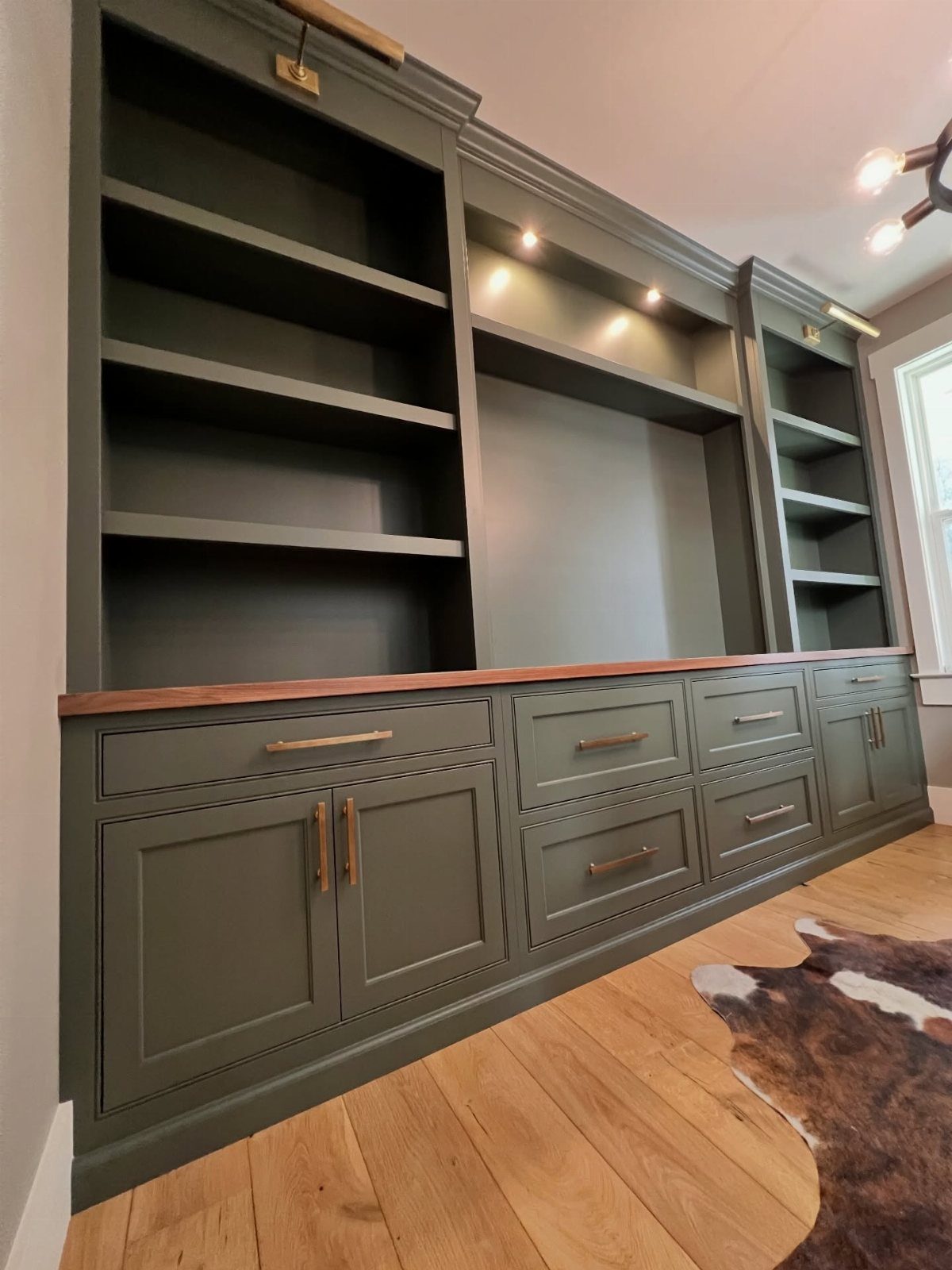
Built-in shelves put storage into the wall line itself, so nothing eats into the floor area. Pairing them with cabinets below gives you closed space for supplies and open shelves above for display.
Dark green is a bold choice, and I like it with a wood countertop and light wood floor, which stop it from closing in.
A wood countertop doubles as a spot to work or set a lamp. Expect more effort and cost than freestanding furniture.
6. Wood Shelves
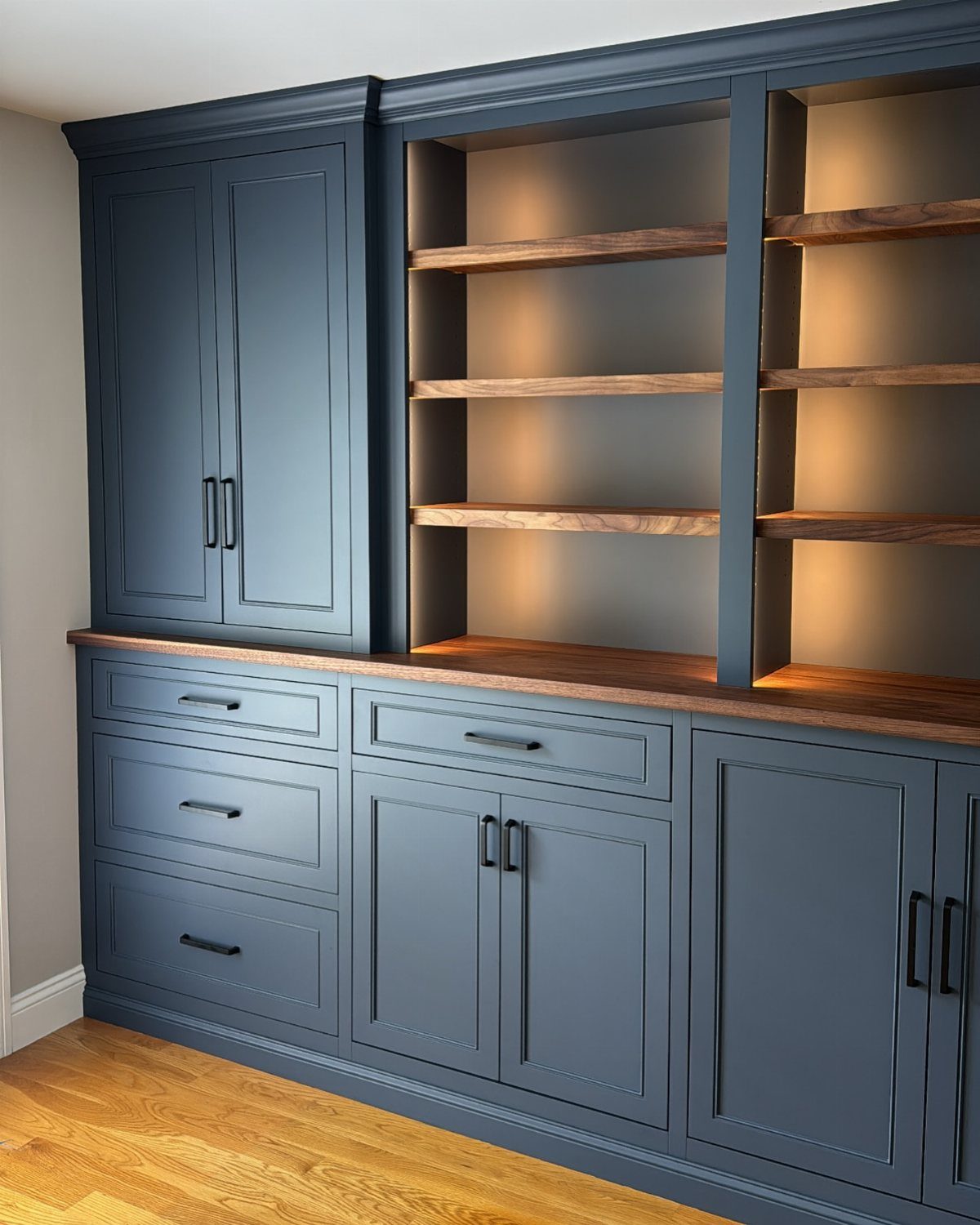
Natural wood shelves bring warmth to an office that could otherwise feel cold and corporate. Set against navy cabinetry, the wood stands out clearly, and the contrast is what makes the whole unit look planned.
If you’re going this route, use wood for the open shelves and drawers, and let the painted cabinet frame do the heavy visual work. Integrated lighting along the shelves makes the grain glow after dark.
7. Corner Shelving
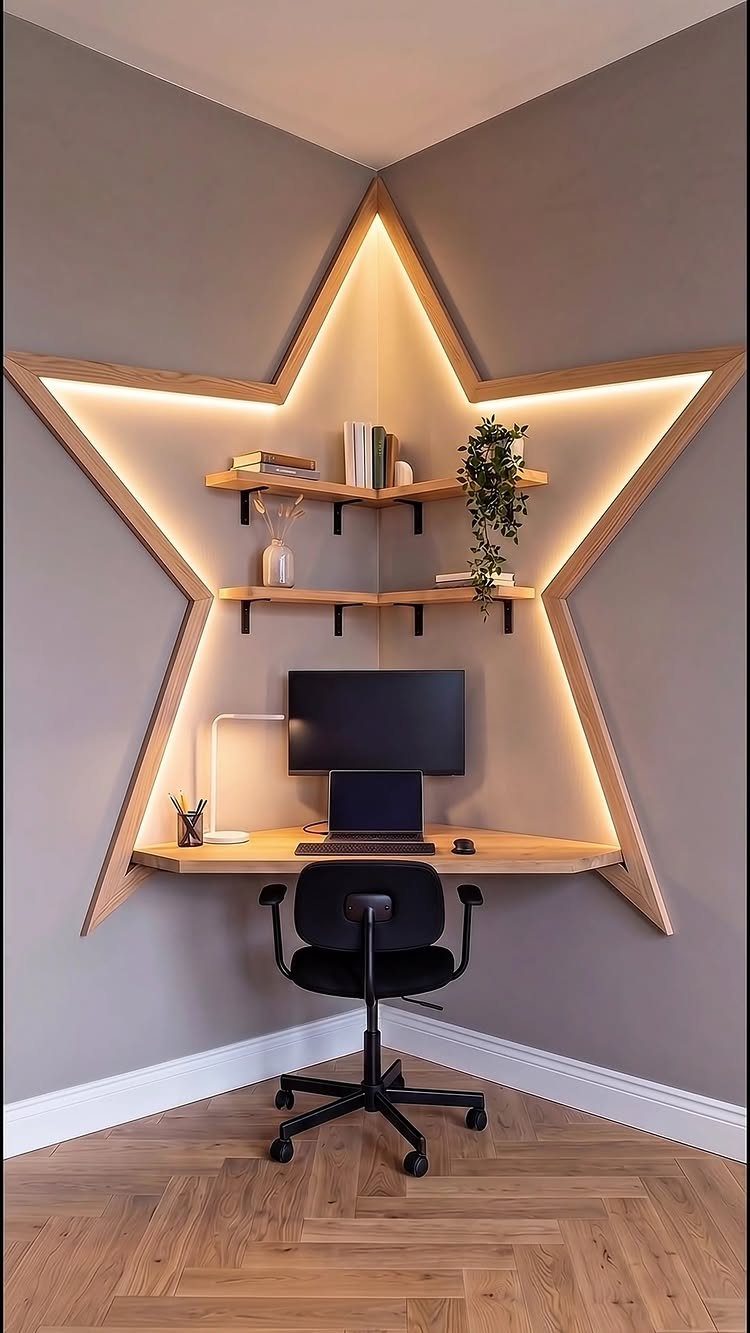
A corner is the one spot in a small office that rarely gets used, and shelves that follow the angle of the walls turn it into storage right above the desk.
Wooden shelves stacked in the corner keep the monitor wall open.
Warm lighting is what I’d copy here. A frame with built-in LEDs gives the corner its own glow and makes it feel like a feature instead of leftover space.
8. Floating Shelves
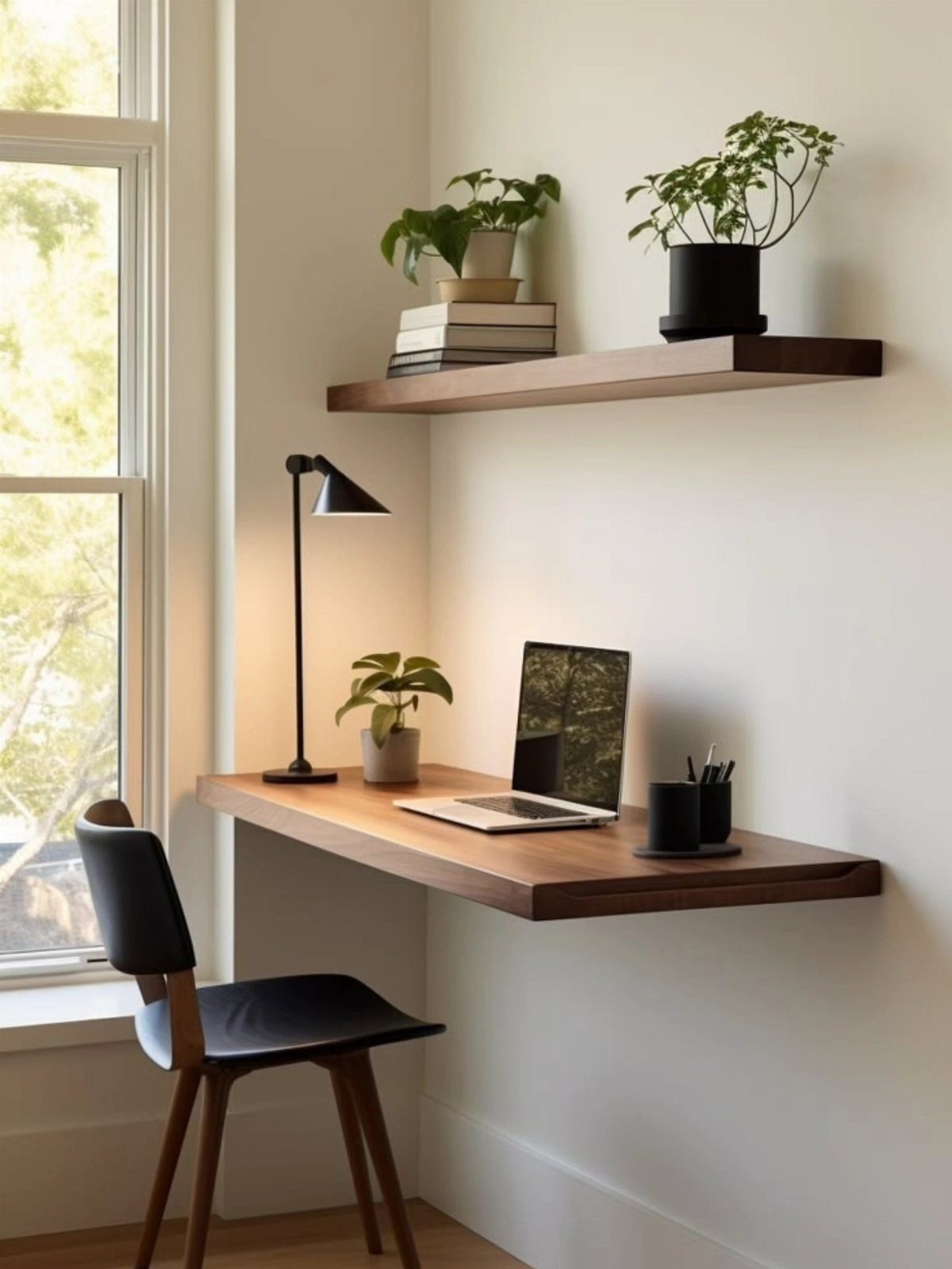
Floating shelves hide their brackets, so the wood looks like it is hovering. That clean line suits tight spaces, where visible hardware adds clutter.
I’d keep the shelf light and the surface mostly empty, because the minimal look falls apart quickly once it fills with paperwork.
9. Shelves with Storage Boxes
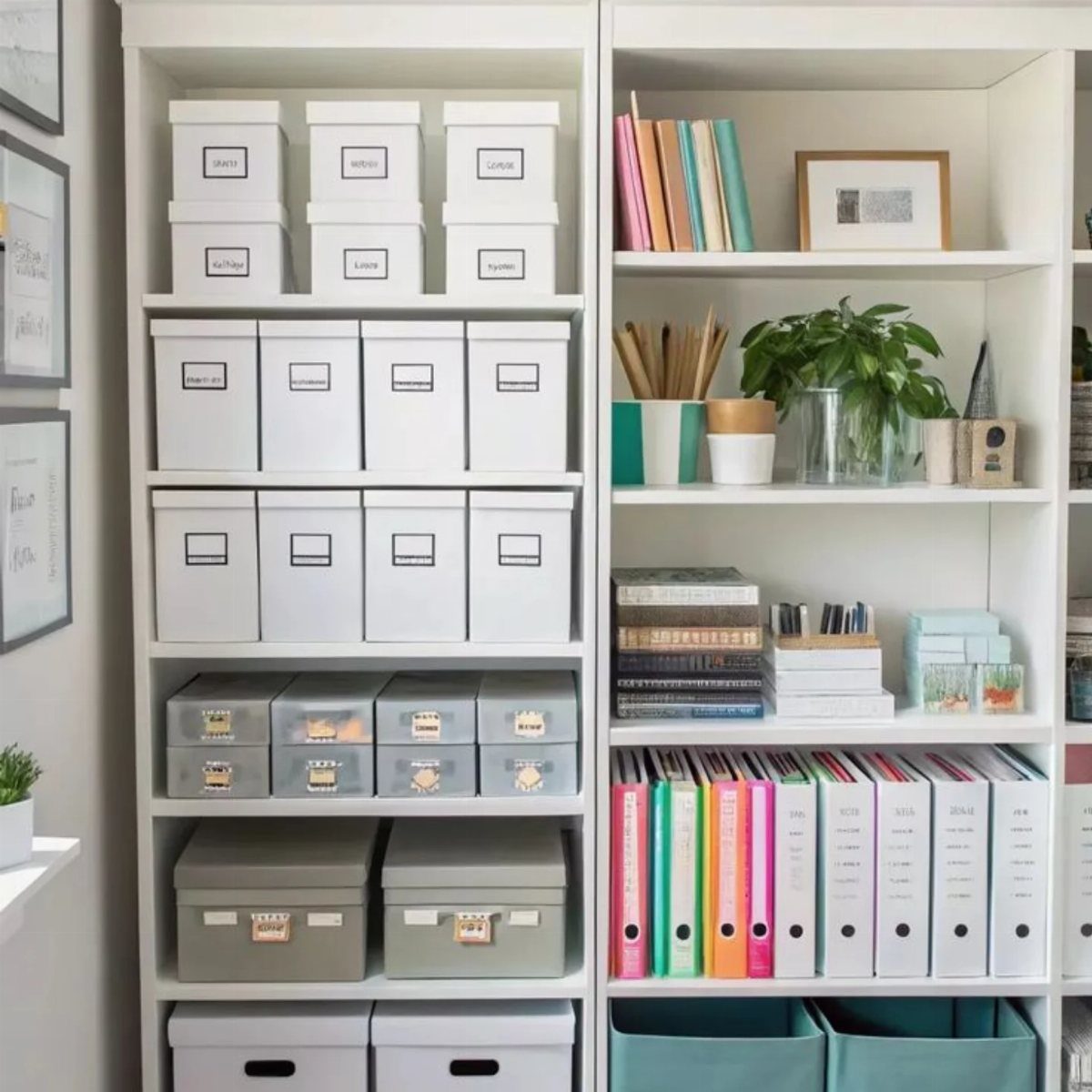
Storage boxes turn open shelving into something you can live with, since the mess goes inside and only the tidy faces show. White and clear boxes keep the look quiet, and labels mean you never open three to find one.
I’d leave a few shelf spots for books, binders and a small plant so the unit doesn’t read like a stockroom. Clear boxes suit things you need to spot at a glance; solid ones hide the rest.
10. Shelves with Lights
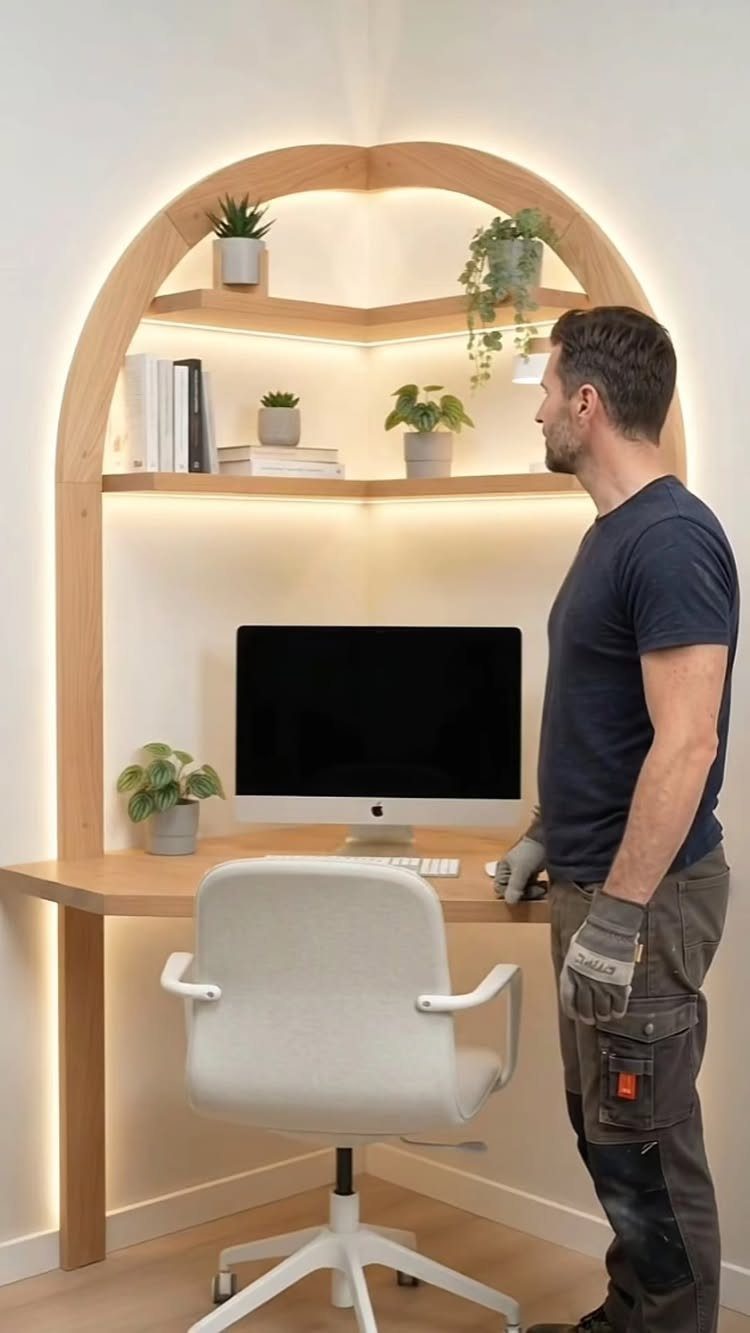
Lighting built into the shelves picks out plants and books without overwhelming the desk. Arched, backlit openings in a light wood corner unit are the version I’d pick, because the curves feel gentler than a plain grid.
LED strips are the simplest way to add this to shelves you already own. Plan where the cord will run before you mount anything, so it doesn’t hang down the front.
11. Geometric Shelves
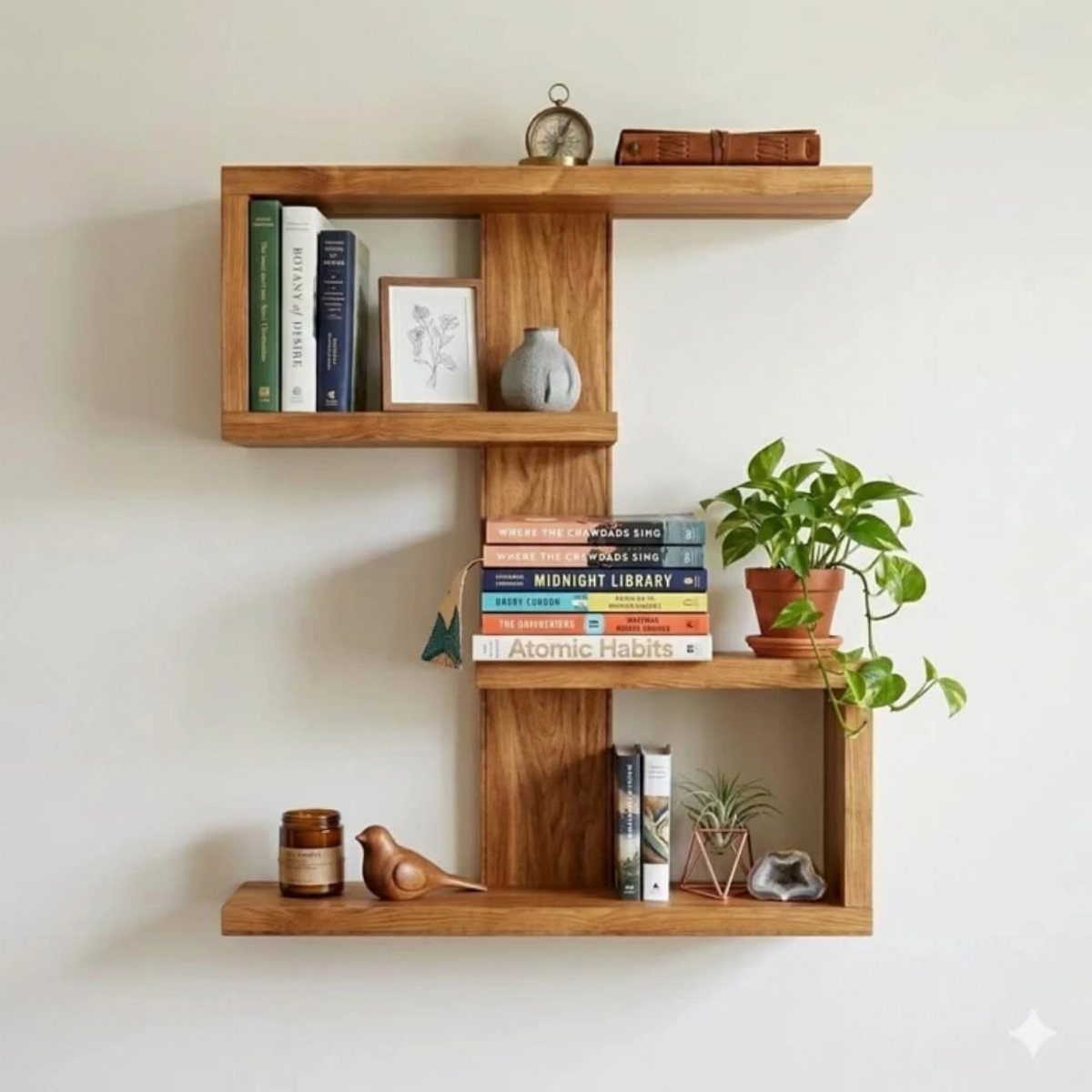
A geometric wall shelf works as art first and storage second. Its angled wooden compartments hold a few books, a small plant and some decor, and on a plain white wall it needs nothing else around it.
Because each cubby is a different shape, I’d sort items by size before hanging it.
Tall books go in the big openings, and small objects fill the tight ones. Expect it to hold less than a standard shelf, so pair it with other storage.
Choosing the Right Material
Solid wood is my pick for any shelf that will carry books or binders. White oak, walnut and maple hold their shape under weight, while MDF and plywood tend to bow over time and can delaminate.
Decide the load before you decide the look. Reference books and equipment need a different shelf than a few plants and framed photos, so weigh what you plan to store first.
If you want the wood to match the room, white oak suits modern or minimalist spaces, and light maple keeps a small office bright. Walnut reads more formal, reclaimed boards bring in visible wear and texture.
For the finish, natural oil or a matte coat brings out the grain without making it shiny.
Organizing Tips
Group objects in threes or fives. Two items sit as a pair, three or five look deliberate.
Keep a quarter to a third of every shelf clear. A packed shelf turns into visual clutter regardless of what sits on it, and open storage stays visible every moment you’re in the room.
Put functional pieces next to personal ones: binders beside a small frame, reference books alongside a potted succulent. A run of nothing but three-ring binders turns the space into a filing room.
File boxes or matching bins contain loose papers, and repeating the same container across shelves gives the arrangement structure instead of chaos.
Safety and Stability
Fasten tall shelving or anything heavy to the wall, particularly if children or animals move through the space. Furniture straps, brackets or wall anchors all work; follow the manufacturer’s instructions for the one you pick.
The cleanest install uses bracket screws driven into studs through the mounting hardware. Once the shelf is loaded, you can’t see them.
Renters have options too: removable anchor systems protect the walls and still give you real security. If you live where earthquakes happen, treat anchoring as required.
Frequently Asked Questions
What is the bookshelf rule?
Set items in groups of three or five, and leave at least a quarter of each shelf open.
How to make office shelves look nice?
Mix functional pieces with personal ones and leave open space on every shelf.
I set a binder next to a small frame or a reference book beside a low plant, then leave part of the shelf blank so the eye can rest.
What are some unique shelving ideas?
Geometric wall shelves and corner units with built-in lighting are two of the most distinctive.
A geometric shelf has angled wooden compartments of different shapes, so it works as wall art first and storage second, though it holds less than a standard shelf.
A corner unit follows the angle of the walls and uses a spot that usually goes unused, and built-in LEDs give it its own glow.





