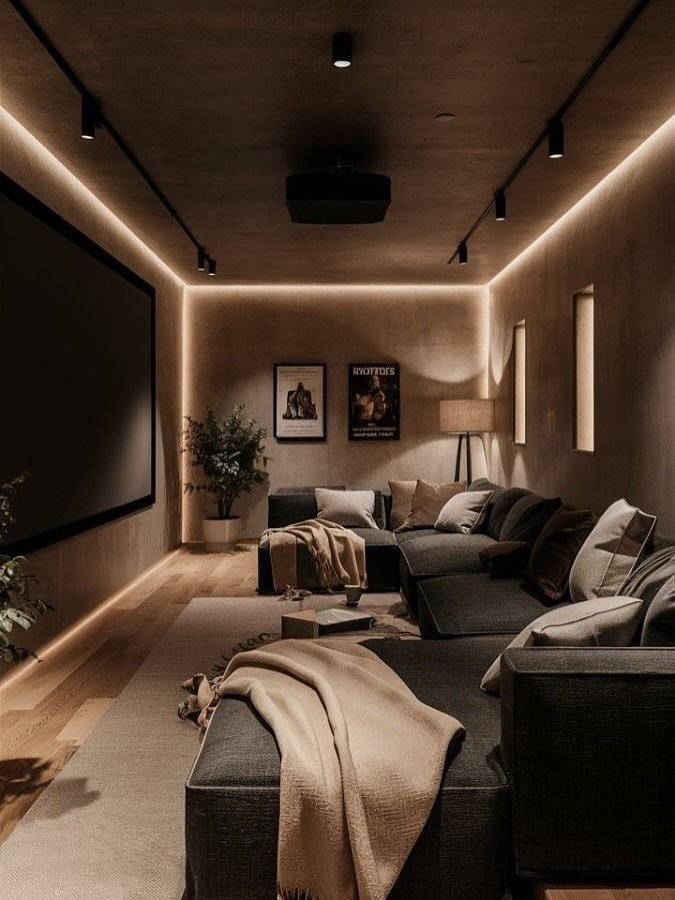
Options in this list start with a coat of matte charcoal paint on plain drywall, a weekend job, and climb to a stepped platform with a ceiling-mounted projector.
What picks yours is the room itself: its ceiling height and floor space decide whether you can build up, spread out or only dim the lights.
A pool table and a floor sofa with blankets want very different square footage, so measure length, width and ceiling height before you commit to a layout.
1. Plush Seating
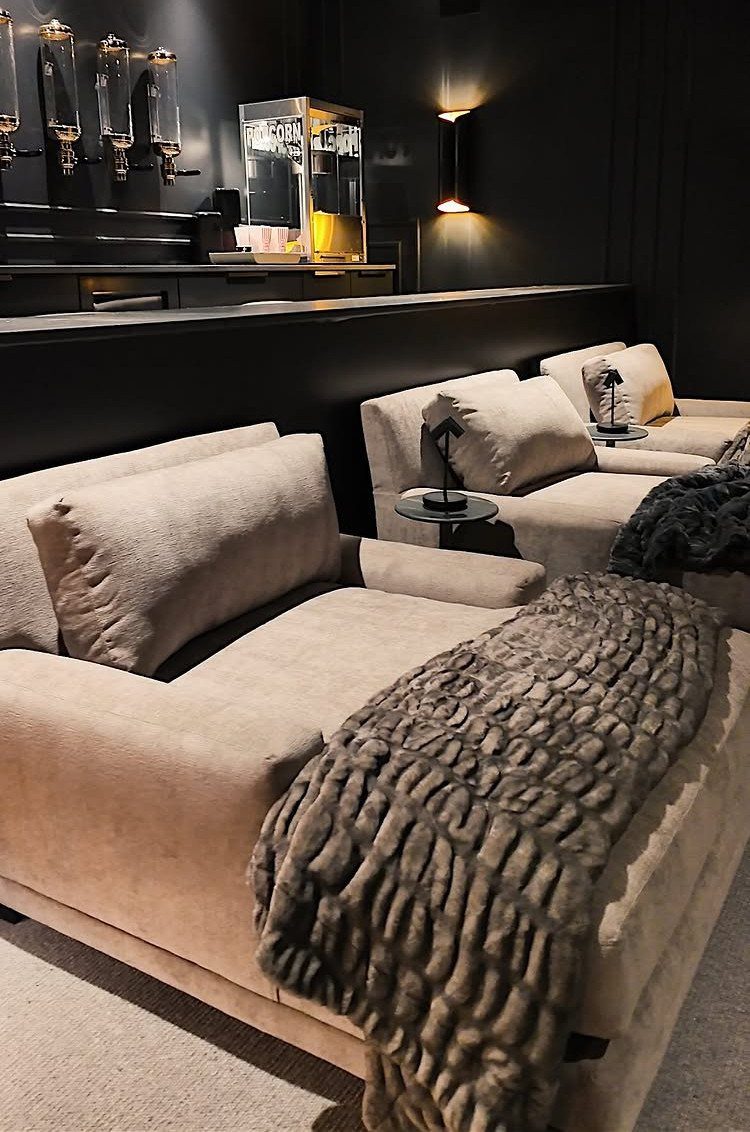
Deep, wide chairs with a soft texture do more for a movie night than any gear upgrade, because people stay put and stop fidgeting. Beige seating holds up well in a dark room, and it reads warm instead of heavy.
Pair each chair with a throw and a pillow so everyone has something to burrow into. Pick 3 chairs over a sectional in a compact cinema and you keep a walkway.
Sit in a chair for a full movie before you buy it.
2. Dark Colors
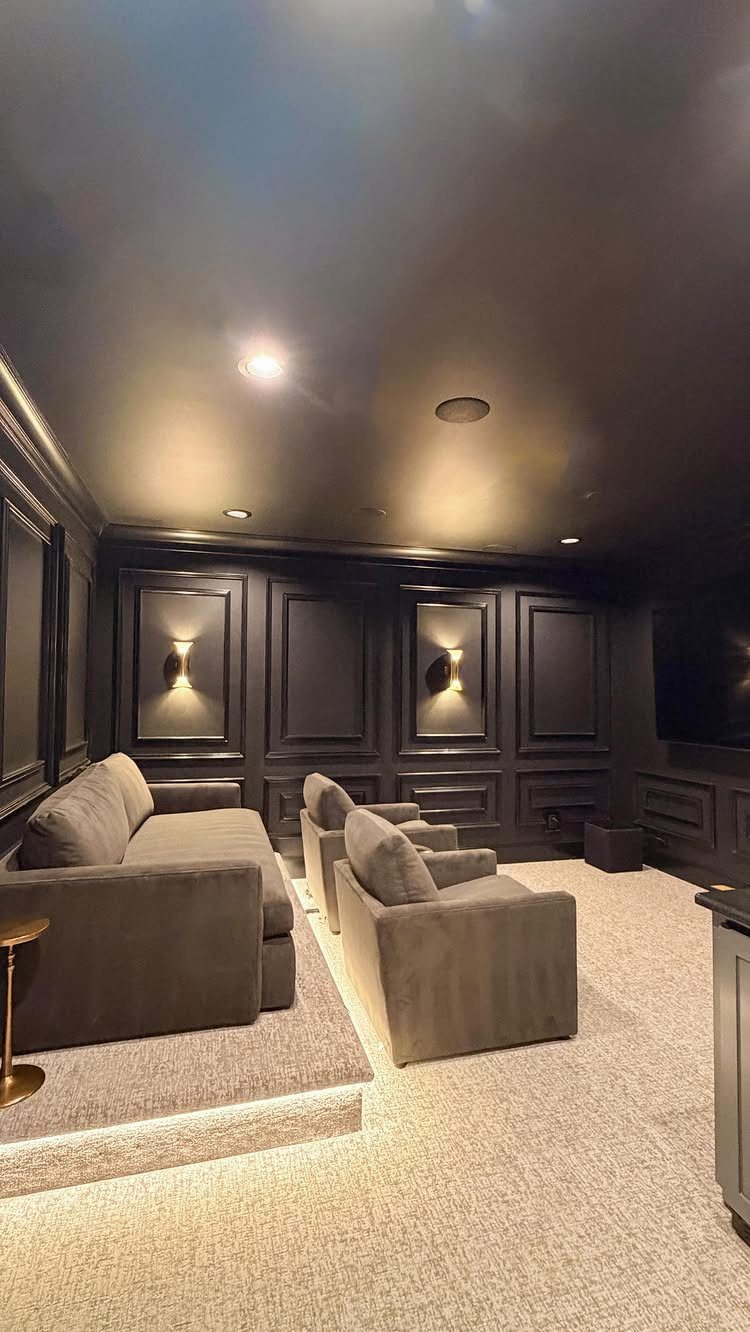
Charcoal on the walls and the ceiling is the version I’d pick, because a dark ceiling stops light from bouncing back at the screen. Painting only the walls leaves a bright lid that undercuts the effect.
Go matte. Gloss throws reflections, which defeats the purpose.
Paneling adds texture and hides small wall flaws, though flat paint on plain drywall is far cheaper and a weekend job.
Keep the carpet or rug lighter, as here, so the room doesn’t feel like a cave. Grey seating then stays visible without catching the glare.
3. Offer Blankets
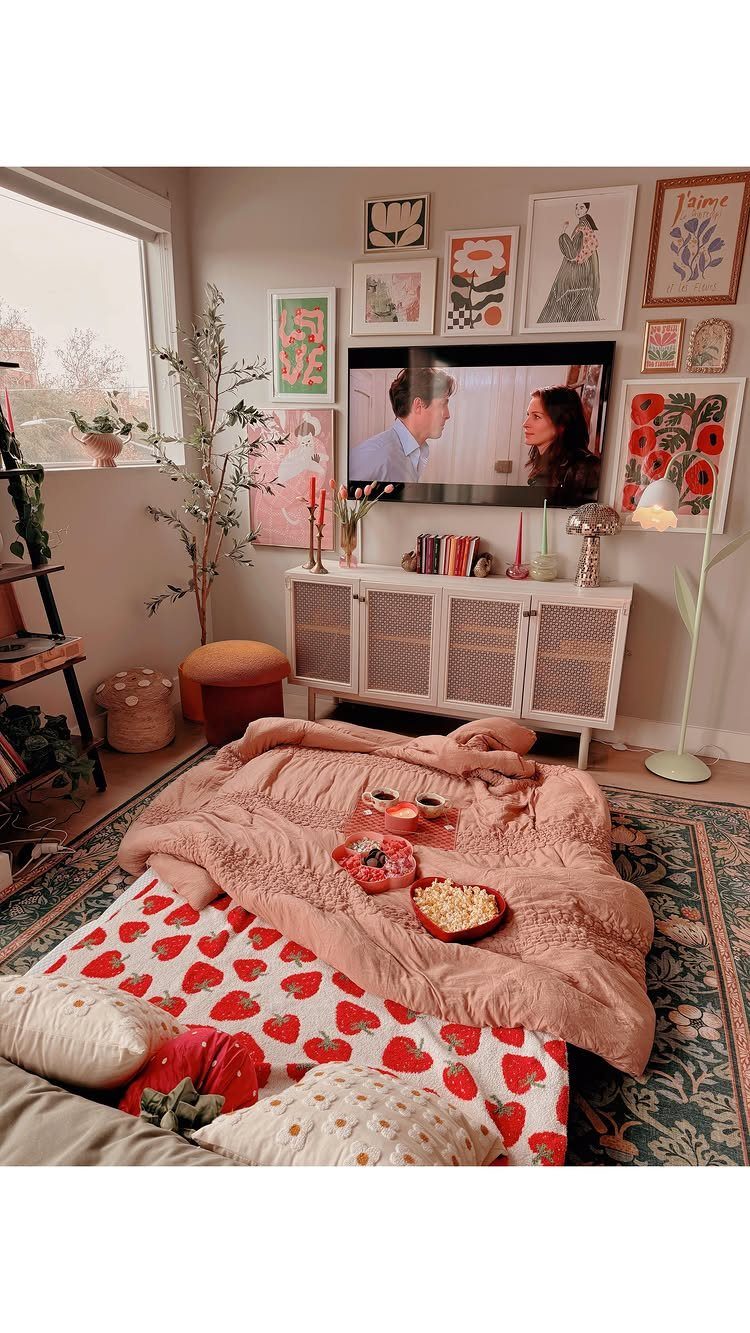
A floor bed piled with blankets in front of the TV beats row seating in a tight basement, since one mattress or thick pad seats several people at once.
Soft pink textures and a bold patterned sheet keep it playful instead of formal.
Keep the layers washable. Snack crumbs and spilled drinks will land here eventually.
Stack extra blankets in a basket or on a nearby shelf so guests can grab one without asking. A rug underneath keeps the bed from sliding on hard floors.
4. Projector and Screen
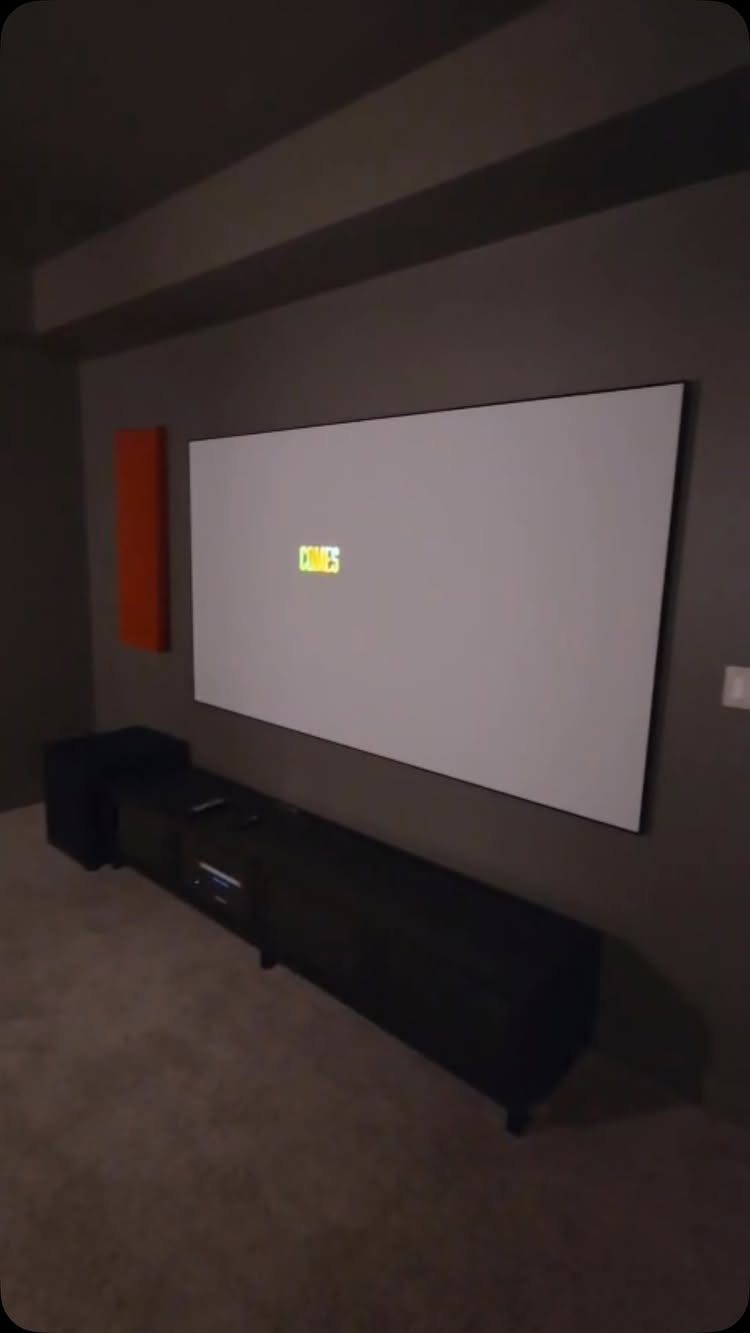
A projector and a screen on the wall give you a far bigger picture than a TV of the same footprint, and in a tight room that matters. A dark gray wall behind a white screen keeps the image crisp.
Mount the screen above a low black media console so the gear sits right below it.
An acoustic panel beside the screen tames echo in a small space, and a bold color like orange turns it into decor instead of gear.
Dim the room fully for the best picture; projectors wash out in daylight.
5. Snack Station
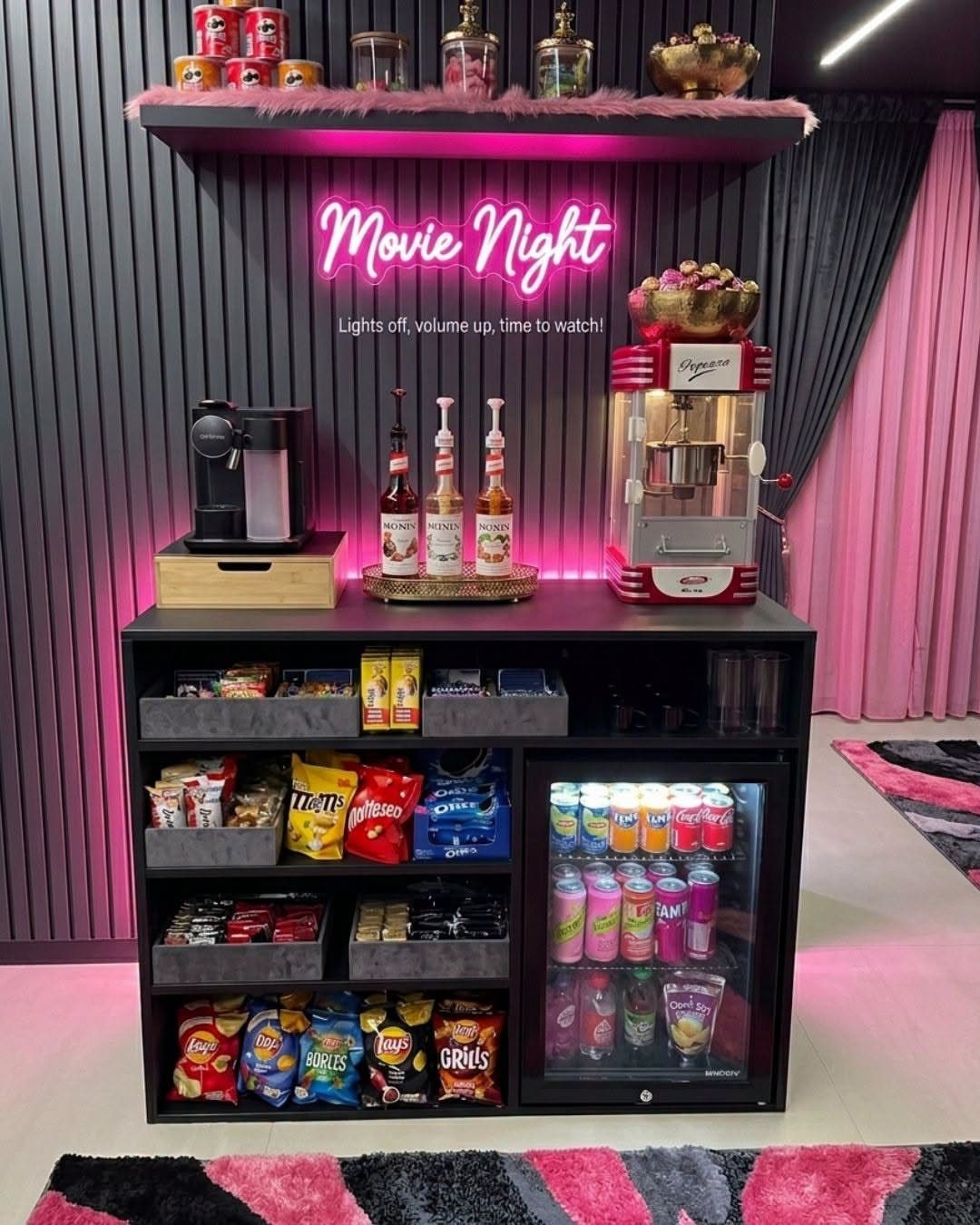
Build the snack station like a mini concession stand, and movie nights stop interrupting themselves with kitchen trips. A popcorn machine, a mini-fridge for drinks and open shelves for candy and chips cover most of what a snack station needs.
A neon sign sets the mood for little money. Black cabinetry or shelving keeps the area from glowing against a dark room.
Put it by the door, not behind the seats, so people can restock without crossing the screen. Add a coffee maker if your crowd skips soda.
6. Existing TV on a Wall
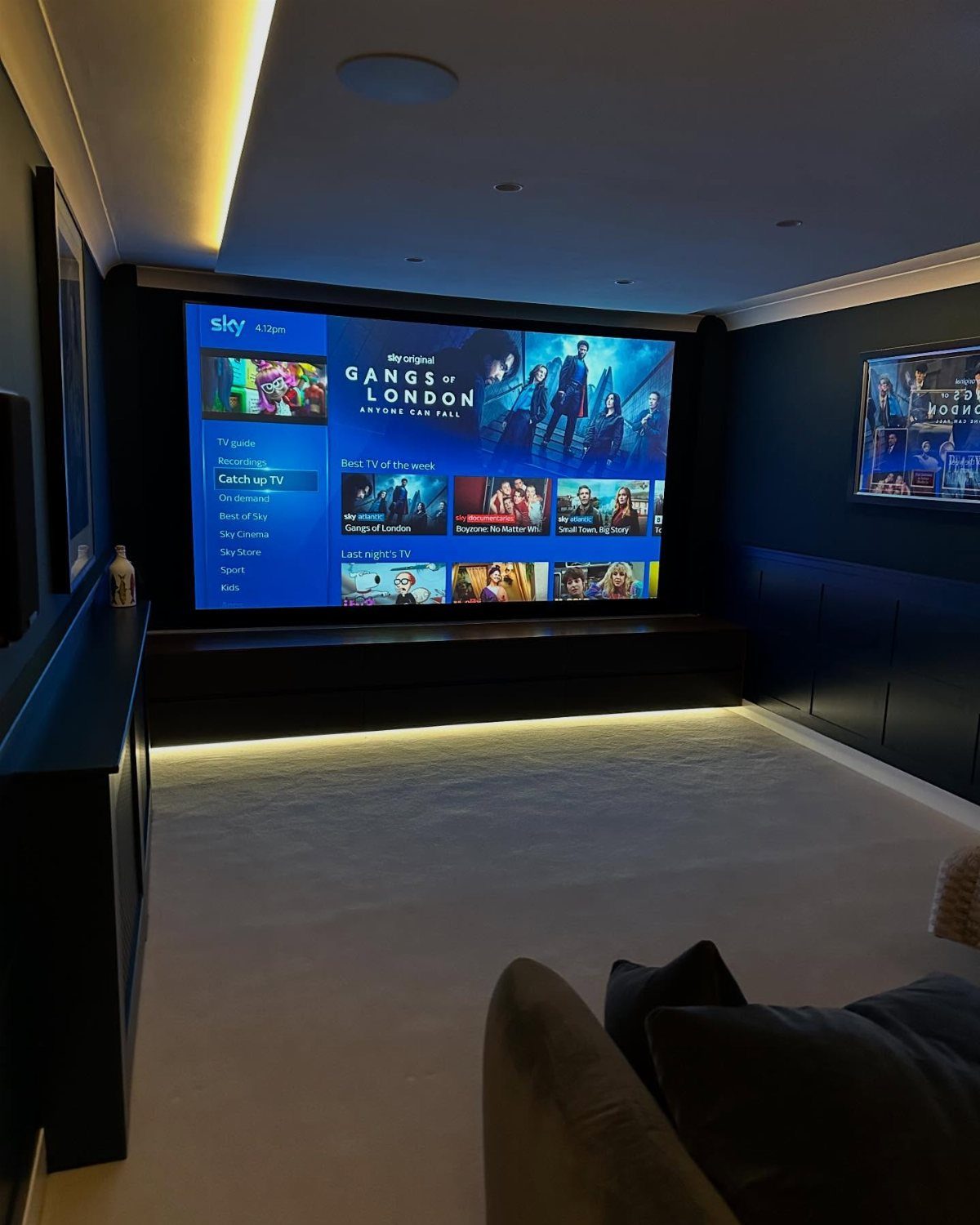
Your current TV can anchor a cinema room if the wall around it does some work. Dark blue walls cut reflections and make the screen the brightest thing in the room, which is what you want.
Cove lighting tucked behind the set adds a soft glow without spill onto the picture. A low storage unit underneath hides the cable box and streaming gear.
Buy a bigger TV later if you want one. Start with paint, lighting and a clean wall, and the set you own will look better right away.
7. LED Strip Lighting
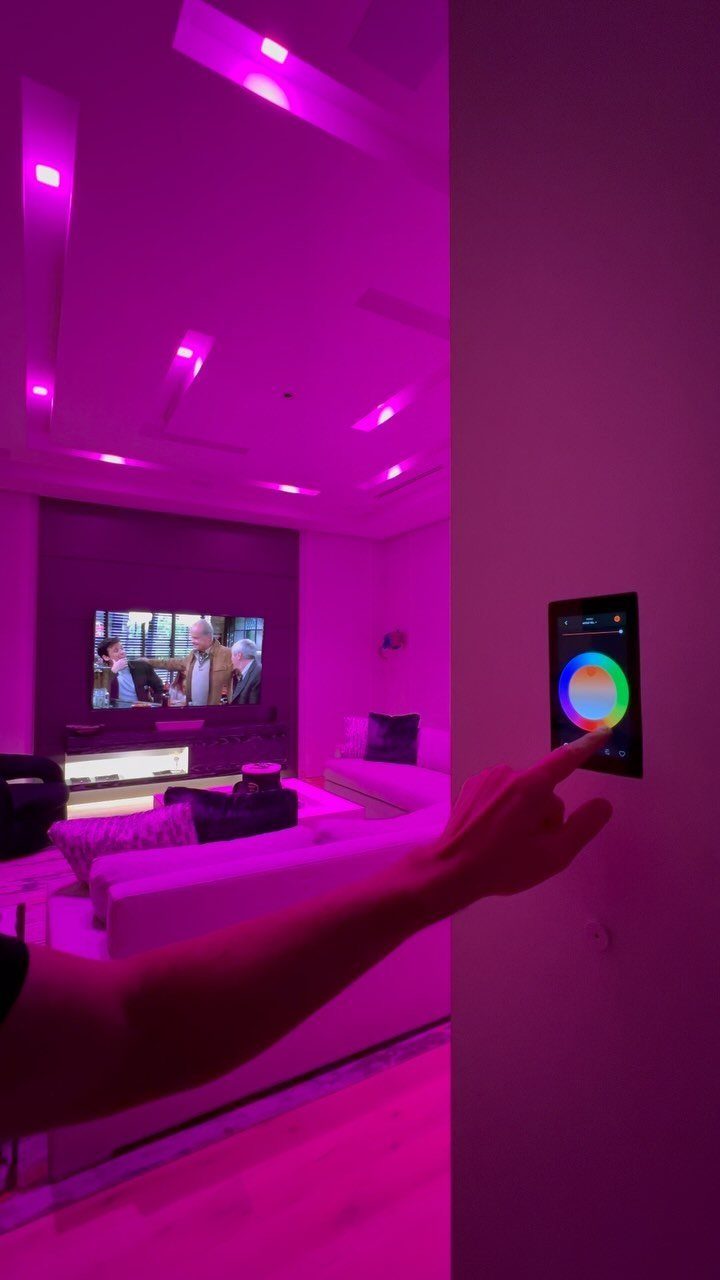
A wall-mounted control panel with a color wheel puts the whole lighting mood under one hand, and that’s the setup I’d choose over a remote you lose in the couch.
Purple against a white sofa gives the room a clear cinema glow.
Keep the strips behind or beneath furniture so you see the color, not the bulbs. Dim everything else when the movie starts.
Pick one color per film night and stop there; cycling through the wheel gets distracting fast.
8. Low-Profile Floor Sofa
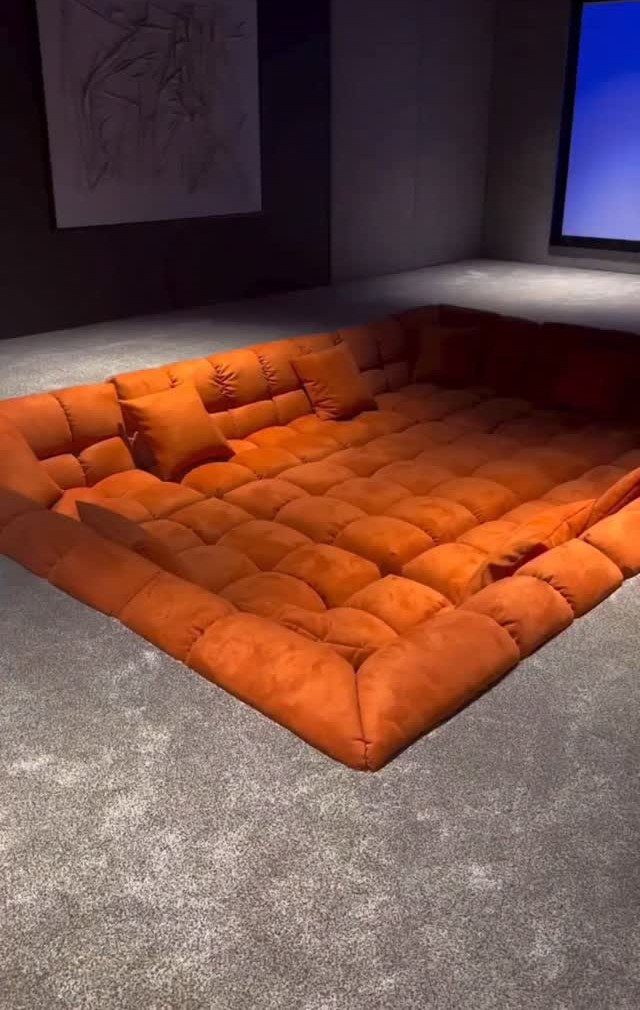
Sinking to floor level makes a low ceiling feel taller, which is why a big modular sofa suits a compact basement.
Orange tufting gives a dark room a warm anchor, and the loose pillows turn each section into a spot to lounge or sprawl.
Modular pieces let you rearrange for a crowd or a solo night. Push them together for a wide bed-like surface.
Add a rug under it if your floor is hard. Check that the sofa is washable before you commit.
9. Tiered Seating Layout
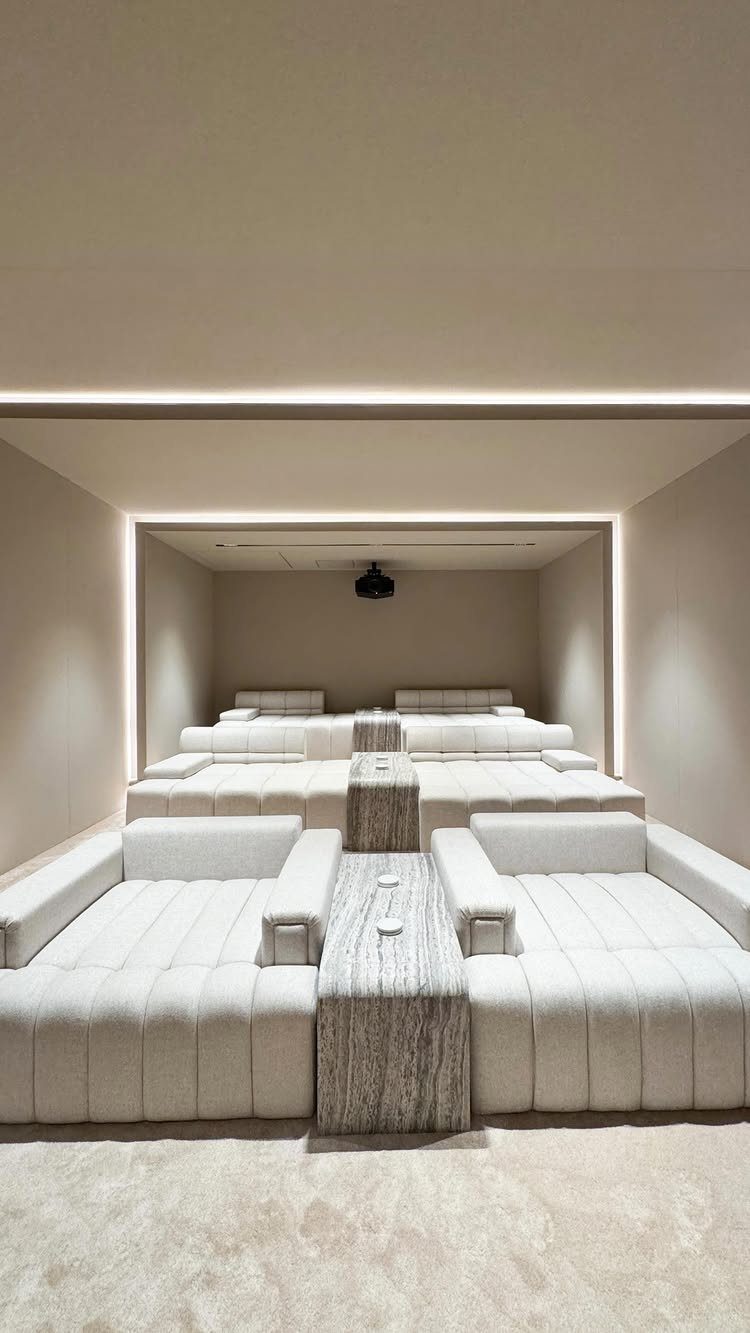
Stepped rows give every seat a clear view over the heads in front, and in a compact theater that matters more than extra screen size.
White upholstered seats with stone-textured consoles between them put drinks within reach and leave the rows looking tidy.
A ceiling-mounted projector frees the floor and keeps cables off the walls, while recessed linear lighting washes the room softly.
Build the risers as a platform before you buy seats. Plan the height with your ceiling in mind, since a projector needs clearance above the back row.
10. Multi-Use Game and Cinema Room
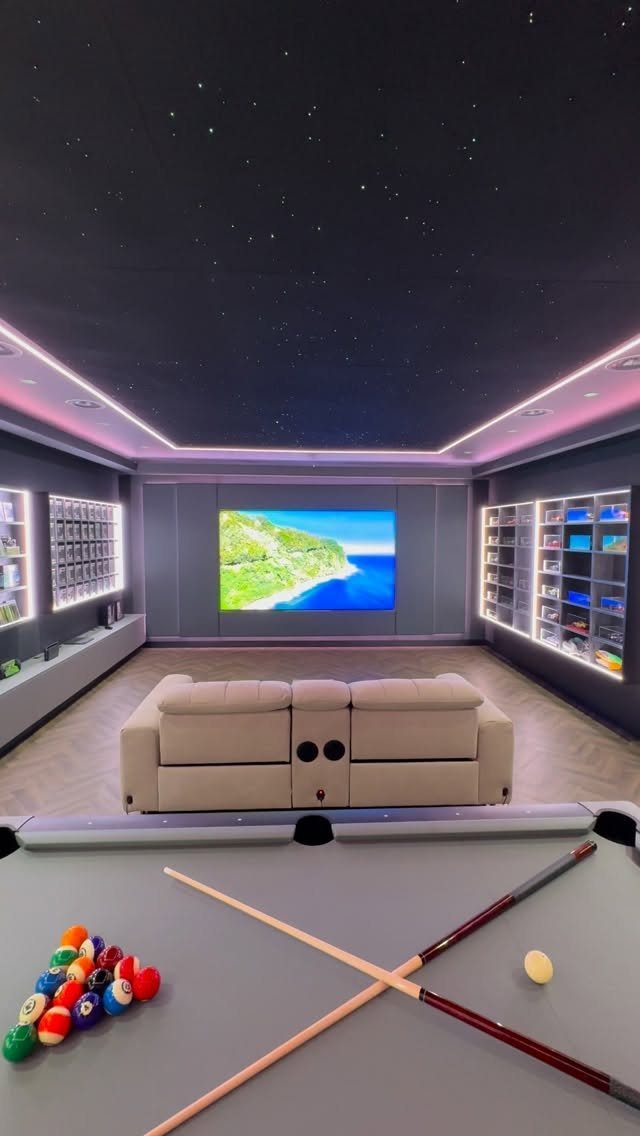
Pool table plus big screen is a real combination, and I’d pick it over a dedicated cinema if the room has to earn its keep.
A beige sofa along one side leaves the table in the middle, so the film plays while a game waits.
Purple perimeter lighting and a starry ceiling set the mood without eating floor space.
Measure for cue clearance first; a table needs room around every side. If the space is tight, a shorter cue solves it faster than moving walls.
11. Framed Sports Memorabilia Decor
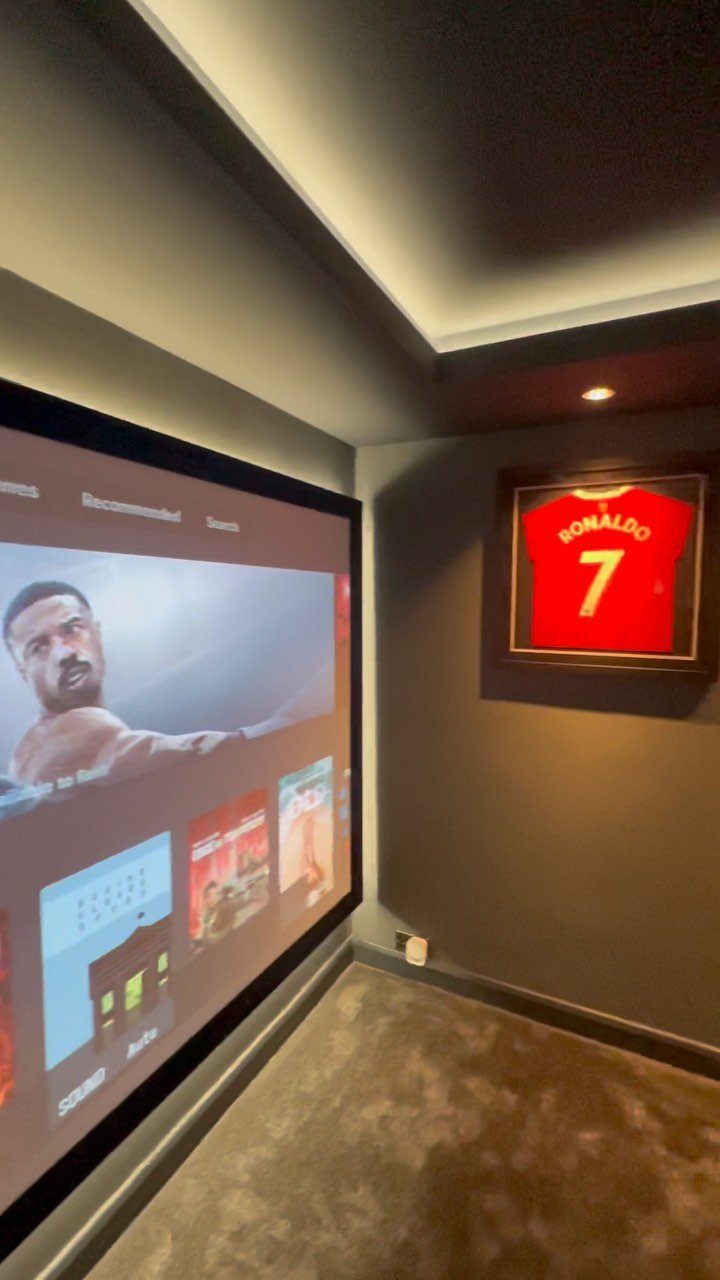
A framed jersey makes a screening room feel like yours. A red jersey beside the projection screen adds a spot of color that a dark room needs, and it’s cheaper than most wall art.
Use a deep shadow-box frame so the fabric sits flat and doesn’t crease. Hang it to the side of the screen, never behind where the image lands.
Add glass with a non-glare finish so the lighting doesn’t bounce off it during a film.
12. Daybed and Recliner Combination
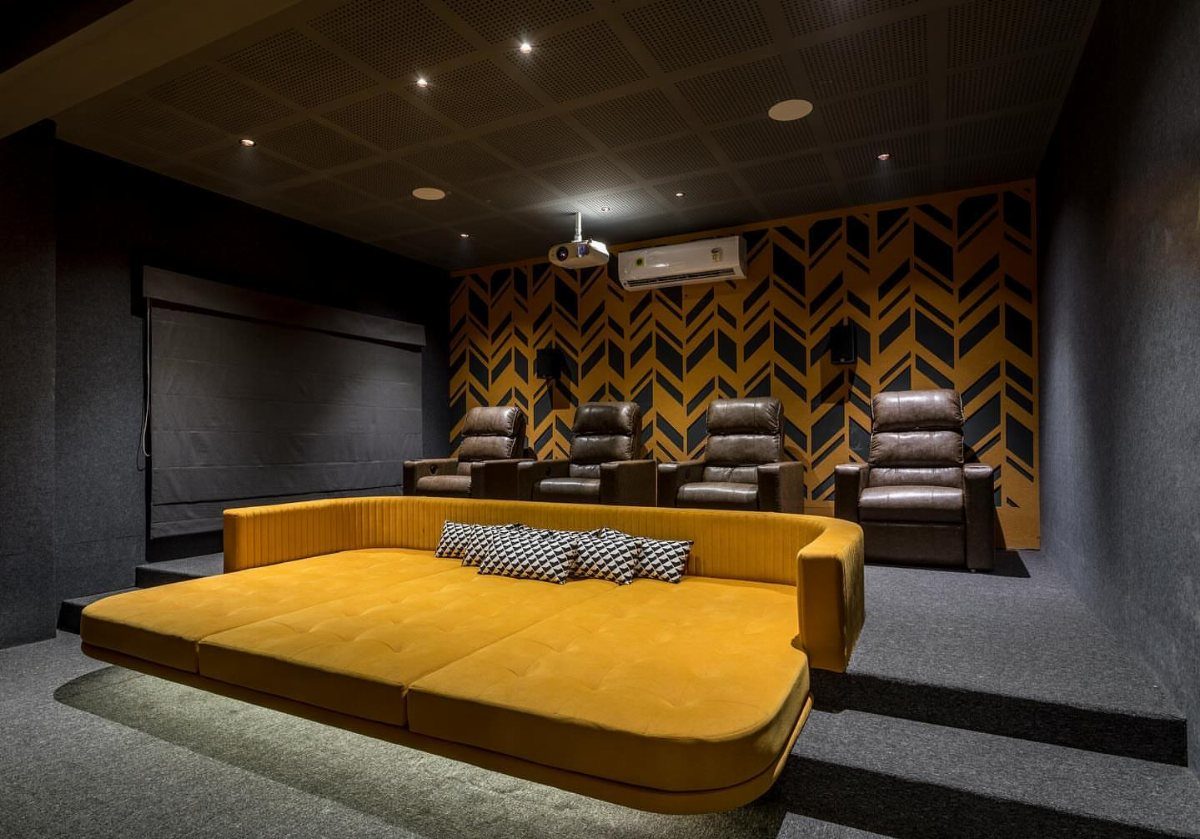
Put the daybed in front and the recliners behind, and you get two kinds of seating in one small room.
A yellow velvet daybed suits kids and sprawlers up front, while 4 leather recliners give the back row a proper lean.
Seat the daybed low so the recliners keep their sightline over it. Geometric wallpaper in yellow and black picks up the daybed color and ties the room together.
Pick wipeable leather over fabric for the recliners if snacks are part of movie night.
Planning Your Home Theater
Measure the room before you spend anything, and write down length, width and ceiling height.
A basement, an upper floor, a spare bedroom or even a large closet can hold a small theater, and the job is to use the limited footprint well.
Set the budget next, then decide who uses the room and for what. A space for 2 people watching films needs different choices than one that hosts a crowd.
Pick a dark, quiet spot. Thick curtains help with sound, and dimmable lighting plus a few personal touches, like movie posters, finish the feel.
A basement can give you room for a large screen, surround sound and comfortable seating all at once.
Choosing Equipment
Yamaha and Sony receivers both have a long record in this price range, and either one will run a small room without trouble.
Picture quality gets the attention, but audio matters just as much. A 5.1 setup breaks down to 1 subwoofer for the low rumble plus 5 speakers, with the center channel carrying most of the dialogue.
The center speaker belongs directly above or below the screen, because most of the spoken dialogue comes out of it.
Mount the surrounds beside or just behind the seats, a little above ear level, and the sound will fill in around everyone on the couch.
If you want the gear out of sight, speakers can be tucked underneath seats.
Managing Cable Clutter
Plan the wiring before you finish the walls. Lighting, sound and the projector or screen each need the right cable, so list them all first.
I tuck the receiver and game consoles into a closed cabinet, then run the cords through a flexible cable sleeve or a paintable raceway so nothing shows.
Cable organizers handle what you can’t bury, and running cables through the walls gives the cleanest result.
In a tight room, clear floor space helps a lot. Floating shelves hold the boxes up off the carpet, and a storage ottoman swallows spare cables and remotes while still giving you a place to put your feet.
Measure carefully before buying furniture or equipment, so every cable run and shelf fits the space you really have.
Frequently Asked Questions
What size room do you need for a home theater?
Plan on at least 10×12 feet for a workable small theater; a 15×20 foot room gives you real breathing room for a couch, a screen and some distance between them. Smaller spaces still work with careful planning.
What are some budget-friendly ideas for a small home theater room?
Start with the TV you already own and put the money into the room around it. A floor bed piled with washable blankets also seats several people on one mattress or thick pad, and DIY acoustic panels help with echo.





