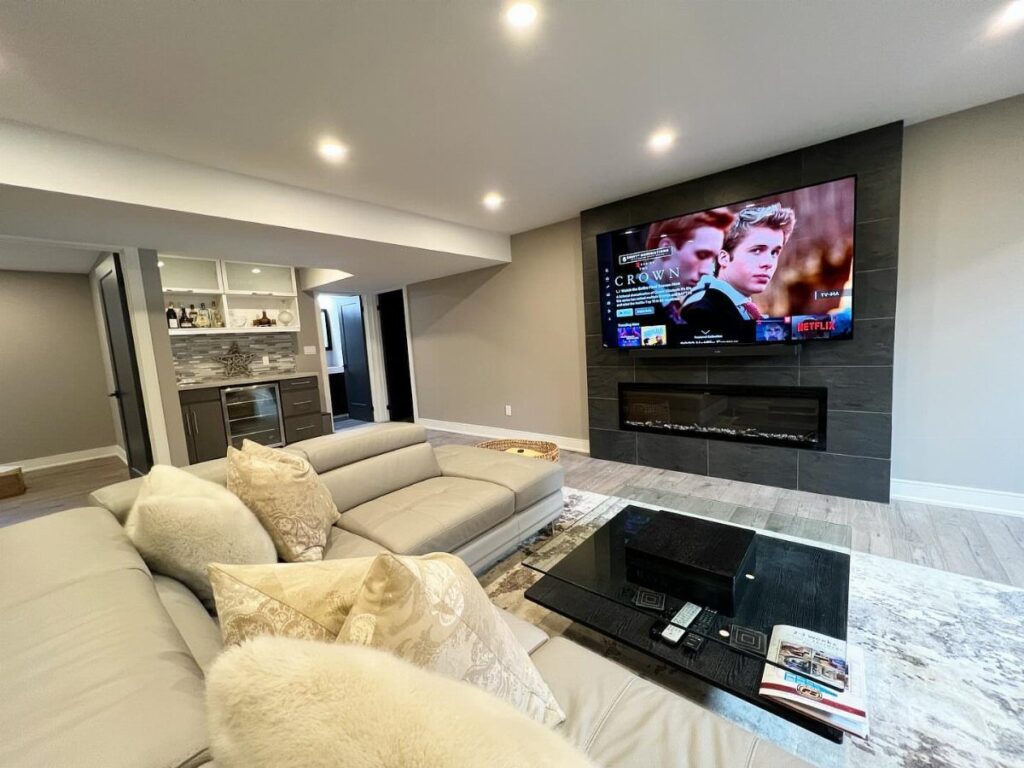
What decides your basement room is the job it has to do, the storage it needs to hide, and the light it can get.
A bar, a laundry room or a bathroom needs water lines, while a lounge, reading room or guest bedroom needs only paint, lighting and a rug.
The ideas here run from a home office with a 10-second commute to a basement bar that hides behind the laundry, a kids’ playroom that takes over the whole floor, and a wine cellar built into the wall.
Settle the plumbing question first, because it sets the budget for everything else.
1. Cozy Lounge
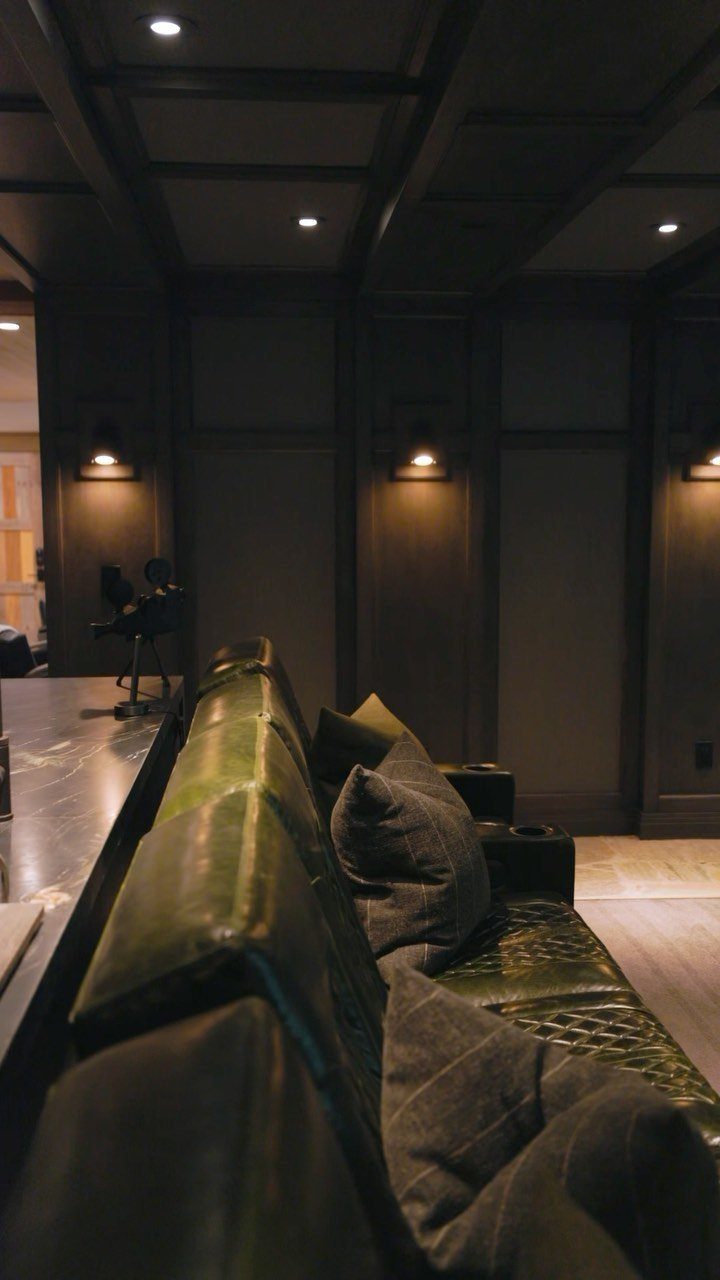
Dark wood paneling and recessed lighting make a basement lounge feel like a private club instead of a leftover room.
A green leather sofa against that wood is a bold pairing I like, since the color reads rich rather than loud.
Wall sconces add a second, lower layer of light for evenings. Put the recessed lights on a dimmer so the room can shift from bright to moody.
If you pick a strong color for the sofa, keep pillows neutral so the room stays balanced.
2. Add a Fireplace
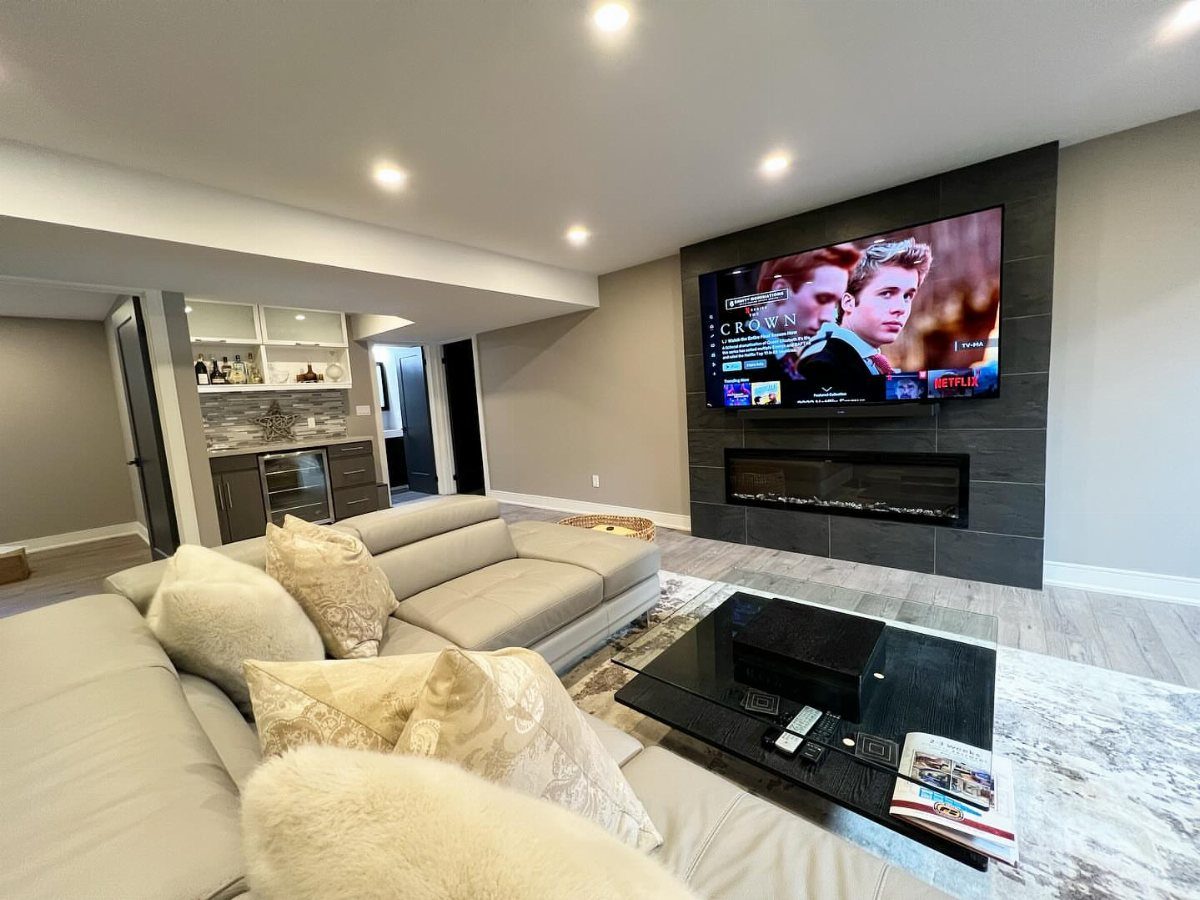
A linear fireplace mounted under the TV puts heat and a focal point on one wall, which suits a basement living room where the screen is the center anyway.
Placing the TV above it keeps seating pointed one direction, so the sectional never has to compete with a second focal point.
Check the TV’s heat tolerance before mounting it above any fireplace, and read the fireplace manual for the clearance it requires. A plain grey wall keeps the flame as the only accent.
3. Cozy Reading Room
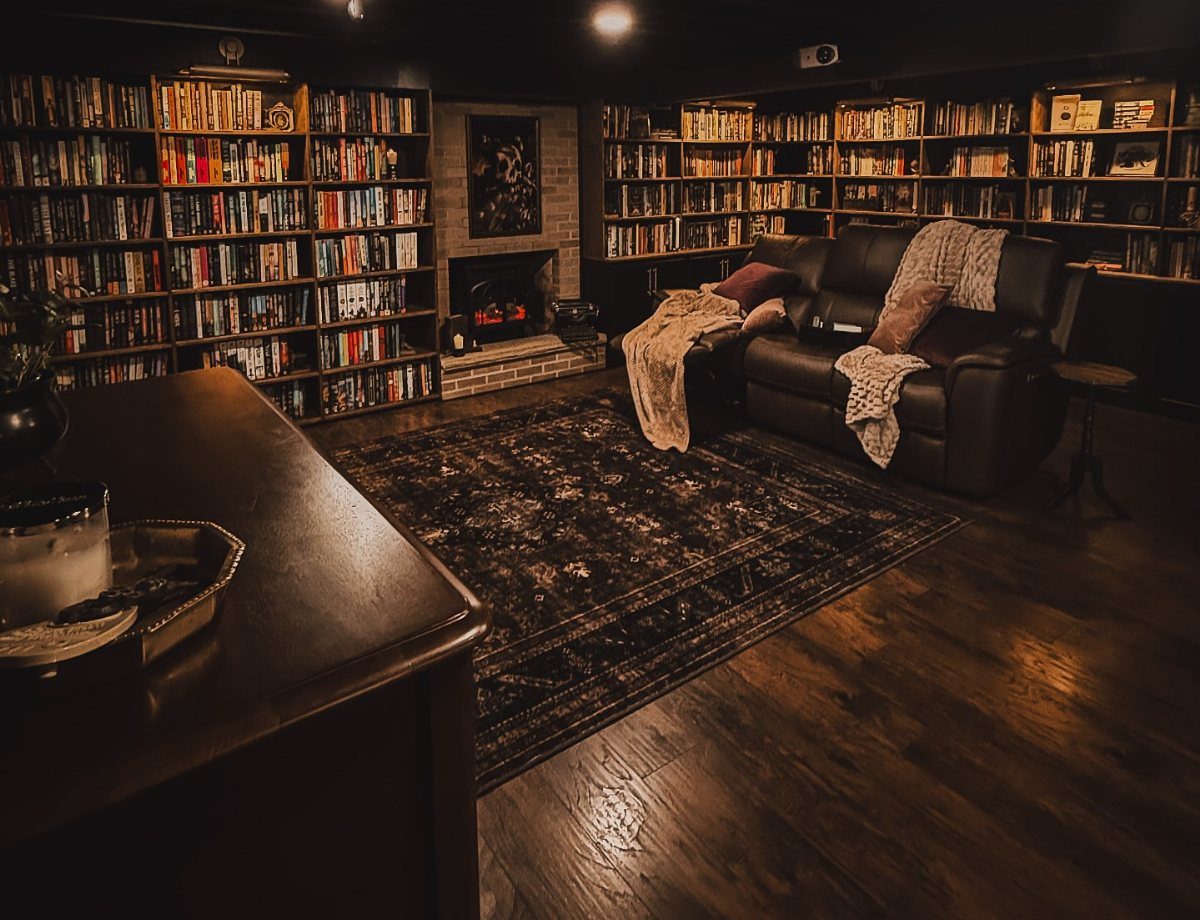
Bookshelves running wall to wall do more for a basement reading room than any single piece of furniture. Filled shelves absorb sound, and that quiet is what makes a below-grade room good for reading.
Pair a dark leather sofa with a couple of blankets so the seat is ready for long sessions.
A small brick fireplace adds a warm point to look at between chapters, though it is optional. If the budget is tight, spend on shelving first and the sofa second.
4. Guest Bedroom Retreat
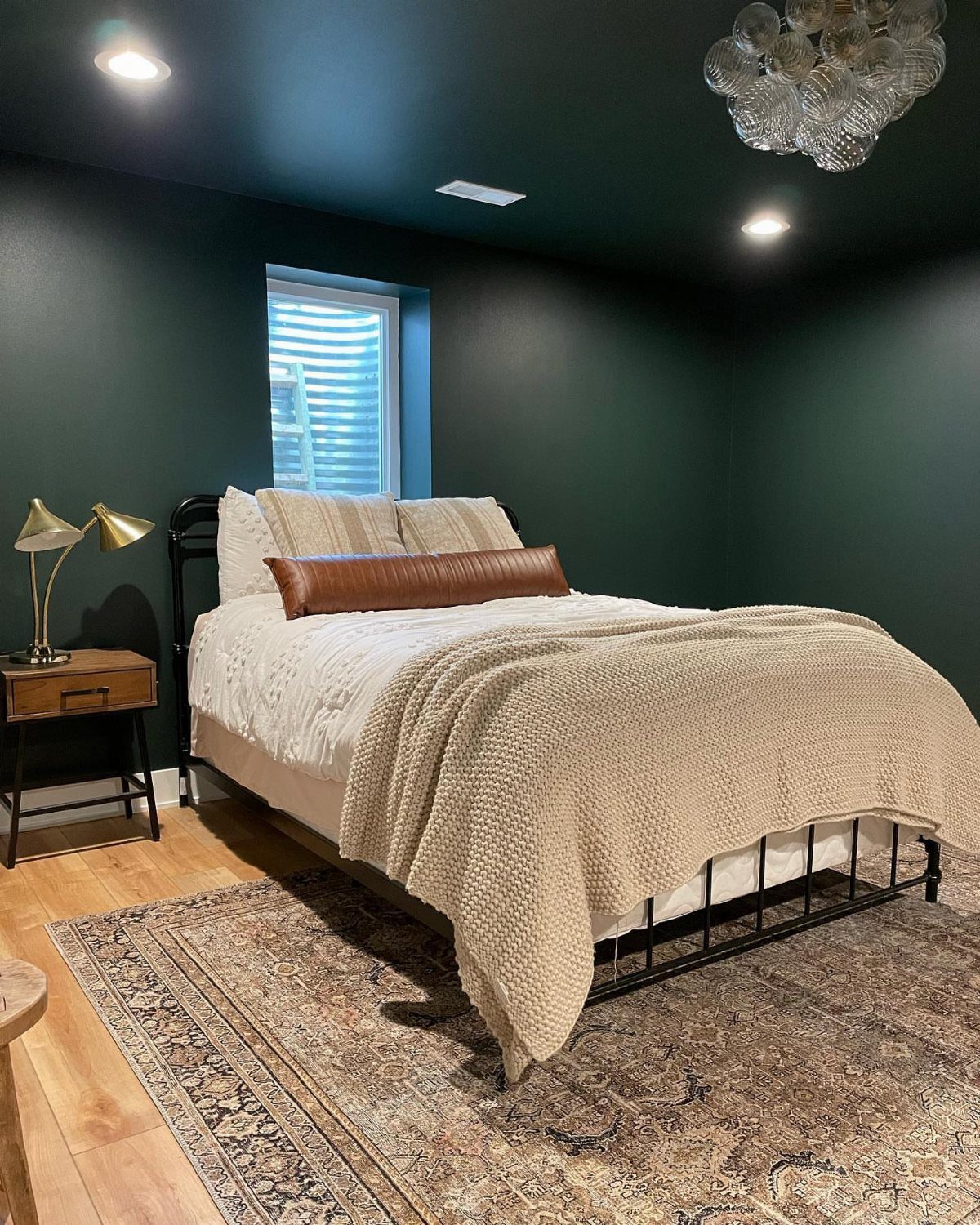
Dark green walls make a small basement bedroom feel deliberate rather than dim. With only a small window, I would lean into the darkness instead of fighting it with white paint.
Lighter bedding keeps the focus on the bed and stops a dark-walled room from closing in. A rug and a bedside lamp are the 2 things that make a guest room feel finished instead of spare.
Pick a matte paint for the walls; it hides flaws in older basement drywall better than gloss.
5. Home Gym
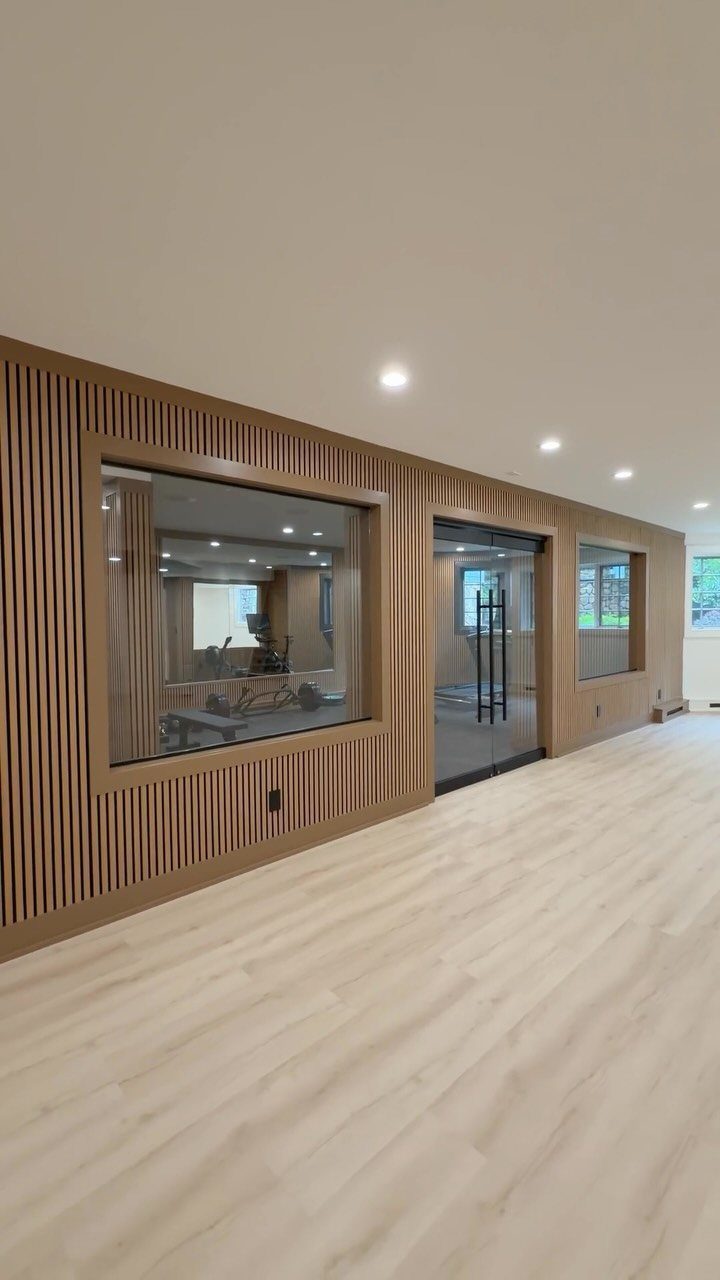
A glass wall and door turn a basement gym into a room you can see into, which keeps it from feeling like a closed storage box.
Glass also lets you watch kids or a timer from the hall. The maker of this one put it simply: the commute to the gym is now exactly 10 seconds.
Expect to wipe fingerprints off the glass more often than you would a painted wall.
6. Kids’ Playroom
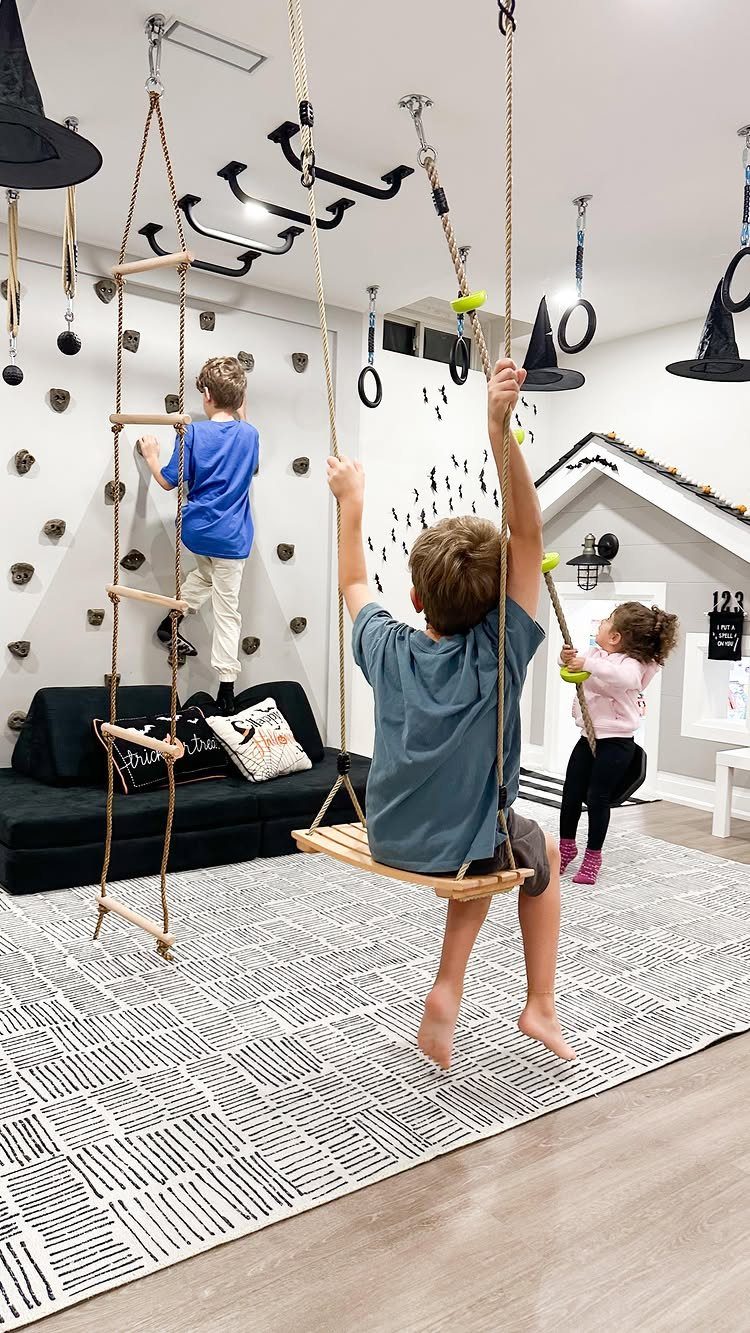
A climbing wall, rope ladder, swing and monkey bars give a basement playroom real physical play, which suits a space where kids can burn energy through long winters.
It is a bigger commitment than a toy corner, so measure ceiling height before buying anything that hangs or climbs.
Anchor every piece into framing, not just drywall. A black sofa on the side gives parents a place to sit and watch.
For a lower budget, start with one swing and add the rest later.
7. Built-in Shelving
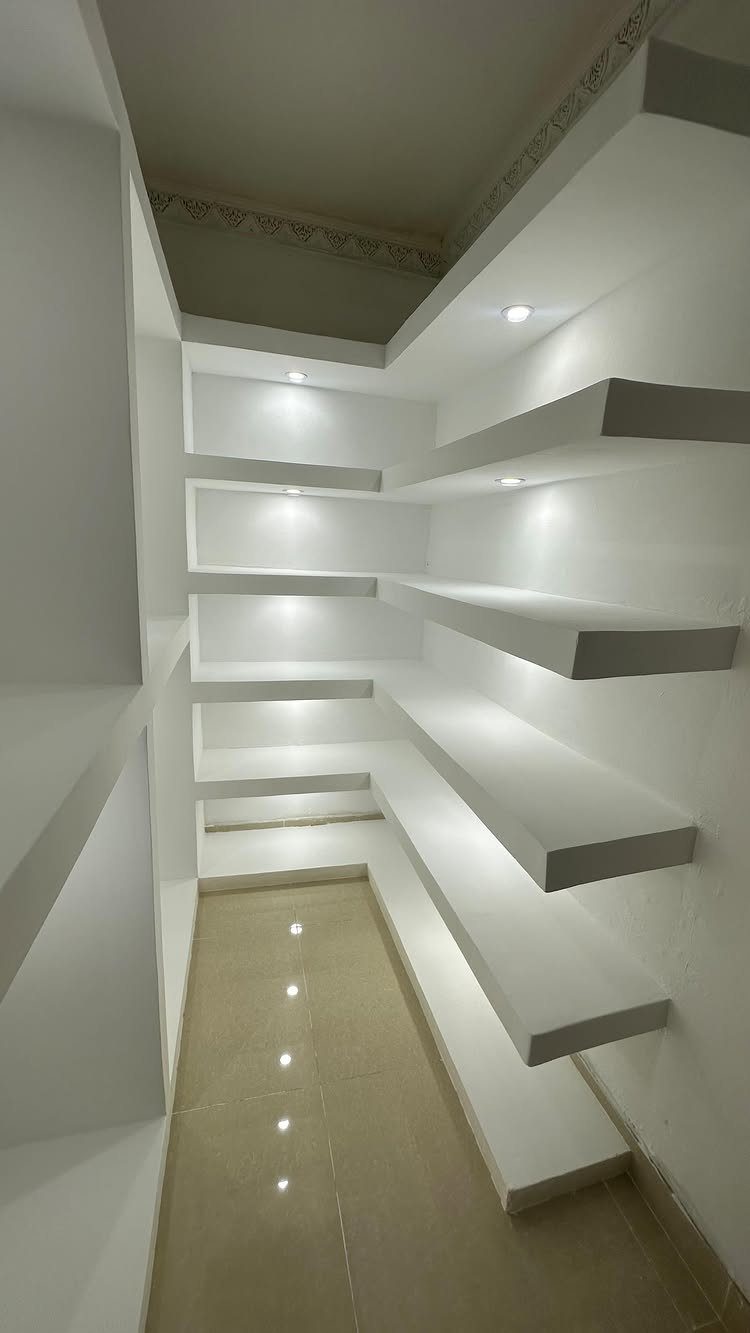
Floating shelves with built-in lighting give a basement wall display space and a glow in one install, which matters in a room with no daylight.
White shelves against white walls keep the look quiet, so the lit objects do the talking.
Plan the wiring before you close anything up, since the light strips need a power source near each run. Keep the shelves shallow; a deep one gets crowded fast.
8. Accent Wall
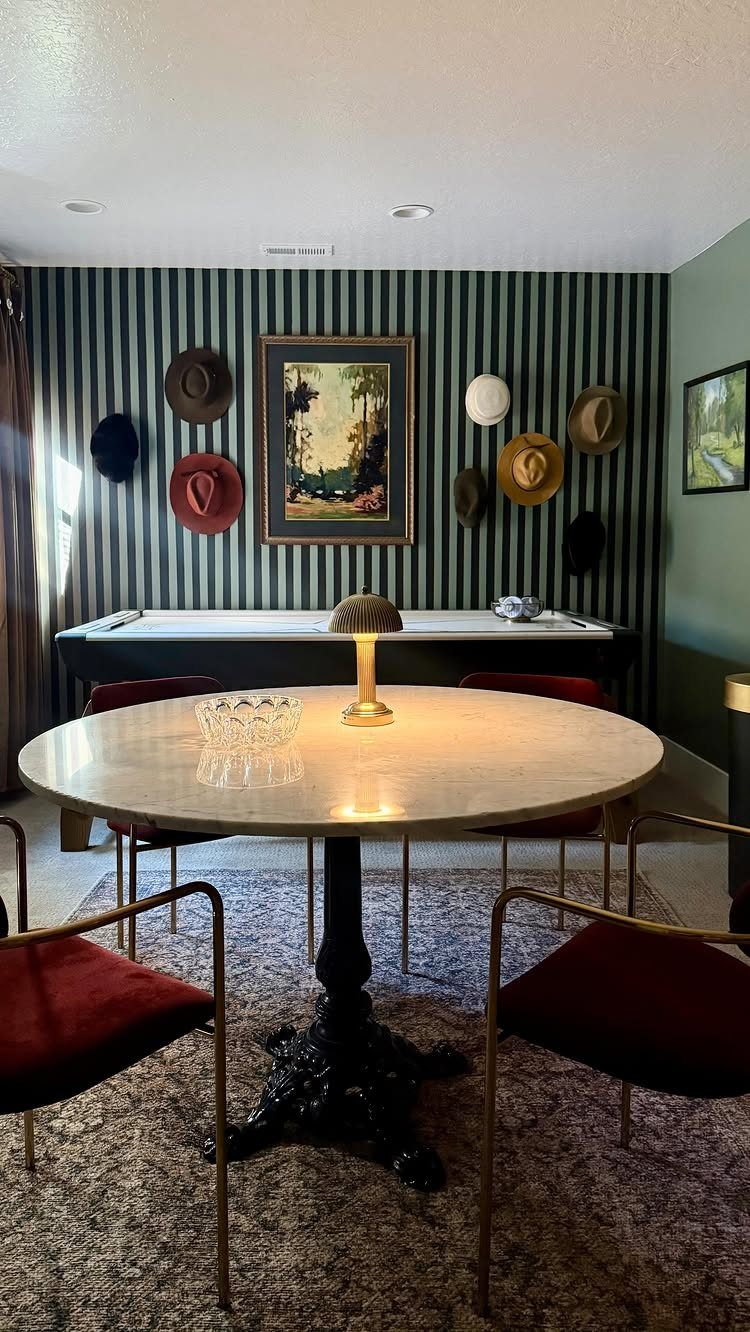
Red stripes on one wall turn a plain game area into a room with a point of view.
Red velvet chairs against that wall prove a strong color can sit beside another, as long as only one surface carries the pattern.
Hanging hats and a single painting on the stripes adds layers without more paint. Use painter’s tape to mark the stripe widths, and measure twice before you peel.
Keep the other 3 walls plain, or the stripes lose their effect.
9. Basement Bar
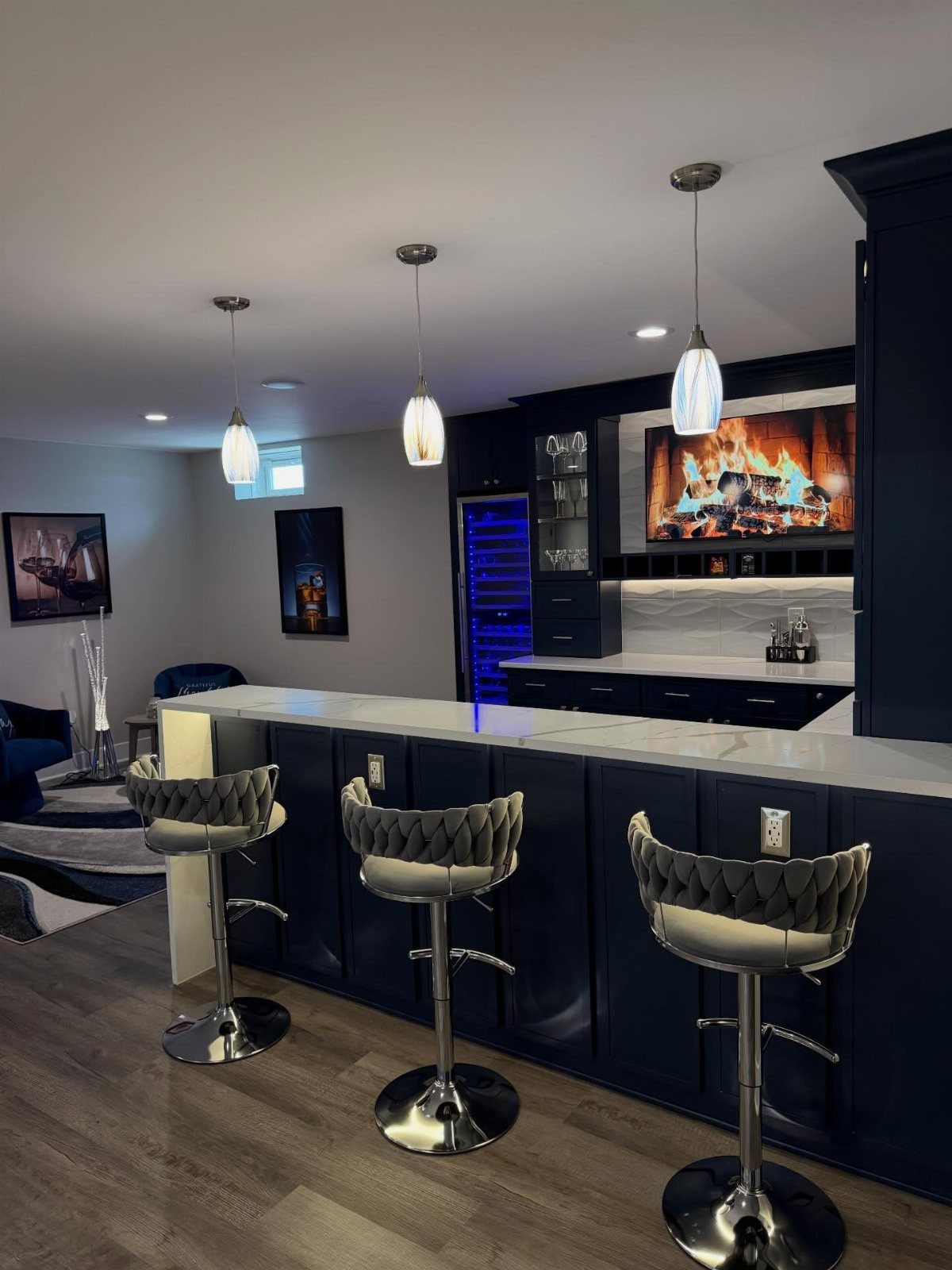
Navy cabinets under white countertops give a basement bar a crisp, finished look that reads as built rather than bolted on.
Three pendant lights over three stools mark the seating zone, so the bar feels like its own corner of the room.
A wine cooler tucked under the counter saves trips upstairs. Pick stools with backs and quilted seats if people will sit for a whole game.
Budget the most for cabinets and counters; lights and stools are easy to swap later.
10. Home Office
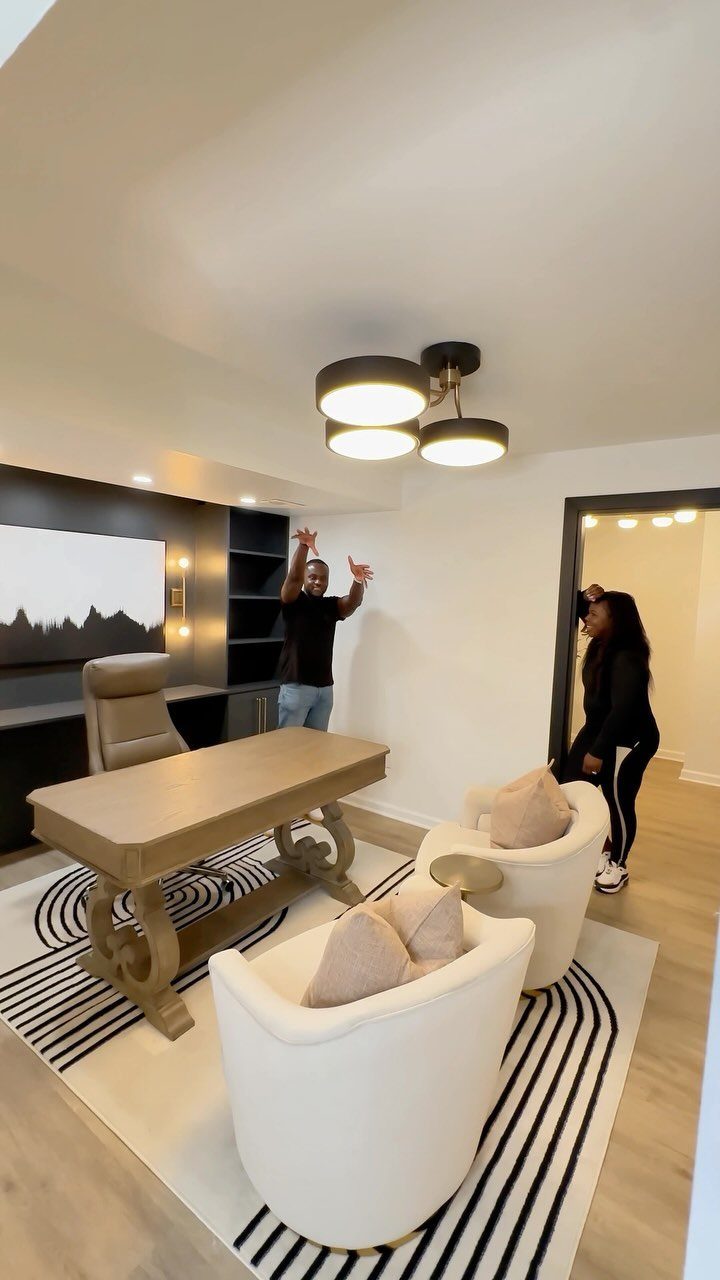
A wooden desk with 2 white armchairs facing it makes a basement office that can hold a meeting, not just a laptop. A black built-in unit behind it handles storage, so the desk stays clear.
Add a striped area rug to define the work zone and soften a hard floor. Choose armchairs in a wipeable fabric, since light colors show wear.
If space is tight, skip one chair and keep the built-in.
11. Laundry Room
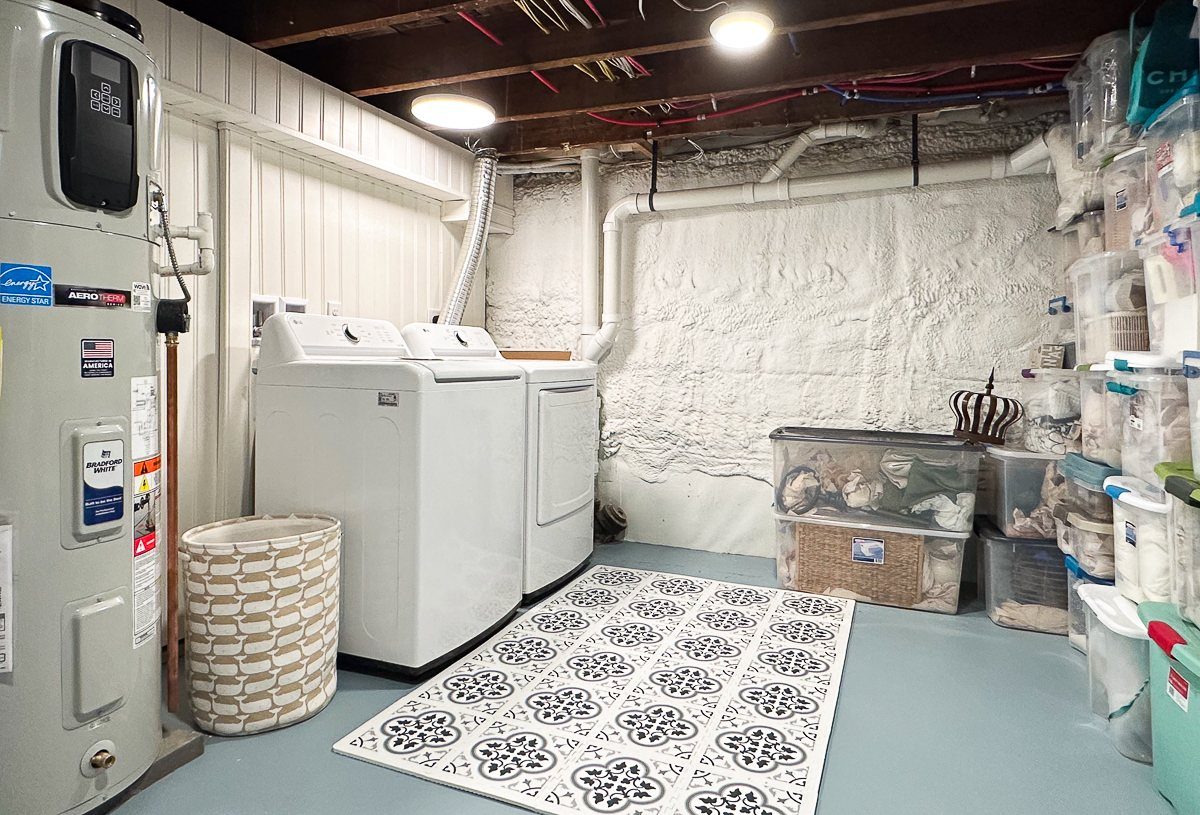
A basement laundry room works best when the washer, dryer and water heater share one wall, so the plumbing stays in one place and the rest of the room stays usable.
White or off-white walls reflect whatever light reaches a windowless basement laundry room, and textured finishes help it feel intentional instead of flat.
A patterned rug warms up a cold floor and cushions your feet during long folding sessions. Storage bins keep detergent and supplies off the machines.
12. Wine Cellar
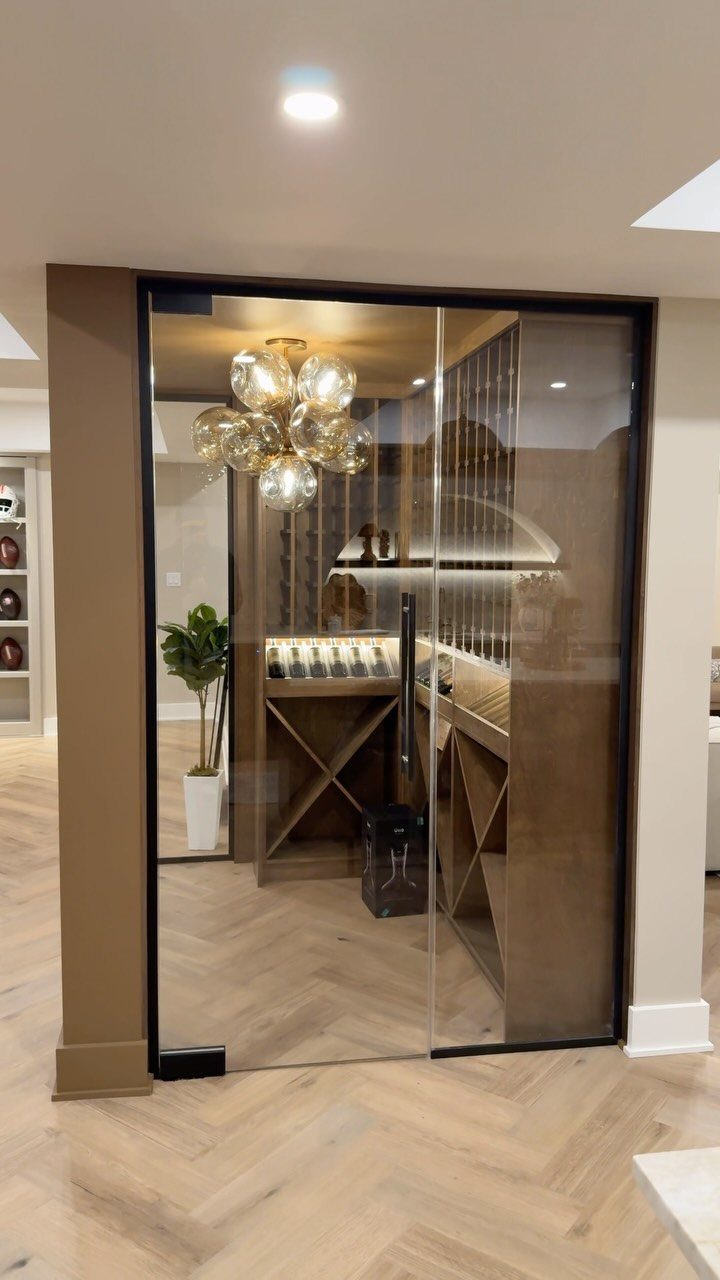
A glass-enclosed wine cellar lets the bottles act as décor, and wooden racks give the glass room a warm, finished look.
A gold bubble chandelier adds a bright accent overhead, and a small tasting counter turns storage into a place to sit.
The maker of this one hid doors that conceal storage and utilities, which is worth copying if a furnace or panel shares the room.
Glass is the pricier route; a solid-walled closet with racks costs less.
13. Sleeper Sofas and Ottomans with Storage
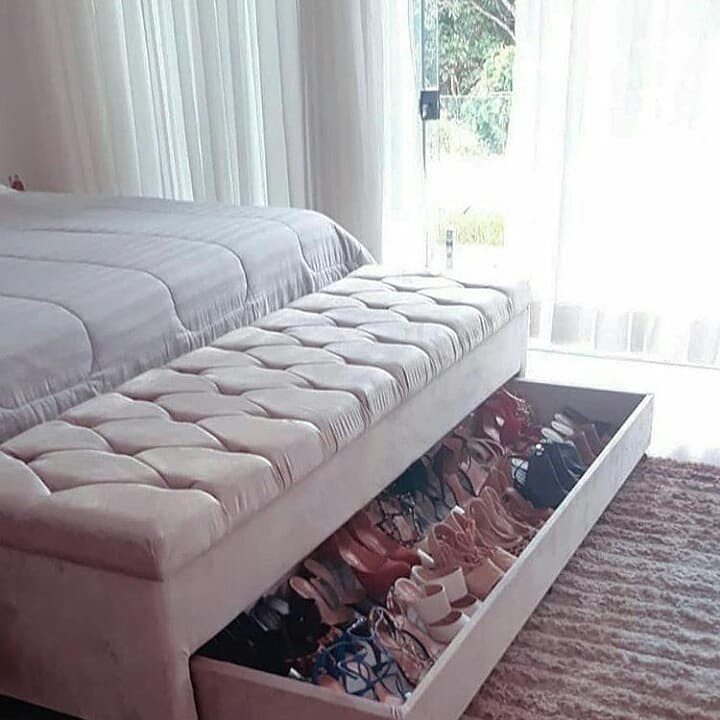
A tufted ottoman with a drawer pulls shoes, blankets or spare linens out of sight, and in a basement bedroom that means one less dresser.
Sitting at the foot of the bed, it also gives guests a place to drop a bag or put on shoes.
Look for a drawer that opens fully, because you want to see everything inside at a glance. Beige hides dust and wear better than white, and a rug underneath keeps the piece from sliding on a hard floor.
If a guest bed has to double as a couch, a sleeper sofa follows the same logic.
14. Luxury Vinyl Planks, Carpet
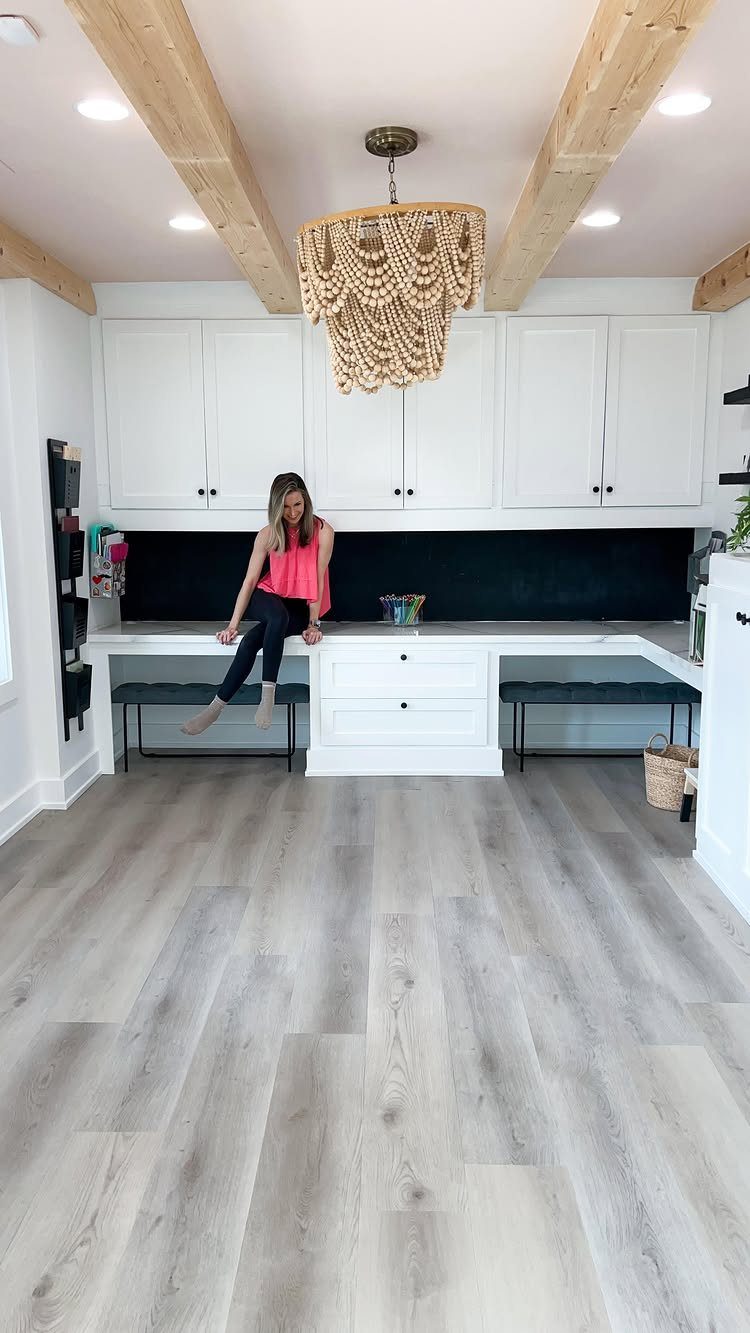
Grey wood-look vinyl planks cover cold concrete with a floor that is softer underfoot and keeps a basement room bright. Paired with white cabinets, the grey stays neutral and lets a decorative piece like a beaded chandelier stand out.
Carpet or engineered wood are the other routes off bare concrete. I would pick vinyl plank for a room where you want the lightest look, and carpet where warmth matters most.
Whichever you choose, clear and level the slab first, since planks show every bump and carpet performs better when the surface is flat.
15. Go Bold with Eclectic Patterns
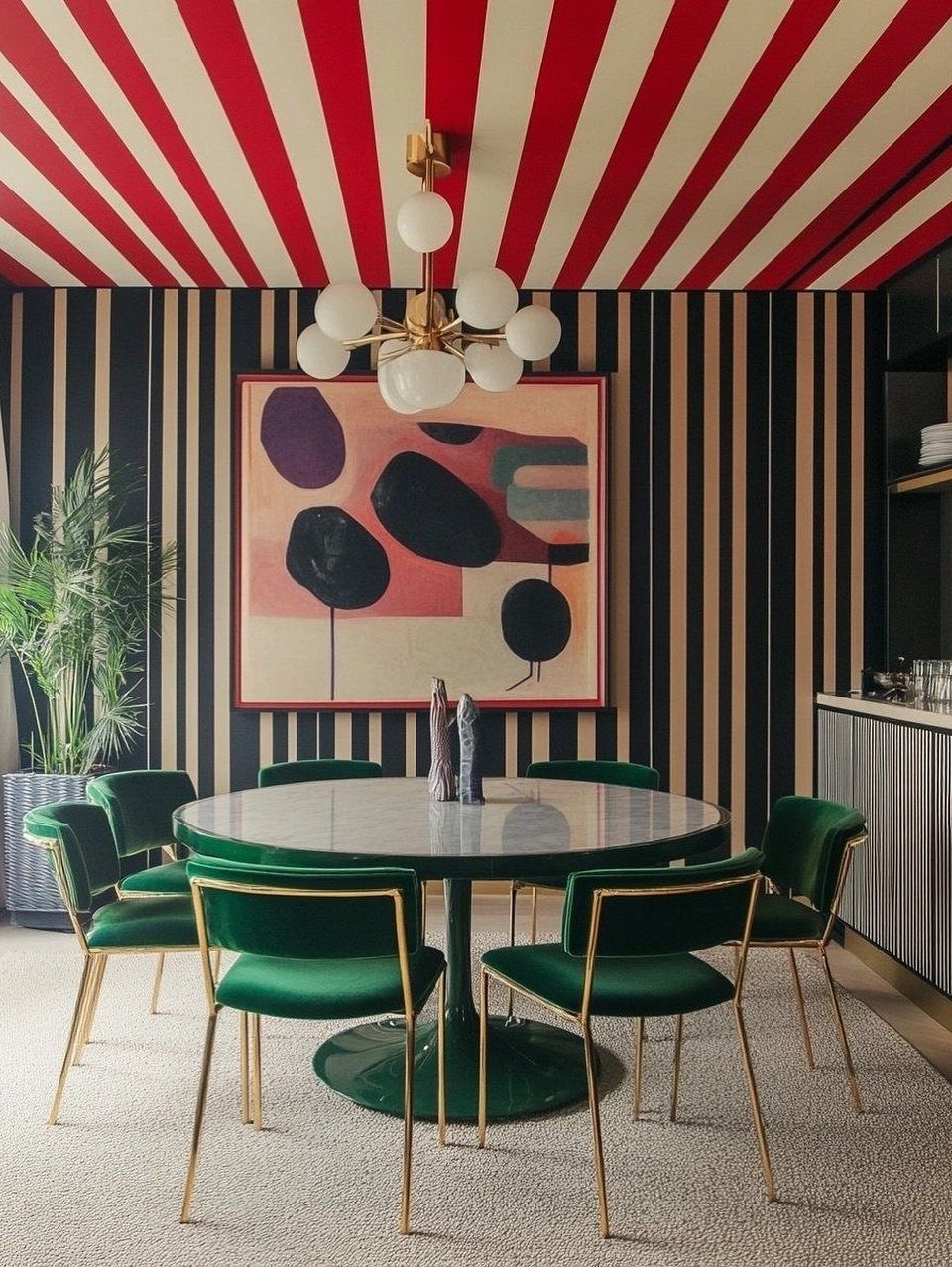
Stripes on both the ceiling and the walls turn a basement bar into a room people remember, and a round marble table with green velvet chairs keeps the pattern from feeling like a gimmick.
A large abstract painting and a gold chandelier add 2 more layers without extra paint.
Pick one pattern to repeat, here stripes, and let furniture and art bring the other colors. Painter’s tape and a level make clean lines, and a ceiling takes patience, so plan a full weekend.
A bar like this suits a couple who would rather host a quiet cocktail night for two than a crowd.
Importance of Lighting
Basements usually get little daylight, so plan the lighting in layers instead of trusting one overhead source.
Start with low-profile flush mounts or recessed can lights, since ceilings run low, then add wall sconces, task lighting and lamps wherever you actually sit, read or work.
If the overhead light feels flat, a lamp in the right corner fixes it for far less than new wiring. A good-looking fixture doubles as something worth looking at, and that’s where I spend a bit more.
Adding a window brings in real daylight, but it is a bigger job, so treat it as a later upgrade.
Maximizing Space
Decide what the room is for before you buy anything.
Day or night use, adults or kids, and whether plumbing is needed for a bathroom or wet bar all change the plan, and plumbing is the one you want to settle first.
The space under the stairs makes a good closet. Fill it with baskets, lidded plastic containers or wall shelves so the clutter that usually lands in a basement has a place to go.
A tidy closet also lets the rest of the room stay open, which matters more when the ceiling is low.
Creating Defined Zones
Settle the layout before you buy new pieces. Furniture placement costs nothing to change, so shift things around until traffic flows, everything is reachable, and seating faces the focal point, such as a TV or fireplace.
Then give each activity its own spot. A sofa with its back to the open room can mark off a lounge, and a rug under each group of furniture tells the eye where one area stops.
The ceiling counts as another surface, and it changes how the room reads. A different paint or finish overhead can separate one zone from the next without adding a single wall.
"As with any room, the first important step is to think about what the space will be used for," says designer Christine Markatos Lowe.
Frequently Asked Questions
What should you have in your basement?
Start by deciding what the room is for, because that choice drives everything else.
Good fits include a lounge, a guest bedroom, a home office, a gym, a playroom, a bar or a laundry area. Settle plumbing first if you want a bathroom or wet bar, since it limits where everything else can go.
How to decorate a basement bedroom?
Layer the lighting and lean into the room’s character instead of fighting it. In a small basement bedroom with one small window, dark green walls in a matte finish look deliberate and hide flaws in older drywall.
Lighter bedding keeps the bed as the focus, and a rug plus a bedside lamp make the room feel finished. Add wall lights and lamps on top of the overhead fixtures, because basements get little daylight.
Can you legally put a bedroom in a basement?
Yes, but the room has to meet local building codes and safety regulations. Requirements differ by location, so check with your local building department before you build or rent the space out as a bedroom.





