The ideas run from a single accent wall to a built-in wall nook with custom lighting, and the room you have decides which one fits.
A small office works better with a floating desk or navy walls with wainscoting, while a spare room can handle a traditional executive setup and tall bookshelves.
Whatever the size, plan on 2 lights minimum, with bulbs rated 2700K–3000K to keep dark walls warm instead of cubicle-cold.
1. Accent Wall
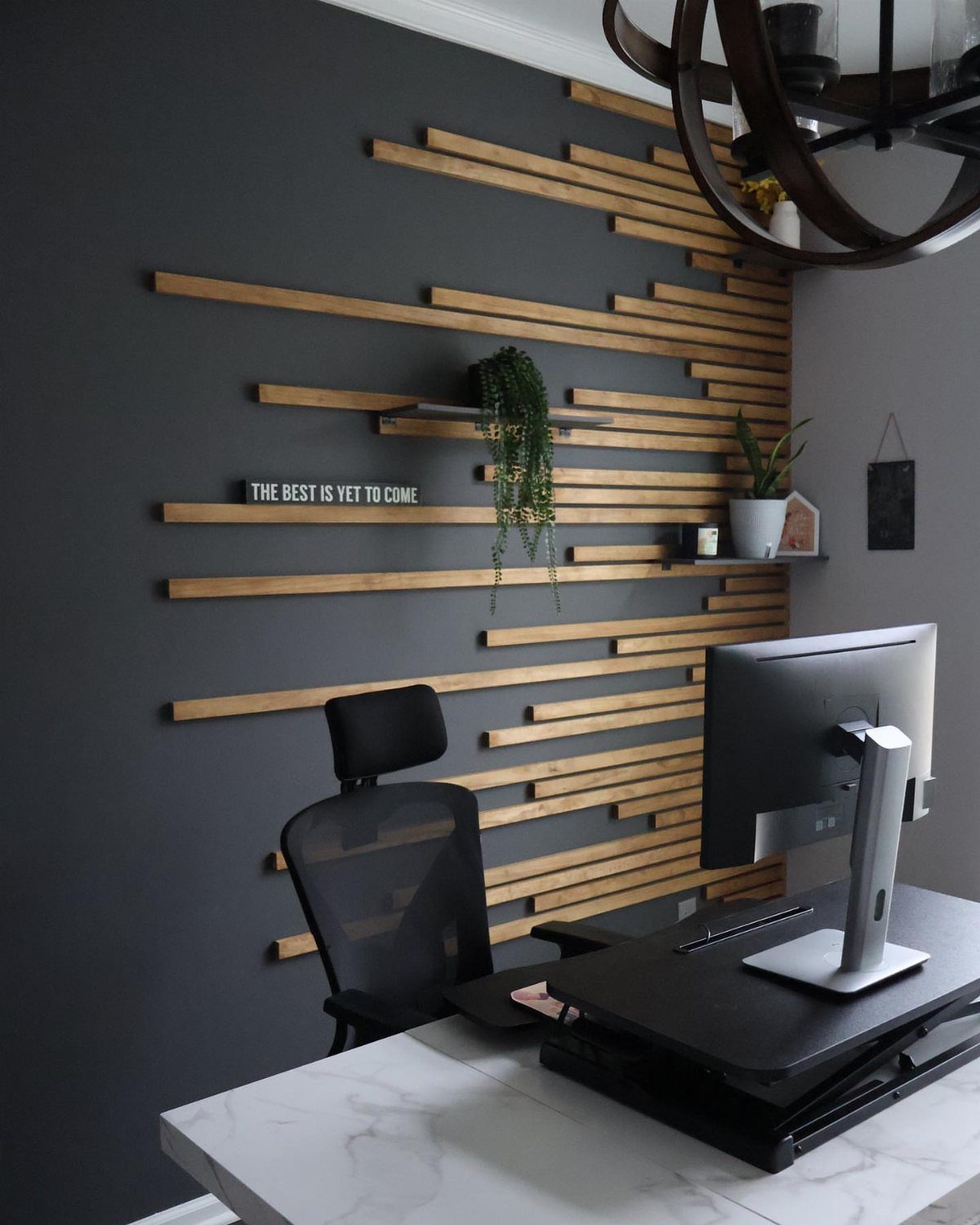
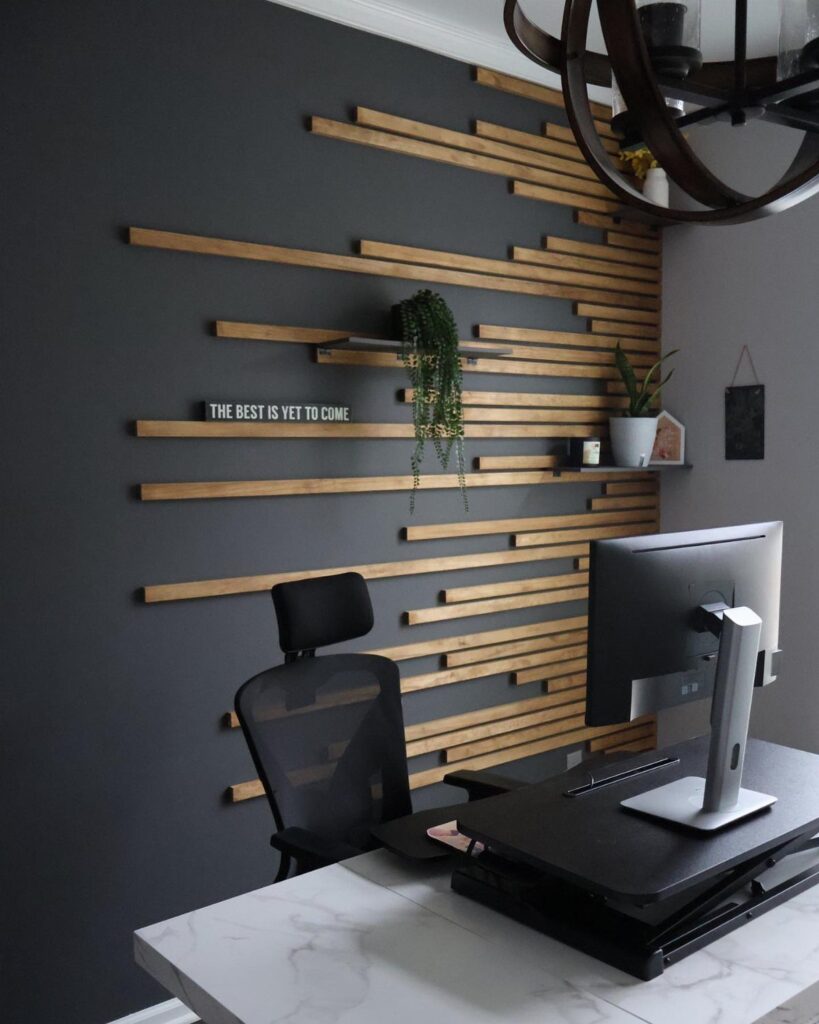
Dark grey behind a desk gives a room a backdrop that makes a monitor easier on the eyes and a face on video calls look sharper. Horizontal wood slats add warmth so grey walls stay grounded instead of going flat.
Pick one wall only, the one you face while working, and leave the other three light. A matte finish hides roller marks better than satin.
Slats are the weekend part of this job, and a plain paint-only version still works on a smaller budget.
2. High-Quality Desk
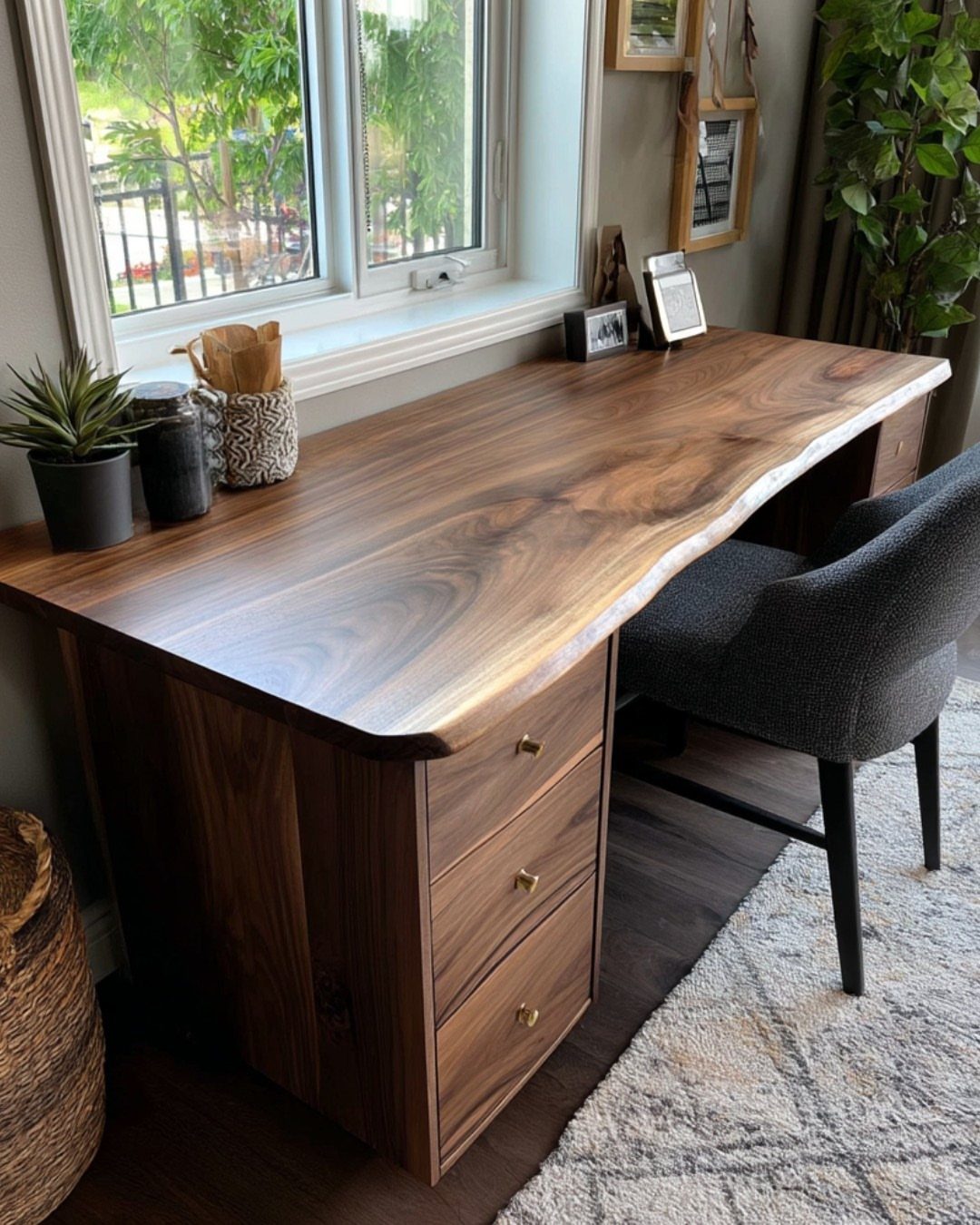
A live-edge walnut slab desk is the one piece I’d spend extra on, because the desk is what your forearms rest on all day.
The natural edge and dark grain do the decorating, so the rest of the room can stay quiet.
Drawers matter more than they look. They keep cables and paperwork out of sight, which a slab top can’t hide.
3. Custom Bookshelf
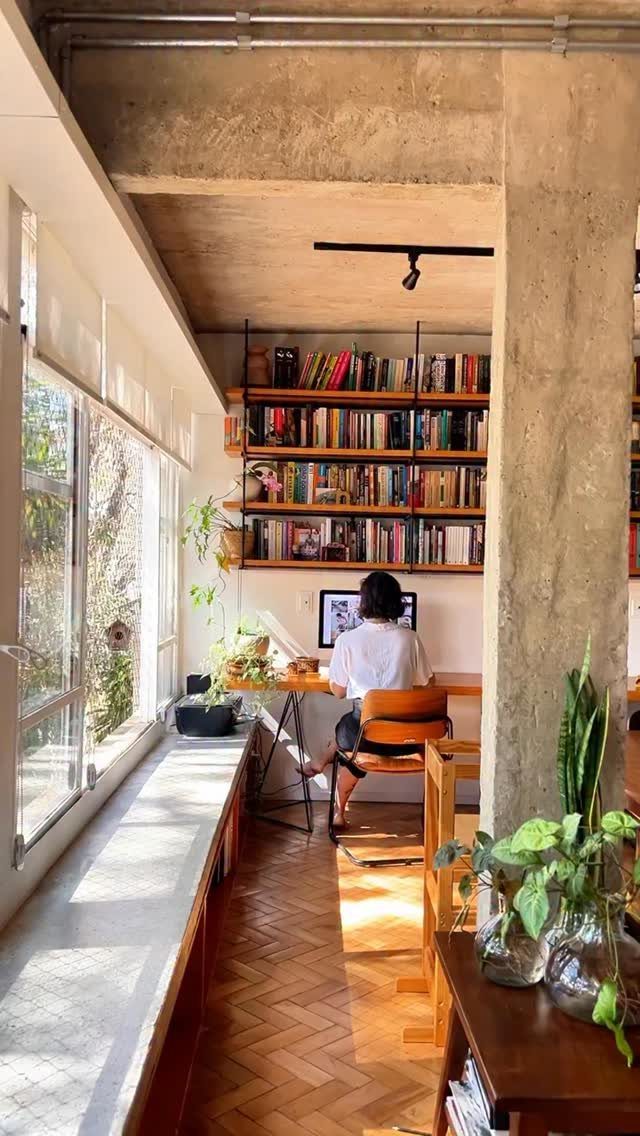
Wall-to-wall shelving built to fit your room beats freestanding units, since it uses every inch and leaves no dusty gaps at the sides or top.
Measure the wall height and width first, then decide what goes on the shelves. Books fill most of it, but leave a few open spots for objects so it reads as personal rather than like a library.
A custom build costs more than store shelves. Stock units trimmed with filler panels are the cheaper route.
4. Cohesive Cabinetry
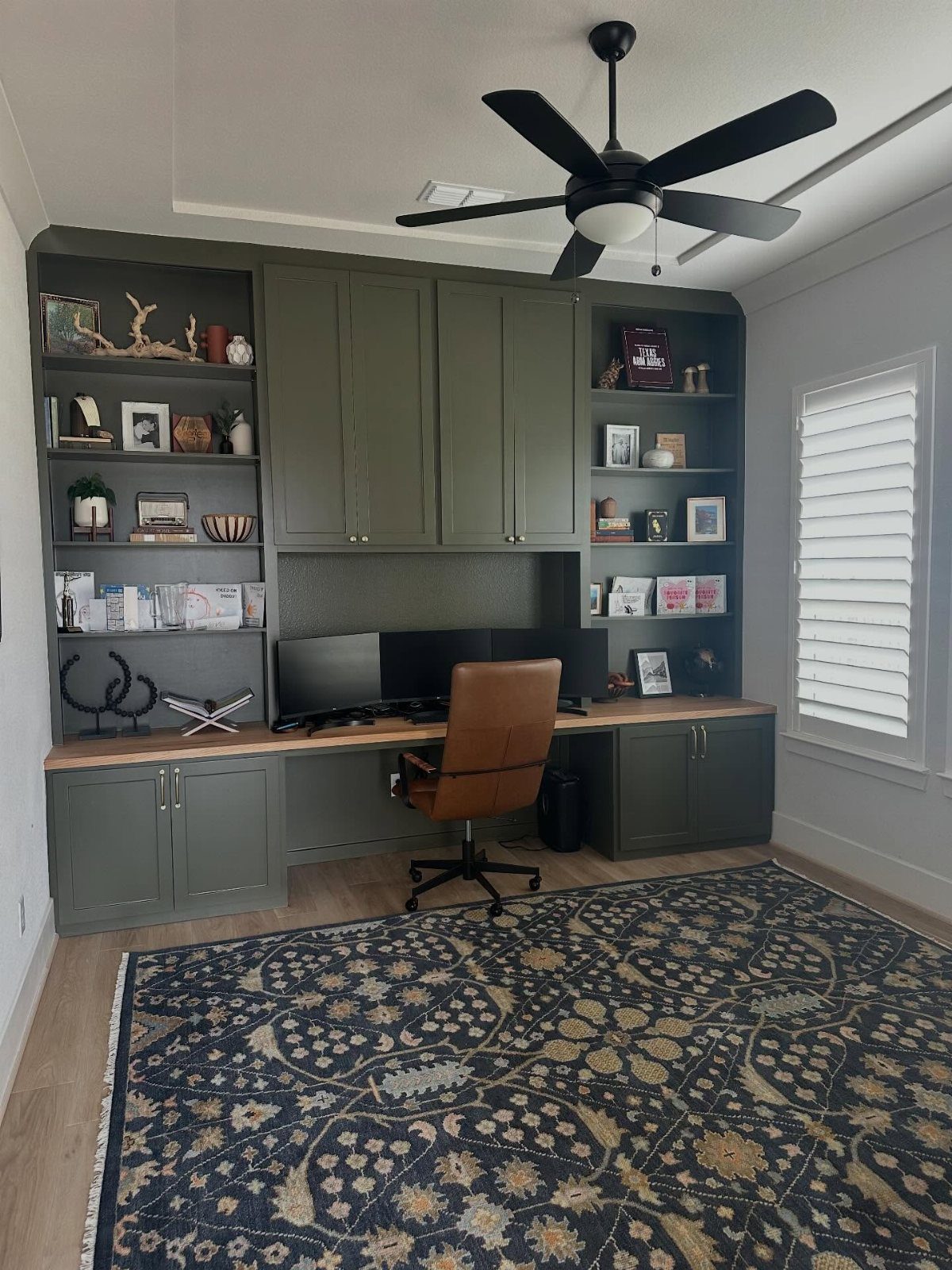
Built-ins painted one color make cabinets, shelves and desk base read as a single piece of furniture instead of separate boxes. That calm look is what keeps 3 monitors and their cables from feeling chaotic.
I’d choose a muted, earthy shade and let a wood desktop break it up. A patterned rug adds contrast underfoot without crowding the walls.
Closed doors below and open shelves above is the split I like best.
5. Gallery Wall
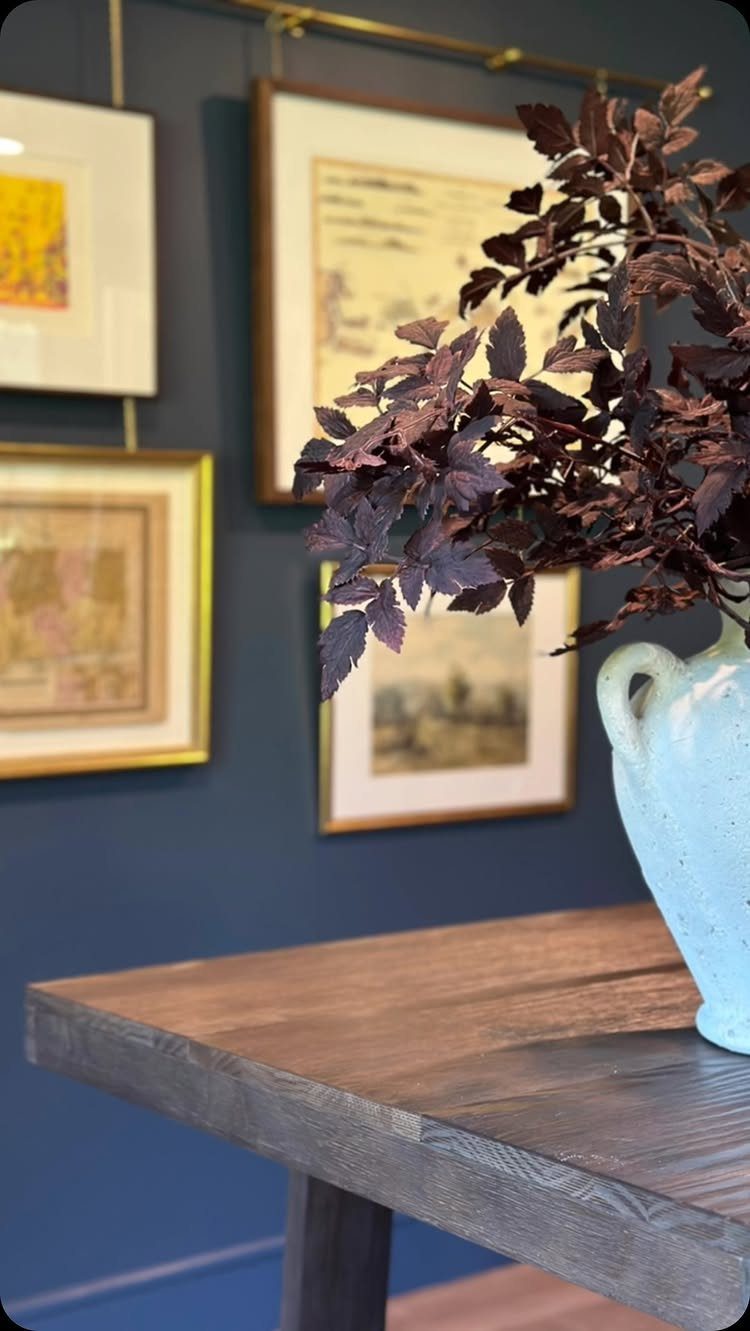
Three frames on a dark blue wall can do more than a dozen scattered ones. Keep the frames in one family of finish, and let the art vary.
Hang the center of the group at roughly eye level, and lay the pieces on the floor first to settle spacing.
Choose art you actually want to look at when a call runs long.
6. Ergonomic Chair
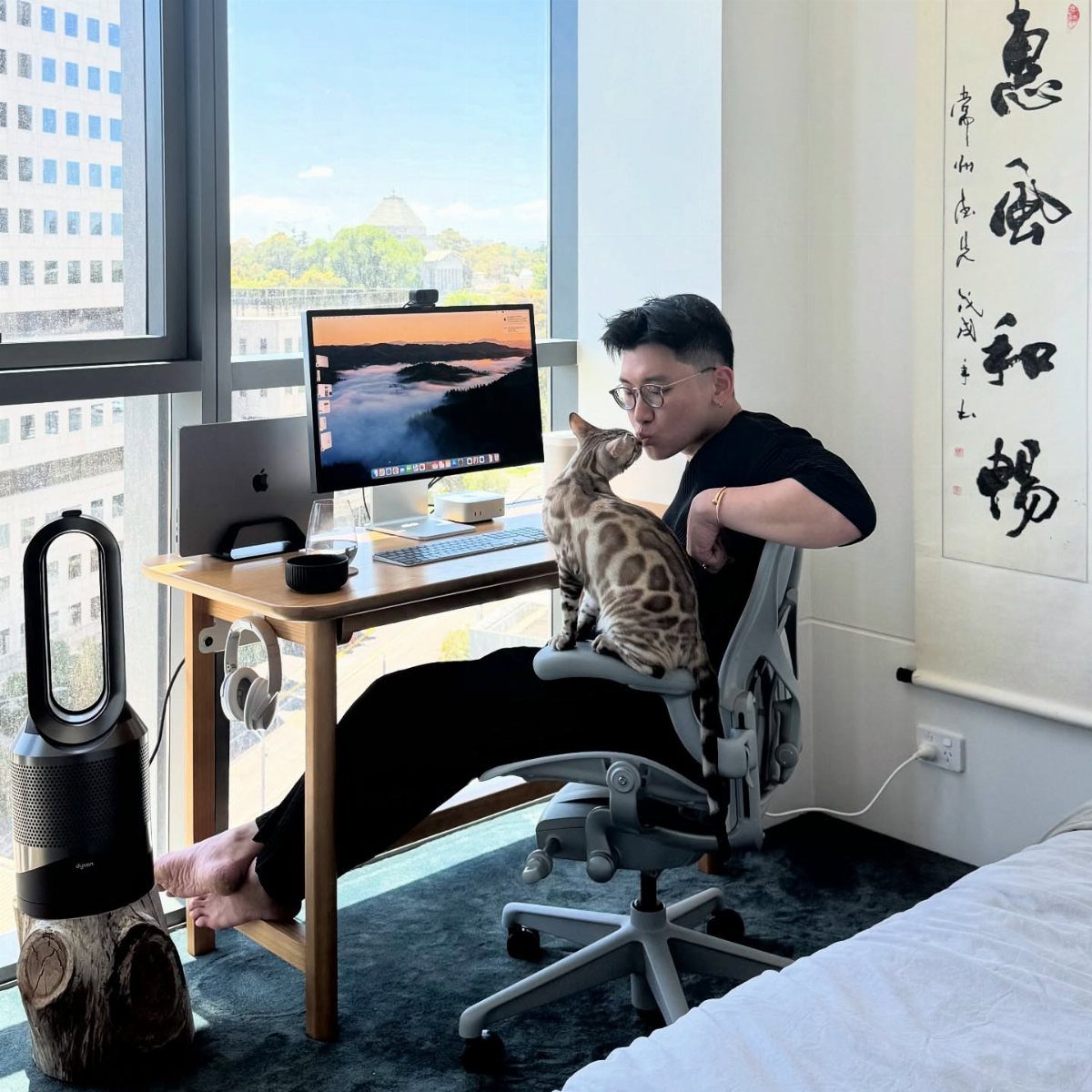
Chair choice decides whether a long day ends with a sore back. A grey ergonomic model fits a wood-desk room without shouting, and that’s the kind I’d buy.
Look for adjustable seat height, lumbar support and armrests you can move. Sit with feet flat and elbows near desk height.
Test it for a long stretch if you can, because showroom comfort fades fast. A chair worth its price also tolerates a cat sharing the seat.
7. Dark Color Palette
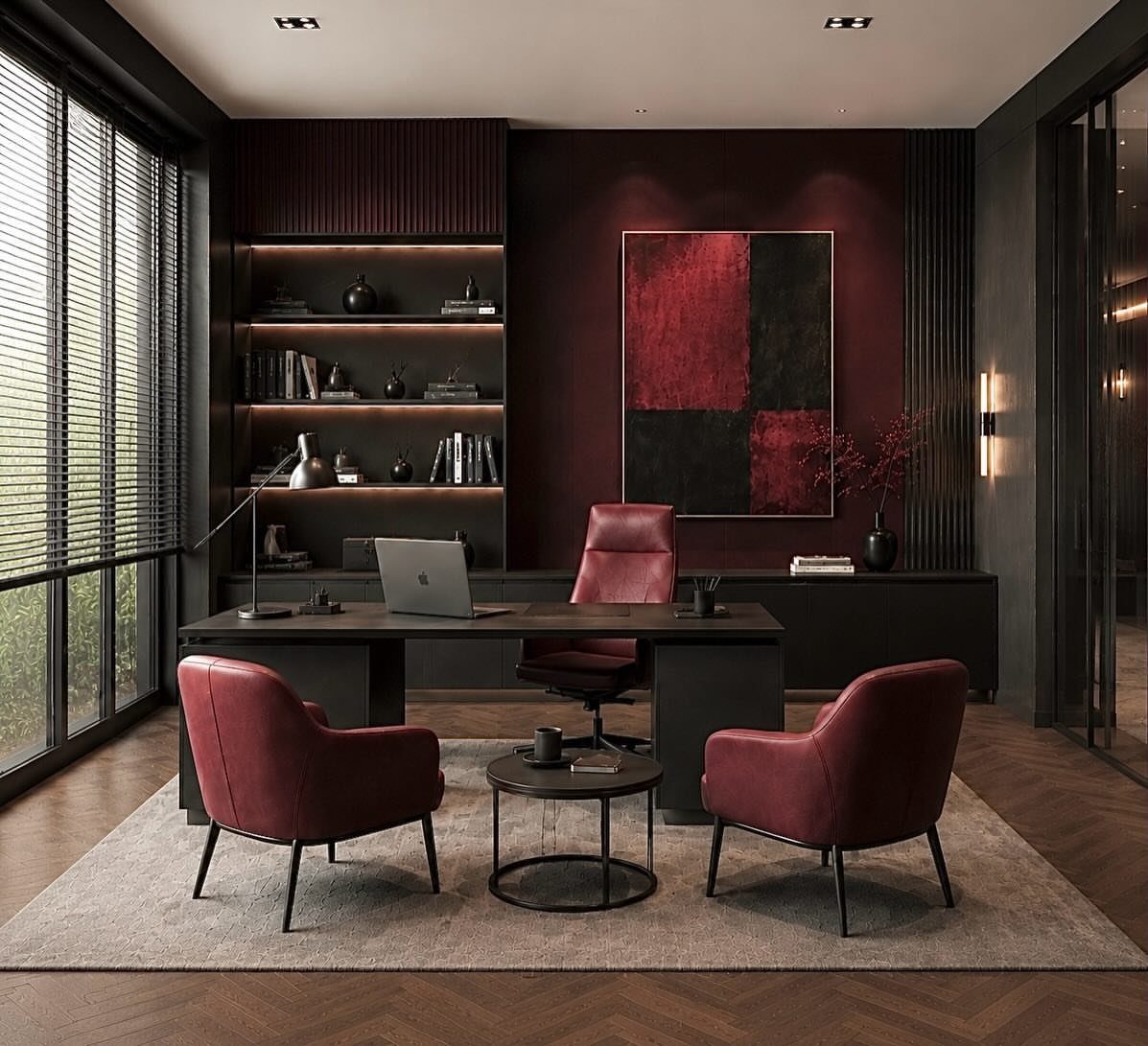
Burgundy walls with a black desk make a room that feels closed in the best way: quiet, warm and a little theatrical.
Red leather seating and one large abstract painting repeat the wall color, so the palette reads as intentional rather than heavy.
Keep the dark color on the walls and let the built-in shelving carry it too. A room this deep needs good lamps, since dark paint soaks up daylight.
I’d choose a matte finish and test a sample patch before committing.
8. Minimal Decor
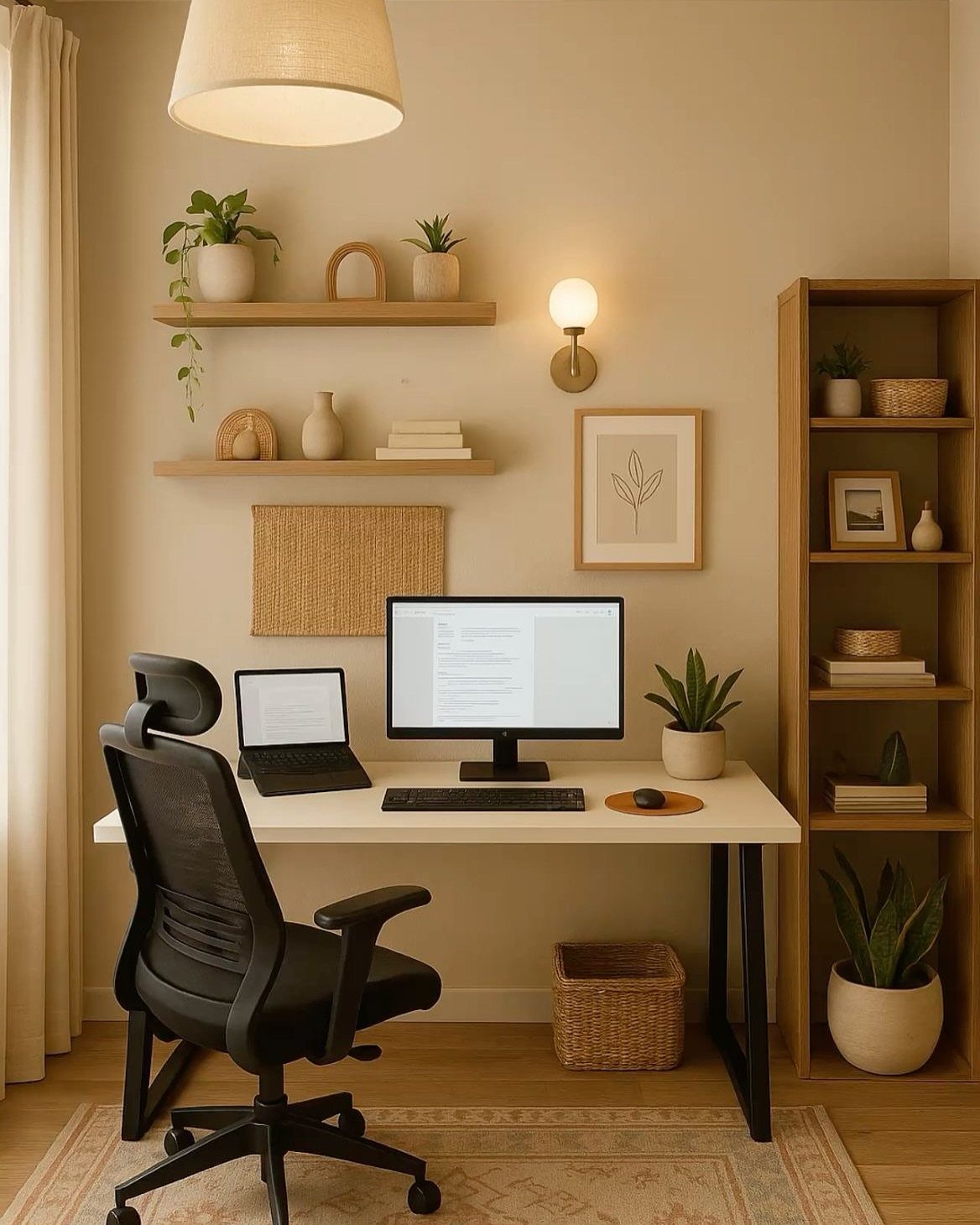
A white desk, a black chair and nothing else competing: that is minimal decor at its most useful. Wooden shelves with a few plants against a beige wall give the room warmth without clutter.
Limit each shelf to two or three objects and leave real gaps between them. Empty space is the decoration here.
The black chair is the strongest contrast in the room, so I’d pick it first and let everything else stay pale.
9. Leather, Wood, and Metal
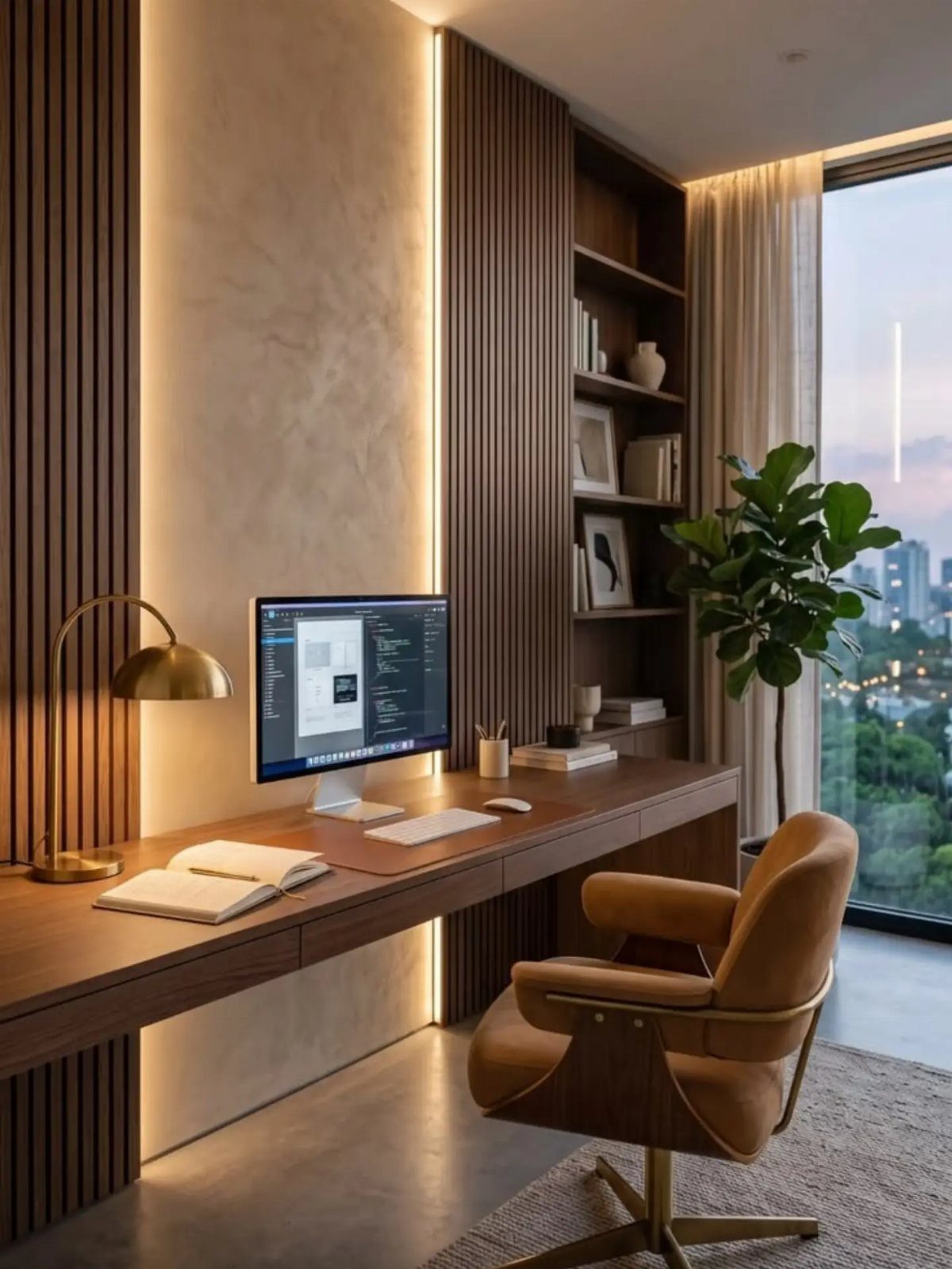
Brown leather, warm wood and a gold metal lamp work because each material shows off the others.
Wood slats on the wall echo the desktop, the leather chair adds a softer texture, and the metal frame and lamp supply a little shine.
Use all three, but let wood lead. Leather and metal are accents, one or two pieces each.
Matching tones matter more than matching pieces: keep the browns in the same warm family.
10. Desk Lamp, Floor Lamp, and Overhead Lighting
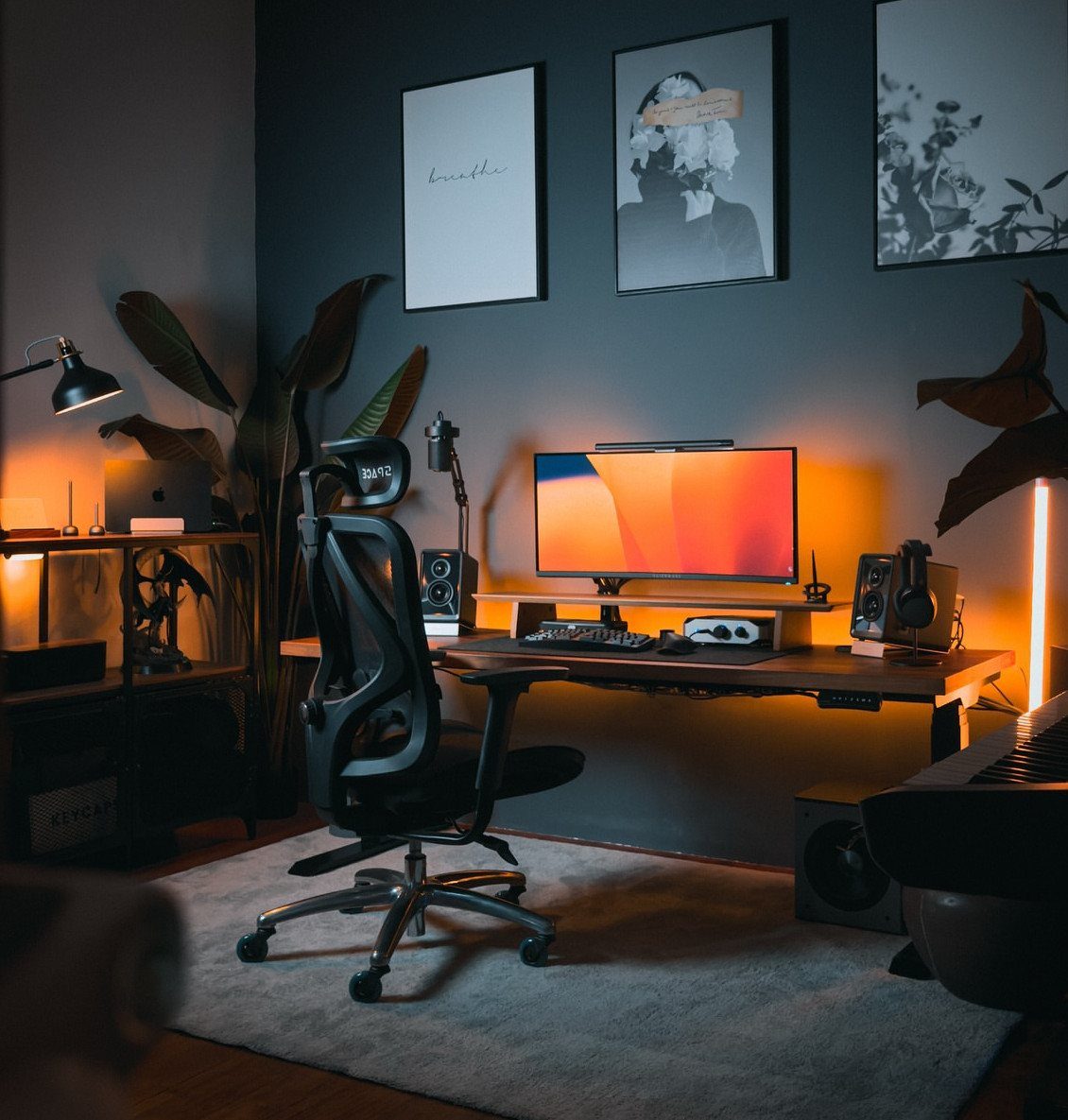
Three kinds of light beat one bright ceiling fixture in a dark-walled office. A desk lamp handles task work, a floor lamp fills the corner, and the overhead light covers the rest of the room.
Place the floor lamp where it washes a wall rather than your screen, since glare is the usual complaint. Use the overhead only when you need the whole room lit.
Lamps are the cheap part of this idea, and they can be swapped one at a time.
11. Indoor Plants
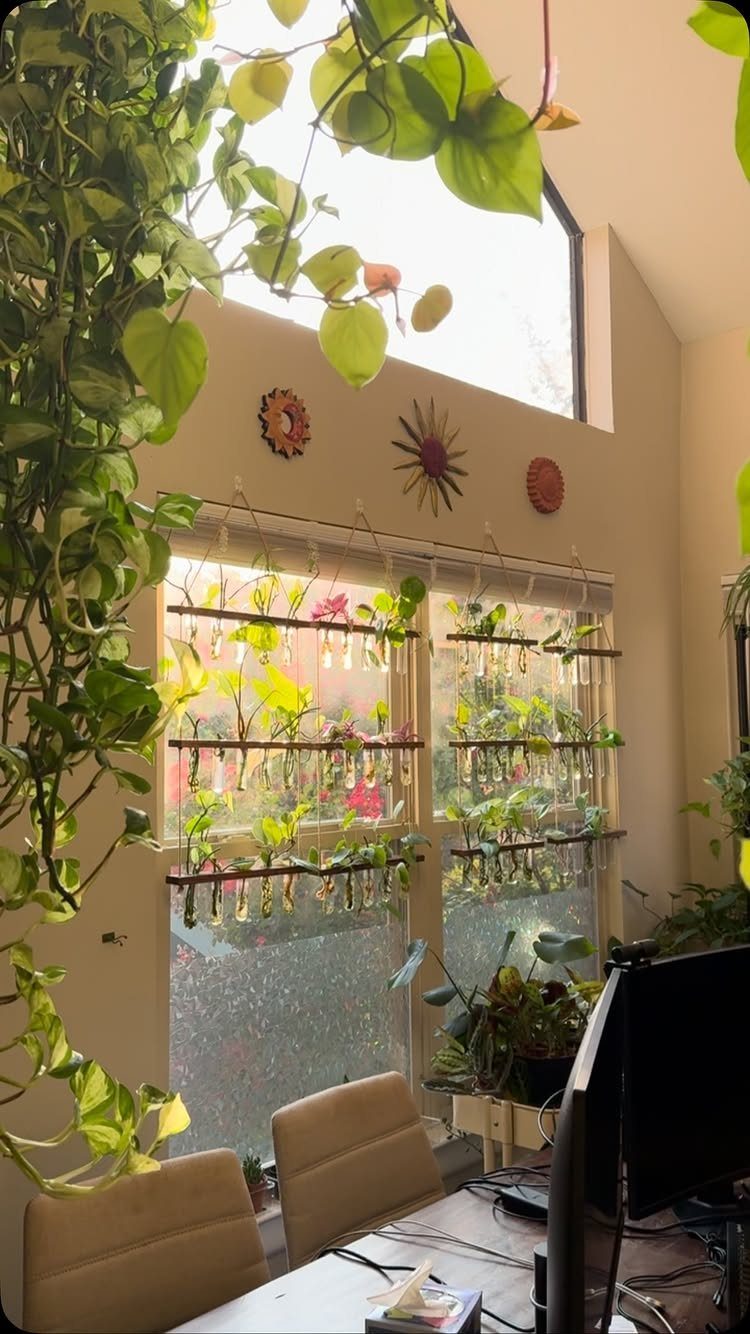
Trailing plants hung from the ceiling and cuttings rooting in jars on the sill bring in green without taking up floor space. That suits an office with limited floor area, where a big potted plant would crowd the chair.
Hang the vines near the window so they get light, and keep propagation jars within reach so you remember to change the water.
Cuttings are free if you already know someone with a pothos, and that’s the version I’d start with.
12. Decor That Showcases Hobbies
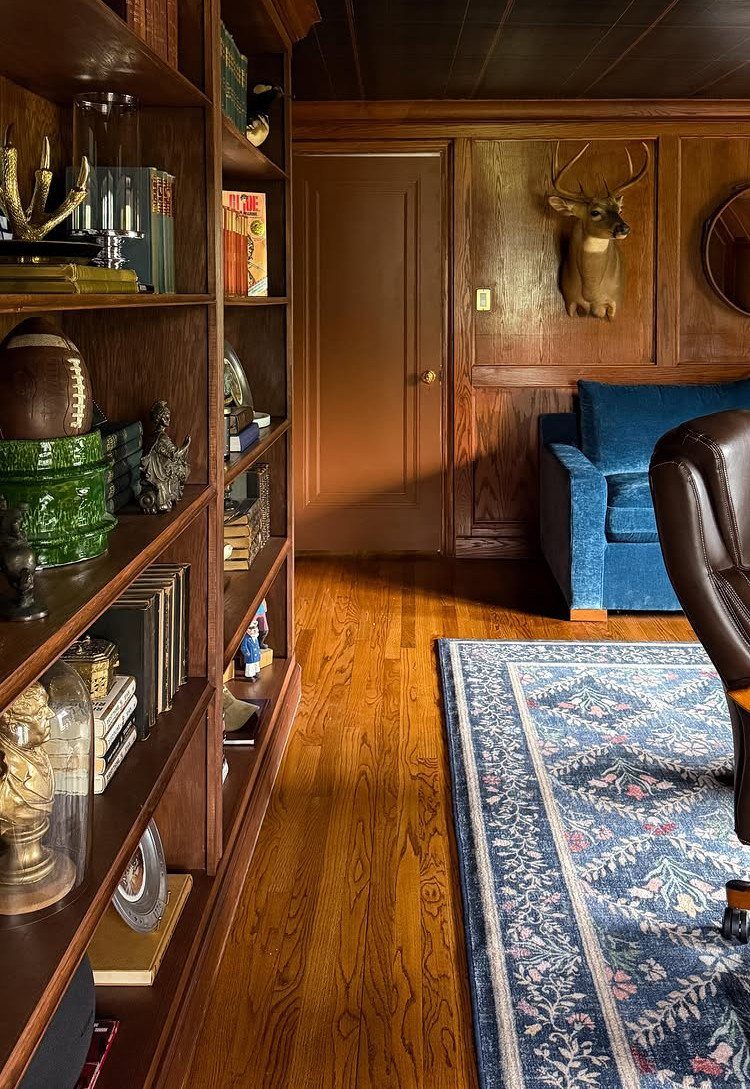
A bookshelf holding a football and trophies tells visitors who works here faster than any framed quote.
Mix the memorabilia with books so the shelf doesn’t turn into a display case. Group trophies together and leave breathing room around the football.
Pick the few pieces you’d be proud to have behind you on a video call.
13. Exposed Brick Wall Backdrop
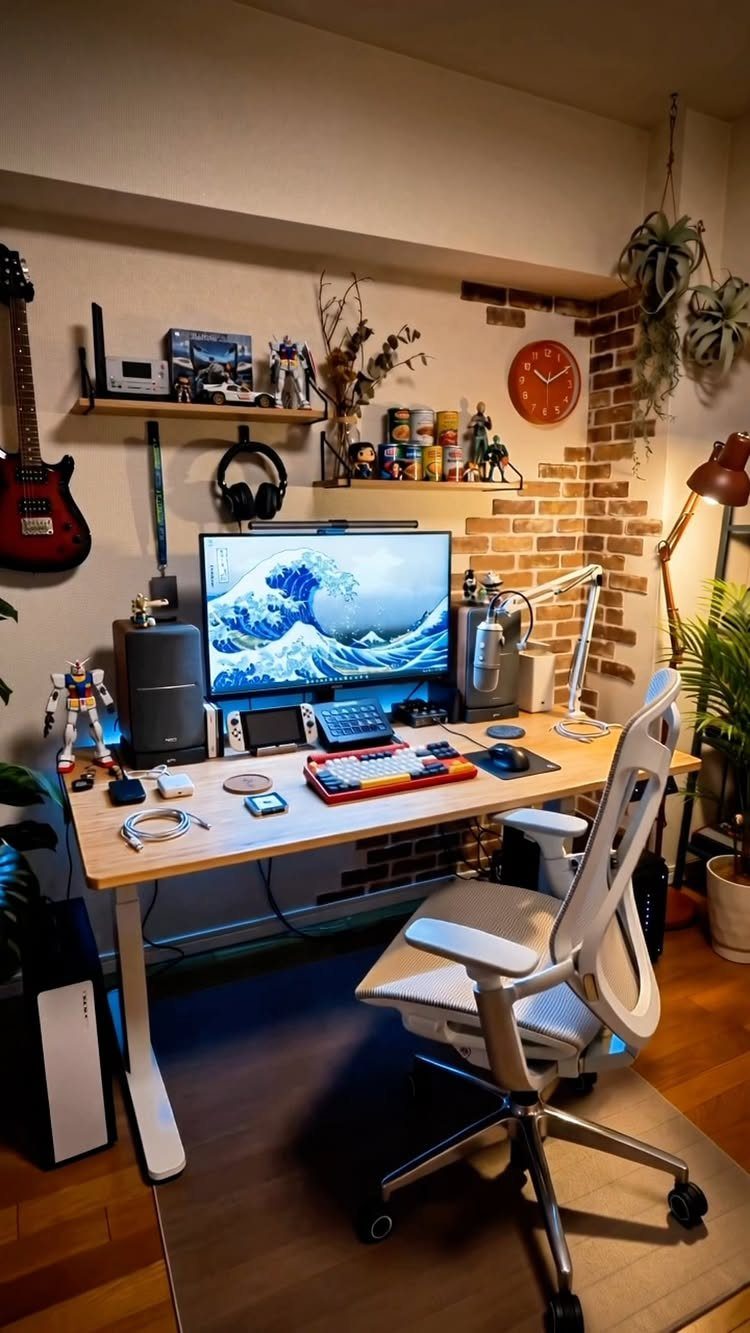
Red brick behind a desk gives a room texture that paint can’t fake, and it frames a monitor and a guitar stand better than a flat wall would.
A partial wall works well too, because the brick stays a feature instead of taking over.
Dark desk gear and a light chair let the brick supply the color. Shelves of collectibles break up the red and keep it from feeling heavy.
Brick is busy, so I’d leave the other walls plain.
14. Floating Desk
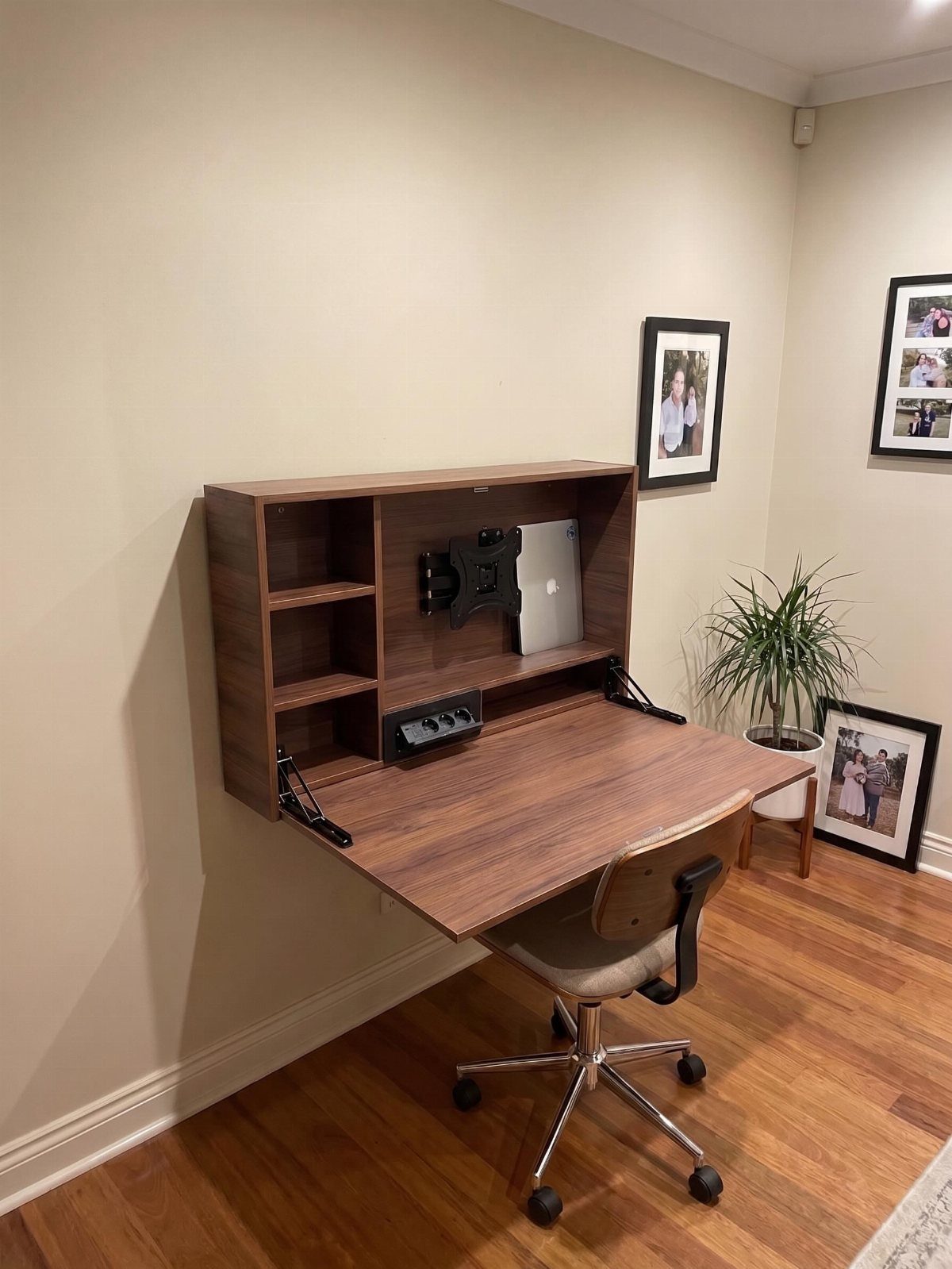
A wall-mounted wood desk with a hutch above it frees the floor, which is the real appeal in a tight space. Hardwood shows underneath, and the room reads larger than one with a bulky desk.
Fold-down versions let you clear the surface at the end of the day. Pair it with a slim chair that tucks fully under.
Mount into studs, since a desk holds monitors and elbows. Hanging framed photos beside it keeps the wall from looking bare.
15. Rustic Home Office
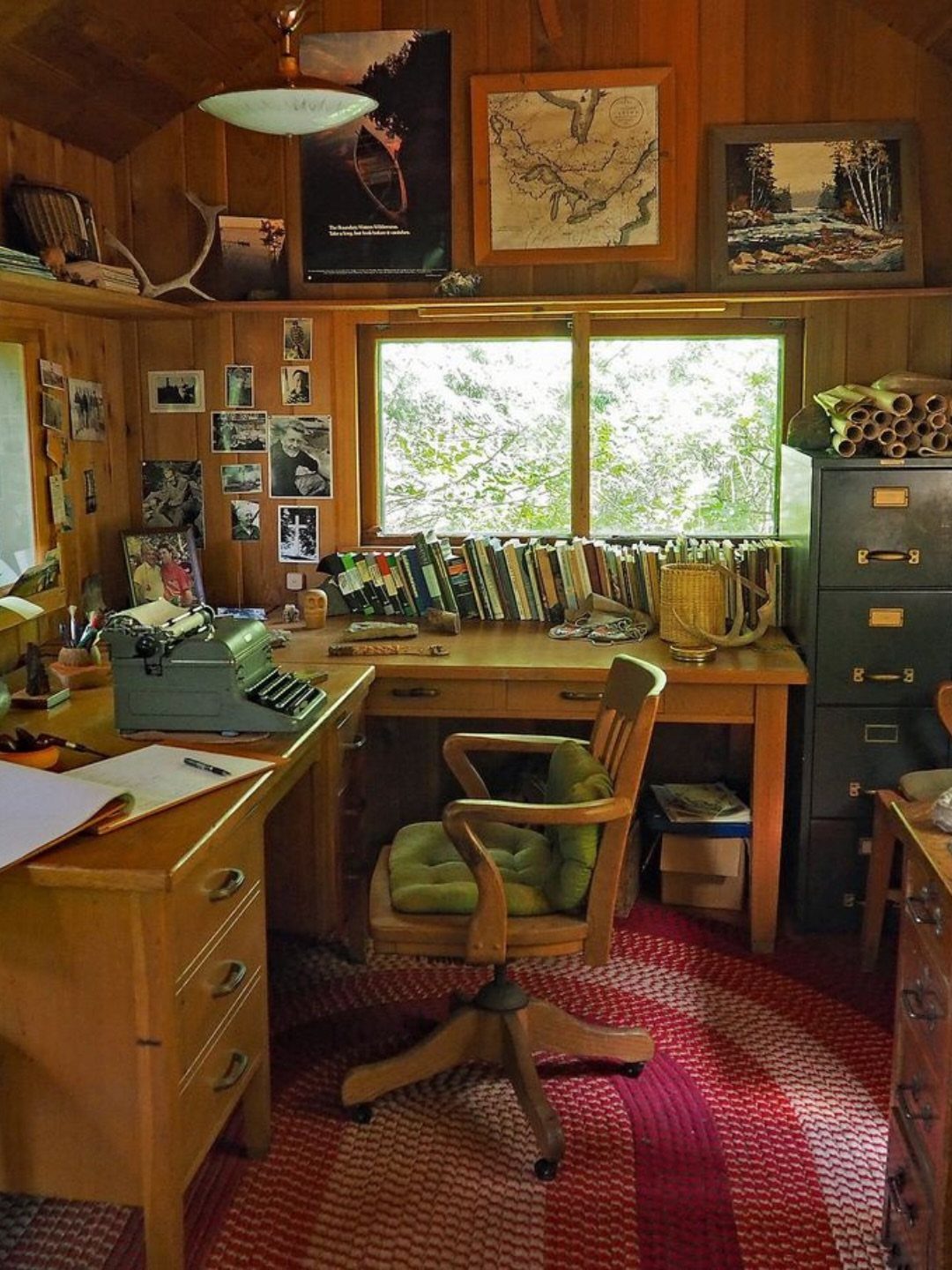
Wood paneling, a vintage typewriter and a red patterned rug add up to an office that feels lived in rather than staged. 2 desks make room for a work side and a writing or hobby side.
Keep the wood tones in one warm family and let the rug carry the color. A green chair works as the one surprise.
Maps and wall art do the decorating cheaply, so I’d hunt for those at secondhand shops before buying anything new.
16. Tall, Narrow Bookshelves
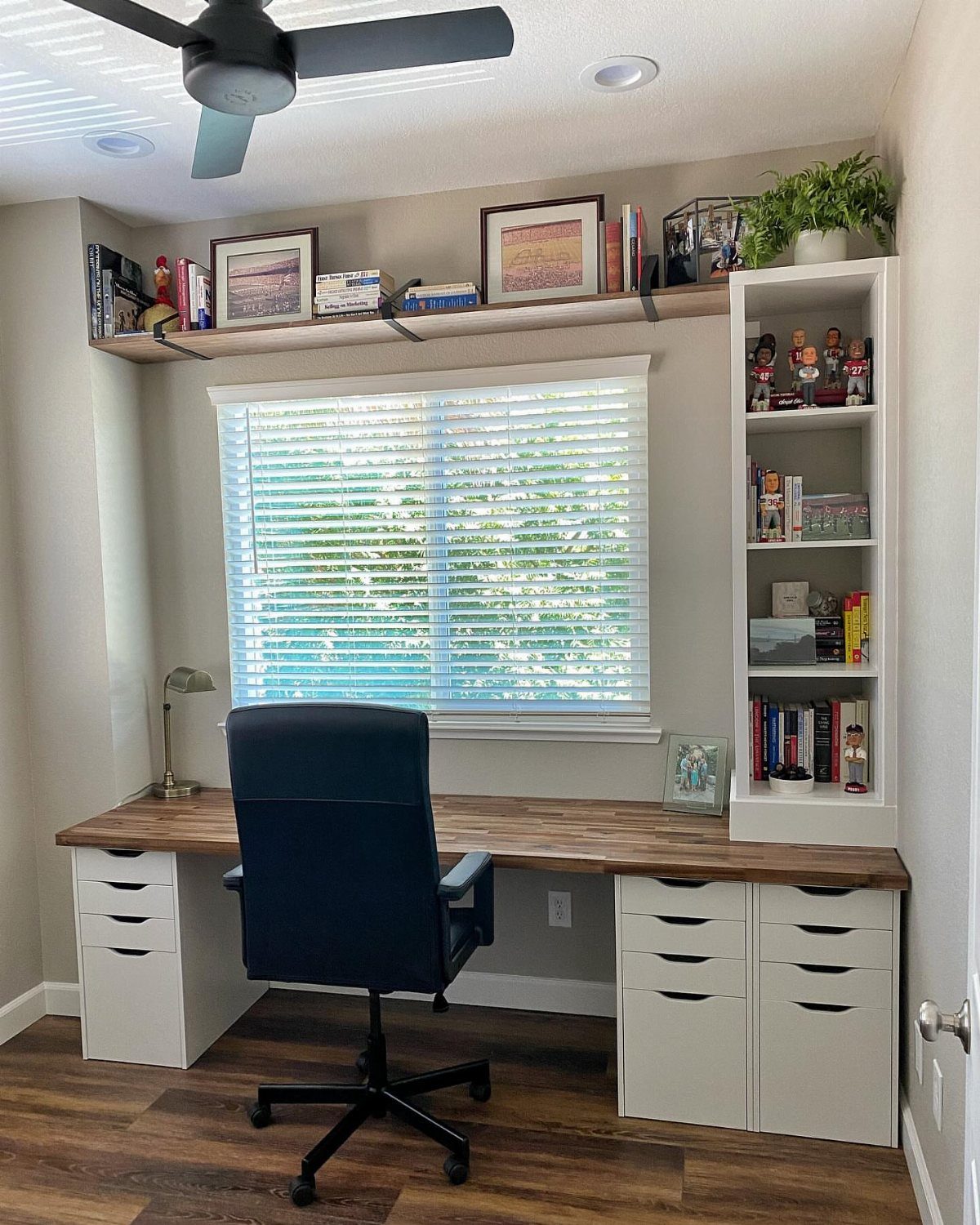
A tall, narrow white bookshelf squeezed beside a window uses wall space that would otherwise sit empty. It holds books and collectibles upward instead of outward, so the desk keeps its floor area.
I’d fill the shelf unevenly, a few books, a few objects, so it doesn’t look like a stack of boxes.
Place it beside the desk, not in front of the window.
17. Small Bar Area
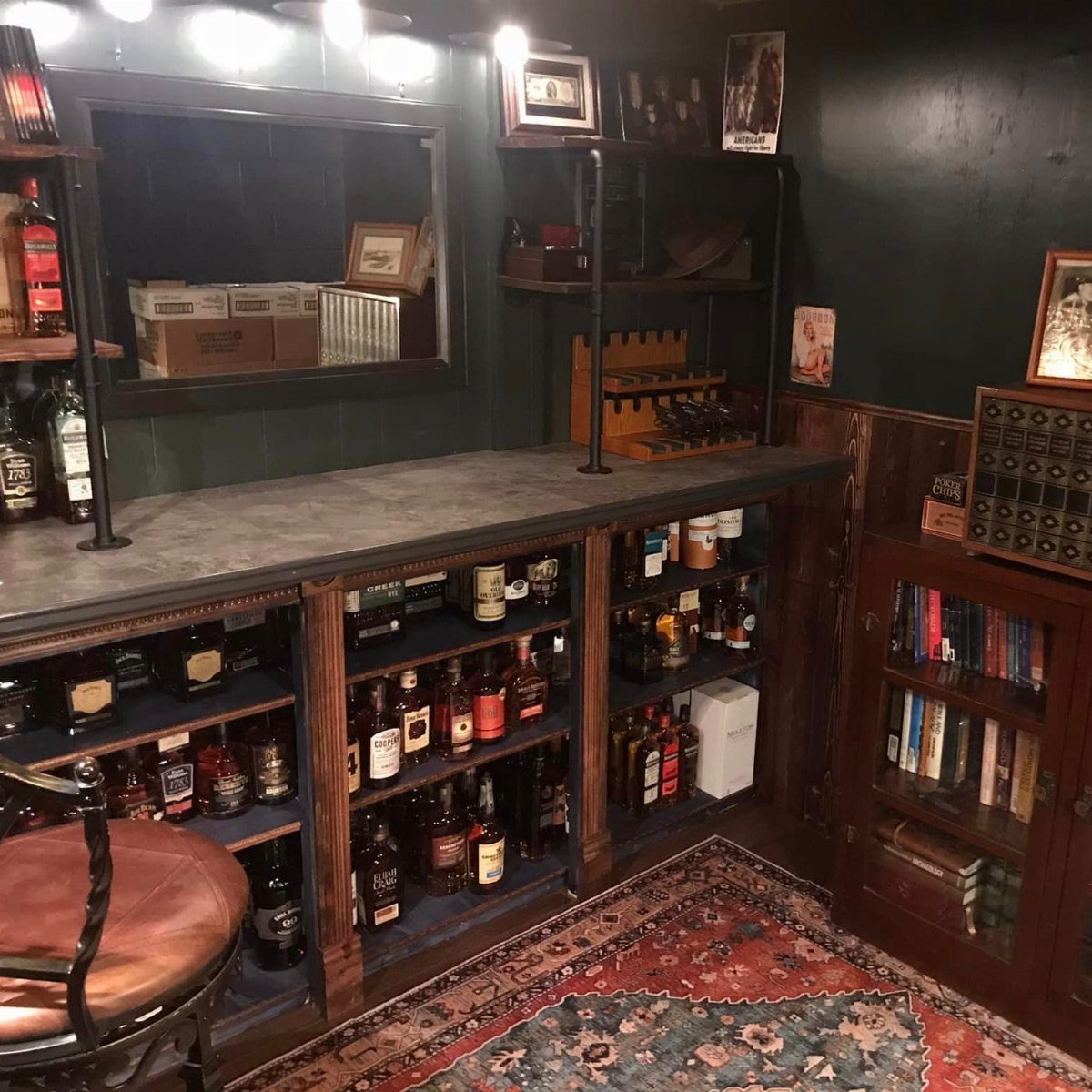
The mirror doubles the glow from the bottles and makes a tight corner feel deeper.
A patterned rug marks the zone off from the desk.
Keep it to one wall. Anything more turns a workspace into a lounge.
18. Wood-Paneled Studio Workspace
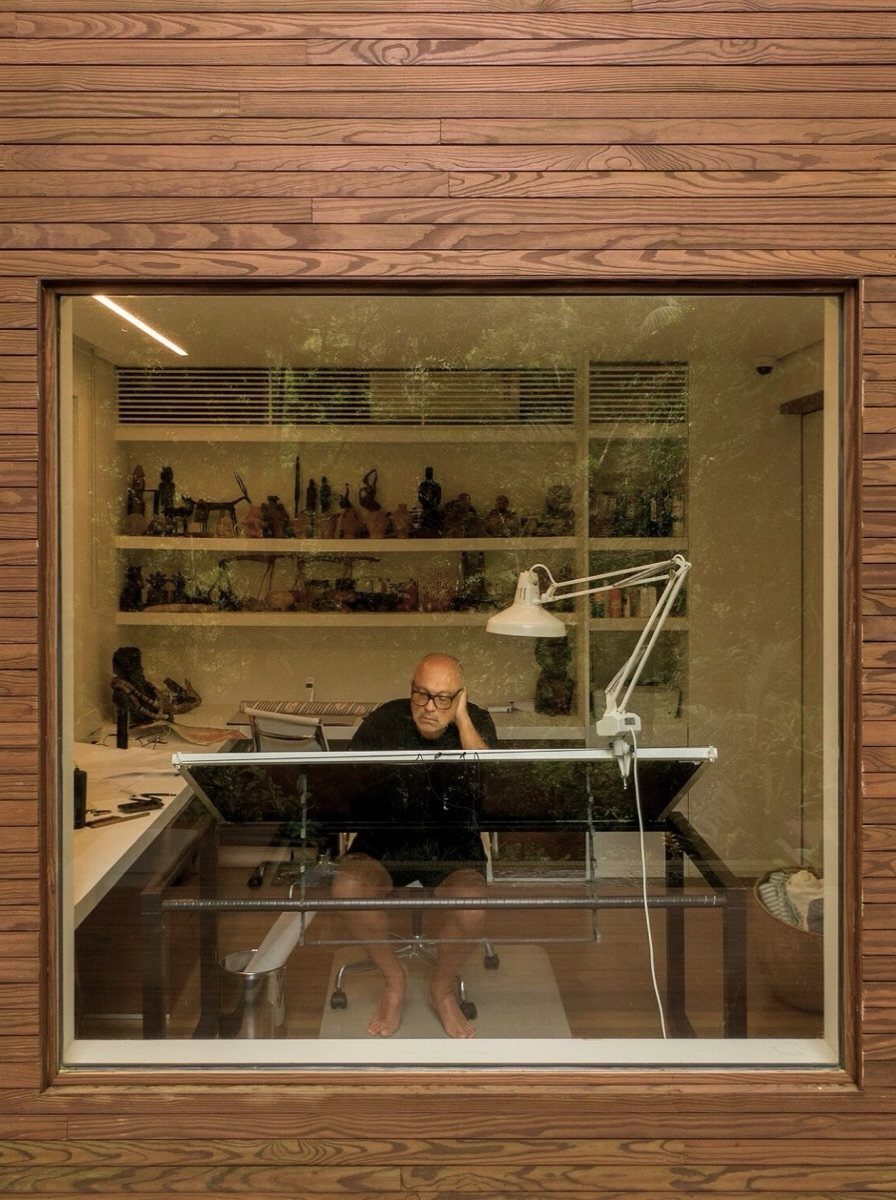
Wood-paneled walls make a modern desk look warmer, and that contrast is the reason I like this setup. A plain, minimalist desk in front of rich paneling lets the wood do the decorating.
Display shelving for small sculptures or figurines fits naturally against the paneling. Keep the desktop nearly empty so the shelves get the attention.
A large window nearby balances the dark wood with daylight. Choose one finish for paneling and shelves so they match.
19. Floating Shelves Above Desk
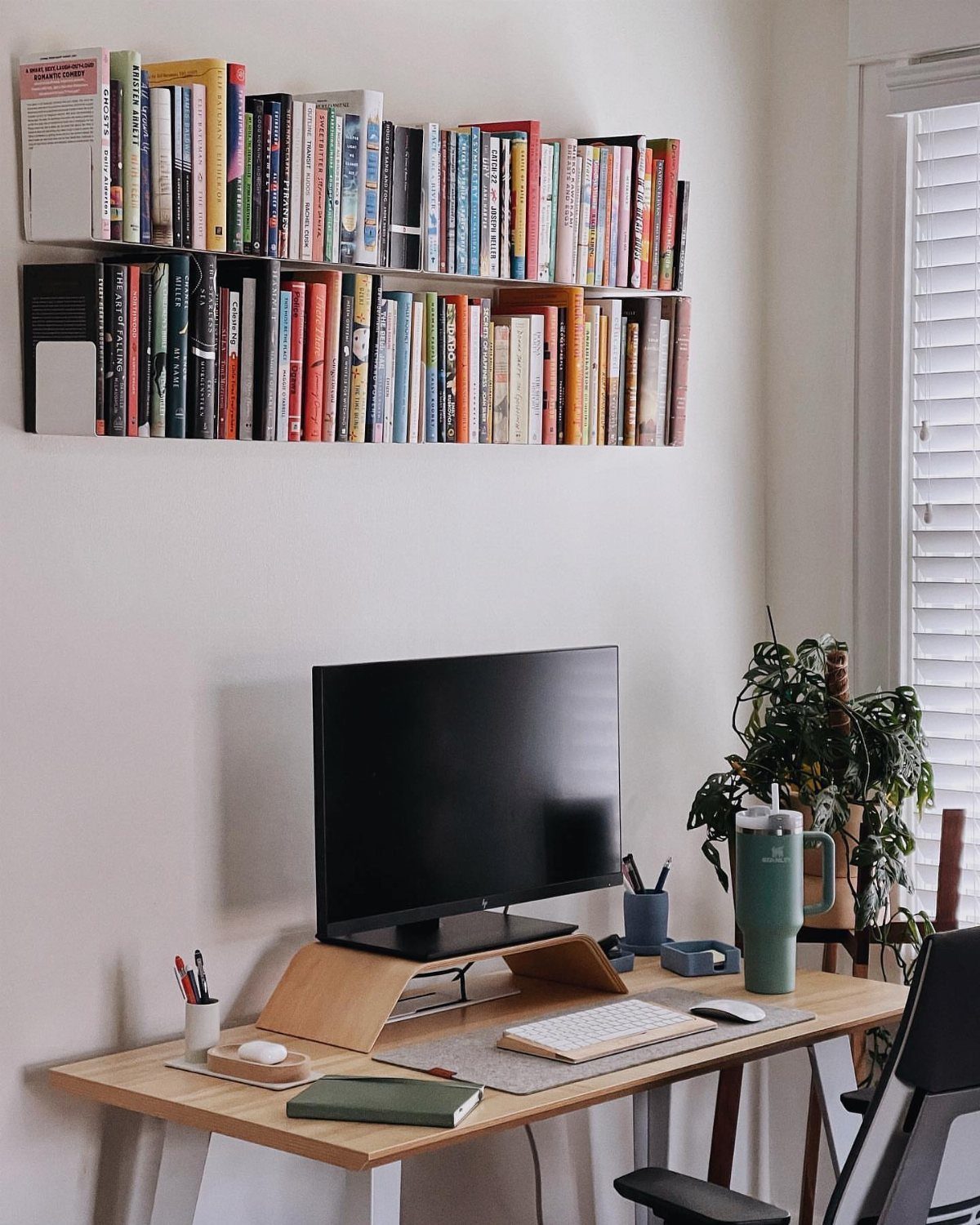
Two long floating shelves above a monitor turn the wall into storage without costing any desk space. Books sit within reach, and the light wood of the desk carries up to the shelves if you match the tones.
Anchor the brackets into studs, since a full row of books weighs more than it looks. Keep the lower shelf a comfortable arm’s reach from your chair.
I’d leave the top shelf for books you rarely pull down.
20. Glass Display Cabinet
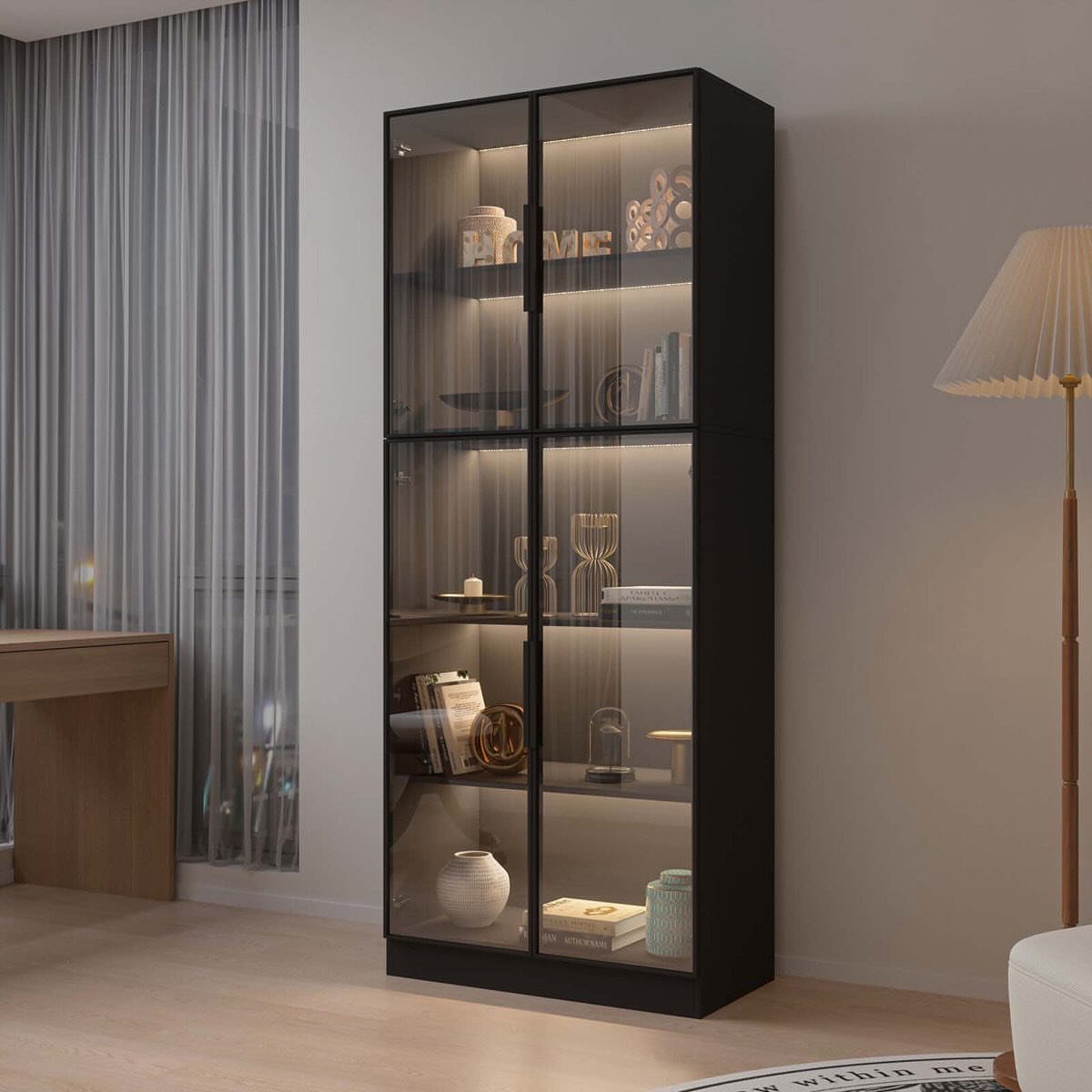
A tall black-framed glass cabinet with its own interior lighting gives books and a few good objects a place to be seen, and the glass keeps dust off them.
Set beside a floor lamp, it adds a second source of soft light to the room.
Fill it with restraint: books grouped together, a handful of decorative pieces, and open space between them. Crowding turns it into a storeroom.
21. Custom Built-in Wall Nook Desk
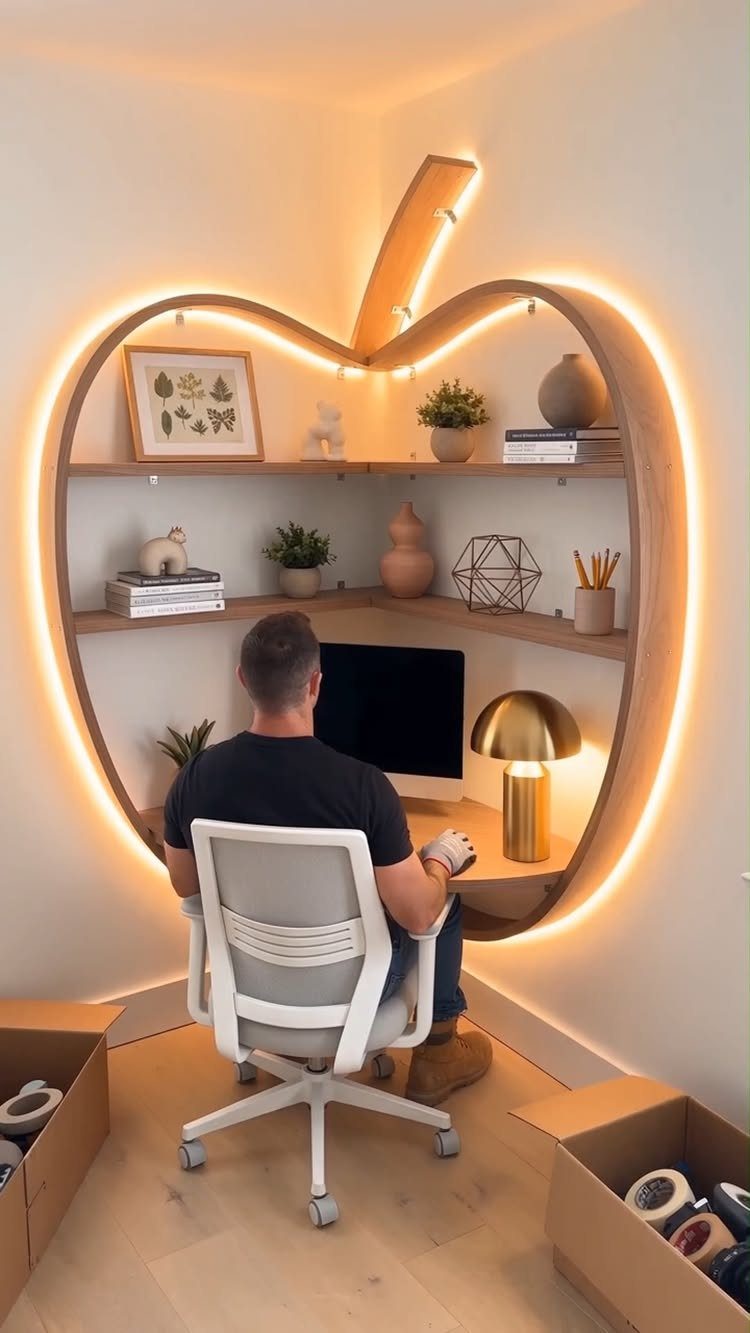
Carving the desk into the wall itself, as with a curved wooden nook that has shelves and built-in lighting, gives you a workspace that feels like its own enclosed corner.
It suits anyone who wants to close the day by stepping away from it.
Shape is the expensive part, so I’d start with a simple square nook if the budget is tight. Put the lighting inside the recess so the glow falls right where you write and type.
Match the wood to the floor.
22. Traditional Executive Desk Setup
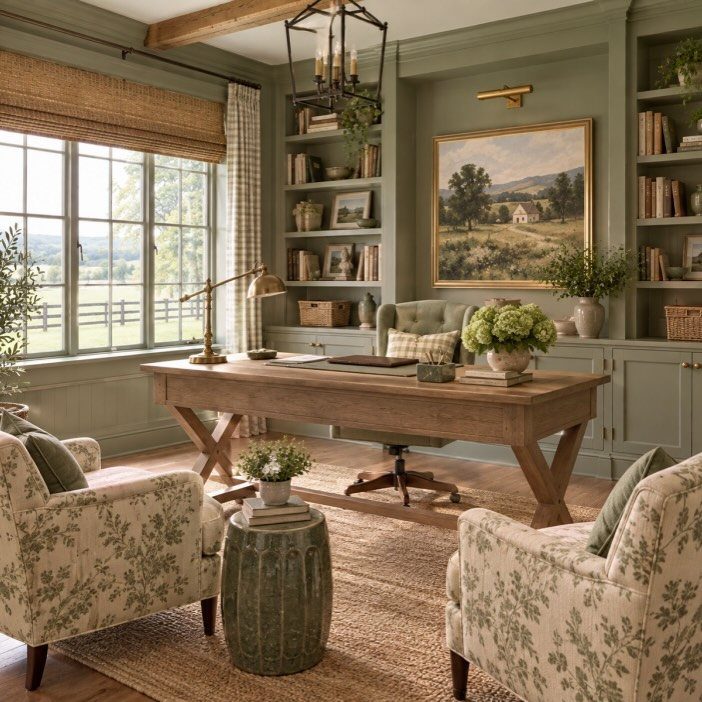
Sage green walls take the weight off a big wooden desk and built-in bookshelves, so the room feels stately without going dark.
That’s the combination I’d choose for anyone who wants a traditional office that still feels easy to sit in.
Pair the desk with a leather chair, and add a pair of armchairs for a spot to read or talk.
Window shades in a woven texture soften the wood. A landscape painting is enough art for the wall.
23. Modern Executive Office Suite
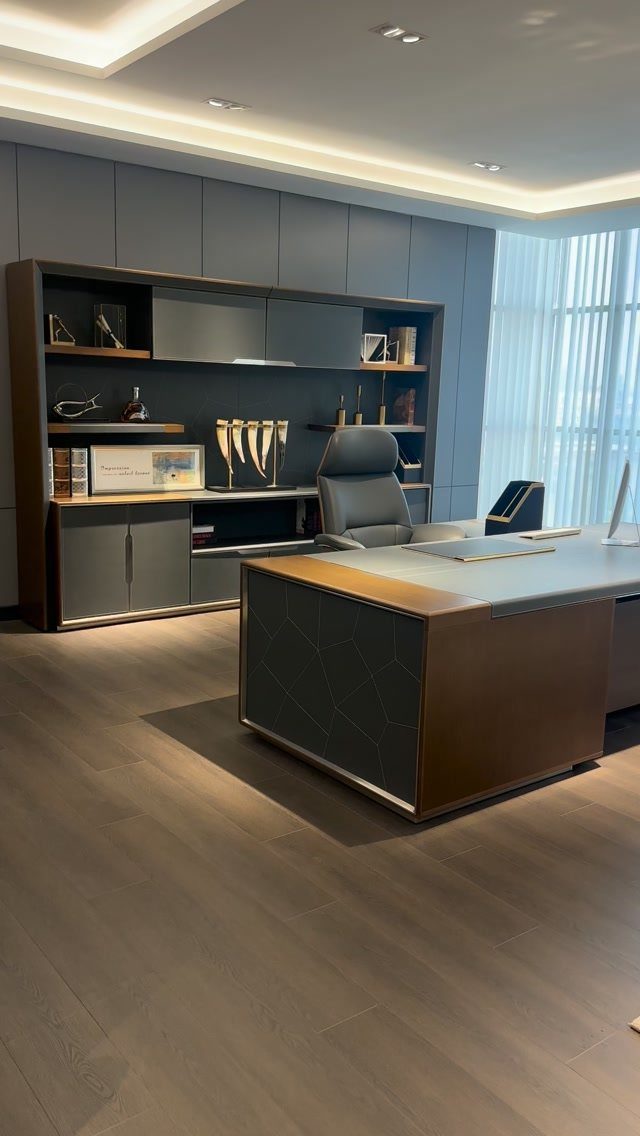
2 tones on the desk, such as a dark base with a lighter top, make an executive desk look modern instead of heavy. Dark wood floors ground it, and wall shelving in a matching finish keeps the room looking planned.
A grey leather chair stays neutral beside all that wood, so I’d pick it over anything flashy.
Blinds let you control the window light without adding fabric to a clean room. Keep the shelves lightly styled so the desk stays the focus.
24. Navy Walls with Classic Wainscoting
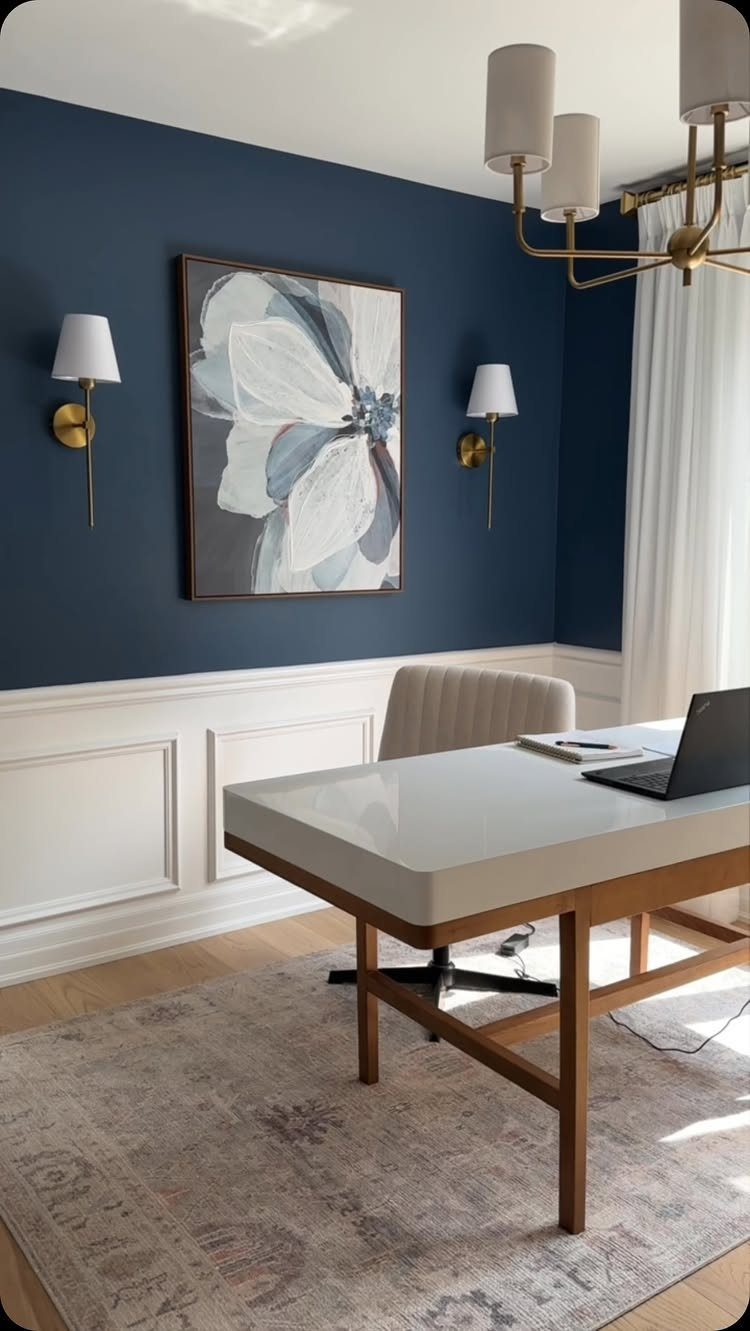
Navy above and white wainscoting below splits the wall into 2 calm bands, and the white keeps the dark color from closing the room in. It’s the version of a dark office I’d pick for a smaller room.
Set the wainscoting height first, then paint the upper wall, which is an easy weekend job. Gold wall sconces free up the desktop, and a beige chair keeps the palette soft.
A minimalist wood desk completes it. One floral painting is plenty on the navy.
Choosing the Right Colors
Charcoal, navy and olive green all work, and the rule that makes them work is commitment.
Keep the color on one wall only, the one you face while working, because a single deep patch looks chosen while the other three stay light and keep the room open.
Dark walls soak up light, so I offset them with a warm lamp or two, a few pale accents like a cream rug or white frames, and mixed textures such as wool, wood and leather.
Think a woven throw, a wood tray or a linen shade.
Small rooms don’t have to avoid dark color. A bold, rich shade gives a small office personality instead of making it feel boxed in.
Importance of Lighting
Plan on two lights minimum, one at desk height and one higher or lower, like a table lamp plus a wall sconce.
A single source, however bright, flattens the room, while a low lamp and a higher one give it depth and warmth.
Bulbs rated 2700K–3000K give the warm, yellowish glow that stays easy on the eyes during long evenings. Cooler bulbs fight dark walls and make a room feel like a cubicle.
Mixing metals works when they share a warmth, such as brass beside bronze, and gets messy when you pair gold with chrome.
A floor lamp that towers over the desk will dominate a small room, so pick one that stops around eye level when you sit.
Warm light matters most on early mornings and dark winter afternoons, when the desk is the only bright spot in the house.
Furniture Selection Tips
Scale decides more than style. Measure the room before you buy a desk, since a big one eats floor space fast and makes an average room feel tight.
Slim pieces buy you visual space: chairs with thin arms, low shelving, and furniture raised on legs so the floor still shows underneath. Heavy armchairs and tall, wide bookcases are the first things I’d cut from a room this size.
Choose one or two main pieces to anchor the room, then let everything else stay plain.
Skip the matching suite. Mixing wood, metal and leather looks collected instead of bought in one trip, and it lets you buy pieces over time as the budget allows.
Frequently Asked Questions
How do I decorate my home office?
Start with one dark or colored wall behind the desk and keep the other three light, then commit to a single warm wood tone for the desk, shelves and paneling.
Add at least two light sources, such as a desk lamp and a floor lamp or wall sconce, plus a rug, one or two plants and a few pieces of art you like.
Dark paint soaks up daylight, so lamps with warm bulbs do the real work of making the room feel inviting.
What are some good office gadgets for men?
A good chair and good light beat any gadget on the shelf: pick a desk lamp you can aim, a floor lamp that bounces light off the wall so it stays off your monitor, and a chair with a seat that adjusts in height, real lumbar support and armrests that move.
Floating shelves or a wall-mounted desk keep cables and extras off the work surface. A desk with drawers also hides paperwork and cords.
What should every home office have?
Every home office needs a comfortable chair, a desk sized to the room, and good lighting. The chair should adjust at the seat and arms so your feet sit flat and your elbows land near desk height.
Plan on 2 light sources at minimum, one at desk level and another above or below it, and buy bulbs in the 2700K–3000K range so the room stays warm and easy on your eyes.





