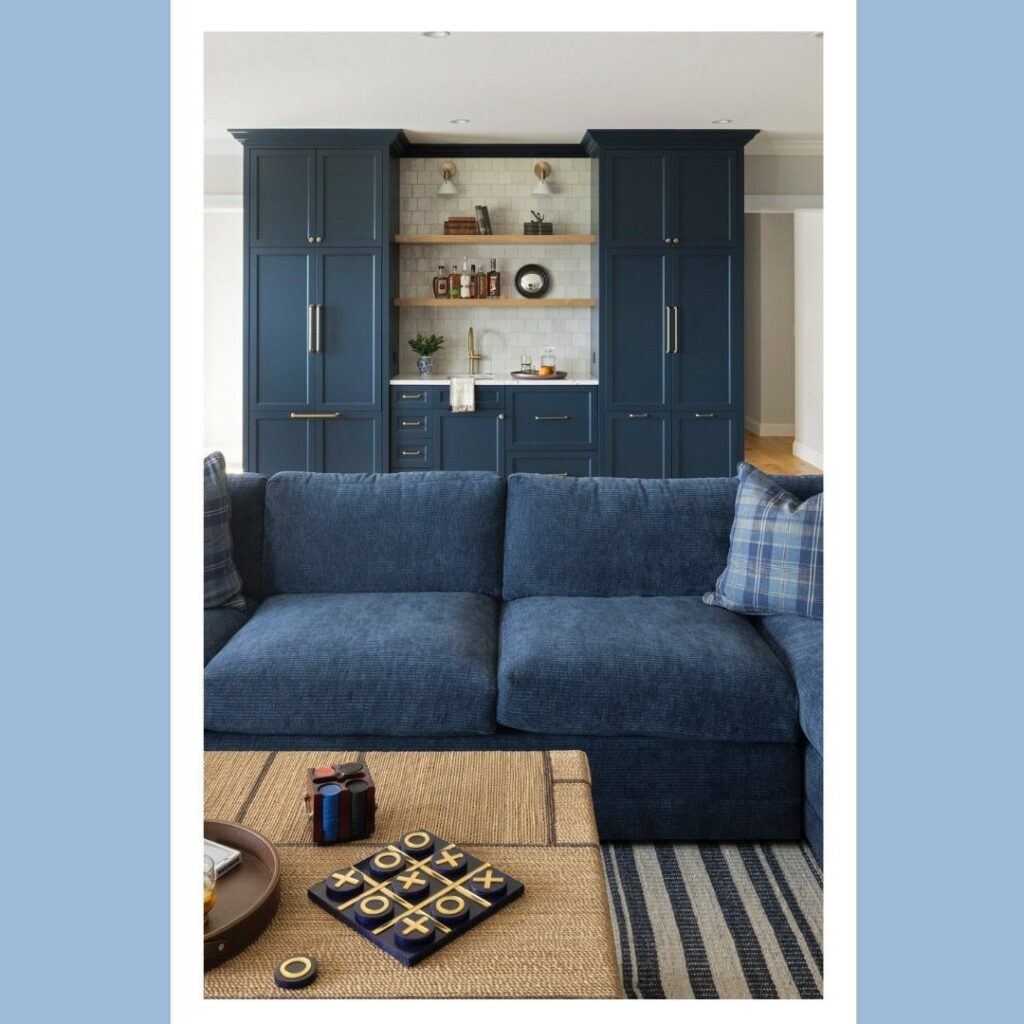
The room’s job decides the furniture: a theater setup wants plush recliners in rows, a multi-use space might center on a pool table that doubles as a gathering spot, and a pure game den can run on bean bags around a low console.
The ideas range from a cozy lounge sectional and a dart board on the wall to a bolted-in racing rig or a fitness corner with dumbbells and a bench.
Before buying anything, measure the floor and keep a path roughly 3 feet wide from the stairs to the seating.
1. Home Theater Plush Seating
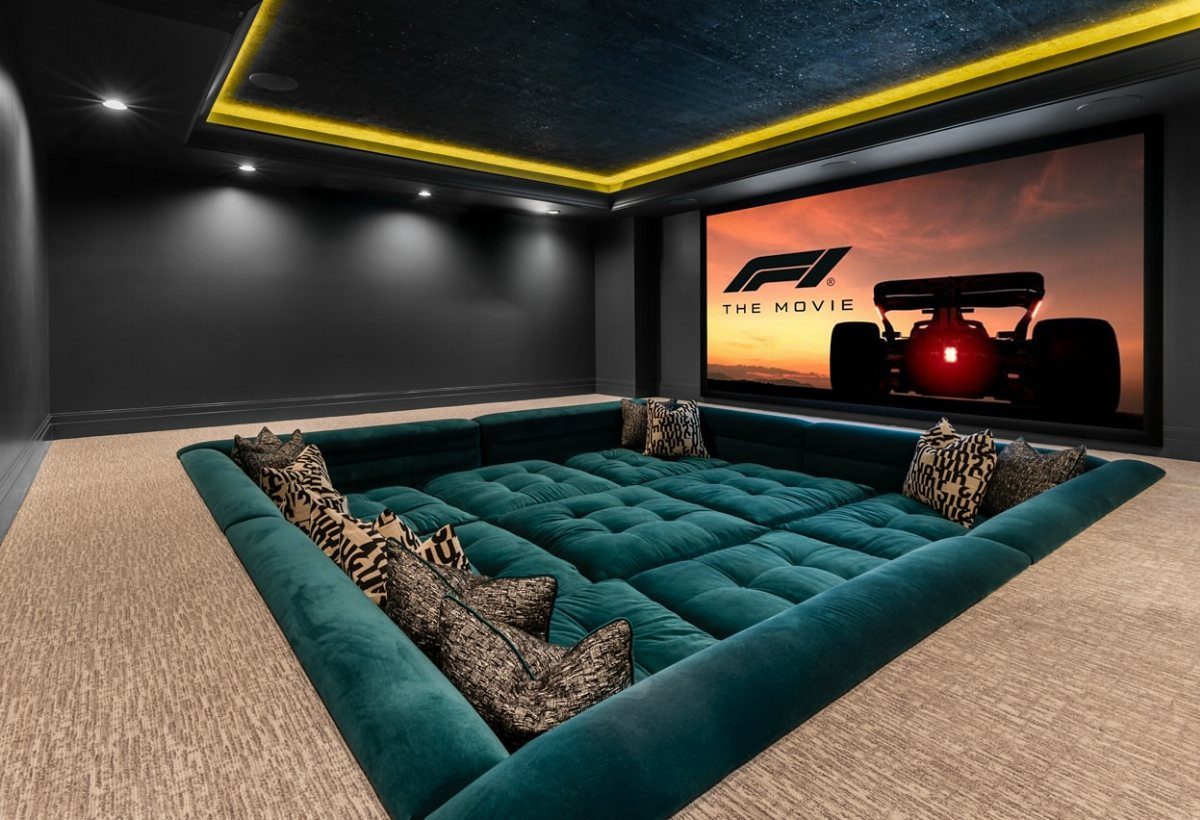
A deep pit sofa in teal velvet does what a row of recliners can’t: it turns a dark room into one big shared seat.
Tufting and velvet soften the sound in a basement, and patterned pillows break up all that color so it doesn’t read as one flat block.
I’d pick a sofa that sits low and wide, then add a few pillows in a second color. Velvet shows lint and pet hair, so keep a lint roller nearby.
2. Cozy Lounge Area
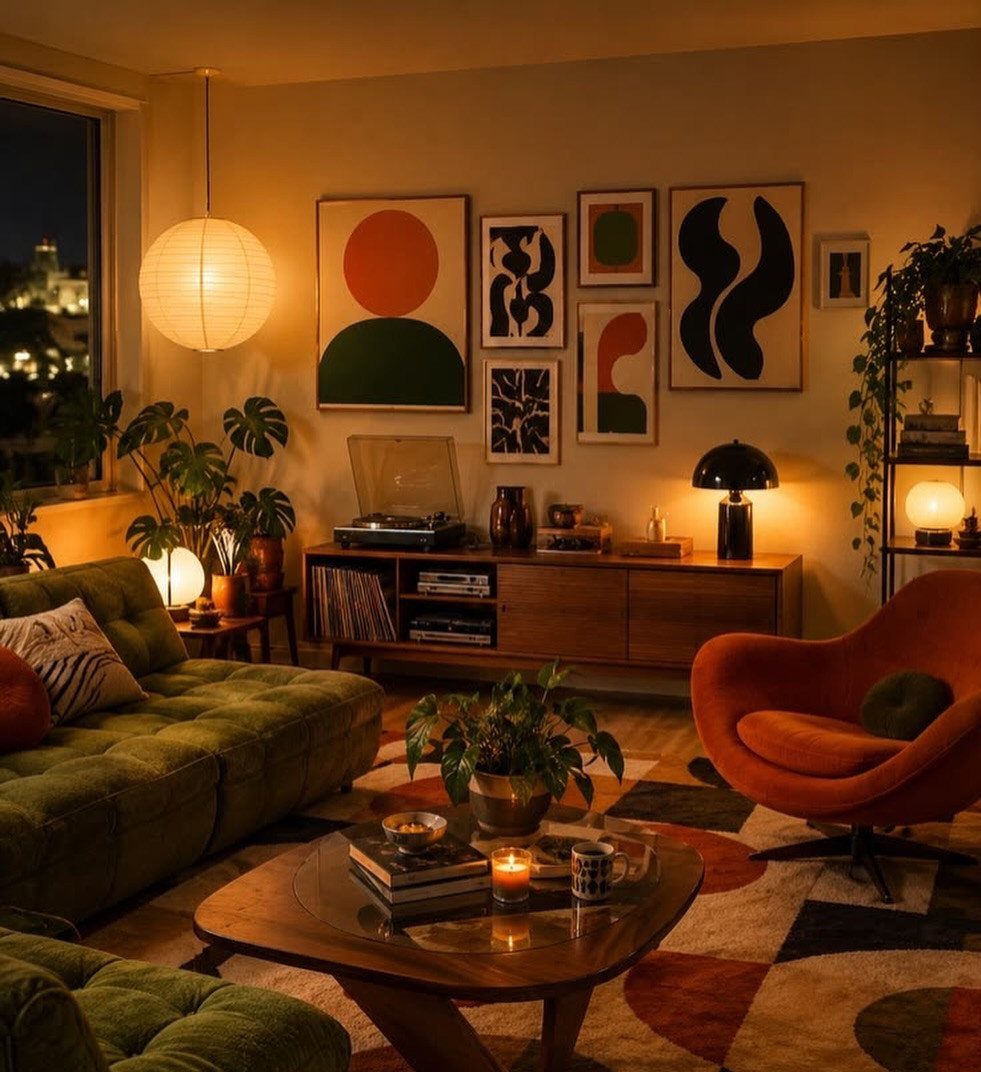
Green sofa, orange swivel chair: 2 strong colors work here because the rest of the room stays wood-toned and quiet. A sideboard that holds a record player gives the lounge a focal point without a TV.
Swivel chairs are my favorite piece in a lounge, since one seat can face the sofa or the room. Keep lamps warm and low, and add plants for a softer feel.
3. Pool Table Centerpiece
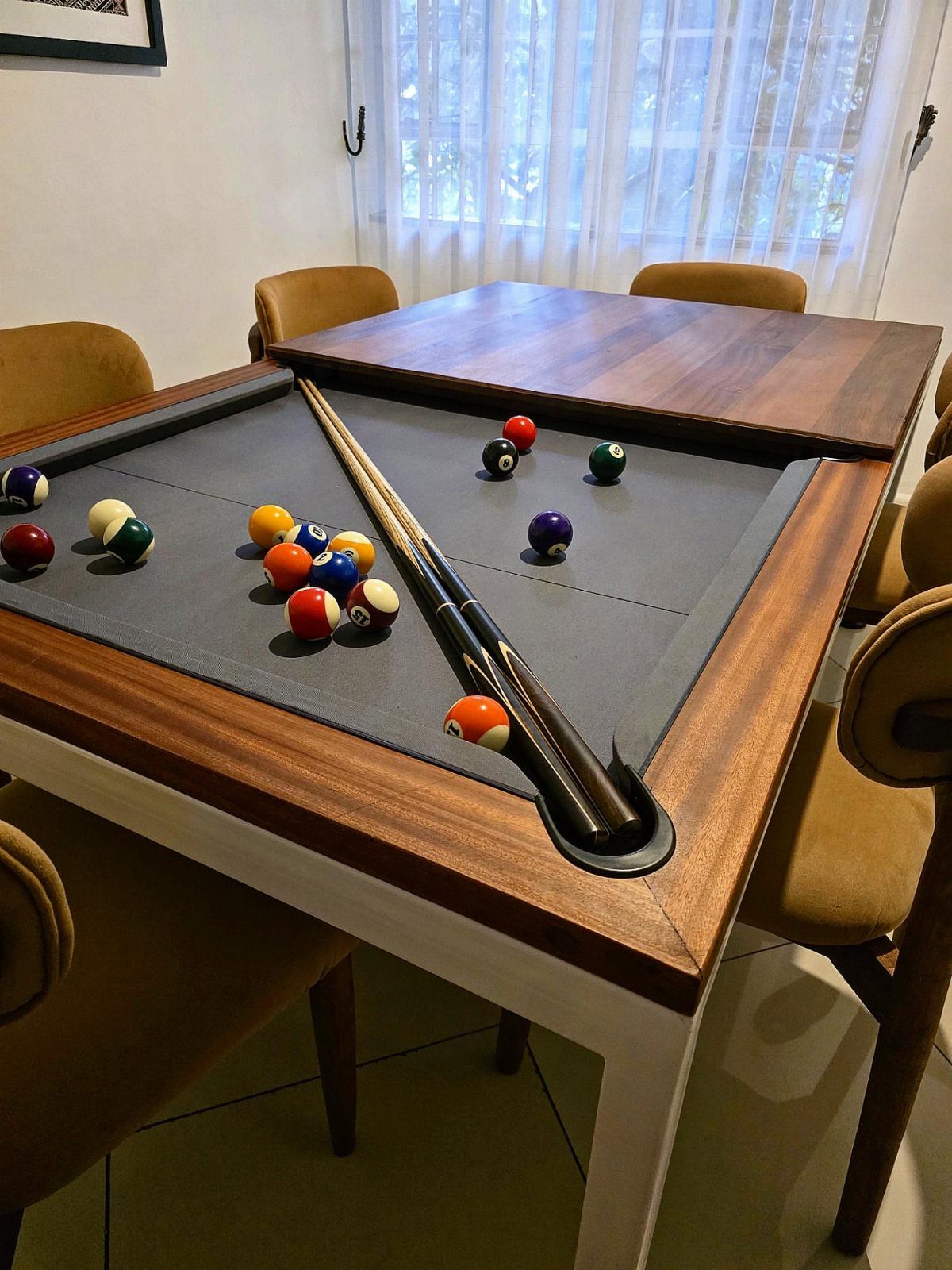
Converting a dining table into a pool table gives a small rec room two uses from one footprint.
Grey felt on a wood-topped table, paired with upholstered chairs in a warm tan, keeps a pool table reading as furniture instead of a bar fixture.
Store the cues and balls nearby so the switch takes seconds. I’d choose this over a full-size table whenever the room doubles as a place to eat or host.
4. Toy and Game Room
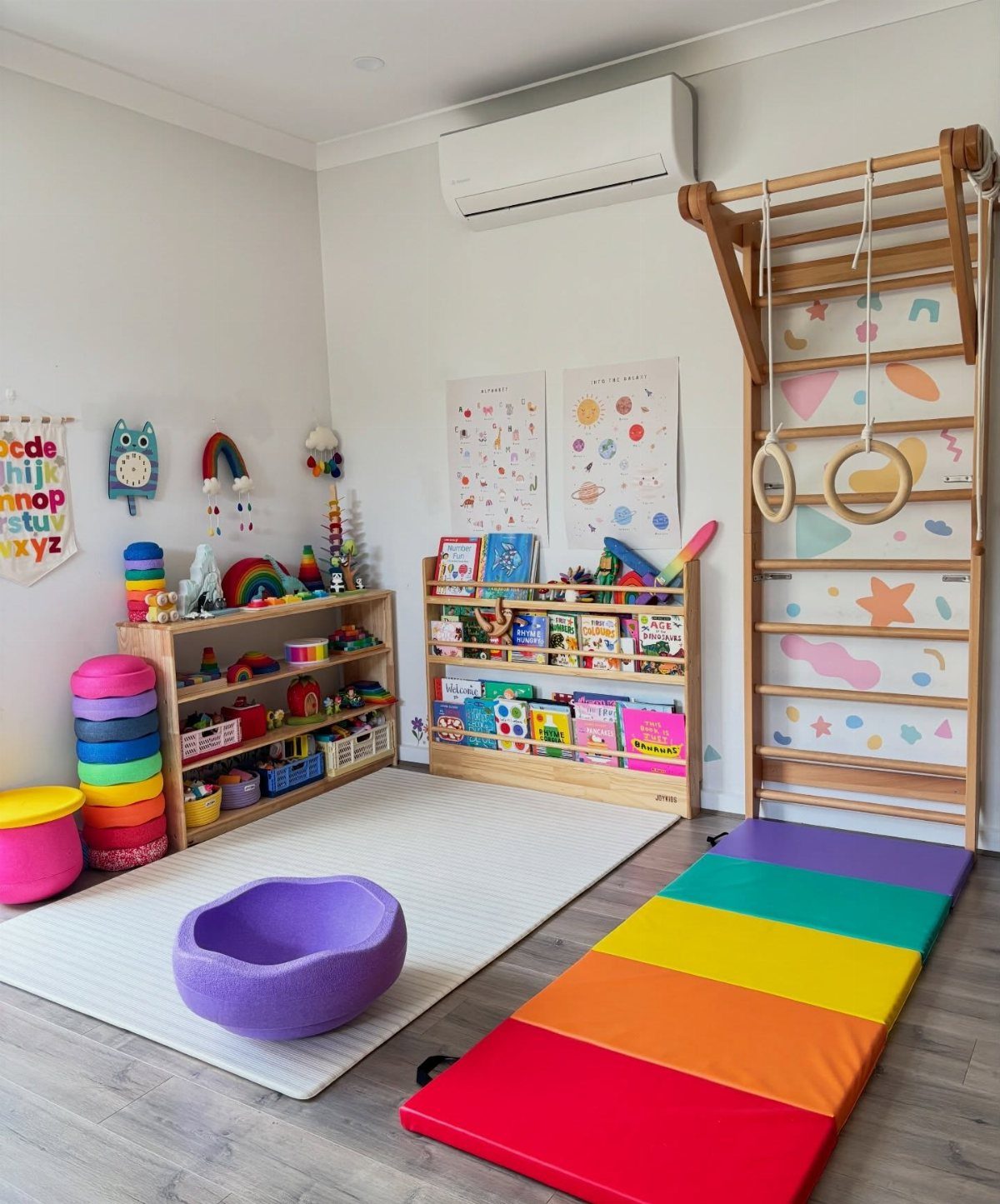
Low, open wooden shelves are the best furniture move in a playroom, because kids can reach and return toys on their own. Pair them with a climbing frame and a thick crash pad, and the floor stays clear for play.
A purple beanbag on a white rug gives a soft landing spot for reading. Skip anything tall or heavy that a child could pull over, and choose pieces that can move as they grow.
5. Dart Board Setup
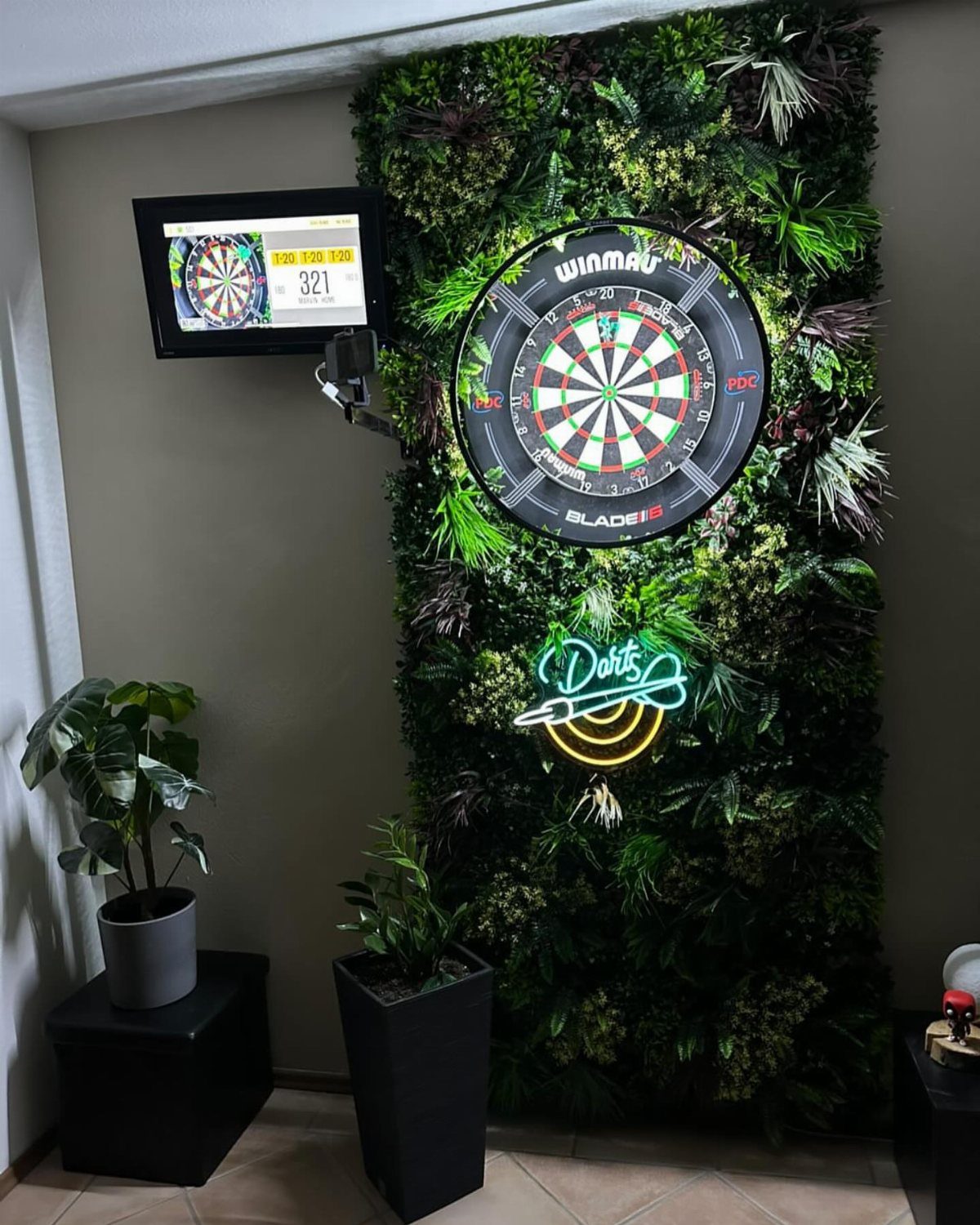
Furniture is minimal in this setup, and that is its strength: a dartboard, a neon sign and a scoring screen turn one wall into a game station.
The plant wall behind the board adds color and gives stray darts a softer backdrop.
Leave a clear throwing lane in front of it, and keep seating off to the side. A small stool or bar-height table beside the lane holds drinks and scorecards.
6. Hybrid Family Game Room
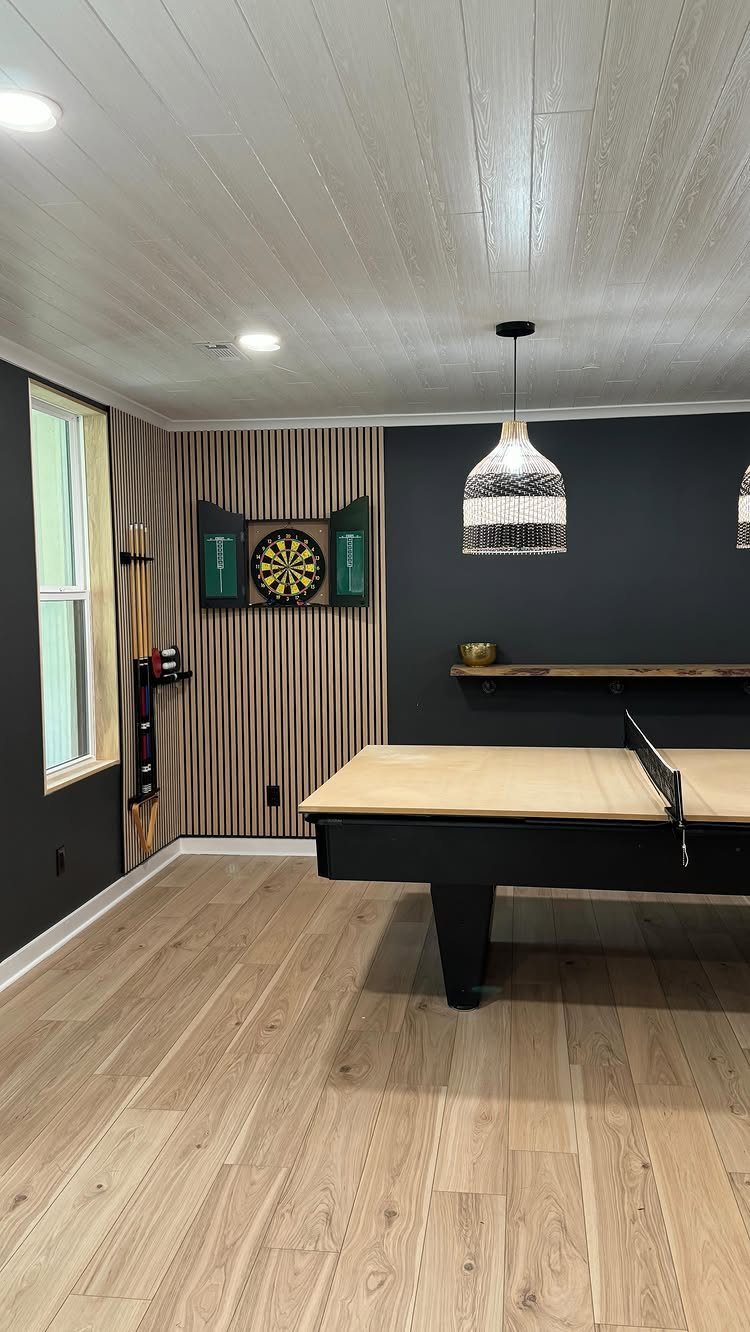
Slatted wood behind a dartboard takes the stray hits better than bare drywall, and a shelf on a dark wall gives pool cues a place to rest off the floor.
Choose a ping pong table that folds, so the floor opens up when you want it.
7. Console Gaming Media Stand
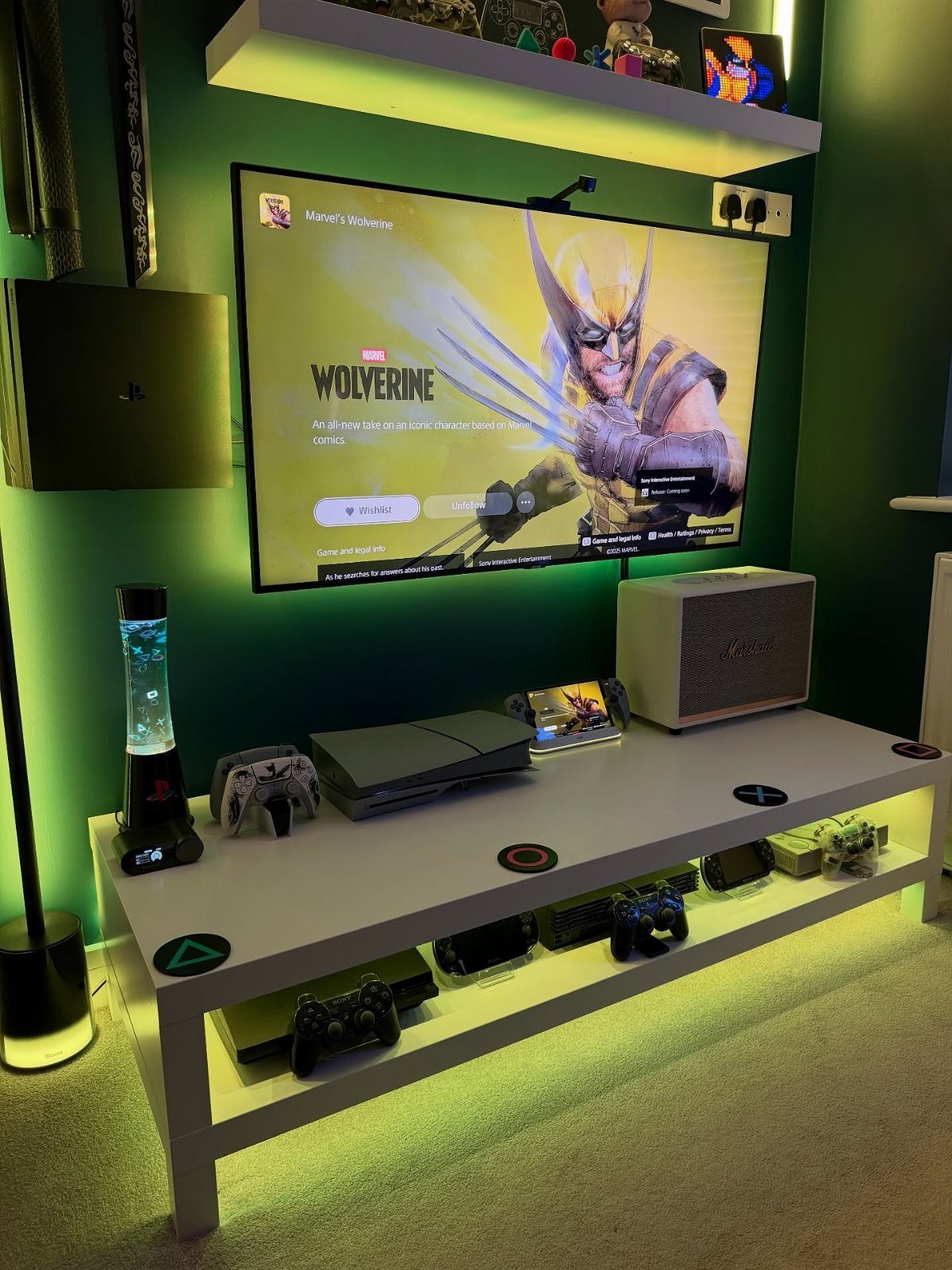
A white console table with LED strips underneath keeps a PS5, controllers and a speaker in one tidy spot instead of scattered across the floor.
The glow also gives a dark rec room a soft light source, so the TV doesn’t sit alone in the dark.
I’d choose a low table with an open shelf, so the console gets airflow and cables stay within reach. A lava lamp or small speaker on top adds personality without crowding the surface.
8. Fireplace Media Console Unit
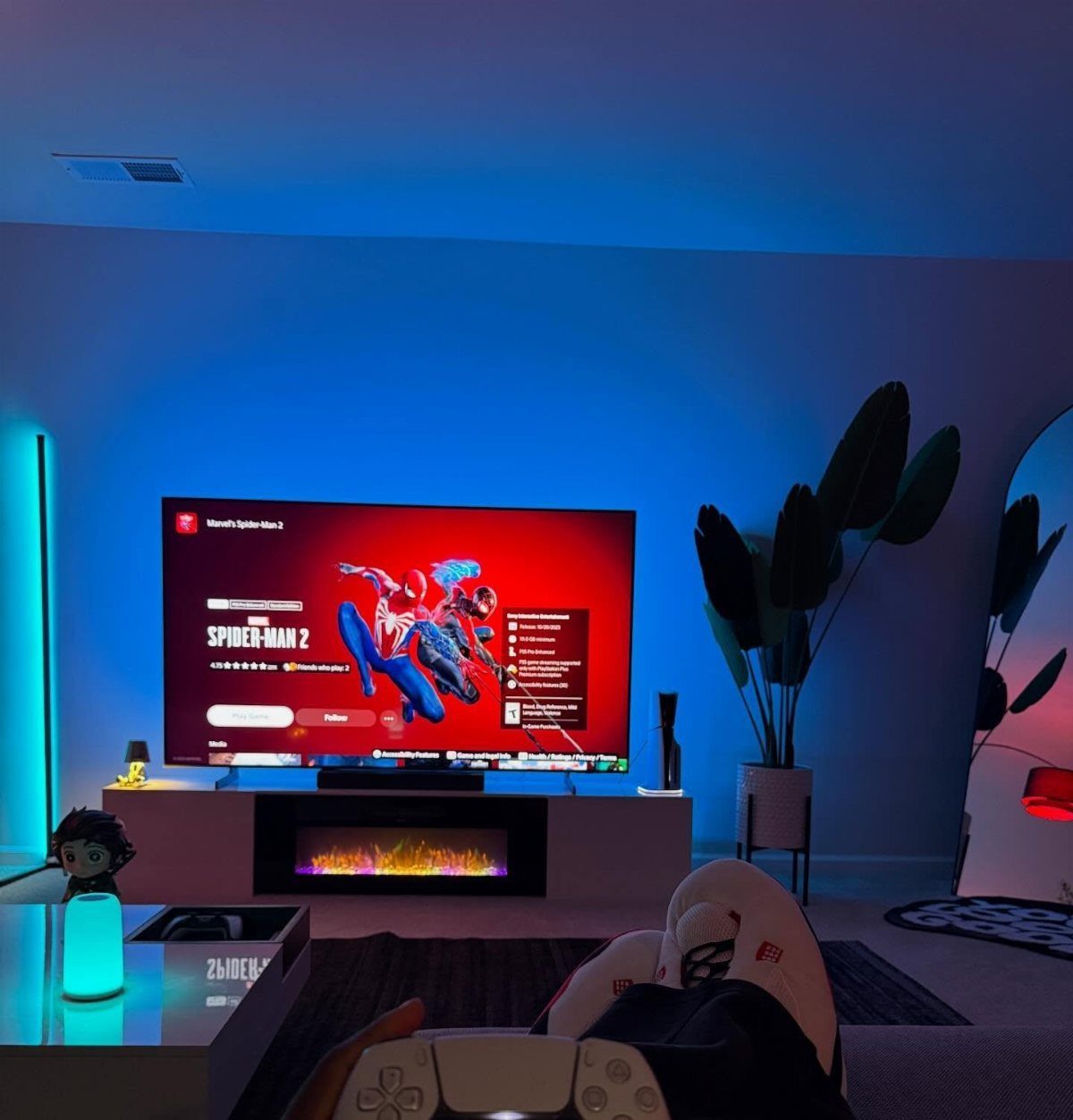
An electric fireplace built into a white media console gives the TV wall a heat-and-glow feature that a plain stand can’t match. It also keeps the room cozy for long game nights on a basement sofa.
Pick a console wide enough that the TV doesn’t overhang the sides, and mount the screen or set it centered above the fireplace.
A plant at one end softens the clean lines. Blue accent lighting works well here, since it matches the flame glow without competing.
9. Multi-Monitor Computer Gaming Desk
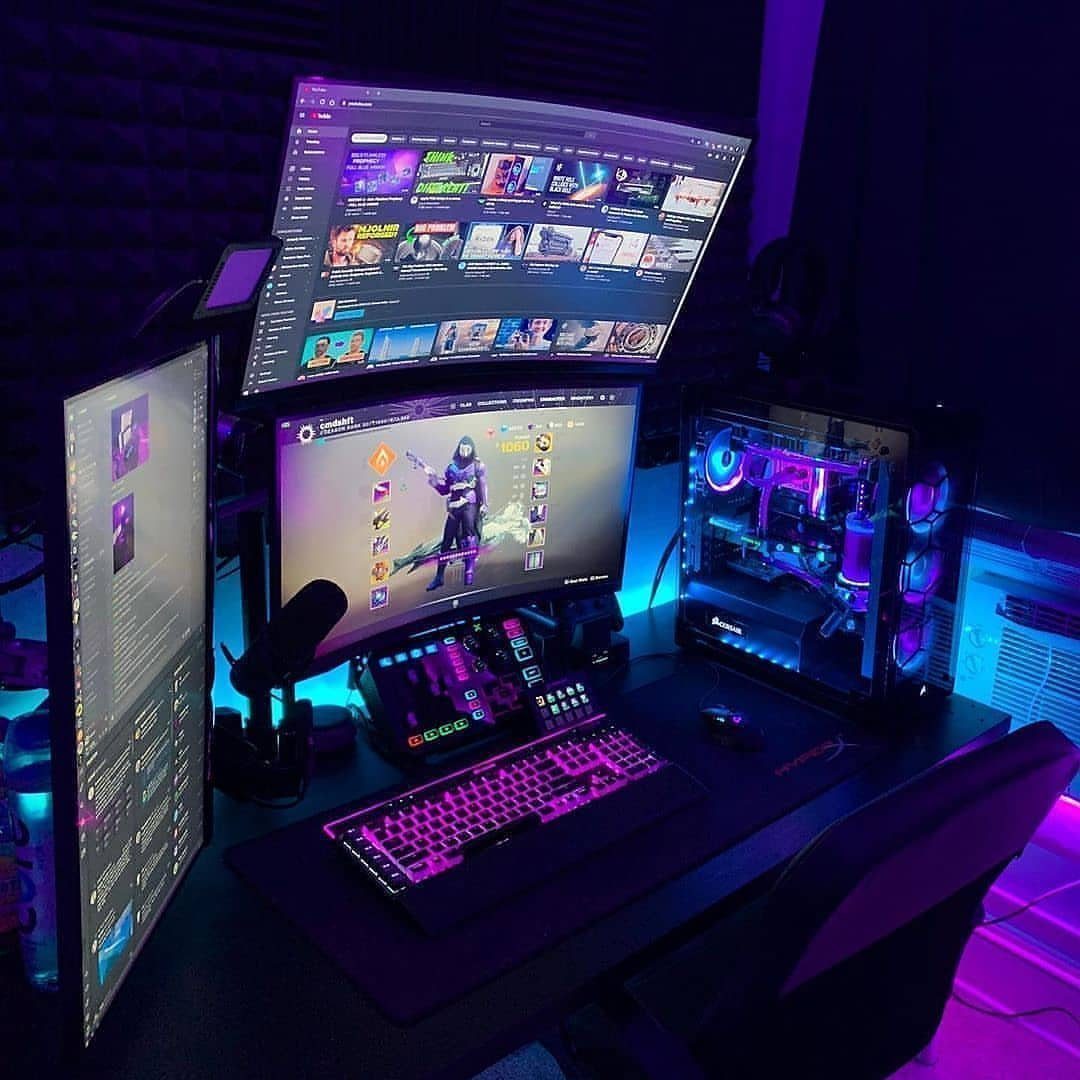
Three monitors on one wide desk make a PC station that feels like a cockpit, and black acoustic foam on the wall behind it keeps the sound from bouncing around a hard-walled basement.
I’d buy a desk deep enough to keep the screens an arm’s length away, and a sturdy one, since three monitors add real weight.
Purple RGB light on the case and keyboard looks best when the room lights stay off. Foam panels cost little and hang up in an afternoon.
10. Racing Simulator Cockpit
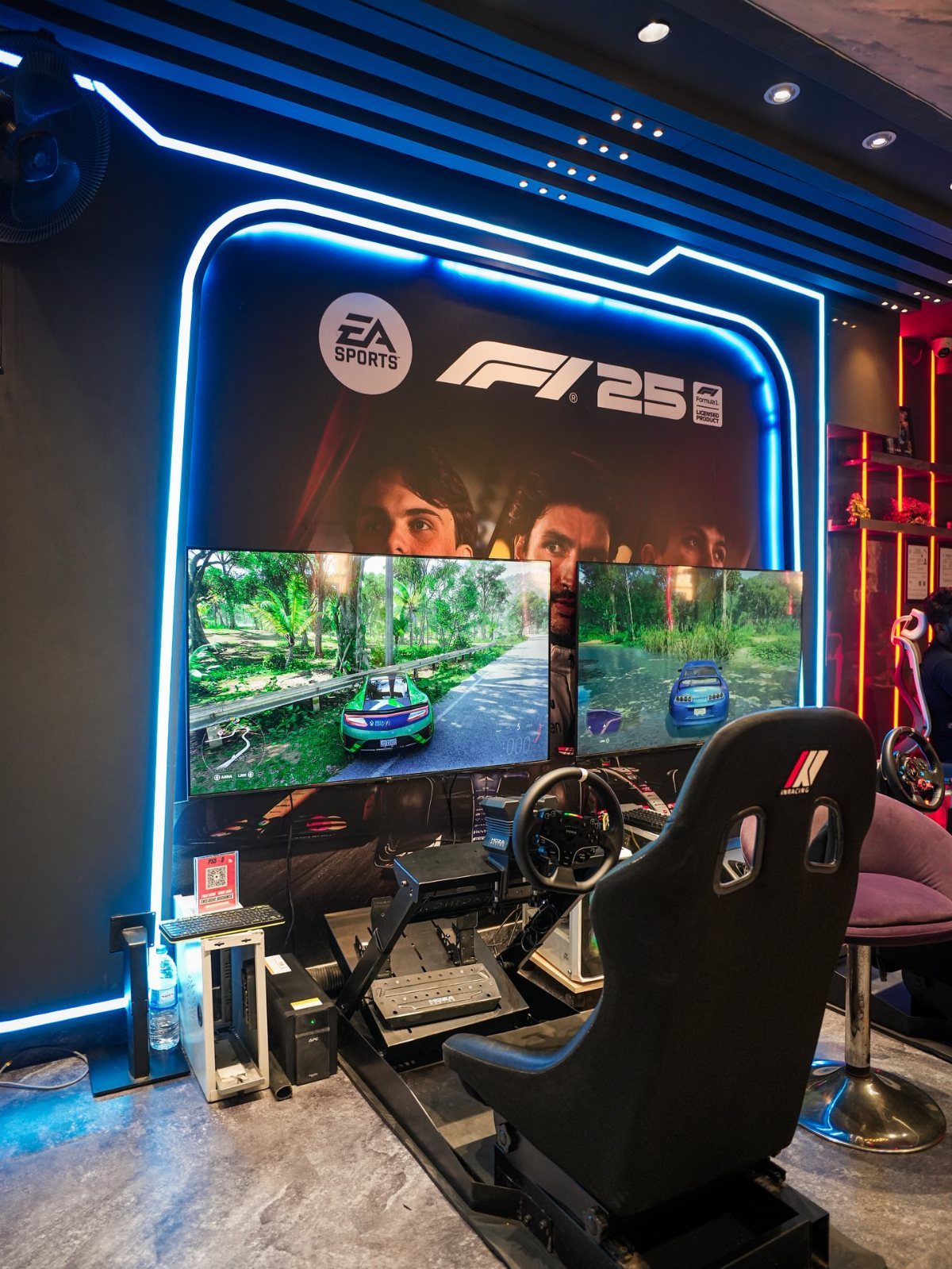
A bucket seat bolted into a rig, a wheel in front and 2 monitors set next to each other: that’s what makes a racing sim feel like driving instead of sitting at a desk.
Give the cockpit its own corner so you can walk around it and leave the seat set up. Place the monitors at eye level, directly ahead of the wheel.
A strip of blue neon mounted behind the rig adds atmosphere and costs little. A rig like this takes more floor space than it first looks, so measure before you buy.
11. Casual Bean Bag Gaming Area
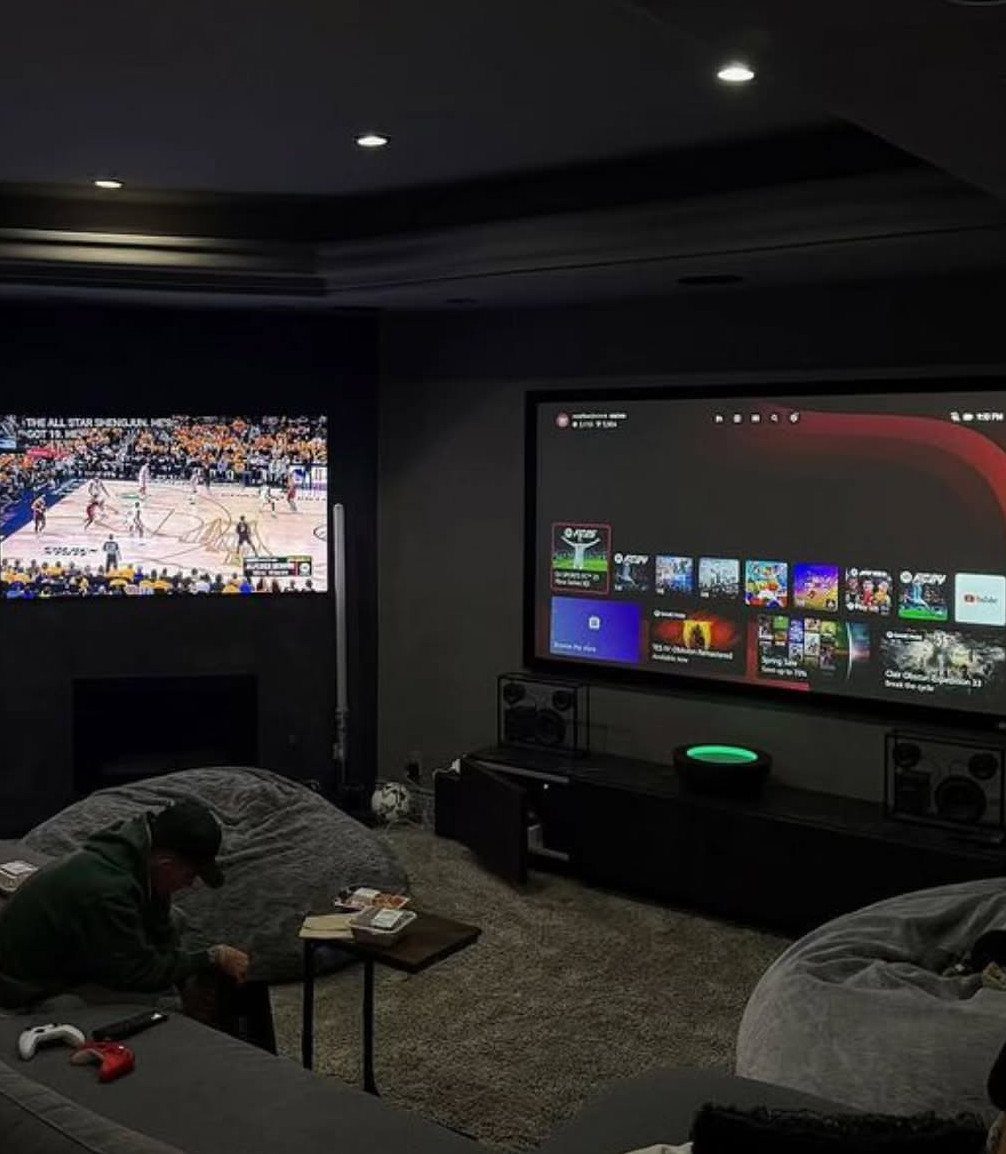
Grey bean bags in front of 2 big screens make the cheapest, most flexible seating a game room can have.
They slide aside when the floor is needed, and a low black console keeps the screens at a comfortable eye level while you sit down low.
I’d choose large bags in a dark fabric that matches the room, since they hide scuffs. The downside: bean bags offer little back support, so they suit casual sessions better than marathon ones.
12. Sports and Fitness Zone
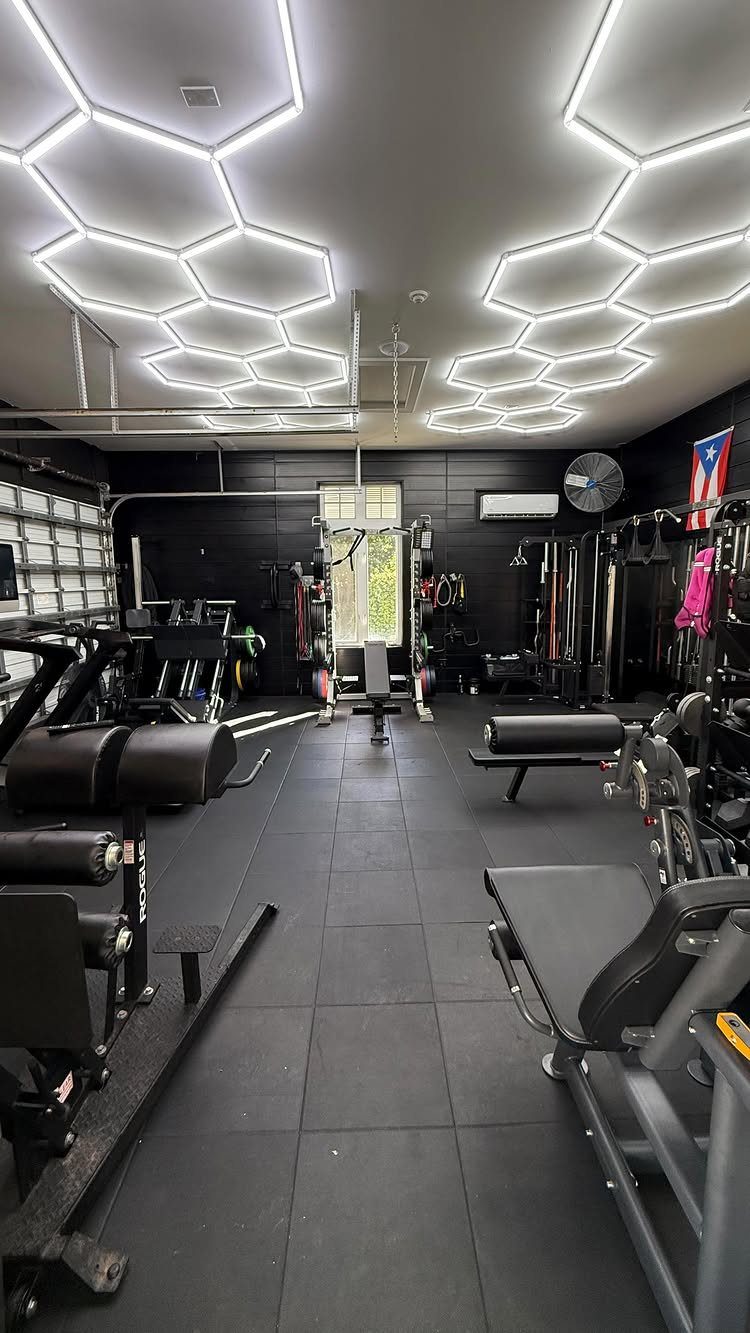
Black walls and rubber flooring make a garage gym feel like a real facility, and the rubber protects the concrete from dropped weights. Weight machines save space compared with loose plates because everything is built into one frame.
I’d lay the flooring first and place the heaviest machine against a wall.
Keep walking room around each piece. Bright ceiling lighting matters in a dark-walled room, so you can see your form and the equipment clearly.
13. Arts and Crafts Corner
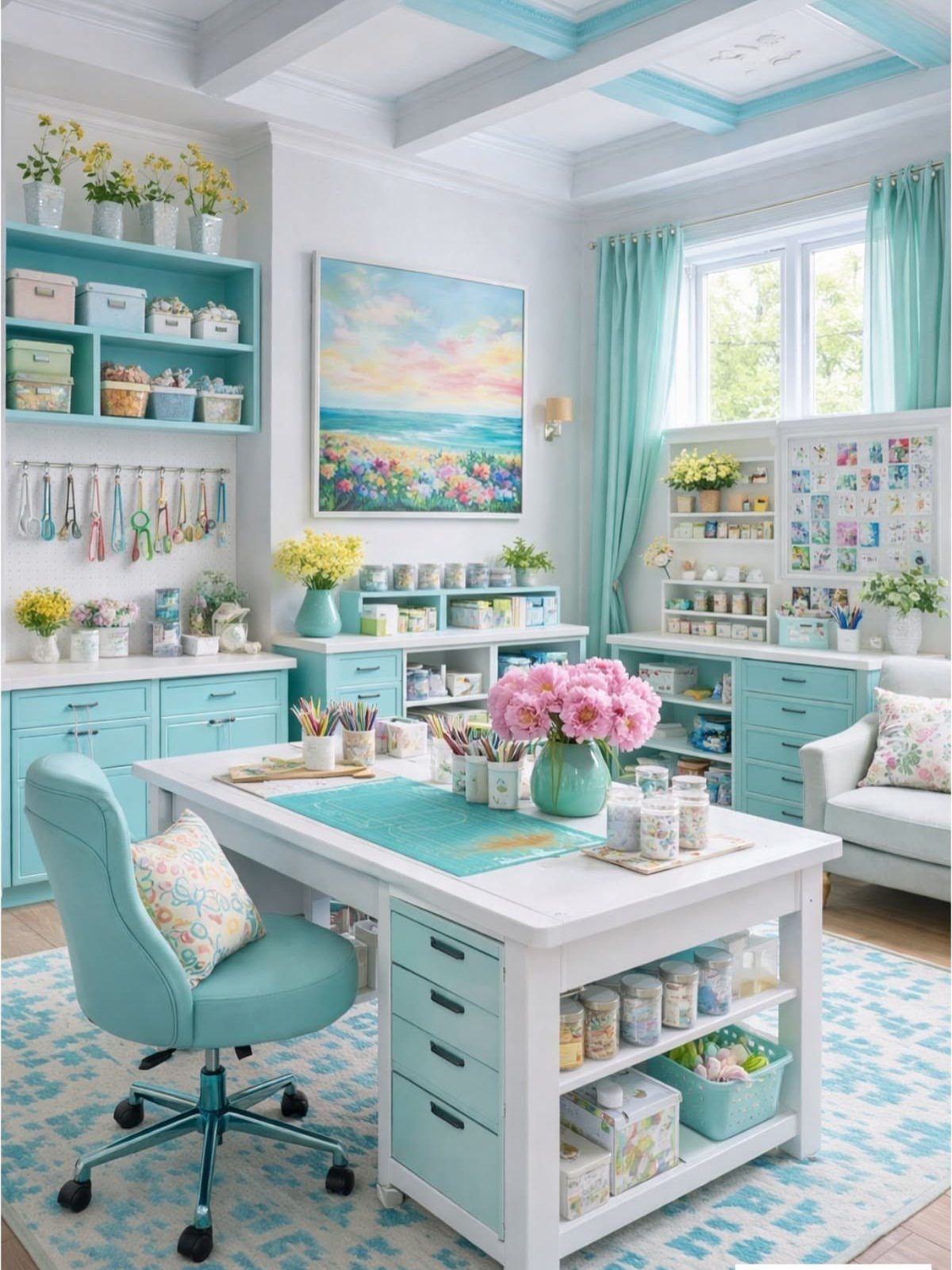
A large white desk with closed cabinets and open shelving beside it gives a craft corner the 2 kinds of storage it needs: hidden for clutter, open for the supplies you reach for daily.
Teal against white keeps a busy hobby area looking calm.
I’d pick a desk wide enough to spread out a project and leave it overnight. Put the shelves within arm’s reach of the chair, and use the cabinets for the messy items, like paints and glues.
A chair with adjustable height saves your back during long sessions. A painting on the wall gives you something to look at while the glue dries.
Furniture Arrangement Tips
Start with seating and work outward: a sectional, bean bags, or theater chairs set the footprint, and everything else fits around them. Pick the main seat first, then see what floor is left.
Hidden storage keeps board games, controllers, and accessories out of sight, so an ottoman or bench with a lid does double duty.
Neon signs and framed posters bring personality to a rec room while leaving every square foot of floor open.
Leave a clear path from the stairs to the seating, roughly 3 feet wide is a common rule of thumb. Walkways that run through the middle of a seating group are the ones people end up tripping over.
I like a room that feels personal more than a matched set, so retro arcade pieces or vintage memorabilia are worth hanging if they’re your taste.
Storage Solutions
For extra storage with no extra furniture, I’d pick a table with drawers built in, or a cabinet with open shelves. Closed doors hide the mess, and open shelves keep daily items in reach.
Mount a pegboard or wall organizer and tools and supplies move off the tabletop, leaving the whole surface clear to work on.
It’s also a cheap weekend project that renters can often take down again, though check for screw holes first.
Bright task lighting over a crafting or hobby spot makes small work easier on the eyes, and it helps you find what you put away.
Give each category of stuff one home, such as games in one cabinet and cords in a bin, so cleanup takes minutes.
Lighting Considerations
Put the lights on dimmers.
Put the lights on a single dimmable circuit and the room can run bright for active games, then drop low for a movie. A smart or remote-controlled dimmer makes that switch a one-button job.
LED strips behind screens and along baseboards add a modern glow, and backlit shelving does the same job for a wall of games or consoles. Stick-on strips are an easy renter-friendly install.
A neon sign or arcade-style light gives the room personality, and it works as a soft light source on its own.
I’d plan 3 settings: bright for games, dim for movies, and warm for relaxing. If one switch can’t do all three, add a lamp on a separate plug.
Frequently Asked Questions
How to make your own rec room?
Pick your primary seating first, then arrange storage and tables around whatever footprint it claims. Then add one main game or feature, hidden storage like a lidded ottoman, and lighting on a dimmer.
What are the must-haves in a gaming room?
Comfortable seating, a console or PC station, and storage for games and controllers are the core.
An open-shelf console stand keeps heat from building up and puts ports where you can reach them. Add dimmable lighting, since bright works for active games and dim works for screens.
What are some ideas for cool rooms?
A basement theater with a low, wide velvet sofa, a lounge with a swivel chair and a record player on a sideboard, and a dartboard wall with a neon sign all work well.
A multi-monitor PC desk with acoustic foam behind it is another strong pick.
What is a rec room?
A rec room is a space in the home set aside for fun and gathering, like games, movies, gaming, hobbies, or kids’ play.
Most rec rooms are built around one anchor activity, a seating arrangement that handles both daily use and guests, and furniture light enough to reconfigure. Basements are a common spot for one.
What should you include in a recreation room?
Include a main game or feature, comfortable seating, and flexible furniture that can move or fold away. Hidden storage, such as a bench with a lid, keeps the clutter out of sight.





