Basement floor paint runs from a cheap one-part latex you roll on in a weekend to a two-part epoxy that cures into a hard, glossy shell.
What the floor has to carry decides the product: rolling tool chests or a spare fridge call for epoxy, while a laundry nook or rec room does fine with the lighter gray, brown, or patterned paint options below.
1. Epoxy Floor Coating
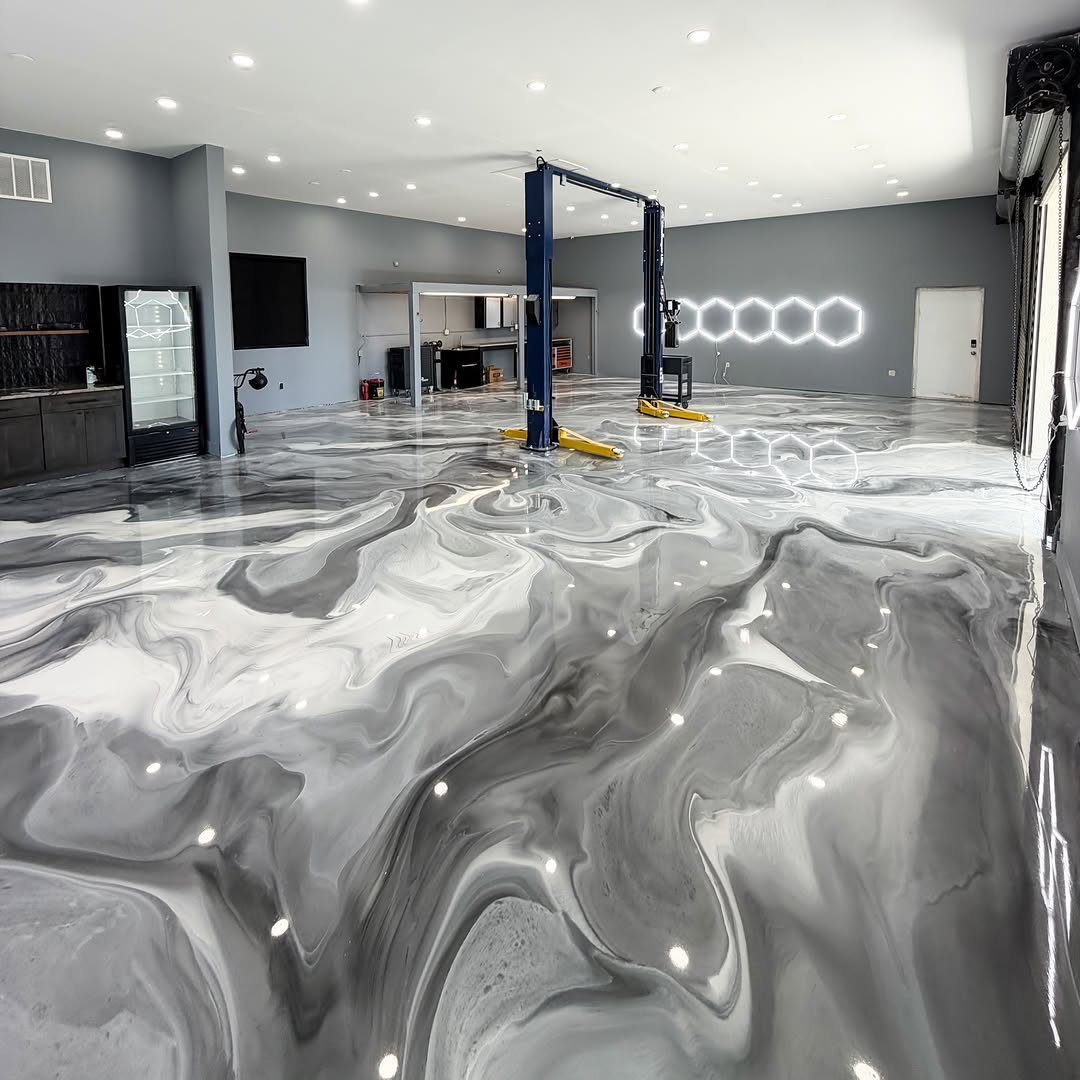
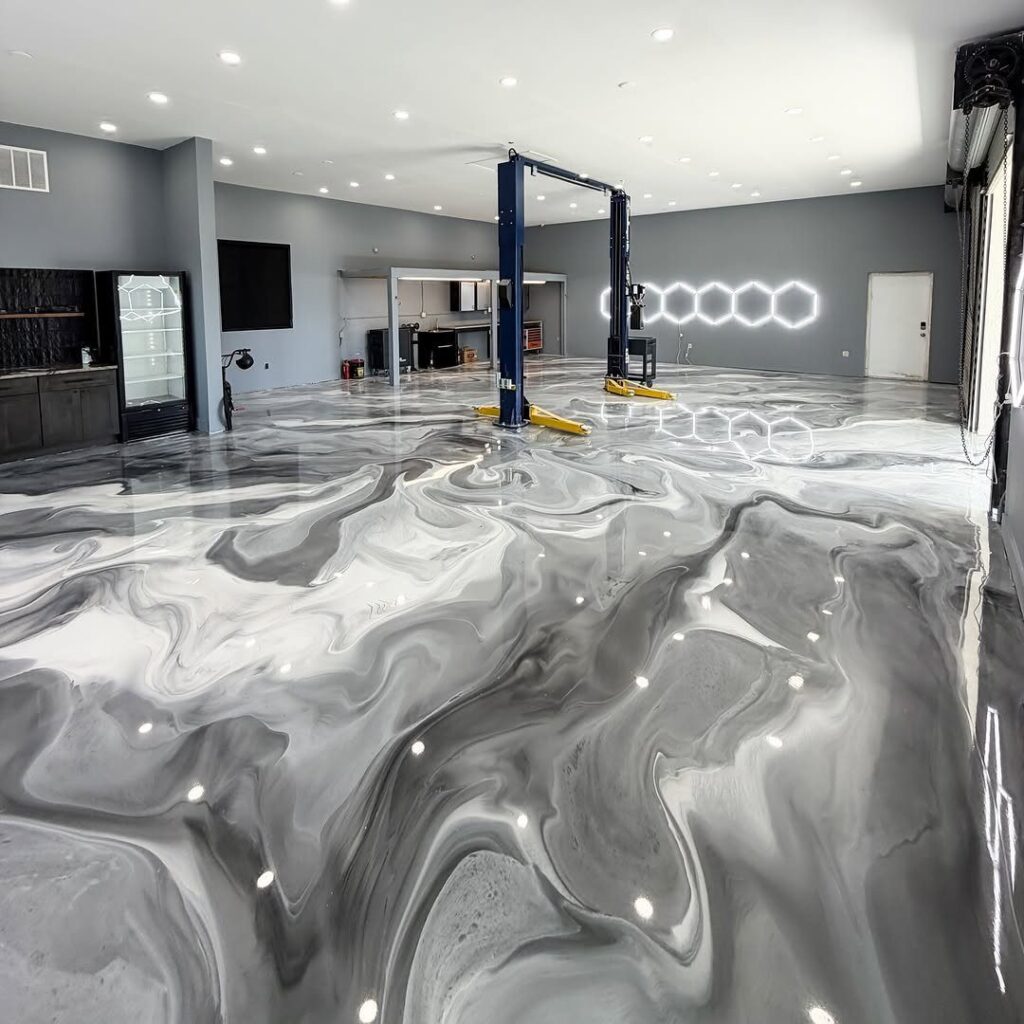
Epoxy is the heavy-duty choice on this list: a two-part coating that cures into a hard, glossy shell, and the marbled gray and white look hides tire marks and drips better than a solid color does.
Garages and workshop corners are where I’d spend the money. A car lift, a spare fridge and rolling tool chests all punish a floor, and epoxy is built for that kind of abuse.
It costs more than a basic one-part floor paint and takes more prep, so budget for both. For a laundry nook or a rec room, a cheaper paint will do the job.
Rust-Oleum’s Epoxy Shield Basement Floor Coating Kit can help change your basement into a living space.
2. Glossy Light Gray Paint
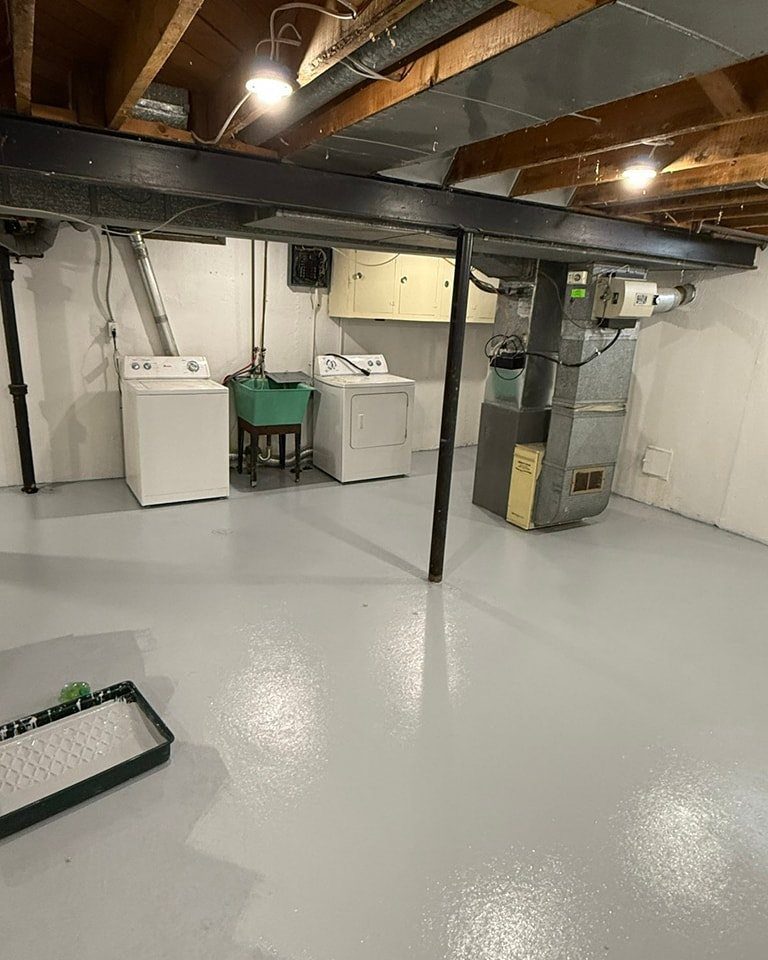
Glossy light gray on bare concrete is the easiest way to make a utility space look finished. The shine bounces light around a room that mostly has bare joists overhead, which is why I like it for laundry areas.
Pick a light shade rather than a mid-tone and the floor reads clean instead of dingy.
Gloss shows every scuff and speck of lint, so expect to sweep often. Wipe it with a damp mop and it looks fresh again.
3. Faux Marble Painted Floor
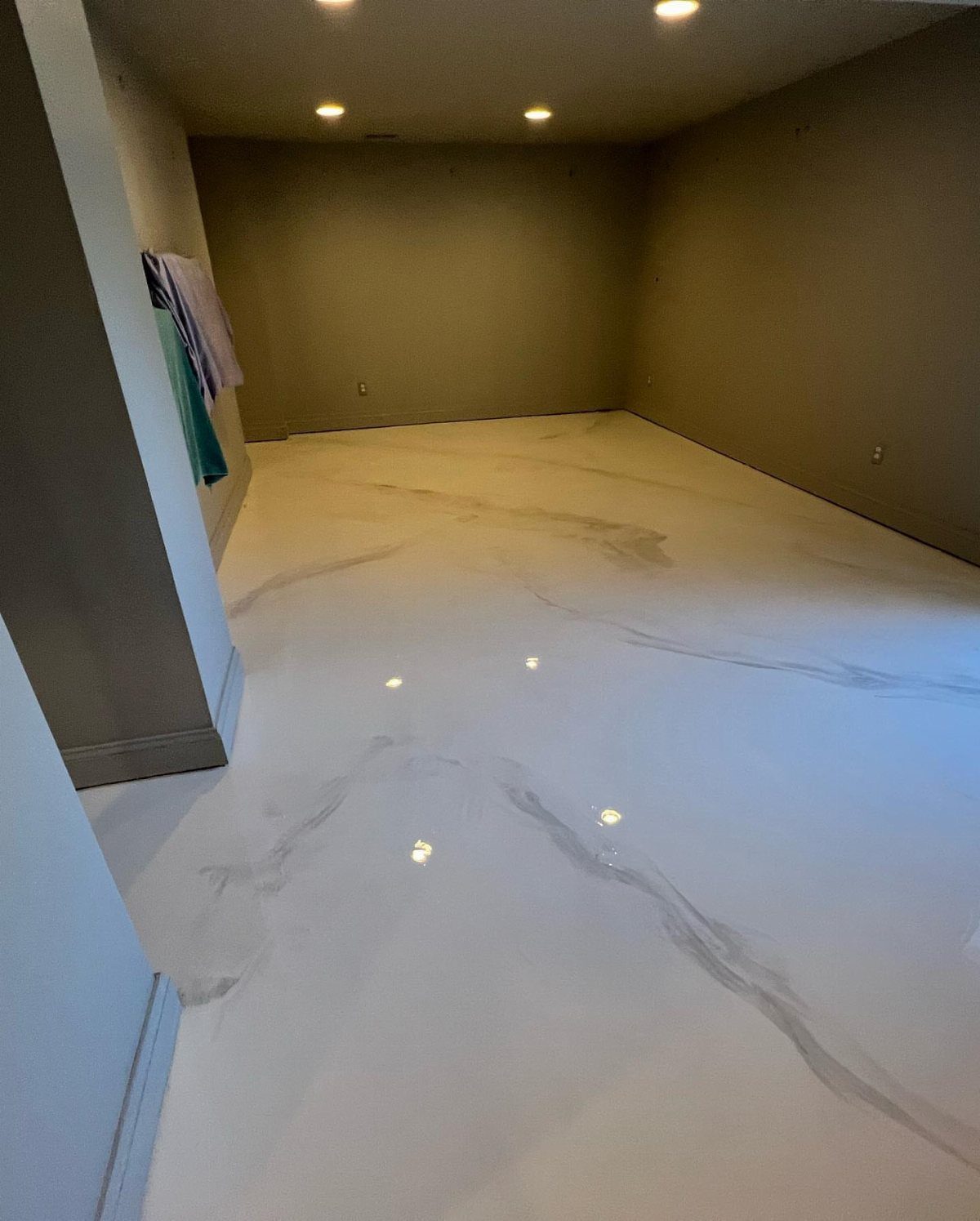
Faux marble starts with a glossy white base coat, then gray veining added on top. It gives a bare basement the look of a polished stone floor for the price of paint and a few tools.
For the veining, I’d use a thin artist’s brush or a feather and keep the lines uneven. Crossing a few thin lines over one thick one looks more like real stone than a pattern spaced evenly.
Work in small sections while the base is tacky enough to blend. A clear topcoat over the veining protects it, and it keeps the gloss consistent from wall to wall.
4. Smooth Matte Gray Paint
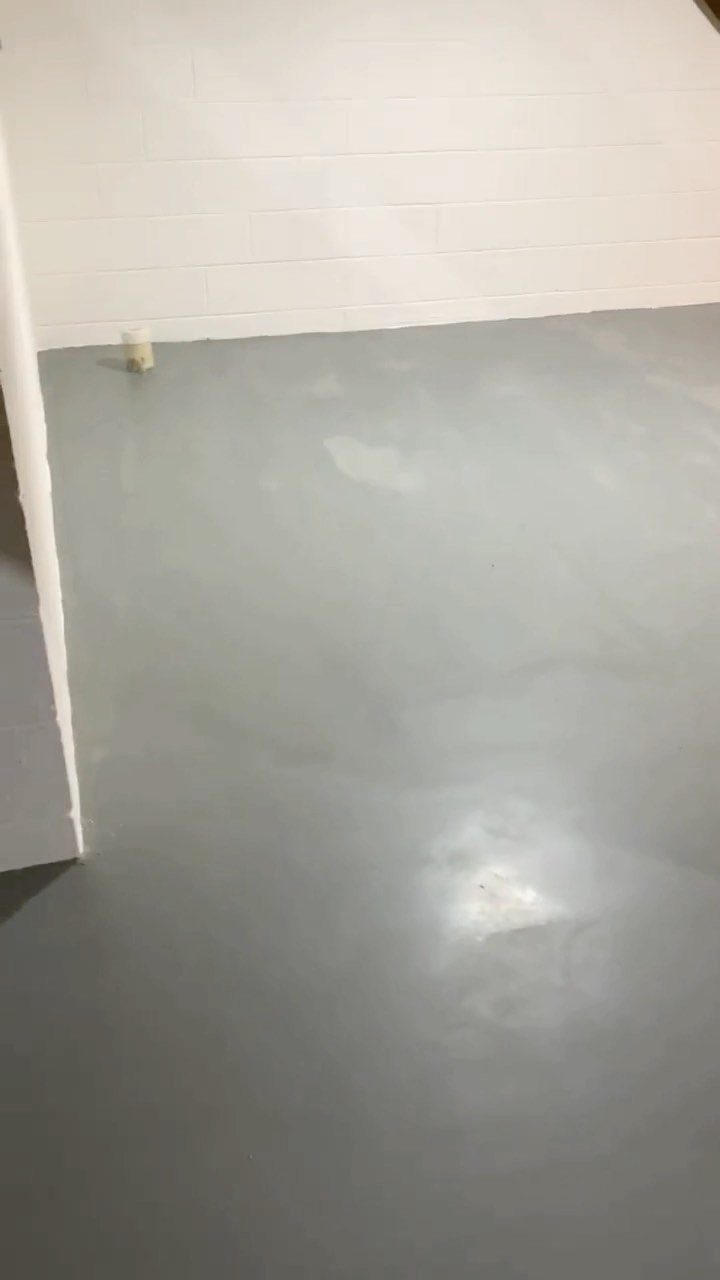
A smooth matte gray floor is the quiet option, and I’d pick it when the walls are doing the talking. Against white paneling it keeps a basement looking calm and a bit larger than it is.
Matte has a practical edge over gloss: it hides scuffs, dust and small flaws in the concrete. That makes it forgiving for a first-time painter working over an older slab.
Stay with a light gray, since a dark one turns a low-ceilinged basement into a cave. Roll it on in even coats, working in one direction.
5. Glossy Brown Concrete Paint
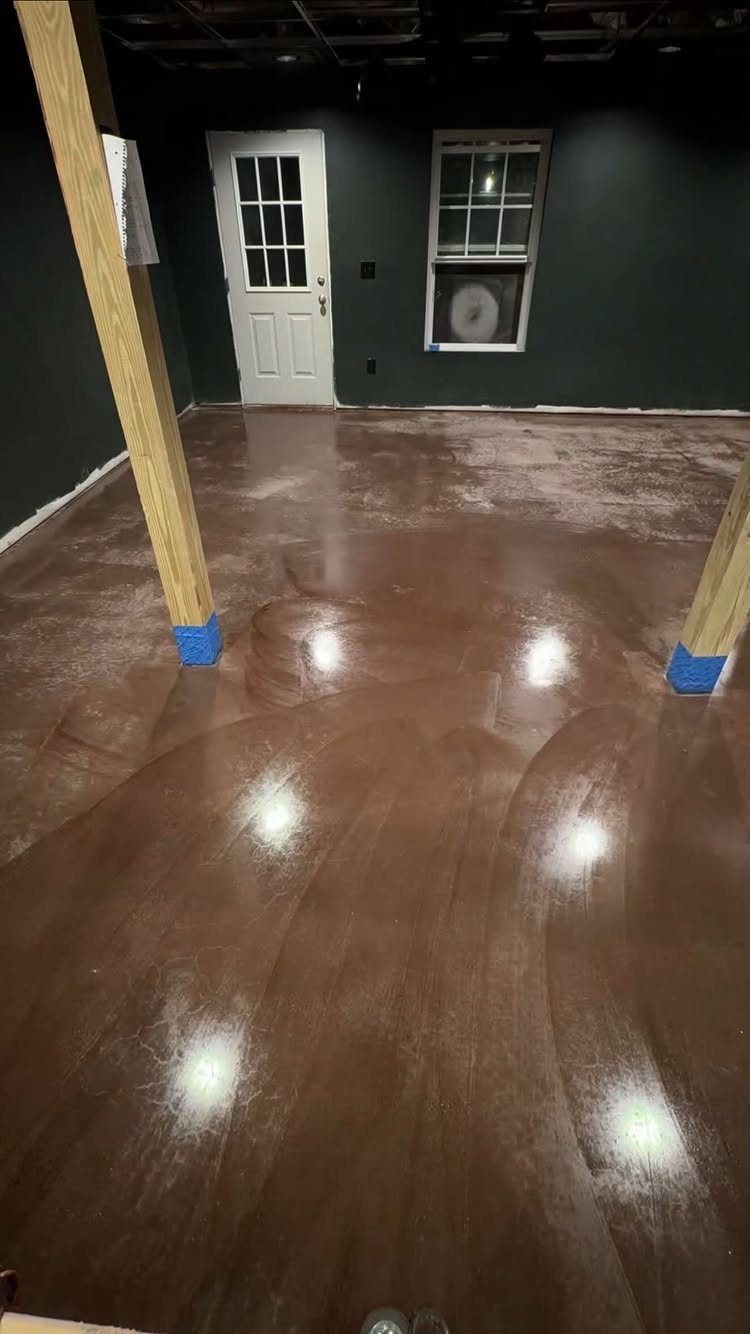
Warm brown concrete paint is the one I’d choose for a basement that feels cold. Against dark gray walls and bare wood beams, a glossy brown floor adds a copper-toned warmth that gray alone can’t.
The gloss pulls in light from a single window, which helps in a room with little daylight. Keep the walls dark and the door white so the floor stays the focus.
Brown hides dirt well, but a glossy finish still shows scratches and footprints, so a dust mop and a small rug near the stairs will help.
6. Painted Geometric Diamond Pattern
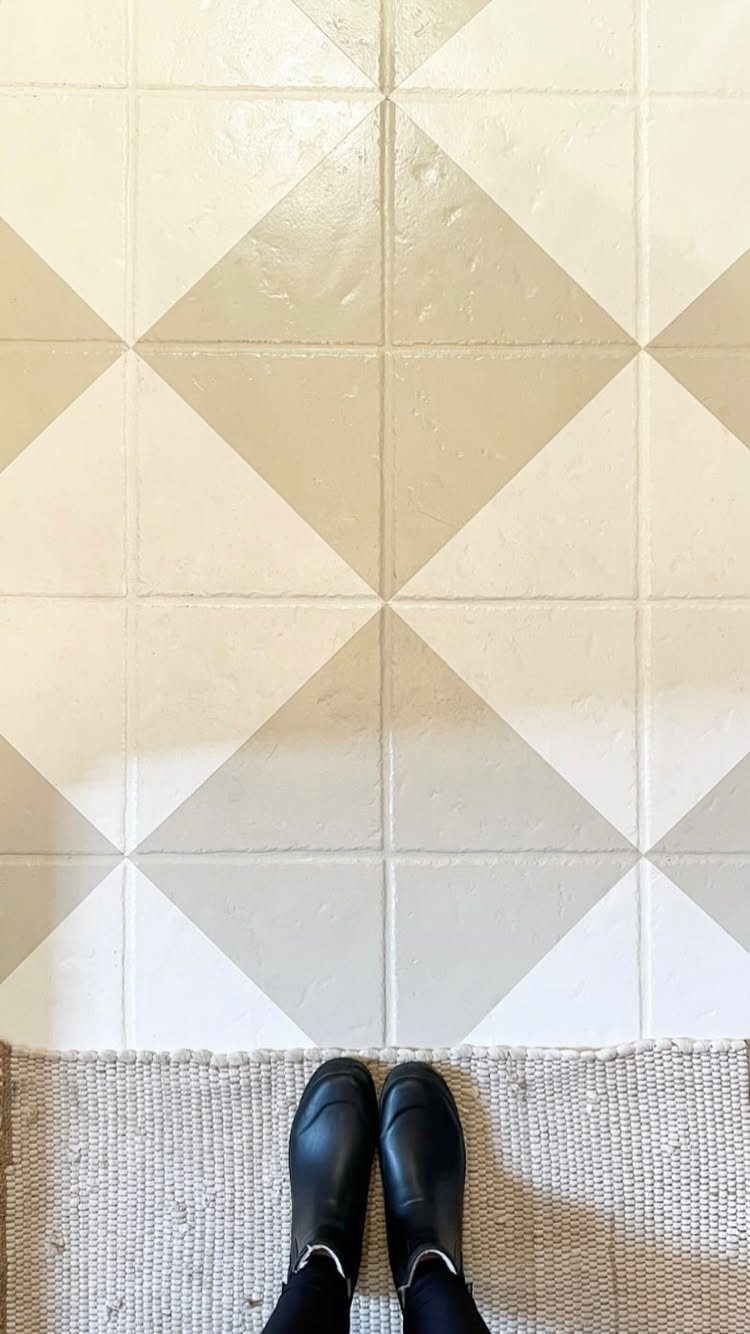
A painted diamond pattern is the project for anyone who wants a rug-like floor without buying a rug. White and beige keep it light and soft, so the pattern adds interest without crowding a tight basement corner.
Stencils or painter’s tape make the diamonds. I’d tape the full grid first and check the layout from the doorway before painting a single square.
Pull the tape while the paint is still slightly wet for crisp edges. Expect a full weekend, since it needs a base coat, then the pattern, then a clear topcoat.
Choosing the Right Paint
Buy a paint made for concrete floors, not a wall paint. Floor formulas hold up to far more abuse, and standard interior or exterior wall paint won’t stand up to foot traffic.
Latex goes on much like house paint, so it’s the easier one for a first project.
Epoxy comes as 2 components you mix on the spot, and it’s fussier to apply, but it wears longer and stands up to heavy foot traffic and rolling carts.
Latex dries quickly, smells mild, and washes off tools and drips with plain soap and water.
Most latex formulas skip the primer step, and they bond fine over an older painted floor. Colors come ready-mixed, or you can buy a white base and have the store tint it to match your walls.
Common Mistakes
Moisture is the mistake I’d worry about most. Test the slab before you open a can, because paint laid over a damp floor is the usual reason a basement finish fails.
Wall paint is the second trap. It won’t bond to concrete, so the floor will peel no matter how carefully you apply it.
Clean the surface first, since dust and grime keep paint from gripping. Sweep, vacuum and scrub until nothing lifts off on a dry cloth.
Give each coat the full drying time on the can before you add the next. Rushing coats leaves a soft film that scuffs early.
Open windows or run a fan while you work. Ventilation matters in a closed basement, especially with epoxy or any strong-smelling coating.
Maintenance Tips
Sweep or dust mop the floor often. Grit acts like sandpaper under shoes and dulls the finish faster than normal foot traffic does.
Wipe up spills as soon as they happen, before they sit and stain. A damp mop with mild soap is enough for most messes.
Touching up worn paths near the stairs and doorways early keeps the whole floor from needing a full redo.
Frequently Asked Questions
Is painting a basement floor a good idea?
Yes, as long as the slab is dry. Paint is inexpensive and quick, and it makes the floor look finished and wear better.
Painting works well on a dry slab and fails fast on a damp one, so tape a 2 x 2 foot square of plastic sheeting to the concrete for 24 hours, and if you see condensation underneath, fix the moisture before you buy any paint.
What is the cheapest way to cover a basement concrete floor?
A one-part latex or acrylic concrete floor paint is the budget route.
It’s affordable, easy to roll on, and holds up well in a dry, finished basement with light traffic. Expect to recoat it every 3–5 years, and it resists moisture less well than epoxy.





