
Ceiling height is the fact that decides which of these ideas fits your basement, because it settles whether you can build a riser for tiered seating or should stick with one solid platform and a ceiling-mounted projector.
The ideas range from a few LED strips behind the screen to a full build that, per the budget section, can run from $5,000 to past $100,000.
1. Dimmable Overhead Lights and Step Lighting

Recessed ceiling lights on a dimmer do more for a basement theater than any other fixture, because one switch takes the room from cleanup-bright to movie-dark. I would put the overhead cans on their own dimmer, separate from everything else.
Floor-level step lights, like the ones along the aisle in this room, keep walkers from tripping in the dark without throwing light on the screen. Aim for low and small; anything bright enough to read by defeats the purpose.
2. Tiered Seating

Raising the back row is how every seat gets a clear line to the screen, and it is the one move that makes a basement feel like a real cinema.
A low platform behind the front seats lifts the second row above the heads in front.
Basement ceilings are the limit here, so measure height before you plan a second tier. If the room is tight, I would choose one solid riser over cramming in two.
3. Oversized Recliners with Cup Holders
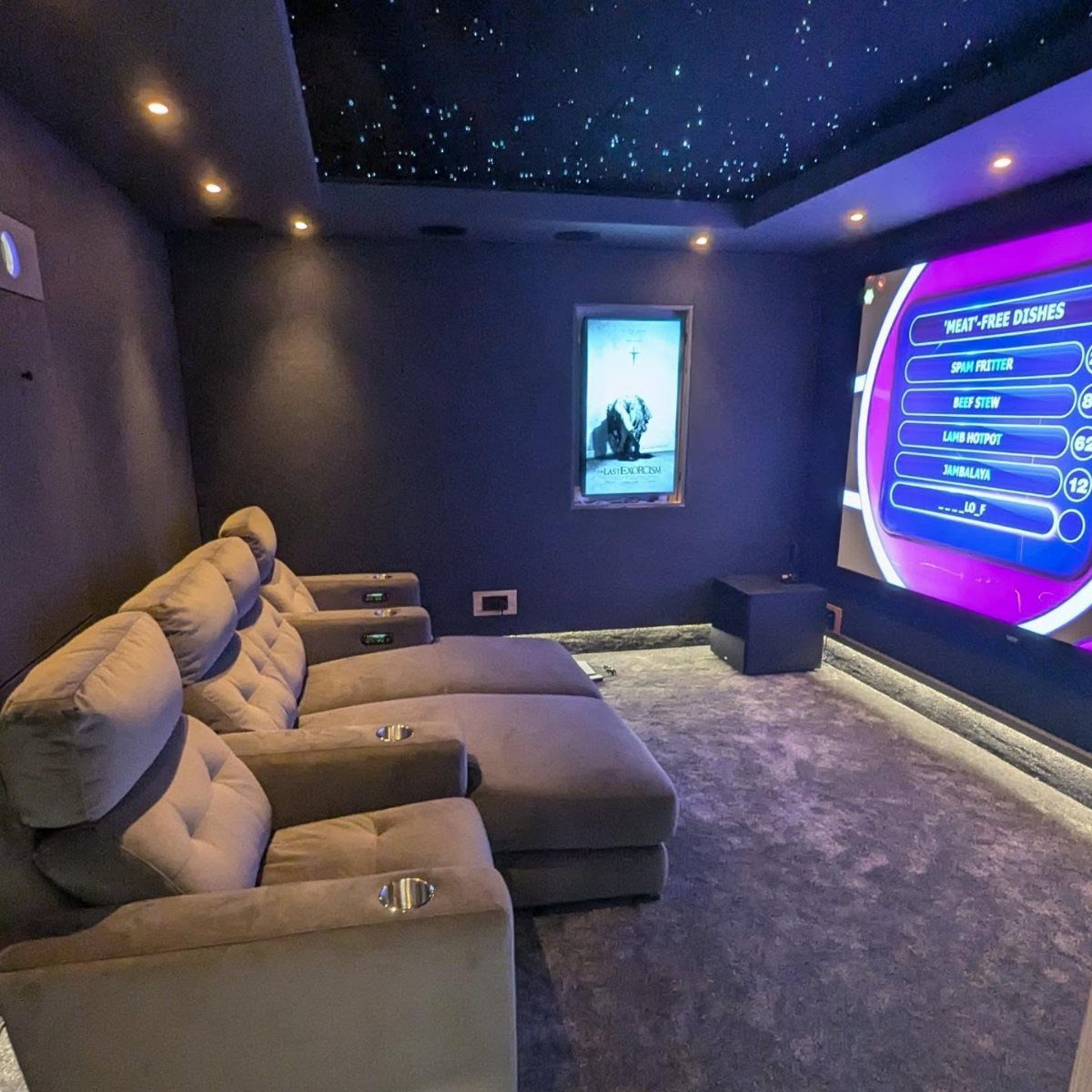
Cup holders sound like a small detail until a drink ends up on the carpet.
Built-in holders on oversized recliners keep a glass within reach and off the floor, and that is why I would look for them before any other feature.
Grey upholstery, as in this room, hides spills and wear better than lighter fabric in a dark space. Sit in the seat before buying and check that the footrest clears the row behind it.
4. Movie Posters and Memorabilia
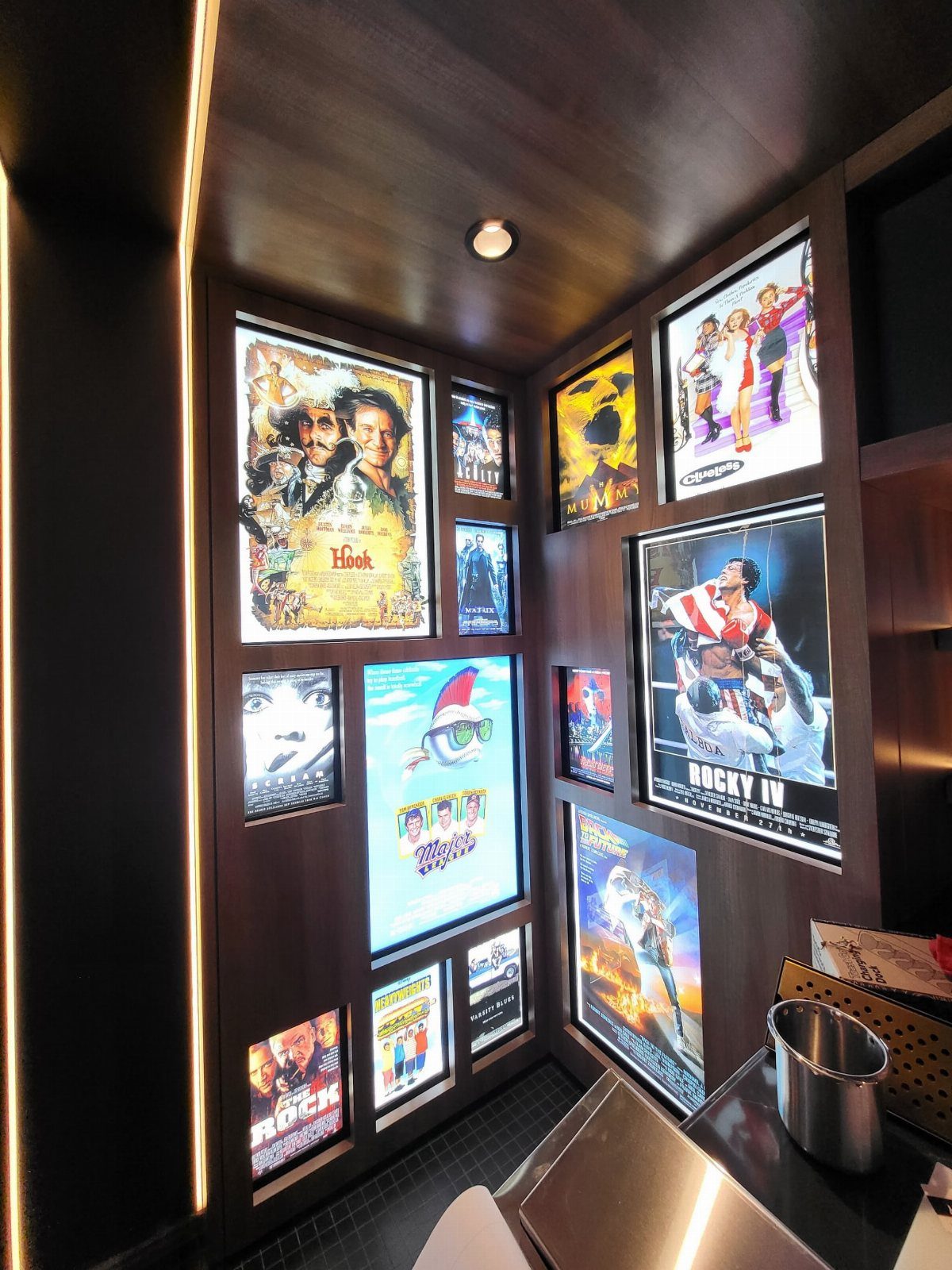
Posters lit from behind turn a bare wall into a lobby. Backlit frames glow in a dark room without adding glare on the screen, and they suit dark wood walls especially well.
Pick films you actually watch, not whatever looks collectible. Mix genres and eras like the mix on this wall, and keep frames matching so the variety reads as intentional.
A metal bucket on the counter doubles as a popcorn holder.
5. Screen and Projector
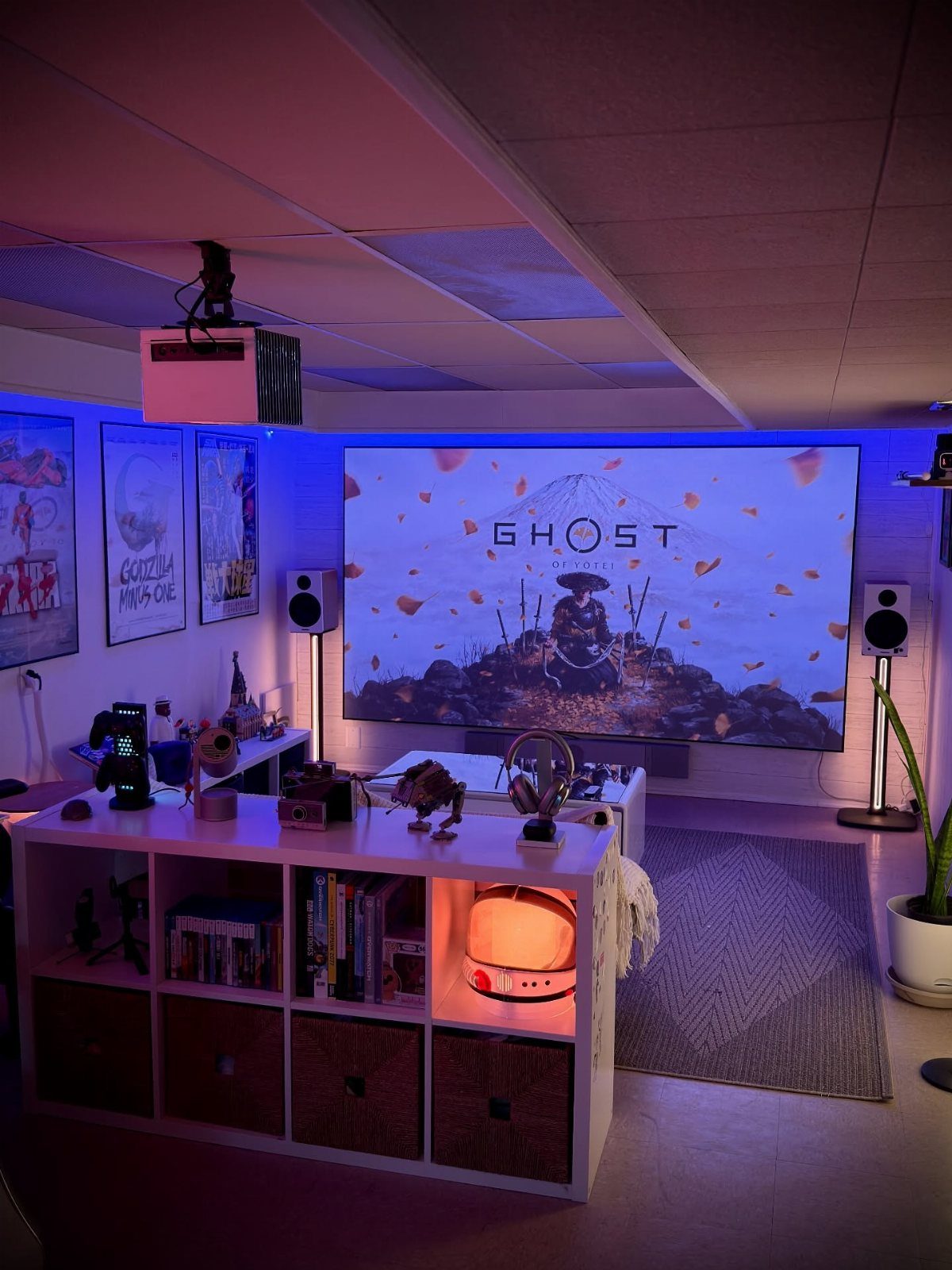
A big screen and a projector decide whether a basement feels like a theater or just a den with a TV.
A projector throws a far larger picture than most budgets can buy in a flat panel, which makes it my pick for a dedicated room.
Dark walls and a dark ceiling keep the image punchy. Mount the projector so nobody walks through the beam, and keep the lights low or dimmable while it runs.
6. Smart-Tech Theater
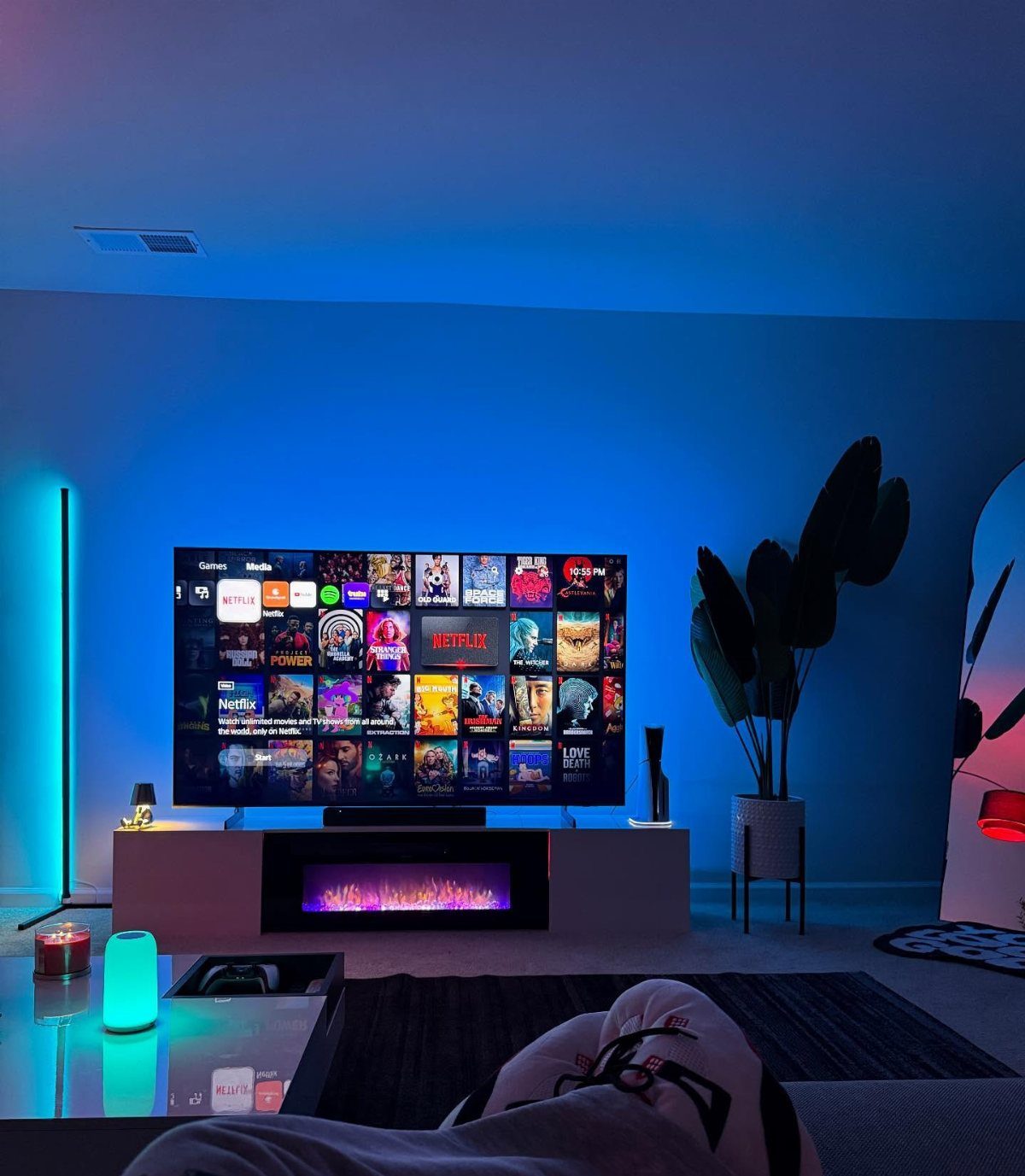
Streaming, voice control and app-driven lighting let one remote or phone run the whole room. Smart tech is about convenience: pause the show, dim the lights and switch inputs without leaving your seat.
Start small.
A streaming box or smart TV plus a few LED strips behind the screen, glowing blue, gets you most of the feel for little money. Add smart bulbs or a universal remote later, once you know what annoys you.
7. Vintage-Inspired Media Room

Bookshelves on every wall do the heavy lifting in a vintage media room. They soak up sound, hold a movie collection, and give framed portraits a place to hang, so the room reads as a private screening library.
I like that split: old-style furniture and decor, current gear.
Hang the frames in a tight cluster between shelves rather than spacing them out.
8. Darker Colors
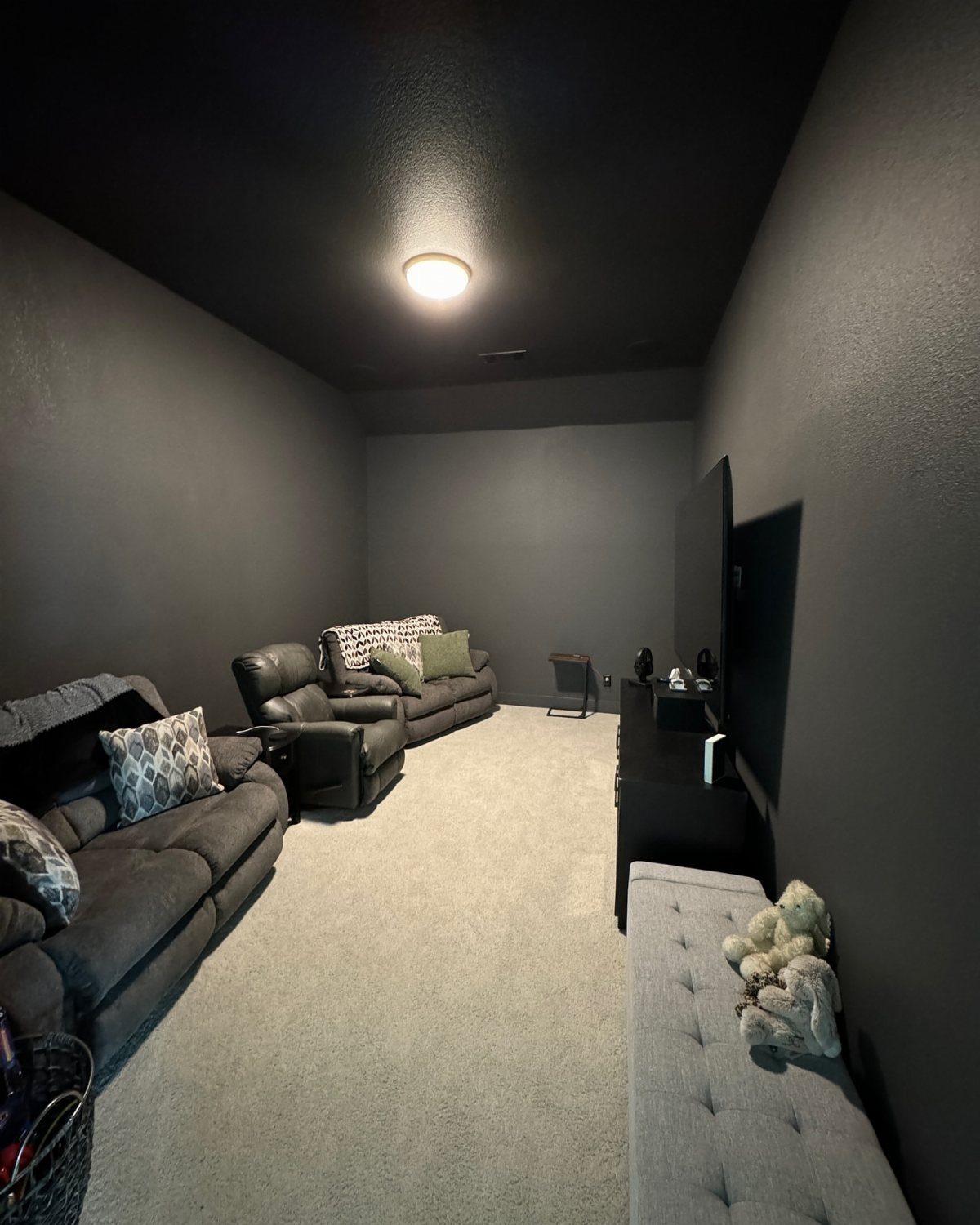
Paint the ceiling black and the walls dark grey, and a basement stops fighting its own lighting. Light bouncing off pale surfaces washes out a screen, while dark ones leave the picture as the brightest thing in the room.
Grey carpet and grey sofas keep the palette calm, so nothing pulls the eye from the TV. A matte finish is my choice, since gloss throws back reflections.
Add one warm accent, like a lamp or a throw, so the room feels lived in.
9. Modern Minimalist Theater

Minimal means fewer objects, not fewer features. Here a tan leather sofa on a riser faces a large white screen, a projector does the work, and the dark walls and grey carpet stay quiet around it.
I would spend on the screen and projector first, then keep everything else plain. Hide cables behind the sofa or along the baseboard so the clean lines survive.
A single sofa on a riser also makes the room easy to furnish on a modest budget.
10. Home Bar

A bar behind the seating turns a basement theater into a place guests stay all evening. A white countertop with stools gives people somewhere to sit between movies, and backlit shelves make the bottles part of the decor.
Keep the lighting on a dimmer so the glow doesn’t compete with the screen. Leather stools wipe clean, which matters near drinks.
11. Starry Night Ceiling
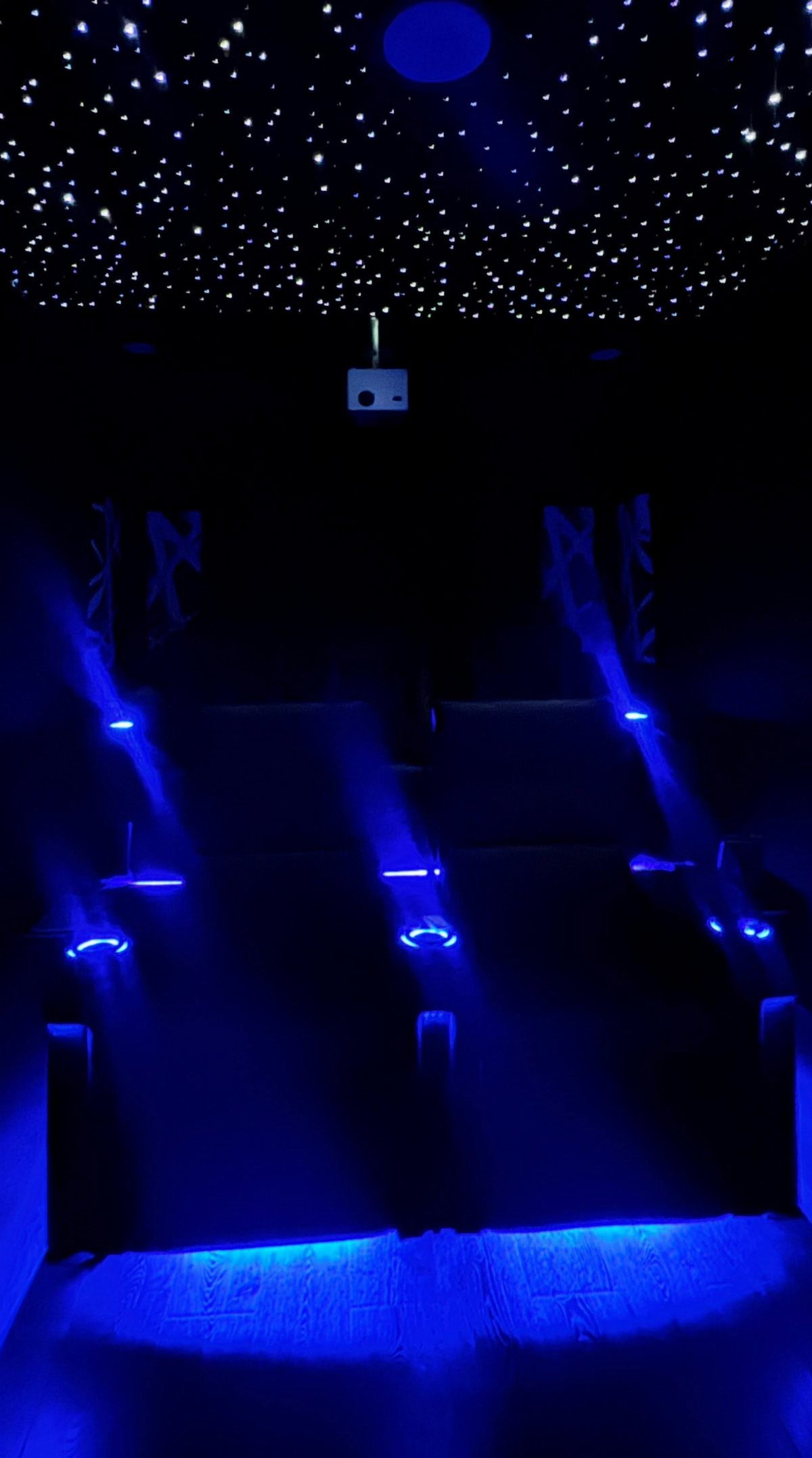
Fiber optic strands in the ceiling give a basement its own night sky, with the points of light twinkling over the seats.
Pair them with blue accent lighting along the walls and floor, as in this room, and the whole space glows without touching the screen.
A black ceiling makes the stars stand out, so this idea fits well with dark paint. Mount the projector on the ceiling, out of the way of the stars and the sightline.
Planning Your Basement Home Theater
Start with the room itself, before any gear. Measure length, width and ceiling height, and note where ducts, pipes, the furnace and support posts sit, because those decide where a screen wall and seating can go.
Basements already block sound, control light and hold a steady temperature, so you begin ahead of most rooms in the house.
Set the budget next, then split it across the screen or projector, sound, seating and wall treatment, so one item doesn’t eat everything.
If you use a projector, leave enough distance between it and the screen for a clean, undistorted picture.
Check the throw distance in the manual before you fix the seating. Curved screens exist if you want a more immersive picture, though a flat one works fine for most rooms.
Plan the sound and wiring before the walls close up. Running cable early is far cheaper than cutting drywall later.
Soundproofing Techniques
Sound leaves a basement through the thinnest spots, so treat the whole shell rather than one wall.
I pack insulation into the walls and lay soundproofing mat on the floor before anything else if I want the rest of the house quiet during a movie.
Doors are the usual weak point. Swap the hollow door for a solid core and seal the perimeter with weather stripping, which blocks more sound than most people expect.
For better sound inside the room, use sound-absorbing panels, bass traps and diffusers. Bass traps go in corners, where low frequencies pile up.
If you can spend more and the walls are open, double drywall with resilient channels cuts leakage further. Acoustic door seals are a small add-on that helps a lot.
On a weekend budget, do the door and the insulation first, then add panels as money allows.
Budgeting for Your Project
A basement theater can cost anywhere from $5,000 to past $100,000, depending on room size, gear quality, and whether you’re framing new walls or working with what’s already there.
At the low end, you are buying a screen or projector, basic sound and seating in a room that is already finished. At the high end, you are paying for framing, wiring, acoustic work and built-ins.
I would decide the ceiling for the whole project first, then rank what matters most to you. Picture and sound deliver the most for the money, while cabinetry and fancy finishes can wait.
Keep roughly 10% aside for surprises, since basements hide problems behind the walls.
Frequently Asked Questions
Do I need soundproofing for a basement home theater?
You’ll keep noise from traveling upstairs, and the room itself sounds better when reflections stay controlled.
Fill the stud bays with insulation, run a damping layer under the subfloor, and swap the hollow door for solid core with a perimeter seal.
Put your first dollars toward the door and wall cavities, then pick up acoustic panels and bass traps in later months.
Can I install a home theater in a basement with low ceilings?
Yes, but measure the ceiling height before you plan anything tall. A short-throw projector sits closer to the screen, and flush-mount fixtures keep the ceiling plane unbroken.
If you want raised seating, choose one solid riser rather than cramming in two tiers, since a low ceiling limits how high the back row can go.





