The span here runs from wall decals you hang in an afternoon to a basement holding pinball machines, a shuffleboard table, and a racing simulator, so the real question is how much floor you have.
A spare corner suits decals, LED strips, or a single desk setup, while a basement or garage can hold full arcade cabinets, a racing rig, and a lineup of pinball machines.
Whatever the room, leave walking space around every machine, because a pinball row only works if players have a walkway in front of each one.
1. Design Your Gaming Room with Game-Themed Decor
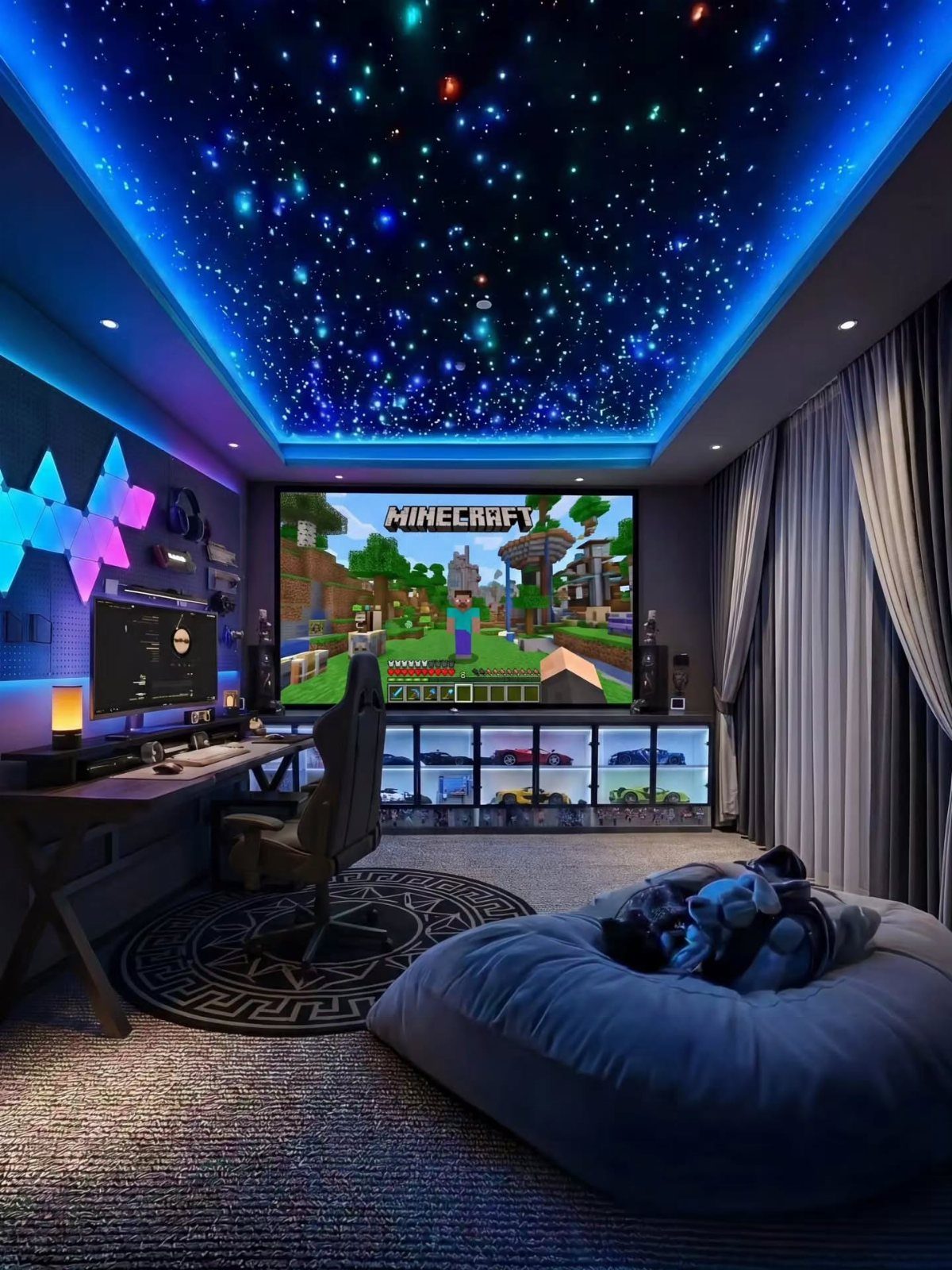
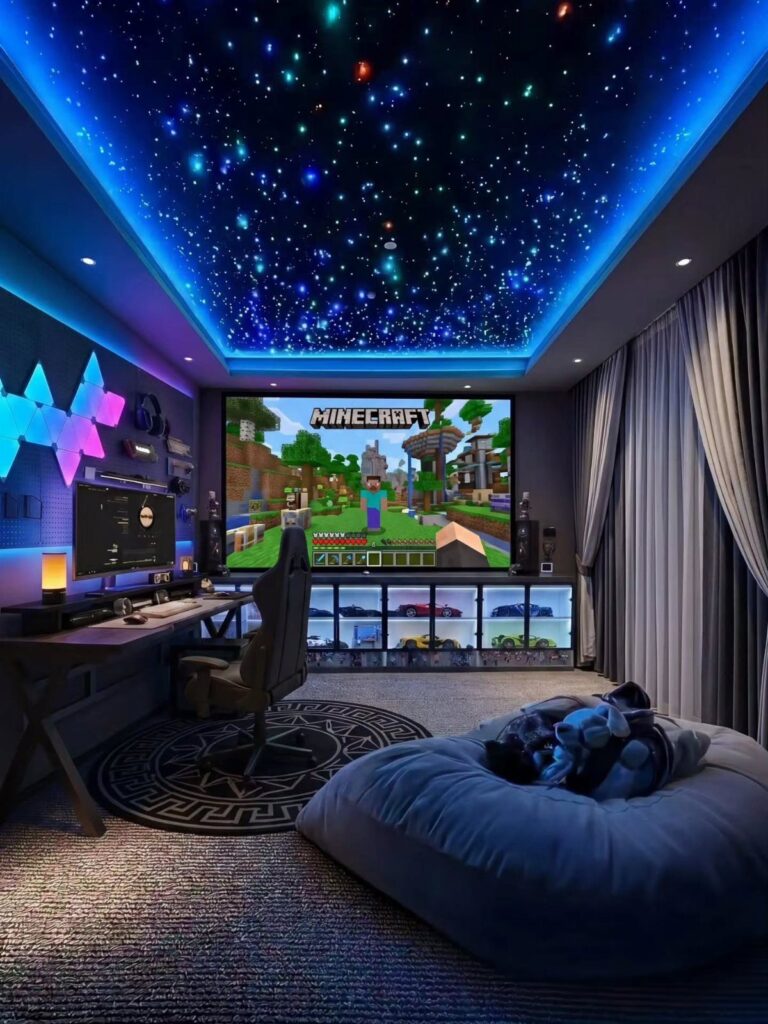
Pick one game and build the room around it instead of scattering logos everywhere. A blocky, pixel-style theme like Minecraft gives you an easy palette: a dark ceiling, cool blue light, and a big screen as the focal point.
A star-patterned ceiling does a lot of the work for little money, and a beanbag next to the desk gives friends a place to sit without buying a sofa.
Keep the theme to 2 or 3 elements so the room still feels like a room once the game is off.
2. Vintage Arcade Machines and Retro Decor
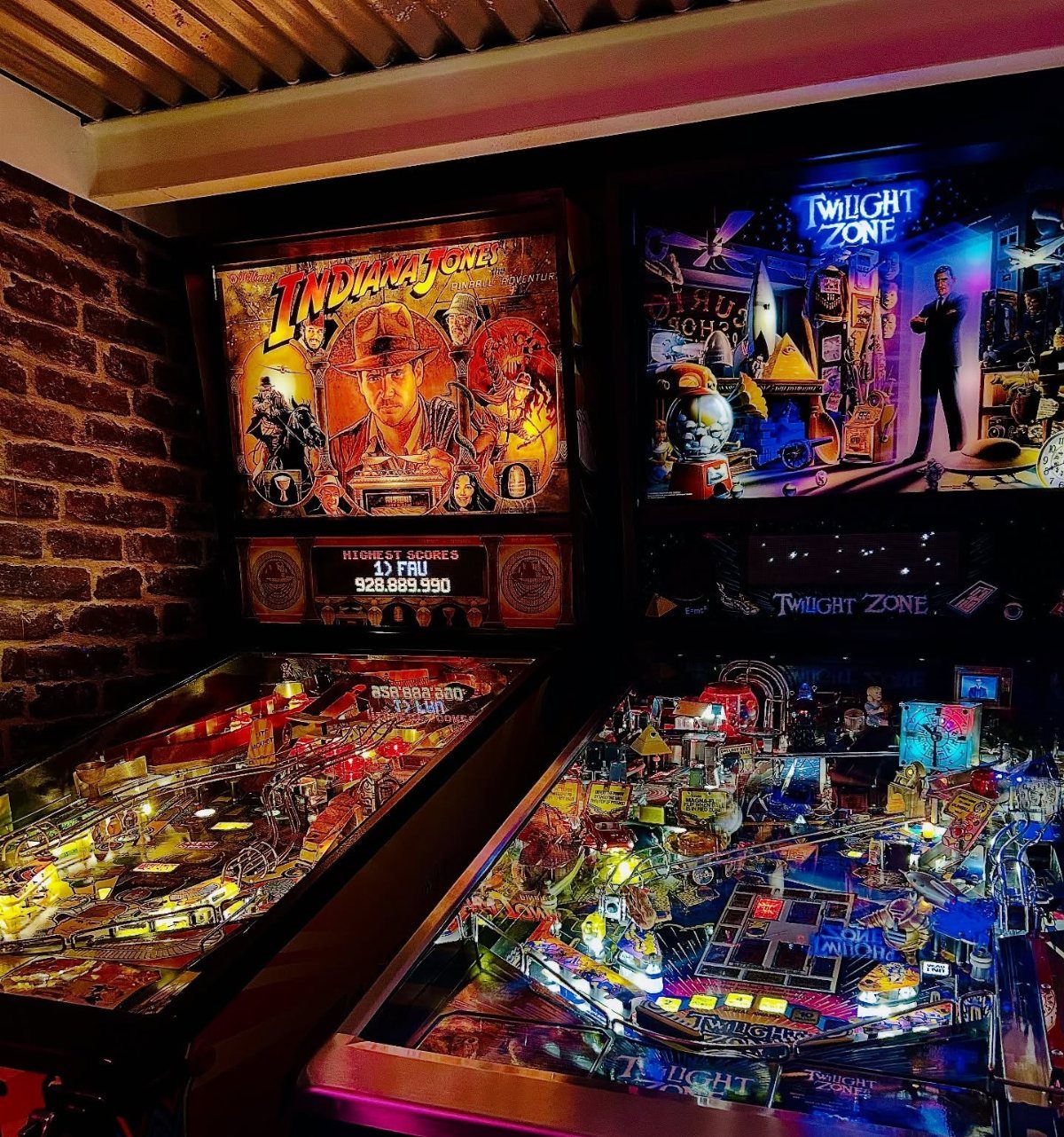
Pinball machines against a brick wall look right because the cabinet art does the decorating for you. 2 machines side by side, with their glowing displays on, need almost nothing else around them.
Leave the brick and the corrugated ceiling alone if you have them, since raw surfaces suit vintage cabinets better than fresh paint.
I’d choose machines with a theme you love over the cheapest ones, because you will stare at that artwork for years. Budget extra floor space for walking around each one.
3. Use Wall Art and Decals
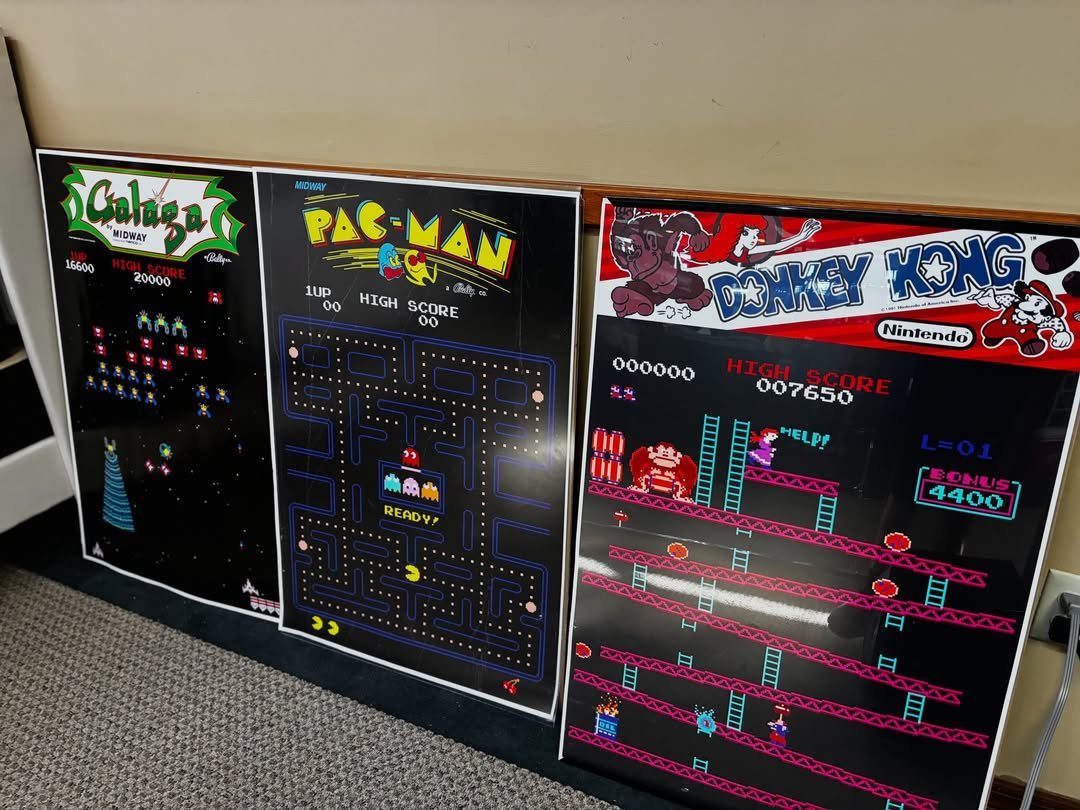
Large posters of classic arcade games are the cheapest way to make a bare wall read as an arcade. Galaga, Pac-Man, and Donkey Kong each bring bold color and a shape people recognize from across the room.
Leaning them against the wall works while you decide on a layout, and it suits renters who can’t drill.
When you’re sure, frame them in matching frames so they look deliberate. Decals are the other route: they peel off, which makes them a safer bet than paint in a rental.
4. Customizable LED Strips
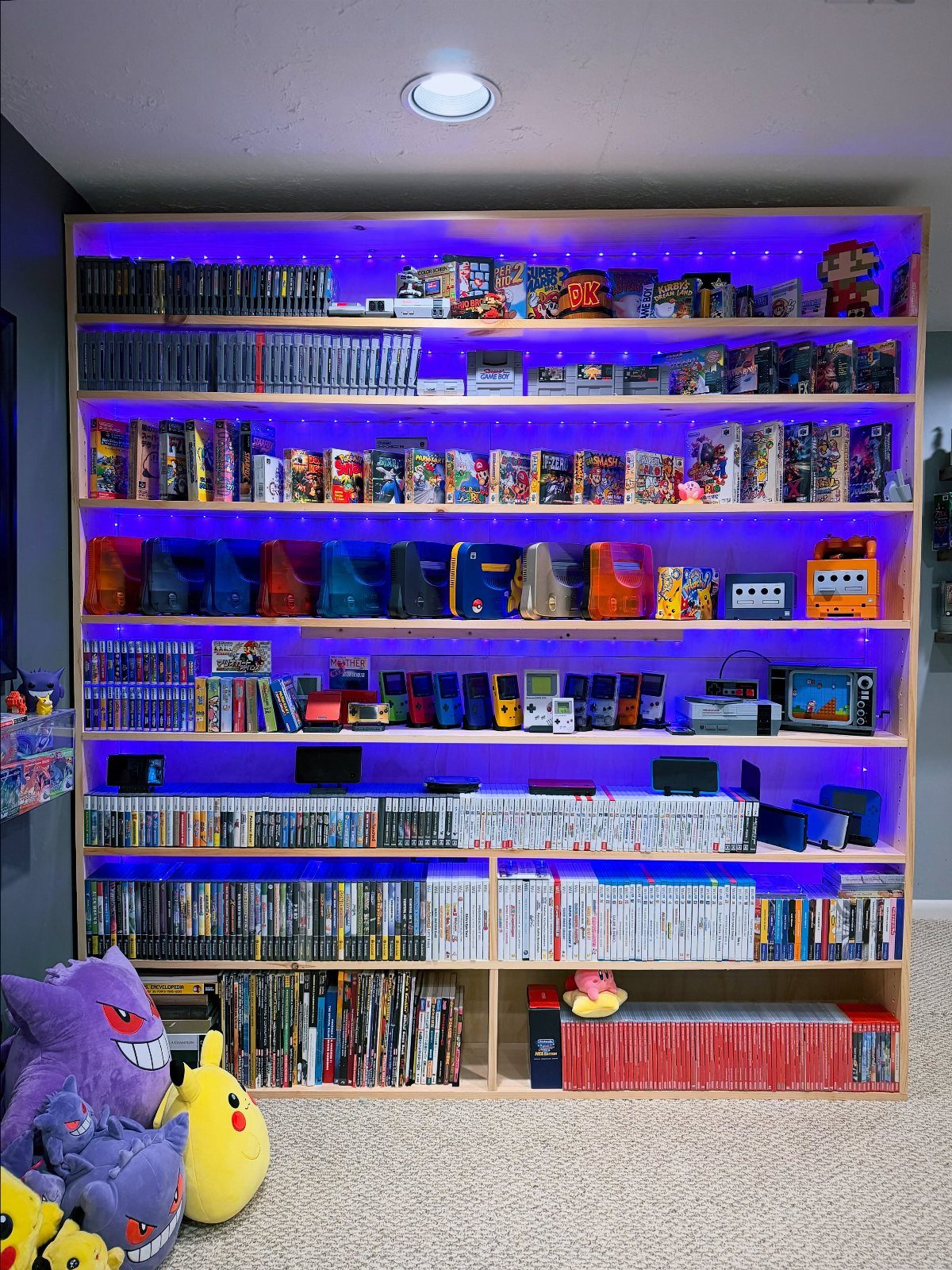
Purple LED strips run along the edges of a wooden shelving unit turn a pile of games into a display.
The light washes over the cases and collectibles from the inside, so the shelves glow even with the room lights off.
Pick strips with color control, so you can match the glow to whatever you’re playing or switch to a calmer tone at night.
Stick them to the front inner edge of each shelf, where the light is hidden but still falls on the games. This is a small-dollar upgrade that fits in an afternoon.
5. Gaming Desk
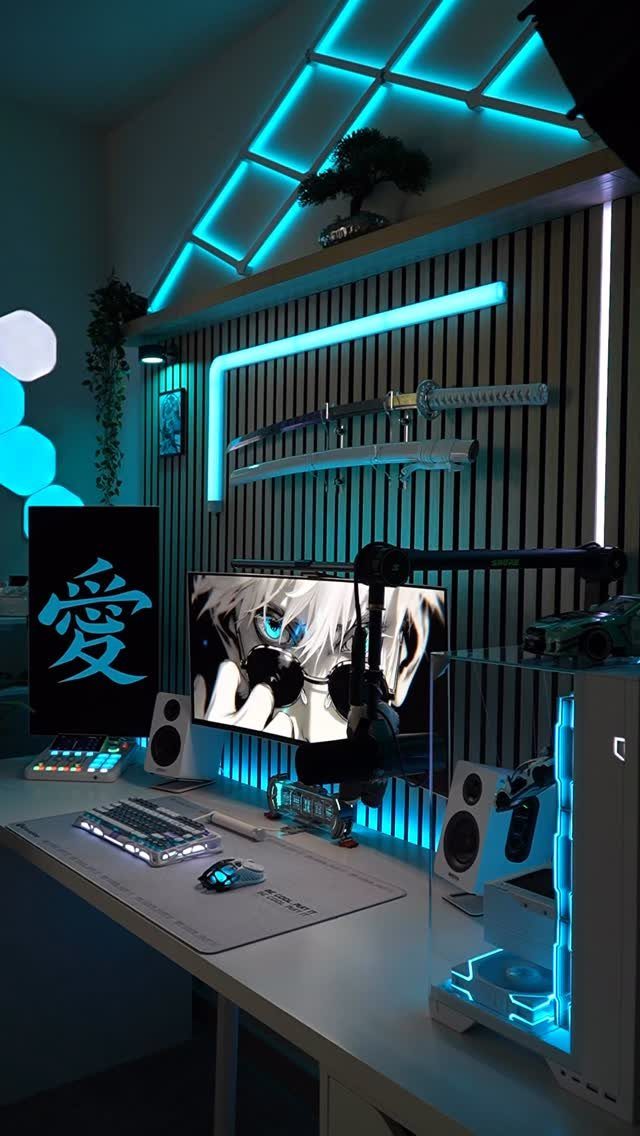
A desk that holds dual monitors, a PC tower, a keyboard, and a mouse needs depth and width before it needs style. Measure your monitors first, then buy the desk that gives them room without crowding your arms.
Blue RGB lighting behind the screens suits a dark room and cuts glare on the wall.
I like a slatted wall panel behind the desk, since it adds texture and gives you something to hang gear on, like the katana mounted there. Keep cables bundled so the desk stays clean.
6. Build a LEGO-Themed Gaming Showcase
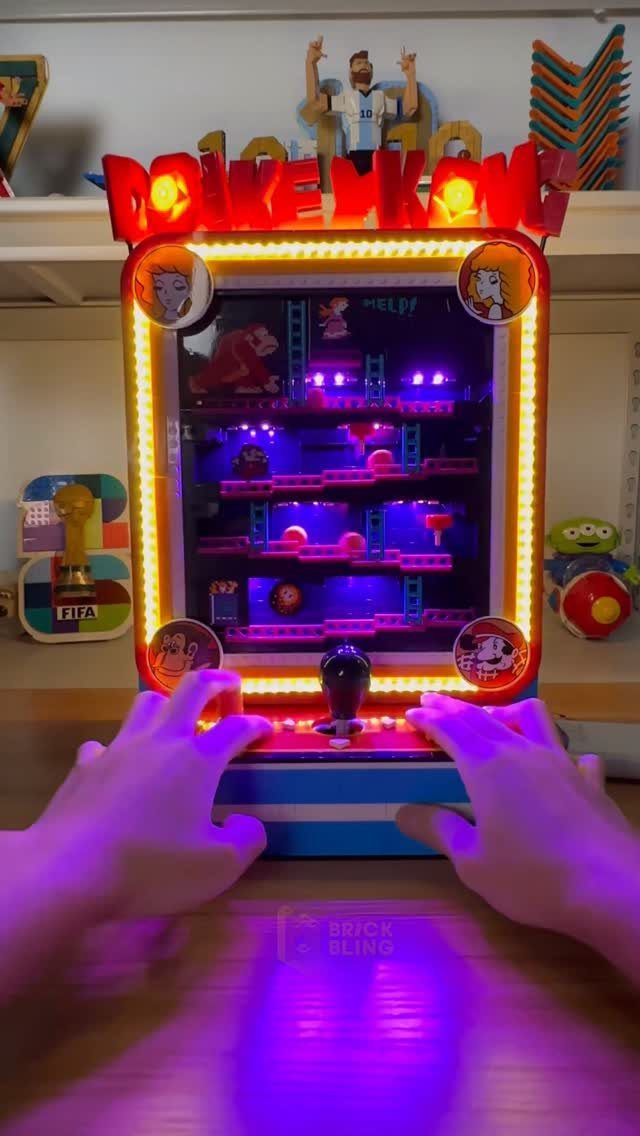
A LEGO arcade machine with working lights makes a display piece that still feels playful, especially if you pick a classic game graphic like Donkey Kong for the front panel.
You can drop it on a shelf next to other collectibles or give it a small table of its own, and either way the setup takes minutes instead of carpentry.
Choose one centerpiece set and group smaller items around it.
Add lighting inside or above it, because the glow is what makes bricks look like an arcade cabinet. Keep it within reach, since this one is made to be touched.
7. Cozy Gaming Nook
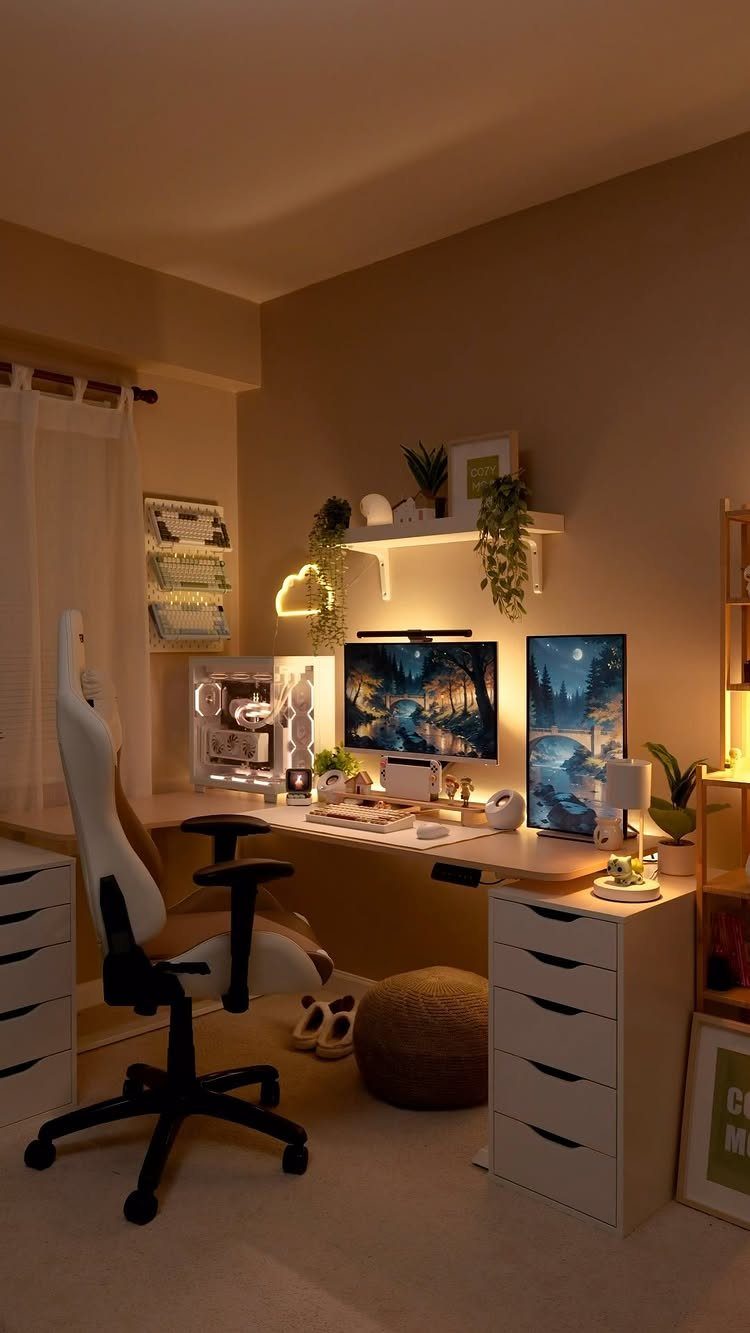
A nook works when the desk, the chair, and the lighting all stay in one warm family. White desk, wood tones, and a couple of plants keep dual monitors from making a bedroom feel like an office.
Choose warm bulbs over cool ones, and set a small ottoman nearby so a friend can sit in. Skip anything that crowds the desk surface; the plants can live on a shelf or the floor.
8. Designer Ping Pong Table
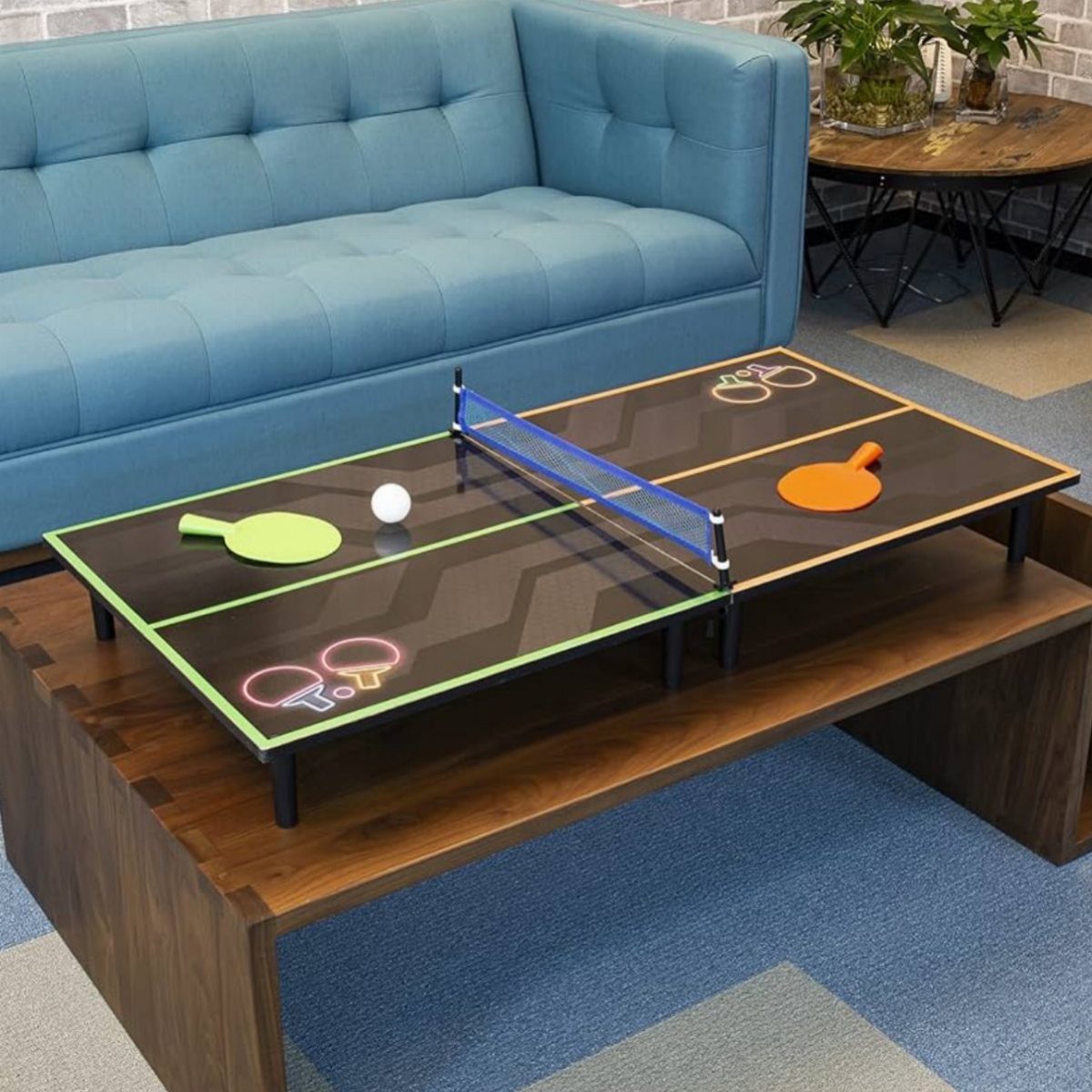
A miniature ping pong table sitting on a coffee table is the smallest way I know to bring a game into a living room.
Neon accents and a decorative surface make it read as decor first and a game second, which suits a blue sofa and wood tones.
Pick one with a finish you’d be happy to look at when nobody is playing. Since it rests on furniture, check that the coffee table is steady before the first rally.
9. Multi-Table Rec Room Setup
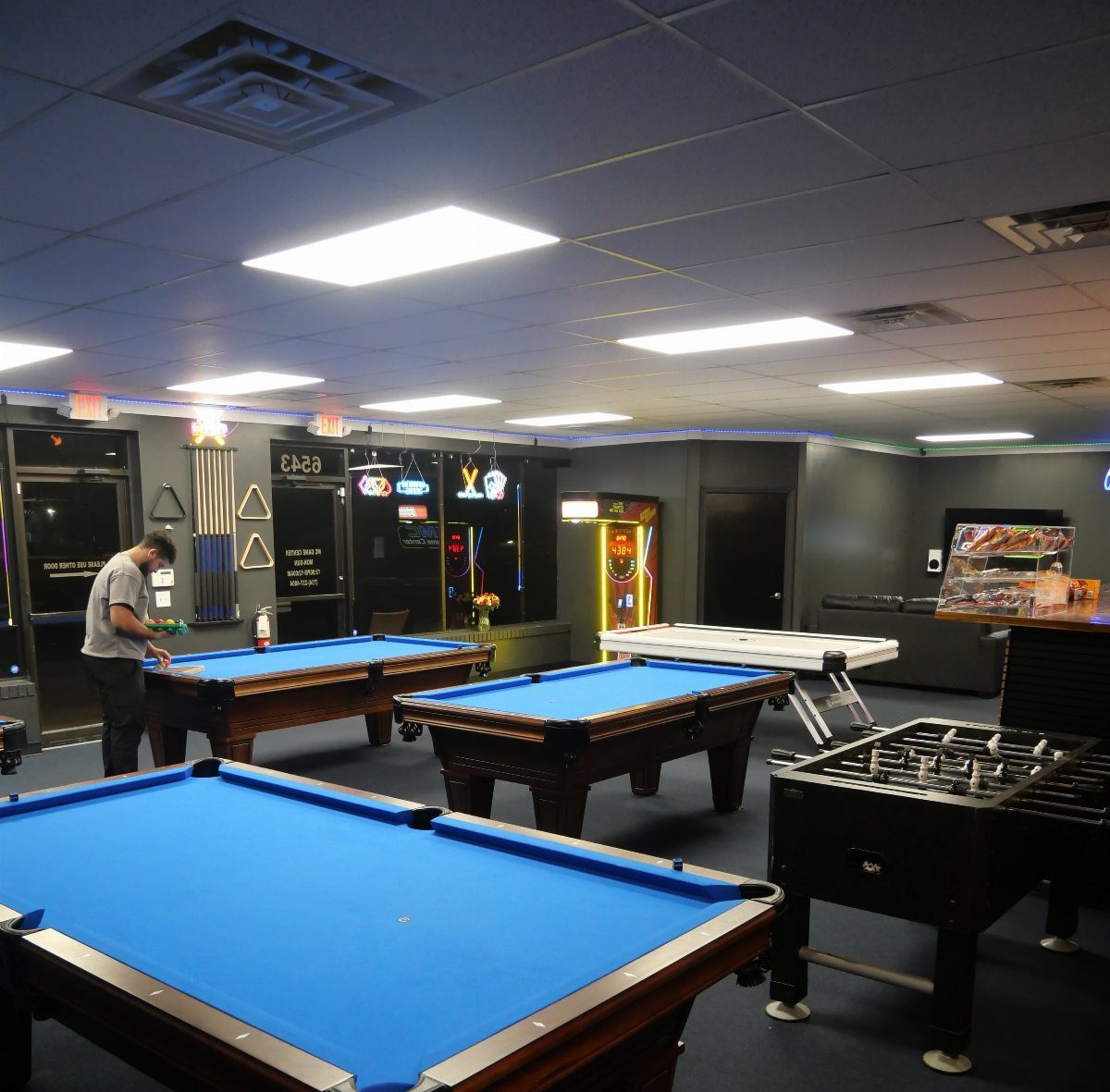
Three pool tables, foosball, and air hockey in one room only work if people can move between them. Leave walking and cue space around every table, and push the arcade cabinets to the back wall, where they act as background.
Plain grey walls keep the games as the color, and bright overhead lights turn it into a hall, so I’d add dimmer fixtures at home. This is a big-room idea; in a smaller one, pick two tables and stop.
Especially important in the era of ever-distracting smartphones, a well-appointed game room can translate into a successful night of hosting.
10. Arcade Cabinet Stair Risers
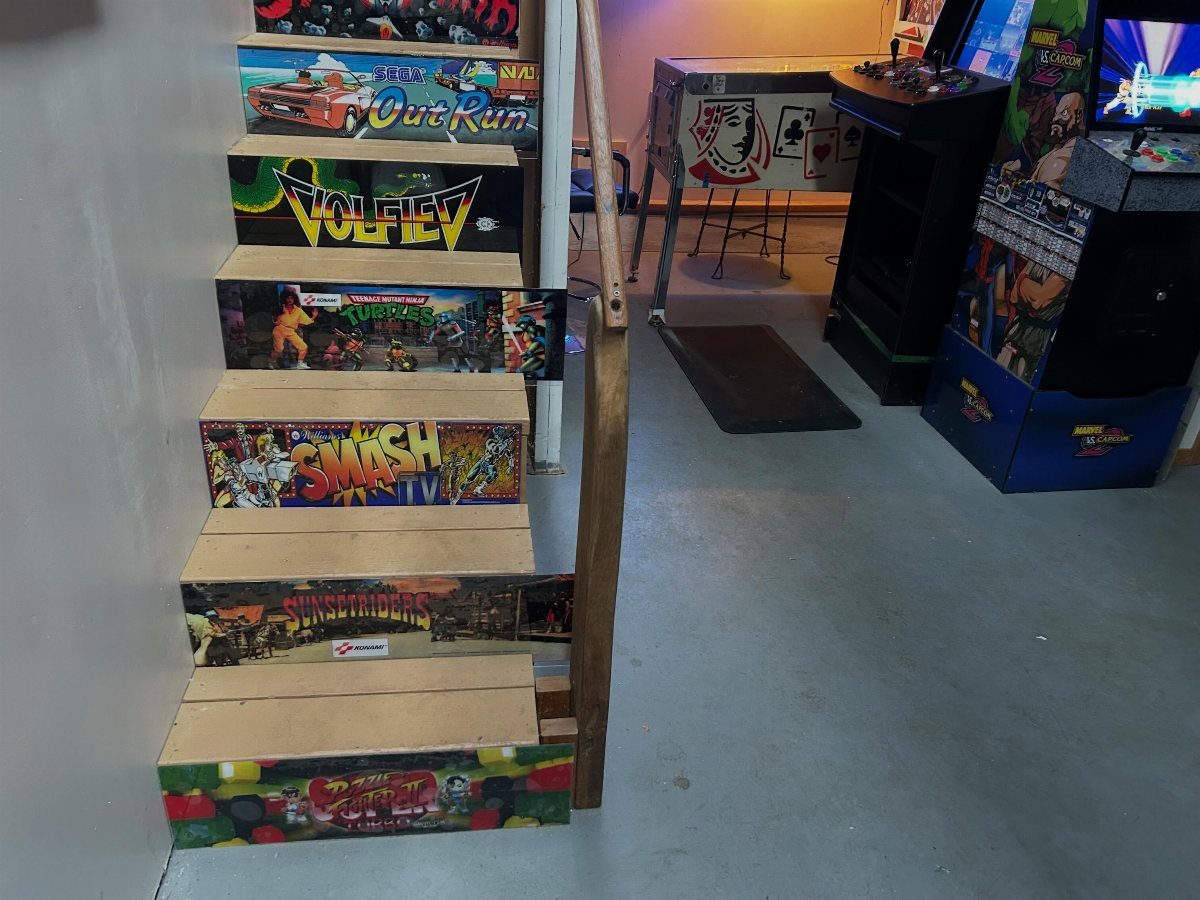
Stair risers are free canvas that most people ignore. Printing arcade graphics, like marquee art from OutRun or Smash TV, on each riser turns the walk down into the first part of the game room.
Use removable vinyl or printed panels cut to the riser height so you can swap them.
Wood treads left plain keep it from getting busy. Measure every riser, since they can vary slightly in older houses.
11. Garage Arcade Game Room
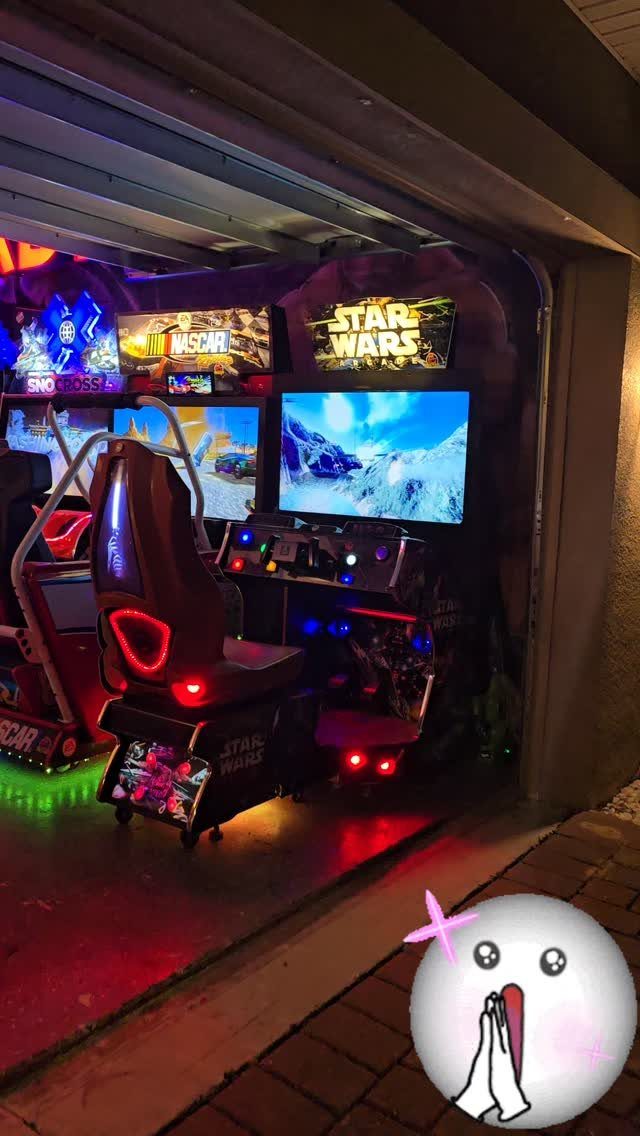
A garage turns into an arcade best when it stays dark. Neon lighting does the mood work, and racing seats facing screens fill the middle while cabinets line the walls.
I’d group the sim seats at one end and the cabinets at the other, so players don’t bump each other.
Themed cabinets, like a Star Wars machine, give the room a focal point. Keep power cords tidy, because a lot of screens means a lot of plugs.
12. Basement Arcade and Rec Room
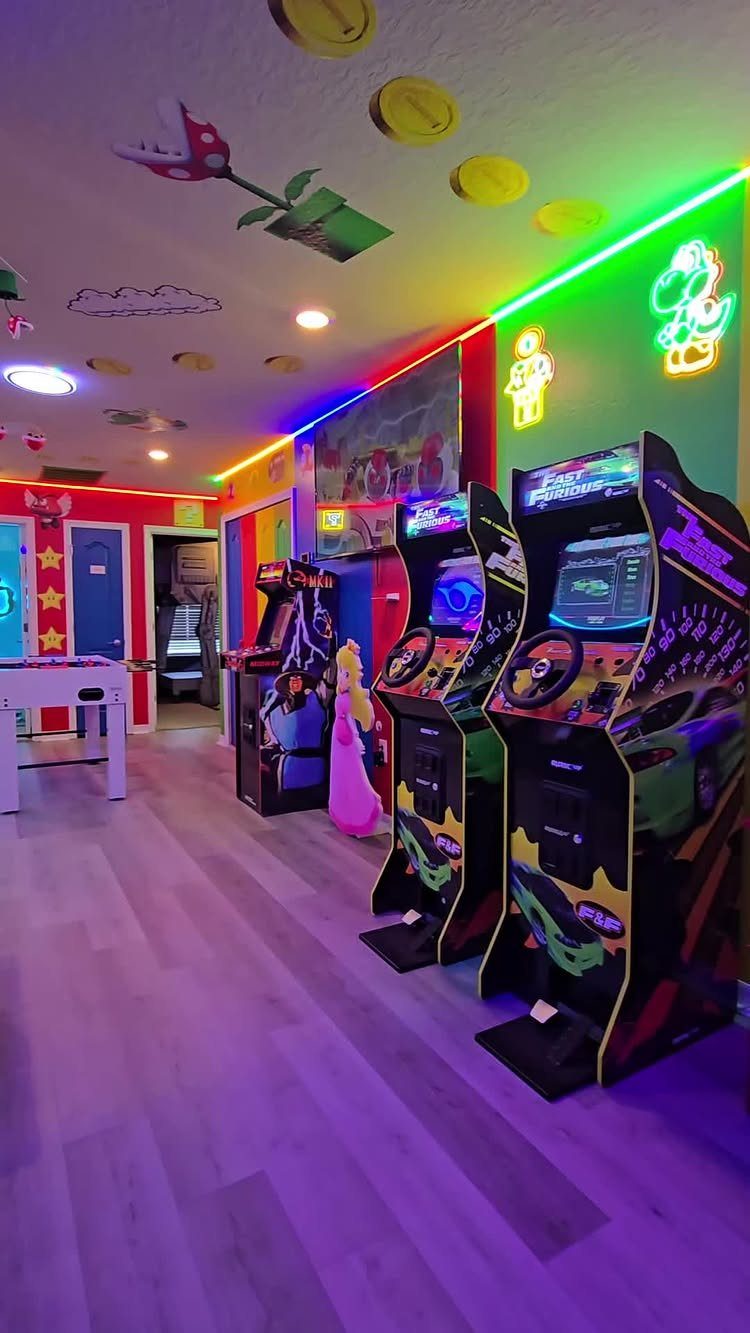
A basement suits an arcade because it’s already dim, so neon accents show up at full strength.
Racing cabinets and a pool table can share the room if the pool table gets the clear floor and the cabinets sit along a wall.
Pick one theme for the decor, and let the neon stay a single color family so the room doesn’t turn chaotic.
13. Illuminated Cloud Ceiling Setup
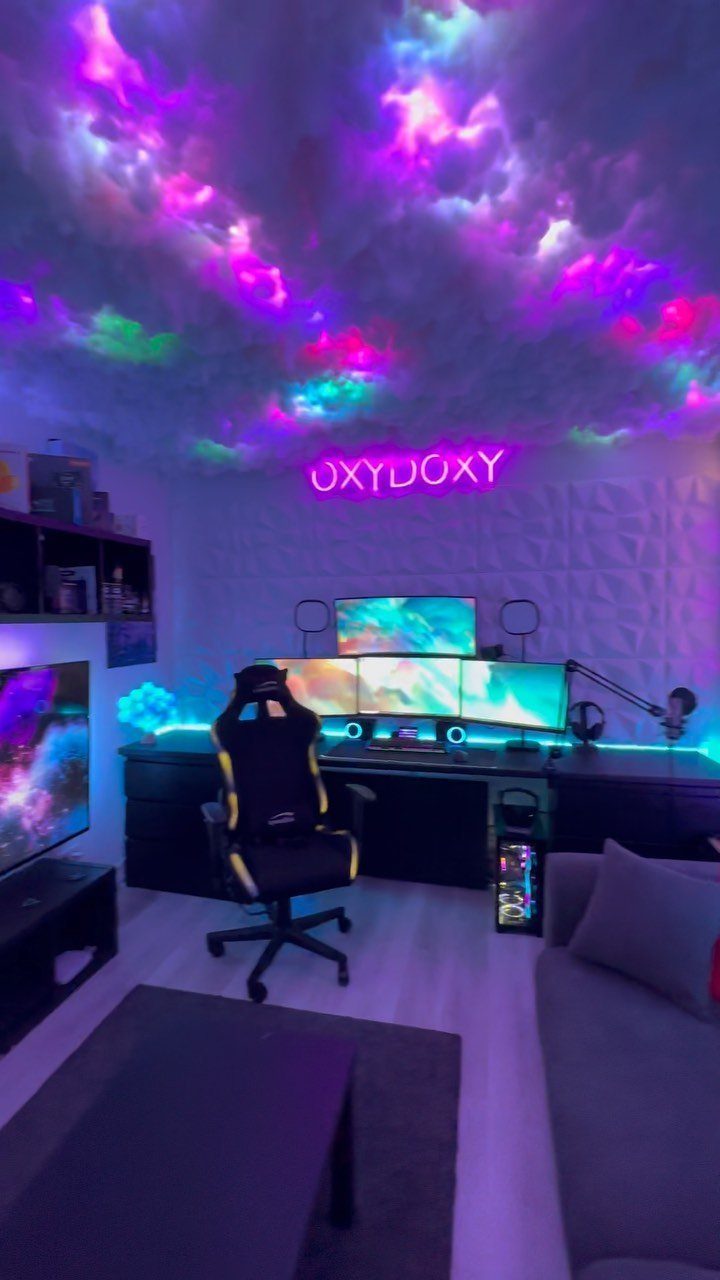
A cloud ceiling puts the light overhead, so the desk below can stay dark and let the screens do their job.
Purple and blue LEDs behind soft cloud texture give the ceiling a glow that suits a triple-monitor setup, and a neon sign on the wall adds a third light source without taking desk space.
Stay with 2 colors, as the room does. Put the lights where the cloud texture hides them, so you see the glow and never the strip.
14. Industrial Foosball Game Table
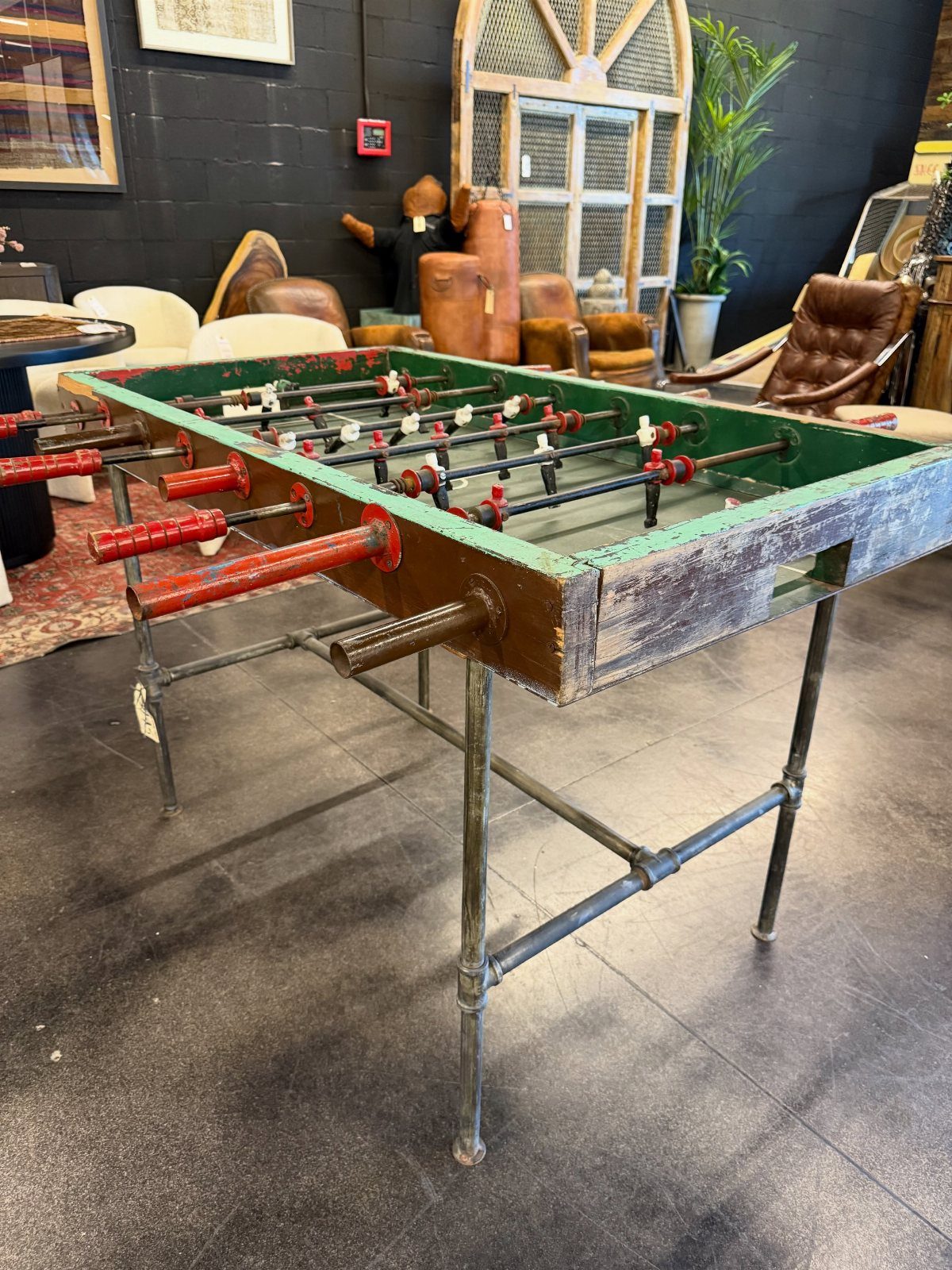
Foosball looks different when the base is metal pipe: the table reads as furniture instead of a toy.
The green playing surface and red handles stay bright against dark metal, so the table can stand alone in a room with leather chairs and a plant.
Give it a clear wall or a large screen behind it, as here, so the table is the focal point. I’d choose this over a bright plastic model if the room doubles as a lounge.
15. Dedicated Racing Simulator Rig
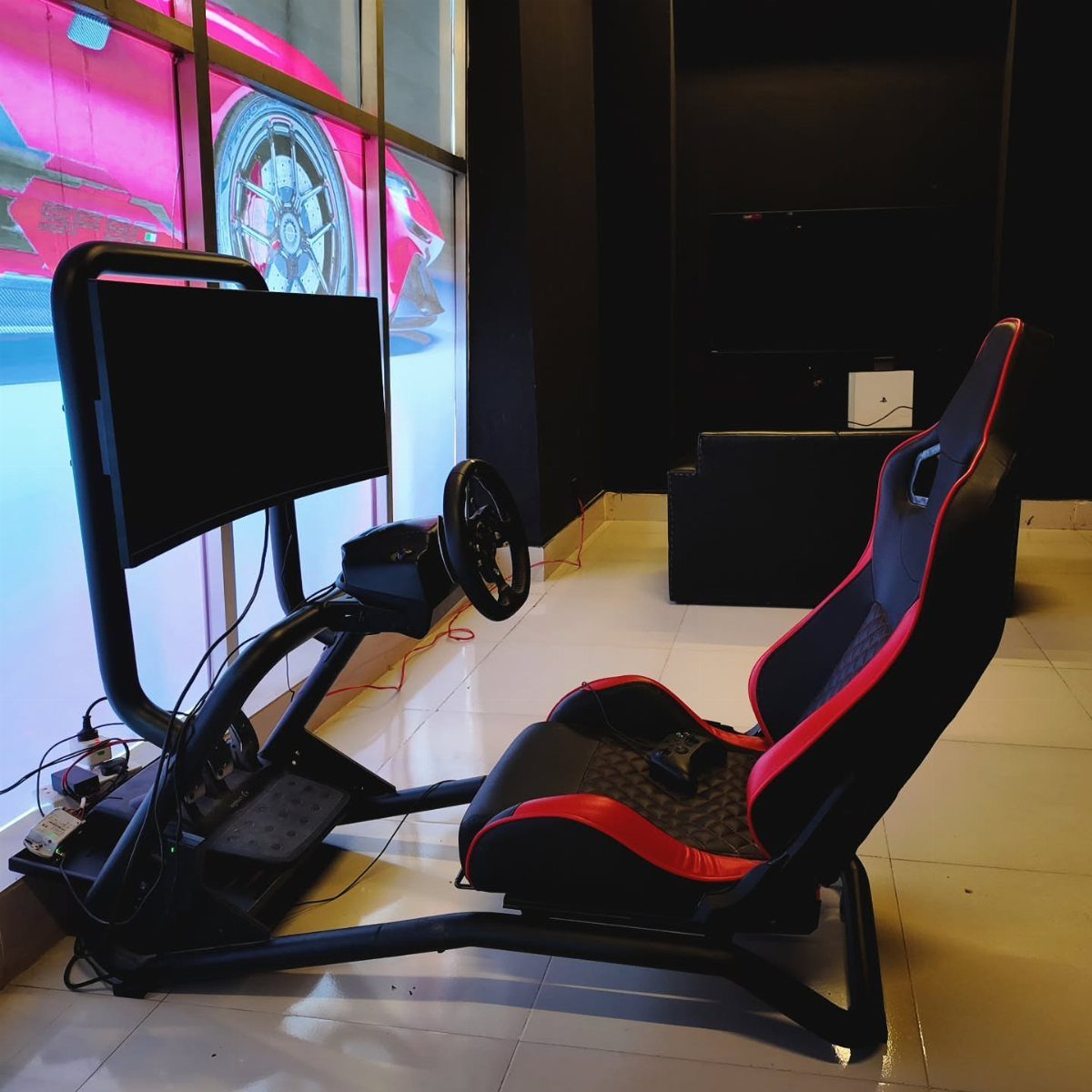
A racing rig needs three things bolted to one frame: a bucket seat, a wheel, and pedals, with the monitor placed right at eye level beyond the wheel. Fixed together, nothing slides when you brake hard.
Sit in the seat before you commit, and set the pedals so your knees stay slightly bent.
A car-themed wall graphic behind the rig finishes the cockpit feel for almost no money. Leave room on both sides to climb in.
16. Pinball Machine Lineup
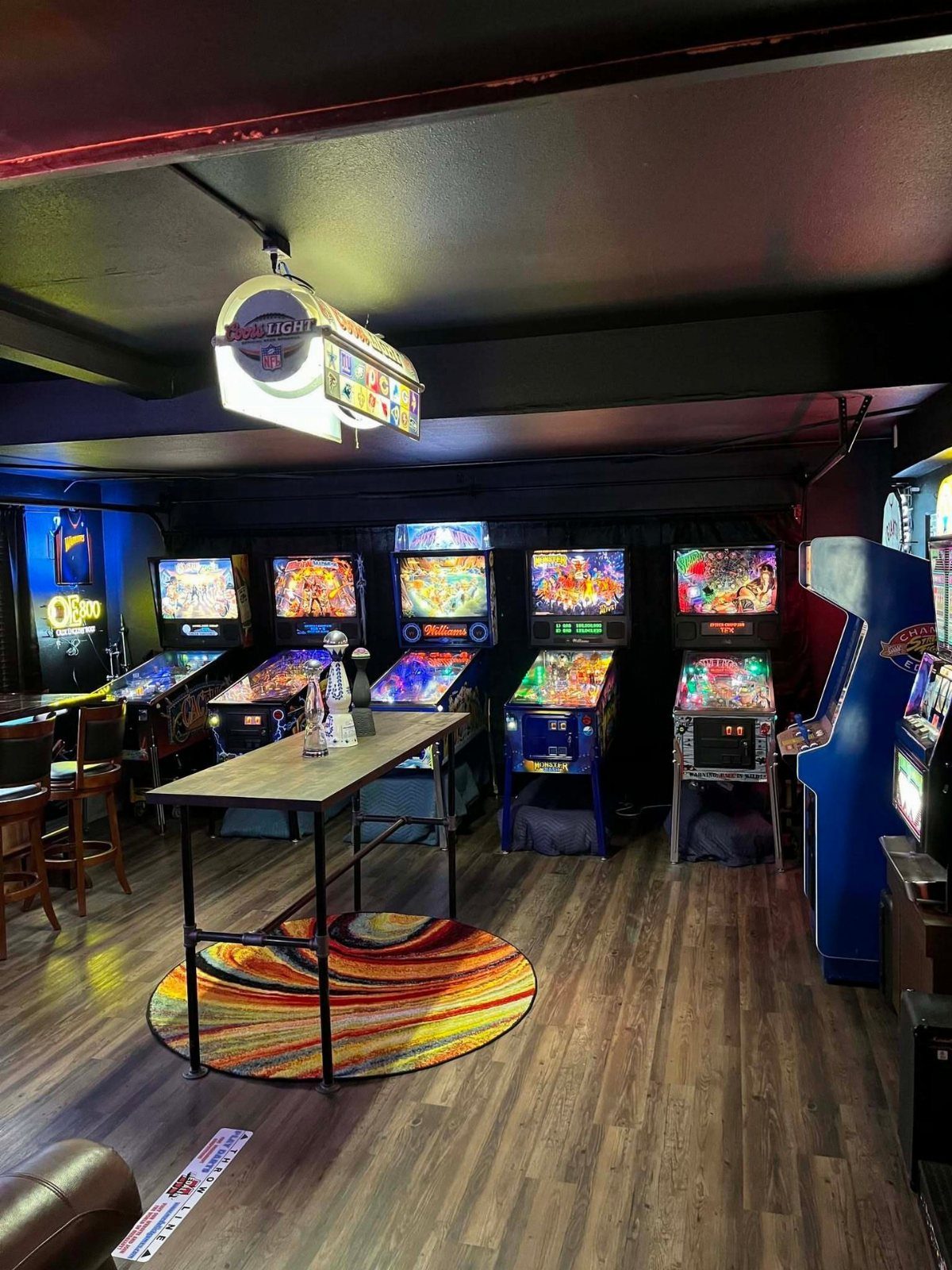
A row of pinball machines makes a better arcade than a scattered mix of games, because the colorful cabinet art lines up like a gallery wall.
Keep the room dark and let overhead lighting, such as a beer-sign fixture, add a warm glow on top of the machines’ own displays.
A colorful rug under the row keeps the space from feeling like a warehouse.
Leave a walkway in front of each machine, since players stand and shuffle side to side. A table at the end gives watchers a place to sit.
17. Wood-Paneled Game Room with Shuffleboard
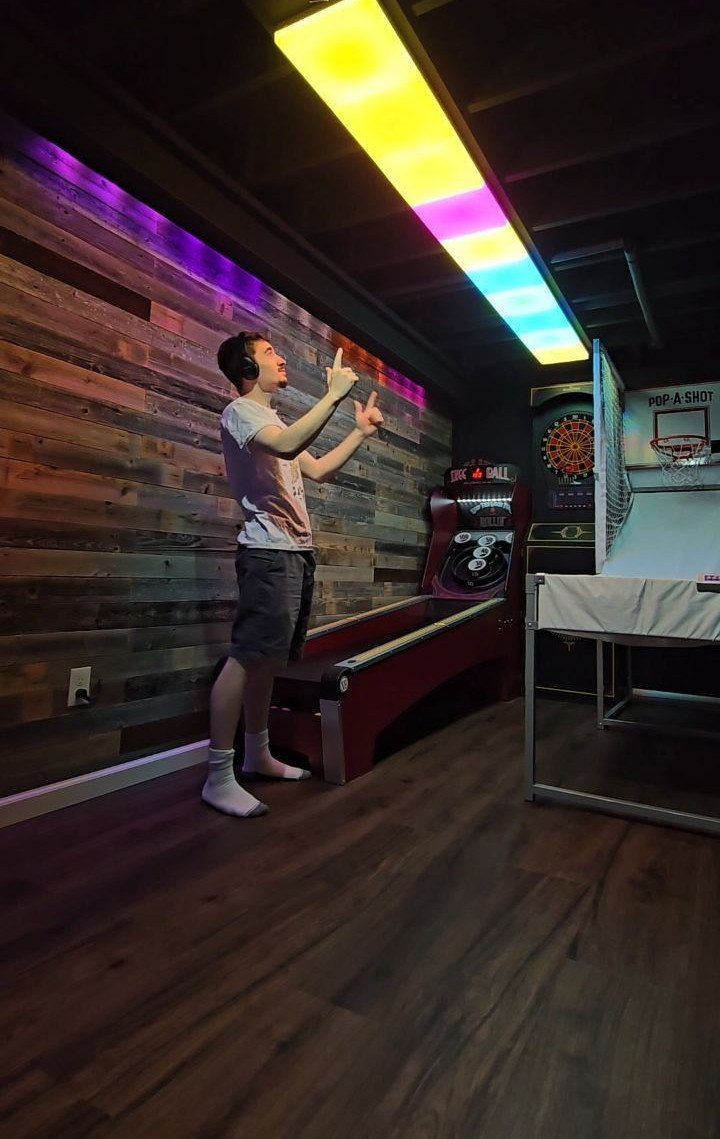
Wood paneling is the right backdrop for a shuffleboard table, since the long, warm planks echo the playing surface. Add a Pop-A-Shot hoop and a dartboard and the room covers three games along one wall.
If the room already has wood paneling, leave it alone; painting it would erase its best feature. Shuffleboard tables run long, so measure the room’s length first, and leave space at both ends for players.
Must-haves in a Gaming Room
Start with the desk, because everything else in the room is sized around it.
Measure from the floor to your elbow while seated; the desktop should sit at that height, usually 28–30 inches for most adults.
A desk that’s off by an inch or two will make itself known in your shoulders and wrists within the hour, so pay attention to adjustable height, a keyboard tray, and monitor placement.
Seating comes next. Of everything in the room, the chair deserves the most attention over decor, and I’d sit in it for a few minutes in a store first if that’s possible.
Storage and lighting round out the basics. Give controllers, headsets, and games a home so they don’t pile onto the desk.
For lighting, warm ambient light, wall art, and a few plants make a room you’ll want to stay in, and they soften a setup that is otherwise all screens.
Games to Include in an Arcade
Pinball, air hockey, and racing games make a good mix because each one plays differently.
Pinball is a solo game you can walk up to, air hockey is built for two, and a racing game suits anyone who wants to sit down and drive.
A real arcade cabinet or a pinball machine gets more reactions than anything else you can put in the room, if the budget stretches that far.
Neon signs and 8-bit wall art help carry the throwback feel when your budget covers only one machine.
Air hockey is also the easiest of the three to learn, so it’s a safe pick if guests of all ages will use the room. Start with one or two games you will really play, and add more later.
Building Your Own Arcade
Building your own arcade works best in layers. Start with one vintage machine or pinball unit as the anchor, then add themed decor around it, like neon signs and 8-bit wall art, to give the room a throwback feel.
DIY projects fit the gaps between big purchases. Setting up a gaming station, hanging a wall of art, or wiring a simple lighting scheme each fits in a weekend, and each runs well under the price of a second machine.
If you are planning a full room, think about the structure first. Questions like how to frame a door or where the gaming station goes are easier to settle before the decor arrives.
Pick a theme early, and let each new piece either support it or stay out.





