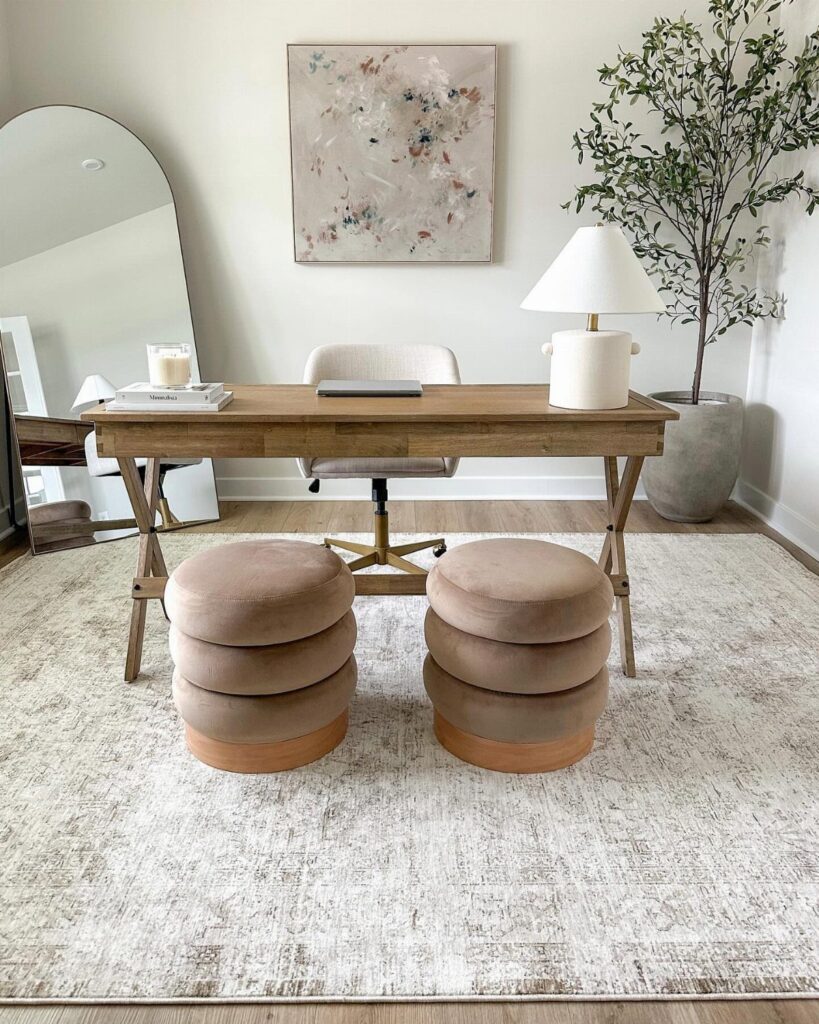
The ideas below run from a layered mix of textures and a single area rug to bold patterns, plus a grey carpeted lounge where one room holds a desk and a sofa.
Whether the room has to do a second job decides most of it: a rug can mark out a workspace in a shared room, while a stand-alone office puts the fiber and pile first.
For anyone with a rolling chair and a daily coffee, nylon in a low pile is the combination I’d start from.
1. Different Textures
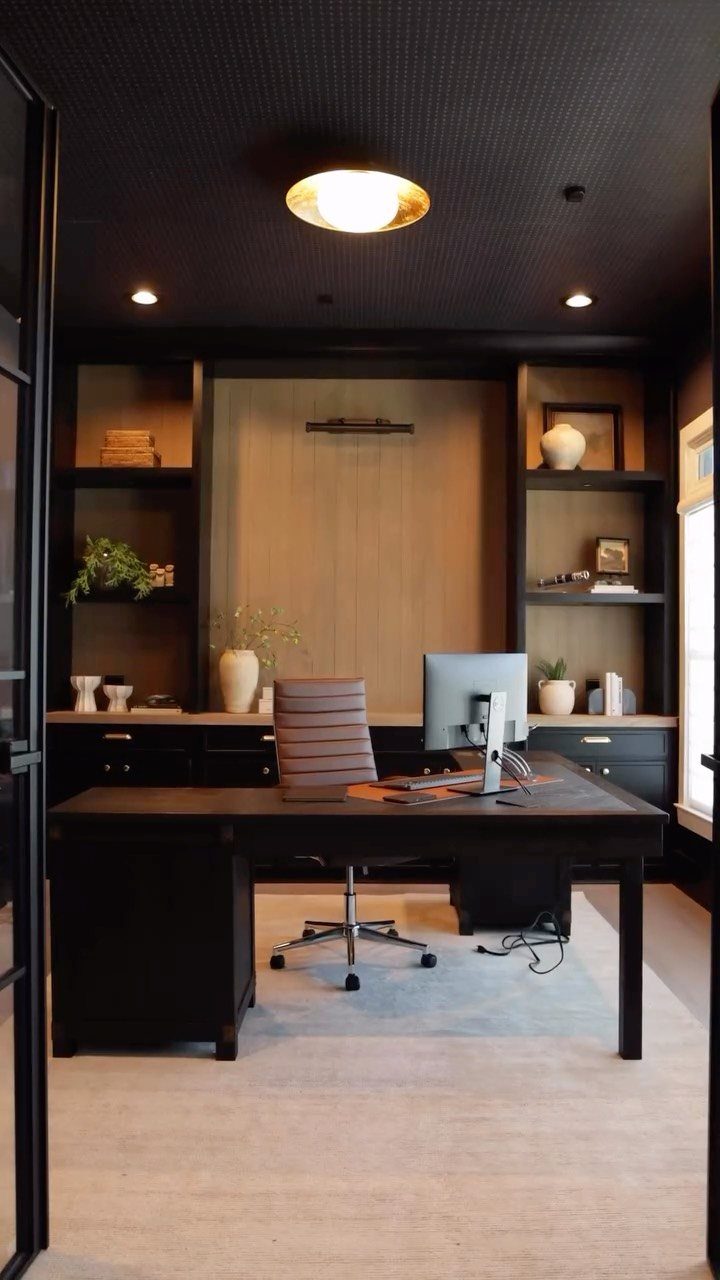
A light carpet against dark wood walls and a dark ceiling does a lot of work by itself, and that’s why I’d start with texture before replacing anything.
The desk and leather chair stay, but the floor texture changes what the whole room feels like.
Pick a carpet with visible surface variation, such as a loop or a tufted weave, so it reads differently from the smooth leather and the paneling. Stay light if the walls are dark, or the room gets heavy fast.
2. Stylish Area Rugs
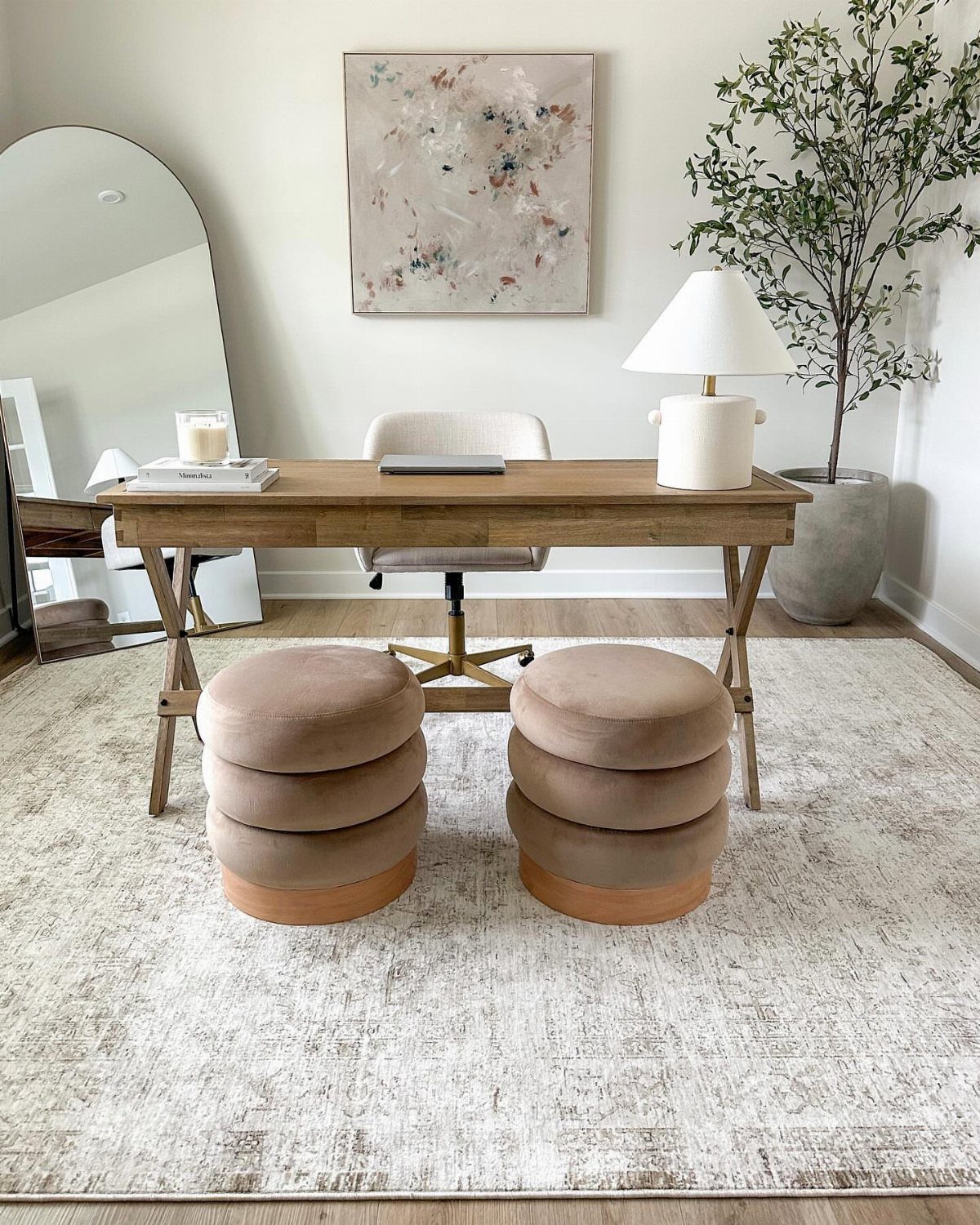
A large rug turns separate pieces into one zone when it reaches under all the furniture at once. That’s the job of an area rug here: it marks the work zone and the seating zone as one group.
I’d size it so every piece of furniture has at least its front legs on the rug.
A rug that’s too small makes the pieces look like they’re floating. A light, softly patterned one hides crumbs and chair marks better than a plain one.
3. Bold Patterns
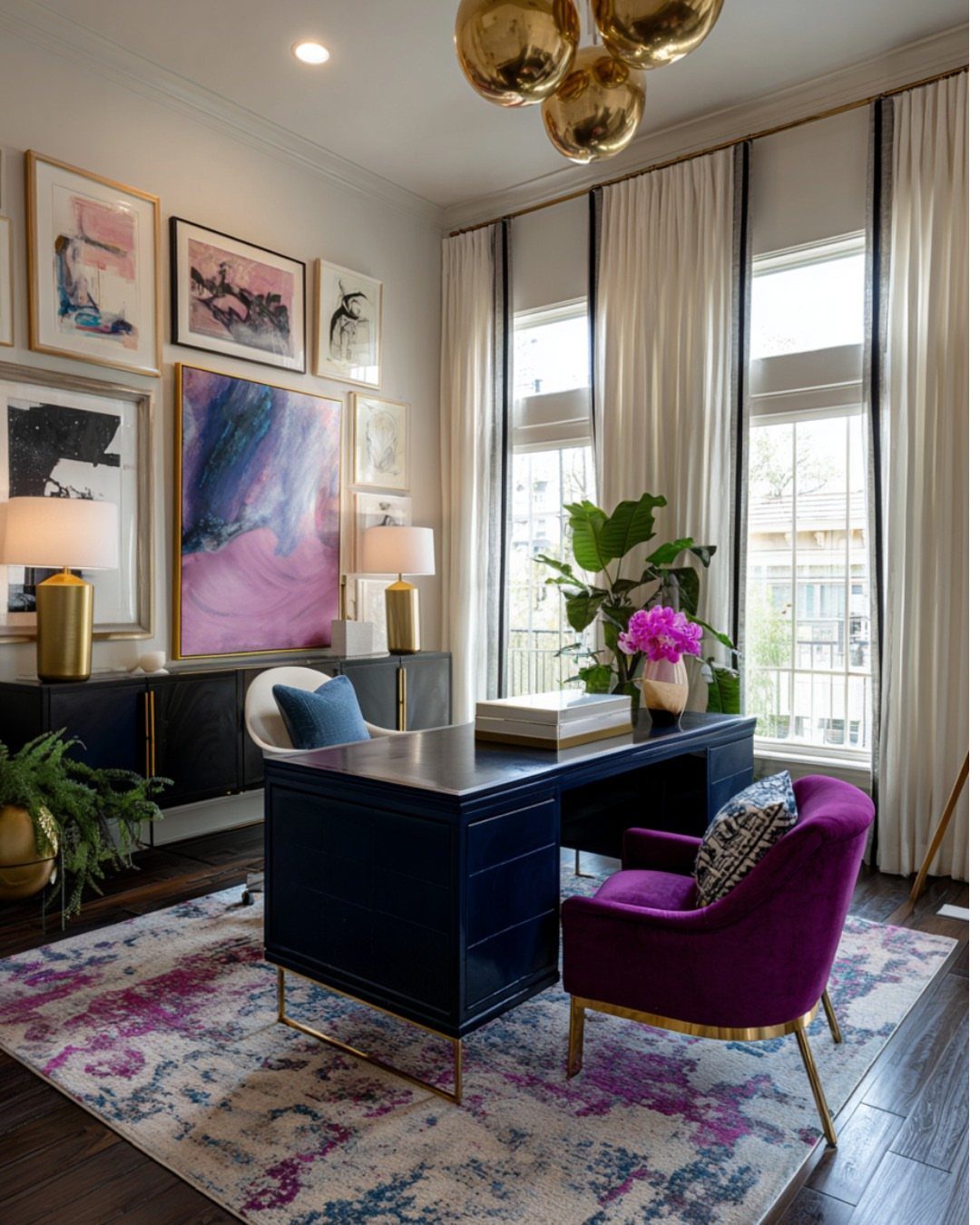
Let the rug carry the pattern while the walls and desk stay solid.
If your art is already busy, choose a rug whose colors repeat two shades from the room instead of adding a new one.
Bold patterns also forgive coffee spills and wheel tracks, which a plain surface never does. Test a sample under your desk light before you buy.
4. Grey Carpet in Office Lounge
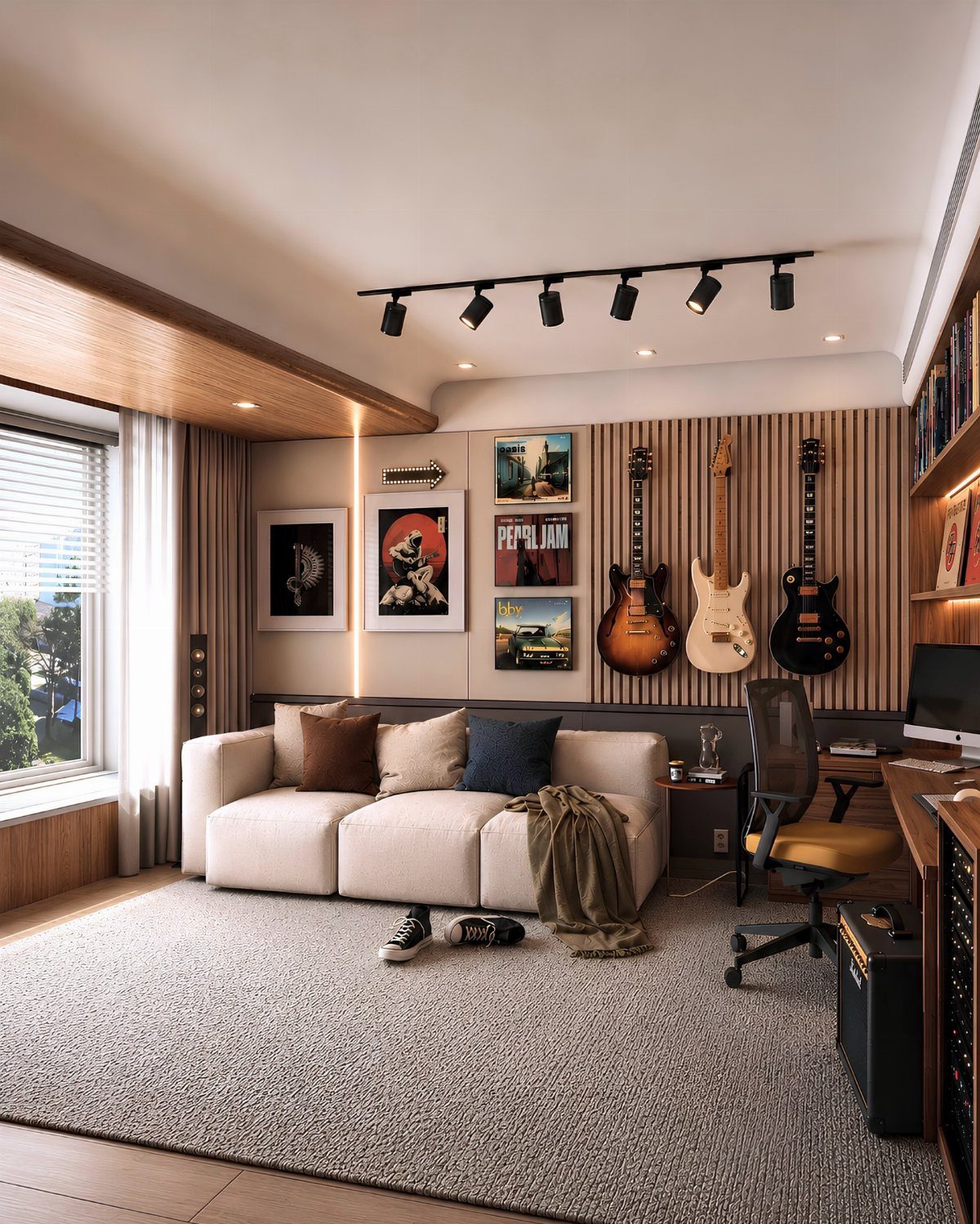
A grey textured carpet that spans the whole room lets one office hold a desk and a white sofa without a divider. The sofa corner becomes the lounge simply because the floor ties it together.
Grey is a forgiving base for white upholstery and wall art, and the texture keeps it from looking flat.
I’d choose a mid-grey over a pale one for a sofa area, since light-colored floors show every scuff. Slatted wall panels like these also add warmth against the cool floor.
5. Traditional Wood Paneling with Beige Carpet
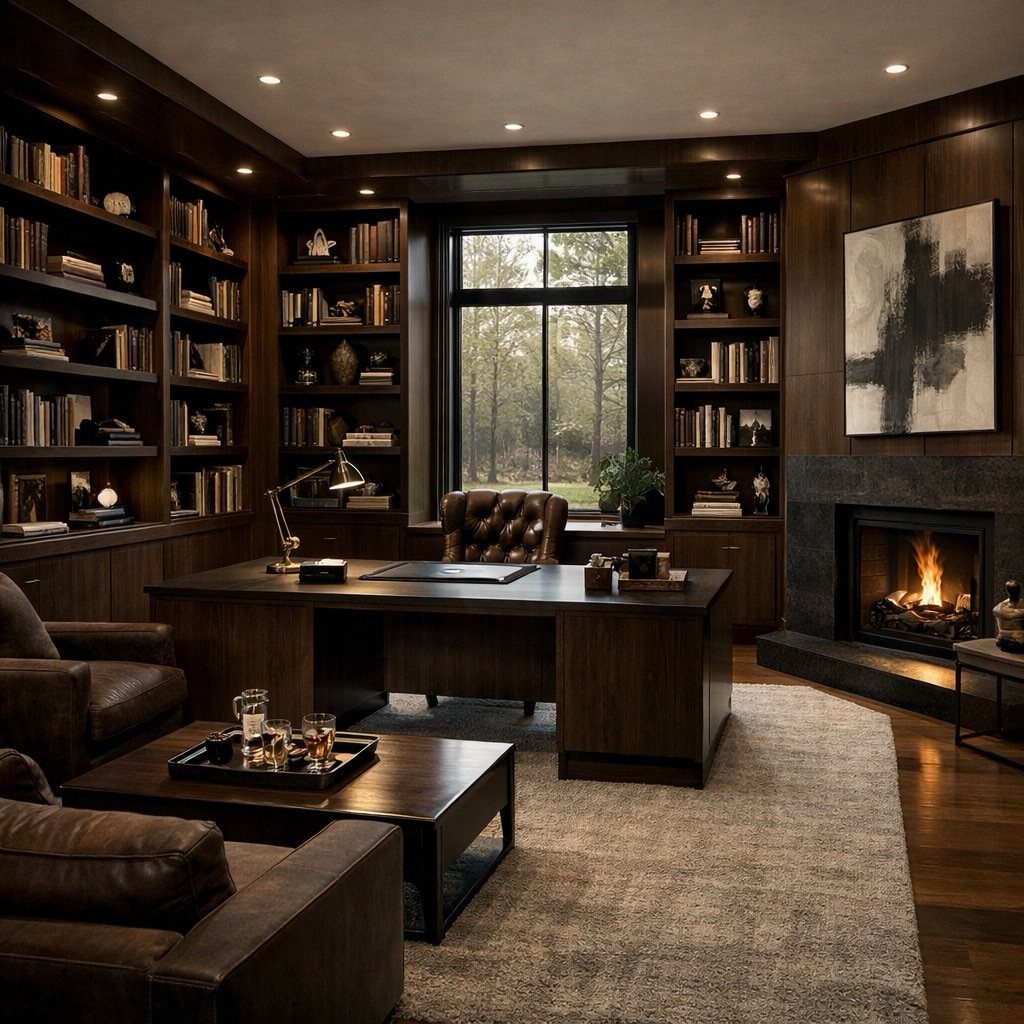
Dark wood shelving and leather chairs can swallow a room, and a large beige rug is the cheapest way to bring light back in. Laying it over hardwood also keeps the wood visible around the edges, which I like.
Go big enough that the desk and chairs sit on it, and leave a border of floor showing.
Beige in a low pile suits a traditional room better than anything loud. Add a rug pad so the rug doesn’t slide under the chair.
Choosing the Right Carpet Material
Wool and nylon are the 2 fibers I’d compare first.
Wool is the one that lasts and feels plush under bare feet, but nylon is my pick if coffee spills or rolling-chair traffic are a real concern, since it resists stains and cleans up fast.
For a desk where coffee and rolling wheels are part of the day, nylon is the practical pick. If the room is more of a retreat, wool earns its higher cost.
A plush carpet feels great for bare feet, but a low pile is easier to keep up and gives a sleeker look. Under a rolling chair, I’d go low pile every time.
Before you buy, weigh acoustic comfort, air quality, and how much maintenance you’ll tolerate. The most obvious carpet is not always the one that suits how you use the room.
Maximizing Small Office Spaces
In a small or shared room, a rug can mark out the workspace without a single wall going up.
Set it under the desk and chair, and the area reads as the office even if the room also serves another purpose.
Tuck the desk in a back corner and put a sitting area up front, with a second rug or a plush one under the coffee table. That separates the 2 jobs and keeps the room organized.
For a small office, I’d pair warm neutrals like oatmeal or sand with a muted blue, which keeps the room calm without making it feel cramped.
They keep the space relaxed enough to rest in and quiet enough to work in.
Creating a Cozy Office Atmosphere
Offices tend to feel stark, and soft furnishings fix that cheaply.
A soft, fluffy rug adds comfort for bare feet. Little comforts like these add up to a room you actually want to sit in.
Keep the textiles in neutral tones that match the rug, so the layers read as one scheme. Wood and leather pieces look warmer when the fabrics around them stay in the same quiet range.
“The luxury of a home office is that you can create a space that feels utilitarian and personal,” says Ashton Taylor Oberhauser, principal of Ashton Taylor Interiors in Houston.
Frequently Asked Questions
How do I decorate my home office?
Start with the floor: a large rug that reaches under the desk and chair ties the furniture into one zone and adds warmth.
Soft textiles in neutral tones that echo the rug, like curtains or a throw, warm up wood and leather pieces and tie the room together.
What type of flooring is best for offices?
A mix of hard surfaces and carpet works best. Carpet suits the work area, and an area rug over hardwood defines the space while keeping the wood visible around the edges.
How do I put a rug in an office?
Size it so the desk and chairs sit on it, or at least the front legs of every piece, and leave a border of floor showing.
A rug that’s too small makes furniture look like it’s floating. A rug pad keeps the rug from creeping under the chair, and in a tight, compact office, placing the rug beneath the desk and chair marks off the workspace.
Do office chairs roll on carpet?
Yes, they roll best on low-pile carpet. A plush, deep pile drags at the wheels and is harder to keep up, while a low pile gives a sleeker look and easier cleaning.
Nylon is a good fiber choice under a rolling chair since it handles that traffic and spills well.





