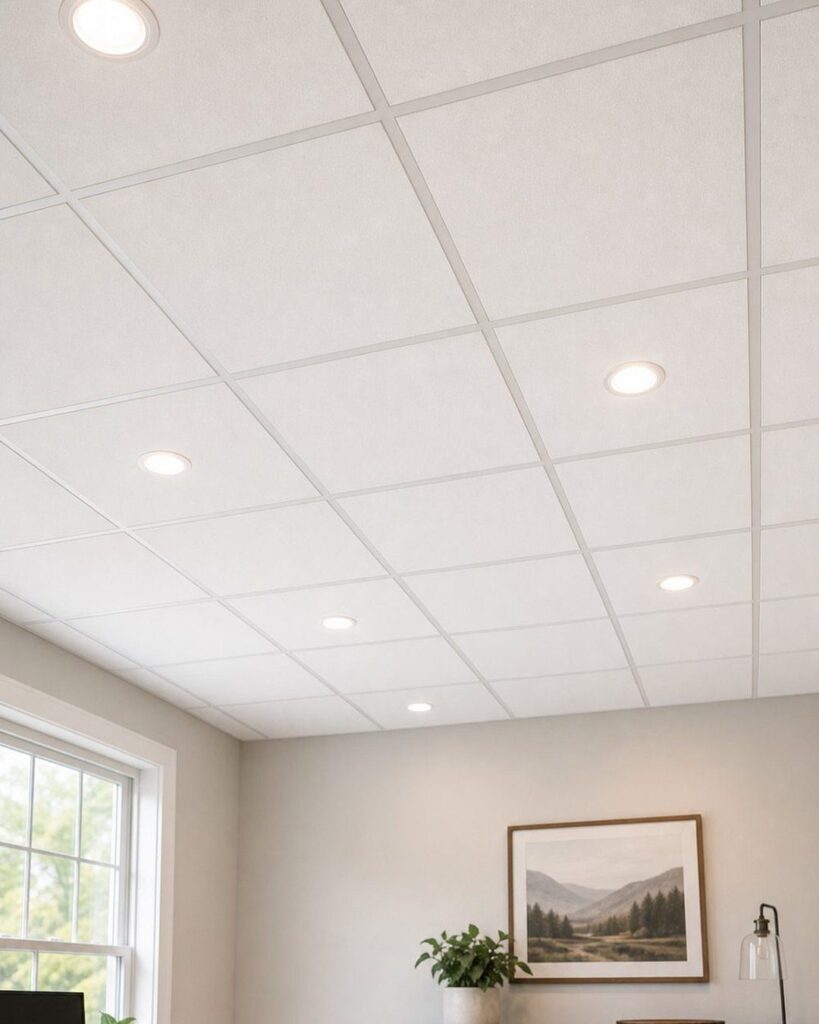
Ceiling height settles this list faster than taste does: a drop ceiling eats a few inches for the grid and panels, so in a low basement, exposed beams or a painted ceiling keep headroom that a grid gives up.
1. Exposed Beams
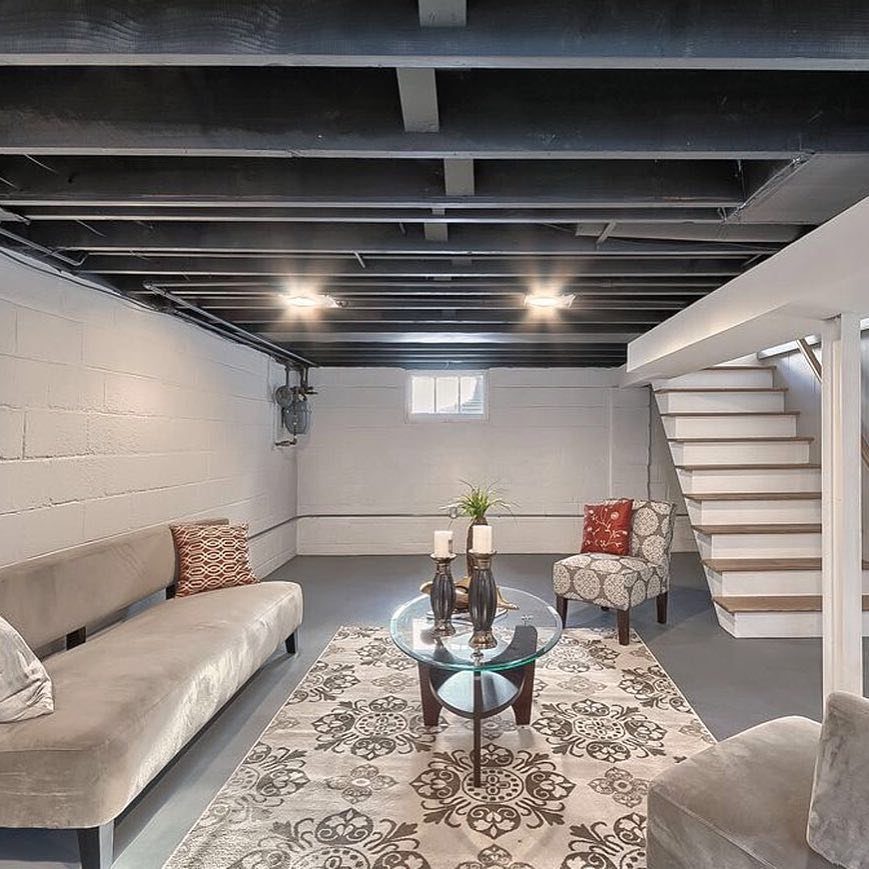
Black paint on the beams, with recessed lights set between them, gives a basement ceiling the rustic-meets-modern look that a flat white ceiling can’t. Dark beams read as structure, so the room feels intentional rather than unfinished.
Matching the beams to the ceiling color hides the clutter overhead, which is why I like it for low basements.
Paint the beams a contrasting color if you want them to stand out as a feature; match them to the ceiling and go dark on everything if you want them to disappear.
2. Coffered Ceiling
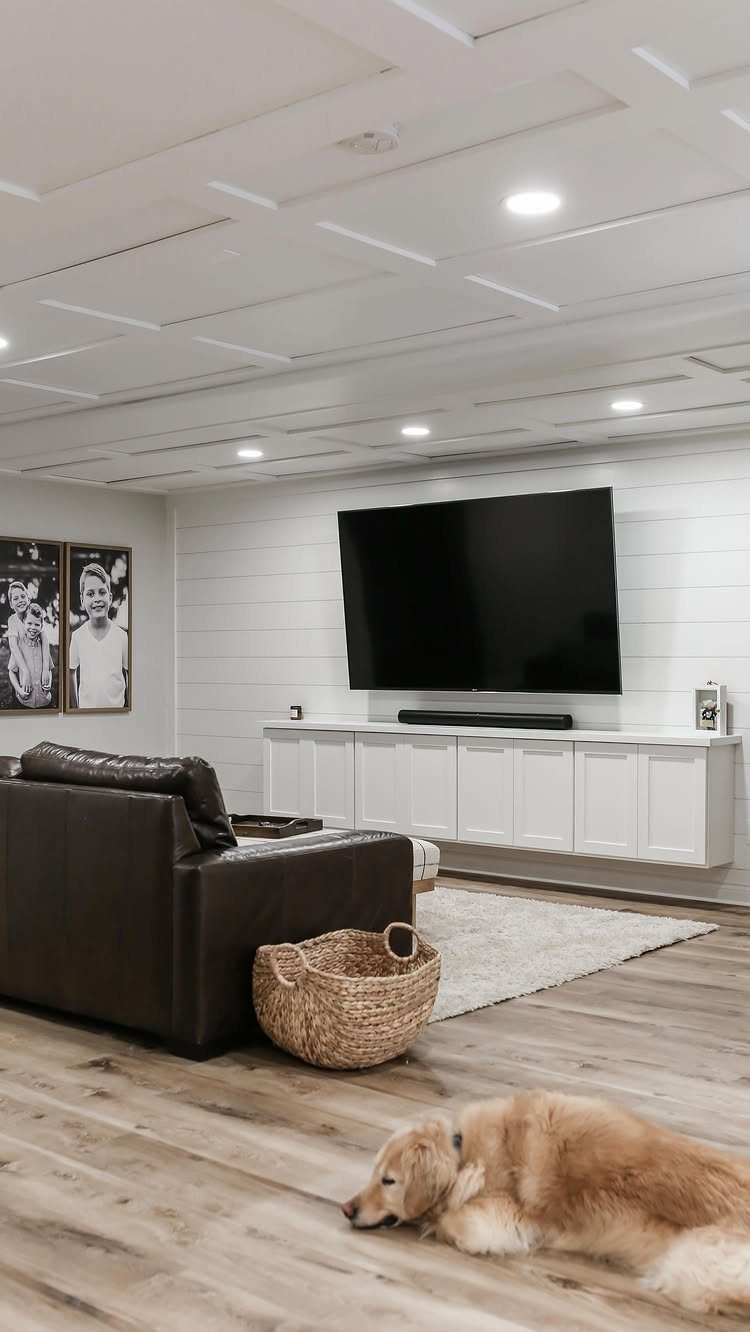
A coffered ceiling is a grid of recessed panels, and that depth is what gives a plain room architectural weight. Painting the whole thing white, as here, keeps it clean and lets recessed lights sit inside the panels without clutter.
I’d pick it for a TV room where you want the ceiling to look built in, not added on. Expect more carpentry than a simple drop ceiling, so it suits someone comfortable with a saw and patient with measuring.
3. Painted Ceiling
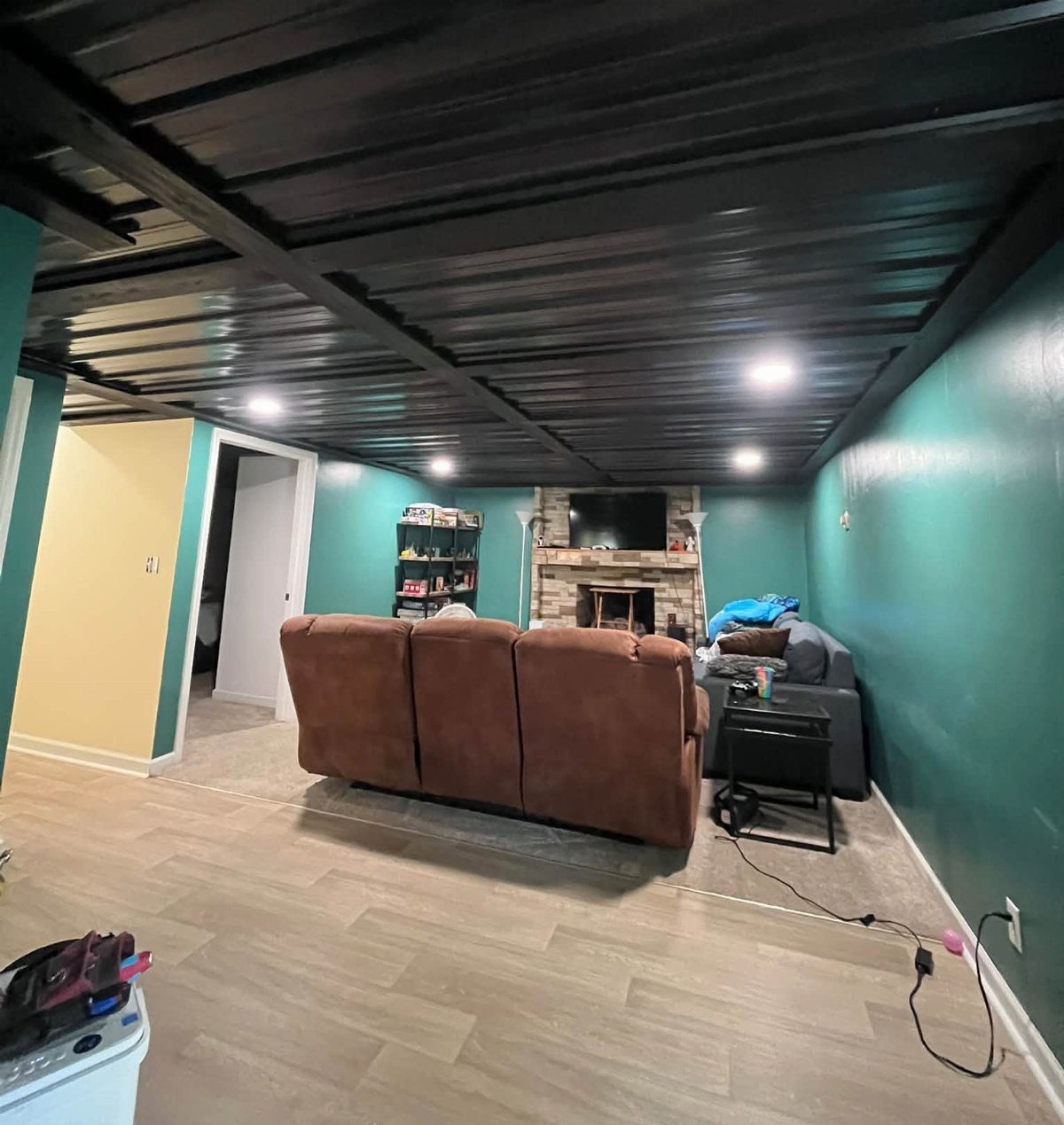
Paint costs less than any other ceiling treatment, and black is the boldest choice. Sprayed or rolled over the beams and the space between them, it makes the ceiling recede so the walls carry the room.
Cover the floor and furniture well, since ceiling paint drips everywhere. Test a small patch first, because black shows every missed spot.
4. Decorative Ceiling Tiles
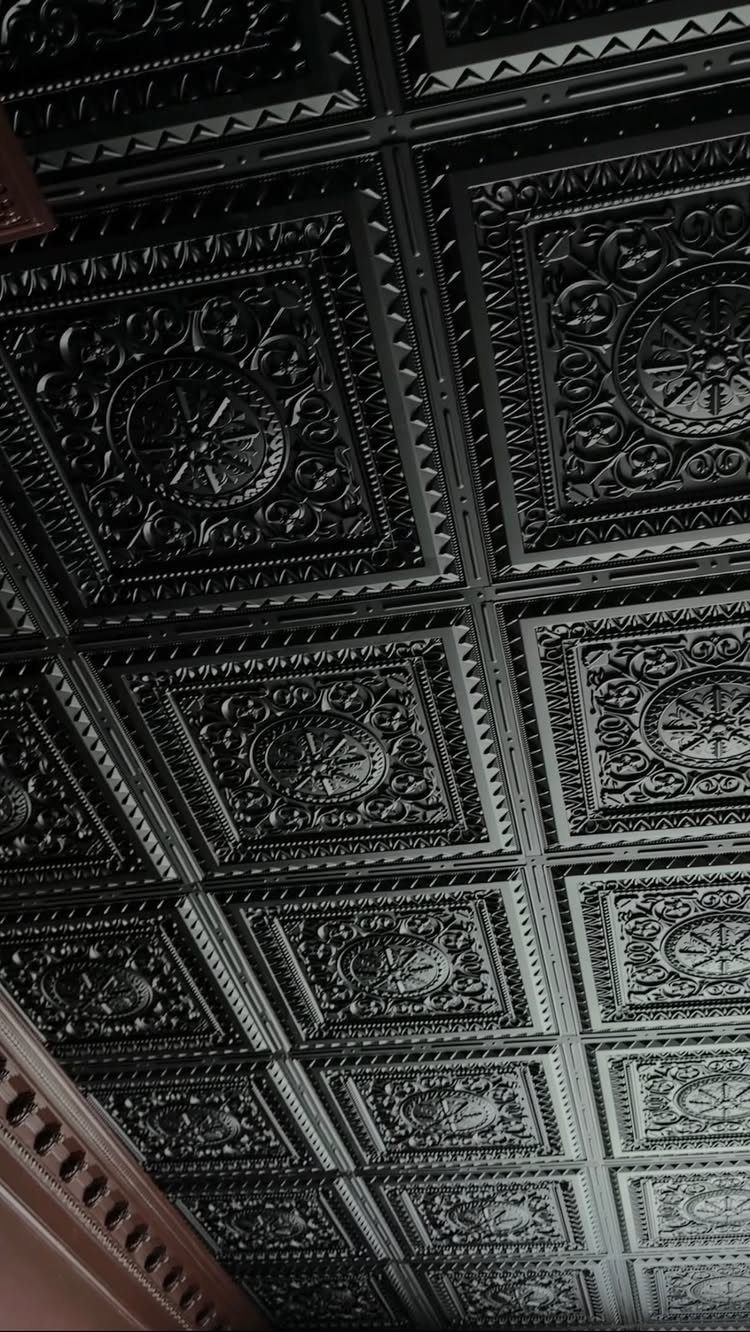
Embossed tiles with floral and geometric patterns turn a ceiling into the detail people look at first. In black, the raised pattern catches light and shows off the relief without needing any color.
I’d use them on a smaller area, like a bar or reading nook, rather than the whole basement.
Busy patterns across a big ceiling get loud fast. Laying them in a tidy grid keeps the effect orderly.
5. White Grid Drop Ceiling
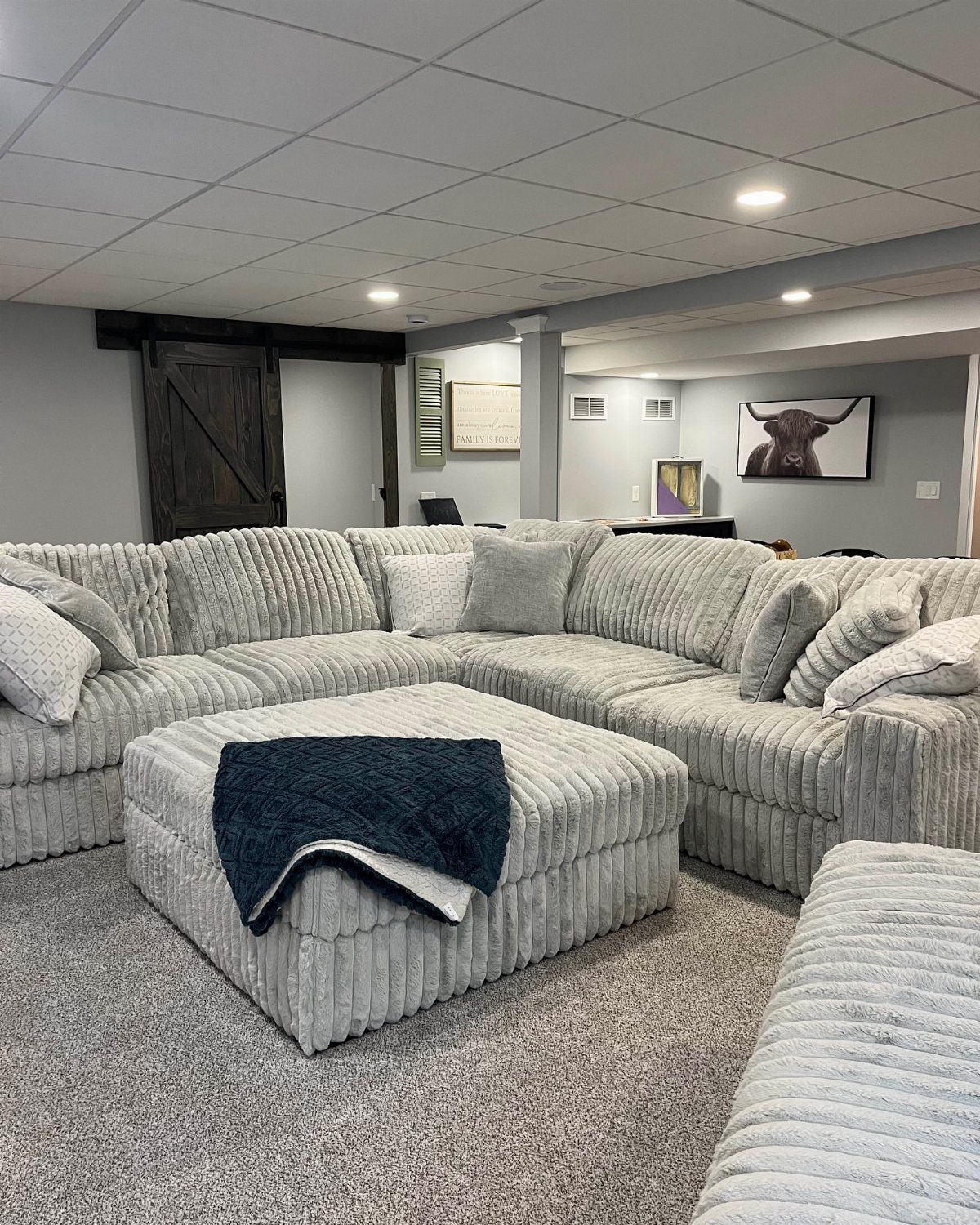
The white grid drop ceiling is the standard basement answer, and pairing it with recessed pot lights keeps it from looking like an office. White panels bounce light around, which matters in a room with few windows.
I’d choose it when you need to reach pipes and wiring later, since panels lift out. It’s also the easiest of these ideas for a first-timer to finish over a weekend.
6. Black Drop Ceiling
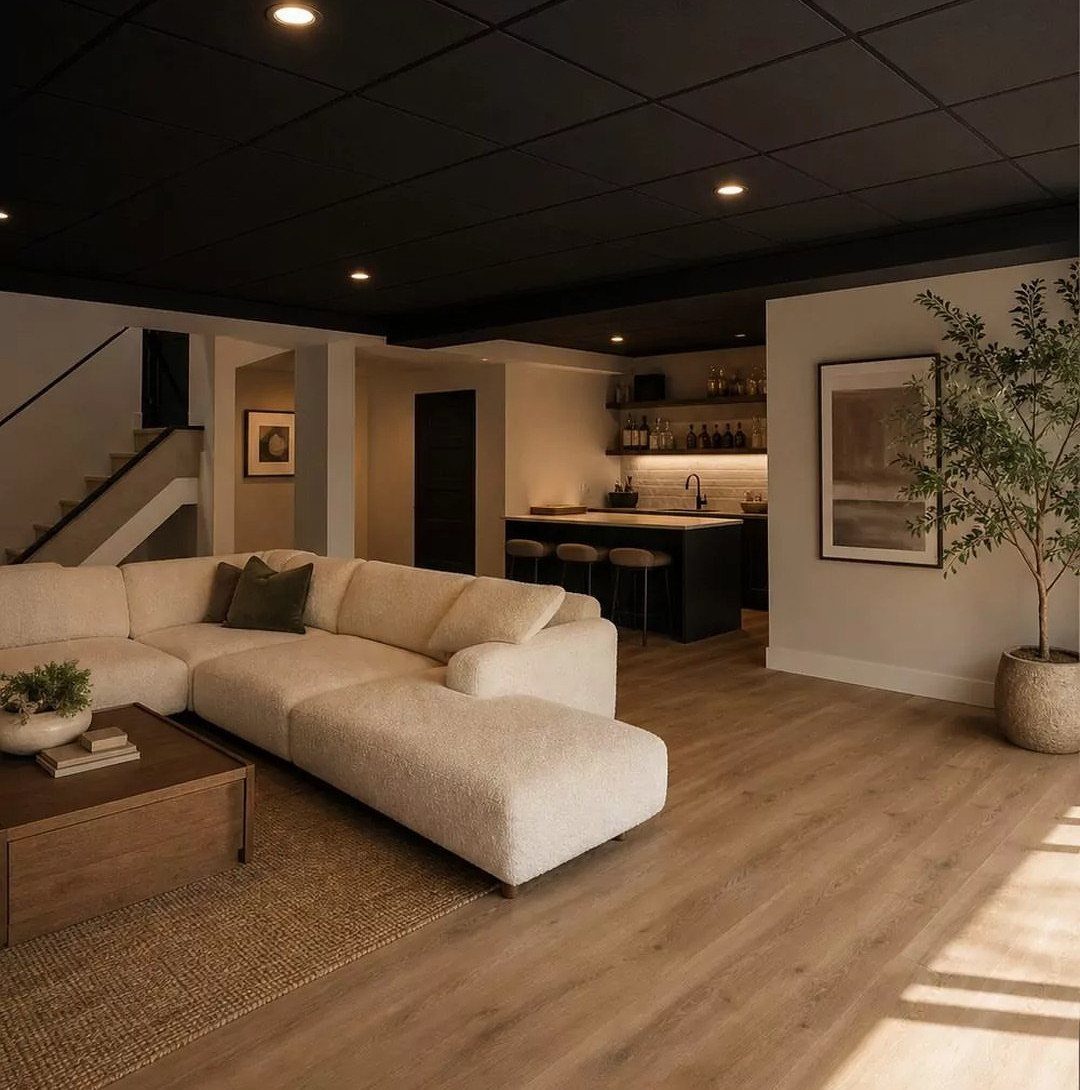
Black grid and panels with recessed lights make a drop ceiling look sleek instead of utilitarian. The dark surface hides the grid lines, and small lights glow against it like points in a night sky.
Light wood floors and a white sofa, as here, balance the darkness so the room doesn’t feel heavy. I’d go black only if you have decent lighting overall, because dark ceilings absorb light rather than bounce it.
7. Wood Plank Drop Ceiling
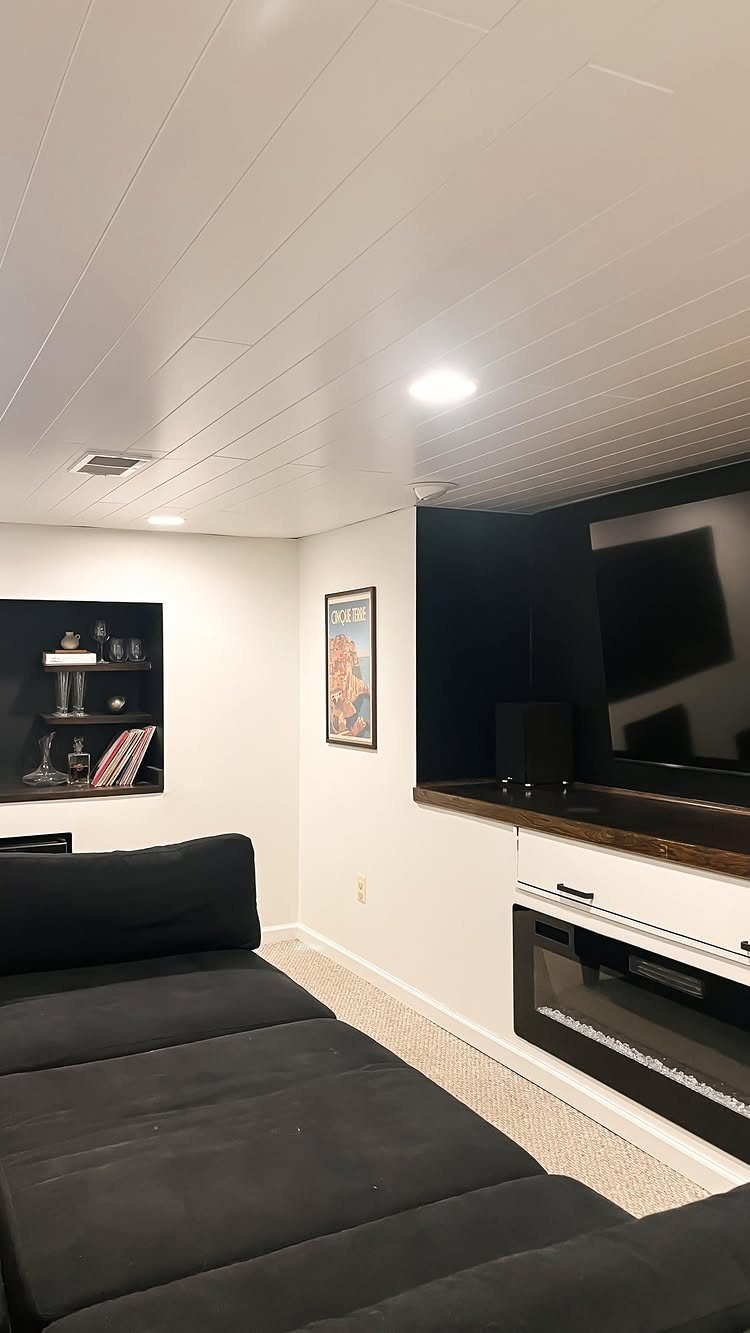
White planks overhead give a basement living room the look of a finished main floor, and the long lines draw the eye across the room.
Against a black sofa and a black accent wall, the white ceiling keeps the space from closing in.
I’d pair planks with recessed lights, as here, so the ceiling stays clean and the fixtures do the work. Pick this over a plain white grid if the room is a place where you actually sit and watch TV.
In one renovation, vaulting the ceiling and finishing it with white-painted beadboard made a 13-by-15-foot bedroom feel significantly bigger. The addition of three windows and two skylights enhanced this effect, filling the space with natural light.
8. Dark Blue Grid Ceiling
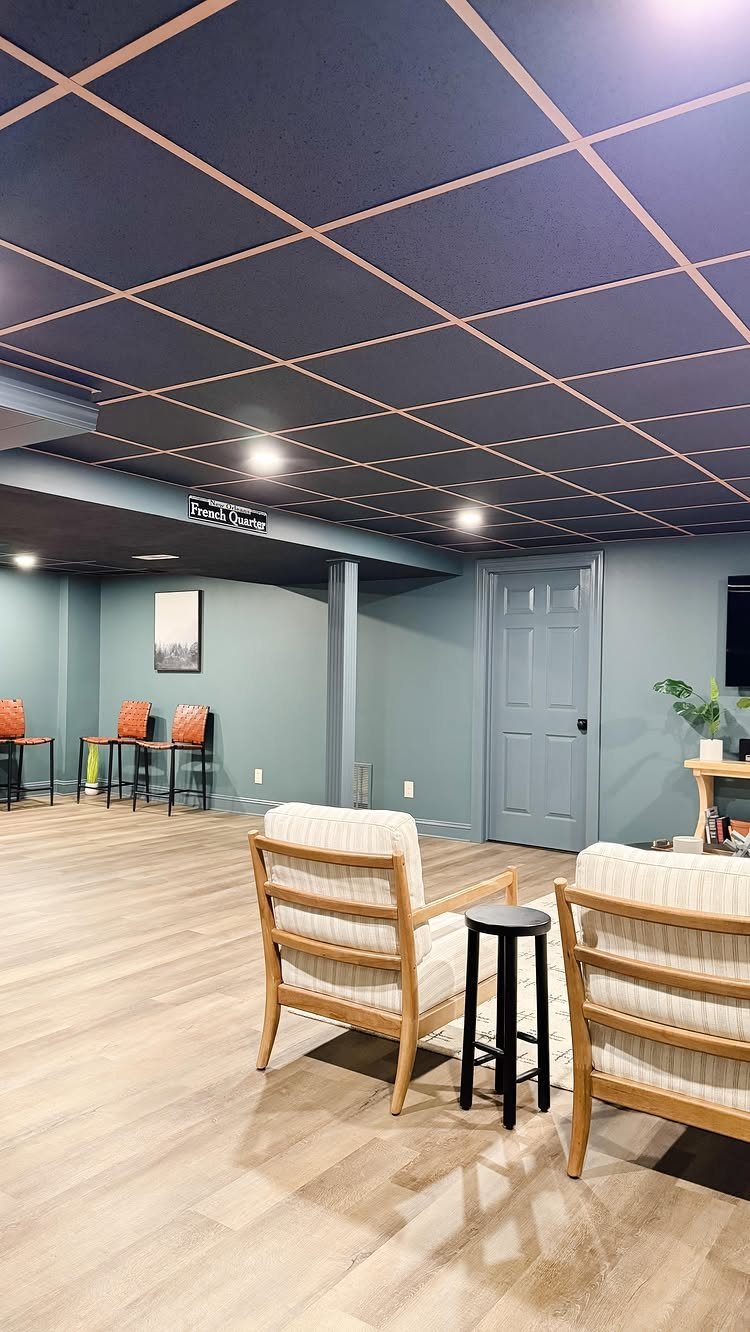
Dark blue on the grid and panels gives a lounge a moody, bar-like feel without going fully black. White trim around the perimeter outlines the ceiling and keeps the edges crisp.
Light wood floors do a lot of balancing here, so keep the floor bright if you go this dark.
Pick blue over black when you want depth with a little color. Dark ceilings absorb light, as the black entry says, so plan on extra lighting.
9. Starry Night Drop Ceiling Panel
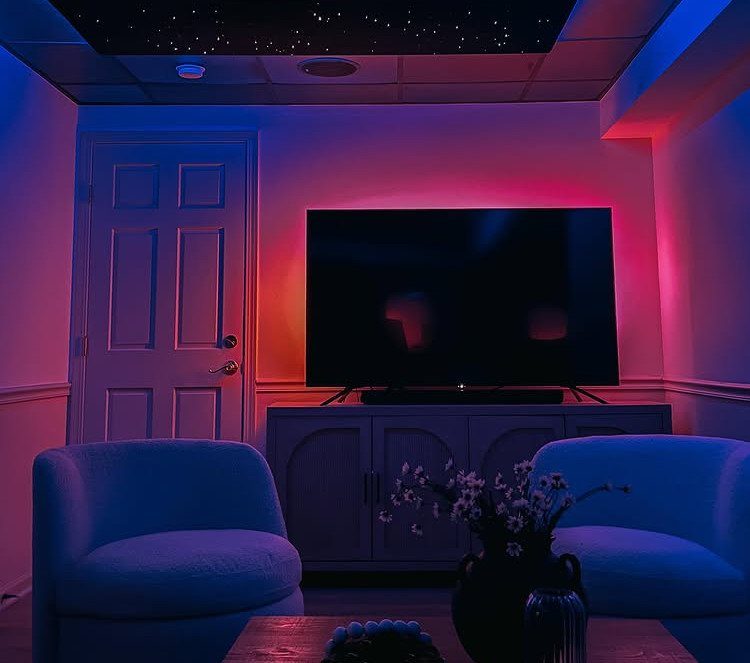
A black panel dotted with small white lights turns one section of a drop ceiling into a night sky. Because it sits in a single spot, it works as a focal point instead of a whole-room theme.
I’d put it over the seating area of a media room, where the lights glow while the screen is on. Keep every other tile in the grid plain so the stars stay the one surprise.
10. White Paneled Drop Ceiling
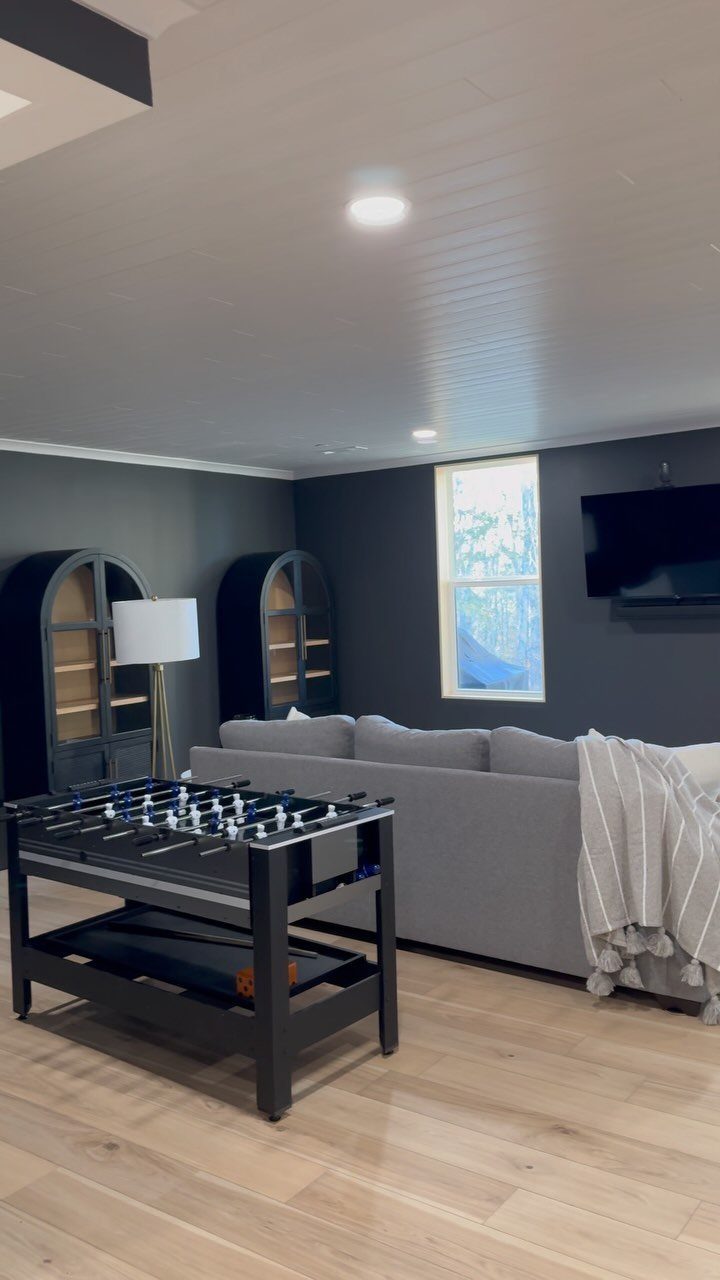
White panels with recessed lights keep a game room bright even when the walls go dark grey. The light ceiling balances the heavy walls, so the room still feels open around a foosball table.
I’d choose this pairing if you want a dark, cozy wall color without losing brightness. Panels lift out, so pipes and wiring stay reachable later.
Considerations for Ceiling Height
Measure from the slab to the underside of the joists before you pick anything.
A drop ceiling needs room for the grid and panels, so it takes a few inches of height, and in a low basement that loss can matter more than the look.
Painting the joists and everything between them keeps every inch of height. Furring strips and flat panels sit close to the joists too, which makes them easier to live with when headroom is tight.
Call your local building department before buying tiles or grid, since many areas set rules on fire ratings and which materials are allowed overhead, and a permit may be required for a basement ceiling.
Lighting also changes how tall a room feels, so pair a low ceiling with fixtures that sit flush instead of hanging down.
DIY Vs. Professional Installation
Match the job to your skills and your tools.
Painting and laying lightweight panels in a grid are weekend work for most people, while anything that involves moving wiring or building out a framed structure is where a pro earns the fee.
Lighting is the deciding factor more often than people expect. Recessed lights mean cutting openings and running wire, so if you aren’t comfortable with electrical work, hire an electrician for that part and do the ceiling yourself.
Ask your local building department whether the project needs a permit or inspection. Some materials and electrical changes fall under code rules, and passing inspection is easier when you’ve asked first.
Cost Considerations
Tin tiles run from $5 to $50 per square foot, so the same ceiling can cost very different amounts depending on the tile you choose.
Measure the room, multiply by the price, and see where you land before you fall for a pattern.
On a budget, use the pricier material in one small area and a cheaper finish everywhere else.
Add the costs people forget: lighting, trim, fasteners, and paint. Hiring out the electrical work adds to the total, but it can save a redo.
Frequently Asked Questions
What are some good ceiling options for a basement?
For a first-timer, white grid panels with recessed lights are the safest bet, and one weekend is enough to finish the job.
Exposed beams, coffered panels, wood planks and decorative tiles suit rooms where you want the ceiling to be a feature.
Is a 7 ft ceiling too low?
It can be, because a drop ceiling takes a few inches for the grid and panels, and in a low basement that lost height can matter more than the look.
Skip the grid and paint the joists, and every bit of headroom stays with you. Furring strips with flat panels also sit close to the joists, and flush fixtures keep the room from feeling shorter.
What are the disadvantages of a drop ceiling?
The main drawback is lost headroom, since the grid and panels hang a few inches below the joists.
Tiles can also sag or discolor over time, especially in humid spaces, so look for moisture-resistant tiles and make sure the basement can be ventilated. Dark grids and panels soak up light, so budget for extra fixtures.
How much does it cost to add a drop ceiling to a basement?
Price depends on the material, so measure the floor area and multiply it by the per-square-foot cost to get a rough total.
An electrician for the recessed lights adds to the bill, though it can spare you from redoing bad wiring.





