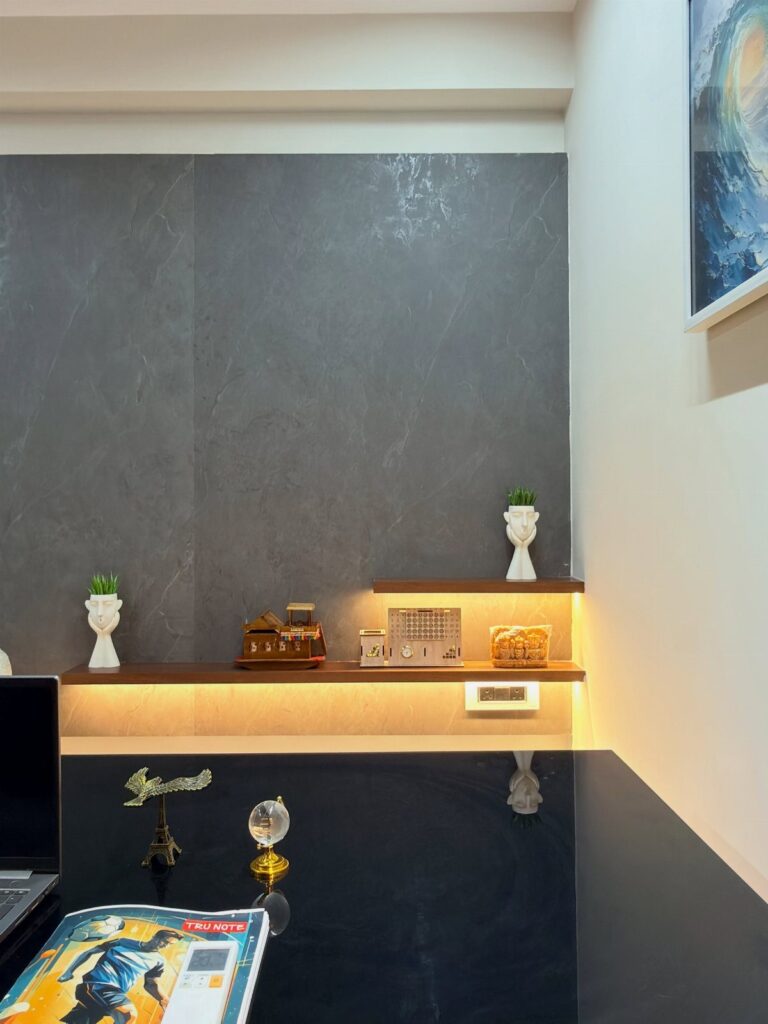
Which of these 11 ideas fits depends on the window in your room: if you have one with daylight and a view, the desk placement and sheer curtains cost almost nothing, while a windowless corner needs the closet office or a floating shelf setup to do the work.
The span runs from a mood board and a coat of paint on an accent wall to a built-out closet office, which costs more than paint but still fits in a weekend.
In a tight space, floating shelves above the desk keep the floor clear.
1. Desk Near Natural Light
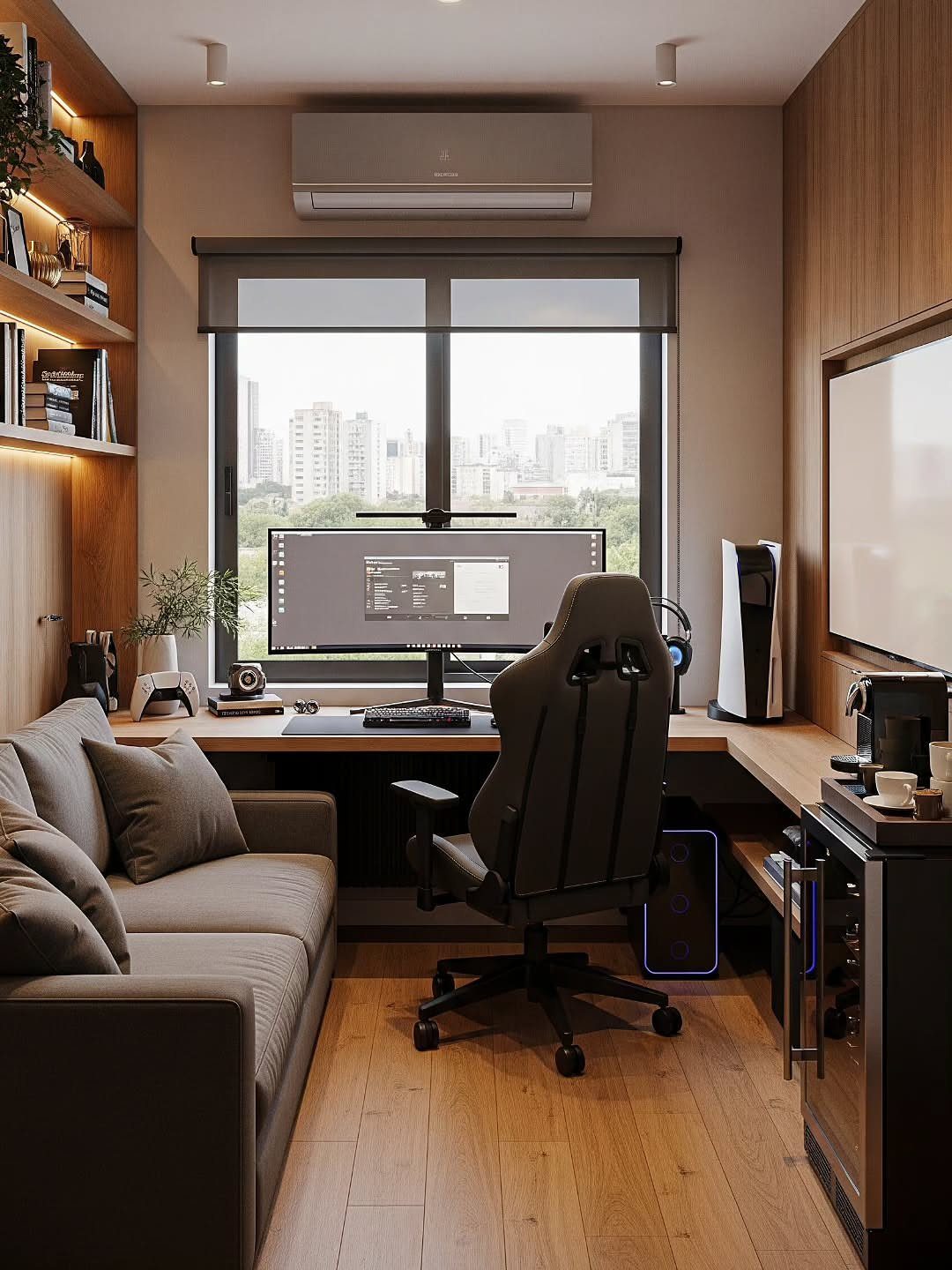
A desk set squarely in front of a big window gives you daylight for free, and it’s the first placement I’d try before buying a single lamp.
The view helps, too: looking out at a city view or street gives your eyes somewhere far to rest between spreadsheets.
Keep the monitor sideways to the glass if you can, or at least check for glare at midday. A screen directly against bright sky is hard to read.
2. Sheer Curtains
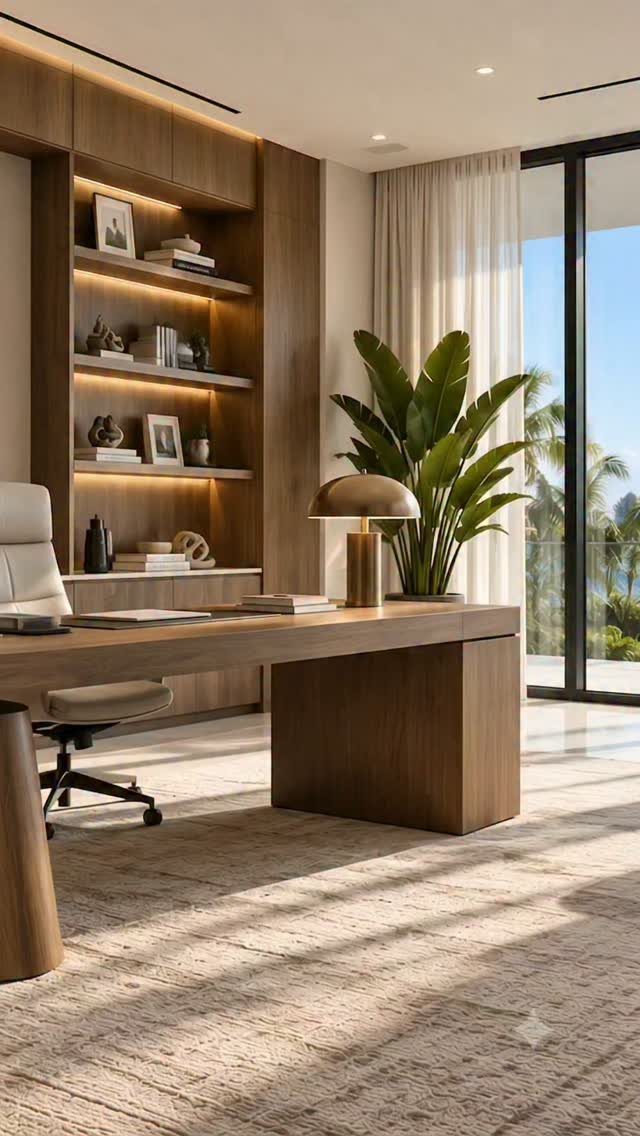
Sheer white curtains let a window keep working as a light source while softening what comes through. That matters at a desk, where harsh sun on a screen gets old fast.
Hang the rod wider than the frame so the fabric clears the glass when you open it. Sheers cost little, and they pair well with a desk lamp and a plant on the sill for the evening shift.
3. Inspiring Wall Art

Pick wall art you actually want to read at 3 p.m. on a slow Tuesday. Small wooden signs with short phrases like "Work Hard" or "Believe in Yourself" do that job without the weight of a framed print.
I’d stick to two or three pieces and set them where your eyes land when you look up from the screen.
More than that and they turn into clutter. A shelf ledge works fine if you’d rather not drill.
4. Task Lighting
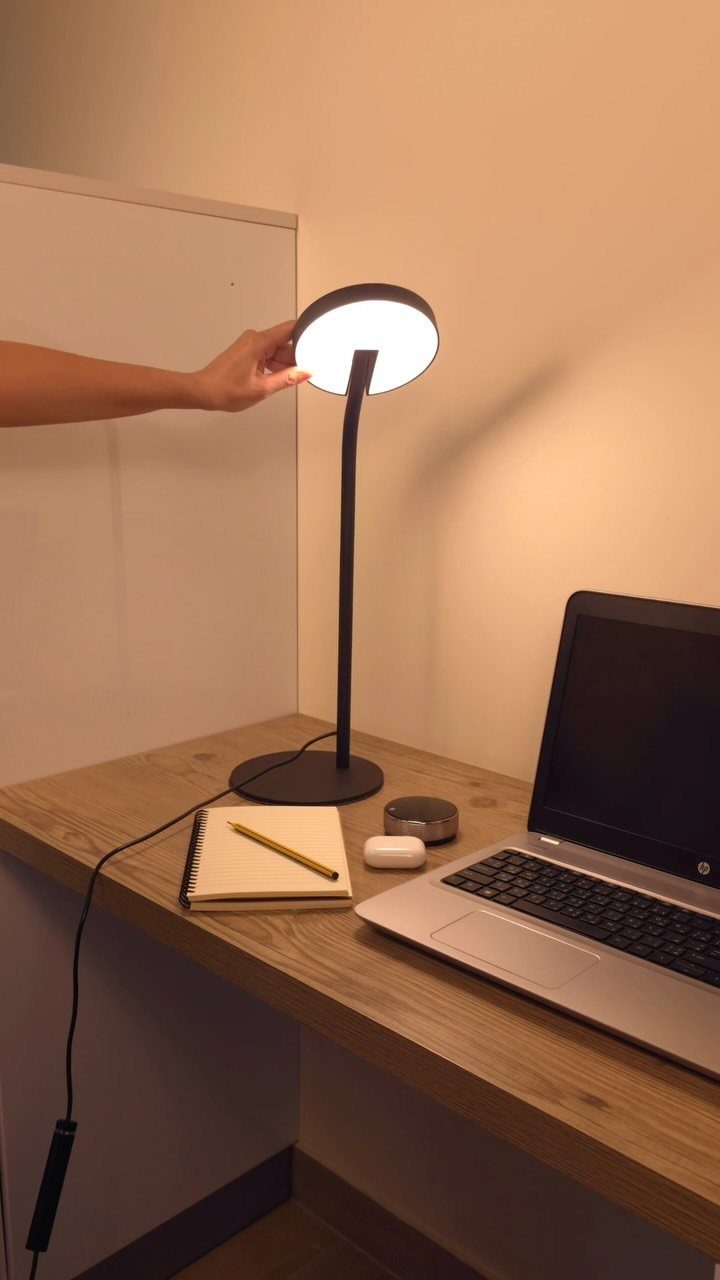
One overhead light won’t do the job at a desk, and an adjustable black desk lamp is the cheapest fix.
Being able to swing the head over a notebook or laptop puts light where you’re working and keeps shadows off the page.
Layer it with ambient light from the ceiling or a window so the lamp isn’t the only bright spot in a dim room. Place it on the side opposite your writing hand to avoid shadows.
5. Accent Wall
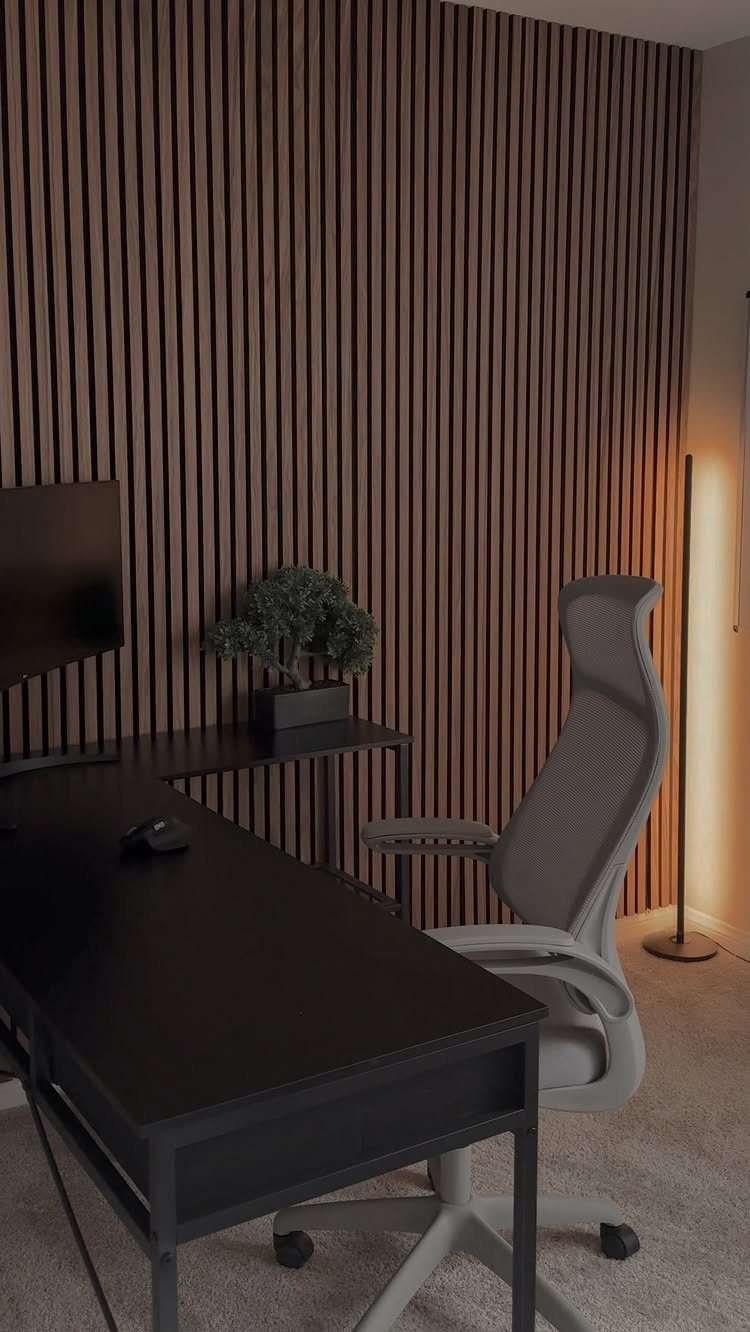
Vertical wood slats behind the desk turn a flat wall into the room’s focal point, and they photograph well on video calls. Against a dark desk, the warm brown adds depth without needing any art.
Slat panels are a weekend job for most people, but they cost more than paint. If the budget is tight, a single painted wall in a deep color gets you part of the way for far less.
6. Floating Shelf Office
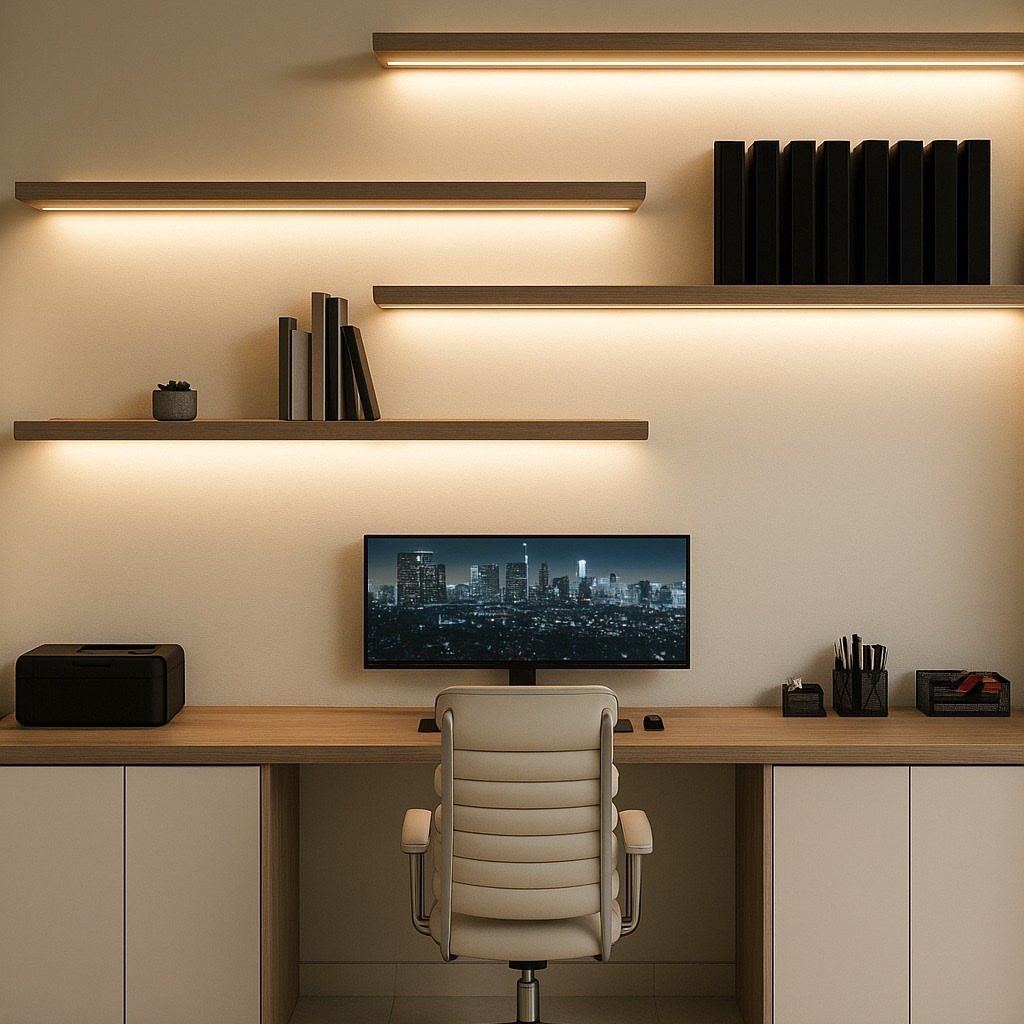
Floating shelves above a desk give you storage without a bookcase eating floor space, which is why I like them for small rooms. A wall of them holds books and decor at eye level while the desk stays clear.
Mount into studs, or use heavy-duty anchors, since books are heavier than they look. Shelves with built-in lighting add a soft glow, so you may be able to skip one more lamp.
7. Desk Towards Nature
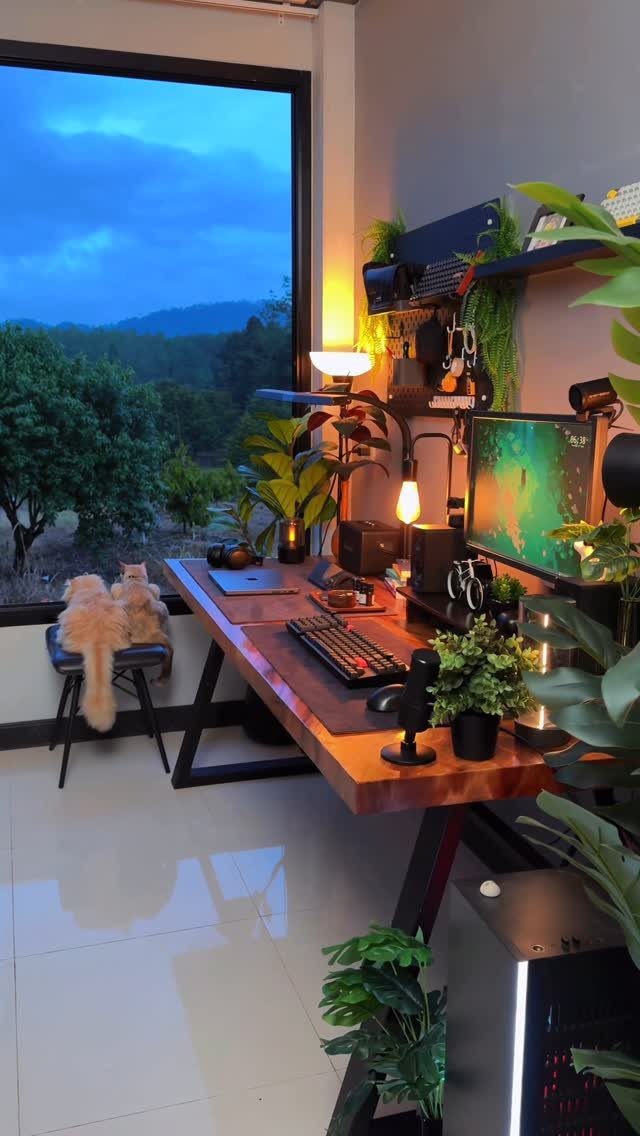
Facing the desk toward a window with a long view, here green hills, gives your eyes a distance to rest on between emails. I’d choose this over a wall-facing setup whenever the room allows it.
A few plants on the desk itself keep the green close, and a cat’s chair beside you is optional but clearly popular. Set the monitor so the window sits beside it, not behind it, or you’ll fight glare all afternoon.
8. Greenery
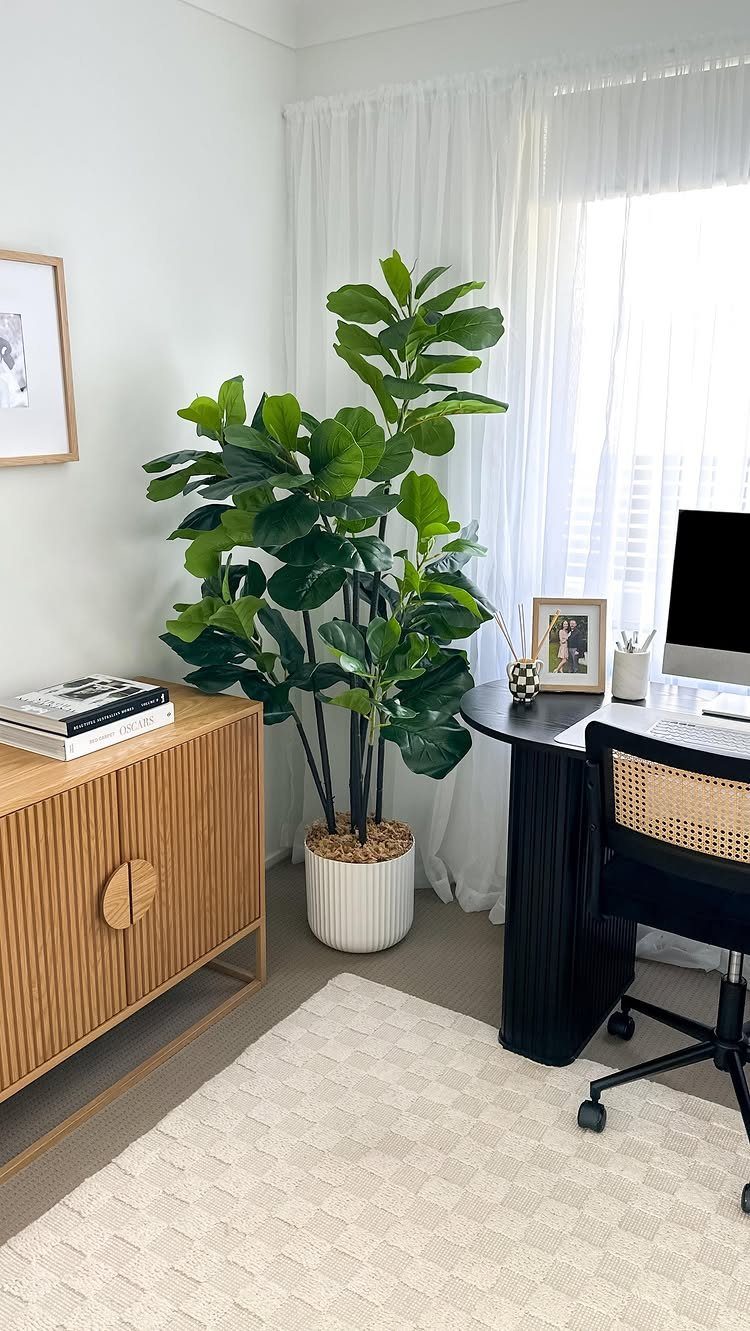
One large fiddle leaf fig does more for a home office than a dozen small pots, and it takes up only a few square feet of floor. Beside a black desk, the deep green softens all that hard edge.
Put it where it can see a window, since a plant in a dark corner won’t last.
A white rug underneath makes the green stand out, though a spill of potting soil will show, so keep a saucer under the pot.
9. Mood Board
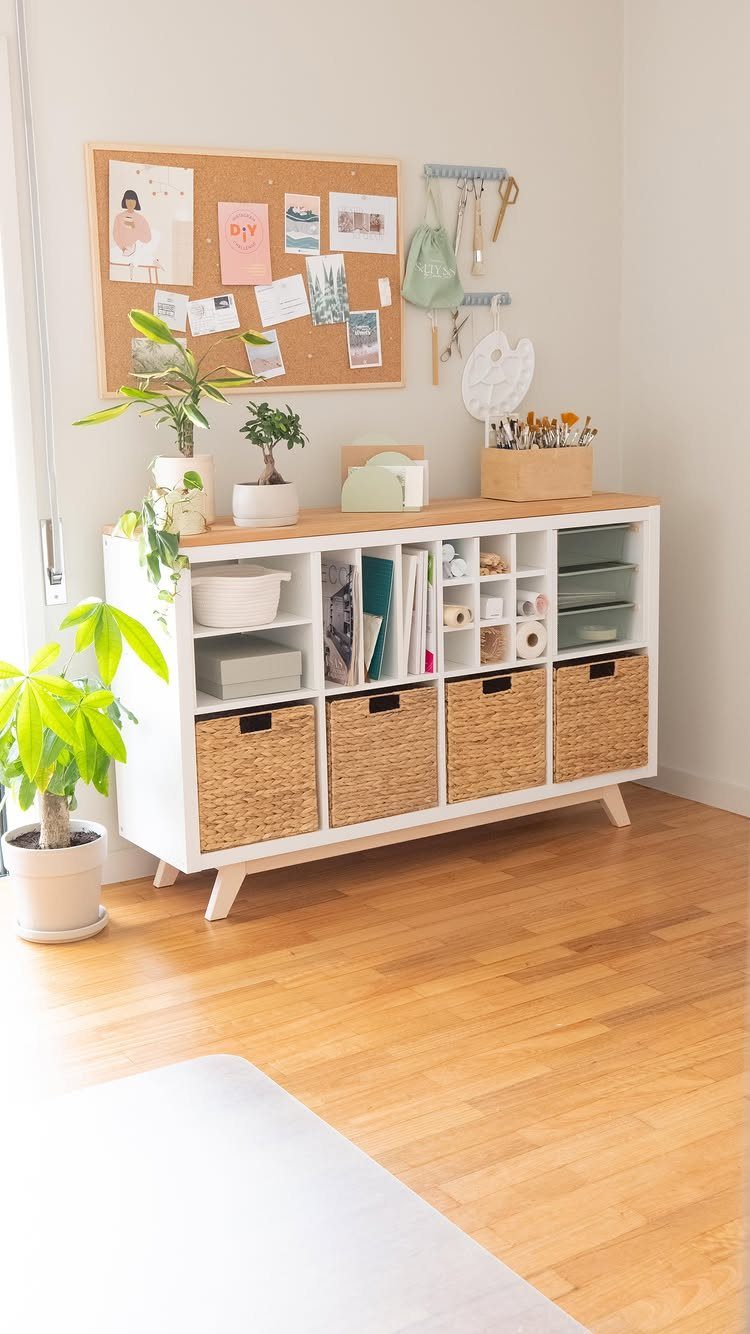
A cork board is the cheapest mood board there is, and it needs only a few pins and a spot on the wall.
Mounted above a storage unit with baskets, it keeps notes, swatches and reminders in view without taking desk space.
I like cork over a magnet board because you can pin anything without special supplies. Edit it every month or so; once it fills up, you stop seeing any of it.
10. Clever Office Nook
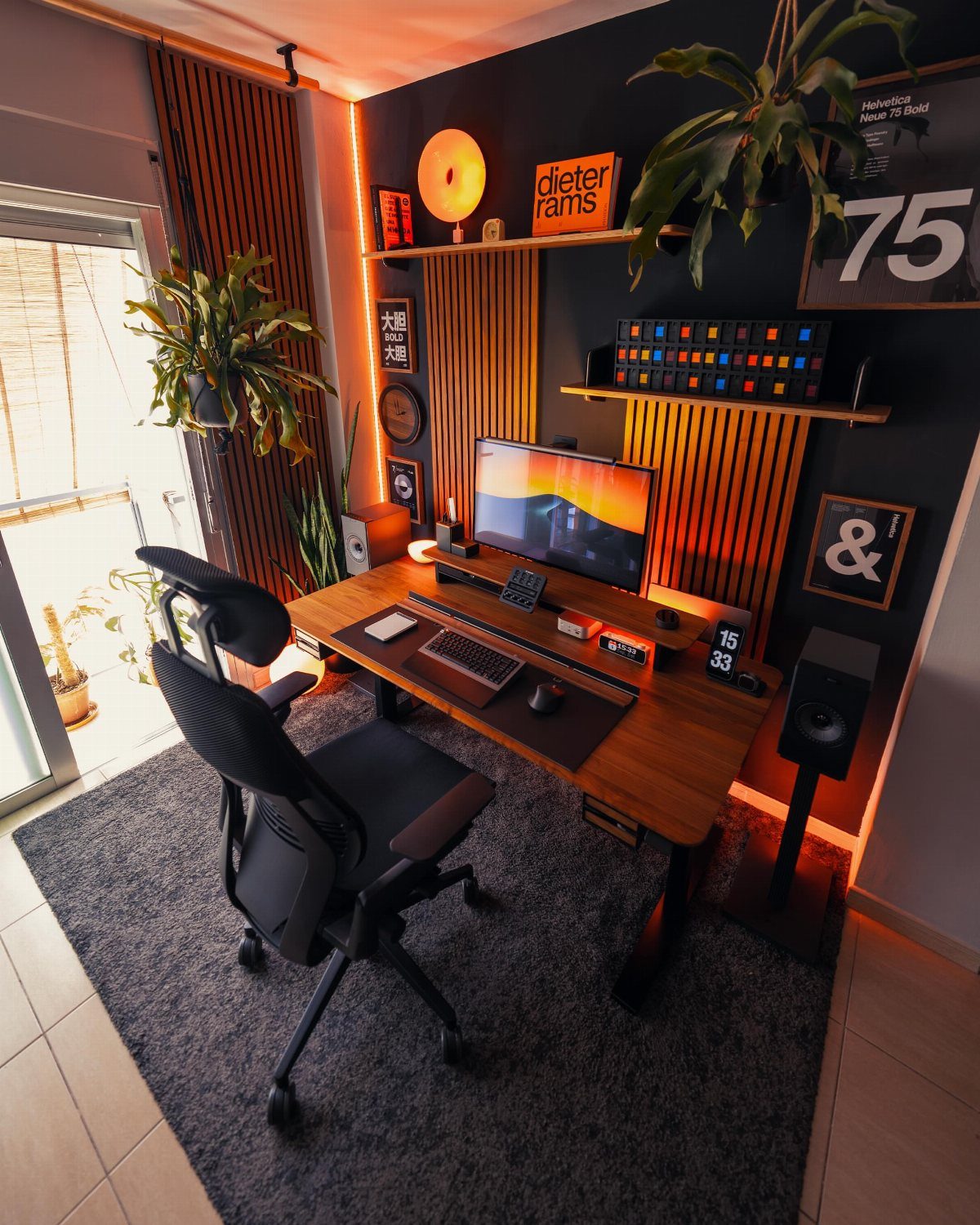
An office nook works when the wall provides most of the function: slat panels, a couple of shelves and one warm light give a tight corner a clear purpose.
Spend on the chair first, since you’ll sit in it all day. Keep the shelves for a few items you love, like a poster or a small sign, so the nook feels deliberate rather than crowded.
11. Closet Office
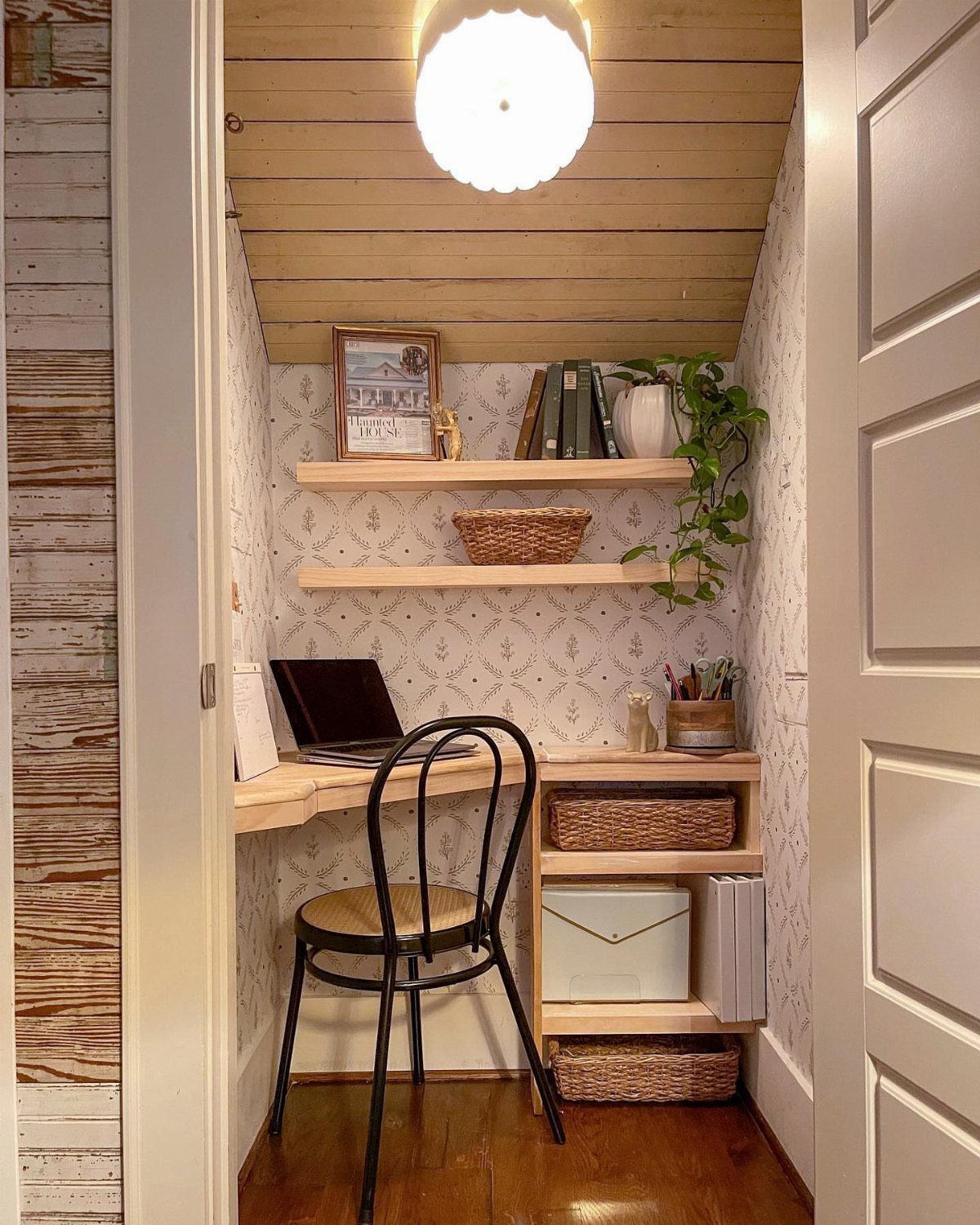
A closet makes a real office when you pull out the rod, add a light wood desk and mount floating shelves above it. Floating shelves matter here because they leave knee room below.
Wallpaper inside the back wall is a smart, low-cost touch, since you only need to cover a small area.
Add a small framed print, and a black chair you can tuck in, and the door can close on the workday when you finish.
Importance of Office Design
A home office is the one room where the setup shapes the work itself. A space arranged on purpose cuts down on distractions, which helps focus and performance.
Comfort matters as much as looks. Daylight, clear floor and surfaces, and a chair that supports you reduce stress and keep your head clear through the afternoon.
Designing the room yourself also gives you control. It’s built around how you actually work, so you waste less effort fighting it.
Personal touches count too. A few things you like to look at can spark ideas, and they turn a spare table with a laptop into a space that actually belongs to you.
Budget-Friendly Tips
A big budget isn’t required here. A few cheap updates change a workspace more than most people expect.
Start with what you already own. An old wooden desk can look fresh and modern with a coat of paint, and it costs a fraction of a new one.
Then look at organizing first. Clearing and sorting what’s on the desk often does more than a new accessory.
I’d spend only after those two steps, and only on the one thing that still bugs you.
Creating a Distraction-Free Zone
Location does most of the work. Pick a quiet area away from high-traffic spots in the house, since foot traffic breaks your focus faster than any clutter.
Handle noise directly. Headphones or a white noise machine cover the sounds you can’t move away from.
Add a physical barrier if the room is open.
Blinds or shades work, and a door you can close works better. Privacy shades over glass doors also signal to others that you shouldn’t be interrupted.
For a calmer feel, keep colors soft and neutral and add one small plant. A simple desk and an ergonomic chair finish the setup without giving your eyes much to wander over.
Frequently Asked Questions
How to decorate a home office?
Start with the pieces that do a job: a desk near a window, an adjustable desk lamp, and floating shelves so books and decor stay off the floor and desk.
Stopping at a few things prevents clutter from taking over. Notes from other sources also suggest family or pet photos and a whiteboard wall for reminders.
What is the best color for a home office?
Soft blues and greens are the safest picks, since they read as calm and support focus. Sage or olive green fits a nature-inspired look.
Pair either one with warm whites, soft grays, or beige so the room doesn’t feel busy. A deep painted accent wall costs less than wood slats and delivers more punch.
How to create a calm office space?
Use daylight, greenery, and soft neutral colors.
One plant on the desk and a simple desk with a supportive chair keep the room quiet to look at. Placing the office away from busy parts of the house helps more than anything, because foot traffic breaks focus fast.





