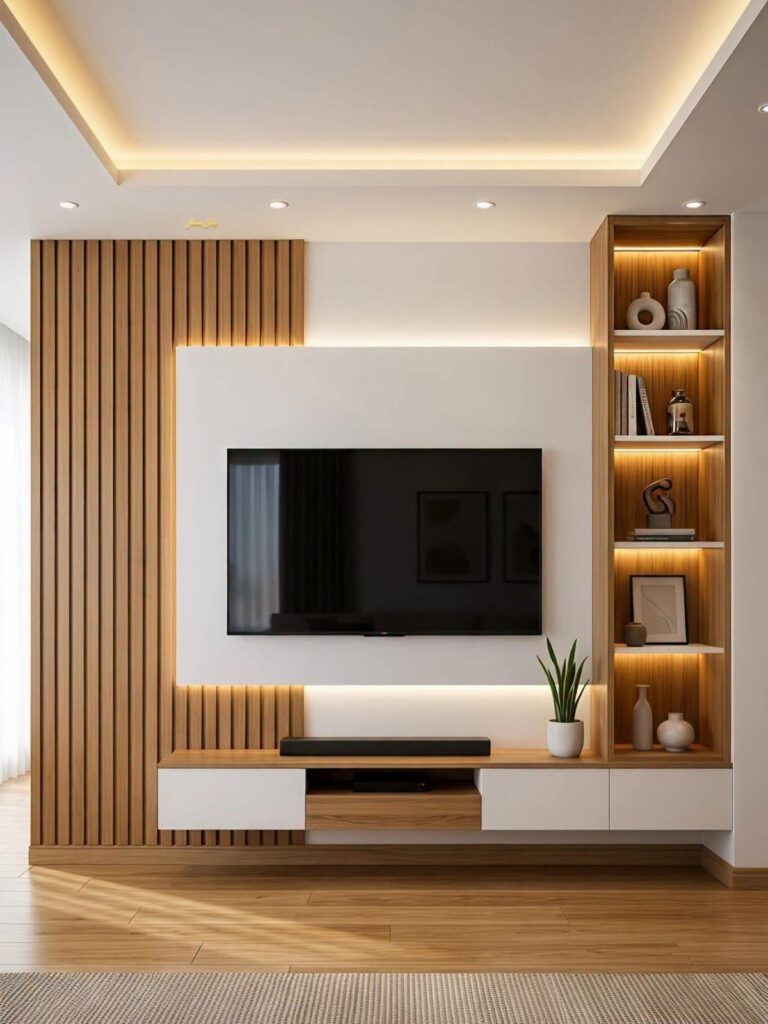
Which idea fits comes down to what you’re allowed to do to the wall: renters can hang a pair of matching framed art prints with a few small nails and no studs, while owners with a bigger budget can build an accent wall or put built-in shelving right into the wall itself.
Floating shelves sit in the middle, a few boards and brackets that must go into studs or proper anchors.
1. Accent Wall
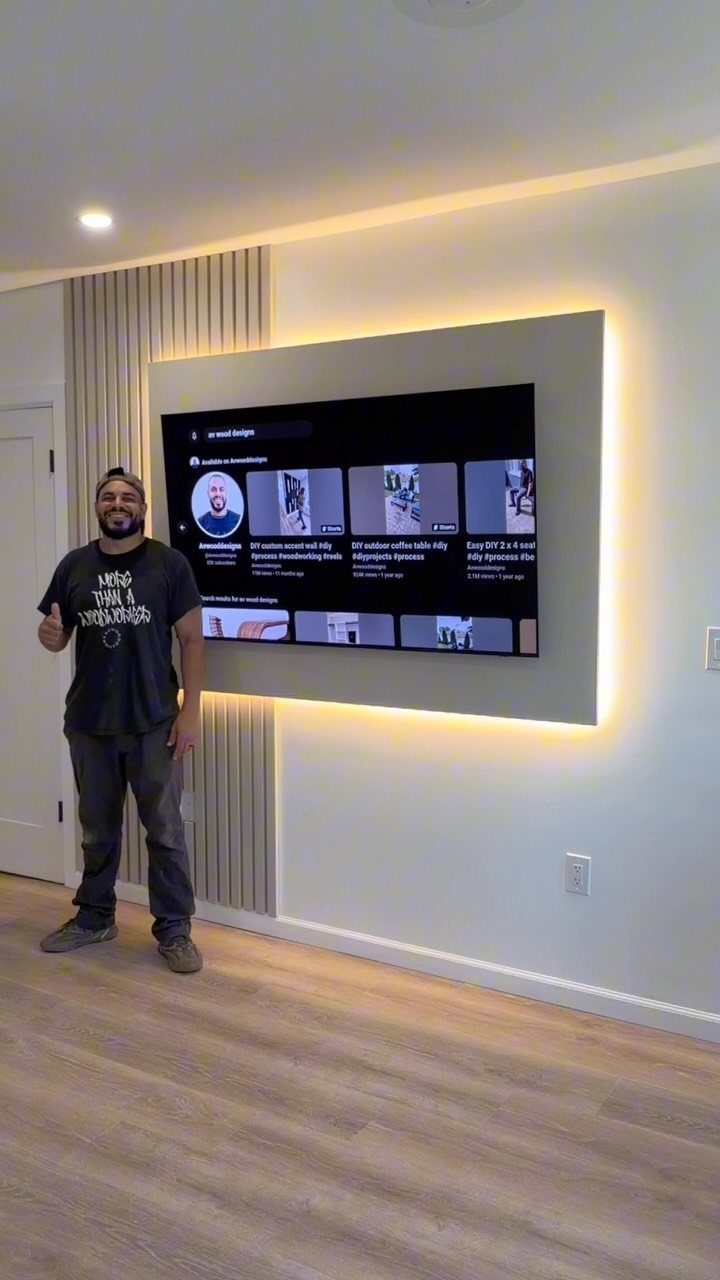
A slatted wood wall behind the TV gives the screen a frame, so the whole wall reads as one planned piece instead of a TV stuck on drywall. Vertical slats also make a ceiling look taller.
Backlighting is the upgrade I’d add. A warm strip behind or beside the slats softens the glow from a dark screen at night, and it keeps the wall from feeling flat.
Run the slats floor to ceiling if the budget allows. It costs more in lumber, but a partial wall tends to look unfinished.
2. Built-In Shelving
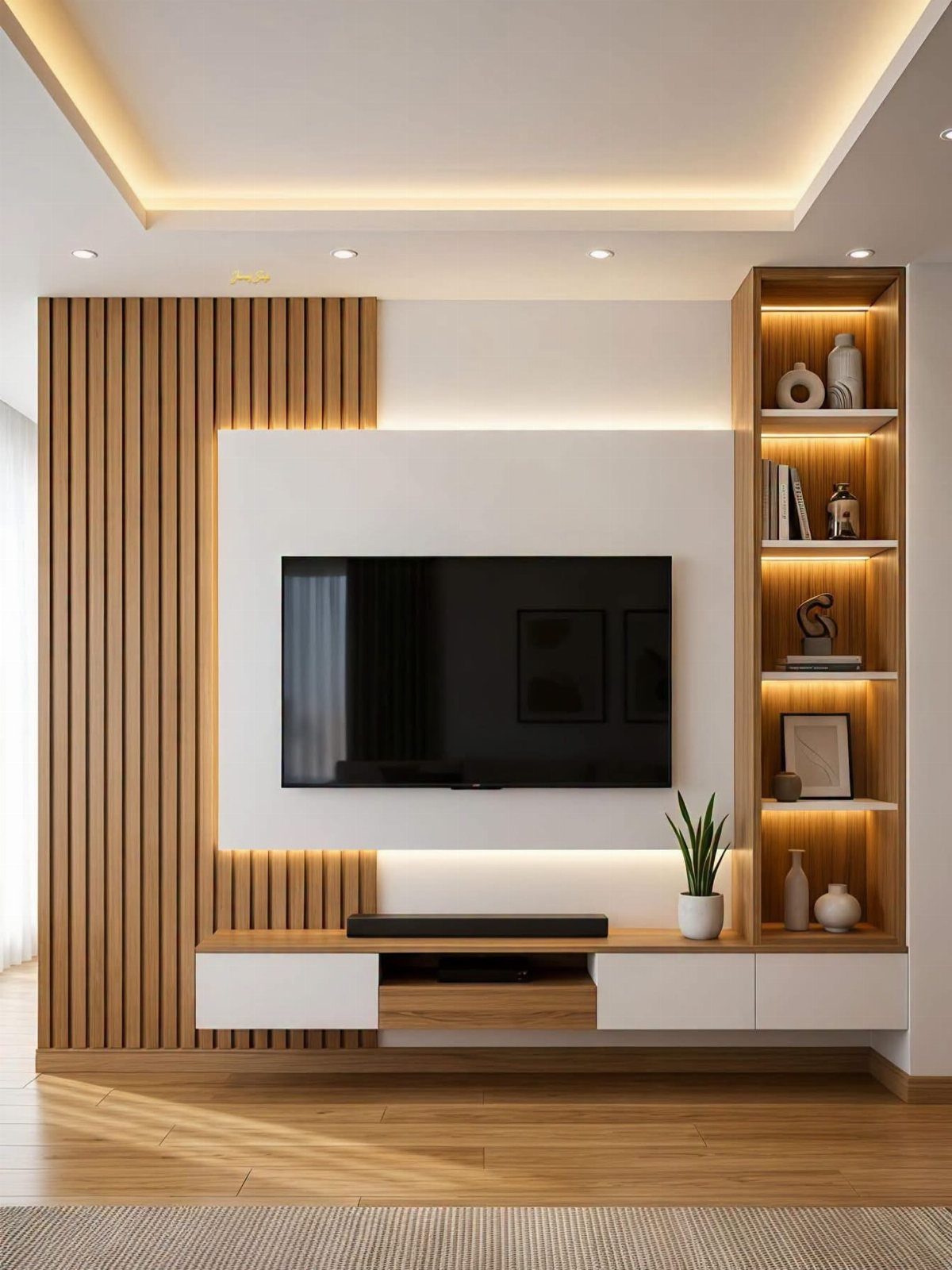
Shelving built into the wall, rather than hung on it, lets the TV sit in the same plane as books and objects. That’s what makes a setup look custom.
Integrated lighting does most of the work here. Light inside the shelves picks out the decorative pieces and gives the room a glow after dark.
I’d keep the objects sparse and grouped in threes: three per shelf at most, with empty space left on purpose. A white floating console below keeps the floor visible, which helps a smaller room breathe.
3. Floating Shelves
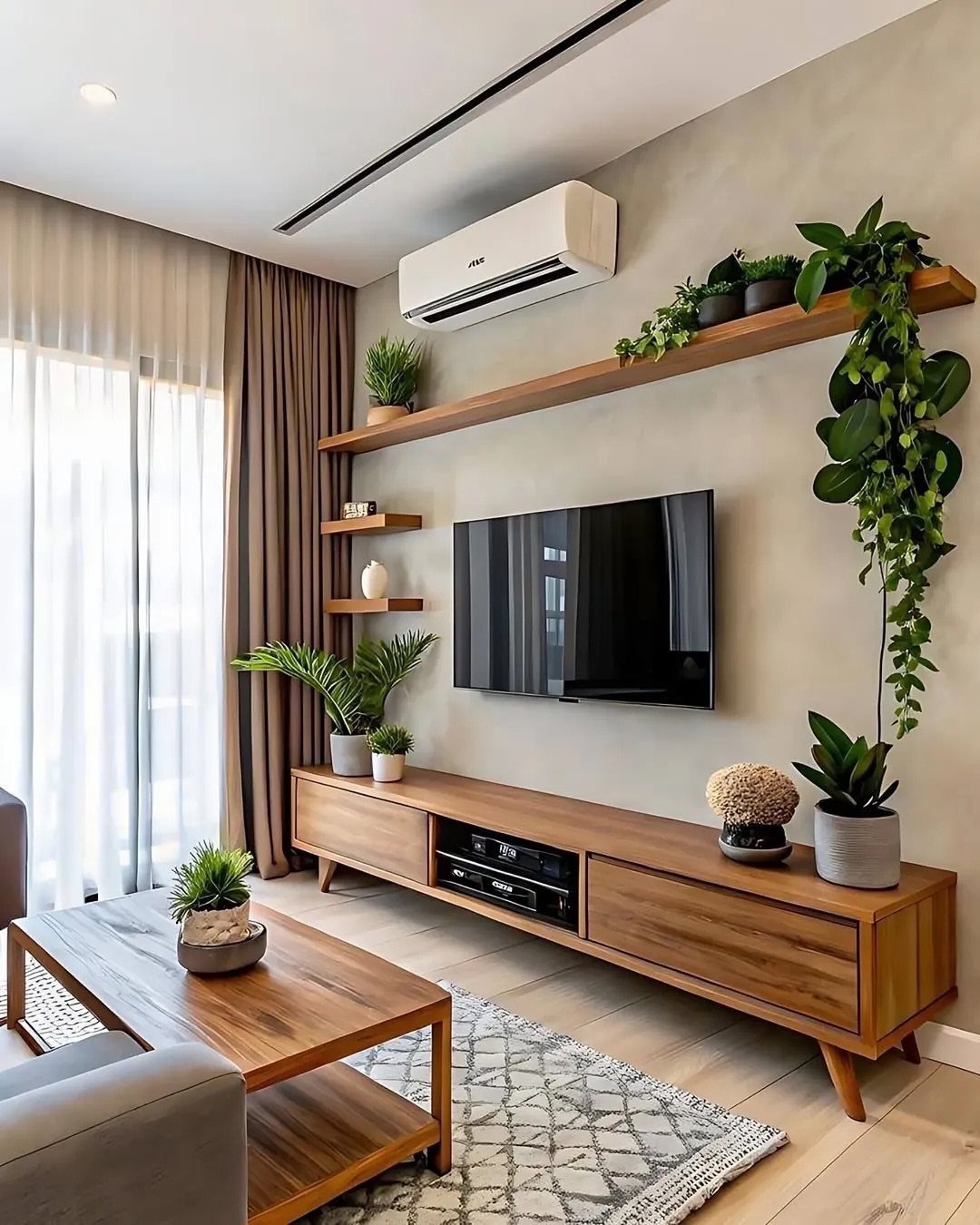
Floating shelves are the budget route: a few boards and brackets, and the wall above the TV starts working for you. One long shelf above the screen holds plants or decor without the cost of a built-in.
Trailing greenery softens the hard edge of a TV. I’d pick a shelf in the same wood tone as the console so the 2 read as a set.
Mount into studs or use proper anchors, and match the shelf weight to what the hardware can hold. Skip anything fragile directly over the screen.
4. Framed Art Prints
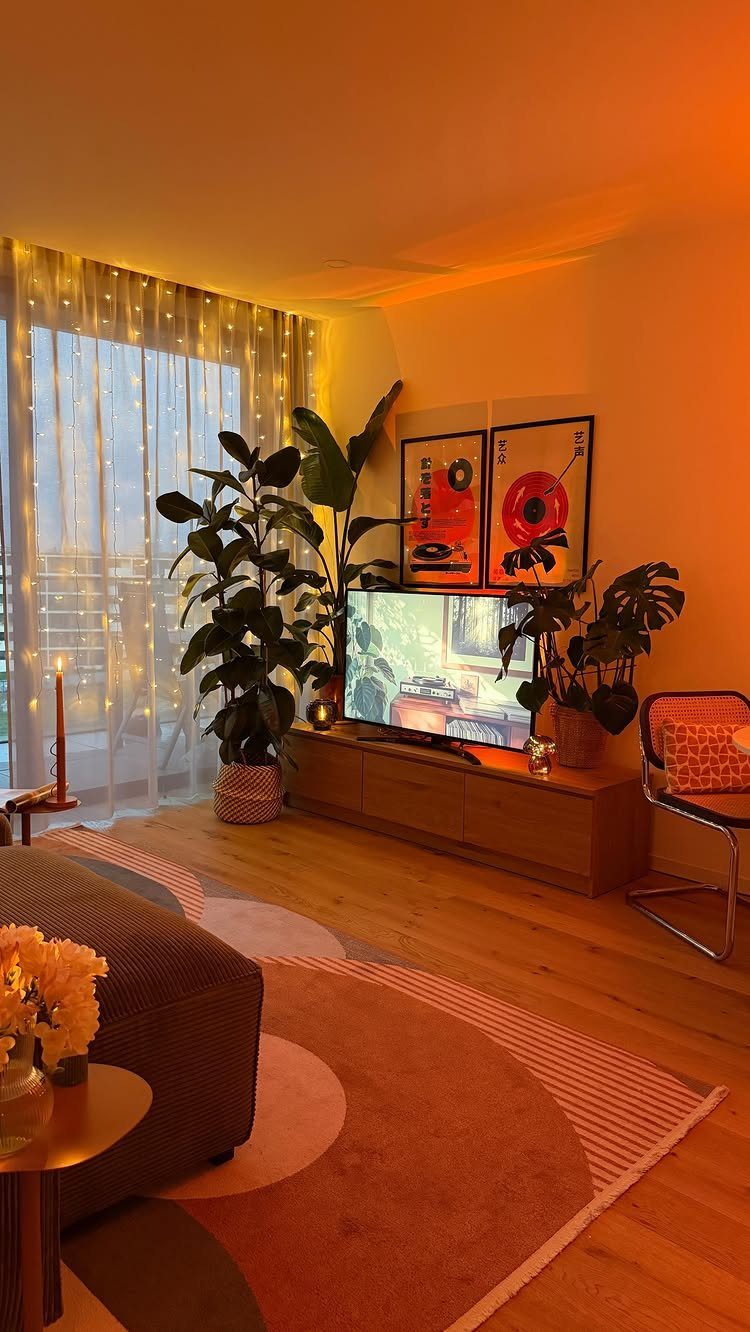
2 matching frames hung side by side over a console-mounted TV is the easiest fix on this list. 2 prints in the same color family read as a pair, and repeated red ties them into the rest of the room.
Hang them centered over the TV, with the gap between frames narrow and even. Matching frame finishes keep the pair calm.
I like this for renters: a few small nails, no drilling into studs, and an afternoon of work. Swap the prints whenever the room changes.
Creating a Cohesive Look
Balance comes from weight, not symmetry.
A TV is a big dark rectangle, so the decor around it needs enough mass to hold its own: a pair of frames on one side with a plant or lamp on the other works better than one small print floating alone.
Pick one material and one color family, then repeat them.
Clean cables belong in this too. Visible cords break the look faster than a mismatched frame, so hide them before you hang anything.
Avoiding Clutter
Clutter usually comes from uneven gaps.
Pick one spacing between frames and objects, measure it, and hold it everywhere. Painter’s tape cut to the frame sizes lets you check the layout on the wall before you make a hole.
Watch for 2 mistakes: mixing clashing frame finishes in a small area, and leaving cords visible.
Put a piece on each side of the screen, or one above and one beside, so no single corner of the wall carries all the weight.
Keep art from crowding the screen’s edge.
Choosing the Right Height
Hanging height decides whether the wall feels calm or cramped.
Stay inside the natural viewing cone: the area you see comfortably from the couch without tilting your head back.
Sit where you normally watch, look at the wall, and mark where your eyes land. Pieces near that zone are easy to enjoy and cause less strain.
If a gap remains between the TV and the ceiling, a larger statement piece or a tight cluster of smaller prints can fill it. Keep the cluster close enough to the TV to feel connected to it.
Frequently Asked Questions
Can I put art or decor directly above my TV?
Yes. 2 matching frames in the same color family, a long floating shelf with a plant, or a slatted wood wall all work.
Keep anything above the screen light enough for its hardware, mount into studs or proper anchors, and skip fragile pieces right over the screen.
How do I make my TV look less noticeable?
Build it into a frame: a slatted wood wall or built-in shelving makes the screen one part of a planned wall instead of a black rectangle on drywall.
A strip of warm LED light behind the set takes the harsh edge off a black screen after dark. Dangling cords pull the eye faster than a frame that doesn’t quite match, so tuck them away first.
What are some creative ways to decorate a small living room with a TV?
Floating shelves are the cheapest route: one long shelf over the screen holds plants or decor without the cost of a built-in.
A white floating console under the TV leaves the floor showing, and more visible floor makes a compact living room feel larger.
Two matching framed prints are an easy fix for renters, needing only a few small nails and an afternoon.





