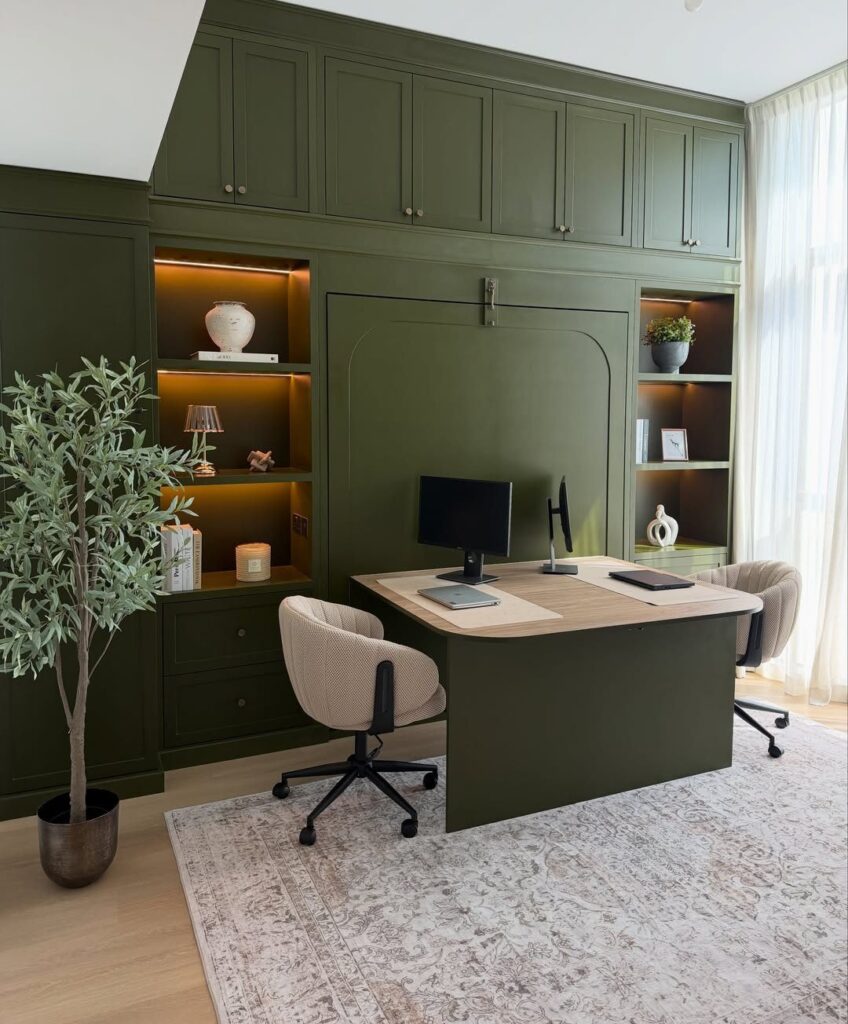
A small room suits the all-in-one unit or a bed tucked behind a sofa, while a room with more space can carry a separate workspace that stays usable with the bed up or down.
1. Murphy Bed with Built-in Storage and Desk
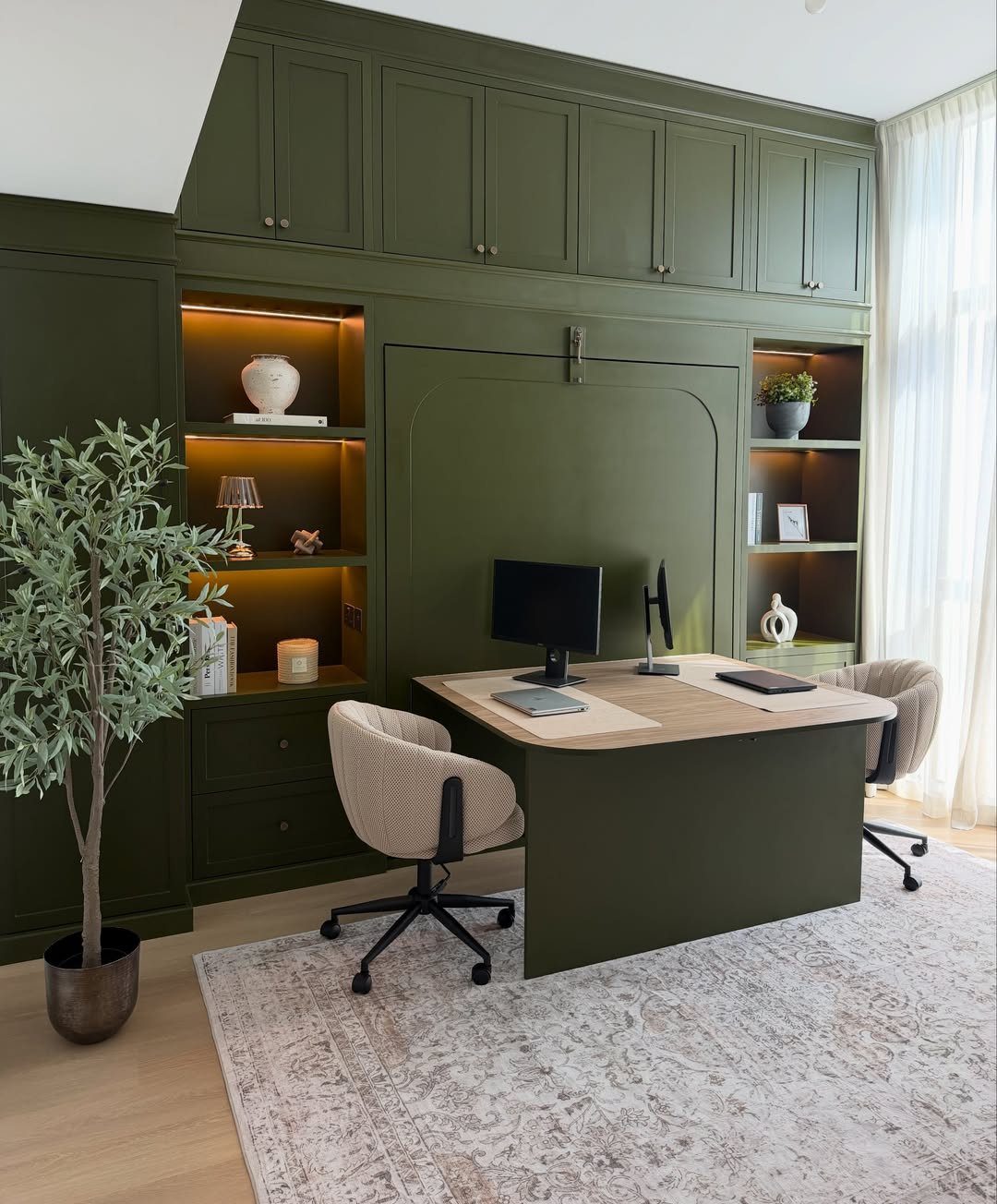
A dark green wall unit that folds the bed, desk and shelving into one run is the version I’d pick for a room that has to work as an office all week and sleep a guest on weekends.
One footprint does both jobs, so you skip buying a separate desk.
Paint is the cheap lever here.
A deep color on the whole unit makes it read as architecture instead of furniture, and the shelves hold books and decor that stay put when the bed comes down. Keep the desk surface clear of clutter on guest nights.
Custom built-ins cost real money, so price a ready-made unit before you commit.
2. Built-in Storage

Cabinets above the bed and drawers at its sides turn the wall around a Murphy bed into the storage the room was missing.
Overhead cabinets hold the things you reach for rarely, and the side drawers take paper, cords and linens.
A white finish keeps a bulky unit from crowding a room with a single window. I’d put bedding in the drawer nearest the bed so a guest setup takes minutes.
Skip any branding or text on the bed front if you can; a plain panel looks calmer when the bed is closed.
3. Murphy Bed Behind Sofa
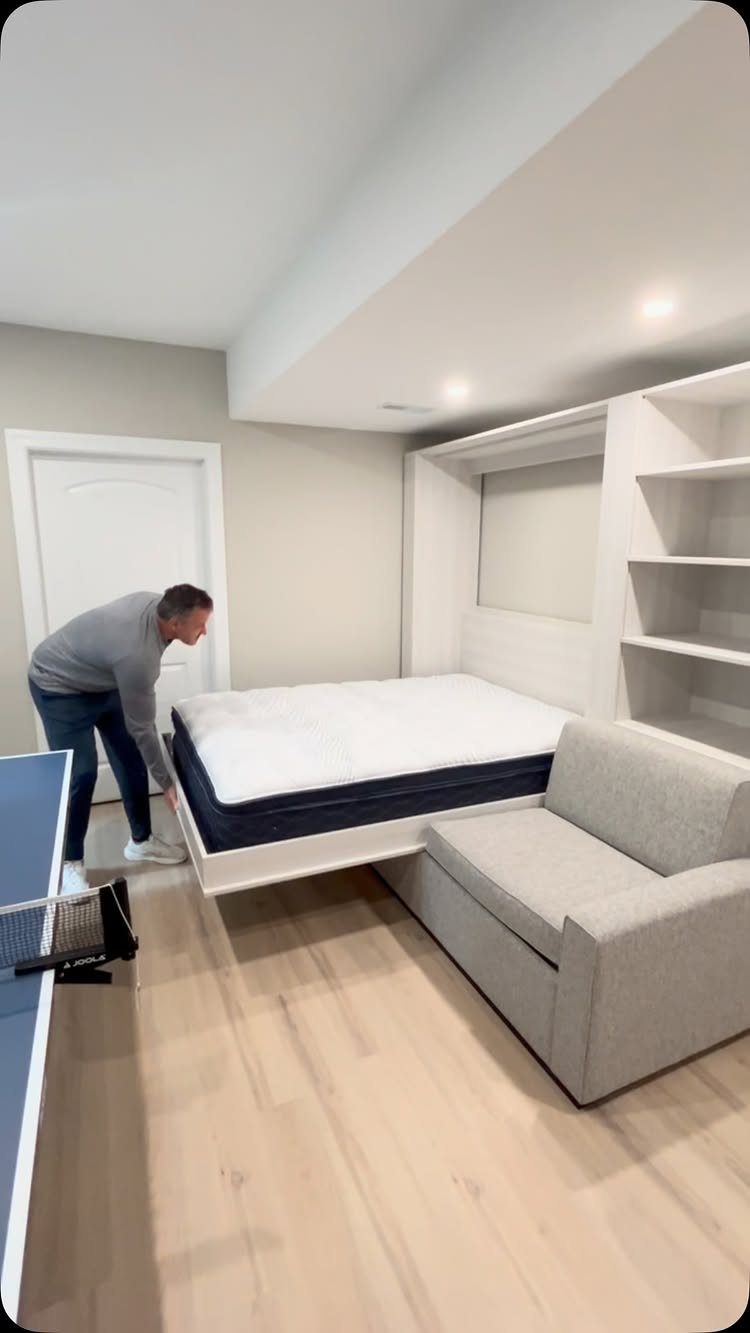
Tucking a white Murphy bed behind a gray sofa lets one wall serve as lounge by day and bedroom at night.
The sofa sits in front of the closed bed, so the room never feels like it has a bed in it.
Before buying, check that the sofa can slide out far enough for the bed to lower, and leave floor clearance for the mattress to swing down. A sofa on light, easy-gliding feet saves your floors and your back.
I like this best in a shared room, such as a den with a game table, where an office desk isn’t the main event.
4. Murphy Bed with Separate Workspace
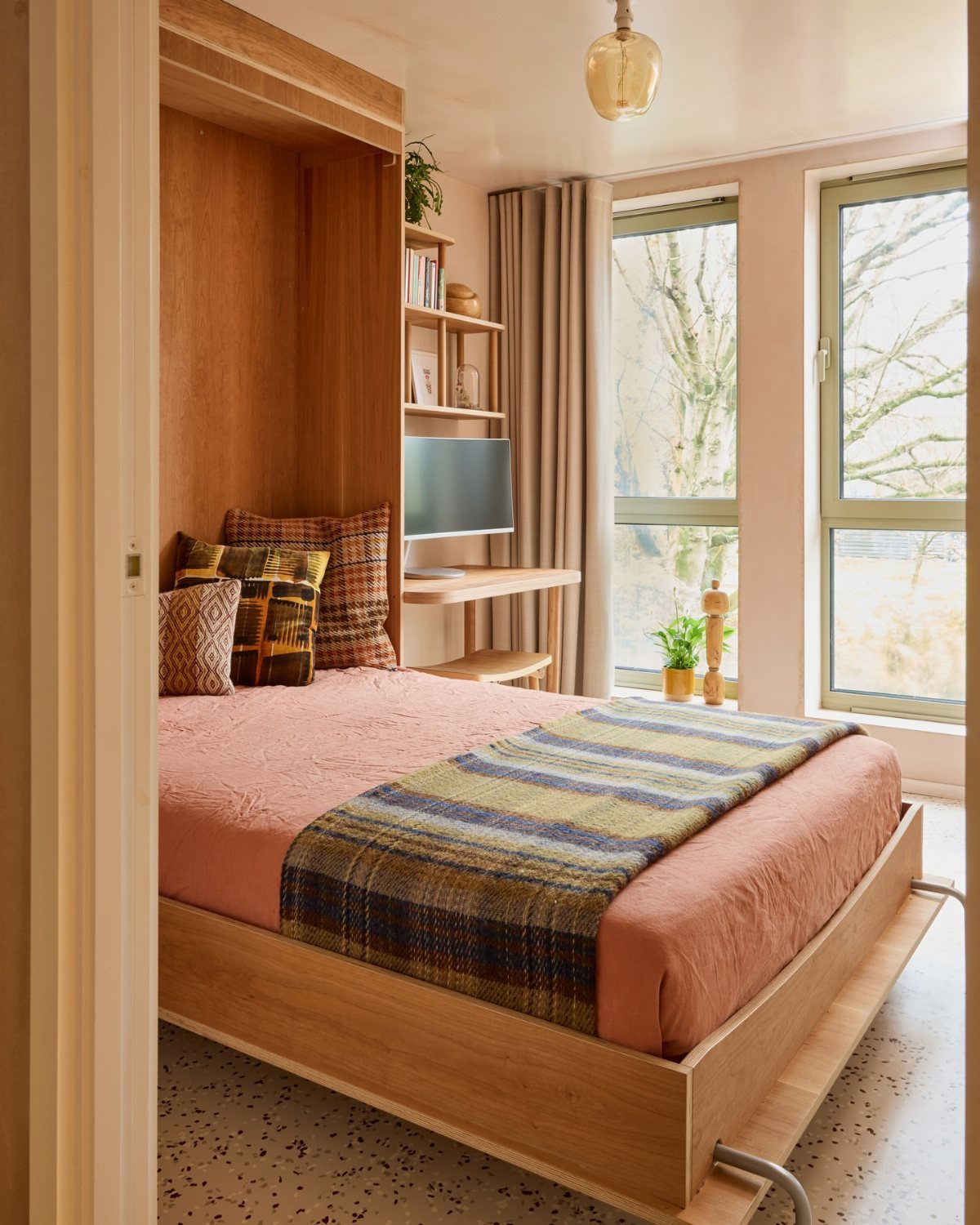
Pairing a wooden Murphy bed with its own desk, set alongside instead of built into the bed, keeps work and sleep from fighting over one surface.
The desk stays fully usable with the bed up or down, so a guest never means clearing your monitor.
Large windows help here, since the desk gets daylight and the open bed doesn’t swallow the room. Pick bedding that suits the wood, like a soft pink with a plaid throw, so the bed looks intentional when it is down.
This costs more floor space than an all-in-one unit, so measure first.
Choosing the Right Size
Measure 4 things before you order: bed width, closed depth, desk depth, and the clearance the bed needs to open. Write them on one sheet and tape it to the wall where the unit will go.
Before you buy, fold the bed down in your head: the desktop has to stay level, and the frame needs room to swing past your shelves and your chair.
A chair pushed back from the desk is the measurement people forget, and it decides whether the room works at 2 p.m. as well as at midnight.
Leave a little slack beyond the numbers. A unit that fits on paper but leaves no room to walk around the open bed will feel cramped within a week.
Mattress Compatibility
Mattress choice matters more than most buyers expect, because the bed spends its days standing on end. A mattress over 12 inches thick won’t fit most frames, so measure it at the puffiest spot instead of along the flat stitched edge.
Pick a mattress with an inner frame for support.
I’d skip all-foam types: with no frame, they can slump after long stretches stored upright. Memory foam and older latex foam run heavy and don’t hold their shape standing up.
A futon mattress won’t work at all.
Some makers sell mattresses built to stand on end, which is worth asking about if you’re buying the frame new. Standard sizes are Twin, Full, Queen, Eastern King, and California King.
Installation Considerations
Settle the mattress before the installer arrives, because the mechanism may need adjusting to match it.
If you’re using your own mattress, have it in the room on install day so the lift can be set for its actual weight and thickness.
Take the measurements again once the mattress is chosen, not just when you planned the room. A thicker mattress changes how the bed sits when closed.
If you’re buying a mattress made for upright storage, a model made to stand on end is less likely to slump, so ask which one the unit was set up for.
Frequently Asked Questions
How much room do you need for a Murphy bed?
Measure the bed’s width and depth when closed, the desk surface depth, and the arc the bed travels as it lowers.
Account for chair clearance behind the desk, which most people skip until they realize the room doesn’t function while they’re working.
Add a few inches of buffer, since a layout that barely fits on paper usually feels tight once you’re moving around the open bed.
Do they make queen size Murphy beds?
Yes.
Most manufacturers build Twin, Full, Queen, and King sizes, with California King available from some lines. A bigger bed takes more width and more floor clearance to lower, so check those numbers against your room before ordering.
Who makes the best Murphy bed hardware?
Several manufacturers make good hardware, so compare warranties more than brand names.
Look for a lifetime warranty on the lifting mechanism and a stated weight capacity; one maker lists 2,500 lbs. Buy your mattress first, since the hardware gets calibrated to its specific weight and height.





