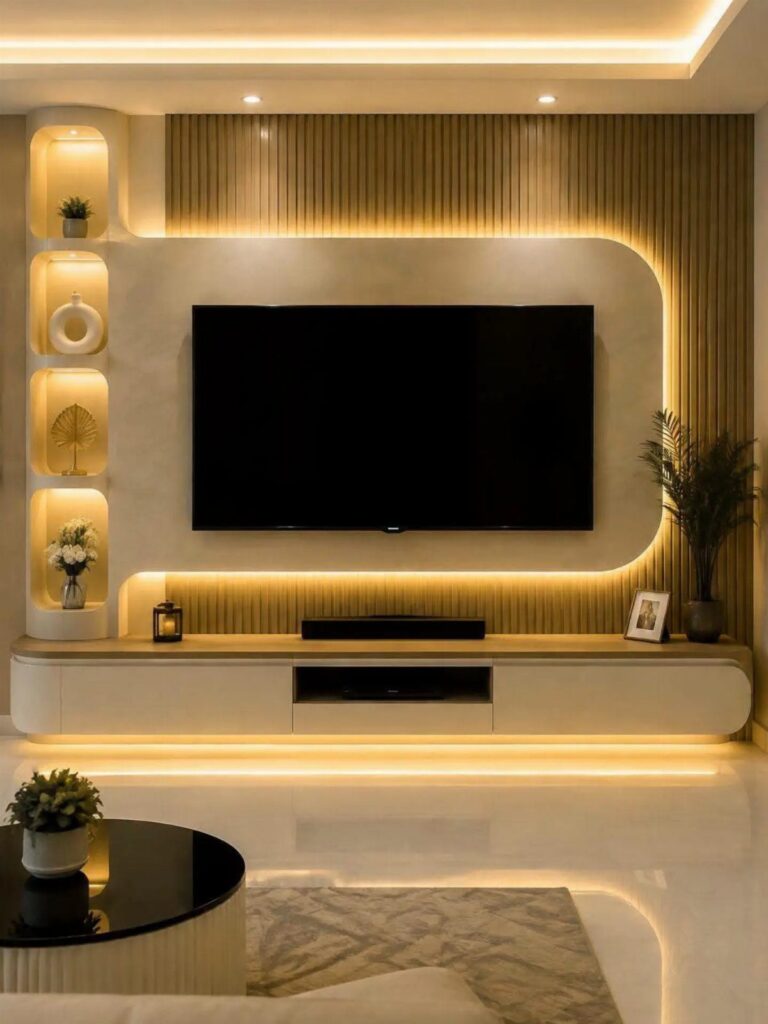
Family TV rooms in this list run from a screen that slides across the wall on a wooden track to a recessed niche framed in slats, and the choice between them comes down to how much floor and wall your room can spare.
A corner mount works when floor space is tight; a longer console or a slat feature wall fits when you have the width. Check the seating position first, because the sofa decides where the screen can go.
1. Mount the TV Above a Fireplace
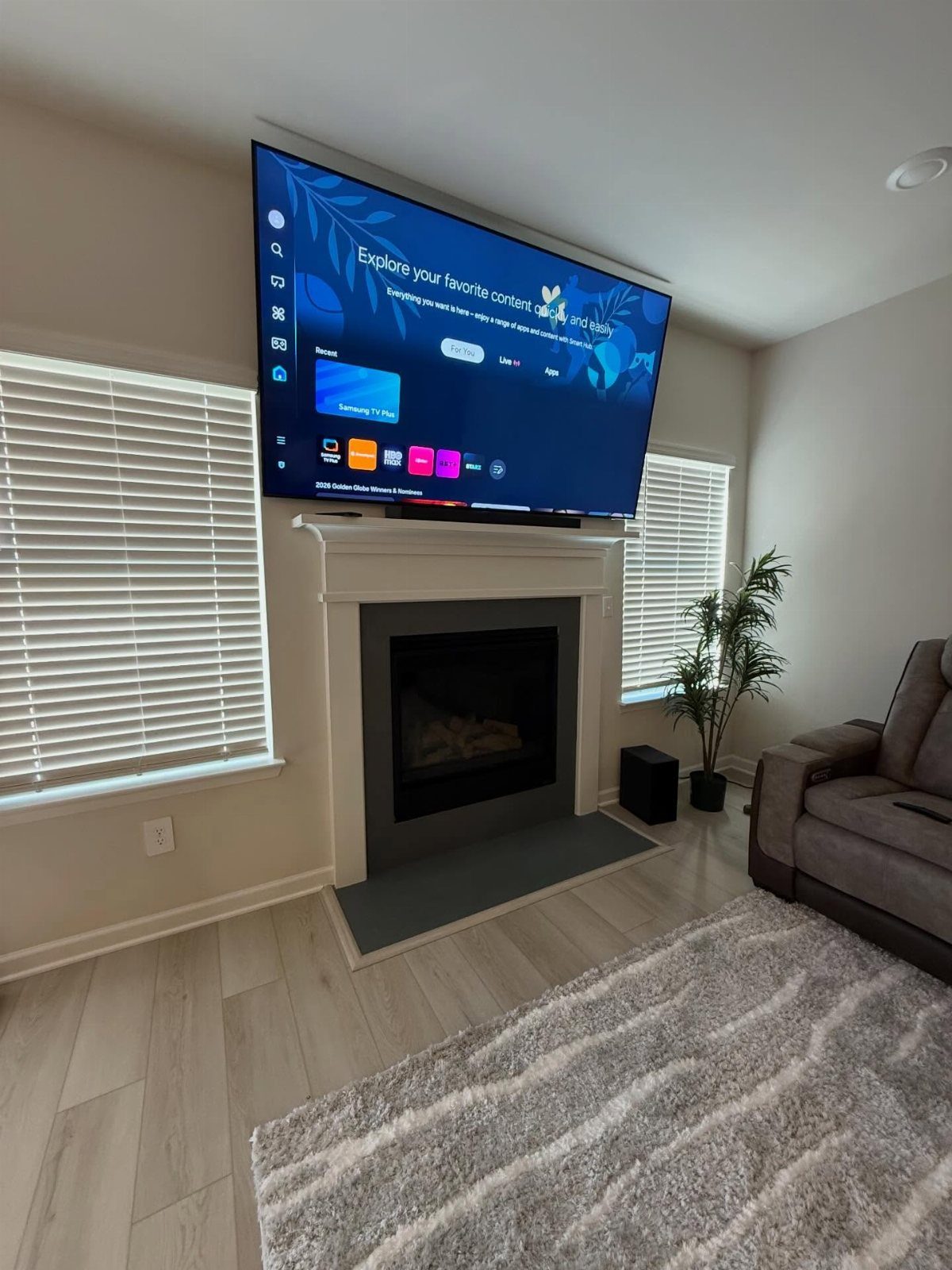
A TV above the mantel puts the screen where the room already points, so the sofa, rug and fireplace all face one focal wall and no extra media furniture is needed.
That saves floor space, which matters in a family room that has to seat everyone.
White works well here. A white mantel and surround let the black screen sit calmly against the wall, and a plant at one end softens it.
Check the viewing height from the sofa before you drill; a screen mounted high can feel awkward to look up at for a whole movie.
2. Build a Custom Storage and Display Unit
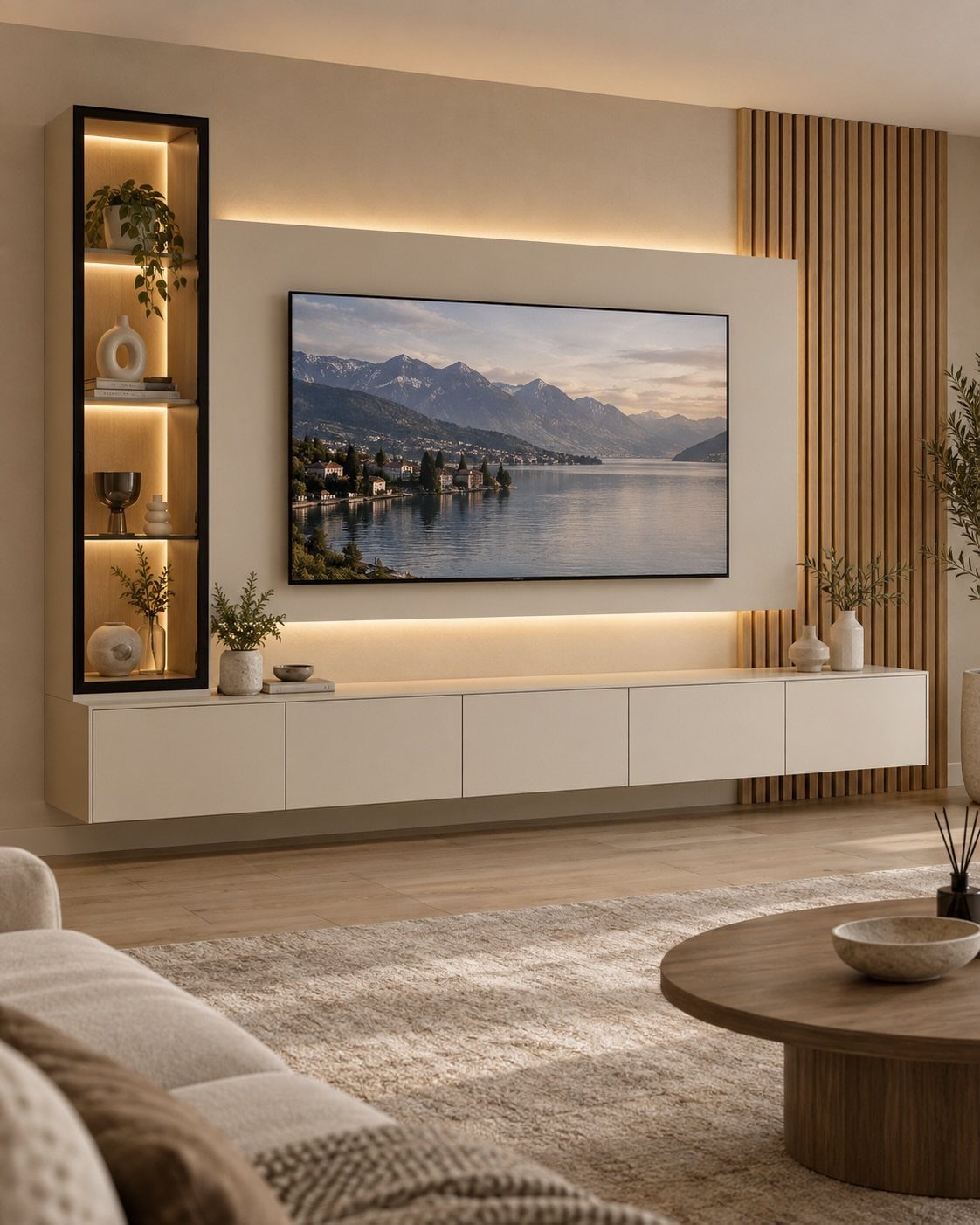
A floating cabinet with a lit display shelf beside the TV gives a family room one wall that handles storage and looks planned.
The white cabinet hides controllers, game discs and board games, while the open shelf holds the few things worth showing.
I like the LED lighting here because it makes the shelf glow after dark and keeps the screen from being the only bright spot. Wood slats behind the unit add warmth against all that white.
Build the cabinet to suit your clutter, not the other way around. Keep closed storage for the messy stuff and the lit shelf for a few objects.
3. Relaxing TV Screensaver
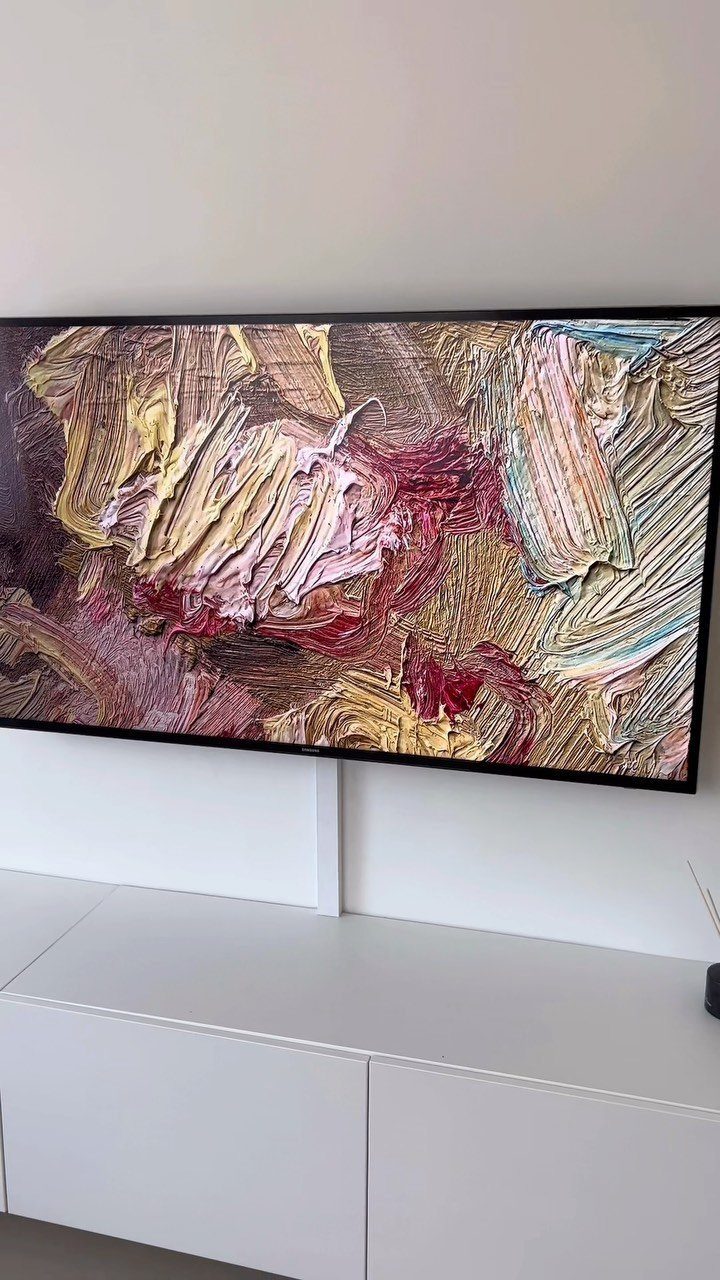
Between shows, a TV can hang a colorful abstract painting on its screen and stop being a black rectangle.
Pick art with plenty of color and texture; flat, dark images fade into the bezel.
Set the TV to an art or ambient mode if it has one, or play a still image from a USB drive or a streaming app.
One limit: a screen showing a painting is still running, so it uses power. Turn it off when nobody is in the room.
4. Keep Wires Out of Sight
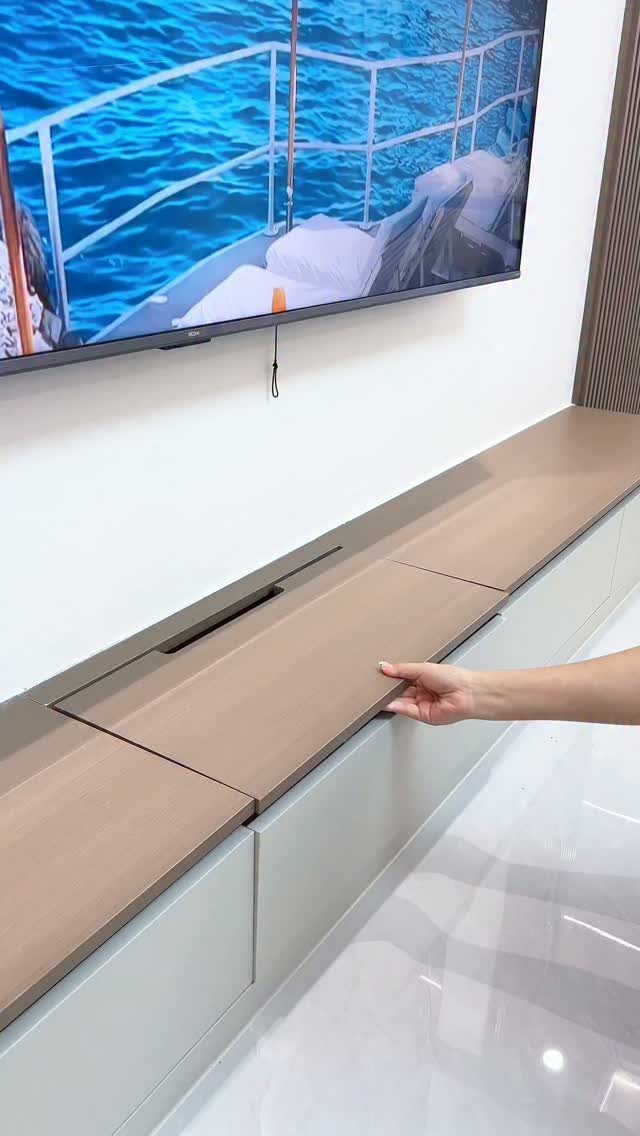
Cable management starts with the furniture. A console with a lift-up wooden panel and a slot behind it lets cords drop out of sight, so the TV and its stand look clean from the sofa.
When you shop, look for a console with a built-in cable opening instead of adding a fix later. Gather the cords from the TV, box and speakers, and route them through the slot together.
Label each plug before you tuck it away. Behind a panel, identical black cords are impossible to sort when something stops working.
5. Surround Your TV with Decorative Items
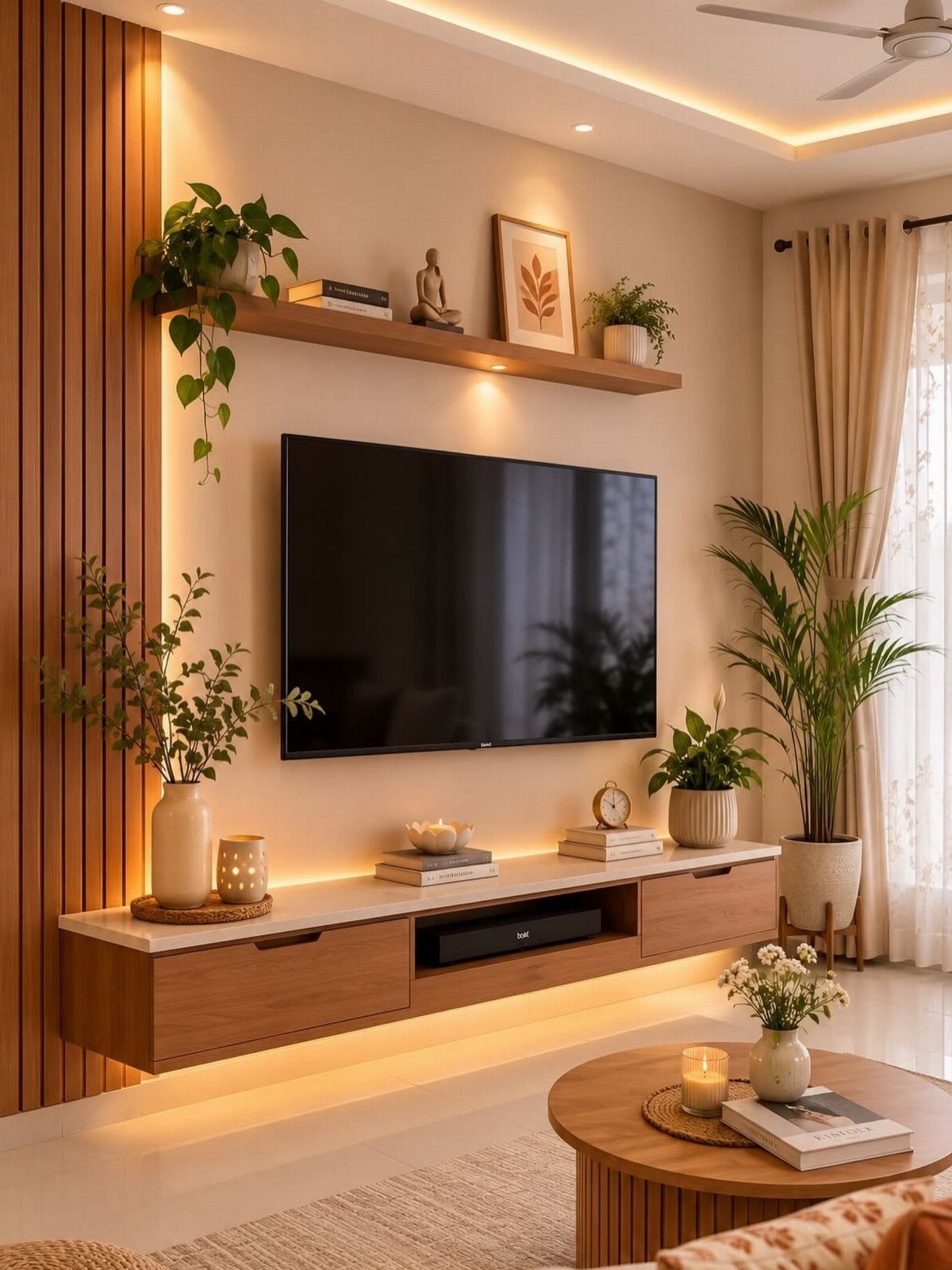
I would keep the decor in small groups: a plant, a framed piece, one or two objects per shelf. Crowding every surface makes the TV look lost in the clutter.
Mix heights, with a trailing plant up high and something low and sturdy on the console, so the wall reads as layered instead of lined up.
6. Place the TV in the Corner of the Room
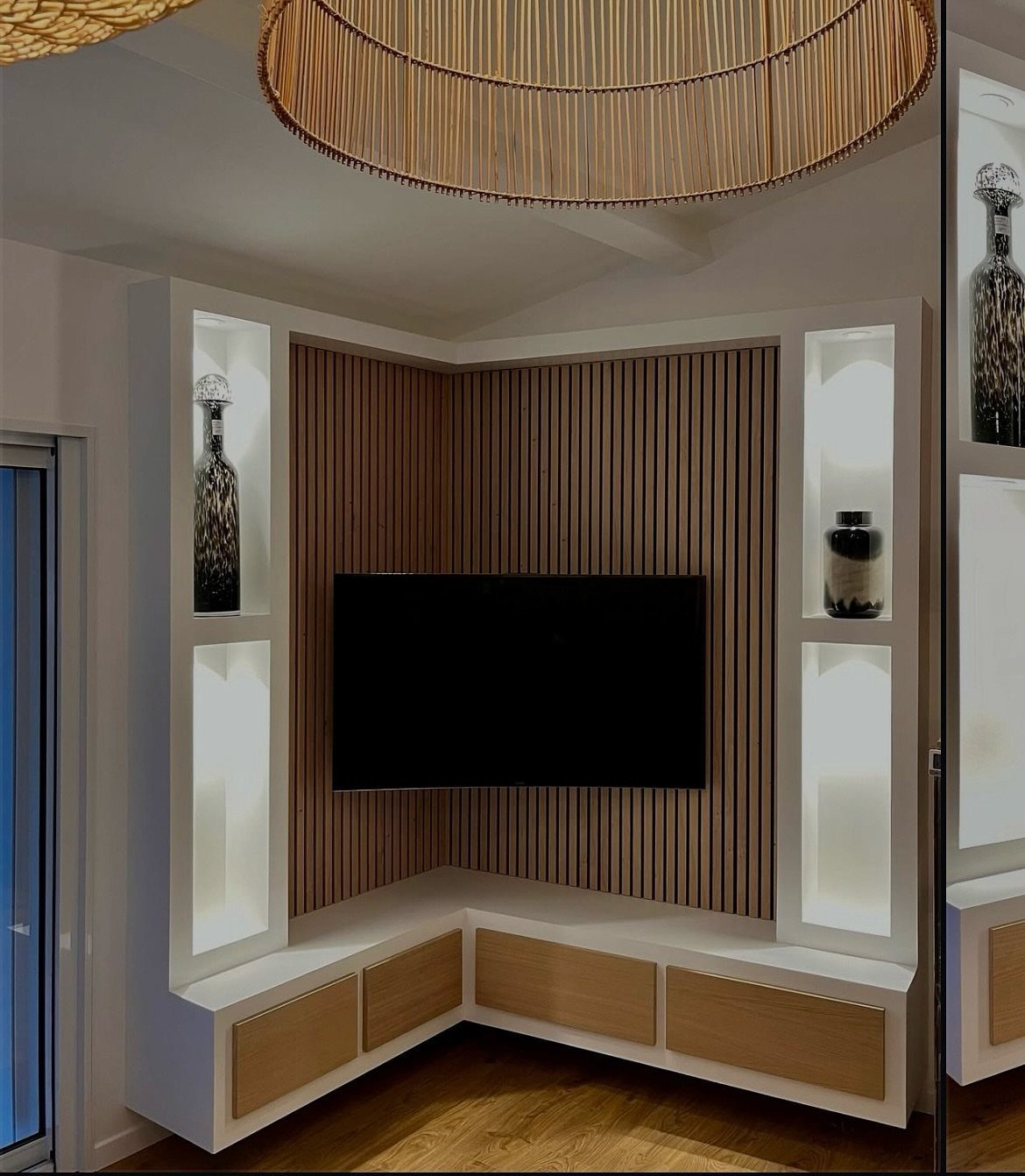
A corner placement frees the main wall for something else, like the shelving and woven pendant that get attention here. Angling the TV into the corner leaves more open floor and gives the room a less predictable layout.
Slat walls on both sides of the corner add warmth, and lit shelves flanking the screen soften the contrast. A white corner cabinet below keeps storage in what would otherwise be dead space.
Check the seating before you commit. Everyone should be able to see the screen without twisting, so a sectional that faces the corner works better than sofas set straight on.
Ensuring that your family room ideas incorporate the TV will prevent the item from being left behind and awkwardly placed in an area that doesn’t coordinate with your family room design scheme.
7. Striking Feature Wall
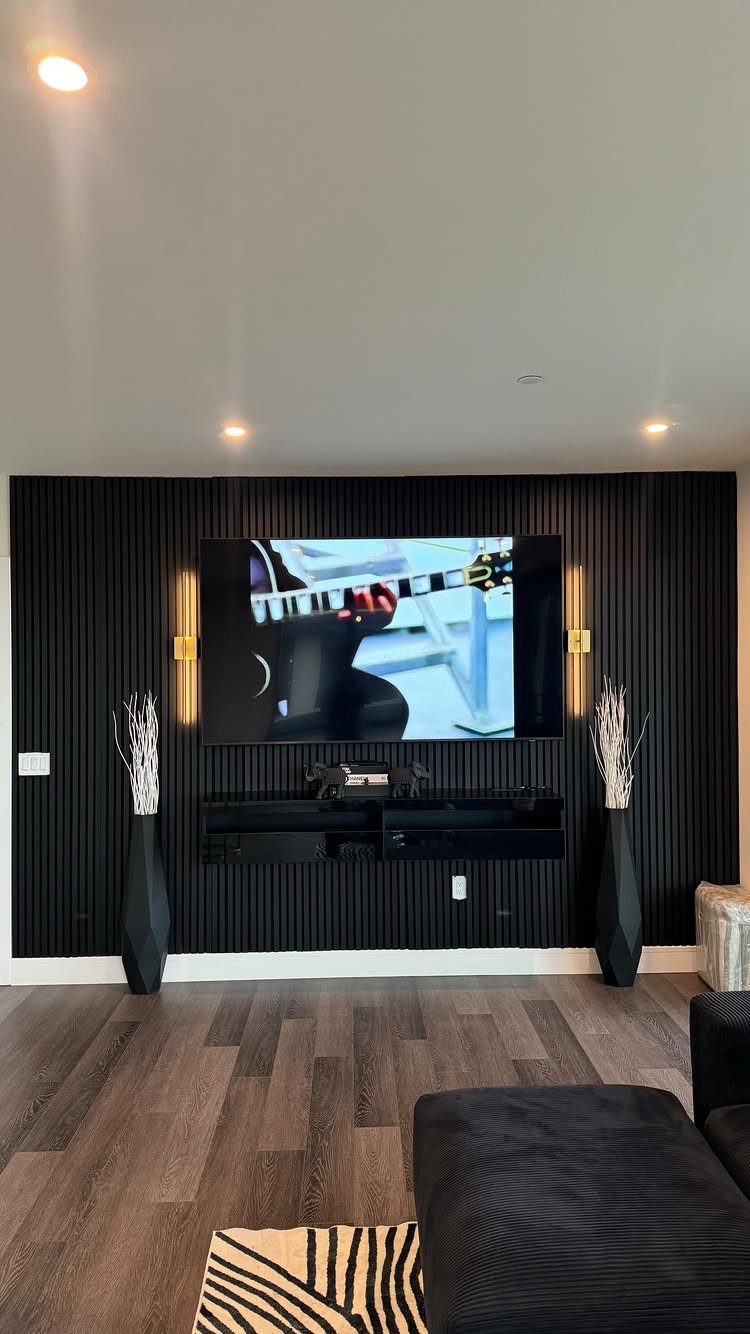
Black slats turn a TV wall into a backdrop instead of a problem. A dark screen disappears against dark paneling, so the wall reads as one calm surface rather than a rectangle on a wall.
A black wall in a family room can feel flat and heavy after sunset.
I would keep everything else restrained: one floating shelf, a couple of vases, nothing more. Dark wood flooring suits this look, but a room with little daylight may want a lighter rug to balance it.
8. Sliding Screen
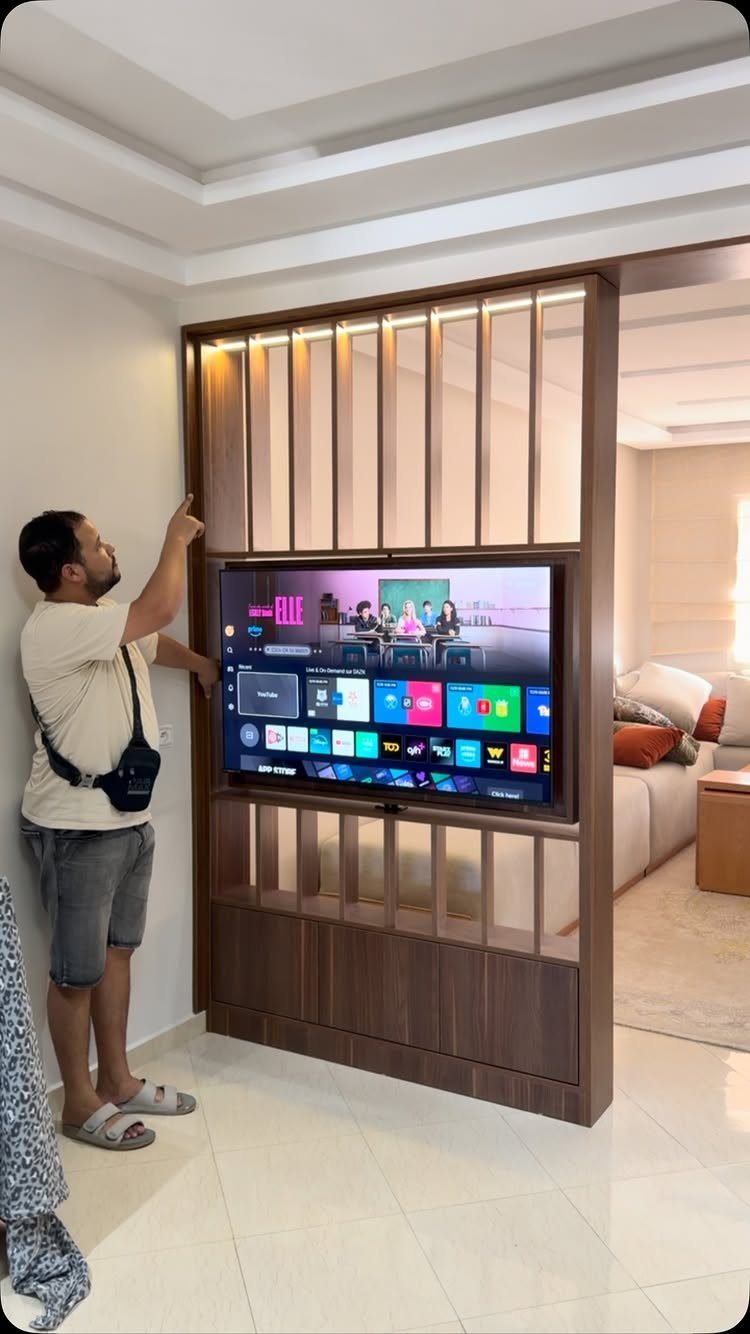
A sliding wooden screen with the TV built into it lets one wall do two jobs: it divides the room and holds the screen.
Slide it across when the family gathers to watch, and pull it back when you want the space open.
Wood slats give the partition warmth that a plain black panel would not. Because the TV moves with the screen, check that the cords have enough slack to travel the full track before anything gets fixed in place.
This is a bigger build than a wall mount, so I would plan it for a room that truly needs a divider.
9. Mount the TV on or Above a Buffet
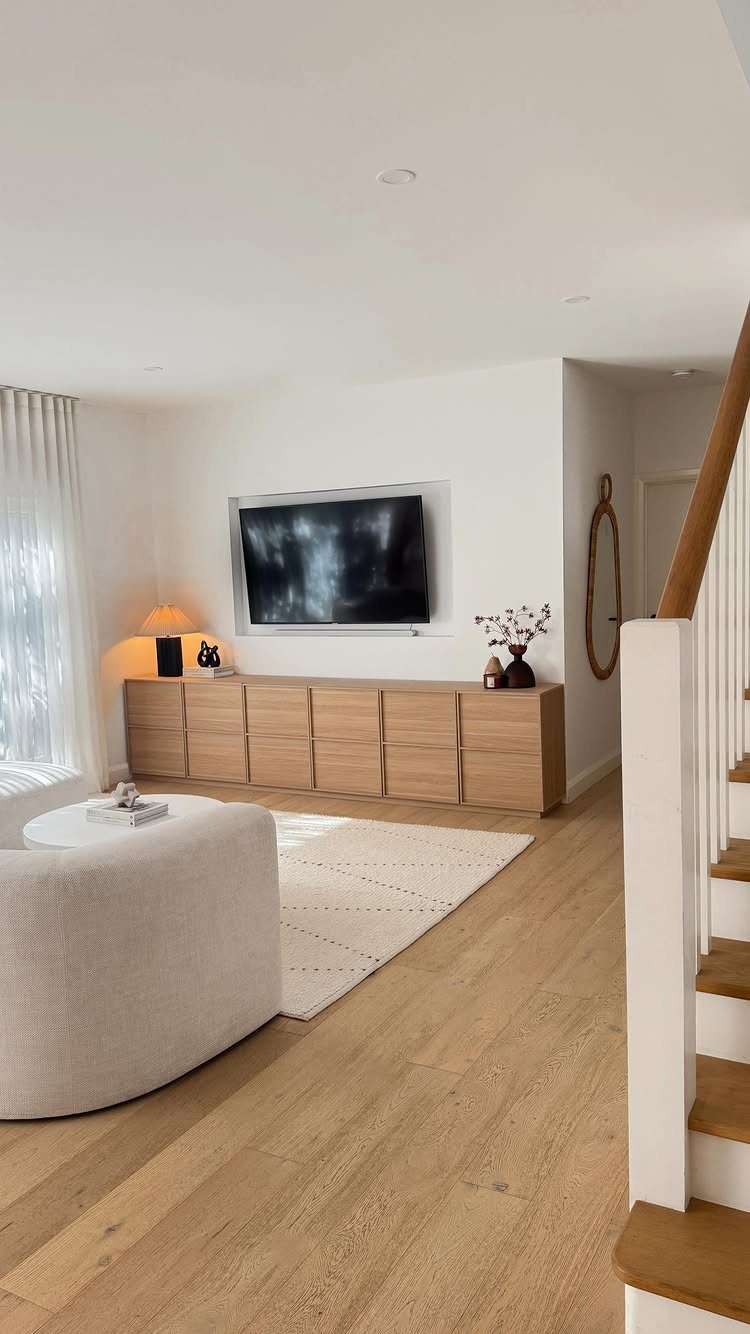
2 matching buffets set side by side make a long TV unit for a fraction of what custom cabinetry costs. The maker of this one says each buffet is 160cm, so together they form a 3.2m unit, built for under $850.
Light wood keeps a wide piece from feeling bulky in a room with a white sofa.
Measure your wall first. A run that long needs the space, and one buffet alone works fine in a smaller room.
10. Recessed Niche with Wood Slats
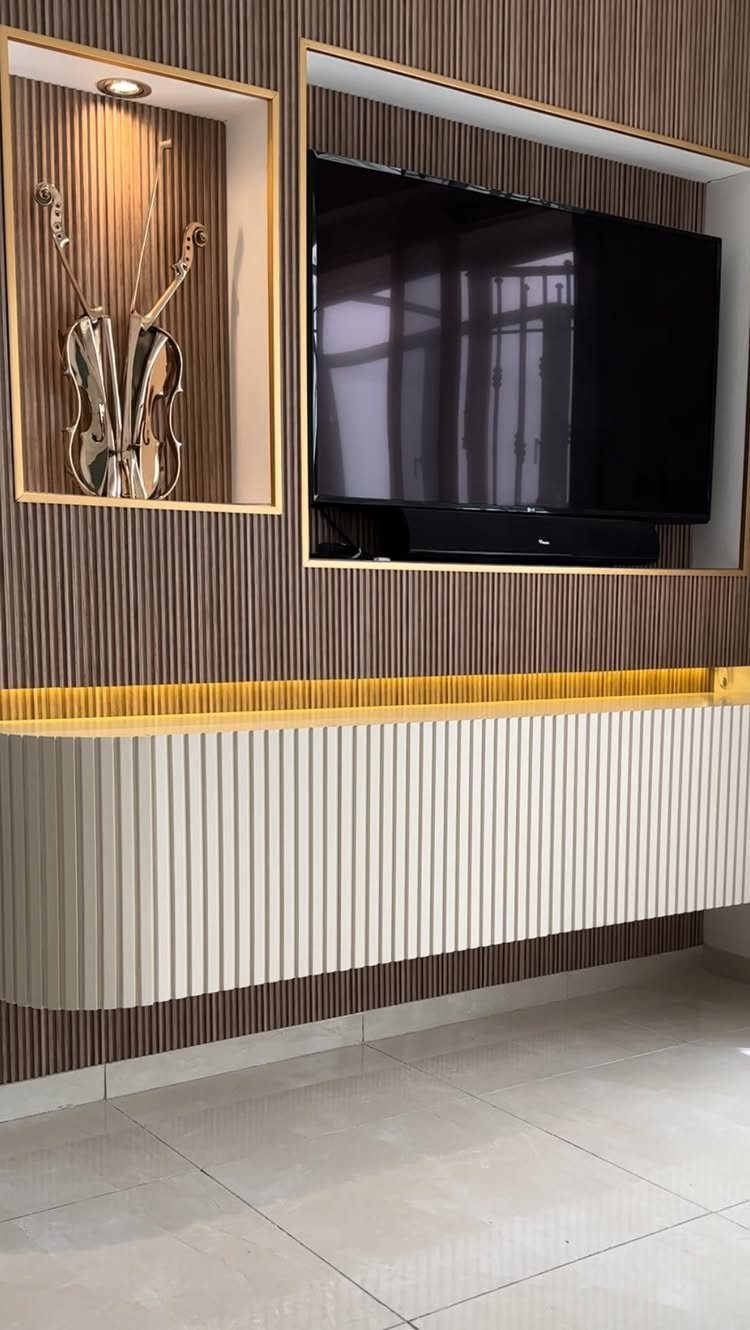
Setting the TV into a recessed niche with a trim around it makes the screen look built into the wall instead of hung on it.
Gold edging frames it like artwork, and a second niche can hold a sculpture to balance the black glass.
Vertical wood slats make a good surround because they add texture without competing with the screen. A floating white cabinet below keeps the floor clear and gives you storage.
This takes real planning: the niche depth has to fit the TV and its cables before you build, so decide on the screen first.
11. Low Wooden Media Console
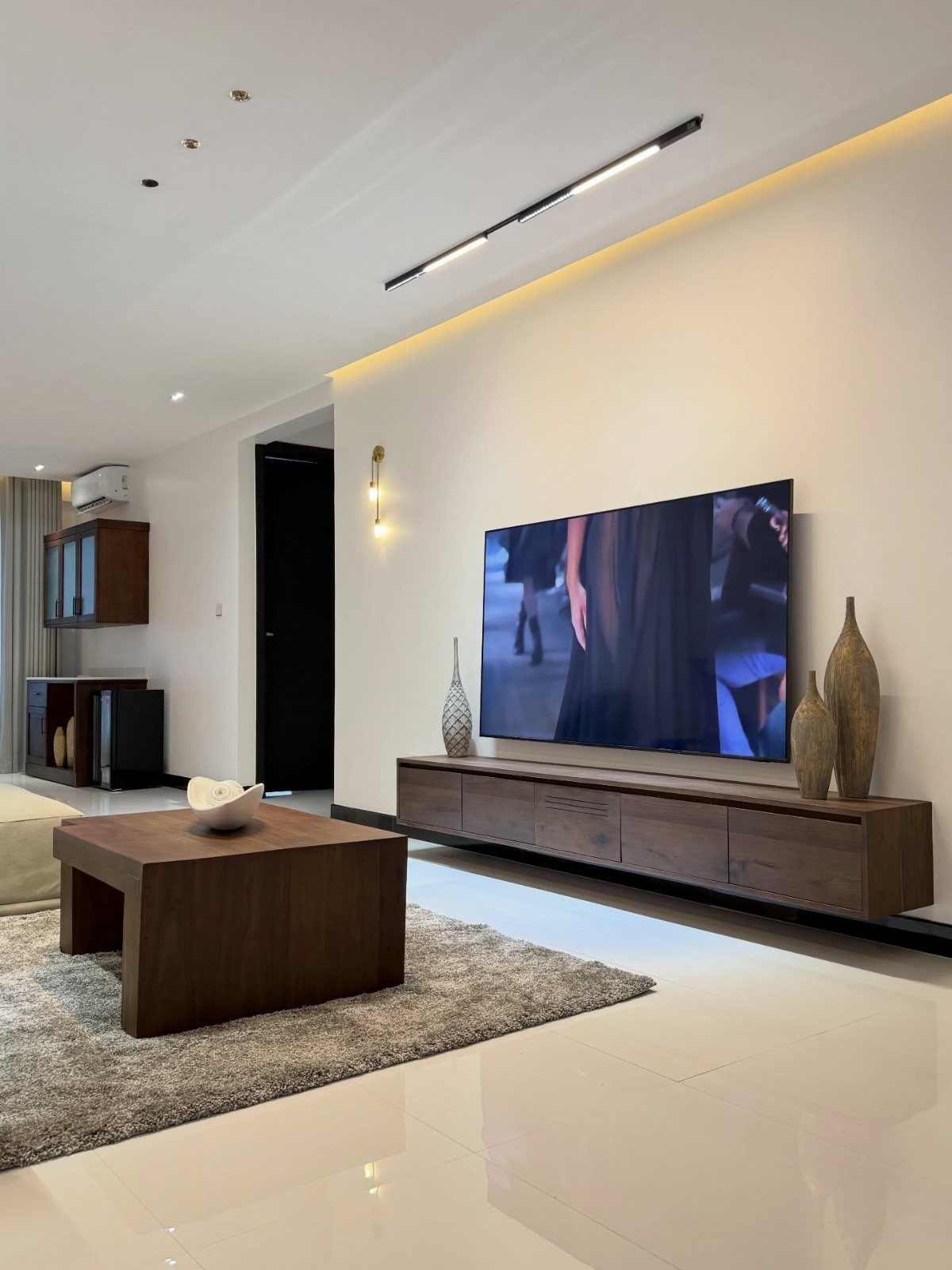
A long, low wooden console keeps the TV at a comfortable eye level for people sitting on a sofa, and it keeps the room feeling open.
I like it best with a large screen, since the low base stops the TV from towering over everything else.
Match the wood tone of the coffee table so the 2 pieces read as a set. A grey rug and white walls let that warm wood stand out without extra decor.
Pick a console at least as wide as the TV, so the screen never looks bigger than its base.
Frequently Asked Questions
Where do you position a TV in a family room?
Put it where the room already points, such as above a fireplace mantel, so the sofa and rug face one focal wall.
A corner works too and frees the main wall, but the seating has to face it so nobody twists to see.
How can I disguise my TV?
A sliding wooden screen with the TV built into it is the strongest option: slide it across to watch, pull it back to open the room.
A dark screen also vanishes against black slat paneling. Leave enough cord slack if the TV moves, and turn the screen off when no one is in the room.





