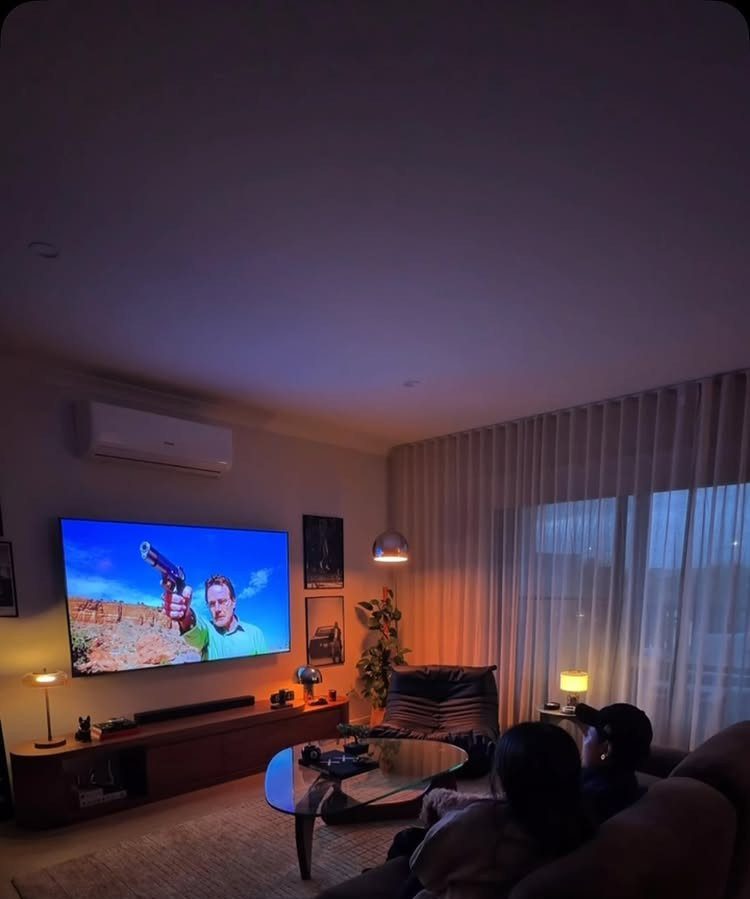
The amount of natural light decides which ideas work: a basement with no windows handles a projector and acoustic panels without extra prep, but a room with glass on 2 walls means blackout shades every time you sit down to watch.
The list runs from plug-in dimmers and floor seating on a renter’s budget to slatted accent walls with hidden LED strips.
1. Dimmable Lights
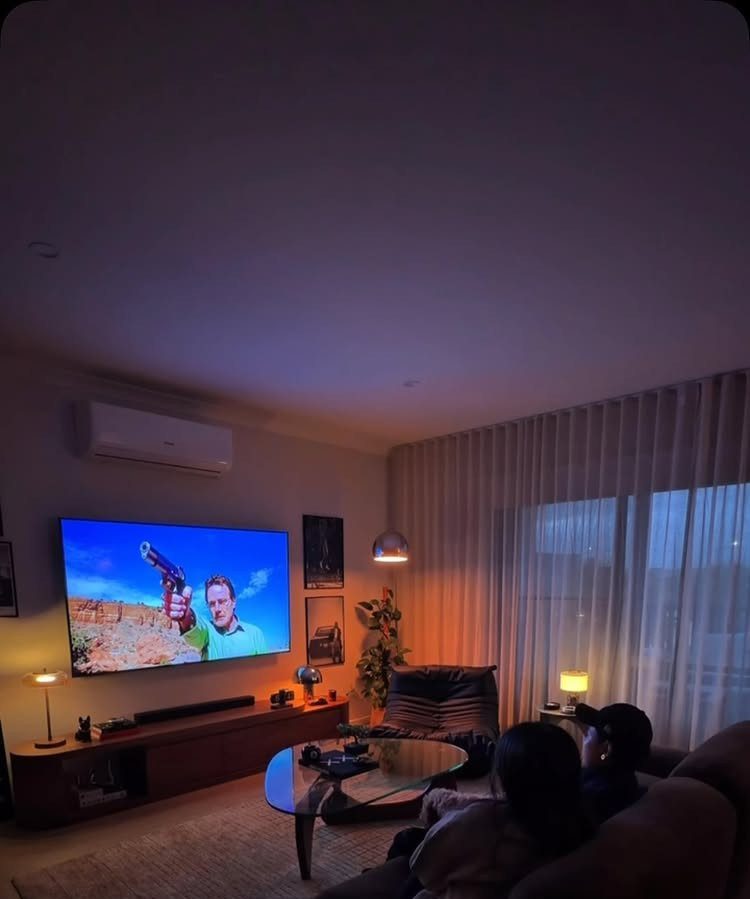
Low, warm lamps do more for a movie night than a bigger TV. Put them at side-table height so the glow stays below the screen and doesn’t bounce off it as glare.
Lamps on dimmer switches or smart bulbs let you drop the room to a faint glow once the movie starts, then bring it back up for snack runs. Warm-toned bulbs feel cozier than cool white ones.
Plug-in lamps keep this renter-friendly, with no wiring needed.
2. Plush Seating
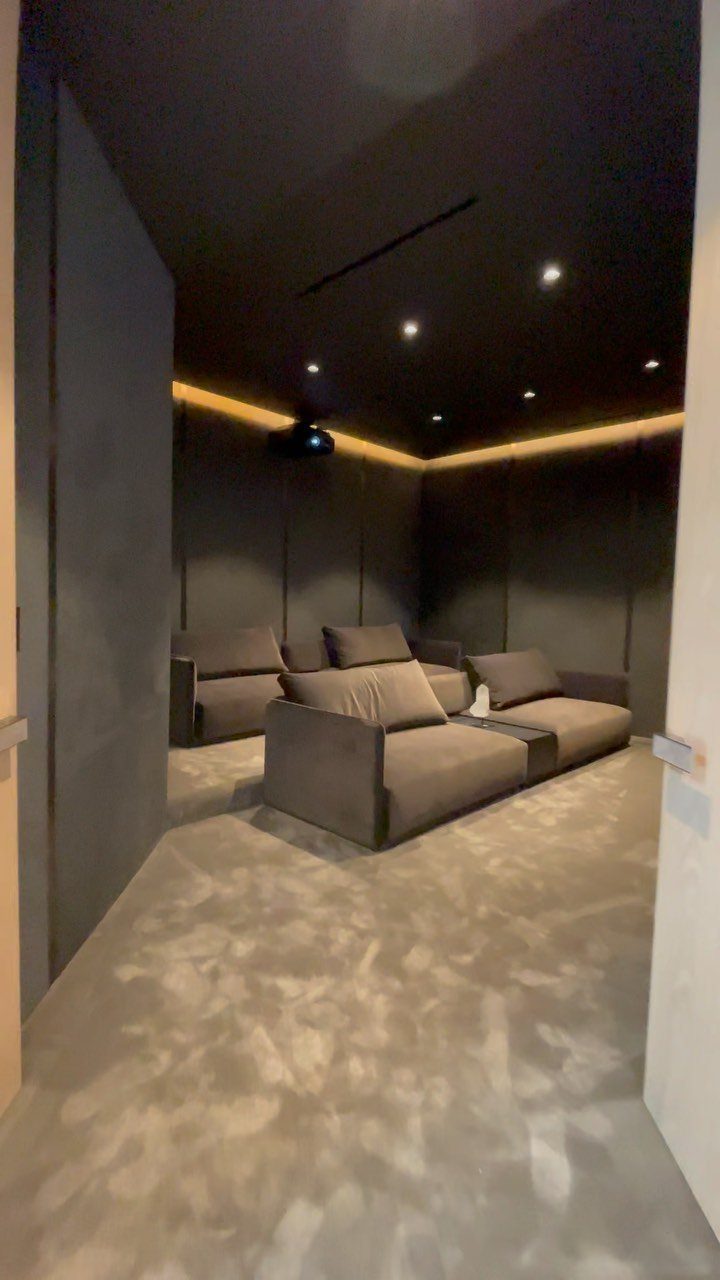
Seating decides whether anyone makes it through a long film, and I’d spend the biggest share of the budget here. Deep, wide lounge seats in grey fabric hide wear and stay easy on the eyes in a dark room.
Sit in a seat before buying it. Check that your head is supported and that your feet reach the floor or a footrest.
On a hard floor like polished concrete, a thick rug under the seats would soften sound and warm things up, though bare flooring is easier to keep clean.
3. Outdoor Cinema
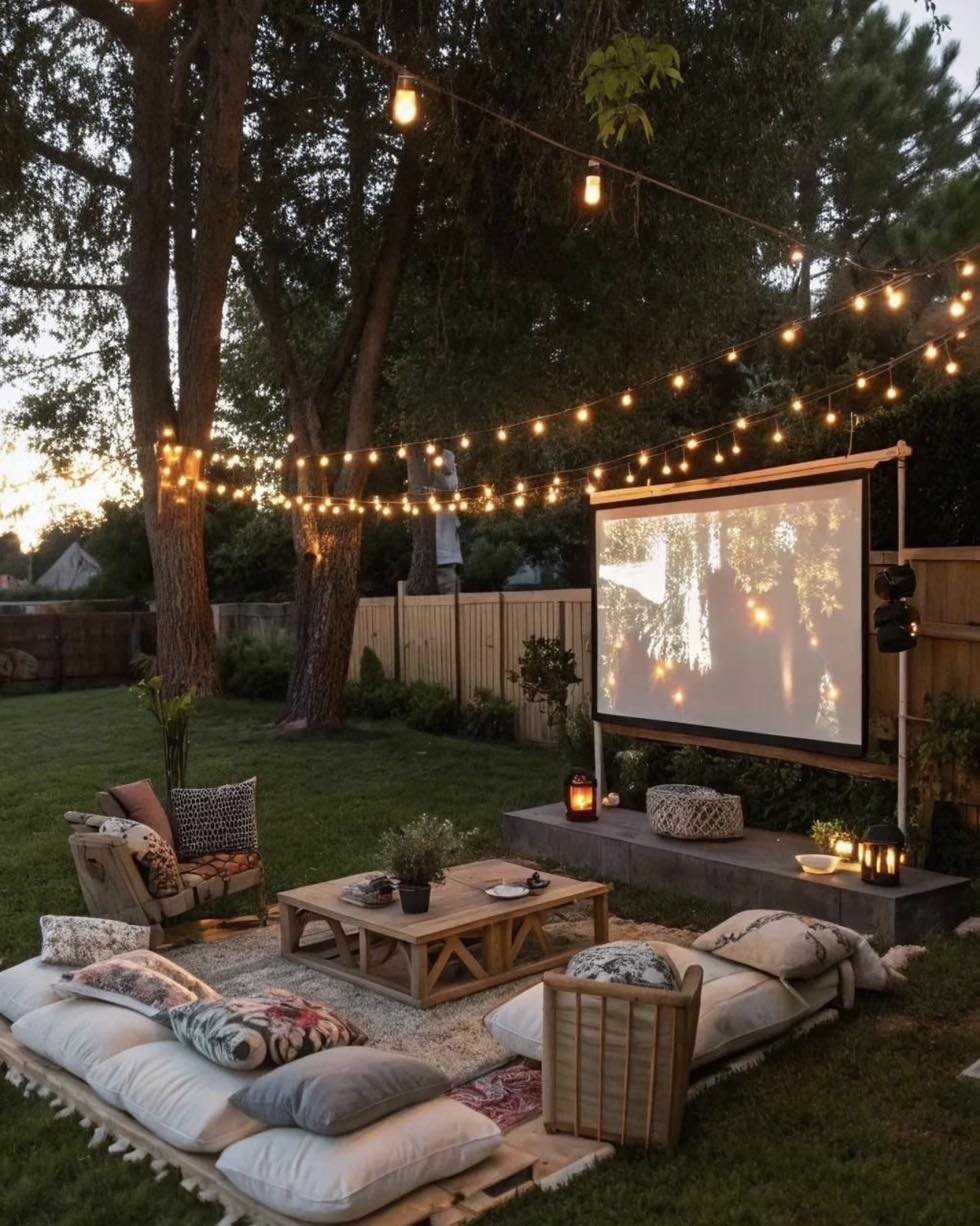
Floor cushions are my pick for seating: cheap, stackable and easy to store. Add a low wooden table for snacks.
Wait for full dusk, since the picture washes out while the sky is bright. Keep string lights on a separate switch so you can turn them off when the film begins.
4. Dark Room Environment
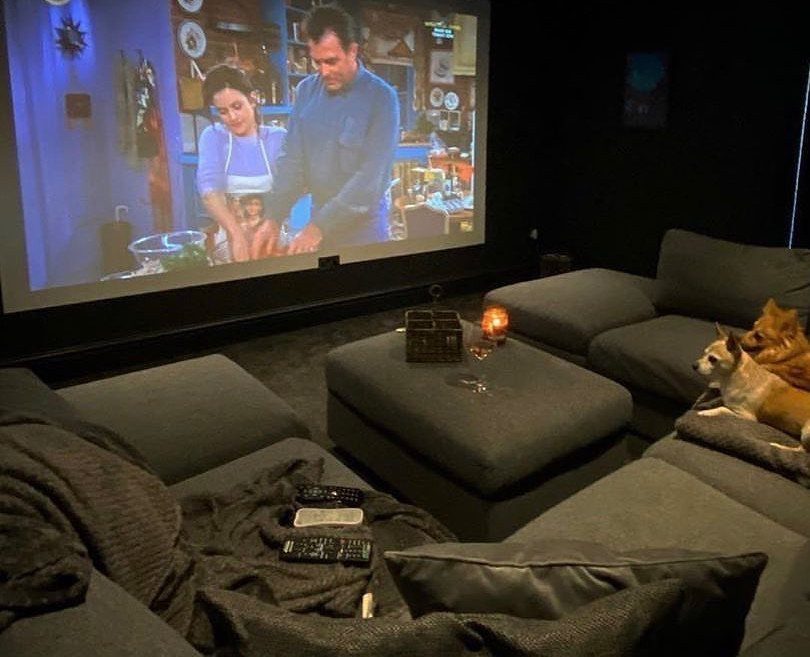
Darkness gives a projector its contrast, so light control is the cheapest upgrade a screen can get. Blackout curtains or shades over every window come first.
Paint is a weekend job at a low cost.
Cover small light leaks as well: tape over glowing standby LEDs and close the door gap with a draft stopper.
5. Acoustic Wall Panels
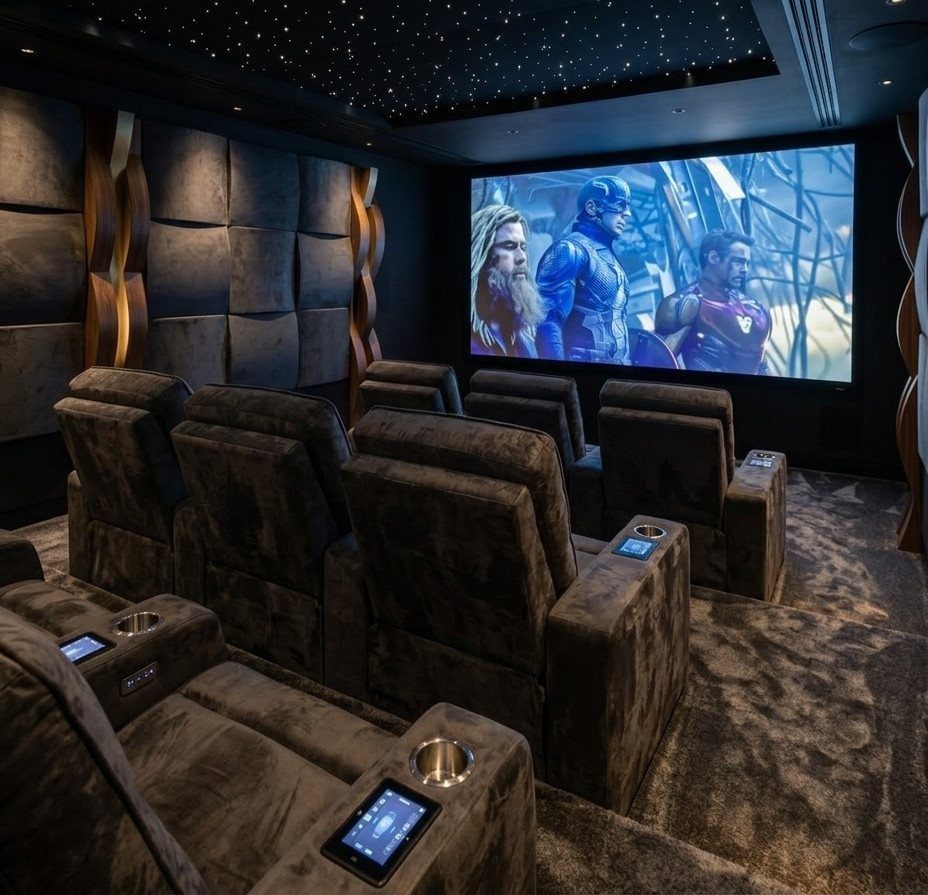
Hard walls bounce sound around, and fabric-wrapped acoustic panels soak up that echo so dialogue sounds clearer. The textured look in a home cinema is a bonus.
Start with the first reflection points, the wall spots beside your seats where sound from the speakers bounces first. Mounting panels there gives the biggest improvement for the money.
Panels can be bought ready-made or built as DIY frames wrapped in fabric. I’d cover a few walls well rather than spread thin panels everywhere.
6. Galaxy-themed Decor
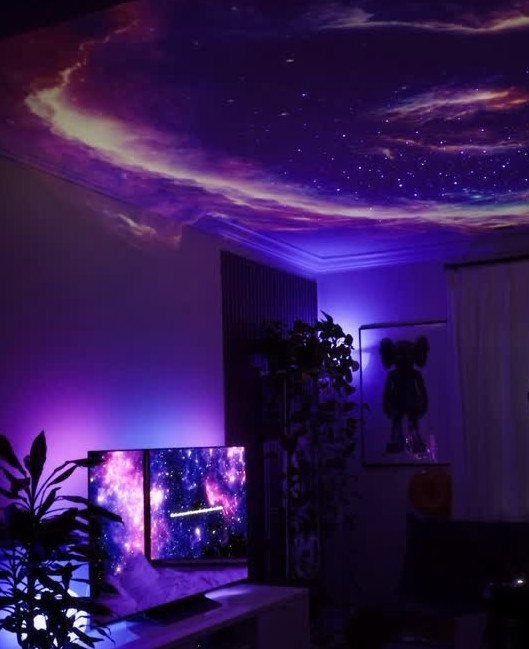
A ceiling projector in nebula purples turns an ordinary dark room into a small universe, and it costs far less than a built-in star ceiling. Aim it overhead, then match the TV’s background or screensaver to the same colors.
Purple works best in a room that is already dark, so pair this with blackout curtains.
Keep the galaxy theme to one or two pieces, such as a framed silhouette and a plant, so the room reads as a grown-up theater and not a kids’ bedroom.
Set the projector on a timer so it switches off after the movie.
7. Red Curtained Walls
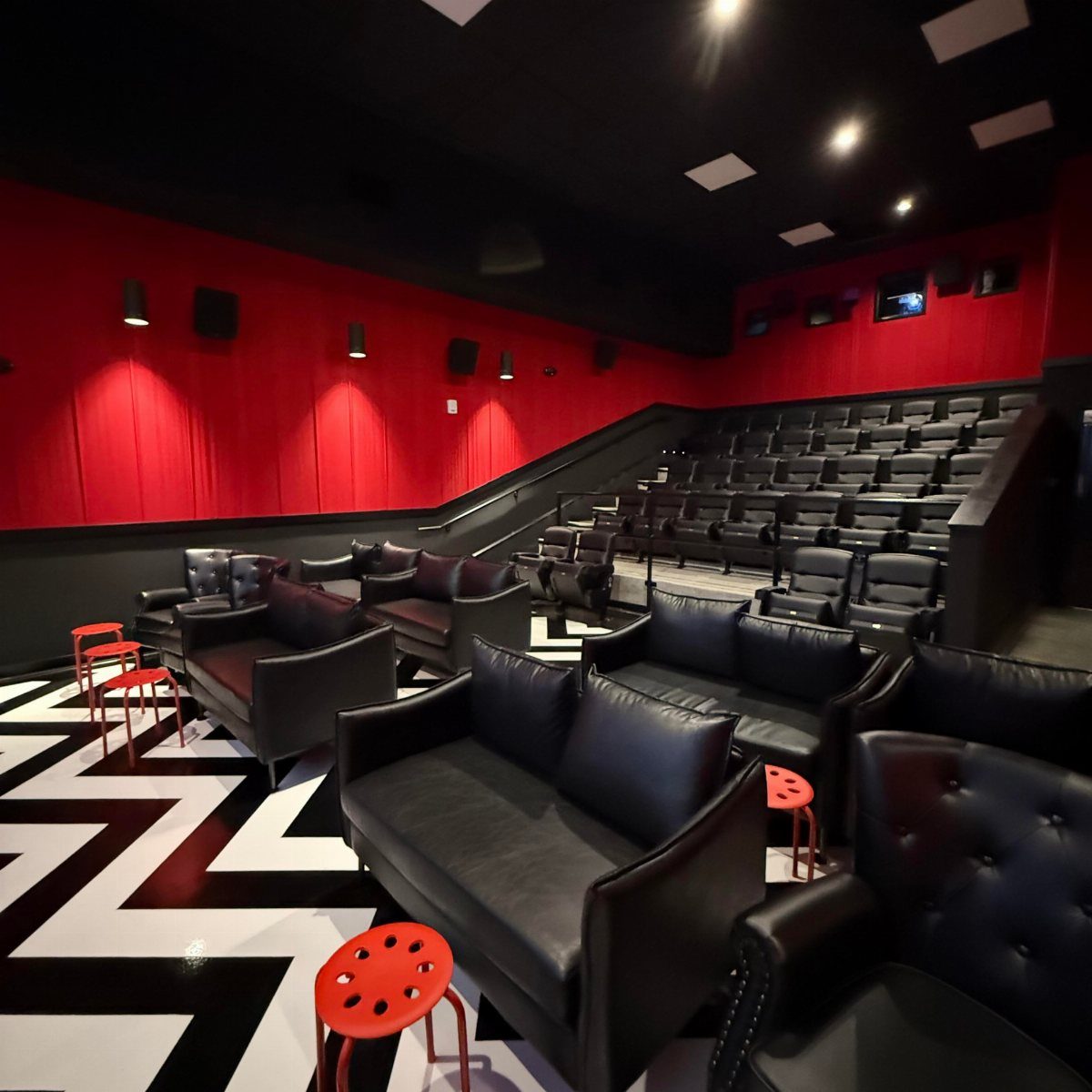
Red drapery on the walls does what paint can’t: it makes a room feel like an old cinema. The fabric also softens echo, which suits a space with hard flooring like the black and white geometric one here.
Keep everything else quiet. Black seating and small red side tables let the curtains carry the room, and a busy floor is already enough pattern.
Curtain panels hung on a ceiling-mounted rod are easier to change than a painted wall, which helps if you rent.
8. Built-In Media Shelving
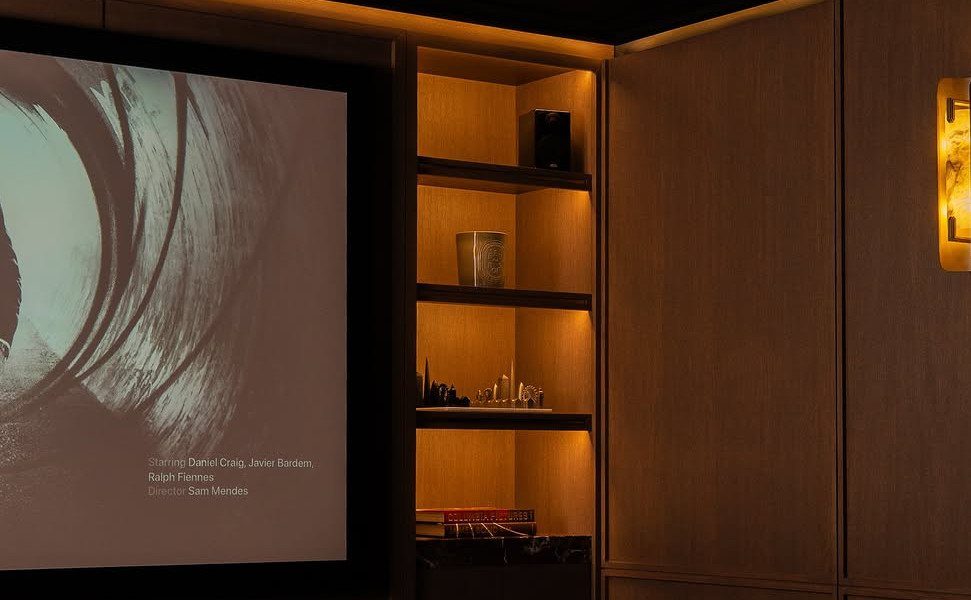
Shelves built in beside the screen give a projector wall a finished look, and wood with warm lighting feels softer than a bare white sheet of screen. Speakers, books and a vase all fit without cluttering the floor.
Keep the display light so the screen stays the focus. I’d put the lighting on a dimmer, since shelf glow that’s too bright competes with the picture.
Freestanding bookcases painted or stained to match can fake the built-in look on a smaller budget.
9. Wood Slat Accent Walls
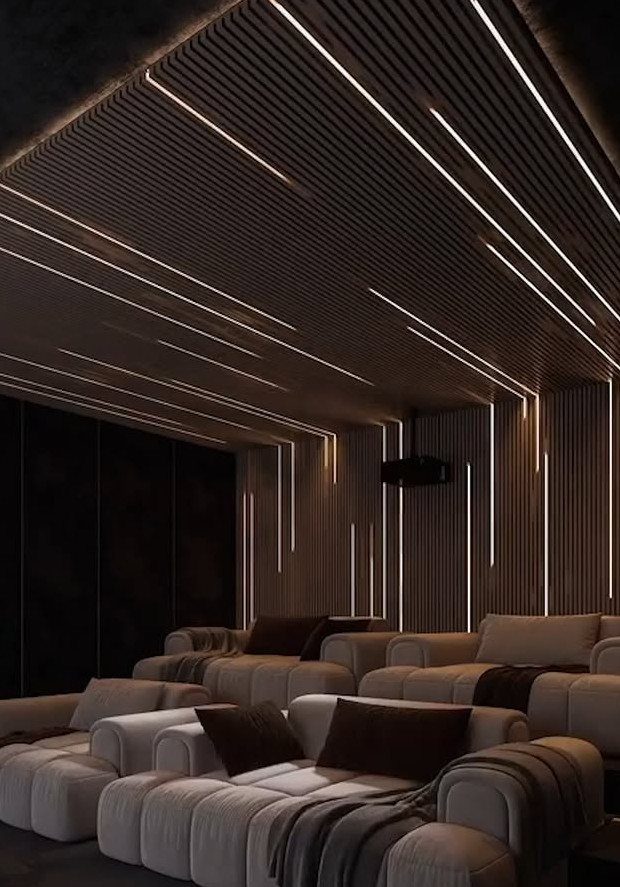
Dark wood slats running across the walls and onto the ceiling wrap a cinema in one continuous surface, and a dark finish keeps reflections off the picture. Linear LED strips set along the slats give you light without any lamps.
This is the most involved idea on the list, so I’d cover one wall first and see how you like it.
Pair it with grey seating and brown pillows, as here, so the wood stays the star.
10. Glowing Vertical Wall Panels
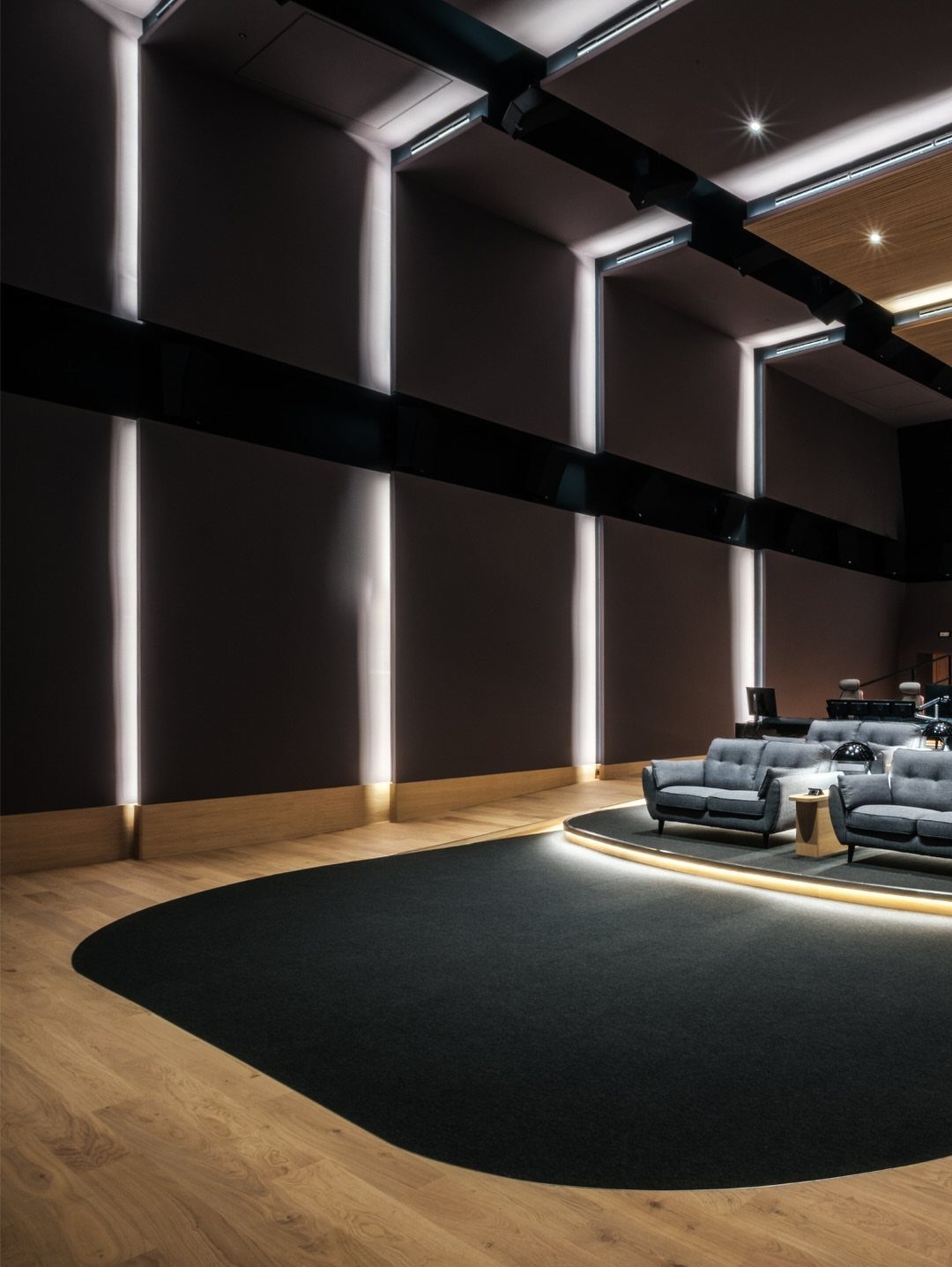
Vertical light strips against dark walls give a room a quiet glow that reads as designed, not decorated. Because the lines run up the wall, they make a low ceiling feel taller.
Choose a warm tone and put the strips on a dimmer or remote, so they fade down when the film starts.
A curved black rug under grey lounge chairs ties the seating into one group and keeps wood floors from echoing.
11. Framed Photo Gallery Wall
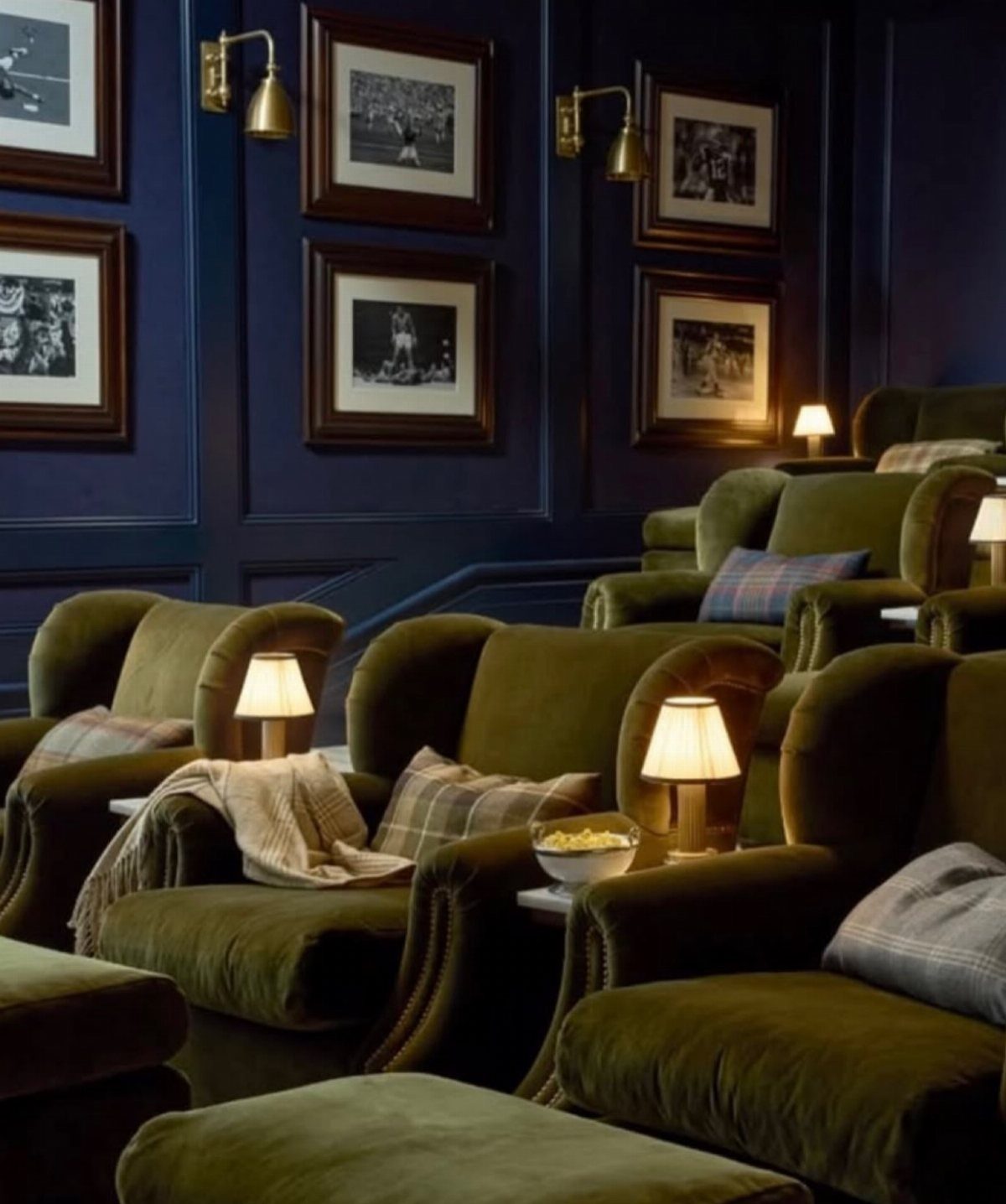
Black-and-white photos in thin frames look sharp against dark blue paneling, and they give a theater room a lounge feel that a poster wall never does. Keep the frames matching so the wall looks planned.
Hang them in a tight grid or a loose cluster, with the same gap between each. Cut paper templates and tape them up first to check the layout.
Olive velvet chairs and small lamps make the corner cozy enough to linger in.
Choosing the Right Room
Pick the room with the fewest windows. A basement or loft usually wins, because the less daylight you have to fight, the more contrast and brightness you get out of whatever screen you buy.
Light control decides picture quality more than most spec sheets do. A room with few or no windows also keeps distractions out, so the movie gets your full attention.
If your only option has a lot of glass, you can still make it work, but you’ll be covering every window each time you watch.
Selecting AV Equipment
Choose the screen by the room. A projector suits a space where you can control the light, and a TV is the safer pick in a room that stays bright.
Buy the audio/video receiver (AVR) before the speakers. It’s the hub every device plugs into, and it sends each signal where it needs to go.
Check these first:
- Channels: a 5.1.2 setup needs an AVR with at least that many channels.
- HDMI inputs: count your Blu-ray player, console, computer and streaming stick, so you never swap cables behind the rack.
- HDR support: it often depends on the HDMI version, so confirm HDR10, HDR10+, HLG and Dolby Vision.
- Dolby Atmos: look in the manual or the product page.
Creating a Cozy Atmosphere
Soft surfaces absorb it instead, so carpet, a big sofa and stacked cushions all work as cheap sound treatment.
Velvet, velveteen (cotton velvet) and velour feel plush and add texture. For cushions, pick the filling by how you like to sit: duck feather, down, wool, soft foam or a synthetic fill.
The more soft surfaces you add, the less sound travels around the room, and the closer it gets to a real cinema.
Frequently Asked Questions
How do you create a home theater room?
Start with the room that has the fewest windows, such as a basement or loft, because less daylight means better contrast from any screen.
Then block out the remaining light, add soft surfaces to calm echo, and pick a screen and audio receiver that suit the space.
If the room stays bright most of the day, a TV handles ambient light better than a projector.
What can you put inside a movie theater room?
Plush seating, a screen, and dimmable lighting give the biggest return. Deep lounge seats are where I’d spend the most, and low warm lamps on dimmers let you fade the room once the film starts.
Acoustic panels, a thick rug, and blackout curtains round it out by improving sound and keeping the room dark.
What is the best color for a home cinema room?
Go dark. Dark walls keep reflections off the picture and give a projector its contrast, and black is the usual recommendation for absorbing light.
Dark blue paneling and dark wood slats work in the same way, and grey seating stays easy on the eyes in a dim room.





