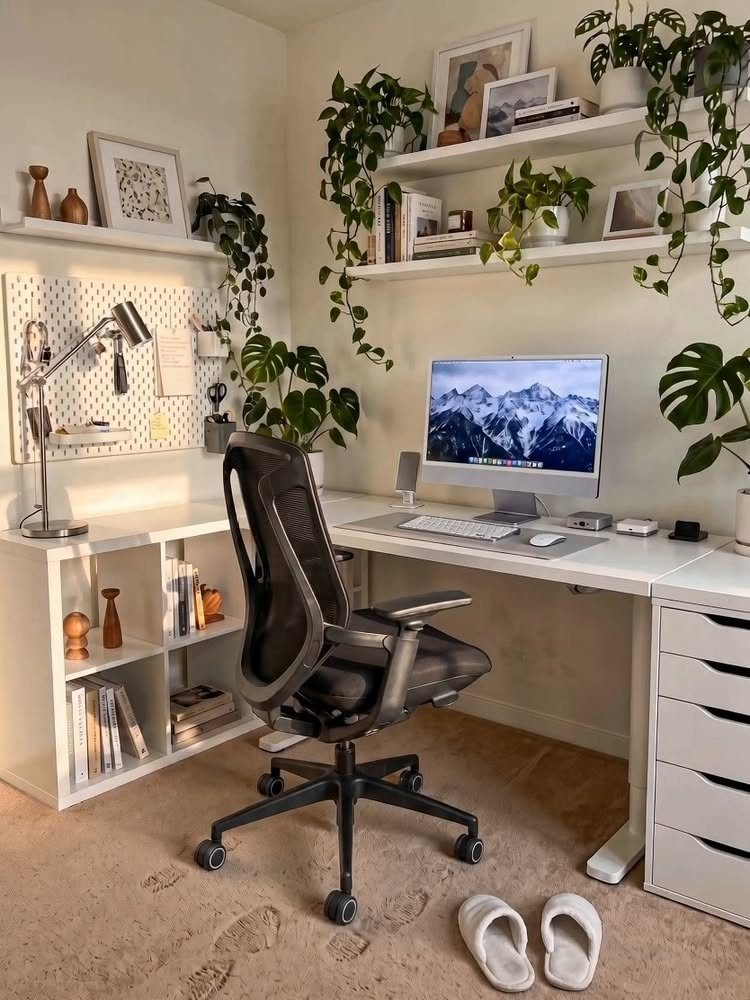
Which of these L-shaped desk setups fits comes down to the room: the wall where the return can go, which side your door swings, and how much depth you have, since a 24-inch desk is the minimum for dual monitors and 30 inches is better.
The ideas run from a creative corner with mood boards and a two-tone desk with storage to a dual monitor setup, an analyst’s precision workspace, and a blue LED backlit desk.
1. Ergonomic Chair and Monitor Setup
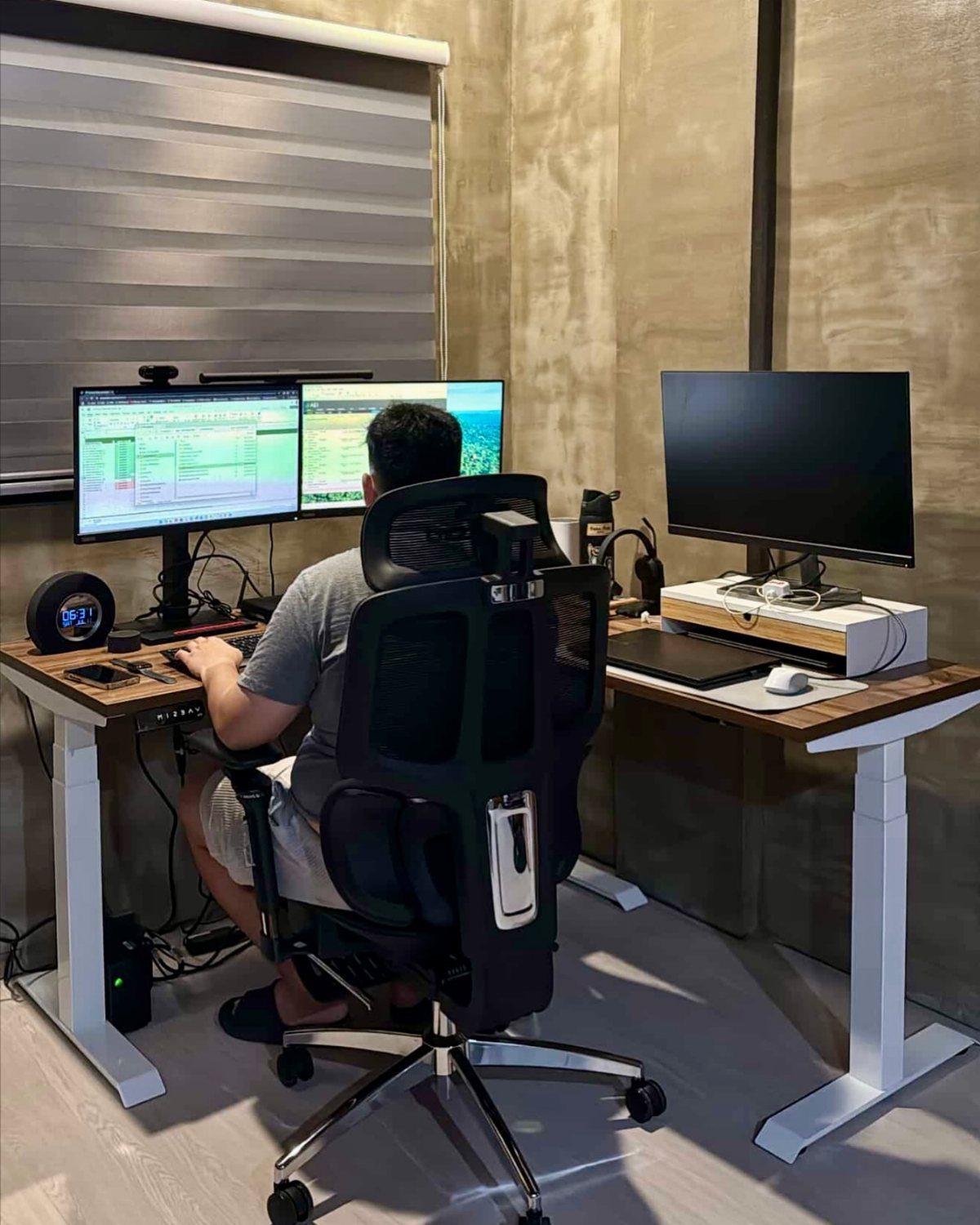
3 monitors across an L-shaped desk only work if the chair earns its price.
A black ergonomic chair with adjustable arms and a seat you can tilt lets you swing between the main run and the return without twisting your spine.
Put the center screen straight ahead and angle the 2 side screens inward. Keep the keyboard on the long run so your forearms stay level.
Skip the cheapest chair in this setup. You’ll spend more hours in it than at anything else in the room.
2. Creative Corner Command Center
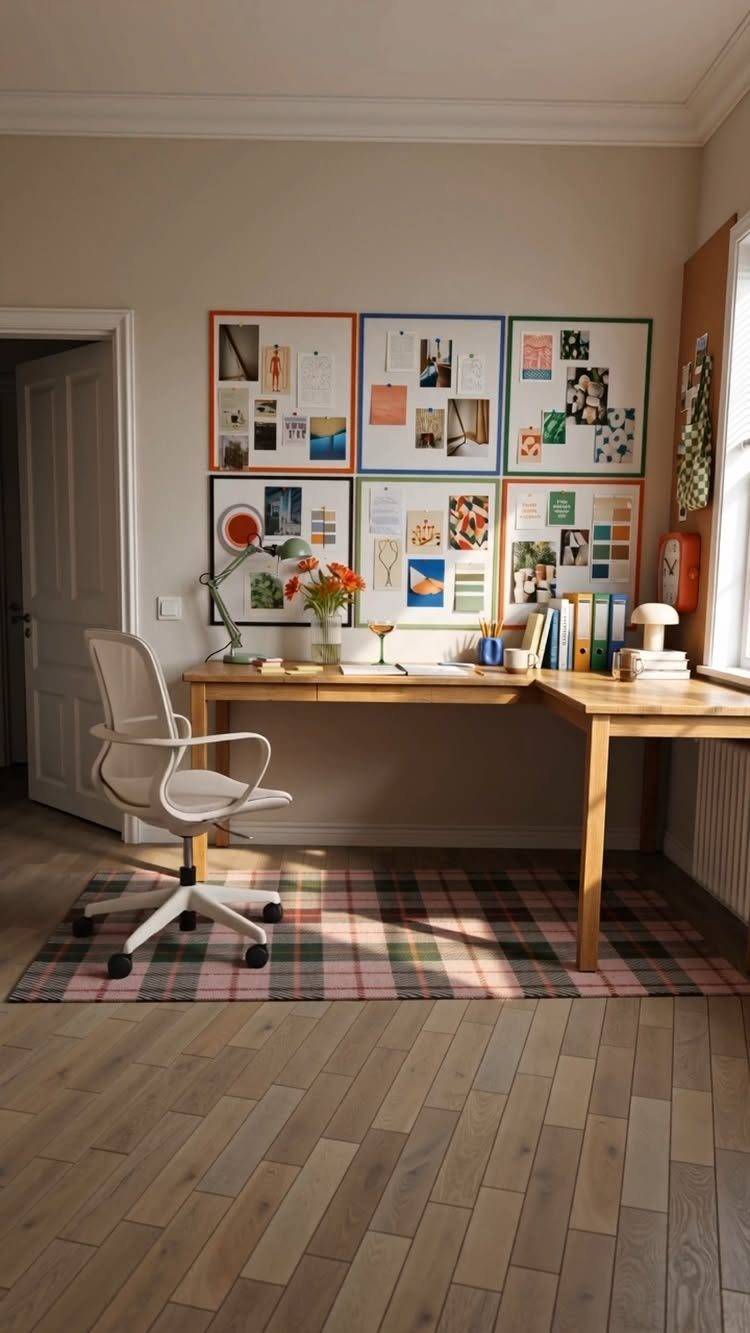
Mood boards on the wall beside a wooden L-shaped desk keep reference material in your eyeline, so you stop hunting through folders. That suits designers and artists, who tend to work from references as much as from screens.
Use the long run for the computer and the return for sketching, cutting or laying out samples. Pinning work at eye level above the return lets you glance up without leaving your seat.
A white chair keeps a corner desk looking light, since the chair is the biggest piece sitting in the open. Black or dark gray makes the whole setup feel heavier.
3. Dual Monitor Setup
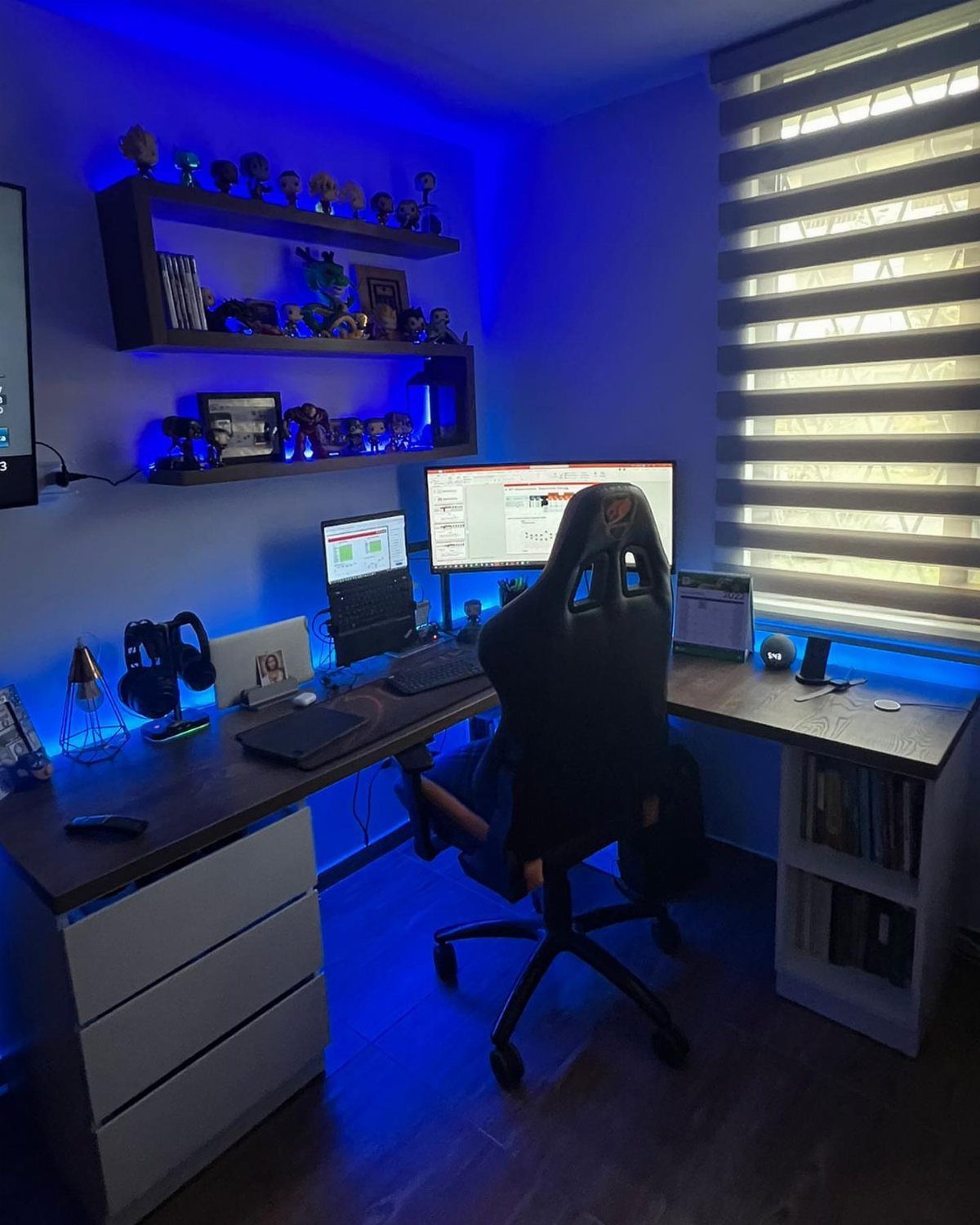
Two monitors, one on each arm of the L, is the arrangement I’d pick for a gaming or streaming desk. The corner becomes the pivot point, and the chair turns between screens instead of the head craning sideways.
Put the screen you use most directly in front of the chair and angle the second one toward it. Mounting both on arms frees desk surface for a keyboard and a mouse pad.
Shelves above hold collectibles without eating into the work surface. Blue LED strips add mood for very little money.
4. Under-Desk Drawers and Wall-Mounted Shelves
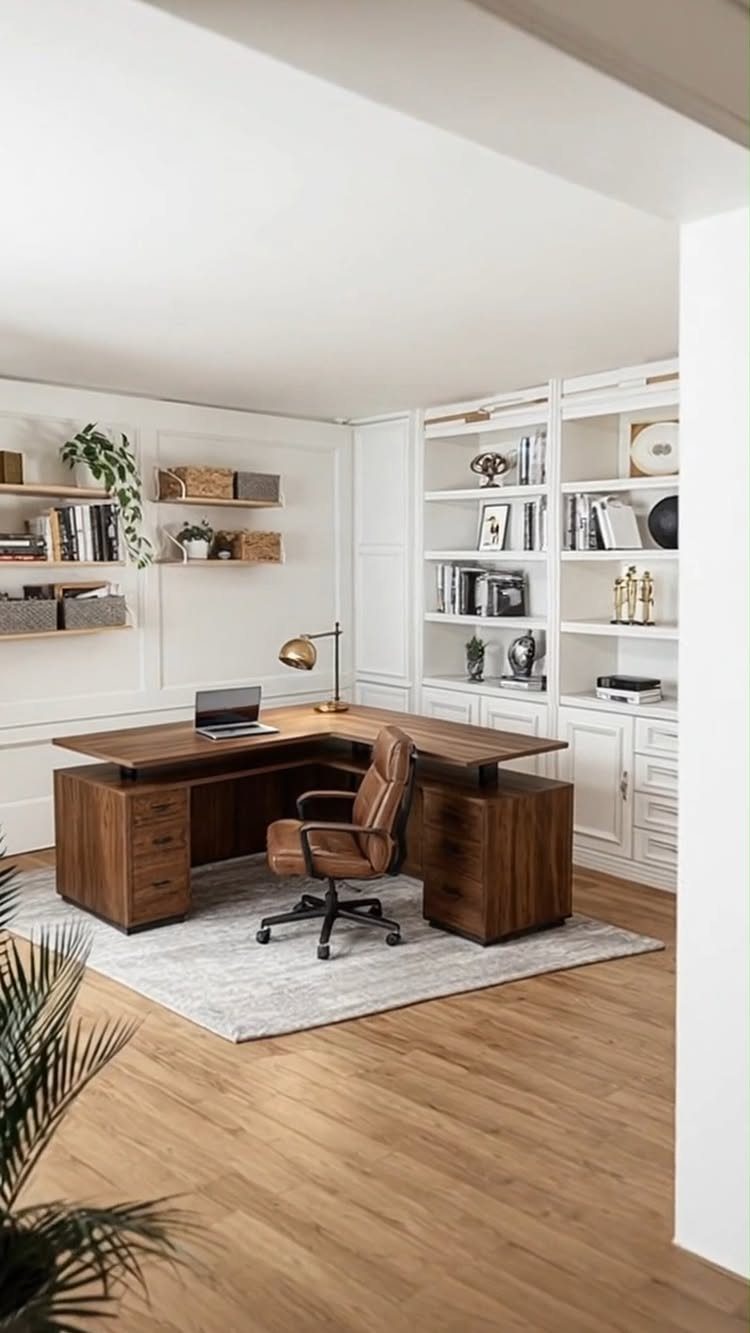
Drawers under an L-shaped desk and shelves on the wall above it move clutter off the work surface in a small room. Paper, cables and chargers go into the drawers; books, a plant or a lamp go on the shelves.
Mount the shelves above the shorter return, where nobody needs headroom. Anchor them into studs or use proper wall anchors, since books are heavy.
Keep the top shelf for things you rarely reach. A white finish makes a compact office feel bigger.
5. Analyst’s Precision Workspace
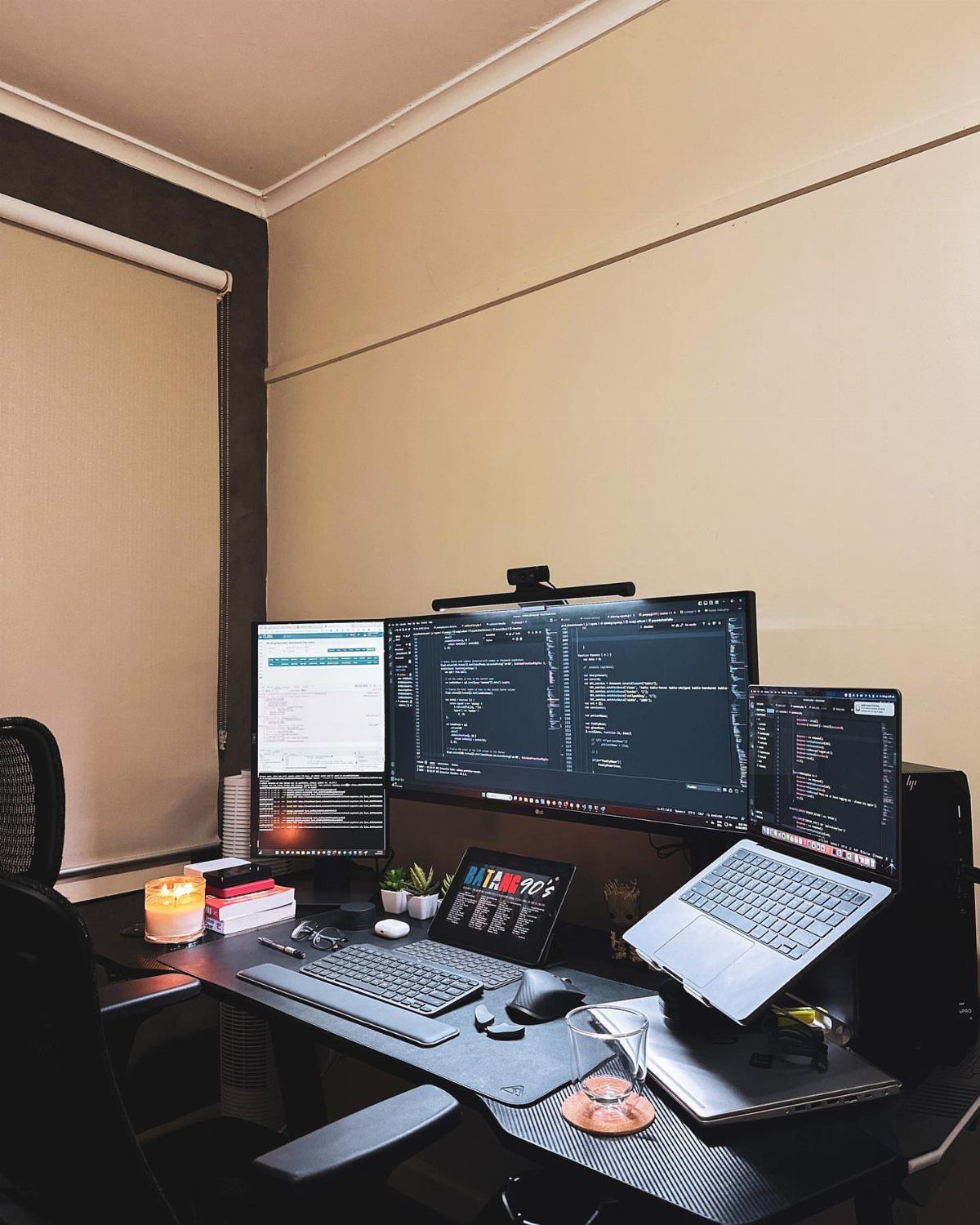
3 monitors, a laptop and a keyboard on an L-shaped desk suit anyone who lives in spreadsheets, code or financial data.
Long rows of numbers are easier to read when each screen has a job: reference on one, working file on another, communications on the third.
Dedicate the long run to the main screens and keep the laptop on the return as a fourth display or a notes surface.
Leave a clear strip in front of the keyboard. Accessories like a candle and glasses belong at the edges, not in the working zone.
6. Blue LED Backlit Desk
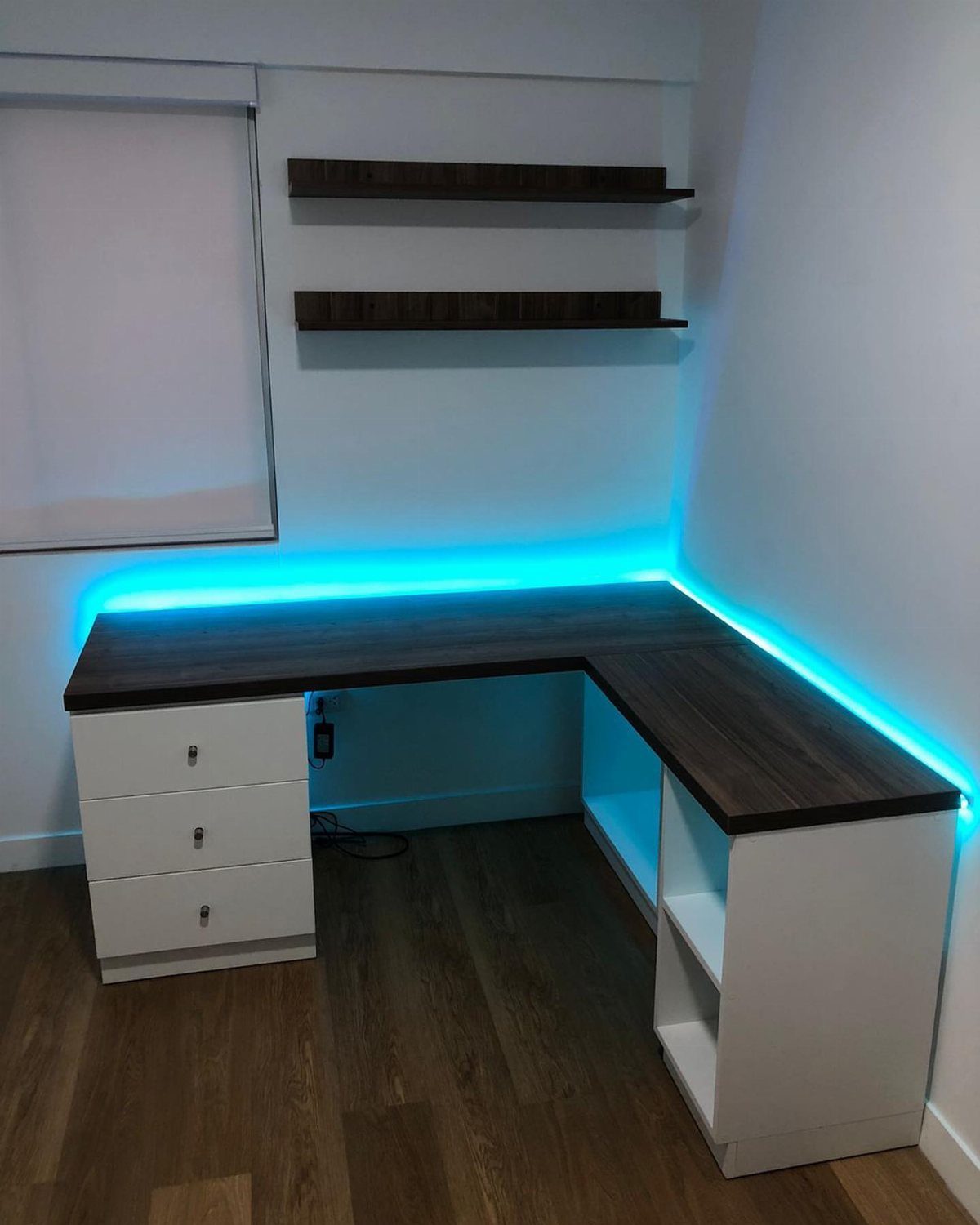
Blue LED strips along the back edge of a dark wood desktop give the whole corner a glow without lighting up the room.
A white base keeps a dark desktop from looking heavy, and floating shelves above it catch and repeat the glow of the LED strip. Keep the shelf finish matte or satin so the light reads soft instead of glaring.
Stick the strip to the underside of the back lip so you see the glow, not the diodes. Run the cable down the back leg and tuck it away.
Blue suits late-night work and gaming. For long daytime sessions I’d dim it and rely on a warmer desk lamp.
7. Wood and Metal Industrial Desk
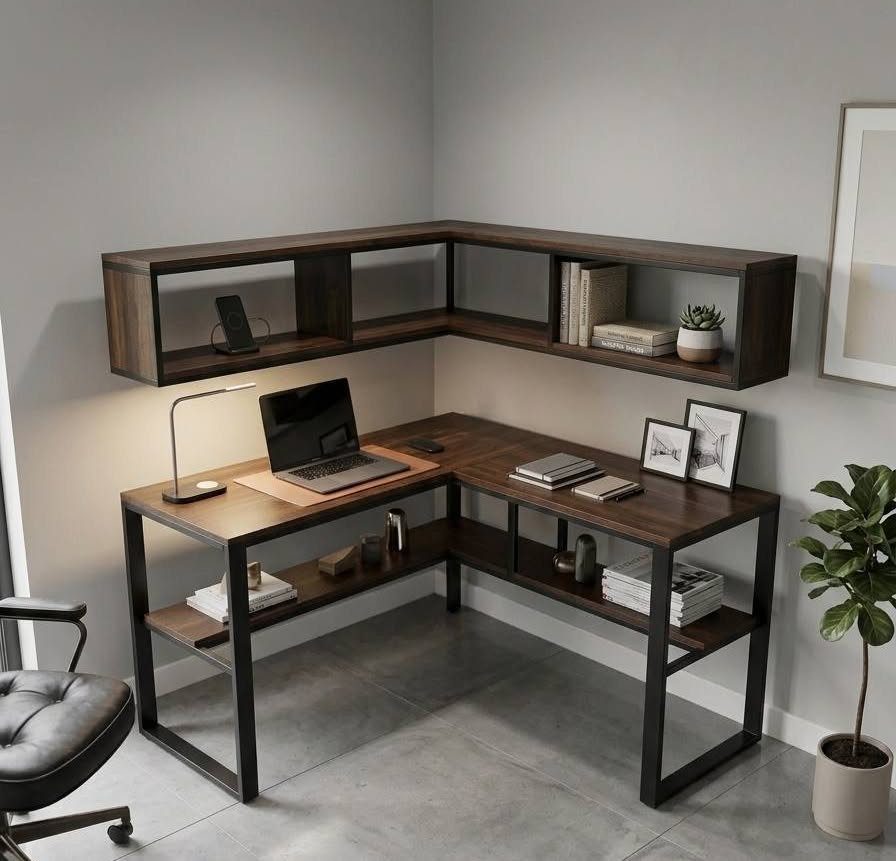
Black metal legs under a wooden top give an L-shaped desk its industrial look, and the dark frame keeps the wood from reading as plain furniture. Matching wall shelves in the same wood tie the corner together.
A task lamp is worth adding to this setup, since a laptop desk in a gray room can feel dim. Keep the lamp on the return so the long run stays clear for the laptop.
Black metal legs pair well with a black chair, and a single plant softens all that hard edge without cluttering the wood top. Skip a second one; the desk is small enough already.
8. Two-Tone Desk with Storage
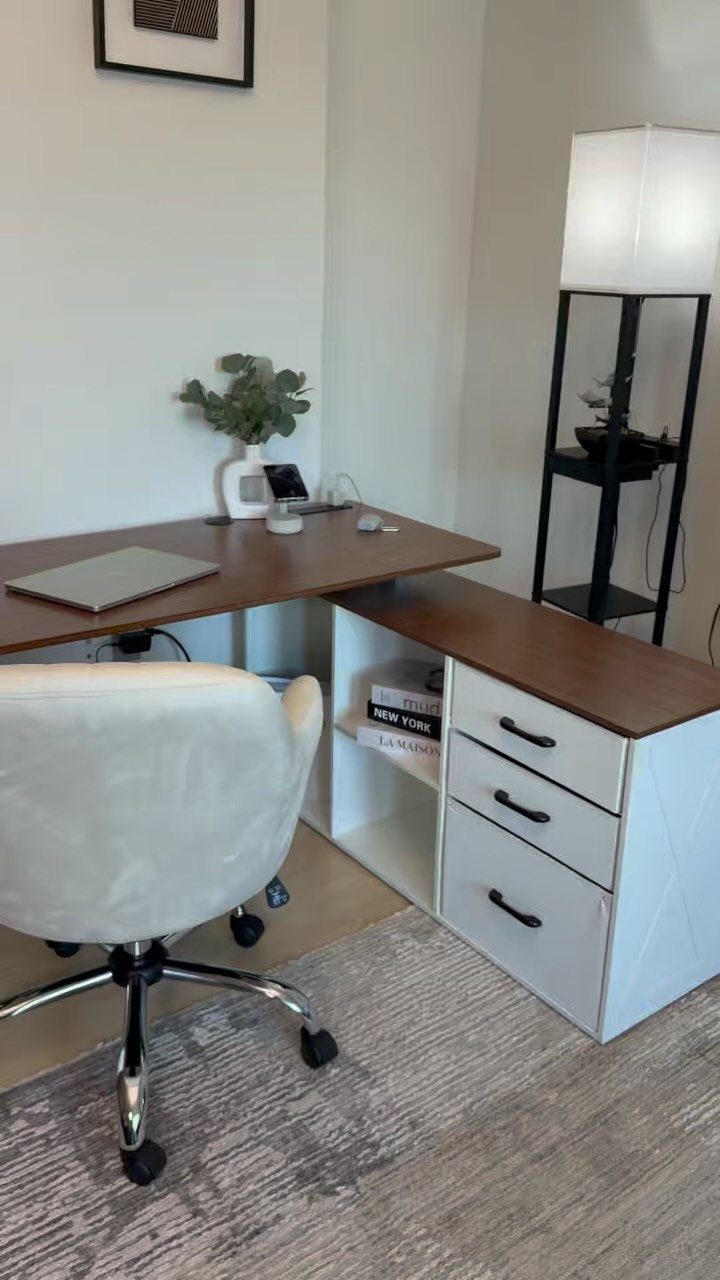
White drawers under a wooden top split an L-shaped desk into 2 tones, so the storage looks lighter than a full wood cabinet would. An open lower shelf holds books or baskets you reach for daily.
Put the drawers where your knees don’t go, ideally at the end of the return, and keep the shelf for things that look fine on display. Closed drawers hide the paper and cables.
A white chair continues the scheme and keeps the corner airy. I’d pick it over black here, because a dark chair would be the heaviest thing in the room.
Choosing Desk Size
Depth is the number I check first. For dual monitors, a desk at least 24 inches deep is the minimum, and 30 inches is better, because screens need room to sit back from your eyes.
Monitor size drives this. Put a 27-inch monitor on a shallow desk and it sits too near your face, so your eyes strain to hold focus all day.
A comfortable viewing distance runs roughly 20–40 inches from eye to screen, and a deeper surface lets you land inside that range.
Measure the depth of the main run and the return separately, because on many L-shaped desks the two don’t match.
Put the monitors on the deeper surface and save the shallower return for a tablet, a notebook or other small gear.
Tape the footprint out on the floor and measure the room first, then shop.
Mark the footprint on the floor with painter’s tape, leave space to pull the chair out, and make sure the door and any closet still open fully.
Left vs Right Return
Your dominant hand and the way people move through the room should decide which side the return goes on. A left return extends on the left, a right return on the right.
If you write with your right hand, a right return usually works best, since papers and notes land right beside it. That way you can handle paper without reaching across the keyboard.
Left-handed users should flip that logic and put the return on the left.
Room layout can overrule hand preference.
If the only open wall sits on the wrong side, or a door swings into the return, the layout wins. Tape the desk outline on the floor and sit in it for a few minutes before you order.





