Light decides which of these ideas is yours: a basement or spare room with one small window can go dark for a weekend of paint, while a living room with big windows is better served by a pull-down screen and a sectional that still look good with the movie off.
1. Acoustic Panels
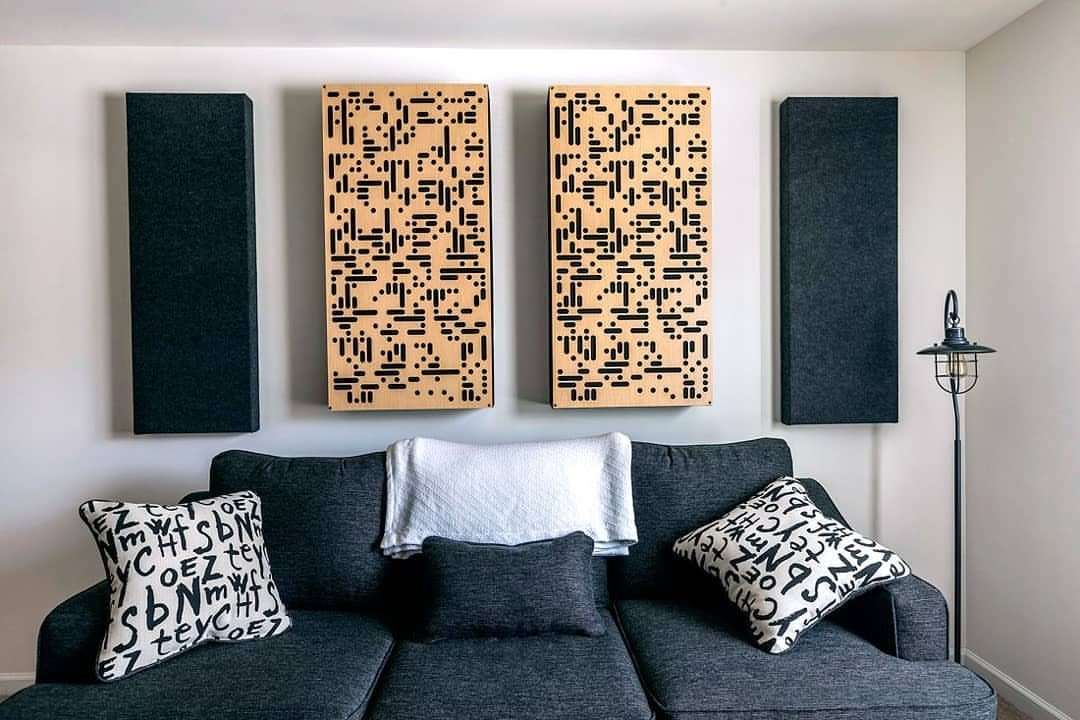
4 panels over the sofa are enough to start with, and I like the mix of black and patterned wood because it reads as decor instead of studio gear.
Hard walls bounce sound around a compact theater, so treating the wall behind or beside the seats is a sensible first move.
Hang them at ear level when you’re seated, and keep the pattern repeating evenly so the wall looks planned.
2. LED Mood Lighting
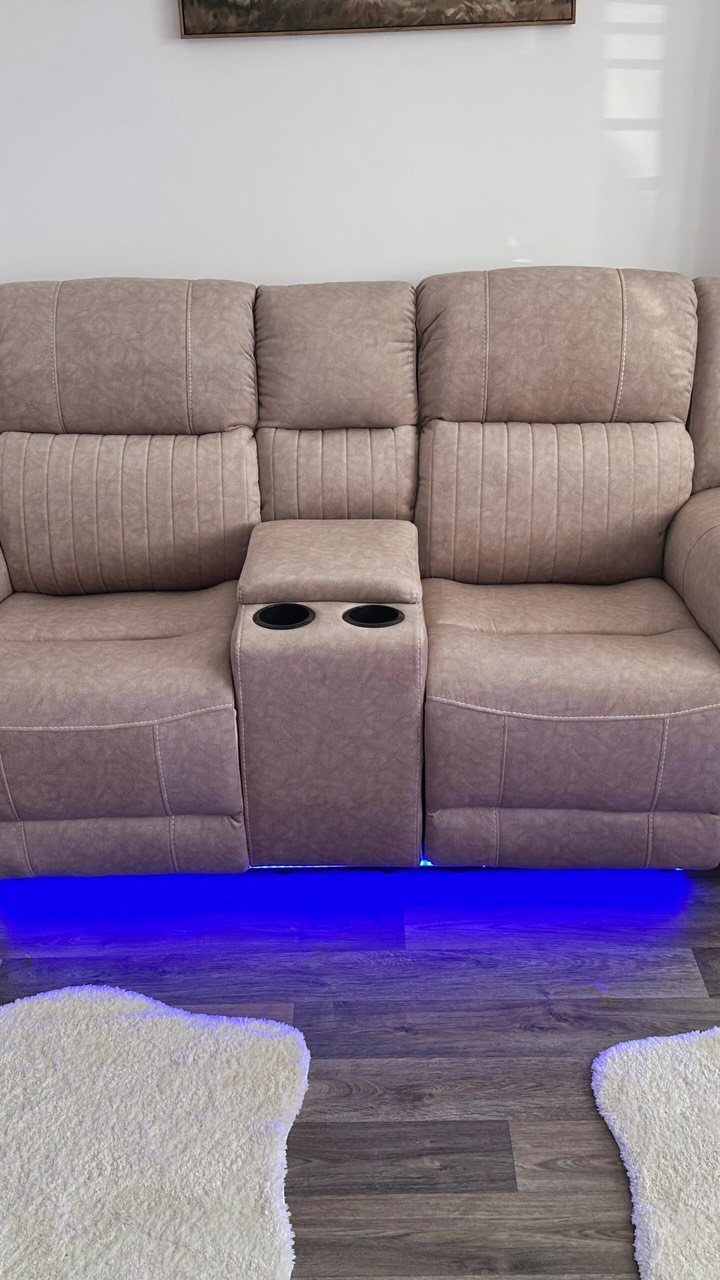
Blue under-glow beneath the seats gives a theater a floor-level light source that never washes out the screen.
Pick strips with a dimmer or remote, since the right brightness for an action movie is rarely the right one for a quiet drama.
Tuck the strip along the underside of the seating where the glow reflects off the wood floor and not into your eyes.
3. Pull-Down Screen
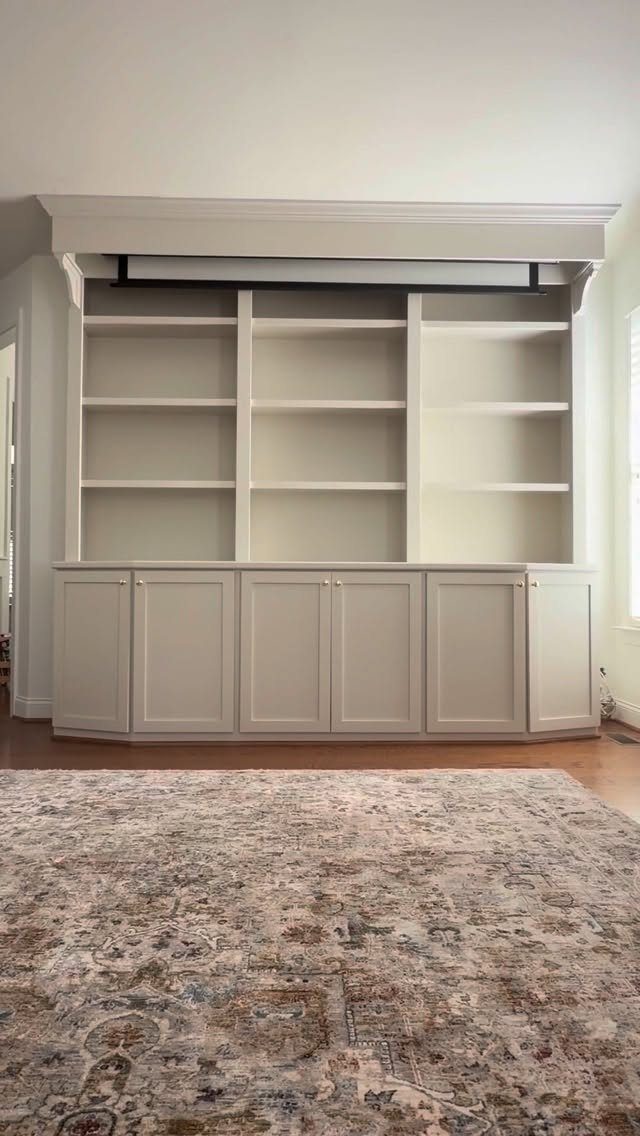
A screen that rolls up into the ceiling molding leaves the wall looking like a bookcase, which is the whole appeal in a room that has to be a living space the rest of the day.
Built-in shelving beneath it keeps the setup tidy.
Choose a pull-down model if the room does double duty. You trade a little ceiling work during installation for a wall that stays free.
4. Dark Colors
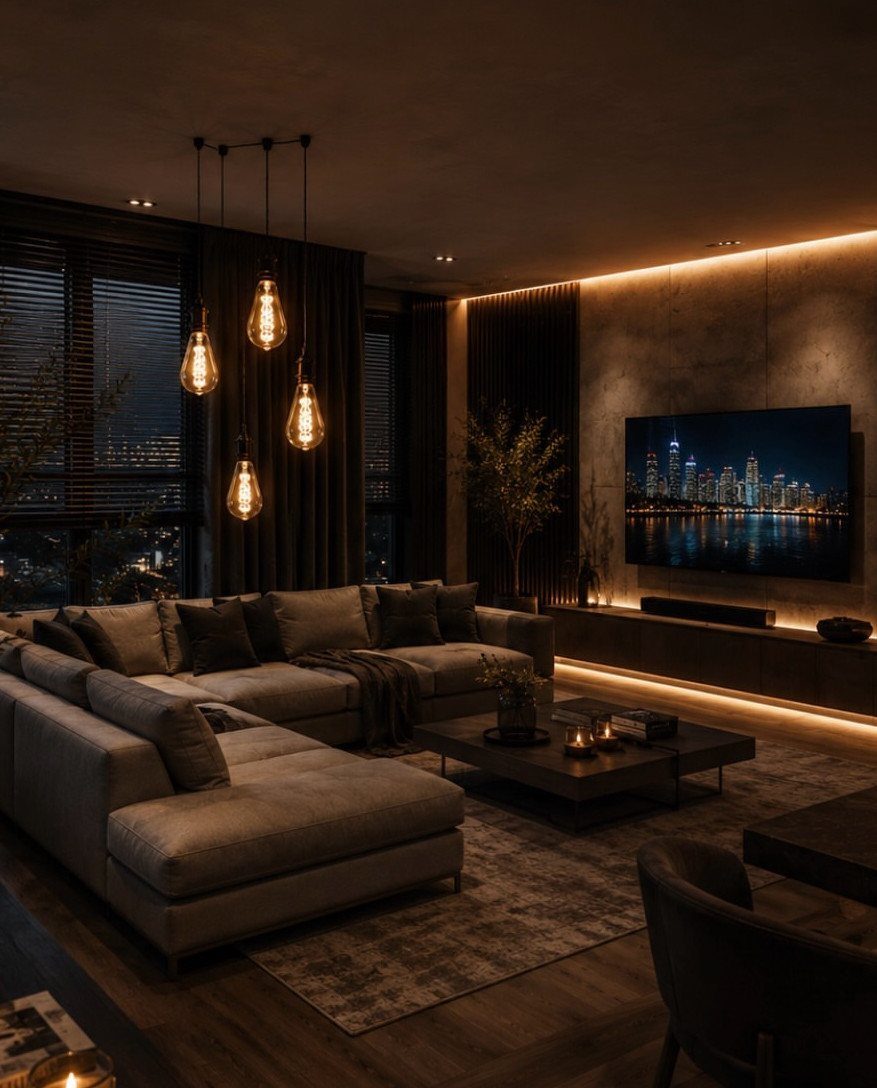
Dark grey walls cut glare and make a TV image look deeper, especially in a room with a big screen. Warm accent lighting keeps the color from feeling like a cave.
Paint is the cheapest upgrade here, and a weekend covers most rooms.
I’d go matte, since a glossy finish catches reflections from the screen. Keep a lamp or 2 on dimmers so the room still works in daylight.
5. Convertible Guest Bedroom Theater
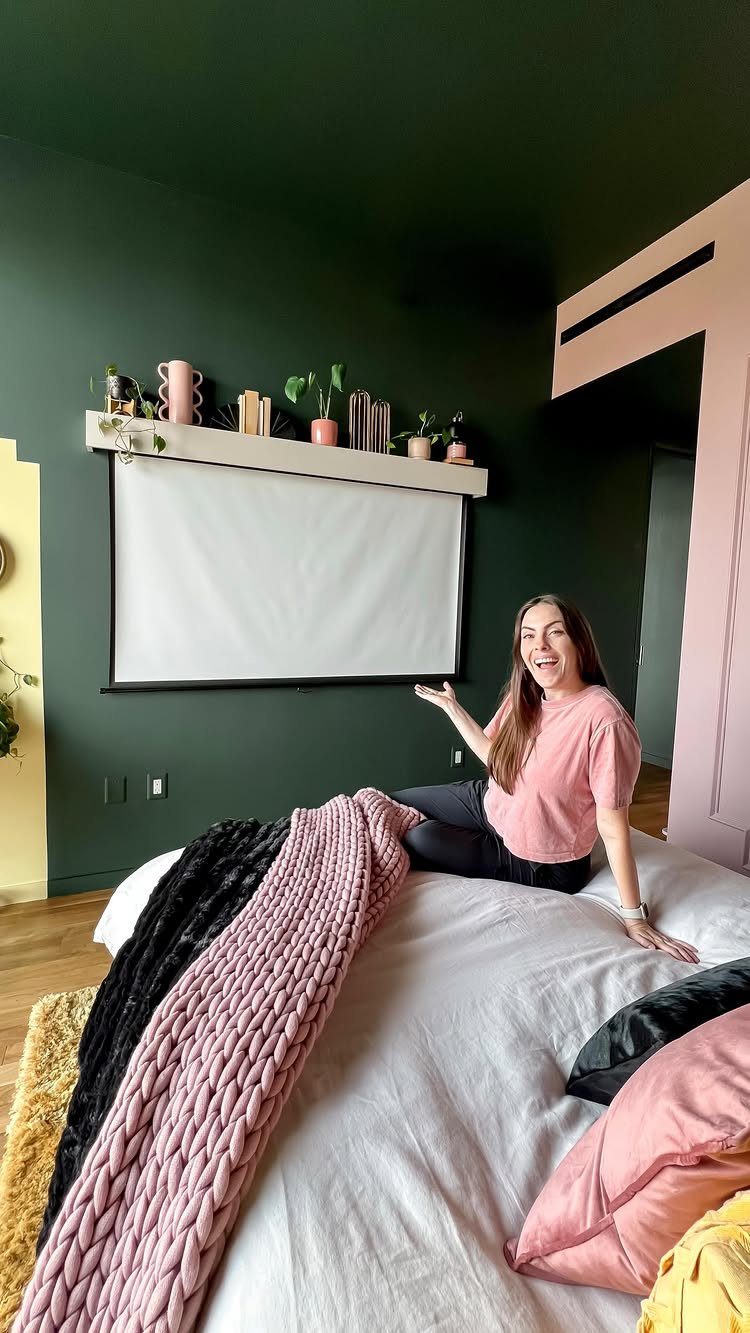
A guest room can pull double duty if the screen and a shelf for the projector stay on the wall while the bed remains the seating.
A deep green paint color helps, because dark walls make the picture pop at night.
Mount the screen where it clears the headboard, and keep the shelf low-profile so the room still looks like a bedroom for visitors. The same plan suits a home office.
6. Reclining Theater Chairs
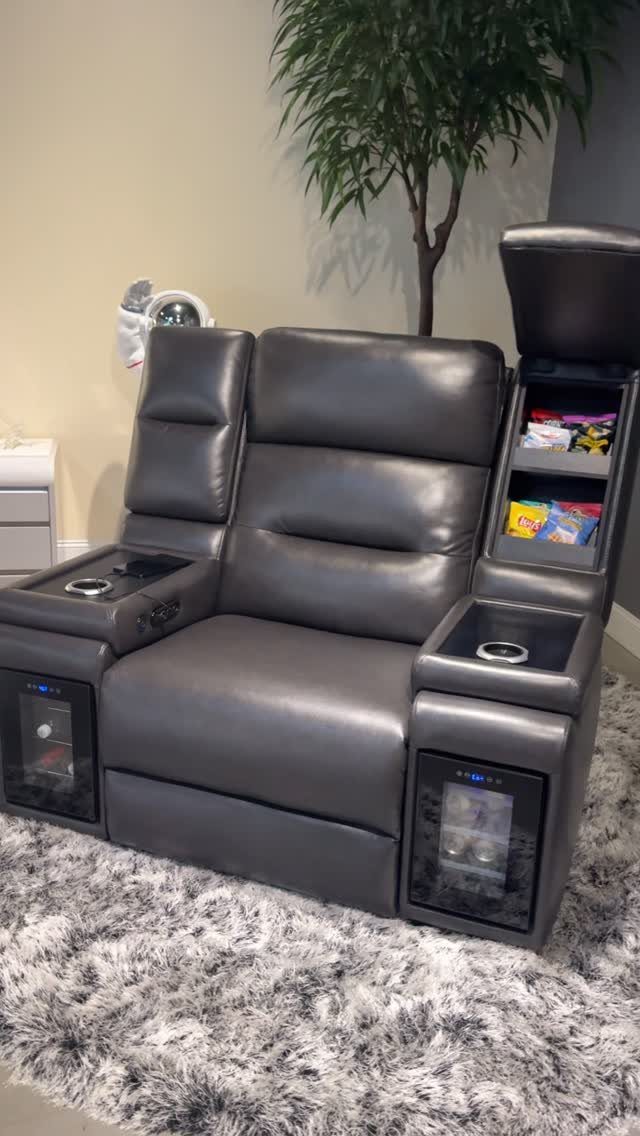
Built-in cup holders, snack storage and a beverage cooler turn a single recliner into a self-contained movie station. In a tight space like this, that means fewer side tables crowding the floor.
Leather wipes clean after spills, which I count as a real advantage over fabric for a snack-heavy room.
Measure the recline depth before buying, because the footprint grows when the chair opens. Set a rug under the chairs to keep the flooring from getting scuffed and to take some of the echo out of the room.
7. Soundbar Solution
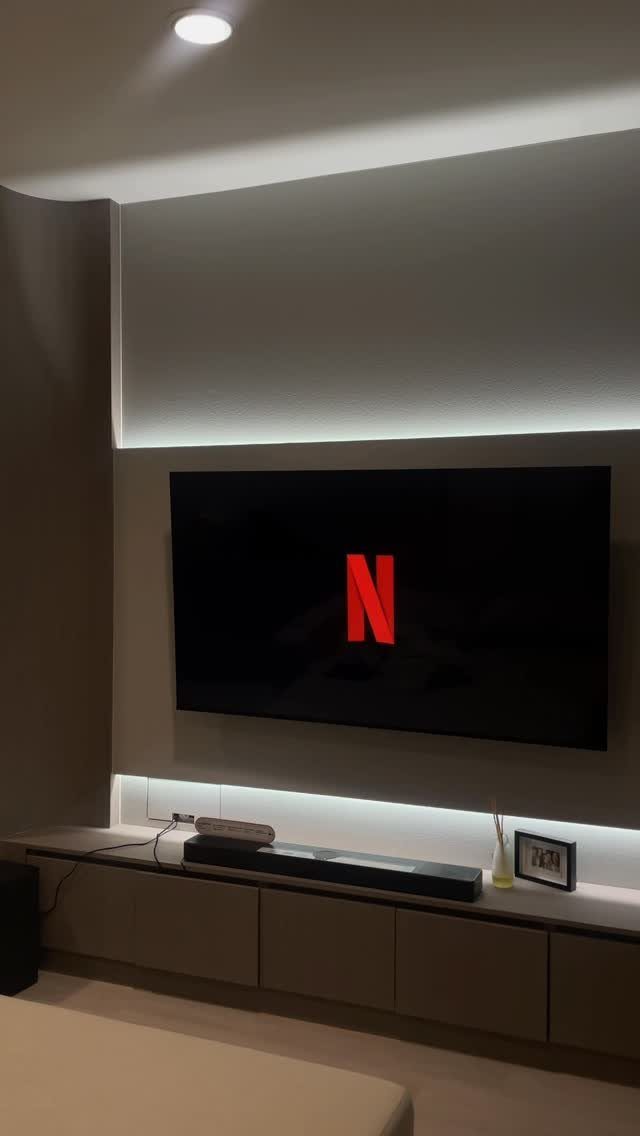
A soundbar on a floating console under a wall-mounted TV gives you wide, clear dialogue without speakers on every shelf. When floor space is tight, that matters, since floor stands and a receiver eat space fast.
Match the bar to the console depth and keep it centered below the screen, so it never blocks the TV’s remote sensor.
Pick one with a separate remote or app, because a bar with tiny buttons is annoying in a dark room.
8. Snack Station
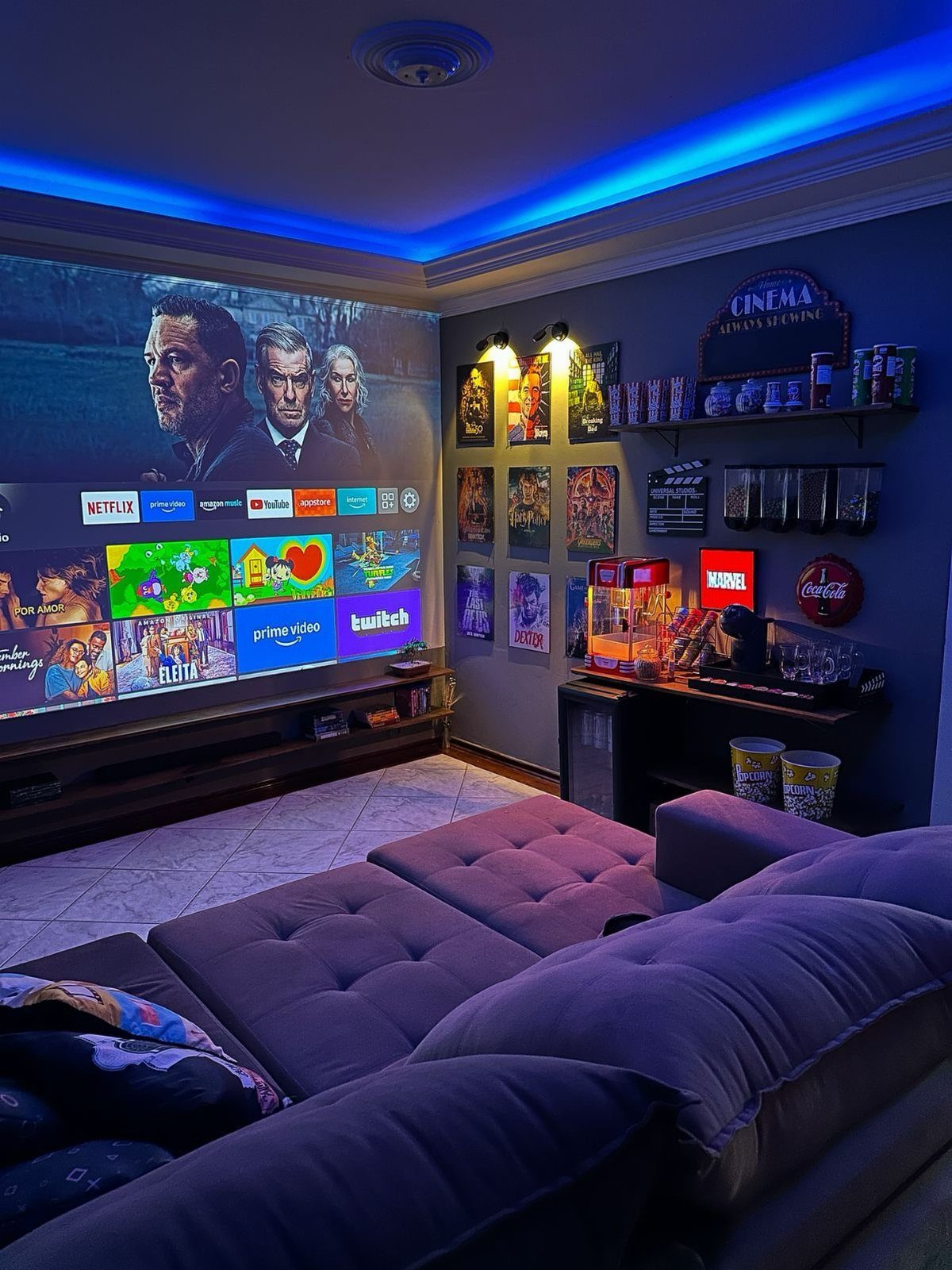
A popcorn machine, a few jars of candy and a lit sign on one wall turn a corner into a concession stand, and the room starts to feel like an actual cinema.
Keep it on a narrow console or cart so it stays off the floor path.
Put the popcorn machine at one end near an outlet, and stock candy in lidded jars so refills take seconds. A small trash bin tucked underneath saves a cleanup trip after every movie.
9. Sectional Sofa Seating Setup
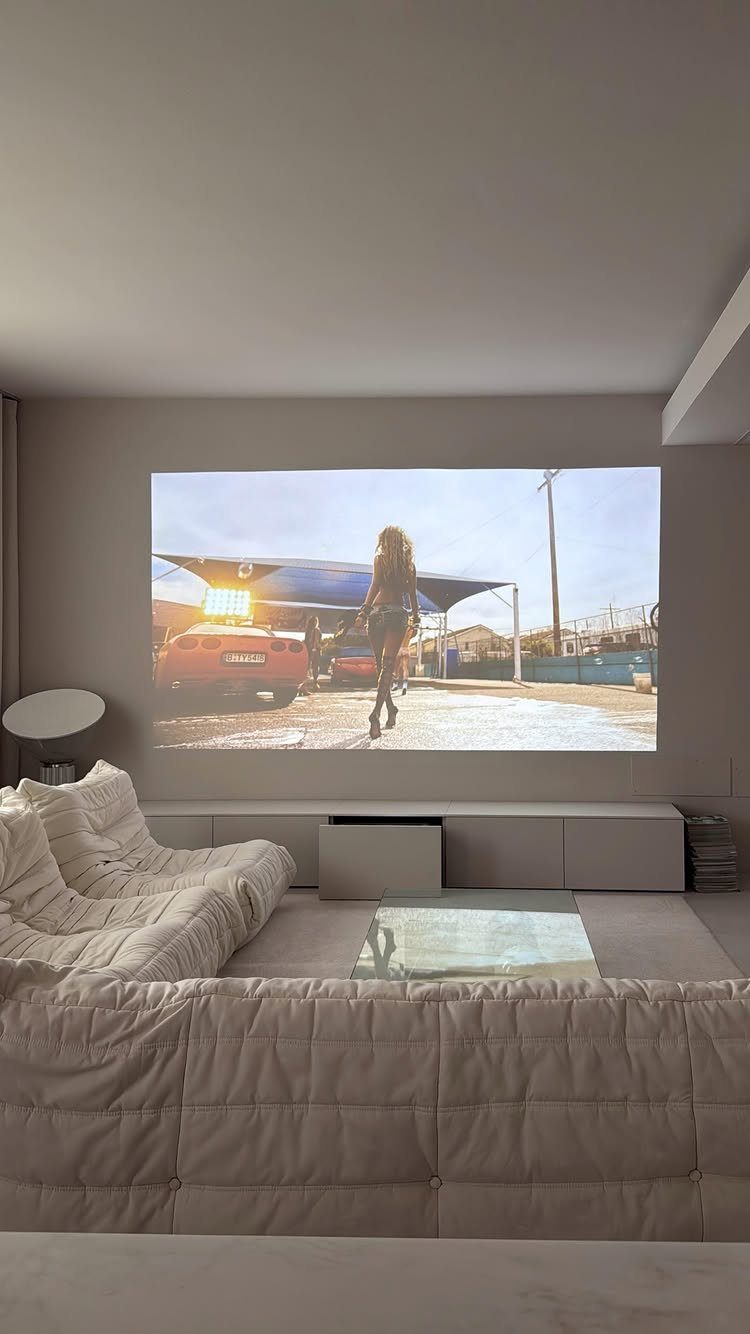
A deep white sectional facing a big screen puts everyone in the best seats, and the tufting makes the room feel soft enough to stay in all night.
I’d choose it over separate chairs when the room is small, because one piece wastes less floor.
Measure the walls first, since oversized sectionals swallow a room.
White shows every spill, so a washable cover is worth having. Set the sofa far enough back that the screen fills your view without you craning.
10. Bar Table and Stools
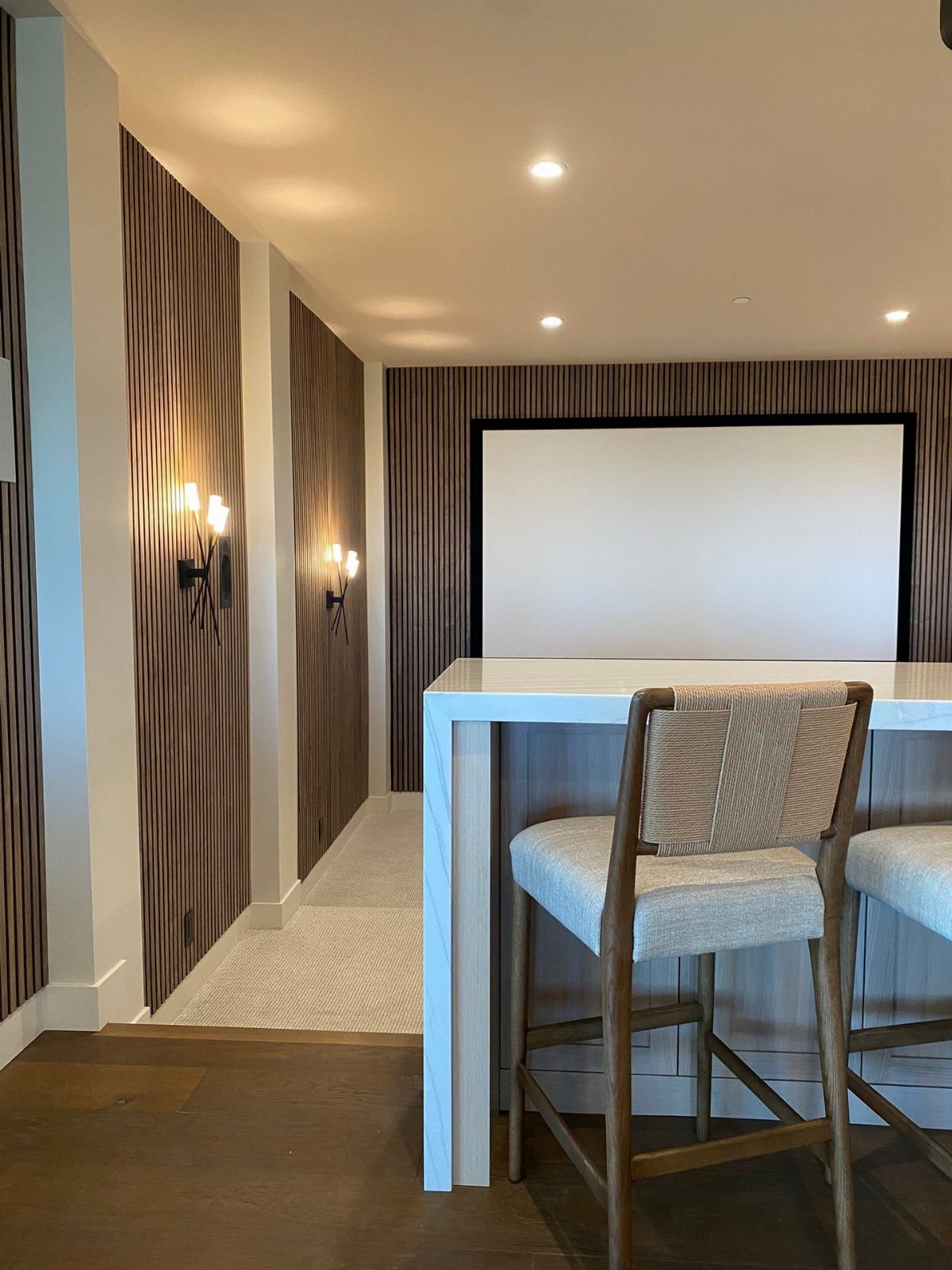
A high-top table with 2 woven stools behind the main seating adds a second row without a second sofa. Diners, gamers and anyone who wants a better view over the heads in front get a spot.
Keep the table narrow so it doesn’t crowd the walkway.
Woven stools look warm against wood slats, but check the seat height against the table before buying, because a high-top needs tall stools. Put the table at the back, so no one blocks the screen.
11. Floor Mattress and Shelf Projector
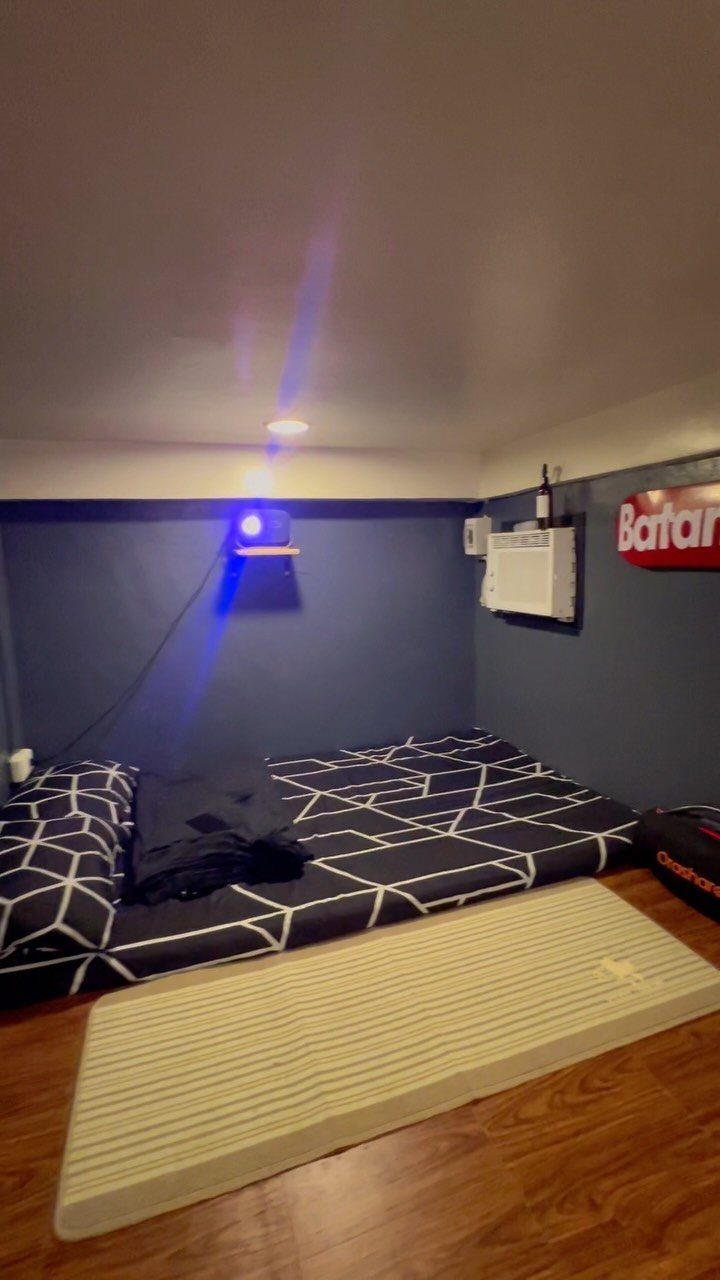
A floor mattress and a mini projector on a high wall shelf make about the cheapest theater going, and it works in a rental because nothing gets drilled into the ceiling.
The mattress gives lounging room, and the shelf keeps the projector out of the way.
Set the shelf high enough that the beam clears your head when you sit up. Aim at a plain, light wall, and pull the mattress back until the picture feels comfortable to watch.
12. Ceiling-Mounted Projector Setup
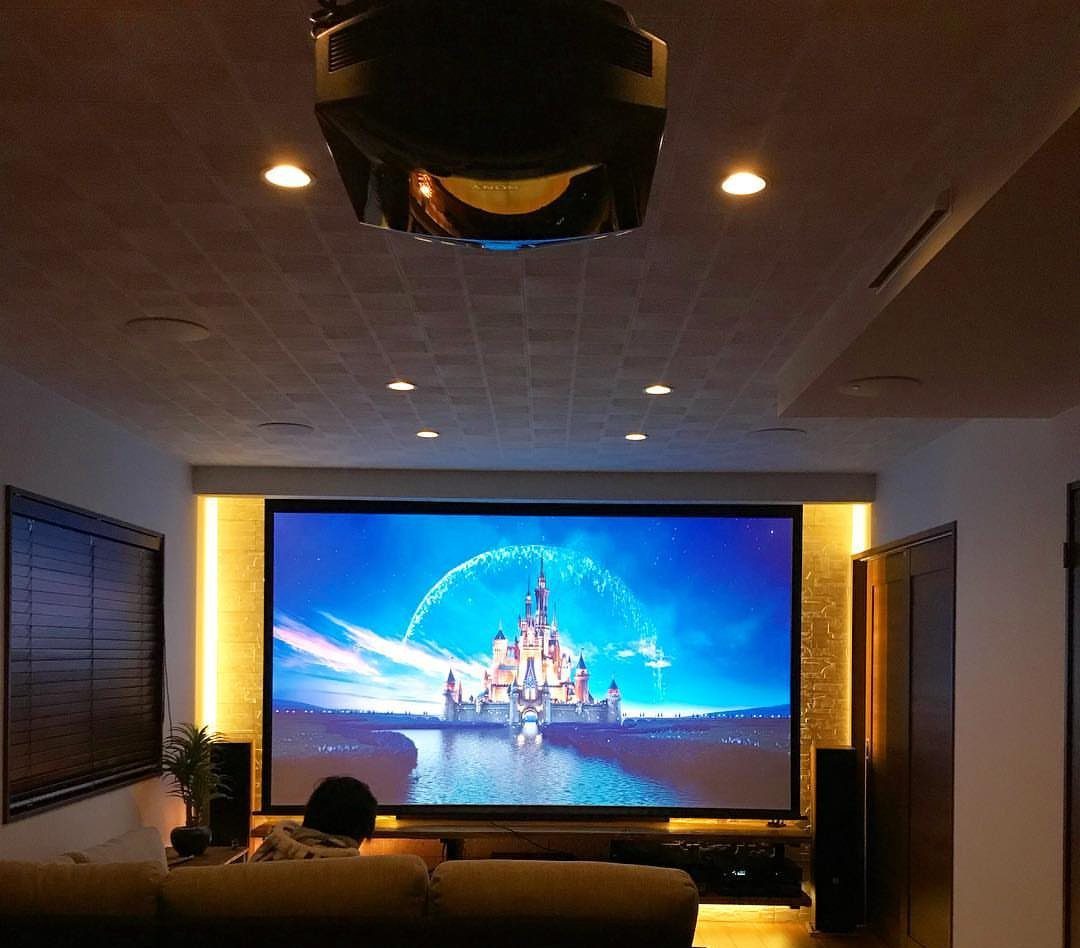
A ceiling-mounted projector clears the shelves and tables entirely, which is why I prefer it in a room where the couch and screen are the only furniture. Recessed lights then handle everything else.
Mount the projector so it lines up with the screen’s center before you drill, and run the cable through the ceiling or a slim cover.
Put the recessed lights on a dimmer, so you can drop them low for the film and still find your way.
13. Starry Night Ceiling
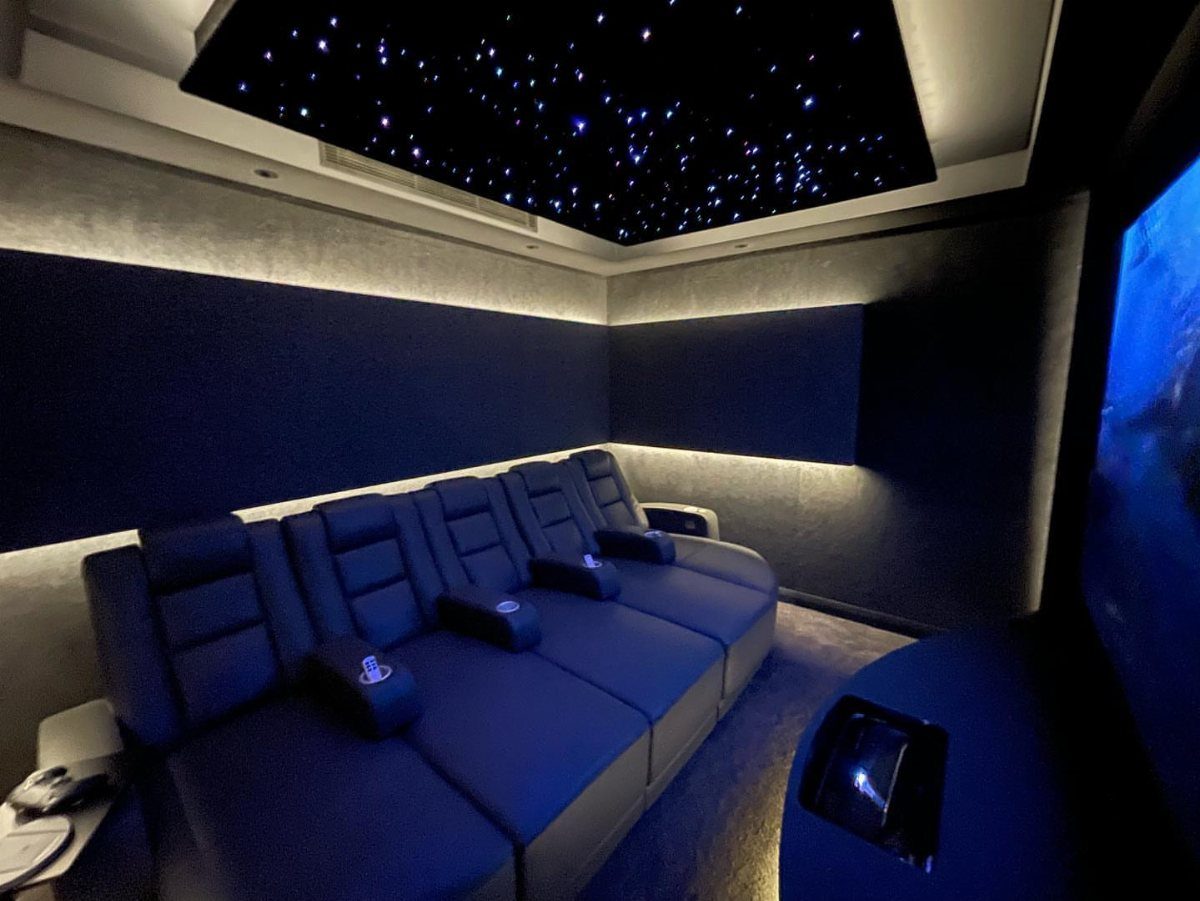
Fiber optic points on a black ceiling make a tight space feel taller, because the dark surface hides where the ceiling ends and the lights read as distance.
Against dark blue walls and blue leather seats, the effect stays calm instead of flashy.
Paint the ceiling matte black so nothing reflects the screen. Run the fibers before the final coat of paint goes on, and keep the light source on a dimmer or remote so the stars can drop low during a film.
A ceiling kit is a budget-friendly weekend job, though it means working overhead for hours.
14. Wood Slat Accent Wall
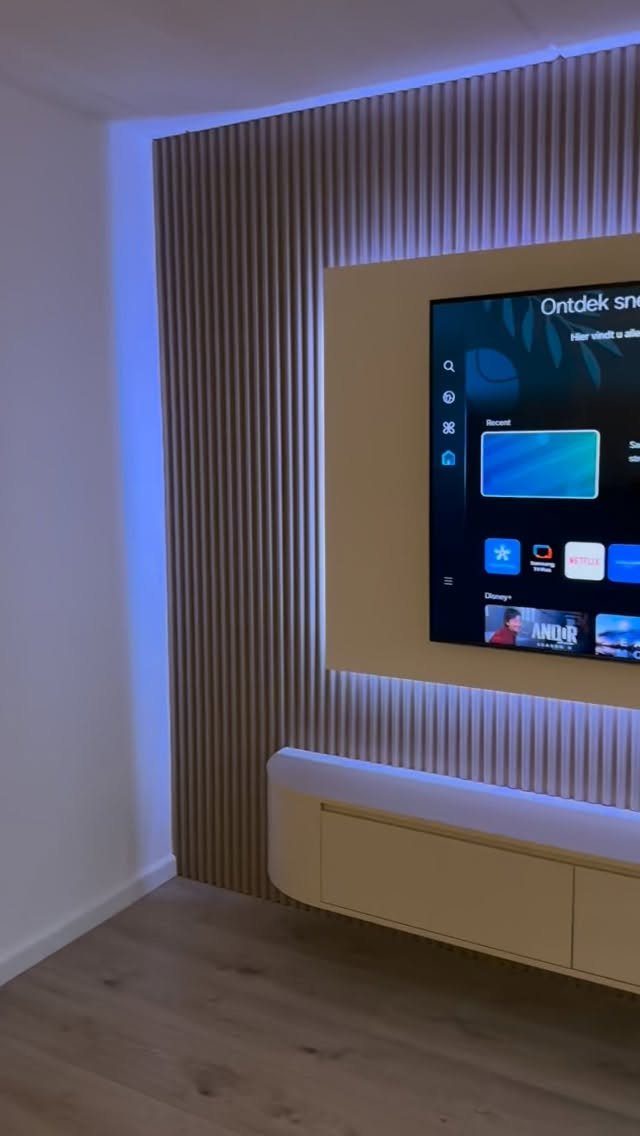
Vertical wood slats behind a wall-mounted TV give the screen a frame, and the grain adds warmth to a room that could otherwise feel like a box of electronics.
I’d pick this over a plain painted wall when the TV is the focal point.
Tuck a blue LED strip behind the slats so the glow outlines the wall without hitting the picture.
Keep the floating console underneath narrow, and let the slats run floor to ceiling if the height allows, since long vertical lines make a low room look taller.
Choosing the Right Room
Light is the first thing to check in any room you’re considering. A basement, a spare bedroom or an office with one small window is easy to darken, while a room with big windows will fight you on every movie.
Guest rooms, offices, dens and living rooms all work if they can pull double duty. A living room needs the most compromises, since the screen and seating have to look fine when the movie is off.
If you have two candidates, pick the one with fewer windows and a door you can close. Sound and light stay in, and nobody walking through ruins the scene.
Optimizing Audio and Visual Equipment
Past about 5.1 channels, extra speakers just crowd the walls, so a soundbar with a separate subwoofer, or a compact surround kit with 4-inch satellites, is what I’d buy for a 10 by 12 foot space.
Big speakers and a full receiver rarely pay off when the seats sit a few feet from the screen.
For the picture, a short-throw projector can sit close to the screen, so it suits a room with little depth. A ceiling-mounted projector is the other choice for a tight layout.
For floor space, a drop-down screen mounted to the ceiling or a TV on a swing-arm wall mount wins, since neither one needs a stand or a media console. Choose the screen first, then size the sound around it.
Then you probably have the space for a dedicated home theater. A 12′ x 15′ room is plenty big enough for a good-size TV, a compact surround sound system, and a strategically placed sofa.
Final Touches for Atmosphere
Personal touches make a theater feel like yours. Movie posters or framed art tied to your favorite films fill a wall, and pillows and blankets make the seats inviting.
Park a mini fridge with cold drinks and snacks beside your seat, and nobody has to pause the movie for a kitchen run. A small bar cart gives you a spot for drinks without taking much floor.
Add a charging station tucked behind furniture, so phones stay powered during a marathon and the cords stay out of sight.
Frequently Asked Questions
How to make a cheap home theater?
On a tight budget, a mattress on the floor and a mini projector sitting on a high wall shelf is the cheapest way I know to get a real movie night, and renters can do it without a single hole in the ceiling.
After that, a coat of matte dark paint gives the biggest return for the least money, and most rooms take one weekend.
What is the best home theater setup for a small room?
A wall-mounted TV with a soundbar on a floating console is the simplest fit, since it gives clear dialogue without floor stands or a receiver.
A projector works too, and mounting it on the ceiling keeps shelves and tables free. Pick the screen size first, then match the speakers to it.
What lighting tips can enhance my home theater experience?
Dimmers on your lights let you go dark for a film and still see where you’re walking. Tuck them under seating or behind wall slats so the glow never hits the screen.





