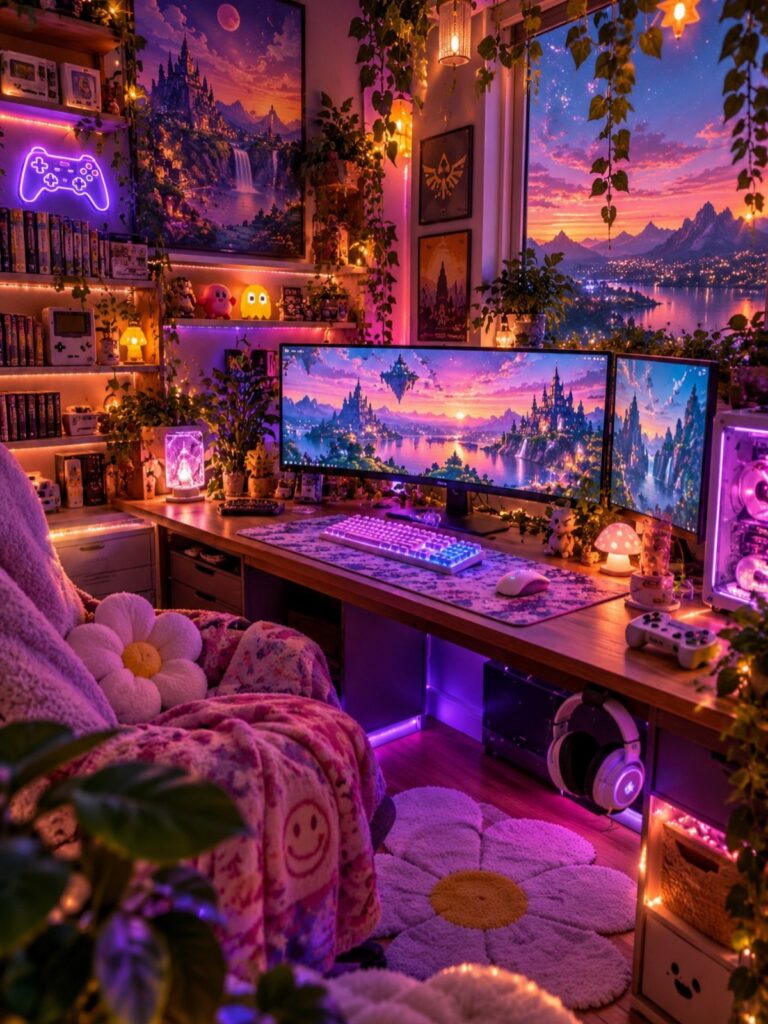
Budget, measuring, and comfort matter more than you think when you’re choosing between a throw pillow and an arcade cabinet.
An arcade cabinet or a pinball machine needs a clear path from the door to the room, while pixel art on removable hooks and a controller pillow work in any rental.
1. Game-Themed Decor
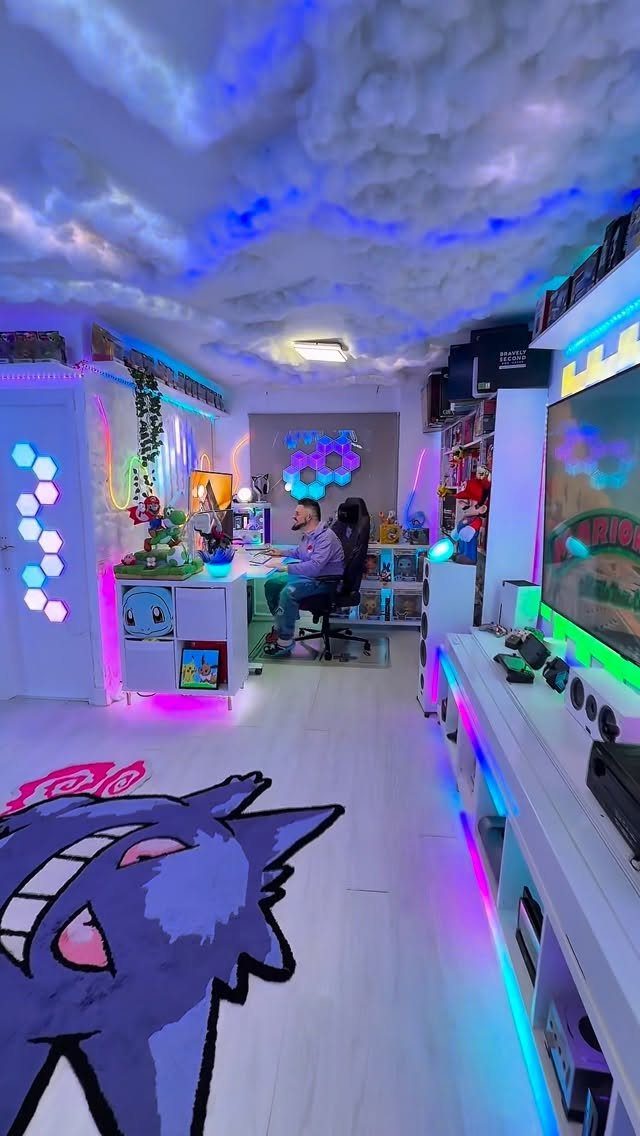
Pick the decor from the games you actually replay, not from what a store labels "gamer." A single character rug, like this Gengar one, tells more about who lives here than a wall of generic logos.
I’d choose 2 or 3 pieces tied to favorite games and leave the rest of the room quiet. Too many themes at once looks like a gift shop.
2. RGB Lighting
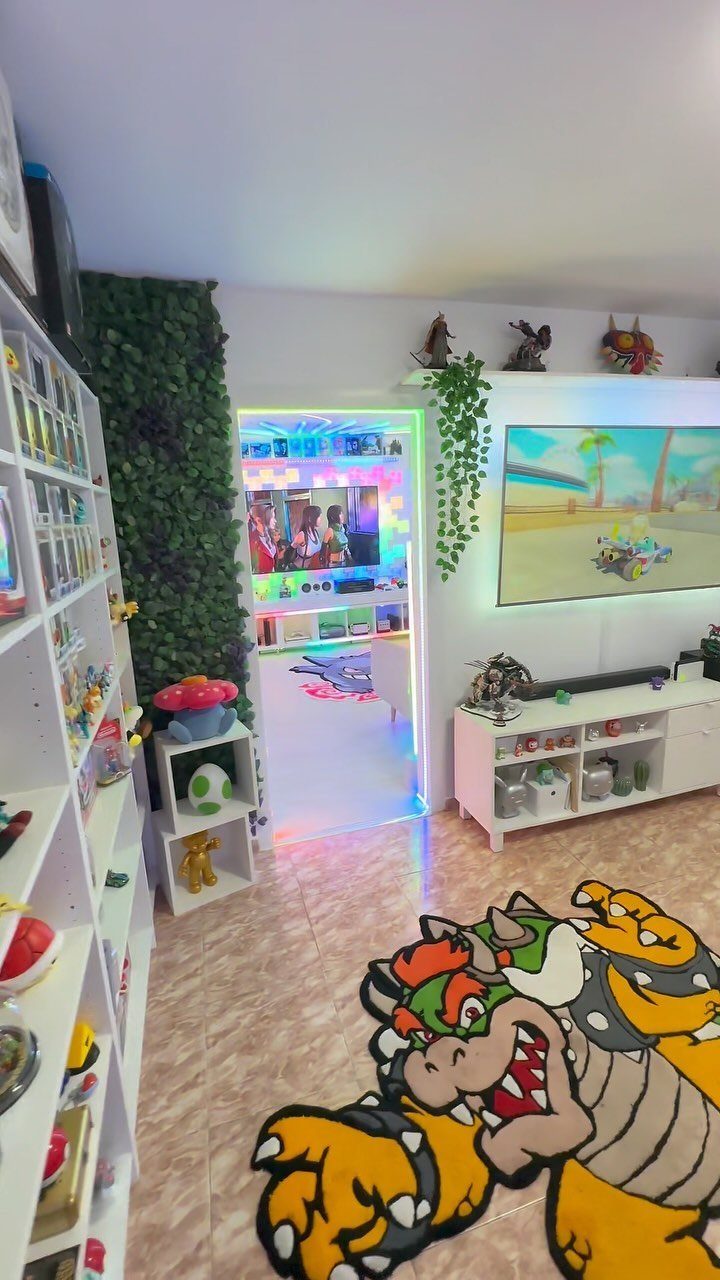
A doorway is one of the best places for RGB strips, because the frame gives the light a clean outline and keeps the glow off your screen.
Behind a TV or along a shelf edge also works, as long as the strip sits out of sight and only the color shows.
I’d stick to 1 or 2 colors that match the room’s rug or art. A full rainbow cycle gets tiring after an hour of play.
3. Pastel Gaming Room Aesthetic
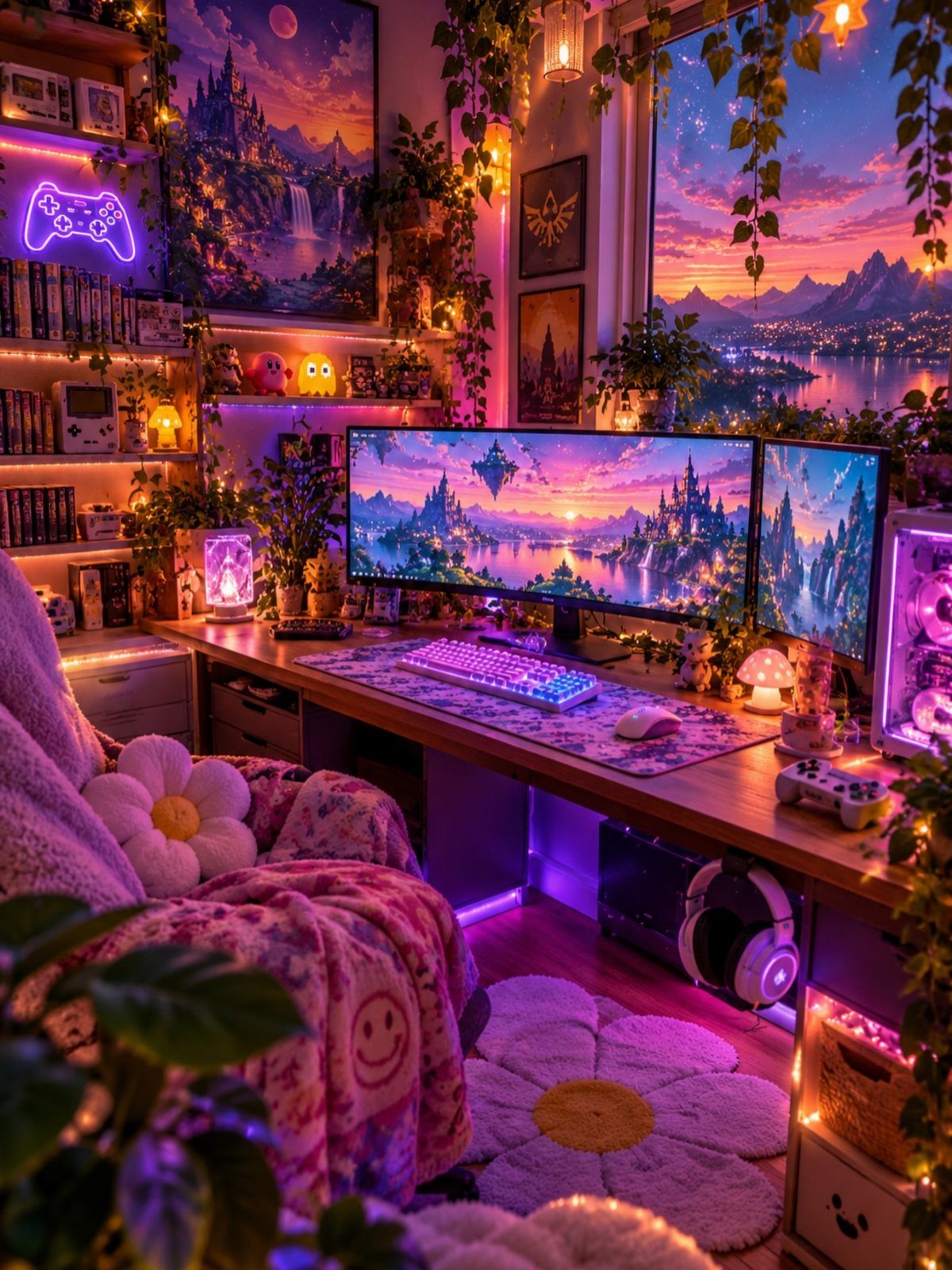
Softness comes from texture more than from paint. A fuzzy chair, string lights and a few plants turn a desk with dual monitors into a lounge instead of a command center.
Keep the pastels in the furniture and soft goods, then let one RGB color, such as purple, tie the screens to the room. Swapping a chair or a throw costs far less than repainting, so it suits renters.
4. Custom Neon Signs
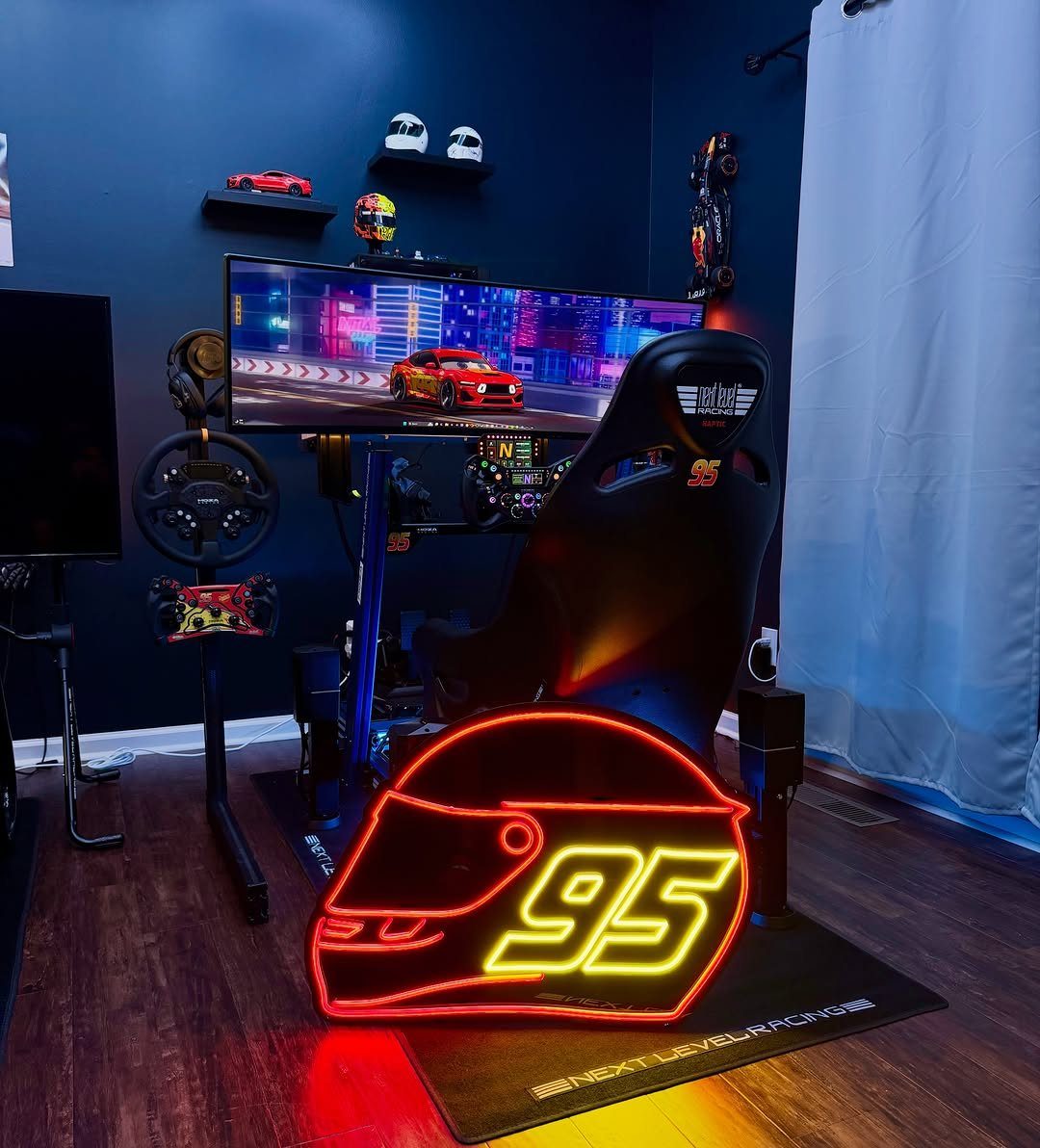
A custom neon sign works best when it carries one personal symbol, like the helmet with a number on it above a racing rig.
A name, a gamertag or a car number all read the same way: this room belongs to one person.
Order it in the colors of your setup, and plan the wall space before you pay, since the sign is made to a set size. Hang it where it sits in your sightline but not in your monitor’s glare.
5. Floating Wall Shelves
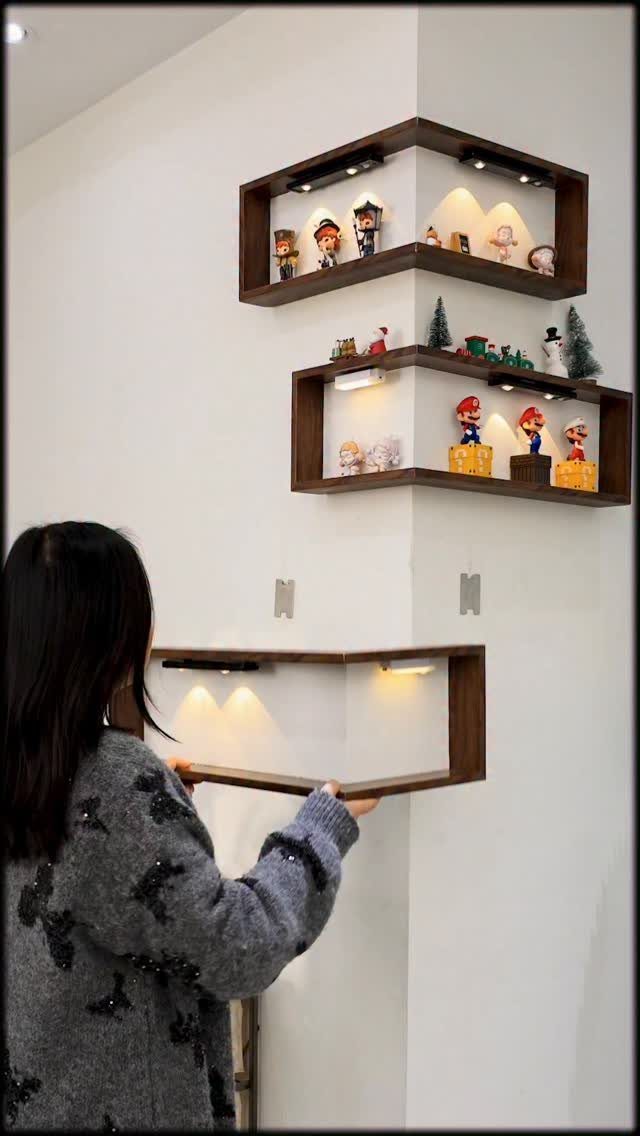
Corner shelves are the quiet space-saver here. A floating corner shelf uses wall that nothing else would, and built-in lights make small figurines look lit like a display.
Stack two or three up the wall and keep each shelf to a single character group, as with the Mario figures. Find studs or use proper anchors before loading them, because figures add up in weight faster than you expect.
6. Acoustic Panels
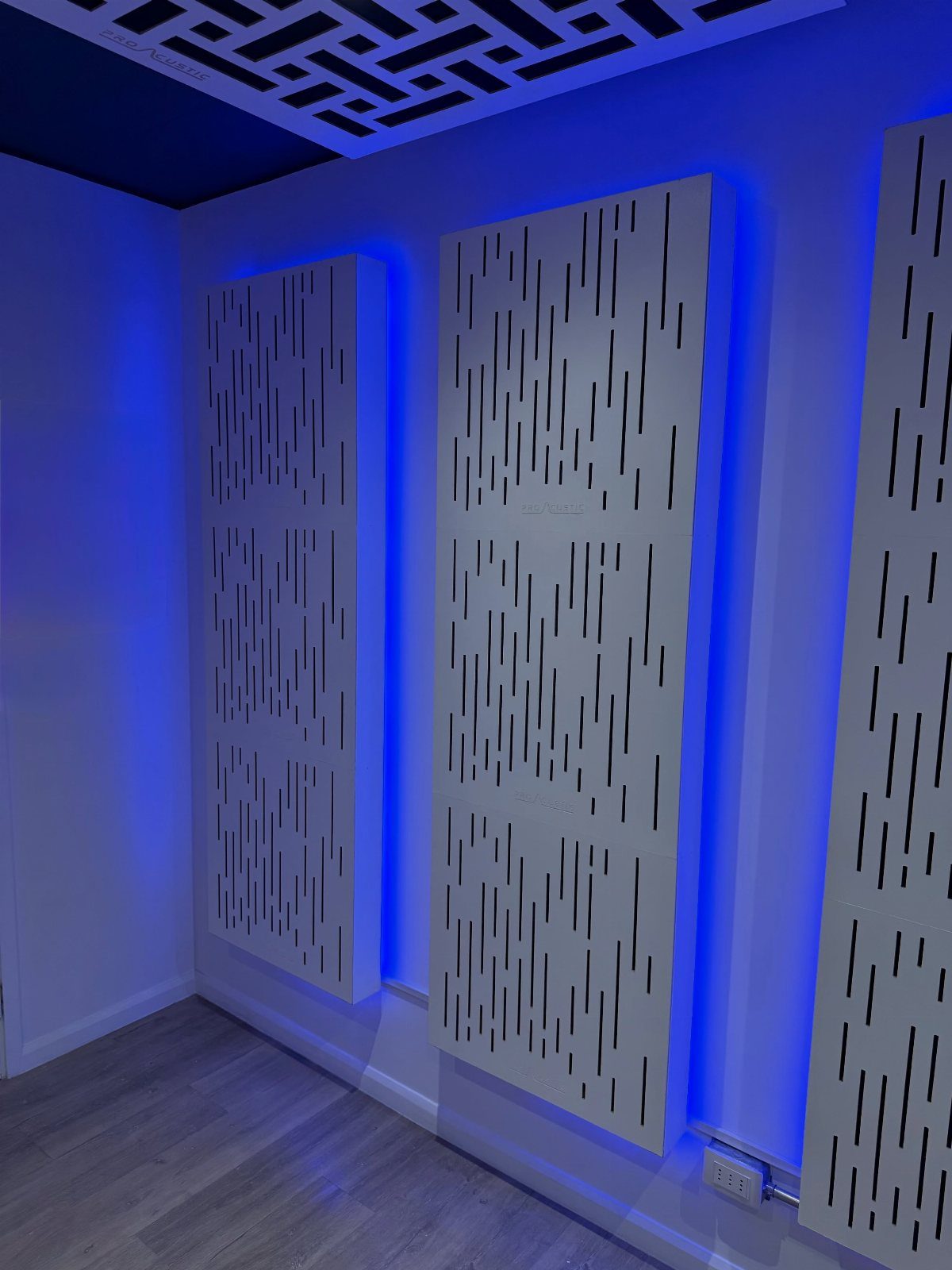
Slotted panels like these do double duty: they soften the sound in a bare room and give the wall a pattern worth looking at. Adding blue backlighting turns them into a lighting feature too.
For a gaming room, I’d start with the wall behind your desk or the one facing it, since that is where voices and speakers bounce. A matching ceiling panel finishes the look, though it’s optional and adds cost.
7. Display Cases for Collectibles
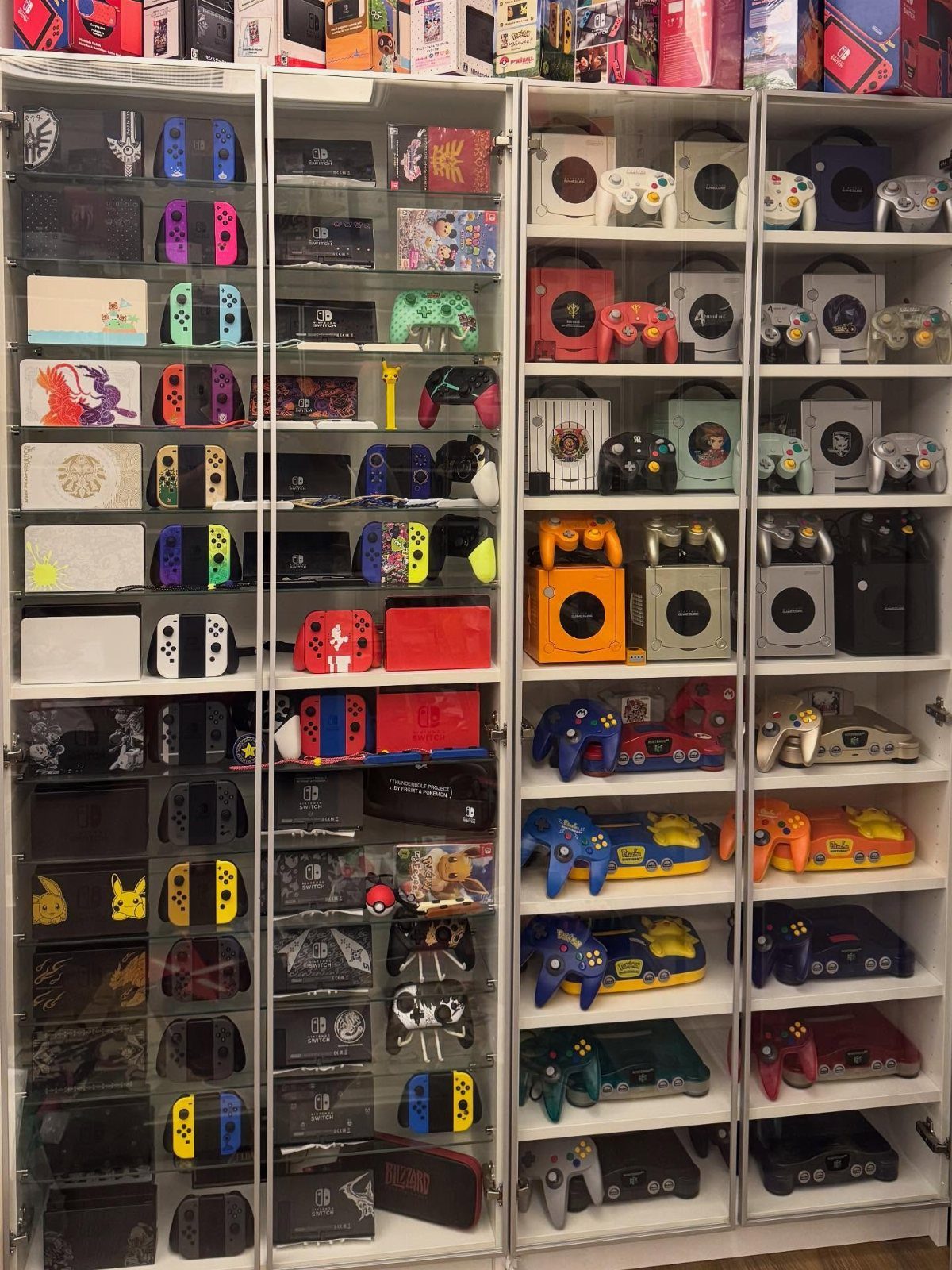
Glass-door cabinets turn a pile of consoles and controllers into a collection. White cases keep the wall quiet, so the hardware and themed accessories supply all the color.
Group by system or by game, and leave a little empty shelf so nothing looks crammed.
Glass doors also keep dust off, which saves you wiping each piece. Skip the cases if you want to play the items often; a closed door is one more step between you and the controller.
8. Gaming Desk Setup
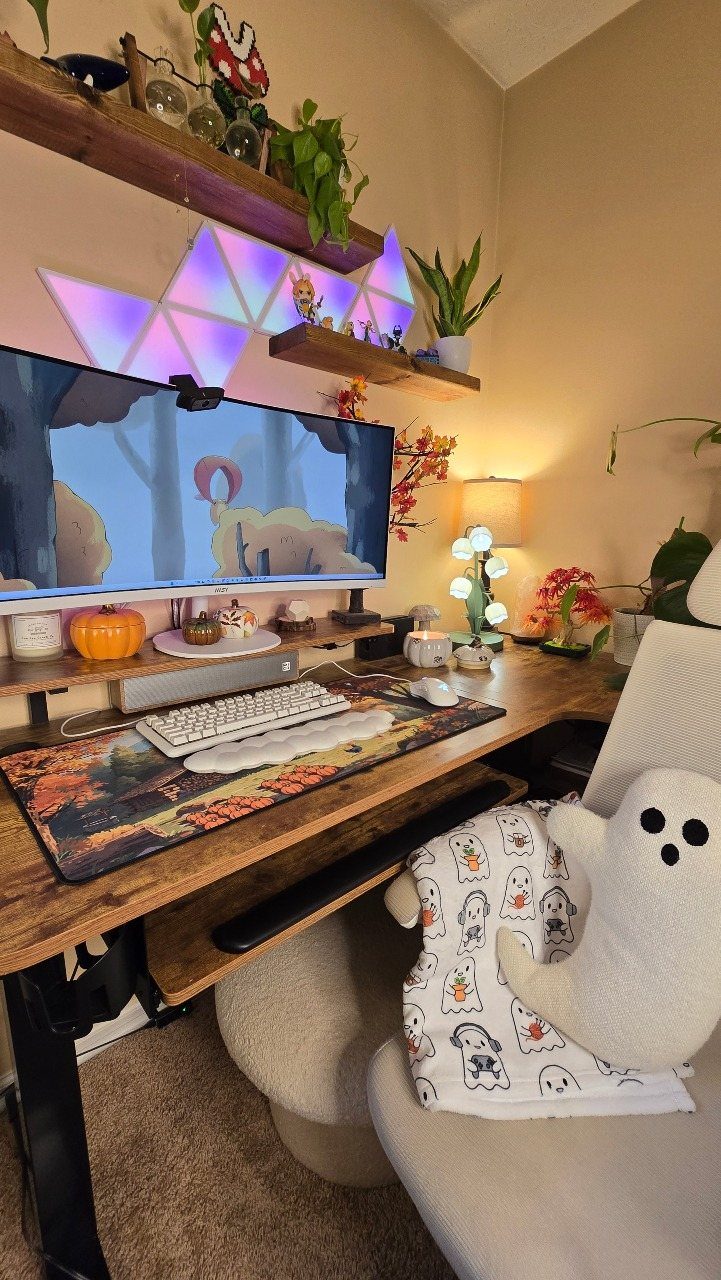
A wooden desktop warms up a screen-heavy setup, and it gives the monitor, keyboard and mouse a clear zone to sit in. Everything else can live around that zone.
I’d keep the desk surface for gear you touch daily and push the decor up to the wall shelves.
A plant and a plush ghost add personality without eating mouse room. RGB wall lights behind the desk give the glow without a single cable crossing your work area.
9. Game Console Stands
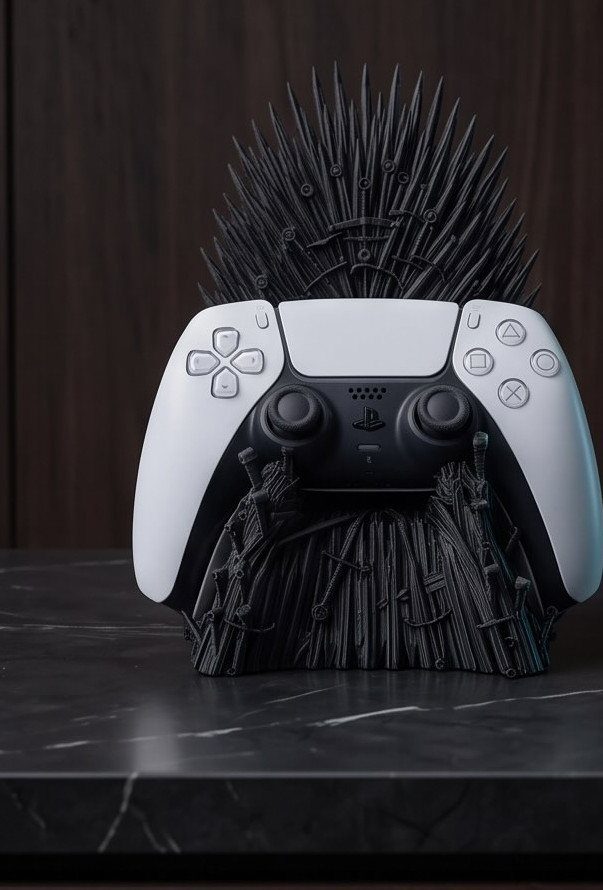
A console or controller stand is the cheapest way to make gear look intentional.
Pick a stand shaped like something from a game you love, and match its finish to your desk.
Dark stands against a light controller give strong contrast. A stand also lifts the controller off the surface, so it’s easier to grab and harder to lose.
10. Game Wall Decals
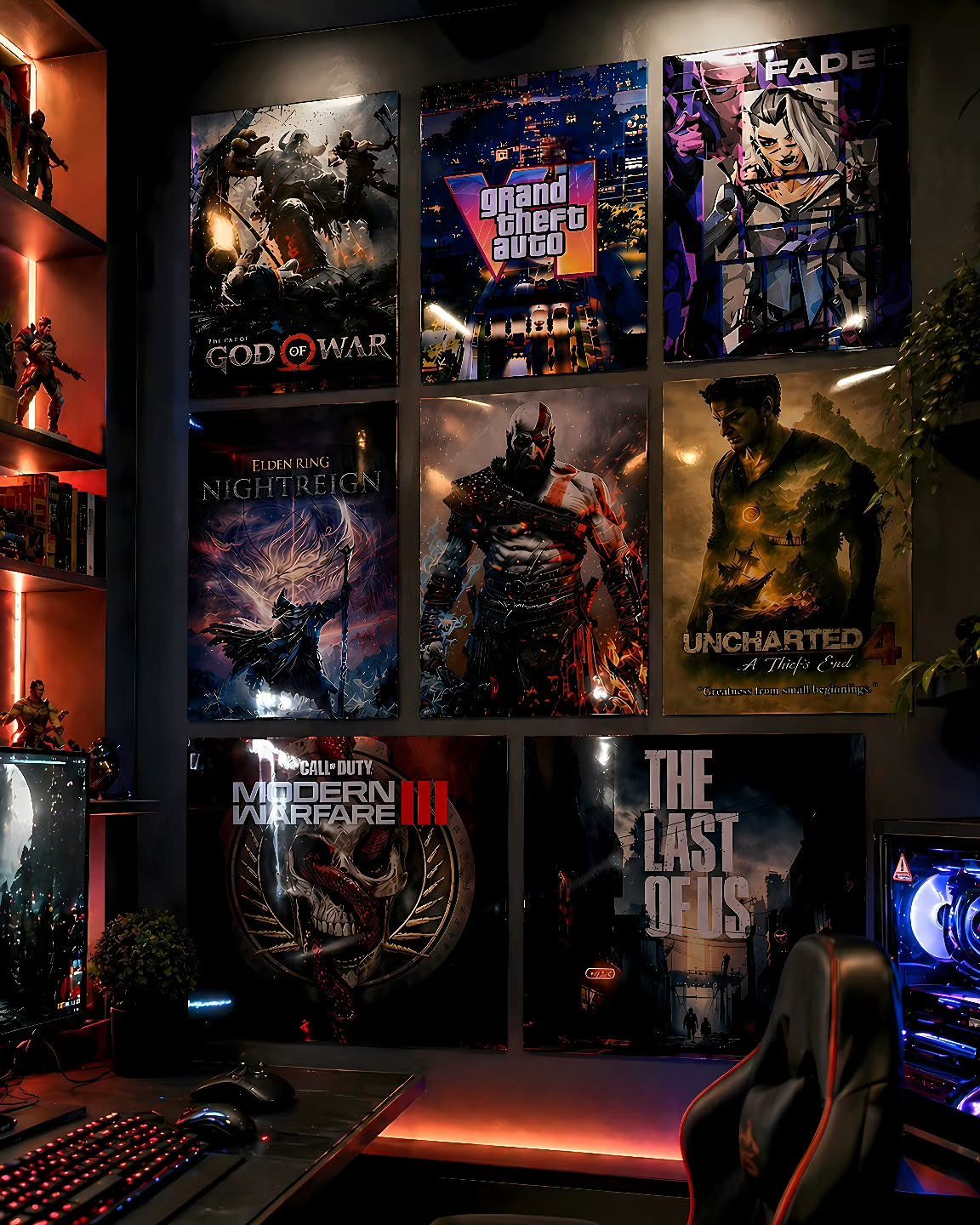
Big prints across one wall can turn a plain room into a game’s poster wall.
Large pieces of cover art, such as God of War and GTA, read as a single mural when they hang in a tight grid with even gaps between them.
Keep the gaps between them even, and pair them with one warm color of light, like the red here.
Measure the wall first and lay the layout out on the floor before anything sticks. Stick to titles you replay, so the wall still feels right in a year.
11. Headphone Stands
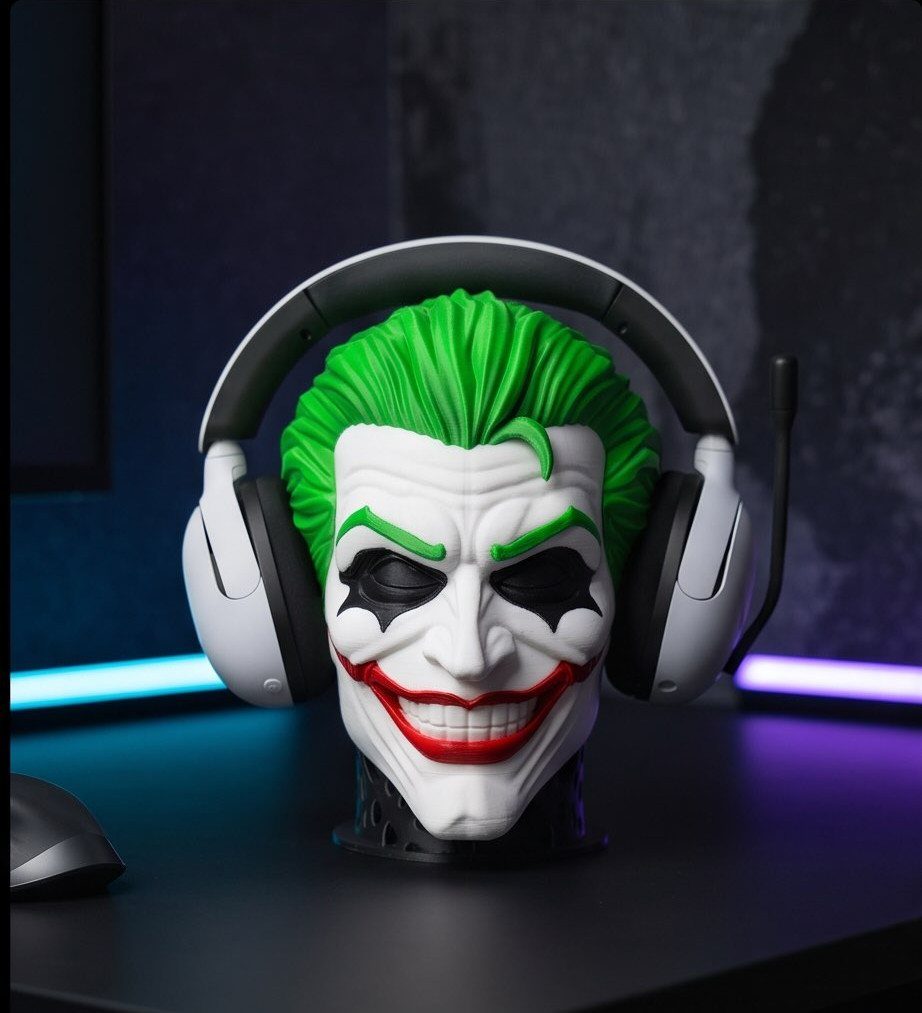
A head-shaped stand gives your headset a home and doubles as a small sculpture. A character bust under the headphones, like a Joker head, turns the stand into a desk accessory instead of clutter.
I’d place it at the edge of the desk, within easy reach of your right or left hand.
That way the headset goes back every time, and the cable and ear cups stay off the surface. Pick a character that suits your lighting; a dark figure disappears nicely under blue and purple neon.
12. Gaming Rugs
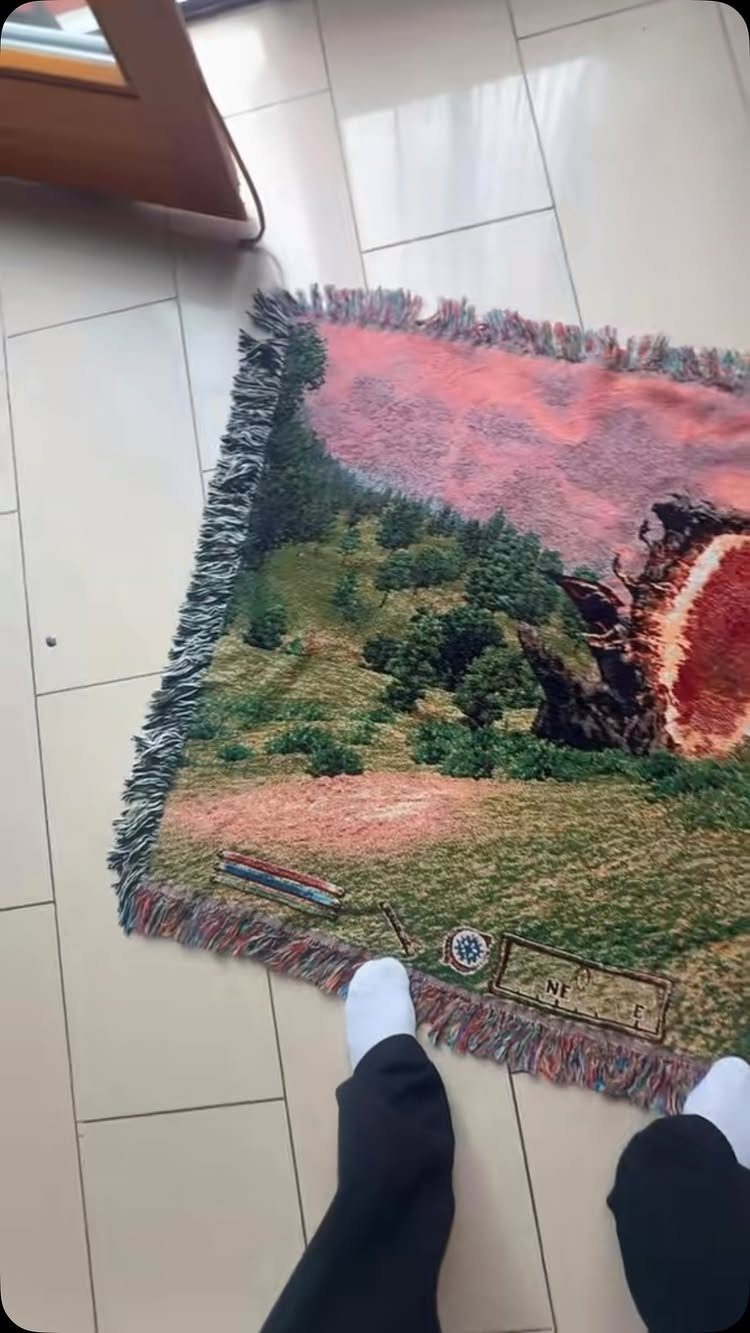
A rug marks out the gaming zone, especially on a hard floor like tile. Standing or sitting on a soft surface is easier on the feet and cuts the cold.
Choose artwork you can live with, like a landscape scene, and let it set the room’s color palette.
Measure the space under your chair and feet first, because a rug too small slides around. A rug with a non-slip backing is worth the extra cost if the floor is slick.
13. Gaming Bean Bags
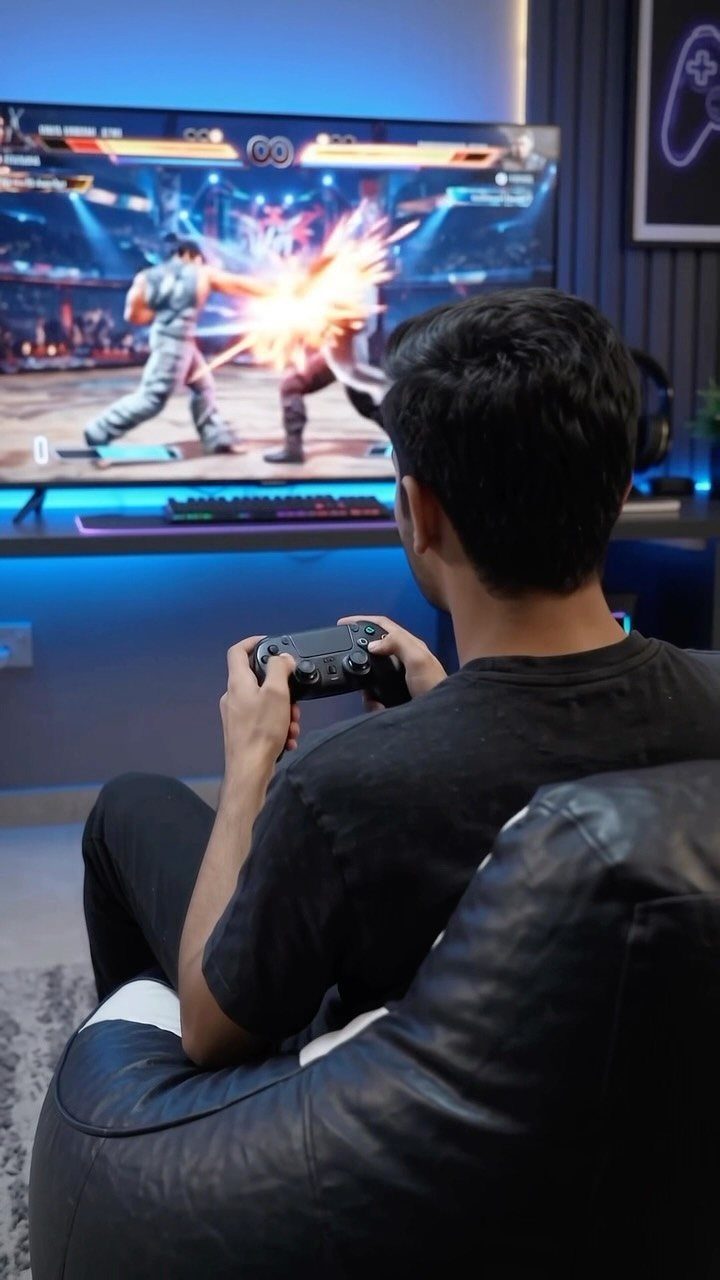
A leather bean bag gives a gaming room a seat that asks nothing of the floor plan. It drops in anywhere, slides against a wall when you need space, and sits low enough for a big screen across the room.
I’d pick black or a dark color if the room runs on blue or purple lighting, since it blends into the glow. Leather wipes clean after a snack spill, which fabric won’t do as easily.
Keep it for casual rounds with friends. For long ranked sessions, a desk chair still supports you better.
14. Game-Themed Throw Pillows
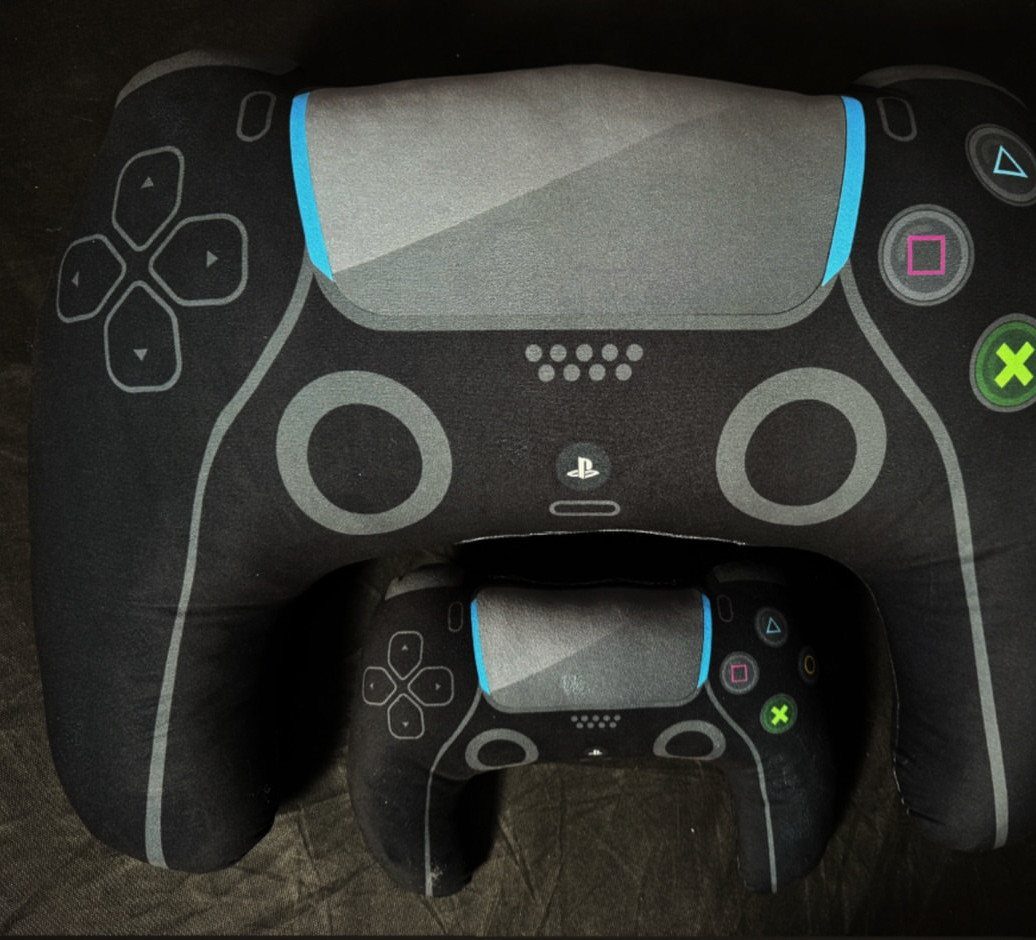
A controller-shaped pillow is a joke that also works as a cushion. Sitting on leather furniture, a black controller-shaped pillow looks like gear left on the couch, and it gives your back something soft to lean on.
I’d buy a pair in one color and keep every other pillow plain, so the controllers are the only theme on the sofa. Black reads well against dark leather; against a light couch, the shape stands out even more.
Pick the console you actually play. A pillow for a system you sold looks odd.
15. Projector for Dynamic Visuals
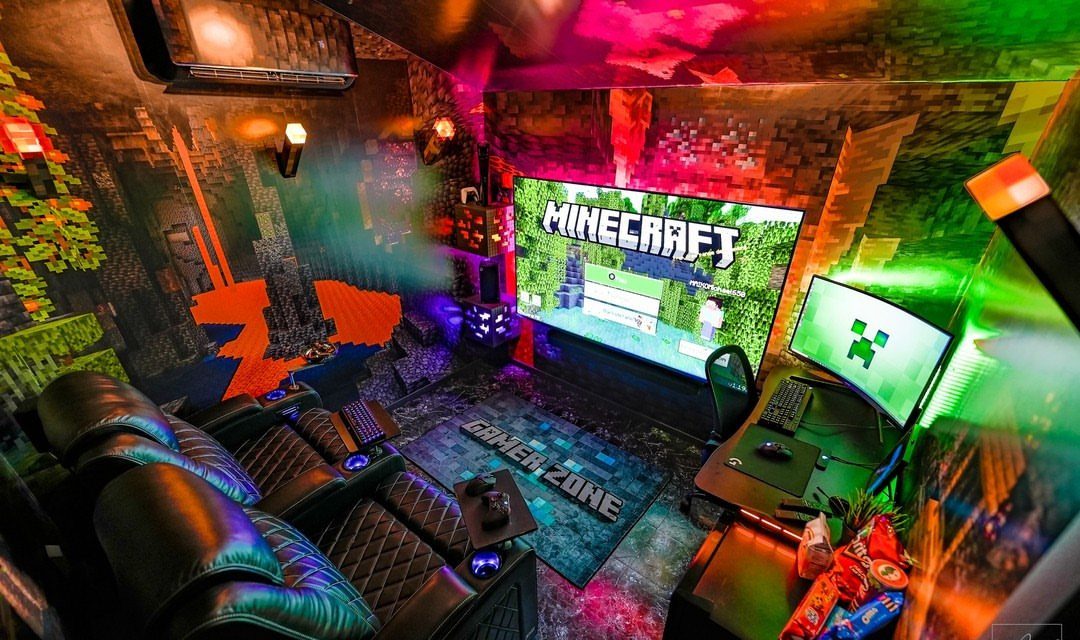
A projector screen turns one wall into the biggest display in the room, and it can sit beside a regular monitor for chat, guides or a second game.
A projector throwing a full title screen on the wall turns a basement into a small theater for one game.
I’d plan the seating first: chairs need a clear line to the screen, with nothing hanging in front of the beam.
Expect to spend more than on a TV of similar size, so decide how much wall you want to fill.
16. Arcade Cabinet Setup
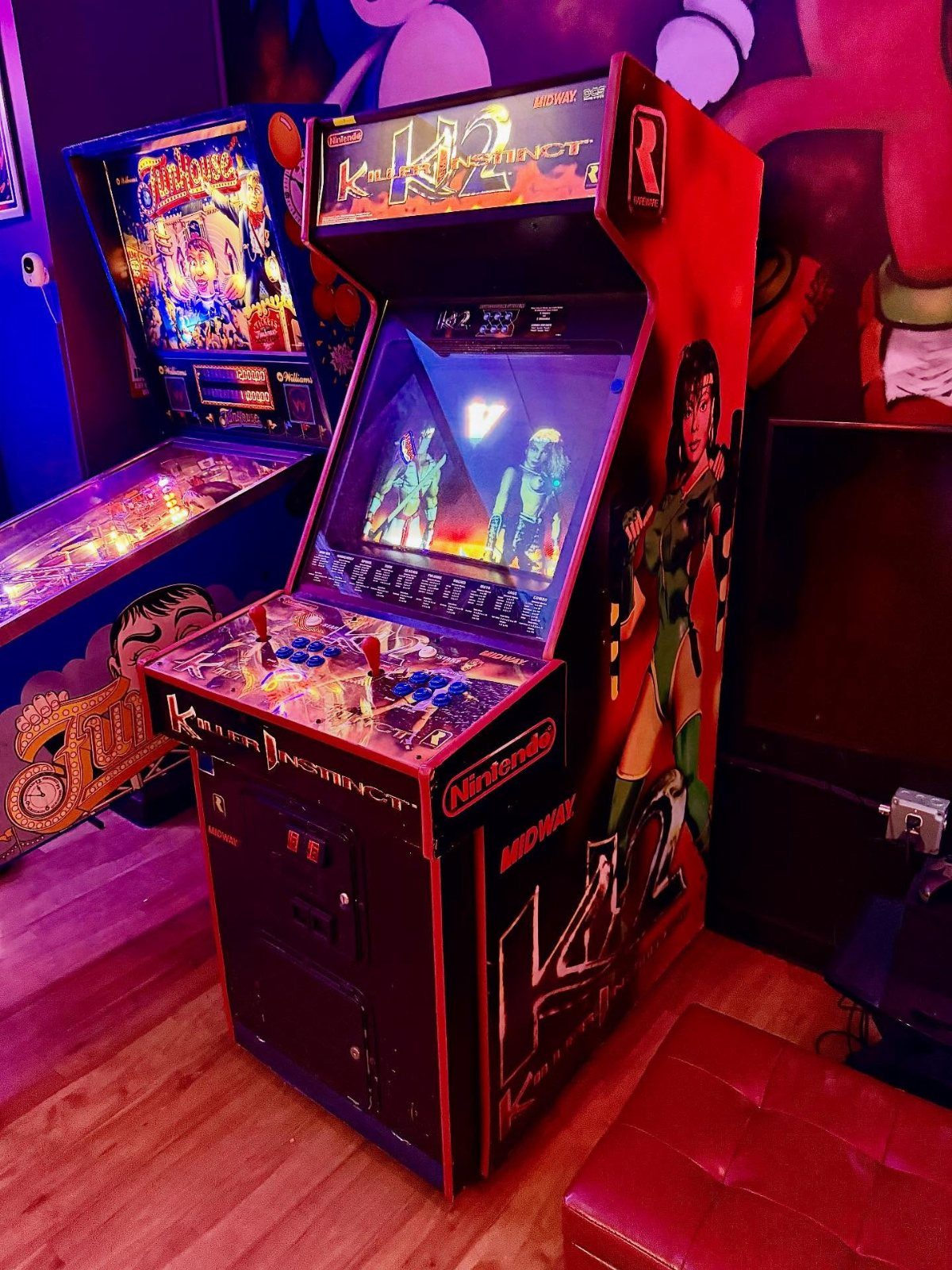
A full-size arcade cabinet gives a room an anchor piece that nobody mistakes for a console. Pair one with a pinball machine and the space reads as a small arcade, especially under red light.
Measure the doorway, the stairs and the spot on the floor before buying, because cabinets are tall, deep and heavy. Leave a few feet in front so players can stand and play without bumping the wall.
I’d choose a cabinet for a game you’d happily replay for years. It takes a lot of floor, so it suits a dedicated room better than a shared corner.
17. Home Pinball Machine
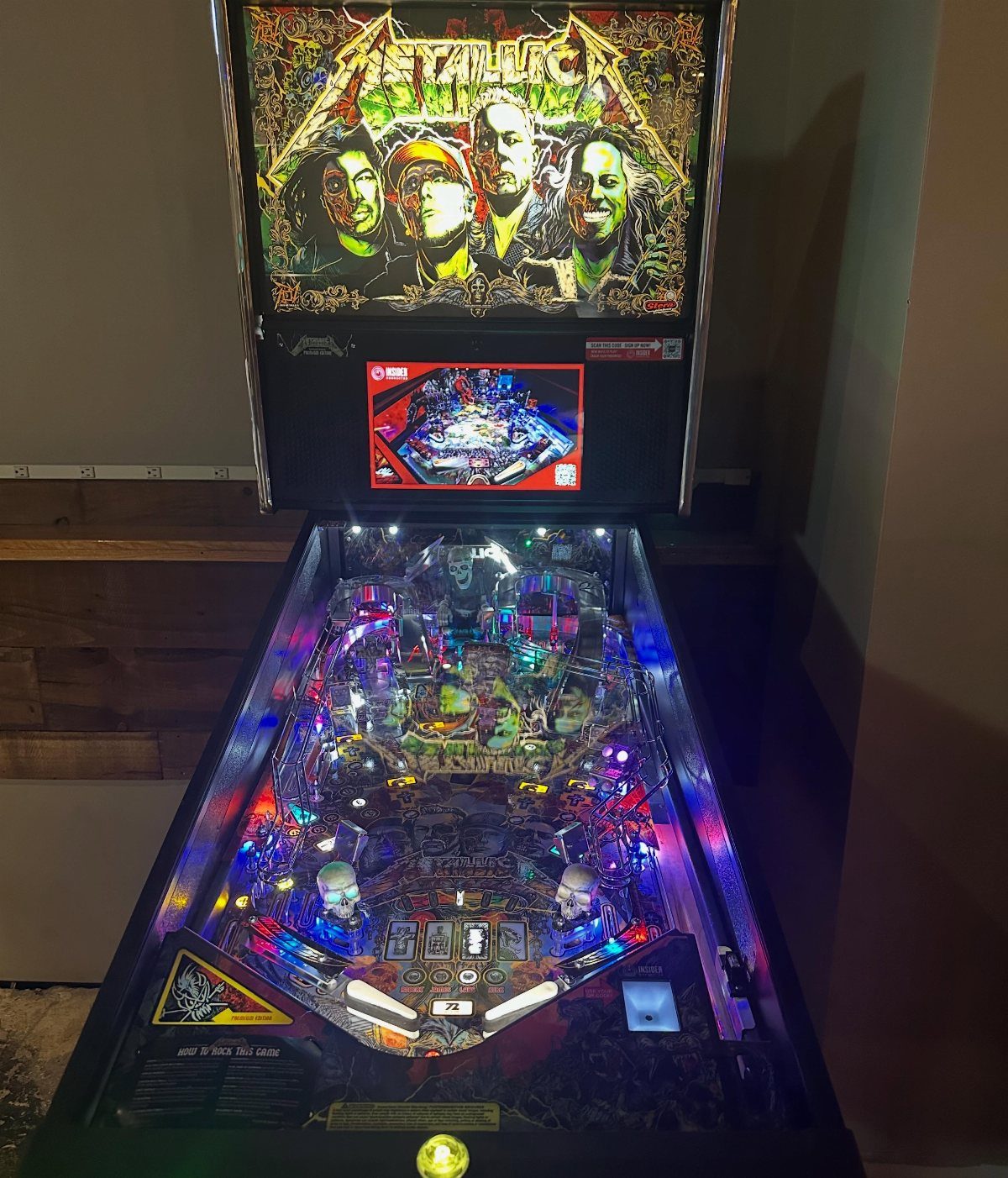
A pinball machine does what no screen can: it gives you something to hit, tilt and watch at once.
The backglass artwork is half the appeal, so pick a theme you’d want on the wall even when the machine is switched off, like a favorite band.
Set it against a wall where you can stand at the front without a couch behind you. Wood accents in the room warm up all that color and neon.
Machines are big and heavy, so check the path from the door before you commit. Honestly, it’s one centerpiece, so skip a second one.
18. DIY Cloud Ceiling
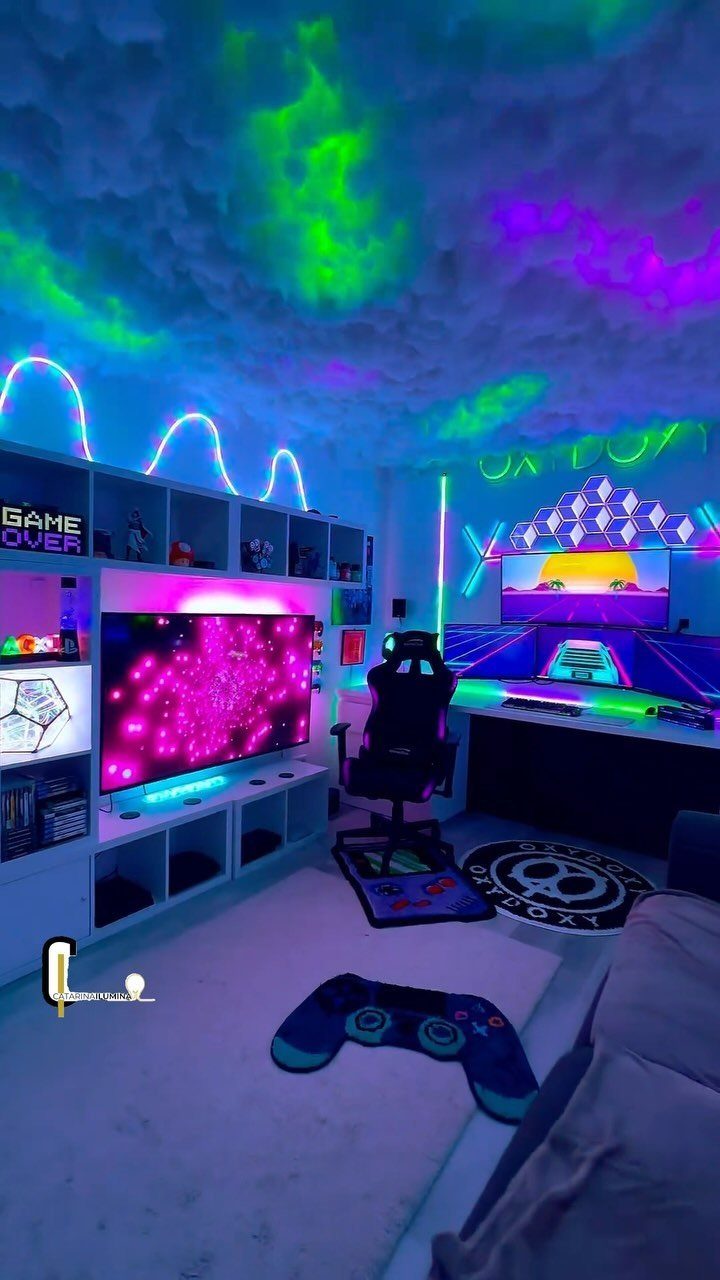
A cloud ceiling is cotton-like fill with LED lights tucked behind it, so the color glows through the fluff and the whole ceiling becomes the light source.
In a room full of monitors, it brings the eye upward and softens the harsh edges.
I’d choose one or two colors that match your screens and keep the rest of the lighting dim. Tuck the strips well behind the cloud so you only see the glow, never the diodes.
It takes a weekend and a modest budget, and it’s friendly to renters only if the ceiling is allowed to be changed.
19. Retro CRT Gaming Corner
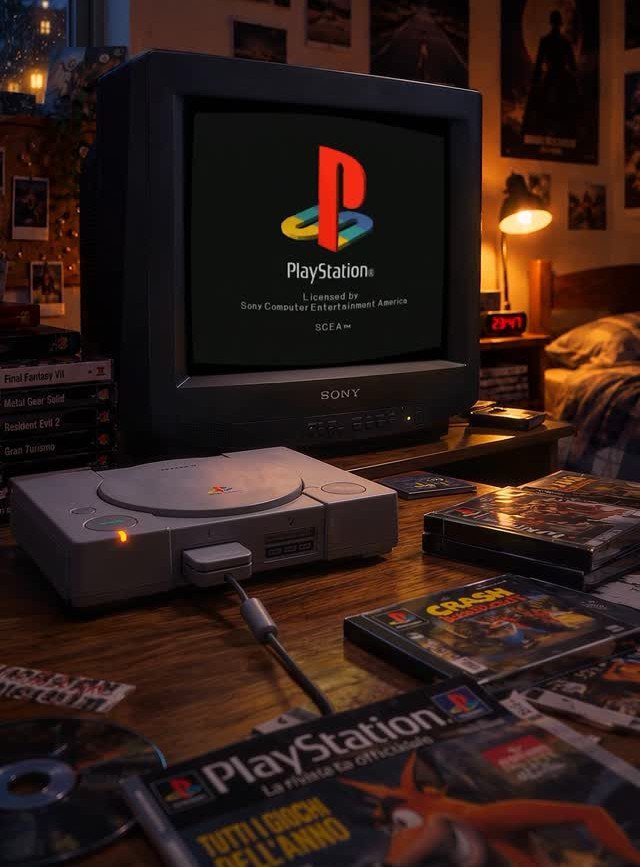
A CRT corner works because the console, the games and the screen all come from the same era.
A grey PlayStation on a wooden table in front of a Sony tube TV looks like a set piece, and the game cases do the decorating for you.
I’d keep the table low and the clutter small: console, a few cases, maybe a magazine. Tube TVs are deep and heavy, so measure the table first, depth and weight rating both.
Skip the modern soundbar here. It breaks the spell.
20. Disassembled Controller Shadow Box
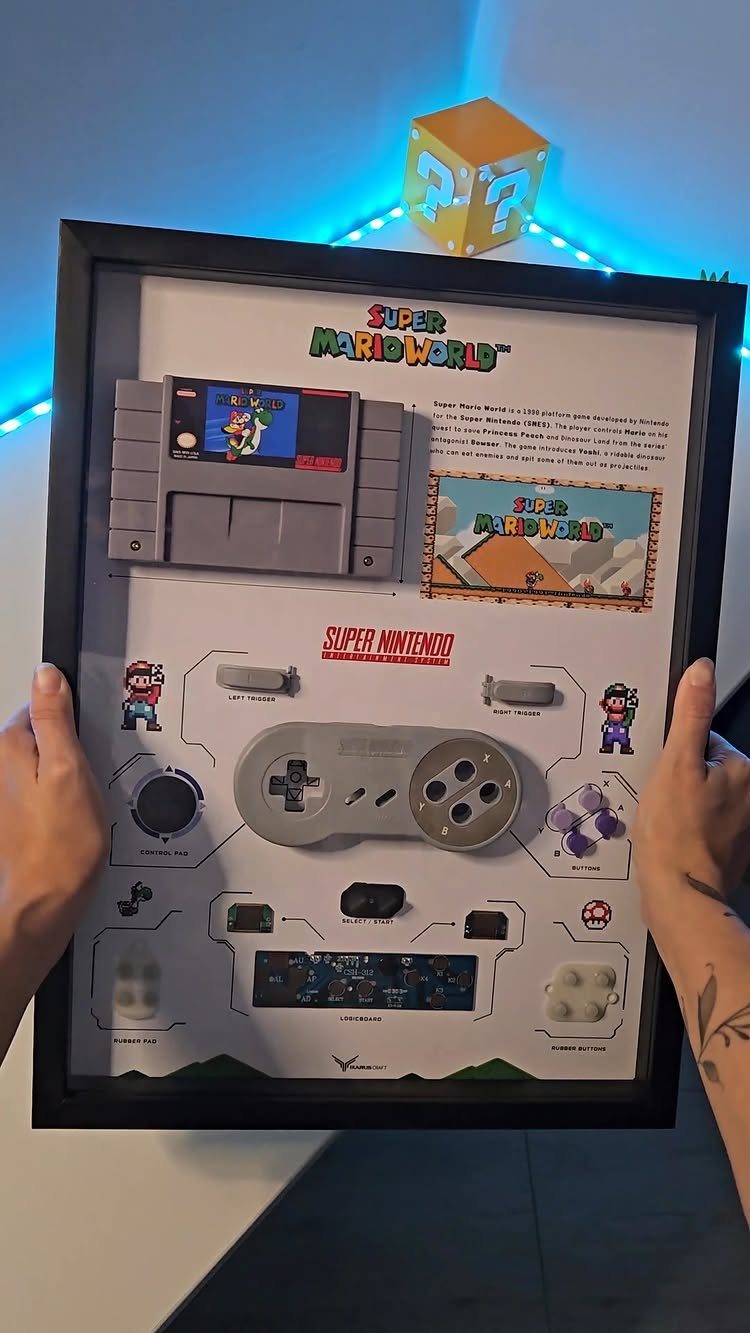
Taking a retro controller apart and framing it turns a dead piece of hardware into art. Labeling each part like a museum card, as with this Super Nintendo setup, gives the shadow box a story, and the cartridge anchors it.
Use a controller that no longer works, so nothing you play on gets sacrificed. Lay the parts out on the backing before gluing anything, and keep the spacing even.
21. Framed Video Game Posters
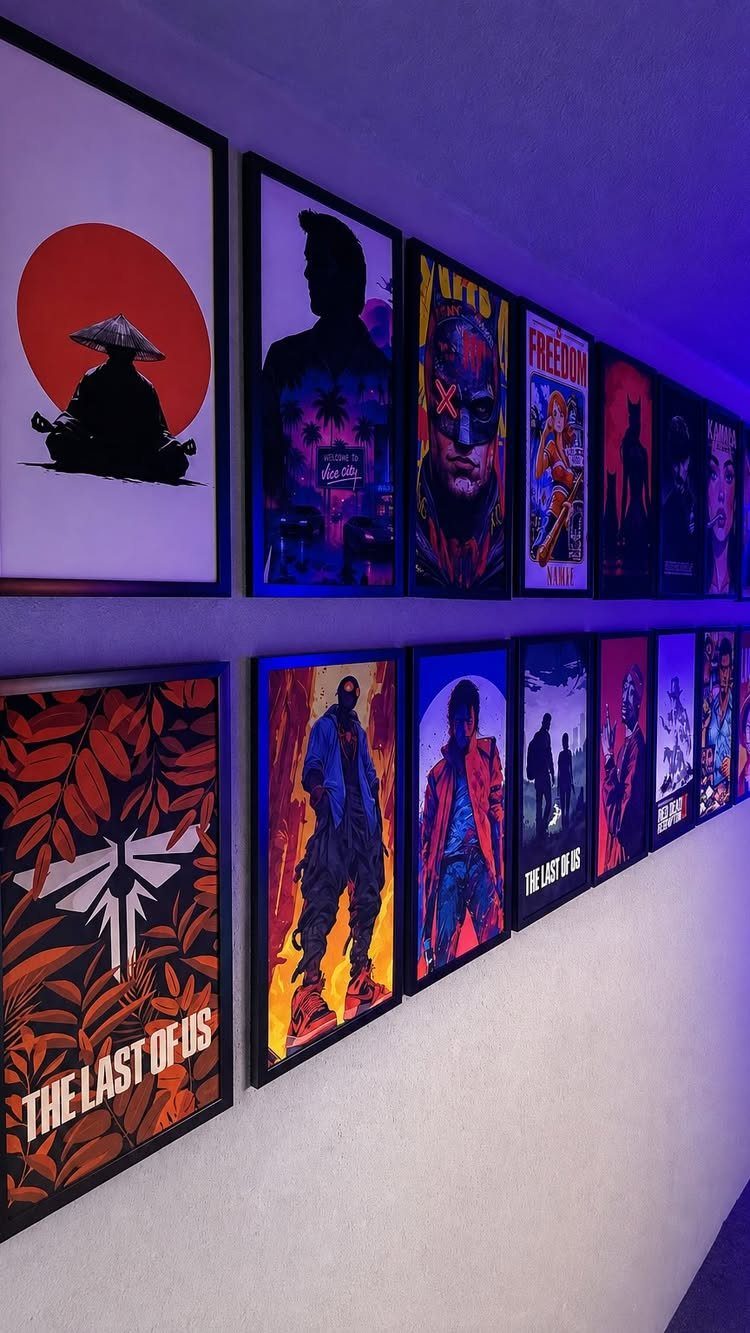
Matching frames are what make game posters look like a gallery instead of a dorm wall.
Pick one frame color and one size, and space the rows evenly. Washed-over accent lighting in a single color ties different art styles together, so the covers don’t fight each other.
Choose titles you’d still want on the wall after the trends move on. Frames cost more than prints, so buy them in a batch.
22. Mario Question Block Lamp
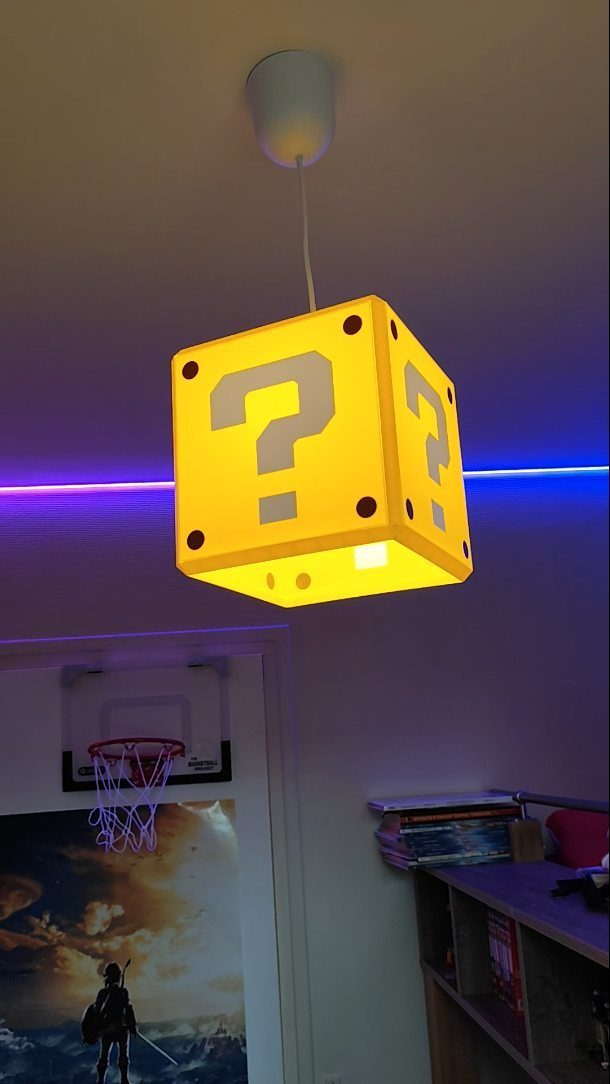
Hanging a yellow question block lamp from the ceiling puts the light source itself in the theme. The cube shape with question marks on every side is recognizable from across the room, and it glows like the real thing.
Hang it over an open spot, not above a screen, so it doesn’t reflect in the glass. It pairs well with a cool accent light like purple, which lets the yellow stand out.
It’s a statement piece, so keep the rest of the Mario decor modest.
23. Dragon Desk Lamp
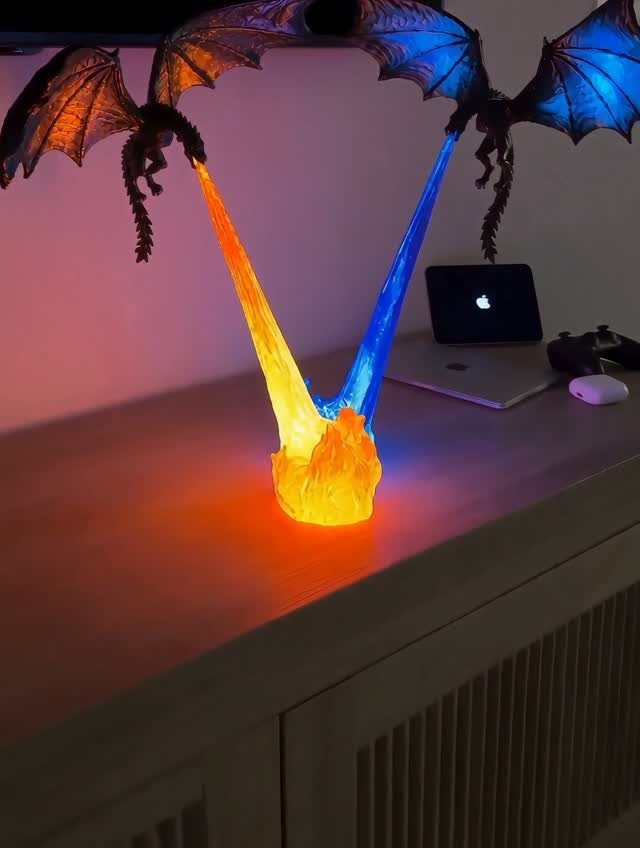
A dragon lamp puts a small piece of fantasy right beside your keyboard. 2 dragons breathing fire and ice, lit in orange and blue, give a white desk a focal point without adding a screen or a poster.
I’d set it at the back corner of the desk, away from mouse and controller room. The warm and cool glow suits a dim room, where it works like a night-light with attitude.
Check the cord length before you place it so no wire crosses your workspace.
24. Pixel Art Wall Decor
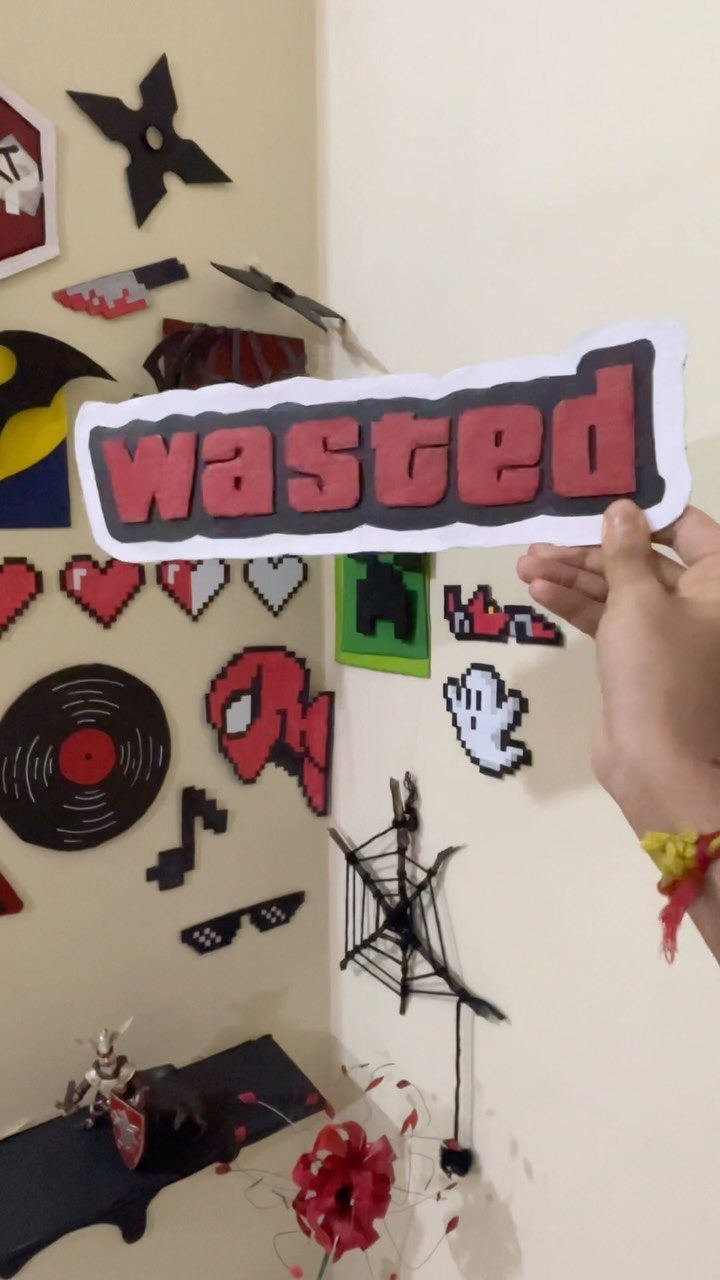
Bead sprites are the cheapest way I know to get real pixel art on a wall.
The maker of this wall said it was day 20 of decorating it, which is a good reminder that you can build it a piece at a time.
Make a few characters, then add a record or a small sign so the wall reads as a collection, not a single craft. Keep the pieces about the same size and space them evenly.
Start with a favorite sprite and add one per weekend. It stays cheap and renter-friendly if you hang with removable hooks.
Comfort in Game Rooms
Long sessions in a seat punish whatever you skimped on. A chair with adjustable lumbar support, a headrest and a desk that changes height will matter more to your back than any decor you buy.
Check size, color and heat before anything goes near the seating area.
A bulky piece that crowds your elbows, a loud color in your line of sight, or a lamp that warms the side of your head will all wear on you by the third hour.
Storage counts as comfort too.
Pick decor that also holds things, like a bench with a lid or a shelf with baskets. Without somewhere for controllers, cables and games to go, the room turns into clutter, and clutter is its own kind of distraction.
Budget-Friendly Decor
Online shopping is where a small budget stretches the furthest, because you can sort through thousands of listings and find pieces that match your taste for very little. Set a spending cap before you start browsing, and stick to it.
Search by the specific thing you want, such as a shape, a character or a color, rather than the general term "game room."
The odd, one-off pieces tend to turn up that way, and they say more about you than a matching set.
Compare a few listings for the same item before you buy. Prices on look-alike pieces can vary a lot.
Measuring for Decor
Measure first, even though it’s the dull part, because a shelf that’s 2 inches too wide never gets any narrower.
Skipping it is how people end up with pieces that are too wide or too tall, and then spend a weekend returning them.
Start with the limits of the space. If you plan to fill a shelf, measure how tall a piece can be and roughly how wide, then shop to those numbers.
Write the measurements in a notebook or a notes app on your phone, so they’re in your pocket when you’re looking at a listing.





