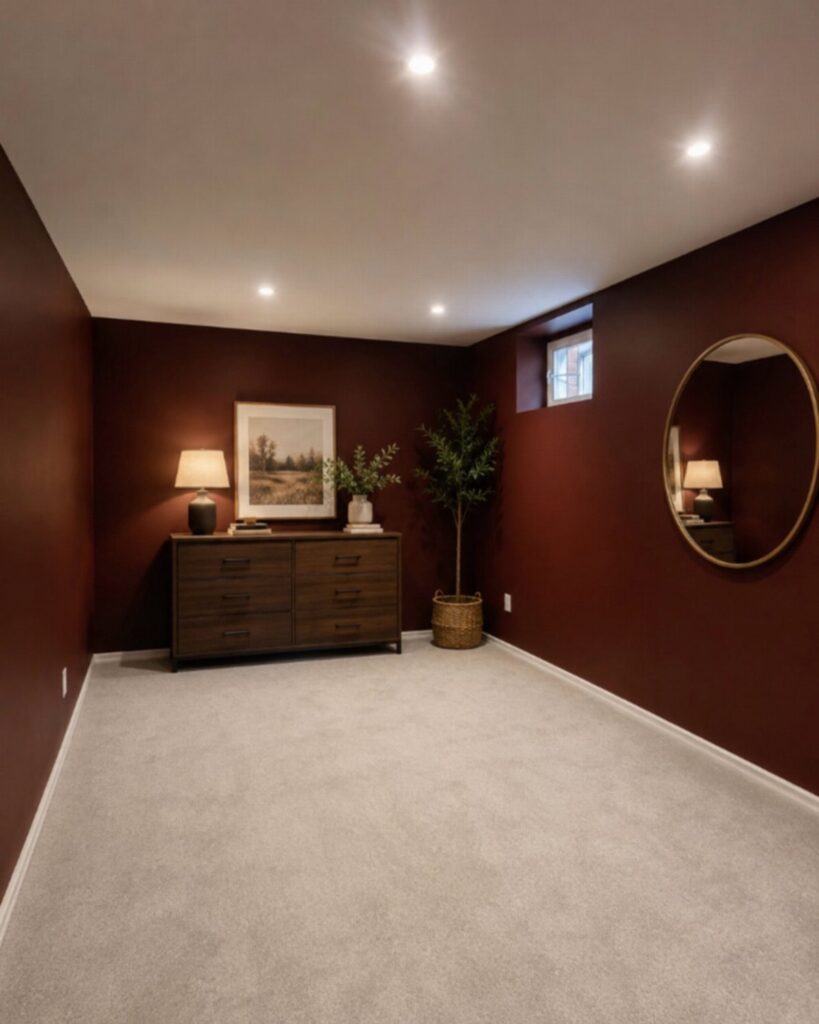
Which of these 18 ideas fits depends on one fact: whether the water is already under control.
The list runs from a weekend of wallpaper to excavating a window well, so start with what the walls and floor are telling you about moisture.
1. Layered Lighting
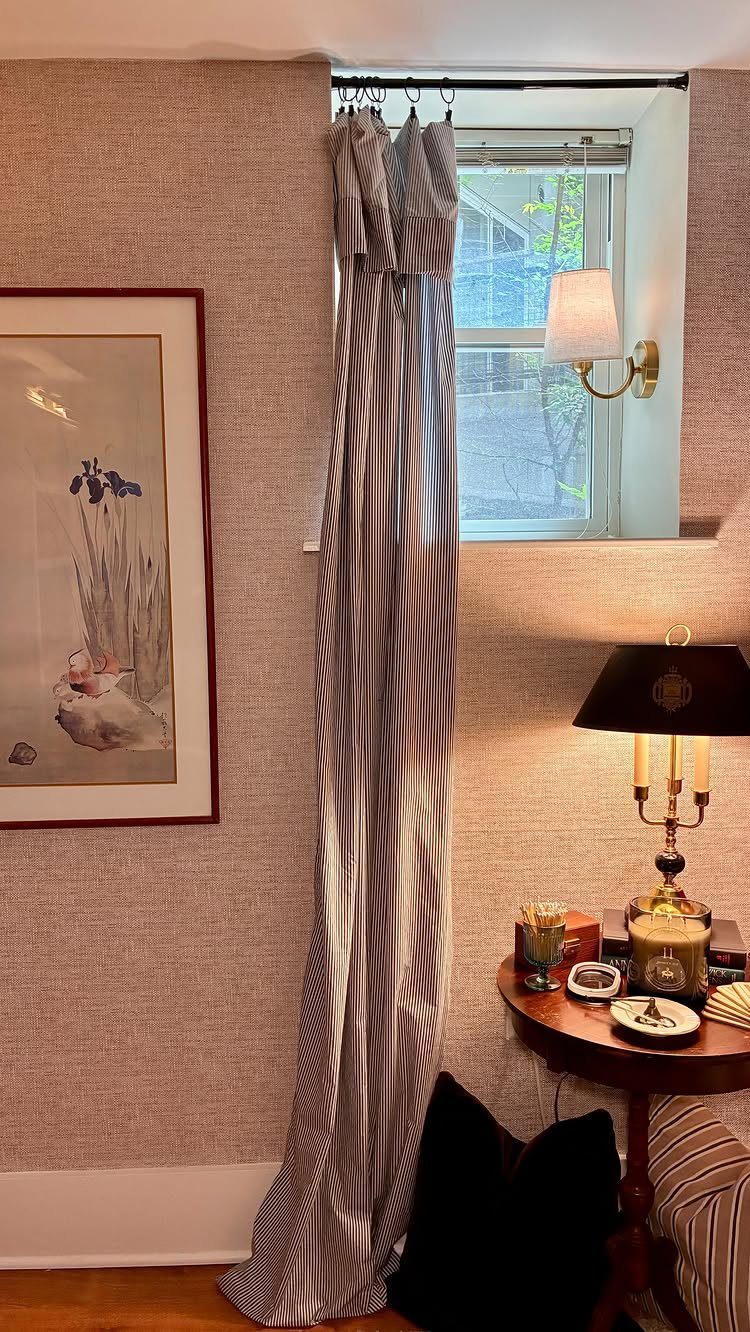
Three light sources at different heights do more for a basement than one bright fixture.
A table lamp, a wall sconce nearby and a candle on the same side table give you a low glow to sit in, and none of them needs the overhead light on.
Plug-in sconces are the renter-friendly pick, since they skip the wiring. I’d put warm bulbs in every lamp so the room reads as one color, and keep the ceiling light for cleaning day.
2. Large-Scale Art Pieces
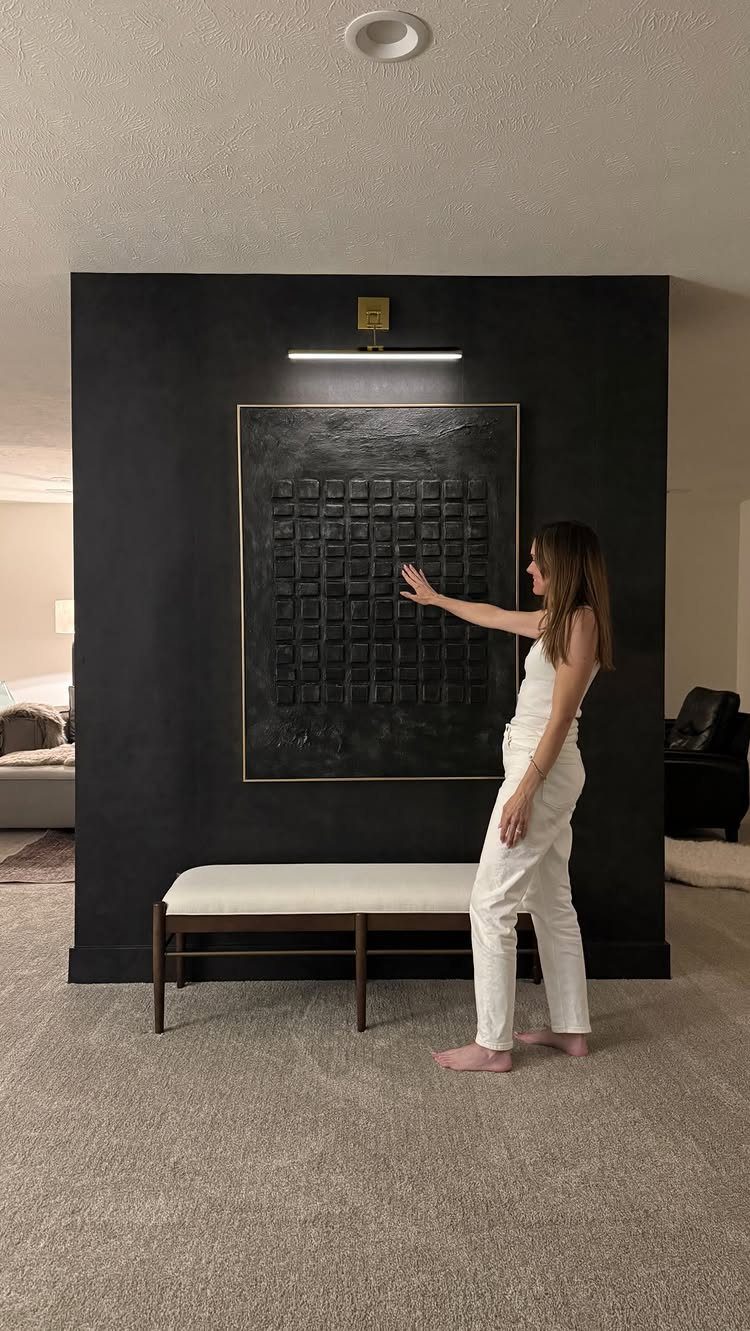
A single oversized piece fills a wall better than a cluster of small frames, and it costs less in decisions.
Basements often have long, blank stretches of wall, so one big canvas or textured panel gives the room a focal point.
Hang it low enough to relate to the furniture below it, like a bench. Dark art on a dark wall looks moody and deliberate, but it soaks up light, so I’d only do it where the lamps are good.
3. Mirrors on Walls
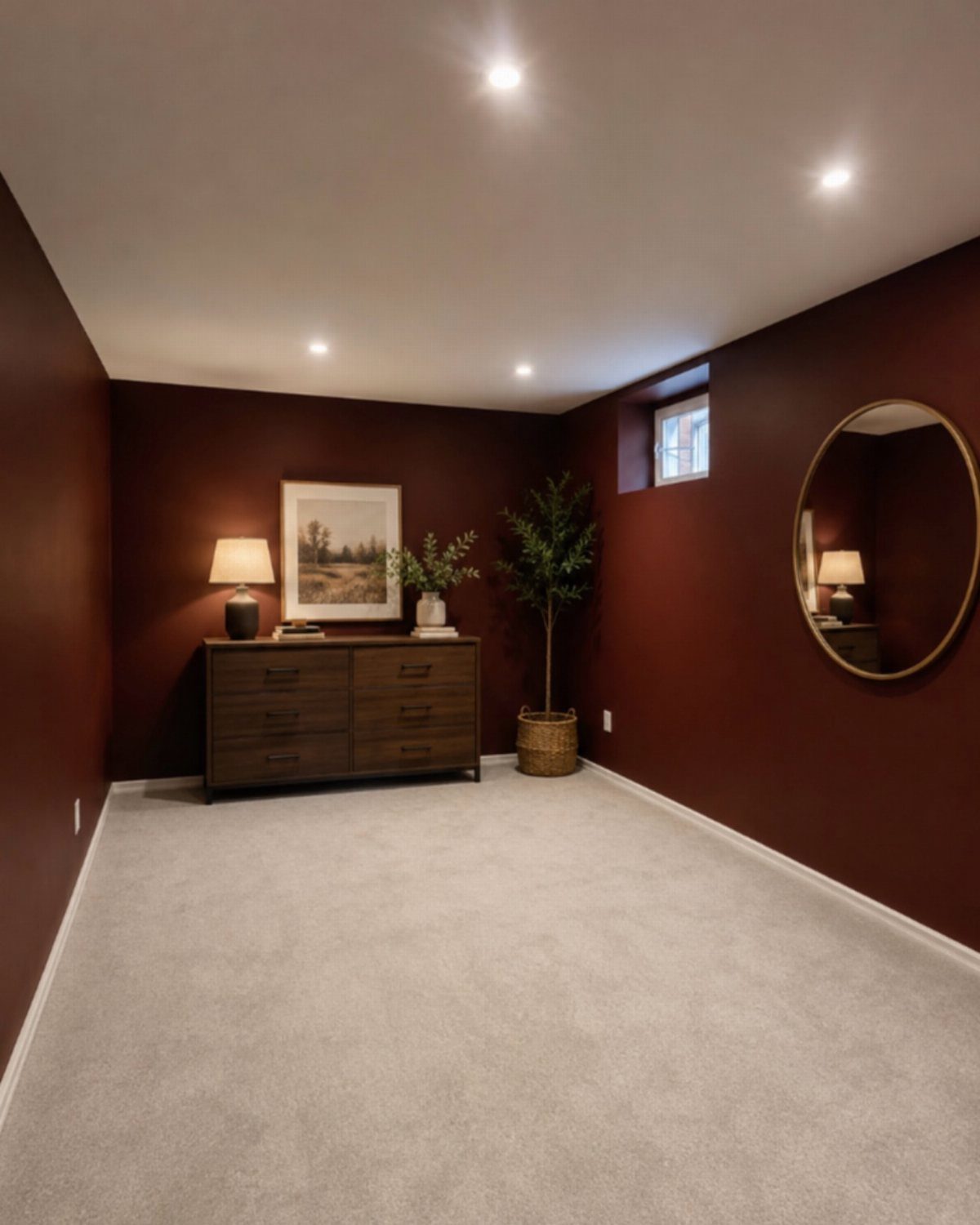
A round mirror with a gold frame is a quick way to add a bit of shine to a deep-colored wall. It bounces lamp light back into the room, which matters when the windows are small or missing.
Place it where a lamp can reflect in it, such as above a dresser. I like round shapes in basements because they soften all the square corners and low beams.
4. Invest in a Sectional Sofa
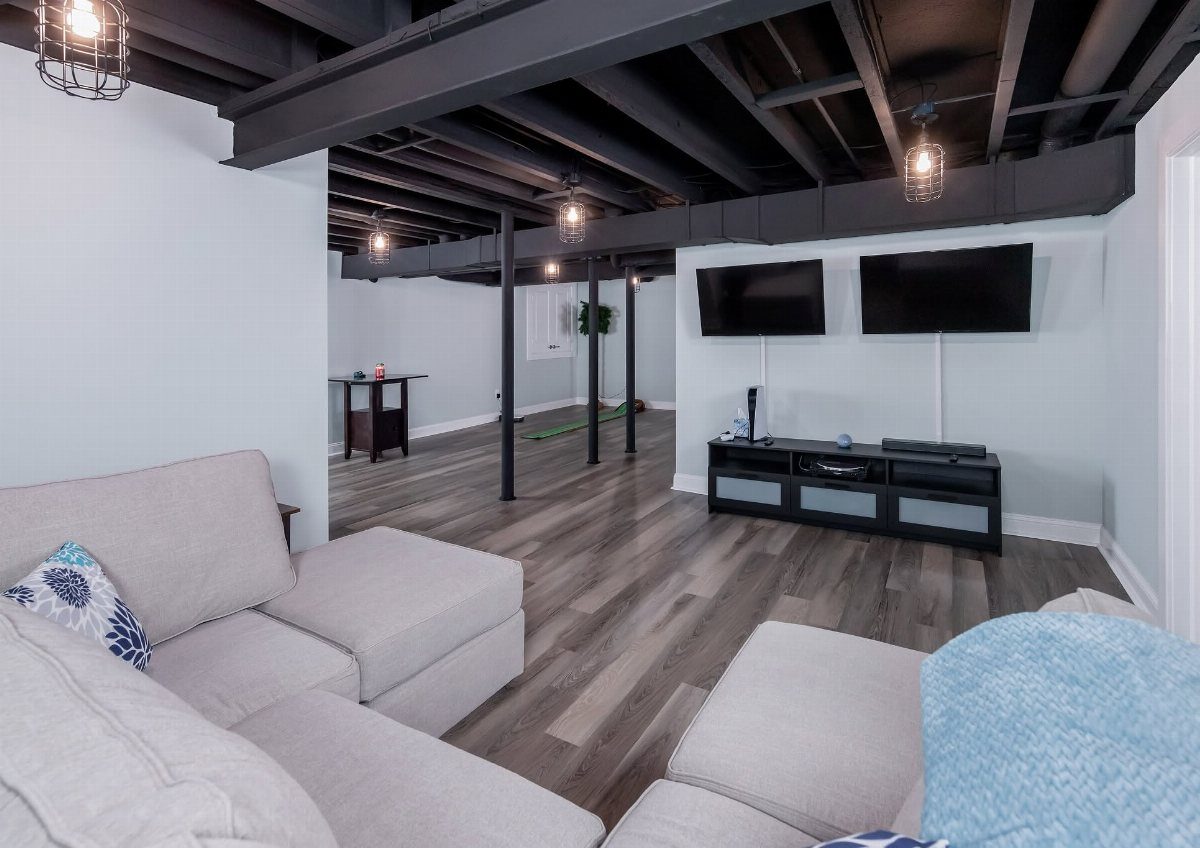
Sectionals suit basements because one piece can seat the whole room and define the layout without a pile of mismatched chairs. A light grey fabric also keeps a dark, low-ceilinged space from feeling heavy.
Measure the stairwell and doorways before ordering; a sofa that can’t come down is a costly mistake.
A modular sectional that ships in sections is the safer buy. Then tape the footprint on the floor and check that you can still walk around it.
5. Potted Plants
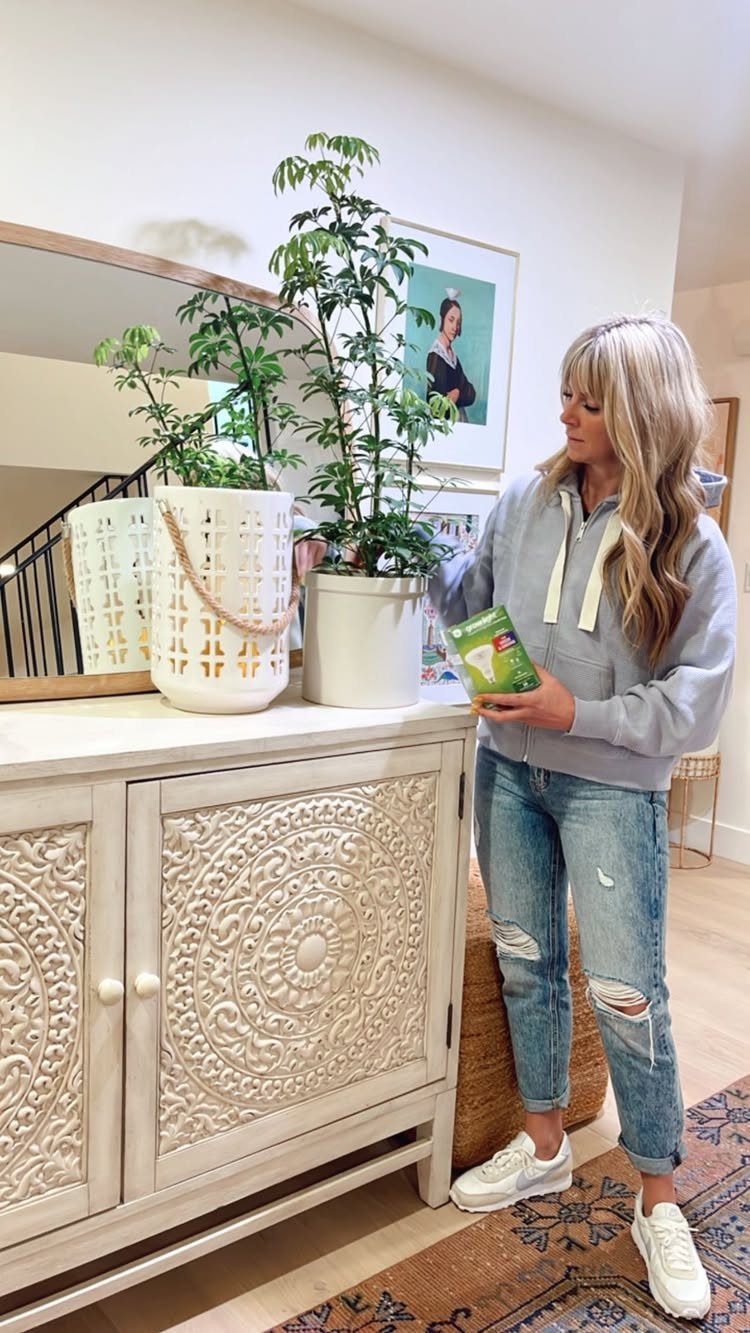
2 potted plants on a white sideboard bring color and life to a room that gets little daylight. Keeping them grouped on one surface looks more intentional than scattering single pots around.
Basements are dim, so pick plants that tolerate low light and put a grow bulb in a nearby lamp if needed.
Plant food helps them along, but follow the package directions. A mirror behind the pots makes the pair look fuller.
6. Built-in Cabinets and Shelves
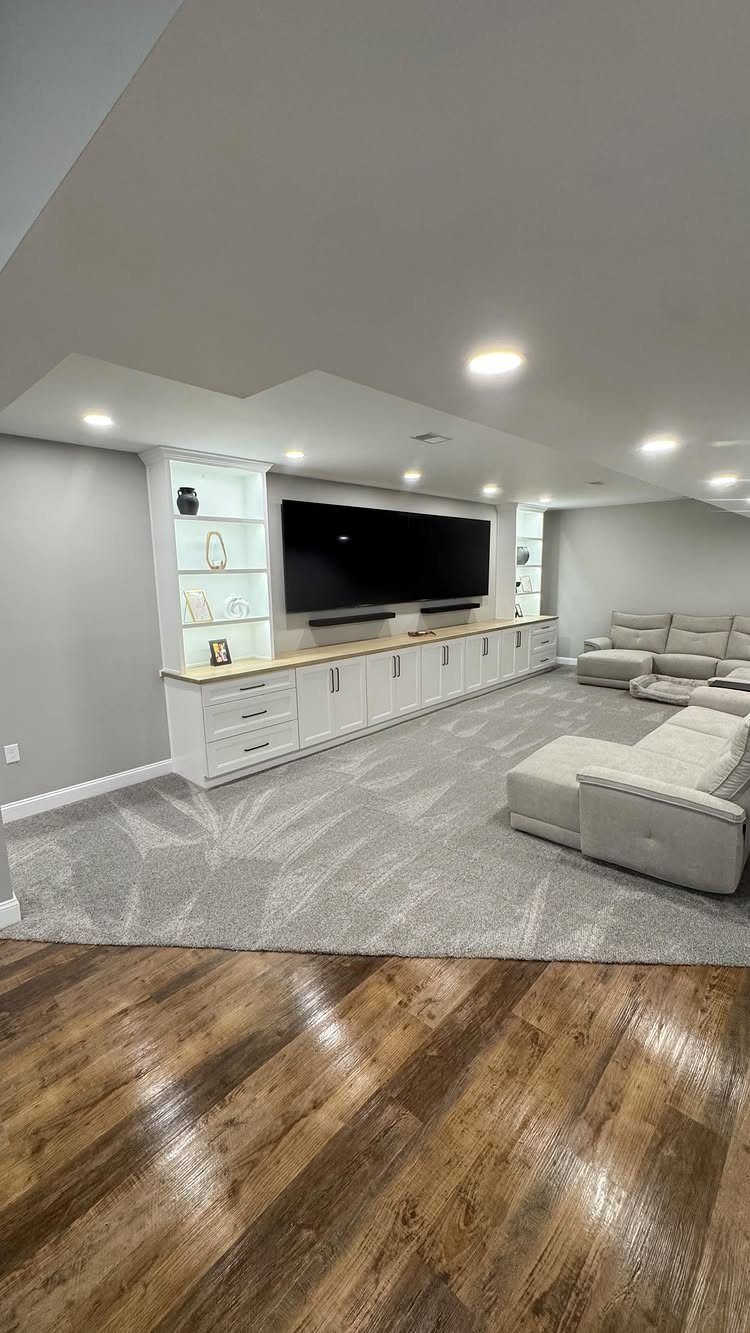
Built-ins wrapped around the TV make a basement wall look finished, and white paint keeps them from closing the room in. Closed cabinets below hide cords and clutter, while open shelves above hold books and a few objects.
Full custom work is pricey, so I’d look at stock cabinets with shelving added between them, then trim and paint everything one color so they read as one piece.
7. Add a Cozy Rug
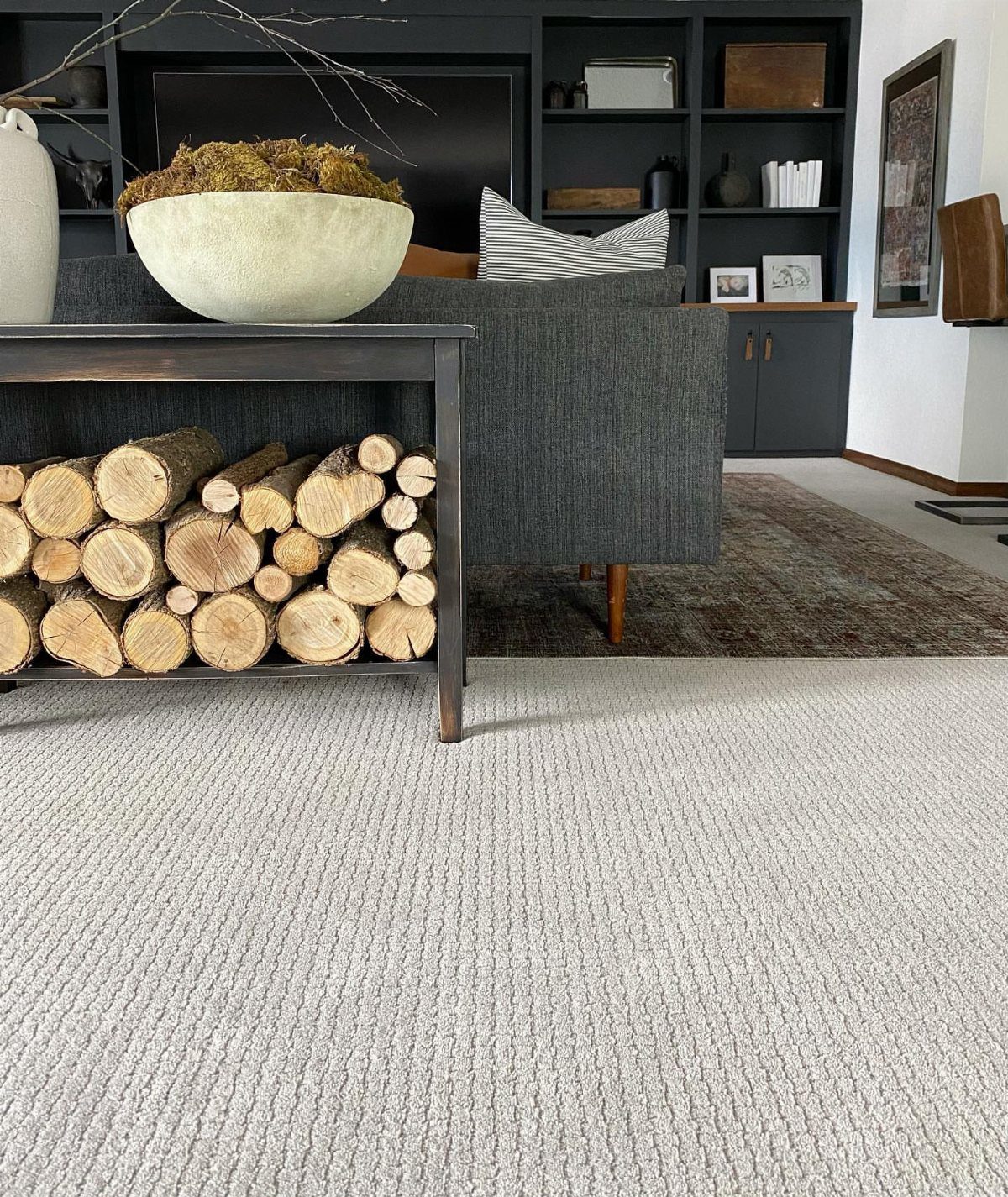
A dark patterned rug laid over light grey carpet gives a basement floor 2 textures and a clear seating zone. The carpet underneath stays soft, and the rug on top marks where the sofa and side table belong.
Pick a rug in a color that contrasts with the carpet, as the dark one does here, so the edges read as deliberate.
Leave a border of carpet showing on all sides. A rug that’s too small looks lost, so I’d go as large as the room allows.
8. TV Area
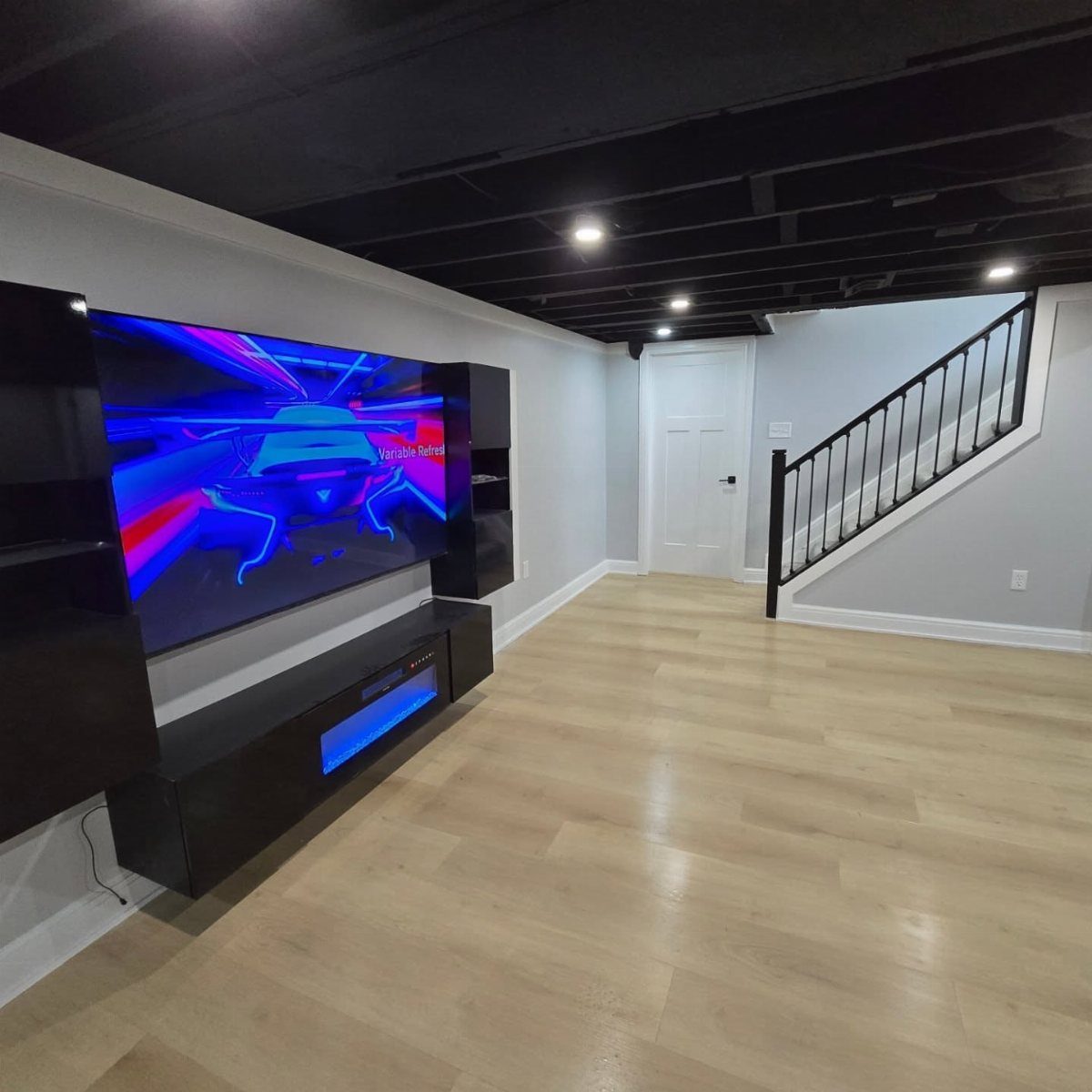
Mounting the TV above an electric fireplace unit gives a basement one wall to look at, and the fireplace supplies warmth in a room that tends to feel cool.
Black cabinetry against grey walls and light wood flooring is a quiet modern choice that works when the room needs to recede.
Plan the cords before you hang anything, because a wall-mounted screen shows every wire. I’d choose a unit with a built-in fireplace over adding one later, since it saves a step and keeps the wall tidy.
9. Wood Paneling
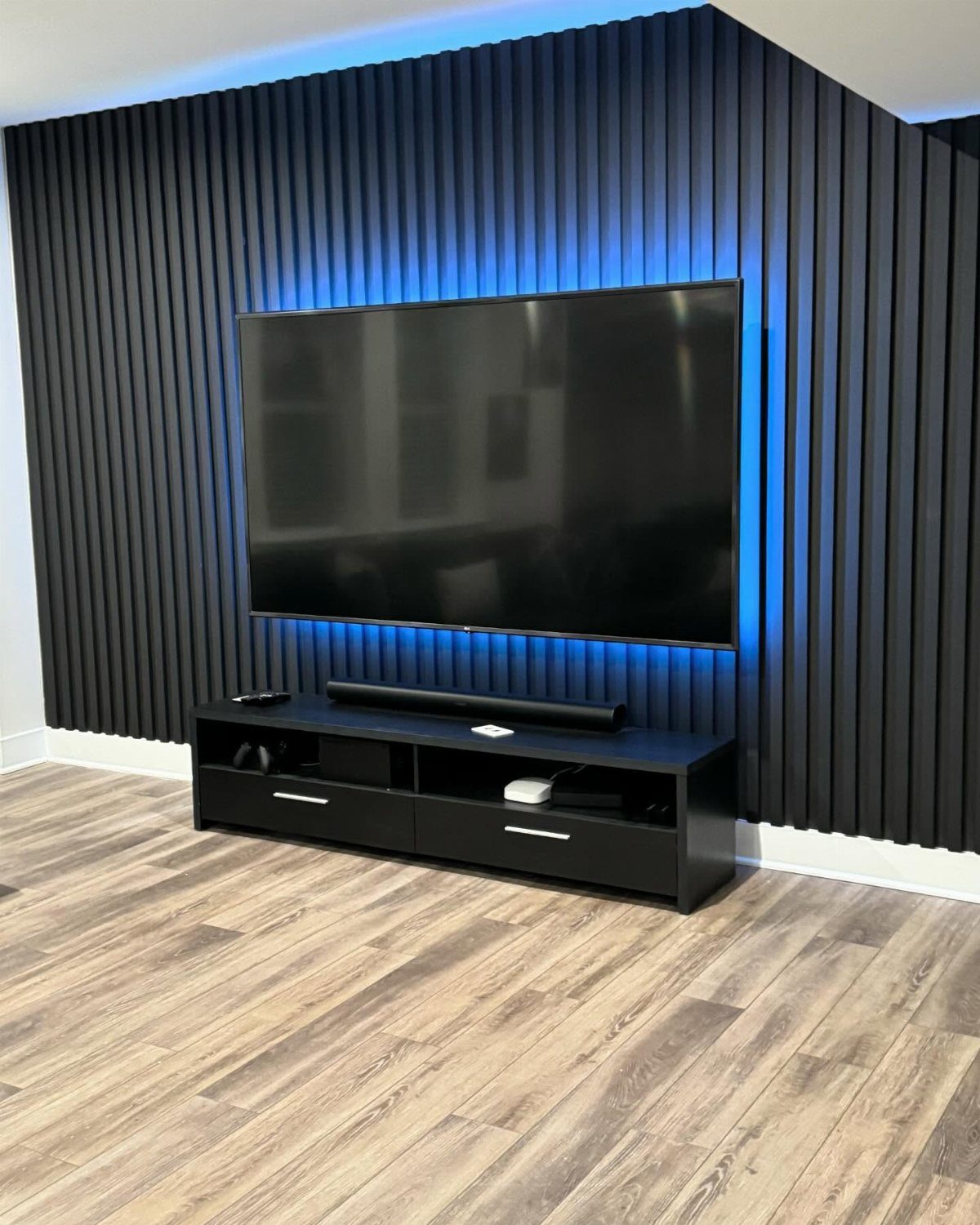
Black vertical slats behind a TV add texture to a flat wall, and the blue backlight turns the wall into a glowing backdrop rather than a dark blank. Slats also hide the TV’s black frame, so the screen blends in.
Paint or stain slats a single dark shade so they read as one surface.
I’d add an LED strip behind the panel for the glow, and pick a color that matches your other lamps. Dark paneling soaks up light, so keep the rest of the room bright.
10. Bold Wallpaper
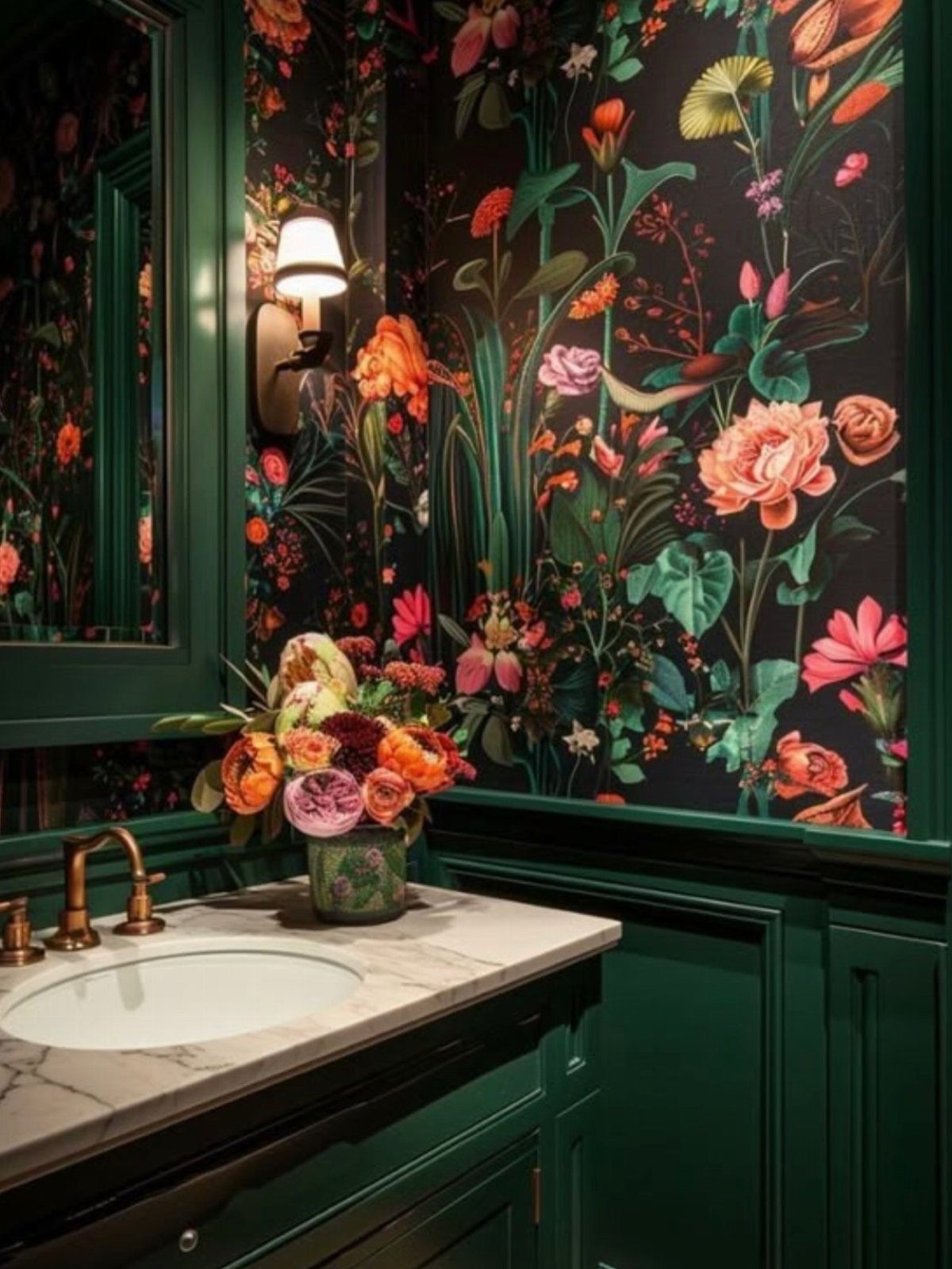
Dark floral wallpaper in a small bathroom gives a basement personality in a room where you only need one wall to do the work. A black background pushes pattern forward, especially florals against a light countertop.
Small rooms are the safest place for a loud pattern, since you see it in short bursts.
I’d choose peel-and-stick if you rent. A sconce beside the mirror keeps the dark paper from swallowing the light.
11. Cozy Reading Nook
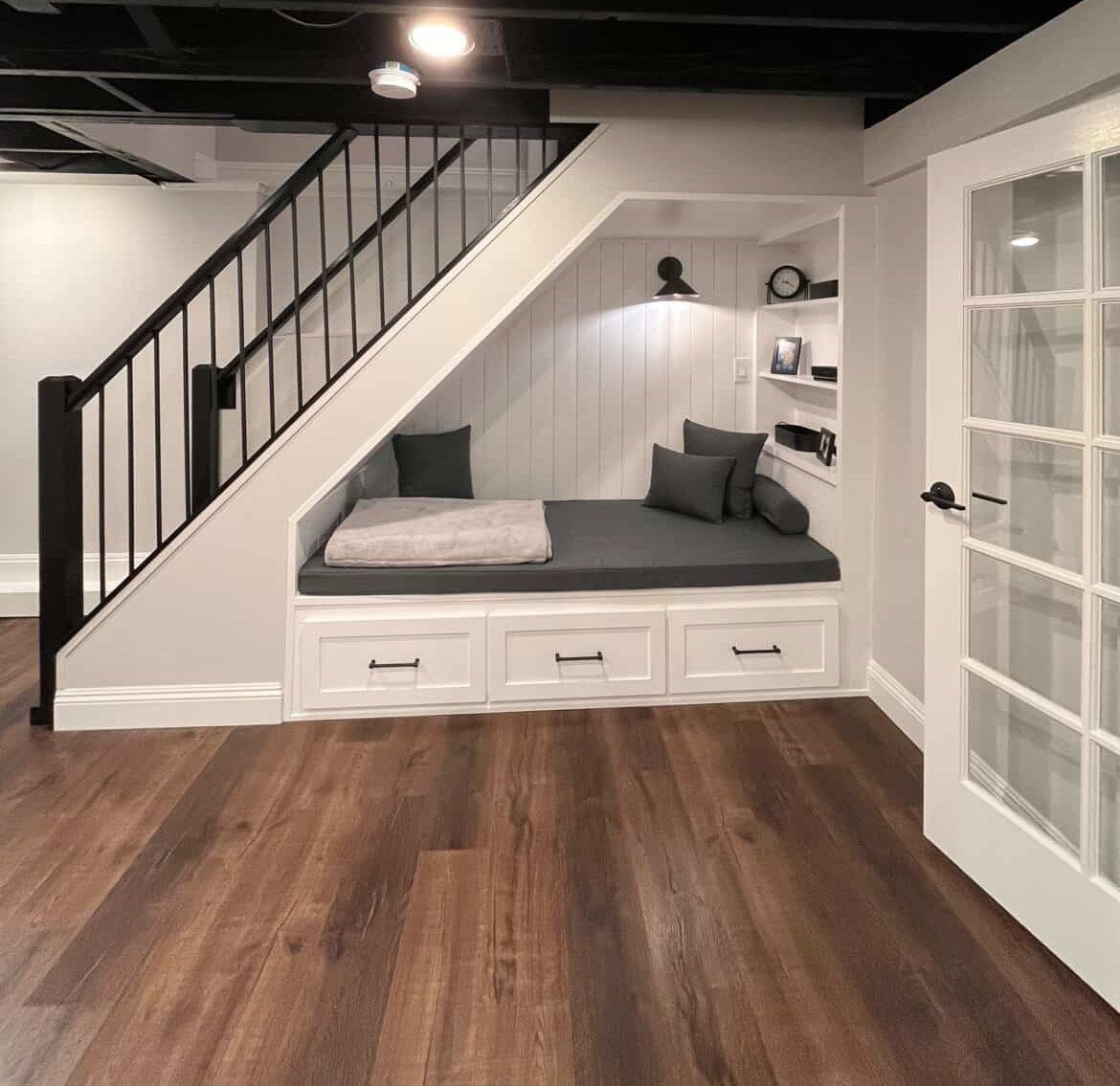
A cushioned bench built under the staircase turns wasted space into a reading spot, and the drawers beneath hold books and blankets. Grey cushions settle the contrast when the stairs read black and white.
Add a reading lamp or a plug-in sconce close by, since a basement nook needs its own light.
I’d pile on enough pillows so the seat stays comfortable past the first few minutes. Wall space beside it can carry a small shelf.
12. Basement Ceiling
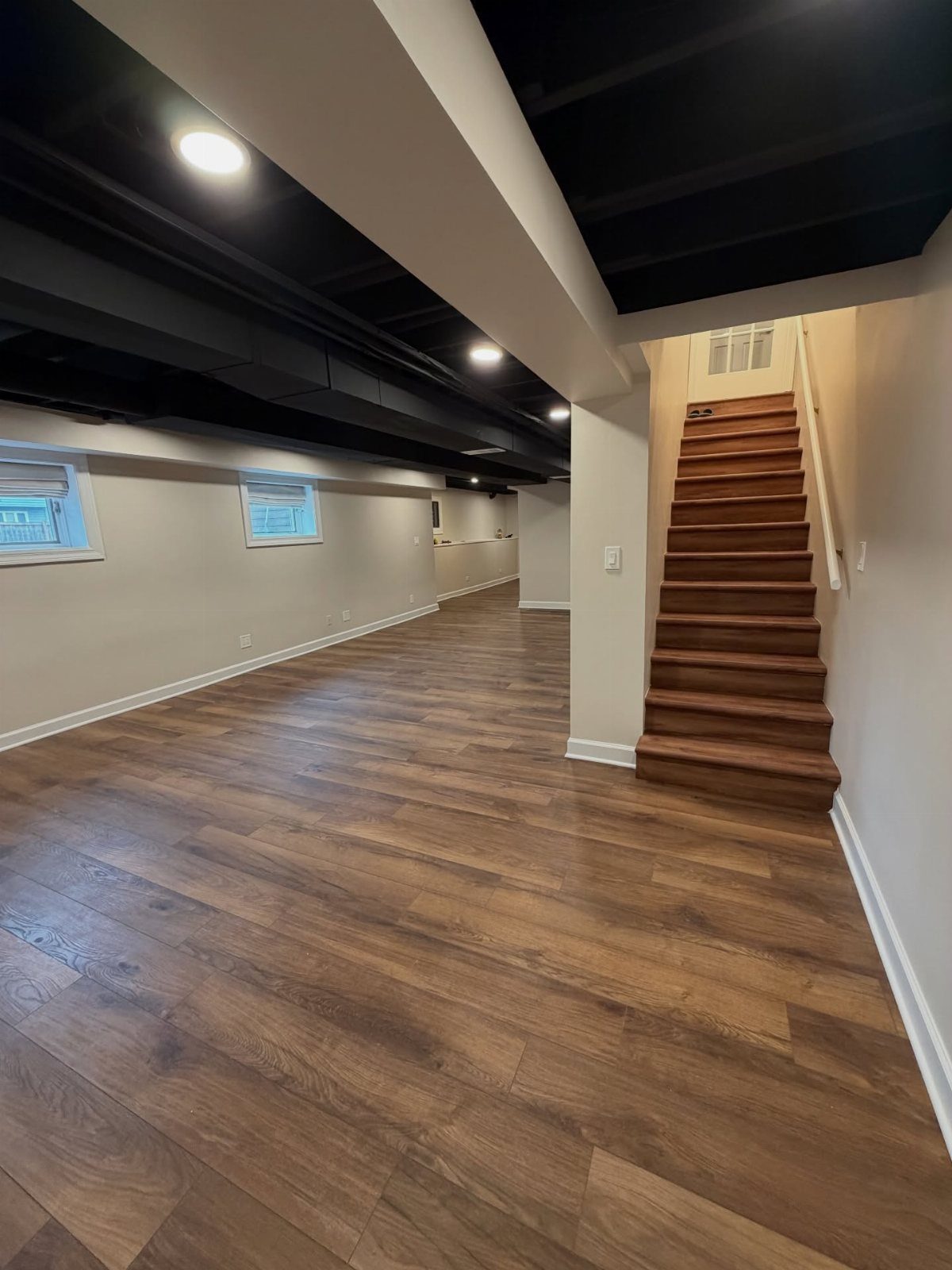
Painting the ceiling black and leaving the beams open hides pipes and ductwork better than boxing them in, and it keeps every inch of height.
Recessed lights read as small points against a dark ceiling instead of fixtures that demand attention.
Spray everything the same flat black, pipes and ducts included, so they recede together.
Mask the lights and walls first. I’d choose this over drywall when the ceiling is already low, though it leaves dust on top of the beams, so wipe them first.
13. Light Colors
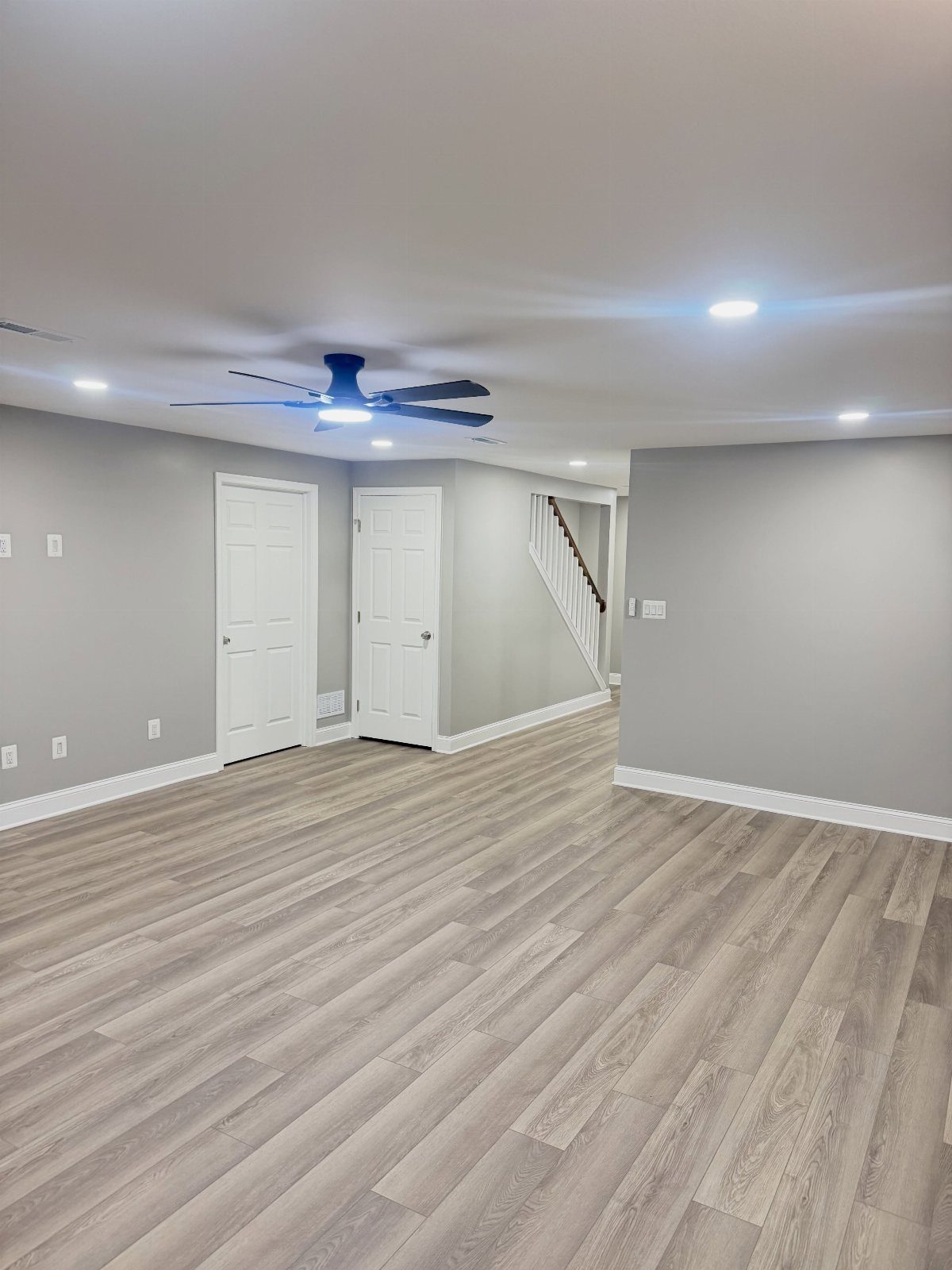
Keeping walls, trim and doors in the same pale family makes the ceiling feel higher.
Paint is the cheapest fix here, and a gallon covers a lot of wall for a weekend job.
I’d pick a warm gray over a cool one, since basements already run chilly. Test a swatch near the lights before committing.
14. Install a Basement Bar
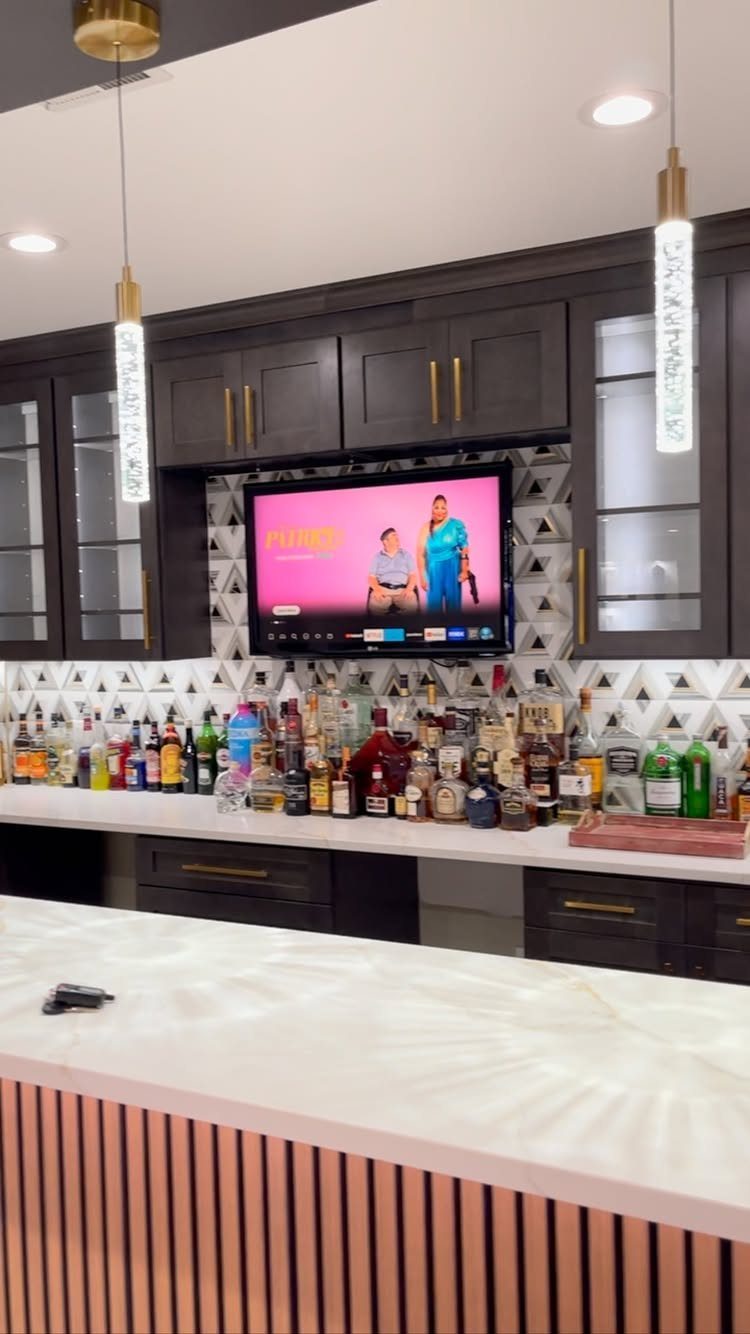
A basement bar earns its place when it has a real counter and closed storage below. A dark cabinet base stays grounded with a light countertop on top, which keeps the bar from reading too closed-in.
I like pendant lights over the counter because the bar stays usable even when the overhead lights are off. I’d hang them low enough to define the zone but not block sightlines to the TV.
Stock base cabinets with a stone-look top cost far less than custom, and they build in a weekend.
15. Guest Suite
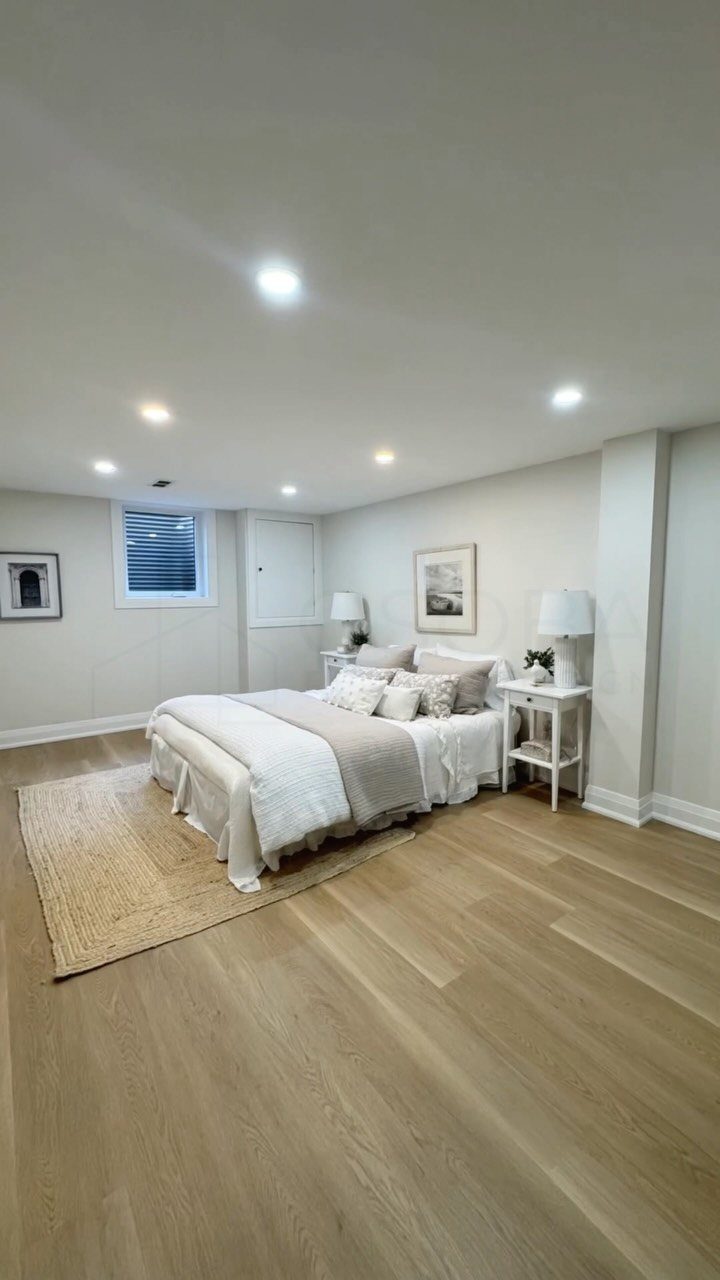
A simple bed frame, plain linens, and matching nightstands with lamps give a basement guest room a symmetrical, settled feel. Lamps on both sides mean the overhead light can stay off at bedtime.
A jute rug adds texture under the bed without fighting the wood floor. I’d let it extend past both sides of the bed so bare feet land on it.
Keep the bedding light, since a small window gives little daylight to work with.
16. Study Space
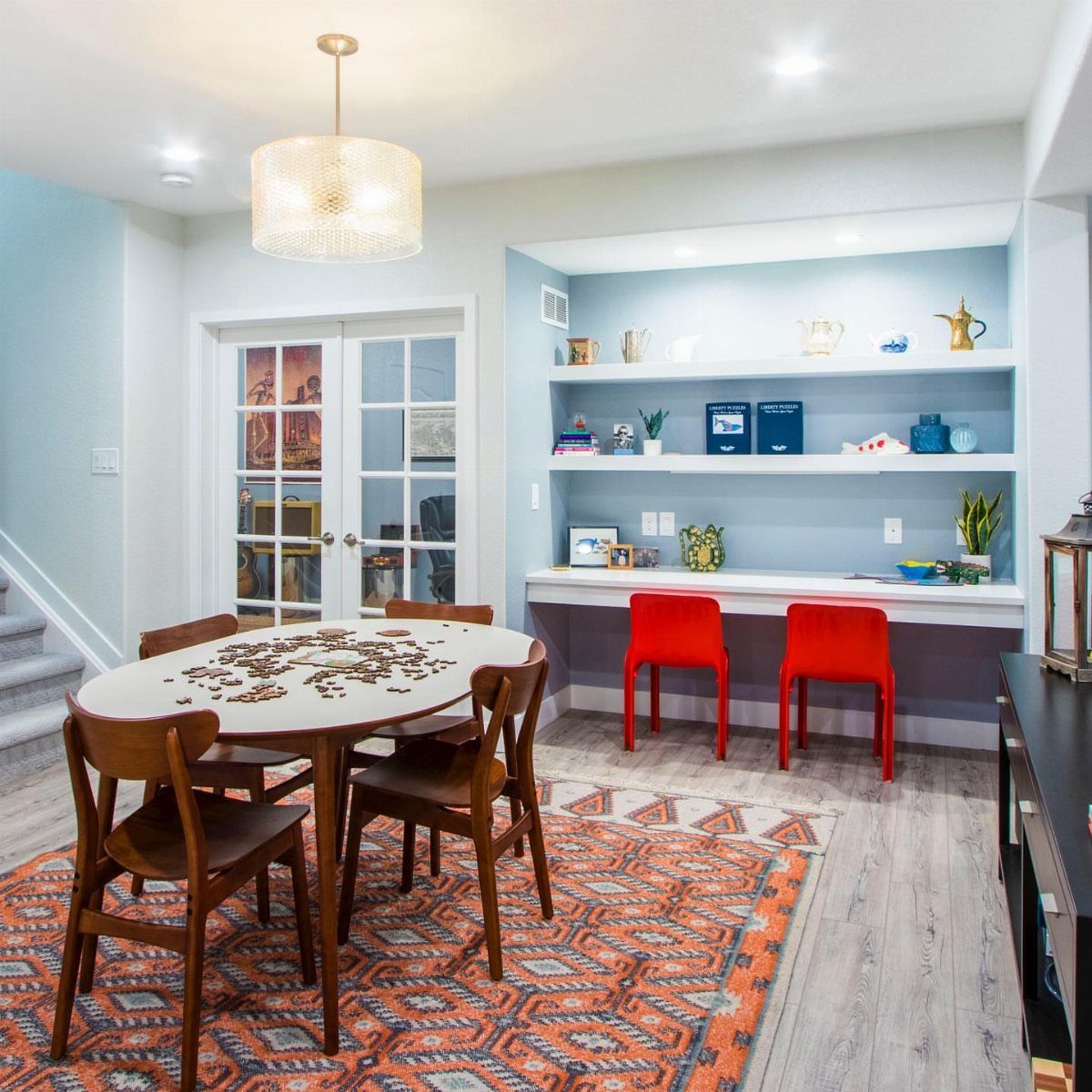
White paint on the desk against a pale blue wall keeps the corner from feeling heavy.
2 chairs let a kid and a parent work side by side. Red seats add a single bright color, and they’re easy to swap if you tire of them.
I’d add a task lamp, since a basement desk needs its own light.
17. Incorporate a Kitchenette
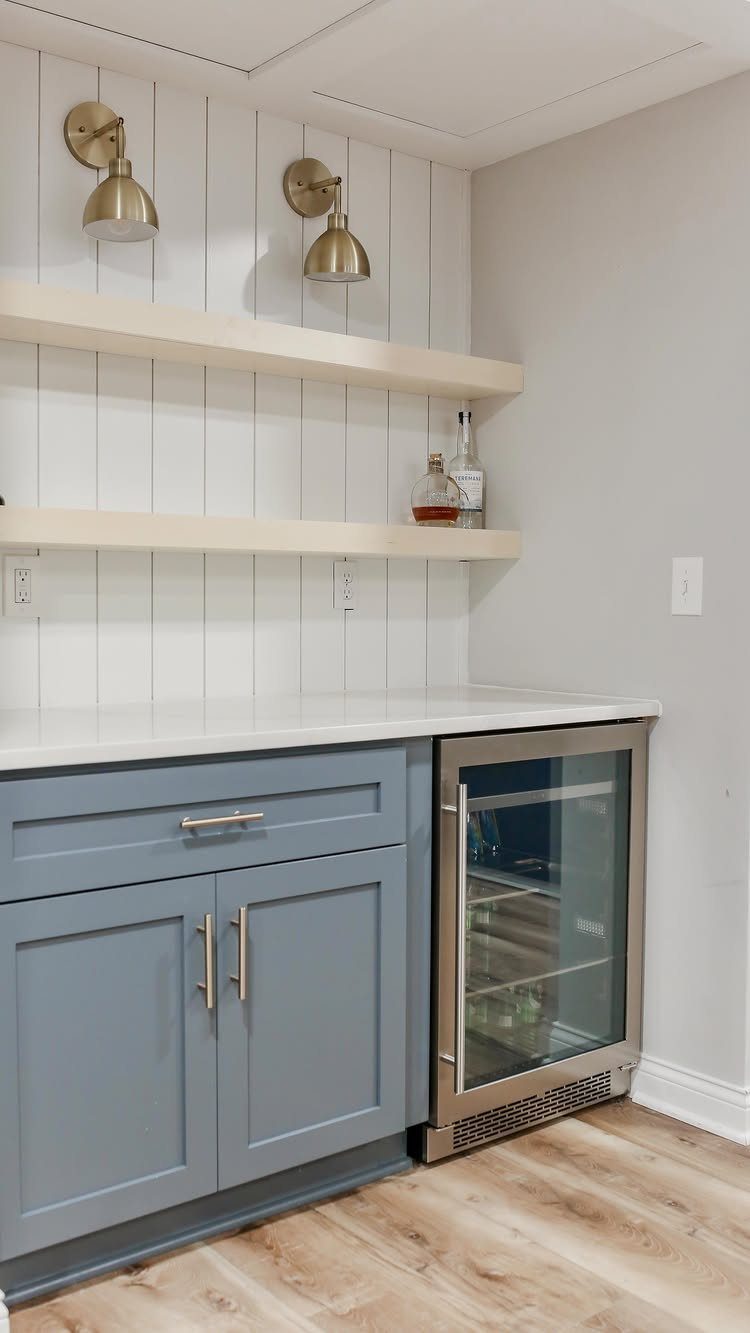
Blue lower cabinets with a white countertop give a basement kitchenette some color without crowding it. A beverage fridge under the counter handles drinks and snacks, so nobody climbs upstairs.
2 floating shelves hold dishes and mugs in place of upper cabinets, which keeps the wall light. White shiplap behind them is a cheap way to make the nook look finished.
Open shelves read lighter than upper cabinets in a basement with a low ceiling. Skip them if you hate dusting.
Bold design elements like wallpaper, art and DIY light fixtures keep a basement from being boring and turn it into a fun space you actually want to spend time in.
18. Game Room
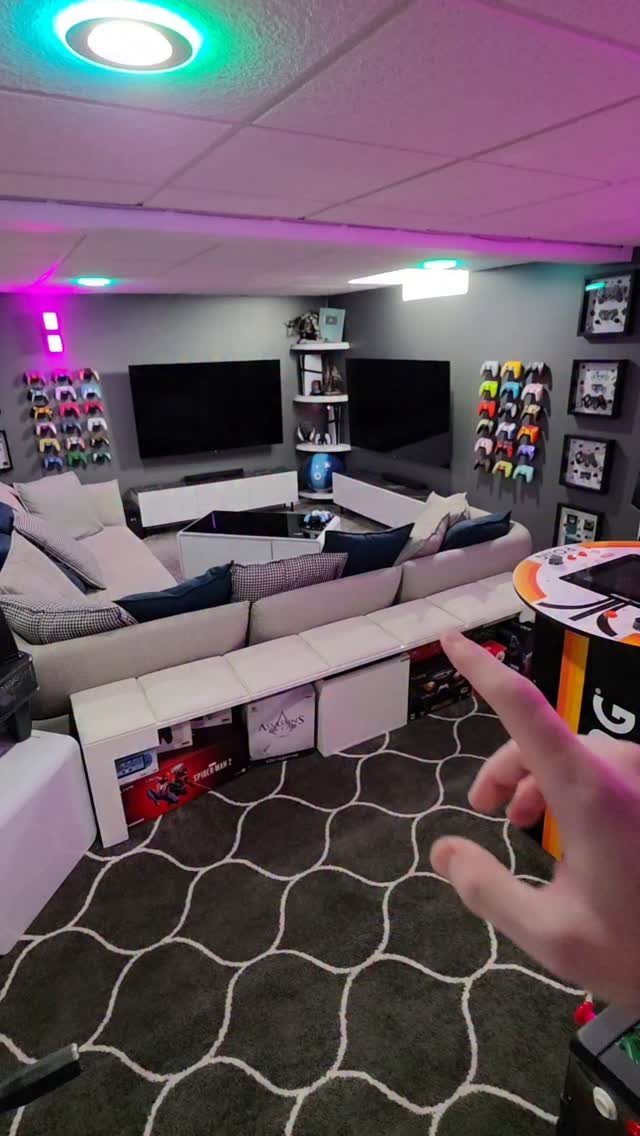
A large sectional faces two TVs, so a group can play on one screen while others watch the other. That setup suits a basement game room because the seating does double duty for movies.
A patterned rug under the seating marks the zone and hides spills better than a solid one. I’d tuck the consoles into a cabinet or shelf so cords stay out of sight.
Neon accent lighting adds mood, and I’d put it on its own switch or plug so it goes off with one tap.
Moisture Control and Waterproofing
If the space smells like mold or wet concrete, no tenant will stay and no inspector will pass it. Diagnose the water before you buy a single can of paint.
Snow, irrigation, spring runoff and freeze-thaw movement all push against below-grade walls. The weak spots are usually the wall-floor joint and anywhere around an exterior stair.
Finishes make a leak far more expensive and disruptive to fix, so the order matters. Find the source, stop it, let the space prove it’s dry, then build.
I’d put waterproofing near the top of the budget, ahead of cabinets and flooring.
Egress Window Installation
Code requires an egress window for any basement bedroom, so that opening comes before you frame a single wall. An egress window does 2 jobs: it gives emergency escape and it brings in daylight.
The site work is where people get caught. The hard part isn’t the saw work on the foundation.
You need a window well that won’t fill with water, an excavation that doesn’t undermine the footer, and materials that survive a Michigan winter.
A cheap crew can deliver a window that looks fine in July and leaks by October. I’d compare quotes on drainage and materials, not just price.
Open Concept Layouts
Not every basement wants to be a one-bedroom apartment. A single room with clear zones often outperforms a chopped-up floor plan when the ceiling is low, the light is scarce, or the ducts leave no room for partition walls.
An open layout pays off in small apartments where you can’t afford to waste a corner.
An empty open basement feels flat, so give each zone a purpose. A foosball table, a card table, a wet bar, or a full-size ping pong setup can give a dead corner a reason to exist.
Frequently Asked Questions
How to decorate a basement bedroom?
White or light-colored bedding brightens the room, and lamps on matching nightstands mean you can avoid the harsh overhead fixture once you’re in bed. A jute rug under the bed adds texture and should extend past both sides.
Basement windows give little daylight, so light colors and warm lamps do the heavy lifting. Building codes call for an egress window in any basement bedroom, so confirm you have one before you invest in furniture or paint.
Is a basement apartment legal?
Yes, in many places, but it has to meet local building codes and safety requirements. A basement bedroom needs an egress window, which serves as an emergency exit and also brings in daylight.
Moisture control matters too, because an inspector will fail a space that smells damp or shows signs of water damage. Check your local code before you build.
How to decorate your apartment living room?
Build the room around one large piece of seating and layered light. A sectional can seat everyone and define the layout, and a rug under it marks the seating zone.
Layer a table lamp, a plug-in wall sconce and a candle to create warm, low light that doesn’t rely on the ceiling fixture.
Hang a round mirror opposite a light source to reflect more brightness into the room, and choose one large piece of art instead of several small frames.
What are some inexpensive ideas for a basement wall?
Paint, peel-and-stick wallpaper and slat paneling are the budget picks.
A gallon of warm gray or another pale shade covers a lot of wall in a weekend and makes the ceiling feel higher. Peel-and-stick wallpaper suits renters, and one loud wall in a small room does the work.
Slats painted or stained one dark shade add texture, and an LED strip behind them gives a glow. If you go dark on one surface, balance it with lighter tones elsewhere or the room will feel dim.





