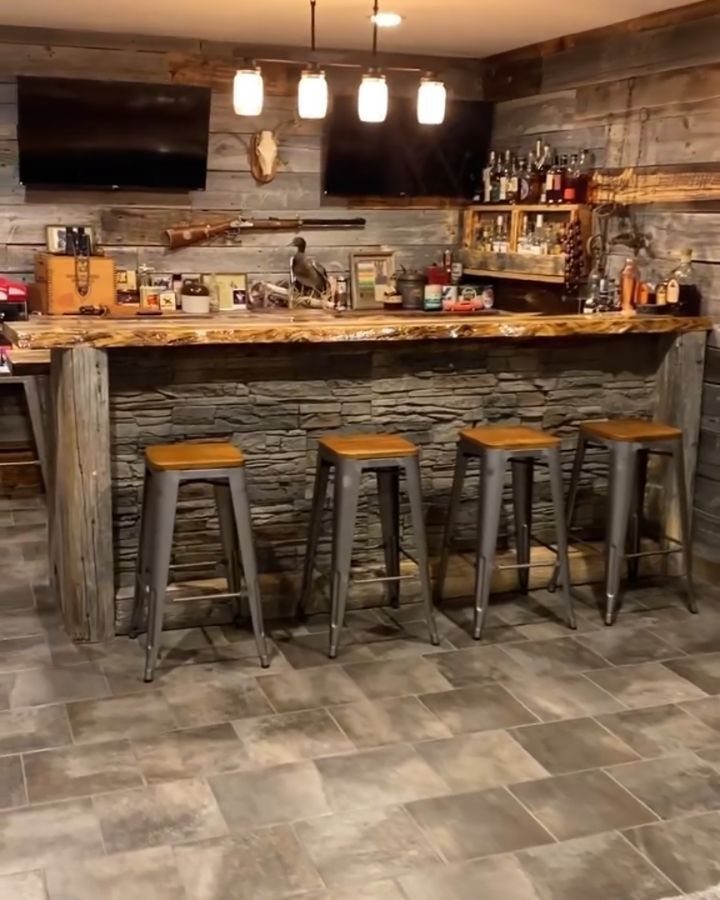
Water decides which of these basement man caves you can build: a room that stays dry through every season can take anything from a rubber-floored Gym Corner to a Wet Bar with a drain line, while one that leaks needs a perimeter drain and a sump pump before any drywall goes up.
The ideas run from a simple Rustic Lodge Decor or Western Themed Lounge refresh to a full Bathroom Addition, and plumbing is where the budget swings hardest.
1. Gym Corner
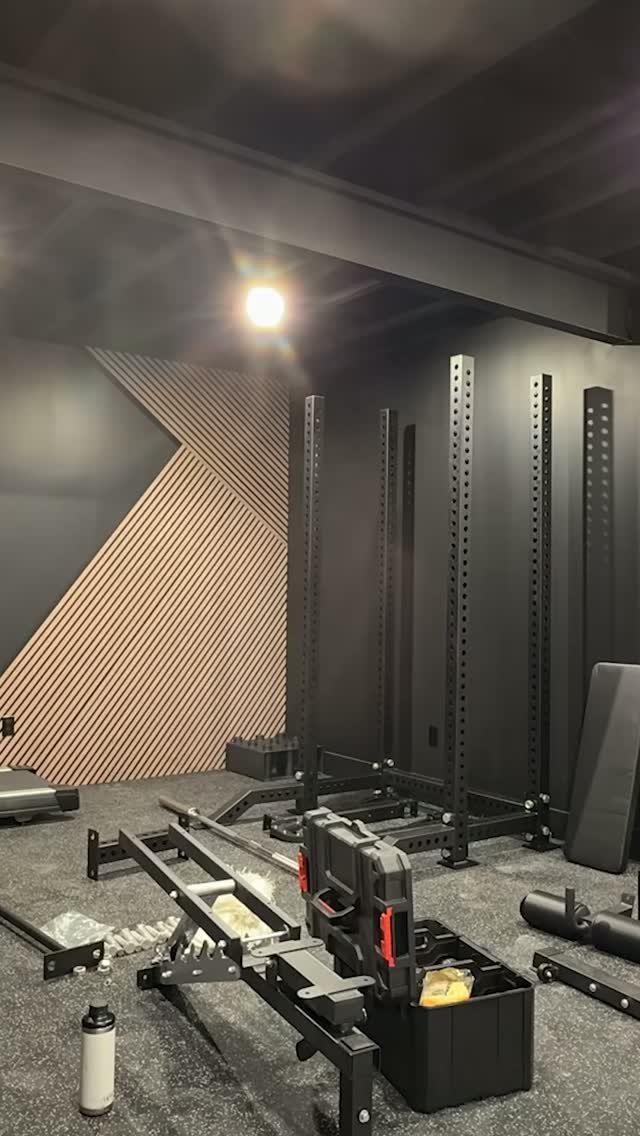
Rubber flooring is what makes a basement gym corner work, because dropped plates and bar bounce land on something forgiving instead of bare slab.
A power rack with a bench fits a corner well, since 2 walls keep the footprint tight and leave floor space open for everything else.
Mounting slats takes a weekend of cutting and nailing.
Check ceiling height ahead of any rack purchase; a basement often has less room than a garage does.
2. Game Room
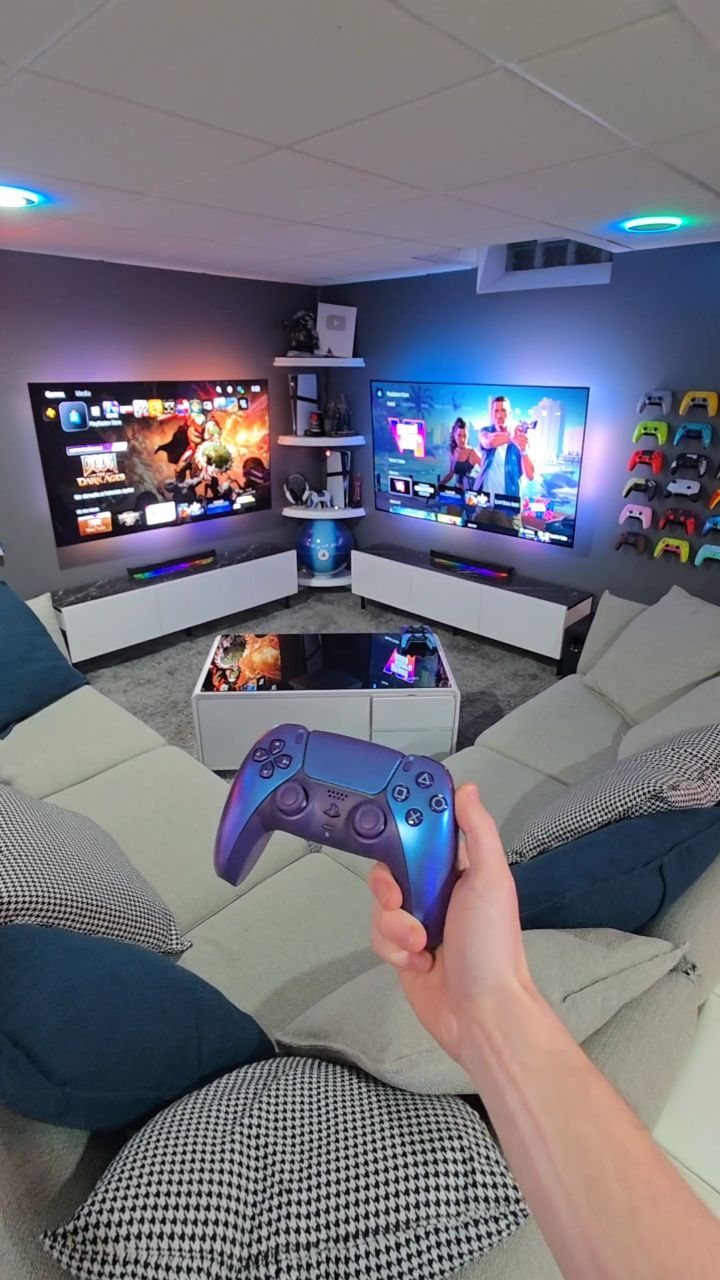
2 screens and a sectional turn a basement corner into a place where friends can play together or split off into separate games.
A low coffee table in a light color keeps controllers, snacks and headsets within reach and leaves the walkway clear.
A grey sectional is a smart pick for a game room. It hides wear, seats several people, and a sofa that size defines the zone even in an open basement.
Run cables behind the TVs before mounting anything; fixing a tangle afterward costs far more time than doing it first.
3. Layered Lighting
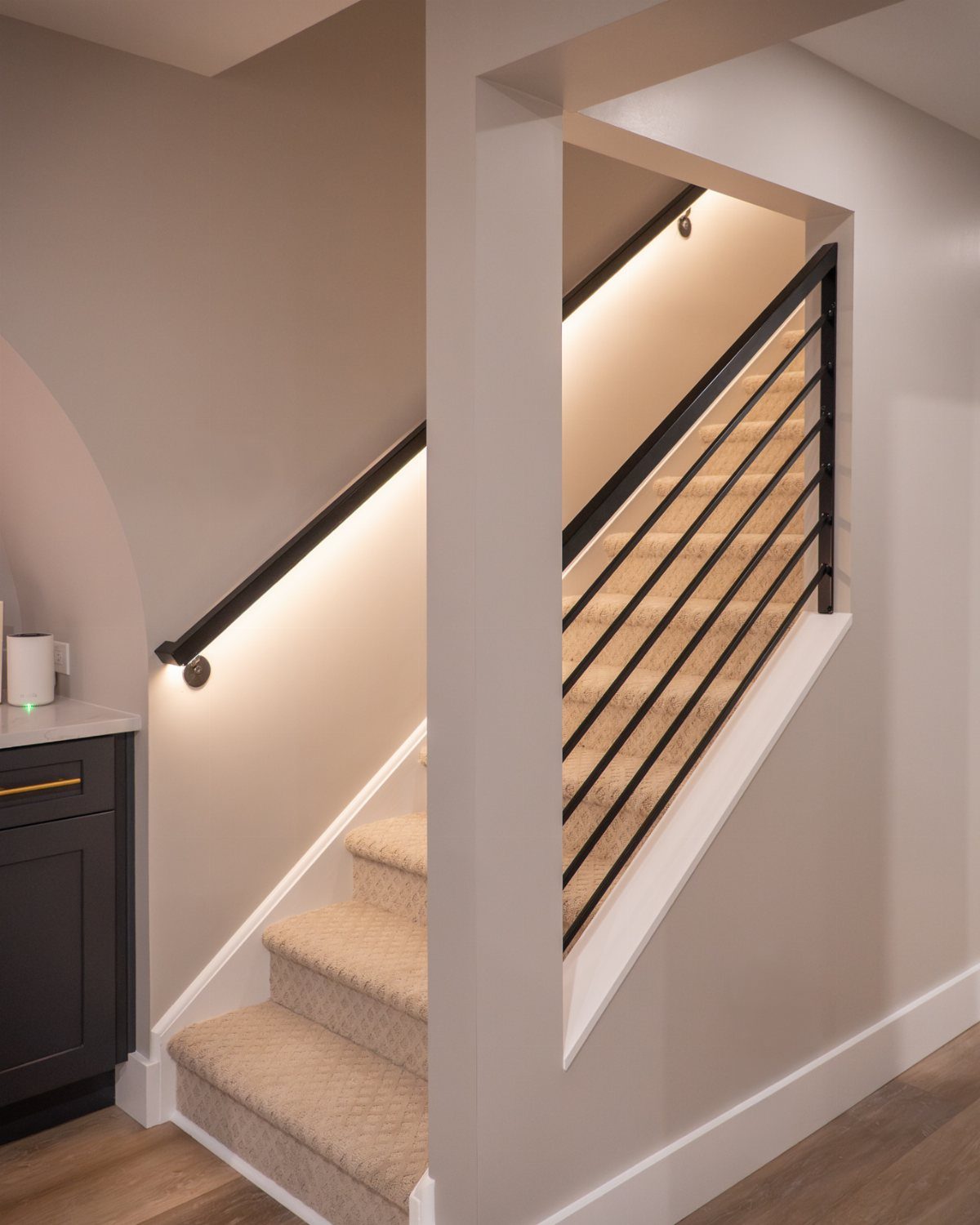
LED strip tucked under a handrail lights the steps at foot level, so the stairs stay safe without a harsh overhead fixture.
It is one of the cheapest lighting upgrades a basement can get, and a strip with an adhesive back goes up in an evening.
Pair it with other sources at different heights, such as lamps and wall lights, so the room never relies on a single ceiling light. Dimmable strips let you drop the brightness for movie nights.
I would pick warm white over cool white for a basement, because it softens concrete and drywall.
4. Home Theater
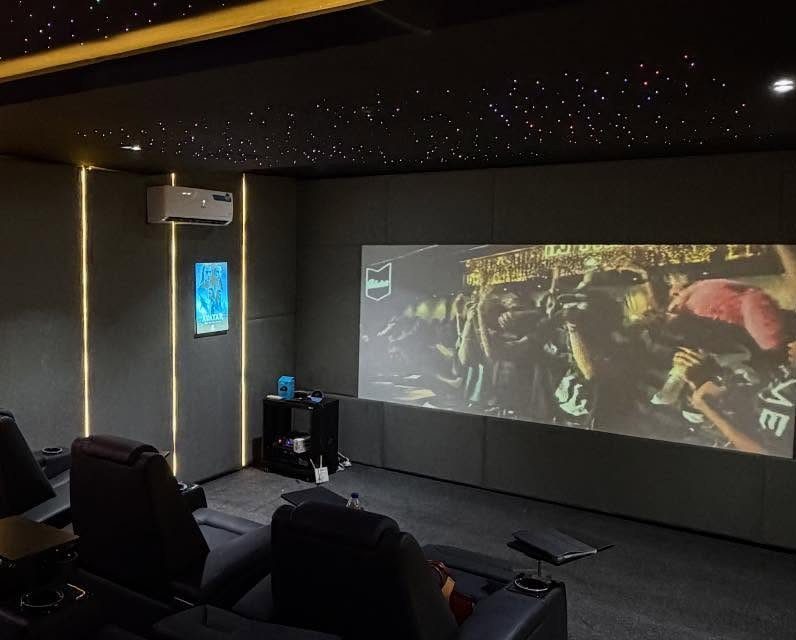
A projector screen only works if the room stays dark, so the ceiling and wall color matter as much as the gear. Matte dark paint stops light from bouncing back onto the screen and sharpens the picture.
Starry ceiling kits are an optional extra if you want a bit of theater drama.
Plan power and cable runs before the seats go in. Recliners are heavy to move afterward.
5. Bathroom Addition
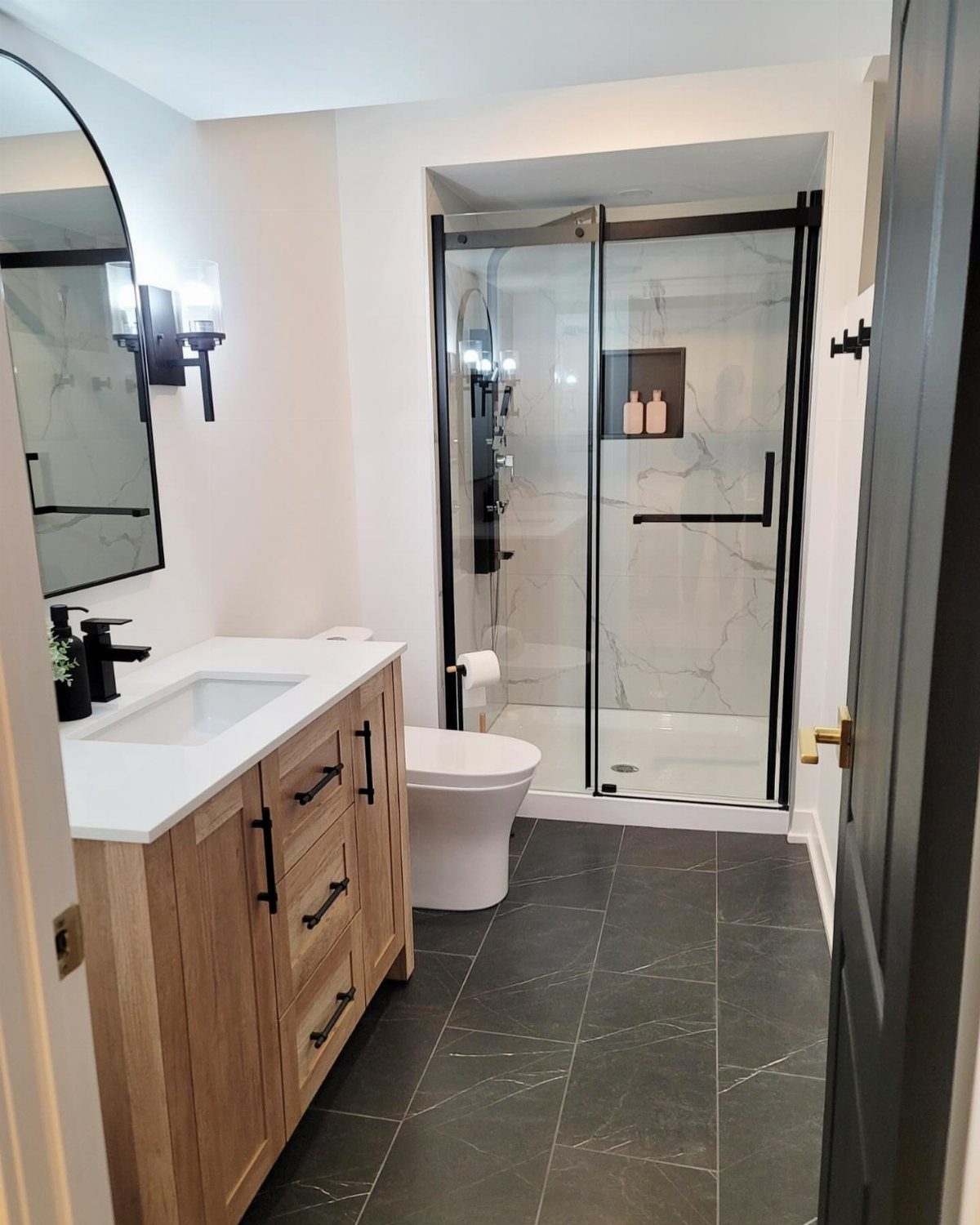
A basement bathroom means nobody has to climb stairs mid-game or mid-party, and it gives the whole level the pull of a real living space.
A shower is the bigger commitment; a half bath with just a toilet and vanity costs far less.
Black fixtures match well with that mix.
Plumbing is the expense here. Look at where your drain line sits first, since a toilet below it often needs a pump.
6. Rustic Lodge Decor
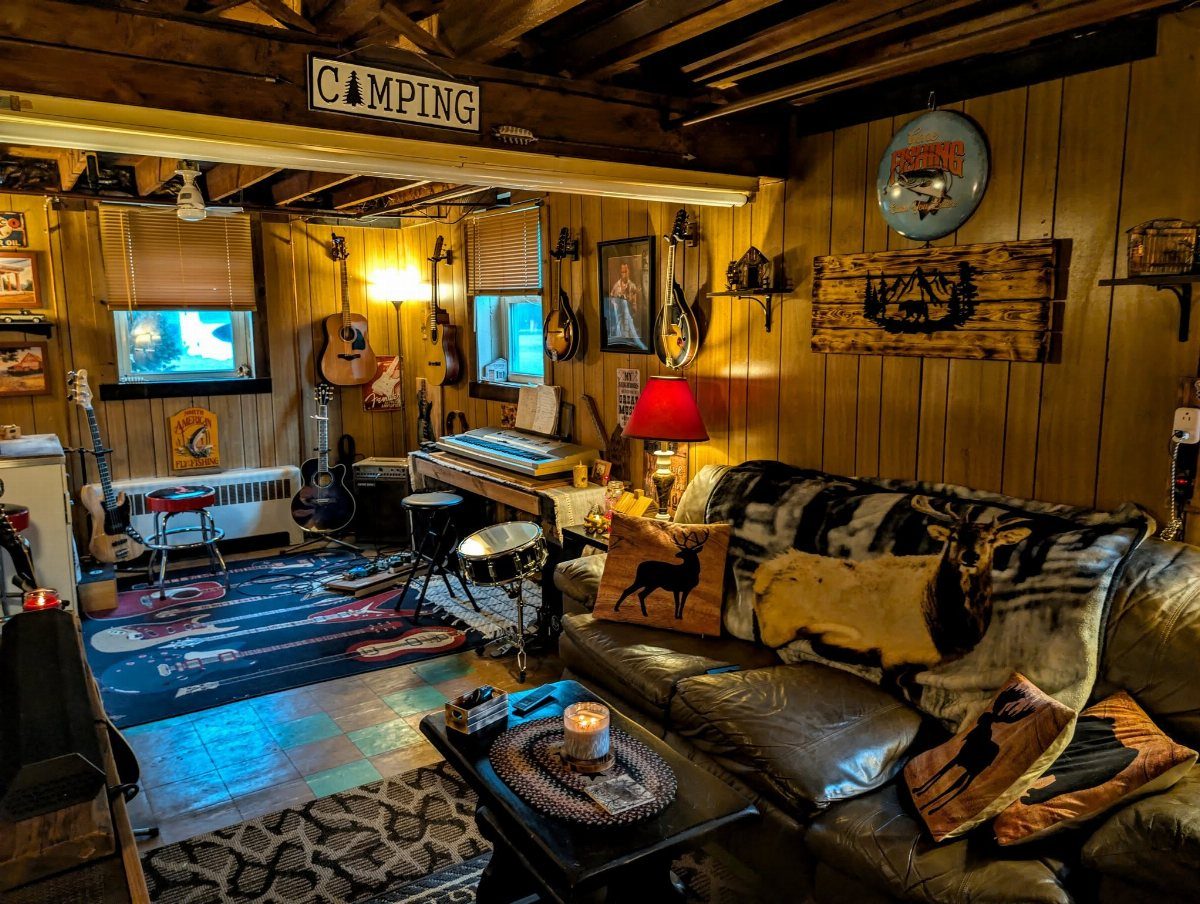
Rustic lodge decor is the most personal idea on the list, because the decor can be anything you collect: instruments, pillows, a favorite rug.
I would keep the big pieces simple and let small items carry the theme, so swapping them out costs a few dollars rather than a remodel.
Real wood paneling is pricey in a basement. Thin planks or peel-and-stick panels get a similar look for less.
7. Wine Cellar
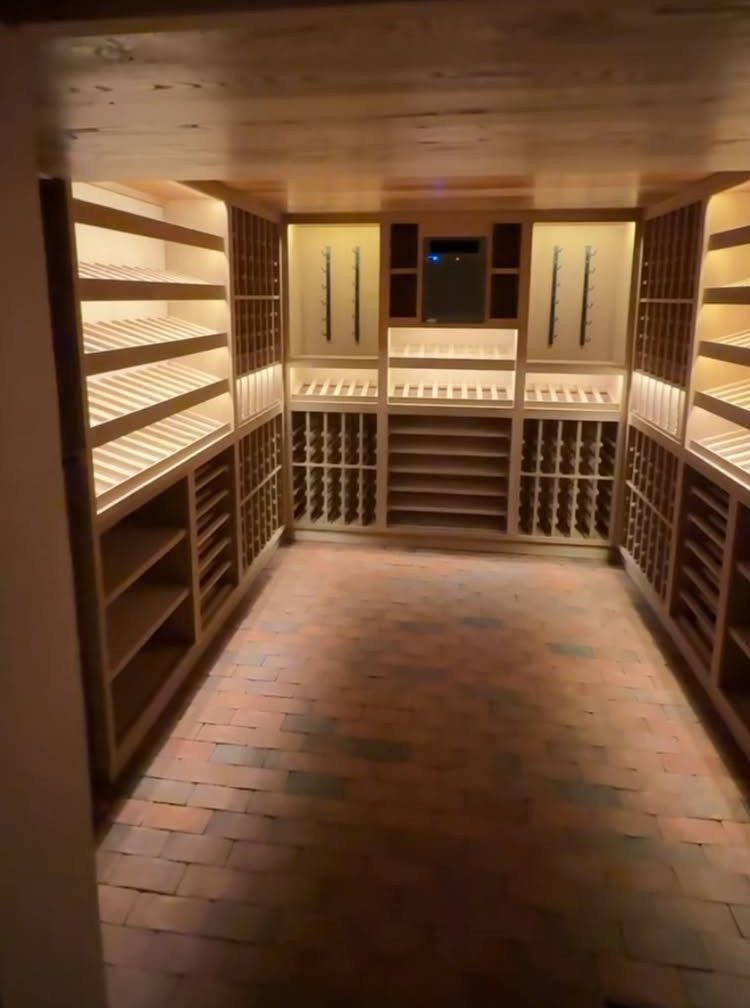
A cellar earns its place only when the room’s conditions are right for bottles, so settle that before buying a single rack. If they aren’t, a smaller rack in the bar area does the job for far less.
8. Wet Bar
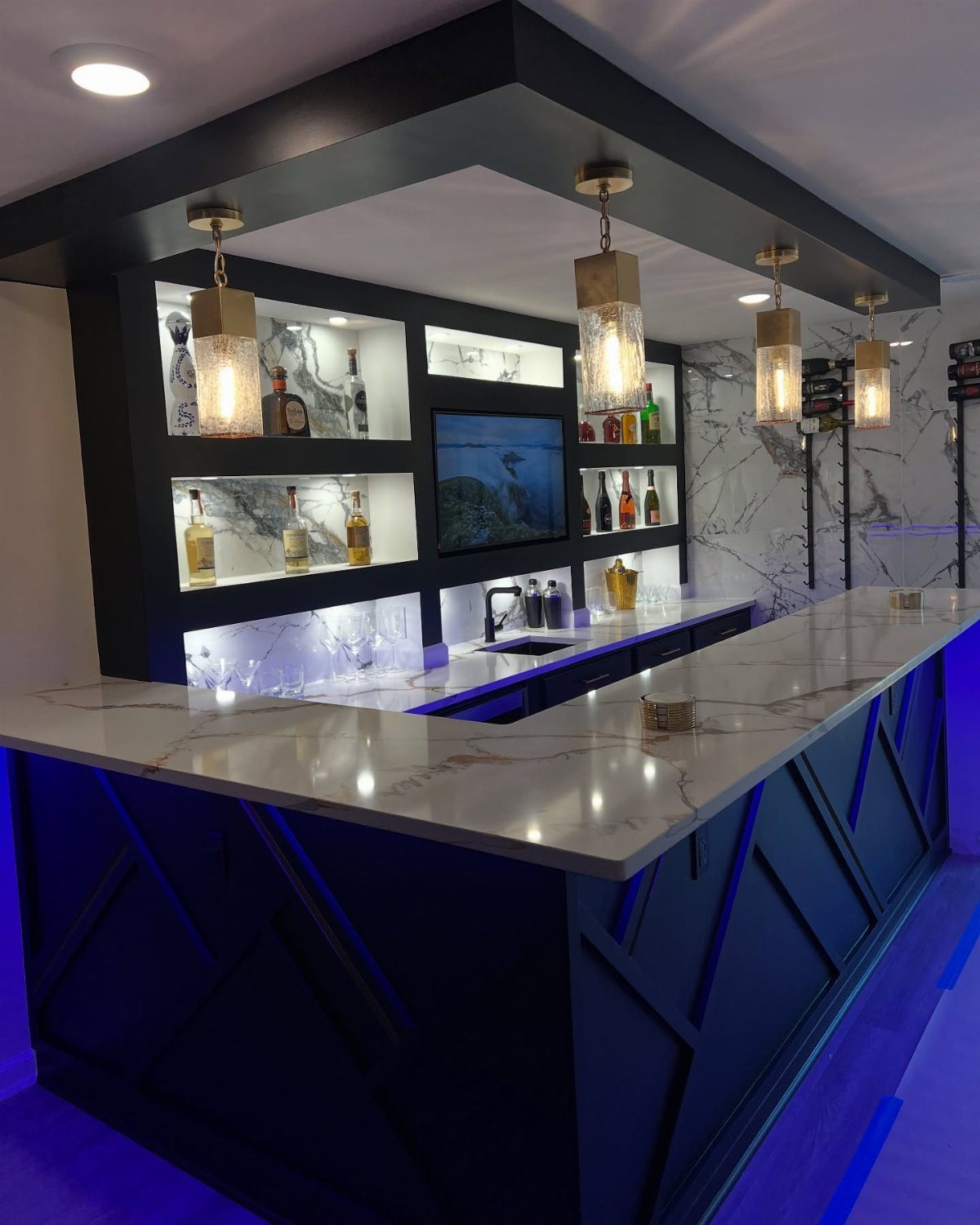
A small sink is the feature that earns the "wet" in the name: rinsing a glass without a trip upstairs changes how often the bar gets used.
Plumbing is the cost. Put the bar near an existing drain or bathroom wall to keep that bill down.
9. Open Concept Living and Kitchenette
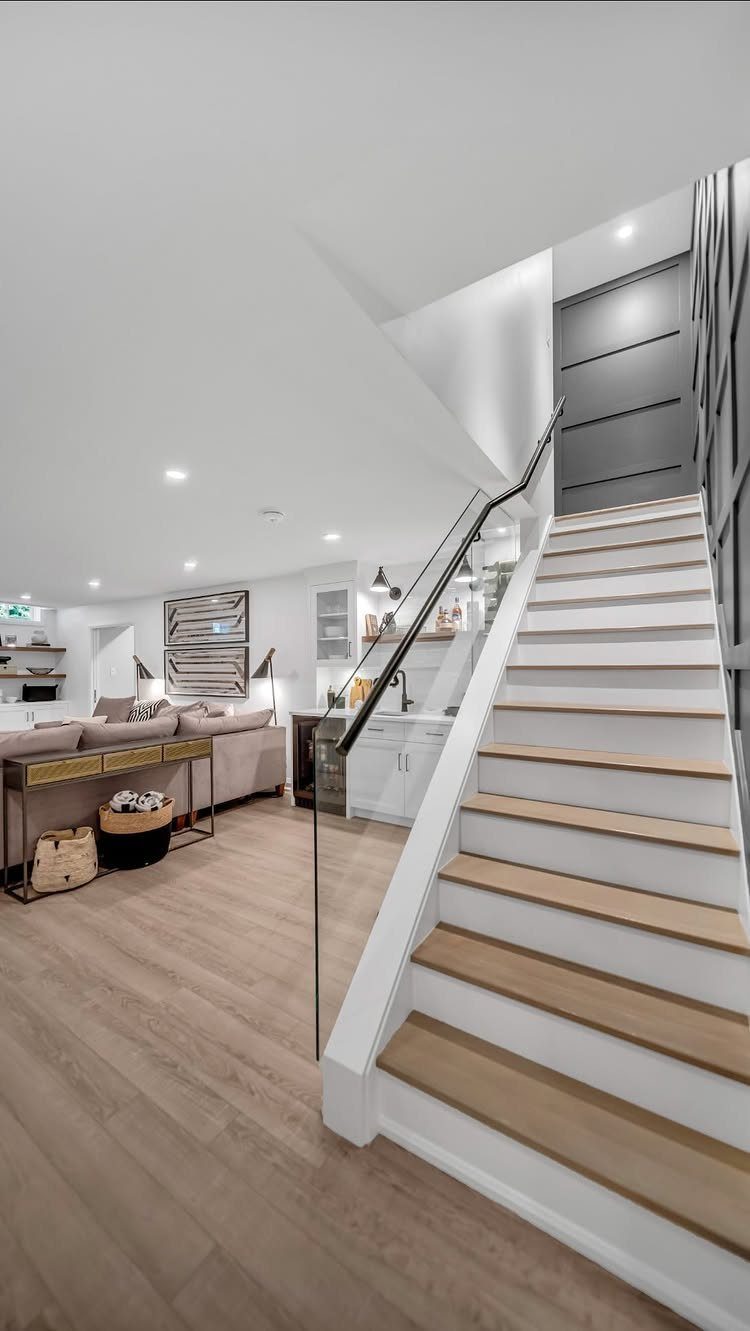
Keeping the kitchenette small and white lets the living area be the main event. A grey sofa and light wood floors read as one calm space, and the kitchenette fades into the background instead of competing with the seating.
I like this layout for a basement that has to serve guests, because snacks and drinks sit steps from the couch. Run the same flooring through both zones so the room feels bigger.
Glass stair railings keep sightlines open, which helps a low basement.
10. Sports Fan Fan Cave
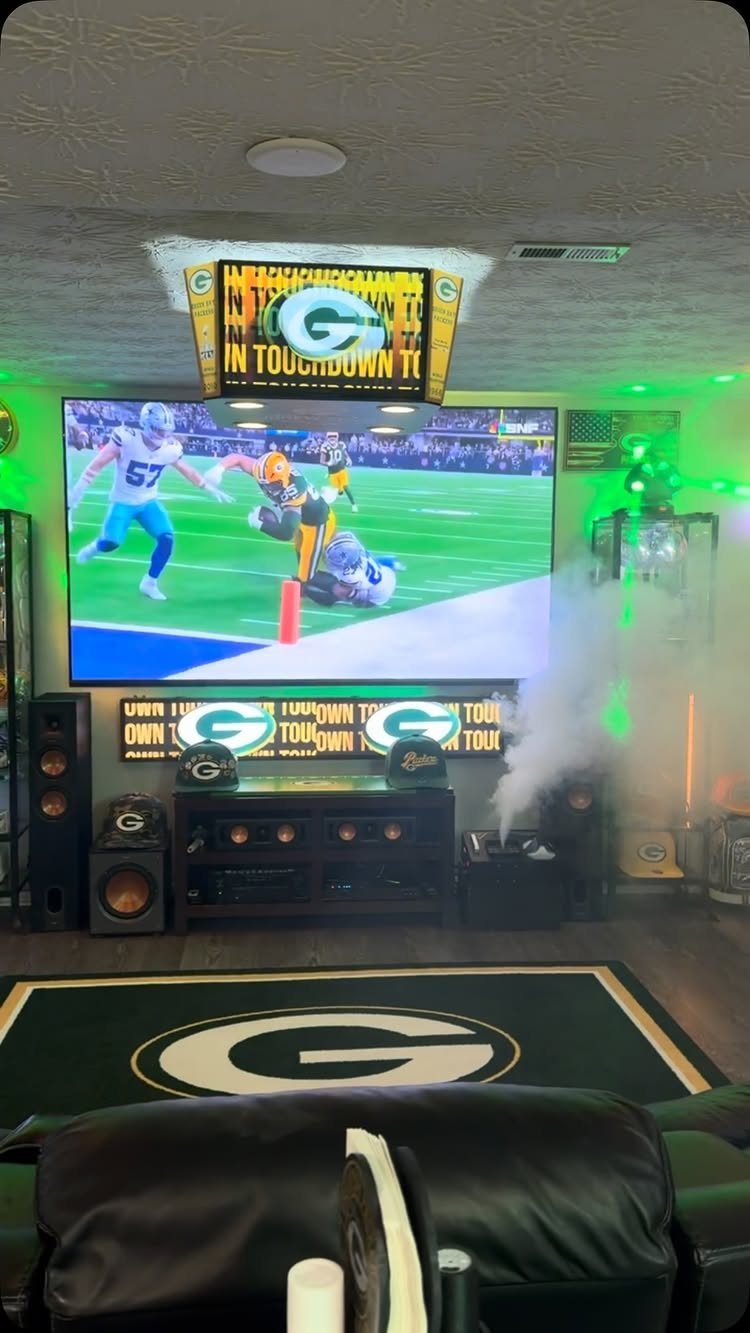
A team rug does more for a fan cave than a wall of memorabilia, because it anchors the seating and sets the colors for everything else.
Green Bay Packers logos on the rug and signs, a big TV and a black leather sofa make game day the only agenda.
Black leather suits the theme and wipes clean after spilled snacks. A smoke machine is a fun extra for kickoff, but it is optional.
Mount the TV first, then size the rug to the seating.
11. Western Themed Lounge
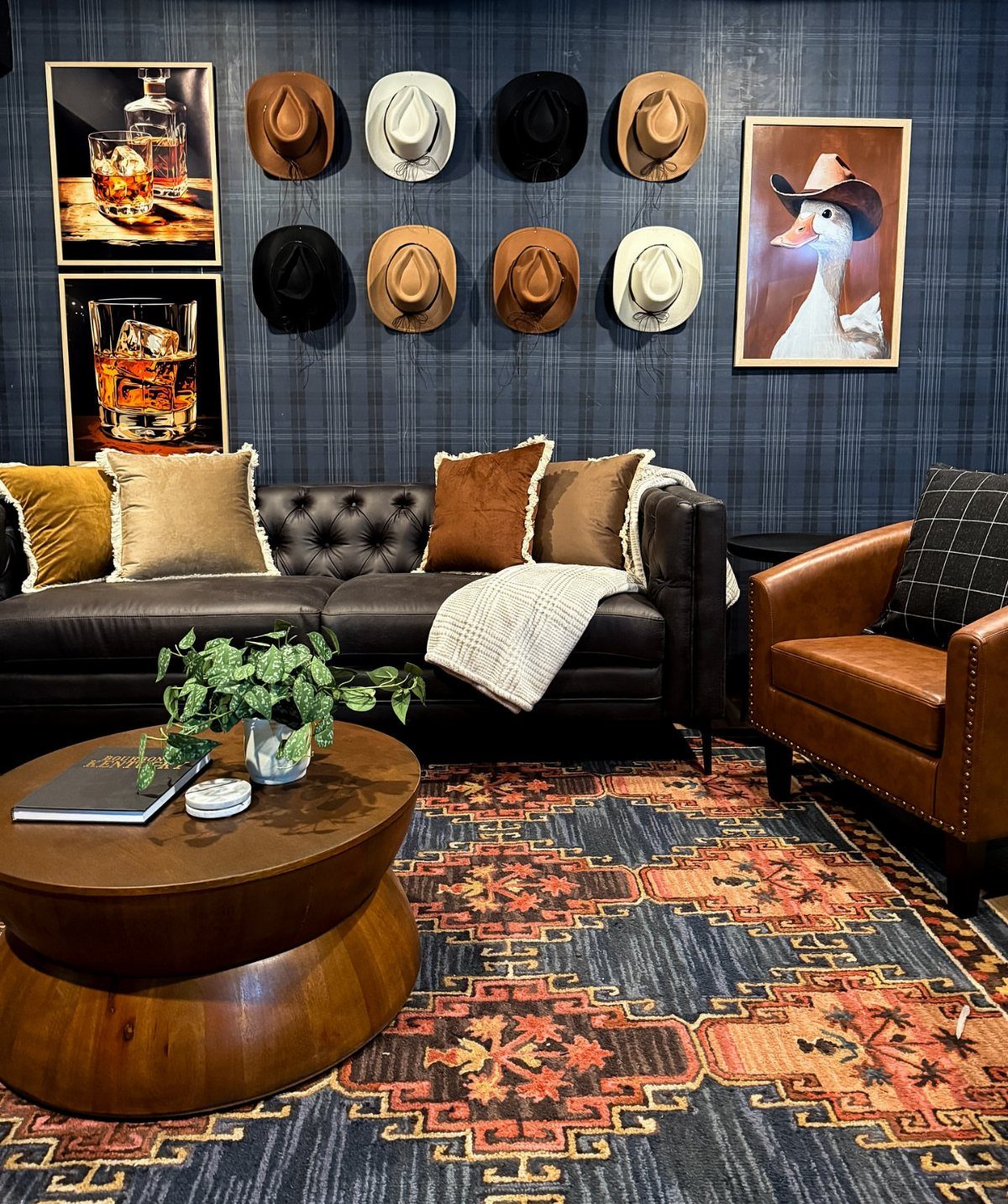
Dark blue walls make cowboy hats pop, and that contrast does most of the Western styling on its own.
Hats are cheap wall decor: a few hooks or pegs hold them, and you can rearrange the group in minutes.
I would keep the paint dark and matte, then let the rug bring in pattern. Too many Western props crowd a basement quickly.
12. Turf Flooring Casual Lounge
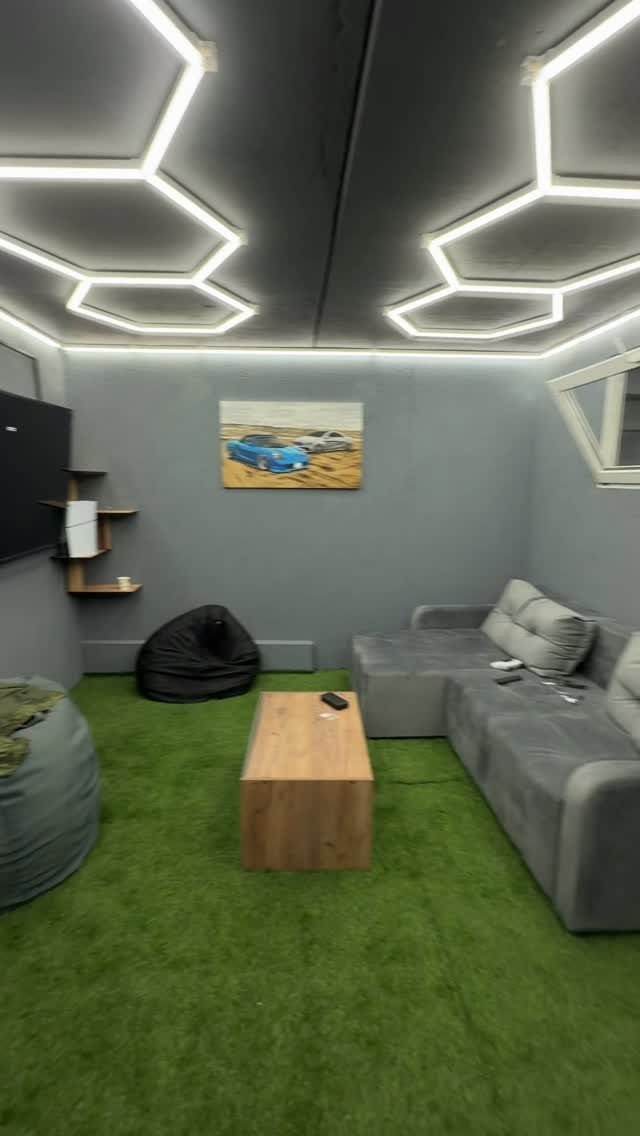
Green artificial grass underfoot turns a basement into a backyard hangout, and black bean bags next to a grey sectional keep the seating loose and casual.
Hexagonal LED lights on a dark ceiling add a game-night glow without any bulky fixtures.
Turf is easy to lay as a carpet-style roll, and it sweeps clean, though spills need prompt wiping.
Choose a dark ceiling if you want the lights to stand out.
Cost Considerations
Costs swing the most on 3 things: a bathroom, a bar with plumbing, and custom built-ins.
Pick the two or three features you will use every week and fund those first. Everything else can be added later.
A bar comes in 3 levels.
Go wet and you add a sink, plus the supply line and drain that feed it. A full entertaining bar adds storage, a microwave, an ice maker and accent shelving.
Most basements are well served by the dry version, and it leaves the budget for the features that matter more.
Decide where the fridge and any small appliances will plug in while the studs are still exposed. Tile or a run of floating shelves behind the counter keeps the bar from reading as a few kitchen cabinets left over.
Preparation Steps
Make sure the basement stays dry through every season, then start buying drywall. Watch it after heavy rain and during the spring thaw, and check for damp spots, a musty smell or white mineral residue on the walls.
Start outside. Fix the grading so the ground slopes away from the house, and make sure the gutters and downspouts carry water well clear of the foundation.
If water keeps getting in, the fix goes inside: a perimeter drain along the walls that empties into a reliable sump pump. A waterproofing company can install that and a dehumidifier, and a warranty is worth asking about.
Then choose materials that tolerate damp. Luxury vinyl plank on the floor and moisture-tolerant drywall strategies on the walls are the safe picks.
Handling moisture first costs a lot less than ripping out a finished room later.
Design Flexibility
Build the room so it can change jobs. A man cave may need to become a home office or a guest room down the road, and a few early choices make that switch easy.
Put outlets and data jacks on every wall, not just behind the TV. Keep the flooring and wall color neutral, and let removable pieces carry the personality.
Choose furniture that moves. A sectional can be rearranged, while built-ins lock the layout in place.
If a closet or an egress window is possible, it makes a future bedroom much easier. Check local code before counting on either.
Frequently Asked Questions
What is the average cost to finish a 2000 sq ft basement?
One ranking source puts most basement finishing projects at $65,000–$150,000, and size is only one factor.
A 2,000 sq ft basement can land anywhere in a wide range, since the floor plan, any moisture or structural problems already there, and extras like a full bath or a plumbed bar all push the total up fast.
A contractor who sees the space can give a firm estimate.
What are some good ideas for a low-budget basement man cave?
Start with the cheap, high-impact pieces: LED strip lighting under a stair handrail, a grey sectional, a team rug, and dark matte paint.
Warm white LED strips with an adhesive back go up in an evening, and decor like hats on hooks or small collectibles can be swapped for a few dollars.
Can I legally finish my own basement?
The answer depends on local code, so check with your city or county before you start.
Code matters most for features like an egress window or a closet that could make a future bedroom. I would confirm those rules before counting on either one.
Should I add a wet bar or a wine cellar?
A wet bar is the more useful choice for most basements, since a small sink saves trips upstairs and the bar gets used more often.
Bottles only do well in a wine cellar if the room stays cool and steady, so skip it unless your basement already does that.





