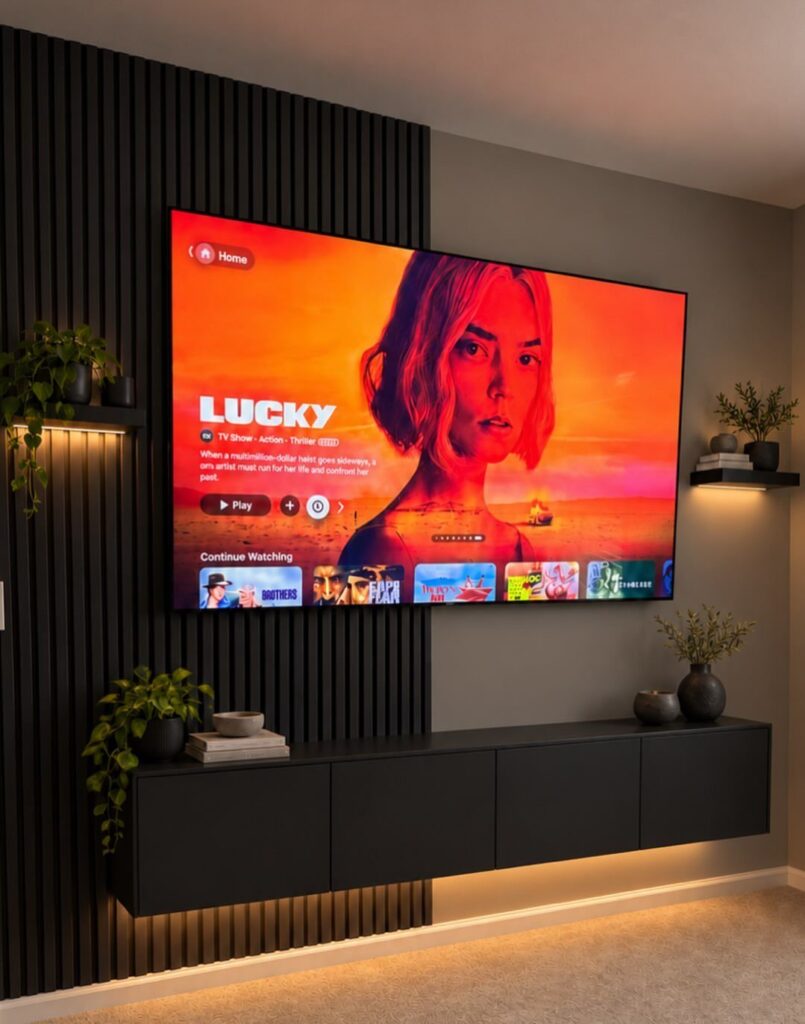
The ideas here run from a few dollars per linear foot of 1×2 or 1×3 slats to walnut panels that cost more than oak, and from trim-and-paint frame molding to full slat walls with built-in shelves and lighting.
1. Walnut Finish Wood Paneling Behind TV
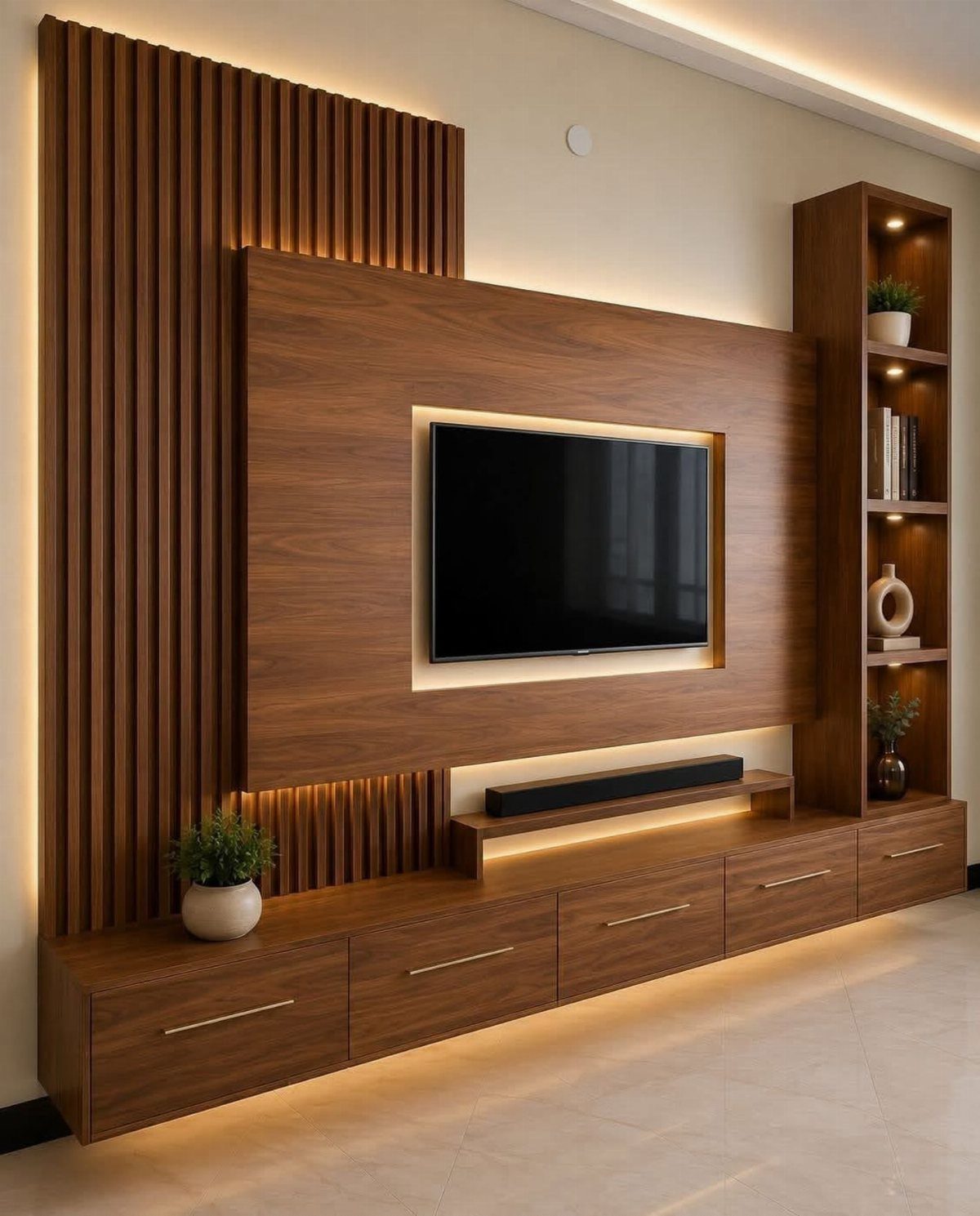
Walnut reads warm without trying hard, and a wall of it behind the TV makes the screen look built in rather than hung.
I like the vertical slat rhythm here because it hides the cable run and gives the matching tall bookshelf something to echo.
If you want that look on a weekend budget, keep the grain direction the same on the wall and the shelf. Mismatched wood tones are the first thing a reader’s eye catches.
A strip of LED lighting behind the panel adds depth at night, and it’s an easy add-on once the wall is done.
2. Wood Slat Wall Panel
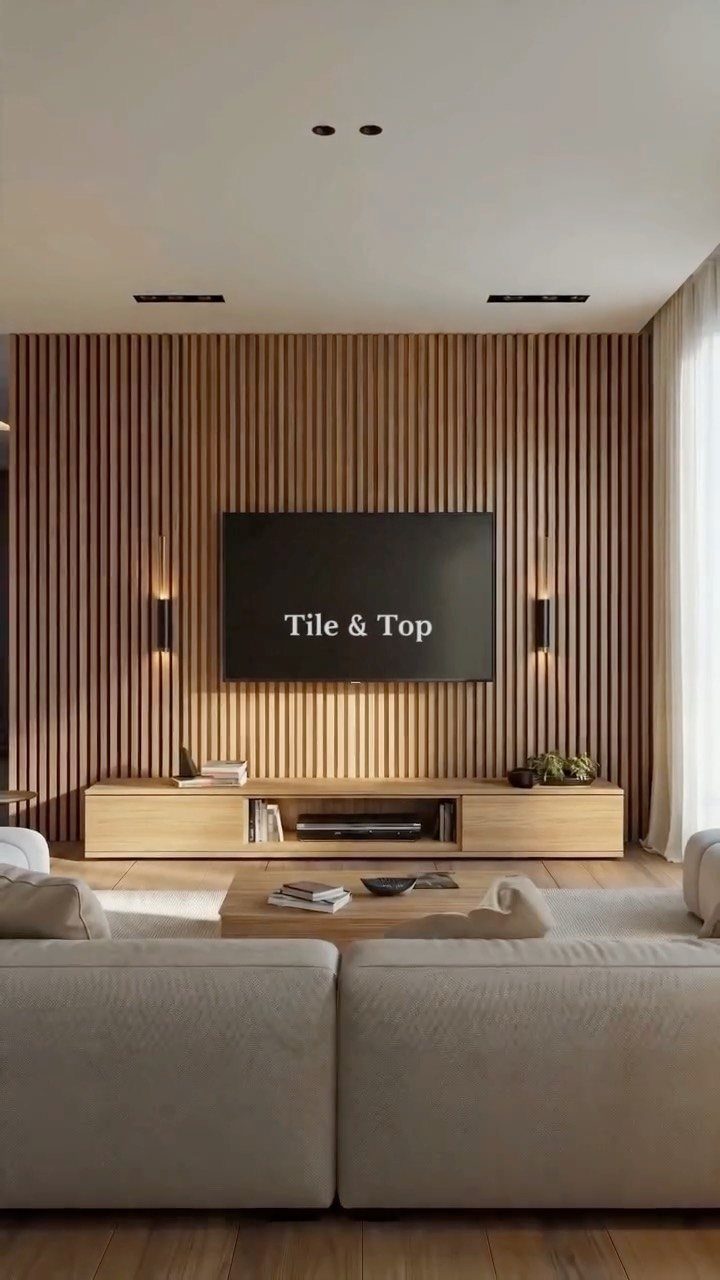
A flat wall behind a TV can feel like a blank stare, and vertical slats fix that with nothing but shadow and line.
Slats give the most texture for the least fuss of any paneling style, and a 1×2 or 1×3 strip costs just a few dollars per linear foot.
Center the slat run on the TV, then let it extend a bit past each edge so the screen sits inside the pattern instead of floating on it.
Pair it with a light sofa and a low wood console, and the wood becomes the one loud thing in the room.
3. Black Oak Finish Wood Paneling
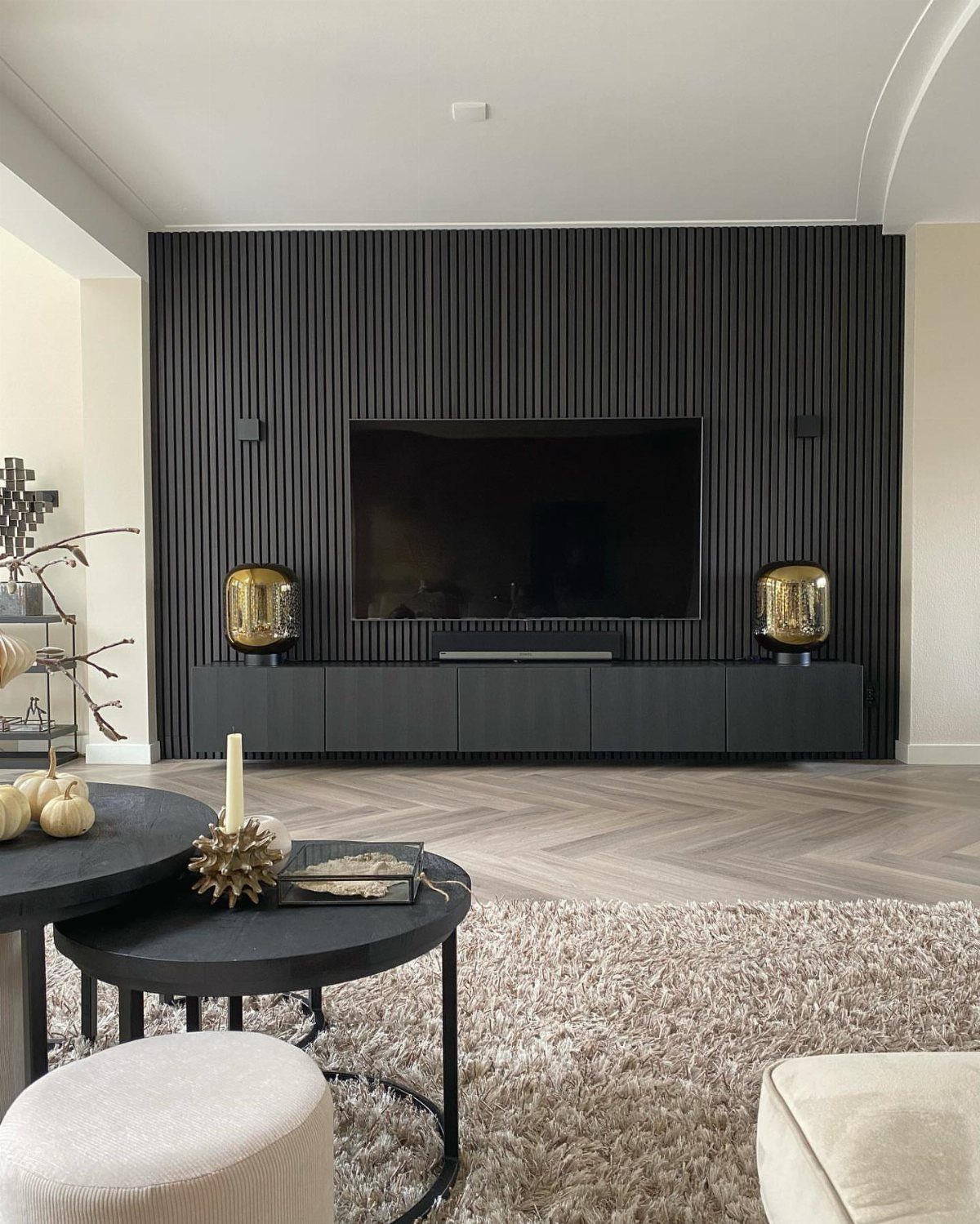
Black slats make the TV almost vanish, which is the reason to pick them. When the screen is off, a black panel and a black console blur into one dark block instead of a gray rectangle fighting the wall.
I’d keep everything else in the room soft: a shag rug, lighter coffee tables, plenty of texture underfoot.
Too many dark surfaces turn a living room into a cave, and that’s a fine goal for a man cave but a risky one elsewhere.
4. Wall Frame Molding
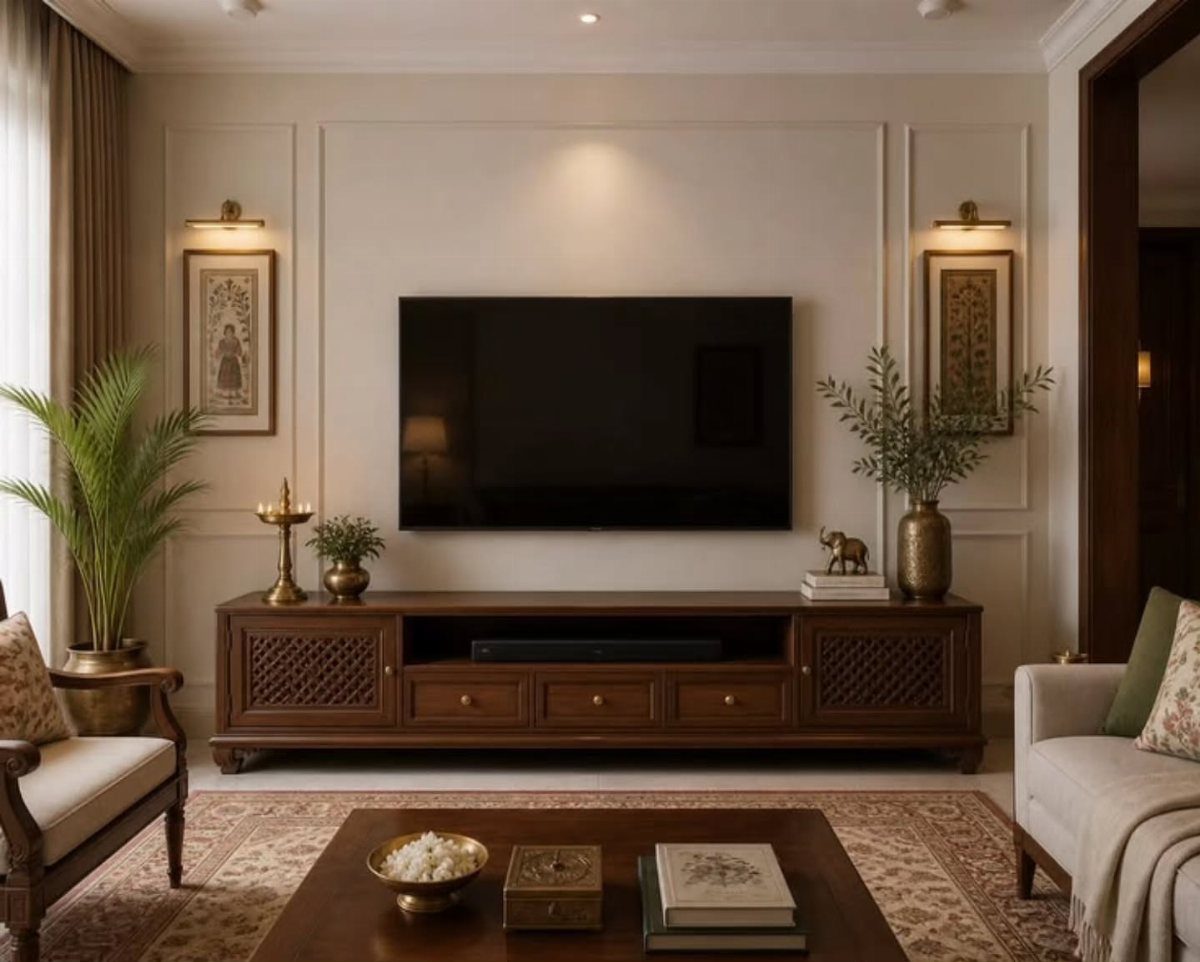
Frame molding turns the TV wall into a picture frame, with the screen as the artwork. It suits renters-turned-owners well, since it’s trim and paint rather than a full wood install.
Size the molding box so the TV sits centered inside it with even space on every side; uneven margins show immediately.
Paint the wall and molding the same color for a quiet look, a soft beige works well, and choose a wood console so the room still has some warmth.
5. Wood Paneling Flanking Stone Feature
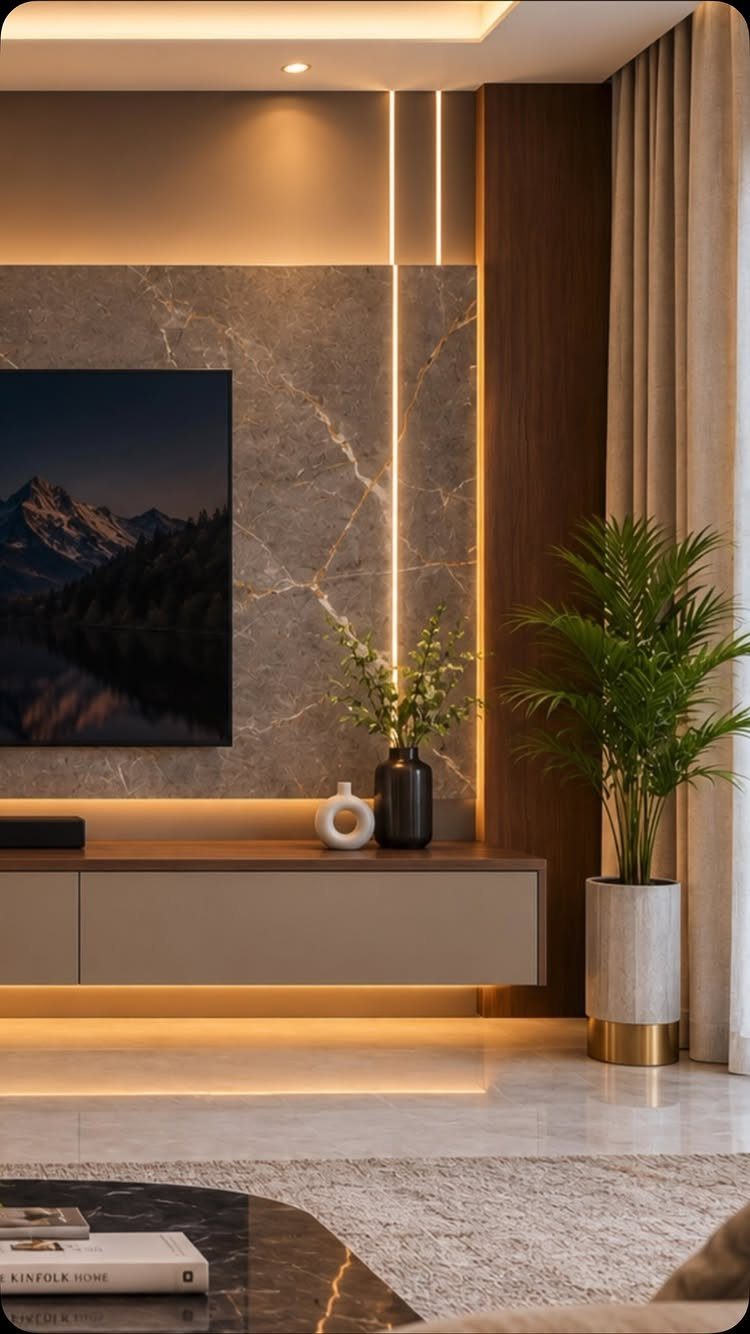
Stone in the middle, wood on both sides: that’s the layout, and it works because the marble slab carries the TV while the slats soften the edges. I prefer it to a full stone wall, which can feel cold.
Keep the slab slightly wider than the TV so the screen has a clean border.
Vertical wood on each side draws the eye up, and LED strips along the paneling give the wall a glow. A floating console underneath keeps the floor clear.
6. Mounted Panel Over Wood Slats
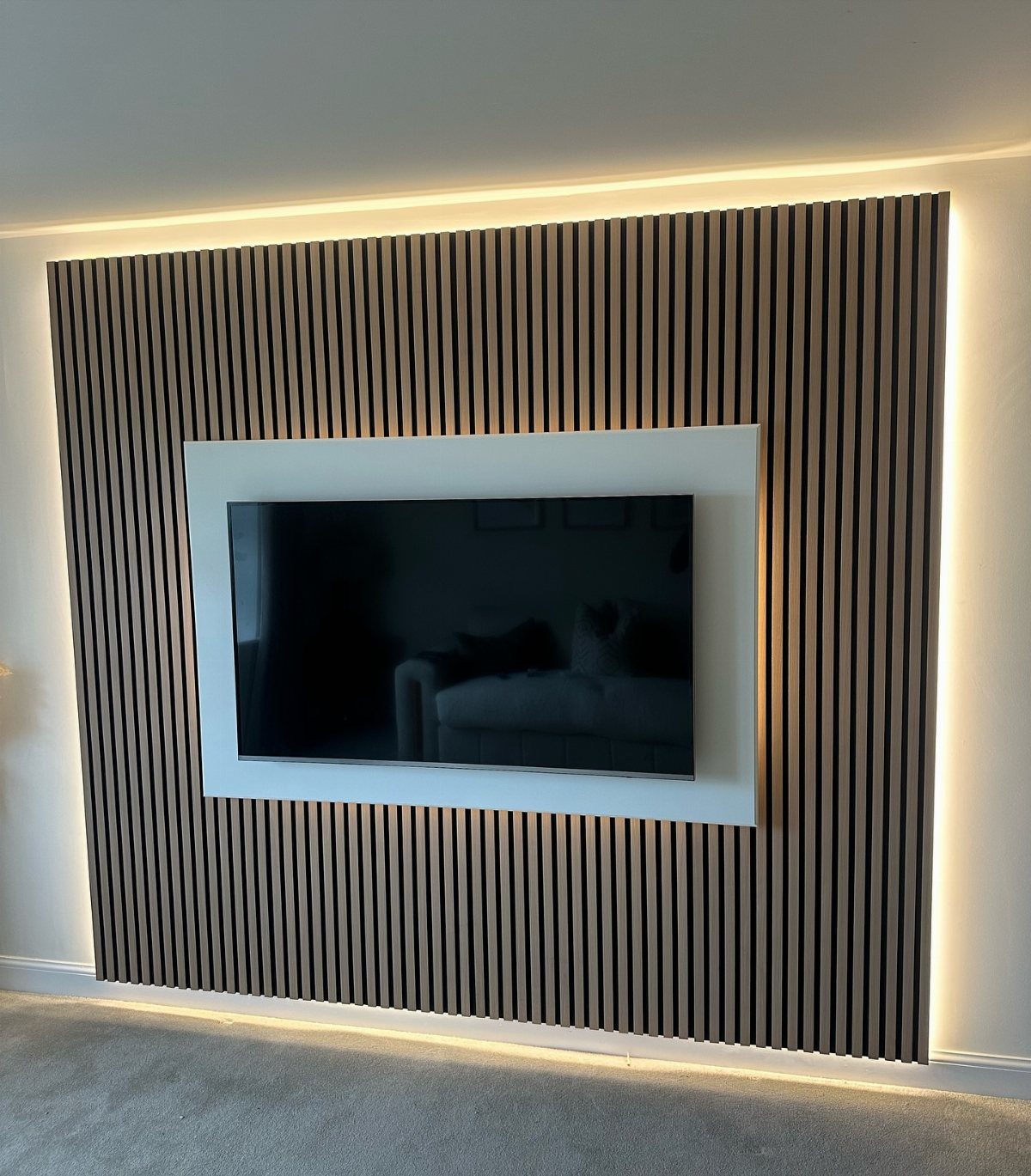
A smooth white board mounted over slats gives the TV its own flat surface, so the screen never has to sit on a busy texture. I like how it separates the television from the wood without hiding the slats.
Cut the board larger than the TV on all sides, since a tight fit looks like an afterthought. Backlighting around the board’s perimeter, as it’s done here, adds a halo effect and makes the whole assembly look deliberate.
7. Wood Slats Flanking Fireplace Setup
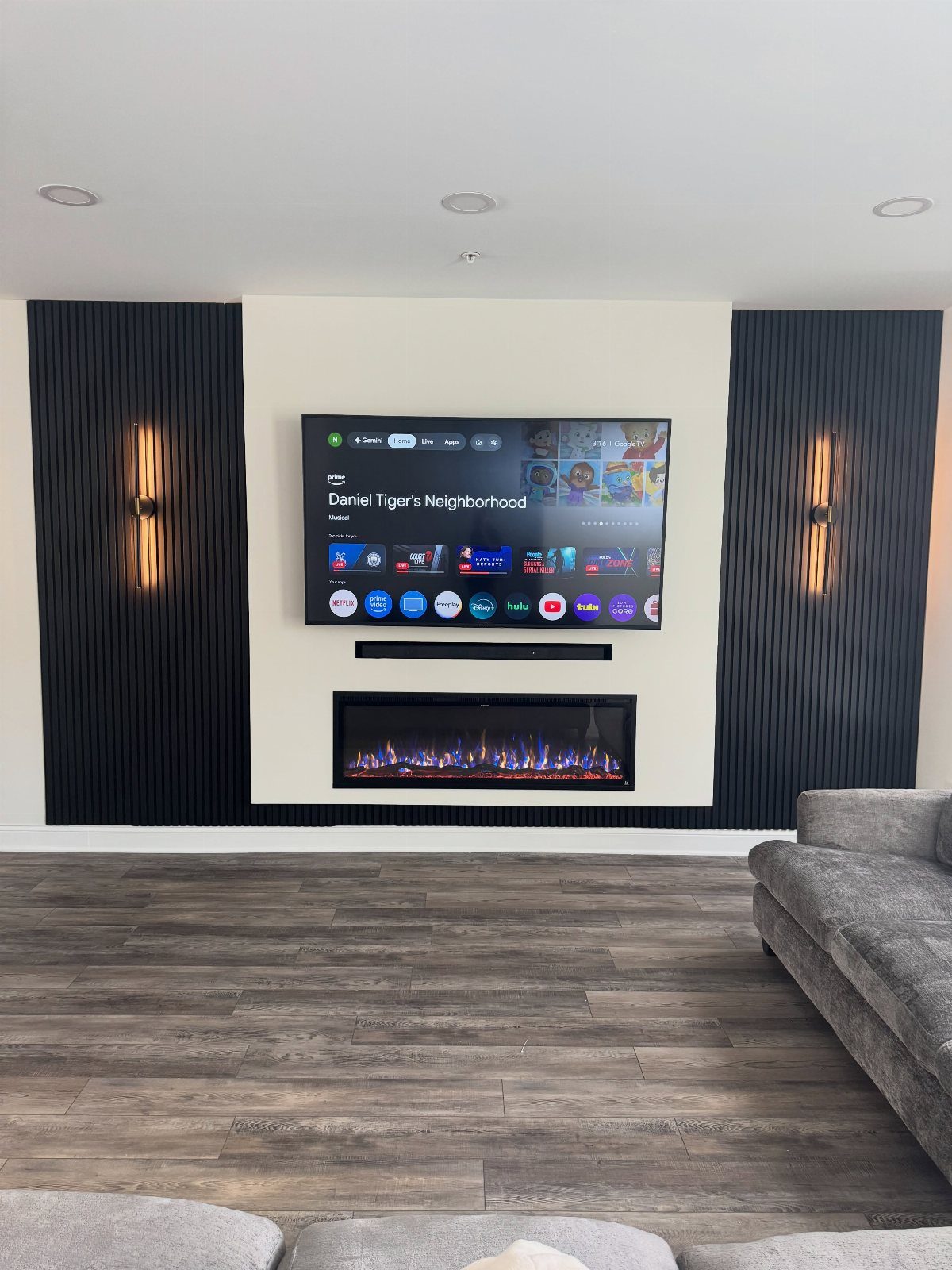
Dark slats on both sides of a linear fireplace make the TV and the fire read as one centered unit. Sconces set into the slat sections add soft light at night, so the wall glows without any overhead fixture.
I’d keep the fireplace and the screen on the same center line, since slats exaggerate any offset. An electric insert like this one also keeps the install simple, because there is no flue or chimney to plan around.
Dark wood is best balanced with a light rug and pale walls elsewhere.
8. Wood Paneling Next to TV
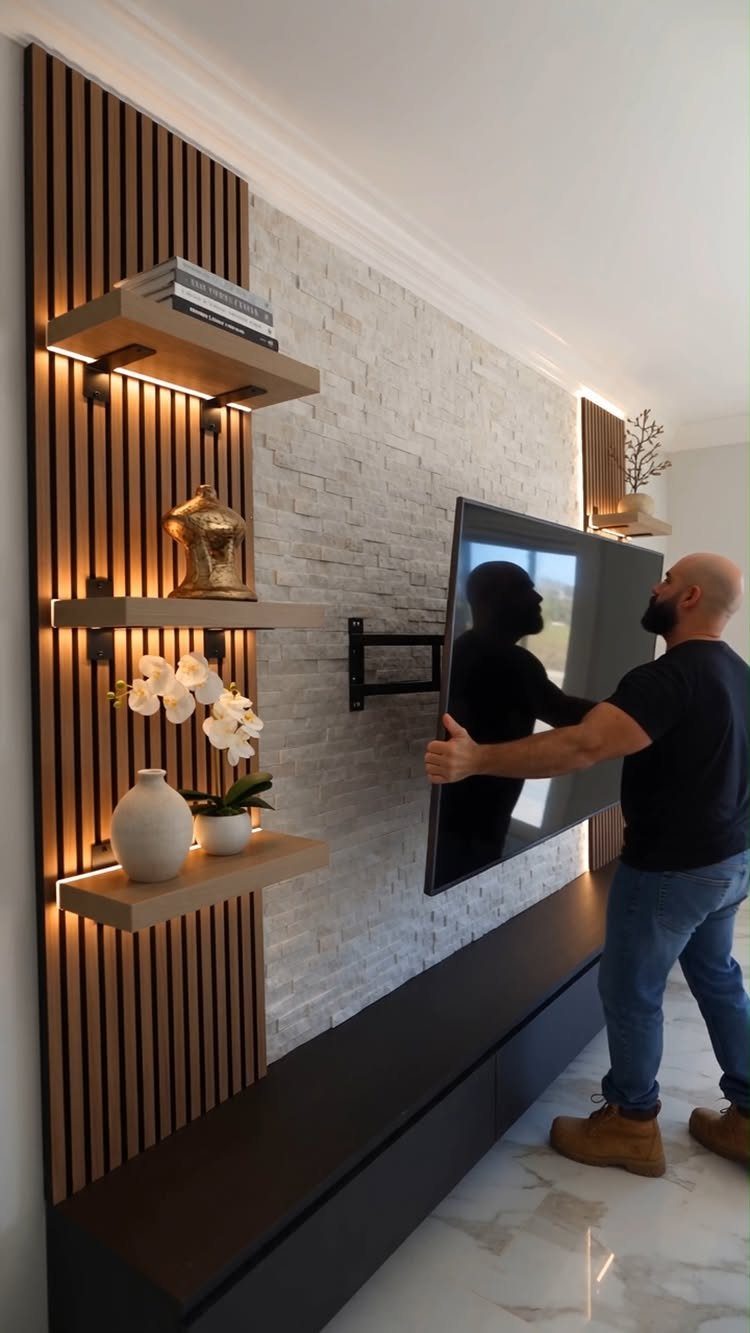
Slats that carry their own shelves solve 2 problems at once: where to put the decor and how to keep the TV wall from looking bare.
3 floating shelves set into vertical wood, with lighting built in, give you display space without a separate bookcase.
Against a white stone wall, the wood becomes the warm side of the setup and the TV sits on the cool side. Keep the shelves shallow and the objects few, or the slats get buried.
Mount the TV first, then space the shelves to line up with its top and bottom edges.
Installation Tips
Start with the wall. Remove anything hanging on it, wipe it clean, and check that it’s flat, because slat panels telegraph every bump.
Before any drilling, scan for wiring and pipes. A basic stud and wire detector costs little, and it beats drilling into a live line.
Panels arrive heavy, so keep them lying flat until install day so they don’t bow, and line up a second person to help lift.
Choose screws that match your wall type; brick or concrete takes masonry screws, drywall needs something different.
If a panel needs trimming, use a fine-toothed hand saw for the wood and a sharp utility knife for the felt backing.
The slats are stapled to that felt, so hold them steady as you cut. If any shift, re-staple them before mounting.
Plan the layout on paper first, then dry-fit before you fasten anything.
Acoustic Benefits
Backing decides whether a wood wall helps your sound or just looks good.
A gray felt backing soaks up sound rather than throwing it back at you, and that calms the flutter echo you get on a wall with a soundbar or receiver. It adds almost no thickness.
Panels without that felt look identical on the wall but do nothing for acoustics. Check the product details before you buy, since you can’t tell by eye.
On a wall that holds a TV and speakers, I won’t buy a panel without the felt. It’s also useful in an open-plan room, where hard surfaces let sound run around.
Wood paneling can also mark off a TV zone in a larger room, so the space feels organized without adding walls.
Material Considerations
Walnut is the premium choice. Its reddish-brown grain looks rich against white walls and concrete floors, and it gives the warmest, most layered finish of the wood options.
Each panel runs higher than oak, so I’d save it for a wall that carries the whole room’s look. If budget is the main limit, hold off on walnut and go with oak.
Engineered options can also stretch a tight budget across a bigger wall. Price a full wall before you commit, since the per-panel gap adds up quickly.
Whichever wood you pick, buy the felt-backed version if the wall sits behind a TV and speakers.
Frequently Asked Questions
How do I hang a TV on wood paneling?
Find the studs and anchor the mount to them before any panel goes up, then cut and fit the slats around the bracket.
Over smooth, primed drywall, a high-tack construction adhesive rated for the panel weight will hold the slats, but if the mount sits on that same wall, I’d rather drive screws through the felt backing into the studs.
Scan for wiring and pipes before drilling, and use masonry screws if the wall is brick or concrete.
Do wood slat panels work as acoustic treatment behind a TV?
Yes, if the panel has a felt backing. The felt absorbs sound instead of bouncing it back, which calms the flutter echo around a soundbar or receiver and adds almost no thickness.
Panels without felt look the same on the wall but do nothing for sound, so check the product details before buying.
What is the best wood wall paneling?
Natural oak with a felt backing is the most versatile pick, and it’s the one I’d choose on a budget.
Walnut looks the richest and warmest, though it costs more per panel than oak, so I’d spend it on the one wall that defines the room.
Whatever species you pick, buy felt-backed panels for the wall that holds the TV and speakers, since the felt takes the edge off echo.
How to decorate a wall beside a TV?
Vertical wood slats on both sides of the screen are the easiest fix, and they can carry their own floating shelves.
Set 3 shallow shelves into the slats and line them up with the TV’s top and bottom edges; you get a place to display things without a separate bookcase.
Stick to a handful of objects, or the slats disappear behind clutter. Frame molding painted the same color as the wall is a quieter option for renters-turned-owners, since it’s only trim and paint.





