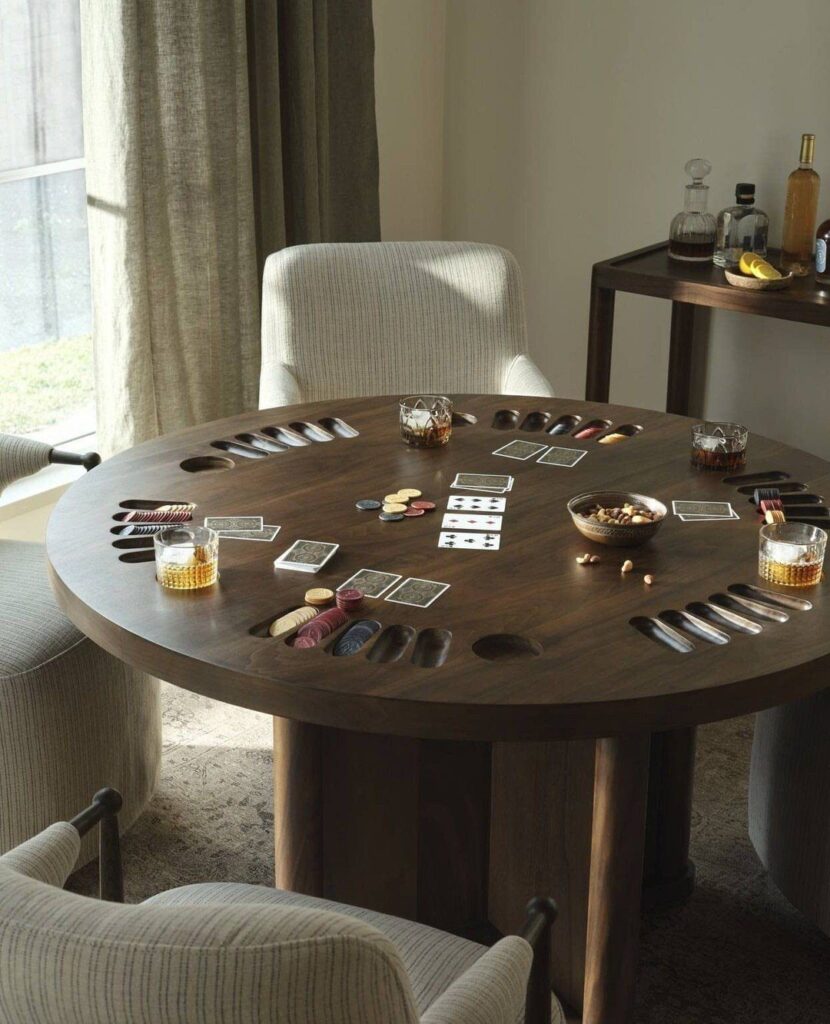
The room you have decides which of these ideas works: a spare room with a door can take a compact pool table or a dartboard cabinet, while a bedroom corner is better served by a dual monitor corner setup or a wall-mounted pegboard that clears the desk surface.
The ideas below range from simple wall art and lighting to a compact pool table, and what fits mostly depends on wall length, ceiling height and how much clear floor you can spare for a cue swing.
1. Ambient LED Lighting
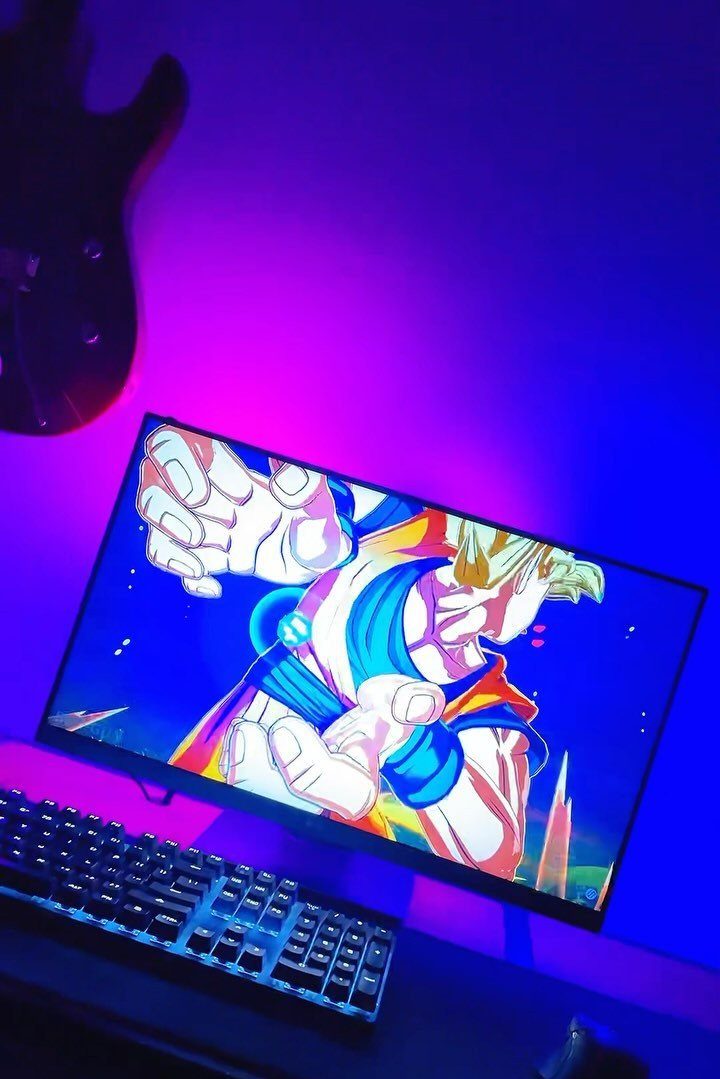
Purple and blue LED strips behind a monitor give a small room its mood without using an inch of floor. Light along the wall also softens the glare of a bright screen in a dark room.
Run the strip behind the desk or monitor so the glow bounces off the wall and the bulbs stay hidden. 2 colors that sit close together, like the purple and blue here, look more settled than a rainbow cycle.
Adhesive strips cost little and take an evening to stick up.
2. Multipurpose Game Table
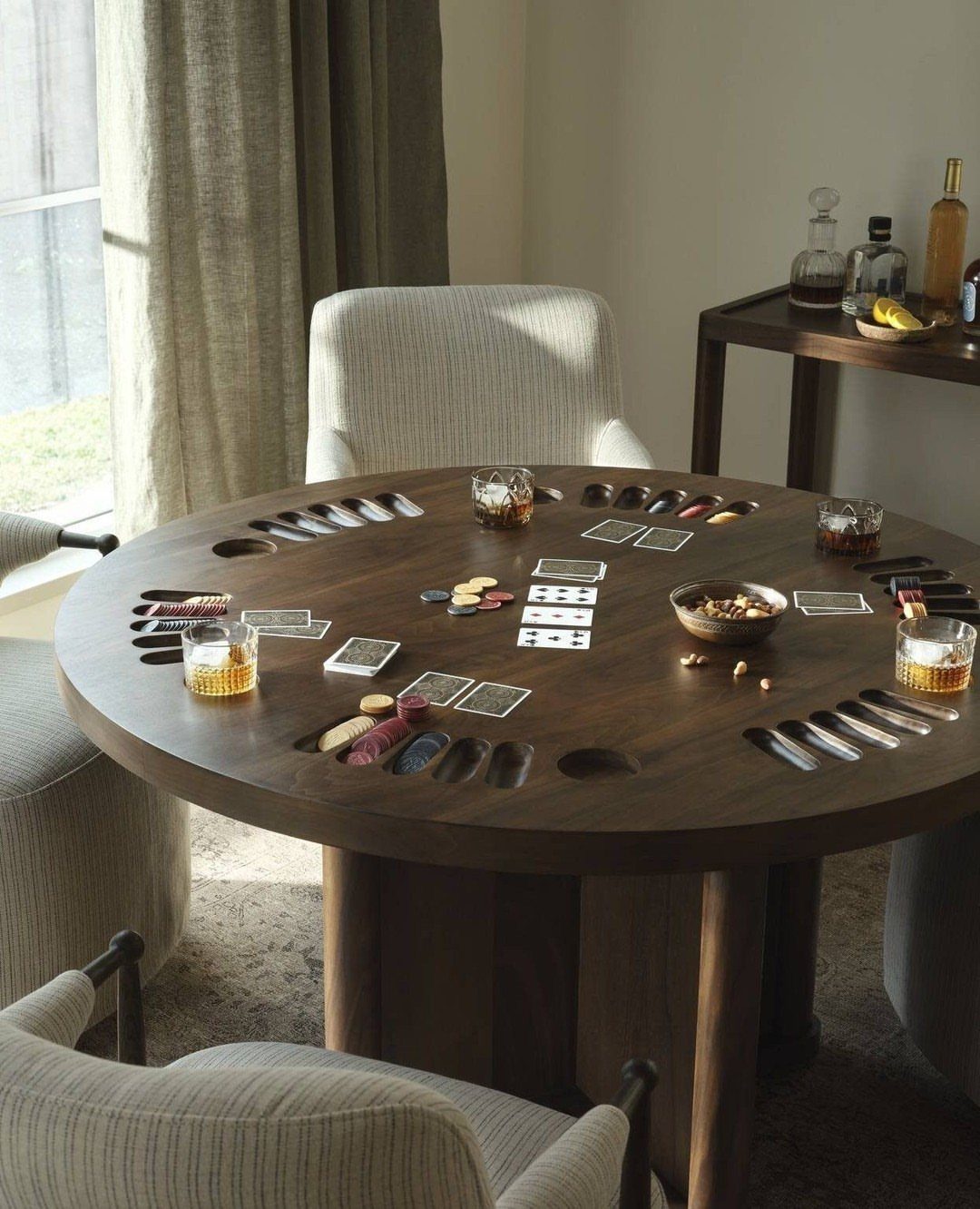
A round table with chip slots and a card surface lets one piece of furniture handle poker, card games and board nights. In a small room, that beats owning 3 separate setups.
Dark wood hides spilled drinks and scuffs better than a pale top, and a round shape keeps people from banging into corners. A side table close by holds glasses so the playing surface stays clear.
I would choose this over a dedicated poker room for anyone short on square footage.
3. Gaming Desks
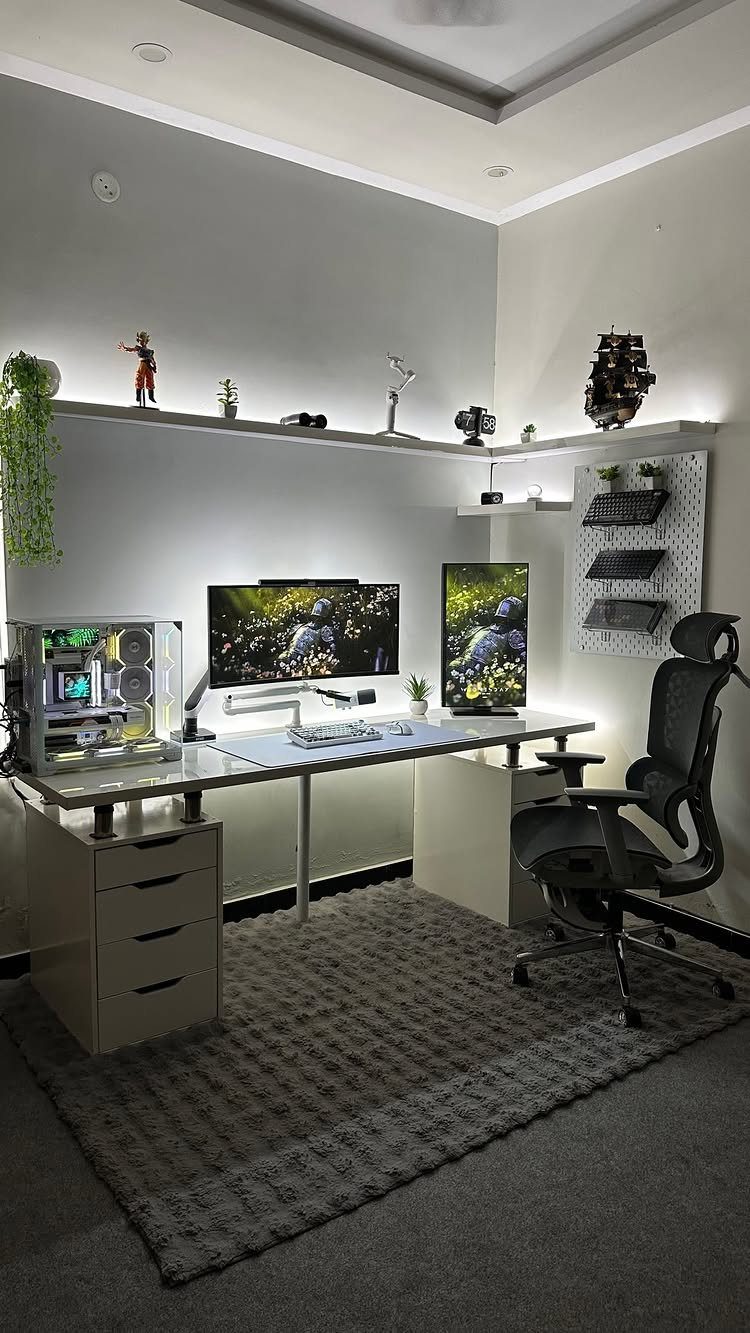
Building the desk to your exact wall is the best way to stop a small room from feeling crowded.
A white top, a tower tucked beside it and dual monitors can all fit when the desk is cut to the space instead of the other way around.
Wall width and monitor depth come first, so get both numbers down with a tape measure and let them set the desk size, whether you buy one or build it.
Floating shelves above keep the floor open, and a rug under the chair helps the corner feel finished.
A custom desk costs more than a stock one, so get a price on each and compare them side by side.
4. Gallery Wall of Game Art

Game cover art in matching frames turns a bare wall into a collection, and it costs you no floor space at all. A tight grid looks deliberate, even when the titles come from totally different genres.
Keep the frame sizes identical and the gaps between them even. Lay the prints on the floor first, then mark the wall, so you only drill once.
I like a white wall behind them, since the covers already bring plenty of color.
5. Dark Color Palette
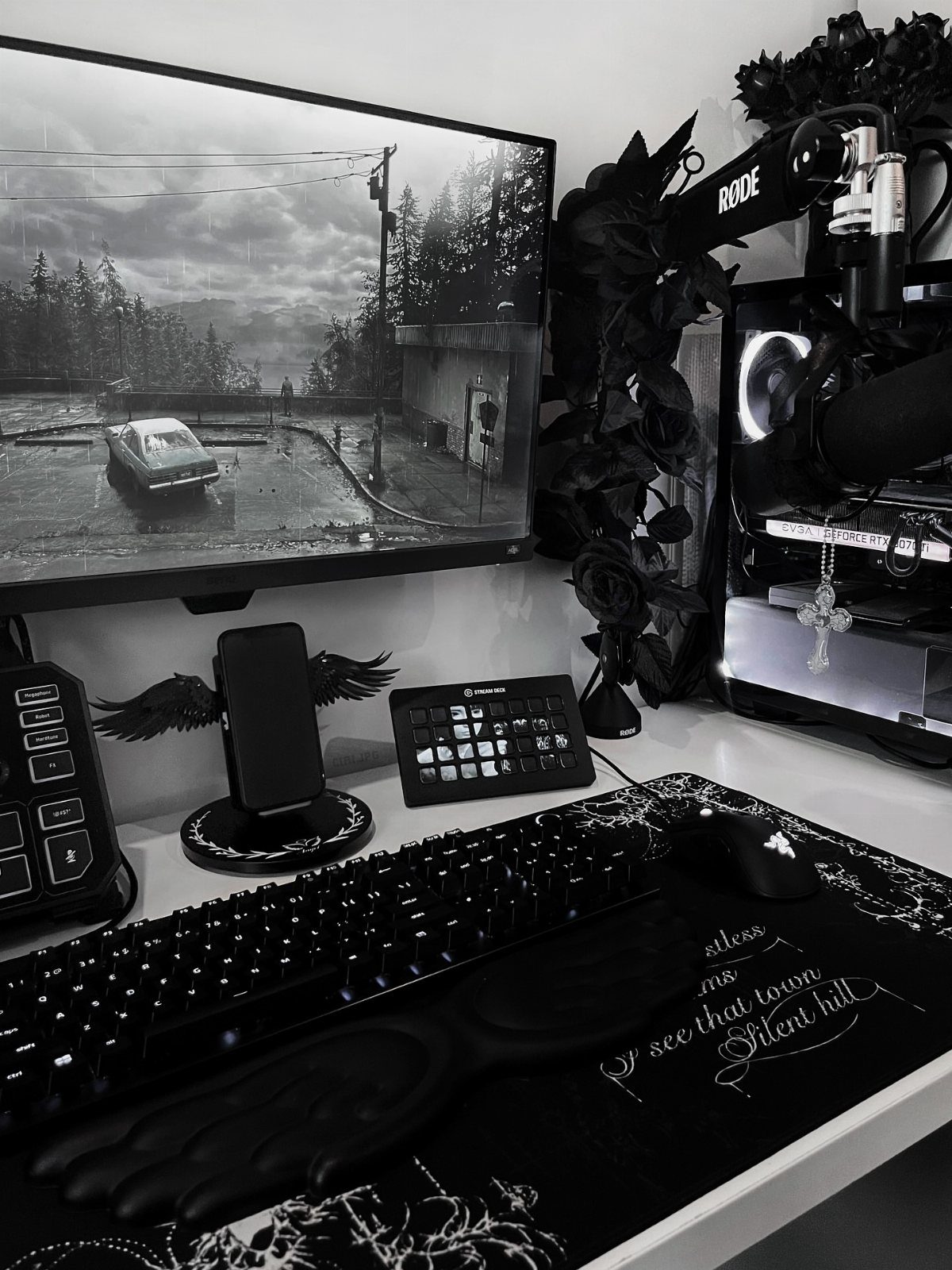
Black gear on a black desk makes a small room feel deeper and pulls the eye toward the screen.
One small organic touch, like the black roses here, stops the look from turning cold. Pick a single accent and stop there.
Dark finishes show dust fast, so keep a microfiber cloth in the desk drawer.
6. Gaming Bedroom Setup
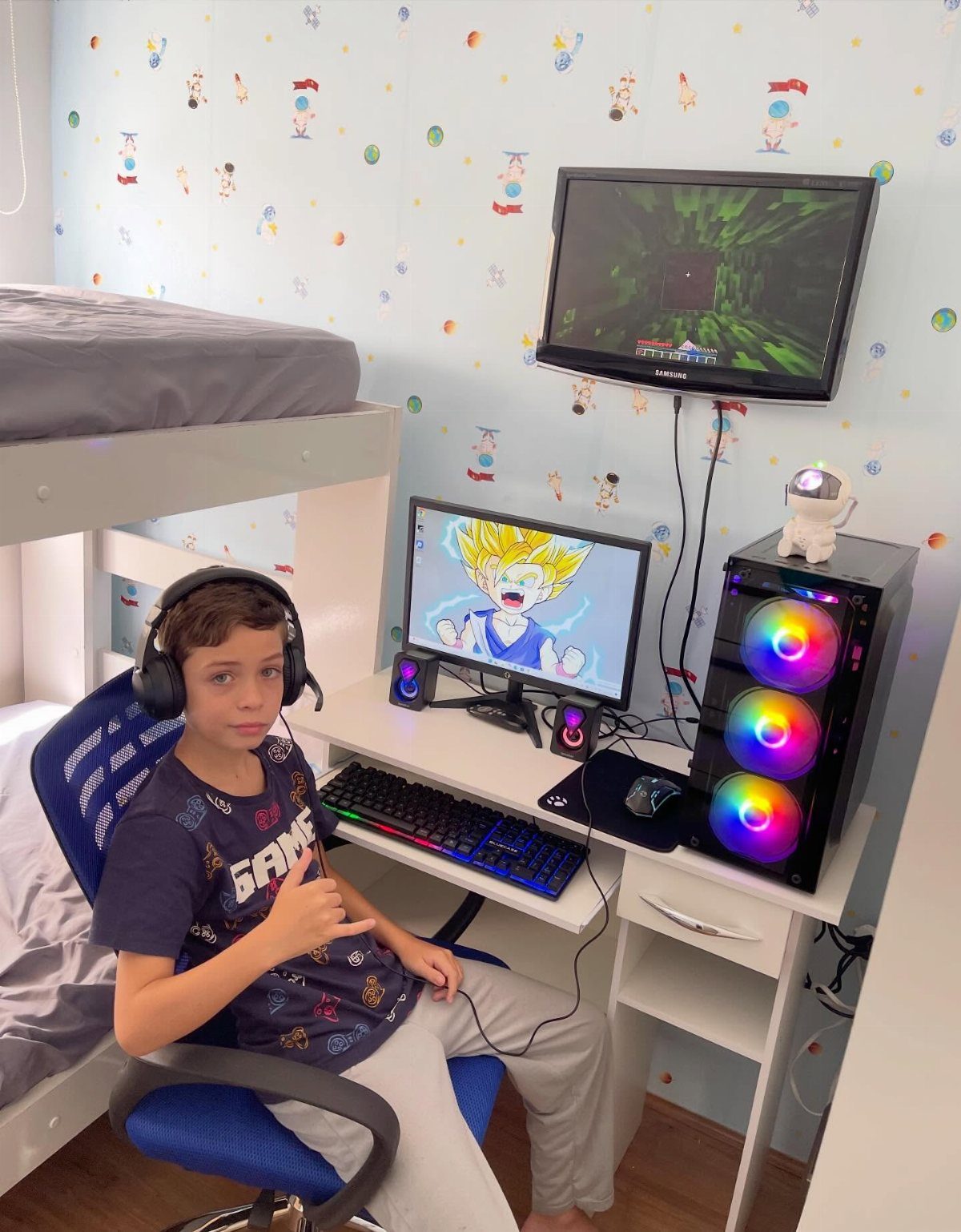
A loft bed frees the floor below for a full desk, which is how a bedroom doubles as a gaming room.
A loft bed like the Novogratz Twin comes with a desk or a bed configuration, which lets you sleep up high and set up the gaming area in the space underneath.
Check ceiling height before ordering. You want enough clearance to sit upright in the top bunk and enough room beneath for a chair and 2 monitors.
A bedroom setup works best when the desk lighting is dimmable, so the space still winds down at night.
7. Retro Arcade
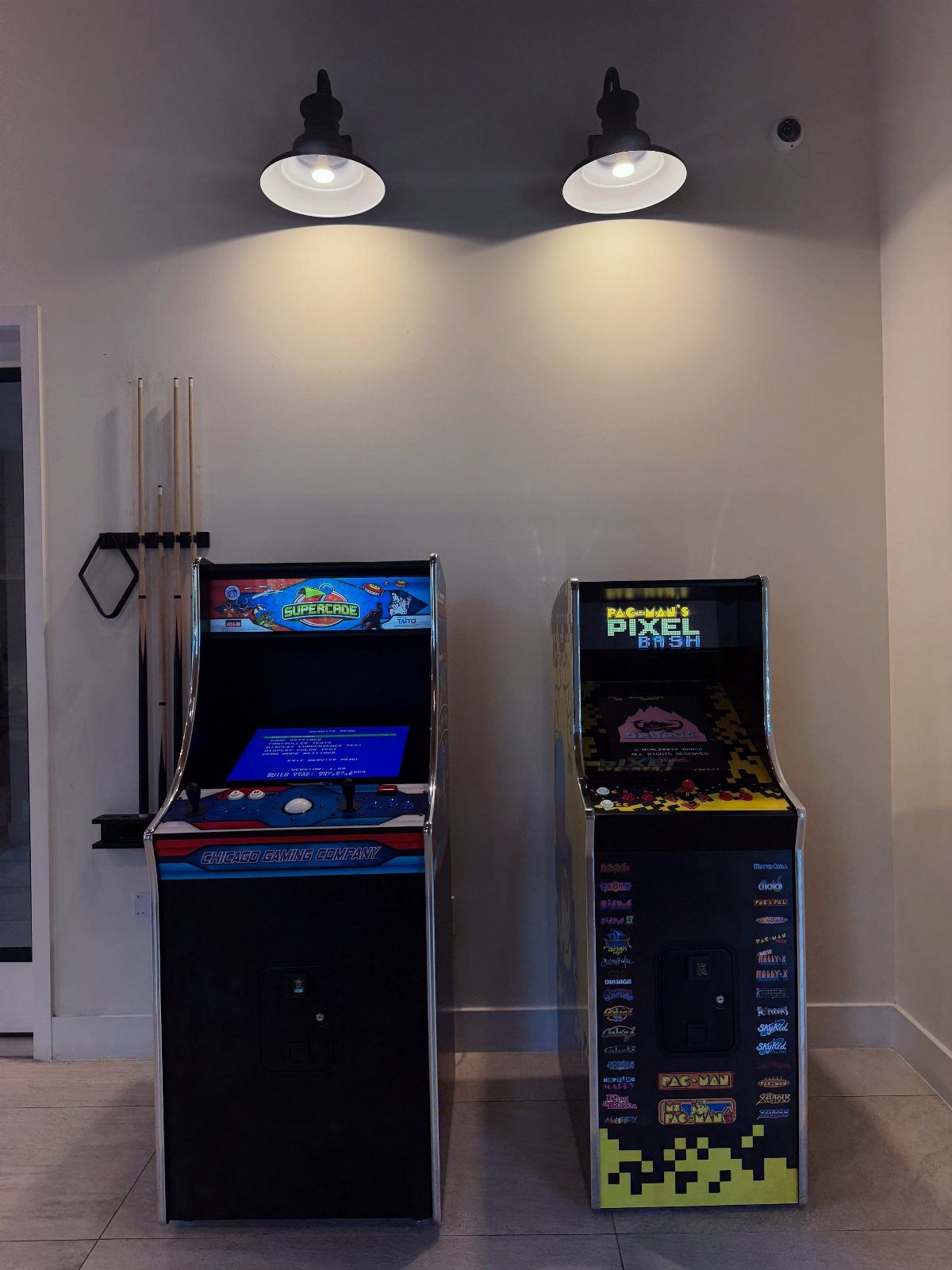
Two stand-up cabinets against one wall give a small room a real arcade corner without a dedicated game room. Cabinets are tall and narrow, so they eat wall length rather than floor depth.
Keep them side by side with a lamp between or beside them, so the screens don’t fight the room light.
Measure the wall before buying; 2 cabinets need more width than most people guess.
8. Neon and Monochrome Aesthetic
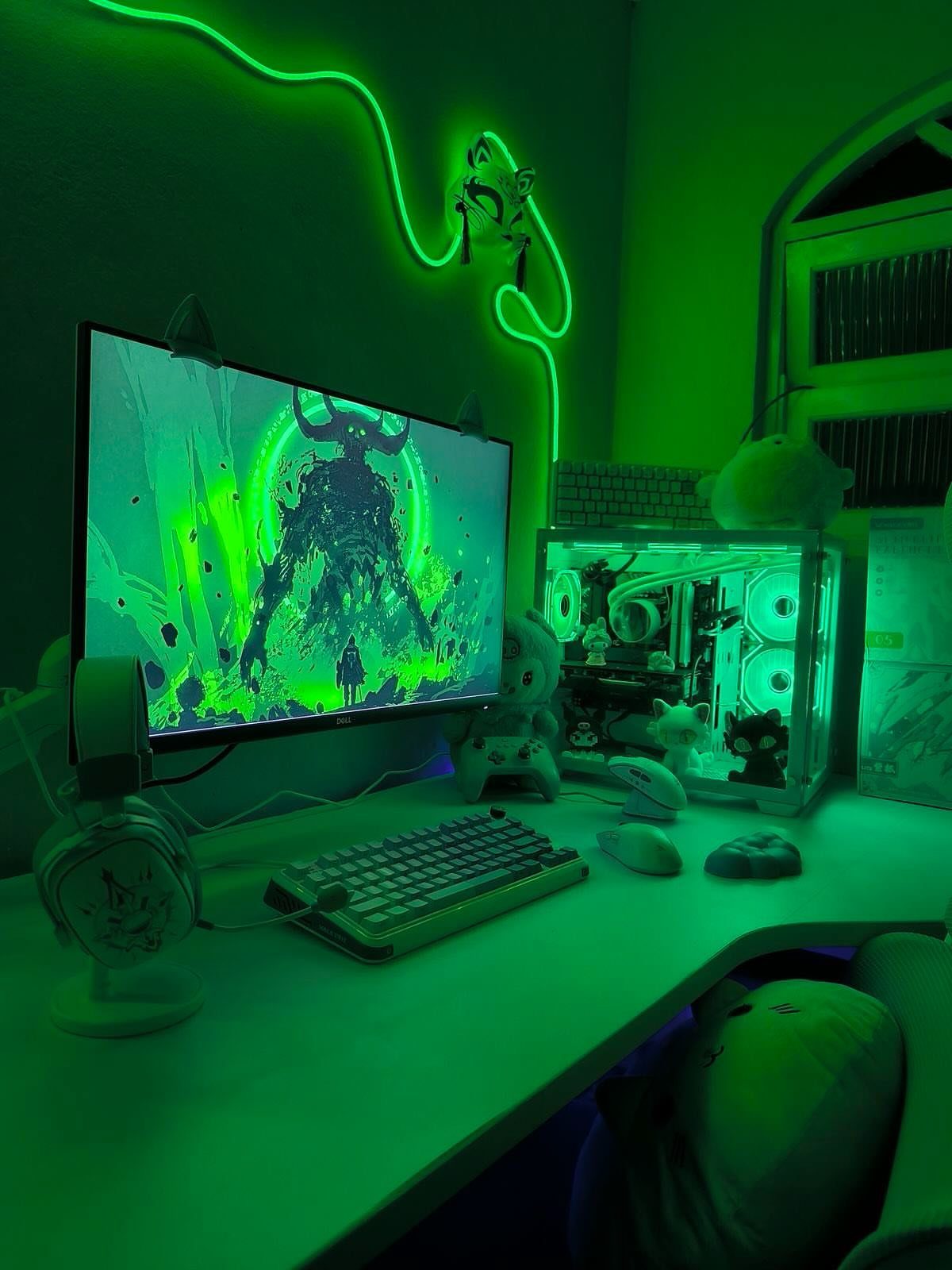
White gear under green neon is a tight, two-tone look: the neon does all the talking, so everything else can stay quiet. A white keyboard, mouse and PC case keep the desk clean and let one bright color stand out.
Stick to a single neon shade. Adding a second color is the quickest way to lose the minimal feel.
Plushies add softness to the desk, but I would cap them at a small handful so the monochrome still reads.
9. Racing Garage Theme
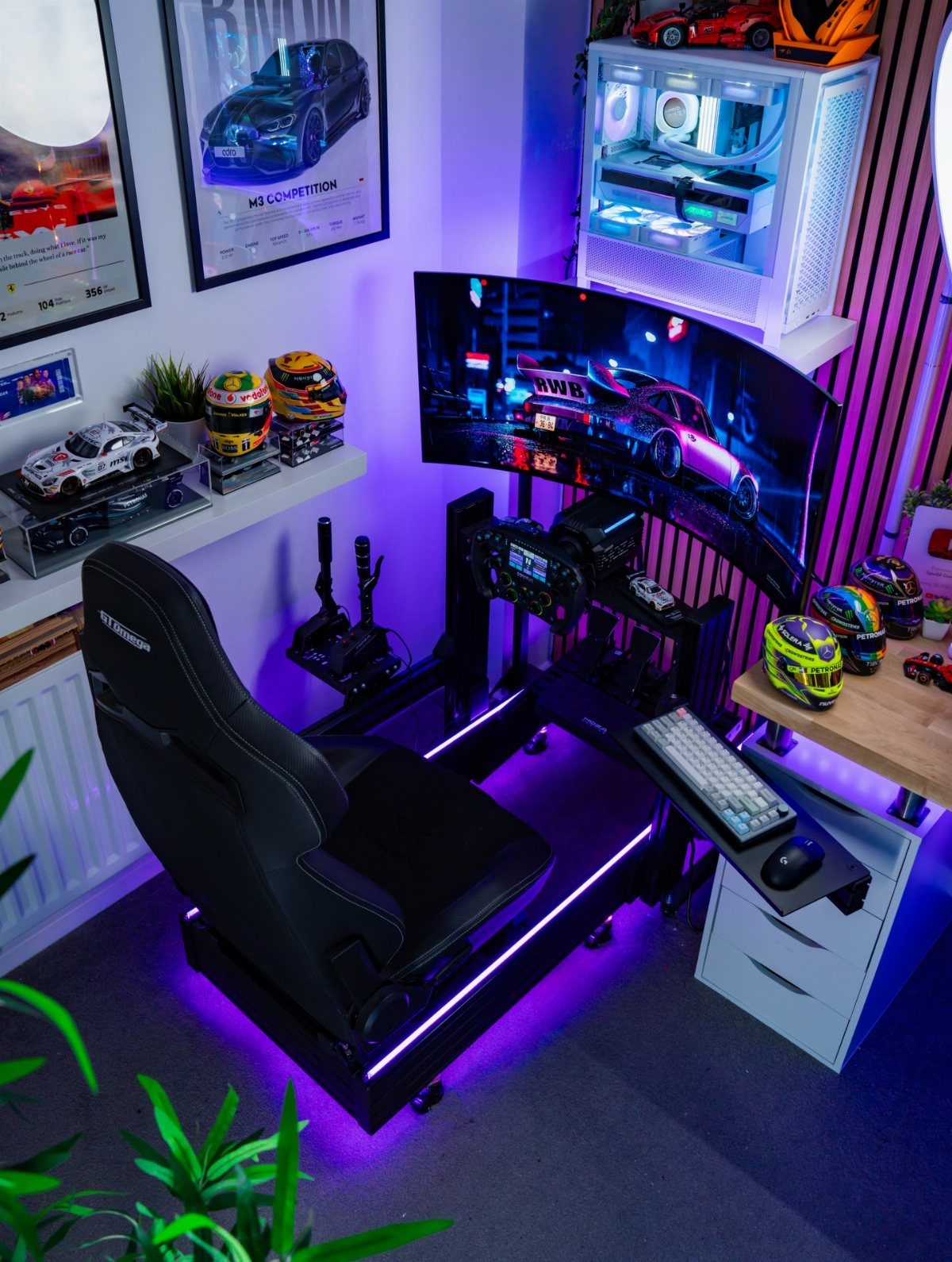
Racing sims reward a room where every item has a job: seat, wheel, curved monitor, and nothing extra.
A bucket seat and a curved screen fill your field of view, which makes a small room feel bigger once you sit down.
Posters and helmets on the walls give the garage feel without taking floor space. Purple light from the PC case echoes the glow in the room, so the tech looks planned.
The seat and wheel are the big spend, so buy those first and decorate later.
10. Wall-Mounted Dartboard Cabinet
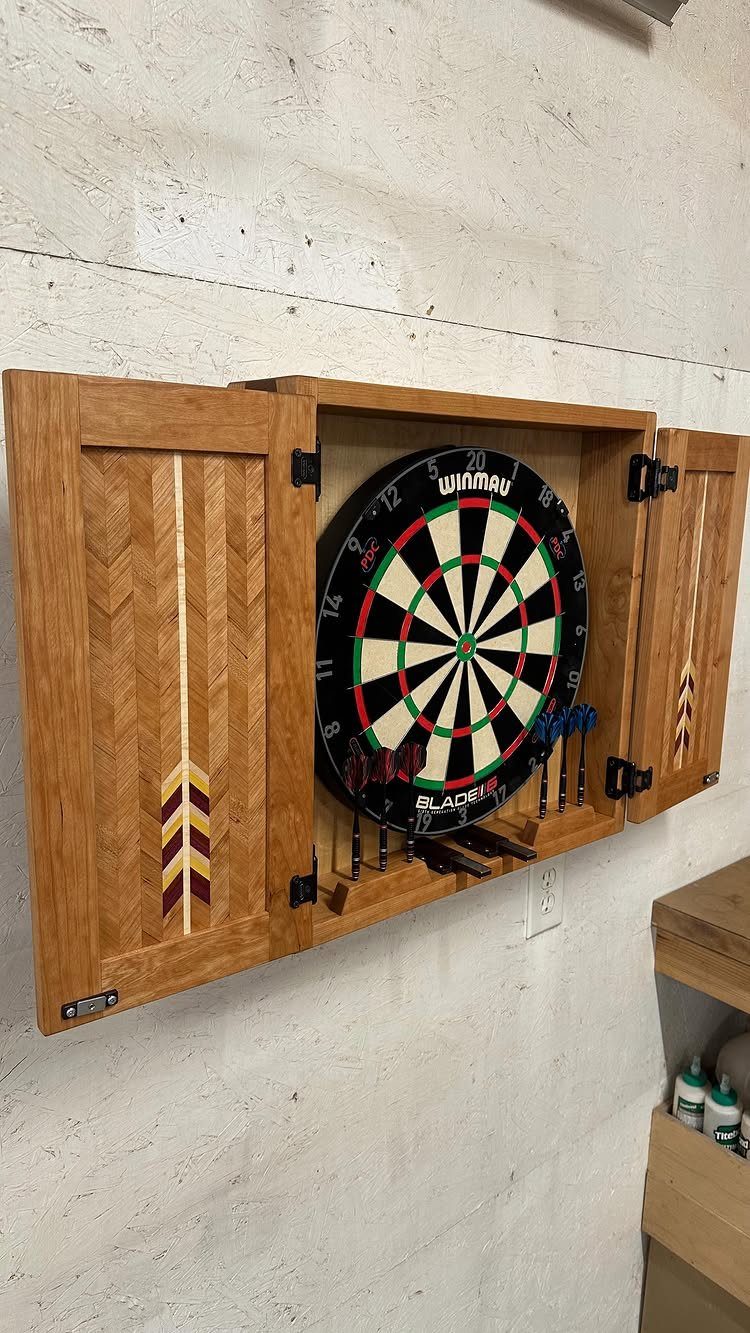
A dartboard inside a closing cabinet keeps the board off the floor plan and hides it when the game ends. Open the doors, throw, shut them, and the wall reads as furniture, not a pub corner.
Wood doors also protect the wall around the board from stray darts. Mount it on a solid wall, since darts need a firm backing.
I prefer a cabinet over a bare board for any shared room, because the closed doors tidy the whole look.
11. Compact Pool Table
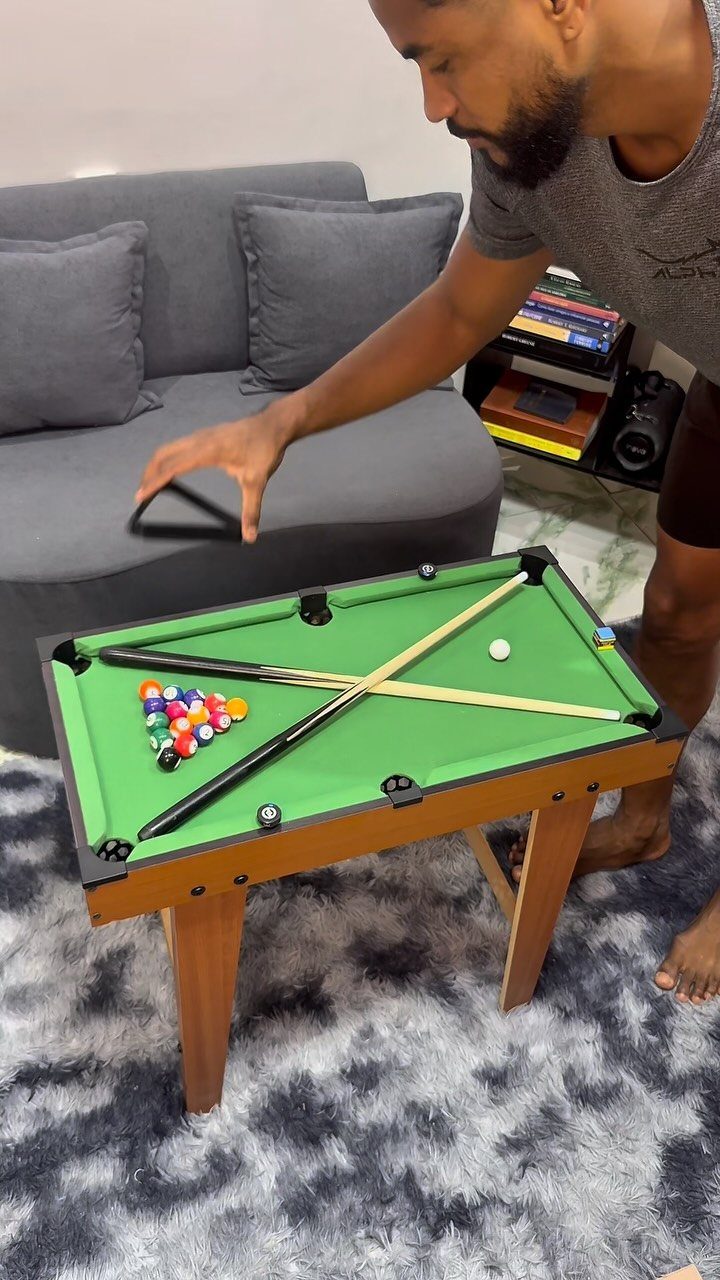
A compact pool table fits a living room where a full-size table never would.
Leave clearance around the whole table for your cue, which matters more than the table size. A shag rug under it, as here, softens the room, though a flat rug is easier for rolling balls and stands.
Measure the clear floor first, and check the cue length you’ll swing.
12. PlayStation Console TV Setup
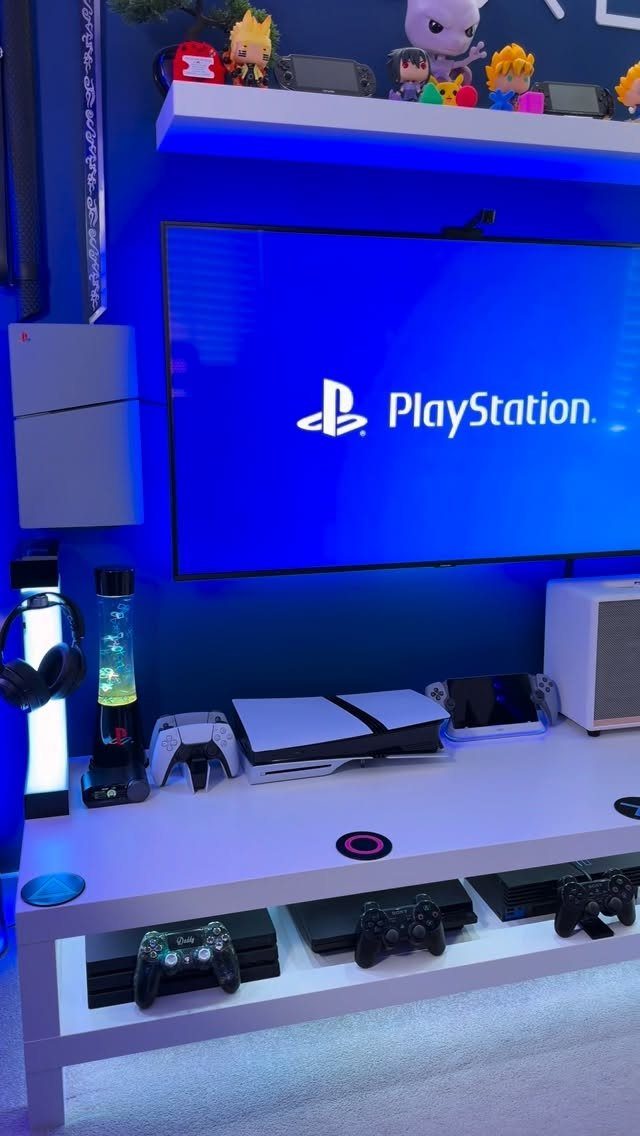
Mounting the TV on the wall and putting the PS5 on a slim console table below clears the floor and keeps cables in one zone. White furniture makes the setup look light in a small room.
Floating shelves beside the screen hold figurines and controllers, so the display doubles as storage. Blue accent lighting ties in with the PlayStation look.
Mount the TV at seated eye level, not high like a living room set, since you’ll be playing for hours.
13. Controller and Game Display Shelves
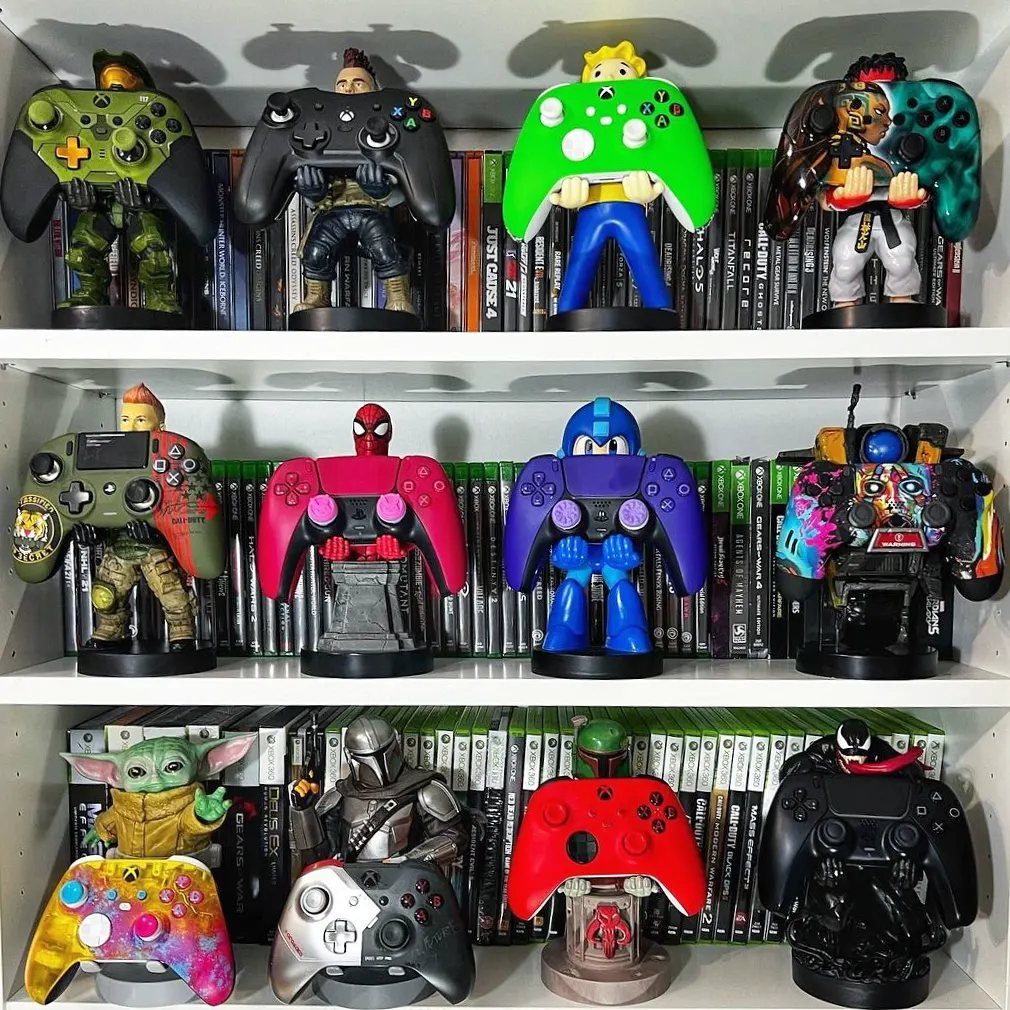
3 white shelves can hold a full collection of game cases and a row of painted character controllers, and the wall does the work instead of the floor.
Controllers shaped like Master Chief, Spider-Man and Grogu read as figures, so the shelf looks like a display, not storage.
Keep the shelves the same white as the wall so the colorful pieces carry the look. Put cases on the lower shelves and save eye level for the controllers.
A custom controller is a collectible, so I would display it rather than play it.
14. Wall-Mounted Pegboard Organizer
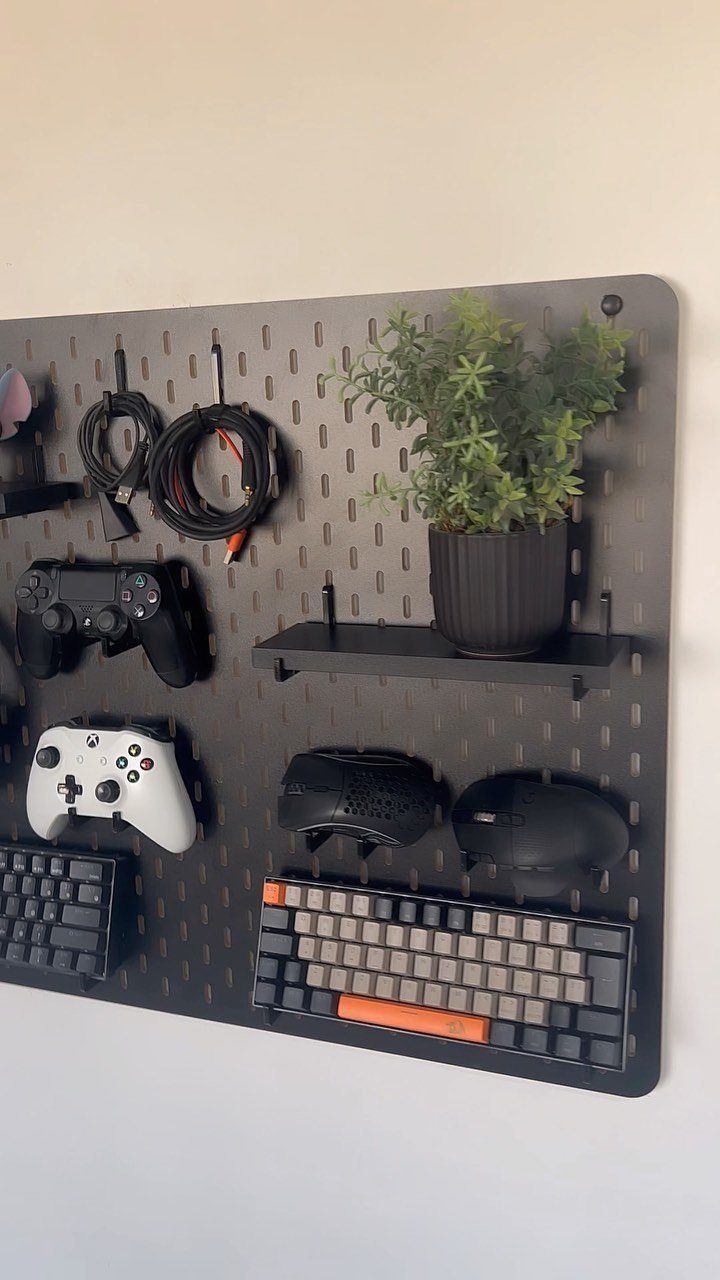
A black pegboard turns a blank stretch of wall into the place where keyboards, mice, controllers and cables live, which clears the desk surface in one move. In a small room that matters more than any single gadget.
Hang spare gear by type so you can grab it without digging: controllers together, mice together, cables on their own hooks. A small potted plant on a hook softens all that black.
Black hides the pegs and shadows, so the gear is what stands out. I would pick it over white for that reason alone.
15. Dual Monitor Corner Setup
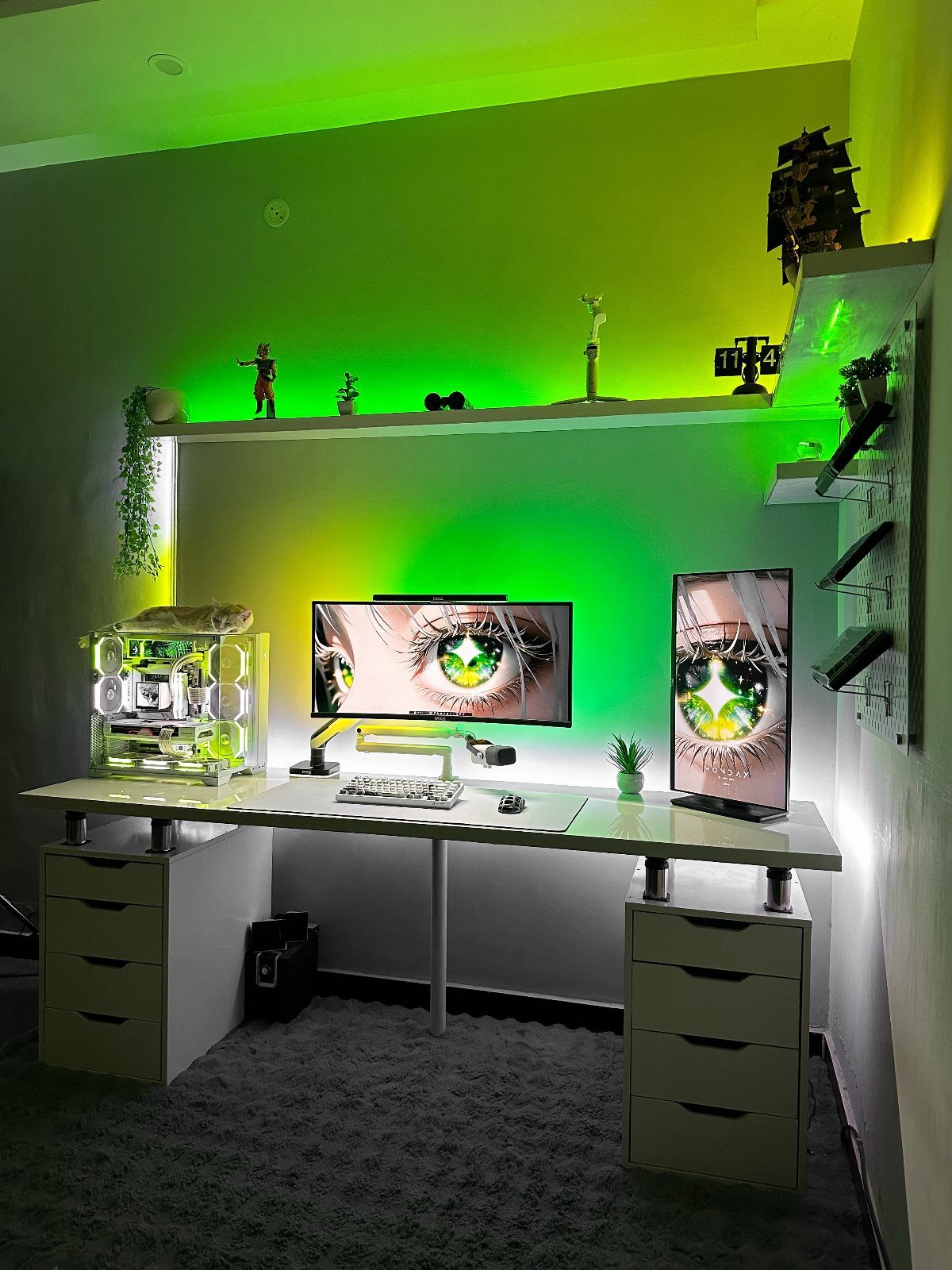
The shelves carry the decoration, so the desk stays clear for work.
Set both screens at the same height and angle so your eyes aren’t hunting. Put the PC case at the desk’s end to save surface.
Stick with one LED color, as green does here, and a grey rug will keep the floor calm instead of competing with the glow.
16. Mechanical Keyboard Wall Display
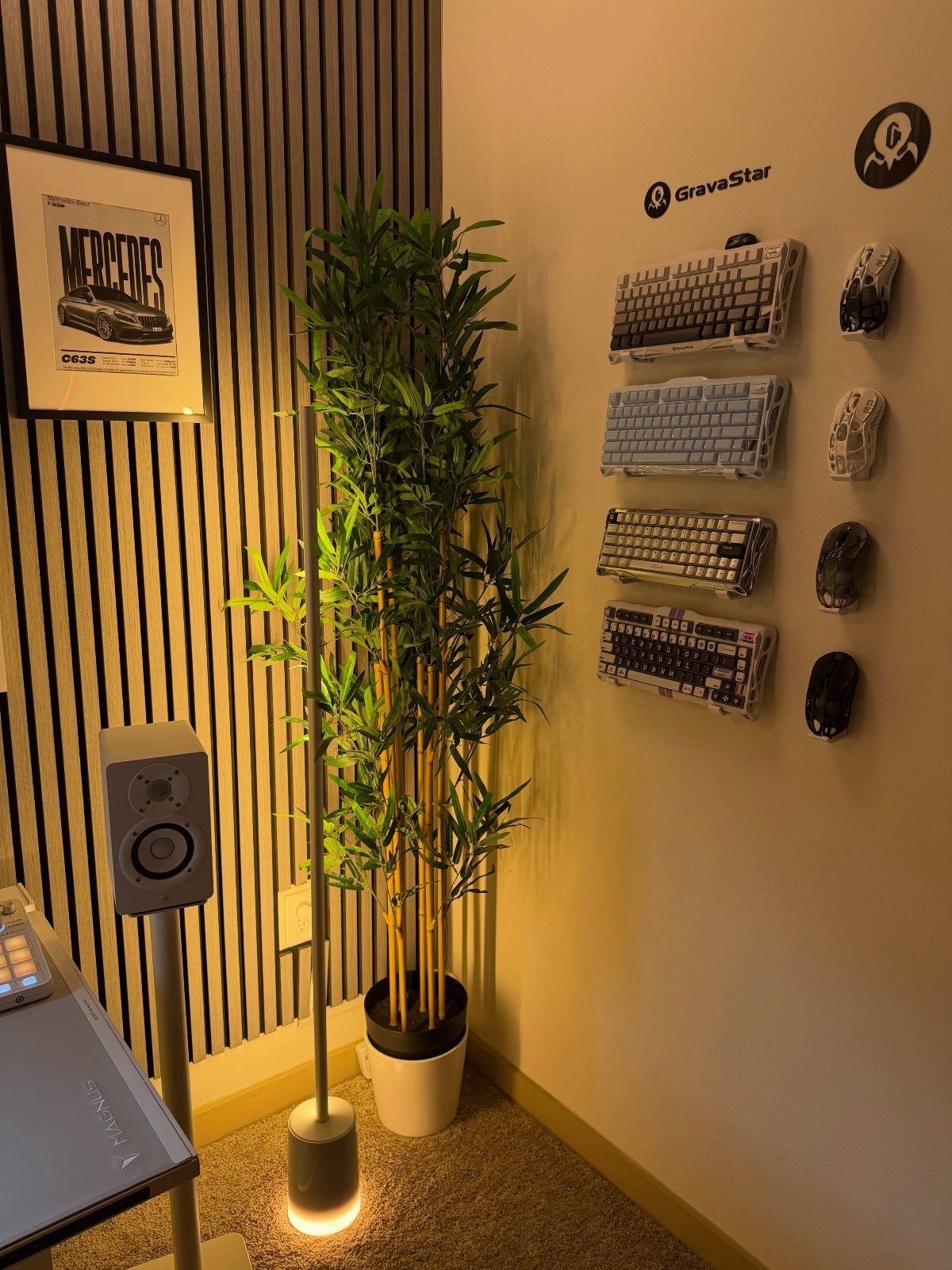
Mounting mechanical keyboards and mice on the wall treats them like art, and it frees a drawer full of spares. A slim floor lamp and a tall artificial plant beside the display fill the corner without eating floor space.
Group the keyboards in a neat row with the mice below, so the spacing looks planned. Anchor into studs or use proper wall anchors, since keyboards have real weight.
An artificial plant suits a corner where light is dim, and it never needs watering.
17. Nature-Inspired Green Gaming Nook
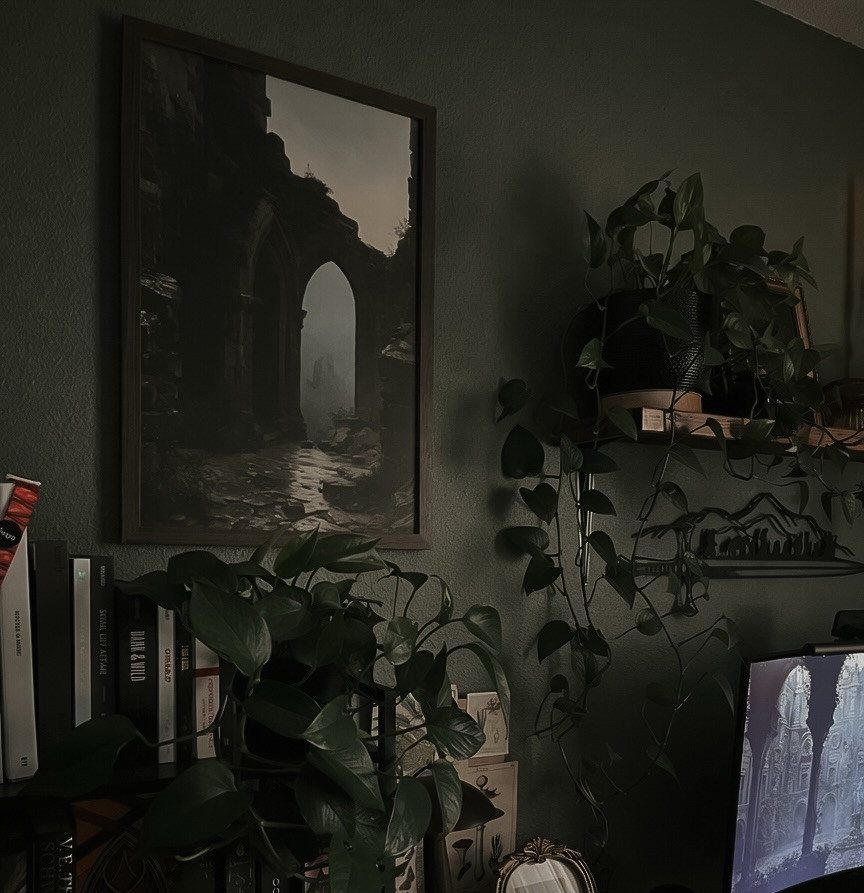
A dark green wall gives a gaming nook a calm, forest feel, and a monitor looks good against it. Trailing houseplants and a framed gothic arch painting add the rest, with a bookshelf close by for storage.
Paint only the nook wall, not the whole room, so a small space doesn’t close in. Let the plants spill from a shelf so they use height, not desk room.
I like green better than black for a small room, since it feels deep without feeling heavy.
18. Anime-Themed Gaming Desk Setup
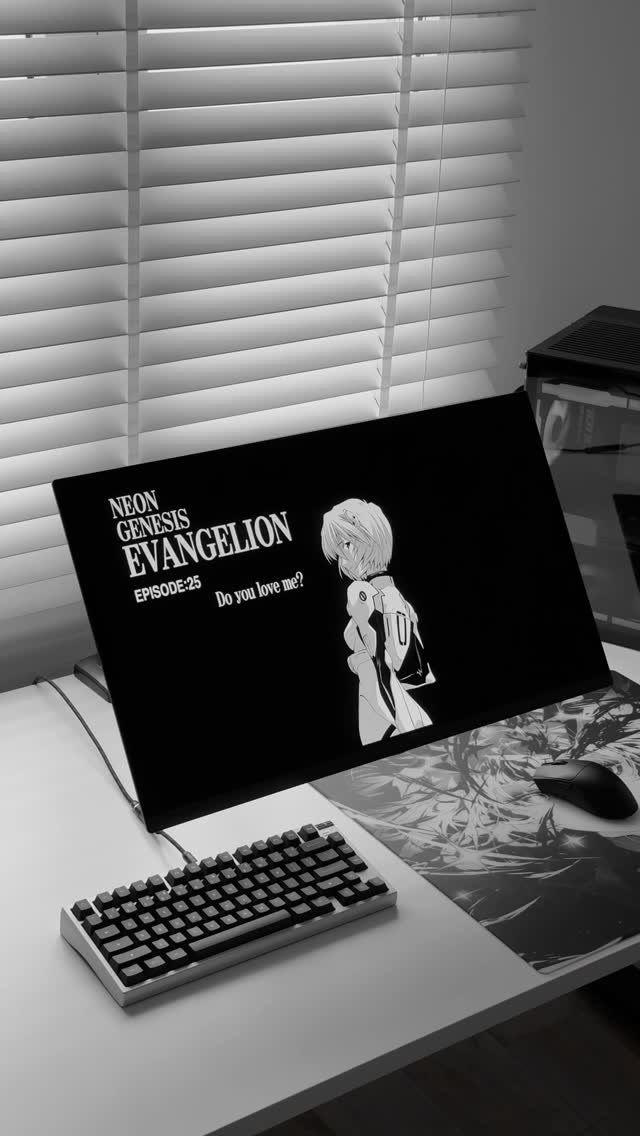
A white desk with a mechanical keyboard, a mouse and an Evangelion wallpaper on the monitor shows that an anime theme can live on the screen alone.
The desk stays minimal, and the fandom shows up in the one place you look all day.
Pick a wallpaper that suits the monitor’s shape, and swap it whenever you want, which costs nothing. White window blinds keep daylight soft on the screen.
I would start with the wallpaper before buying a single piece of merchandise.
19. Japanese Samurai Themed Setup
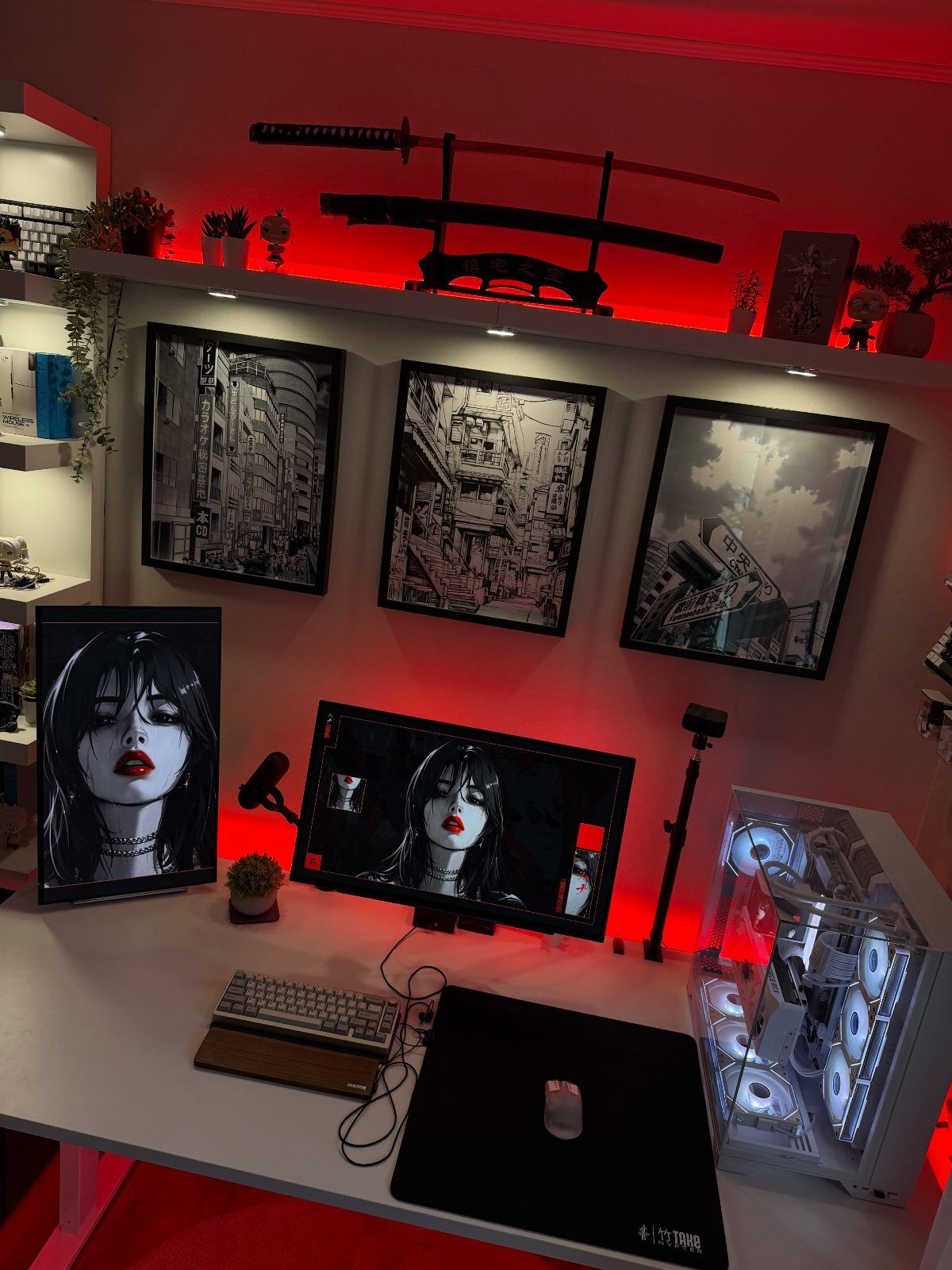
A katana on a wall shelf, framed monochrome art and red light give a white desk a samurai mood without a single piece of themed furniture.
Red against black, white and grey stays disciplined, so the room reads as a theme and not a costume.
Keep the art in one tone and the frames matching. Put the shelf above the monitors, where the blade sits out of reach of elbows and chairs.
Stay with one red and skip a second accent color. A display blade belongs on a firm mount, and I would anchor the shelf into a stud.
Choosing the Right Room
Pick the room before you pick any gear. Natural light, privacy and noise control decide whether a spot works for years or gets abandoned in a month.
Daylight is the one to watch. A window across from a screen means glare, so a room where the window sits beside the desk, or one you can cover with blackout curtains, gives you more control.
Noise cuts both ways. Gaming gets loud, and a spare room away from bedrooms or a shared wall keeps it from bothering anyone.
If a bedroom is your only choice, a door that closes and a rug on the floor help more than any gadget.
Privacy matters too. A corner with a door beats an open nook if you stream, talk on headsets, or just want to be left alone.
Creating a Multi-Functional Space
Settle what else the room has to handle, whether that’s guests, a desk, or laundry overflow, and only then start shopping for furniture.
List every activity you want: video games, board games, arcade games, even ping pong or foosball. Then estimate the floor space each one needs and give it its own zone.
Walk the room before you commit. A rough sketch on graph paper or in a free room planner app will show whether you can cross from one zone to the next without catching a hip on a chair.
If one desk has to serve both work and play, keep the work items in drawers or on a shelf you can close, so the setup resets in a minute.
Lighting and Atmosphere
Overhead lights are the first thing to fix. They are harsh and throw glare onto screens, so treat them as a backup and rely on softer sources for daily play.
Lamps and wall sconces do the heavy lifting. Add string lights or a neon sign if you want some personality; they cost little and plug in anywhere.
LED strips earn their spot tucked under shelves, taped along the back edge of the screen, or run around the top of the walls.
A kit with color changing controlled by a remote or phone app lets the room glow one way for game night with friends and another for a quiet evening solo.
Smart bulbs do the same job in lamps you already own, which suits renters who can’t stick anything to the walls.





