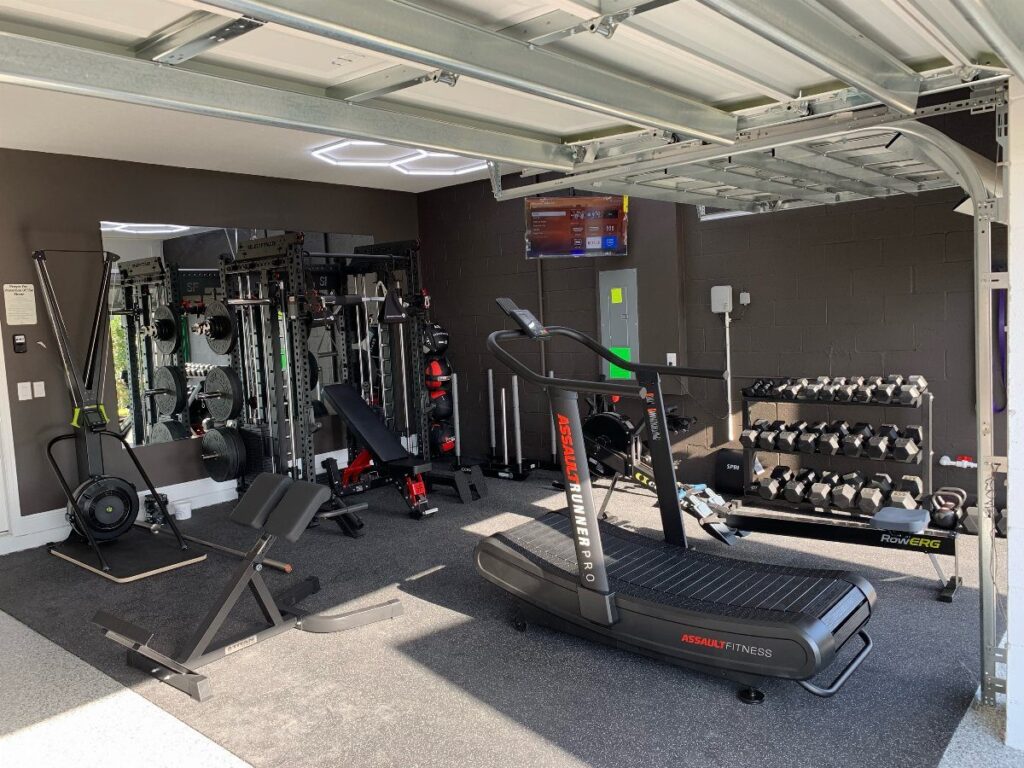
Half a garage gym runs from a simple rubber mat under a dumbbell rack to a full build with a power rack, a cable tower, or a Pilates reformer, so the deciding factor is how much floor and ceiling height your half actually has.
Measure the length, the width, and the clearance under the door track before picking a machine, because a tall cable column and a low track don’t always agree. Whatever you choose, rubber flooring goes down first.
1. Rubber Mats
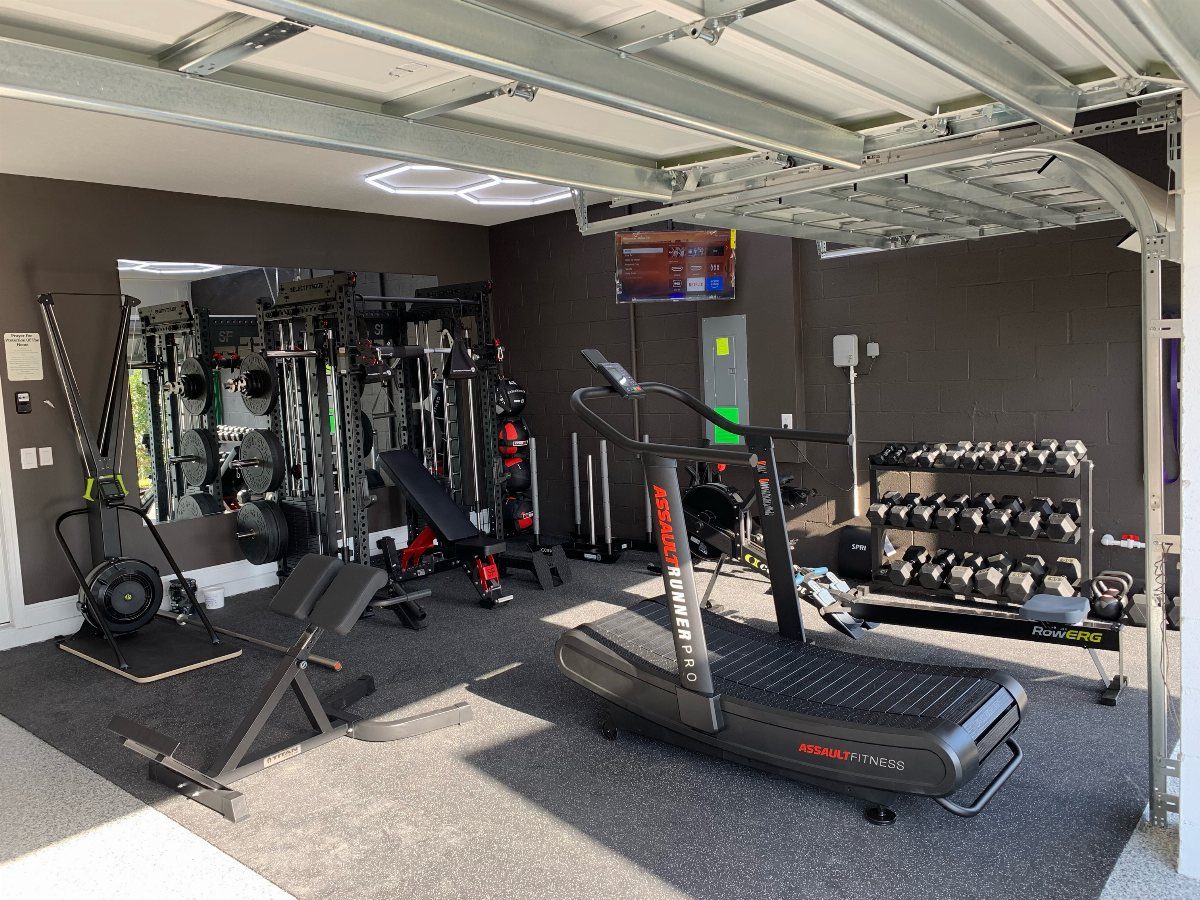
Bare concrete is the wrong floor for a rack and a treadmill, and rubber is the fix. A dropped dumbbell can crack a slab, and a rowing machine slides on it.
Buy rubber in interlocking tiles or a roll, and cover the whole lifting area rather than a patch under the bench.
Rolls cost less per square foot, but tiles are easier to lay alone in one weekend, and you can swap out a single damaged piece. Black hides garage grime better than any lighter shade.
2. LED Lights and Fans
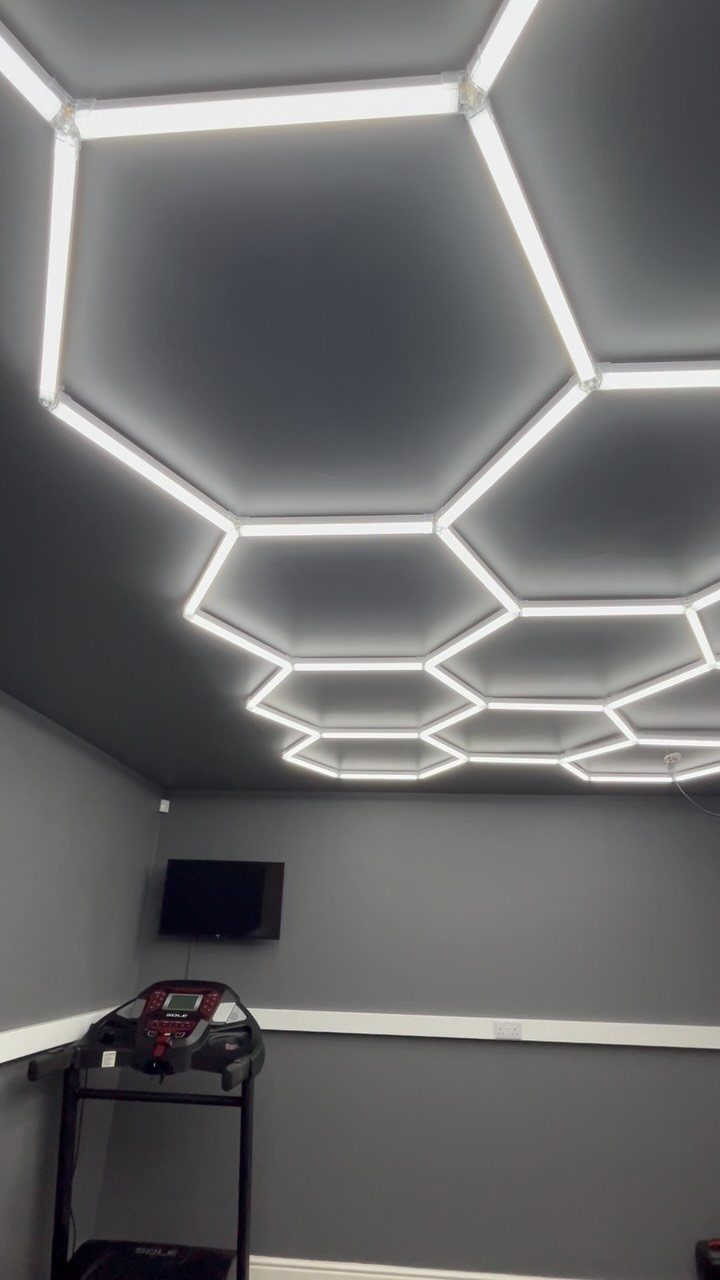
Garage lighting is usually one bare bulb, which turns a workout into something you’d rather skip. Flat LED panels like the hexagonal white ones on this grey ceiling spread light evenly, so no shadows fall across the bar path.
Mount them over the lifting area first, then add a fan for air; a garage gets stuffy fast with the door shut. Wall-mounted fans keep floor space free, and that matters in half a garage.
3. Adjustable Dumbbells
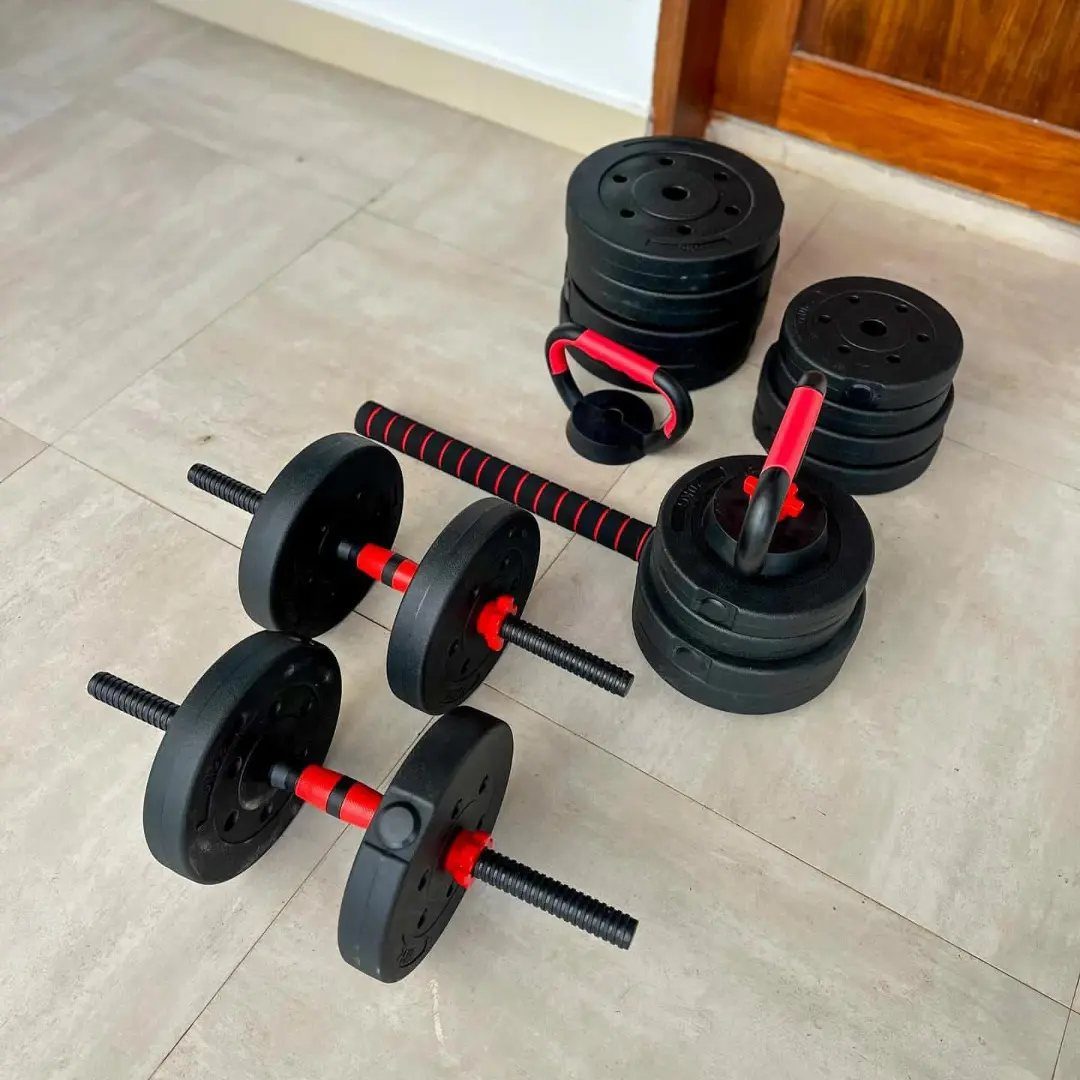
A single adjustable pair replaces a whole rack of fixed dumbbells, and in half a garage that rack is the first thing to go.
Dial or pin the weight up for presses and down for curls, and the floor stays clear.
I prefer sets that come with plates you can stack, because they store in a small footprint. Set them on a mat, not directly on tile, since the plates can chip a hard surface.
4. Mirrors for Form Check
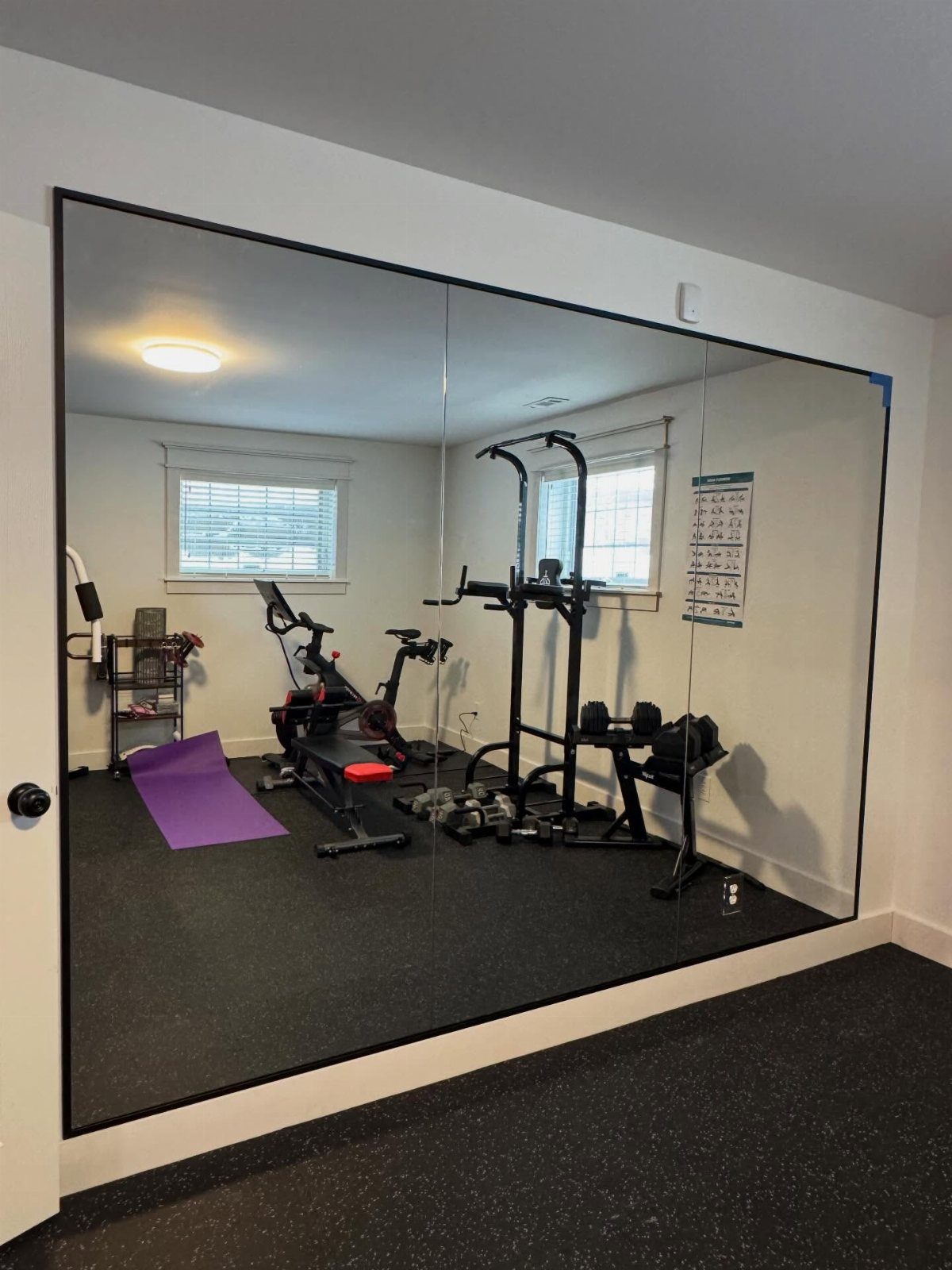
Form slips first on the lifts you can’t see yourself doing, and a wall of mirror fixes that cheaply.
Mirrors across the long wall also make a narrow half garage look wider, which helps the room feel less like a cell.
Mount them on the side wall, level with the bench and rack, so you can check your back angle and bar path in profile.
Use real gym or glass mirror panels fixed securely to the wall, and keep them clear of the swing zone of loose weights.
5. Use Vertical Space
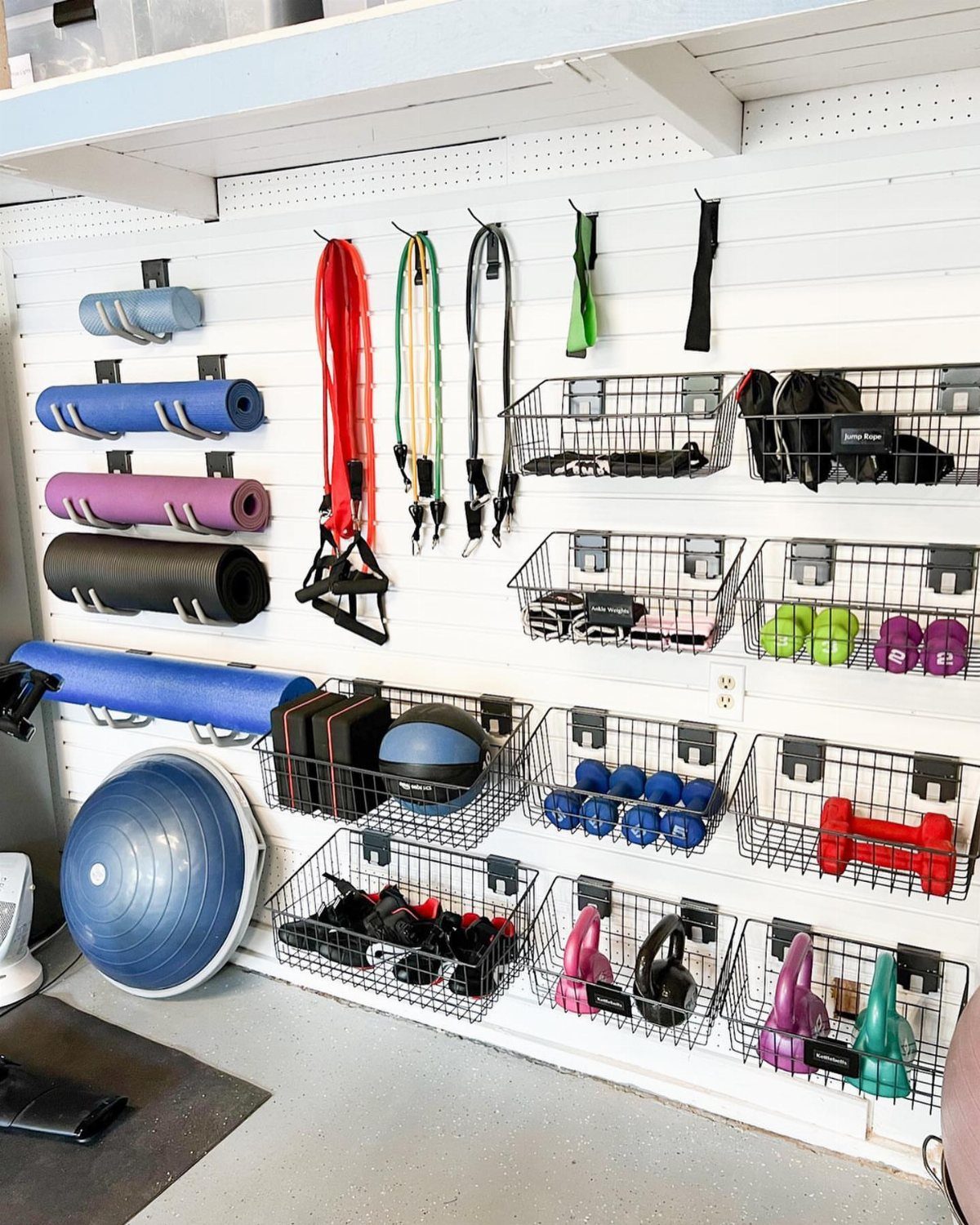
Slatwall turns an empty garage wall into storage for everything that would otherwise clutter the floor. Hooks hold bands and mats, wire baskets take small gear, and heavier pieces like kettlebells hang on strong hooks.
Put the items you grab every session at chest height and the rarely used ones up high.
Fasten the panels into studs, not just drywall, because a full wall of weights is heavy. White also reflects light and brightens a dim garage.
6. Compact Power Rack Setup
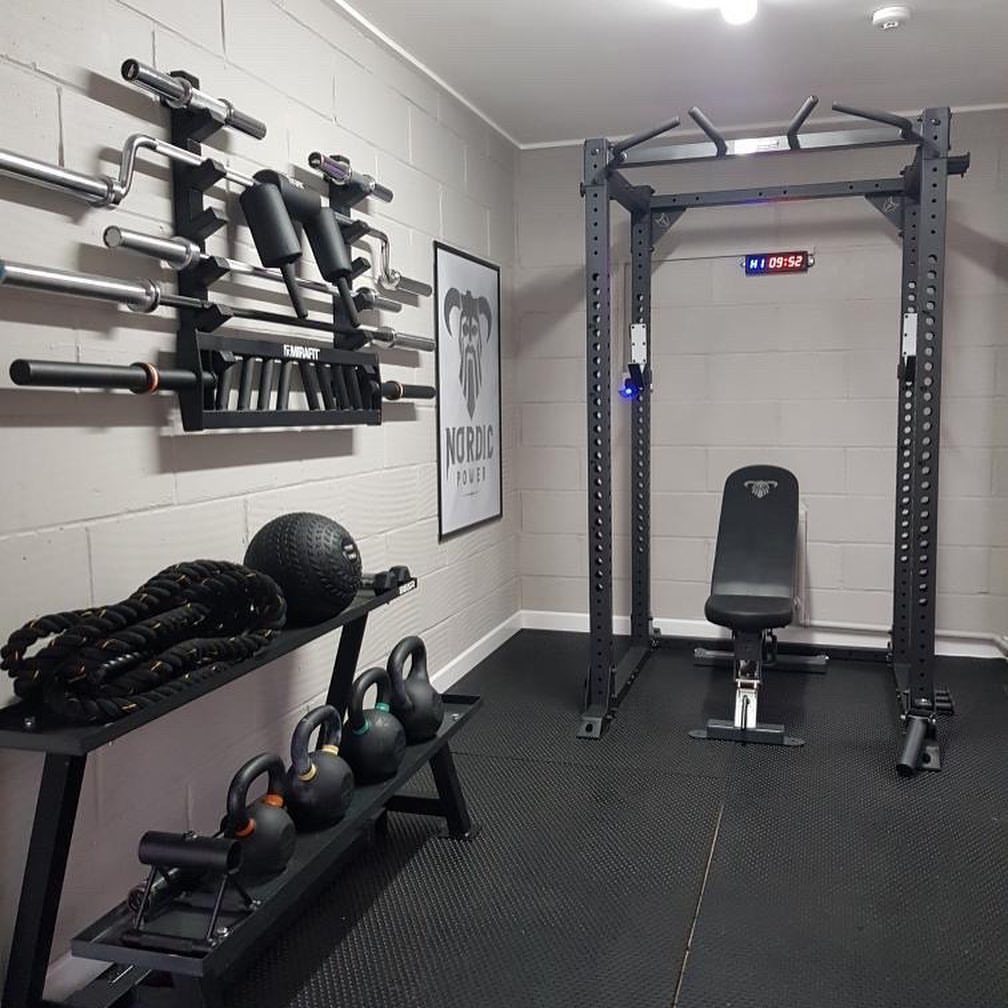
A power rack is the one piece worth building a half garage around: squats, presses and pull-ups all happen inside one frame. Pair it with a bench and a few kettlebells, and the corner covers a full week of training.
Store barbells on the wall, as in this room, so they stay off the floor and out of your way. Rubber flooring under the rack protects the slab, and I would pick that before buying extra plates.
7. Cable Machine Station
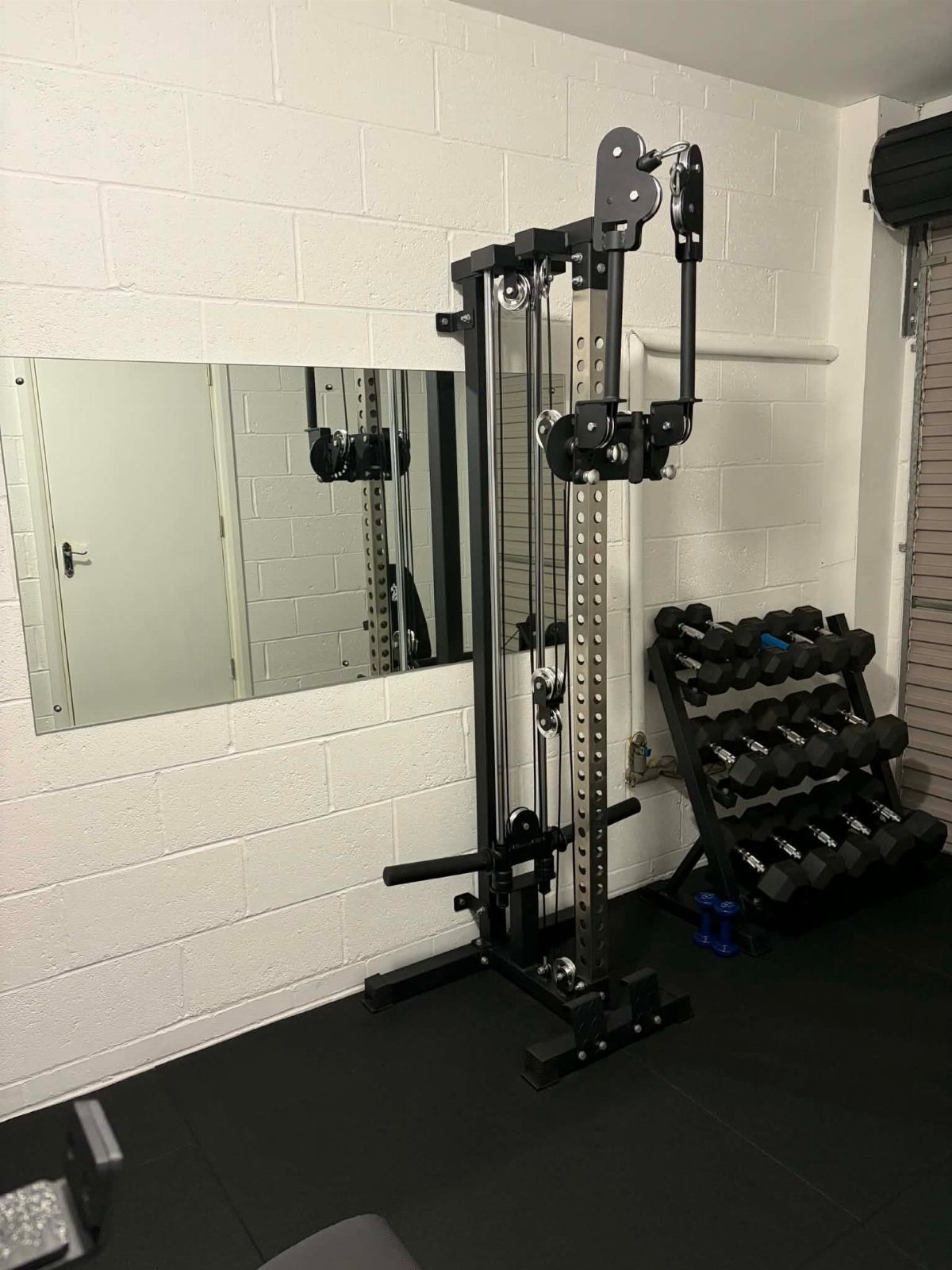
A cable station gives you rows, pulldowns, triceps pushdowns and face pulls from one tower, which a rack of free weights cannot do in the same footprint.
Paired with a dumbbell rack on the same wall, as here, it covers most of a week of training.
Mount the mirror beside the tower so you can watch your elbow path on each pull. Check the ceiling height before buying, since a tall column and a low garage door track do not always agree.
8. Pilates Reformer Setup
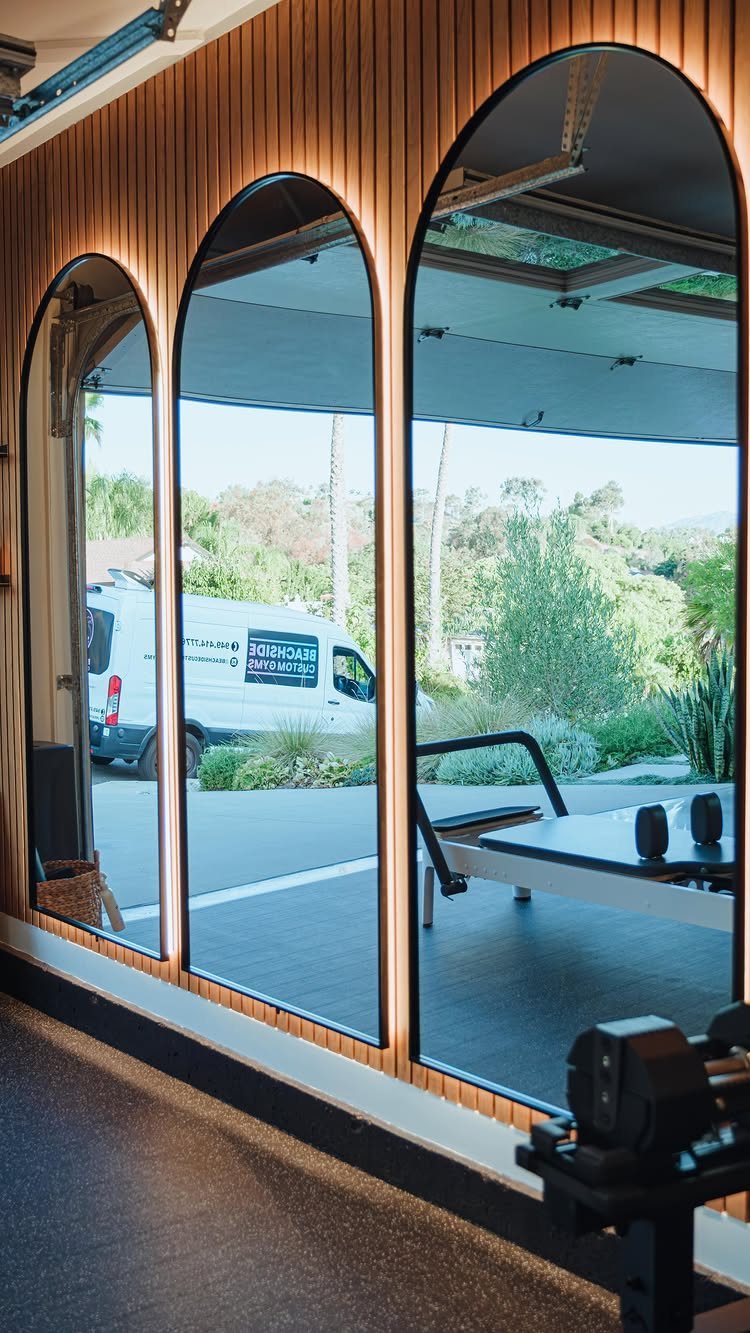
A reformer is a long, low machine, so a half garage handles it better than most strength gear. Slatted wood paneling and arched mirrors, as in this room, make the space read as a studio instead of a storage bay.
Leave clear floor at both ends for stepping on and off, and put the mirrors where you face them from the carriage. I would add a rubber mat beneath it first, since a garage slab is cold and hard.
9. Cardio and Dumbbell Corner
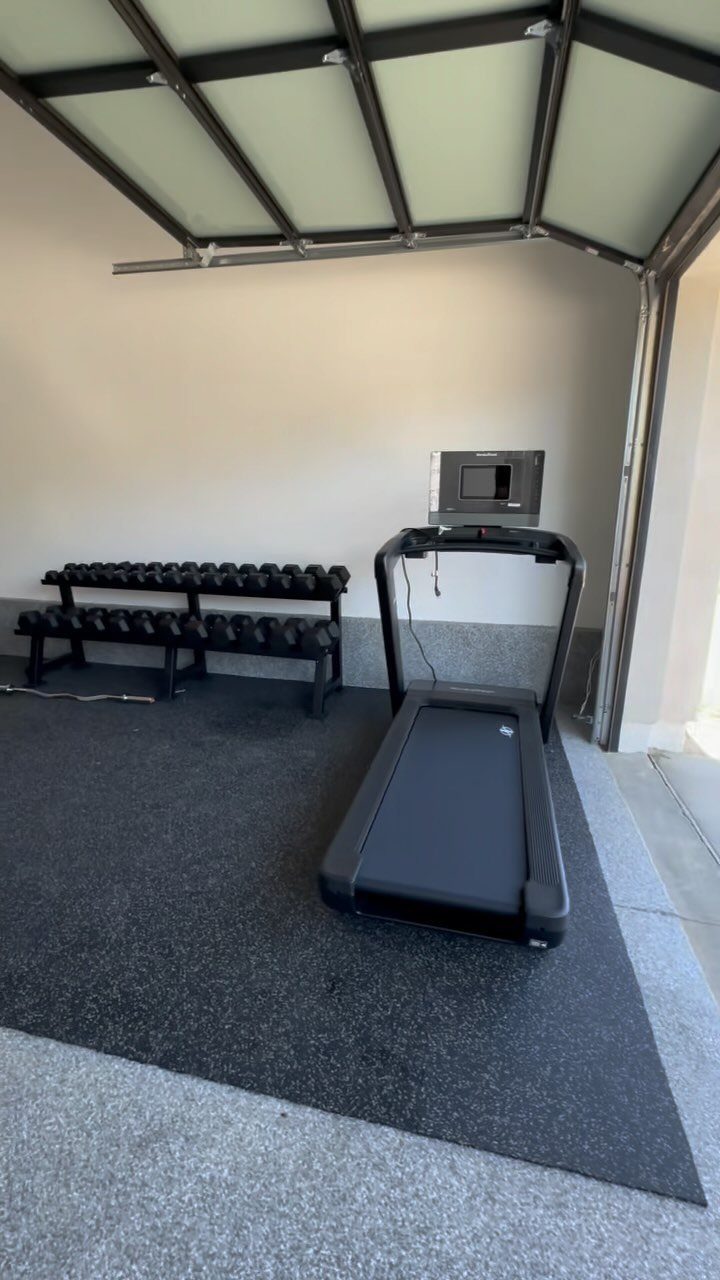
A treadmill and a two-tier dumbbell rack make a corner that handles both cardio and strength with almost no planning. Park them on one black rubber mat so the slab is protected and the machine does not creep.
Keep the dumbbell rack a few steps from the treadmill, not beside it, so you have clear room to step off and reach your weights.
I like this pairing for renters, because nothing is fixed to the walls and the whole corner can be moved out.
10. DIY Wooden Workout Rig
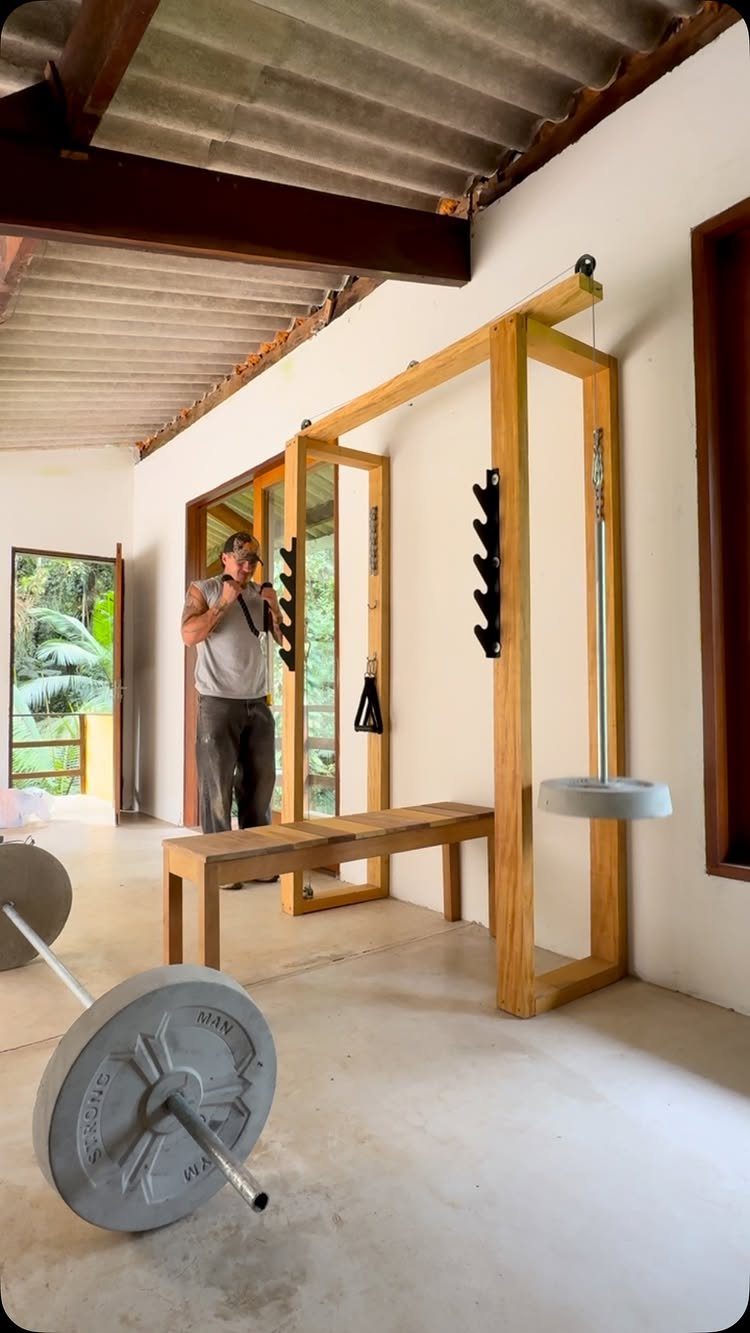
A wooden rig is the idea I would pick if you own a drill and have a weekend, because you size it to your exact half of the garage.
A pulley system and a bench built into the frame give you cable work and presses in one footprint.
Use solid lumber and bolt the uprights together rather than relying on screws alone. Test every joint with light weight before loading the bar.
11. All-in-One Multi-Gym Machine
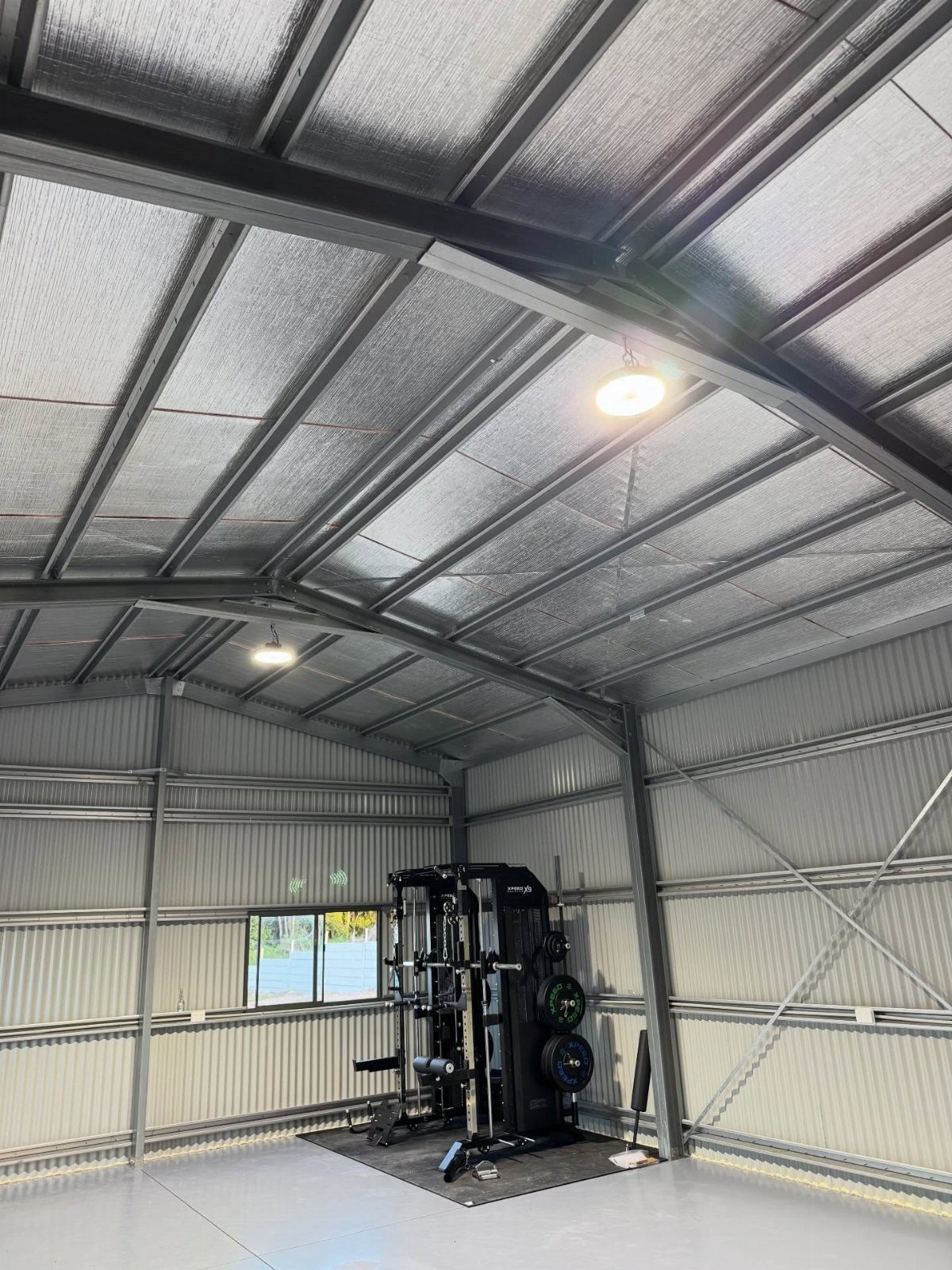
A multi-gym machine puts presses, pulldowns and rows on one frame, so a single station covers most of a full-body workout. Push it against a wall, as here, and the footprint stays small.
It suits anyone who wants to train alone without a spotter.
Fixed movement paths are the cost, and they feel less natural than free weights. Measure the machine’s full length with the bench extended before buying, and leave room to walk around it.
Benefits of a Half Garage Gym
Over a year or two, a half garage gym runs well under what a commercial membership costs, and there is no drive to talk yourself out of.
The weights sit a few steps from the kitchen door, so a short session fits before work or while dinner rests.
Flexibility is the other advantage. You set the layout, the music and the hours, and you can change the setup as your training changes.
The space also works as a motivator. Gear that sits out in plain view gets used more than gear boxed up in a closet, and a room built only for exercise makes starting easier.
Leaving the other half of the garage for the car or storage keeps the project small enough for a weekend and a modest budget.
Common Mistakes to Avoid
Overcrowding is the mistake I see most.
Leave room in the main workout area for your full stride and arm reach, so a lunge or a squat never ends against a wall. If a piece of gear forces you under that, it belongs somewhere else.
Ventilation gets skipped because it isn’t exciting. A garage turns hot and stuffy fast during a workout, so line up fans or an open window first, ahead of any other gear.
If you want real temperature control, a ducted heating and cooling unit or a mini-split will do it, though either one costs well beyond a weekend budget.
Poor lighting is the third trap. You need clear visibility across the whole workout area, and a dim corner is where a missed step turns into an injury.
Maintenance Tips
Clutter is a safety problem as well as a looks problem. Keep walkways clear, and give every item a home so putting it away takes seconds after each session.
Check your equipment on a regular schedule. Look over bolts, cables, straps and bench pads for loosening, fraying or cracks, and tighten or replace anything that shows wear before the next workout.
Wipe down surfaces and sweep the floor often, since garage dust and grit settle fast.
Keep an eye on the flooring too: rubber or foam that has cracked or shifted should be fixed or replaced, because it protects both you and the slab.
Frequently Asked Questions
What are some good ideas for a home gym?
Rubber flooring and a power rack cover the movements that matter: you can squat, press, and do pull-ups without leaving a four-foot square.
A cable tower, a treadmill with a two-tier dumbbell rack, or a wooden rig you build yourself also work well. Slatwall on the long wall keeps gear off the floor, and mirrors let you check your form.
How much would it cost to build a gym in my garage?
The sources I draw on give no single price, because the total depends on the gear you pick.
A half garage gym can stay at a modest, weekend-sized budget if you start with flooring, lighting and a fan, then add equipment over time.
Spread across 2 years, the total is less than most gym memberships in mid-size cities. Climate control pushes the bill higher fast, especially if you add a ducted system or mini-split.
What equipment do I need for a garage gym?
Start with a barbell setup and one cardio option, like a rower or bike, then add kettlebells or dumbbells as the budget opens up.
Adjustable dumbbells replace an entire rack and free up several feet of wall space. Rubber flooring is the first purchase, ahead of extra plates, because it protects the slab and keeps machines from sliding.





