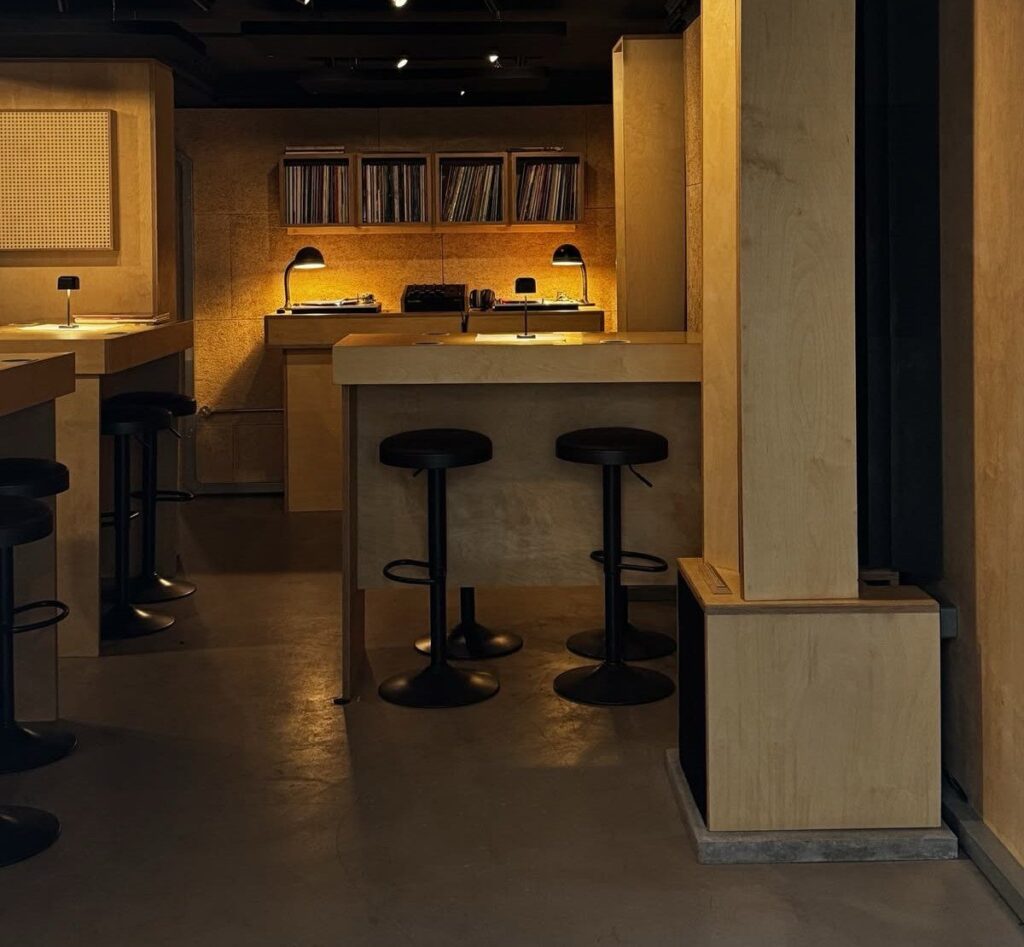
Which of these small basement bars suits you depends on whether you’re after a bar cart you can roll around, a wall-mounted setup, or something built into a corner or under the stairs.
A rental rules out anything fixed, and a bar cart that needs no tools is where I would start.
If you own the place, the range runs from floating shelves and a mirror-backed shelf bar up to an under-stairs nook with a sink or a proper wine cellar setup.
Square footage matters less than layout, since an L-shaped bar or a corner setup can fit more function into tight spaces than a straight run that eats up a full wall.
1. Floating Shelf Bar System
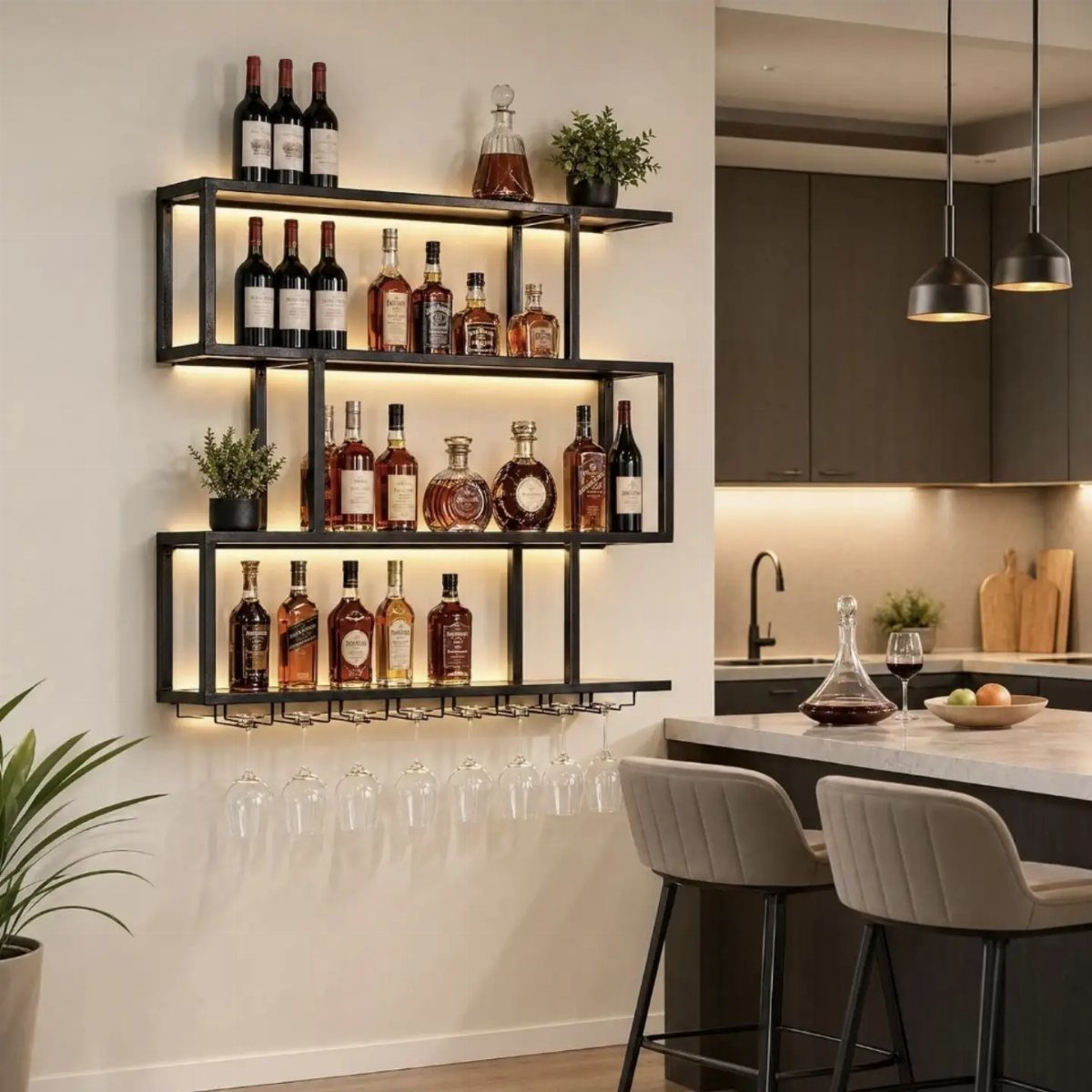
Floating shelves keep the floor and the wall behind the bar visible, which is why a basement bar built this way feels lighter than a cabinet run of the same width.
Black metal reads crisp against a pale wall, and the built-in LED strip does the work of a back-bar light without a single extra lamp.
I would stack bottles on the lower shelf and hang stemware from the upper one so the eye travels up. Mount into studs, since a full row of bottles gets heavy fast.
2. L-Shaped Compact Bar
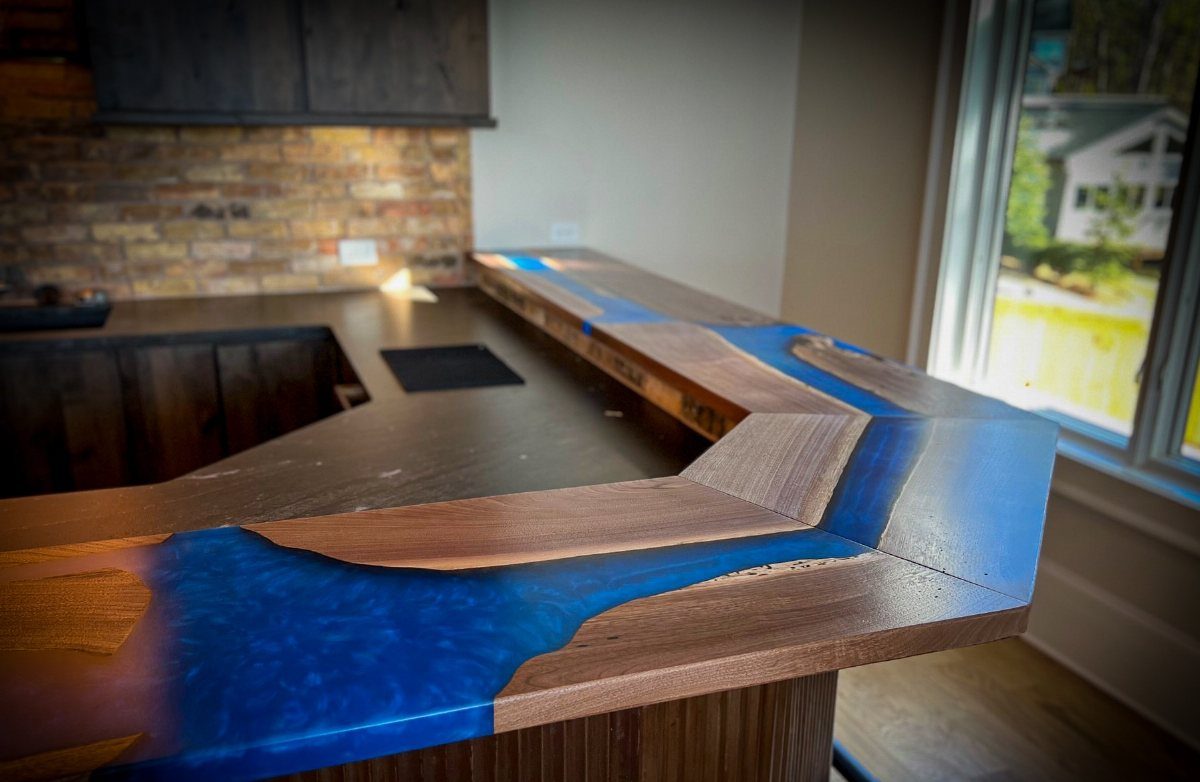
An L-shaped counter gives a small basement two working sides: one to mix on, one to seat guests, all in a footprint that tucks against a wall.
Keep the short leg of the L pointed into the room so it acts as a natural divider. A pour like this is a bigger project than a weekend of shelving, so I would price the resin before committing.
3. Mini Bar with Kitchen Cabinets
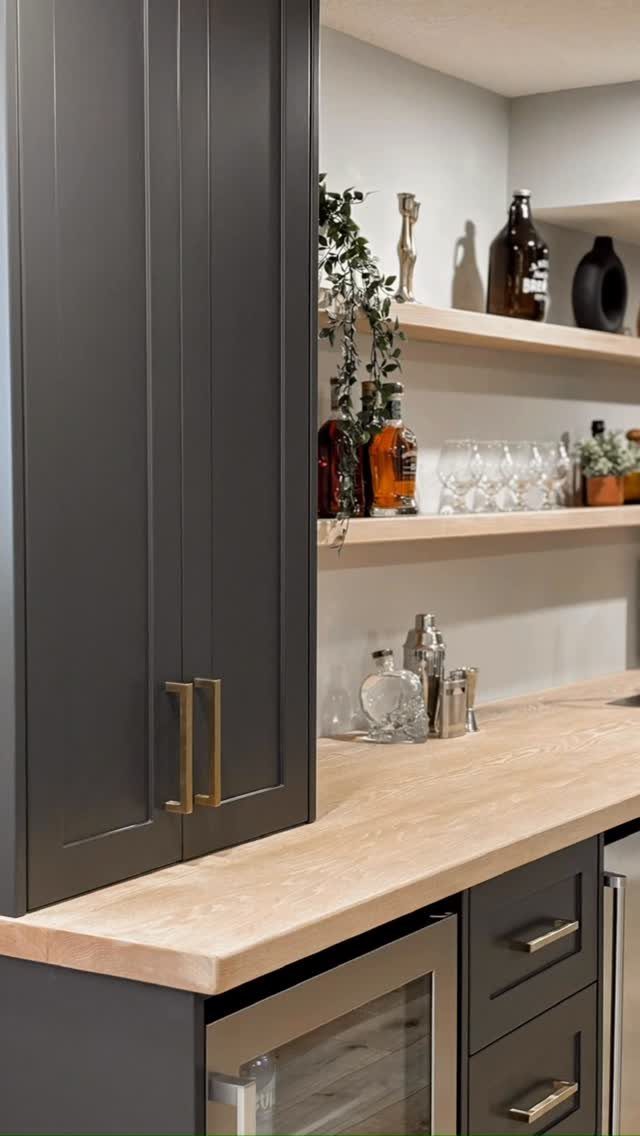
Stock kitchen cabinets are the cheapest route to a bar that looks built in.
A small beverage cooler slots under the counter where a dishwasher would go. I like leaving the upper shelves open rather than adding wall cabinets; it keeps a low basement ceiling from feeling crowded.
4. Compact Corner Bar
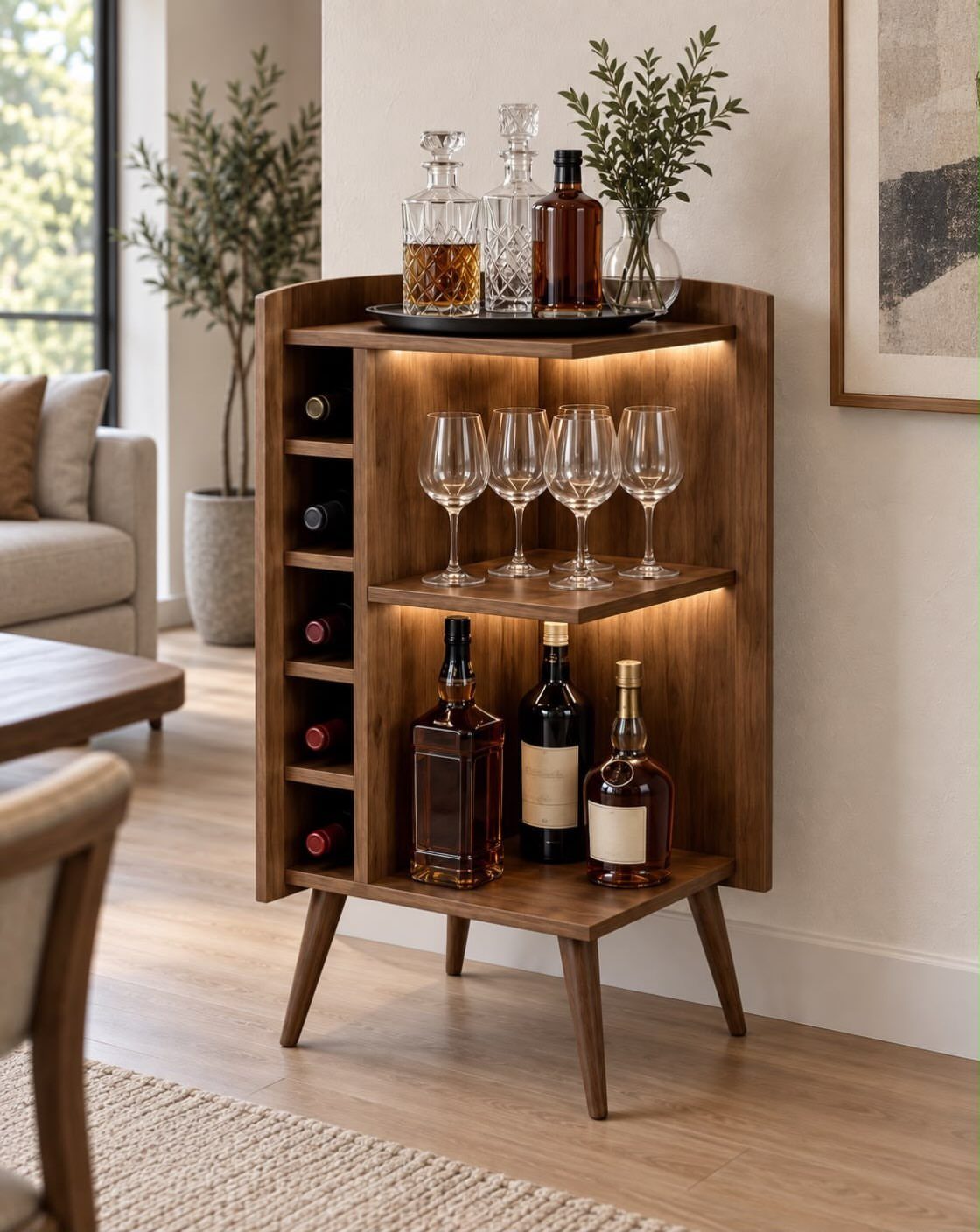
A corner is the most wasted spot in most basements, and a wooden corner cabinet puts it to work.
Wine racks, a bottle shelf and a glass rack share one tall unit, so nothing takes up floor space in the middle of the room.
The integrated lighting is worth choosing. A basement corner gets little daylight, and a lit cabinet doubles as a lamp.
Next to a sofa, it makes the seating area feel finished.
5. Wine Cellar Nook
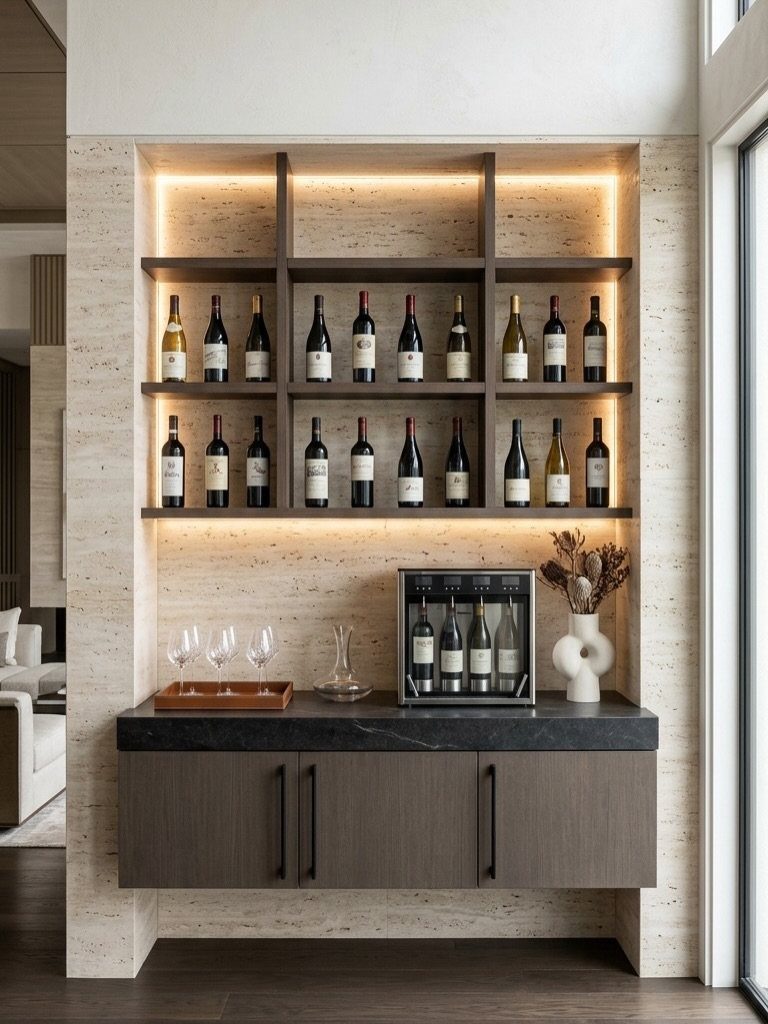
A wine nook works best when it is a single wall: dark wood shelves above, a black countertop at pouring height, cabinets below for what you would rather not display.
Setting a small wine cooler into the lower run means bottles you plan to open soon are already chilled.
I would pick this over a freestanding rack because it looks planned, and it holds both bottles and the glasses to go with them.
6. Glass Wall Cellar
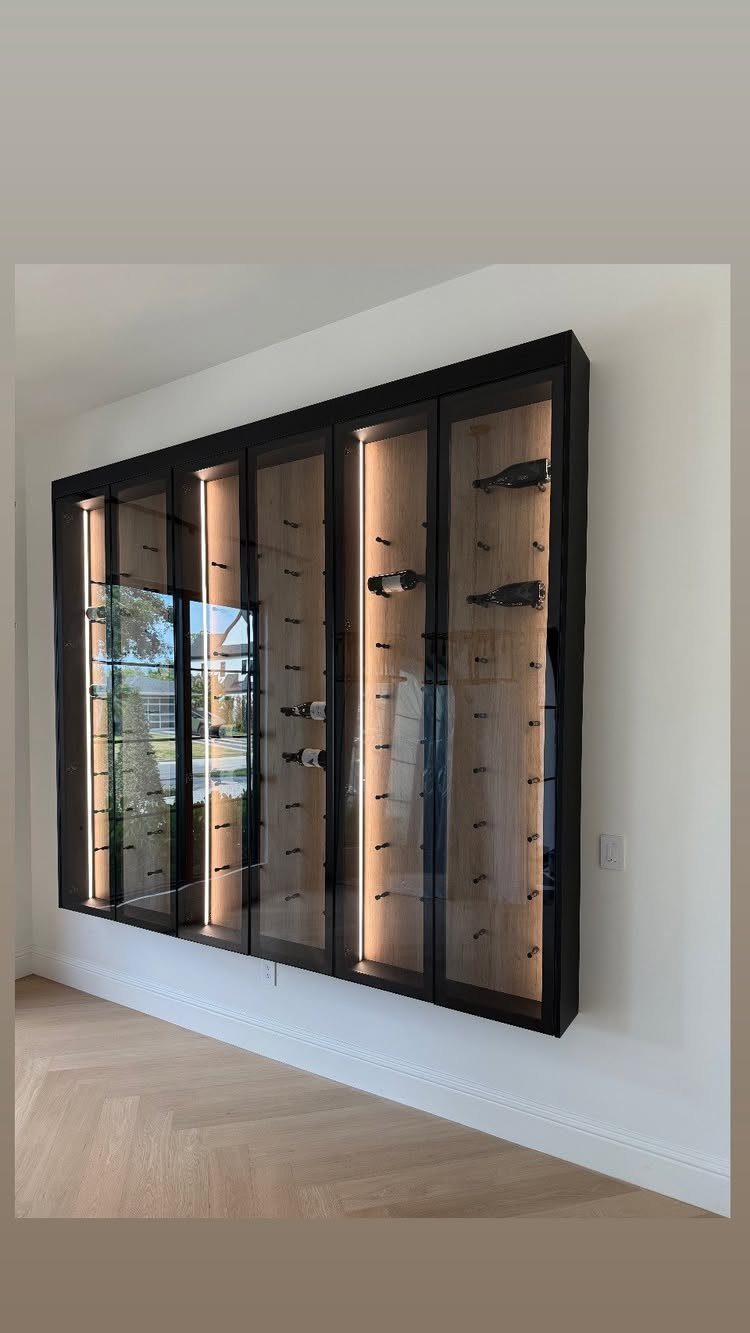
Behind a black-framed glass front, ordinary wine bottles become decor.
Mounted on the wall with wooden racks and warm interior lighting, this cellar sits above the floor rather than eating into it, which suits a basement with little room to spare.
The black frame gives a sharp outline against a white wall. Pick warm light over cool; it flatters the glass and the wood.
This is the version I would choose if you want the wine seen, not just stored.
7. Vertical Wine Storage
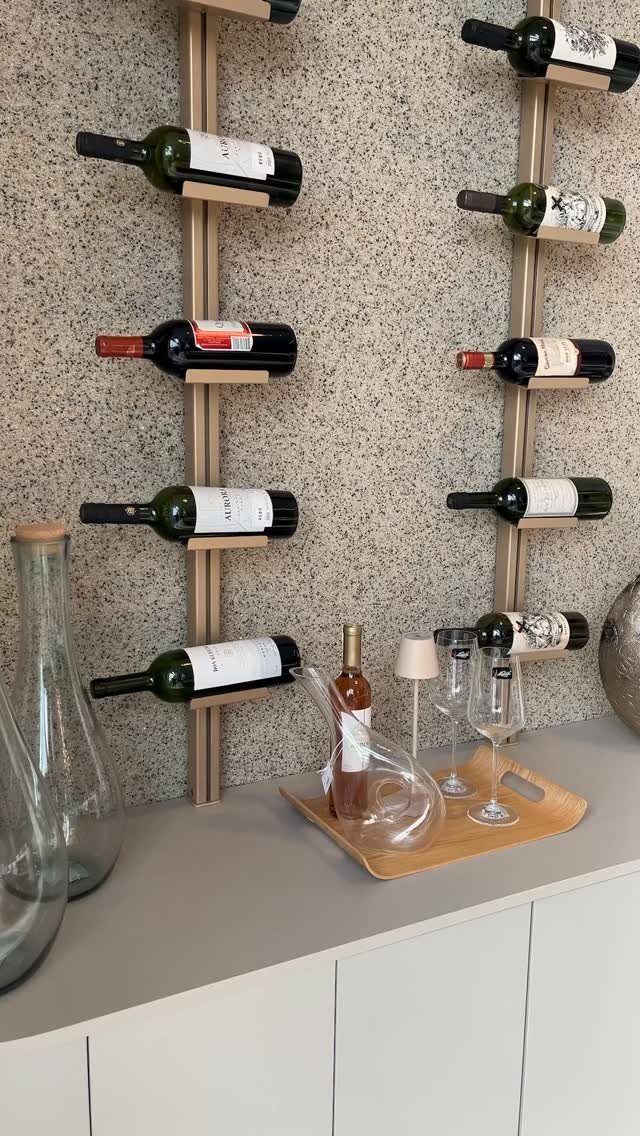
Two narrow wooden racks on the wall hold bottles at an angle, and the floor stays clear. In a small basement bar that is the point: wine storage that takes up wall depth only, not square footage.
Placing them directly above the counter keeps a bottle within reach of the glasses and decanter.
I would keep it to 2 racks. More starts to crowd a speckled wall that already has plenty of texture.
8. Under-Stairs Bar Nook
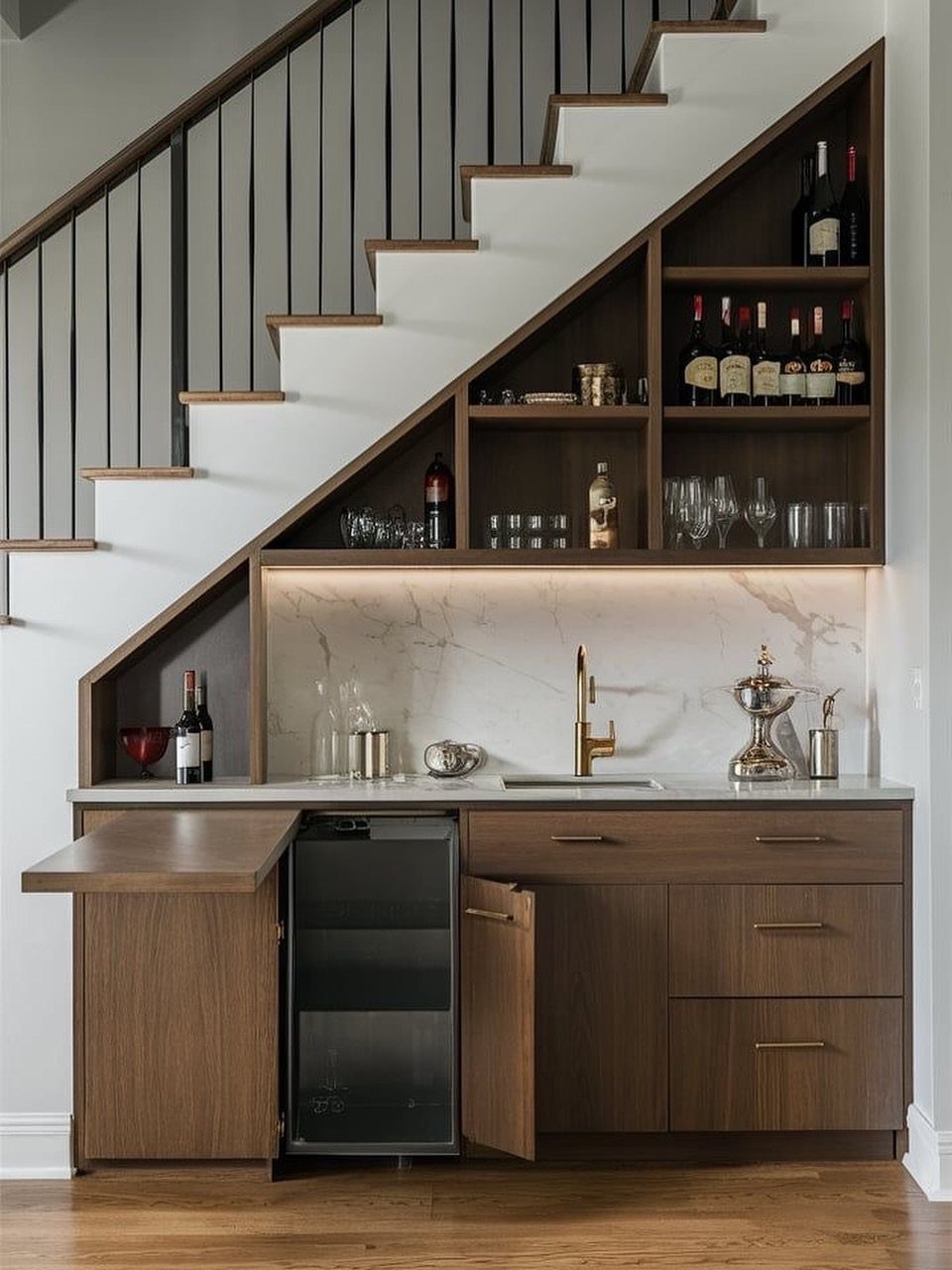
The dead space under a staircase suits a bar because the slope hides in the cabinetry. Wine shelving can follow the low edge, while the sink, small fridge and glassware sit where you have full standing height.
A marble backsplash makes a tight nook look finished. I would choose this over a freestanding bar if the stairs already cut into your floor plan, since nothing else needs to give up room.
9. Basement Bar Cart
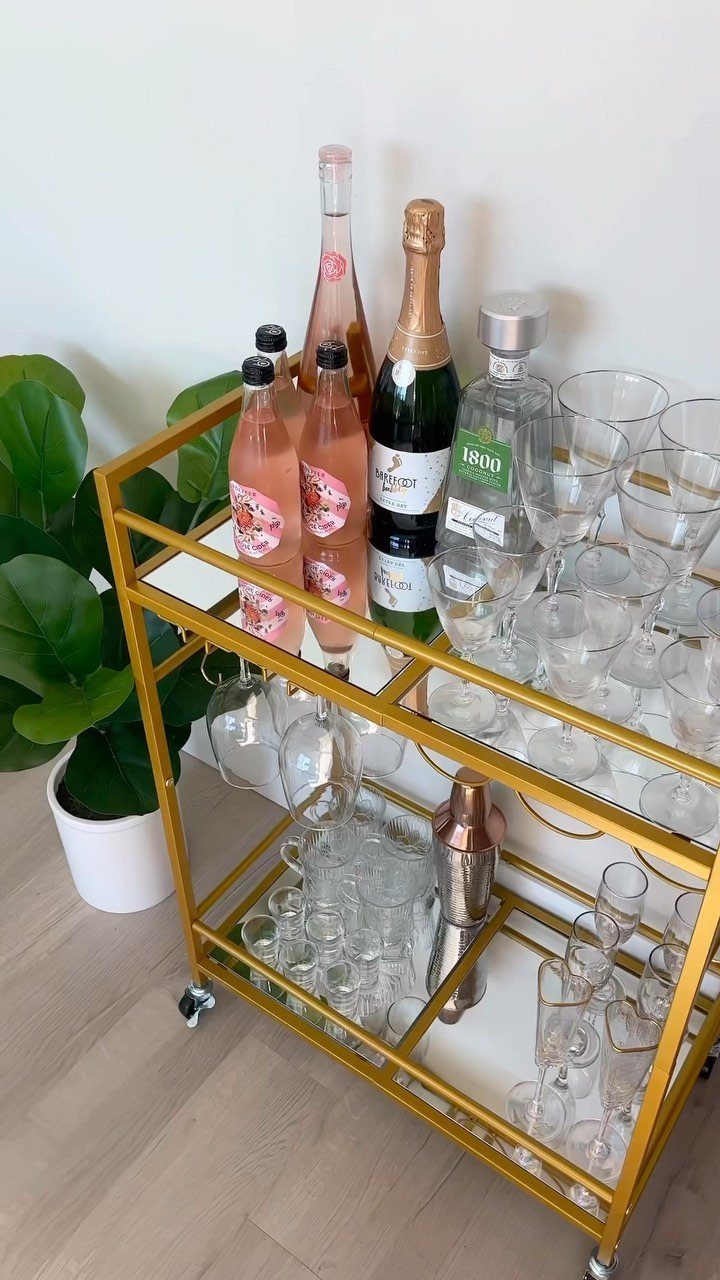
A bar cart is the one option here that needs no tools and moves with you when the lease ends. Mirrored shelves bounce light around, which helps in a basement with little daylight.
I would load the top shelf with glassware and a shaker, and keep the bottles on the lower one where the weight sits more stable.
A plant beside it softens the metal. On a small budget, or in a rental where nothing can be built in, a bar cart is the first piece I would buy.
10. Moody Speakeasy Corner
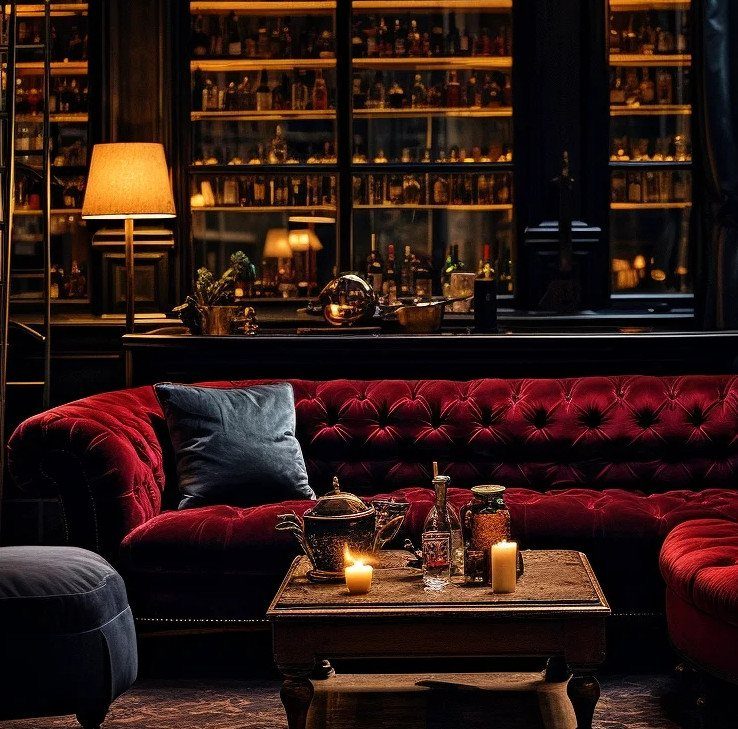
Dark walls and low light turn a basement into a hideaway instead of a leftover room. Backlighting the liquor cabinet gives you lamp-level glow and leaves every table surface free.
Paint comes first. It is the cheapest change, and it does most of the work.
11. Farmhouse Style Basement Bar
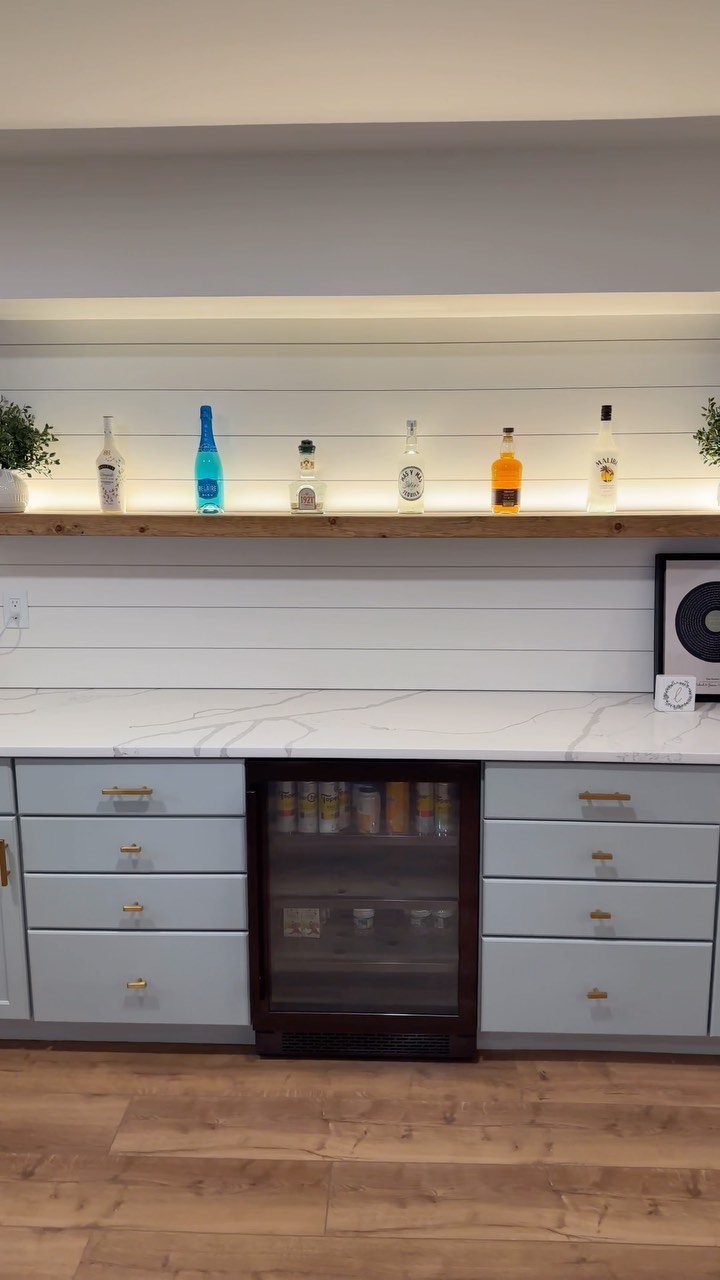
White shiplap paired with a wooden floating shelf sets a farmhouse tone, and the neutral woods keep a below-grade room from looking heavy.
Light gray cabinets under a white marble countertop hold the palette quiet, with a wine cooler tucked in below.
I like this version for people who want a basement bar that looks bright on a weekday afternoon.
12. Vertical Wood Accent Bar
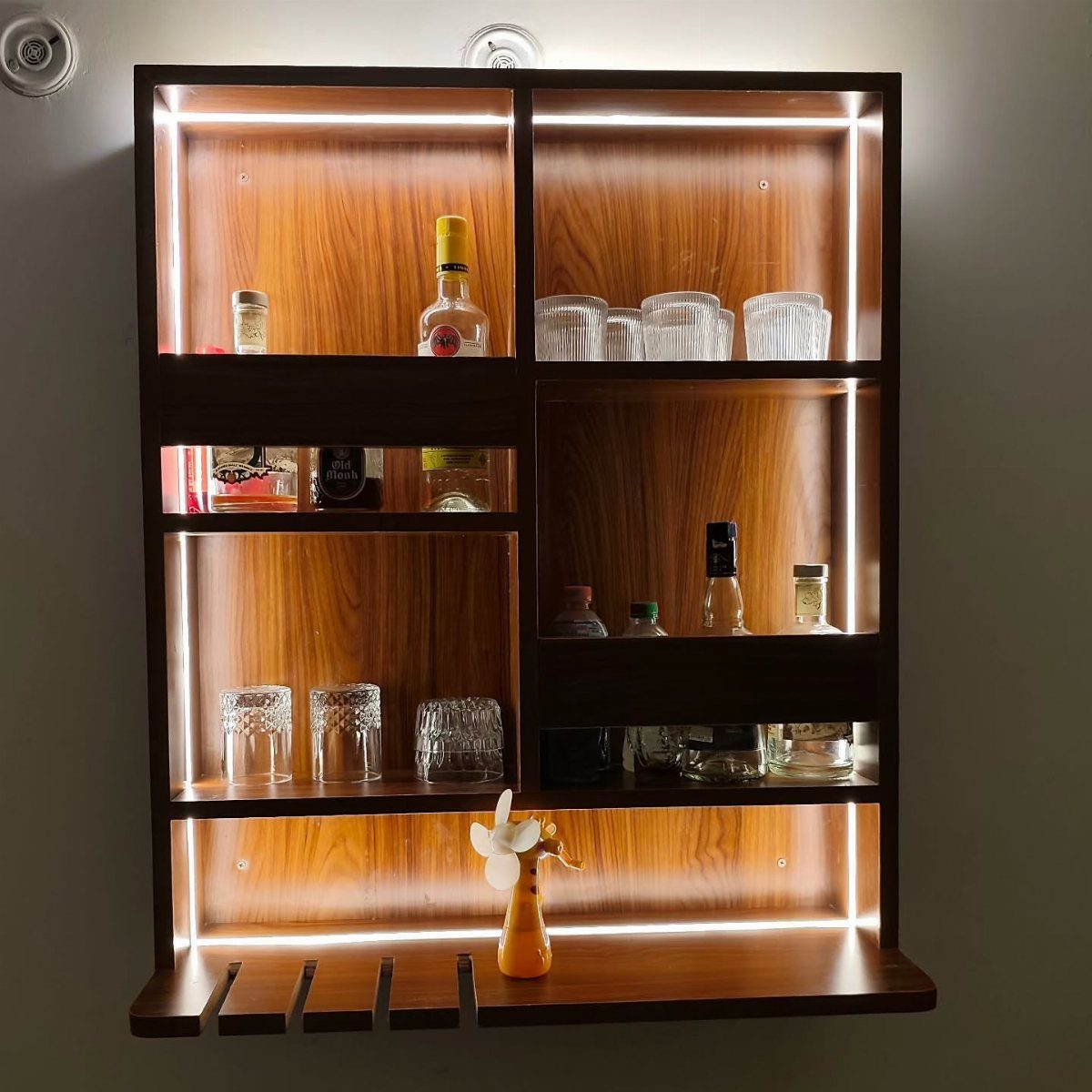
Bottles sit on the shelves, glassware goes on the ledge, and no counter or cabinet is needed.
The warm wood against white is the draw. Mount into studs, as with any shelf that carries a full set of liquor.
13. Mirror-Backed Mini Bar
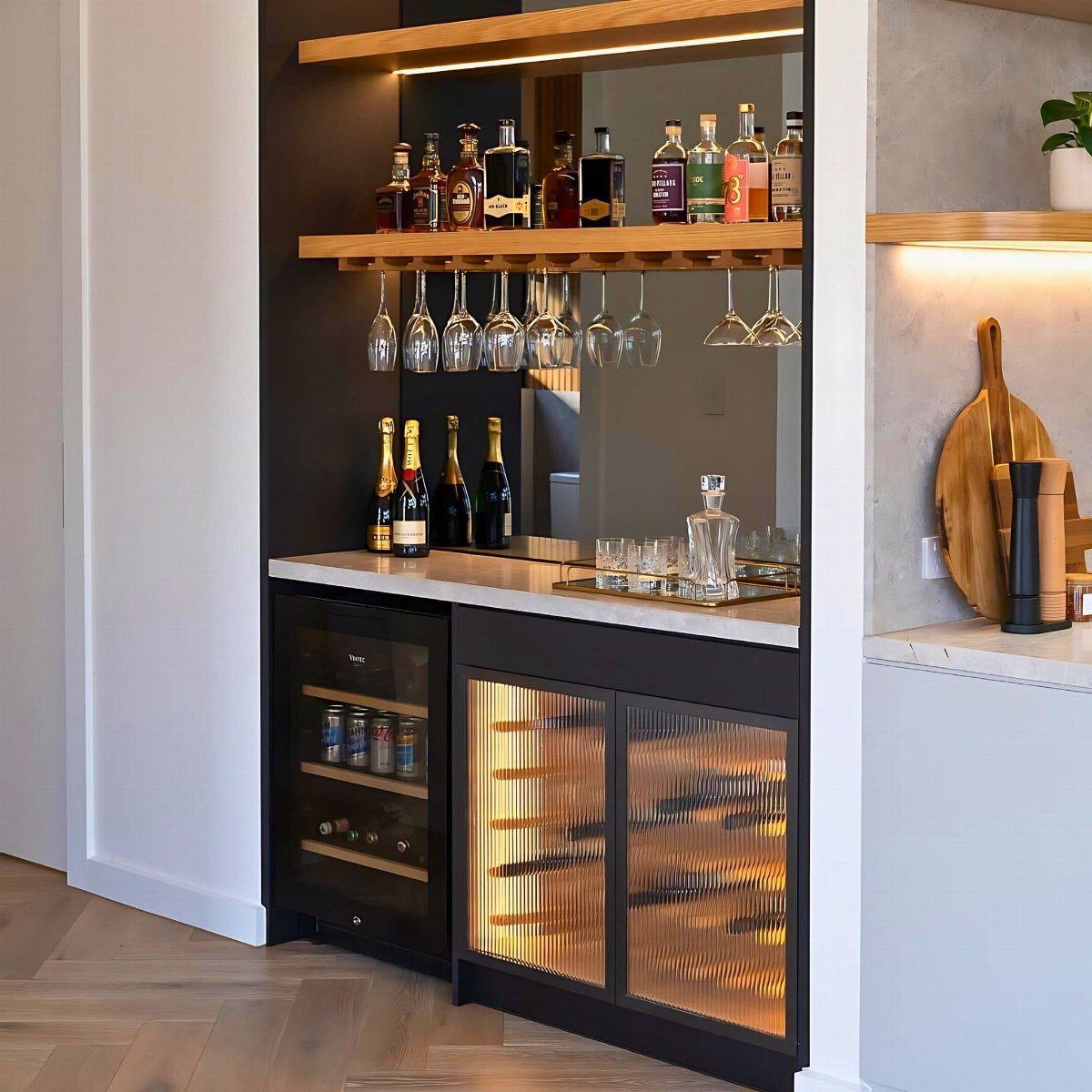
Mirror behind wooden shelves is a low-cost trick that makes a small bar look deeper, since the glass doubles the bottles and the light.
The mirror doubles every bottle and picks up the light from the room, which a basement needs.
I would keep the shelves wood and the bottles few, since a mirror repeats clutter as faithfully as it repeats the good stuff.
Stem hooks under a shelf keep wine glasses off the counter, and a under-counter wine cooler set into the same run keeps the whole bar tidy.
A fluted glass cabinet beside it adds texture without more reflection.
14. Built-In Illuminated Bar Cabinet
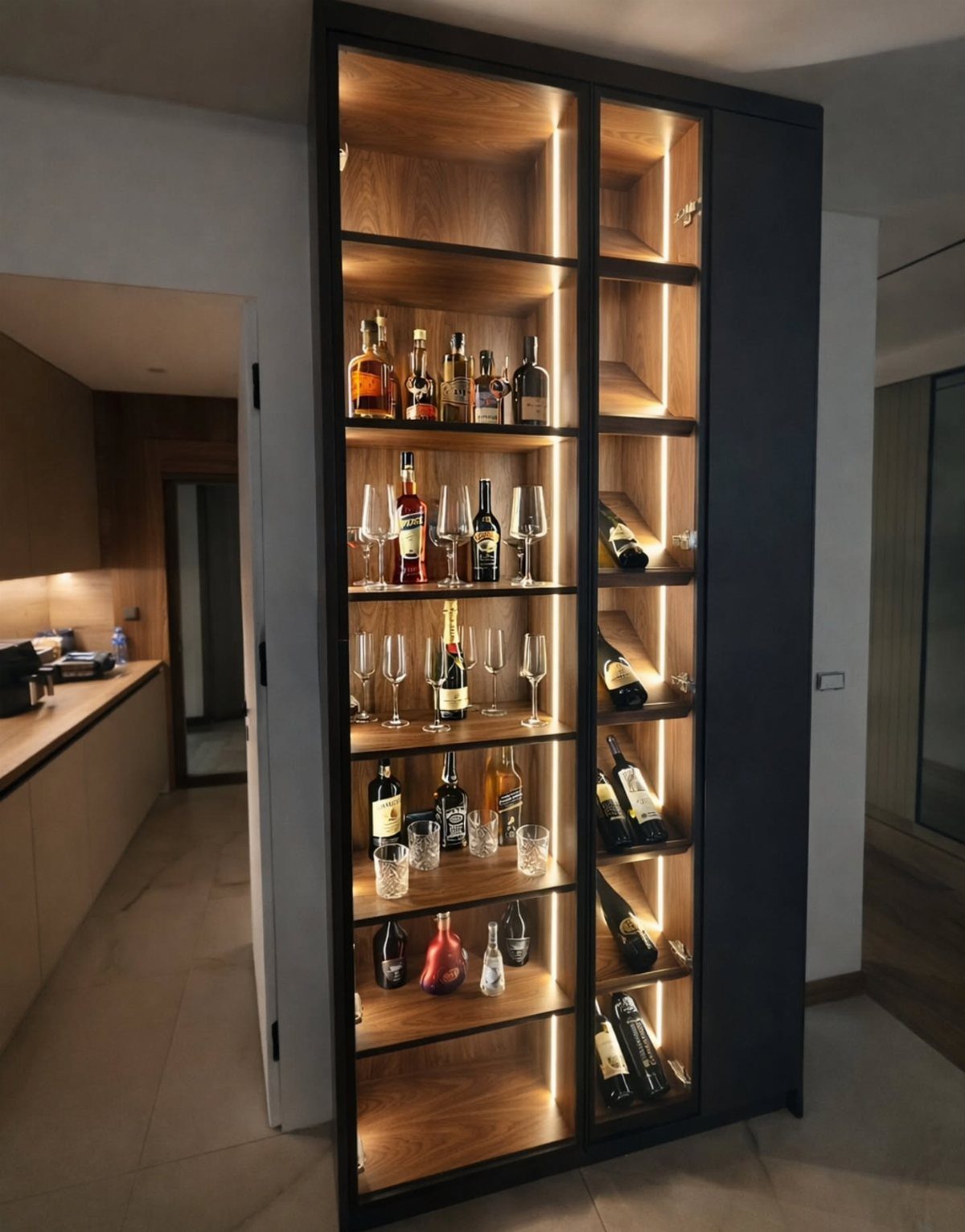
Tall and narrow suits a basement bar better than wide. This built-in wooden cabinet stands on a small footprint, with liquor shelves in the center and wine cubbies down the side.
Warm LED lighting is the detail I would not skip. A basement gets little daylight, and the glow turns the bottles into the decor.
Choose warm over cool light so the wood keeps its color. Put glassware on the shelf nearest hand height and the bottles you rarely pour up top.
15. Exposed Brick Basement Bar
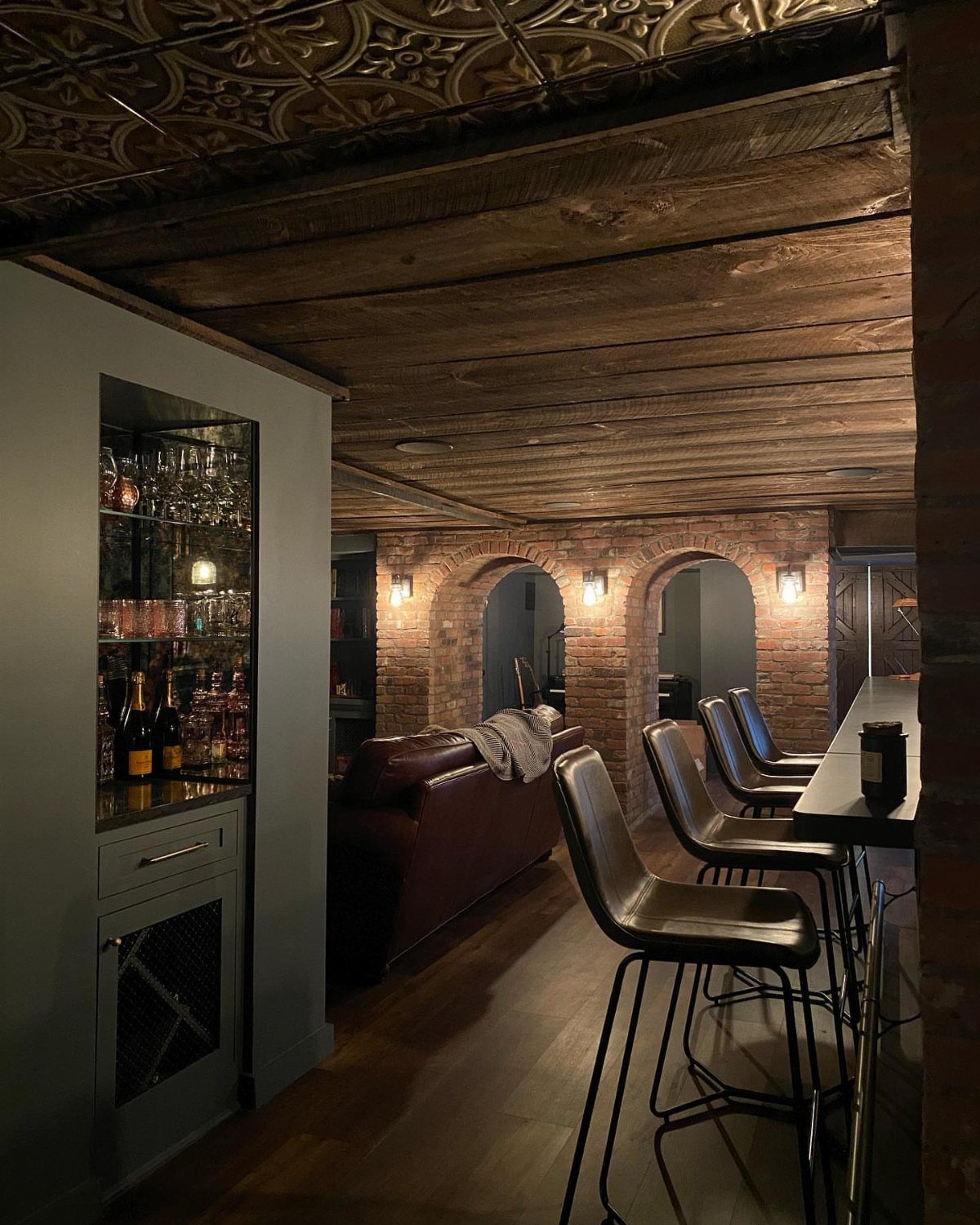
Brick walls already carry the texture, so the bar can stay simple: a built-in liquor cabinet and a dark counter with 3 barstools.
I would leave the arched alcoves and wooden ceiling beams alone and keep the cabinet plain. Anything busy competes with the brick.
A dark counter grounds the pale, uneven wall, and 3 stools are enough for a small room. A brown leather sofa nearby turns the bar into part of a lounge instead of a corner on its own.
16. Retro Wood-Paneled Bar
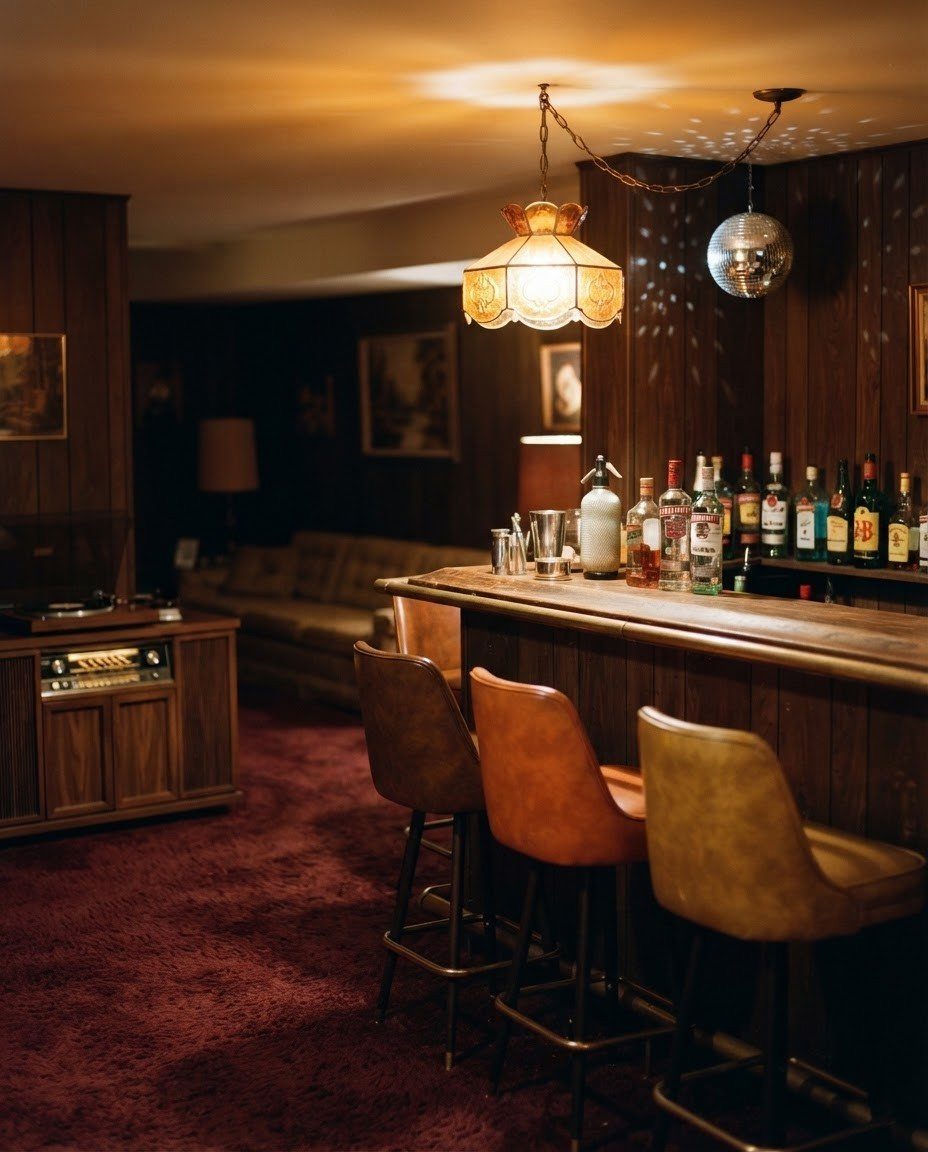
Dark wood paneling gives a basement bar a retro feel in a single move, and a small serving counter is all the furniture it needs. 3 leather stools fit where a bigger bar would not.
A hanging lamp and a disco ball handle the styling, and together they run a fraction of what the paneling costs. If paneling the whole room feels like too much, I would do just the bar wall.
Keep the rest of the room plain so the wall gets the attention.
Planning Your Basement Bar
Before picking a layout, answer 3 questions: how the bar will be used, who will use it, and how often.
A bar that is the main event in the basement needs different features than one tucked into a room that also serves as a guest space.
A wine-tasting setup and a small kitchenette with a sink are two very different builds.
Think about who will be down there.
A bar for adults who entertain wants seating and storage for glassware; a bar shared with kids or other household members may want a closed cabinet and a fridge that holds more than drinks.
Frequency changes the shopping list too.
If you unwind there most nights, a cooler and good seating earn their space. If it’s mostly for parties a few times a year, skip the appliances and spend on the surfaces and lighting.
Sizing Up Your Space
Measure the basement before you fall for a design. The first decision is walk-up versus walk-behind.
A walk-behind bar looks impressive but eats floor space, so in a small basement a walk-up bar, where you stand on the customer side with the back wall doing the work, is the smarter fit.
Seating sets the length.
Stools need about 2 feet of counter each, which means a 4-seat bar should run at least 8 feet. In a tight basement, I would cut a seat before shortening the aisle behind or in front of it.
Look at what surrounds the bar too. If the room doubles as a man cave or wine area, leave space for that use to work.
With more square footage, adding a wet bar, a full-size fridge and extra cabinets stops being a squeeze and becomes an easy call. If the basement has no bathroom, a half bath may need to be part of the plan.
The typical bar top stands 41 to 43 inches from the floor. Bar stools then need to stand 29 to 32 inches from floor to seat, which should accommodate most people.
Lighting Considerations
Layer the light instead of relying on one source. Pendants over the counter mark the bar zone on their own, and in many basements they are enough.
Add small lights inside cabinets or under shelves so you can find what you need while the overhead lights stay low.
Put the under-shelf LEDs on a smart dimmer or a phone app; being able to drop them for the evening is worth the few extra dollars.
Check the windows first. A basement with an exterior window gets daylight that changes how bright the artificial light needs to be, while one without needs more of the work done by lamps and LEDs.
Don’t overthink it. Pendants, one hidden light source and a dimmer cover most small bars.
Frequently Asked Questions
What are the main types of basement bars?
Wet bars and dry bars. A wet bar has plumbing for a sink, while a dry bar has none and relies on a cooler, shelves and cabinets.
A dry bar skips the plumbing hassle, and a walk-up arrangement keeps the footprint tight by putting all storage and shelving on one wall instead of requiring clearance behind a counter.
How can I maximize a small basement bar space?
Use the spots that otherwise go to waste: a corner, the space under the stairs, and the wall.
A tall corner cabinet holds wine racks, bottles and glasses in one footprint, and wall-mounted shelves or angled racks keep the floor clear.
How should I light a small basement bar?
Layer it: pendants over the counter, plus one hidden light source such as LEDs inside a cabinet or under a shelf.
Warm light flatters wood and glass better than cool light. Put the hidden lights on a dimmer so you can lower them for the evening.





