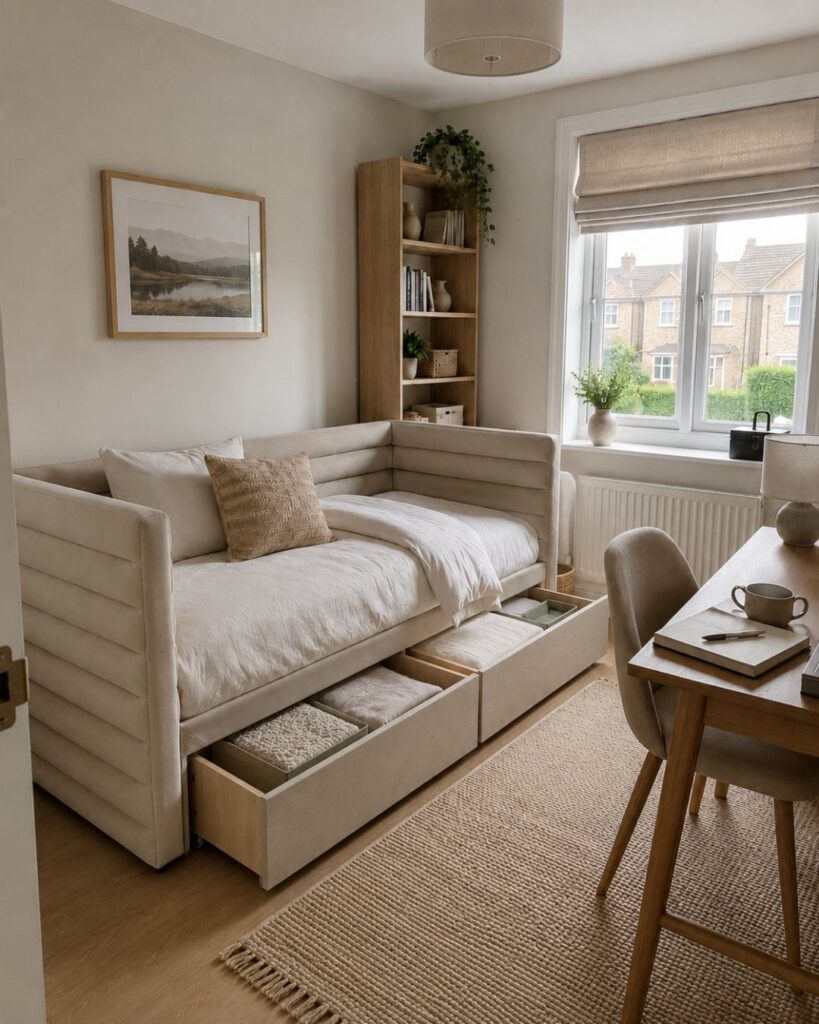
How much floor the room has left after the desk decides which sofa fits, and the ideas here run from a daybed or a loveseat that takes about half the wall to a built-in window seat that counts as a bigger weekend job.
Most of these work with freestanding pieces, while a few built-ins need basic carpentry.
1. Daybed for Dual Functionality
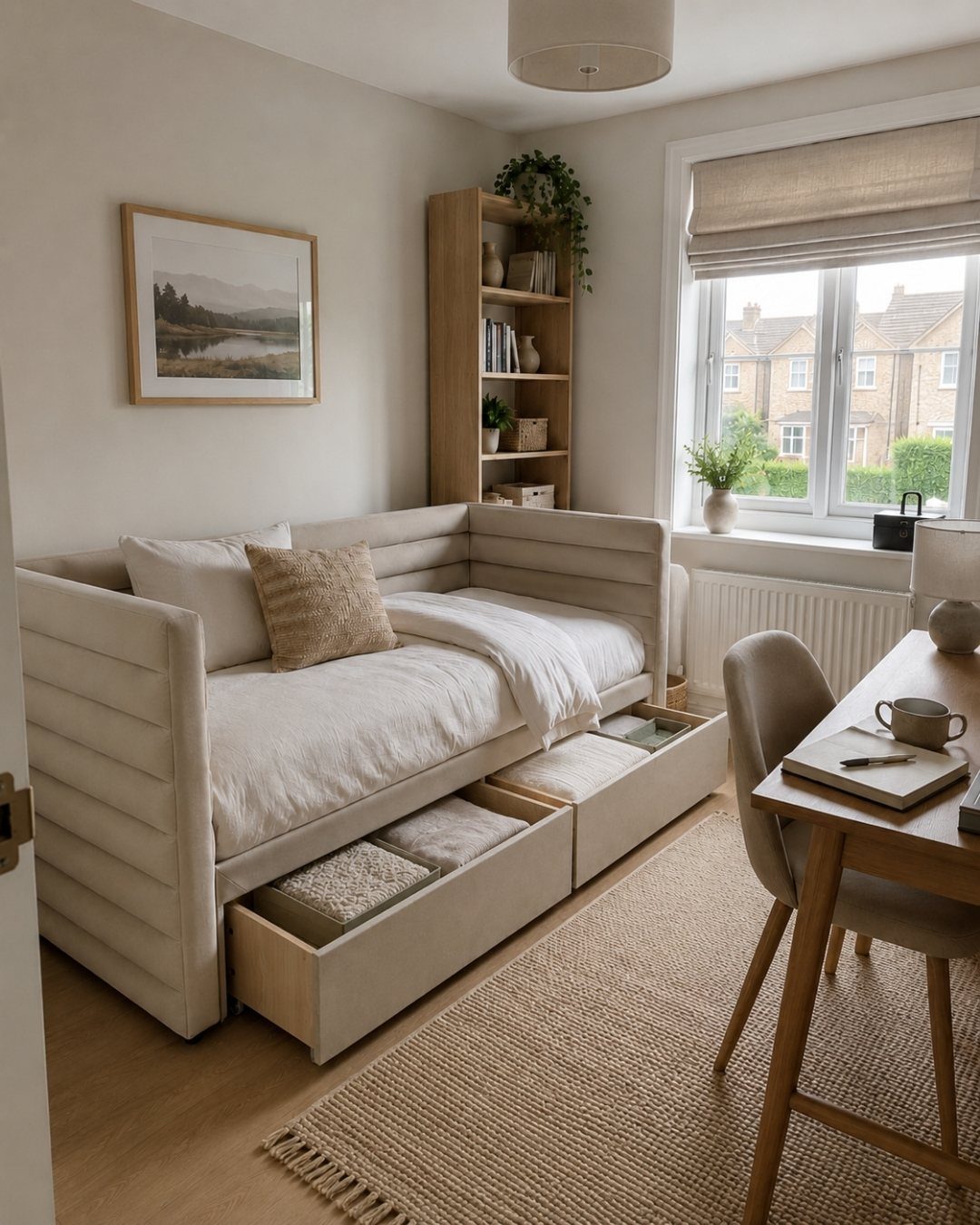
A daybed earns its spot when the same room has to host a work shift and an overnight guest. A daybed with storage drawers underneath, in a neutral beige, swallows spare bedding, cables and paper supplies without adding a cabinet.
Pick a daybed with drawers over a plain frame, and keep the desk close enough that the daybed doubles as a reading perch. Throw pillows against the back turn it from a bed into a sofa in about a minute.
2. Floating Desk with Sofa
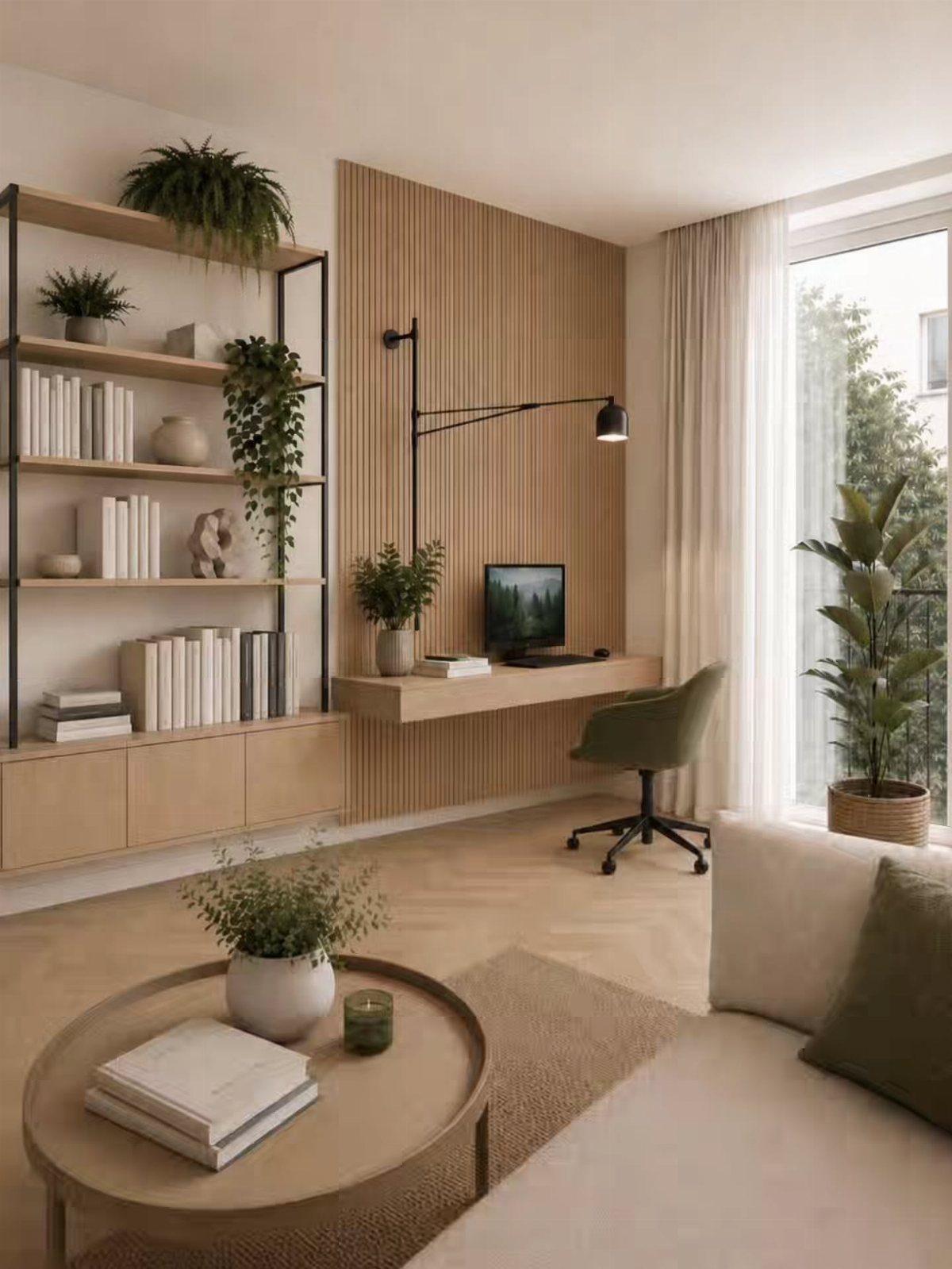
Mounting the desk to the wall leaves the floor open, and in a small room that visible floor is what keeps a sofa from feeling crammed in.
Mounting the desk on the wall and leaving the space beneath it open gives a sofa and a round coffee table room to sit in front without crowding.
I like the round table: no corners to bump while you cross the room. Anchor the desk into studs, not drywall alone, since a laptop, monitor and elbows add up.
3. Built-In Window Seat Sofa
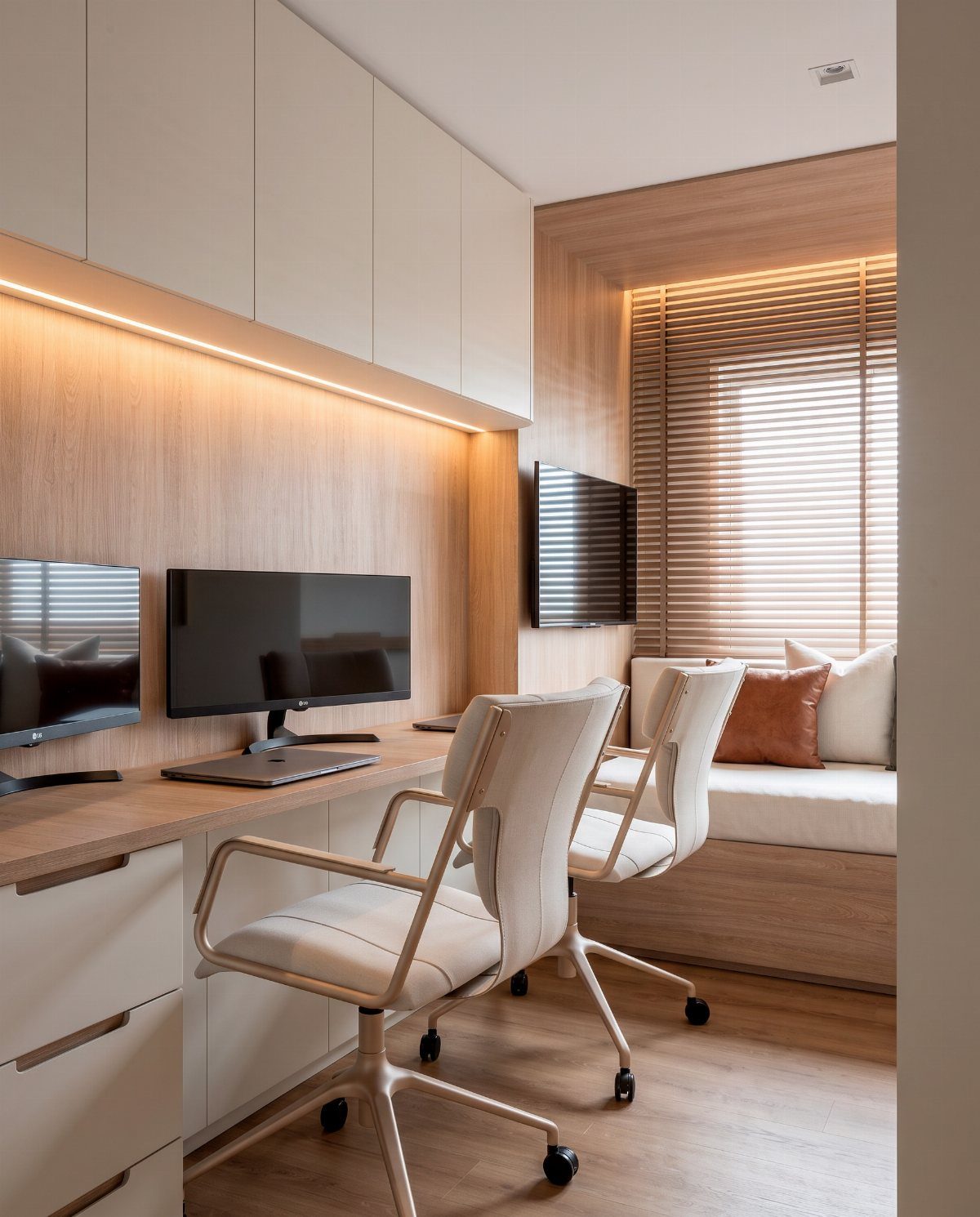
A window seat does the work of a sofa without claiming any floor space. Cushions on top make it comfortable enough for a phone call or a break, and the drawers underneath hold what would otherwise clutter the desk.
This is the most involved build on the list, so plan it as a bigger weekend job and buy the lumber before you start. If you rent, a freestanding storage bench with a cushion under the window gets you close.
4. Compact Desk and Loveseat
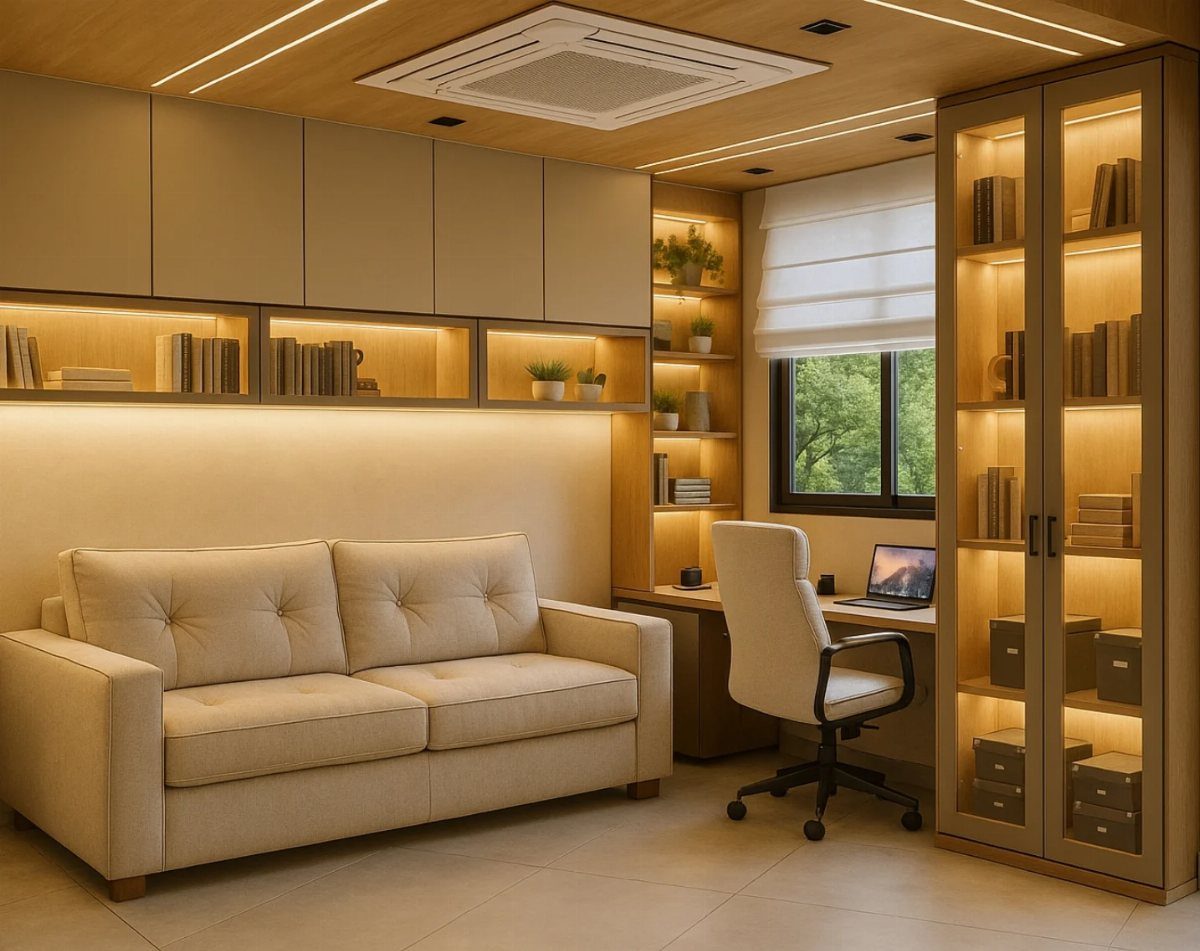
Loveseats suit a home office better than full sofas because they take about half the wall. A loveseat beside a built-in desk works well when shelving runs above the desk, because everything stays within reach and the floor stays clear.
Match the loveseat to the wall color so it recedes. Warm lighting near the shelves makes the corner read as a place to sit, not just a place to work.
5. Behind-the-Desk Sofa
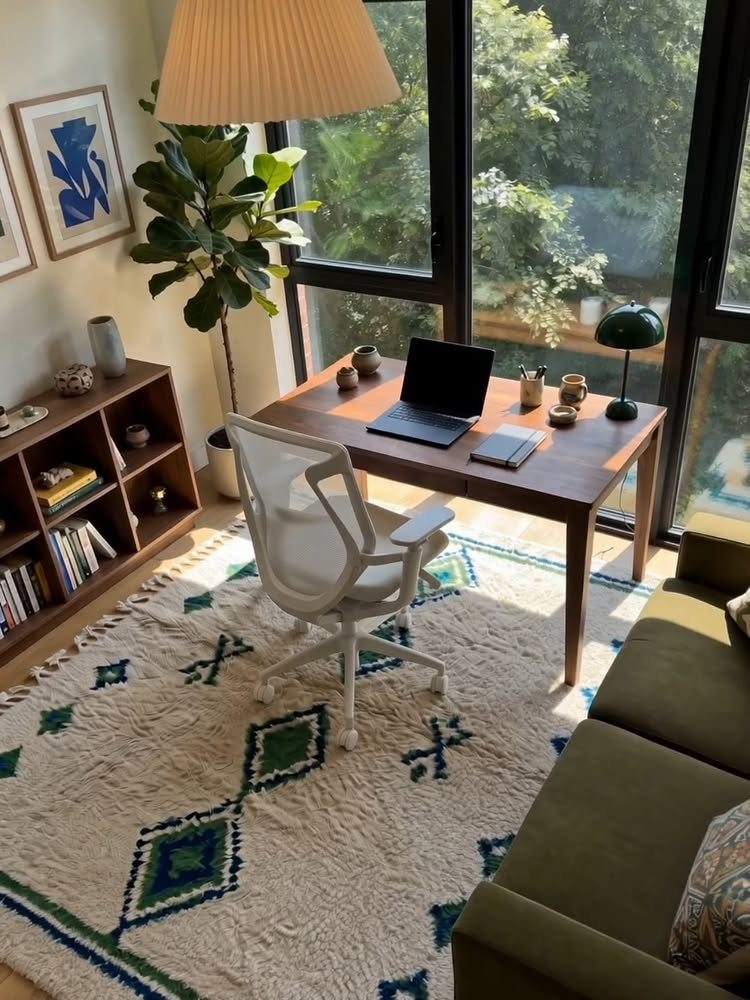
Putting the sofa behind your chair makes it the first thing anyone sees on a video call, so choose the color with care.
Leave enough room to push the chair back without hitting the cushions. The rug helps by marking the work zone as separate from the seating behind it.
6. Classic Leather Sofa
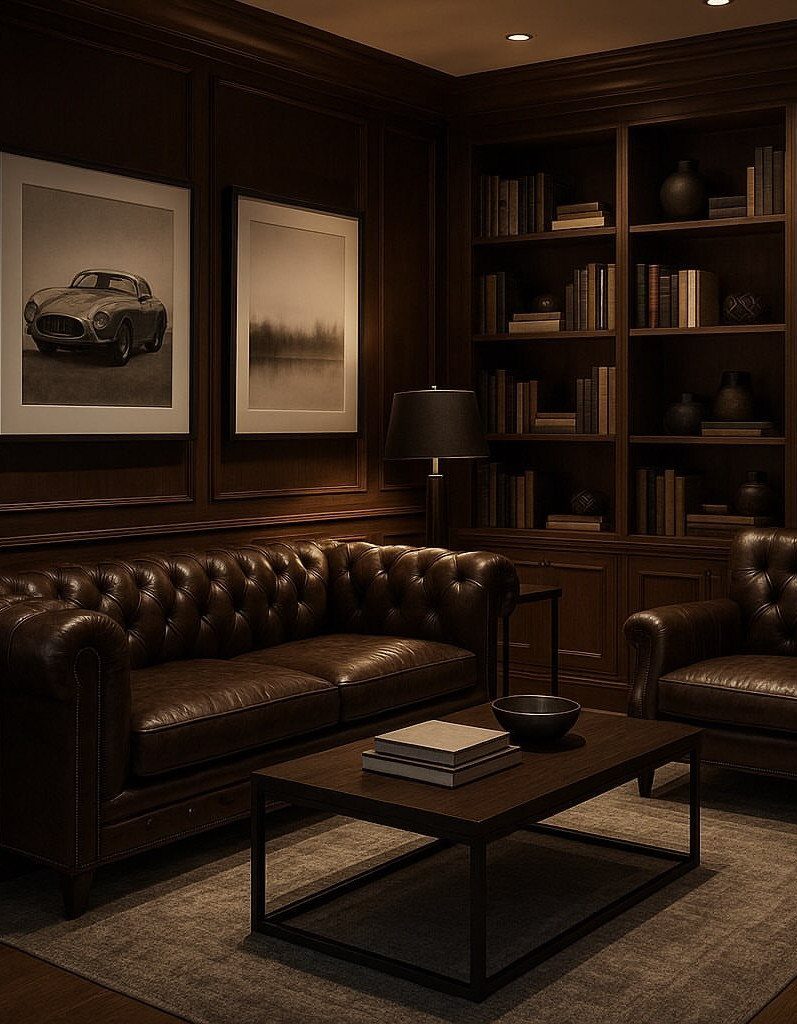
A brown tufted leather sofa in a dark paneled room gives the office a study feel, closer to a library than a spare bedroom.
I’d choose this when the room is big enough to carry heavy furniture. In a small, bright room, a Chesterfield will dominate, so go lighter or choose a smaller scale.
7. Curved Sofa in Home Office
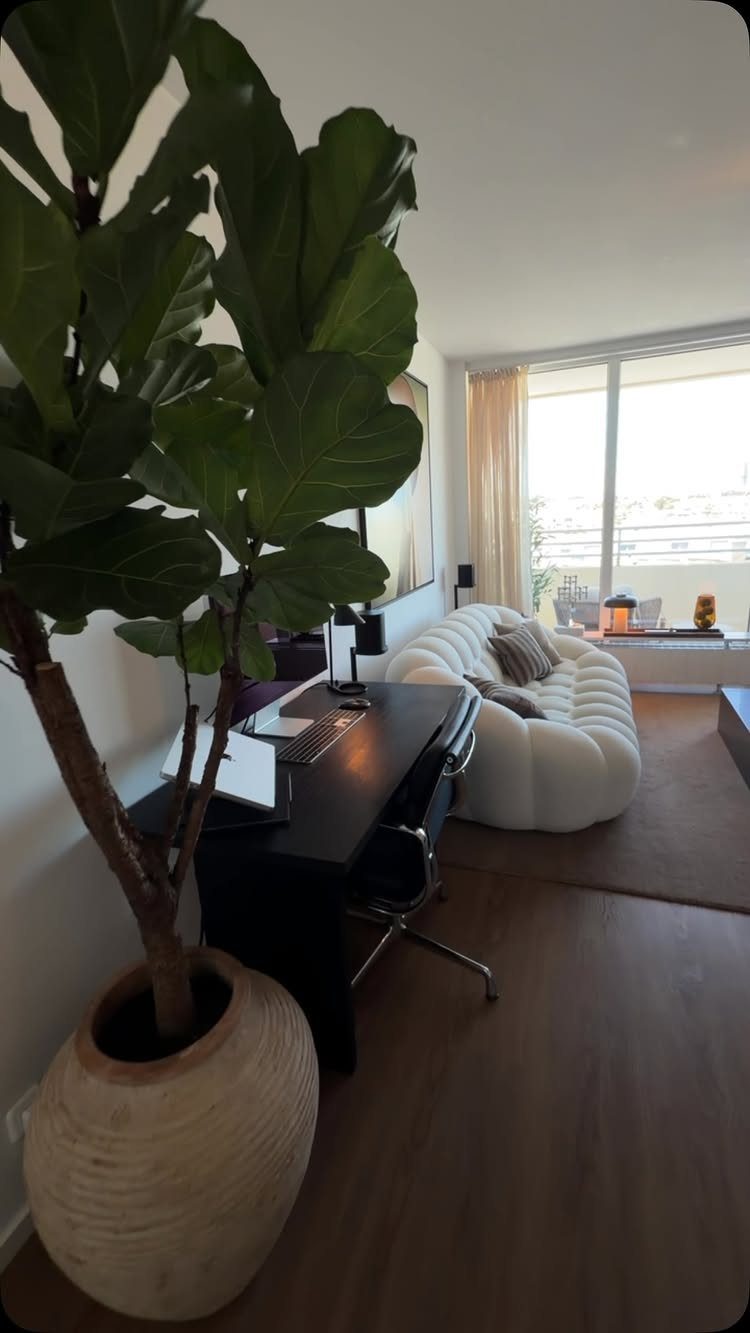
A curved sofa softens a room full of straight lines, and beside a black desk and chair it gives the eye somewhere gentle to land. Placed by the window, it also catches daylight for a reading break.
I’d keep the color light, like the white here, so the curve reads as a shape instead of a bulk.
Leave a clear path between the sofa and the desk chair, since the round back takes more floor than it seems to.
8. Built-In Desk and Sofa Setup
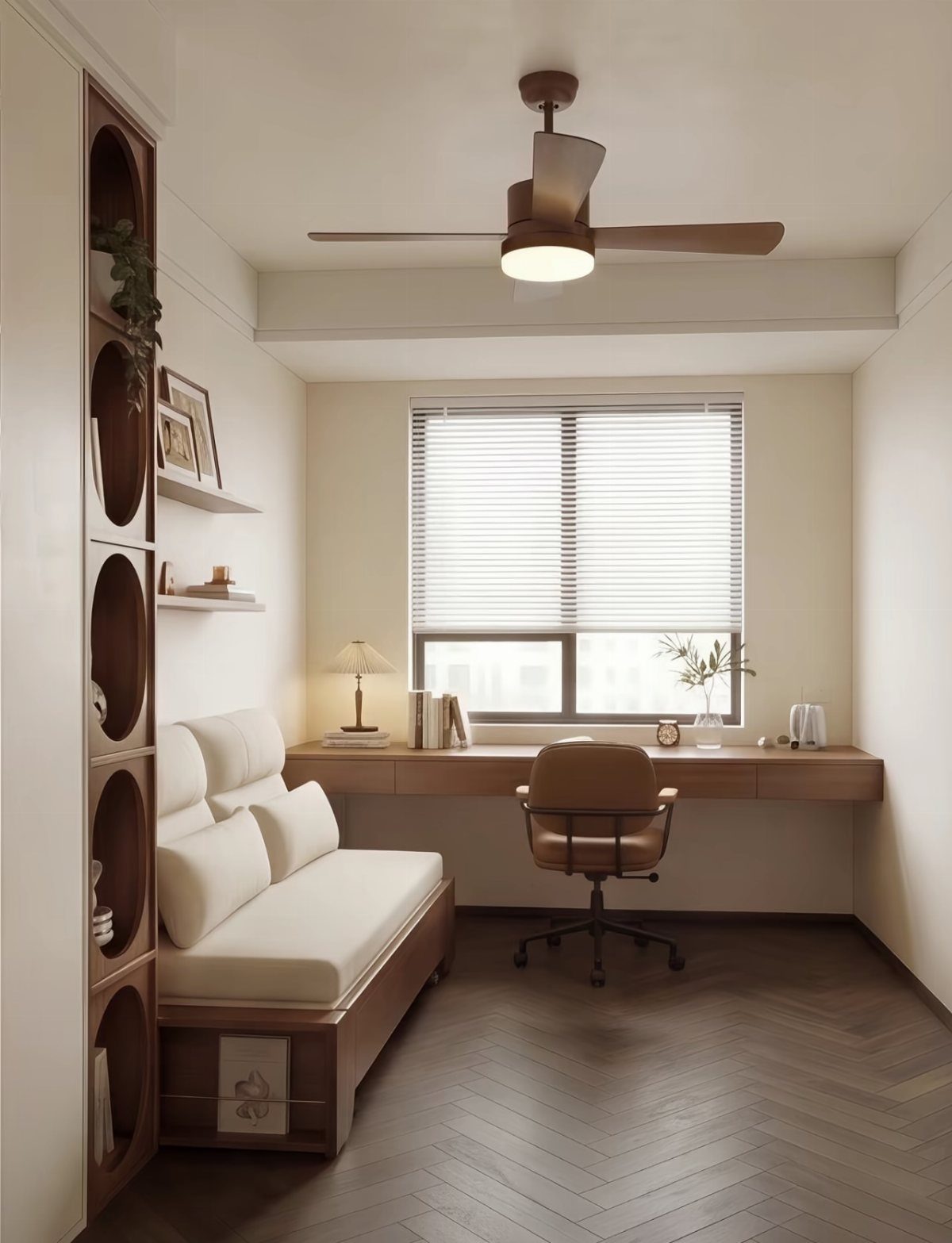
Running a built-in wooden desk under the window and setting a sofa on the opposite wall splits work and rest into two clear sides of one room. Shelving built in above or beside the desk keeps supplies off the surface.
A white sofa brightens the wood, but I’d pick a washable slipcover version if anyone eats lunch there. Built-ins take planning and tools, so renters can get the look with a long, narrow desk under the window.
9. Lounging Sofa with Plant Wall
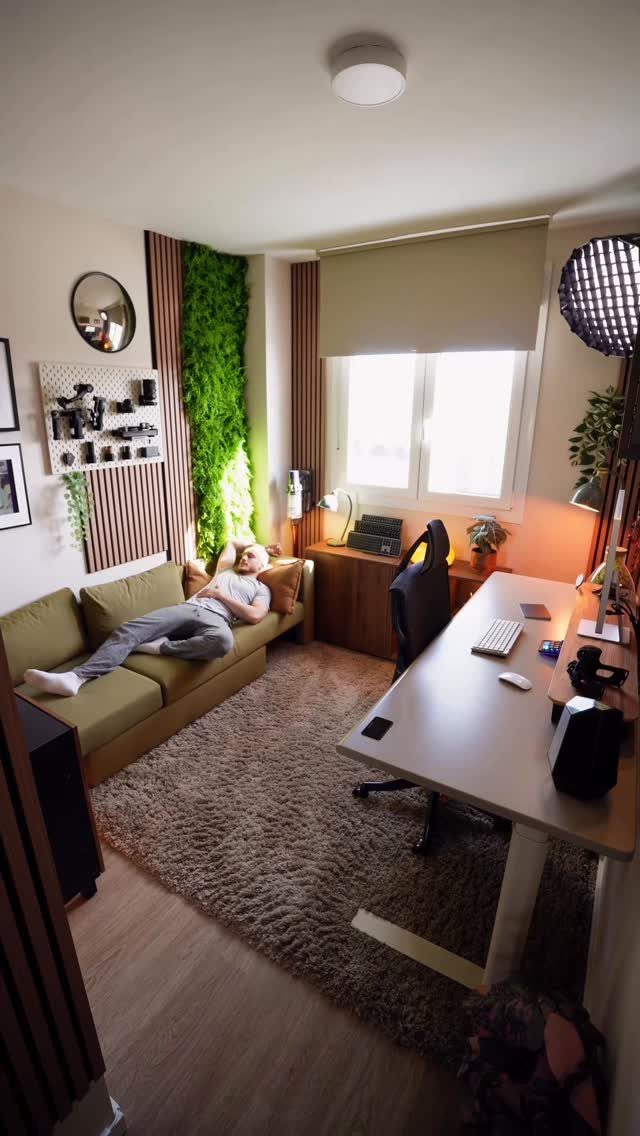
Green upholstery against a wall of living plants turns the sofa into a real break from the screen, and keeps it from looking like something squeezed in after the desk was placed.
Against a white desk, the green is the one strong color, so the room stays calm.
Hang the plant wall where the window light reaches it, and keep the sofa within a few steps of the desk so lounging is easy. Self-watering planters make the wall far less work to maintain.
10. Room Divider Separating Sofa Area
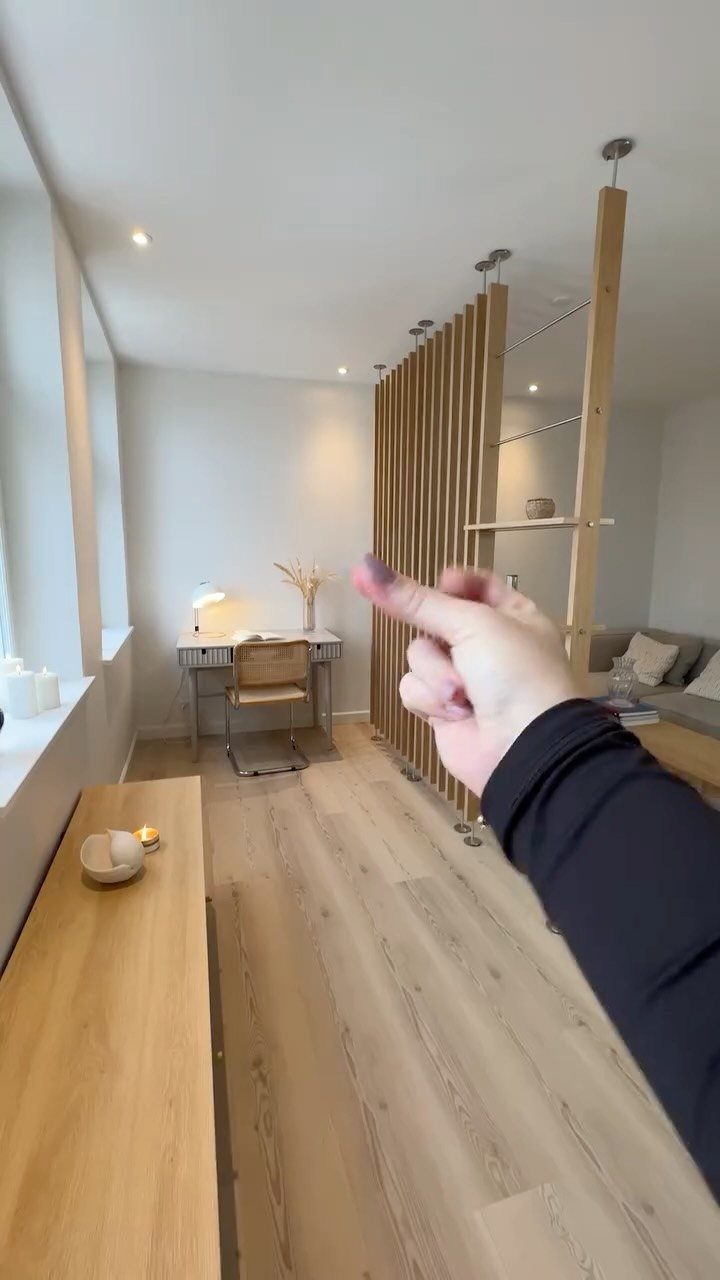
A vertical wooden slat partition between desk and sofa blocks the view without closing the room, so light passes through and the space stays open.
Standing the desk on one side and the grey sofa on the other gives each its own zone.
I like slats because they look built but can be freestanding, which suits renters. Pick a wood tone that matches the floor so the divider blends in.
11. Modern Office with Grey Sofa
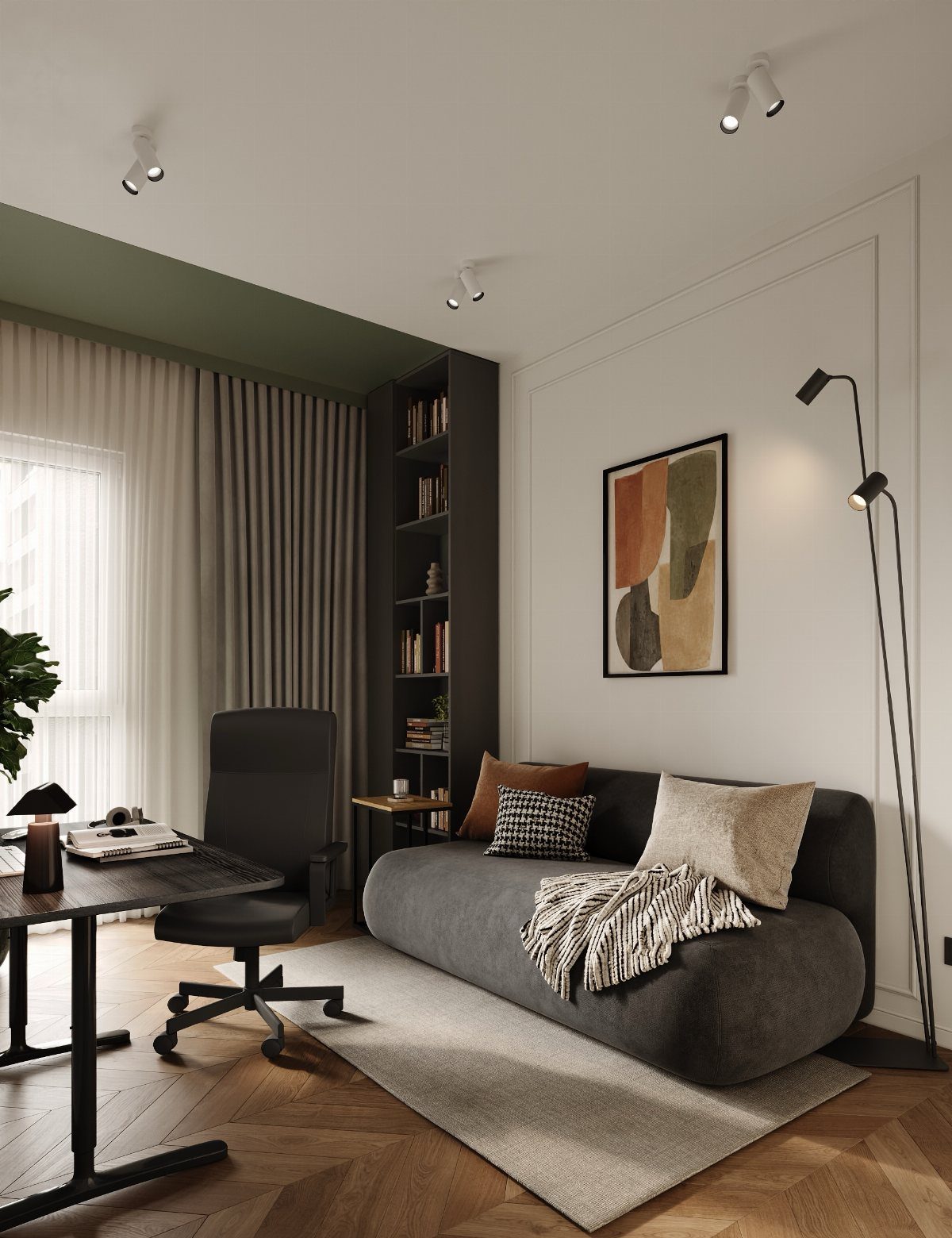
Dark, tall shelving and a black desk need something softer opposite them, and a grey sofa with pillows and a throw does it without adding another color. Neutral tones keep the room looking calm and tidy.
Use the throw and pillows to bring in texture, since a grey sofa alone can feel flat. Keep the shelves edited, because dark units look heavy when they’re crowded.
Choosing the Right Sofa
Measure the depth before anything else. A sofa 36–40 inches deep is the usual range, and it has to leave room for your desk chair to roll back and for someone to walk past it.
Seat height matters more in an office than in a living room. A seat 18–20 inches high makes standing up and returning to the desk easier, and a low, sunken cushion gets old fast on a workday.
Choose upholstery that can take daily use: commercial-grade fabric or top-grain leather. In a small room, pick a sofa with exposed legs, since a skirted base looks heavier and makes the floor seem smaller.
If space is tight, a loveseat is the safer buy. A sectional gives more seating, but only in a room that can handle it.
Maximizing Small Spaces
Go vertical first. Wall-mounted shelves, floating cabinets and tall bookcases hold supplies without using any floor, and that floor is what a sofa needs.
Spend your money on pieces that do 2 jobs. Drawers built into the desk and a lift-top coffee table with a hollow base each swallow clutter, so the room needs fewer extra pieces.
Under-sofa or under-bed bins work well for paperwork and office supplies you need now and then. They keep the surfaces clear but the files easy to reach.
If the room also has to sleep a guest, a sleeper sofa is worth considering. Check that it opens fully without hitting the desk or chair.
Creating a Productive Environment
A fixed corner or a stretch of wall for the desk and chair gives work a place to live, and the sofa side of the room stays off duty.
An area rug, a screen or a divider marks the boundary without chopping up the room. Keep the colors close enough that the two zones still look like one space.
Firmness deserves a test before you buy. A sofa that is too soft turns a short break into a long one, while one that is too hard never gets used.
Think of the sofa as part of how you work, not an extra. Sitting there for calls, reading or a reset gives your desk chair a rest.
If you really want to gear your home towards a live/work-space, consider upgrading your current couch to this sofa from Best Choice Products. Low armrests, cupholders and a more upright position offer a better space for getting work done.
Frequently Asked Questions
How do I decorate a home office with a sofa?
Keep the colors in the work zone and the sofa zone close, so the two read as one room.
A low screen, a narrow room divider, or even a large rug can separate the zones without making the room feel chopped up.
Textured pillows and a soft throw keep a neutral sofa from looking flat, and lighter accessories help dark shelving feel less heavy.
How do I fit a couch in a small home office?
Choose a loveseat, which takes about half the wall that a full sofa does. A sofa in the 70–75 inch range, sometimes called apartment-size, fits better than a full sectional, especially when the arms are slim and the legs stay visible.
A desk mounted to the wall keeps the floor clear underneath, which gives the sofa breathing room.
What is the best desk to pair with a couch?
A wall-mounted floating desk is a strong pick, because the open floor beneath it gives a sofa and a round coffee table room to sit in front.
Renters can run a long, narrow desk along the window wall and get a similar division. Mount any wall desk into studs, not just drywall anchors.
Should I get a sleeper sofa for my home office?
Yes, if the room has to host overnight guests as well as your workday.
Measure the clearance first to confirm the mechanism opens without hitting furniture. A daybed with built-in drawers does double duty, and a few back pillows turn it into seating fast.
What is the best fabric for an office couch?
Performance fabric or full-grain leather stands up to years of sitting better than most budget upholstery.
If anyone eats lunch in the room, a washable slipcover version is a smart choice. Leather also gives a dark, paneled office a study feel, though it can dominate a small, bright room.





