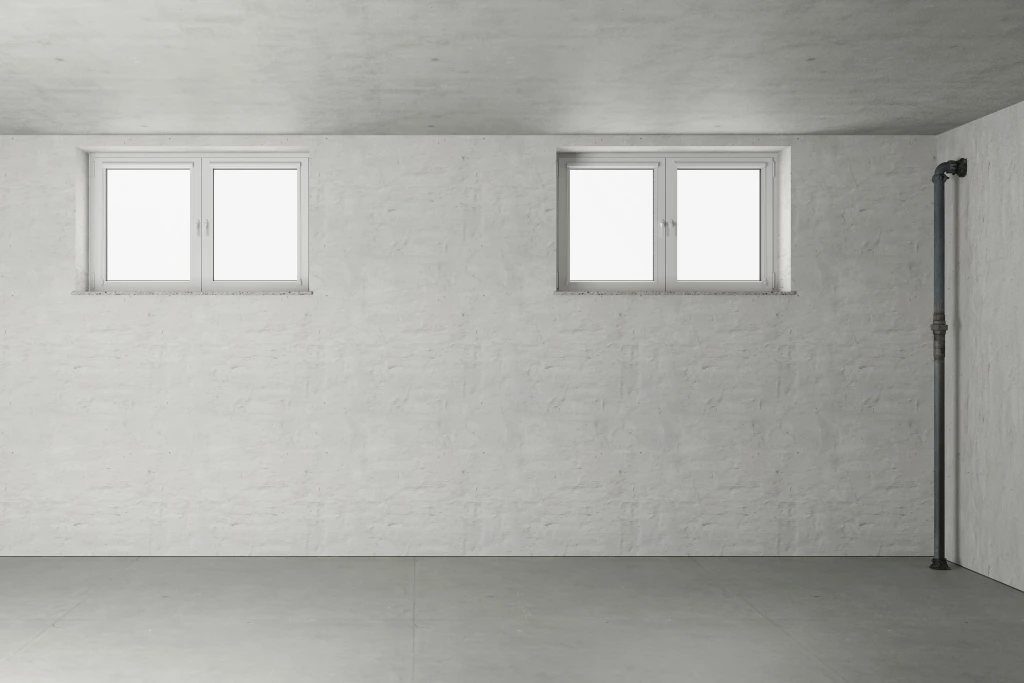
White, dark blue and dark green all go onto the same bare concrete, so the right pick comes down to how much daylight your basement gets.
White suits a basement with just 2 small windows, and a dark, already snug room can handle deep blue or green as long as you accept that those walls will soak up light.
1. Crisp White Painted Concrete Walls
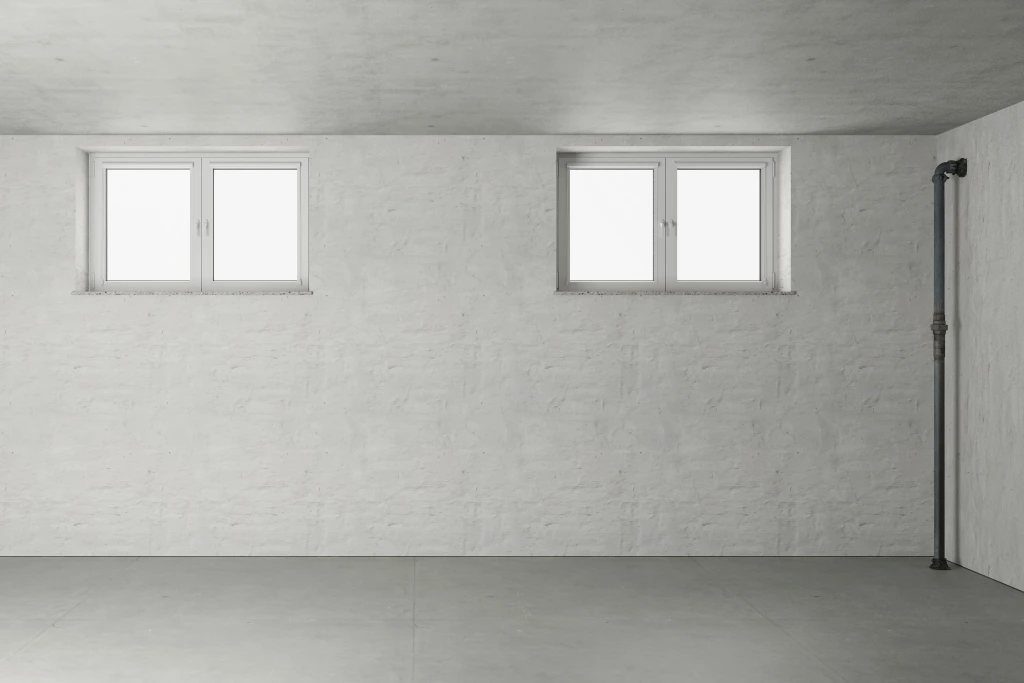
White paint is the brightest way to treat bare concrete, and in a room with only 2 small windows it does the most work.
Light bounces off it instead of soaking in, so the basement reads larger without a single new fixture.
Choose masonry paint made for concrete, and expect to need a primer coat first.
A grey floor like this one pairs well with it, since the cool tones sit comfortably together. White also shows every stain and scuff, so I’d keep a small can for touch-ups.
From surface preparation to applying the best basement floor paint, Sherwin-Williams will take you step-by-step to ensure a stunning, durable result you’ll be proud to show off!
2. Moody Dark Blue Concrete Walls

Painting the walls and the exposed ceiling beams the same dark blue is the move I like most here, because the room stops looking like a basement with a dark stripe and starts looking like one deep, wrapped space.
Matching the 2 hides the clutter overhead.
A white door and a small white counter give the blue something to push against.
Without that contrast, a dark basement can feel closed in. Use a flat or matte finish, which covers the bumps in concrete better than gloss.
3. Dark Green Painted Concrete Walls
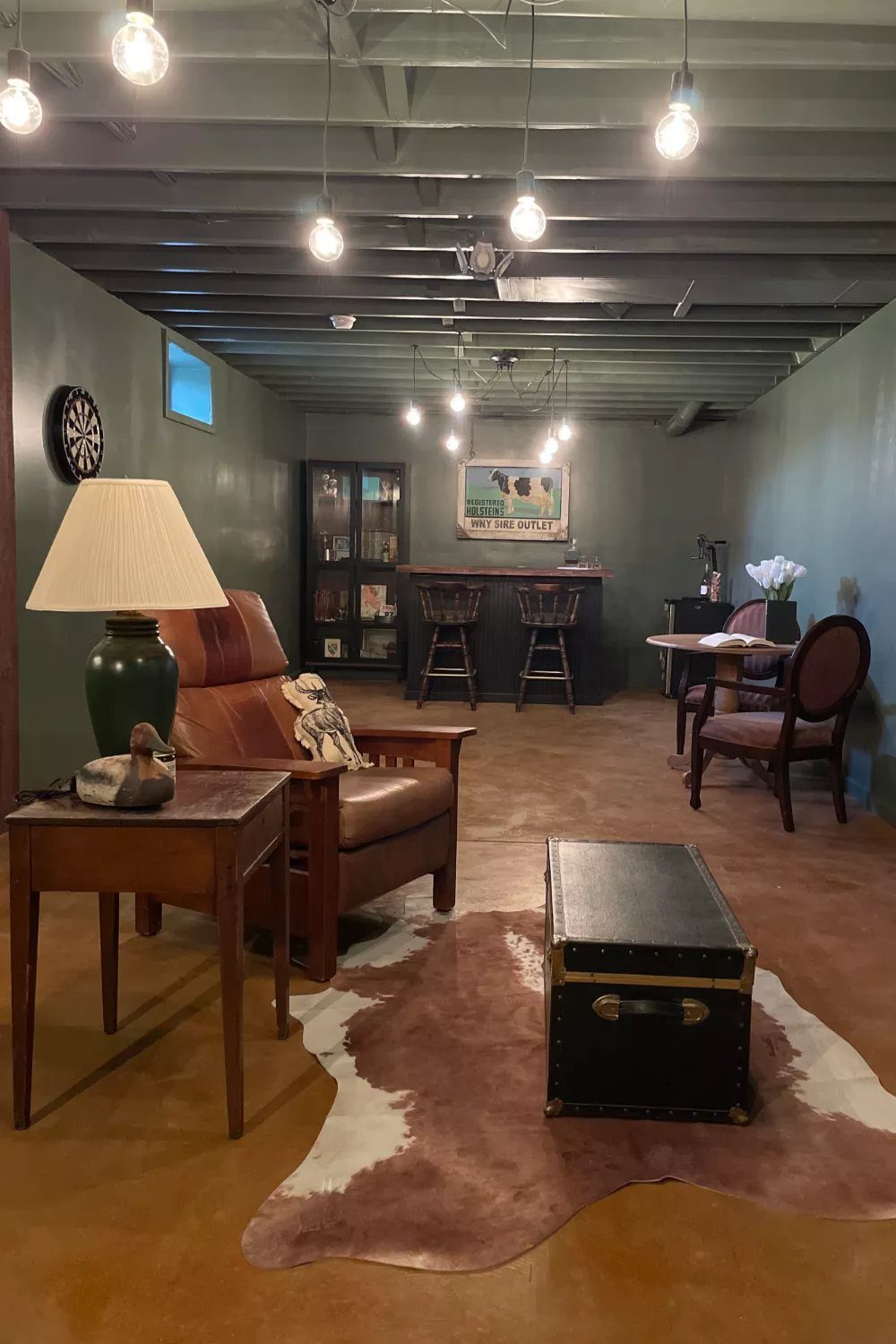
Dark green suits a basement living area built around warm things: leather chairs, a cowhide rug, a trunk used as a coffee table. The green acts like a backdrop, and the brown and tan tones stand out against it.
I’d pick a green with a little grey in it so it stays calm under lamp light.
A small bar corner gets the most from this color, since a sign or a few bottles read clearly against it. Test a sample patch on the wall before committing to the whole room.
Safety Measures During Painting
Wear gloves, safety goggles, and a mask while you scrub and while you roll; the cleaning stage kicks up mildew spores and concrete dust, and that’s often worse on your lungs than the paint.
Degreasers and other prep chemicals splash just like paint does, so put the gear on before you open the first container and read the label on each one.
Basement lighting is usually poor, so bring in extra work lights before you start. You can’t spot drips, missed patches, or a bad step on a ladder in dim light.
Anything past comfortable reach calls for a solid stepladder or a rolling scaffold, not a stack of buckets. Stretching from a bucket or a stack of boxes is how weekend projects end in the emergency room.
Air movement helps too. Crack the basement windows or run a couple of box fans so the fumes move out instead of pooling in a low room.
Choosing Paint Colors
Pick the color for the room’s light before you pick it for the photo. Light shades brighten a dark basement, and deeper shades make it feel snug and enclosed, so decide which of those you want first.
If the basement is open to a larger living area, check how the color sits next to the neighboring shades. Longer sightlines mean every color gets seen together, so the palette should read as one plan rather than separate decisions.
Paint a sample patch and look at it in the morning, at night, and under your lamps. Basement light changes a lot, and a color that looks right at noon can look different once the bulbs are on.
Post-painting Care
A wall can feel dry to the touch in a few hours, but the paint keeps hardening for anywhere from 7 to 30 days depending on the product and the humidity.
Pulling a couch back into place too soon is a quick way to scuff or peel a finish you just spent a weekend on.
If the basement runs damp or gets the occasional seep, I’d add a clear sealer on top. That extra coat helps the paint last longer and lets you wipe the walls down without scuffing the color.
Frequently Asked Questions
Can you paint basement cement?
Yes, concrete basement walls take paint well when the surface is prepped first. Patch damage, clean off dirt and oil, let the wall dry fully, then prime and paint with a masonry paint made for concrete.
Rough concrete shows less texture under a matte sheen, since gloss catches light on every pit and ridge.
Can you use Kilz on concrete basement walls?
Yes, Kilz Mold & Mildew Primer works on concrete, and its EPA-registered ingredients help the dried film resist new mold and mildew.
It blocks stains moderately well, but it only protects against growth that hasn’t started, so any mold already on the wall has to be cleaned off first.
Zinsser’s Mold Killing Primer does that, and it can be painted over after about 1 hour.
How do you paint a concrete foundation?
Inspect the concrete, patch any damage, and sand the filler smooth once it dries. Wash the wall with TSP and warm water to strip dirt and oil, and let it dry completely.
Then cut in the edges with a brush, roll on moisture-resistant paint, and press the second coat firmly into the pores and holes.
What is the best paint for basement block walls?
A moisture-resistant, mold-resistant acrylic or latex paint is the best bet, and Drylok is one option that can be tinted to a color. Latex and acrylic hold up to damp better than oil-based paint and wipe clean easily.
For block walls, I lean toward satin when moisture is the worry and matte when the surface is rough enough that you’d rather hide the pits.





