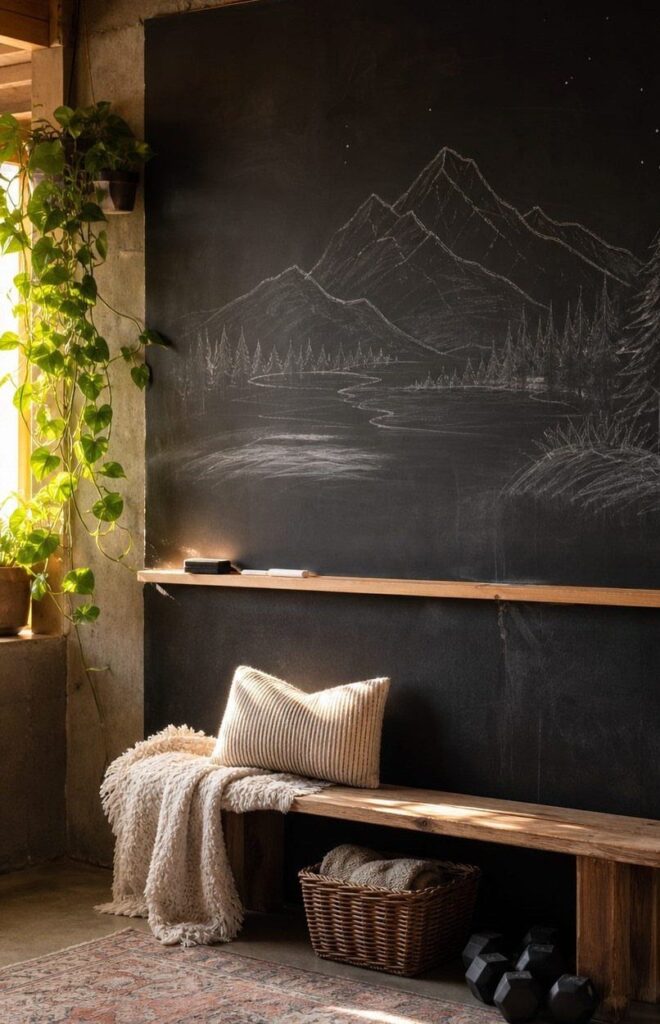
What your basement wall is made of today decides which of these ideas will work: bare concrete takes paint or panels mounted on furring strips, while wallpaper and faux brick need a finished, dry surface first.
The list runs from a rod and a set of black grommet curtains up to sculpted panels that cost more than paint or paneling, with most picks sitting in between.
Whatever you choose, deal with cracks and drainage before anything goes up.
1. Curtains for Walls
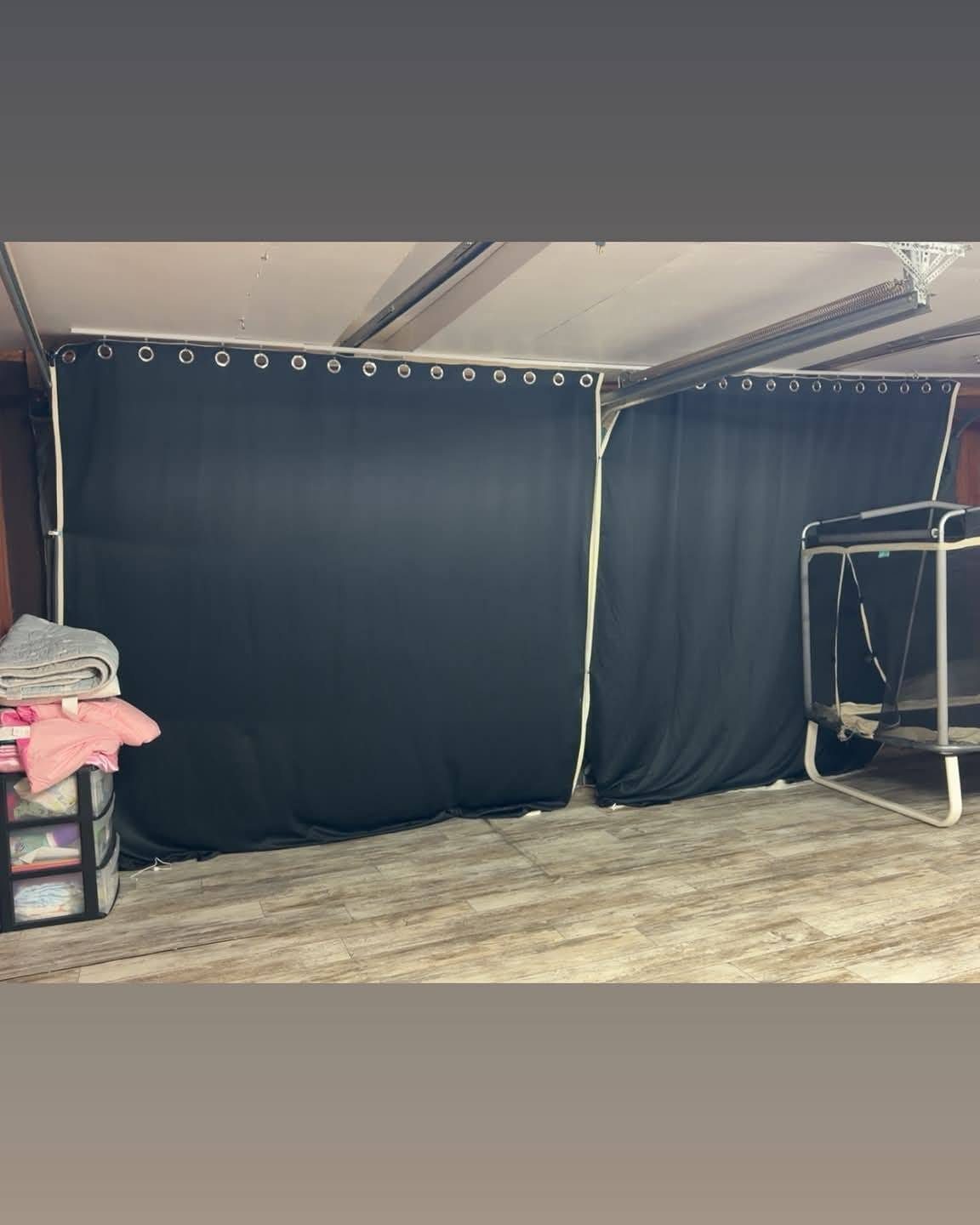
A rod, a set of black grommet curtains, and an ugly wall disappears in an afternoon.
Grommet panels slide easily along the rod, so you can pull them shut over bare concrete or framing and open them again when you need to reach something behind.
Hang the rod high and wide of the wall so the fabric covers the full width.
Black reads clean against light wood-look flooring, and it hides the gaps between wall and storage rack better than a pale panel would. Curtains hide the wall without finishing or insulating it, and they cost very little to hang.
2. 3D Textured Wall Panels
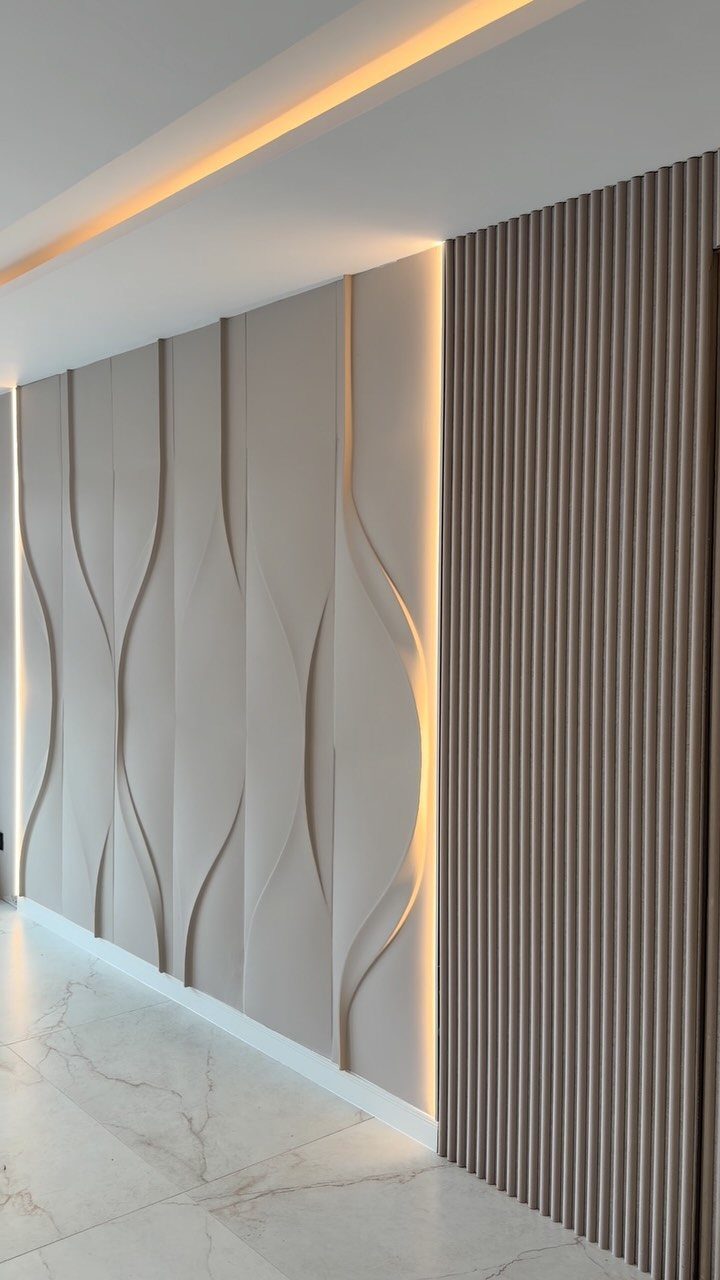
Sculpted panels with waves and vertical ribs turn one wall into the focal point of a basement, and they’re the boldest pick here.
I’d limit them to a single wall, the one you face when you walk in, so the room doesn’t feel busy.
A beige tone keeps the texture soft, and a strip of warm LED light along the ceiling edge makes the curves throw shadows at night.
Expect to spend more than on paint or paneling, so price the square footage before you commit. Panels also need a flat, dry surface behind them.
3. Masonite or Luan Panels
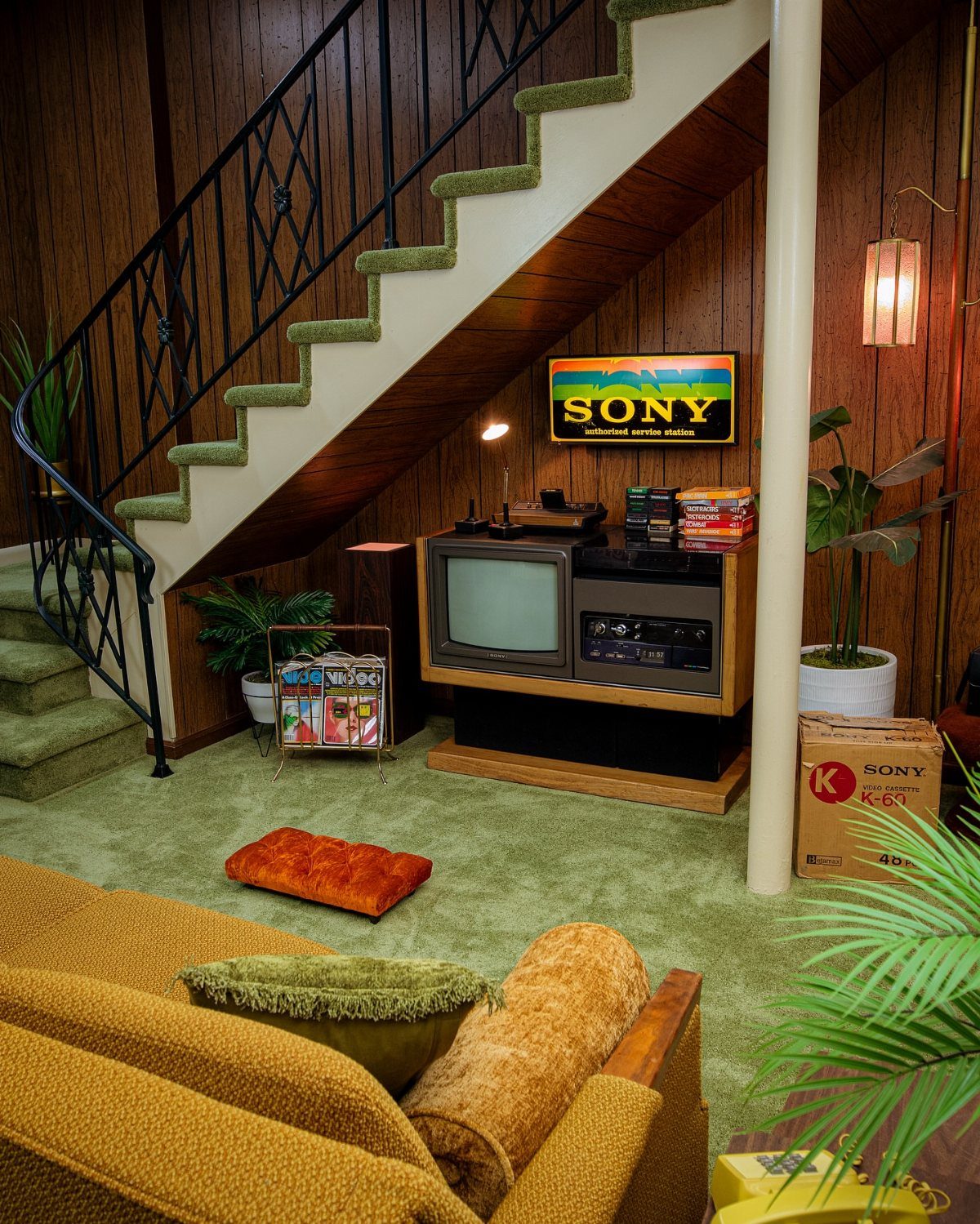
Thin wood-grain sheet paneling is the old budget route to a finished-looking wall, and in a basement it still makes sense. It costs far less than drywall, and you skip the taping, mudding and sanding that eat weekends.
Brown paneling with green carpet leans hard into a retro look, which I like if you’re building a TV den. For a fresher feel, paint it.
Sheets are large, so have them cut at the store if your vehicle is small. Check that the wall behind is dry before you fasten anything.
4. Pegboard Walls
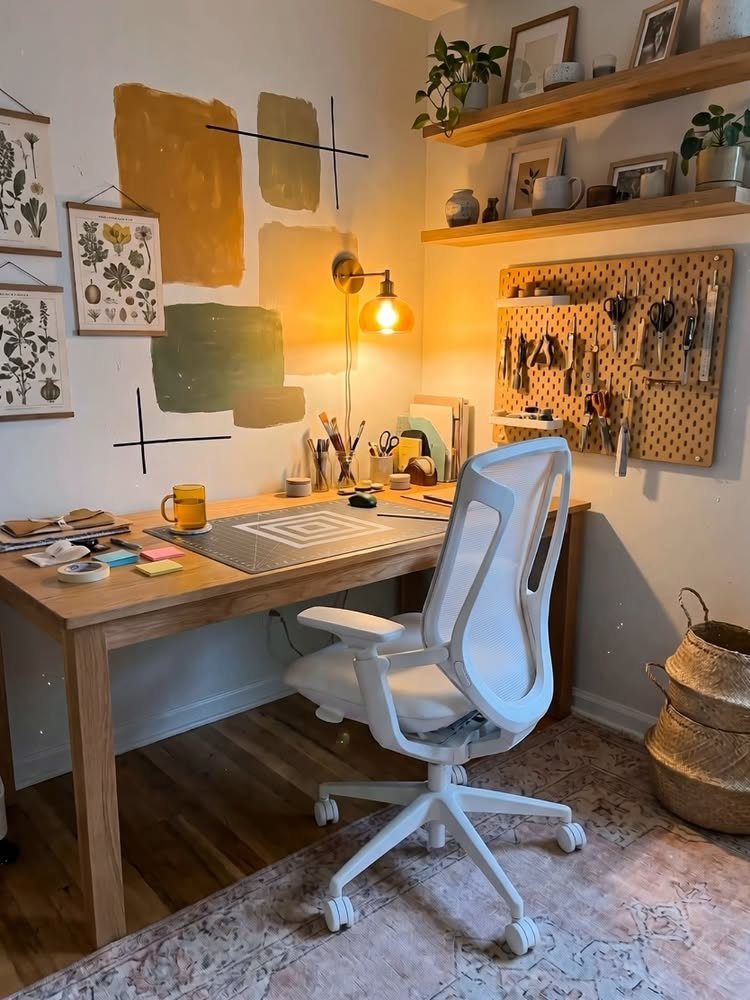
Pegboard earns its place in a basement office because the wall itself becomes storage. Hang tools, scissors, cords and small shelves on hooks, and rearrange them whenever your setup changes.
I like it painted white, like the wall here, so the hardware stands out and the board doesn’t look like a garage.
Pair it with a few floating shelves for plants and photos, and the practical part turns into decoration. The limit is weight: pegboard holds light items well, but heavy tools need to sit on proper shelves.
5. Shiplap Walls
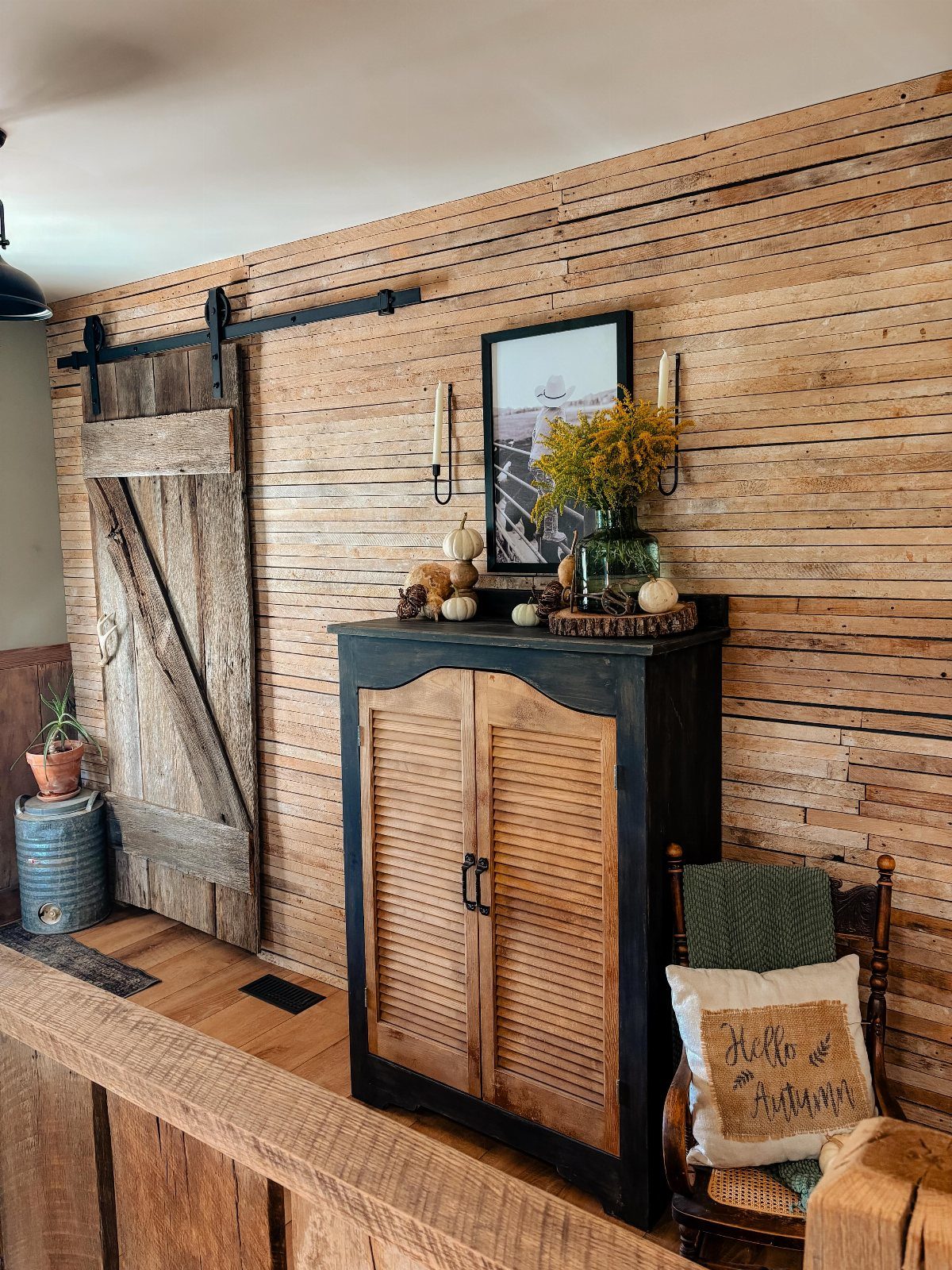
Horizontal wood planks give a basement the cozy, farmhouse look that painted drywall can’t. Shiplap pairs naturally with a sliding barn door and dark cabinetry, and the natural wood tone adds warmth to a room that otherwise runs cold.
Each board is a separate piece to cut and nail, so it takes more time than a panel wall.
Do one wall first, the one that gets seen most. If the budget is tight, leave the rest of the room painted a simple neutral.
6. Faux Brick Walls
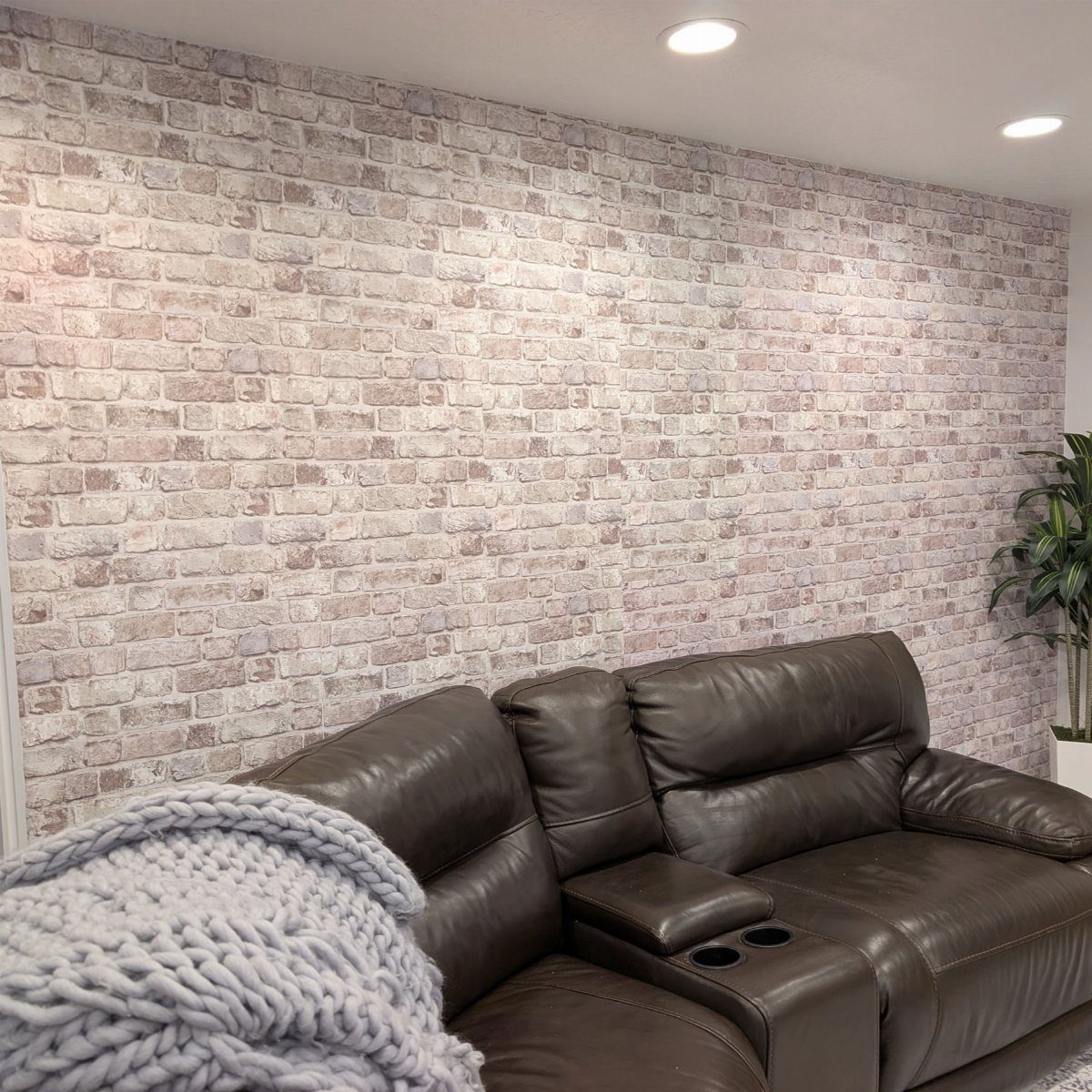
Brick-pattern wallpaper gets you the exposed-brick look for the price of a few rolls, with no mortar, no weight and no structural worry.
A light-colored version works best in a basement, since real brick tones can make a low room feel closed in.
Use it on one accent wall, like behind a sofa, and keep the rest plain.
Smooth the seams carefully so the pattern lines up, because a mismatched brick row gives it away. Up close it won’t pass for the real thing, but across a room it reads well.
Basement walls are typically made of concrete block, brick, or even poured concrete, and they can be transformed pretty quickly and simply with a coat of paint.
— Bob Vila
7. Painted Accent Wall
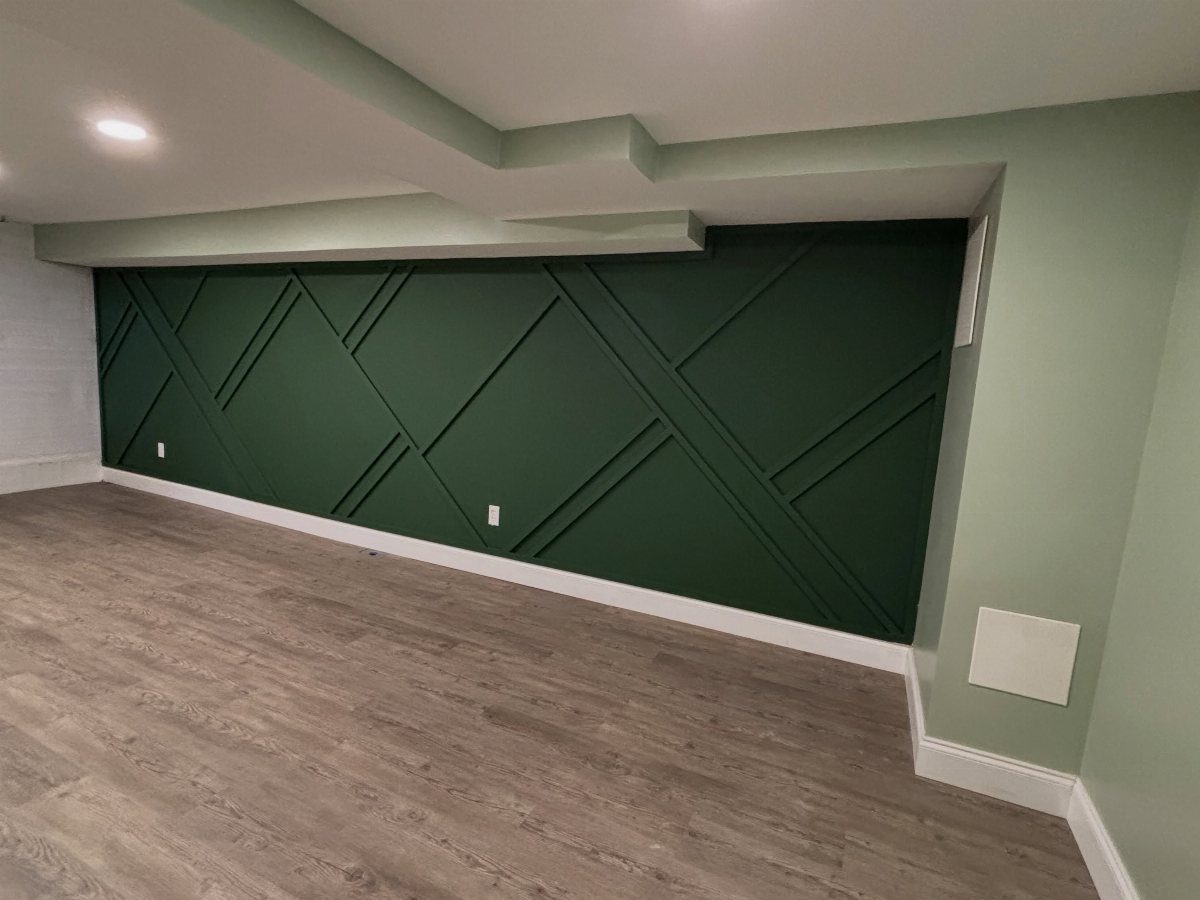
One dark wall does more than painting all four, and the material cost stays low. Deep green against lighter green walls gives the room depth without a single new piece of furniture.
Raised slats in a geometric pattern add texture, though they cost more and take longer than paint alone. If that’s too much for the budget, a flat coat on one wall still makes the focal point.
Pick the wall you face first when you walk in, and keep the others a lighter shade so the dark one stands out.
8. Wallpaper Walls
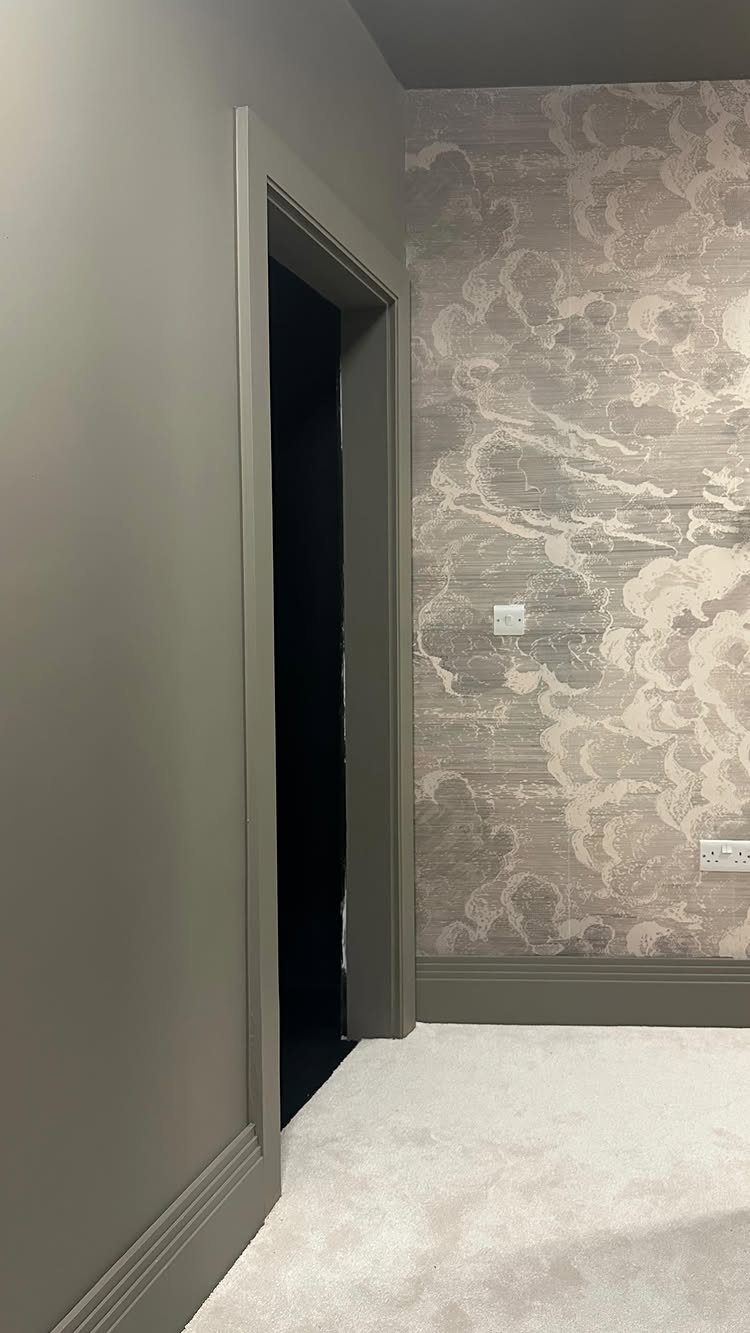
Marbled wallpaper in beige and grey gives a plain wall movement without any carpentry. Soft cloud patterns are easy to live with, and they sit well beside grey paint and grey trim.
I’d paper one feature wall and leave the rest painted, which keeps the cost to a few rolls.
Choose a pattern with a soft, flowing design, because it’s more forgiving at the seams than a bold geometric. Wallpaper needs a smooth, dry wall, so skip it on bare concrete until the surface is dealt with.
9. Corrugated Metal Walls
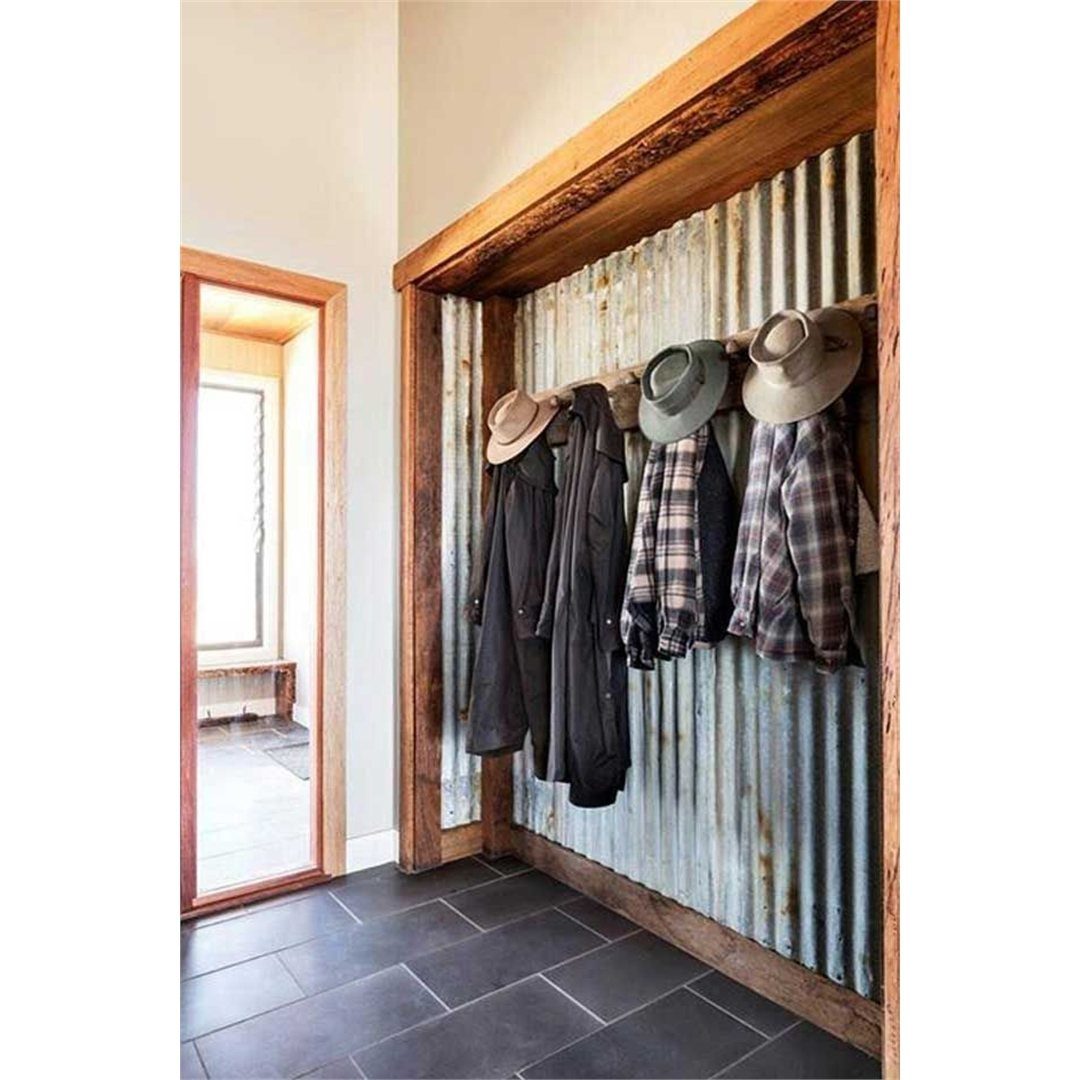
Corrugated metal brings an industrial look to a basement wall, and it suits a mudroom or entry spot where coats and bags land. Ridged panels are tough, easy to wipe down, and a good match for a rail with hooks.
Frame the edges in rustic wood so the metal looks planned and the cut edges stay out of sight.
Wear gloves when you handle the sheets, since the edges are sharp. Dark tile underfoot keeps the whole corner practical and easy to clean.
10. Pallet Wood Walls
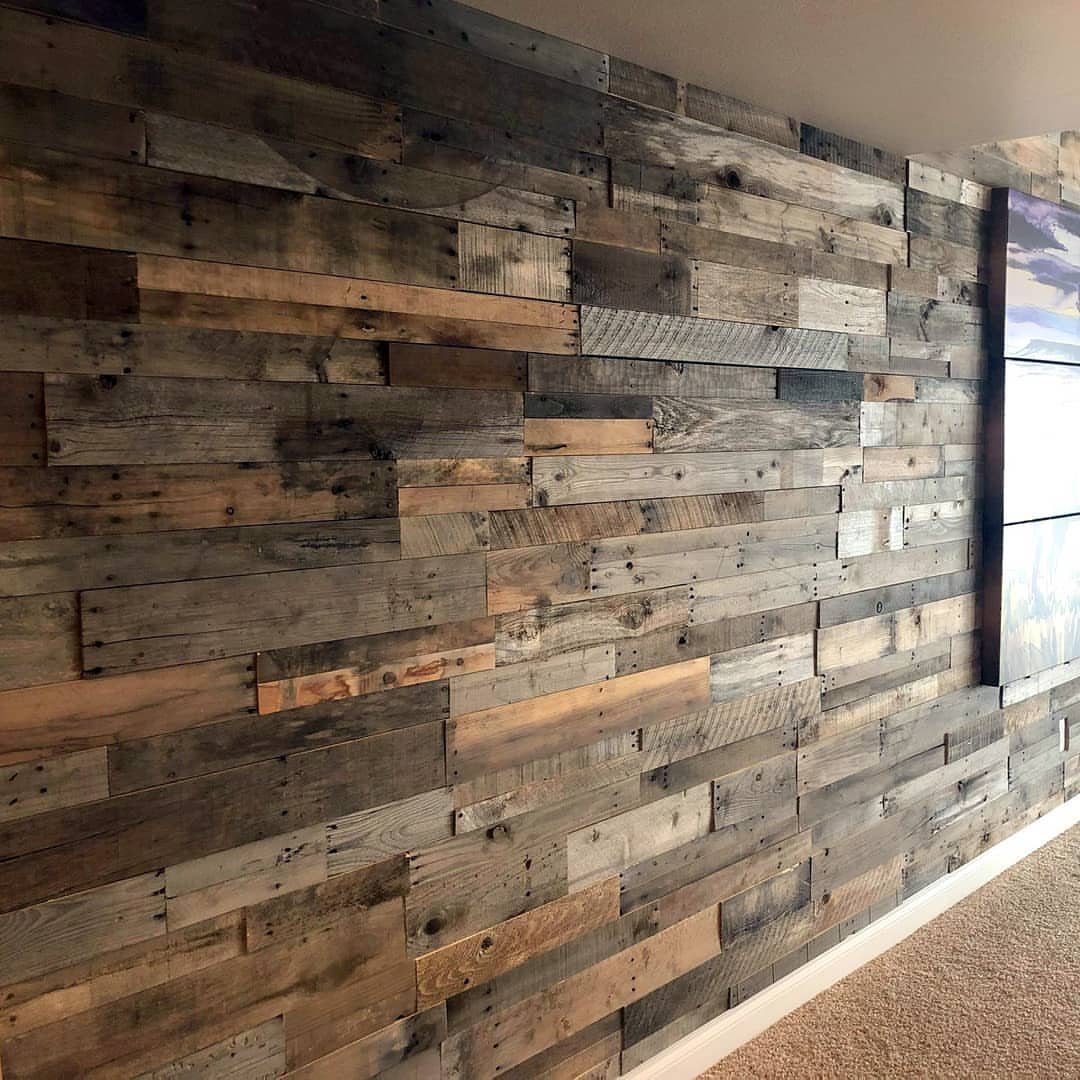
Pallet boards in mixed greys and browns give a wall a rustic, weathered look for little money, since the wood is reclaimed. The variation in tone is the appeal, so don’t try to match the boards.
Run the planks horizontally and sort them by shade before you nail anything up, so dark and light boards spread evenly.
Sand rough faces and check for stray nails first. A white baseboard along the bottom gives the rustic wood a clean edge against the carpet.
Moisture Control
Basements pull moisture from the ground around them, and once you cover the walls, mold gets the dark, damp conditions it needs without you noticing.
Start with the cracks. Seal them, and fix any drainage problem outside or underneath that feeds water to the wall, because a sealed crack won’t hold if water keeps pushing against it.
Then pick materials that tolerate damp. Mold-resistant drywall and PVC wall coverings are both made for basements.
On bare concrete, a heavy masonry sealer applied directly to the surface is the cheapest protection I know of. Where a wall needs framing and finishes in front of it, add a vapor barrier first.
Skipping this step is the one mistake that can ruin every finish you put up afterward.
DIY Tips
Doing the work yourself is where a basement budget stretches furthest, since labor is usually the biggest line on a contractor’s quote.
It also lets you make small calls on the spot: which wall gets the effort, how much storage you want, what color the room ends up.
Choose projects by skill and time.
Paint, hanging panels and mounting a rod are easy first jobs. Anything that needs cutting and fastening many pieces is better saved for a second weekend.
Think about what the room will become, too. A guest room needs different wall treatment than a home gym or a theater, and the choices you make down there affect resale whether you plan to sell or not.
Cost Considerations
When the full finishing budget isn’t there yet, stopping at painted concrete still gives you a usable space. Good masonry paint covers stains and rough spots, brightens a dim room, and reads clean without adding cost or complexity.
It suits storage rooms, laundry areas, workshops and fitness rooms, where a full wall finish adds little. It’s also low-maintenance, so you aren’t signing up for upkeep later.
Spend where it counts and save everywhere else.
Reclaimed materials cut the cost of wood, and simple installs keep labor off the bill. Finish one area at a time, and the rest of the basement can wait until there’s money for it.
Frequently Asked Questions
What is the cheapest way to finish basement walls?
Painting straight onto concrete is the cheapest option, and a single dark wall adds more interest than coating every surface the same color.
Curtains on a rod cost little too, but they only hide the wall. Thin paneling with a wood-grain finish runs well under the cost of drywall and skips 3 messy steps.
What can I cover my basement walls with?
Curtains, paneling, shiplap, pegboard, wallpaper, faux brick wallpaper, corrugated metal and reclaimed pallet boards all cover basement walls.
Match the choice to the wall: bare concrete suits masonry sealer or paint, while wallpaper and panels need a smooth, dry surface. Check for moisture first, because covering a damp wall hides mold until it spreads.
How to finish an unfinished basement?
Before anything else, address moisture: patch any cracks and stop water from reaching the foundation. Then choose a wall finish that tolerates damp, and add a vapor barrier before framing and finishes go in front of a wall.
If money is short, painted concrete leaves the space usable, and you can finish one area at a time as the budget allows.
How much to put walls in a basement?
Cost depends heavily on the finish you pick. Direct-to-concrete paint is cheapest, plywood panels land between $1 and $5 per square foot, and brick veneer climbs to $5–$15.
Taking on the work yourself keeps the most money in your pocket, because labor typically eats half or more of what a contractor charges.





