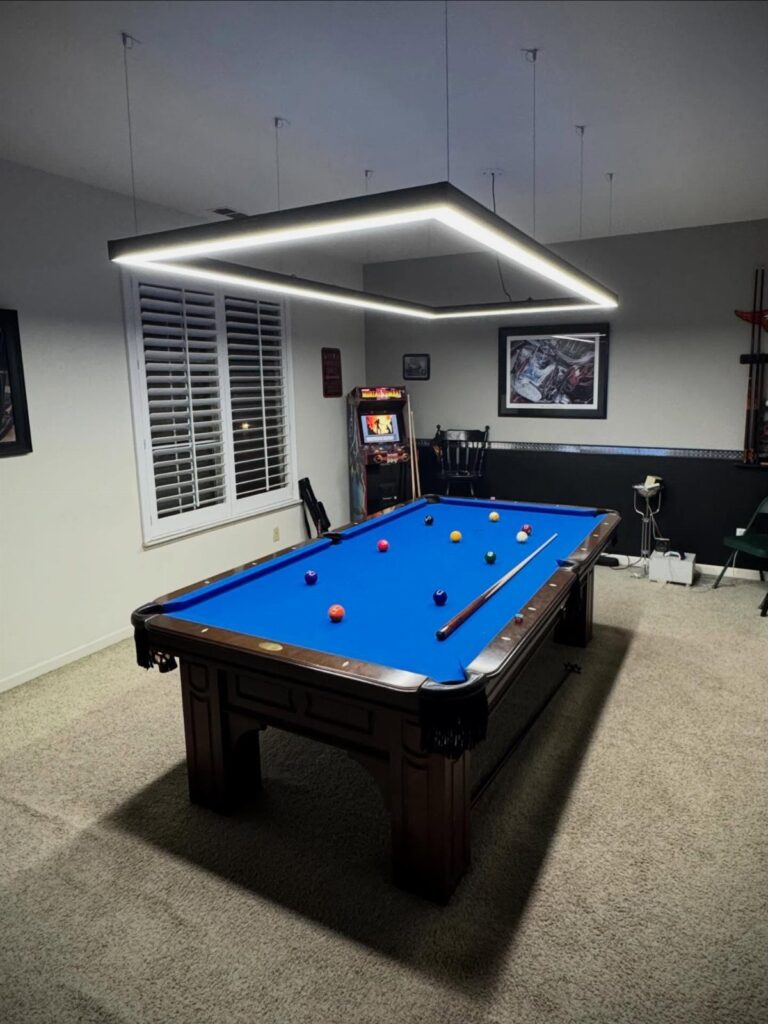
The ideas here run from lighting and seating to color choices and room layout, and what you pick depends on how much floor space sits clear of the rails.
A room with enough clearance can handle a bold choice like an all-black table or patterned felt. A tight room is better served by a lighter palette and one extra table, not three.
1. Lighting
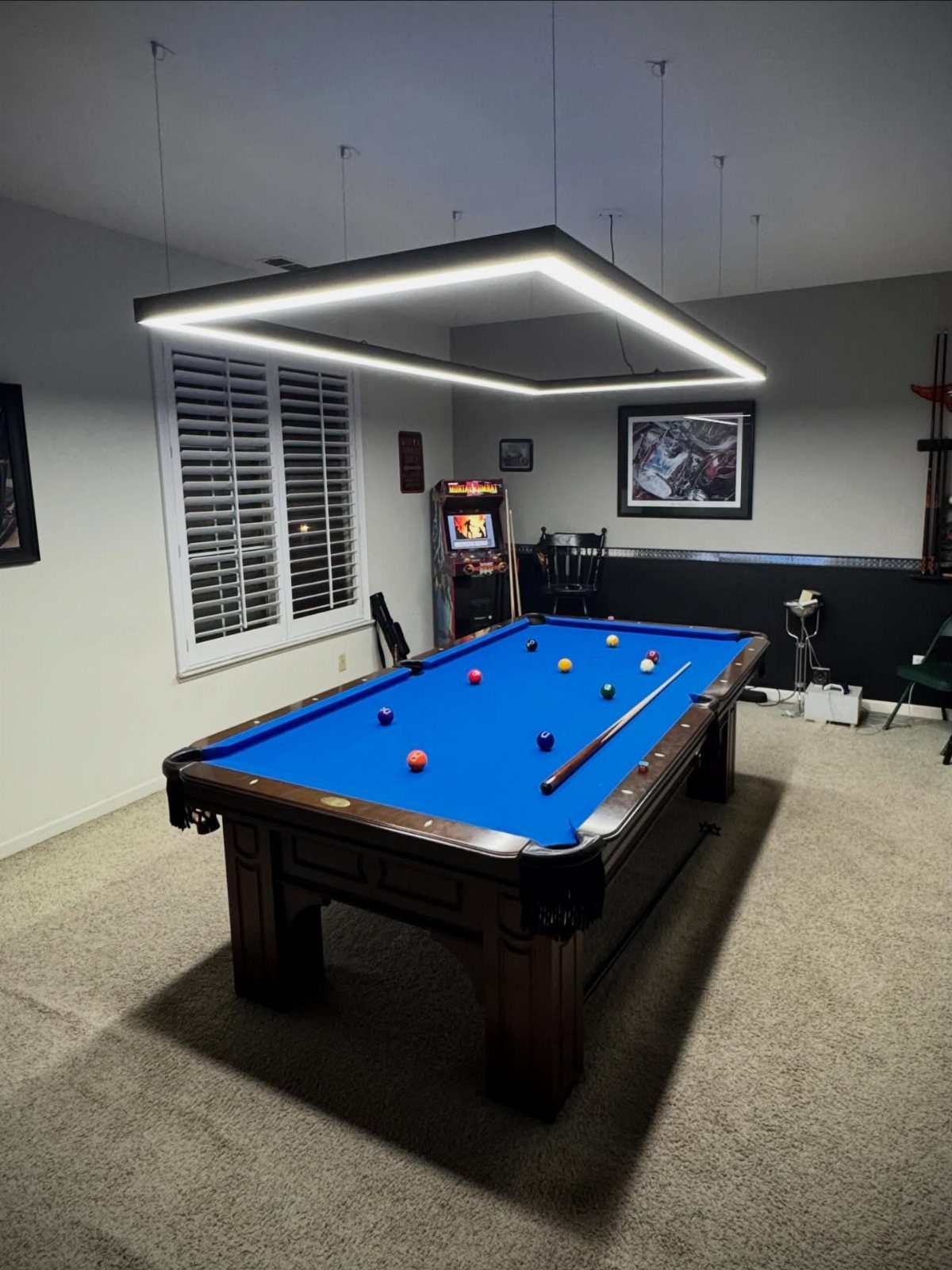
A rectangular fixture sized to the table is the version I’d pick, because a single round pendant leaves the ends of the felt in shadow.
Long and low over the playing surface, it throws even light across all of it, and an LED unit keeps glare off the balls.
Hang it so the bulbs sit below eye level for most players, but high enough that a raised cue never grazes it. Test the height with a cue held straight up before you drill into the ceiling.
2. Armchairs and Bar Stools
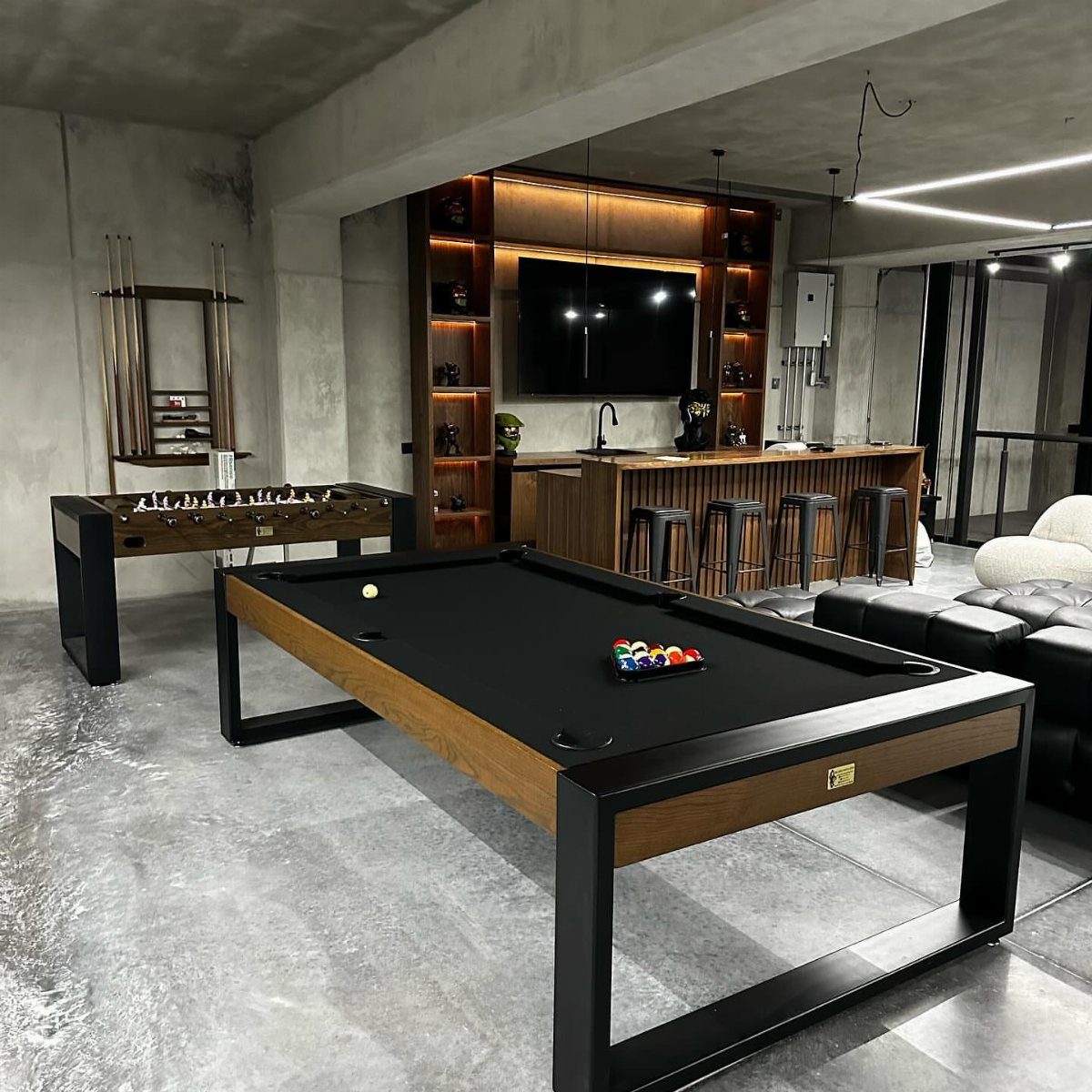
Black bar stools tucked under a counter give spectators somewhere to perch without crowding the cue paths. Stools at the bar give people a place to watch without taking the sofa from those who want to settle in longer.
Choose backs or swivel seats if guests will stay put; backless stools slide under the counter and save floor space. Add an armchair or two only if the walkway around the table stays clear.
3. Game Room Features
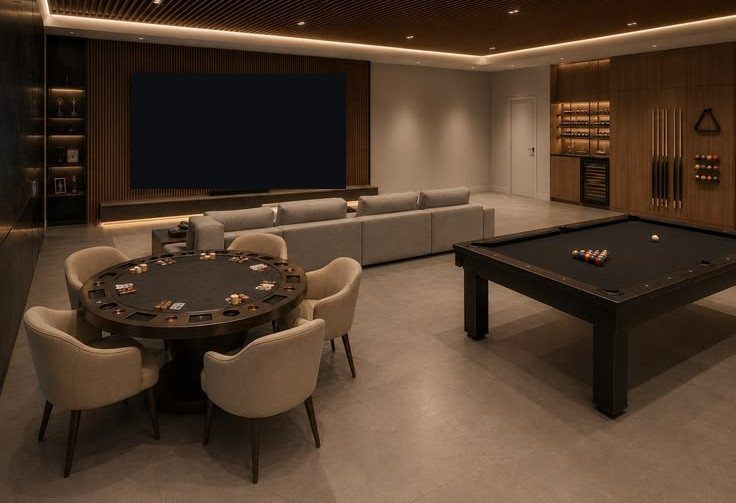
A round poker table beside the pool table gives the room a second reason to gather, so the evening doesn’t end when someone wins the rack.
A card game needs enough chairs for the players and a footprint that still leaves room to move.
Pick one extra table, not three. Foosball, darts or cards each work, but crowding them all in leaves nobody room to swing a cue.
4. Room Planning
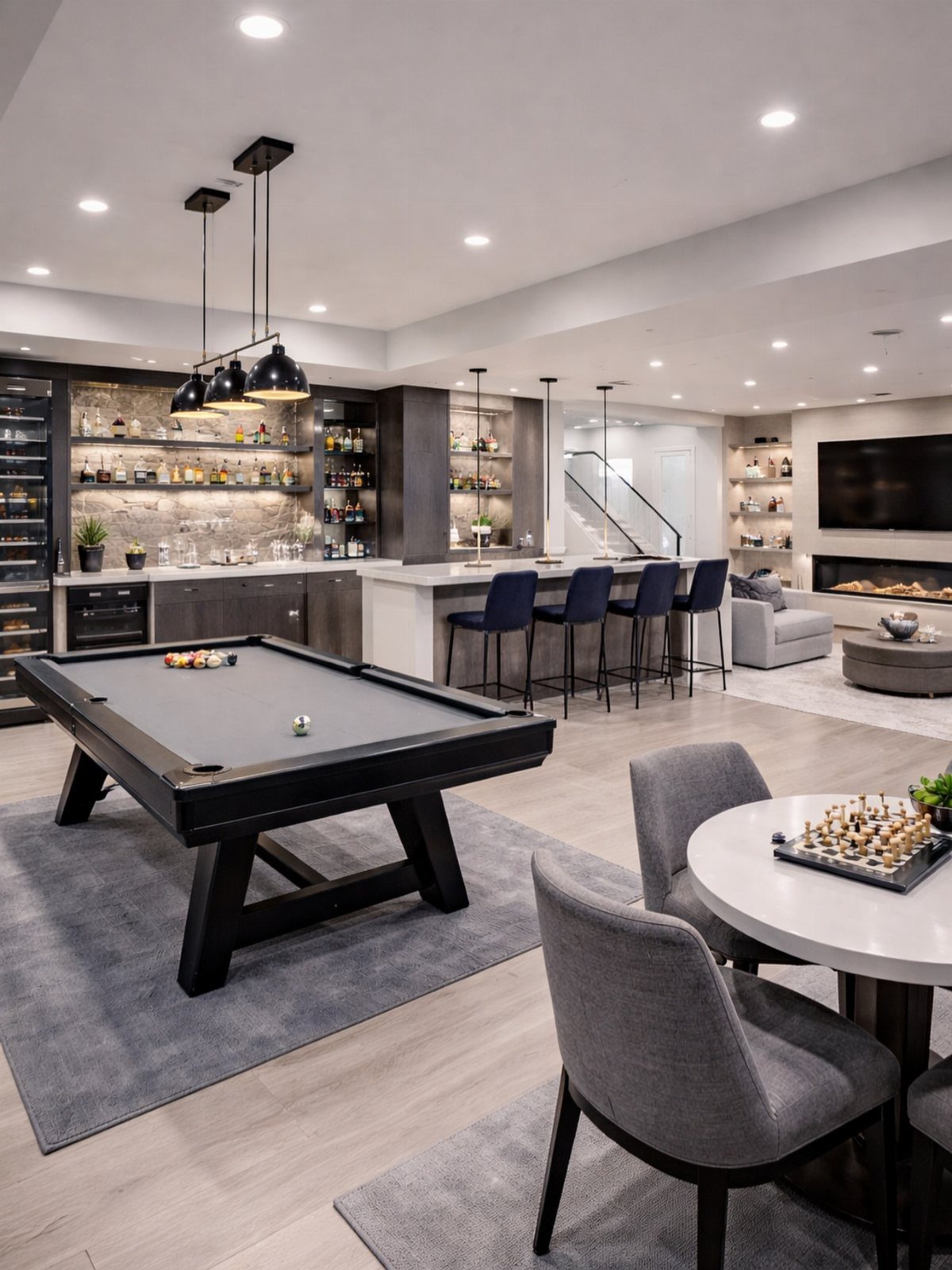
Before buying anything, tape the table’s outline on the floor and walk around it with a cue.
Cue length decides more about a game room than decor does: a wall, bar or sofa too close to the rails turns every shot into a negotiation.
Then place the fixed pieces in order: bar, TV wall, seating. Leave the table in the open middle, then push the lounge and bar to the edges, as a basement with a fireplace and wet bar can do.
5. Color Palette
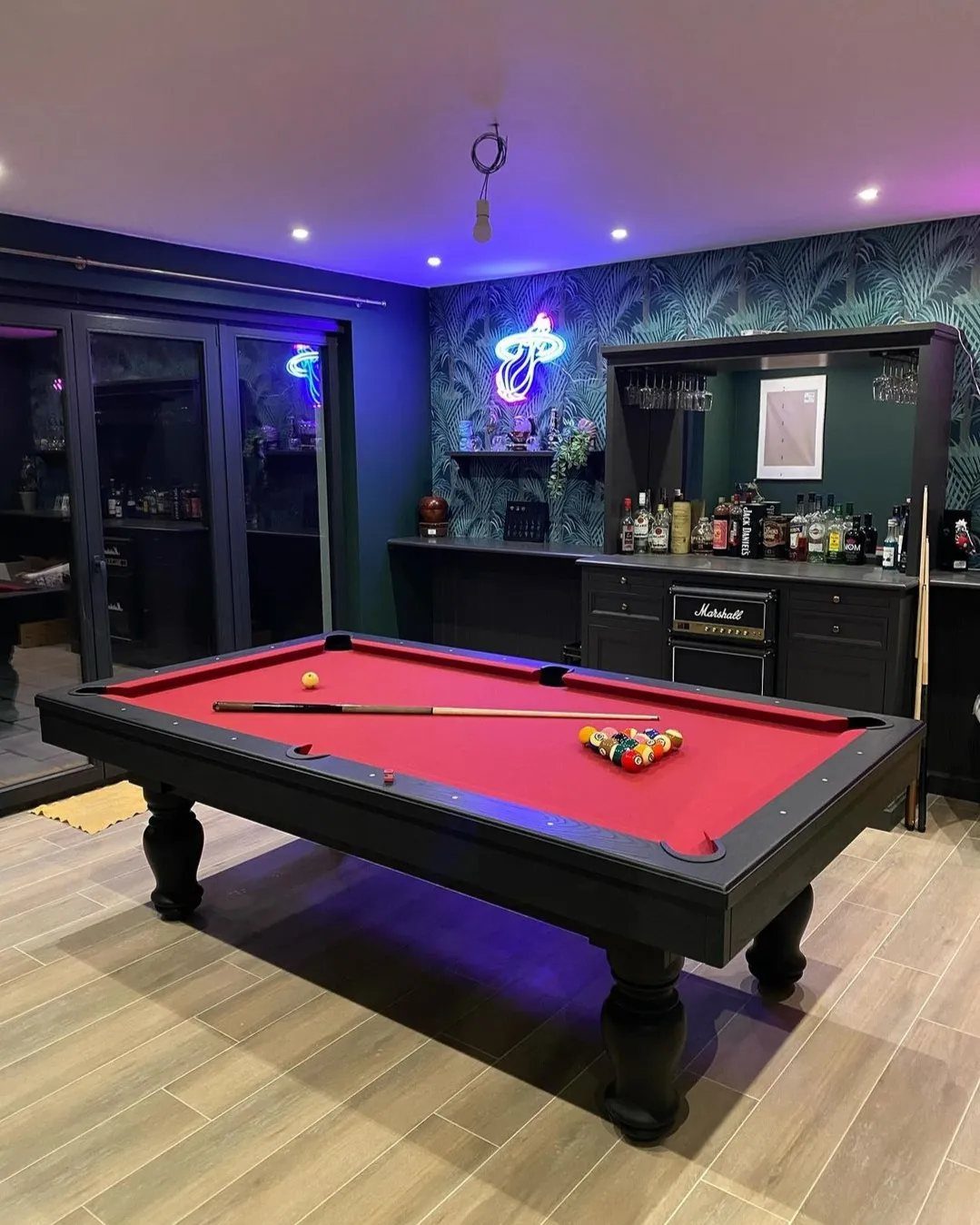
Pick one dominant color, one accent, and let the rest stay neutral.
Here the black table, red felt, deep green wallpaper and blue neon would fight if each had equal weight, so the dark walls carry the room and the felt becomes the single bold note.
Paint a sample patch and hold the felt swatch against it under your actual lighting before committing. Wallpaper this loud works best on one wall or a bar nook, not all four.
6. All-Black Pool Table Setup
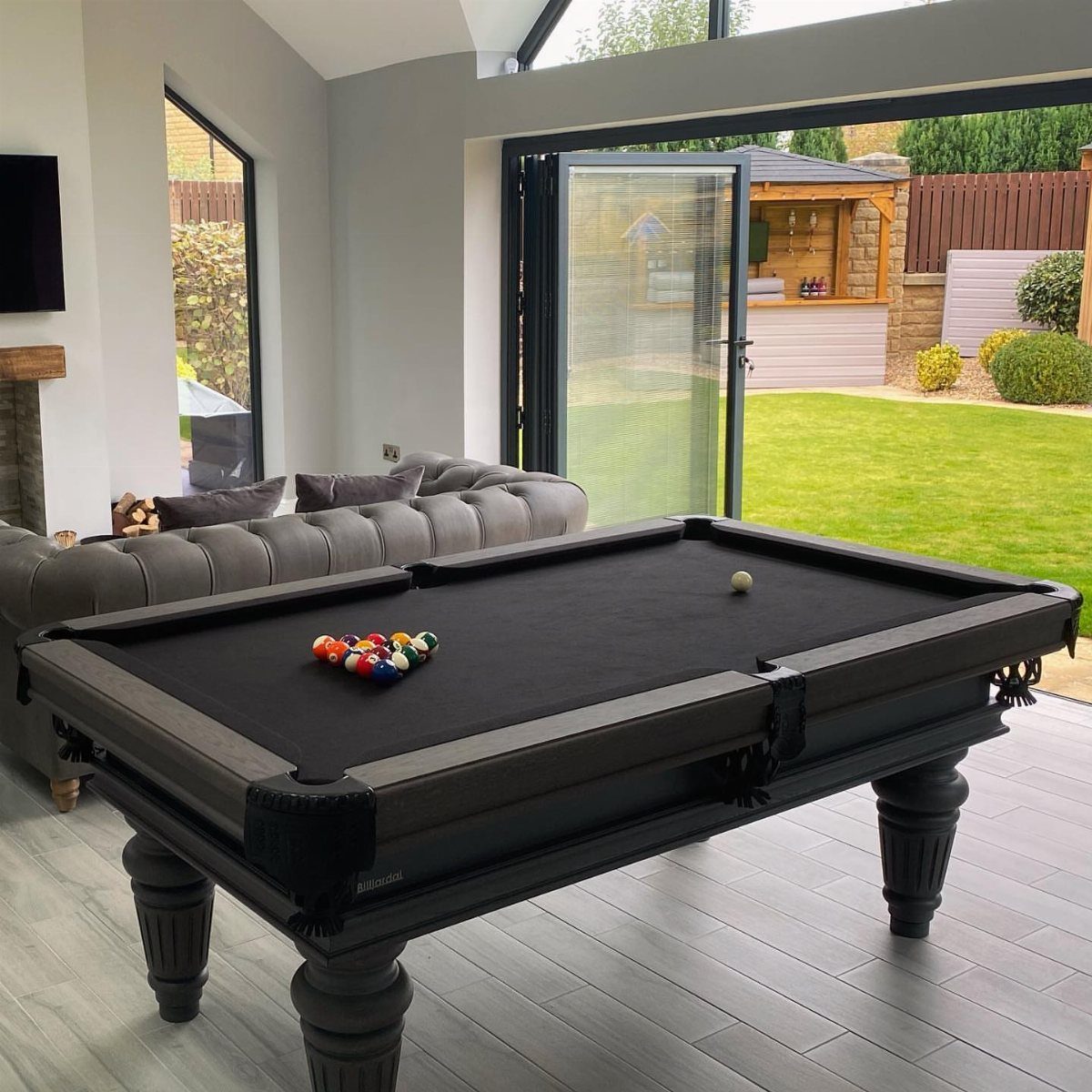
Black felt on a black table is the most dramatic way to go, and it pairs well with grey tile and a grey leather sofa. The balls pop against the dark surface, which I like more than I expected.
Expect it to show chalk dust, so keep a brush and a small vacuum nearby. Keep the walls and seating in mid greys so the room reads sleek, not heavy.
7. Patterned Felt Pool Table
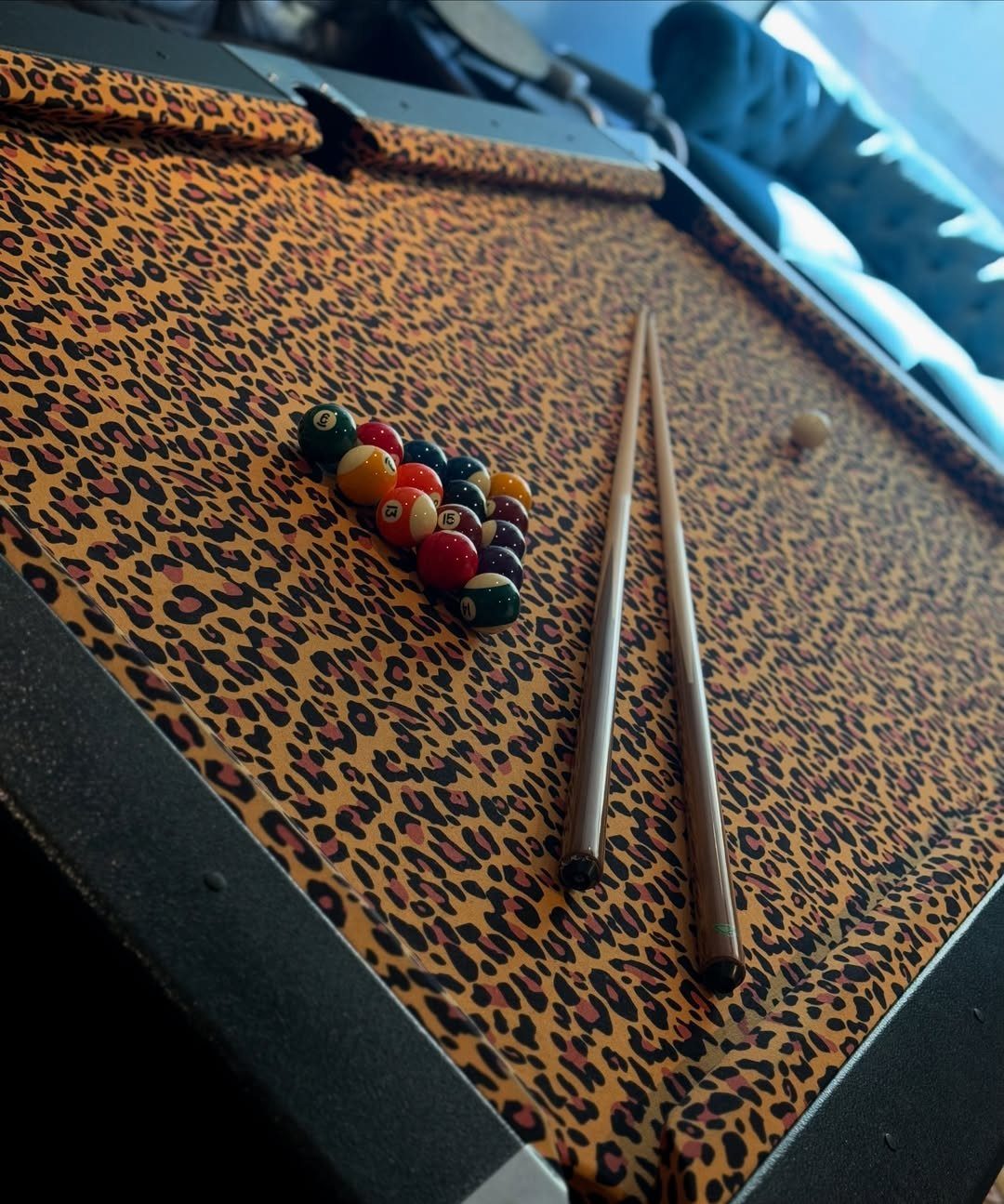
Leopard felt turns the table into the loudest thing in the room, so the rest has to stay calm.
A solid tufted sofa nearby, in blue as here, gives the eye somewhere quiet to rest while the print does the talking.
I’d keep the walls plain and let the balls and wooden cues supply the extra color.
One pattern per room is plenty. Hold a felt sample under your real lighting before ordering, since prints shift more than solids do.
8. Bright Coastal Modern Aesthetic
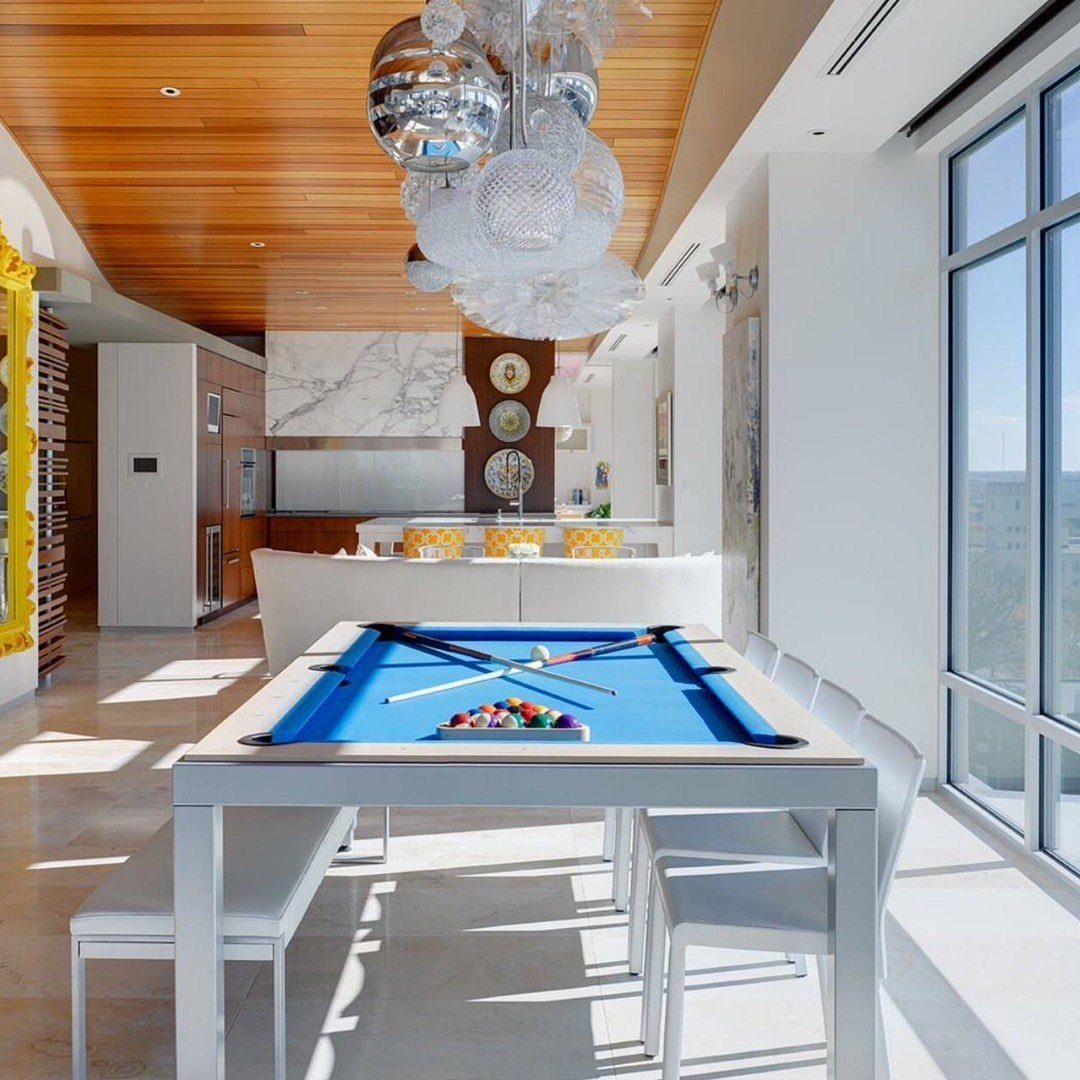
White rails with blue felt suit a room that already has light: wood overhead, white walls and big windows do the heavy lifting, and the table simply joins them.
Blue stays cool against all that warm timber, which keeps the room from feeling sterile.
If your basement has no windows like these, I’d skip the white table.
It needs daylight or strong lighting to look crisp, and it will show scuffs. A white-painted ceiling beam or 2 helps fake the effect.
9. LED Under-Rail Table Accent
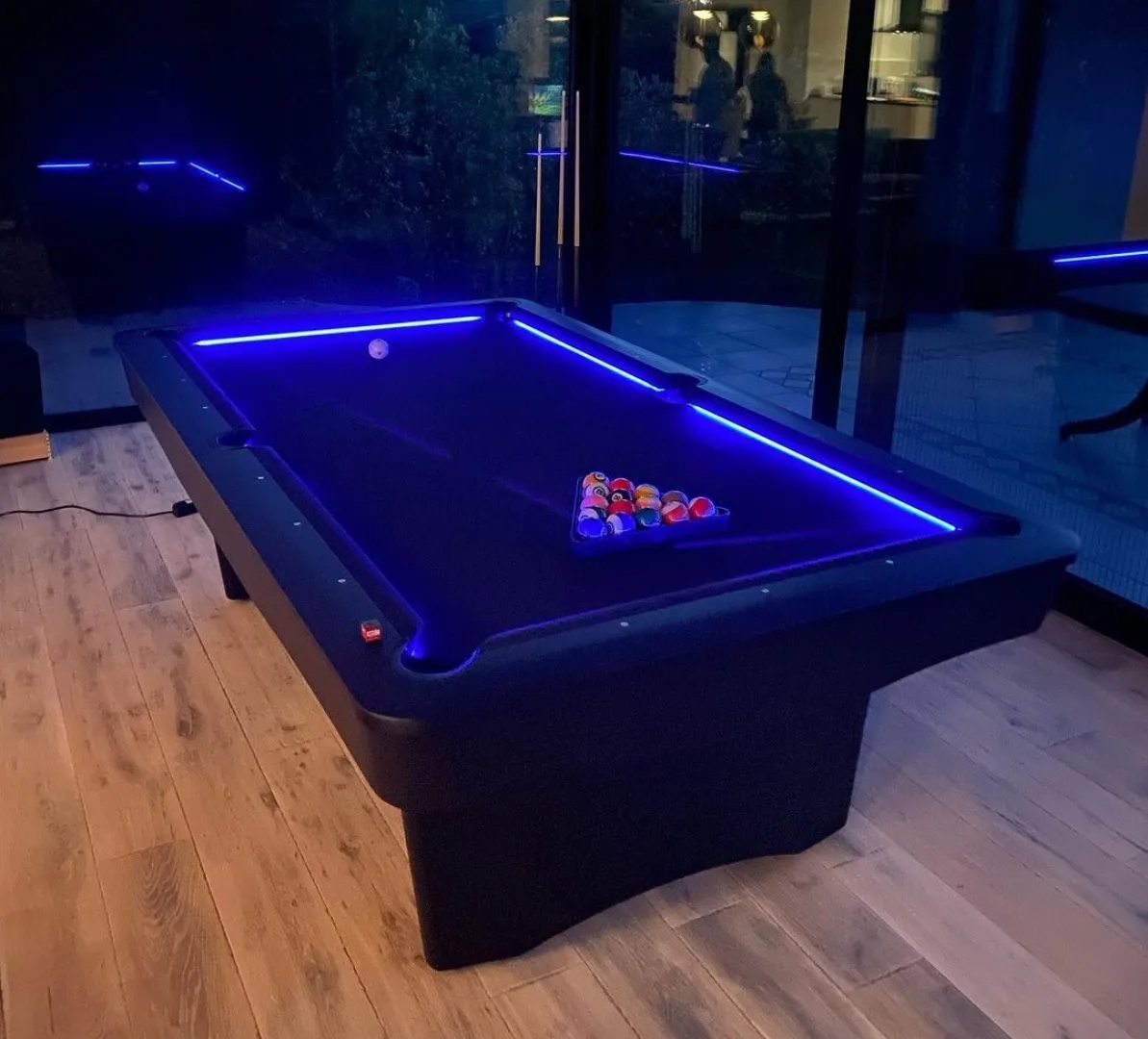
A blue LED strip tucked under the cushion rails makes a dark table appear to float, and it’s the cheapest upgrade on this list.
Strips are sold by the roll and stick on with adhesive backing, so a weekend is plenty.
Mount the strip on the underside, where it can’t be seen from above, so only the glow shows.
Pick a plug-in strip with a remote if you want to dim it for card nights. Blue reads cooler than warm white, so keep the other lights low.
Tips for Entertaining
Built-in storage keeps a hosting night from turning into a hunt for chalk.
A wall rack for cues plus a shallow cabinet or drawer unit for chalk, triangle, and spare balls clears the rails and the floor, and everything lives where guests can find it.
Sound matters as much as storage, because a pool room fills with talk, clacking balls, and a TV at once.
I’d put money into a decent audio system before adding another piece of decor. Wall or ceiling speakers keep cords off the floor and leave the walls free for cue racks.
Design Inspiration
Start by choosing a direction before you buy anything: a classic pool hall, a modern room that happens to hold a table, an upscale games room, a European look, or a man cave.
Each one points to different wood, fabric, and lighting choices, and mixing all five is how rooms end up confused.
A masculine palette with rich wood reads traditional, and it doesn’t have to feel heavy. Mid-century seating and sheer drapes add lightness and keep the room from dating itself.
Existing architecture can do the work for you. An arched entry or older trim you already have is a better starting point than tearing out walls.
Billiard Table Styles
Pockets decide the style more than most people expect. Leather net pockets hang outside the table and suit a wooden library or rustic cottage room better than a sleek modern one.
Drop pockets hold balls inside each pocket rather than returning them, and they keep the lines simple in contemporary rooms.
Any base that holds a level slate of the right size can work, and a classic Mustang convertible cut down into a frame is one example.
If you go that route, matching wall decor, such as framed photos of other classic cars, ties the idea together.
For tight houses, a convertible table that sits under a dining top does double duty. A white dining tabletop set over the pool table lets the room serve as a dining space when no one is playing.
A pool table should not be relegated to a corner of the basement, but rather showcased in a cozy game room that is stylish as well as functional.
Frequently Asked Questions
Where to place a pool table?
I put the table in the center of the room with at least 5 feet of clearance on all sides, which calls for a space around 18 by 14 feet or larger.
A full-length cue measures 58 inches, so you need room to pull it back on every shot without hitting a wall or furniture.
How high should a pool table light hang?
I hang the fixture so the bottom edge sits 32 to 36 inches above the felt, low enough to light the table without glare but high enough that a standing player never hits it with the cue.





