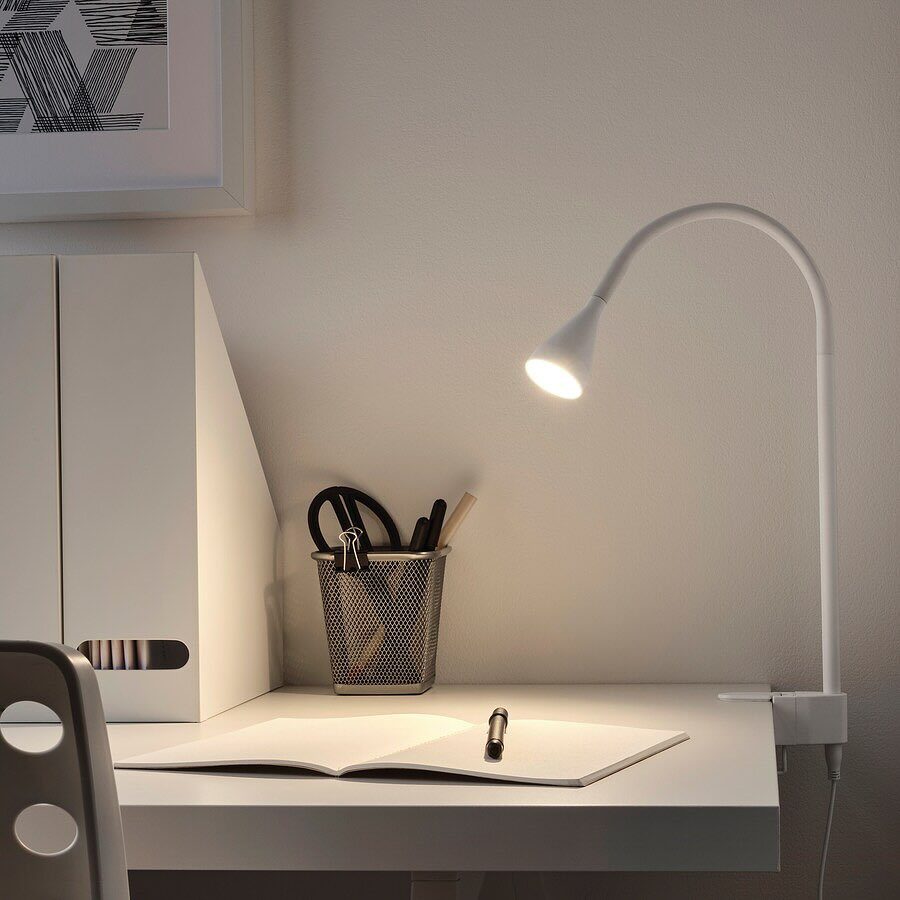
The ideas here run from a single NÄVLINGE desk lamp to a whole closet turned into an office, and the space you can spare decides which one fits.
If the space has to be something else after work, pick a piece that folds, rolls or closes, like the IVAR fold-down desk or the gateleg table.
If a corner is truly yours, a desk with a built-in hutch or a cube shelving combo can stay put and build storage upward. Either way, the desk surface should hold little more than a lamp and a laptop.
1. NÄVLINGE LED Desk Lamp
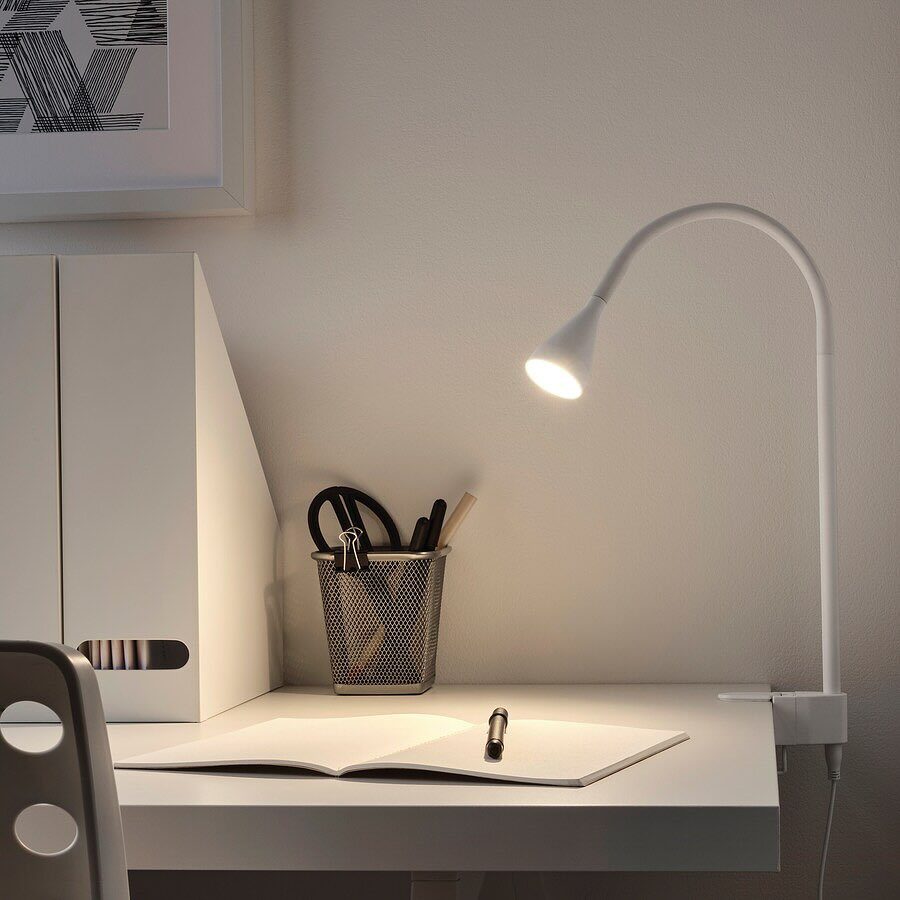
A spotlight-style lamp like the NÄVLINGE earns its spot on a small desk because the beam lands on the page and leaves the rest of the surface clear.
A focused beam like this keeps light on the page and off the rest of the desk, which cuts glare and eye strain during long stretches of reading and writing.
I would aim the head at your writing hand’s opposite side, so your forearm doesn’t throw a shadow across the notebook. Pick white if the desk and wall are white too; the lamp then fades into the background.
Lighting is the cheapest upgrade on a desk, and this is where I’d spend first.
2. TONSTAD Desk
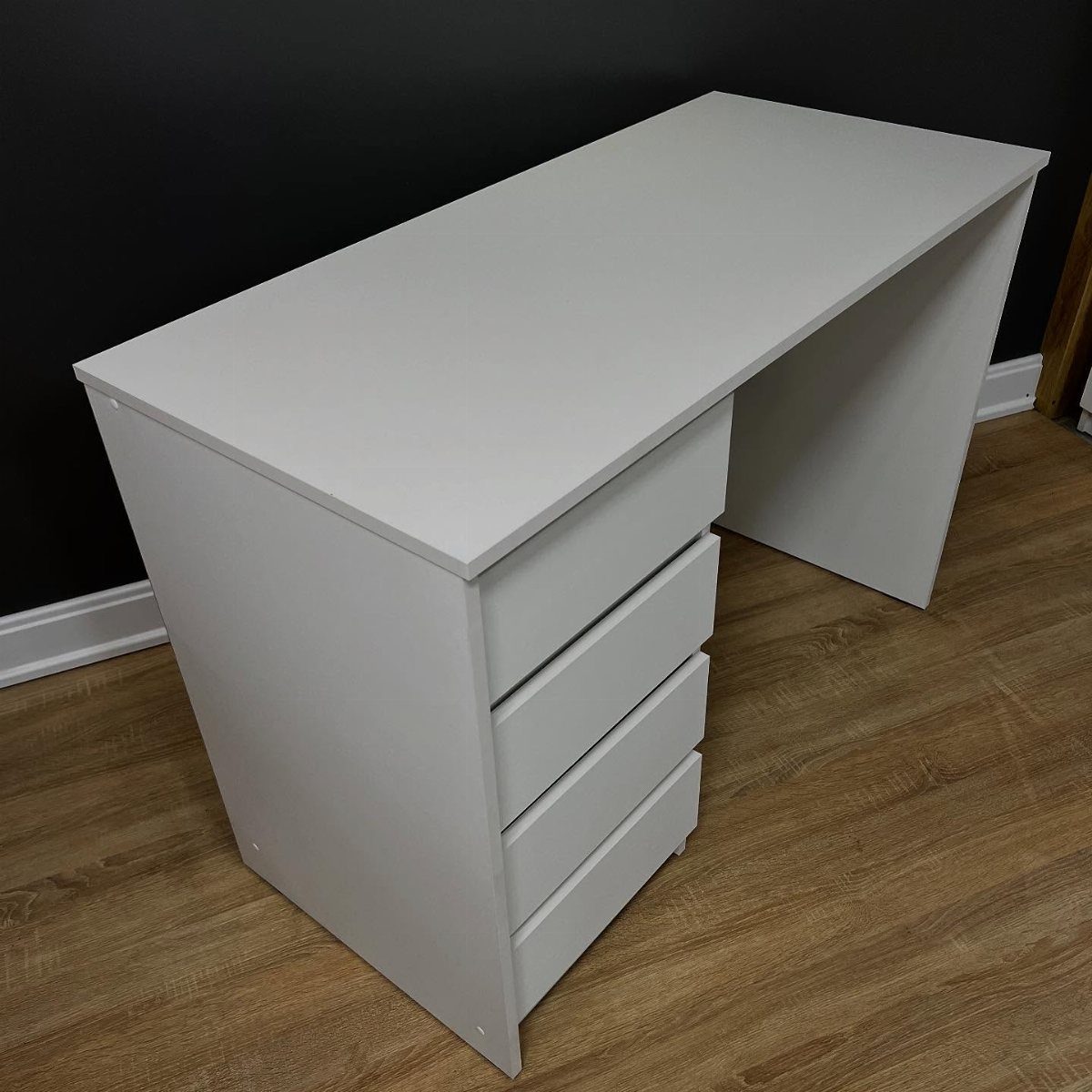
Slim desks work best in a room where every inch of floor already has a job, and a narrow white top with 3 built-in drawers keeps paper, chargers and pens out of sight.
Against a dark wall like the grey one here, white reads crisp and keeps the corner from feeling heavy. Light wood flooring helps too.
I would keep the top nearly bare, with one lamp and one laptop. A minimal footprint only looks minimal if the surface stays that way, and the drawers make that easy.
3. IVAR Fold-Down Desk
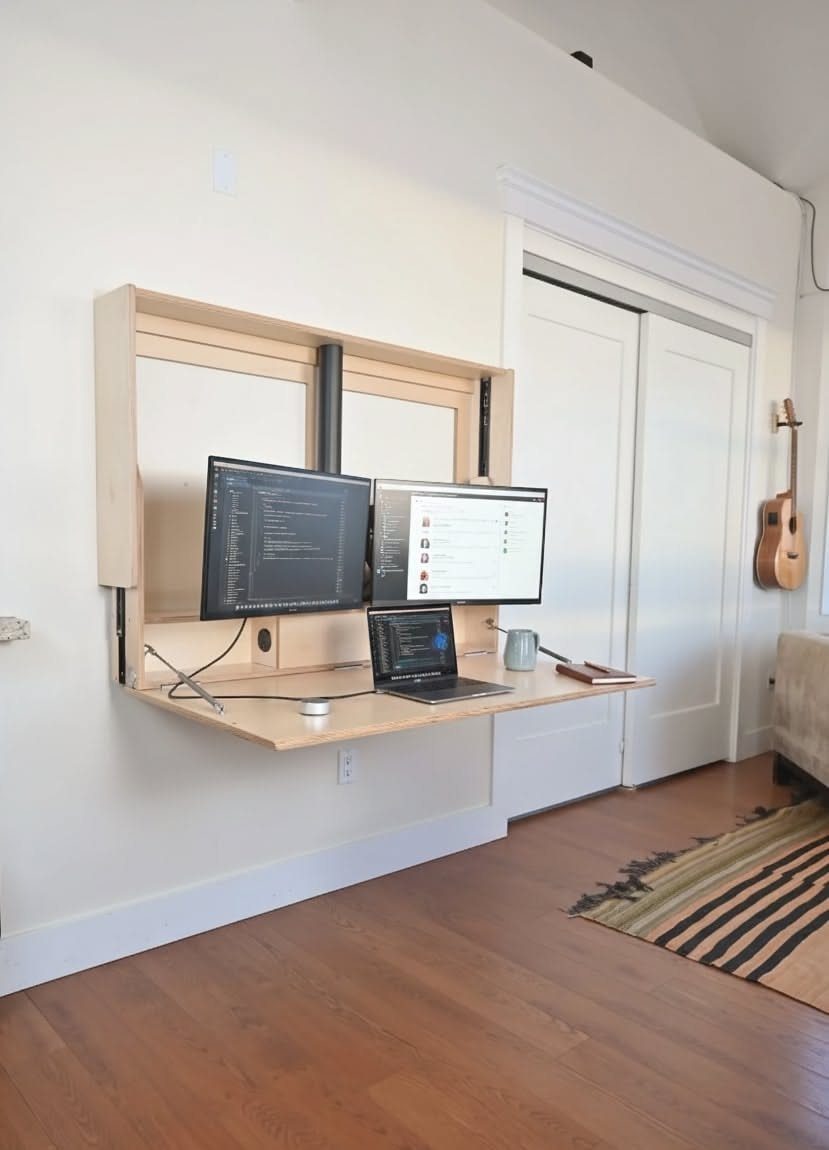
Folding a desk flat against the wall is the best answer I know for a room that has to be something else once the workday ends.
The IVAR approach pairs a rustic shelf with a fold-down tabletop, so the work surface disappears when you close it.
Mount it at a comfortable sitting height, and anchor into studs, since 2 monitors and a laptop add real weight. Keep cables short so they don’t snag when the top swings.
The drawback is that you have to clear the surface before folding it up, which keeps clutter honest.
4. NORDEN Gateleg Table
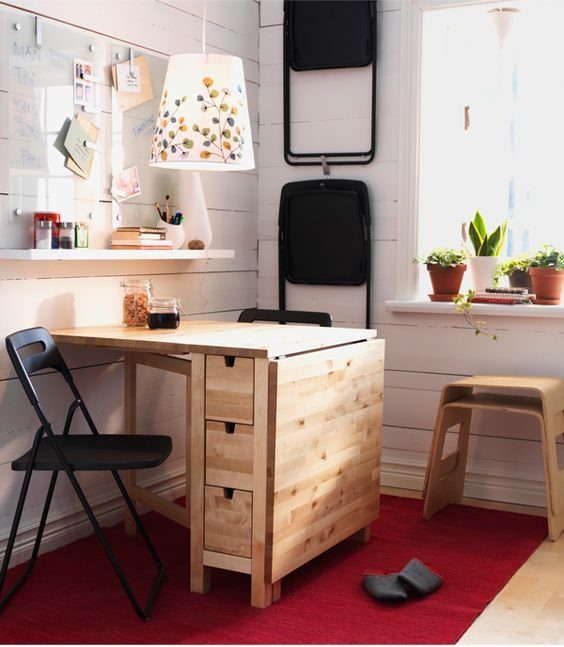
Dual-purpose furniture usually fails at one of its two jobs, but a gateleg table handles both well.
A gateleg table has drop leaves that you raise for working and lower to leave a slim piece against the wall, and the drawers hold supplies.
I like it for renters and small living rooms, where a desk shouldn’t announce itself. Keep a lamp and a laptop on top, and tuck paperwork in the drawers so a quick fold clears the table for dinner.
A bold rug, red for example, makes a small work corner feel intentional instead of leftover.
5. MITTZON Acoustic Screen
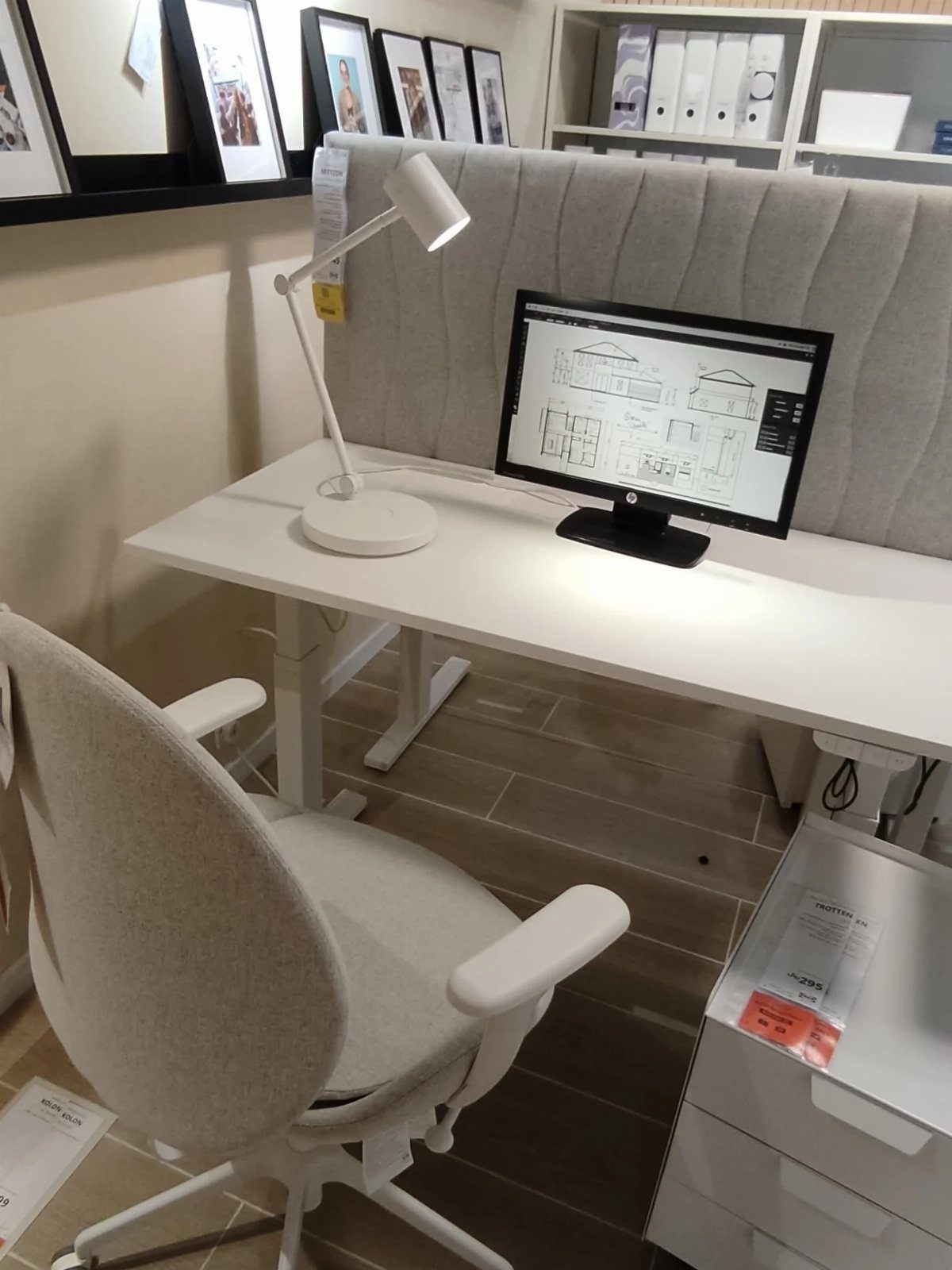
Sound is the problem nobody plans for, and a freestanding acoustic screen is a cheap way to tackle it.
The grey fabric panel sits on the desk edge, absorbing sound and giving you a bit of privacy from whoever walks past.
Place it on the side facing the noisiest part of the room, behind your monitor or beside it. It won’t silence a household, but it softens the chatter that breaks your focus.
For a shared room or open-plan apartment, it beats building a wall.
6. ÖVNING Desk Organizer
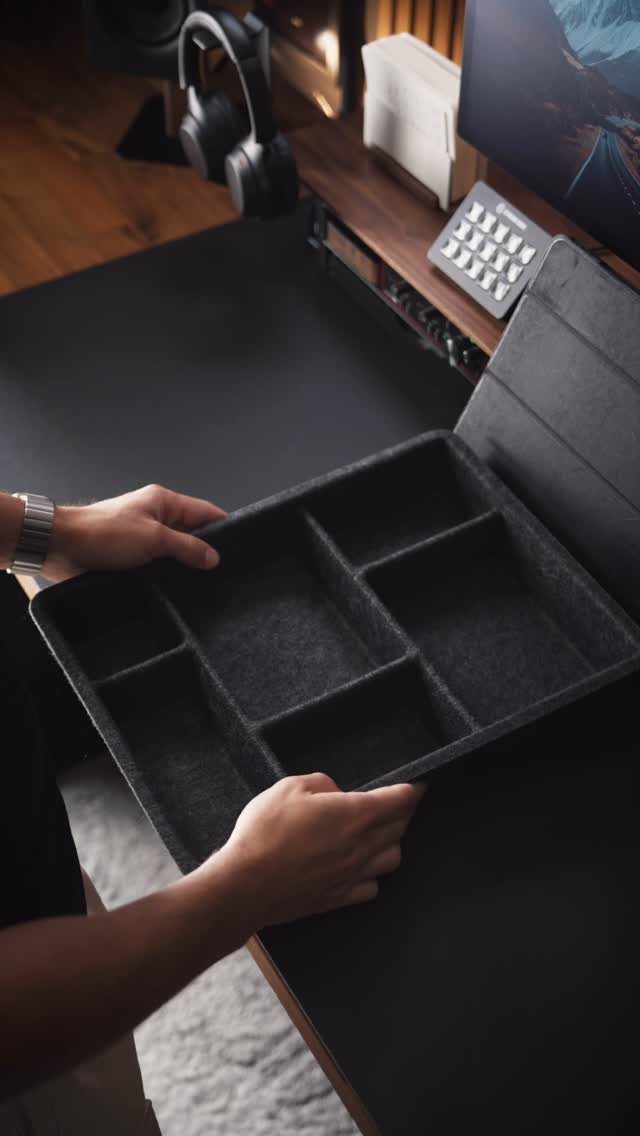
Felt organizers solve a very specific irritation: pens, cables and small gadgets spreading across the desk. The ÖVNING is a grey felt tray with compartments that you can lift and carry, so your setup travels with you.
That portability is what I’d use it for. If your desk doubles as the kitchen table, load the tray at night and move it to a shelf in one motion.
Sort by use: pens in one section, cables in another, and anything you grab daily in the front. Felt also keeps items from rattling around.
7. Closet Home Office
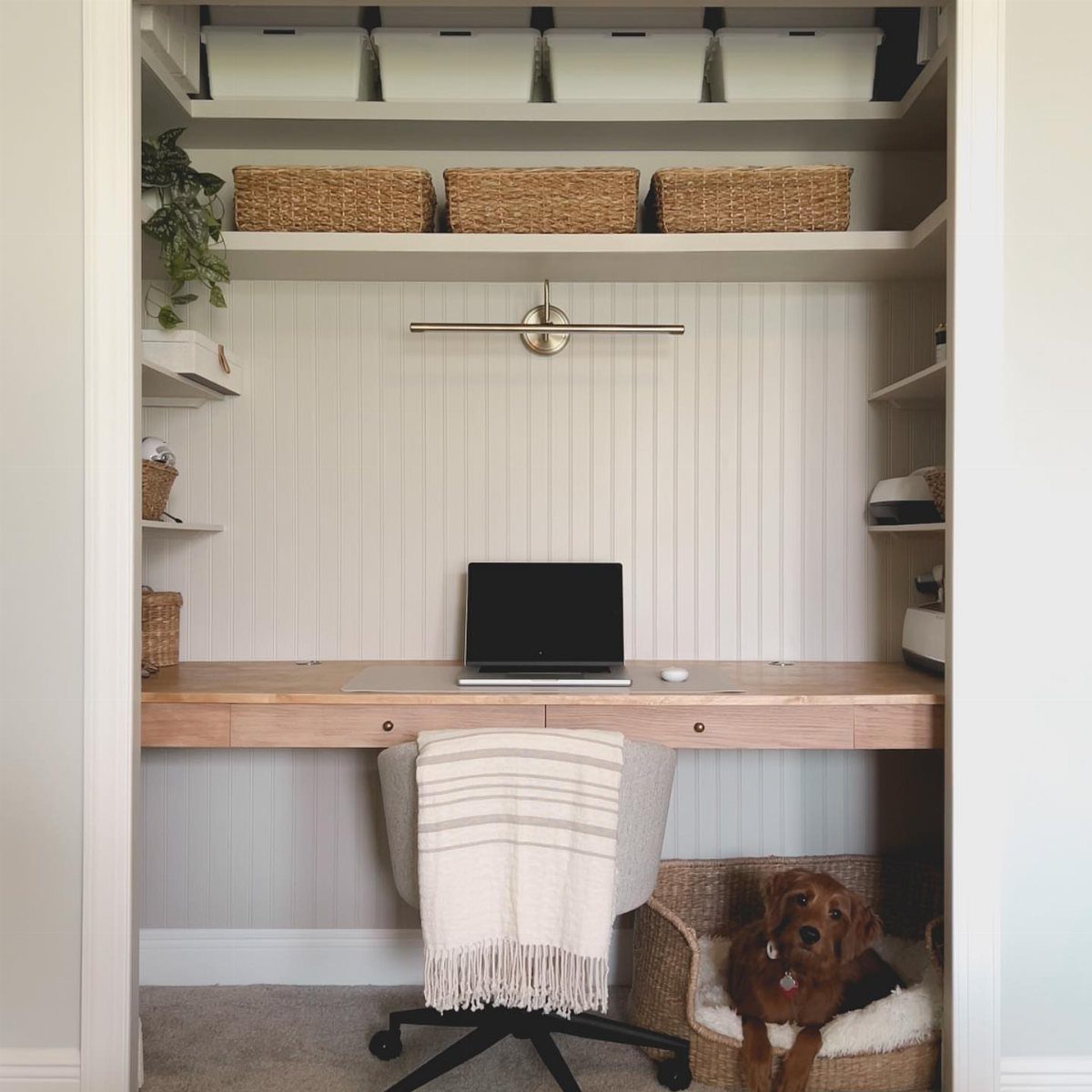
A closet with the doors removed is a full office waiting to happen, and a shallow wooden desk with white shelving above it fits the space without losing a room.
Fit the desk to the closet’s width, and put a shelf or two overhead where the rod used to hang. Add a small lamp, since closets rarely get good light.
I like this for renters, because you can put the doors back when you move out. Hang a curtain or tension rod panel across the opening at night and the workday is over.
8. Wall-Mounted Pegboard Desk Setup
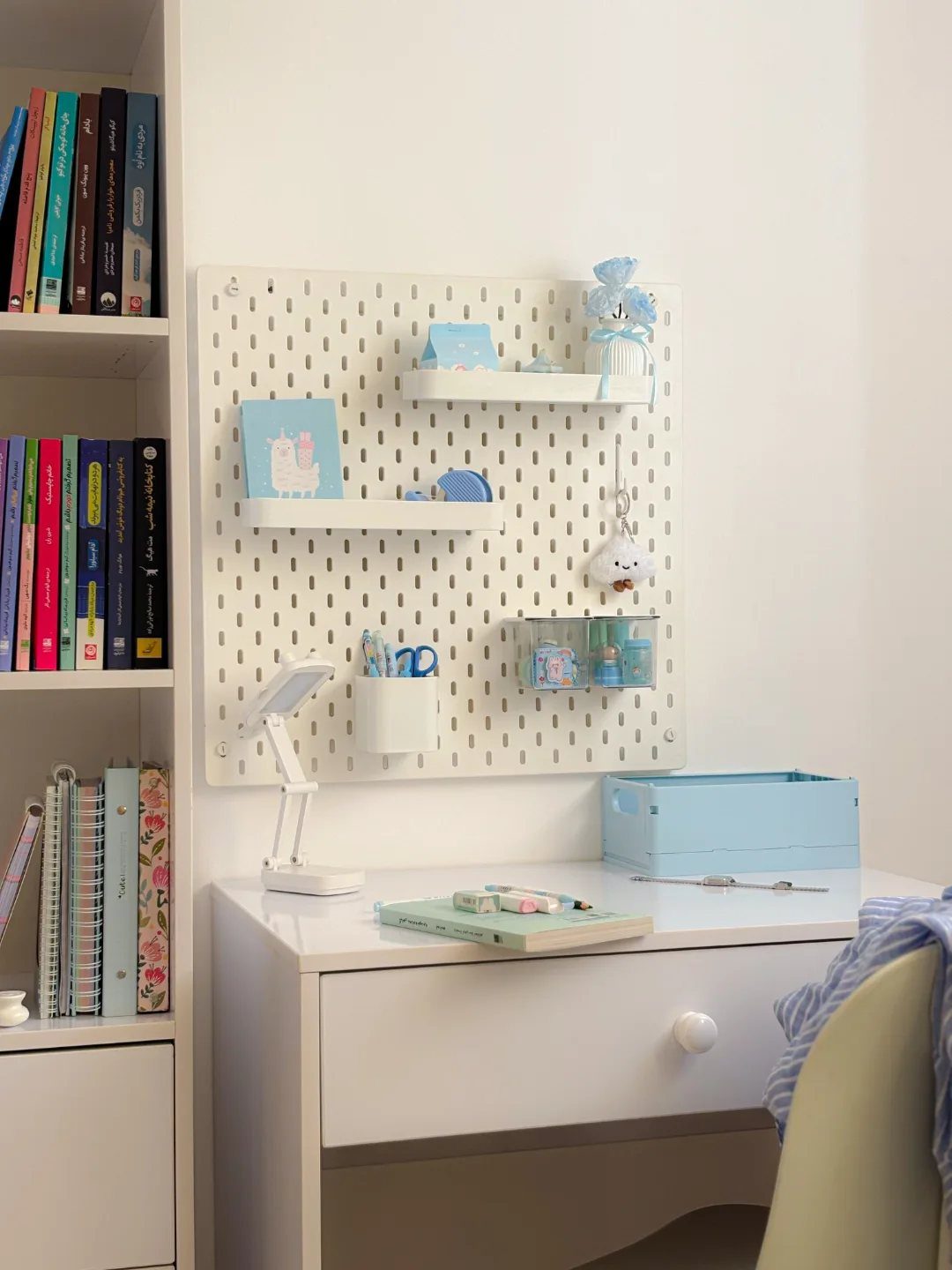
A pegboard hung above a white desk turns the wall into storage and leaves the tabletop open for a laptop and a notebook.
Matching the board to the desk color keeps a small room calm. Use the shelves for things you reach for daily, and the cups for pens and scissors.
Lay everything out on the floor or the desktop first: put heavy items low, close to the desk, and leave a few empty spots, because a pegboard gets crowded fast. Rearranging takes minutes, which beats drilling new holes.
9. Desk with Built-In Hutch
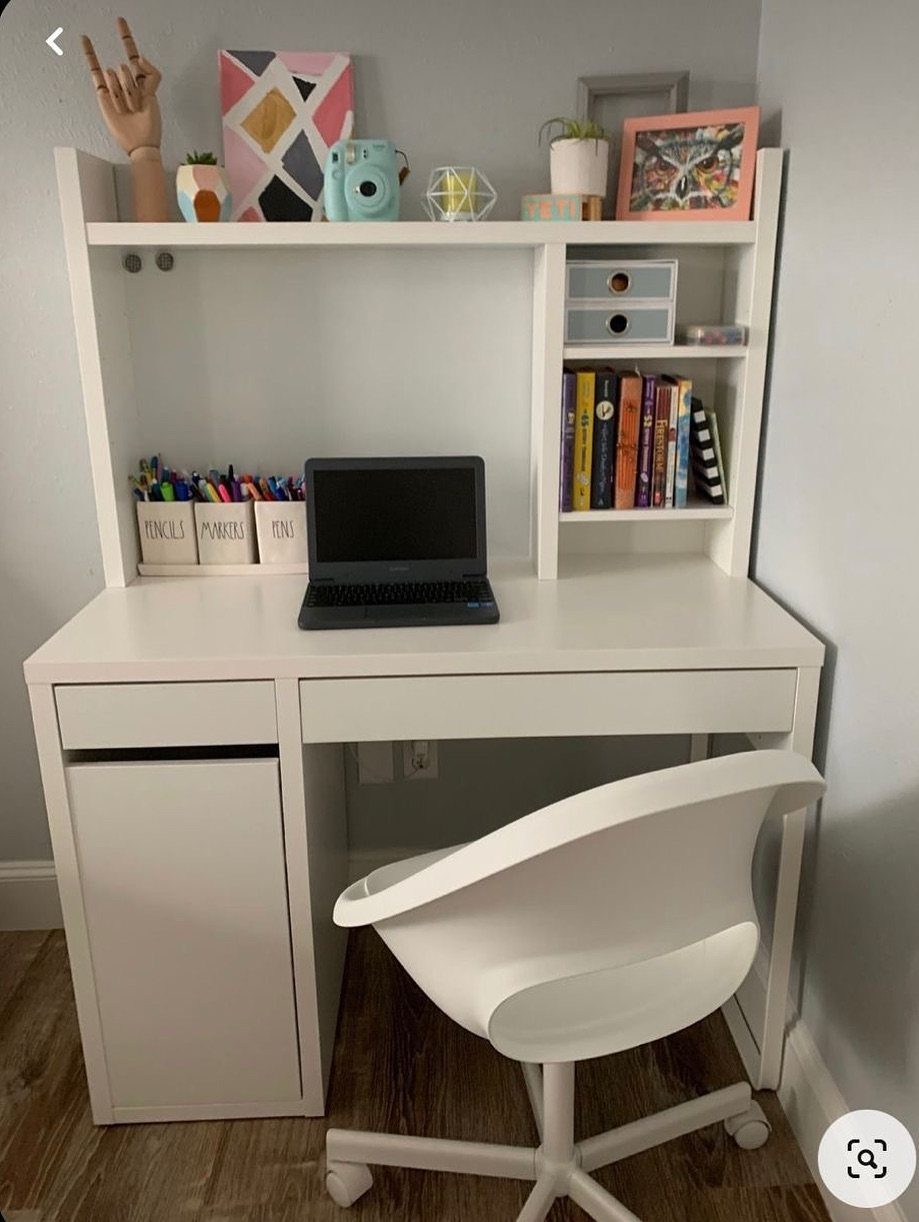
Storage built upward is the cheapest square footage in a small room, and a desk with a hutch puts shelves right above your work surface.
Labeled containers for pencils, markers and pens keep loose supplies from drifting onto the desk. I would label everything, even if it feels fussy, because a hutch only works if each thing has a home.
Keep books and decor on the upper shelves and daily tools at arm’s reach. One drawback: a hutch makes the desk feel taller and busier, so keep the colors quiet.
10. Desk with Cube Shelving Combo
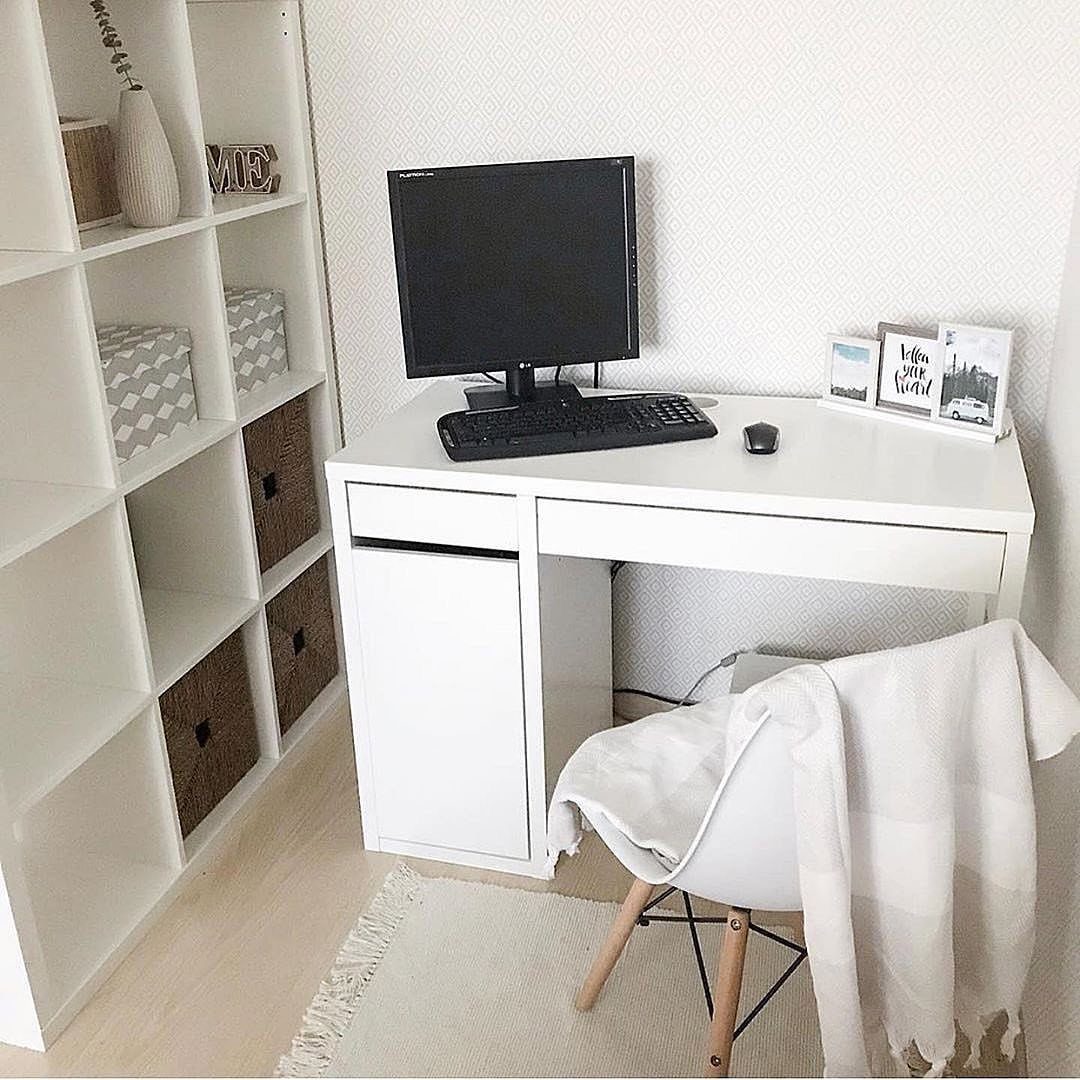
Setting a desk beside a cube shelving unit gives you storage at elbow distance without crowding the work surface.
Baskets are the part I would not skip.
They hide paper, cords and odd supplies behind a uniform front, so the shelf reads tidy even when the contents are not. Put the cubes you use weekly lowest and easiest to pull.
White on white keeps a small room bright. The top of the unit also works as a spot for a printer or plant.
11. Desk with Side Storage Shelves
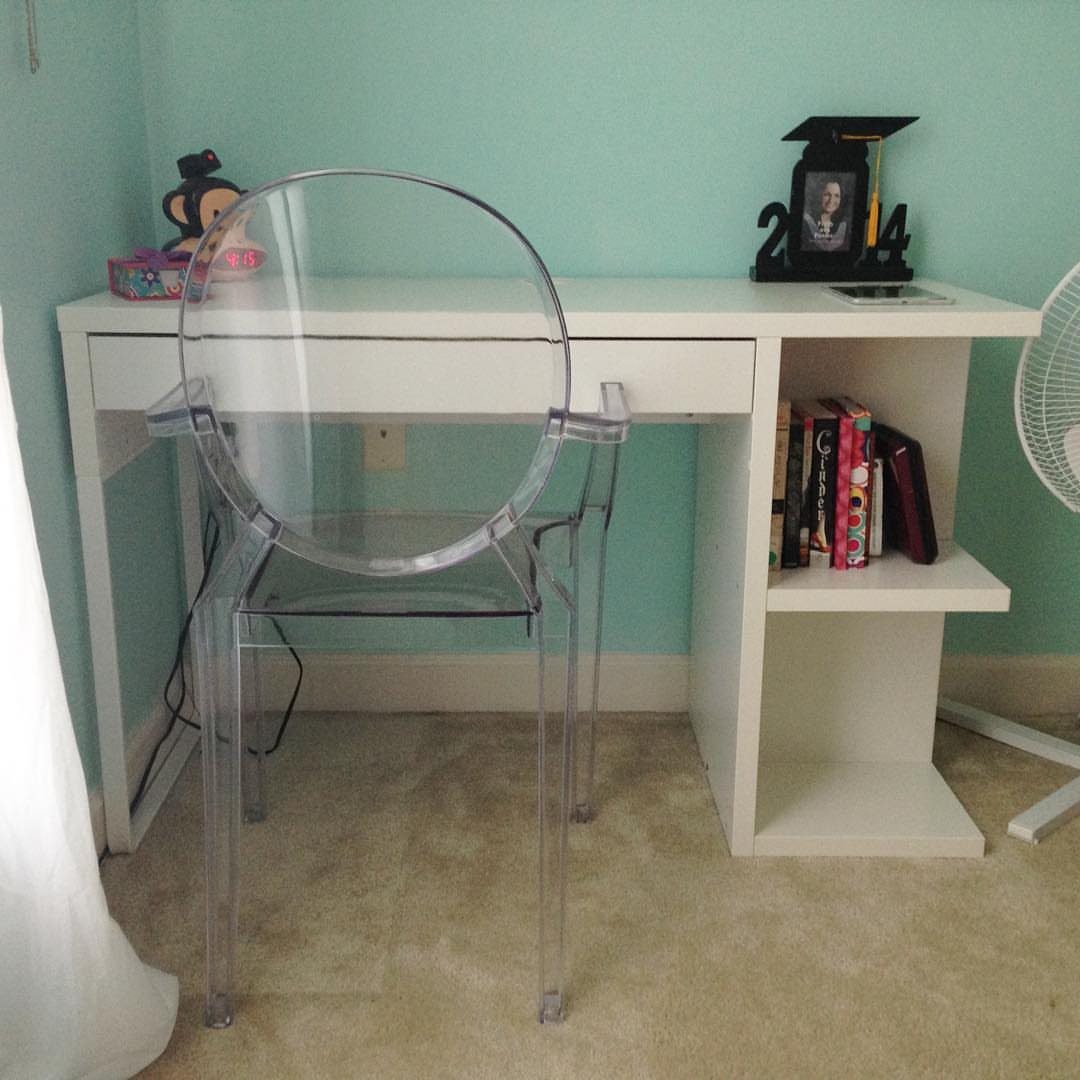
A desk with open shelving on one side gives you a place for books and files without adding a separate bookcase.
Keep the shelves edited.
Open storage shows everything, so I would hold to a few books, a box or two, and one decorative piece. Sorting paper into boxes keeps it from looking messy.
A clear acrylic chair is a smart partner in a small room, since it takes up little visual space. It is a harder seat than upholstery, so add a cushion if you sit for hours.
12. Under-Eaves Corner Desk
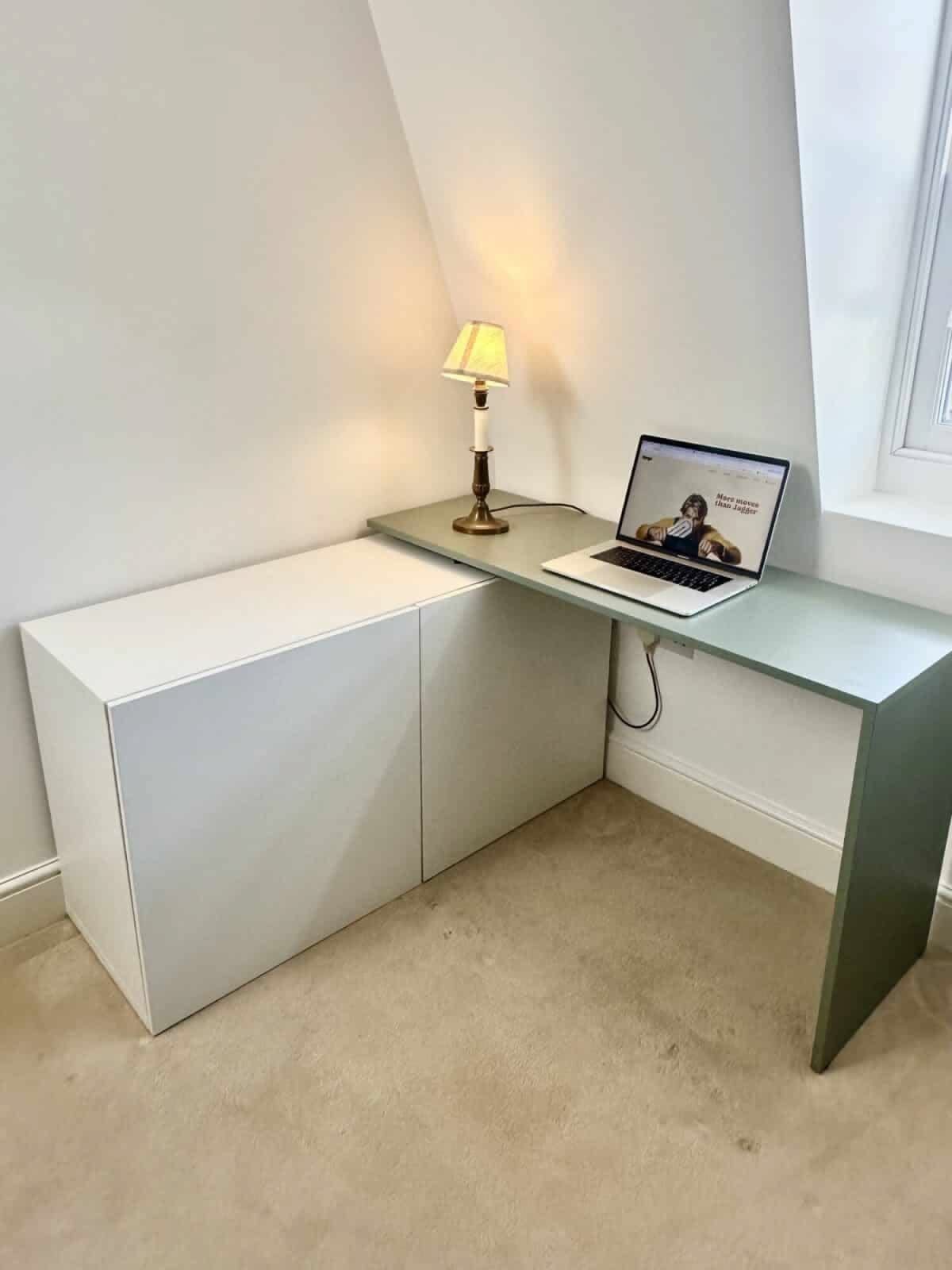
A slanted ceiling wastes floor space, but an L-shaped desk tucked into the low corner turns that awkward spot into a workstation.
Put the monitor or laptop where the ceiling is highest so you can sit up straight, and use the lower end of the L for writing or storage. Measure the ceiling height at the desk’s edge before buying.
A small lamp helps, since eaves tend to be dim. Painting or choosing a soft green and white scheme keeps the nook from feeling like a cave.
13. Desk with Alex Drawer Unit
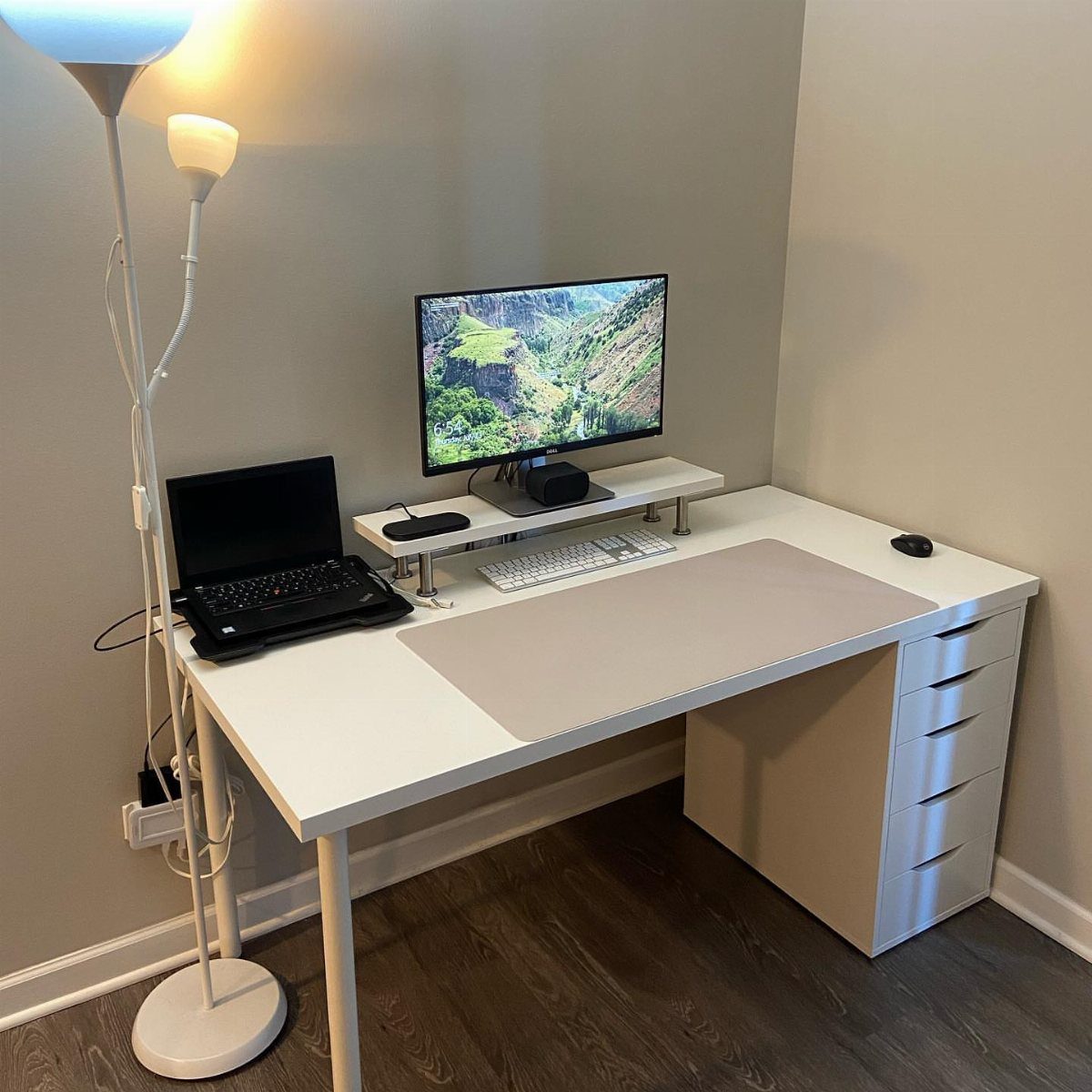
Letting a drawer unit carry one end of the desktop saves you a table leg and gives you storage exactly where your hand lands. A white Alex-style unit under a white top keeps the whole workstation looking like one piece.
I would put the drawers on the side you reach toward most, so paper and chargers sit within an arm’s length of the keyboard. Leave the top for a monitor, a laptop and little else.
The drawers are only as tidy as you keep them, so give each one a single job.
14. Mobile Desk Unit on Wheels
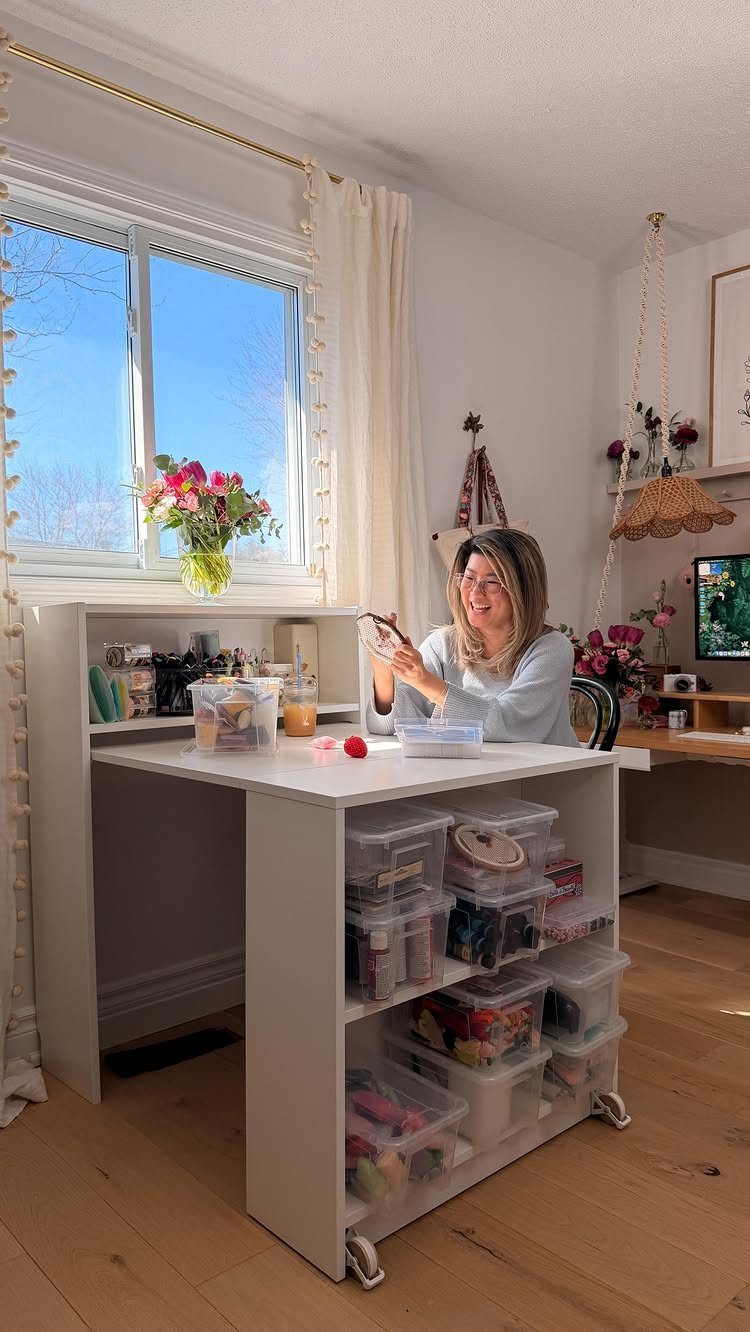
A desk on casters means you can roll your office to the window in the morning and push it out of the way by evening.
The white one here has clear bins underneath, which keeps supplies visible and the top free for a laptop.
Daylight is the reason I like this setup. Park it beside the window while you work, then move it to a wall once the day ends.
Lock the wheels before you start typing, since a rolling desk that shifts is annoying fast. Label the bins by use so nothing needs digging.





