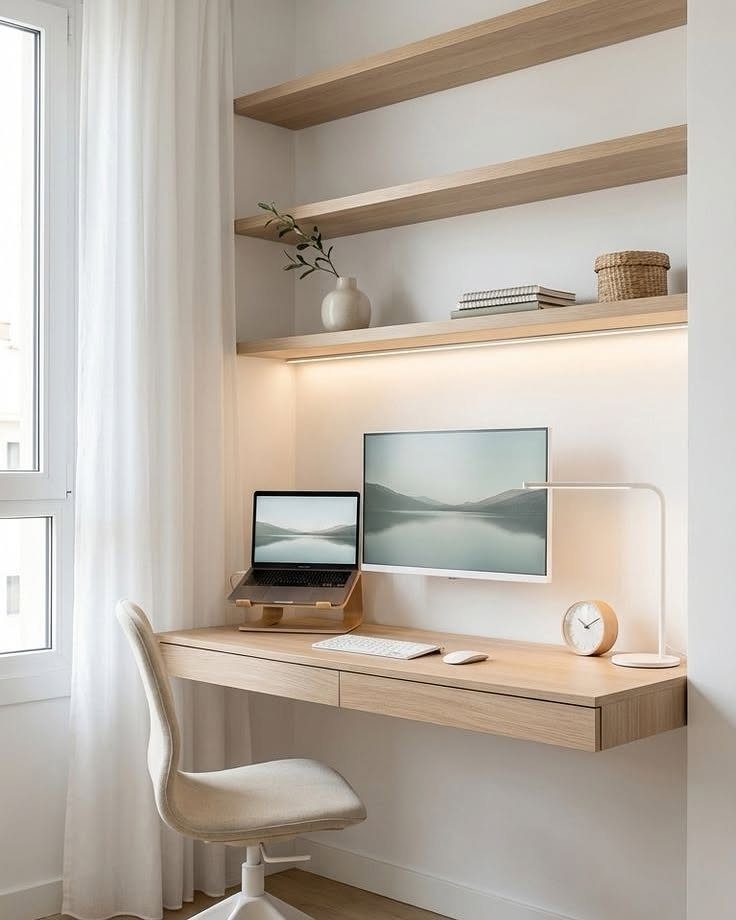
Whether you rent or own decides more than style does here.
Renters get the no-drill picks, like the Ladder Desk leaned against the wall or the Mobile Office Cart on wheels, while owners can anchor a Floating Desk into studs or build a Plywood Desk from a few cut sheets.
Options here start with a desk under a window, where the desk is the only purchase, and end with a Built-In Wall Unit with Desk wrapped in cabinets.
1. Floating Desk
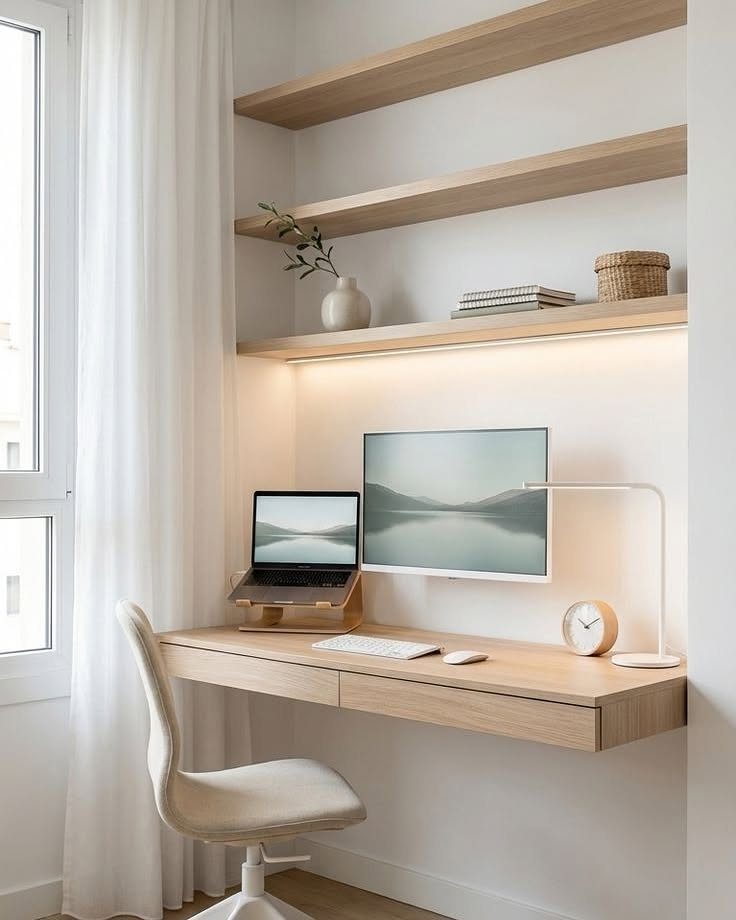
A wall-mounted desk frees the floor underneath, which matters when a room is barely bigger than the chair.
Matching the wood tone of the desk and the shelves above it makes the whole wall read as one built piece instead of three separate purchases.
I’d pick a light wood so the setup doesn’t feel heavy hanging off the wall. Anchor it into studs, not drywall alone, since a monitor and laptop add real weight.
Rolling the chair fully out of the way is the best part: the floor stays open when you’re done for the day.
2. Under-Stairs Office
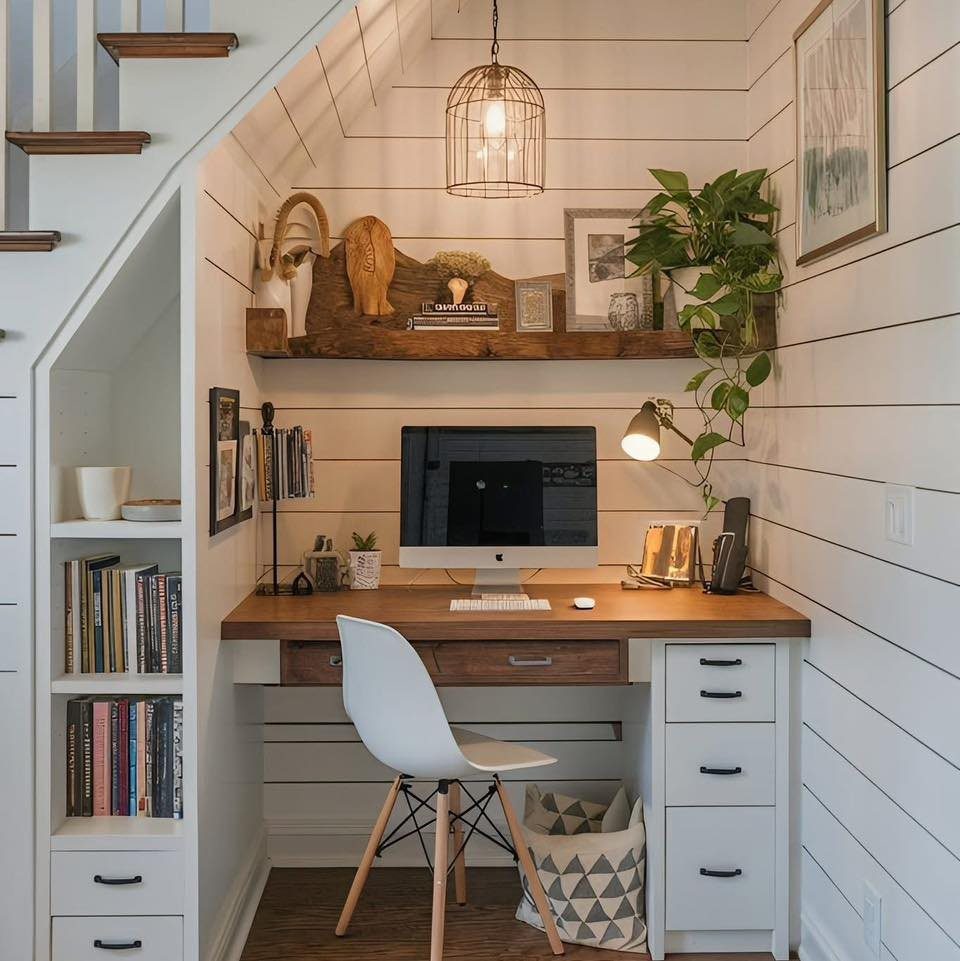
Dead space under a staircase is one of the easiest places to fit a desk without giving up a single usable room.
White shiplap on the walls keeps a tight nook from feeling like a closet, and I’d copy that choice before anything else.
A wood desktop adds warmth against all that white. Shelving above the monitor uses the taller part of the wedge, where the ceiling slopes away from your head.
Expect a low ceiling at one end, so put the chair where you sit upright.
3. Corner Desk
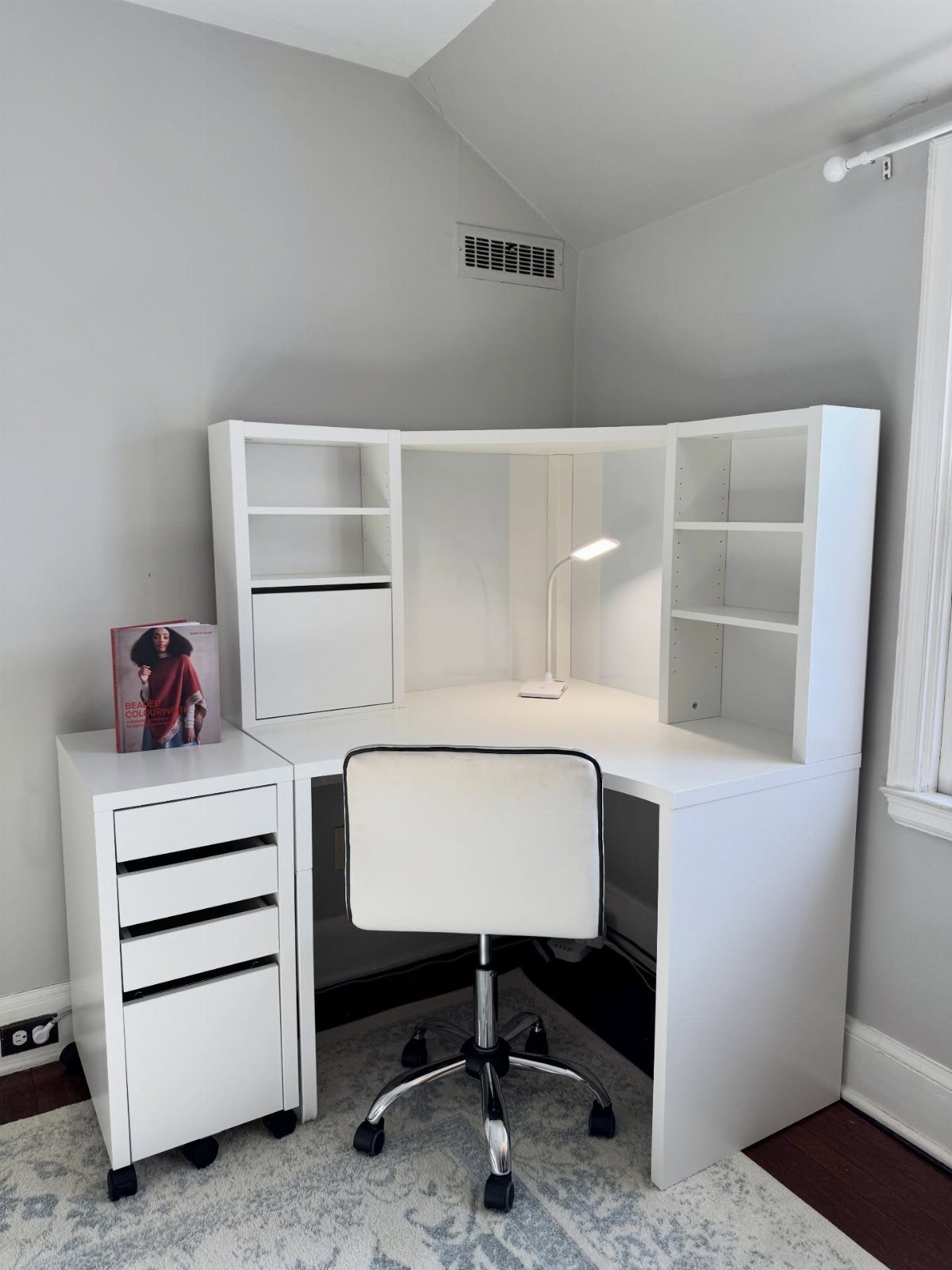
An L-shaped desk turns two walls into one long work surface, so a laptop sits on one arm and paperwork on the other. Built-in shelving over the desk adds storage without taking up more floor.
White keeps a corner piece from looking bulky, and a matching drawer unit tucked beside it holds supplies you’d otherwise stack on the desk.
I’d choose a drawer unit that matches the finish, because a mismatched one makes the corner look cluttered.
A rug under the chair helps define the work zone, and it softens a room with plain gray walls.
4. Window Nook Desk
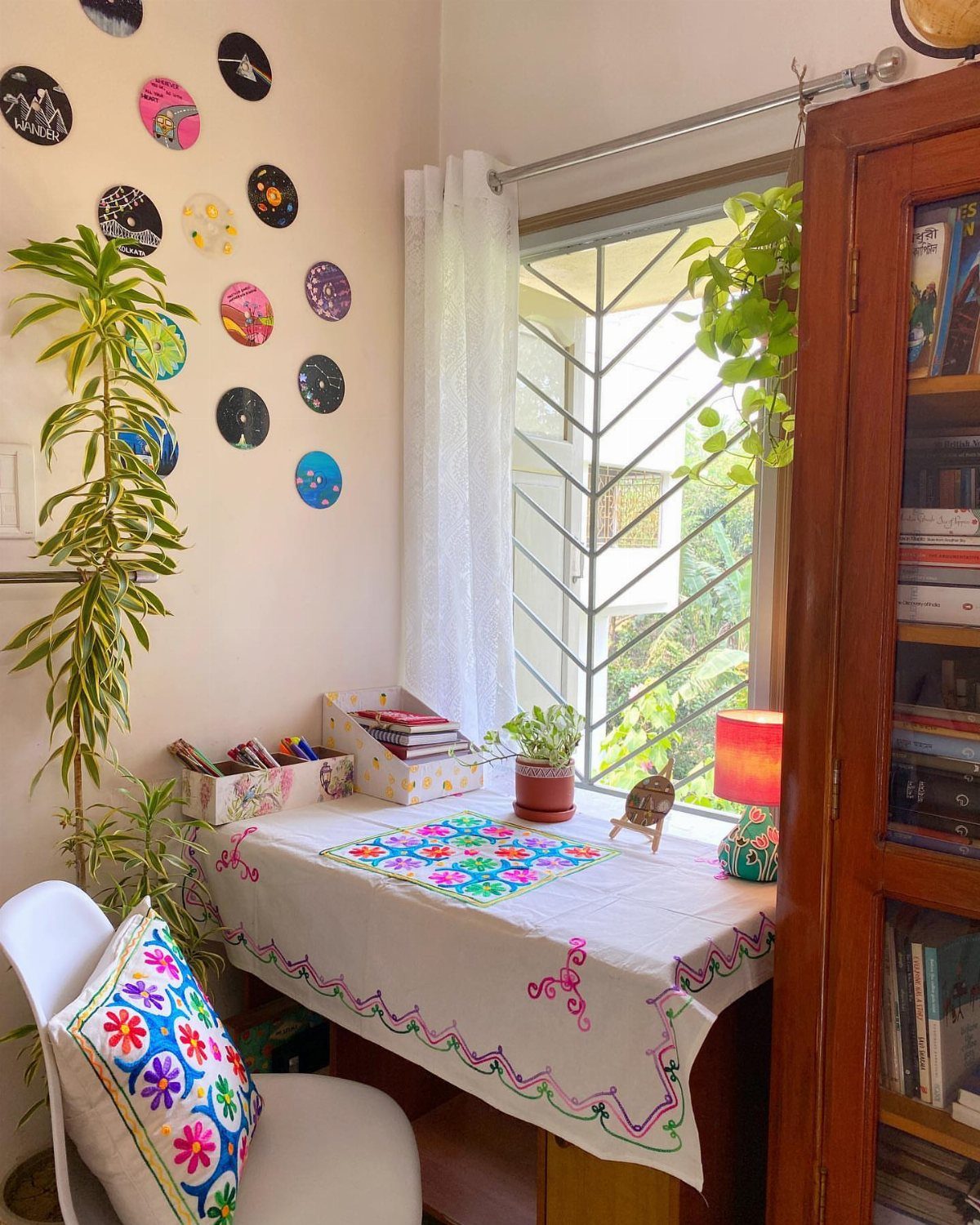
Pushing a desk up under a window gives you daylight on the work surface and something to look at besides a screen. Few small-room setups cost less, since the desk is the only thing you need to buy.
Keep the sill clear so the view stays open. A plant and a few pieces of wall art nearby make a small desk feel like a place you chose, and they cost next to nothing.
A simple cloth on top softens the surface, though it will slide under a mouse, so use a pad for daily work.
5. Floating Shelves
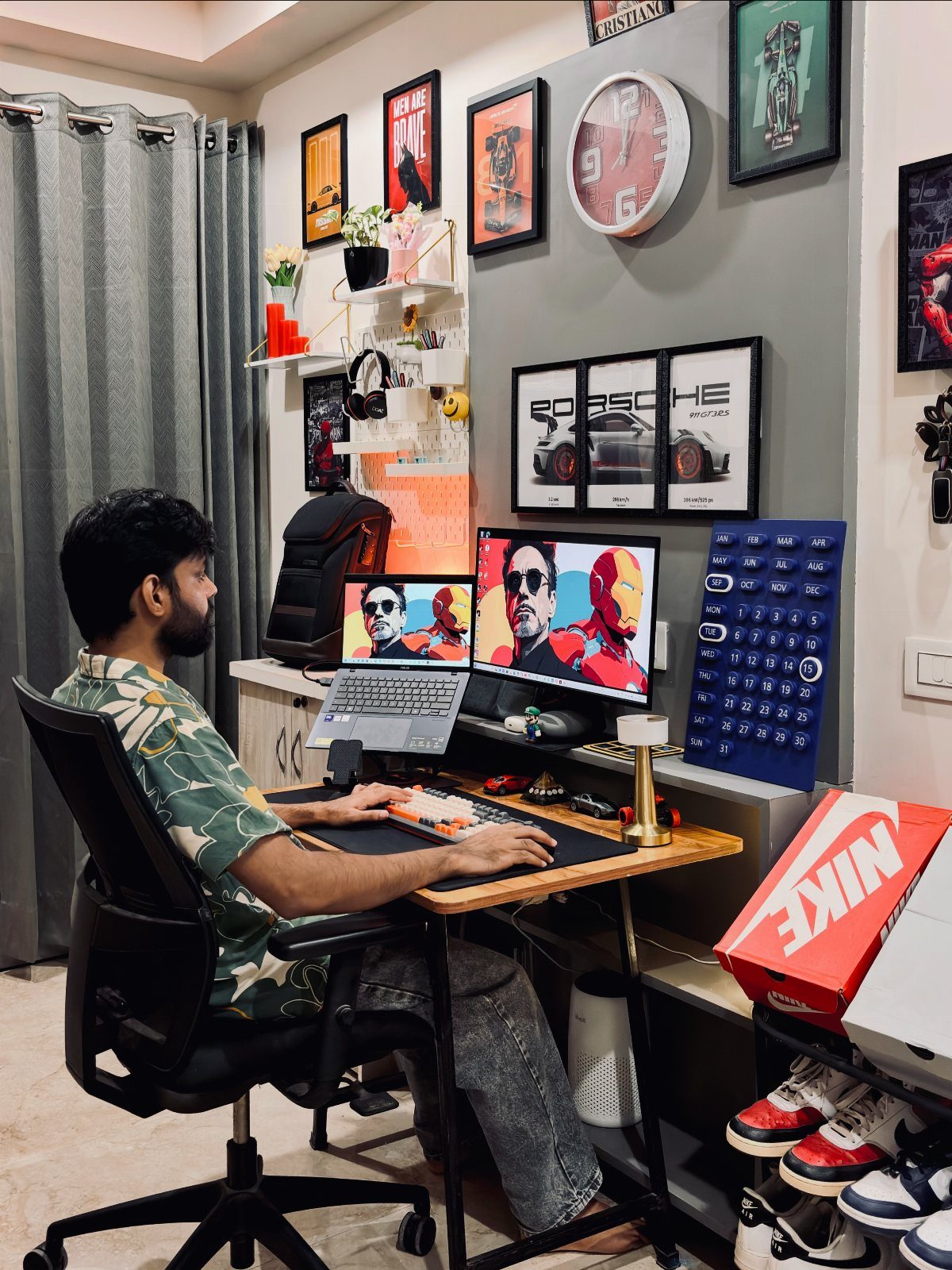
Shelves above a desk hold the clutter that otherwise eats your work surface: a clock, a few books, a box of small gear.
2 monitors take up a lot of desktop, so moving everything else to the wall is the practical call here.
Posters between or beside the shelves give the wall personality for the price of a print.
Load the heaviest items on the lower shelf, close to the studs you’ve anchored into.
6. Light Colors
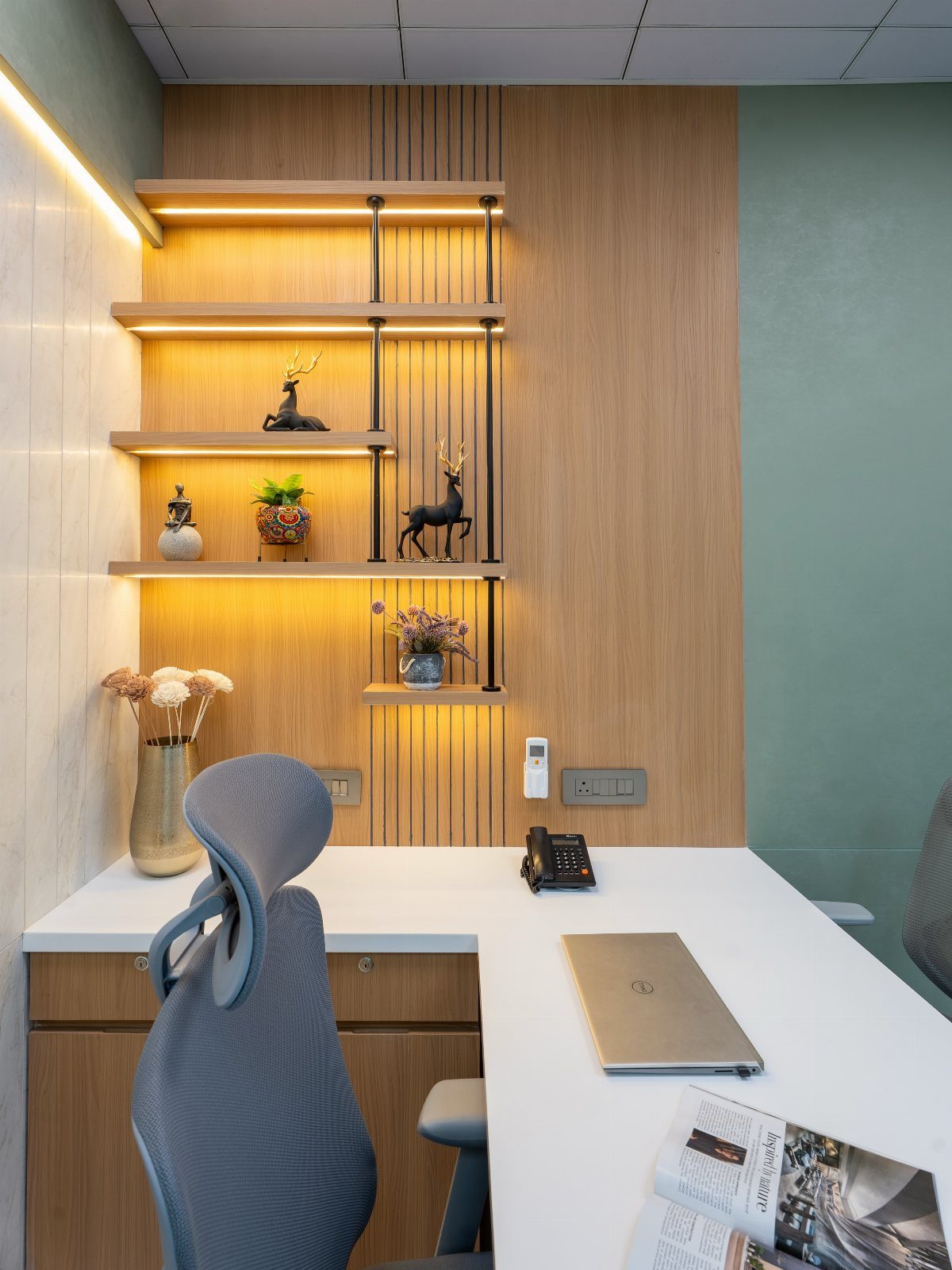
Pale surfaces bounce light around a small room, and this office does it with a white desk, light wood paneling, and a soft green wall.
I’d copy that mix: white for the work surface, wood for warmth, a gentle color for the wall behind.
Lighting built into the shelves adds a warm glow that keeps pale colors from feeling clinical, and it frees up desk space you’d otherwise give to a lamp.
A gray chair gives the eye a little contrast. Skip dark, bulky furniture here, since it shrinks the room fast.
7. Living Room Office Zone
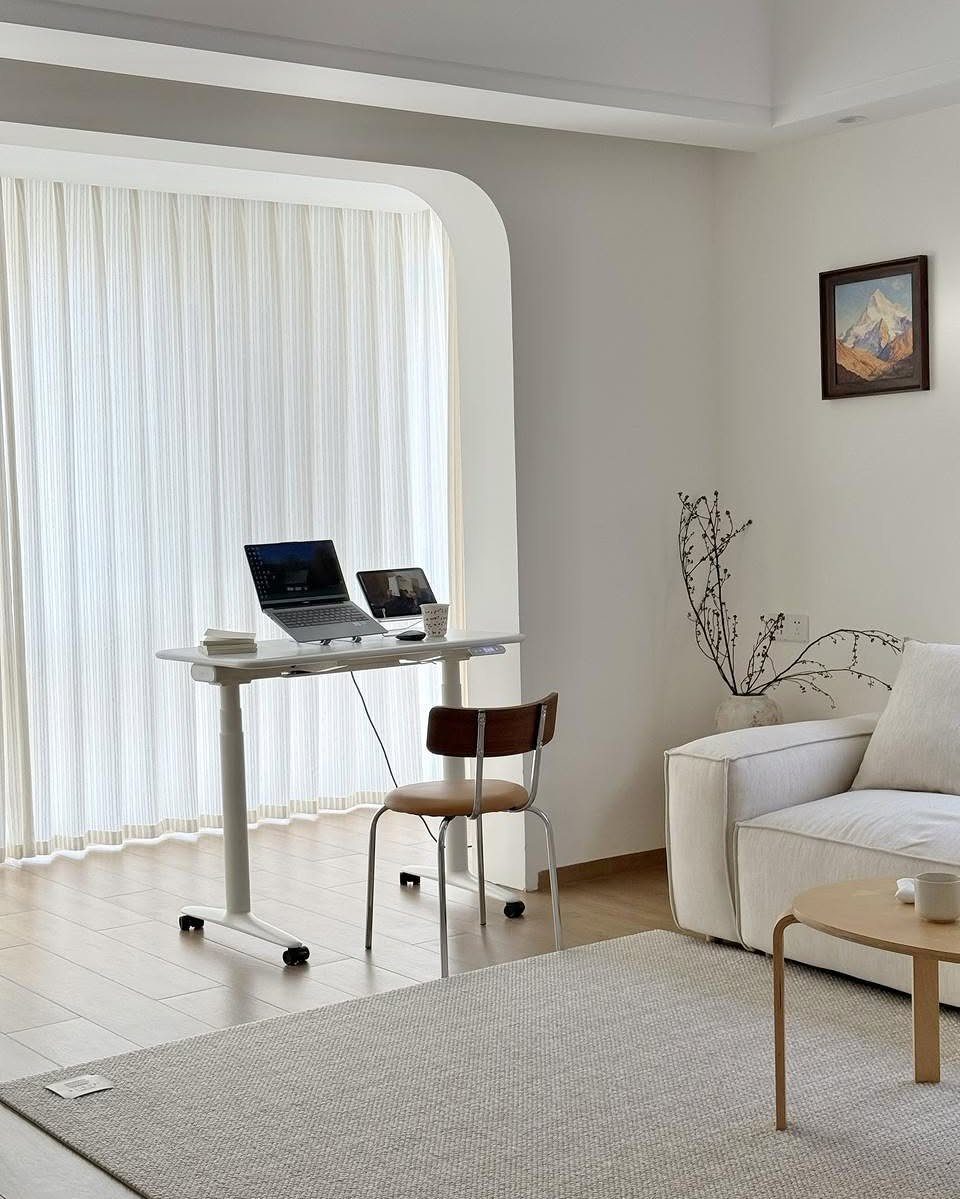
A desk in the corner of a living room works best when it reads as its own area. Keeping it white, as in this setup, lets it blend into the room instead of competing with the sofa.
I’d turn the chair to face the wall or the corner, so the sofa sits behind you and out of sight while you work. A rug edge or a change in lighting also marks where work ends.
An adjustable-height desk lets you raise it for work and lower it for the evening.
8. Minimalist Monochrome
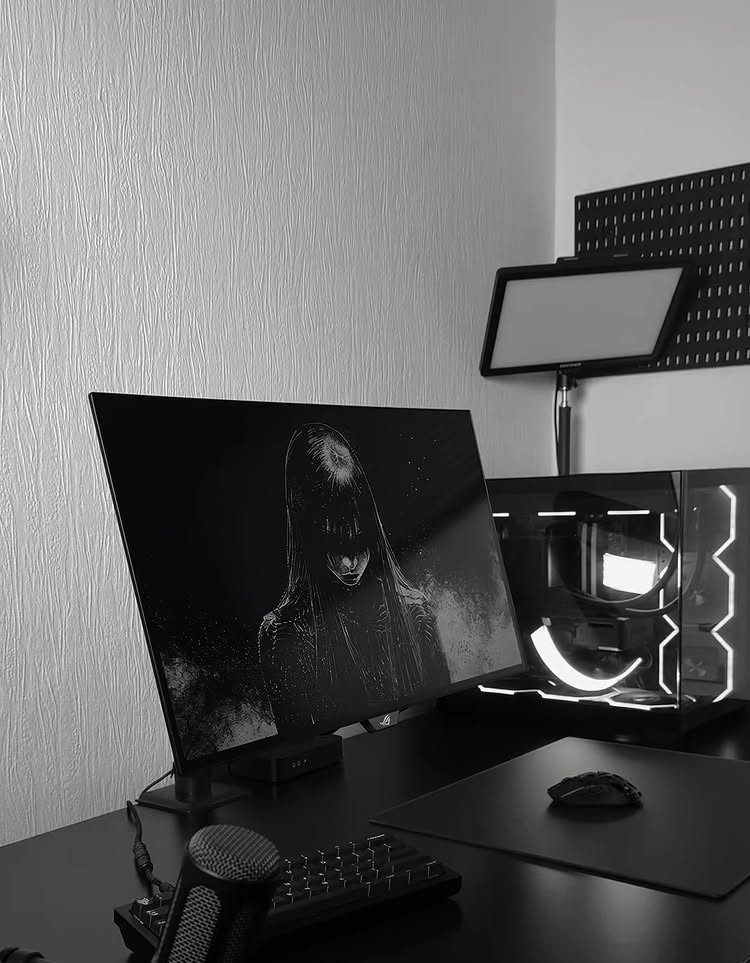
Black and white, and nothing else, is the easiest scheme to pull off in a tight corner. A dark desk against a white wall gives the monitor, PC and microphone a clean backdrop, so the gear itself becomes the decor.
I’d keep to 2 colors across the desk, chair and accessories, and let texture add interest instead. A textured white wall does that here without a single extra object.
Choose black cables and a black mic arm so nothing breaks the scheme.
9. Mobile Office Cart
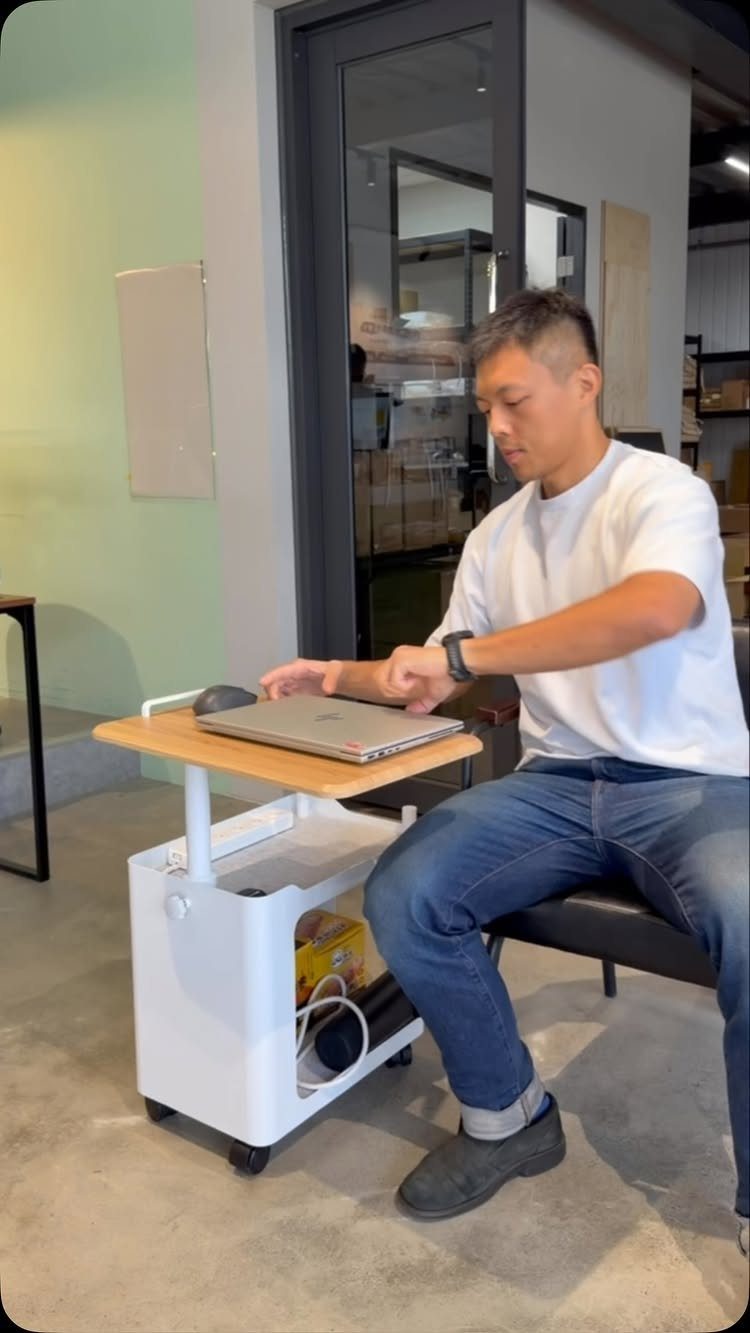
A cart on wheels turns any spare patch of floor into a desk, then rolls away when you’re done. That works for renters who move furniture around and prefer not to drill.
A wooden top on a white frame looks warmer than all-white or all-metal, and I’d pick that pairing. Lock the wheels before you start typing, or the cart will creep every time you lean on it.
Check that the top is deep enough for a laptop and a mouse at the same time.
10. Use a Rug
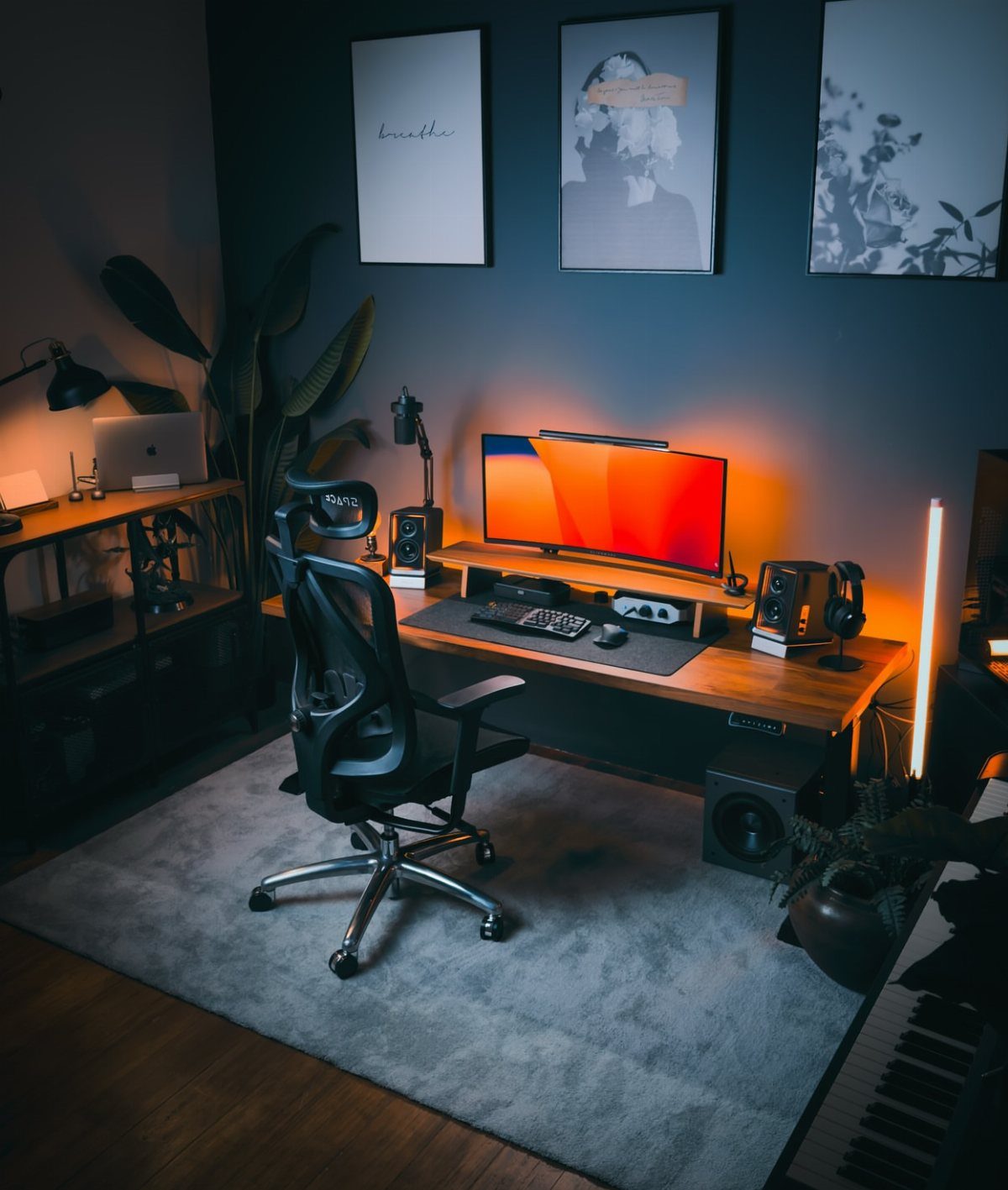
A rug under the desk and chair marks out the office without a single wall going up. In an open room, that patch of color tells everyone where work happens.
Grey works well with a wooden desk, since it stays quiet next to the wood. I’d choose a rug large enough that the chair’s back wheels stay on it when you roll out.
Pick a flat, low weave, because a thick pile makes an office chair drag and stick.
11. Minimal Black Desk Design
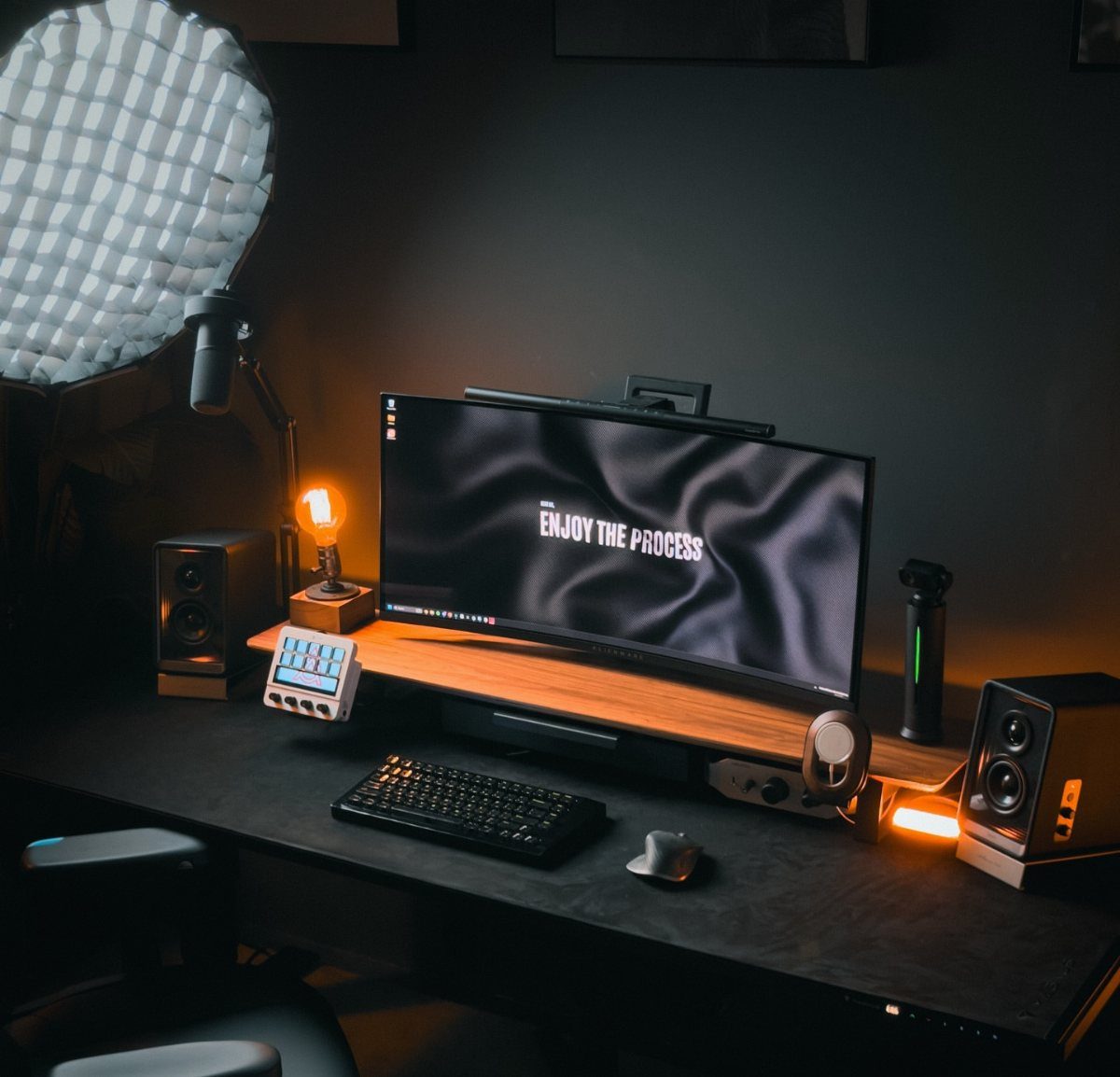
Black metal hides cord mess and everyday scuffs better than any other finish, which is why I’d choose it for a desk you use daily. Fingerprints and dust show more than you’d expect, so a quick wipe helps.
A wooden monitor riser adds warmth and lifts the screen to eye level, with space beneath for a keyboard. Speakers on either side and a lamp keep the setup compact.
In a dark room, add a light source you control, since black soaks up the glow.
12. Alcove Office
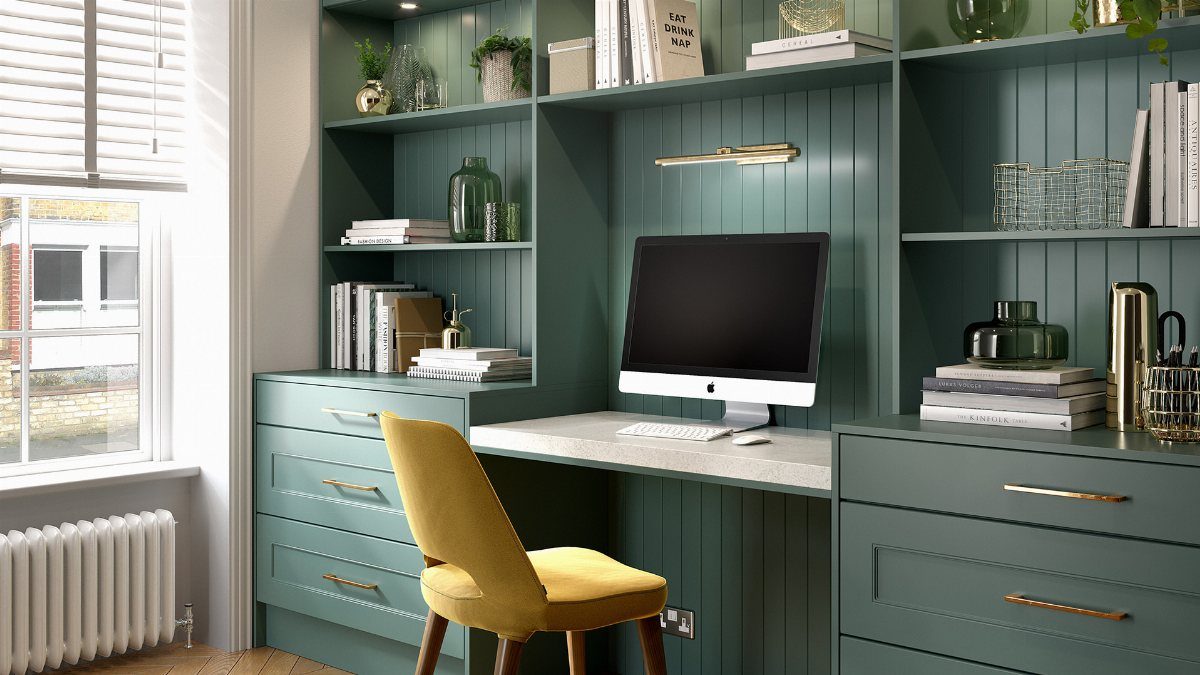
An alcove already has 3 walls, so building in a desk and shelving takes little more than paint and a few boards.
Dark green on the walls and shelves makes the nook feel deliberate, and I like how a white desk keeps it from turning cave-like.
A bright chair, such as the yellow here, gives the dark scheme a spot of life. Use the shelving for books and a few objects, and keep the desktop clear.
Measure the alcove width first, since a few inches decide whether a desk fits.
13. Use a Dresser for Storage
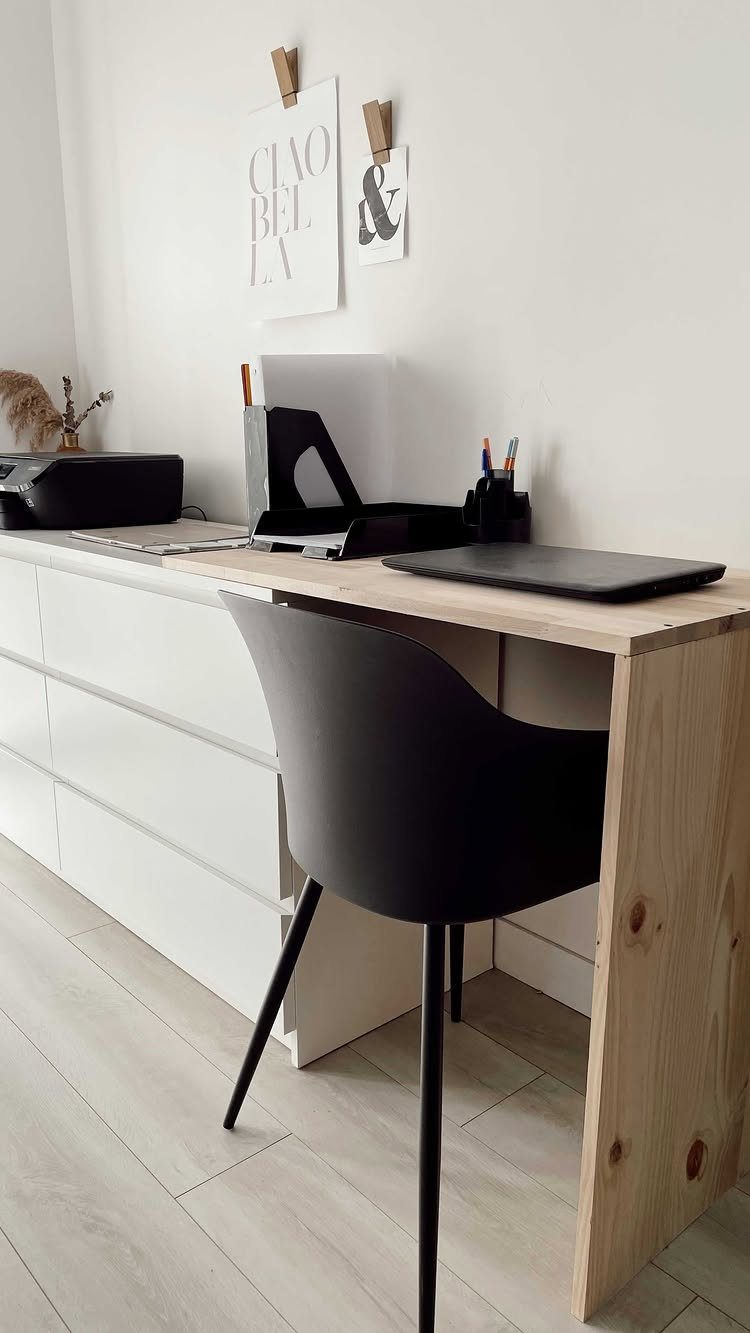
A dresser makes a desk with the storage already built in. The drawers swallow paper, chargers and printer supplies, so the top stays clear for a laptop and printer.
White drawers with a light wood top look tidy in a small room, and I’d copy that pairing. Keep the printer on the dresser top only if you use it daily; otherwise slide it into a drawer.
Pick a dresser at a height where your elbows sit comfortably, and test it with your chair first.
14. Ladder Desk
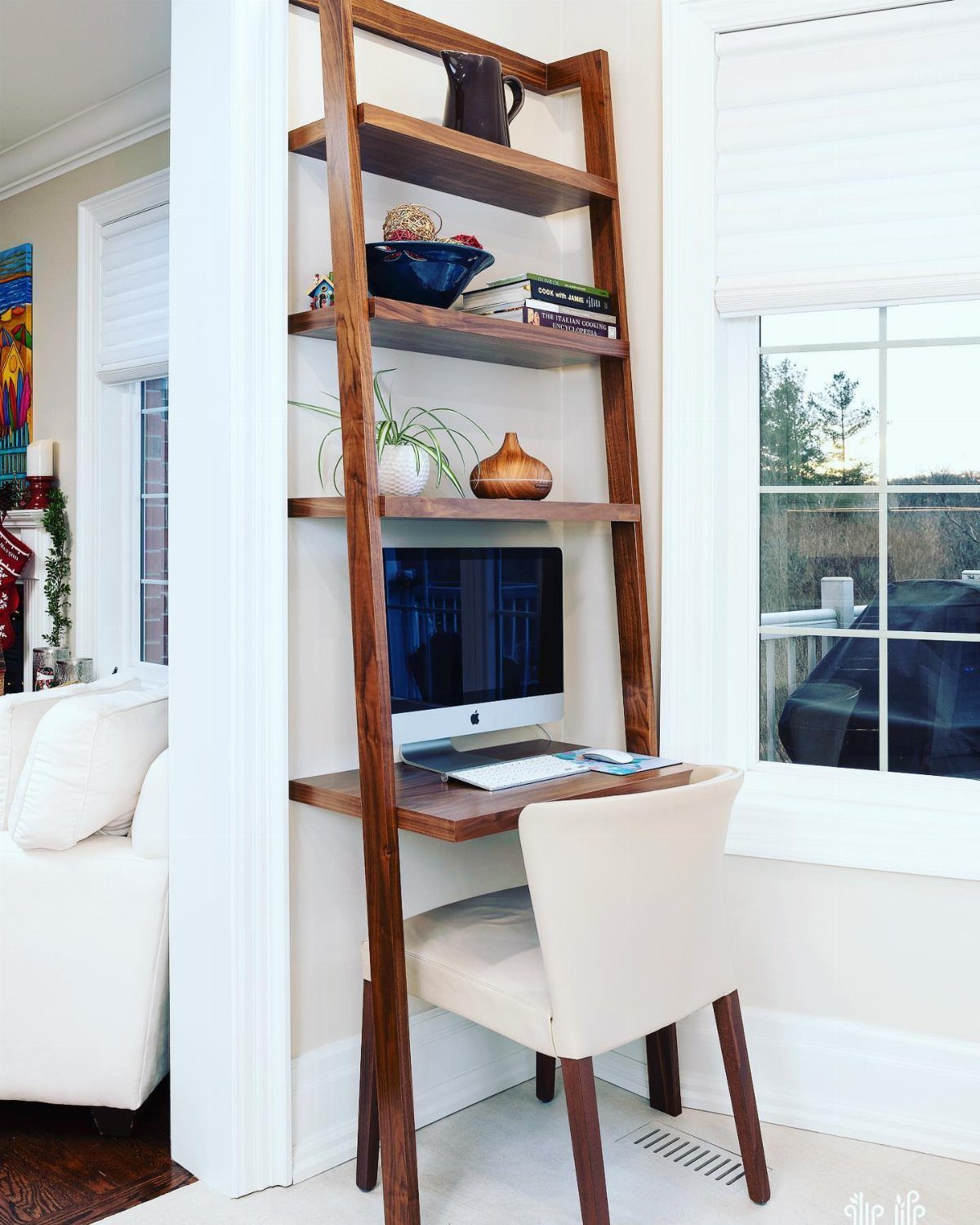
Leaning a ladder desk against the wall means no drilling and no assembly beyond setting it in place, which suits renters well. The shelves climb the wall, so books and a monitor share one slim frame.
Wood against a white chair and pale sofa keeps the look light. I’d place it by a window, as here, so the shelves don’t darken the room.
Check that the floor is level before you load it, and put the heaviest items on the lowest shelves.
15. Plywood Desk
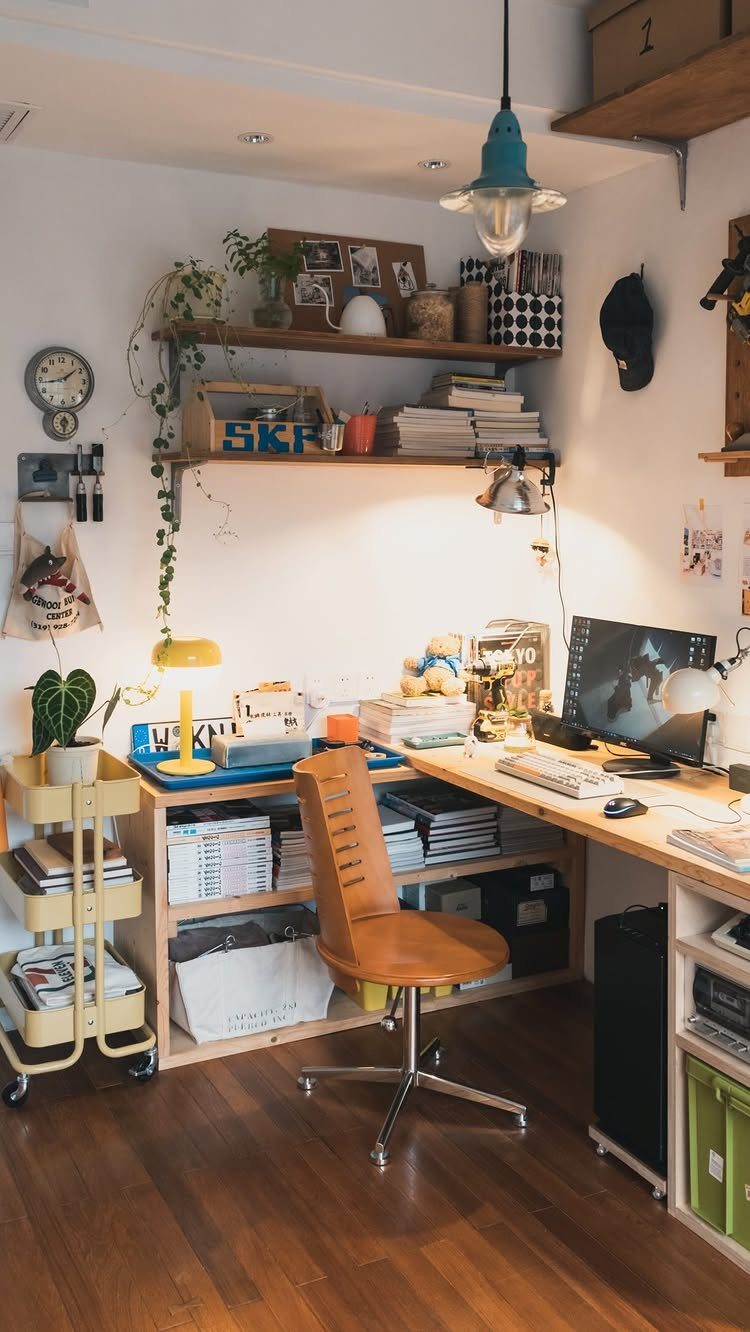
Plywood is the budget route to a desk: a few sheets of it, cut to size, cost far less than a ready-made piece.
The light grain looks good with white walls and wood floors, and I’d leave the edges visible as a feature.
Build the shelving from the same sheet so the desk and storage match. Sand the surface smooth and seal it, since raw plywood marks easily.
Have the store make the cuts if you lack a saw.
16. Frosted Glass Sliding Doors
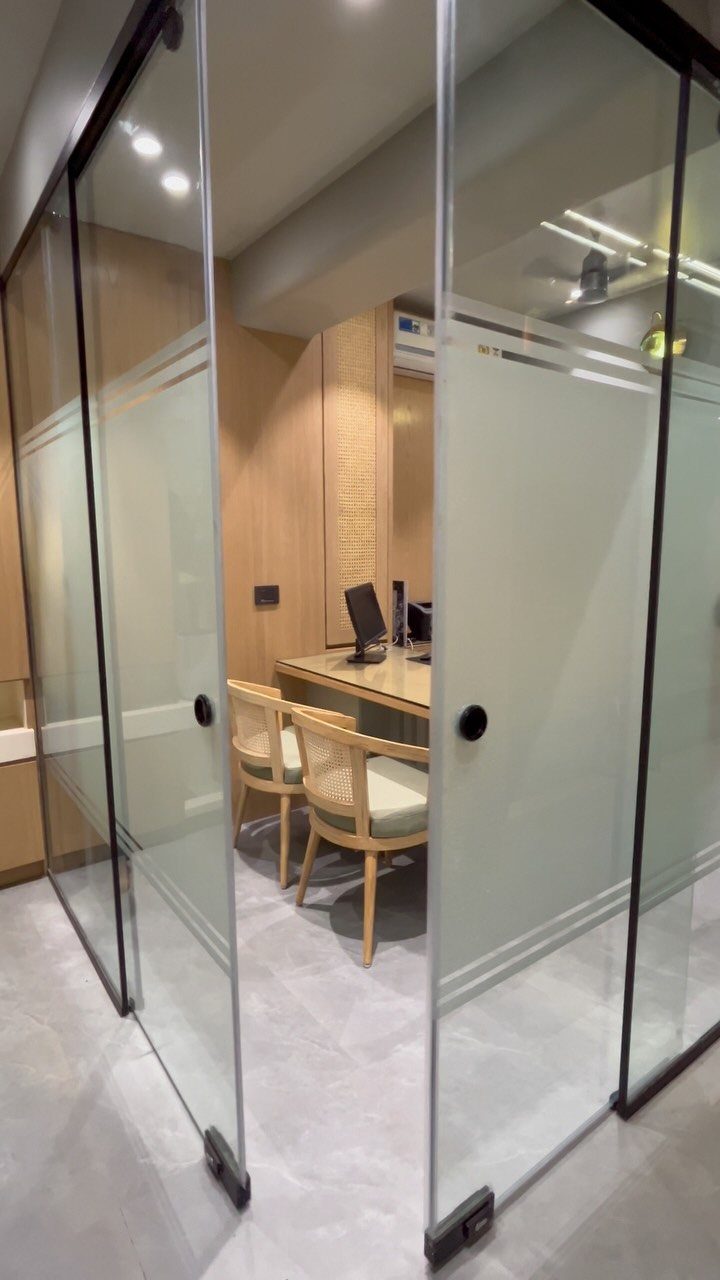
Frosted glass sliding doors turn a corner into a room you can close. Light passes through, so the office stays bright, while the clutter inside goes soft and blurry from the other side.
Sliding doors need no swing space, which is a real gain in a small home. I like the light wood desk with paneled walls here because the warmth offsets the cool glass.
Allow room for two chairs only if you share the space; one is enough for most people.
17. Slatted Room Divider Partition
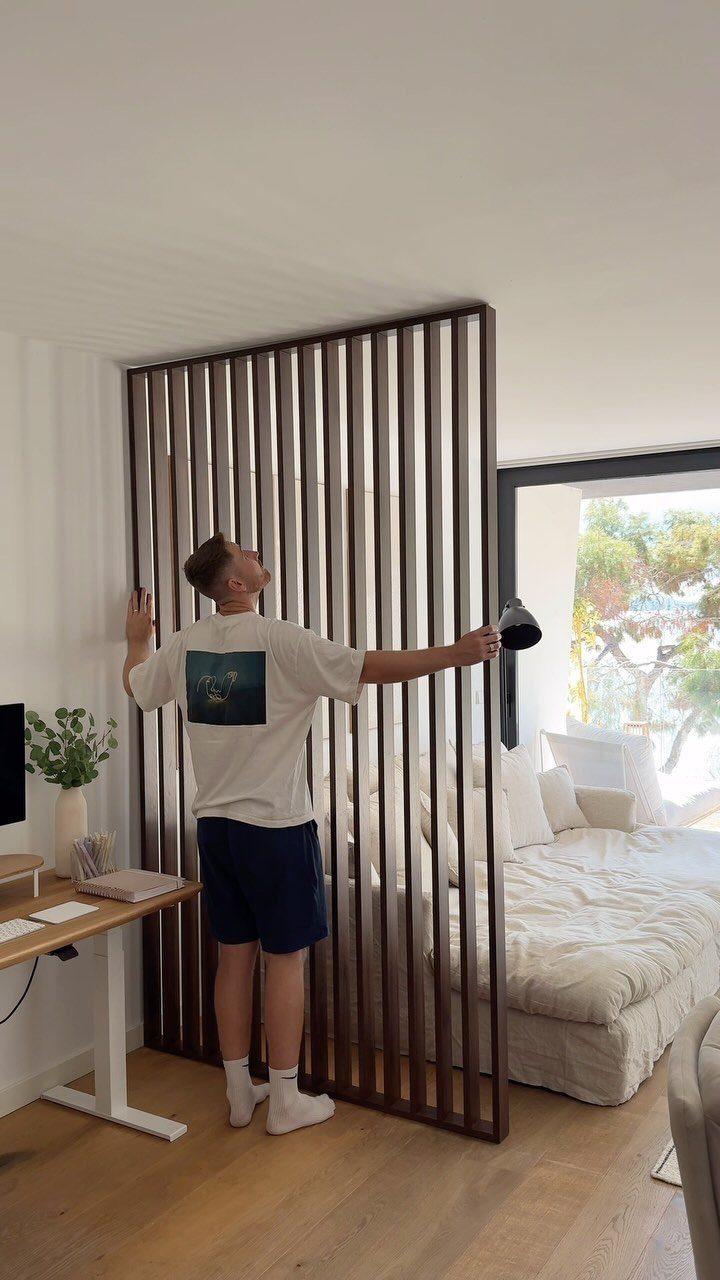
Vertical wooden slats split a bedroom in two without blocking light. The desk sits on one side, the bed on the other, and you still see through the gaps.
Wood adds warmth to a white desk, so I’d choose slats in a tone close to your floor. A freestanding divider means no wall work, which helps renters.
Place the desk so you face the divider, not the bed. Out of sight makes it easier to log off.
18. Built-In Wall Unit with Desk
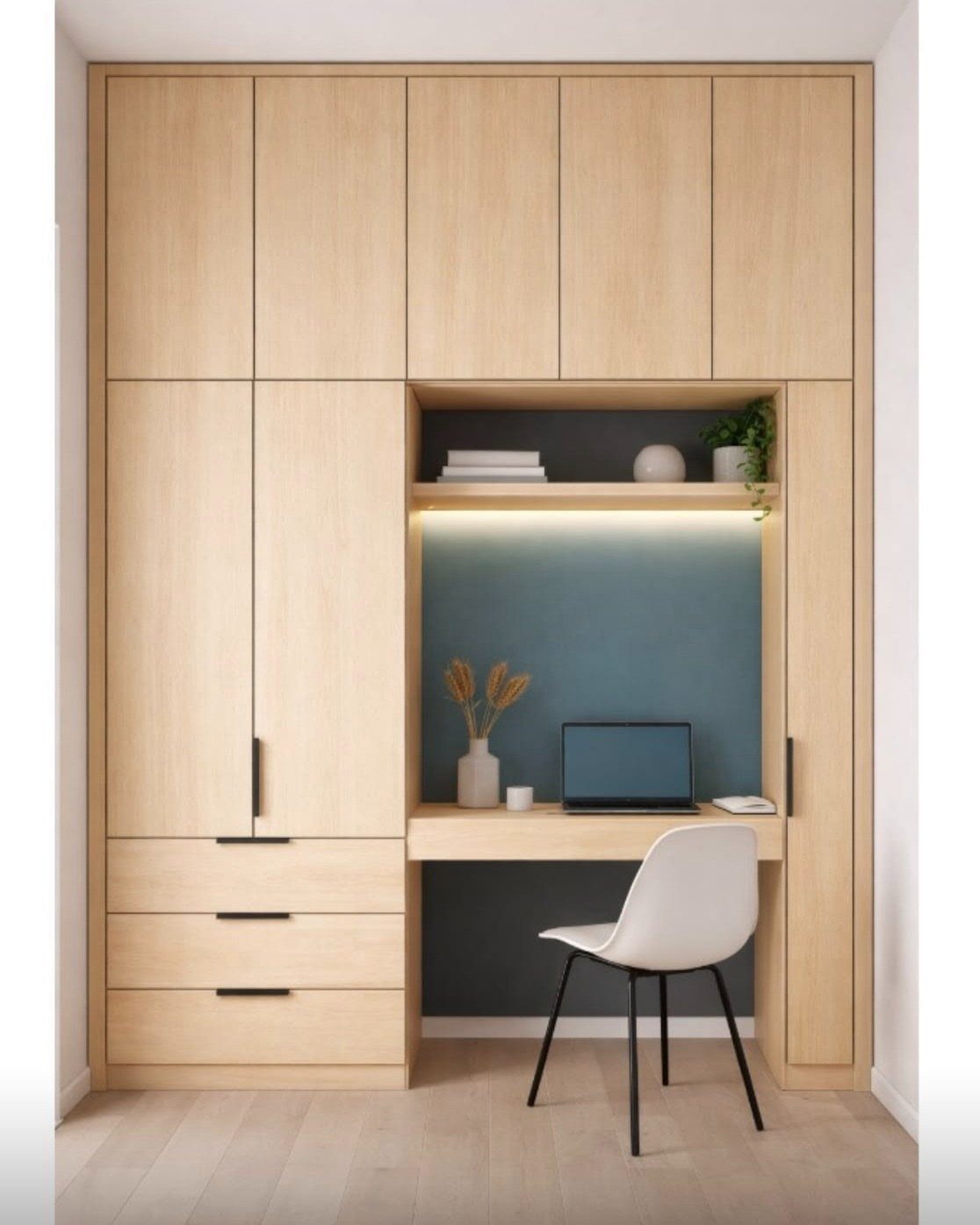
A built-in wall unit wraps a desk nook in cabinets above and beside it, so supplies hide behind doors and the surface stays clear. Light wood keeps that much cabinetry from feeling heavy.
If the budget is tight, I’d mimic it with stock cabinets and a plain desktop between them.
19. Bedroom Desk Setup
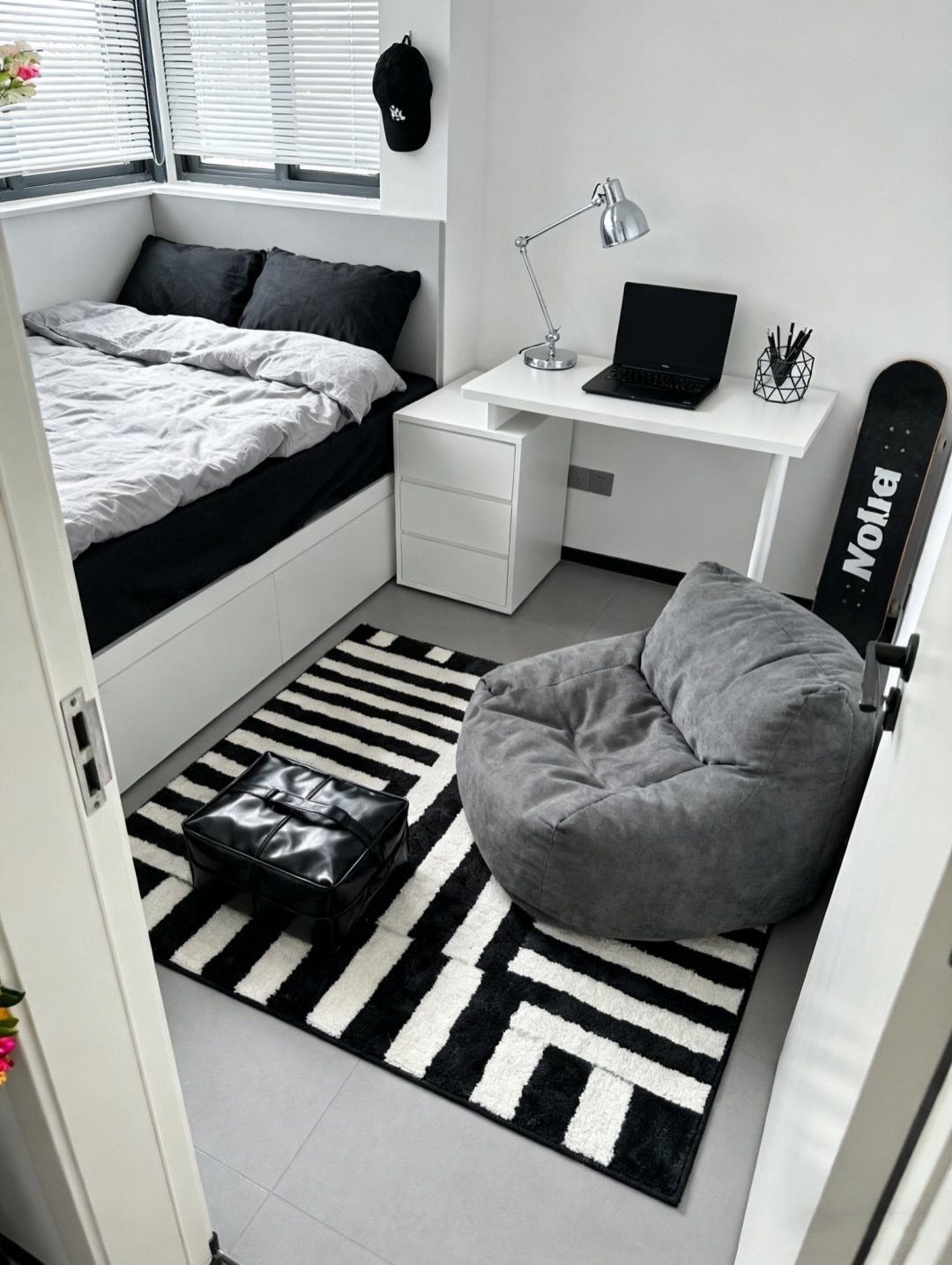
A compact white desk in the corner beside the bed gives a small bedroom a work spot without adding a second piece of big furniture. White blends into white walls, so the desk nearly disappears when the laptop is closed.
I’d keep the desktop to a laptop and a lamp, since a bedroom corner has no room for more.
Sit facing the wall, not the bed, so it stays out of view while you work.
20. Pegboard and Whiteboard Wall
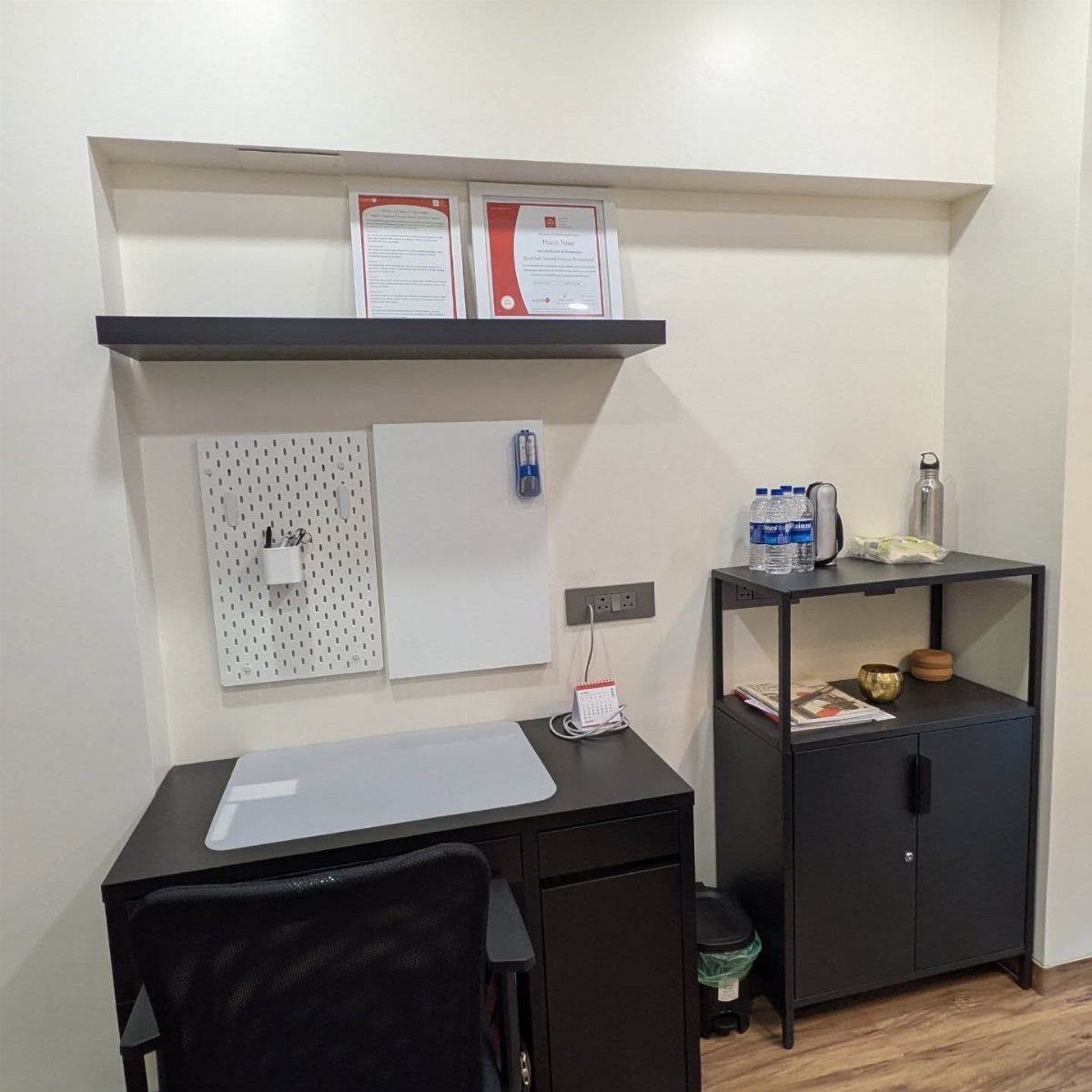
A pegboard and a whiteboard on the wall above a small desk move tools, notes and to-do lists off the work surface and up where you can see them.
White boards on a white wall stay quiet, which suits a room that is already full of black furniture.
I’d hang hooks and small baskets on the pegboard for the items you reach for daily, and keep the whiteboard for the week’s tasks. A black shelf and cabinet nearby take the overflow, so the desktop stays clear.
Mount both into studs or use proper wall anchors, since a loaded pegboard adds up in weight.
Maintaining a Clutter-Free Environment
Clutter builds back faster in a small room, so a weekly reset beats an occasional purge. A quick reset at the end of the workday is enough to clear the desk and put things back where they live.
Give every category of stuff a home. A filing cabinet, a lidded storage box or a drawer organizer each solves a different problem, so pick based on what actually piles up: paper, cords, or loose supplies.
Tiny items do well in containers you already own. Coffee mugs, mason jars and silicone cupcake liners all hold paper clips, rubber bands and thumb tacks, and they cost nothing.
Headphones belong on a hook near the desk, where they stay within reach and free of tangles.
Cables need a home too, because loose cords make even a tidy desk look messy.
Choosing the Right Desk
Start with the desk, since it takes up the most room and does the most work. Before you shop, measure the spot and list what must fit on top: a laptop, a second monitor, paperwork.
Surface area is what you give up. A folding desk usually gives you less room to spread out, so it suits laptop work better than a multi-monitor setup.
If you work on paper or run several screens, choose the largest fixed desk the room can hold without blocking a door or drawer.
Check the height with your chair first, since a desk that’s off by an inch or two will bother you every day. A desk that fits the room but strains your wrists will go unused.
Frequently Asked Questions
How do I design my small office?
Start with the desk, because it takes the most room and does the most work.
Start with a tape measure on the spot itself, write down what has to live on the desktop (laptop, second monitor, paperwork), and move everything else onto wall shelves or the top of a dresser.
Light colors like white, pale wood and a soft green make a tight room feel larger, and built-in shelf lighting can replace a desk lamp.
How big does a home office space need to be?
A corner, an alcove or the space under a staircase is enough, as long as you can sit upright and the desk is at a comfortable height.
Sit in the chair you will actually use before you buy, since a desk that is 1–2 inches too high or low becomes a daily annoyance.
How to make a workspace at home?
Use space that already exists: an alcove, the area under stairs, a window wall or a corner of the living room.
In an open room, a rug anchoring the desk and chair, or a different light source over that corner, tells everyone where work happens.
Face the desk toward a wall so the sofa or bed stays out of sight, and renters can use a ladder desk or a rolling cart that needs no drilling.





