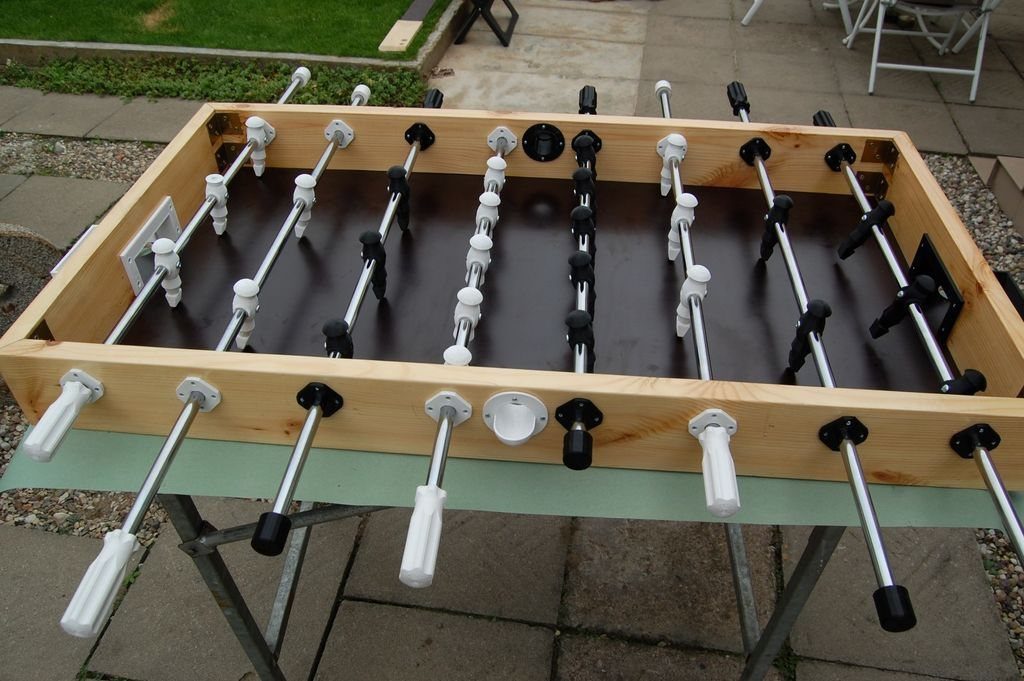
Table football here covers 2 games: the box-built version with rods, pegs and players, and the folded-paper kind you flick across a tabletop. What decides which one you build is how long it needs to last.
A cardboard box with straw rods or plastic figurines is done in an afternoon and suits kids, while the wooden version with metal rods and painted figures is the only one meant to survive rough play.
1. Making Goalposts
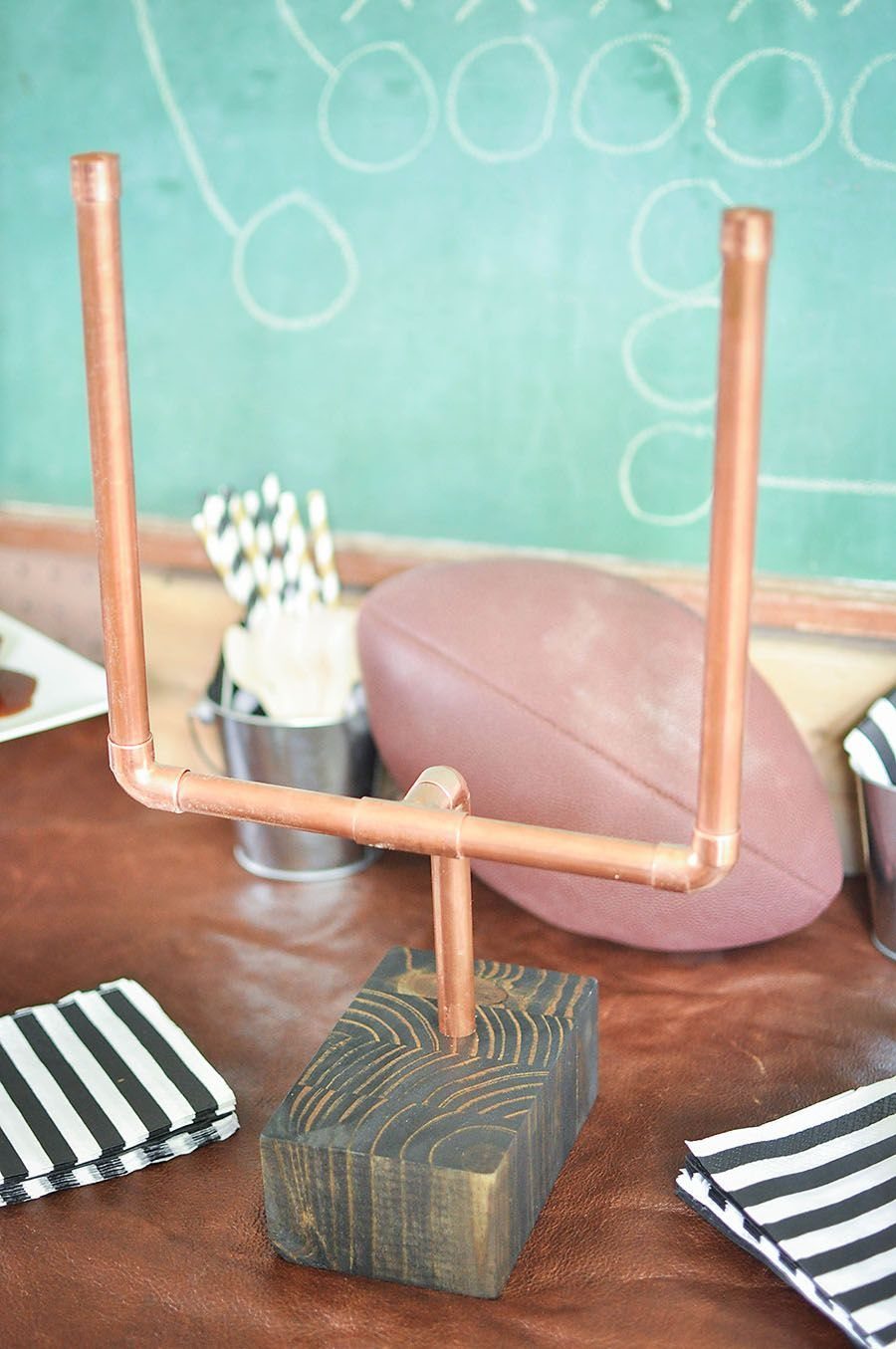
Copper pipe makes a goal that looks far more polished than the effort suggests.
A single post rising from a small wooden base to a crossbar, with 2 uprights attached to the crossbar, gives you the classic shape, and the base keeps the whole thing standing when a ball hits it.
Pipe cutters or a hacksaw will trim the lengths. Pick a base heavy enough to stay put, since a light one tips on every shot.
2. Paint Pegs
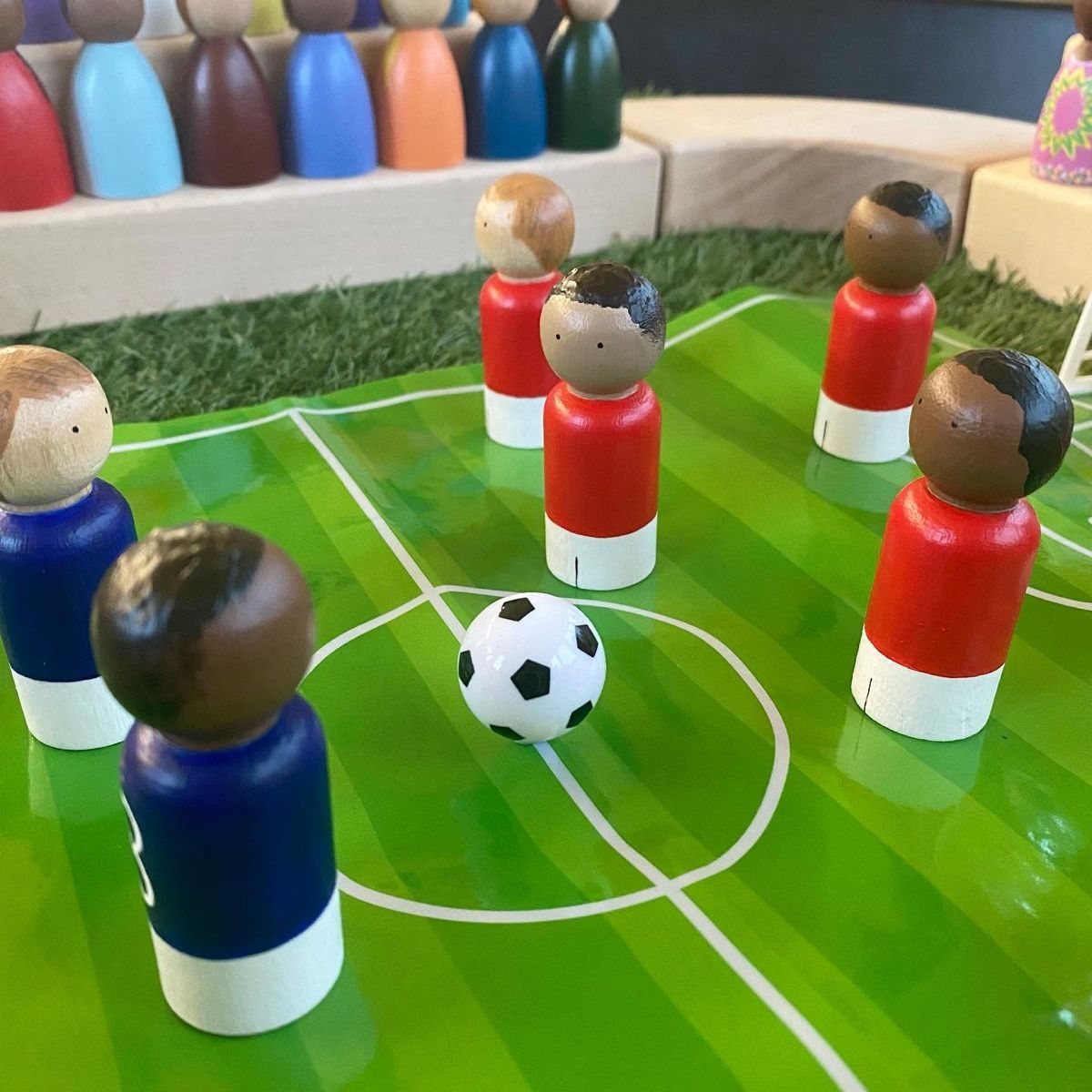
Plain wooden pegs become a full squad with a little paint. Red for one side and blue for the other makes the teams readable from across the table, and a green board underneath gives them a pitch.
Paint the uniform color first and let it dry before adding any detail. A fine brush handles faces and numbers, though simple solid colors are faster for a weekend build.
I would keep the 2 teams to strongly different colors so nobody argues about whose player is whose.
3. Cardboard Shoebox Table Football
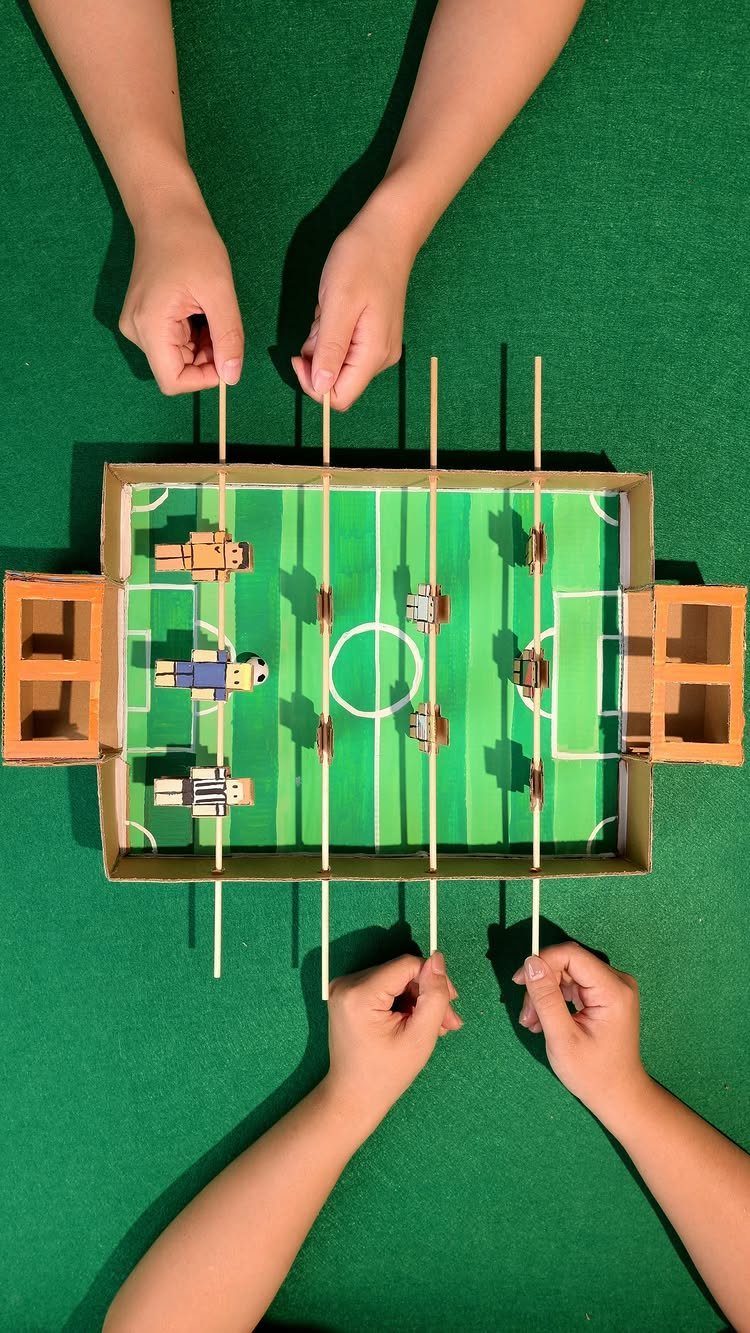
A shoebox is the smallest way to build table football, and it fits on a kitchen table without a fuss. Wooden dowels run across the box as rods, and clothespins clipped onto them act as the players.
Poke matching holes in both long sides so the dowels slide freely and spin. Line the holes up carefully, because crooked rods jam.
Covering the inside with green paper gives a pitch for almost no money.
4. Wooden Tabletop Football Game
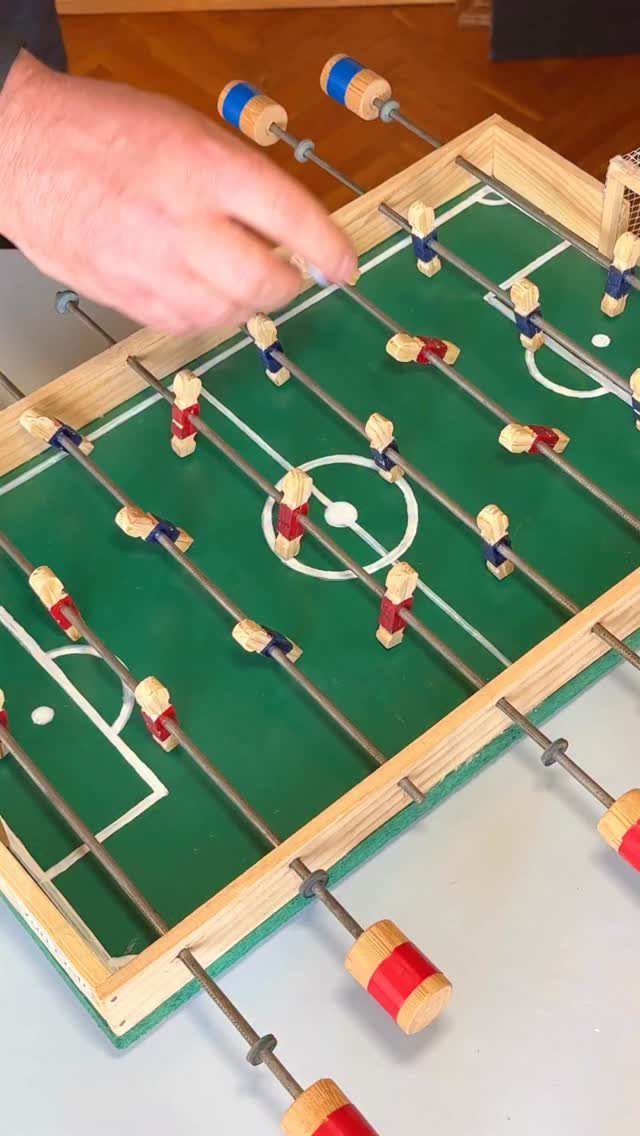
Metal rods and painted wooden figures make this the sturdiest homemade table football of the bunch. It takes more work than a cardboard version, but the pitch holds up to rough play and the rods spin with a satisfying snap.
Mark the green pitch lines before assembly, while the surface is still flat and easy to reach.
I would pick this one if the game is meant to stay around, not get tossed after a week.
5. Cardboard Box with Plastic Players
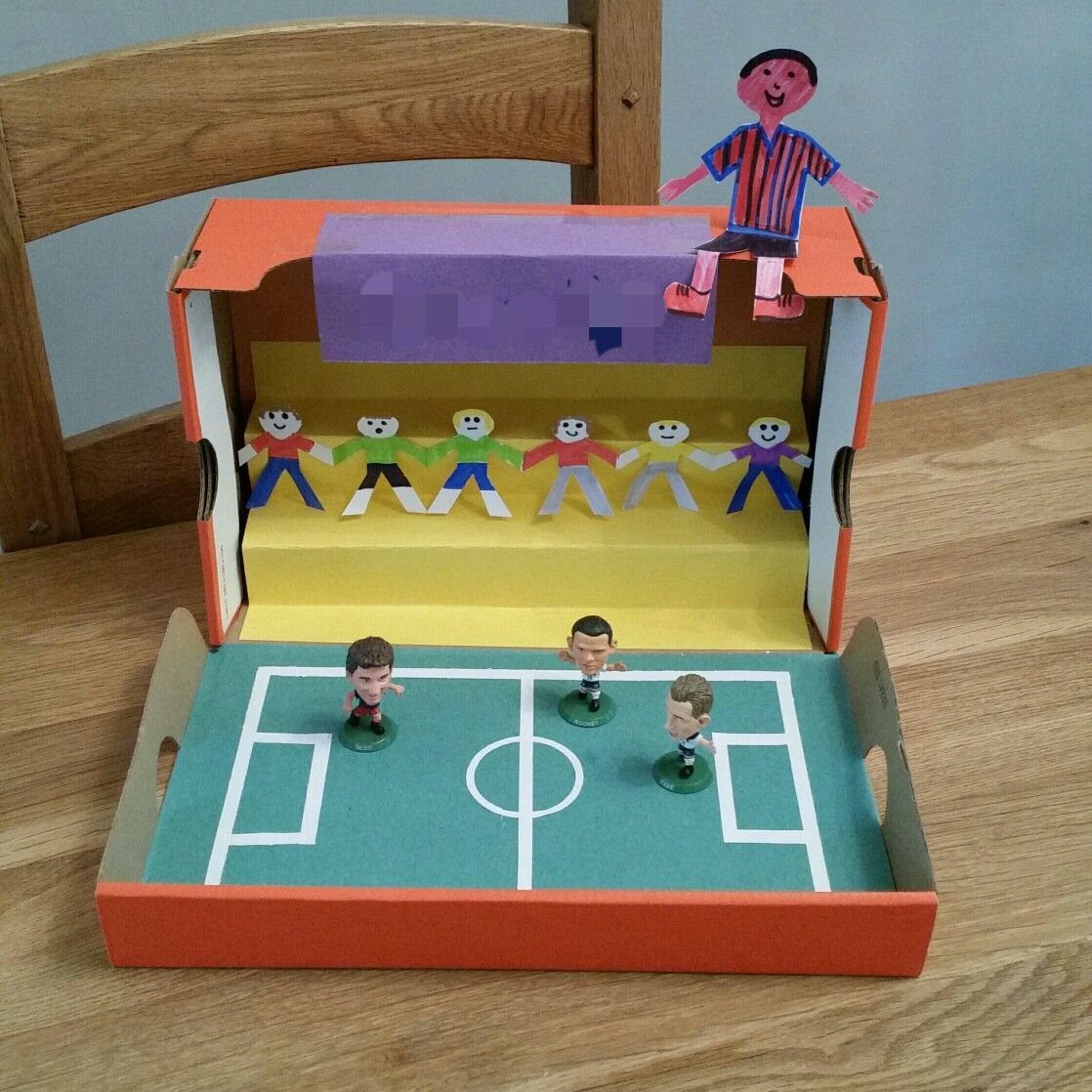
An orange cardboard box turns into a pitch once you glue a sheet of green paper inside. Draw the lines on with a marker so the field reads clearly.
Small plastic figurines serve as the players, which saves you the time of making them. Extra paper cut-outs can fill in along the sides as a crowd, or as spare players when the first ones get knocked over.
This is the quickest build in the list, and a good one to hand to kids.
6. Cardboard Box with Straw Rods
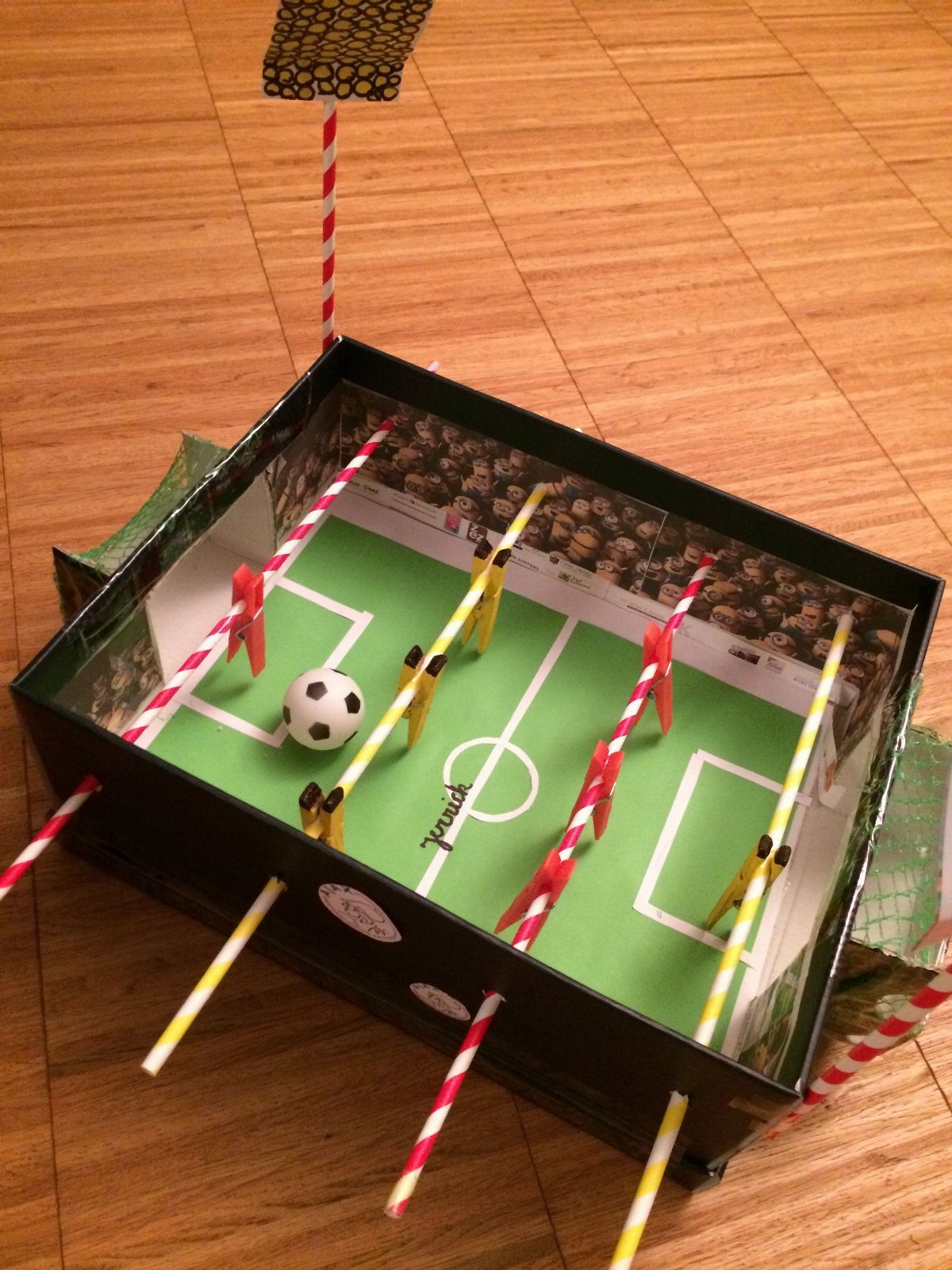
Striped drinking straws make surprisingly good rods, and a black box gives the colors a strong backdrop.
Thread the straws through holes cut in opposite sides of the box, then attach red and yellow players so each team is easy to tell apart.
Straws are light, so they flex under a hard push. Keep the movements gentle, or slide a thin dowel inside for stiffness.
A printed crowd taped along the back wall adds atmosphere for free.
7. Cardboard Box with Wooden Players
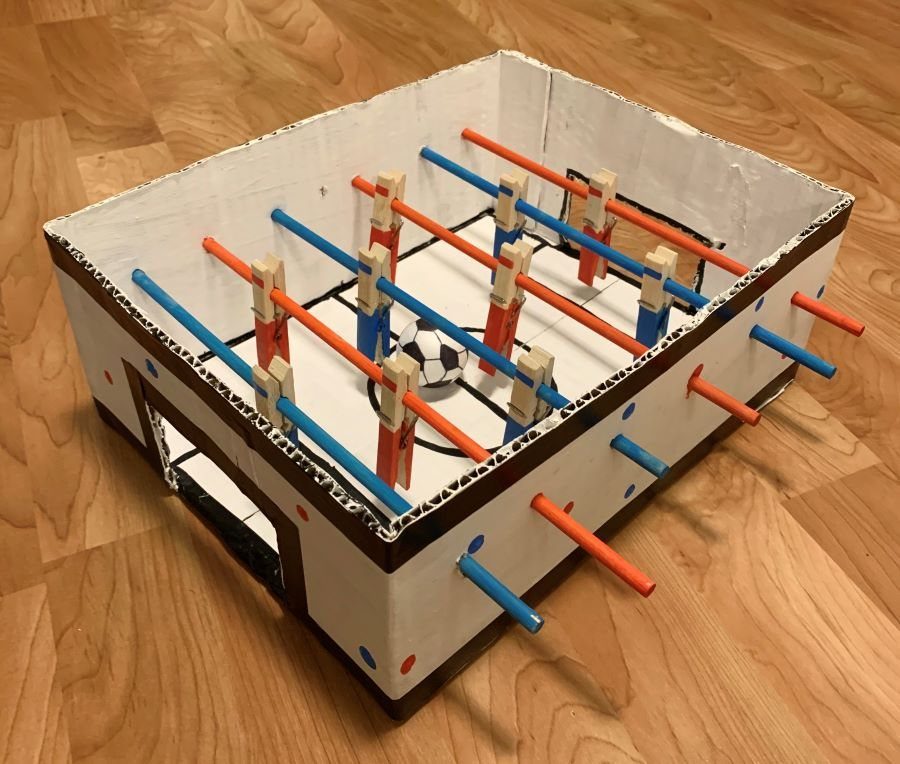
Wooden clothespins make the most convincing players in a cardboard build, because their split legs and rounded heads already look like little figures.
Clip them onto colored rods that run through a white box, and a small soccer ball sits in the middle as the game piece.
White cardboard shows color well, so I would paint or wrap each rod a different shade and keep every player on one rod in a matching color.
Punch the holes at the same height on both sides so the rods spin level.
Pick a ball small enough to roll between the clothespins without catching.
Tips for Playing Paper Football
Thin white paper folds into the tightest triangle, so copy paper or notebook paper is the right pick. Cardstock is too thick to fold well, and colored copy paper works if you want a color.
Even plain copy paper folds into a better football if you cut the sheet lengthwise into 4 strips first. Origami paper also works if you cut it 4.25 inches wide first.
Sit farther apart than feels natural.
A folded paper football has hard, pointed corners, so aim low and away from faces, because a stray flick at someone’s eye really does hurt. More distance also slows the football by the time it reaches the goalpost.
A player can make the goalpost by holding both hands up, thumbs touching at the base and index fingers raised to form a U. Playing alone, build one from popsicle sticks.
With younger kids, push pipe cleaners into an upside-down plastic cup so nobody flicks a football at a face.
Game Variations
Paper football has two ways to score, and agreeing on which one you play before the first kickoff saves arguments.
A touchdown happens when the football hangs over the edge of the opponent’s side of the table.
After a touchdown, the scorer gets a field goal attempt: lay both wrists flat on the table edge, touch the thumb tips together, point the index fingers straight up, and flick the football through that gap.
Make the field goal and it adds 1 point.
If the kickoff flies off the table or hangs on the edge, redo it.
Decide how the game ends in advance.
A time limit means the highest score wins when it runs out, while a score limit means the first to reach the target wins. A bigger group works fine as 2 teams that take turns.
Frequently Asked Questions
How do you make a homemade football?
Cut a sheet of copy paper lengthwise into 4 strips, then fold one strip over and over into a tight triangle.
Plain printer paper gives the crispest folded triangle; cardstock is stiff enough that the creases never sit flat. Tight folds keep the football from coming apart, and a bit of clear tape helps if it feels loose.
How to make a football step by step?
Start with a strip of copy paper cut lengthwise from a letter-size sheet, which gives you 4 strips about 2.125 inches wide.
Start by creasing the strip down its length, then take a bottom corner and flip it over to meet the far edge so it forms a triangle, and repeat that flip all the way up the strip.
Tuck any leftover paper into the final triangle and add clear tape if it’s loose.
What are the rules for table football?
Paper football has 2 ways to score. Any kickoff that sails off the table or stalls on the edge gets replayed, and before the first turn, agree on how the game ends: a clock or a target score.





