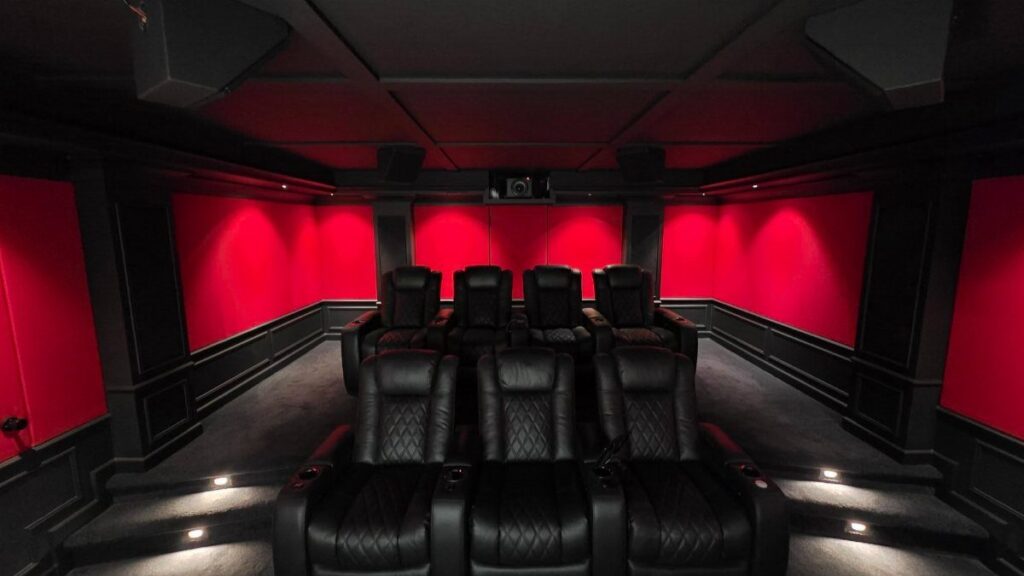
Ceiling height and moisture decide which of these ideas you can build, because tiered seating or a wood slat ceiling needs room overhead, and a damp basement ruins blackout curtains, low-profile furniture, and electronics before any decor matters.
The list runs from a $500 projector and a few rolls of LED strips to framed risers, wall molding paneling, and a fiber optic starry ceiling.
1. Gaming Zone
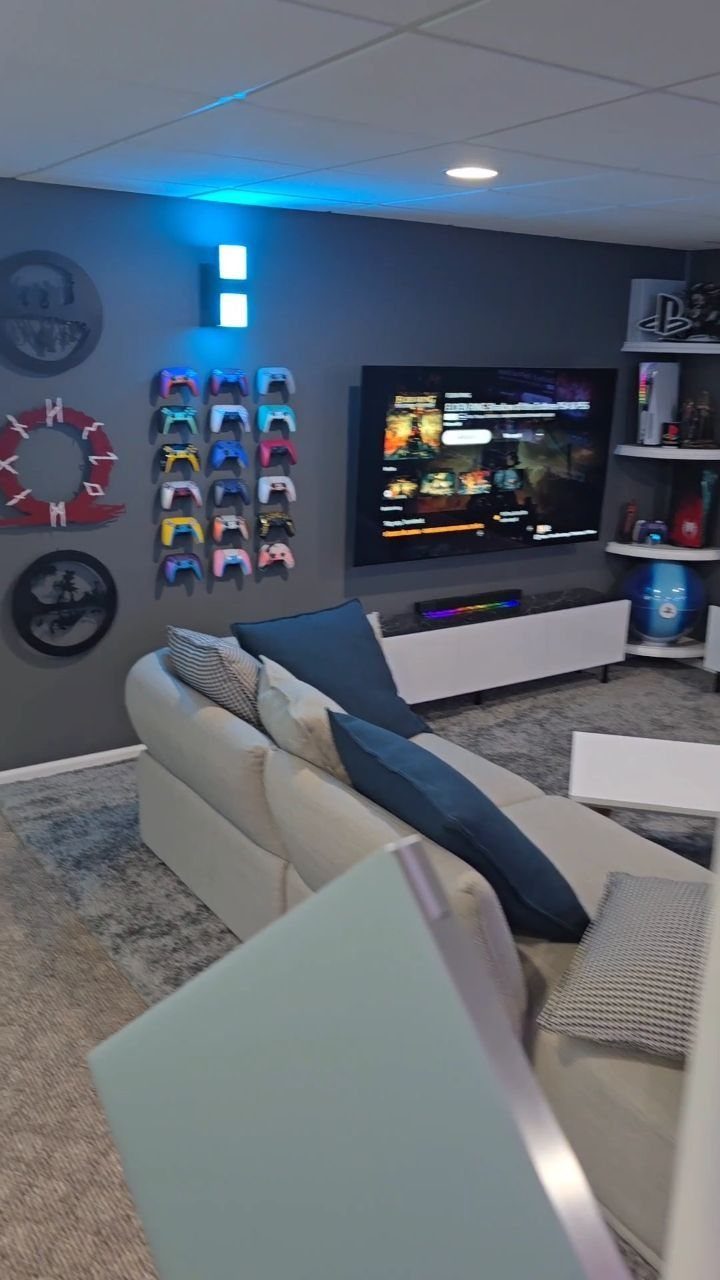
A gaming zone works in a basement theater because the same big screen and sofa do both jobs. The sectional handles a movie night on Friday and a co-op session on Saturday without anyone moving.
Wall-mounted controllers keep cords off the floor and turn gear into decoration. Put the console shelf within easy reach of the seating, so nobody climbs over people to swap a disc.
For a mixed room, choose a sofa that is easy to wipe down, since snacks and controllers share the same cushions.
2. Comfortable Seating
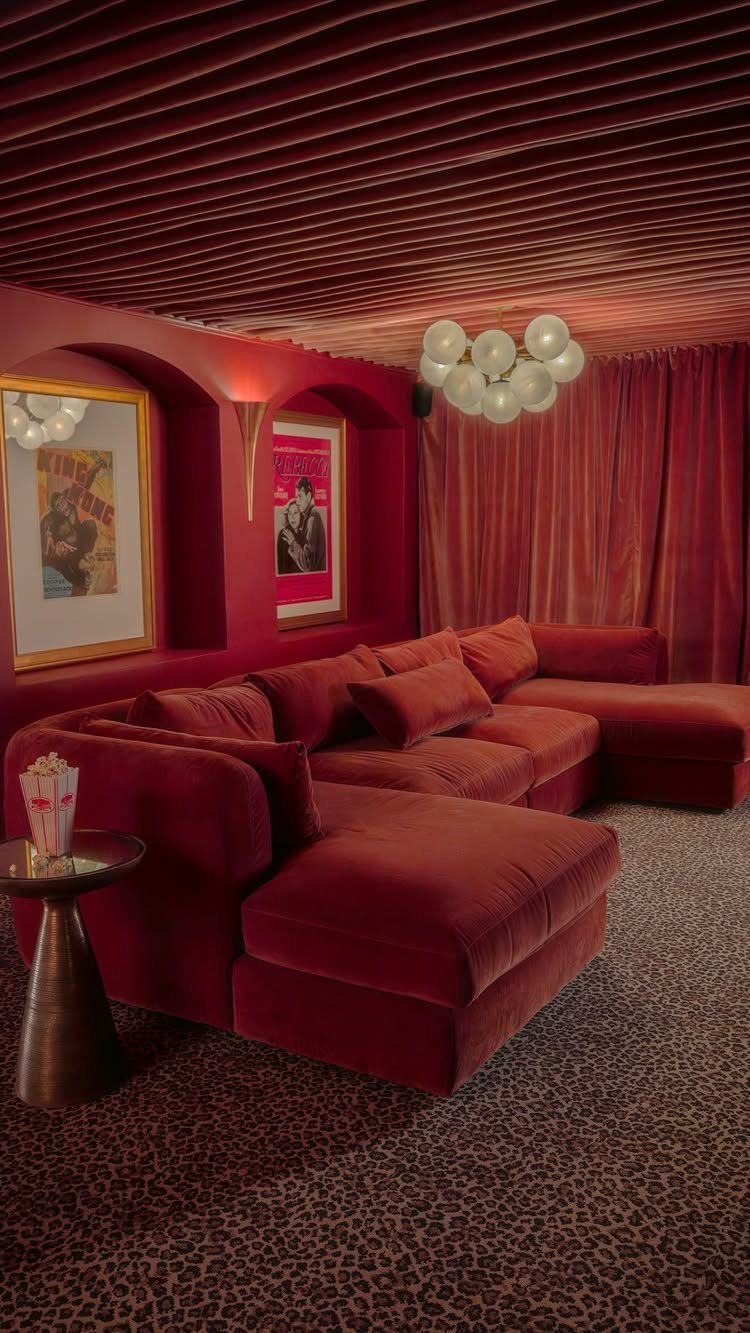
Long movie sessions are won or lost on the seat. A deep velvet sectional like this red one lets people stretch out, tuck their feet up, and stay comfortable during long films.
Sit on any sectional before buying it. Check that the back cushions support you without pushing your head forward, and that the seat is deep enough to lounge in.
I would pair soft seating with a side table within reach, so a popcorn bucket never ends up on the floor.
Bold color is fine on a sofa when the carpet and walls are already loud; in a plainer room, a neutral piece is easier to live with.
3. Snack and Beverage Area
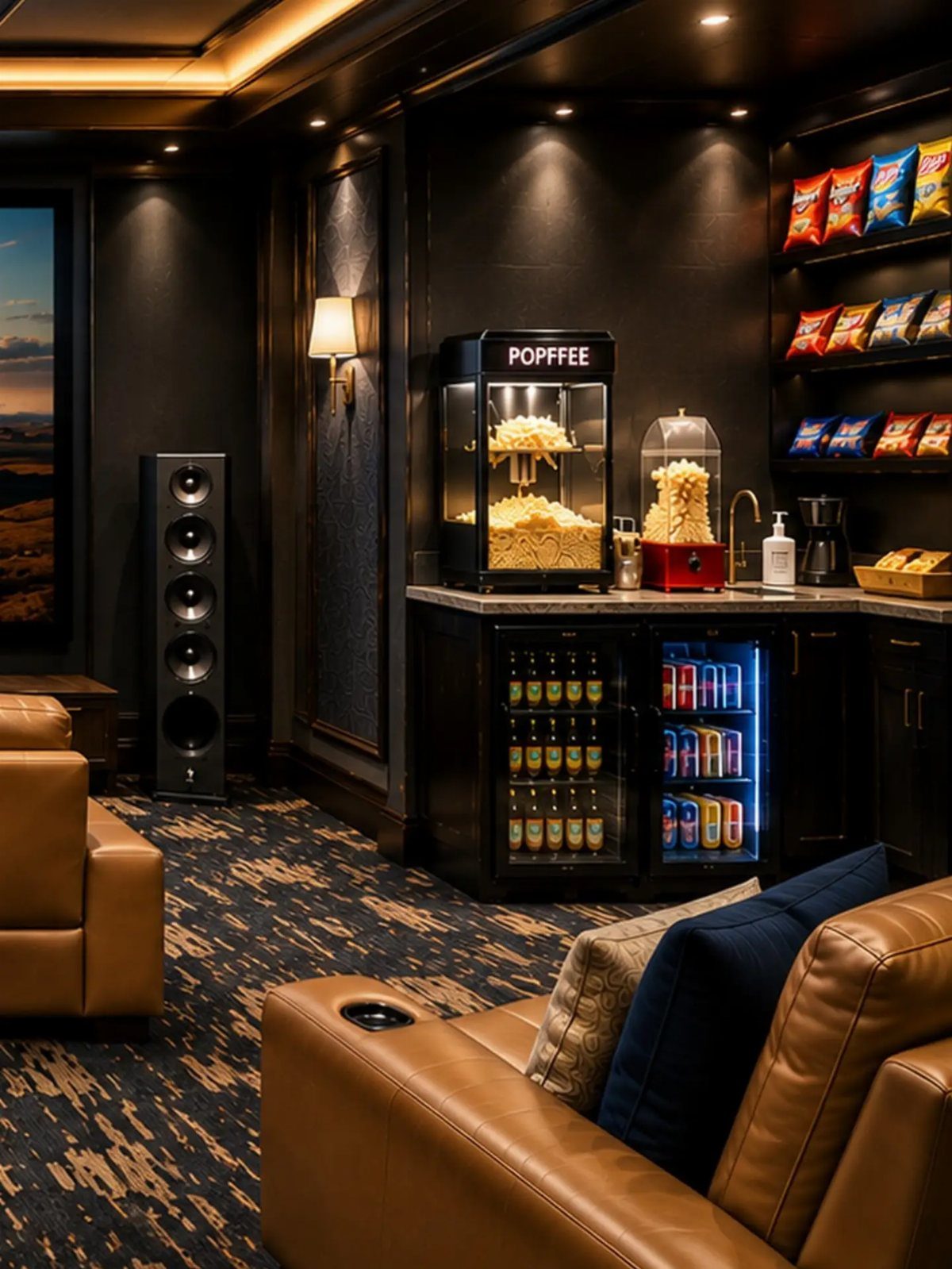
A snack station keeps people in their seats and out of the kitchen upstairs. A popcorn machine, a beverage fridge, and open shelves for chips cover most of what a movie night needs.
Put it near the back of the room or beside the door, so trips to refill never cross the screen. A small fridge saves the stairs for everyone.
Skip anything that needs a sink or new plumbing. A counter, an outlet, and a few shelves are a weekend job, and the machine itself can stay a modest one.
4. Themed Decor
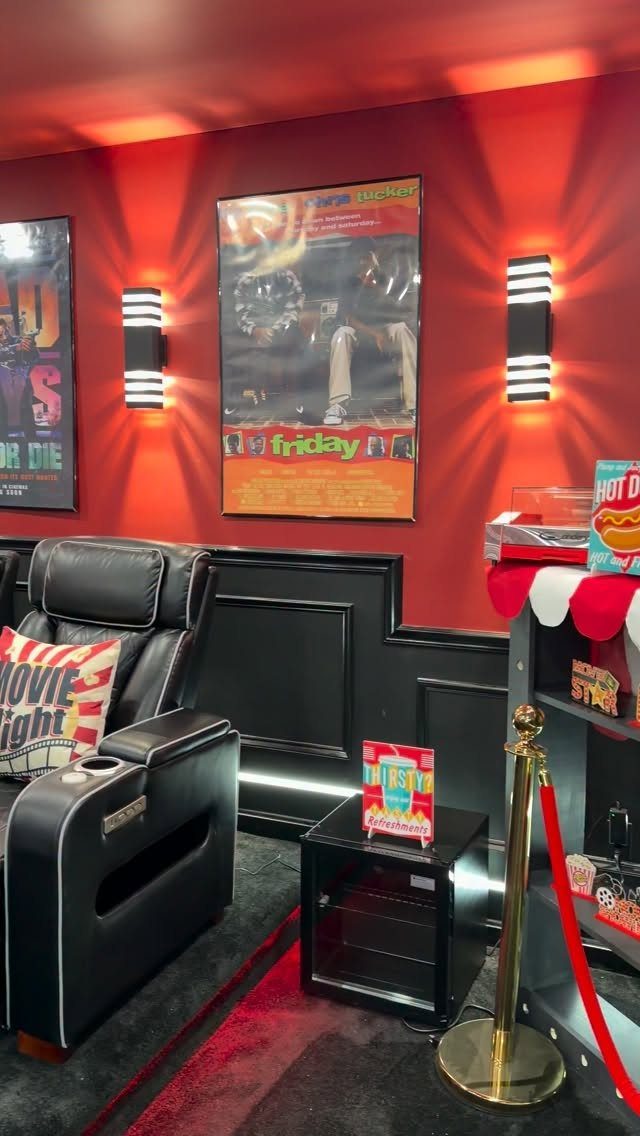
Themed decor separates a basement cinema from a den with a TV. Red walls, framed movie posters, wall sconces, and a velvet rope at the door do most of the work.
Posters are the cheapest part of the plan, and swapping them out keeps the room fresh. Wall sconces give soft light that won’t wash out the screen.
I would commit to one dominant color, as red does here, and let the black recliners stay quiet. A themed sign over the snack counter finishes it for very little money.
5. Tiered Seating
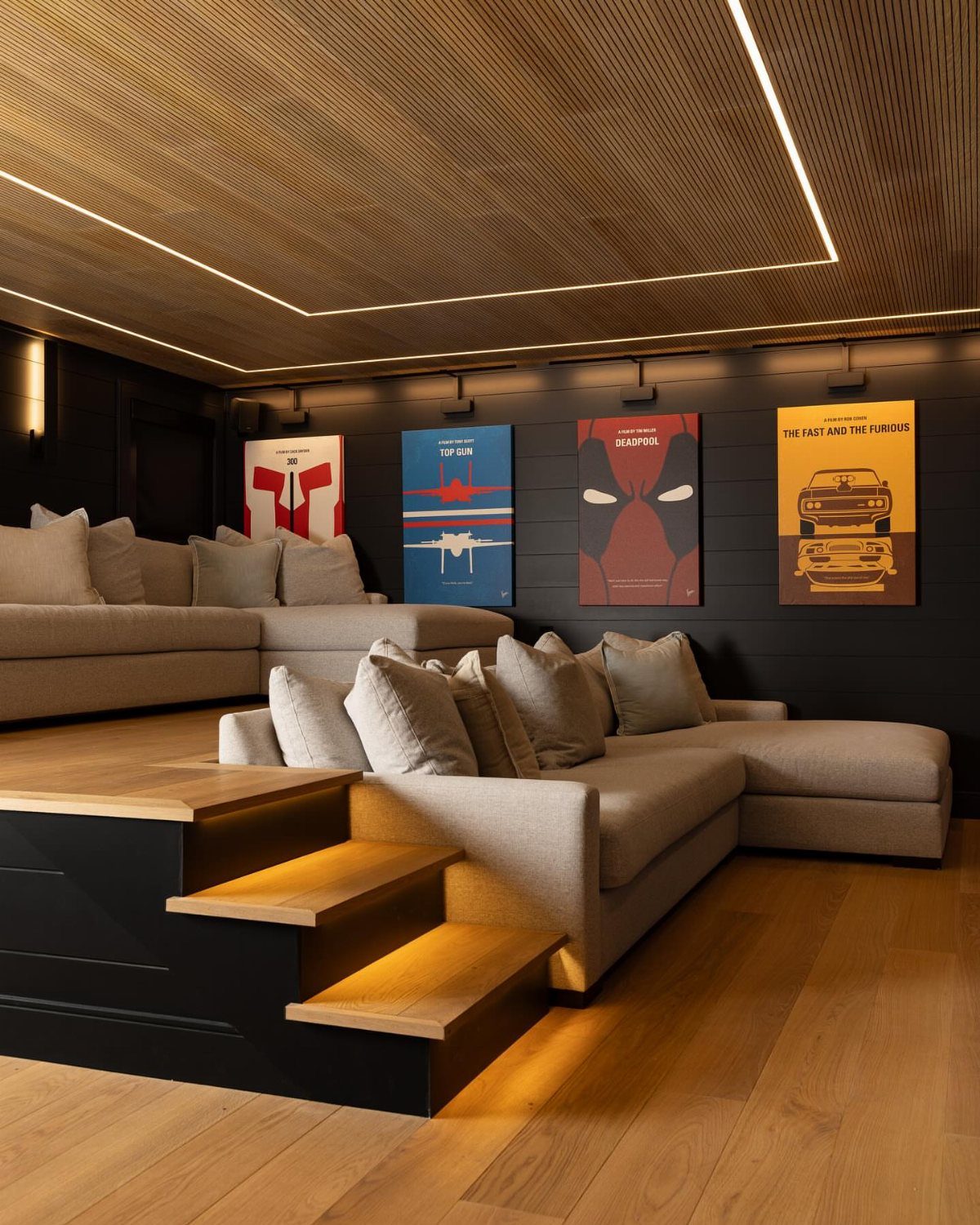
Tiered seating copies the commercial theater layout: a second row sits higher so nobody stares at the back of a head.
The build is a framed platform, a bigger weekend project than most basement theater setups. Basement ceiling height decides whether it works at all, so measure before committing.
If the ceiling is too low, a single row of seating with a gentle riser behind it still gets part of the effect.
6. Blackout Curtains
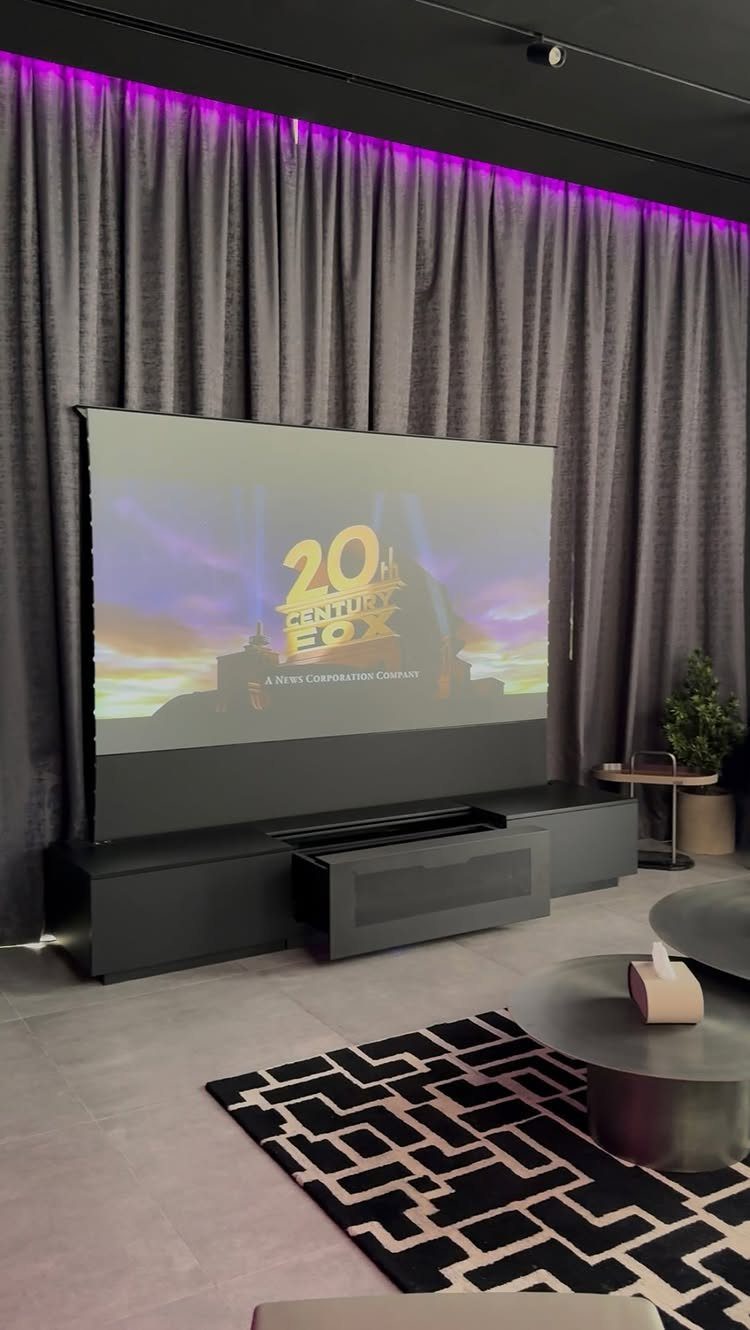
Blackout curtains give you control of the light, and a projector depends on that more than any other gear. Even a bright screen looks washed out when daylight leaks in from a basement window.
Choose heavy, lined panels in a dark color, and mount the rod wider than the window so the fabric covers the edges. Grey works well because it doesn’t bounce light back at the screen.
Curtains also soften sound slightly, which helps in a hard-walled room. I like adding LED strips behind blackout curtains for a soft purple glow.
7. Media Wall
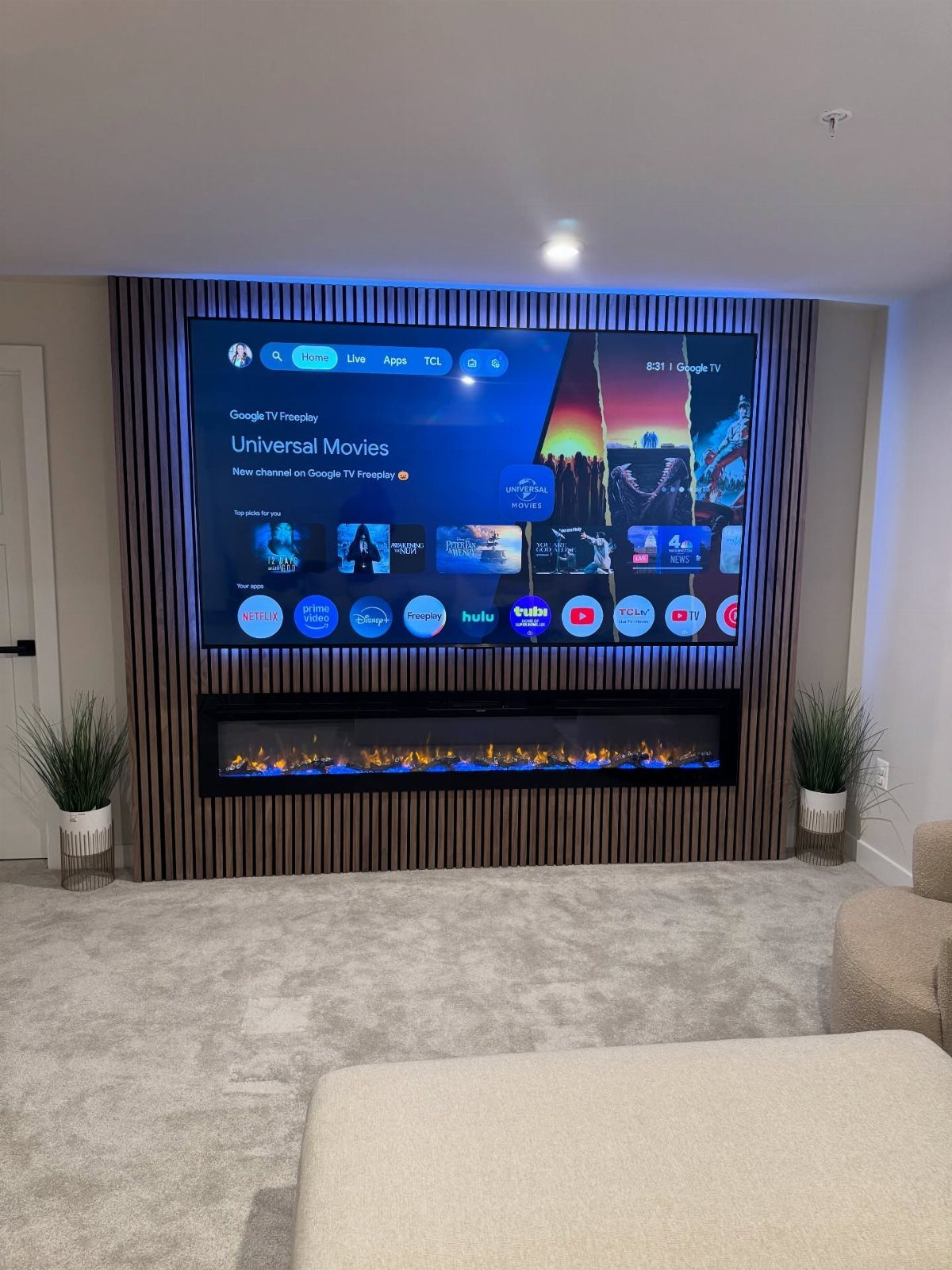
A media wall gives the TV, the fireplace, and the wiring one organized home on a single wall.
Slatted wood panels around the screen cover the decorating, and a linear electric fireplace underneath adds warmth with no chimney, just a 120-volt outlet and a few inches of clearance.
I would run the power and cables inside the wall before any slats go up, since fixing a cord problem afterward means taking panels off.
Mount the TV at a comfortable eye level when seated, not up high like a bar TV.
Plants on each side soften all that wood and keep the wall from feeling like a block.
8. Wrap-Around Sectional
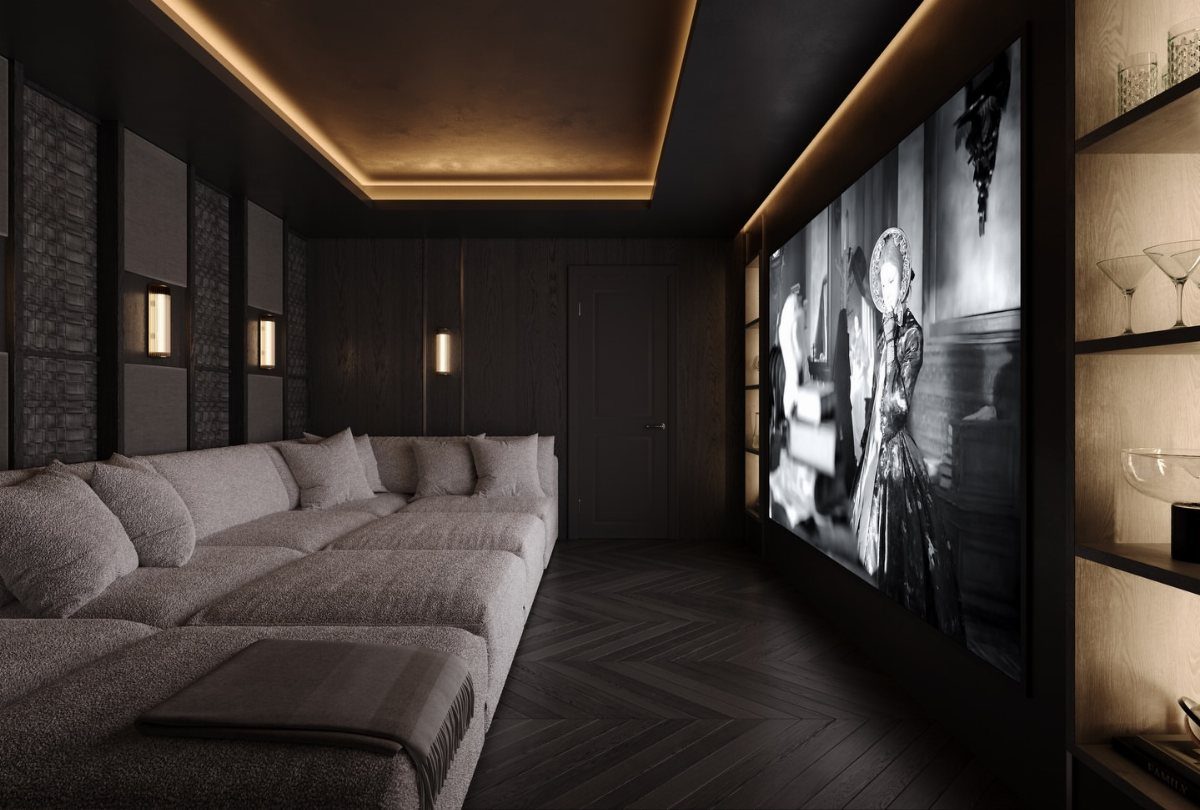
A wide sectional that wraps 2 or 3 walls puts everyone within arm’s reach of each other, which is why I pick it over separate recliners when the room needs to feel loose and social.
Everyone sits facing the screen, and nobody gets stuck at the end of a row.
Measure the footprint with painter’s tape on the floor before ordering. A wrap-around piece eats more space than it looks like in a showroom, and the stairs or door should still clear.
Grey suits dark wood walls and floors because it stays quiet. I would pick a fabric that hides wear over a delicate one.
9. Low-Profile Furniture
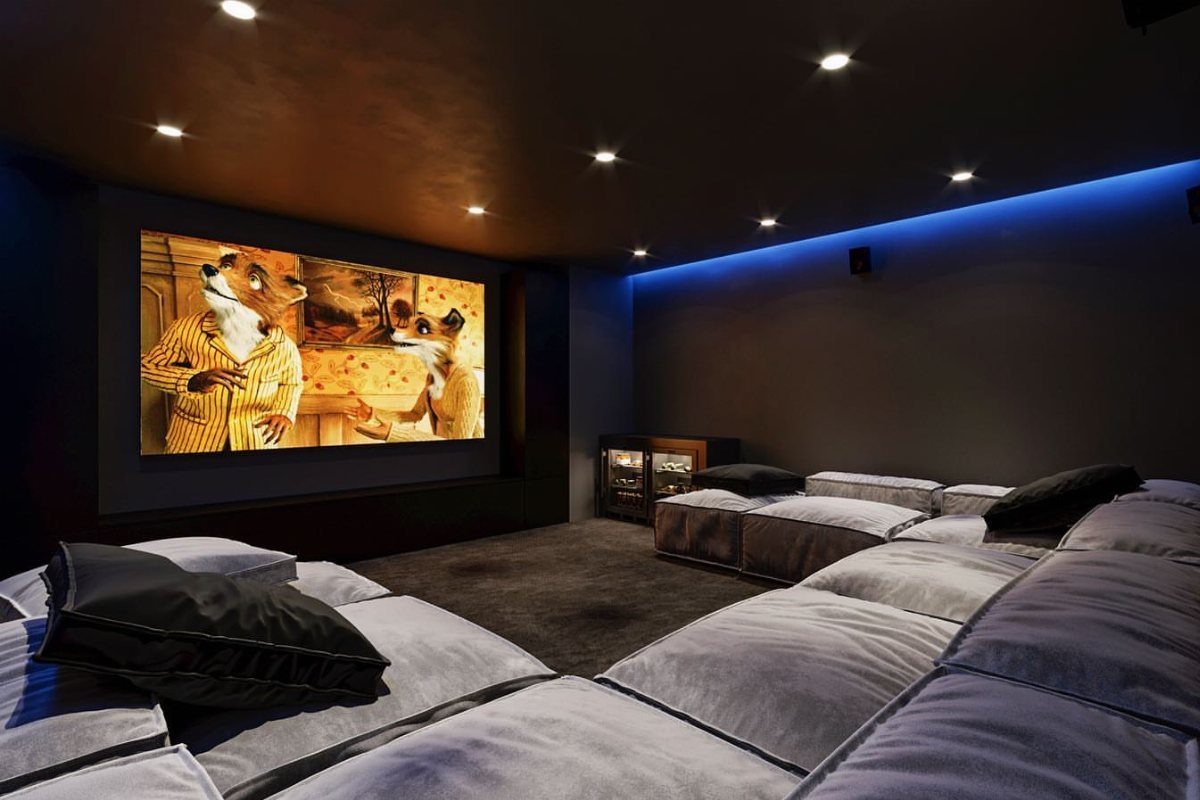
Low-profile furniture suits a basement theater that skips full built-ins. A modular sectional sits close to the floor, so the room reads open even with a low ceiling.
Modular pieces let you rearrange the layout, which matters in a space that may serve other uses later. Black pillows add contrast against grey without any extra cost or building.
Blue cove lighting pairs well with it, and the whole setup is mostly furniture and a projection screen, so there is little to construct.
10. Starry Night Ceiling
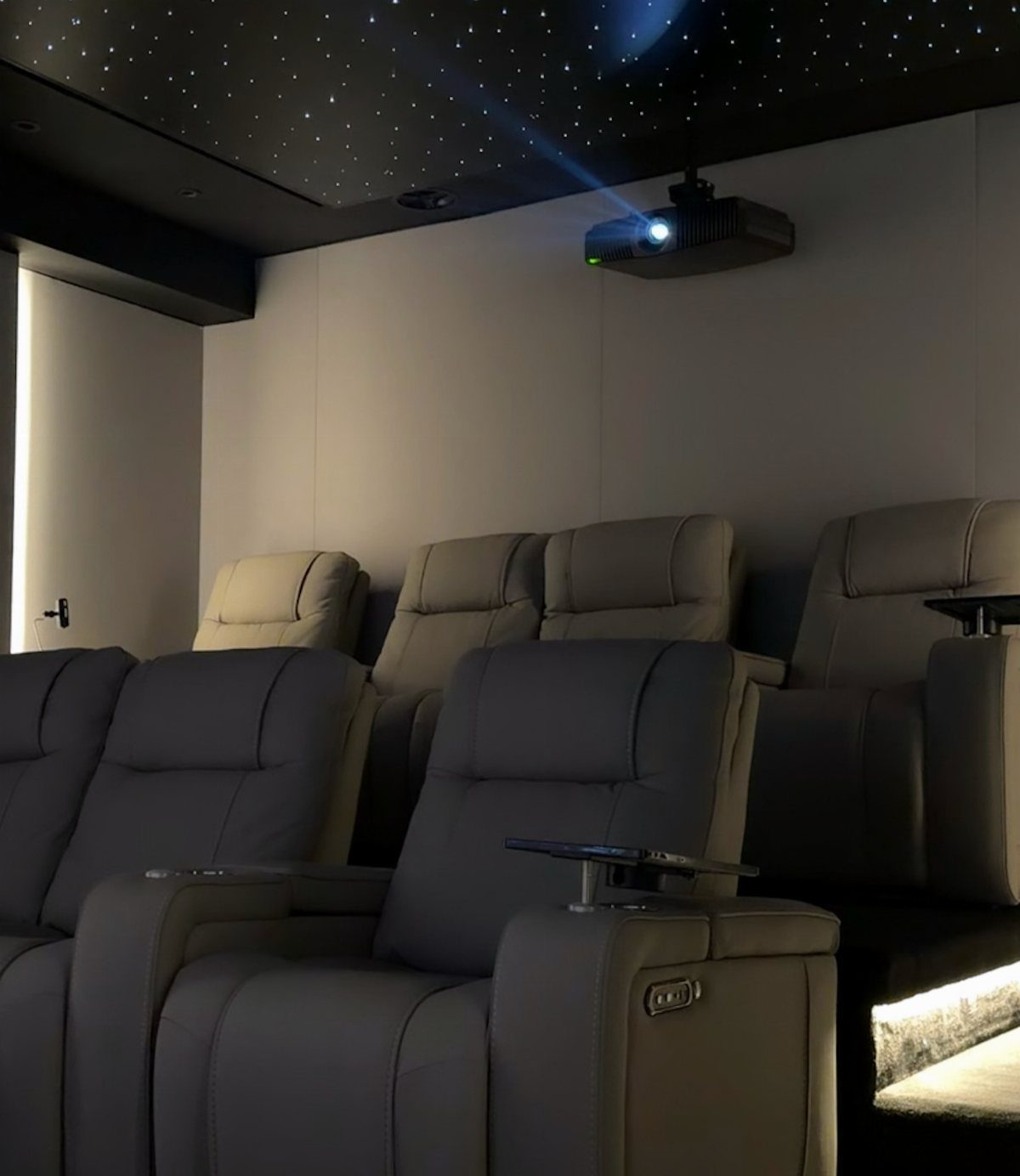
Small white lights set into a black ceiling make a starry night over the seats, and it is the detail people remember after the movie ends. A fiber optic kit is the usual way to get it.
Paint the ceiling black first so the points of light stand out and the projector’s glow doesn’t bounce around. Plan the layout of the fibers before drilling, and keep the pattern uneven; evenly spaced dots look like a grid.
Grey recliners keep the eye on the ceiling instead of competing with it.
11. LED Under-Glow Recliners
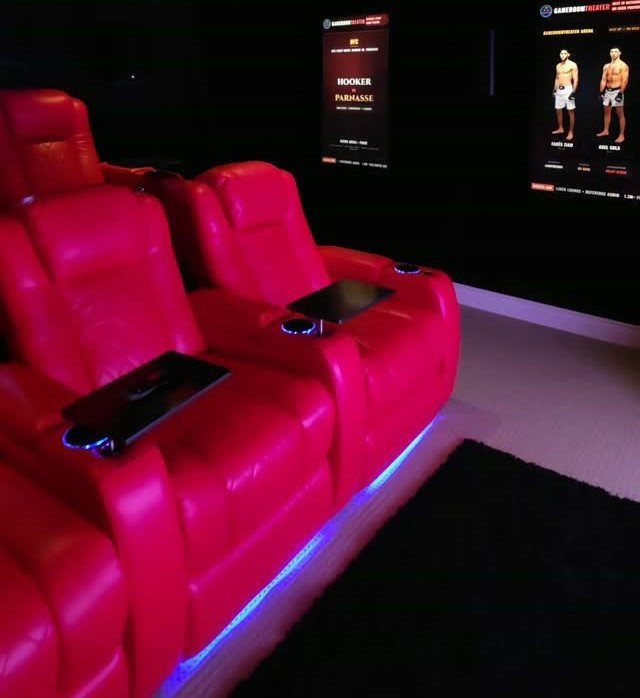
Blue LED strips tucked under red leather recliners throw a glow along the floor, so people can find their seats without a lamp cutting into the picture. Built-in black trays hold drinks and snacks.
If your recliners lack lighting, adhesive LED strips under the frame are a cheap add-on. Pick a color that contrasts with the upholstery; blue against red looks deliberate.
According to the creator, the clip was cut to 15 seconds on Instagram, so a longer full video exists.
12. Wood Slat Ceiling
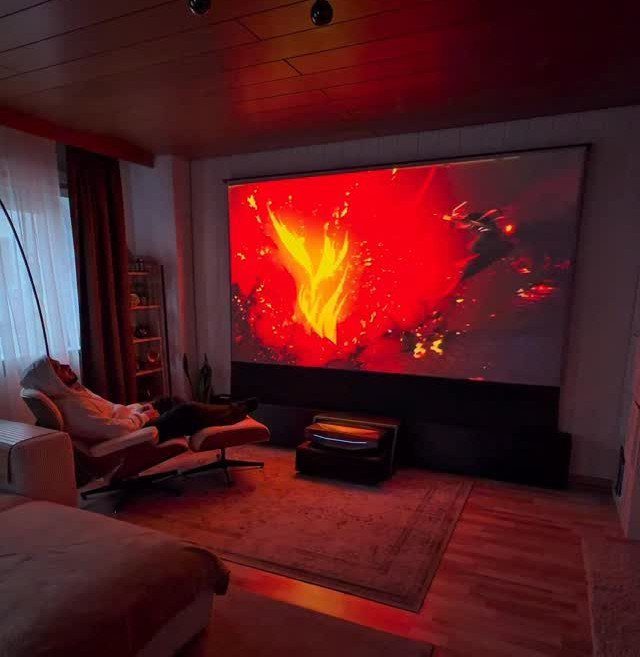
A wood slat ceiling brings warmth to a room that is otherwise black screen and dark corners. Over a lounge chair and projector screen, the wood keeps a basement theater from feeling like a cave.
I prefer slats here because they hide the ceiling’s pipes and wiring while staying visible as a design feature. Stain them in a warm tone so they glow under low light.
Hang the projector from the slats or above them, and plan the mount before the ceiling goes up.
13. Integrated Library Bookshelves
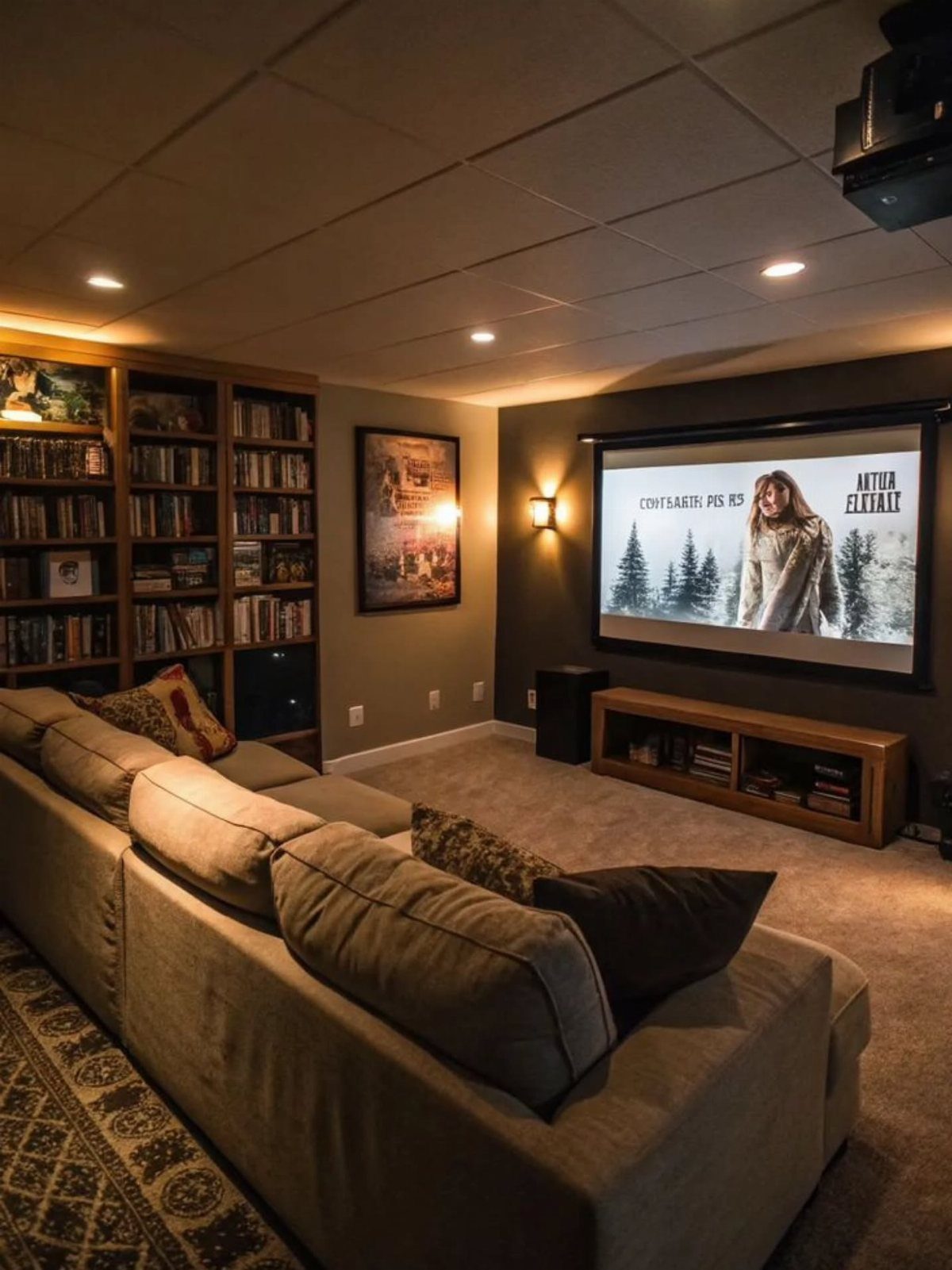
Floor-to-ceiling built-in shelves beside a projection screen give a basement theater a place for books, discs, and small decor, so the room reads as a lounge instead of a dark box.
Fill the shelves with a mix of books and media rather than lining up one type. Leave a few gaps for objects, which keeps a tall wall from looking heavy.
I would keep the shelving next to the screen wall instead of behind the seating, where people lean back and bump it. A tan sectional keeps the colors calm so the books carry the interest.
14. Wall Molding Paneling
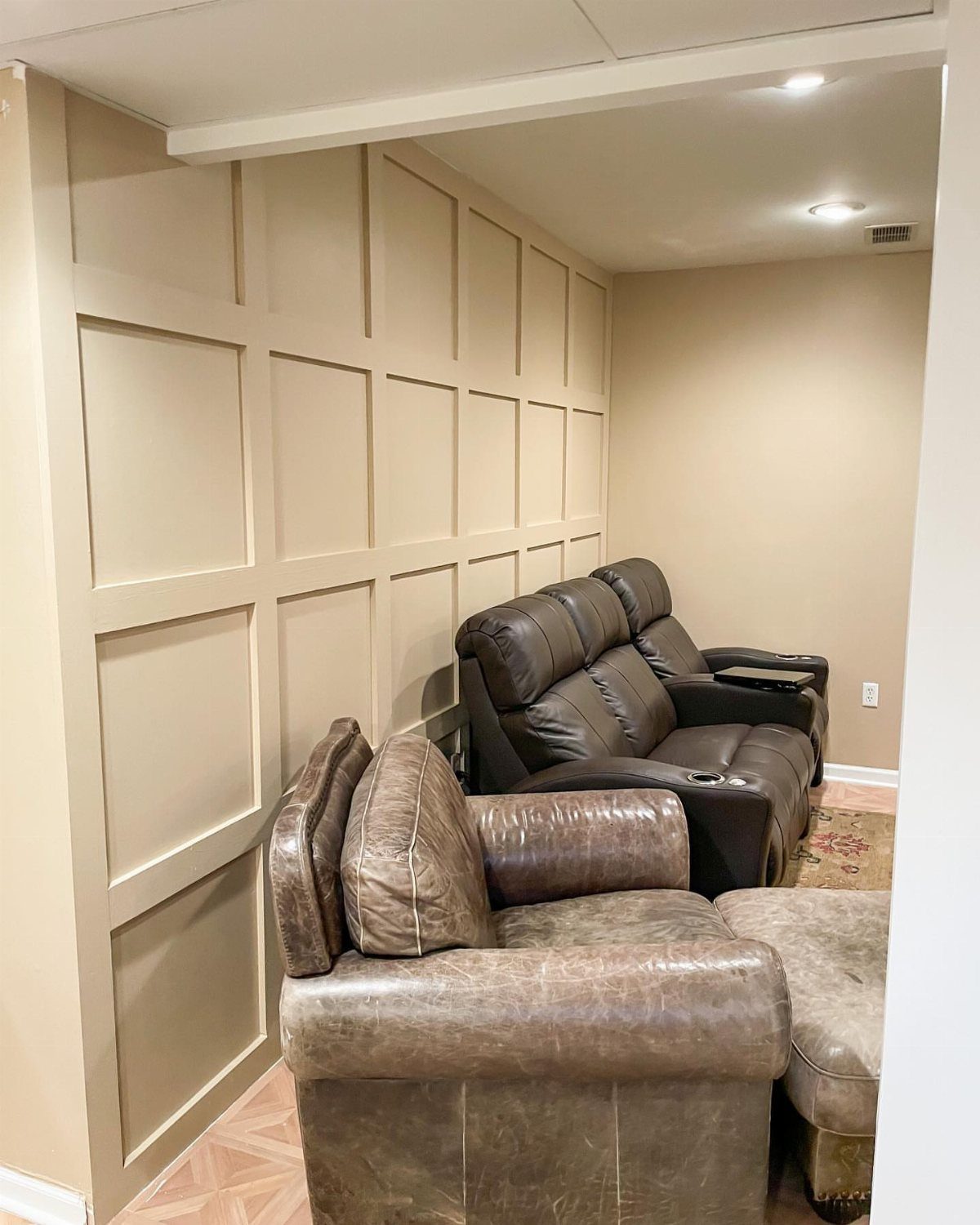
Square box molding turns plain basement walls into paneled ones, and beige paint keeps the effect quiet enough that the screen still gets the attention.
Paint the molding and the wall inside it the same color. That gives you texture without contrast, which suits a room where you want little reflected light.
I would pair it with leather recliners, as here, because the brown reads warm against beige. Mark the box layout in painter’s tape on the wall first, and step back to check the spacing before anything is nailed up.
15. Movie Theater Entrance
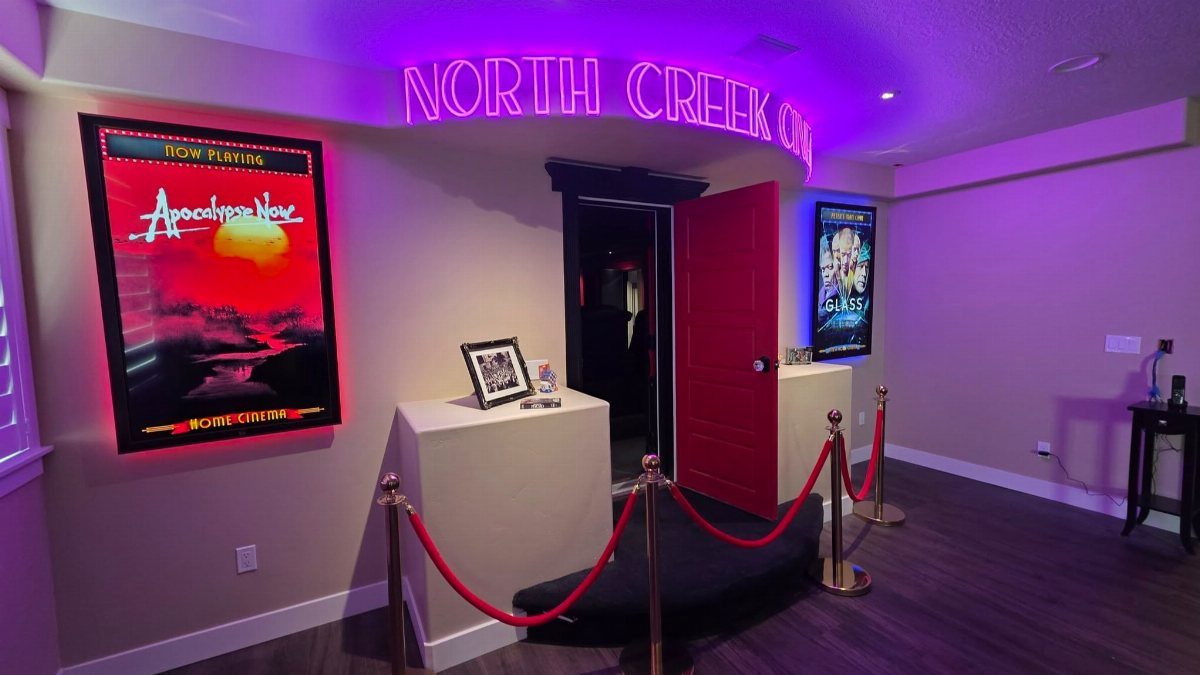
Give the theater its own entrance and the room starts before anyone sits down. A red door, a neon sign with a name on it, and velvet stanchion ropes turn the hallway into a lobby before anyone sits down.
A custom neon sign is the piece I would spend on, since it names the room. Framed posters on either side cost little and can be swapped as often as you like.
Hang the sign where it is visible from the stairs. Keep the ropes to a short run so they don’t block the walkway.
Budget Considerations
Projectors start around $500, and that is where a basement theater budget usually begins. Sound systems vary widely in price, so decide the audio number before you shop.
Spend on the pieces that shape the picture and sound: the projector, the speakers, and keeping the room dark and quiet. Decor, snacks, and lighting can be cheap or secondhand without hurting a movie night.
A solid soundbar or an entry-level 5.1 system is a sensible first step, and you can add speakers later. Used equipment saves real money on a first build, and doing the work yourself saves more.
Write the budget as 3 lines before buying anything: screen and projector, sound, and room work. That keeps one upgrade from eating the other two.
Room Preparation
Start with moisture. A basement that is damp or stuffy will ruin drywall, carpet, and electronics, so fix leaks, check for musty smells, and make sure air moves before any finishing starts.
Sound is the second job, and it is cheaper to handle during the drywall stage than after.
Heavy insulation in the walls helps, and so does sealing gaps and cracks where sound leaks out. Decoupled walls cut transmission between rooms even further, though they are a bigger build.
Two doors with a small air gap between them block more sound than one, so if the budget stretches that far, a second door on the theater entrance is worth the money.
Acoustic panels absorb reflections and make dialogue clearer, and a thick rug or carpet cuts echo on a hard floor.
Do this work first. Everything else sits on top of it.
Legal Considerations
Call your local building department before you frame or finish anything. Basement rules differ by city and county, and a permit is often required once you add walls, electrical, or a finished ceiling.
Egress matters most if the room could ever be used for sleeping. Codes commonly require a way out, such as a window or door of a minimum size, so ask what applies to your space.
Ask about smoke and carbon monoxide alarms, electrical work, and ceiling height too. Renters should get written permission from the landlord before building anything permanent.
Unpermitted work can cause trouble at resale or with insurance, so a short phone call is cheap protection.
Frequently Asked Questions
How can I turn my basement into a movie theater?
Fix moisture first, then handle sound while the walls are open, since insulation and sealed gaps are cheaper to add at the drywall stage.
After that, add a projector, comfortable seating, and a way to keep the room dark. Check for leaks and that musty smell before you buy a single sheet of drywall, since moisture will wreck carpet, framing, and gear alike.
What are some interesting ideas for a basement?
For a theater basement, a starry night ceiling and a media wall with slatted wood and a linear electric fireplace stand out most.
The ceiling uses a fiber optic kit over black paint, with an uneven pattern so it doesn’t look like a grid.
The media wall puts the TV, fireplace, and wiring in one organized spot, and the fireplace only needs a 120-volt outlet.
What is the minimum room size for a home theater?
A room around 10 by 10 feet is enough for a small theater, as long as you keep the seating to one row.
Bigger screens and more seats need more space, and ceiling height and soundproofing also matter. Measure the floor with painter’s tape before ordering a large sectional, because wrap-around pieces take up more room than they seem to in a showroom.
What is the best home theater system for a basement?
Starting with a decent soundbar or a basic 5.1 package works fine, and extra speakers can join the setup later. Put your money into the projector, speakers, and a dark, quiet room, and keep decor and snacks cheap.





